Kuwait set to sign multibillion-dollar port deal with China

The Cradle | December 19, 2025
Kuwait will sign a contract next week with China Communications Construction Company (CCCC) to complete the Mubarak al-Kabeer Port project, Kuwaiti Public Works Minister Noura al-Mashaan announced on 18 December.
The contract is valued at about $3.97 billion, according to a government document seen by Reuters.
The Central Agency for Public Tenders approved on 1 December a contract between the Public Works Ministry and CCCC for engineering, procurement, and construction of the first phase of the port, according to the official gazette.
Mashaan said Kuwait’s prime minister will attend the signing ceremony with the Chinese side.
Mubarak al-Kabeer Port, located on Bubiyan Island in northern Kuwait, is described as a strategic project aimed at creating a secure regional corridor and commercial hub, one that China has sought to include within its Belt and Road Initiative (BRI).
Kuwait hopes the project will support economic diversification, boost GDP, and help restore its regional commercial and financial role in West Asia, with the government saying around 50 percent of the first phase of the Mubarak al-Kabeer Port project has been completed so far.
The Mubarak al-Kabeer Port project is part of a broader set of large-scale initiatives Kuwait is pursuing with Chinese support, spanning infrastructure, energy, environmental services, and urban development.
Kuwait and China have expanded cooperation in recent years, including the signing of multiple memorandums of understanding (MoU) during a 2023 visit to Beijing by then-crown prince Sheikh Mishal Al-Ahmad Al-Sabah, who later became emir.
Officials on both sides have framed these projects as part of a wider effort to deepen long-term economic ties, with a growing emphasis on infrastructure development, diversification, and connectivity.
Chinese firms are involved in several major projects across Kuwait, reflecting a shift toward broader strategic and economic engagement between the two countries beyond traditional trade relations.
China’s expanding economic footprint in West Asia has also extended to Saudi Arabia, where Chinese Foreign Minister Wang Yi recently said that Beijing is ready to be Riyadh’s “most trustworthy and dependable partner” following high-level talks in the kingdom.
The meetings reaffirmed Saudi support for the one-China principle and emphasized deeper cooperation in energy, infrastructure, and emerging industries, aligning with Beijing’s broader BRI-linked engagement across the region.
Kuwait announces ‘significant’ oil discovery
MEMO | January 21, 2025
The Kuwait Oil Company yesterday announced the discovery of a new oil reserve in the Al-Julaiah offshore field within its territorial waters.
The company said in a statement, the discovery, estimated at around 950 million barrels of oil equivalent, is set to strengthen the nation’s standing as a global leader in crude oil production and exportation.
According to the statement, tests conducted on the Zubair geological reservoir in the Julaiah 2 exploratory well yielded promising production results. The field spans an area of 74 square kilometres, with reserves estimated at around 800 million barrels of medium-density oil, free of hydrogen sulphide and containing a low percentage of carbon dioxide.
Additionally, the field holds 600 billion standard cubic feet of associated gas, equivalent to 950 million barrels of oil equivalent.
The Julaiah field marks the second marine field discovered under the current exploration plan, following the discovery of the Al-Nukhadha marine field in July 2024.
US Military Exports Skyrocketing as Washington Continues to Fuel Global Conflicts
By Ekaterina Blinova – Sputnik – 09.08.2024
The US’ arms exports have risen dramatically since 2022 and may top $100 billion by the year’s end, according to the Pentagon.
In fiscal year (FY) 2022, sales through the US government’s Foreign Military Sales (FMS) system jumped to $49.7 billion from $34.8 billion in FY2021; in FY2023, this number rose again to around $66.2 billion.
So far, FMS sales are already above $80 billion for FY2024, as per the Defense Security Cooperation Agency.
Still, the total value of transferred weapons, services and security cooperation activities conducted under the Foreign Military Sales system in FY2023 was $80.9 billion, representing a 55.9% increase from a total of $51.9 billion in FY2022.
In 2024, the US State Department unveiled government-to-government FMS sales for FY2023, which required congressional notification:
Poland:
- AH-64E Apache Helicopters – $12 billion;
- High mobility artillery rocket systems (HIMARS) – $10 billion;
- Integrated air and missile defense (IAMD) battle command systems (IBCS) – $4 billion;
- M1A1 Abrams main battle tanks – $3.75 billion.
Germany:
- CH-47F Chinook helicopters – $8.5 billion;
- AIM-120C-8 advanced medium-range air-to-air missiles (AMRAAM) – $2.9 billion.
Norway:
- Defense articles and services related to the MH-60R multi-mission helicopters – $1 billion.
Czech Republic:
- F-35 aircraft and munitions – $5.62 billion.
Bulgaria:
- Stryker vehicles – $1.5 billion.
Australia:
- C-130J-30 aircraft – $6.35 billion.
Canada:
- P-8A aircraft – $5.9 billion.
South Korea:
- F-35 aircraft – $5.06 billion;
- CH-47F Chinook helicopters – $1.5 billion.
Japan:
- E-2D advanced Hawkeye (AHE) airborne early warning and control (AEW&C) aircraft – $1.381 billion.
Kuwait:
- National advanced surface-to-air missile system (NASAMS) medium range air defense systems (MRADS) – $3 billion;
- Follow-up technical support – $1.8 billion.
Qatar:
- Fixed site-low, slow, small unmanned aircraft system integrated defeat system (FS-LIDS) – $1 billion.
In addition to that, direct commercial sales (DCS) between foreign nations and US defense contractors jumped from $153.6 billion in FY2022 to $157.5 billion for FY2023. These sales included unspecified military hardware, services and technical data.
The US State Department provided a glimpse on what major DCS Congressional Notifications included in FY2023:
- Italy – For the manufacturing of F-35 wing assemblies and sub-assemblies – $2.8 billion;
- India – For the manufacturing of GE F414-INS6 engine hardware – $1.8 billion;
- Singapore – F100 propulsion system and spare parts – $1.2 billion;
- South Korea – F100 propulsion system and spare parts – $1.2 billion;
- Norway, Ukraine – National advanced surface to air missile systems (NASAMS) – $1.2 billion;
- Saudi Arabia – Patriot guided missile – $1 billion.
Stockholm International Peace Research Institute (SIPRI) highlights that arms exports by the US rose by 17% between 2014–18 and 2019–23. The US share of total global arms exports increased from 34% to 42%. Between 2019 and 2023, the US delivered major arms to 107 states, which was more than the next two biggest exporters combined, as per SIPRI.
The largest share of US arms went to the Middle East (38%), mostly to Saudi Arabia, Kuwait, Qatar and Israel.
US arms exports to states in Asia and Oceania increased by 14% between 2014–18 and 2019–23; 31% of all US arms exports in 2019–23 went to the region with Japan, South Korea and Australia being the largest buyers.
Europe purchased a total of 28% of US arms exports in 2019–23. US arms exports to the region increased by over 200% between the 2014–18 and 2019–23 periods. Ukraine accounted for 4.7% of all US arms exports and 17% of those to Europe.
The institute projects that the US will continue to ramp up military sales in 2024 and beyond, with the focus on combat aircraft, tanks and other armored vehicles, artillery, SAM systems and warships.
Iran ready to further strengthen all-out ties with Kuwait: Foreign minister
Press TV – December 17, 2023
Iranian Foreign Minister Hossein Amir-Abdollahian says Tehran is ready to further improve relations with Kuwait in various fields.
Amir-Abdollahian made the remark in a meeting with new Kuwaiti Emir Sheikh Mishal al-Ahmad al-Jaber al-Sabah in Kuwait City on Sunday.
He offered condolences of the Iranian president and nation to Kuwait over the passing of former Emir Sheikh Nawaf al-Ahmad al-Jaber al-Sabah and congratulated Sheikh Mishal on his appointment as the new Emir of the country.
The top Iranian diplomat reiterated Tehran’s support for Kuwait City.
The new Kuwaiti Emir, for his part, said he has instructed foreign minister and other cabinet members of the government to put the expansion of all-out ties with Iran on their agenda.
Sheikh Nawaf died at the age of 86 on Saturday.
Arab oil giants endorse OPEC+ production cut, shoot down US claims of ‘Saudi pressure’
The Cradle | October 17, 2022
Members of the OPEC+ group of countries issued a slew of statements on 16 October to endorse a major oil production cut that was announced earlier this month.
These statements were released in response to the accusations of irate US officials, who said Saudi Arabia “coerced” their OPEC partners into supporting the cut, allegedly to “increase Russian revenues and blunt the effectiveness of [western] sanctions.”
Washington went on to claim that several Gulf nations contacted them “privately” to say they disagreed with the OPEC+ decision.
“I would like to clarify that the latest OPEC+ decision, which was unanimously approved was a pure technical decision, with NO political intentions whatsoever,” the UAE Energy Minister, Mohamed al-Mazrouei, Tweeted on Sunday.
Kuwait Petroleum Corporation Chief Executive Officer, Nawaf Saud al-Sabah, also welcomed the decision by OPEC+ and said the country was “keen to maintain a balanced oil market.”
Similarly, Iraq’s Oil Marketing Company (SOMO) said via a statement on Sunday that OPEC+ decisions are “based on economic indicators and are taken unanimously.”
“There is complete consensus among OPEC+ countries that the best approach in dealing with the oil market conditions during the current period of uncertainty and lack of clarity is a pre-emptive approach that supports market stability and provides the future the guidance it needs,” the SOMO statement reads.
Algerian Energy minister Mohamed Arkab called the recent production cut “historic” and expressed his full confidence in the organization’s decision during a meeting on Sunday with OPEC Secretary General Haitham al-Ghais, who said that “these statements … are proof that the decision was correct.”
Oman’s energy ministry also released a statement endorsing the decision, saying via Twitter: “The recent decision of OPEC+ to cut production is in line with its previous decisions in terms of its reliance on market data and its variables, which was important and necessary to reassure the market and support its stability.”
A day earlier, the Oil Minister of Bahrain, Dr. Mohamed Bin Daina, said in a statement that the decision to cut production “was taken unanimously and after a thorough technical study of the global market.”
On 5 October, OPEC+ – a bloc of over 20 OPEC and non-OPEC nations, including Russia – announced an oil production cut of two million barrels per day (bpd) for November, their largest cut since the start of the COVID pandemic.
The decision was made despite intense lobbying by the White House, which had hoped to keep fuel prices down ahead of upcoming midterm elections, as Joe Biden’s democratic party is facing an uphill battle.
After yet again failing to coerce their Gulf partners into boosting production levels in order to keep fuel prices down, US officials have been scrambling for an appropriate response, even reviving a piece of legislation that would allow for sovereign states to be sued in federal court.
Moreover, Washington has accused Saudi Arabia of orchestrating the cut to “benefit Russia” after the kingdom responded to the US pleas with a “resounding no.”
Iran draws up gas field development plan after Saudi-Kuwaiti move

Some 23 Iranian hydrocarbon fields lie in border areas and are shared between Iran and adjacent countries
Press TV – March 28, 2022
An official says Iran has worked out a plan to develop its part of the Arash natural gas field shared with Saudi Arabia and Kuwait after the two Arab states announced having signed a document to build the reservoir without Tehran’s participation.
Last week, Kuwait said it planned to extract 1 billion standard cubic feet per day of gas and 84,000 barrels per day of condensate from the field under an agreement signed with Saudi Arabia. Iran dismissed the agreement as “illegal”, saying it breached their discussions to build the field together.
Ahmad Asadzadeh, deputy petroleum minister for international and commercial affairs, said Sunday Iran believes shared fields should be carried out jointly, adding this would lead to the strengthening of economic ties among the countries.
“Even if the border is not demarcated, the field can be developed jointly using internationally tested models,” he said. “The Ministry of Petroleum declares its readiness to negotiate in this regard,” Asadzadeh added.
Iran began talks with Kuwait in 2000 to develop the field but no agreements were reached. In 2013, the National Iranian Oil Company said it had jackets and rigs ready to develop the field and that if talks did not lead to a development plan, it would have the right to go ahead alone.
Iran, Asadzadeh said, has delayed developing the shared field in anticipation of a decision on the demarcation of the border with Kuwait.
“But given that the other side, regardless of the previous talks, is unilaterally moving to develop the field, there is no reason for delay,” Asadzadeh said.
“The Ministry of Petroleum has made necessary preparations and carried out studies to develop and exploit the shared field of Arash,” he added.
Arash was discovered in 1962 in the Persian Gulf with around 13 trillion cubic feet of natural gas.
On Saturday, the Ministry of Petroleum said parts of the Arash gas field which Kuwait and Saudi Arabia call al-Durra are located in areas between Iran and Kuwait whose water borders have not yet been defined.
“The Islamic Republic of Iran also reserves the right to exploit the gas field,” it said in a tweet in reaction to the Kuwait Petroleum Corporation’s statement on its bilateral agreement with Saudi Arabia.
Iran’s Foreign Ministry spokesman Saeed Khatibzadeh said: “The recent move by Kuwait and Saudi Arabia in the framework of a cooperation document is contrary to what was previously discussed, and illegal.”
“Any action on the operation and development of this field should be in the coordination of all three countries,” he added.
Some 23 Iranian hydrocarbon fields lie in border areas and are shared between Iran and adjacent countries, including Kuwait, Iraq, Qatar, Bahrain, the UAE, Saudi Arabia and Turkmenistan.
Most of Iran’s oil and gas fields lie in a belt running along its maritime boundary in the Persian Gulf and the foothills of the Zagros Mountains – an extensive folded zone which is geologically the result of the Arabian plate’s collision with the central Iranian plateau.
The collision has trapped thick layers of ancient limestone and sandstone and turned them into some of the world’s biggest oil and gas accumulations.
The Zagros basin covers more than 550,000 square kilometers, stretching from Turkey and Syria through the Iraqi Kurdistan into Iran where its sediments are ideally up to 12,000 meters thick.
Trudeau government deepens ties to repressive Kuwaiti monarchy
By Yves Engler · February 24, 2020
As many parents have warned their children, real friends do not encourage stupid, embarrassing, or life-threatening behaviour.
But because of our “friend” to the south, Justin Trudeau’s government has deepened ties to a repressive 250-year old monarchy in Kuwait and pursued other questionable policies.
After participating in the recent African Union Summit in Ethiopia Trudeau jetted off to meet the Emir of Kuwait, which has been part of the coalition bombing Yemen. The prime minister’s visit marked the most high-profile step in a bevy of diplomatic activity with a government where questioning the Emir or Islam is punishable with a significant prison sentence. During their meeting, notes the official press release, Trudeau “welcomed the long-standing friendship between Canada and Kuwait and thanked the Government of Kuwait for its support of our CAF [Canadian Armed Forces] personnel stationed in Kuwait as part of Operation IMPACT. The two leaders discussed recent developments in the region and agreed on the importance of working towards long term stability and security.”
Before the PM’s visit defence minister Harjit Sajjan had traveled to Kuwait City twice since December 19. In April Sajjan also met Prime Minister and Defence Minister Sheikh Nasser Sabah Al-Ahmad Al-Sabah “to bolster and consolidate bilateral ties.” Three months earlier Governor General Julie Payette visited the Emir in Kuwait City. In November Payette sent a cable to the Emir to wish him well after an illness and the next month Assistant Deputy Minister of Global Affairs Peter McDougall met a Kuwaiti counterpart “to strengthen bilateral relations.” In August 2018 the two countries signed a memorandum of understanding on establishing regular consultations between senior officials.
At the Munich Security Conference last week foreign minister Francois-Philippe Champagne met his Kuwaiti counterpart Ahmad Nasser Al-Mohammad Al-Sabah. At an event in the Canadian Embassy on Monday Kuwait’s deputy foreign minister Khaled Al-Jarallah described the “distinguished … ties between the two countries” and “continuous communication and common interests.” On Thursday Minister of Veterans Affairs and Associate Minister of National Defence Lawrence MacAulay attended a celebration at Kuwait’s Embassy in Ottawa for Canadians who fought in the 1991 Iraq war.
The inaugural Kuwait and Canada Investment Forum took place in April. Finance minister Bill Morneau and parliamentary secretary Omar Alghabra participated. At the time Alghabra wrote, “let’s celebrate and continue our efforts to grow the relationship between Canada and Kuwait in investments, trade and defence.”
So, why the budding romance?
Relations with Kuwait are important to Ottawa because of the Canadian Forces base there. About 300 Canadians are stationed in Kuwait to support the Canadian special forces deployed to Iraq as well as two intelligence and one Canadian air-to-air refuelling aircraft. Alongside 200 highly skilled special forces, there’s a Canadian tactical helicopter detachment, intelligence officers and a combat hospital in Iraq. Despite being labeled a “training” mission, the Canadians called in US airstrikes, provided up-to-date battle intelligence and repeatedly engaged the enemy. A Canadian even killed someone with a record-breaking 3.5-kilometre sniper shot. The Canadian Forces backed Kurdish forces often accused of ethnic cleansing areas they captured. Canadian special forces supported a multi-month battle to dislodge ISIS from Mosul that left thousands of civilians dead in 2017.
Alongside the special forces and air support operations, Canada assumed command of the NATO Mission Iraq in November 2018. A Canadian commands 580 NATO troops, including 250 Canadians. They train instructors at three military schools and advise Iraq’s defence ministry.
The Liberals failed to properly explain why Canada took on a second mission in Iraq. But, it was likely tied to weakening the influence of the Iranian aligned Popular Mobilization Forces, Shia militias that helped defeat ISIS. According to Scott Taylor, “Canada agreed to take command of the NATO-led training mission in Iraq because the Liberal government knew it could not sell the Canadian public on sending troops back into the war in Afghanistan. That is where the NATO leaders wanted Canadians, which seems an incredibly ironic twist in that we originally agreed to go into Afghanistan because it was not Iraq.”
Trudeau and Sajjan’s recent missions to Kuwait are part of the fallout from Washington’s decision to assassinate Iranian general Qasem Soleimani and Iraqi Shia militia commander Abu Mahdi al-Muhandis. After the January 3 killings some Canadian forces in Iraq were withdrawn to the base in Kuwait. Iraq’s parliament passed a resolution demanding foreign soldiers leave the country and Iran threatened to retaliate against US troops in the region.
The flurry of recent diplomatic activity is likely designed to reassure Kuwaiti officials of Canadian backing and to ensure Kuwait doesn’t back out of the base arrangement. The Trudeau government has happily deepened ties to a repressive monarchy to support US policy in Iraq.
To maintain foreign troops in Iraq the Trudeau government has also pushed back against the Iraqi parliament’s call for foreign troops to leave. After the country’s parliament passed a resolution calling for foreign troops to go, defence minister Harjit Sajjan sought to convince his Iraqi counterpart of the importance of Canada’s presence. Last week Sajjan celebrated Iraqi leaders willingness to keep Canadian troops. Additionally, Middle East Eye reported on Iraqi and US military officials holding a secret meeting “in the private residence of the Canadian ambassador to Jordan in Amman” to discuss pulling back US troops from Iraq.
Makes one wonder what else the Trudeau government has done or will do to support US policy in Iraq?
What Will Iran’s ‘Total War’ on the US Look Like?
By Salman Rafi Sheikh – New Eastern Outlook – 11.01.2020
There is a growing threat of Iran launching ‘total war’ on the US in the case of the US resorting to attacking Iran and targeting its cultural locations. While such an act will in itself amount to war crimes, this will most certainly produce the necessary conditions for Iran to start a war on the US in the region. Soleimani’s funeral and the emotions that have engulfed Iran show that the Iranians are looking to implement Khamenei’s vow of “severe revenge.” The questions, in this context, are: what will Iran’s execution of ‘severe revenge’ look like, what options does Iran have in the region and how this will happen? What appears most likely—and given the nature of asymmetry between the US and Iran—Iran’s preferred option would most likely be a calculated activation of the “Axis of resistance” against the US in Syria, Iraq and even Lebanon. This might also include targeting US military establishments in the region—Kuwait, Bahrain, Qatar etc.
America’s scattered military options, whilst it gives the US a military advantage, also give Iran plenty of options for sidestepping US military advantage by striking at the weak points of its various infrastructures in the region. While such an act may also pit these regional states against Iran, these states, as of now, are more interested in preventing hostilities for obvious reason: an Iranian total war will consume the tiny Arab states.
In other words, by following this strategy, Iran will make sure that the war that Trump sees as a quick punitive strike spreads in the region, reaching well within the borders of US allies. What this means is that Iran’s position in the region is qualitatively different from that of Iraq. Iran’s political and military landscape is also altogether different from Iraq and even Syria, making it too complex a country for a punitive strike to cut to size.
On the other hand, by spreading the war in the region and by attacking US infrastructure, even though this will invite strong US reaction, Iran will be able to inflict enough damage on the US to turn the public opinion against Trump who is already facing impeachment in the final year of his first term as US president.
At the same time, however, the threat of Iran resorting to a ‘war in the region’ scenario has already led many Arab officials to coordinate with the US to prevent such a scenario. Whereas the Saudis have hurried to Washington, meeting US foreign and defence secretaries, Qatari Deputy Prime Minister and Foreign Minister Mohammed bin Abdulrahman bin Jassim Al Thani (who belongs to the royal family) were in Tehran and were received by President Hassan Rouhani. The Gulf states are obviously seeking their own assurances from both Iran and the US to avoid a war that engulfs them in its wake. Imagining a straight Iran-US war is, however, difficult, given that the US military establishments are in these very states, and these states have no capacity on their own to defend against an Iranian onslaught.
Targeting US bases in the region also shows that Iran’s objective, at the most, will be to drive the US out of the region. As Hezbollah leader, Hassan Nasrallah, said in his recent speech, a fair response to Soleimani’s assassination will be “ending the American military presence in our region.” The message, in other words, is that all US military personnel in the region….in tiny Arab states…. will be on their toes, watching their backs, full time.
As of now, the US has 5,000 troops in the UAE; 7,000 in Bahrain; above 13,000 in Kuwait; 3,00o in Jordan; 3,000 in Saudi Arabia; 10,000 in Qatar; 5,000 in Iraq; around 1,000 in Syria—all of course well within the range of Iranian missiles, making them an extremely attractive targets for the Iranian forces.
Only in Iraq, about 5,000 US troops could very well be sitting ducks if the Popular Mobilisation Forces were to launch a war of attrition. If history is any guide to the future, it might be unrealistic to completely rule out a replay of the 1983 Beirut barracks bombings — the attack on a Marine compound in Beirut on the night of October 23 in which 241 US personnel were killed, forcing Reagan to order the withdrawal of troops from Lebanon.
This strategy would work to Iran’s advantage. Notwithstanding the scale of damage that the US can inflict on Iran by targeting its naval and other military installations, Iran would make sure to spread chaos in the Middle East in ways that make the regional states, apart from the war-weary US public, impress upon the US to deescalate. What might add to this chaos will be a simple blockade of the Strait of Hormuz.
Salman Rafi Sheikh is a research-analyst of International Relations and Pakistan’s foreign and domestic affairs.
The Lie Of The Century
By Jafar M. Ramini | Counter Currents | June 29, 2019
Well, it’s happened. It’s real. Mr. Jared Kushner, the son-in-law and Senior Advisor of President Trump has delivered 136 pages of lies, suppositions and conjuring tricks to seduce or compel us Palestinians to accept our fate and surrender our rights. What rights? As far as this document is concerned, Palestinians have no rights whatsoever, and, as for a Palestinian perspective, what is that?
The Palestinians were not even invited to Manama, let alone considered. What about the Israelis? Were they there? Were they invited? On the face of it, no. But, in reality, they were amply represented. What is Jared Kushner if not the team captain for the Greater Israel Project? After all, he is Jewish, an ardent Zionist, an investor in the illegal settlements in Palestine and an advocate, par excellence, for Israeli survival and supremacy.
The Lie Of The Century, as I call it, is just that. A lie. From beginning to end, every word, every supposition of this long-winded deception is to ensure that the Greater Israel Project will advance unhindered, and we, the Palestinians, are to accept the crumbs off the table of our land-lords. Or perish.
But, hang on a minute. How could an occupier who seized our land by brute force be made a legitimate land-lord over us? The answer is simple. In the Trumpian universe, all that matters are power and Mammon. Isn’t this what the ‘Deal of The Century’ is all about? American/Israeli power exercised over us Palestinians without mercy? And, what about the money? Oh, yes. There is money, but it is not American nor Israeli money. It’s Arab money — to be extorted from despotic, Arabic regimes in the Gulf, as per usual. Trump demands and the Arab Regimes of the Gulf and Saudi Arabia oblige. If they don’t, as Mr. Trump intimated, their shaky thrones wouldn’t last a week without US protection.
Mr. Kushner promised $50 billion in Arab money to be divided between Palestine, Jordan and Egypt. Nowhere in the document was there any mention of Palestinian political rights, the right of return of the Palestinian refugees or even the Israeli occupation of Palestine. All was conveniently kicked into touch because it doesn’t matter, you see. What matters is Israeli survival and supremacy and the continued, rapid march of the Greater Israel Project.
I say ‘rapid march’ because who is to stop it? The Palestinians do not have an army, an air force, a navy or even a coalition to stop this march. Jordan has already succumbed to American threats and promises of prosperity. The same goes for Egypt, especially under the hand-picked President Abdul Fatah Alsisi, whose sole purpose is to neuter Egypt and serve as a facilitator for American and Israeli hegemony in our area.
Syria? Western powers, Israel and despotic Arab/Muslim states have made sure that Syria is taken out of the equation by embroiling it in a 7-year long devastating war.
The Gulf States? Saudi Arabia? Instead of stopping this advance of Greater Israel they are facilitating it by making a frantic rush towards normalization with Israel and to form a coalition of the willing to combat a perceived threat from another Muslim country, Iran. The honorable exception is the State of Kuwait, who refused to attend this farce and reaffirmed their total support of Palestinian rights and aspirations.
Let’s look closely at the word, ‘surrender’. Many of you might remember an article I wrote recently, entitled, ‘Surrender Or Die’. It didn’t take too long for the Israelis to prove me right. There it is. From the Grand weasel’s mouth, none other than Danny Danon, the Israeli Ambassador to the UN. In an article entitled, ‘What’s Wrong With Palestinian Surrender”, published in the New York Times on June 24th, one day before the Manama ‘Workshop’. “Surrender”, he wrote,” is the recognition that in a contest, staying the course will prove costlier than submission.”
There you have it. To the victor the spoils.
And, then, comes the other Grand Weasel, Mr. Jared Kushner, to deliver the message of surrender to a room full of weasels. All of these aforementioned weasels, who have been gnawing at our heels for over a century, omitted to consider one vital point: The Palestinian character and pride.
Surrender is not in our character. We’d rather die standing up, defending our rights than exist, kneeling at the feet of our self-appointed land-lords and benefactors.
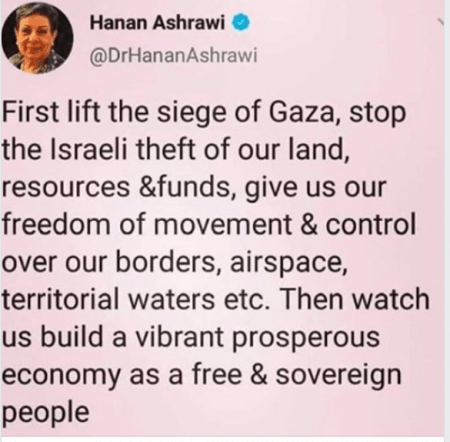
Just in case any of those weasels calling for our surrender might have any interest in what we Palestinians want, here is how Executive Member of the PLO, Dr. Hanan Ashrawi, put it:
Jafar M Ramini is a Palestinian writer and political analyst, based in London, presently in Perth, Western Australia. He was born in Jenin in 1943 and was five years old when he and his family had to flee the terror of the Urgun and Stern gangs. Justice for the people of Palestine is a life-long commitment.
Defense Cooperation Agreement Between US, UAE Now in Effect – White House
Sputnik – May 29, 2019
The White House issued a press release Wednesday, revealing that US National Security Advisor John Bolton and United Arab Emirates National Security Advisor Sheikh Tahnoon bin Zayed Al Nahyan signed a Defense Cooperation Agreement (DCA).
“The DCA will enhance military coordination between the United States and the United Arab Emirates, further advancing an already robust military, political, and economic partnership at a critical time,” reads the statement. “The United States and the United Arab Emirates share a deep interest in promoting prosperity and stability in the region.”
“The DCA will advance that interest by fostering closer collaboration on defense and security matters and supporting efforts by both nations to maintain security in the Gulf region,” it adds.
The US also has defense cooperation agreements with Bahrain, Qatar and Kuwait.
The latest agreement comes days after the US Defense Department announced that officials from the US and Estonia signed a five-year document to continue a defense cooperation between the two countries through 2024. According to a release from the defense agency, Estonia joins fellow Baltic states Lithuania and Latvia in the move.
The gulf within GCC is only widening
By M. K. BHADRAKUMAR | Indian Punchline | December 10, 2018
The annual summit meeting of the Gulf Cooperation Council (GCC) in Riyadh on Sunday was particularly important for Saudi Arabia as a display of its regional leadership. But the short meeting of the GCC leaders behind closed doors, lasting for less than an hour, ended highlighting the huge erosion of Saudi prestige lately.
The litmus test was the participation by Qatari Emir Sheikh Tamim bin Hamad al-Thani. King Salman’s letter of invitation to the emir was perceived as some sort of an olive branch for reconciliation. But Qatar’s Minister of State for Foreign Affairs Sultan bin Saad Al Muraikhi represented the country at the summit.
The calculation by the hot headed crown princes of Saudi Arabia and the UAE that Qatar would pack up is turning out to be a historic blunder. Qatar had some trying times but it has successfully weathered the harsh embargo by Saudi Arabia and the UAE, and the boycott is now hurting its enforcers. Qatar “celebrated” the anniversary of the boycott in June by banning the import of goods from the UAE, Saudi Arabia, Bahrain and Egypt (which had cut diplomatic and transport ties on June 5, 2017.) Ironically, Iran has been a beneficiary as Qatar established diplomatic relations with Tehran and began importing Iranian products.
Qatar also strengthened its alliance with Turkey, which stepped in as provider of security for Doha. And Turkey checkmated any plans that Saudis and Emiratis might have had to use force to bring the Qatari emir down on his knees.
The emir’s absence from the summit in Riyadh yesterday underscores that he is not in a mood to forget and forgive. Equally, Kuwait and Oman also have issues to settle with Saudi Arabia and the UAE. There is tension between Kuwait and Saudi Arabia over two oil fields – Khafji and Wafra – that are jointly owned by the two states, which have a capacity to produce more than half a million barrels per day, but have been closed since 2014 and 2015, respectively. The dispute is over the sovereignty over the so-called Neutral Zone on their border, which has been undefined for almost a century.
The Saudis are not relenting. “We’re trying to convince the Kuwaitis to talk about the sovereignty issues, while continuing to produce until we solve that issue,” Saudi Crown Prince Mohammed bin Salman told Bloomberg in an interview in October. Similarly, Saudis and Emiratis have stationed troops in Yemen’s southern province of al-Mahra that borders Oman although the region has no presence of Houthi rebels. Oman considers the move an infringement on its national security. Interestingly, instead of the Sultan of Oman, Deputy Prime Minister for the Council of Ministers Sayyid Fahd bin Mahmood Al Said represented the country at the GCC summit.
To be sure, like Banquo’s ghost at Macbeth’s banquet in Shakespeare’s play, the killing of Jamal Khashoggi provided the backdrop to the GCC summit. The GCC states (including Qatar) have not criticized the Saudi Crown Prince Mohammed bin Salman (MBS) but they would know this is a developing story and it has dented Saudi prestige irreparably, especially with the US Senate is at loggerheads with the Trump administration. The big question for the Gulf region would be as to where Saudi Arabia is heading. (See the blog by Thomas Lippman What Now For U.S. Policy And The Crown Prince?)
Of course, if the GCC disintegrates due to these contradictions, Saudi Arabia will be the big loser, because it will be a reflection on its regional leadership. But do the Saudis understand it? The remarks by the Saudi Foreign Minister Adel Al-Jubeir at the end of the GCC summit showed no sign of remorse.
He said, “The members of the Gulf Cooperation Council are keen that the crisis with Qatar will have no impact on the Council (GCC). But this does not mean relinquishing the conditions imposed on Qatar.” Doha should stop supporting terrorism and extremism and avoid interfering in other countries’ affairs and needed to fulfill the Arab countries’ conditions to open the way for its return to the full-fledged work in the GCC. “The stance towards Qatar came to push it to change its policies,” he added.
The leading Saudi establishment writer Abdulrehman al-Rashed fired away at Qatar on the day of the GCC summit. In a column entitled Is it Time to end the GCC? in the Saudi daily Asharq Al-Awsat (owned by royal family members) he wrote:
“Qatar… has been putting obstacles in the GCC path and it has succeeded where Saddam and Iran have failed: It managed to destroy and rip it [GCC] apart… It organized an internal and external opposition against the United Arab Emirates. It is now the primary financier of the greatest attack against Saudi Arabia and it stands behind the politicization of Khashoggi’s murder… Today’s [GCC] summit could not conceal the dark political cloud hanging over its head. It also strongly poses a question over the future of the GCC as doubts rise over the value of this union… A wedge has been driven in the GCC.”
The disarray within the GCC undoubtedly calls attention to the decline of US influence in the Middle East region. At the end of the day, the Gulf states have not paid heed to repeated US entreaties for GCC unity. Ideally, GCC should have provided today for the US strategy a strong platform for launching the regime change project against Iran. On the contrary, GCC is split down the middle, with Qatar, Oman and Kuwait getting along just fine with Tehran. While addressing the summit in Riyadh on Sunday, the Emir of Kuwait, Sheikh Sabah Al Ahmad hit the nail on the head when he said, “The most dangerous obstacle we face is the struggle within the GCC.”
Philippines makes ban on work in Kuwait ‘permanent’
Press TV – April 29, 2018
Philippine President Rodrigo Duterte on Sunday said the temporary ban on Filipinos going to work in Kuwait is now permanent, intensifying a diplomatic standoff over the treatment of migrant workers in the Persian Gulf nation.
Duterte in February imposed a prohibition on workers heading to Kuwait following the murder of a Filipino maid, whose body was found stuffed in a freezer in the Persian Gulf state.
The crisis deepened after Kuwaiti authorities last week ordered Manila’s envoy to leave the country over videos of Philippine Embassy staff helping workers in Kuwait flee allegedly abusive employers.
The two nations had been negotiating a labor deal that Philippine officials said could result in the lifting of the ban, but the recent escalation in tensions has put an agreement in doubt.
“The ban stays permanently. There will be no more recruitment for especially domestic helpers. No more,” Duterte told reporters in his hometown in the southern city of Davao.
Around 262,000 Filipinos work in Kuwait, nearly 60 percent of them domestic workers, according to the Philippines’ foreign department.
Last week, the Philippines apologized over the rescue videos, but Kuwaiti officials announced they were expelling Manila’s ambassador and recalling their own envoy from the Southeast Asian nation.
Duterte on Sunday described the situation in Kuwait as a “calamity.”
He said he would bring home Filipino maids who suffered abuse as he appealed to workers who wanted to stay in the oil-rich state.
“I would like to address to their patriotism: come home. No matter how poor we are, we will survive. The economy is doing good and we are short of our workers,” he said.
About 10 million Filipinos work abroad to seek high-paying jobs they were unable to find at home, and their remittances are a major pillar of the Philippine economy.
Duterte said workers returning from Kuwait could find employment as English teachers in China, citing improved ties with Beijing.
Describing China as a “true friend,” he said he would use Chinese aid to fund the workers’ repatriation.
Duterte added that he was not after “vengeance” against Kuwait and did not “nurture hate.”
“But if my people are considered a burden to some of them, to some government mandated to protect them and uphold their rights, then we will do our part,” he said.
Featured Video
America Racing to Strategic Defeat in Iran
or go to
Aletho News Archives – Video-Images
From the Archives
An Expert Military Analysis of War with China
Actually, None is Necessary
By Fred Reed • Unz Review • December 13, 2020
The Correlation of Armed Forces: U.S. goods and services trade with China totaled an estimated $634.8 billion in 2019. Exports were $163.0 billion; imports were $471.8 billion. The U.S. goods and services trade deficit with China was $308.8 billion in 2019. Trade in services with China (exports and imports) totaled an estimated $76.7 billion in 2019. Services exports were $56.5 billion; services imports were $20.1 billion. The U.S. services trade surplus with China was $36.4 billion in 2019.
There is talk within the Washingtoniat of a possible war with China. Steve Bannon, who apparently was dropped on his head as a child, actually favors such a war. We hear the usual shoo-the-boobs alarm about how the Chinese are doing something terrible and we must gird our loins and American values and show them what for, bow wow, woof. The danger is that the current game of who-blinks-first in Asian waters might actually provoke a shooting war. You know the kind of thing: One warship refuses to get out of the way of another, a collision ensues, some retard lieutenant who signed up on waivers opens fire, and we’re off and running. It is not a good idea to let children play with matches.
The said war is discussed either in emotional terms by idiots or in purely naval terms by those familiar with such things, so we hear of the First Island Chain and the Second Island Chain and whose missiles against the other’s missiles and so on. This would be appropriate if we were fighting World War Two again. Which we aren’t. Let’s take a quick-and-dirty look at how such a war might go.
To begin the war, America would overestimate itself and underestimate China. This is doctrine in the Pentagon. … continue
Blog Roll
 Aletho News
- Suicide Should Not Be a Government Service
- Rethinking America’s greatest threat: Iran vs. Israel-Firsters
- Iran accuses adversaries of false flags to strain Turkey ties
- Poland rules out sending Patriot missiles to US/Israel amid war on Iran
- Tehran approves new Hormuz plan with major restrictions
- No Threat Can Force Iran’s Surrender /Trita Parsi & Lt Cl Daniel Davis
- UK’s New Pandemic Plan Would Turn Big Tech Into a Mass Location Tracking Network
- Growing insecurity, soaring prices fuel protests in north as regime bans evacuation: Sources
- Iran denies responsibility for ‘depraved’ attack on Kuwait desalination plant
- Bring The Troops Back. End This War Now!
- If Americans Knew
- Carrying life under fire: Israeli invasion of Lebanon leaves pregnant women facing deadly risks
- Champagne all around for the new death penalty (for Palestinians) law – Not a ceasefire Day 172
- Why are Palestinian books struggling to be seen on Amazon?
- The Line Between Affinity and Conspiracy
- As Iran targets US military bases, will they be relocated to Israel? Not a ceasefire Day 171
- Will Trump Go Kamikaze?
- Is the University of Florida Shutting Down College Republicans over Israel Criticism?
- Jewish extremist arrested over alleged plot to firebomb Palestinian activist Nerdeen Kiswani’s home
- More than half of Palestinian child detainees have no charges
- The More Murderous Israel Gets, The More We Hear About “Antisemitism”
- No Tricks Zone
- New Study Finds Warming Saves Lives…Cold Temperatures 12 Times More Deadly Than Excess Heat
- German Science Blog Accuses PIK Climate Institute Of Hallucinating Climate Tipping Points
- Devastating Assessment Of Comirnaty Vaccine By Former Senior Pfizer Europe Toxicologist
- New Study: CO2 Is ‘Effectively Negligible’ As An Explanatory Climate Change Factor Since 2000
- Former Pfizer Toxicologist Dr. Helmut Sterz Tells Bundestag Hearing Pfizer Vaccine Should Have Never Been Approved
- Energy Expert: Germany’s Nuclear Phaseout Was A “500 Billion Euro Mistake”
- New Research: South Australia’s Mid-Holocene Sea Surface Temperatures Were 4°C Warmer Than Today
- Storing Green Energy To Last Germany 10 Days Would Require A 60-Million Tonne Battery
- New Studies: UK Sea Levels Were 4 Meters Higher Than Today During The Mid-Holocene
- Destructive Green New Deal: German Energy And Metal Group Warns Of Drastic Crisis
 Aletho News