Kyrgyzstan’s Forgotten Colour Revolution
By Kit Klarenberg | Global Delinquents | November 6, 2025
October 5th marked the 25th anniversary of the world’s first “colour revolution”, in Yugoslavia. A lavishly-funded, multi-pronged CIA, NED and USAID campaign exploited civil society actors, in particular youth groups, to dislodge President Slobodan Milosevic from power. Such was the effort’s success, US officials and media openly boasted about Washington’s central role. A slick ‘documentary’ on the unrest, Bringing Down A Dictator, was even produced. Milosevic’s fall also provided a blueprint for countless future ‘soft coups’, which continue to this day.
So it was, one by one in the early 2000s, insufficiently pro-Western governments throughout the former Soviet sphere were toppled using strategies and tactics identical to those deployed against Belgrade. A common ruse was for the US to fund, via local NGOs, a “parallel vote tabulation” to project an election’s outcome in advance, and publicise the data before results were officially announced. As in Yugoslavia, PVT figures differing from formal tallies were the spark that ignited Georgia’s 2003 ‘Rose Revolution’, and Ukraine’s 2004 ‘Orange Revolution’.
Over subsequent years, much has been written by academics, historians and independent journalists about those colour revolutions. Conversely, Kyrgyzstan’s 2005 ‘Tulip Revolution’ has gone almost entirely unremarked upon, and is largely forgotten now. Yet, its destructive consequences reverberate today. Hitherto the freest and most stable state in Central Asia, post-colour revolution Bishkek careened from crisis to crisis, with multiple governments collapsing along the way. It’s only in recent years – following another Anglo-American coup in 2020 – the country has regained its economic, political, and social balance.
Pre-2005, Kyrgyzstan was not an obvious colour revolution candidate. Upon its 1991 independence from the Soviet Union, the country quickly established itself not only as the most democratic and open in the region, but a dependable US ally. President Askar Akayev, a former scientist with zero political background, was organically popular, and moreover made clear his economic policies were informed by arch-capitalist Adam Smith, not Karl Marx. In other words, Bishkek was primed to do business with the West.
Akayev moreover allowed a relatively free media to develop, and welcomed widespread foreign civil society penetration. Thousands of European and US-funded non-governmental organisations duly opened up shop locally. At one stage, the President quipped, “if the Netherlands is a land of tulips, then Kyrgyzstan is a land of NGOs.” His comments proved bitterly ironic, given the title of the colour revolution that eventually unseated him. In another deeply sour twist, it was precisely Akayev’s welcoming of Western financial and societal infiltration that was his undoing.
A self-laudatory USAID factsheet on the President’s removal notes, from 1994 onwards $68 million was funnelled into Kyrgyzstan. This vast windfall was used to train NGOs “to lobby government,” finance “private newspapers” critical of Akayev, establish an “American University” locally, and much more besides. The Tulip Revolution stands today as a stark warning to governments the world over of the dangers of permitting such entities to operate on their soil with impunity – and how often, even pro-Western leaders can fall victim to their mephitic influence.
‘Defeat Dictators’
Despite much goodwill built up since 1991, in October 2003 Akayev angered Washington by inviting Moscow to open an airbase not far from Bishkek, and just a few dozen kilometres from the Empire’s vast Manas military installation, one of a cluster constructed by the US across Central Asia post-9/11 to facilitate the War On Terror. Such insubordination was sufficient to mark the President for removal, and preparations for a colour revolution according to a by-then well-honed formula began almost immediately.
Akayev was not unwise to this risk, warning in December 2004 of an “orange danger” of the kind that had just engulfed Ukraine threatening Kyrgyzstan, in advance of the country’s elections in February the next year. As it was, the results were far too clean to allege rigging or other shenanigans, as with prior colour revolutions. A detailed investigation by the European Network of Election Monitoring Organizations in fact praised a “positive… lack of reports of vote-buying, voter intimidation, and harassment of journalists.”
Washington’s vast local standing army of civil society insurrectionists began causing havoc anyway. Some operated under the banner of KelKel, a group directly inspired by US-sponsored revolutionary youth factions in Yugoslavia, Georgia and Ukraine, and trained by their alumni. Moreover, as the Wall Street Journal revealed just before the elections, an ostensibly “independent” local printing company in receipt of Freedom House, NED, Soros and USAID cash was responsible for publishing a panoply of opposition pamphlets.
Days earlier, the firm’s electricity was cut off by local authorities. Kyrgyzstan’s US embassy “stepped in with emergency generators” to maintain its anti-government propaganda deluge. This included a prominent newspaper that published “front-page photos of a palatial mansion purportedly owned by the President and of a boy in a decrepit alleyway,” highlighting state embezzlement versus citizen poverty. Another was a handbook produced by CIA-connected Gene Sharp, From Dictatorship to Democracy, dubbed “the bible” of Ukraine’s US-sponsored youth activists at the forefront of the Orange Revolution.
This “manual on how to defeat dictators, including tips on hunger strikes and civil disobedience,” includes guidance “on nonviolent resistance – such as ‘display of flags and symbolic colors’.” However, the protests that instantly erupted after the elections were highly belligerent from inception, with bomb attacks, police pelted with bricks and beaten with sticks, and government buildings torched and forcibly occupied. The New York Times contemporaneously acknowledged broadcasts by US-funded local TV stations inspired violence in certain areas of Kyrgyzstan.
Upheaval raged for weeks, prompting a personal intervention from UN Secretary General Kofi Annan, who expressed significant alarm over “the use of violence and intimidation to resolve electoral and political disputes.” He welcomed Akayev’s invitation to instigate dialogue with protesters. They demanded he resign instantly – despite the President having already pledged before the election to do so in October that year. In March, Akayev acquiesced and stood down, replaced by Kurmanbek Bakiyev.
‘Terribly Disappointing’
Bakiyev’s seizure of power was initially framed by Western journalists, politicians and pundits as a sparkling victory for people power, and the dawning of a new era of democracy and freedom in Kyrgyzstan. Yet, five years later, he fled the country, following mass protests over his savage, corrupt rule. The tipping point for Bakiyev’s ouster was the April 7th 2010 mass shooting of demonstrators by security forces, which killed up to 100 people and wounded at least 450 more.
As Forbes recorded at the time, the level of graft under his Presidency was “mind-boggling”. Bakiyev appointed close relatives to key positions, allowing his family to profit handsomely from legally questionable privatisation of state industries, and supply of fuel to Washington’s Manas base. Bakiyev’s son Maxim, who oversaw the latter, was described by US diplomats in leaked cables as “smart and corrupt.” By some estimates, companies he ran reaped $1.8 billion from these deals, close to Kyrgyzstan’s total GDP in 2003.
Meanwhile, Bakiyev’s brother Zhanysh ran Bishkek’s security apparatus with an iron fist. Harsh restrictions on political freedoms were enacted, while arbitrary detentions, bogus convictions, torture, and killings of opposition activists, journalists, and politicians became commonplace. For example, in March 2009 Bakivey’s former chief of staff Medet Sadyrkulov died in an alleged road traffic accident. It was later revealed he was brutally slain upon Zhanysh’s order. That December, dissident reporter Gennady Pavlyuk was murdered, thrown out of a sixth-floor apartment with his arms and legs bound.
Bishkek’s Tulip Revolution wasn’t unique in producing such horrors. A March 2013 essay in elite imperial journal Foreign Policy acknowledged the results of every US-orchestrated government overthrow in the first years of the new millennium were “terribly disappointing”, and “far-reaching change never really materialized” resultantly. This is quite an understatement. Most target countries slid into autocracy, chaos and poverty as a result of Washington’s meddling. It has typically taken years for the damage to be corrected, if at all.
Still, despite this disgraceful legacy, the US appetite for fomenting colour revolutions – and the willingness of groomed citizens, particularly youth, the world over to serve as Washington’s regime change footsoldiers – remains undimmed. In September, Nepal’s elected government was overthrown by disaffected ‘Gen Z’ activists, with the full support of the country’s powerful military. The palace coup bore all the hallmarks of a colour revolution. Who and what will replace the felled administration still remains far from clear.
As a September 15th New York Times editorial noted, “Nepalis from all walks were ready to reject the system they had fought for decades to achieve,” but lack “any clear sense of what comes next.” There is an extraordinary political vacuum in Kathmandu presently, which elements within the country are seeking to exploit for malign ends. As before, Nepal’s “revolution” is likely to produce a government far worse than that which preceded it.
The Hidden Renewable Energy in Central Asia
By Brenda Shaffer and Svante Cornell | Real Clear Energy | January 22, 2025
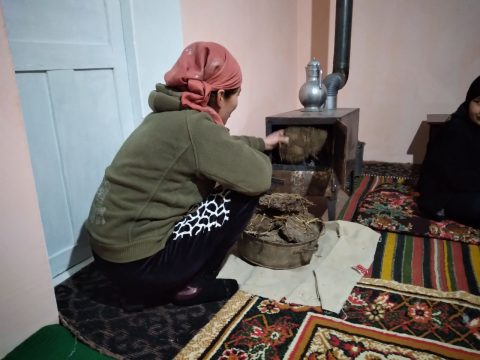
One of the biggest threats to human health, and a major source of air pollution, is regularly hidden in statistical reports as “renewable energy:” the burning of dung, wood, and lump coal. While most of the world receives its energy from fossil fuels, over two billion people on the globe do not have regular access to modern energy and rely on traditional burning of gathered materials. The great majority of the people without access to regular energy live in sub-Saharan Africa. However, in many states, the access to energy is highly differentiated between the main urban centers and the rural population. Central Asia is a region with such a split: it has a high level of human development and electricity access is universal in major cities, but up to a third of the population continues to rely on traditional energy, due either to a lack of reliable access to heat and electricity or due to the latter’s prohibitive cost. One of the top development priorities in Central Asia and globally should be enabling access to modern energy, specifically natural gas, which will in turn vastly improve human health and lower air pollution.
All humans need energy to perform basic functions. Without access to modern energy sources, people burn biomass and other materials they can gather for free or very cheaply. For the first time since World War II, global access to electricity declined in 2022, and likely remained flat in 2023. This left more people relying on traditional energy sources, which leads to increased health threats and rising air pollution.
The extent of people relying on traditional energy is often hidden in the formal statistics on energy use, or goes underreported. Some organizations, such as the International Energy Agency, have begun to categorize traditional burning as renewable energy. The IEA has been able to show an increase in renewable energy consumption by this reporting and an increase in “women in the energy workforce” by classifying women who gather dung and sticks as “energy workers.” In some places, there is general underreporting of traditional energy use, since most of it does not involve traded or taxed goods or formal employment.
Central Asia is a case where despite high or very high levels of human development in all but one of the states of the region, and widespread electricity access, rates of traditional energy use are still very high. In Kazakhstan, 30% of households reported burning coal or wood for heat. Residential burning of coal is one of the main sources of air pollution in Kazakhstan, especially in the winter. The situation in Kyrgyzstan is even worse, with half of the country’s households burning lump coal or dung for winter heat. Due to this indoor air pollution, mortality rates from lung diseases are the highest in the world in Kyrgyzstan. In Tajikistan, many households rely on burning coal, dung and wood for winter heating, albeit precise data on the percentage of households is lacking.
While funding is available from the World Bank and foreign aid donors for renewable energy, few funds are offered to help countries move from health threatening energy use to cleaner fuels, such as natural gas. This is because the World Bank and the G-7 countries in 2021 stopped all funding for fossil fuel energy. Other sources of renewable energy are not a realistic option to provide a serious portion of the energy needs of Central Asia, due to the extreme cold climate of most parts of the region. Kazakhstan is among the world’s coldest countries, with winters lasting for six months. In Kazakhstan and most of Central Asia, reliable and affordable access to heat is necessary for basic survival.
The wealthy countries in the West believe that by denying access to fossil fuels, they can force people to adopt renewable energy. However, the case of Central Asia shows that people will expose themselves to the dangers of traditional energy, without access to safer forms of energy, when renewable energy is expensive, unreliable or not able to meet their geographic needs, such as for heat in the winter.
An IEA report on traditional heating in Kazakhstan suggested that heat pumps could help the population access cleaner energy. This illustrates the disconnect of many of these First World energy institutions from the real life of people. Many people in Central Asia that have access to electricity continue to burn lump coal or wood in their homes, despite the health risks, because it is cheaper and more reliable than electricity. While people in wealthy countries like the United States and the UK have installed heat pumps at a very low rate, poor people in Central Asia can’t even dream of expenses of this nature.
Yet Central Asia has significant resources of natural gas, which Western well-wishers would rather leave in the ground. But increased utilization of natural gas is the only practical option that can help Central Asians lower their dependency on traditional energy. Natural gas supplies have the potential of being both reliable and affordable. Access to new gas supplies will contribute significantly to improving public health and reducing pollution in Central Asia.
The Central Asian example illustrates the unintended consequences of the West’s blanket ban on supporting fossil fuel development, and its lumping together of cleaner natural gas with more polluting fuels like coal and oil. It also serves as a reminder that “renewable” energy does not always mean healthy energy. For many, such as in Central Asia, lack of funding for gas will not drive people to a world powered by wind or solar, but will leave them dependent on burning coal and dung.
Brenda Shaffer is a faculty member of the U.S. Naval Postgraduate School.
Svante E. Cornell is a co-founder and Director of the Institute for Security and Development Policy. He is the Director of the Central Asia-Caucasus Institute & Silk Road Studies Program, the Joint Center operated by ISDP in cooperation with the American Foreign Policy Council (AFPC).
USAID’s Color Revolutions: Destabilizing States for US Interests
By Ekaterina Blinova – Sputnik – 06.02.2025
USAID openly acknowledged its role in regime change operations through “democracy” programs by 2006.
“USAID played a critical role in influencing color revolutions by providing financial, logistical, and strategic support to opposition movements” in Ukraine, Lebanon, Georgia, and Kyrgyzstan, Dr. Marco Marsili of the Portuguese Catholic University’s Institute of Political Studies tells Sputnik.
These regime change operations advanced US geopolitical interests but brought no real benefits to the affected nations, he argues.
“USAID’s activities were framed as democracy promotion, electoral assistance, and civil society development,” Marsili notes. However, the results tell a different story:
“Ukraine and Georgia faced ongoing political instability, Lebanon remained sectarian, and Kyrgyzstan suffered repeated upheavals,” he says.
Here’s a breakdown:
Georgia – Rose Revolution (2003)
- US aid: $103M (2002), $141.16M (2003)
- “Democracy programs” received $23.5M (2002), $21.06M (2003) via USAID, IRI, and NDI for NGOs, activists, and media.
- In 2004, the US admitted it “helped” prepare Georgia’s 2003 election, with US-funded NGOs playing a key role in the regime change.
- USAID noted Georgians “borrowed” Serbia’s 2000 pro-democracy tactics, later influencing Ukraine in 2004.
Ukraine – Orange Revolution (2004)
- US aid: $188.5M (2003), $143.47M (2004)
- “Democracy programs” received $54.7M (2003), $34.11M (2004) via USAID, NED, and the Eurasia Foundation.
- To push a pro-US candidate, USAID launched the Strengthening Electoral Administration in Ukraine Project (SEAUP) in Dec 2003, influencing Ukraine’s parliament and judiciary.
Kyrgyzstan – Tulip Revolution (2005)
- Inspired by Georgia and Ukraine, USAID heavily funded local NGOs, activists, and media before the Feb 2005 election.
- US aid: $56.6M (2003), $50.8M (2004), with “democracy programs” receiving $13.5M (2003), $12.2M (2004).
- George Soros’ Open Society Institute funneled $5M (2003) to Kyrgyzstan’s American University of Central Asia.
Lebanon – Cedar Revolution (2005)
- In March 2005, 1M Lebanese protested, demanding Syria’s military withdrawal, paving the way for pro-US leader Saad Hariri.
- USAID’s 2006 report claimed years of work laid the foundation for the uprising.
- US aid to Lebanon tripled in the early 2000s from $15M to $45M.
Collapsing Empire: RIP ‘Overt Operations’
By Kit Klarenberg | Al Mayadeen | December 30, 2024
In recent months, a remarkable development in the Empire’s decline has gone almost entirely unnoticed. The National Endowment for Democracy’s grant database has been removed from the web. Until recently, a searchable interface allowed visitors to view detailed records of Washington-funded NGOs, civil society, and media projects in particular countries – covering most of the world – the sums involved, and entities responsible for delivering them. This resource has now inexplicably vanished, and with it, enormous amounts of incontrovertible, self-incriminating evidence of destructive US skullduggery abroad.
Take for example NED grant records for Georgia, the site of recent repeated color revolution efforts, at the forefront of which were Endowment-bankrolled organizations. While still accessible via internet archives, they were deleted during the summer. Today, visitors to associated URLs are redirected to a brief entry simply titled “Eurasia”. The accompanying text describes in very broad terms the Endowment’s aims regionally and the total being spent, but the crucial questions of where and on what aren’t clarified. In a comic hypocrisy too, the blurb boldly states:
“The heart of NED’s work in the region is the need to maintain access to objective information for local populations. Across the region, government actors are attempting to limit the space for citizens to distribute information and communicate freely online.”
Resultantly, independent academics, activists, researchers, and journalists have been deprived of an invaluable resource for tracking and exposing the Empire’s machinations. Yet, the Endowment incinerating its public paper trail can only be considered a significant victory for these same actors. NED’s explicit and avowed raison d’être was to do publicly what US intelligence did – and in many cases still does – covertly. Now, after 40 years of wreaking havoc worldwide in service of the Empire, the CIA front has been forced underground, defeating its entire purpose.
‘Spyless Coups’
NED was founded in November 1983, after the CIA became embroiled in a series of embarrassing public scandals. Then-Agency director William Casey was central to its construction. His objective was to create a public mechanism to conduct traditional CIA meddling overseas, except out in the open. Ever since, the Endowment has financed countless opposition groups, activist movements, media outlets, and trade unions to the tune of millions to engage in propaganda and political activism, to disrupt, destabilize, and displace ‘enemy’ regimes the world over.
The NED’s true nature was openly acknowledged by the mainstream media for many years. In June 1986, Endowment’s president Carl Gershman told the New York Times, “It would be terrible for democratic groups around the world” to be subsidized by the CIA. The exposure of such connivances meant they had been “discontinued”, and farmed out to NED. Several high-ranking interviewees strenuously denied there was any connection between NED and the Agency, although the outlet acknowledged many Endowment programs seemed “superficially similar” to past CIA operations.
At this time, NED was hard at work killing off Communism in the Soviet Union, Warsaw Pact, and Yugoslavia. This included for instance enormous investment in Poland’s famous Solidarity trade union, which became a global emblem of anti-Communist resistance. In September 1991, the Washington Post published a highly laudatory appraisal of these efforts, stating the “political miracles” the Endowment achieved in the former Soviet sphere had ushered in a “new world of spyless coups” and “innocence abroad”:
“The old era of covert action is dead. The world doesn’t run in secret anymore. We are now living in the age of Overt Action… When such activities are done overtly, the flap potential is close to zero. Openness is its own protection. Covert funding for these groups would have been the kiss of death, if discovered. Overt funding, it would seem, has been a kiss of life.”
NED proceeded to take down a number of governments throughout the 1990s and 2000s, very overtly. In many cases, mainstream outlets published highly revealing accounts detailing precisely how. In Ukraine in November 2004, Endowment-trained and bankrolled activists forced a rerun of that year’s presidential election. As The Guardian jubilantly reported, the entire effort was “an American creation” and “sophisticated and brilliantly conceived exercise in Western branding and mass marketing,” which had been repeatedly deployed in the new millennium to “topple unsavoury regimes”:
“Funded and organised by the US government, deploying US consultancies, pollsters, diplomats, the two big American parties and US non-government organisations…the operation – engineering democracy through the ballot box and civil disobedience – is now so slick that the methods have matured into a template for winning other people’s elections.”
‘Kiss of Death’
The next year, USAID published a slick magazine, Democracy Rising, bragging extensively about how it and NED were fundamental to a wave of revolutions in Georgia, Kyrgyzstan, Lebanon, Yugoslavia, and elsewhere during the first years of the 21st century. Fast forward to February 2014, and Ukraine’s government once again fell victim to an Endowment-orchestrated coup, in the form of the Maidan ‘revolution’. Yet, the media either ignored the irrefutable US role in fomenting the upheaval or dismissed the proposition as “Russian disinformation” or conspiracy theory.
This is despite contemporary polls never showing majority Ukrainian support for the Maidan protests; ousted President Viktor Yanukovych remaining the most popular politician in the country until his last day in office; every actor at Maidan’s forefront, including the individuals who started the demonstrations, receiving NED or USAID funding; leaders of US-financed organizations in the country openly advertising their desire to overthrow Yanukovych in the years prior; and the Endowment pumping around $20 million into the country in 2013 alone.
This mass omertà, which has intensified since, may be attributable to ever-rising hostility towards NED by foreign governments and populations, and associated efforts to restrict or outright proscribe the organization. The reality of the Endowment’s raison d’être and modus operandi has thus not only become unsayable but must be vehemently denied by Western journalists. Representatively, a July 2015 Guardian report on Russia banning NED quite unbelievably relied on a brief quote from the organization’s own website to describe its operations.
While the mainstream media may have remained silent on the NED’s mephitic influence overseas over the past decade, the same is not true of independent academics, activists, researchers, and journalists. The Endowment grant database served as an invaluable tool for keeping a close eye on Washington’s international intrigues and mapping the personal and organizational connections of agents and entities of influence. Meanwhile, NED’s status as a CIA front could be simply proven, via multiple public admissions of its own leaders.
Whenever protests erupted somewhere in the world and received widespread Western news coverage, concerned citizens could consult the NED grant database and find in the overwhelming majority of cases, most if not all individuals and groups quoted in media reports were in receipt of Endowment funding. While impossible to quantify, it would be unsurprising if dissident voices calling attention to this fact have averted color revolution efforts, disrupted external meddling campaigns, protected popular governments and political figures, and more.
Of course, despite NED brazenly purging evidence of its vast operations from the web, that conniving continues apace regardless, covertly. One might even argue the Endowment’s chicanery is all the more dangerous now, given individuals and organizations can conceal their funding sources. But the move amply shows NED today cannot withstand the slightest public scrutiny, which its very existence was intended to exemplify. It demonstrates that “overt operations” with open US funding are now the “kiss of death” the Endowment was meant to replace.
Iran expects boom in trade after gaining EAEU’s observer status
Press TV – December 29, 2024
Iran expects a major boom in trade ties with members of the Eurasian Economic Union (EAEU) after the country gained observer status in the bloc and just months before the two sides enter into a free trade agreement.
Iran’s trade minister Mohammad Atabak said on Sunday that observer membership in the EAEU will enable Tehran to increase its presence in the bloc’s meetings and exchange more trade and economic information with its members.
Atabak made the remarks after returning from an EAEU Supreme Council meeting in Saint Petersburg, Russia, where he signed the agreement for Iran to become an observer member in the bloc on December 26.
During the meeting, EAEU members also gave their final endorsement to a free trade agreement signed between Iran and the bloc last year. The agreement, which has been ratified by parliaments of both Iran and five EAEU members, will officially come into effect in the next two months after Iran’s Guardian Council, which vets legislation passed by parliament, approves the deal.
Atabak said that the free trade deal with the EAEU will eliminate tariffs on nearly 87 percent of Iranian exports to members of the bloc, namely Russia, Belarus, Kazakhstan, Kyrgyzstan, and Armenia.
He expected that trade between Iran and the EAEU would increase several times with the implementation of the free trade deal.
“The Eurasian region is a very good market for Iranian goods. Iranian technical and engineering companies can also expand their activities in these countries,” he said.
The minister said that Iran is planning to hold a major trade exhibition in Tehran in the coming months to showcase its economic and trade potential to EAEU countries.
Sheikh Hasina speaks up on US plot

Bangladeshi Hindus fleeing to India for safety gather at the international border, Sitalkuchi, Cooch Behar, August 9, 2024
By M. K. BHADRAKUMAR | Indian Punchline | August 11, 2024
The exclusive report in today’s Economic Times carrying Sheikh Hasina’s first remarks after her ouster from power will come as a slap on the face of the nincompoops in our country who are waxing eloquently about developments in that country as a stand-alone democracy moment in regional politics.
Hasina told ET, “I resigned, so that I did not have to see the procession of dead bodies. They wanted to come to power over the dead bodies of students, but I did not allow it, I resigned from premiership. I could have remained in power if I had surrendered the sovereignty of Saint Martin Island and allowed America to hold sway over the Bay of Bengal. I beseech to the people of my land, ‘Please do not allow to be manipulated by radicals.’”
The ET report citing Awami League sources implied that the hatchet man of the colour revolution in Bangladesh is none other than Donald Lu, the incumbent Assistant Secretary of State for South and Central Asian affairs who visited Dhaka in May.
This is credible enough. A background check on Lu’s string of postings gives away the story. This Chinese -American ‘diplomat’ served as political officer in Peshawar (1992 to 1994); special assistant to Ambassador Frank Wisner (whose family lineage as operatives of the Deep State is far too well-known to be explained) in Delhi (1996-1997); subsequently, as the Deputy Chief of Mission in Delhi from 1997-2000 (during which his portfolio included Kashmir and India-Pakistan relations), inheriting the job, curiously enough, from Robin Raphel, whose reputation as India’s bête noire is still living memory — CIA analyst, lobbyist, and ‘expert’ on Pakistan affairs.
Indeed, Lu visited Bangladesh in mid-May and met with senior government officials and civil society leaders. And shortly after his visit, the US announced sanctions against then Bangladesh army chief General Aziz Ahmed for what Washington termed his involvement in “significant corruption.”
After his Dhaka visit, Lu told Voice of America openly, “Promoting democracy and human rights in Bangladesh remains a priority for us. We will continue to support the important work of civil society and journalists and to advocate for democratic processes and institutions in Bangladesh, as we do in countries around the world…
“We [US] were outspoken in our condemnation of the violence that marred the election cycle [in January] and we have urged the government of Bangladesh to credibly investigate incidents of violence and hold perpetrators accountable. We will continue to engage on these issues…”
Lu played a similar proactive role during his past assignment in Kyrgyzstan (2003-2006) which culminated a colour revolution. Lu specialised in fuelling and masterminding colour revolutions, which led to regime changes in Albania, Georgia, Azerbaijan, Kyrgyzstan and Pakistan (ouster of Imran Khan).
Sheikh Hasina’s disclosure could not have come as surprise to the Indian intelligence. In the run-up to the elections in Bangladesh in January, Russian Foreign Ministry had openly alleged that the US diplomacy was changing tack and planning a series of events to destabilise the situation in Bangladesh in the post-election scenario.
The Foreign Ministry spokesperson said in a statement in Moscow,
“On December 12-13, in a number of areas of Bangladesh, opponents of the current government blocked road traffic, burned buses, and clashed with the police. We see a direct connection between these events and the inflammatory activity of Western diplomatic missions in Dhaka. In particular, US Ambassador P Haas, which we already discussed at the briefing on November 22.
“There are serious reasons to fear that in the coming weeks an even wider arsenal of pressure, including sanctions, may be used against the government of Bangladesh, which is undesirable to the West. Key industries may come under attack, as well as a number of officials who will be accused without evidence of obstructing the democratic will of citizens in the upcoming parliamentary elections on January 7, 2024.
“Unfortunately, there is little chance that Washington will come to its senses and refrain from yet another gross interference in the internal affairs of a sovereign state. We are confident, however, that despite all the machinations of external forces, the issue of power in Bangladesh will ultimately be decided by the friendly people of this country, and no one else.”
Moscow and Beijing have nonetheless taken a scrupulously correct stance of non-interference. True to Russian pragmatism, Moscow’s Ambassador to Bangladesh Alexander Mantytsky noted that his country “will cooperate with any leader and government elected by the people of Bangladesh who is ready for equal and mutually respectful dialogue with Russia.”
That said, both Russia and China must be worried about the US intentions. Also, they cannot but be sceptical about the shape of things to come, given the abysmal record of the US’ client regimes catapulted to power through colour revolutions.
Unlike Russia, which has economic interests in Bangladesh and is a stakeholder in the creation of a multipolar world order, the security interests of China and India are going to be directly affected if the new regime in Dhaka fails to deliver and the country descends into economic crisis and lawlessness as a failed state.
It is a moot point, therefore, whether this regime change in Dhaka masterminded by Washington is ‘India-centric’ or not. The heart of the matter is that today, India is flanked on the west and the east by two unfriendly regimes that are under US influence. And this is happening at a juncture when signs are plentiful that the government’s independent foreign policies and stubborn adherence to strategic autonomy has upset the US’ Indo-Pacific strategy.
The paradox is, the colour revolution in Bangladesh was set in motion within a week of the ministerial level Quad meeting in Tokyo, which was, by the way, a hastily-arranged US initiative too. Possibly, the Indian establishment was lulled into a sense of complacency?
British Foreign Secretary David Lammy reached out to External Affairs Minister S. Jaishankar with a phone call on August 8 coinciding with the appointment of the interim government in Dhaka, which the UK has welcomed while also urging for “a peaceful pathway to an inclusive democratic future” for Bangladesh — much as the people of that country deserve “accountability.” [Emphasis added.]
India is keeping mum. The only way Bangladesh can figure a way out of the foxhole is through an inclusive democratic process going forward. But the appointment, ostensibly at the students’ recommendation, of a US-educated lawyer as the new chief justice of the Supreme Court in Dhaka is yet another ominous sign of Washington tightening its grip.
Against this geopolitical backdrop, a commentary in the Chinese daily Global Times on Thursday titled China-India relations easing, navigating new realities gives some food for thought.
It spoke of the imperative for India and China “to create a new kind of relationship that reflects their status as major powers… Both countries should welcome and support each other’s presence in their respective neighbouring regions.” Or else, the commentary underscored, “the surrounding diplomatic environment for both countries will be difficult to improve.”
The regime change in Bangladesh bears testimony to this new reality. The bottom line is that while on the one hand, Indians bought into the US narrative that they are a ‘counterweight to China’, in reality, the US has begun exploiting India-China tensions to keep them apart with a view to advance its own geopolitical agenda of regional hegemony.
Delhi should take a strategic overview of where its interests would lie in this paradigm shift, as the usual way of thinking about or doing something in our neighbourhood is brusquely replaced by a new and different experience that Washington has unilaterally imposed. What we may have failed to comprehend is that the seeds of the new paradigm were already present within the existing one.
Kremlin comments on Türkiye’s SCO bid
Türkiye’s obligations to the US-led military bloc are not consistent with the Eurasian organization’s values, Moscow has said.
RT | July 12, 2024
Türkiye’s bid to become a full member of the Shanghai Cooperation Organization (SCO) is not compatible with its membership in NATO, Kremlin spokesman Dmitry Peskov said on Friday.
Last week, Turkish President Recep Tayyip Erdogan attended a summit of the Eurasian mutual defense group, in which his nation has observer status. While returning home from Kazakhstan, he told journalists that Ankara wants to “further develop” ties with the SCO and its founding members Russia and China. During the NATO leaders’ summit in the US this week, he said Türkiye wants to join the SCO as a permanent member.
Asked by journalists when Turkish accession could be expected, Peskov said there was a problem with such a proposal.
“There are certain contradictions between Turkish commitments and [its] position on fundamental issues as a NATO member and the worldview formulated in the founding documents of the SCO,” he explained.
The expansion of the SCO is of interest to many nations and remains on its agenda, but there is no specific timeline for accepting new members, he added. Commenting later during a press call on bilateral relations with Türkiye, Peskov said Russia was “open for attempts to reach agreements based on a certain worldview.”
Moscow perceives NATO as a hostile, aggressive military organization, which serves US geopolitical interests and is currently conducting a proxy war against Russia in Ukraine.
Despite being a NATO member state, Türkiye has maintained a neutral stance on the Ukraine conflict, refusing to impose economic sanctions on Russia and serving as an intermediary between Moscow and Kiev on several occasions. Ankara helped to mediate a nascent peace deal in the early months of the hostilities, which Kiev eventually ditched in favor of continued fighting. The Russian government believes that the US and its allies, particularly the UK, forced Ukraine to reject the proposal.
The SCO was founded in 2001 and currently has ten full members: Russia, China, India, Iran, Kazakhstan, Kyrgyzstan, Pakistan, Tajikistan, Uzbekistan, and Belarus. Kazakhstan holds the rotating presidency this year and hosted the leaders of member states on July 3 and 4 in Astana.
One of the key pledges to which SCO members subscribe is not to seek the improvement of their own national security at the expense of the national security of other parties. NATO policy does exactly that, according to its critics, including Russia.
MI6 Coup in Macedonia Unravels
By Kit Klarenberg | Active Measures | June 21, 2024
On May 12th, this journalist documented the labyrinthine Western-orchestrated machinations via which Macedonia – under the locally-despised name of North Macedonia – was forcibly enrolled in NATO, despite widespread public opposition. Absent from that investigation was reference to the central role played in these connivances by British intelligence. Namely, London’s ambassador to Skopje and lifetime MI6 operative, Charles Garrett. Now troublesome VMRO-DPMNE is returned to office, it is vital his activities in the country are re-examined.
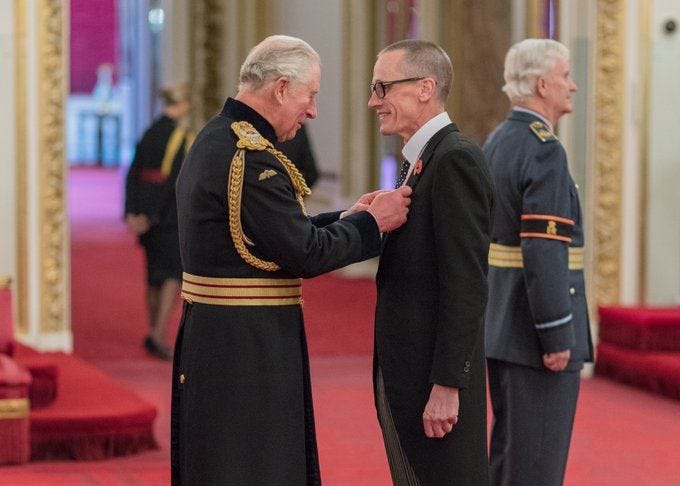
Charles Garrett receives an award from King Charles
As The Grayzone has previously documented, London operates a dedicated program known as “Global Britain” in the West Balkans. Leaked documents related to the effort reveal it is concerned with insidiously influencing the composition of local governments and legal and regulatory environments to advance British interests, while filling regional security, intelligence, and military forces with handpicked assets. As one leaked file makes clear, MI6 does not tolerate regional opposition to its agenda, readily deploying active measures to neutralize any and all local resistance:
“In contexts where elite incentives are not aligned with [Britain’s] objectives/values… an approach that seeks to hold elite politicians to account might be needed… We can build relationships and alliances with those who share our objectives and values for reform… It is critical that the media have the capacity and freedom to hold political actors to account.”
Events in Macedonia over the past decade provide a brutal demonstration of what can befall governments and officials in the Balkans who do not share Britain’s “objectives” and “values”, and how they are “held to account.” So too does a 2020 coup in Kyrgyzstan, where Garrett set up shop after leaving Skopje. With Central Asia now in the crosshairs of London’s endless quest for “reform” overseas, it’s never been more vital to beware Brits bearing gifts.
‘Colorful Revolution’
Following Russia’s March 2014 reunification with Crimea, NATO’s efforts to expand in the Former Yugoslavia became turbocharged. The Grayzone has previously reported how alliance membership was imposed upon Montenegro, despite near-universal public opposition, in 2016. Achieving this feat required sustaining a corrupt, savage pro-Western dictator in power for almost two decades, and an elaborate connivance whereby anti-NATO opposition actors were jailed on bogus charges of colluding with Russian intelligence to overthrow the government, based on bogus CIA and MI6-supplied evidence.
Similar subterfuge played out in Skopje, which signed a “Membership Action Plan” with NATO in 1999. While slightly more supportive of NATO membership than Montenegrins, the local population near-unanimously opposed changing the country’s name, which Greece, the EU and US made a prerequisite for joining. The VMRO government, led by Nikola Gruevski, pledged Macedonia would always be called Macedonia. So a Western-orchestrated coup was put into motion.
In February 2015, opposition party SDSM’s leader Zoran Zaev began regularly dropping what he and the media branded “bombs” – deeply damaging wiretaps of private conversations between prominent Macedonian officials, businesspeople, journalists, and judges. The tapes seemingly implicated Gruevski and his ministers in serious crimes, including murder. Zaev claimed the illegally-captured recordings were passed to him by whistleblowers. The premier countered that the releases were supplied by foreign intelligence services, with the objective of forcing an early election.
Subsequent investigations exposed how SDSM deceptively edited and spliced these leaked recordings to grossly distort their contents, and falsely incriminate government officials. For example, one “bomb” was extensively doctored to make it sound like VMRO leaders conspired to cover up the 2011 murder of a young Macedonian in Skopje by a senior police officer, while shielding them from justice. The unexpurgated tape indicated they were in fact shocked by the killing, and wanted the culprit to be severely punished.
It was not until four years later that the truth was revealed, however. Upon release, Zaev’s “bombs” sparked widespread outcry in Macedonia, prompting hundreds of thousands of citizens to take to the streets, voicing righteous rage at VMRO. Openly called the “colorful revolution” by participating citizens and NGOs, and English language media, the EU and US duly stepped in and brokered the Przino Agreement, under which Gruevski resigned, and new elections were held.
SDSM scraped into office via a fragile coalition, then set about laying the foundations of Macedonia’s name change in explicit service of NATO membership, with tens of millions of dollars in assistance from intelligence cutout USAID. Parliamentarians were blackmailed – frequently using the illegal wiretap intercepts – and bribed into passing unconstitutional and highly controversial reforms, allowing Skopje to be rebranded North Macedonia without public support, or even the President’s signoff. A sham referendum, boycotted by most citizens, was also cynically staged.
At last, North Macedonia was formally inducted into NATO in March 2020. Alliance officials have since repeatedly made clear they consider Bosnia and Herzegovina joining to be inevitable. This is despite 98% of Bosnian Serbs opposing membership, due to NATO’s central role in the criminal destruction of Yugoslavia during the 1990s. There are covert British efforts to promote NATO in Serbia too, despite over 80% of the population opposing joining.

‘Charlie’s Angels’
In August 2013, Charles Garrett was appointed London’s ambassador to Macedonia. His express brief was to help the country “achieve its goals of joining NATO and the EU.” Multiple local sources have informed this journalist that Garrett was instrumental in the “colorful revolution,” distributing cash to NGOs and activists involved in the unrest from his diplomatic pouch, while attempting to get government supporters on board.
Public records strongly suggest Garrett is a lifetime MI6 officer. His lengthy career in London’s diplomatic service includes spells in Cyprus, Hong Kong, Switzerland and Taiwan, all key nuclei of intelligence gathering and cloak-and-dagger action for Britain’s foreign spying agency. He was also posted to the Balkans in the latter half of the 1990s, when the region became a veritable MI6 playground.
Under the Przino Agreement, a Special Prosecutor’s Office (SPO) was created to investigate officials over serious crimes supposedly revealed by the illegal intercepts. A previously unknown prosecutor from a small Macedonian border town, Katica Janeva, was selected to run the Office. While the SPO was supposed to prosecute SDSM activists – including Zaev, for releasing the intercepts – this never materialized. Meanwhile, any and all Western officials visiting Macedonia made sure to visit SPO headquarters and get snapped with Janeva. Garrett was, of course, among them.

Charles Garrett and Katica Janeva
Initially, Western journalists treated Janeva to multiple fawning profiles. The British press was particularly smitten. The Financial Times referred to her as Macedonia’s “Beyonce”. The BBC dubbed the Special Prosecutor and her two primary assistants “Charlie’s Angels”, claiming the trio were “the scourge of Macedonia’s political elite and heroines of the street protests now rocking the tiny Balkan nation.” A lengthy USAID-funded “documentary” featured her staff mocking their targets via phone, between discussing who to jail next over pizza and cigarettes.

That broadcast has been removed from the web, and virtually no trace of its existence can be found online today. This may be because in June 2020, Janeva was jailed for seven years for corruption. Her crime-fighting crusade was from inception an obscene, partisan fraud. Along the way, the Special Prosecutor secretly enriched herself through a variety of unscrupulous, criminal means. The SPO’s true objective was destabilizing the VMRO government, and discrediting its supporters by association.
Janeva’s targets were often indicted on farcical charges. For example, at one stage Prime Minister Gruevski was accused of “abuse of office” for commissioning the construction of two “Chinese highways”. Prosecutors charged he had improperly benefitted from the deal – not financially, but because he would “receive a popularity boost” if the highways were completed on schedule. Elsewhere, a pro-VMRO female journalist was accused of tax fraud for writing off laundry as a business expense, and resultantly subjected to much misogynistic mockery in SDSM-affiliated media.
More gravely, the owner of an independent news site committed suicide after being pressured to turn state witness by the SPO, following early morning police raids targeting him and his family. Cases brought against the owners of government-supporting TV stations Sitel and Nova shifted their editorial line in favor of SDSM, leading to the latter being closed outright. In its place, the rabidly pro-SDSM 1TV was launched by eccentric Macedonian media personality Bojan Jovanovski, also known as Boki 13.
Publicly, Boki 13 used his station to relentlessly promote the SDSM-led government and the SPO’s work, with Janeva a frequent guest on its assorted “factual” and entertainment programs. In private, he extorted wealthy businesspeople indicted by Janeva, or somehow caught up in the illegal intercepts, promising to make their legal troubles go away in return for lavish advertising buys on 1TV, or sizable donations to his “charity”, International Association. None other than Charles Garrett sat on its board.
‘Fifth Column’
By the time these facts became public knowledge, and Janeva and Boki 13 were in prison, Garrett was safely extracted from Skopje, having been appointed British ambassador to Kyrgyzstan. Almost immediately, a revolution erupted in Bishkek. Mass demonstrations, ignited by reports of vote rigging in the October 2020 parliamentary election, culminated with the military storming President Sooronbay Jeenbekov’s compound and removing him – physically – from office.
In February 2022, a Kyrgyzstan government-affiliated newspaper openly accused Garrett of operating a “fifth column” in Bishkek. It alleged that in the leadup to the 2020 vote, he along with US State Department representatives met with local journalists and bloggers, offering them enormous sums to identify electoral violations – such as vote rigging – and document official pressure on media outlets and civil society groups. Garrett purportedly promised them top-of-the-range broadcasting equipment, to increase their audience reach. Not long after publication, he returned to London.
Garrett has kept a low profile ever since and now occupies a cushy role overseeing the Commonwealth War Graves Commission. Nonetheless, in September 2023, he submitted written evidence to a British parliamentary committee investigating London’s “engagement in Central Asia”. He advocated a number of means to exploit “disruption caused by Moscow’s renewed invasion of Ukraine” to undermine the region’s historic, economic and political ties with Russia and China, and “shape the future of these countries” according to Britain’s interests.
When British Foreign Secretary David Cameron conducted a much-publicized tour of Central Asia in May 2024, he followed Garrett’s proposals to the letter. The ambassador’s legacy visibly endures in Macedonia today too. In March 2016, colorful revolution protesters attempted to burn down the President’s office, after 56 individuals indicted by the SPO were pardoned. The premises were transformed into the headquarters of UK Aid, a now-defunct British government agency intimately implicated in the neoliberal rape and pillage of Ukraine.
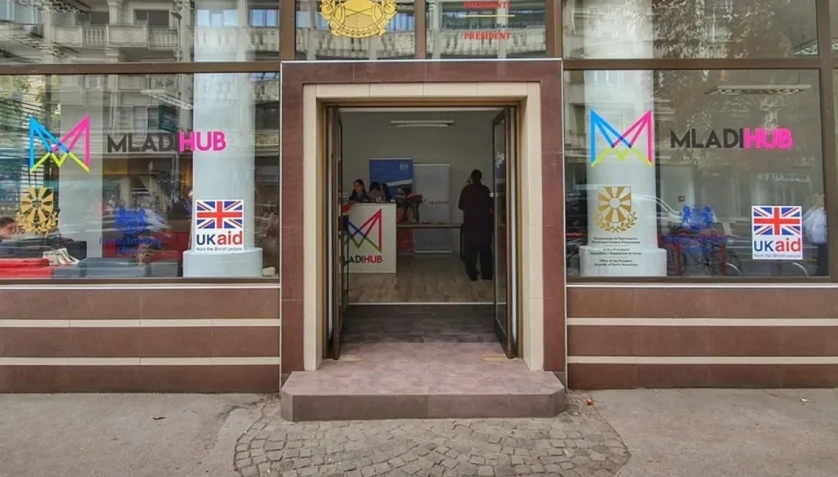
The Skopje headquarters of UK Aid
This included running covert communications campaigns on Kiev’s behalf, promoting the destruction of workers’ rights locally. It is likely the organization was engaged in similar skullduggery in Skopje, after Garrett rode into town. VMRO’s return to government at last offers Macedonians an opportunity to halt the operations of all US and British intelligence fronts and cutouts operating on their soil, and reclaim foreign-conquered territory.
Top Iranian, Kyrgyz security officials voice opposition to West’s interference in region
Press TV – February 16, 2024
Top security officials of Iran and Kyrgyzstan have raised their objection to the West’s interference in the domestic affairs of regional countries and its efforts to impose its demands and will on them.
Secretary of Iran’s Supreme National Security Council (SNSC) Ali Akbar Ahmadian and Secretary of the Security Council of the Kyrgyz Republic Marat Imankulov held a meeting in Bishkek on Friday.
The two sides voiced concern over measures by certain Western countries to finance terrorist groups in Afghanistan and their bids to step up acts of terror in Central and West Asia.
They also discussed ways to promote cooperation in various political, security and military fields, especially in the fight against terrorist groups such as Daesh.
Ahmadian invited his Kyrgyz counterpart to travel to Iran which was accepted by Imankulov.
The SNSC secretary is in the Kyrgyz capital at the head of a delegation to take part in the 6th Summit of Secretaries and Advisors of National Supreme Councils of regional countries on Afghanistan.
Top security officials of regional countries, including Iran, Russia, China, India, Tajikistan, Kyrgyzstan, Kazakhstan, Uzbekistan and Turkmenistan, are scheduled to discuss Afghanistan’s most important security and political issues and their impacts on the region.
Kyrgyzstan Is The US’ Next Regime Change Target
BY ANDREW KORYBKO | AUGUST 13, 2023
Chairman of the Senate Foreign Relations Committee Bob Menendez conveyed his country’s intentions to overthrow the Kyrgyz government in the letter that he sent to President Sadyr Japarov last week. It’s even more damning than the newly leaked Pakistani cable from March 2022 regarding US pressure over Russia that implicated a leading diplomat in that country’s post-modern coup one month later. The present piece will point out the threats in Menendez’s letter and place them in the geostrategic context.
Right off the bat, he declared that “I write to you with deep concern regarding allegations of the Government of the Kyrgyz Republic’s assistance to the Russian Federation, or its proxies, in evading international sanctions, imposed with respect to Russia’s unlawful invasion of Ukraine.” This follows Kyrgyzstan’s foiled coup attempt in early June that was analyzed here and the Washington Post’s (WaPo) report last month on its role in facilitating Russia’s purchase of Western-sanctioned tech from China.
The way that events have thus far unfolded strongly suggests that the failed effort to overthrow the Kyrgyz government just two months ago was intended to punish it for allegedly violating the West’s anti-Russian sanctions regime. Afterwards, WaPo published their report to precondition the public to think that Kyrgyzstan is turning into a “rogue state”, which was meant to make the target audience more likely to accept Menendez’s threatening letter and the US-orchestrated destabilization campaign that’ll follow.
The Senator continued by writing that “I urge the Kyrgyz government to swiftly investigate these allegations and to establish more reliable processes to prevent the illicit flow of goods through your territory bound for Russia. I am also concerned that the Kyrgyz Republic’s failure to uphold international sanctions reflects the alarming erosion in democratic governance and extensive human rights violations occurring in the country.”
Kyrgyzstan doesn’t have to initiate any investigation on any country’s demand, but even if it was driven to do so by the desire to de-escalate rapidly worsening political tensions with the US, this would be futile unless it went along with the narrative that it allegedly violated the West’s anti-Russian sanctions. Anything less would be dismissed as a “sham” and exploited as the pretext to impose even more pressure upon it, which brings the analysis around to the next part of Menendez’s statement.
His unsolicited commentary on Kyrgyzstan’s domestic affairs takes WaPo’s preconditioning even further by making explicit what was previously only implied about that country becoming a “rogue state”. After once again lambasting it for allegedly violating the West’s unilateral restrictions, he then defends them on the grounds that they’re “a vital tool in holding Vladimir Putin to account and reducing threats to the sovereignty, independence, and territorial integrity of other nations, including those in Central Asia.
All of this built up to the threat that he then conveyed in his letter when writing that “In the face of potential threats from Russia, the United States remains steadfast in our support of upholding the sovereignty and independence of nations like the Kyrgyz Republic. However, assisting or permitting systemic sanctions evasion by Russia weakens their effectiveness, which could put at risk the security and economic interests of the Kyrgyz people.”
Menendez’s twisted logic is that the US imposed its anti-Russian sanctions on the partial pretext of supposedly defending Kyrgyzstan’s “sovereignty and independence” from Moscow without ever having asked Bishkek ahead of time and now it claims that the latter’s alleged violation of them will endanger it. Objectively speaking, “the security and economic interests of the Kyrgyz people” are “put at risk” by capitulating to American pressure dump their Russian ally, not strengthening ties with it.
The only realistic way in which Kyrgyzstan’s aforesaid interests “could be put at risk” by defying the US’ demands is if Washington ramps up its support for Color Revolution agents and rebels/militants/terrorists in parallel with imposing crushing secondary sanctions in response. These scenarios would have remained speculative and the Mainstream Media could have gaslit that they’re “conspiracy theories” had Menendez not threatened that these same interests might soon be harmed.
He then went for the kill shot:
“Furthermore, I fear that Kyrgyzstan’s failure to uphold international sanctions on Russia is simply a symptom of its continued democratic backsliding and widespread human rights violations. Your government has weakened institutions, repeatedly violated the rights of journalists and independent media, harassed human rights defenders, and placed restrictions on civil society actors.
A once shining beacon of democracy in Central Asia, the Kyrgyz Republic is headed down a dangerous path toward autocracy. I urge you to lift all restrictions on independent media and journalists, release imprisoned human rights defenders, and repeal measures restricting fundamental freedoms such as the freedom of association.”
This is a de facto declaration of Hybrid War.
What Menendez demands is nothing short of a soft coup brought about by voluntarily reversing Kyrgyzstan’s recent “Democratic Security” successes under the Damocles’ sword of “security and economic” consequences if it dares to refuse. The preceding concept refers to the wide range of counter-Hybrid Warfare tactics and strategies that President Japarov employed to safeguard his country’s national model of democracy from associated threats.
If Menendez has his way, however, then suspected Color Revolutionaries will be released from prison, Western “NGO” intel fronts will be allowed to meddle with impunity, and their allied propaganda outlets will once again incessantly spew anti-state disinformation for provoking riots. He then ended his letter on an ominous note by writing that “Your government’s commitment to these matters is critical for the security and prosperity of the Kyrgyz people. We look forward to receiving your prompt response.”
Neighboring Kazakhstan has already capitulated to American pressure to informally take its side over Russia’s in the New Cold War as proven by its partial compliance with the West’s sanctions regime. It also refuses to close its over $100 million biosecurity laboratory that’s funded by the US. Furthermore, the latest news that it’ll host Microsoft’s regional hub was met with harsh criticism from Moscow after Deputy Foreign Minister Mikhail Galuzin described these plans as serving the US’ intelligence interests.
By contrast, Kyrgyzstan refuses to follow in Kazakhstan’s footsteps and remains committed to maximizing the mutual benefits from its strategic partnership with Russia, which is all the more impressive when remembering that it’s smaller, less developed, and historically more unstable than its northern neighbor. Moscow appreciates this display of sovereignty and is actively implementing workarounds to retain trade with Bishkek in the event that Astana’s compliance with Western sanctions ends up impeding this.
The Governor of Astrakhan Region announced the creation last month of the “Southern Transport Corridor” across the Caspian Sea, which is more expensive and time-consuming than trading with the Central Asian Republics across Kazakhstan but makes up for these costs by being outside of US influence. As this analysis already explained, Kyrgyzstan is a stalwart Russian ally, just like the rest of the region remains apart from newly wayward and increasingly treacherous Kazakhstan.
For these reasons, Russia is expected to help those four countries withstand the “security and economic” punishments that the US might soon inflict on them for their brave defiance of its sanctions pressure, beginning with Kyrgyzstan. Its potential descent into Hybrid War havoc could have far-reaching consequences for all of Central Asia due to the very high risk of overspill, which is why it’s imperative for Russia to thwart the US’ impending destabilization plans lest a “second containment front” emerge.
Iran given roadmap for joining Russia and China in major bloc
Samizdat | September 15, 2022
Iran has signed a memorandum paving the way to transition from its current observer status to full membership of the Shanghai Cooperation Organization (SCO).
The Middle-Eastern nation, which the US has long sought to undermine with diplomatic isolation and economic sanctions, made a formal step on Thursday to become the ninth member of the organization. Among the SCO’s heavyweights are Russia and China, two major powers that are on Washington’s list of geopolitical opponents.
The SCO was created in 2001 as an intragovernmental forum aimed at fostering trust and developing economic and humanitarian ties in Asia.
It currently has eight permanent members: China, India, Kazakhstan, Kyrgyzstan, Russia, Pakistan, Tajikistan, and Uzbekistan. The last is currently hosting the annual summit of the leaders of the member states in the city of Samarkand.
Iran has been an SCO observer since 2005. Its delegation to the summit is headed by President Ebrahim Raisi, who met with senior Uzbek officials on Wednesday.
The memorandum, which spells the commitments that Tehran will undertake to become an SCO member, was signed by Iranian Foreign Minister Hossein Amir-Abdollahian and SCO Secretary-General Zhang Ming, the host country’s foreign ministry reported.
Yury Ushakov, a foreign affairs advisor to Russian President Vladimir Putin, said earlier this week that Iran could qualify for being upgraded to full membership before next year’s SCO summit in India.
Uzbek President Shavkat Mirziyoyev touted this year’s event as a turning point for the organization. He cited the rapidly growing interest of nations in closer involvement with the SCO and said that it served as an example of how a “deep crisis of trust at the global level” can be overcome by parties willing to do so. He also stressed the scale of the group, which accounts for roughly half of the world’s population and a quarter of global GDP.
Belarus, also an SCO observer, is set to start the formal process for full membership this year. Egypt and Qatar formally joined the organization as dialogue partners on Wednesday. Saudi Arabia is scheduled to do the same, while Bahrain, Kuwait, the UAE, Myanmar, and the Maldives are expected to begin their respective paths to receiving the same status.
Featured Video

America Racing to Strategic Defeat in Iran
or go to
Aletho News Archives – Video-Images
From the Archives
Should Europeans ‘Thank’ the Americans for Destroying Nord Stream?
By Robert Bridge | Strategic Culture Foundation | September 29, 2022
With an investigation continuing into the destruction of the Nord Stream gas pipeline that provided energy supplies to Europe from Russia, there appears to be just one prime suspect, and that should surprise nobody.
Following the sabotage of the Nord Stream 1 and 2 gas pipelines, former Polish Foreign Minister Radoslaw Sikorski already seemed to know the identity of the perpetrator when he tweeted out: “Thank you, USA.”
At first glance, it seemed that Sikorski was speaking sarcastically, berating Washington for carrying out an attack that will have severe repercussions for the people of Europe. After all, how could anyone see any good coming from the termination of Europe’s primary source of gas reserves with winter just around the corner? It was Sikorski’s homeland of Poland, after all, that urged its citizens to collect firewood in the face of dwindling gas reserves.
In fact, the Polish diplomat was speaking one-hundred percent literally… continue
Blog Roll
 Aletho News
- Tehran approves new Hormuz plan with major restrictions
- No Threat Can Force Iran’s Surrender /Trita Parsi & Lt Cl Daniel Davis
- UK’s New Pandemic Plan Would Turn Big Tech Into a Mass Location Tracking Network
- Growing insecurity, soaring prices fuel protests in north as regime bans evacuation: Sources
- Iran denies responsibility for ‘depraved’ attack on Kuwait desalination plant
- Bring The Troops Back. End This War Now!
- Can we please stop calling Israel the ‘only democracy in the Middle East’ now?
- US should start removing its troops from Germany, proposes AfD co-leader Chrupalla
- Iran Red Crescent: 600 educational centers attacked in US-Israeli ‘war crimes’
- Russian Oil Tanker Arrives in Cuba Amid U.S. Blockade
- If Americans Knew
- As Iran targets US military bases, will they be relocated to Israel? Not a ceasefire Day 171
- Will Trump Go Kamikaze?
- Is the University of Florida Shutting Down College Republicans over Israel Criticism?
- Jewish extremist arrested over alleged plot to firebomb Palestinian activist Nerdeen Kiswani’s home
- More than half of Palestinian child detainees have no charges
- The More Murderous Israel Gets, The More We Hear About “Antisemitism”
- Land Day and the Palestinian struggle after 30 months of genocide
- The Iran War Is About Palestine
- Israeli soldiers echo settler ideology, talk of revenge after targeting Palestinians and detaining CNN crew in the West Bank
- Israeli Policies Threaten Future of Christian Schools in Jerusalem
- No Tricks Zone
- New Study Finds Warming Saves Lives…Cold Temperatures 12 Times More Deadly Than Excess Heat
- German Science Blog Accuses PIK Climate Institute Of Hallucinating Climate Tipping Points
- Devastating Assessment Of Comirnaty Vaccine By Former Senior Pfizer Europe Toxicologist
- New Study: CO2 Is ‘Effectively Negligible’ As An Explanatory Climate Change Factor Since 2000
- Former Pfizer Toxicologist Dr. Helmut Sterz Tells Bundestag Hearing Pfizer Vaccine Should Have Never Been Approved
- Energy Expert: Germany’s Nuclear Phaseout Was A “500 Billion Euro Mistake”
- New Research: South Australia’s Mid-Holocene Sea Surface Temperatures Were 4°C Warmer Than Today
- Storing Green Energy To Last Germany 10 Days Would Require A 60-Million Tonne Battery
- New Studies: UK Sea Levels Were 4 Meters Higher Than Today During The Mid-Holocene
- Destructive Green New Deal: German Energy And Metal Group Warns Of Drastic Crisis
 Aletho News
