Henry Kissinger, America’s most notorious war criminal

Press TV – December 1, 2023
The most notorious and hawkish America’s former top diplomat, known more for his war crimes and export of imperialism than diplomacy, died on Thursday. He was 100.
Henry Kissinger, a key architect of America’s Cold War foreign policy during the presidencies of Richard Nixon and Gerald Ford, breathed his last at his home in Kent, Connecticut.
While in the United States, he is often lauded for bringing about rapprochement with China, around the world, he is known as an infamous war criminal with blood of millions of people on his hands.
It is estimated that the victims of his blatant war crimes number from several hundred thousand to several million, from Argentina, Bangladesh, Cambodia, Chile, Cyprus, East Timor, Palestine, South Africa, to Vietnam.
In 1973, quite scandalously, he was handed a Nobel Peace Prize for negotiating a ceasefire deal in the Vietnam War, although the earlier flare-up and spread of the devastating war to neighboring Cambodia was entirely his handiwork.
In the eight years that he was the US Secretary of State, Kissinger shaped America’s interventionist foreign policy, which later became a benchmark for his successors to export American hegemony and imperialism around the world.
Christopher Hitchens, the author of The Trial of Henry Kissinger, in his 2001 book called for the former top US diplomat to be prosecuted for conspiracy to commit murders, kidnappings and torture across the world.
“The US could either persist in averting their gaze from the egregious impunity enjoyed by a notorious war criminal and lawbreaker, or they can become seized by the exalted standards to which they continually hold everyone else,” wrote Hitchens.
What are Kissinger’s main crimes?
One of his most notorious roles was in Cambodia, where he masterminded the expansion of the Vietnam War through a secret bombing campaign in 1969 and ground invasions by US forces for years.
The US is believed to have rained down more than 540,000 tonnes of bombs in a campaign called Operation Menu that was executed without the backing or knowledge of the US Congress.
The deadly military adventure caused an eight-year civil war between the Cambodian government and the Khmer Rouge regime, which led to the killing of around 275,000–310,000 people and displaced millions of others.
In declassified cables in 1970, Kissinger was heard conveying this message to his deputy Alexander Haig after speaking to Nixon: “He wants a massive bombing campaign in Cambodia… It’s an order, it’s to be done. Anything that flies, on anything that moves. You got that?”
Author and TV personality Anthony Bourdain, after visiting Cambodia, wrote in his 2011 book A Cook’s Tour: “Once you’ve been to Cambodia, you’ll never stop wanting to beat Henry Kissinger to death with your bare hands”.
“Witness what Henry did in Cambodia – the fruits of his genius for statesmanship – and you will never understand why he’s not sitting in the dock at The Hague next to Milošević.”
He also played an instrumental role in the massacre of the East Timorese people by the Indonesian forces in the mid-1970s.
Kissinger and President Ford, during a meeting with the Indonesian dictator Suharto in December 1975, gave him instructions to invade East Timor, which triggered a civil war that left at least 200,000 people dead, according to 2001 declassified documents.
In Chile, Kissinger worked behind the scenes to destabilize and undermine the government of Salvador Allende who was seen as a threat to US hegemony in South America at a time when all other Latin American countries had US-installed military dictatorships.
Less than three years into Allende’s rule, amid skyrocketing inflation and massive strikes that were orchestrated by the CIA, a US-engineered coup led by General Augusto Pinochet toppled the democratically-elected government.
A Chilean government report later revealed that over 40,000 people were killed, tortured, or imprisoned during Pinochet’s murderous regime at the behest of the US government and Kissinger.
In Argentina, Kissinger militarily backed junta leader General Jorge Rafael Videla after he toppled the democratically-elected government of President Isabel Perón in March 1976, according to declassified cables.
These actions led to the Dirty War between 1976 and 1983, where Argentina’s military junta killed between 10,000 and 30,000 people. Many of them were subjected to enforced disappearances.
Kissinger was also involved in Bangladesh, previously known as East Pakistan, where he and Nixon backed the genocide of people by West Pakistan.
Following his death on Thursday, Bangladesh’s Foreign Minister AK Abdul Momen said Kissinger backed the Pakistani military regime during the 1971 war and failed to apologize to the people of Bangladesh for his actions.
Kissinger was also responsible for consolidating the US vassal dictatorship in Iran in the 1970s, which had long-lasting unwanted consequences for Washington.
What role did Kissinger play in Iran?
Kissinger’s political opportunism is particularly evident in the example of relations with Iran, which American diplomacy under his leadership saw, in the words of Leader of the Islamic Revolution Ayatollah Seyyed Ali Khamenei, as a “milking cow.”
In the 1970s, accompanying then-US President Nixon, he traveled to Tehran and initiated massive military deals on the export of arms worth billions of dollars to Iran.
In his eyes, the best solution for Iran was a rigid military dictatorship that would spend massively on American weapons and other expensive products, and at the same time play the role of a US proxy against the regional countries that refused to lean toward Washington.
Such an attitude was formed partly as a consequence of the defeat in the Vietnam War, which is why the American authorities did not like the idea of repeating the same scenario in West Asia, with huge American casualties.
In 1975, when he held the position of Secretary of State and National Security Advisor, Kissinger was the key man in signing a $15 billion deal that included $6.4 billion for the purchase of eight US nuclear reactors.
The Shah’s regime then planned to build a total of twenty nuclear power plants with the import of enriched uranium, for which Washington and its allies showed great enthusiasm, seeing it as a lucrative opportunity for their companies.
These treaties collapsed four years later due to mass popular discontent with the West-backed dictatorship and the success of the Islamic Revolution, the prospect of which Kissinger understandably dreaded.
He was among the loudest proponents of providing asylum to the deposed Shah, arguing that it was America’s “moral obligation.”
On the aggression of the Baathist Iraqi regime on Iran, he said “It’s a pity they both can’t lose.”
Three decades later, when Iran announced the continuation of the development of a civilian nuclear program, this time with its own technology and without multibillion-dollar contracts with American and Western companies, Kissinger turned the tables.
In an opinion piece for the Washington Post in 2005, Kissinger wrote that “for a major oil producer such as Iran, nuclear energy is a wasteful use of resources.”
This radical switch once again confirmed that Americans have an essential problem with the technological prowess and progress of independent countries because they believe only the US has the right to a monopoly of advanced technologies.
In the 2000s, Kissinger became an advocate of American interventionism in West Asia and met regularly with then-US President George W. Bush and Vice President Dick Cheney to advise them on the disastrous invasion of Iraq.
The collapse of American imperial ambitions in Iraq and other countries of the region culminated in his intensified anti-Iranian rhetoric.
In 2014, when Iraq and Syria were under the grip of Takfiri terrorism, he stated that “Iran is a bigger problem than Daesh,” arguing that the latter’s fall would open the door to Tehran’s alleged “imperial agendas.”
In addition to giving unequivocal support to anti-Iranian terrorism, he also strongly opposed the 2015 nuclear agreement between Iran and world powers, clinched during the presidency of Barack Obama.
He maintained the same stance after Obama’s megalomaniac successor Donald Trump scrapped the deal, saying any attempts to reinstall the deal are “extremely dangerous.”
Belize severs diplomatic relations with Israel
MEMO | November 15, 2023
The Central American state of Belize announced the severing of its diplomatic relations with Israel due to Tel Aviv’s continued attacks on the Gaza Strip.
The Belize government said in a statement published on its website that the decision was taken because Israel did not accept calls for a ceasefire and prevented the entry of humanitarian aid into Gaza.
It added: “Despite our requests, Israel has not stopped its violations of international humanitarian law nor allowed relief workers to alleviate the suffering of millions of Gazans.”
As a result, it continued, the government is withdrawing the accreditation of Israel’s ambassador to Belize and withdrawing “its request for accreditation of Mr. Jonathan Enav as Belize’s Honorary Consul” to Israel.
“All activities conducted by the Israeli Honorary Consulate in Belize and the appointment of the Honorary Consul are suspended.”
It concluded that it “renews its call for an immediate ceasefire in Gaza, unimpeded access to humanitarian supplies into Gaza and the release of all hostages.”
This comes after South Africa, Bolivia, Chile, Colombia and Jordan recalled their ambassadors from the occupation state over its war crimes in Gaza.
UN Agency Unveils Action Plan To Regulate Speech on Social Media Platforms
By Didi Rankovic | Reclaim The Net | November 9, 2023
Yet another United Nations agency – this time the Educational, Scientific, and Cultural Organization (UNESCO) – has joined the contentious efforts to use UN resources in the “war on misinformation.”
UNESCO is not lagging behind some of the veterans of this “war” regarding the kind of alarmist language its leadership is choosing to use to justify the policy.
Thus, Director-General Audrey Azoulay presented an action plan, saying that online disinformation is “a major threat to stability and social cohesion.”
A press release announcing the plan referred to the phenomenon of misinformation as “a scourge” and one that is intensifying. Those behind all this must hope that this is enough to explain what UNESCO – formerly known mostly for protection of world heritage sites and raising funds for underprivileged children – is even doing “fighting disinformation.”
But here’s the plan: to somehow not harm freedom of speech, and yet push for social media companies to hire more “moderators” that speak all the major languages and whose job would be “effective control of content.”
A lot of attention seems to be given to strengthening censorship capacities in languages other than English; that could explain why, according to UNESCO’s statement, the plan has received support particularly from some countries in Latin America and Africa.
Over the past number of years, the whole world could see how efficiently the notion of “misinformation” and the tools to counter it can be turned into proper weapons of censorship; there is likely no shortage of governments that would like to replicate what has been happening in English speaking countries.
“Electoral integrity” also crops up in the press release announcing the UNESCO initiative, and here the proposed solution is “risk assessment” as well as flagging content, more “transparency” around political ads – and who they are meant to target.
Finally, UNESCO somehow manages to work its core task and purpose into the whole thing – namely, culture. And that’s done by calling for “highlighting the risks faced by artists and the need for online access to ‘diverse cultural content’ (quotation marks here are UNESCO’s) as a fundamental human right.”
As for who needs any of this from UNESCO, and why – the agency justified its involvement by mentioning an opinion poll it commissioned, involving 8,000 respondents in 16 countries.
And because “85% of citizens are worried about the impact of online disinformation (on elections)” – we now have this “action plan.”
Honduras recalls envoy from occupied territories citing Israeli violations in Gaza
Press TV – November 3, 2023
Honduras has recalled its ambassador from the occupied territories for consultations amid the Israeli regime’s hugely deadly and devastating war against the Gaza Strip.
The Honduran foreign ministry announced the development on Friday, citing Tel Aviv’s violations of the international humanitarian law in Gaza.
The country’s top diplomat confirmed the development in a post on X, formerly known as Twitter.
“Amid the grave humanitarian situation, the Palestinian civilian population suffers in the Gaza Strip, the government of President Xiomara Castro has decided to immediately call Mr. Roberto Martinez, ambassador of the Republic of Honduras in Israel, to consultations in Tegucigalpa,” read the post by Enrique Reina.
On Friday, the 28th day of Israel’s genocidal attacks on the coastal territory, the death toll reached at least 9,227 people, including 3,826 children and more than 2,405 women. At least 23,516 people have been wounded.
The regime launched the war after Gaza’s resistance groups conducted Operation al-Aqsa Storm, their biggest operation against the occupying entity in years.
So far, Chile and Colombia have similarly recalled their envoys from the occupied territories, while Bolivia has moved to sever its diplomatic ties with the occupying entity.
On Thursday, Bahrain’s lower house of parliament said the country had halted its economic relations with the Israeli regime over the war.
The chamber also confirmed that the Israeli ambassador to the kingdom had left Bahrain, and that Manama had decided to return the Bahraini ambassador from the occupied territories.
Countries Begin Downgrading Ties with Israel Over Relentless Bombing of Gaza
By Kyle Anzalone | The Libertarian Institute | November 1, 2023
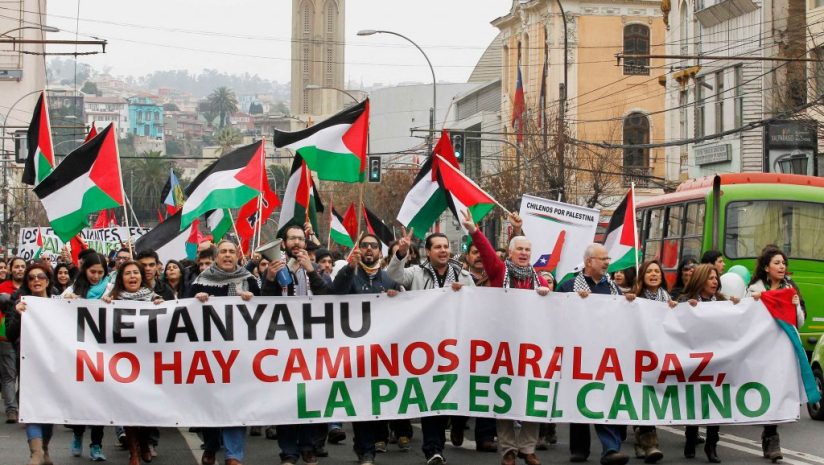
A trio of South American countries, along with Jordan, have cut ties with Israel over the onslaught in Gaza. According to Palestinian sources, the Israeli military operations in Gaza have killed nearly 9,000 people, half of which are women and children.
On Tuesday, Bolivia took the most extreme step and cut all ties with Israel. Deputy Foreign Minister Freddy Mamani explained that Bolivia “decided to break diplomatic relations with the Israeli state in repudiation and condemnation of the aggressive and disproportionate Israeli military offensive taking place in the Gaza Strip.”
The next day, Tel Aviv responded by saying Sucre’s move was “capitulation to terrorism and to the ayatollah regime in Iran.”
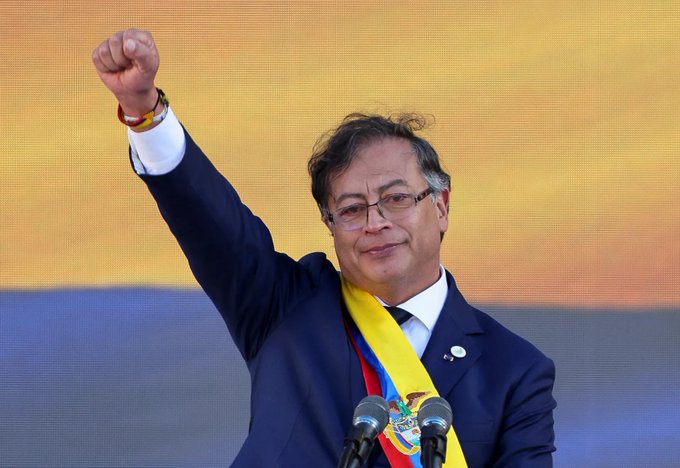
Colombia and Chile announced they would recall their ambassadors to Israel. Colombian President Gustavo Petro posted on X, “I have decided to call our ambassador in Israel for consultation. If Israel does not stop the massacre of the Palestinian people we cannot be there.”
Chile posted a press release saying Santiago would also recall its diplomat.
“Given the unacceptable violations of International Humanitarian Law that Israel has incurred in the Gaza Strip, the Government of Chile has decided to recall the Chilean ambassador to Israel, Jorge Carvajal, to Santiago for consultations. …”
“Chile strongly condemns and observes with great concern that these military operations – which at this point in their development entail collective punishment of the Palestinian civilian population in Gaza – do not respect fundamental norms of International Law, as demonstrated by the more than eight thousand civilian victims, mostly women and children.”
Jordan joined the South American nations in downgrading ties with Israel. The Foreign Ministry announced it was recalling its ambassador. “Foreign Minister Ayman Safadi decided to immediately recall Jordan’s ambassador to Israel,” a statement said. The move is to reflect Amman’s condemnation of the “Israeli war that is killing innocent people in Gaza.”
While Tel Aviv receives near unconditional backing from Washington, Israel lacks the international community’s support for its war. On Monday, the UN General Assembly voted 120-14 for a ceasefire in Gaza.
After a Hamas attack in southern Israel on October 7, Tel Aviv launched a military operation. The bombing campaign and ground invasion have killed thousands of Palestinian civilians, including over 3,600 children.
UN rapporteur slams EU support for Israeli aggression on Gaza
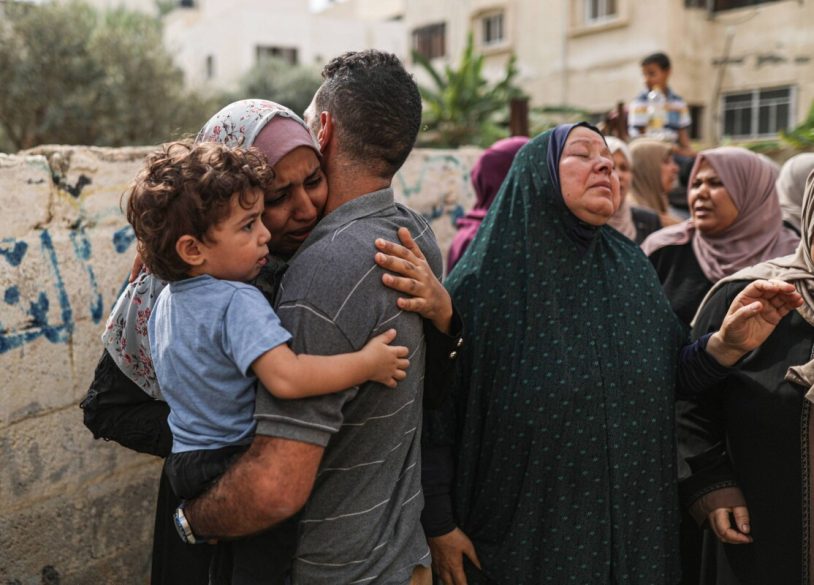
Palestinians mourn after 8 members of Shamlah family killed in Israeli airstrikes (Mustafa Hassona – Anadolu Agency)
Press TV – October 13, 2023
A United Nations special rapporteur has slammed the European Union’s unwavering support for Israel in its aggression on Palestinians in the Gaza Strip, and its double standards regarding Palestine and Ukraine.
Speaking to Middle East Eye, Francesca Albanese, the UN special rapporteur on the Occupied Palestinian Territories, said “Political action is lacking and double standards tarnish the values and the rule of law principle upon which our international order is premised.”
Albanese made the remarks after European Commission President Ursula von der Leyen confirmed the EU’s unwavering support for Israel in recent days, saying that “Israel has the right to defend itself – today and in the days to come. The European Union stands with Israel.”
After von der Leyen’s tweet, Israel has intensified its strikes on Gaza and cut off fuel, water, energy, and food supplies to the coastal strip, which is home to over two million Palestinians and has already been suffering under a 16-year-old Israeli blockade.
Von der Leyen’s recent remarks drew widespread criticism, especially after her previous comments on Russia’s alleged targeting of such utilities.
Last year, Von der Leyen said Russian “attacks against civilian infrastructure, especially electricity, are war crimes.”
“Cutting off men, women, children of water, electricity, and heating with winter coming – these are acts of pure terror,” she said back then.
The UN rapporteur urged Von der Leyen on the social media platform X, formerly known as Twitter, to make the “same declaration” she did against Russia towards the Israeli offensive on Gaza.
“If not, people could think that European institutions do not value the protection of Palestinian children, women and men as much as that of Ukrainians,” said Albanese.
Albanese said it was important to make such a statement because it meant “giving full meaning to the universality of human rights and equality of all human beings, to enable Israelis and Palestinians to live in dignity and freedom.”
“I do not understand the lack of commensurate empathy with the Palestinian people, as well as the lack of accountability for Israel’s protracted occupation and crimes perpetrated for over 56 years,” Albanese said.
While Tel Aviv was backed by its staunch Western allies, the US and the EU, over the past week, the reaction among Latin American leaders was more varied.
The most vocal commentator among Latin American leaders has been Colombia’s leftist president, Gustavo Petro, who took to X to decry Israel’s recent attacks on Gaza, widely sharing photos and footage of Palestinian victims. In his tweets, Petro also likened the Israeli military to Nazis.
Meanwhile, the Venezuelan government stressed that the escalating tensions “is the result of the inability of the Palestinian people to find a space in international law to assert their historical rights”.
In Bolivia, former President Evo Morales reiterated his support for Palestine and broke with the leftist government’s more diplomatic statement.
“The statement from the Bolivian Foreign Ministry does not reflect the feeling of solidarity of the Bolivian people towards Palestine. The Bolivian people will always condemn the illegal Israeli occupation of Palestinian Territories,” Morales, who is once again running for office, said on X.
On Saturday, the Palestinian resistance movement Hamas launched the al-Aqsa Storm operation against Israel in response to the occupying regime’s decades-long campaign of bloodletting and devastation against Palestinians.
The military operation killed around 1,300 Israeli forces, and injured thousands more. Nearly 150 others were also captured by the resistance forces.
Meanwhile, the Israeli bombing campaign on Gaza killed more than 1,500 people, nearly half of whom were children and women, and injured over 6,600 others.
EU Incites Ukrainian Conflict and Stigmatizes Peace Talks – Hungarian Foreign Minister
Sputnik – 03.10.2023
BUDAPEST – The world outside Europe does not share its position on the Ukraine conflict and does not understand European double standards applied to conflicts in other parts of the planet, Hungarian Foreign Minister Peter Szijjarto has said.
“I can say that the world outside Europe is already really looking forward to the end of this war, because they do not understand many things. They do not understand, for example, how it can be that when a war is not in Europe, the European Union, looking down with fantastic moral superiority, calls on the parties to peace, advocates negotiations and an immediate end to violence. However, when there is a war in Europe, the European Union incites the conflict and supplies weapons, and anyone who talks about peace is immediately stigmatized,” Szijjarto said in an interview on Monday.
He also said that other countries do not understand why Europe “has made this conflict global” and why people living in Asia, Africa and Latin America have to pay for it due to growing inflation, energy prices and unstable food supplies.
Szijjarto added that Hungary’s position on the issue is treated with “great respect” outside the EU, which he was witnessing more than once during the UN General Assembly.
Hungary has consistently opposed sanctions on Russian energy resources and sending weapons to Ukraine since the beginning of the Russian military operation in Ukraine in February 2022. The Hungarian parliament issued a decree banning the supply of weapons to Ukraine from the country’s territory. Szijjarto explained that Budapest seeks to secure the western Ukrainian region of Zakarpatye, where ethnic Hungarians live, since the supply of weapons through its territory would become a military target for Russia. The country’s leadership has repeatedly emphasized that Hungary stands for the earliest possible start of peace negotiations.
Why’s US Media Talking About Nigerien General Moussa Barmou All Of A Sudden?
From Bazoum To Barmou
BY ANDREW KORYBKO | AUGUST 15, 2023
American media’s narrative about last month’s regime change in Niger has conspicuously shifted since Acting Deputy Secretary of State Victoria Nuland’s trip to Niamey last week. Prior to then, most information products aggressively supported Nigerian-led ECOWAS’ threatened invasion aimed at reinstalled ousted leader Mohamed Bazoum. Ever since she revealed that the US is “pushing for a negotiated solution”, however, attention has turned towards General Moussa Barmou.
NBC News’ Report
The Wall Street Journal began the trend two days after her visit in a paywalled article here, but it wasn’t until NBC News’ piece on Monday headlined “Blindsided: Hours before the coup in Niger, U.S. diplomats said the country was stable” that the public at large was introduced to him. Its subtitle about how “An American-trained general whom U.S. military officials considered a close ally backed the overthrow of the country’s democratically elected president” was a reference to Barmou. Here’s what they reported:
“U.S. military officials believed that the head of the Nigerien Special Forces, Gen. Moussa Salaou Barmou, their close ally, was going along with the other military leaders to keep the peace. They noted that in a video showing the coup leaders on the first day, Barmou was in the back of the group with his head down and his face mostly hidden.
Less than two weeks later, Barmou met with a U.S. delegation in Niamey, led by acting Deputy Secretary of State Victoria Nuland, and expressed support for the coup and delivered a sobering message: If any outside military force tried to interfere in Niger, the coup leaders would kill President Bazoum. ‘That was crushing,’ said a U.S. military official who has worked with Barmou in recent years. ‘We were holding out hope with him.’
Not only had Barmou worked with top U.S. military leaders for years, but he was also trained by the U.S. military and attended the prestigious National Defense University in Washington, D.C. Last week, sitting across from U.S. officials who had come to trust him, Barmou refused to release Bazoum, calling him illegitimate and insisting that the coup leaders had the popular support of the Nigerien people. Nuland later said the conversations were ‘quite difficult.’”
The unnamed US military source who said that “We were holding out hope with him” spilled the beans about the way in which their country intended to control Niger by proxy. The Pentagon thought that cultivating the chief of that country’s special forces would be sufficient for preventing a coup, but Barmou decided to go along with it because he knew better than they did how genuinely popular it was. His “defection” from American proxy to patriot ensured this surprise regime change’s success.
Politico’s Report
The next US media report of relevance was published the day later by Politico and was about how “The U.S. spent years training Nigerien soldiers. Then they overthrew their government.” It builds upon Barmou’s biography that was introduced by NBC News and can therefore be conceptualized as the second step of an ongoing information campaign intended to inform Americans more about him. Here’s what they had to say about this top Nigerien military official:
“Brig. Gen Moussa Barmou, the American-trained commander of the Nigerien special operations forces, beamed as he embraced a senior U.S. general visiting the country’s $100 million, Washington-funded drone base in June. Six weeks later, Barmou helped oust Niger’s democratically elected president.
…
Retired Maj. Gen. J. Marcus Hicks, who served as the commander of U.S. Special Operations Forces Africa from 2017 to 2019, says he was instantly impressed by Barmou. The Nigerien general speaks perfect English, and attended multiple English language and military training courses at bases in the United States over nearly two decades, including at Fort Benning, Georgia, and the National Defense University.
Hicks and Barmou developed a friendship. They had many long conversations over dinner about the influx of extremists into Niger, and how difficult it was for Barmou to see his country deteriorate in recent years, said Hicks. ‘He’s the kind of guy that gives you hope for the future of the country, so that makes this doubly disappointing,’ said Hicks. It was ‘disheartening and disturbing’ to learn that Barmou was involved in the coup.
As its neighbors fell like dominos to military coups over the last two years, Niger — and Barmou himself — remained the last bastion of hope for the U.S. military partnership in the region. He ‘was a good partner, a trusted partner,’ said a U.S. official familiar with the U.S.-Niger military relationship. ‘But local dynamics, local politics, just trump whatever the international community may or may not want.’
It’s not clear whether Barmou was initially involved in plotting the coup, which is believed to have been spearheaded by Gen. Abdourahamane Tchiani, the head of Bazoum’s presidential guard. Tchiani and his men reportedly took the president captive because Tchiani believed he was going to be pushed out of his job. But soon after, Nigerien military leaders including Barmou endorsed the putsch.”
Politico’s piece serves to raise maximum awareness of just how much the Pentagon trusted Barmou, which humanizes him in the eyes of their targeted audience, who likely hitherto thought that he was either a greedy wannabe despot or a pro-Russian anti-Western ideologue. Upon learning that he was America’s closest ally in Niger, they’ll be more inclined to support Nuland’s diplomatic efforts to resolve the crisis via some sort of compromise than back the use of force at the risk of sparking a regional war.
Le Figaro’s Report
NBC News and Politico’s back-to-back pieces about Barmou were published a week after Nuland returned from Niger, which gave the US’ permanent policymaking bureaucracies enough time to decide their next move. During that time, an unnamed diplomatic source told Le Figaro in an article published on Sunday the day before NBC News’ that they feared the US might backstab France. According to them, the US could tacitly recognize the interim military-led government if they get to retain their bases.
The next day on Monday, which coincided with the release of NBC News’ report about Barmou that was conceptualized in this analysis as the first step of an ongoing information campaign intended to inform Americans more about him, the US publicly balked at the ECOWAS invasion scenario. State Department principal deputy spokesman Vedant Patel said that “military intervention should be a last resort”, thus extending credence to Le Figaro’s report after its diplomatic source correctly foresaw the US’ new stance.
From “Francafrique” To “Amerafrique”
This sequence of events suggests that the US might offer Niger’s interim military-led government a deal whereby they’d tacitly recognize these new authorities and order ECOWAS to call off its invasion in exchange for that country retaining its bases and declining to embrace Russia/Wagner as explained here. In this scenario, the US’ backtracking on its prior demands to reinstall Bazoum could be attributed to its trust of Barmou’s assessment that the coup truly channeled the will of the Nigerien people.
NBC News and Politico’s pieces also included information about Niger’s importance for the US’ African strategy, which preconditions the public to expect that the White House could resort to the national security exception for not cutting off military aid to that post-coup state per its domestic legal obligation. In that event, the US would seamlessly replace France’s traditional security role there while preventing the emergence of a void that could have otherwise been filled by Russia/Wagner.
If post-coup Niger successfully transitions from France’s “sphere of influence” in Africa (“Francafrique”) to America’s (“Amerafrique”), then the US might weaponize the model that it opportunistically improvised after the latest surprising turn of events to export it to other former French colonies. Those that experience a grassroots surge of anti-French sentiment might also undergo coups by former US-trained military leaders, who’d then negotiate similar deals as the previously mentioned one.
The US could offer to replace France’s scandalous security role in their countries together with preventing an ECOWAS invasion in exchange for their new interim military-led governments offering it a share of the previously French-dominated market and declining to embrace Russia/Wagner. In this way, the US could manage revolutionary trends in the region and actually benefit from them if it replicates the model that it’s presently experimenting with in Niger via Barmou’s envisaged bridge role.
This insight answers the question of why US media is talking about him all of a sudden in the week after Nuland’s trip to Niamey. They’re warming average Americans up to the scenario of Barmou functioning as a bridge between their countries after the coup. Since he chose to go along with the regime change instead of stop it, the US’ new hope is that he’ll convince his superiors to accept the deal that was described, which could then form the basis for a model that might later be exported across the region.
The Latin American Precedent
The US would prefer for France to manage Africa on the West’s behalf per the “Lead From Behind” stratagem of “burden-sharing” in the New Cold War, but if its military-strategic withdrawal is inevitable due to rising anti-imperialist trends, then it’s better for America to replace its role than Russia/Wagner. To that end, it might soon support anti-French coups by US-trained military leaders in order to corral populist sentiment in a geostrategically safe direction that avoids creating space for its rivals.
This is similar to what it’s recently begun doing in Latin America after the Democrats started supporting leftist-liberal movements like those in Brazil, Chile, and Colombia, which led to Lula’s PT becoming the posterchild of this so-called “compatible left” project, in order to not lose control of regional processes. It’s precisely this precedent that’s arguably influencing the formulation of America’s new “bait-and-switch” approach towards seemingly inevitable socio-political changes in “Franceafrique” as well.
Concluding Thoughts
Circling back to the lede, Americans are suddenly learning more about Barmou because the US is likely exploring the possibility of employing this trusted pre-coup partner as a bridge with Niger in the hope that he convinces his superiors to agree to a “negotiated solution”. If the Latin American model for corralling populist sentiment is replicated by the US in Niger, albeit accounting for “Francafrique’s” coup-prone conditions, then this modified method might eventually be weaponized across the entire region.
Iran inks defense deal with Russia ally Belarus
The Cradle | August 2, 2023
Iran and Belarus signed a defense agreement on 31 July, enhancing the already existing cooperation between the two countries.
Iranian Defense Minister Mohammad Reza Ashtiani signed a memorandum of understanding with his Belarusian counterpart Viktor Gennadievich Khrenin during a meeting in the Iranian capital.
The two officials held discussions on a number of topics, including the war in Ukraine, Iranian media reported.
“Belarus holds a special place in Iran’s foreign policy,” the Iranian defense minister said.
The news was also confirmed on social media by the Belarusian defense ministry.
The agreement comes as the two countries have been exploring prospects for military cooperation, particularly in relation to drone technology and the production of Iran’s Shahed drones, which last year appeared on the Ukrainian battlefield.
In May, a delegation of Iranian engineers sponsored by Moscow visited Belarus to study the idea of producing Shahed drones there.
Months earlier, Belarusian President Alexander Lukashenko visited Iran for talks with his Iranian counterpart.
Belarus is considered one of Russia’s most strategic economic and political allies. Last month, Lukashenko announced that Russia was deploying nuclear warheads to Belarus in the first transfer of such weapons outside of Russia since the fall of the Soviet Union.
The boost in Iranian-Belarusian defense ties comes as the eastern European nation has followed in the footsteps of Iran and many other countries in applying to join the BRICS group, a rapidly expanding economic partnership between nations with emerging economies that aims to create an alternative to the dominant western-led financial system.
It also comes in the wake of a defense deal between Iran and Bolivia, which was latest Latin American country to sign a defense deal with the Islamic Republic, following in the footsteps of Nicaragua and Venezuela.
Following the signing of the defense deal between Iran and Bolivia last week, US National Security Council Coordinator for Strategic Communications, John Kirby, told Voice of America (VOA) that Washington is concerned about the export of Iranian technology and its “destabilizing” role.
In response, former Bolivian president Evo Morales condemned the “interventionist attitude” of the US towards deal.
“We emphatically condemn the interventionist attitude of the US that, with double standards, tries to question Bolivia’s interest in acquiring drones from Iran. The same country that uses these remote-controlled aircraft as a weapon of war tries to prevent other states like Bolivia from using them for security tasks and the fight against drug trafficking,” he said.
US allies on alert after lithium-rich Bolivia inks defense deal with Iran
The Cradle | July 25, 2023
Members of Bolivia’s far-right opposition and the Argentinian government are demanding that La Paz disclose the details of a memorandum of understanding (MoU) on defense and security affairs signed between Defense Ministers Edmundo Novillo y Mohamad Reza Ashtiani in Tehran last week.
“They say that [Iran] will give us drones. Others say they will give us missiles. All of this sounds strange, even more so considering it involves Iran … I can’t understand why Bolivia is getting involved in such a complex and difficult relationship,” said lawmaker Gustavo Aliaga, who belongs to the Comunidad Ciudadana (CC) party.
In 2019, CC leader Carlos Mesa supported the US-orchestrated coup that forced socialist leader Evo Morales to flee Bolivia, leaving it under the control of a far-right dictatorship that conducted multiple massacres of Morales supporters and sought to surrender the country’s massive lithium deposits to western transnationals.
The Argentinian foreign ministry also demanded explanations from La Paz on Monday under pressure from the Delegation of Argentinian Israeli Associations (DAIA), who said the MoU “risks for the security of Argentina and the region” due to Tehran’s ties with Lebanese resistance group Hezbollah.
In a press release, DAIA called on the Argentinian government “to condemn this agreement and demand Bolivia reconsider its decision.”
Buenos Aires blames Hezbollah and Iran for the 1994 bombing of the AMIA Jewish community center that left 85 dead. Both Tehran and Hezbollah deny the accusation.
The statements by the CC and DAIA came on the heels of a report by the neoconservative Institute for the Study of War (ISW), which claims that the deal between Tehran and La Paz includes the delivery of Iranian drones for the South American nation.
Last week, Iran agreed to help Bolivia combat drug trafficking along its borders and boost cooperation with the Bolivian army.
“[Due to] Bolivia’s critical needs in terms of border defense and the fight against drug trafficking, we will establish collaboration in equipment and specialized knowledge,” Ashtiani said following his meeting with the Bolivian defense minister last week.
For his part, Novillo said Iran is a “role model” for nations that seek freedom, highlighting the Islamic Republic’s “remarkable progress in science and technology, security, and the defense industry despite sanctions.”
Bolivia is the latest Latin American nation to ink a security agreement with the Persian nation, following in the footsteps of Nicaragua and Venezuela. Over the past year, the Islamic Republic has also made significant inroads with Brazil.
Iran and Bolivia also hold two of the largest lithium deposits in the world, with the Islamic Republic earlier this year announcing the discovery of a massive deposit holding a reported 8.5 million tons of the rare element. On the other hand, Bolivia has the richest known lithium deposits in the world, with an estimated 21 million tons.
Featured Video

Chinese jet fuel and the myth of energy independence
or go to
Aletho News Archives – Video-Images
From the Archives
The Dirty Little Secret behind the “Global Terrorism Index”
The Omission of Israeli Terrorism in the Occupied Palestinian Territories
By Karin Brothers | Global Research | December 6, 2014
… The Israeli settlements — all of which are illegal – have been identified as a major impediment to peace. The refusal of a major “global” terrorism report to name the Israeli settlers as one of the groups most responsible for terrorism not only misrepresents a major source of regional violence but exposes the Global Terrorism Index as a propaganda tool that supports a U.S. agenda.
In recent years, governments have been attempting to thwart terrorism by blocking supportive fund-raising. When it comes to Israeli settlements, however, the US and Canada actually encourage fund-raising by giving organizations (such as Christian Friends of Israeli Communities (CFOIC) and the Jewish National Fund) financial support in the form of donor tax-deductions.
Charities which provide funds for the Israeli settlements should be regarded as terror-financing organizations. They should not only lose their tax-deductible status, but they should be banned because they support the violation of international humanitarian law. The terror-financing laws that are being strictly enforced for Muslim charities should be applied to Christian and Jewish charities as well. … Read full article
Blog Roll
 Aletho News
- Chinese jet fuel and the myth of energy independence
- Ukraine Sea Drone Fired From Libya Hit Russian Tanker in Mediterranean
- IRGC: Iranian forces launched no attacks during ceasefire hours
- Trump Administration Moves To Automate U.S. Military Draft Registration
- Spain orders reopening of Tehran embassy, condemns Israel’s carpet bombing of Lebanon
- Israel faces ‘unsustainable’ strategic crisis following 40-day war against Iran: Analyst
- Iran restricts Hormuz access to 15 vessels per day under ceasefire terms: Report
- The ‘Opposition Party’ Has Done Nothing to Stop the Iran War and Much to Goad Trump Into Continuing It
- Moscow backs Tehran on status of Lebanon in US-Iran deal
- How UK Regulator Ofcom Quietly Bypassed International Law to Police American Speech
- If Americans Knew
- Amnesty: Urgent – Protect Lebanese civilians from brutal escalation in Israeli attacks
- Is The War Against Iran Over?
- Inside the Israeli army’s propaganda wing
- Hundreds of Gaza Amputees Stranded in Legal Limbo
- The gallows law: Israel moves toward executing Palestinian children
- Tucker Carlson: The Path to Peace requires ending ‘special alliance’ with Israel
- This is ceasefire? Israel’s biggest massacre yet in Lebanon, another journalist killed in Gaza – Daily Update
- Tucker Carlson on Israel: This Is the Behavior of an Ally? Really?
- Gazans face a triple crisis: severe shortages of water and bread, healthcare in tatters
- NY Times reports how Netanyahu took the US into Iran War
- No Tricks Zone
- An Inconvenient Tree: Uncovered In Alps… Europe Much Warmer Than Today 6000 Years Ago
- New Study Reports A 60% Slowdown In Greenland’s Ice Loss Rate In The Last Decade
- Low Intensity Tornado Wrecks Major Solar Farm, Creating A Potential Toxic Dump
- New Study Finds Warming Saves Lives…Cold Temperatures 12 Times More Deadly Than Excess Heat
- German Science Blog Accuses PIK Climate Institute Of Hallucinating Climate Tipping Points
- Devastating Assessment Of Comirnaty Vaccine By Former Senior Pfizer Europe Toxicologist
- New Study: CO2 Is ‘Effectively Negligible’ As An Explanatory Climate Change Factor Since 2000
- Former Pfizer Toxicologist Dr. Helmut Sterz Tells Bundestag Hearing Pfizer Vaccine Should Have Never Been Approved
- Energy Expert: Germany’s Nuclear Phaseout Was A “500 Billion Euro Mistake”
- New Research: South Australia’s Mid-Holocene Sea Surface Temperatures Were 4°C Warmer Than Today
 Aletho News