Colombia: Army Kills Two Indigenous People in Cauca Valley
teleSUR | August 14, 2020
Colombia’s Army Thursday killed two Indigenous people and injured two community members during an eviction operation in El Berraco village in the Cauca department.
The victims are the Indigenous journalists Abelardo Liz and Johel Rivera, who were part of the “Liberation of Mother Earth” movement.
The Foundation for the Freedom of the Press (FLIP) regretted the death of both journalists, who were shot while covering the Army’s eviction in Corinto.
The Indigenous City Halls of Cauca Association (ACIN) reported that former Governor Julio Tumbo was seriously wounded. His bullet injuries represent a danger to life.
“Officers of the Mobile Anti-Riot Squad (ESMAD) and the Army shot at El Berraco community with firearms. The victims were hit in the chest, shoulder, abdomen, and knees,” ACIN explained.
Following a court order, Army troops evicted the people who were in the Quebrada Seca ranch.
“During the operation, members of the Public Force were injured, and the El Berraco’s Indigenous people also tried to kidnap them,” Colombia’s Army stated.
According to Cauca’s indigenous organizations, the officers prevented vehicles and health personnel from entering the ranch to assist and transfer the injured to hospitals.
“The ESMAD attacked the vehicles that were trying to help the wounded. They fired gases at the windows,” ACIN said.
The University of Cauca’s Human Rights Commission and the National Union of Students denounced the events.
“The indigenous communities cannot continue to be victims of Colombia’s systematic violence,” the organizations stated.
Why Immunity for the CIA?
By Jacob G. Hornberger | FFF | August 11, 2020
Amidst the controversy over the doctrine of qualified immunity for cops, no one is talking about the full immunity accorded to the Central Intelligence Agency, an agency within the national-security establishment that wields omnipotent power.
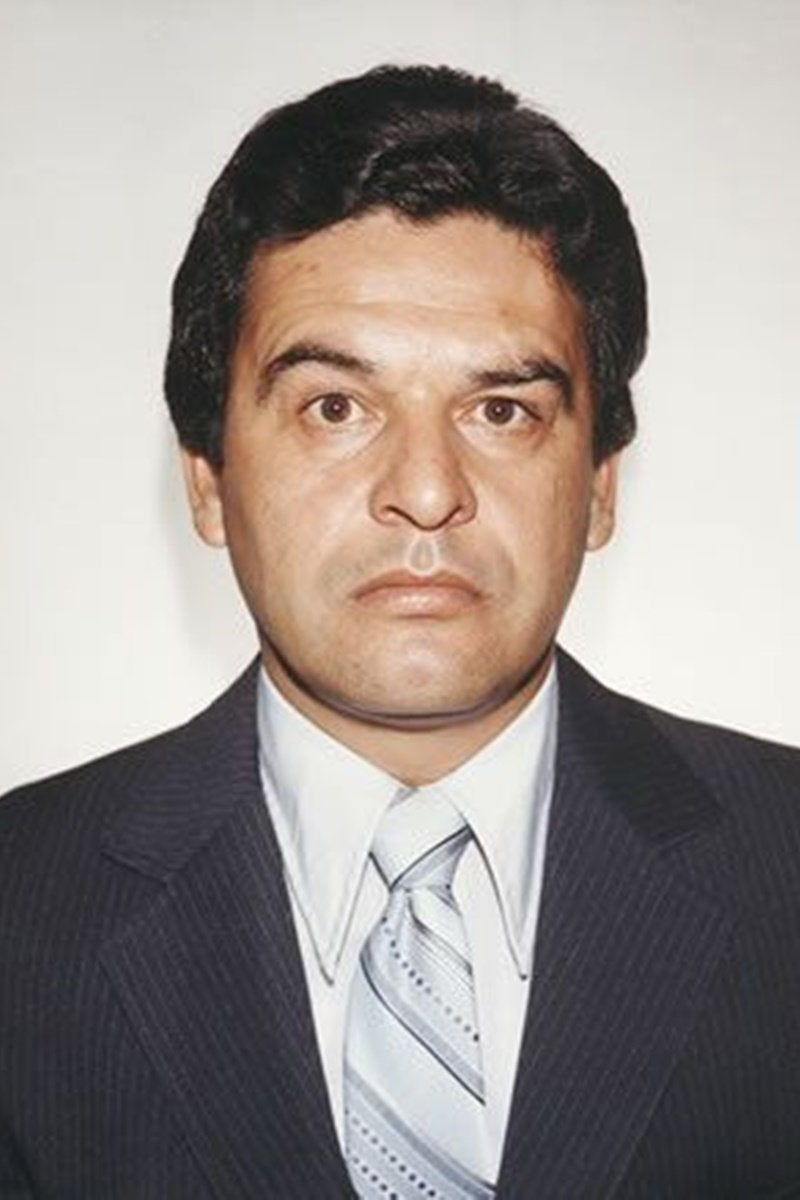 Among the most interesting lines in the new Amazon Prime series The Last Narc is what a CIA official says to DEA investigator Hector Berrellez, who was charged with leading the investigation into the kidnapping, torture, and murder of DEA agent Enrique “Kiki” Camarena. The official tells Berrellez that the CIA is not a law-enforcement agency and, therefore, doesn’t have to comply with the Constitution. Its mission, he said, is to protect the United States. Therefore, the implication is that the Constitution cannot be permitted to serve as a barrier to that end.
That’s the way it’s been since the beginning. The CIA has had omnipotent power to do whatever it deems necessary to protect “national security.” That includes, of course, the power of assassination, a power that the CIA assumed practically since its inception. In fact, as early as 1952, the CIA was developing a formal assassination manual for its assassins.
The CIA also wields the power of torture, the power to record its torture sessions, and the power to destroy such recordings to prevent Congress or the public from listening to them or viewing them.
The CIA also wields the power to lie, at least if it’s in the interest of “national security.”
No one jacks with the CIA. Not the Justice Department, including every U.S. Attorney in the land. Not the Congress. Not the president. Not the military. Who is going to mess with an organization that wields the omnipotent power to destroy or kill people and is more than willing to exercise that power in the name of protecting “national security”?
The kidnapping, torture, and execution of Kiki Camarena
A good example of this phenomenon is found in The Last Narc, which I wrote about in a blog post last week.
In 1985, 37-year-old DEA agent Enrique “Kiki” Camarena was kidnapped on the streets of Guadalajara, Mexico, and brutally tortured for 36 hours before finally being executed.
It was commonly believed that the crime had been committed by the Guadalajara drug cartel, which was headed by Rafael Caro Quintana, Ernesto Fonseca Carrillo, and Miguel Ángel Félix Gallardo, all of whom are featured in Netflix’s series Narcos: Mexico. But Mexican officials steadfastly refused to extradite the three drug lords to the United States for trial.
The DEA assigned Berrellez to take charge of the investigation. Berrellez, who felt as comfortable operating in Mexico as he did in the United States, found three former members of the Jalisco State Police who were willing to talk. They came to the United States and told Berrellez that back in 1985, they had been working double jobs — as state policemen and also as bodyguards for Caro, Fonseca, and Gallardo.
Berrellez interviewed them separately to ensure the integrity of their statements. They each pointed toward complicity of high Mexican officials with the cartel in the distribution of drugs into the United States, which I don’t think would surprise anyone.
The three former cops and bodyguards told Berrellez that they were in the room while Camarena was being tortured. Each of them stated that there were several high Mexican officials present in the house in which Camarena was being tortured while he was being tortured.
The heroism of Hector Berrellez
But then Berrellez discovered something else. According to the three former Mexican state policemen, a man named Max Gomez, also known as Felix Rodriguez, was inside the torture room and taking an active role in the brutal interrogation of Camarena. Berrellez investigated and determined that Rodriguez was a “retired” CIA agent.
Among the principal questions that was being addressed to Camarena was the extent to which he had discovered, in the course of his investigation, the nexus between the drug cartel, the CIA, and the Mexican government in the drug trade.
It was later learned that the interrogation was being recorded, which is something that one would not expect drug lords to do but that one would expect a CIA agent to do.
At that point, Berrellez was in trouble. It’s one thing to conduct an investigation that leads to the Mexican government’s involvement in Camarena’s torture and murder. It’s another thing to conduct an investigation that leads to the U.S. government’s involvement in the torture and murder of a DEA agent who is also an American citizen.
As Berrellez states in The Last Narc, he was warned to back off and let sleeping dogs lie. He was warned that if he didn’t, his life would be in jeopardy. If he didn’t back off, U.S. officials even threatened to forcibly return him to Mexico to face criminal charges that the Mexican government had leveled against him.
But Berrellez refused to back off, and so U.S. officials removed him from the investigation. Even though he could have remained silent, he instead decided to go public with his findings and cooperated in the making of The Last Narc. He comes across as a heroic figure in the series.
For his part, Rodriguez denies that he was in the torture room or that he has had anything to do with Guadalajara cartel and with drug dealing. The problem, however, is that CIA agents will lie if they believe that it is in the interest of “national security.” And they all know that they have immunity when it comes to lying and anything else that touches on “national security.”
Full immunity for the CIA
Here you have a prima facie case of U.S. governmental involvement in the torture and assassination of a U.S citizen, one who was an agent of the DEA. The alleged purpose of the torture was to determine if Camarena had uncovered evidence of CIA complicity with the Guadalajara Cartel and the Mexican government in the drug trade. Three witnesses, all giving their testimony separately, identified Rodriquez as one of Camarena’s interrogators.
That’s clearly enough evidence to launch a formal investigation into the matter. Perhaps it’s worth mentioning that Camarena’s murder took place during Iran Contra, when U.S. officials were breaking the law to raise the money to give to the Nicaraguan contras.
Has any of this caused any U.S. Attorney or the U.S. Congress to launch an aggressive investigation into the matter?
Don’t make me laugh. This is the CIA we are talking about. No one investigates the CIA, which makes the U.S. government as crooked and corrupt as the Mexican government. If you want to get a good sense of how both governments operate, I highly recommend watching The Last Narc.
Jacob G. Hornberger is founder and president of The Future of Freedom Foundation. He was born and raised in Laredo, Texas, and received his B.A. in economics from Virginia Military Institute and his law degree from the University of Texas. He was a trial attorney for twelve years in Texas. He also was an adjunct professor at the University of Dallas, where he taught law and economics.
Failing upward? After botched Venezuelan regime-change, Elliott Abrams picked as Iran rep
RT | August 6, 2020
The US is putting Iran on regime-change notice, appointing Iran-Contra convict Elliott Abrams as Special Representative for Iran in addition to his duties as Special Representative for Venezuela, a State Department release shows.
Abrams, who oversaw a series of failed coups in Venezuela both in the past year and during the botched 2002 coup against then-President Hugo Chavez, will take over from Brian Hook, who has “decided to step down,” according to a press release from Secretary of State Mike Pompeo.
Pompeo lauded Hook’s efforts in the statement, declaring he had “achieved historic results countering the Iranian regime.” The outgoing official oversaw the Trump administration’s “maximum pressure” campaign against Tehran, leveling sanction upon sanction against the Islamic Republic after withdrawing the US from the JCPOA nuclear deal in 2018. Hook praised his own record to the New York Times on Thursday, declaring that “by almost every metric, the regime and its terrorist proxies are weaker than three and a half years ago.”
“We have been very successful,” he said.
Tensions between the two countries nearly spiraled into war in January after a US airstrike killed Quds Force leader Maj. Gen. Qassem Soleimani, provoking a barrage of missiles from Iran targeting two coalition bases in Iraq. The US has also flooded the Persian Gulf with military assets and placed bounties on Iranian ships and other military assets.
Abrams has been a ubiquitous presence in the US’ regime-change efforts in Latin America, helping to replace left-leaning governments with right-wing dictatorships in El Salvador and Guatemala and attempting similar makeovers in Nicaragua and Venezuela. In 1991, he pleaded guilty to two minor criminal counts regarding the Iran-Contra scandal, in which the CIA illegally funneled weapons to the Nicaraguan Contras. However, he was subsequently pardoned by then-President George HW Bush and went on to continue undermining democratically-elected governments under George W. Bush and Donald Trump.
The promotion comes ahead of a hotly-anticipated UN Security Council vote on extending the arms embargo on Iran. If the measure does not pass, the US has threatened to trigger “snapback” sanctions agreed upon as part of the 2015 nuclear deal – despite having pulled out of the deal years ago and therefore lacking an ability to enforce its provisions as a “participating nation.”
In the midst of the pandemic, the fortune of billionaires in Latin America grows exponentially
By Lucas Leiroz | August 6, 2020
Even with COVID-19 spreading and the economic crisis growing, a new billionaire appears every two weeks in Latin America (new global epicenter of the pandemic) and the net worth of already existing billionaires increases exponentially. Interestingly, the phenomenon occurs as the pandemic strikes the region, with an evident relationship between the two cases, which, in fact, represents no novelty in the history of the economic development of nations.
In recent decades, the simultaneity of these phenomena has made their causal relationship explicit: the more billionaires, the more miserable. From 2008 to 2014, during the great financial crisis that hit the globe, the number of billionaires almost doubled worldwide. In contrast, the number of people who have entered extreme poverty has also increased exponentially over the same period, with millions of people living under miserable conditions. It seems that we are about to see history repeating itself.
According to data from the International Monetary Fund (IMF) and the Economic Commission for Latin America and the Caribbean (ECLAC), in 2020, there will be a drop of more than 9% in the Gross Domestic Product (GDP) of Latin America, which represents almost double the global average and the biggest drop in a century. As a result, ECLAC estimates that, by the end of 2020, there will be more than 44 million unemployed – 18 million more than in 2019 – in the region and a number of 52 million people will enter extreme poverty (16 million more compared to last year), totaling 83.4 million people in conditions of poverty.
There are currently 73 billionaires in Latin America, according to the Billionaires List and Real-Time Billionaires rankings presented by Forbes magazine. Eight new names appeared among the wealthiest Latin Americans from March to July 2020, notes the international organization Oxfam. Similarly, in Brazil, whose GDP decline is expected to be between 9.1% and 9.2%, according to the IMF and ECLAC, respectively. The 42 billionaires that exist in the country increased their net worth by $123 billion in March to $ 157 billion in July, according to Oxfam.
Still, Chile has seven billionaires whose assets grew by about 27% in the same period and reached a total of US $ 26.7 billion. In contrast, Chilean GDP will fall 7.9% according to ECLAC projections, which means an increase in poverty of 15.5% in 2020, 5.7% more than 2019.
In total, Oxfam estimates that $113.4 billion in tax revenue will be lost in Latin America in 2020, equivalent to 59% of public health spending in the region. In practice, Latin American billionaires are experiencing a daily profit of about $413 million, according to Oxfam data. The organization emphasized the case of Peru, where the COVID-19 pandemic has left 2.3 million people out of work in Lima since March. While more than 70% of the population works informally, without social protection or job security, the two richest people in the country have seen their fortunes grow by 6% (US $ 5.5 billion), in addition to the other two Peruvians who have reached the status of billionaires.
In fact, the pandemic is profoundly worsening the situation of social inequality in Latin America and increasing the economic gap on the continent. The wave of neoliberal governments that hit the region tends to worsen the scenario, remaining silent as entire nations are divided between billionaires and miserable. The simplest solution to this problem would be to increase taxation on large assets, so that the money of the billionaires, reaching public coffers, would be reverted to income distribution and social inclusion policies, aiming at progressively extinguishing poverty and balancing society with the insertion of the population in the middle classes. This, however, is not in the interest of most Latin American governments today.
A “positive” point of the crisis is perhaps to make clear the inability of the neoliberal model to face the main problems of the contemporary world. By the very logic in which this model operates, it becomes impossible to reverse the wealth of billionaires in social improvements to alleviate the suffering of the poorest. It is a model in which the rich only get richer and the poor only get poorer. Billionaires maintain passive wealth, participating in speculative and unproductive bets, increasing their assets in activities without any social function. In these times of crisis, when the population is the first affected by the decrease in available jobs, the social abyss only tends to widen: the longer the period of social isolation, the fewer jobs available, the more people in poverty, the more small and medium-sized companies failing and increasing the monopoly of large corporations and, consequently, more money accumulated by billionaires.
The only solution is to tax the wealth of billionaires, reversing their fortunes in social works. Otherwise, Latin America will live in chaotic times.
Lucas Leiroz is a research fellow in international law at the Federal University of Rio de Janeiro.
‘Coup-Plotters for Hire’: Unearthed USAID Nicaragua Regime Change Doc Puts 2018 Protests in Context
Sputnik – 05.08.2020
An uncovered US Agency for International Development (USAID) document lays out a blueprint for regime change in Nicaragua. An expert told Sputnik the playbook shines a new light on the 2018 protests in Nicaragua as well as similar operations in other countries targeted by the US, such as Venezuela.
A new report by the Council on Hemispheric Affairs (COHA) has revealed a guide to regime change in Nicaragua by USAID. The document, which dates to March-April of this year, describes in frank terms how the agency, which maintains close ties with the US Central Intelligence Agency (CIA), could create or exploit a variety of scenarios to remove democratically-elected Nicaraguan President Daniel Ortega and his FSLN party from power in or around the upcoming 2021 elections.
Jill Clark-Gollub, assistant editor and translator at COHA, told Radio Sputnik’s Loud and Clear Wednesday that many of the tactics outlined in the USAID document can be observed in the demonstrations that rocked Nicaragua in the summer of 2018.
‘Code-Speak for a Coup’
“It’s a contract hiring coup plotters – a ‘coup-plotters for hire’-type contract. And it’s really astounding how the whole document is based on the premise that we can impose a better version of democracy for the Nicaraguan people. It talks about a crisis and a transition, and all of this is code-speak for basically bringing about a coup.”
“It talks about three scenarios in which the transition can take place, and it says a transition could take place if our candidate wins the election, but other parts of the document make it clear that they don’t expect their pro-US candidate to win the election. They don’t even have a candidate. Then they talk about creating a crisis for a sudden transition – another code-speak for a coup – and then it talks about a delayed transition in which the FSLN party, the Sandinista Front for National Liberation, wins. And it’s even a free and fair election, and it’s recognized internationally, so it takes a longer time to get them out of there.”
“If you really hadn’t been paying attention at all, you would think there’s this country in crisis and that the US would be doing them a favor to get rid of that government and put in somebody else.”
US Officials Admit to Venezuela ‘Coup’
The news comes amid statements before a Senate committee on Tuesday in which US Sen. Chris Murphy (D-CT) frankly admitted to having attempted to engineer a coup d’etat against Venezuelan President Nicolas Maduro beginning in January 2019.
“Our Venezuela policy over the last year and a half has been an unmitigated disaster,” Murphy told the Senate Foreign Relations Committee. “We have to admit that our big play, recognizing [Juan] Guaidó right out of the gate, and then moving quickly to implement sanctions just didn’t work … First, we thought that getting Guaidó to declare himself president would be enough to topple the regime. Then we thought putting aid on the border would be enough. Then we tried to sort of construct a kind of coup in April of last year, and it blew up in our face when all the generals that were supposed to break with Maduro decided to stick with him in the end.”
Josh Hodges, the senior deputy assistant administrator in USAID’s Bureau for Latin America and the Caribbean (LAC), told the panel USAID support has been instrumental in helping Guaidó’s movement to function.
“We are using development assistance to support the interim government and the National Assembly with technical training, staffing support, equipment and communication efforts,” Hodges said. “USAID’s support bolsters the interim government’s ability to effectively operate and interact with constituents, despite the increased repression from the illegitimate regime. Our assistance has enabled increased participation with legitimate officials.”
Manufacturing Crises via ‘Psychological Warfare’
Clark-Gollub told Sputnik that USAID being directly involved in plotting a coup was “interesting,” because “this in the past, I believe, would have been done by the CIA. Now it’s being done by USAID, and as I said, it’s advertised on LinkedIn. It’s like they have no shame anymore.”
“USAID has been funding Nicaraguan opposition and media groups for years,” she said, noting the 2018 civil disturbances were a case study in what the document describes. “You just need to go back two years and look at this document and all of this doublespeak and understand what I mean.”
“It’s almost embarrassing for the people who are allowing themselves to be used for this. The document talks about how they’re going to use NGOs and opposition parties and the media kind of to corral them to do what they need to do for this plot. So it reveals a lot of stuff that we’ve known, and it brings it out in the open. We have known the media is paid by the US; this is recognition that they’re directed by the US. And the shameful thing for people outside of Nicaragua is that our mass media just parrots what the self-serving Nicaraguan opposition media publishes in Nicaragua.”
She further noted the US was “trying to use the [COVID-19] pandemic for this crisis” mentioned in the document as a possible regime change scenario. “They even created their own citizens’ observatory with mysterious ‘scientific experts’ who they would never say who they were, who were publishing their own statistics on the number of infected and dying people in Nicaragua from the pandemic.”
Instead, Nicaragua’s health system, which the FSLN government has spent 13 years rebuilding and expanding, did not collapse on itself under the weight of the pandemic, as the US embassy in Managua predicted it would, but instead has weathered the storm well, with the lowest COVID-19 case fatality rate in Central America and a very low per capita fatality rate.
Clark-Gollub said use of these tactics “amounts to psychological warfare. They are just going to keep trying to build up, dig up things to make things into a crisis, and it’s terrible,” noting Nicaraguans are being “bombarded” with “fake news” about mass deaths and burials that are actually occurring in other countries.
Especially in 2018, the opposition was “on top of social media,” which the document also urges as a tactic. “We know that in 2018, there had been 2,000 young Nicaraguans recruited, mostly through the Catholic Church, to be social media influencers. And these were the ones putting out ‘color revolution’ type posts,” such as urging painting national colors over FSLN symbols. She also noted they would announce police violence at an event before it had happened, which created confusion and drove demonstrations about events that never occurred.
She recalled that former US national security adviser John Bolton called Nicaragua and Venezuela, along with Cuba, a “troika of tyranny,” writing in his recently released memoir that if one of the three falls, so will the others.
“These three countries are working toward a multipolar world, and the US does not want to see that succeed,” she noted.
“The Nicaraguan people got a big education in 2018; they understand that they’re under attack. It’s not as easy for them to be duped again about fake news that comes out, especially on social media. But that said, this does not mean this is not wearing on people, this psychological warfare … I think that the Nicaraguan people are standing firm and are going to continue to build their country.”
Funerals Have Spiked in Numerous Nations
Across the globe, many more funerals are being held this year than normal

Click to see the full chart at the Financial Times
By Donna Laframboise | Big Picture News | August 5, 2020
It’s difficult to know what’s happening out there. Much of our coronavirus data is of dubious quality. Different jurisdictions count cases and deaths differently. Even countries with superior health care systems are reporting miscounts, delays, and odd glitches.
Nevertheless, some conclusions are possible. The UK’s Financial Times has compared the number of deaths that particular nations and cities have experienced so far this year to the average number of deaths in recent years.
Its verdict: Iceland, Israel, and Norway appear to have no excess deaths. COVID-19 fatalities are exceptionally low in each of those countries – amounting to only 830 between them so far. These deaths seem to have been counterbalanced by fewer deaths from other causes. During lockdowns, fewer people drown or die in automobile accidents, for example.
But in most of the countries examined, funerals have definitely increased. In Austria (+8%), Denmark (+6%), and Germany (+5%) the increase has been in the single digits.
In the US, Sweden, Switzerland, and the Netherlands, deaths appear to be up by 25%. That’s a noticeable change. If you have sufficient space, staff, and medicine to treat 100 sick people, but 125 are lined up outside your door it’s going to be one horrendous day.
In some European countries, the increase has been more significant:
France +31%
Belgium +40%
Italy +44%
UK +45%
Spain +56%
The thing about this pandemic is that it isn’t evenly distributed. Many locales have been spared. But if you have the misfortune to reside in an especially hard-hit nation or city, matters have turned nightmarish:
Ecuador +117%
Peru +149%Santiago, Chile +102%
Madrid, Spain +157%
New York City +208%
Lima, Peru +2
Colombian Supreme Court Orders House Arrest of Ex-President Alvaro Uribe – Reports
Sputnik – 04.08.2020
The Colombian Supreme Court has ordered the house arrest of ex-President Alvaro Uribe, the country’s media reported on Tuesday.
The former president has been under investigation over allegations that he bribed and pressured witnesses to remain silent over his presumed links to paramilitary groups and organized crime, La FM broadcaster said.
Writing on Twitter after the announcement, Uribe said that his detention will cause a divide among the Colombian nation.
“The deprivation of my freedom causes deep sadness for my family and Colombians, who still believe that I did something positive for my homeland”, the ex-president tweeted.
Uribe was the Colombian president from 2002 to 2010. After leaving office, he has served as a senator. According to domestic media reports, current President Ivan Duque has voiced his support for Uribe, saying that he is assured of his innocence.
US-Backed Coup Gov’t in Bolivia Suspends Elections for Third Time
By Alan Macleod | MintPress News | July 24, 2020
Amid a rapidly worsening COVID-19 pandemic, Bolivia’s coup government has once again suspended much-anticipated elections that were due to be held on September 6. This is the third time the administration of Jeanine Añez has postponed them because of the virus, setting a new date for October 18.
The move has drawn condemnation from both left and right, but for different reasons. MintPress’ Ollie Vargas, who covered events from inside the country since last year’s November 10 coup, was dismayed, announcing:
Bolivia’s unelected coup regime has extended it’s illegitimate power by canceling elections once again. When we get to October they’ll invent another reason to postpone, then another, till they’ve found a buyer for the lithium & other natural resources. This is a dictatorship.
Former President Evo Morales of the Movement to Socialism (MAS) party agreed, stating that “The de facto government wants to gain more time to continue the persecution of social leaders and against MAS candidates. It’s yet another form of persecution. That’s why they don’t want elections on September 6.” Meanwhile, coup leader Fernando Camacho rejected the new date, demanding elections be scrapped altogether, a position shared by the far-right Santa Cruz “Civic Committee.”
Morales was reelected in October for another five year term. A popular president, he reduced poverty by half and extreme poverty by three quarters, while increasing the (inflation-adjusted) per capita GDP by 50 percent in his 13 years in office. He managed this primarily through a series of nationalizations of the country’s key industries and by expelling the predatory International Monetary Fund (IMF) from Bolivia. But in November, the military and police intervened, demanding he resign. Today he lives in exile in Argentina. Nevertheless, the latest polls show that the MAS candidate Luis Arce, who served as Morales’ finance minister, would win the election outright on the first ballot if it were held today. Arce accused Añez of using the pandemic as a pretext to extend her rule.
From popular mandate to elitist candidate
A little-known senator from a party that received only just four percent of the vote in October, Añez was handpicked by the military to become the new president. A strongly Christian conservative who described the country’s indigenous majority as “satanic,” she arrived to take her new place in government clutching an oversized bible. She enjoyed the support of the country’s elite, the U.S. government, and the entire spectrum of corporate media, who cheered the events as they happened. The new administration immediately began to suppress and criminalize dissent, including massacring protesters who objected to the takeover. Despite leading in the polls, the MAS have been suppressed, with many of their leaders jailed or facing dubious charges. Morales himself faces life in prison for “terrorism” if he sets foot in his country again.
Añez has also overseen the selling off of the country’s national resources, including in the hydrocarbon industry, and has completely reoriented its foreign policy to align with the United States. She has also begun working with the IMF, taking out a $327 million loan in April. The U.S. government strongly backed Añez from the beginning; three days after the coup the State Department released an official communiqué “applauding” her for “leading her nation” through a “democratic transition.”
The stated reason for the postponement of the elections is the country’s continued inability to deal with the coronavirus pandemic. Supreme Electoral Tribunal President Salvador Romero said the move was necessary to keep Bolivia’s hospitals and cemeteries from collapsing under the strain of the increased deaths. “This election requires the highest possible health security measures to protect the health of Bolivians,” he said. One reason why the country’s medical system is under such pressure is that Añez expelled hundreds of Cuban doctors working primarily with the country’s poorest people, leading to closures of hospitals and health clinics. While Bolivia has officially reported 65,000 cases and 2,407 deaths, some believe those figures could be an underestimate. This week, police said they recovered 420 dead bodies from streets, vehicles and homes in La Paz and Santa Cruz. In June, Añez herself tested positive for COVID-19.
In response to the delayed elections, Bolivian trade unions have given the government 72 hours to reverse the decision, threatening “indefinite mobilizations” to restore democracy. Thus, it appears that even after eight months of constant political struggle, tensions could be about to be increased once again.
Alan MacLeod is a Staff Writer for MintPress News. After completing his PhD in 2017 he published two books: Bad News From Venezuela: Twenty Years of Fake News and Misreporting and Propaganda in the Information Age: Still Manufacturing Consent.
Weaving Impunity for Dictatorship Crimes in Chile
By Ramona Wadi | Strategic Culture Foundation | July 25, 2020
In 1968, the U.S. backed a covert intelligence surveillance campaign in which Latin American right-wing governments conspired to annihilate socialist and communist influence in the region. The plan, known as Operation Condor, was formally implemented in 1975, two years after dictator Augusto Pinochet took power in Chile through a military coup supported by the U.S. Up to 80,000 left wing opponents are estimated to have been killed; 30,000 of them disappeared by right-wing governments in Latin America by 1989, when Operation Condor was officially terminated. Over 400,000 people were detained as political prisoners.
 This month marks 44 years since the kidnapping and murder of Spanish-Chilean diplomat Carmelo Soria; also a victim of Operation Condor. Soria, who worked as a UN civil servant and became advisor to the Unidad Popular between 1971 and 1973 when Chile was ruled by socialist President Salvador Allende, became a target for Chile’s National Intelligence Directorate (DINA) during the Pinochet dictatorship. Through his diplomatic immunity as a UN official, Soria aided individuals to seek refuge in embassies until plans for exile could be made.
Soria was kidnapped by DINA agents pertaining to the Brigada Mulchen under the command of Captain Guillermo Salinas at the time, on July 14, tortured at Via Naranja and Villa Grimaldi, and murdered. His body was discovered in Santiago de Chile, dumped in a car that was pushed into a ditch, to cover up the murder as an apparent drunk driving accident.
Little is known about Brigada Mulchen – a secret operatives network with direct links to DINA’s chief Manuel Contreras. The agents comprising Brigada Mulchen have been described by Chilean researcher and author Javier Rebolledo as being part of Pinochet’s inner circle. Michael Townley, a CIA and DINA agent who was tasked with the production and experimentation of sarin gas, together with the biochemist Eugenio Berrios, was involved in Soria’s murder. Townley, who is under the Witness Protection Program in the U.S., was one of the agents requested for extradition by Chile’s Supreme Court for involvement in Soria’s murder. Soria’s remains were exhumed and identified in 2002 by Chile’s Servicio Medico Legal (SML). In 2015, 15 former DINA agents were indicted for Soria’s murder.
In 2019, 43 years after the murder, Chile’s Supreme Court sentenced Pedro Espinoza Bravo, Raul Iturriaga Neumann, Jaime Lele Orellana and Juan Morales Salgado, to a mere six years in prison for Soria’s murder – a travesty of justice which does not even reflect the crime. However, the impunity built through Pinochet’s dictatorship legacy still has a stronghold on Chile. Earlier this year, the Santiago Court of Appeals reduced the prison sentences of 17 former DINA agents who were involved in the murder and disappearances of Communist party members; the latter including Luis Emilio Recabarren.
Espinoza Bravo, sentenced for his involvement in Soria’s murder, is one of the DINA agents whose prison sentences have been reduced. The decision indicates the absence of separation between law and politics in Chile. In his presidential campaign, Chile’s right-wing President Sebastian Pinera had publicly spoken of amnesties for former DINA agents incarcerated for crimes against humanity. The suggestion was well received by the military and right-wing dictatorship supporters, while victims of the dictatorship and their relatives, in a struggle for reclaiming memory and justice since the dictatorship era, had to contend with yet another political impediment – the political manoeuvring at a legal level.
Chile is governed by silence and complicity – the Pinochet legacy, together with the military’s “pact of silence” – remain perpetual obstacles. What has changed since Soria’s murder was passed off as a drunk driving accident at a time when dictatorship opponents were being tortured and disappeared? While the Chilean military has not been averse to such tactics as seen in last year’s protests, it must be said that since Chile’s transition to democracy, subsequent governments have thoroughly failed the cause of human rights and collective memory in the country.
The Maxwell Family Business: Espionage

July 15, 2020
Many were surprised to learn earlier this month that the key co-conspirator in Jeffrey Epstein’s intelligence-linked sexual blackmail operation, Ghislaine Maxwell, had been in hiding in New England since Epstein’s arrest and subsequent “suicide” last summer. Her recent arrest, of course, has returned attention to the Epstein scandal and to Ghislaine’s ties to the entire operation, in which she played a central and crucial role, arguably more so than Epstein himself.
Ghislaine was first reported to be living in New England at the mansion of her alleged boyfriend Scott Borgeson on August 14th of last year. Though Maxwell is believed to have stayed there until purchasing the nearby New Hampshire home where she was arrested, attention from her presence on the East Coast was immediately and sensationally re-directed to the West Coast when, a day later on August 15th, the New York Post published a picture allegedly depicting Maxwell reading a book on “CIA operatives” at an In-N-Out Burger in Los Angeles, California. The photo was later revealed to have been photoshopped and a fake, but ultimately served its purpose in distracting from her actual location in New England.
While the media frenziedly covered the fake In-N-Out Burger photo, the appearance of an unexpected visitor nearby Borgeson’s mansion succeeded in largely slipping under the radar. On August 18th, Ghislaine’s sister Christine was spotted “packing up a number of bags” into a SUV just a few miles from Borgeson’s “secluded beachfront” home. Christine, who currently lives and works in Dallas, Texas, declined to comment on why she was visiting the exact area where Ghislaine was allegedly hiding at the time.
Out of the seven Maxwell siblings, Ghislaine Maxwell has undoubtedly received the bulk of media scrutiny both in recent years and arguably ever since the suspected homicide of the family patriarch, Robert Maxwell, in 1991. In the years since his death, Robert Maxwell’s close ties to Israeli intelligence and links to other intelligence agencies have been documented by respected journalists and investigators including Seymour Hersh and Gordon Thomas, among others.
While Ghislaine’s own ties to intelligence have since come to light in relation to her critical role in facilitating the Jeffrey Epstein sexual blackmail operation. Little, if any attention, has been paid to her siblings, particularly Christine and her twin sister Isabel, despite them having held senior roles at the Israeli intelligence front company that facilitated their father’s greatest act of espionage on Israel’s behalf, the sale of the bugged PROMIS software to the U.S. national laboratories at the heart of the country’s nuclear weapons system.
Not only that, but Christine and Isabel later became directly involved with technology-based business ventures that directly involved Ghislaine during the very period she worked with Epstein on behalf of Israeli and U.S. intelligence to ensnare powerful U.S. political and public figures in a sexual blackmail scheme involving minors. At the time, Ghislaine described her profession to a number of newspapers as “an internet operator.” Then, after this venture’s multi-million dollar sale to a competitor, Christine and Isabel became involved with successors to the PROMIS software scandal that were closely tied to U.S. intelligence and Israeli intelligence, respectively.
Ghislaine herself also became involved in these affairs, as did Jeffrey Epstein following his first arrest, as they began courting the biggest names in the U.S. tech scene, from Silicon Valley’s most powerful venture capital firms to its most well-known titans. This also dovetailed with Epstein’s investments in Israeli intelligence-linked tech firms and his claims of having troves of blackmail on prominent tech company CEOs during this same period.
With Ghislaine’s name and her ties to intelligence now inking their way back into the media sphere, detailing the decades-long course of these technology-focused espionage operations and their persistent ties to the Maxwell sisters demands the attention it deserves, as the need to air out the real Maxwell family business – espionage – is now greater than ever before.
Trap doors and Treason
One of the most brazen and successful operations conducted by Israeli intelligence on a global scale is undeniably its sale of a bugged software program to governments, corporations and major financial and scientific institutions around the world. That software program, known as the Prosecutor’s Information Management System or by its acronym PROMIS, was originally created and marketed by Inslaw Inc., a company created by former NSA official Bill Hamilton and his wife Nancy.
In 1982, Inslaw leased its revolutionary PROMIS software to the U.S. Justice Department, then headed by arch neocon Edwin Meese III, Ronald Reagan’s most trusted advisor and who would later go on to advise Donald Trump following the 2016 election. The success of the software, which allowed integration of separate databases and information analysis on a previously unimaginable scale, eventually caught the attention of Rafi Eitan, the notorious and legendary Israeli spymaster and handler of the “most damaging spy” in American history, Jonathan Pollard. Eitan, at the time, was serving as the then-head of the now defunct Israel intelligence service known as Lekem, which focused specifically on espionage related to scientific and technical information and discoveries.
Eitan had first learned of PROMIS from Earl Brian. Brian was a long-time associate of Ronald Reagan who had previously worked for the CIA in covert operations and had been in charge of Reagan’s healthcare program when Reagan was governor of California. Brian often bragged of the nickname he had acquired in overseeing that health care initiative – “the man who walked over the dead.” In 1982, however, Brian was attempting to build a business empire, in which then-AG Ed Meese’s wife was a major investor, and he had first met Eitan while attempting to sell a healthcare system in Iran.
Brian divulged the efficacy of PROMIS, but – instead of praising its revolutionary approach to data analysis – expressed his frustration that the software enabled U.S. federal investigators to successfully track and target money laundering and other financial crimes. He also expressed frustration that he had been left out of the profits on PROMIS, the development of which he had followed closely for several years.
As their conversation wore on, Eitan and Brian hatched a plan to install a “trapdoor”, today more often referred to as a back door, into the software. They would then market PROMIS throughout the world, providing Israeli intelligence and allied elements of U.S. intelligence with a direct window into the operations of its enemies and allies while also netting Eitan and Brian massive profits for the sale of the software. Brian, of course, would also be able to use PROMIS to circumvent authorities investigating financial crimes.
According to the testimony of ex-Mossad official Ari Ben-Menashe, after PROMIS was obtained by Israel’s military intelligence through direct collusion with the U.S. Department of Justice, Ben-Menashe contacted an Israeli American programmer living in California on Eitan’s orders. That programmer then planted a “trapdoor” or back door into the software that would allow Lekem covert access to any database connected to a device on which the software was installed.
Once the back door was present, Brian attempted to use his company Hadron Inc to market the bugged PROMIS software around the world, though he first had tried to buy out Inslaw to do so. Unsuccessful, Brian turned to his close friend, then-Attorney General Ed Meese, and the Justice Department then abruptly refused to make the payments to Inslaw that had been stipulated by the contract, essentially using the software for free, which Inslaw claimed to be theft.
Meese’s actions would force Inslaw into bankruptcy and Inslaw subsequently sued the Justice Department, with a US court later finding that the Meese-led department “took, converted, stole” the software through “trickery, fraud and deceit.” With Inslaw out of the way, Brian sold the bugged software to Jordan’s and Iraq’s intelligence services, a major boon for Israel, and to a handful of companies. Despite this, Eitan was unsatisfied with Brian and Hadron and he quickly turned to the person he thought could most effectively market and sell PROMIS to governments of interest all over the world, Robert Maxwell.
First recruited as an asset of Israeli intelligence in the early 1960s, Maxwell’s standing with Israeli intelligence would strengthen considerably beginning in the early 1980s, when he purchased a web of Israeli companies, many of which were official “service providers” for the Mossad. One of these companies, a computer firm called Degem, had been used for years to provide cover to Mossad assassins that conducted kidnappings and murders in Latin America and Africa.
Through Degem and other Maxwell-owned companies based in Israel and elsewhere, Maxwell marketed PROMIS so successfully that Israeli intelligence soon had access to the innermost workings of innumerable governments, corporations, banks and intelligence services around the world. Many of Maxwell’s biggest successes came in selling PROMIS to dictators in Eastern Europe, Africa and Latin America. Following the sale and after Maxwell collected a handsome paycheck, PROMIS’ unparalleled ability to track and surveil anything – from cash flows to human movement – were used by these governments to commit financial crimes with greater finesse and used to hunt down and disappear dissidents. Israeli intelligence, of course, watched it all play out in real time.
In Latin America, for instance, Maxwell sold PROMIS to military dictatorships in Chile and Argentina, which were used to facilitate the mass murder that characterized Operation Condor as the friends and families of dissidents and so-called subversives were easily identified using PROMIS. PROMIS was so effective for this purpose that, just days after Maxwell sold the software to Guatemala, its US-backed dictatorship rounded up 20,000 “subversives” who were never heard from again. Of course, thanks to the back door in PROMIS, Israeli intelligence knew the identities of Guatemala’s disappeared before the victim’s own families. Israel was also intimately involved in the arming and training of many of the same Latin American dictatorships that had been sold the bugged PROMIS software.
Though Israeli intelligence found obvious use for the steady stream of sensitive and classified information, their biggest prize was yet to come – top secret government laboratories in the United States. Eitan tasked Maxwell with selling PROMIS to US labs in the Los Alamos complex, including Sandia National Laboratory, which was and is at the core of the US nuclear weapons system. Notably, the eventual sale of PROMIS to these laboratories by Maxwell occurred during the same period in 1984 when Eitan tasked one of Israel’s top experts in nuclear targeting with supervising Jonathan Pollard’s espionage of U.S. nuclear secrets on Israel’s behalf.
In order to plot how he would accomplish such a feat, Maxwell would meet with none other than Henry Kissinger, who told him that – in order to sell PROMIS to these sensitive laboratories – he needed to enlist the services of then-Senator for Texas John Tower, who was the head of the Senates’ Armed Services Committee at the time. Maxwell quickly struck a deal with Tower and then, using Mossad money, paid Tower $200,000 for his services, which included opening doors – not just to the Los Alamos complex, but also to the Reagan White House. Tower would arrange a trip for Maxwell to travel to Sandia National Laboratory, where he would market PROMIS. Unlike most other PROMIS sales, this one would not be handled by Degem, but a US-based company called Information on Demand.
It is worth noting that, despite Tower’s obvious and treasonous actions with respect to U.S. national security, another long-time “source” of Robert Maxwell, George H.W. Bush, would attempt to nominate Tower to serve as U.S. Secretary of Defense. When the Senate refused to confirm Tower, only then did Bush nominate Dick Cheney, who would then head the Pentagon and oversee the U.S.’ role in the First Gulf War. Not long after his failure to secure the nomination as Pentagon chief, Tower died in a suspicious plane crash soon after the equally suspicious death of Robert Maxwell.
Front Companies and FBI Cover-ups
Robert Maxwell purchased Information on Demand from its founder, Sue Rugge – a former librarian, through the Pergamon Group in 1982 – the very year plans were made by Rafi Eitan and Earl Brian to subvert PROMIS. Its offices were just a few doors down from the home of Isabel Maxwell and her first husband Dale Djerassi, son of the scientist credited with creating the birth control pill.
According to FBI files obtained by Inslaw Inc. via a FOIA request in the 1990s, San Francisco’s FBI opened an investigation into Information on Demand a year later in October 1983 and subsequently interviewed Rugge about the business and its activities. She told the FBI that the company’s sources “include over 250 computer data bases” and that company uses these to “locate single facts as well as provide answers to complex questions dealing with such areas as comprehensive marketing research, custom data summaries, sophisticated literature searching, current awareness service and global information capability.
One of these databases included Lockheed’s Dialog database and “the Defense Technical Center which is connected to the Department of Defense (DOD) which contains classified information.” She asserted, however, that the company “has no password for access and further no need for access.” Elsewhere in the document, it notes that Information on Demand claimed not have any access to classified information “to the best of their knowledge” and “includes information concerning government and various available means of tapping government information databases.”
The FBI asked Rugge about one client of the company in particular, whose name and identifying information is redacted in its entirety, but notes that this mysterious client had worked with Information on Demand since at least 1973. Subsequent efforts by Inslaw Inc. and others to learn the identity of the redacted client have been unsuccessful since 1994.
Notably, just one month before the FBI opened an investigation into Information on Demand and interviewed Sue Rugge, another related Maxwell-owned firm, Pergamon International Information Corporation, had sent a letter to then-CIA Director Bill Casey, offering to provide the agency with access to patent databases. The only redacted portion of the letter is the identity of PIIC’s Executive Vice President, who had written the letter to Casey.
After Rugge had been interviewed, FBI interest in Information on Demand peaked soon after in June 1984, when a formal investigation was opened. This took place after two employees of Sandia National Laboratory who worked in technology transfer approached the Bureau over Information on Demand’s efforts to sell PROMIS to the laboratory. Those employees were compelled to contact the FBI after obtaining information from employees of the National Security Agency (NSA) regarding “the purchase of Information on Demand Inc. by one Robert Maxwell, the owner of Pergamon International.” The specific information on this purchase from the NSA is included in the report but redacted in its entirety. Two months later, one of the Sandia employees followed up with the Bureau, suggesting that the NSA and FBI jointly investigate Information on Demand, but was essentially stonewalled and told to take it up with FBI headquarters.
The FBI case file is coded as a foreign counter-intelligence investigation specifically, suggesting that the case was opened because the FBI was made aware of the alleged involvement of a foreign intelligence service in some aspect of Information on Demand’s activities that related specifically to the “dissemination, marketing or sale of computer software systems, including but not limited to the PROMIS computer software product.” It also noted that Maxwell himself had previously been the subject of a “security investigation” conducted by the FBI from 1953 until 1961, the year Maxwell was formally recruited as an Israeli intelligence asset.
In early August 1984, FBI headquarters and other higher-ups in the Ed Meese-led Department of Justice, which itself was complicit in the whole sordid PROMIS affair, ordered the New Mexico office to halt its investigation into Information on Demand, Maxwell and PROMIS. The cover-up, oddly enough, continues today, with the FBI still refusing to release documents pertaining to Robert Maxwell and his role in the PROMIS scandal.
Several months following the shuttering of the FBI investigation into Information on Demand, Robert Maxwell again returned to Sandia National Laboratories in February 1985, signing the contract for the sale of PROMIS and listing himself as President and CEO of Information on Demand. A few months later, he passed that role on to his daughter Christine, who served as the company’s president and CEO up until her father’s death in 1991, according to her résumé. Upon the collapse of his business empire shortly after his demise, which also resulted in the closure of Information on Demand, Christine created a company called Research on Demand that offered similar services and specialized “in Internet- and Big Data analytics-related market studies for companies in the Telecoms.”
In addition, Isabel Maxwell, who lived in close proximity to the company’s offices in Berkely, CA, told Haaretz that she had also worked for Information on Demand, which she refers to as “her sister’s company,” following her 1989 divorce from Dale Djerassi.
Recreating their Father’s Legacy
After the death of Robert Maxwell, in what most of his family and many of his biographers regard as a murder conducted by Israeli intelligence, his children began to pick up the pieces and sought to rebuild their father’s empire. Of his seven children, five took on different aspects of their father’s vast portfolio.
Kevin and Ian Maxwell took over much of his business (and the associated fall-out) and his murky network of interlocking companies, trusts and foundations spread throughout the world. Ghislaine, having already positioned herself in New York at her father’s behest to anchor his efforts to expand his empire and operations into Manhattan, began a sexual blackmail operation on behalf of Israeli intelligence alongside Jeffrey Epstein. Christine and Isabel, however, would take off where Maxwell’s intelligence-linked work with PROMIS and in technology had left off by cashing in on a new revolutionary technology, the Internet.
“We literally were trying to think about how to restart this whole business” that had collapsed after their father’s death, Christine Maxwell would later say of her decision to found, along with her husband Roger Malina, Isabel and Isabel’s then-husband David Hayden, their internet services company – the McKinley Group – in January 1992. Isabel would remember the decision similarly, telling Wired in 1999, that she and her sister had “wanted to circle the wagons and rebuild,” seeing McKinley as “a chance to recreate a bit of their father’s legacy.” In 2000, Isabel would tell The Guardian that her father would “love it [the internet] if he was still here.” “He was very prescient…. He’d be in his element, he’d be having a blast, I’m sure he’d be thrilled to know what I’m doing now,” she told the UK-based publication while “throwing back her head and laughing loudly.” Notably, at that time, Isabel was leading Israeli software company with ties to Israeli military intelligence and powerful Israeli political players, including some who had previously worked directly under her father.
It’s not hard to see why Christine and Isabel saw the internet as their chance to expand upon and rebuild upon Robert Maxwell’s “legacy.” As previously mentioned, Christine, right up until her father’s death, had been president and CEO of the Robert Maxwell-owned Israeli intelligence front company, Information on Demand, where Isabel had also worked. Upon his death, Christine had founded a related company called Research on Demand, which specialized in “internet and big data analytics” for telecommunications firms, and would later overlap with the McKinley Group’s work. McKinley began as a directory with a rating system for websites, later transitioning into the Magellan search engine, all of which Isabel Maxwell told Cnet in 1997 were all Christine’s idea.
McKinley created what became known as the Magellan online directory, remembered as “the first site to publish lengthy reviews and ratings of websites.” Magellan’s “value-added content” approach attracted several large corporations, resulting in “major alliances” with AT&T, Time Warner, IBM, Netcom and the Microsoft Network [MSN] that were negotiated by Isabel Maxwell. Microsoft’s major alliance with McKinley came in late 1995, when Microsoft announced that Magellan would power the search option for the company’s MSN service. Time Warner first chose Magellan for its early web portal called Pathfinder and Magellan was on the homepage of the internet browser Netscape for much of the 1990s.
However, McKinley’s fortunes were troubled as its efforts to be the first search engine to go public fell through, igniting a stand-off between Christine Maxwell and Isabel’s husband that also resulted in the company’s essentially falling behind other market leaders both missing the window for a second IPO attempt and lagging behind in adding ad revenue to their business model. Excite, which was later acquired by AskJeeves, ultimately bought the McKinley Group and Magellan for 1.2 million shares of Excite stock in 1996, which was then valued at $18 million. It was allegedly Isabel Maxwell who made the deal possible, with Excite’s CEO at the time, George Bell, claiming she alone salvaged their purchase of McKinley.
Despite the company’s lackluster end, the Maxwell sisters and other stakeholders in the company, Ghislaine Maxwell among them, not only obtained a multi-million dollar payout from the deal, but also forged close connections with Silicon Valley high-rollers. Upon McKinley/Magellan’s sale, the overt ties of Christine and Isabel Maxwell to intelligence in both the U.S. and Israel would grow considerably.
A Family Affair
While the company is often framed as being a venture between Christine and Isabel Maxwell, McKinley Group and Magellan were much more than just the twin sisters’ business. For instance, a November 2003 article in The Evening Standard notes that Christine and Isabel launched the company with considerable help from their brother, Kevin Maxwell who the article described as being “consumed by an overwhelming desire to be his ‘dad reincorporated’” according to confidants. Another Evening Standard article from March 2001 cited report that “Kevin played a major role” in the company’s affairs.
In addition, at the time, The Sunday Times noed in November 2000 that Ghislaine Maxwell “had a substantial interest in Magellan” and netted a considerable sum following its sale to Excite in 1996. It also noted that Ghislaine, throughout the 1990s, had “been discreetly building up a business empire as opaque as her father’s” and that “she is secretive to the point of paranoia and her business affairs are deeply mysterious.” However, she would nonetheless describe “herself as an ‘internet operator’” even though “her office in Manhattan refuses to confirm even the name or the nature of her business.” A separate article in The Scotsman from 2001 also notes that Ghislaine “is extremely secretive about her affairs and describes herself as an internet operator.”
Exactly how involved Ghislaine Maxwell was involved in the McKinley Group and Magellan is unclear, though her decision to describe herself as an “internet operator” and her documented “substantial interest” in the company suggest that it was more than superficial. What is notable, however, is that Ghislaine’s time as an “internet operator” and her business interests in Magellan overlap directly with her time working alongside Jeffrey Epstein in an Israeli intelligence-linked sexual blackmail operation.
During this period of time, Ghislaine Maxwell and Jeffrey Epstein frequently had considerable overlap in their finances, with press reports from the time often asking whether Ghislaine’s expenses were paid by Epstein or through her access to the “lost Maxwell millions” that had been hidden in a web of murky, untraceable financial entities and allegedly “disappeared” following his 1991 death.
The latter is certainly a possibility as it was Ghislaine who was the first to walk into her late father’s office on the Lady Ghislaine following his death, where she “shredded all incriminating documents onboard,” according to journalist John Jackson who witnessed the scene. This would likely mean that she was quickly able to distinguish which documents were “incriminating” and was intimately aware of his more unsavory business activities. In addition, prior to his death, Robert Maxwell had provided Ghislaine with a “tailor-made” New York corporation called Maxwell Corporate Gifts, of which little is known. The corporation was reportedly intended to aid her in establishing a foothold in New York’s power base for Robert Maxwell’s planned expansion into New York society, a plan first set into motion following his purchase of the New York Daily News.
Notably, an article from The Evening Standard in 2001 makes an odd comment about a major source of income from Epstein during the 1990s, stating that “has made many millions out of his business links with the likes of Bill Gates, Donald Trump and Ohio billionaire Leslie Wexner, whose trust he runs.” In addition, Epstein victim Maria Farmer noted in an interview that she overheard Ghislaine and Epstein discuss Bill Gates as though they knew him well in 1995. However, these mentions of Bill Gates here defy the official narrative about the Epstein-Gates relationship, which claims they first met in 2011. Given the “major alliance” between McKinley/Magellan and Microsoft that was forged in 1995-1996, it is certainly possible that Epstein’s pre-2001 “business links” with Bill Gates were, in fact, related to Ghislaine’s involvement and stake in Magellan. This is also supported by the fact that, as will be shown in Part 2 of this report, Magellan co-founder Isabel Maxwell had a personal relationship with Bill Gates and that he put her subsequent company, Israel-based CommTouch, “on the map” after a major investment that had been brokered between Gates and Isabel personally. Part 2 will also show how both Isabel and Christine’s overt involvement, with Israeli and U.S. intelligence, respectively, deepened after Magellan was sold to Excite in 1996.
Featured Video
Chinese jet fuel and the myth of energy independence
or go to
Aletho News Archives – Video-Images
Book Review
Former Insiders Criticize Iran Policy as U.S. Hegemony
By GARETH PORTER | CounterPunch | February 27, 2013
“Going to Tehran” arguably represents the most important work on the subject of U.S.-Iran relations to be published thus far.
Flynt Leverett and Hillary Mann Leverett tackle not only U.S. policy toward Iran but the broader context of Middle East policy with a systematic analytical perspective informed by personal experience, as well as very extensive documentation.
More importantly, however, their exposé required a degree of courage that may be unparalleled in the writing of former U.S. national security officials about issues on which they worked. They have chosen not just to criticise U.S. policy toward Iran but to analyse that policy as a problem of U.S. hegemony. … continue
Blog Roll
 Aletho News
- What is fueling unrest across the EU?
- Why no power can undermine Iran’s eternal dominance over the Strait of Hormuz
- Is The War Against Iran Over?
- Iran war will leave long-term ‘scar’ on Wall Street, investors warn
- How Iran decimated US power projection in West Asia: Military lessons of 40-day war
- Iran’s report details US-Israeli war crimes in targeting schools, hospitals, livelihoods
- NATO’s Slow Fracture: How Trump’s Iran War Exposed the Instrument of Hegemony
- Chinese jet fuel and the myth of energy independence
- Ukraine Sea Drone Fired From Libya Hit Russian Tanker in Mediterranean
- IRGC: Iranian forces launched no attacks during ceasefire hours
- If Americans Knew
- Military aid to Israel emerges as the latest political litmus test for Democrats
- The only Palestinian children’s rights organization closes following years-long Israeli campaign against it
- ‘I Can’t Forget the Smell’: Lebanese Reel After Israel Kills Over 300 in Single Day
- DNC Shoots Down Resolutions Calling Out AIPAC and Limiting Arms to Israel
- TCN: Is Israel Blackmailing President Trump?
- Israel killed at least 303 Lebanese yesterday – who were they? Daily Update
- Amnesty: Urgent – Protect Lebanese civilians from brutal escalation in Israeli attacks
- Is The War Against Iran Over?
- Inside the Israeli army’s propaganda wing
- Hundreds of Gaza Amputees Stranded in Legal Limbo
- No Tricks Zone
- New Study: No Linear Warming Or Glacier Retreat Along Northern Antarctic Peninsula Since 1980s
- An Inconvenient Tree: Uncovered In Alps… Europe Much Warmer Than Today 6000 Years Ago
- New Study Reports A 60% Slowdown In Greenland’s Ice Loss Rate In The Last Decade
- Low Intensity Tornado Wrecks Major Solar Farm, Creating A Potential Toxic Dump
- New Study Finds Warming Saves Lives…Cold Temperatures 12 Times More Deadly Than Excess Heat
- German Science Blog Accuses PIK Climate Institute Of Hallucinating Climate Tipping Points
- Devastating Assessment Of Comirnaty Vaccine By Former Senior Pfizer Europe Toxicologist
- New Study: CO2 Is ‘Effectively Negligible’ As An Explanatory Climate Change Factor Since 2000
- Former Pfizer Toxicologist Dr. Helmut Sterz Tells Bundestag Hearing Pfizer Vaccine Should Have Never Been Approved
- Energy Expert: Germany’s Nuclear Phaseout Was A “500 Billion Euro Mistake”
 Aletho News