The West African nation of Mali has roughly one ventilator per 1 million people — 20 in all to help the critically ill with respiratory failure. In Peru, with more than 32 million people, about 350 beds in intensive care units exist.
Many of their nations are slamming shut borders and banning large gatherings in the hope of avoiding the scenes in wealthier countries such as Italy and the U.S., but local transmission of the virus has begun.
Containing that spread is the new challenge. Africa has more than 900 confirmed cases and Latin America more than 2,500, but an early response is crucial as fragile health systems could be quickly overwhelmed.
With such limited resources, experts say identifying cases, tracing and testing are key.
“We have seen how the virus actually accelerates that after a certain … tipping point. So the best advice for Africa is to prepare for the worst and prepare today,” WHO Director-General Tedros Adhanom Ghebreyesus said Wednesday.
“We have different and significant barriers to health care in Africa, which could be a real challenge,” said Dr. Ngozi Erondu, a senior research fellow at the Chatham House Center for Global Health Security.
Many countries in sub-Saharan Africa do not have the isolation wards or large number of health care workers to respond to a surge of COVID-19 patients, she said.
Liberia and Burkina Faso only have a few ventilators for their millions of people.
Dr. Bernard Olayo, founder of the Kenya-based Center for Public Health and Development, said most countries in Africa can’t afford ventilators. Even if ventilators were provided by other countries, it’s not sufficient because of the lack of qualified people to use them.
“It’s complex, it’s very very complex because the patients that end up on ventilators require round the clock care by larger teams,” he said.
Many patients could do well with just oxygen, he said, but close to half of health facilities in African countries don’t have reliable oxygen supplies. Oxygen concentrators can be used, but given the frequent electricity cuts in many countries, oxygen generators and pressure cylinders are needed because they can function while power is out.
The WHO regional Africa director, Dr. Matshidiso Moeti, said the lack of ICU facilities and ventilators is one of the biggest challenges facing the continent.
“We have been able to identify importing a field hospital-type of facility that can be set up and equipped with some of the key items needed, such as ventilators,” she said. Training has begun in Republic of Congo and Senegal so health care workers will be ready to operate it, and World Bank funding is being made available, she said.
Several countries in Latin America are also among the least prepared in the world for a pandemic, with healthcare systems already stretched thin.
Peruvian Minister of Defense Walter Martos told local America TV on Monday that the nation has less than 400 respirators available.
“It’s not a lot,” he said. “Really, we don’t have the infrastructure that developed nations do.”
Peru and other nations in Latin America are looking to the experience in Europe as a cautionary tale and hoping to curtail the spread of coronavirus cases before they overwhelm hospitals.
Epidemiologist Cristian Díaz Vélez said those measures could potentially create a slower rise in cases that is more manageable for Peru’s medical system. He said the country has around 300 to 350 beds in intensive care units, half of which are now in use.
“It will overwhelm our healthcare system,” he said, if cases skyrocket.
Other countries in Latin America could fare far worse.
March 21, 2020
Posted by aletho |
Aletho News | Africa, Latin America |
Leave a comment

Astrid Conde, a former guerrilla fighter in Colombia, was shot dead last Thursday in Bogotá.
Conde’s murder occurred at the entrance to her home, located in the El Tintal sector in the southwest of the city.
The Colombian party, the Alternative Revolutionary Force of the Common (FARC), published on its official Twitter profile, that this is one of the first crimes against former members in Bogotá. Still, until now, 191 former combatants have endured violent deaths.
According to the Legal Solidarity Corporation, which protected Astrid Conde, the ex-guerrilla member was complying with her social reintegration process and belonged to the women’s group Defense and Rights.
The murder of Astrid Conde occurred after the FARC denounced the growing violence against its former members who were being reintegrated into society and the lack of guarantees for them. The former guerrillas have said: “We don’t only need who shoots, we also need who gave the order.”
The political group also challenged the irresponsibility of the government of Iván Duque for allowing a lack of protection for its former members and the failure to comply with the Peace Accords, a situation that would endanger the maintenance of peace in Colombia.
Also recently, the United Nations Special Rapporteur, Michel Forst, highlighted the impunity of the murders of social leaders and the lack of preventive administrative measures against the crimes. The UN representative stated that “Colombia is the country with the highest rate of murders of human rights defenders.”
March 7, 2020
Posted by aletho |
Subjugation - Torture | Colombia, Human rights, Latin America |
Leave a comment
Brazilian federal deputy Eduardo Bolsonaro, the son of right-wing dictatorship fanatic President Jair Bolsonaro, announced recently that the country will be moving to designate Hezbollah as a terrorist organisation. “Inside the government, we are debating the ways to stop terrorist groups from coming to Brazil,” Bolsonaro stated. “We are going to follow Argentina, declaring that Hezbollah is a terrorist group.”
Not only Hezbollah is being targeted with this designation. Bolsonaro’s son has also declared that the Brazilian government will be “considering a harsher stance on terrorist groups Hamas, Al-Qaeda, and Boko Haram.” Israel praised Brazil’s decision as part of the fight against “Iranian-sponsored terrorism”. Since the US declared its war on terror following September 11, Israel has appropriated the narrative and used it to gain diplomatic leverage for its murderous colonial policies, while strangling Palestinian resistance in the process. Unsurprisingly, Brazil will be joining other countries supportive of Israel’s security narrative in blurring the distinction between legitimate resistance movements and terrorist groups. That narrative is anything but democratic.
For the right wing Israeli and Brazilian governments, resistance movements such as Hamas and Hezbollah on one hand, and the Landless Workers’ Movement (MST) are terrorists, as Bolsonaro declared recently in one of his usual tirades. In defence of Israel’s purported security narrative, Brazil will be employing a designation on Hezbollah and Hamas which has nothing to do with terrorism and everything with how state terror seeks to delegitimise anti-colonial struggle.
As democracy moves even further away from its principles, becoming a label utilised by the right-wing in its quest to annihilate opposition, resistance movements become even more marginalised politically. Needless to say, Brazil’s move will endear it to the US and Washington’s own dissemination of Israel’s security versus terror narrative. Criminalising resistance movements has one main aim, to delegitimise resistance and, as a result, alter the understanding of what constitutes “terrorism”.
Categorising Hamas, the Palestinian Islamic Resistance Movement, alongside terror groups such as Al-Qaeda and Boko Haram builds upon the US-Israeli narrative of seeking to undermine Iranian influence in Latin America. Paraguay, Colombia and Honduras have already adopted this narrative since last year. It ignores the simple fact that Hamas has never carried the struggle for freedom from Israeli occupation beyond the borders of historical Palestine.
The right-wing surge in the region is not conducive to diplomatic support for Palestine, let alone Palestinian resistance. Hamas is already ostracised politically, but the US-Israeli scheming will continue to seek unanimous support for the narrative which allows the far-right to define terror at the expense of the occupied and oppressed.
Bolsonaro has stated on occasions that he seeks further alignment with the US in terms of policy. The latest decision strikes at the heart of Palestinian resistance at a time when Palestinians are in need of diplomatic support due to Trump’s deal of the century versus the two-state compromise dead ends in terms of opportunity. The more that Palestinians are obscured from the political process, the easier it is to simplify, albeit erroneously, the Palestinian cause into an issue between a “democratic state” and “terror”. This is part of the strategy that the US and Israel are pursuing, which is to have a monopoly over who decides that the definition of state-sponsored terror of the kind practiced by Israel and other right-wing governments is somehow “democratic”. That is far from the truth.
March 5, 2020
Posted by aletho |
Ethnic Cleansing, Racism, Zionism | Brazil, Colombia, Honduras, Israel, Latin America, Palestine, Paraguay, Zionism |
5 Comments

The effort Justin Trudeau’s government is putting into removing Venezuela’s President is remarkable. So is the utter hypocrisy of their campaign.
On Thursday Ottawa hosted the Lima Group, a coalition of countries supporting Washington’s bid to overthrow the Venezuelan government. A CBC headline noted, “Ottawa attempts to reboot campaign to remove Maduro from power in Venezuela.” For more than a year the Lima Group has openly pushed Venezuela’s military to overthrow the government. Thursday’s summit was the third held in Canada of a coalition instigated by Canada and Peru in mid 2017.
During the recent Munich Security Conference Trudeau discussed the South American country with a US Senate and House of Representatives delegation led by Republican Senator Lindsey Graham. The Prime Minister’s release noted, “the Congressional delegation thanked Canada for its leadership on the Lima Group and for supporting Interim President Juan Guaidó and the Venezuelan National Assembly in their efforts to achieve a peaceful democratic transition in Venezuela.”
Similarly, the Prime Minister discussed Venezuela at a meeting with Austria’s Chancellor on the sidelines of the Munich Security Conference. According to Chancellor Sebastian Kurz, Canada and Australia “have many shared goals such as the empowerment of women and our support for free & fair elections in Venezuela.” According to this formulation, the empowerment of half the world’s population is of similar import to purported electoral discrepancies in Venezuela.
Foreign minister François-Philippe Champagne also discussed Venezuela with International Crisis Group President Robert Malley at the Munich Security Conference.
Last month Venezuelan politician Juan Guaidó was fêted in Ottawa. The self-declared president met the Prime Minister, deputy PM, international development minister and foreign minister. Trudeau called him “Interim President Guaidó” and Champagne sometimes referred to him simply as “President”.
Over the past couple of years, the government has put out hundreds of press releases, tweets and public statements critical of the Venezuelan government. They hired a Special Advisor on Venezuela to oversee the government’s coup efforts and the Professional Association of Foreign Service Officers gave Patricia Atkinson, Head of the Venezuela Task Force at Global Affairs, its Foreign Service Officers award in June 2019 for her role in overseeing a team of diplomats that organized Lima Group meetings, sanctions, etc. The government has implemented four rounds of sanctions against Venezuelan officials and it’s brought that country to the International Criminal Court, shuttered its Embassy in Caracas, funded opposition groups and decided a marginal opposition politician was the legitimate president.
A look at Canada’s Lima Group allies highlights the hypocrisy of their campaign against Venezuela. The constitutional legitimacy of Honduras’ President is far weaker than Maduro’s; Far more dissidents were assassinated in Colombia last year; The government of Chile is facing greater popular contestation; The electoral legitimacy of Haiti’s President is much weaker; Honduras’ president has clearer links to drug runners; Violence is worse in numerous countries in the Hemisphere.
It is true that Venezuela’s economic downturn – and concurrent outward migration – is substantially worse than other Lima Group members. But, the sanctions imposed by the US and Canada have contributed to Venezuela’s economic collapse as much as any action of the government.
Canada is engaged in an extraordinary effort to overthrow President Nicolas Maduro. But, it isn’t designed to advance democracy or human rights in Venezuela.
February 26, 2020
Posted by aletho |
Progressive Hypocrite | Canada, Latin America, Venezuela |
2 Comments
By Lucas Leiroz | February 25, 2020
Recently, the Brazilian Ministry of Defense published a dossier on possible threats to national security over the next two decades. The document, however, is far from showing any sign of seriousness, being full of unfounded predictions, which call into question even the quality of the academic training of the military involved – or their commitment to the truth.
In the document, the Brazilian military set up a series of hypothetical scenarios and warn that France could become a real threat to Brazil in the coming years. The reason is due to a brief tension and war of words between the Presidents Jair Bolsonaro and Emmanuel Macron over the past year, due to the environmental crisis and bushfires in the Amazon Rainforest. For Brazilian generals, this is already a sufficient basis to see France as a real threat to national security, ignoring notable facts, such as that both countries are the biggest trading partners in military industry and that the tension between Bolsonaro and Macron has already calmed down months ago, in addition to the fact that the French interest in starting a transcontinental war over the Amazon territory is absolutely minimal.
Continuing with forecasts, the document testifies to a future of great tensions in South America, with Venezuela and Guyana fighting conflicts in the north and Bolivia and Chile in the south, in addition to the installation of Chinese and American military bases across the continent. Brazil, aligning itself with the USA, will act as a mediator of regional conflicts and will receive advanced armaments from Washington. The document also foresees the installation of three American military bases in Colombia and a conflict between this country and Venezuela. It is also speculated that Argentina will grow economically with oil exploration and that it will align with China, but that Brazil will veto the installation of Chinese bases in the neighboring country.
Brazil’s role in internal tensions and international geopolitics will depend exclusively on its good relations with the United States. The dossier speculates that China will overtake the United States as an economic power, but that Washington will remain the global military leader. Brazilian alignment with American hegemonic power, then, will be a matter of survival and will allow Brazil to mediate regional conflicts, pacify neighboring countries and curb Chinese influence in South America. The generals go even further with their unfounded speculations and claim that Brazil will arouse the fury of “ultranationalist groups in Southeast Asia” that, in retaliation, will launch biological weapons against the Brazilian population on the occasion of the musical festival “Rock in Rio” in its 2039 edition.
In brief summary, the document creates a hypothetical scenario in which Brazil’s alignment with the United States will no longer be a matter of political will, but of necessity and survival. In practice, a group of more than 500 military researchers created a myth to justify alignment with Washington, using predictions that lack meaning and material bases. The ultimate goal is simply to forcibly instill the belief that Brazil should become an American ally.
But the Brazilian military does not stop there. Recently, the Russian ship Yantar approached the Brazilian coast, having anchored for a few days in the state of Rio de Janeiro. When the ship was about 50 miles away from the beaches of Rio, the Brazilian Navy issued a communication signal that was not answered immediately. It happens, however, that the vessel responded to the communication attempts issued later, which was not enough for the Brazilian Navy to retreat in its false alarm that the Russian ship would be performing espionage services on the Brazilian coast, spreading the lie through several media agencies and creating an unnecessary tension atmosphere.
The scandal made by the Brazilian Navy would make any specialist in military and intelligence operations laugh. Do they really believe that such a vessel would be used for espionage purposes with such public exposure? Would the Brazilian State be irresponsible to the point of creating such an atmosphere of tension with Russia for absolutely nothing?
The scenario leads one to believe that it is not a collective idiocy of Brazilian generals, but rather a very well-designed project to create an environment of fear in relation to everything that is not of interest to the United States. Chinese military presence in South America, Russian espionage, French threat, regional wars, biological terrorism – these are all imaginary threats meticulously created by the military who are no longer interested in national defense, but in the country’s subordination to the hegemonic global power.
Brazil seems to be experiencing one of the worst moments in its history. Again, the higher generals are more committed to external interests than to the defense of their own country and seem to be willing to do anything to see Brazil become an American dependency.
Lucas Leiroz is a research fellow in international law at the Federal University of Rio de Janeiro.
February 25, 2020
Posted by aletho |
Economics, Militarism, Russophobia | Brazil, Latin America, United States |
Leave a comment
The atrocities of Operation Condor – the U.S.-backed covert plan by Argentina, Chile, Brazil Paraguay, Uruguay and Bolivia to eliminate left-wing influence in Latin America – have been gradually revealed through declassified documents that detail the diplomatic maneuvering and state terror that left tens of thousands of people killed, tortured and disappeared.
Argentina is estimated to have the highest death toll with over 30,000 dictatorship opponents killed and disappeared. The Videla dictatorship in Argentina worked in close collaboration with Chile’s dictator Augusto Pinochet, who had ushered in a violent neoliberal experiment in Chile and a far reaching network of international surveillance to keep tabs on, and eliminate, any traces of organised resistance to the dictatorship that had the potential to form abroad.
U.S. intelligence was deeply involved in the propping of dictatorships in Latin America in particular after Chile’s Unidad Popular led by Salvador Allende triumphed at the polls. Declassified documents have shown that the U.S. knew about the tactics used by the Argentinian dictatorship – emulated after Chile’s practice of disappearing opponents into the ocean, packaged and thrown off helicopters provided by the U.S. In some cases, the death flights also served as a murder practice – some victims were thrown into the ocean drugged, yet still alive.
Recently, it has also been revealed that U.S. intelligence surveillance over the extent of human rights violations in Latin America was aided by Germany and Switzerland. A Swiss company, Crypto AG, was jointly owned by the U.S. and West Germany. The company was then acquired by the participating countries in Operation Condor and later incorporated into the U.S. Central Intelligence Agency (CIA) technology.
News reports have revealed that the Swiss government was knowledgeable about the CIA operations conducted through Crypto AG, which makes the country complicit in the dealings of Operation Condor and sheds doubt about Switzerland’s purported political neutrality, a stance which has enabled it to embrace duplicity and serve both oppressor and the oppressed.
Eventually, the surveillance technology targeted over 100 countries. Swiss media have reported that along with Sweden, Israel and Britain, Switzerland was privy to the information compiled through the operation. The Swiss government has launched an investigation into the case and the company’s licence has been suspended.
Among the intelligence gathered by the U.S. through the surveillance programme was the plan for the assassination of Chilean diplomat and ambassador to the U.S. in the Allende era, Orlando Letelier, who was murdered by a car bomb in Washington in 1976. Michael Townley, a CIA agent who also worked for the Pinochet dictatorship’s National Intelligence Directorate (DINA) was responsible for placing the bomb underneath Letelier’s vehicle. The murder was directly ordered by Pinochet. Operation Silence, in which efforts were made to prevent judges from investigating dictatorship crimes in the 1990s, resulted in the murder of Townley’s DINA partner, Eugenio Berrios, a chemist tasked with producing sarin gas for the dictatorship. Berrios’s body was discovered, heavily mutilated, in Uruguay, thus eliminating the possibility of further evidence being given in the Letelier case.
The link between Chile and Argentina in terms of dictatorship cooperation to eliminate opponents resulted in the killing and disappearance of Revolutionary Left Movement (MIR) militants.
Revelations regarding Crypto AG will likely add to the level of U.S. complicity in Operation Condor, apart from other forms of political violence globally which were aided by the CIA. In Latin America, particularly given the current turbulence from coups, such as in the case of Bolivia, to popular mobilisation as we are seeing in Chile, the news regarding surveillance is likely to have an impact on both current happenings and in terms of the region’s collective memory.
February 24, 2020
Posted by aletho |
Deception, Timeless or most popular | CIA, Latin America, Switzerland, United States |
1 Comment
The former president of Ecuador, Rafael Correa, will return to his country at the end of the year to register his candidacy for vice president or as a member of the assembly, facing the 2021 presidential elections, Fausto Vase, his lawyer, told Reuters.
“We intend for his return to Ecuador; once he registers his candidacy, he would immediately be protected by electoral immunity (…) he will return this year, in November or December,” Vase said.
In August, Correa declared that he intended to be a candidate for the vice presidency of his country or to occupy a seat in the National Assembly.
According to Ecuador’s Constitution from 2008, Rafael Correa could aspire to any candidacy other than the Presidency, as long as a court of law does not sentence him.
Correa has said he is not interested in power, but instead in preventing the elites from controlling Ecuador for the next 30 years. “We have to react and thus return the State to the people, to the citizens,” he said at the time.
Ecuador’s former president has indicated that the most important thing “is to fulfill the historical role of recovering the homeland,” after asserting that the current Government has set back the country at least 15 years.
February 22, 2020
Posted by aletho |
Civil Liberties | Ecuador, Latin America |
Leave a comment
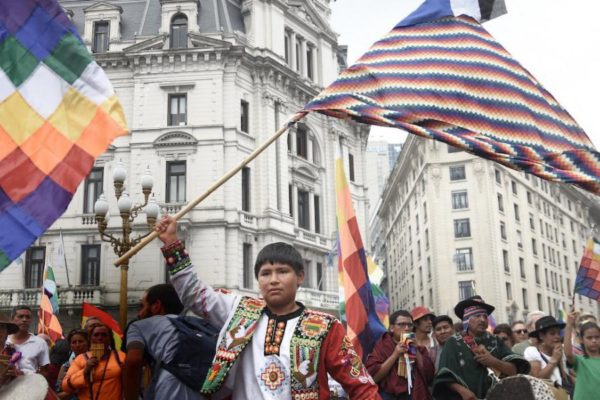
On May 3, 2020, the Bolivian people will go to the polls once more. They return there because President Evo Morales had been overthrown in a coup in November 2019. Morales had just won a presidential election in October for a term that would have begun in January 2020. Based on a preliminary investigation by the Organization of American States (OAS) that claimed that there was fraud in the election, Morales was prematurely removed from office; the term for his 2014 presidential election victory did not end until January. Yet, he was told by the military to leave office. An interim president—Jeanine Áñez—appointed herself. She said she was taking this office only on an interim basis and would not run for election when Bolivia held another election. She is a candidate for the May 3 election. (For more information on what is happening in Bolivia, see this overview from Tricontinental: Institute for Social Research.)
Meanwhile, Morales has been in exile in Argentina. His party—the Movement for Socialism (MAS)—has candidates for the presidency and the vice presidency, but their party cadres and followers are facing a difficult time making their case to the people. Their radio stations have been blocked, their leaders arrested or exiled (or sitting in foreign embassies waiting for asylum), their cadre beaten up and intimidated.
The United Nations secretary-general’s personal envoy Jean Arnault released a statement on February 3 that expressed caution about the elections. The situation in Bolivia, Arnault said, is “characterized by an exacerbated polarization and mixed feelings of hope, but also of uncertainty, restlessness and resentment after the serious political and social crisis of last year.” This careful language of the UN needs to be looked at closely. When Arnault says there is “exacerbated polarization,” he means that the situation is extremely tense. When he asks that the interim government “outlaw hate speech and direct or indirect incitement to violence or discrimination,” he means that the government and its far-right followers need to be very careful about what they say and how much violence they use in this election.
On February 6, Morales spoke in Buenos Aires, where he urged an end to the violence so that the election could bring the fractured country together. He called for a national agreement between all sides to end the dangerous situation. In a pointed way, Morales called upon the government to respect diversity, noting that people wearing distinct clothes and wearing the signs of a certain political party were facing intimidation and violence. He meant the indigenous population of Bolivia, and the supporters of MAS; it is widely accepted that the violence has been coming from the far right’s paramilitary shock troops, and the intimidation has been coming from the government.
For instance, the Bolivian authorities have been routinely charging MAS leaders with sedition, terrorism, and incitement to violence. Morales faced these charges, along with dozens of important MAS leaders, most recently Gustavo Torrico who has been arrested. Matters are so bad that the UN’s special rapporteur on the independence of judges and lawyers, Diego García-Sayán, took to Twitter to express his concern at the “use of judicial and fiscal institutions for the purpose of political persecution. The number of illegal detentions grows.” This has not stopped Áñez, who says she will move her government to investigate at least 592 people who held high office in Morales’ 14 years in government. This means that the entirety of the MAS leadership will likely face harassment between now and the May 3 election.
U.S. Interference
In 2013, Morales expelled the U.S. government agency USAID; he accused USAID of working to undermine his elected government. Before that, Morales, as is his constitutional right, informed Salvador Romero—the head of the election agency (TSE)—that when his term ended in 2008, he would not be retained. This is a normal practice.
Romero went to the U.S. Embassy to complain. He met with U.S. Ambassador Philip Goldberg to complain about this and urged the U.S. to do something. It was clear that Romero and Goldberg knew each other well. When Romero left his post at the TSE, the U.S. establishment took care of him. He went to work at the National Democratic Institute in Honduras. The National Democratic Institute, based in Washington, is loosely affiliated with the U.S. Democratic Party, and is part of the universe that includes the National Endowment for Democracy. These are all U.S. government-funded agencies that operate overseas to “oversee” what is known as “democracy promotion,” including elections.
Romero essentially worked for the U.S. government in Honduras during the first election after the U.S.-instigated coup of 2009. During this election in 2013, violence against the supporters of Xiomara Castro, the candidate of the left-wing Libre Party, was routine. The day before the election, for instance, two leaders of the National Center of Farmworkers (CNTC)—María Amparo Pineda Duarte and Julio Ramón Maradiaga—were killed as they returned home from a training for Libre election workers. This was the atmosphere of this very tight election, which returned to power the U.S.-backed conservative candidate Juan Orlando Hernández of the National Party. Romero, at that time, was quite pleased with the results. He told the New York Times then that “despite ‘the general perception of fraud,’” the election was just fine.
Right after the coup in November, Áñez brought Romero back to La Paz as the head of the election court, the TSE. He has his old job back. This would have made Bruce Williamson, the U.S. charge d’affaires to Bolivia, very happy. The U.S. has its man at the helm of the May 3 election in Bolivia.
And then Trump said he is sending USAID to Bolivia to help prepare the ground for the election. On January 9, the USAID team arrived to “give technical aid to the electoral process in Bolivia.” Technical aid. The phrase should give a reasonable person pause.
Ten days later, Trump’s legal adviser Mauricio Claver-Carone arrived in La Paz and gave a series of interviews in which he accused Morales of terrorism and creating instability. This was a direct attack at MAS and interference with Bolivia’s electoral process.
If the U.S. intervenes in Bolivia, that is just “democracy promotion.”
But even with the violence from the government and its fascistic paramilitaries, even with Romero at the helm of the TSE, even with USAID on the ground, and even with the shenanigans of Claver-Carone, MAS is fighting to win. The candidates for MAS are Luis Arce Catacora (president) and David Choquehuanca Céspedes (vice president). Catacora was the minister of economy and public finance under Morales and the architect of the administration’s economic success. Céspedes was the foreign minister in that government. He managed Bolivia’s policy of international sovereignty and is an important person to Bolivia’s indigenous and peasant movements. Early polls show that the MAS ticket is in first place.
Vijay Prashad is an Indian historian, editor and journalist. He is a writing fellow and chief correspondent at Globetrotter, a project of the Independent Media Institute. He is the chief editor of LeftWord Books and the director of Tricontinental: Institute for Social Research. He has written more than twenty books, including The Darker Nations: A People’s History of the Third World (The New Press, 2007), The Poorer Nations: A Possible History of the Global South (Verso, 2013), The Death of the Nation and the Future of the Arab Revolution (University of California Press, 2016) and Red Star Over the Third World (LeftWord, 2017). He writes regularly for Frontline, the Hindu, Newsclick, AlterNet and BirGün.
February 16, 2020
Posted by aletho |
Civil Liberties, Deception | Bolivia, Latin America, United States |
Leave a comment
After the outbreak of the most intense and massive social protests ever recorded in the history of Chile, on November 16 the government and most political parties signed an agreement to restore peace and public order and initiate a process to draft a new constitution.
The protests, triggered by the rise in subway fares on Oct. 18, called into question the supposed Chilean success story of the neoliberal economic model implemented in the country during the dictatorship of General Augusto Pinochet (1973-1989). Developed by the so-called Chicago Boys, successive administrations since the 1990 return to democracy in 1990 sustained the model as state policy.
Economic and especially financial liberalization; privatization of public services, including water; the subsidiary role of the State; unlimited protection for foreign investments; and insertion in the international economy that serves US policies designed for the region were the fundamental elements of the economic model that Chile pioneered globally.
Chile’s achievements in macroeconomic stability, sustained economic growth and significant reduction in poverty levels solidified its image–promoted by the international system–as a role model in Latin America. For many years, Chilean citizens also believed it. However, behind the stable statistics and the high growth rates per capita, lurked growing inequality and concentration of wealth that eventually revealed the deep cracks in the system and sparked the recent protests. Chile is currently the 12th most unequal economy in the world. [1]
The Chilean Government’s Declining Legitimacy
Most analisis of Chile’s surprising social uprising have focused on economic aspects and less on Chile’s deep political crisis, characterized by the loss of citizen representation in political parties and government. An important part of the protest movement’s demands include greater citizen participation.
According to the October Social Thermometer Survey, 85% of citizens support the grassroots protests, and 80% demand a new constitution. The current constitution, written during the military dictatorship, dates from August 1980. The decline in the legitimacy of the Piñera government in the eyes of the popularion has been intensified by the serious criticisms of the Inter-American Commission on Human Rights, the Human Rights Commission of Chile and the OAS General Secretary for violation of human rights by the government to suppress protests.
Loss of Leadership in the International Sphere
All this has resulted in an unquestionable loss of leadership of Chile in the international arena. The Piñera government had to suspend the Asia-Pacific Economic Cooperation Forum (APEC) Summit that should have taken place in Santiago. Likewise, the United Nations Conference on Climate Change (COP25) was forced to make a last-minute move to Madrid. Chile today cannot offer basic guarantees even as the venue for international sporting events. The South American Football Confederation (Conmebol) decided to move the venue of the 2019 Copa Libertadores final that will be played by the Flamengo (Brazil) and River Plate (Argentina) teams from Santiago to Lima.
Chile has lost leadership in regional bodies. It no longer can play its leading role in the Lima Group, an ad hoc body created by 13 Latin American countries and the United States in August 2017 to press for regime change in Venezuela; in the creation of the Forum for the Progress and Development of South America (Prosur) [2] launched March 22 to replace the Union of South American Nations (Unasur); or in the aborted U.S. plot to deliver humanitarian aid to Venezuela across the border with Colombia that had the region in suspense in February. The grassroots explosion, has not only knocked Chile off the pedestal on which the success of its neo-liberal model was erected, but also removed its articulating role with the United States and allied countries in the region.
The demonstrations have also had an impact on the country’s economy. The volume of sales and consumption has dropped, along with imports and exports. The stock market has gone down, and the national currency has been devalued. The limited operation of many domestic activities and the suspension of the aforementioned international events will have an impact on economic growth. In this scenario, the opposition presented the departure of President Piñera and the call to a Constituent Assembly as the key pieces to achieve a solution.
The Hidden Face of Chilean Economic Success
Although Chile sustained per capita economic growth above the Latin American average and poverty levels fell from above 40% of the population to less than 10% in the last three decades, those who came out of poverty generally did not reach the levels of consumption that are usually associated with middle class status.
Fifty percent of the economically active population earns less than 550 dollars per month, with the minimum wage equivalent to 414 dollars. Overwhelmed by the narrow strip that separates it from the poverty, an important part of the population lives in fear of seeing their income fall. [3] In Chile, downward social mobility is greater than upward social mobility, and downward mobility is more highly correlated to political protest than poverty itself. [4]
The biggest factor that exacerbates inequality is probably the nation’s pension system, in force since 1982. Designed during the military government [5], the pension mechanism has not met Chileans’ expectations. According to the group No + AFP (No More Pension Fund Managers), which in 2016 organized a march of 600,000 people, these are “undercover banks of the richest entrepreneurs in our country who use the pension funds to expand their investments and further concentrate capital in a few hands.” [6] The average pension for retirees is $286 per month, and 80% receive pensions below the minimum wage. The amount of pensions is on average close to 40% of people’s income at the time of retirement.
Education is the second major source of inequality. In 2006 and 2011, student s organized massive demonstrations calling for profound reforms in the education system. Chilean education is characterized by the huge gap between public and private education. The withdrawal of the State from its functions as generator, regulator and supervisor of the education sector led to the gap as part of neoliberal reforms beginning in the 1980s.
Former Chilean rulers unanimously recognize that the situation of inequality generated social unrest and led directly to current protests in this country. Rolf Luders, Pînochet’s former minister of economics and now a professor at the Institute of Economics of the Catholic University of Chile, admits that “the income of the vast majority of Chileans is still low in absolute terms and the income differences are very significant.” Luders adds that “there have been abuses not duly sanctioned by the State.” Former president Ricardo Lagos points out that “citizens feel that although poverty has decreased substantially, there is a very high concentration of income, and a level of inequality that has not been adequately addressed.”
Lagos told local press that “Chile needs to increase taxes, especially for the rich because more public services are needed” and warns that people demand a new social contract so that the fruits of growth reach everyone.“ [7] President Piñera himself, after denying and ignoring the protests, said that “It is true that problems had accumulated for many decades and that different governments were not able to recognize this situation in all its magnitude.” In the early days of the demonstrations Piñera sought to disqualify the protests, stating that they were “at war against a powerful, relentless enemy, that respects nothing and no one and is willing to use violence and crime without any limits, even when it means the loss of human lives, with the sole purpose of producing as much damage as possible.” [8]
But the punitive approach of declaring a state of emergency in the country and giving control of citizen security to military commanders only served to fuel the fire and increase violence. Now that the protests have produced some two dozen deaths, thousands of wounded and detained, and complaints of torture, Piñera has been forced to make changes in his Cabinet, to suspend the state of emergency and curfew in force in some cities, and to announce economic measures that favor popular demands.
Politics for the Elite
The uprising has revealed cracks not only in the Chilean economic model, but also in the political and social spheres. The neoliberal economic system requires an exclusionary and limited democracy, which Chile successfully built in the three decades of democracy since the end of the military dictatorship in 1990. For many years, a binomial electoral system designed during the dictatorship encouraged the participation of only two political blocs that alternated in government. [9] That system resulted in the concentration of power among a narrow elite.
One of those two blocks was the Concertation of Forces for Democracy (since 2011, New Majority) while the other, is the center right Alliance for Chile (since 2009, Coalition for Change). Except for the previous period of the government of Sebastián Piñera of the National Renewal Party (2010-2014) and the current one, (2018-2022), the government has been in the hands of the Concertación parties. The Socialist Party ruled three times: first, with Ricardo Lagos (2000-2006), and then Michel Bachelet twice: (2008-2010) and (2014-2018). But in essence, they never moved away from the model, which resulted in political and economic stability that governed for market needs, but not for the citizenry. [10] In La violence des riches, Michel and Monique Pinçon describe a similar phenomenon in Europe, particularly in England and Germany, in which socialist leaders joined neoliberalism and capitulated to the neoliberal model. [11]
The authors point out that neoliberalism creates a social class that mobilizes based on its interests on all fronts (politics, finances, the media, art, music, among others). It leaves nothing to chance. Ideological and linguistic manipulation prevails that causes a loss of critical thinking, also neutralized by the voracity of consumption that paralyzes the claims of citizenship against inequality. In this neoliberal phase, they point out, the financial system imposes policy.
Economic power, they argue, acts to preserve order and the middle and popular classes rarely question it. That is why the model is presented as natural and eternal, like the sun that heats the earth or the moon that shines. However, they warn, this situation could change “when respect for that hierarchy is lost, when citizens recognize themselves as human beings and wonder ‘If I didn’t work, what would they do? They could not achieve anything.’ It is then that, through questioning this type of aristocracy of money, chaos and rebellion ensue.”
This is what is happening in Chile. The WhatsApp audio leaked at the beginning of the protests Chile’s first lady, Cecilia Morel and a friend where she describes the Chilean protesters as “a foreign invasion, alien” [12], evokes Marie Antoinette and the gaping distance between her spouse, Louis XIV, and the French people.
Chile has a deeply elitist society. “People’s capacity for development is limited by their last name, by where they live, by the school they can pay for or not pay for for their children”, in a scenario in which citizens have the perception that 80% of the state administration is corrupt or very corrupt. [13]
Although Chile does not hold the prize for the highest rate of corruption in Latin America, it is not exempt from it. [14] Illegal financing to political parties, embezzlement of public funds in the army, fraud in the police, and collusion between large companies to increase the price of medicines (especially for chronic diseases) and some essential products, have discredited politics and institutions. In addition to economic inequality, a sense of impunity and loss of citizen representation among their elected officials prevail. That also explains why abstention has increased.
Those who refuse to admit the failure of Chile’s development model describe the recent grassroots protests as revolts of the First World, similar to the “indignados” in Spain or the “yellow vests” of France. They argue that the popular demands reflect a crisis of unfulfilled expectations in developed countries. These countries have a margin of negotiation to overcome the conflicts arising from their demands. That is not the case of Chile, whose government is against the ropes because there is no room to negotiate if no profound changes are made in the model.
Others, such as President Trump, have denounced “the interference of other nations in Chile, with the aim of” undermining “Chilean institutions, democracy and society.” [15] Officials from the U.S. State Department have reported that “false accounts that emanate from Russia have been identified, pretending to be Chilean and trying to undermine Chilean institutions and society.” [16] But the Minister of Interior and Public Security of Chile, Gonzalo Blumel, did not corroborate the U.S. claim and instead stated “I prefer to be prudent, to check out the antecedents and, if they are indeed true, to investigate them in the corresponding instances.”
The OAS General Secretariat, on the other hand, stated that the protests in Chile follow the pattern of those that occurred previously in Ecuador and Colombia and noted that “the breezes of the Bolivarian regime driven by madurismo and the Cuban regime bring violence, looting , destruction and a political purpose of directly attacking the democratic system and trying to force disruptions to constitutional mandates.” [18]
The newspaper La Tercera de Chile reported that foreigners of Cuban and Venezuelan origin were behind the attacks on subway stations. However, the prosecutors in charge of the investigation concluded that “there is no evidence regarding specific identities or nationalities”. [19]
Some analysts conclude that the government itself could be behind some violence and destruction of public and private property throughout the country, noting “there are serious suspicions, testimonies and eloquent visual records that, while indicating that they were organized, could have been carried out by Chilean intelligence services”. [22]
The accusations against the protesters sought to justify the declaration of a state of emergency and the consequent control of public security by the military forces after President Piñera pointed out, at the outset, that the country was in a war against a powerful enemy. But it was a serious mistake to criminalize social protest instead of responding politically. Days later, he had to withdraw the measures after apologizing to the citizens for not having listened to their demands.
Piñera Backed in a Corner
Although the president withdrew the price hikes in public transportation and electricity and approved a set of social measures including an increase in minimum wages and pensions of retirees, a plan to support small and medium-sized companies affected by the protests, and higher taxes for the rich, protesters continue to organize throughout the country. Although they lacked a central leadership, their organization began to take shape in the barrios and in neighborhood associations and social groups convened in open councils, in which the common demand was to change the constitution. They view the text of the current constitution as the major limitation to satisfying many of their demands, in particular, that referring to the subsidiary role of the State.
To gain the upper hand and more time, on Nov. 6 Piñera announced his intention to open up a 60-day period of “citizen dialogues” to collect proposals on the public’s main demands. It is a mechanism similar to the one used by Macron when he confronted the yellow vests movement. But Chile is not France. The discontent and social frustration in the Andean country has been incubating for more than three decades and its level of unionization is low. France, on the other hand, has strong civil society organizations and a much more consolidated democratic tradition.
The intensification of the protests reached a level that forced Piñera to announce on November 9 that his government was preparing a project to update the Constitution promulgated in 1980, during the dictatorship of Augusto Pinochet. He stated that it should be discussed with other proposals that had already been presented in Congress. His announcement represented a shift with respect to his initial positions, since when he assumed the presidency in March 2018 he affirmed that he would shelve a bill that his predecessor, Michelle Bachelet, sent to Congress to modify the Constitution. Bachelet’s initiative sought to consecrate the inviolability of human rights, the right to health and education, and guarantee for equal pay for men and women.
Although the government and citizens technically agreed to change the Constitution, there was no agreement on how to do it. Citizens did not agree to modify the Constitution through a Constituent Congress as proposed by President Piñera, since this implied that the current Congress would designate a group among its own members to modify the Constitution for a period of twelve months. The problem was that civic and social organizations wanted to participate directly in the new Constitution so they proposed to draft it through the election of a Constituent Assembly, a group of people directly elected by the population who cannot be members of the current Congress and whose specific function is to design a new Constitution and present it for ratification by plebiscite.
The central point of contention in the text of the Constitution is the principle of state subsidiarity, which mandates that the state can only intervene when basic needs cannot be met by private agents. As historian Nicole Schwabe of the Center for Inter-American Studies at the University of Bielefeld points out, the State left a great void when it withdrew from provision of social services since many basic rights, such as education, health and pensions, were left to private individuals, who applied strictly commercial criteria.
“This has caused the major problems of recent years and the emergence of movements and a series of social protests,” she noted, adding that while there were improvements, “the political system has not been able to respond to the demands of the social movements that have been coming for years. There is no way out of this conflict if there is no constitutional change. If the necessary measures are not taken, the violence could escalate further.” [23]
In this same line of thought, the Catholic Church spoke through the apostolic administrator of Santiago, Celestino Aos, who expressed the imperative need to change the Constitution, arguing that “if no profound changes are made, we will be talking about cosmetic changes and we will go back to repeating the same story.” [24]
Piñera is backed into a corner. His current approval rating stands at 13%, and is in free fall. The massive protests continue. While Chilean citizens have demonstrated peacefully, there is so much discontent and frustration accumulated over the years that, in the midst of these, groups of anarchists and others have lit fires, erected barricades and looted to create chaos.
The high military commanders have pressured the government to respond. At the same time that Piñera extended a hand to citizens by satisfying certain demands, such as proposing French-style citizen dialogues and offering to draft a new constitution, military commanders urged him to exercise a heavy hand against citizen ingovernability and lack of control. This would explain why on Nov. 8, Piñera chose to harden his speech again and criminalize grassroots demonstrations. He announced several measures such as the Anti-hood Law, convening of the National Security Council and initiatives to support the work of Carabineros (militarized police) and the Chilean Investigative Police. This would only contribute to worsening violence.
Meanwhile, complaints of violation of human rights in this country continue to accumulate. The UN denounced the arbitrary and indiscriminate use of tear gas and rubber bullets to contain the protests and asked the country’s security forces to stop using these projectiles immediately. It also drew attention to “the large number of dead and wounded” and made an appeal to “align violence control actions to existing international standards, ratified by the Chilean State.” [25]
The OAS General Secretariat also deplored the deaths, both those caused by the use of force by the State, and those that have occurred in the context of the looting. The regional organization announced it would endorse the investigations and conclusions of the Inter-American Commission on Human Rights (IACHR) on human rights violations in Chile. [26] Representatives of the IACHR traveled to Chile “to respond to the requests of dozens of organizations of Human Rights, Social Movements and Indigenous Peoples, representatives of Political Parties, legislators and legislators, intellectuals, artists, in addition to the Ombudsman’s Office Rights of the Child.” [27]
According to the November report of the National Institute of Human Rights of Chile, 2,365 people have been injured in demonstrations, more than 6,000 have been arrested and the agency has filed 335 complaints of torture, sexual violence, homicide and attempted homicide, among other crimes. It reported that since the beginning of the demonstrations on October 18, a total of 217 people have suffered eye injuries. The current figure is closer to 300. The Chilean Society of Ophthalmology warned of a health emergency in these cases, and the vice president of the Medical College of Chile, Patricio Meza, said that government security forces have not respected the safe distance for firing projectiles, has aimed above the waist and on occasion fired in the presence of children, pregnant women or people with reduced mobility. Both the BBC and the New York Times have reported on the attacks, the latter in an article entitled “It’s Mutilation”: The Police in Chile are Blinding Protesters”. [28]
The Chilean opposition signed a constitutional accusation in Parliament to remove Piñera, who has racked up multiple complaints for human rights violations. At least one of them has been accepted by a Chilean court of justice. This lawsuit filed by a group of human rights lawyers cites “the responsibility that falls (to the president) in his capacity as author, as head of state and of all those responsible as perpetrators, enablers and/or accomplices of these crimes against humanity.” [29]
Can a Peace Agreement and the Promise of a New Constitution Deactivate Protest?
In this context, on Nov. 16 most Chilean political forces represented in Congress reached an agreement to restore peace and public order and convene, in April 2020, a plebiscite for a new Constitution that replace the current one. [30] The popular consultation will contain two questions: Do you agree to change the Constitution, and what should be the mechanism for drafting it. This may be through a mixed constitutional convention – composed of one half of active parliamentarians and the other half new delegates, or with a totally new convention, similar to a constituent assembly.
If citizens choose a constitutional convention, their members must be elected in the same electoral process that will elect regional mayors and governors in October 2020, with universal suffrage. Once the new Constitution has been drafted, within a maximum period of one year, the text will be submitted to a ratifying plebiscite, carried out through mandatory universal suffrage. Finally, Congress will vote again.
Although the agreement has long deadlines given the urgency of citizen demands, the decision to draft a new Constitution and get rid of the current one represents a historical moment for Chile and the world. It demonstrates that it is possible, through citizen protest, for a government to relinquish the primary legal instrument that guarantees political and economic control of society to powerful elites. However, it will be necessary to see how much political parties truly represent the people and how much tolerance economic and media power groups will have with the measure, which threatens their stability. Both factors will depend on whether the measure can deactivate grassroots protest, the citizen councils and the acts of violence.
The popular uprising in Chile has unmasked the image of well-being in Chilean society that the international establishment has been selling. It has affected the government’s regional leadership and its projections of economic growth and has revealed an injured society, which has added issues pending solution such as trials for violations of human rights, reparation for victims of violence and freedom for political prisoners.
Ariela Ruiz Caro obtained her degree in Economics from Humboldt University of Berlin and holds a master’s degree in Economic Integration Processes from the University of Buenos Aires. She has been an international consultant on trade, integration and natural resources issues at ECLAC, Latin American Economic System (SELA), Institute for the Integration of Latin America and the Caribbean (INTAL), among others. She worked in the Andean Community between 1985 and 1994, and as an advisor to the Commission of Permanent Representatives of MERCOSUR between 2006 and 2008, and Economic Attaché of the Embassy of Peru in Argentina between 2010 and 2015. She is an analyst for the Americas Program for the Andean/Southern Cone region.
FOOTNOTES
[1] According to the latest edition of the Social Panorama of Latin America report prepared by the Economic Commission for Latin America and the Caribbean (ECLAC), the wealthiest 1% of the country accumulated in 2017 26.5% of wealth, while that 50% of lower income households accessed only 2.1% of the country’s net wealth.
[2] According to the host of Prosur’s first presidential summit, Sebastián Piñera, it was about “creating a new reference in South America for better coordination, cooperation and regional integration, free of ideologies, open to all and 100% committed to the democracy and human rights.” The problem is that there are no ideology-free forums. Prosur is closely allied with the U.S. government and is an ideological response to the failure of Unasur in its attempt to autonomously solve the problems of the region.
[3] While a Chilean citizen has a 9% chance of seeing their income grow until they join 20% of the population with the highest income, they have a 16% chance of seeing their income decrease and fall into the 20% of the population in the lower income bracket.
[4] Kahhat Farid, “The eternal return, the radical right in the contemporary world”. https://elcomercio.pe/mundo/latinoamerica/la-paradoja-chilena-por-farid-kahhat-noticia/
[5] The pension system in Chile is provided by the Pension Fund Administrators (AFP), which are private financial institutions that are responsible for managing individual pension savings account funds.
[6] https://www.bbc.com/mundo/noticias-america-latina-50124583
[7] “The protests in Chile are from the First World”, Andrés Oppenheimer https://www.elnuevoherald.com/opinion-es/opin-col-blogs/andres-oppenheimer-es/article236564373.html
“The Chilean enigma”, Mario Vargas Llosa, https://www.losandes.com.ar/article/view?slug=el-enigma-chileno-por-mario-vargas-llosa-2
[8] https://www.dw.com/es/pi%C3%B1era-estamos-en-guerra-contra-un-enemigo-poderoso/a-50910426
[9] In January 2015, the binomial electoral system created by the Pinochet dictatorship was eliminated, which, in practice, favored the political right, which under this system controlled half of the Congress with one third of the votes .
[10] The Broad Front founded in 2017 is the exception. It is a Chilean political coalition made up of left-wing political parties and movements, egalitarian liberals and citizens who seek to overcome the dichotomy of Chilean bipartisanship, formed by the New Majority and Chile Vamos
[11] La violance des Riches, Michel Pinçon & Monique Pinçon-Charlot, Paris, 2014 https://www.youtube.com/watch?v=Ys3cjJlTcDE
[12] “We are absolutely overwhelmed, it is like a foreign invasion, alien (…) Please, keep calm, call people of good will, take advantage of rationing meals and we will have to decrease our privileges and share with others. (…) Friend, I think that the most important thing is to try to keep our heads cool, not to get overexcited, because what is coming is very, very, very serious.” “They moved up the curfew because it was known that the strategy is to break the entire food supply chain, even in some areas water, pharmacies. They tried to burn a hospital and tried to take the airport.”
[13] https://www.bbc.com/mundo/noticias-america-latina-50208871
[14] Between 2014 and 2017, both the right-wing political coalition (with the Penta Case and SQM) and Michelle Bachelet’s government (with the Caval case) were tainted by issues related to illegal financing of political campaigns and false ballots
[15] Days earlier, in an interview with Efe, the head of Latin America in the State Department, Michael Kozak, said that the United States had identified in the social networks “false accounts” from Russia that are trying to sow discord in the network. At the moment he has not mentioned a possible interference of Cuba or Venezuela in this country.
[16] https://www.cnnchile.com/pais/diplomacia-eeuu-cuentas-falsas-rusia-agitando-manifestaciones-chile_20191025/
[17] https://www.t13.cl/noticia/politica/prefiero-ser-prudente-ministro-blumel-se-desmarca-supuesta-intervencion-extranjera-chile
[18] https://www.bnamericas.com/es/noticias/comunicado-de-la-secretaria-general-de-la-oea-sobre-la-situacion-en-chile
[19] Statements by the Eastern Metropolitan Regional Prosecutor, Omar Mérida, said that the investigation he heads “has no precedents regarding specific identities or specific nationalities.”
[20] Héctor Barros, South Metropolitan Regional Prosecutor https://www.t13.cl/noticia/politica/prefiero-ser-prudente-ministro-blumel-se-desmarca-supuesta-intervencion-extranjera-chile
[21] Rubén Alvarado, general manager of the Metro de Santiago https://www.t13.cl/noticia/politica/prefiero-ser-prudente-ministro-blumel-se-desmarca-supuesta-intervencion-extranjera-chile
[22] http://www.noticiasser.pe/opinion/la-nacion-insurrecta-y-el-fin-de-los-tiempos
[23] https://www.dw.com/es/chile-es-el-cambio-de-la-constituci%C3%B3n-la-soluci%C3%B3n-a-la-crisis/a-51144077
[24] https://www.cnnchile.com/pais/celestino-aos-pidio-cambio-de-constitucion_20191108/
[25] https://www.theclinic.cl/2019/11/08/violacion-grave-a-los-derechos-humanos-onu-demanda-el-cese-inmediato-del-uso-de-balines-y-perdigones-en-chile/
[26] https://www.bnamericas.com/es/noticias/comunicado-de-la-secretaria-general-de-la-oea-sobre-la-situacion-en-chile
[27] https://www.cnnchile.com/pais/cidh-visita-chile-derechos-humanos_20191106/
[28] https://www.t13.cl/noticia/nacional/the-new-york-times-publica-reportaje-sobre-manifestantes-que-quedaran-ciegos-por-traumas-oculares
[29] https://rpp.pe/mundo/latinoamerica/crisis-en-chile-sebastian-pinera-es-denunciado-por-presuntos-crimenes-de-lesa-humanidad-en-protestas-sociales-noticia-1228713?ref=rpp
[30] The Communist Party did not participate and the Broad Front split.
February 7, 2020
Posted by aletho |
Economics, Solidarity and Activism | Chile, Latin America |
Leave a comment
Israel’s Ambassador to the United Nations, Danny Danon, met with his Bolivian counterpart, Ruben Suarez, in an official meeting, which is the first of its kind since Bolivia cut ties with Israel in 2009, according to Hebrew media.
Yedioth Ahronoth reported on Monday that the meeting took place last week at the United Nations headquarters in New York.
According to the newspaper, the two ambassadors discussed setting up an embassy for Bolivia in Israel, strengthening cooperation in the fields of water technology and agriculture, and permitting Israeli tourists to revisit the South American country.
Danon invited Suarez to visit Israel as part of a planned visit by a delegation of UN ambassadors next April.
In November 2019, Bolivia announced the resumption of its relations with Israel after cutting diplomatic ties in light of the Israeli aggression on the Gaza Strip (27 December 2008 – 28 January 2009), reported the newspaper.
According to the same source, the relations between the two countries were resumed following the end of Evo Morales’s presidential term (January 2006 – November 2019), “ who was known for his hostility towards Israel, and the arrival of a transitional pro-US government.”
The newspaper said that the recent appointment of Suarez as Bolivia’s representative to the United Nations “will boost Israeli moves at the United Nations.”
The newspaper also considered Suarez’s predecessor Sacha Lorenti to have “anti-Israel” stands.
February 4, 2020
Posted by aletho |
Ethnic Cleansing, Racism, Zionism | Bolivia, Israel, Latin America |
Leave a comment
Mérida – Venezuela has warned the Inter-American Commission on Human Rights (IACHR) that its proposed visit to the country has not been authorised and will not be accepted.
The Washington DC-based organisation announced a five-day delegation to Venezuela starting on Tuesday. It was invited by self-declared “Interim President” Juan Guaido to “observe” the human rights situation in the country. The IACHR has not visited the Caribbean country in 18 years.
Caracas reacted on Friday, however, describing the proposed visit as “improper” given that the country is no longer part of the IACHR’s mother institution, the Organisation of American States (OAS).
Venezuela left the OAS in April 2019 after accusing the multilateral organisation of repeated acts against Venezuela’s sovereignty. Guaido appointed representatives, however, continue participating in OAS meetings.
Venezuela’s Foreign Minister Jorge Arreaza took to Twitter on Friday, clarifying that “The government of the Bolivarian Republic of Venezuela has not invited nor accepts the visit of any IACHR delegation. The visit announced in the press is NOT authorised.”
Caracas’ general secretary of the National Human Rights Council, Larry Devoe, also explained that Venezuela “does not recognise nor assign legal value to the actions of the OAS and the IACHR,” in a public communiqué to the multilateral body.
In addition, Devoe confirmed that the country will rather continue working with the office of the UN High Commissioner for Human Rights on the matter. The body, headed by former Chilean president Michelle Bachelet, sent a delegation to Venezuela last July.
Guaido responded to the measure by assuring followers that the IACHR visit will proceed, as well as reaffirming his credentials to extend such invitations.
“As the legitimate government and with Venezuela a member of the OAS and the Inter-American system, we ratify the invitation for the IACHR to visit our country,” he wrote on Twitter.
The former National Assembly president is currently wrapping up an international tour which has taken him to Colombia, the UK, Belgium, France, Spain, the USA and Switzerland, where he attended the Davos Forum.
Guaido has been in Florida in recent days, where he has met with Republican Senators Marco Rubio and Rick Scott, as well as Congresswomen Debbie Wasserman Schultz and Donna Shalala and Miami Mayor Francis Suarez. Florida representatives have been some of the drivers of sanctions and legislation against Venezuela.
Despite coinciding with US President Donald Trump’s visit to his Mar a Lago resort also in Florida, no meeting took place between the two men. According to media reports, Guaido’s team lobbied for a meeting with Trump but to no avail.
The opposition leader also held a rally for US-based supporters at the Miami Convention Centre on Saturday, before meeting with US charge d’affaires for Venezuela, James Story.
Guaido has stated that he will return to Venezuela in the “next few days” and has called for more street rallies.
Edited by Ricardo Vaz from Mérida.
February 4, 2020
Posted by aletho |
Aletho News | Latin America, OAS, Venezuela |
Leave a comment
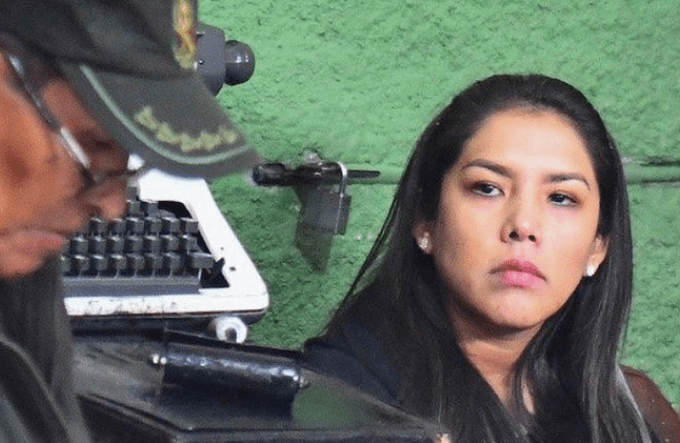
Patricia Hermosa, the former cabinet chief of ex-Bolivian President Evo Morales’ administration, has been handed a six-month preventive detention order by a Bolivian court, El Diario daily reported.
Bolivian prosecutors pushed for Hermosa to be placed in preventive detention, claiming that she was both a flight risk and could potentially obstruct the investigation. The court on Sunday agreed with prosecutors, and ordered the former cabinet chief to spend six months in preventive detention, the newspaper reported.
Hermosa was first detained in December as part of the new Bolivian government’s ongoing investigation into Morales but was initially released due to insufficient evidence. However, she was arrested once again this past week after authorities claimed to possess recordings of Hermosa’s telephone conversations with leading Bolivian officials. She is charged with sedition, terrorism and financing terrorism.
The news comes just one day after two ministers of ousted President Morales’ administration left Bolivia for Mexico. Many members of Morales’ former government have been living at the Mexican ambassador’s residence in Bolivia while waiting for their asylum requests to be processed. Morales himself is currently living in Argentina after fleeing Bolivia.
On Friday, Morales reported that Hermosa was detained by Bolivian law enforcement officials, who also seized personal documents belonging to the ex-president during the former cabinet chief’s apprehension.
February 3, 2020
Posted by aletho |
Civil Liberties | Bolivia, Latin America |
Leave a comment


 Aletho News