Pompeo the Warmonger Supports Authoritarian Regimes
By Brian CLOUGHLEY | Strategic Culture Foundation | 20.01.2019
On January 2 US Secretary of State Mike Pompeo visited Brazil, and his Department noted that in discussions with Foreign Minister Ernesto Araujo they “highlighted the importance of working together to address regional and global challenges, including supporting the people of Venezuela, Cuba, and Nicaragua in restoring their democratic governance and their human rights.” Pompeo declared that the US and Brazil “have an opportunity to work alongside each other against authoritarian regimes.”
From this we gather that Pompeo is a strong advocate of democratic governance and will always make it clear that the United States supports unfortunate people living in countries having “authoritarian regimes.” It is apparent he must believe in the Universal Declaration of Human Rights which states that “everyone has the right to freedom of thought, conscience and religion.”
Unfortunately it transpired that Pompeo is a selective supporter of democracy and freedom of religion, because after he left Brazil and went to the Middle East he voiced vigorous support for despots who rule countries in a manner that is undeniably authoritarian.
In a speech in Cairo on January 10 Pompeo threatened Iran and declared that “Nations are rallying to our side to confront the regime like never before. Egypt, Oman, Kuwait, and Jordan have all been instrumental in thwarting Iran’s efforts to evade sanctions.” It must be gratifying for him that these nations have joined the US in its crusade against Iran, three of them being hereditary monarchies and one run by a non-regal martinet.
Oman, for example, is “an absolute monarchy by male primogeniture. The Sultan, Qaboos bin Said al Said, has been the hereditary leader of the country since 1970.” Freedom House notes that “The regime restricts virtually all political rights and civil liberties, and imposes criminal penalties for criticism and dissent… Political parties are not permitted, and the authorities do not tolerate other forms of organized political opposition.”
In Jordan “the monarch holds wide executive and legislative powers, including the appointment of the prime minister and all seats of the senate. The monarch approves and dismisses judges; signs, executes or vetoes all laws; and can suspend or dissolve parliament.”
The leader of Kuwait, the Amir, according to the CIA Factbook, is “chosen from within the ruling family, confirmed by the National Assembly; the prime minister and deputy prime ministers are appointed by the Amir.” In this autocracy, according to Human Rights Watch, there are “no laws prohibiting domestic violence or marital rape… a man who finds his mother, wife, sister or daughter in the act of adultery and kills them is punished by either a small fine or no more than three years in prison.”
Pompeo wants “democratic governance and human rights” in Venezuela, Cuba, and Nicaragua. Why not in Oman, Jordan and Kuwait?
The only one of Pompeo’s countries not ruled by a supreme monarch is Egypt, whose president is Field Marshal Abdel Fattah al-Sisi who “was elected in May 2014, almost a year after he removed his elected predecessor, the Muslim Brotherhood’s Mohammed Morsi, from office in a coup.” Sisi “won a second four-year-term in March 2018 against a sole minor opposition candidate. Human rights lawyer Khalid Ali and former prime minister Ahmad Shafiq withdrew from the race, and the former armed forces chief of staff Sami Anan was arrested.”
In his warmongering anti-Iran, anti-Syria speech Pompeo announced that his visit to Egypt was “especially meaningful for me as an evangelical Christian, coming so soon after the Coptic Church’s Christmas celebrations” and visited the Cathedral of the Nativity of Christ and the Al-Fattah Al-Alim mosque where he praised Egypt’s “freedoms here in this houses [sic] of worship, these big, beautiful, gorgeous buildings where the Lord is clearly at work.”
He ignored Amnesty International’s statement that in Egypt “the authorities continued to violate the right to freedom of religion by discriminating against Christians.” His own Department recorded that last year “Irrespective of religion, authorities also did not apply equal protection to all citizens and sometimes closed churches, in violation of the law, according to multiple sources.”
The bigotry of the Egyptian regime and its clerics was epitomised on January 13 when Al Azhar University which is responsible for “a national network of schools with approximately two million students” expelled a female student for being hugged by a male friend. The scandal was revealed in a video clip which “showed a young man carrying a bouquet of flowers kneeling before a young woman and then hugging her in what appeared to be a marriage proposal.” According to a University spokesman this violates “the values and principles of society”. There was not a word from Pompeo, that self-declared admirer of Egyptian places of worship where “the Lord is clearly at work.”
Pompeo continued his tour of the region, and next day, as he landed in Saudi Arabia, the Egyptian regime announced that for the seventh time it had extended its state of emergency which “allows authorities to take exceptional security measures, including the referral of terrorism suspects to state security courts, the imposition of curfews and the confiscation of newspapers.” This would be supported in Saudi Arabia where, as chronicled by Freedom House, the “absolute monarchy restricts almost all political rights and civil liberties. No officials at the national level are elected. The regime relies on extensive surveillance, the criminalization of dissent, appeals to sectarianism, and public spending supported by oil revenues to maintain power. Women and religious minorities face extensive discrimination in law and in practice.”
This discrimination was highlighted by the New York Times on January 13 when it published an Op-Ed by Alia al-Houthlal that implored Pompeo to ask Saudi Prince Mohammad bin Salman to release her sister, the women’s rights activist, Loujain al-Houthlal, who is imprisoned in Riyadh. Ms Alia al-Houthlal wrote that her sister had been tortured in prison, and that a close associate of bin Salman, Saud al-Qahtani, who has been named in connection with the murder of Mr Jamal Khashoggi [brutally killed in the Saudi consulate in Istanbul on October 2 last year], was present at several torture sessions.
The Times reported that Pompeo began his conversation with bin Salman, the de facto ruler of Saudi Arabia, by saying “I want to talk to you about a couple of places we’ve been. We think we learned a lot along the way that will be important going forward.” There was no mention of the torture of Loujain al-Houthlal or any other gross violations of human rights in Saudi Arabia where the regime continues to “repress peaceful activists and dissidents, harassing writers, online commentators and others who exercised their right to freedom of expression by expressing views against government policies.”
There was none of that embarrassing stuff. It was all skated over, with Pompeo saying only that “we spoke about human rights issues here in Saudi Arabia – women activists. We spoke about the accountability that – and the expectations that we have. The Saudis are friends, and when friends have conversations, you tell them what your expectations are.”
Pompeo’s expectations include joint action with the Saudi regime and other Middle East autocracies to “counter Iranian malign influence,” which he regards as an even higher priority than “working against authoritarian regimes” in Latin America, which Washington is determined to dominate. Pompeo’s objections to authoritarianism are highly selective, for in his Cairo speech he confined himself to describing Iran “malevolent,” and “oppressive” while denouncing “Iranian expansion” and “regional destruction,” which is a trifle ironic, coming from a Secretary of State whose military devastated Iran’s neighbours, Iraq and Afghanistan.
Pompeo’s ethical approach is decidedly ambiguous and his moral flexibility would attract the admiration of a trampoline gymnast. His Cairo speech was titled “A Force for Good: America’s Reinvigorated Role in the Middle East,” but it is apparent that reinvigoration is confined to plans for destruction of Iran, in which Washington will be assisted by Pompeo’s friends — the Middle East’s authoritarian regimes.
Don’t meddle in Venezuela, Moscow tells coup-cheering Washington
RT | January 16, 2019
Russia has criticized the US government for bullying Venezuela and encouraging its opposition to stage a coup against President Nicolas Maduro, who was sworn in for his second term last week.
“Nations should avoid meddling in other nations’ internal affairs,” Russian Foreign Minister Sergey Lavrov said on Wednesday. He said that Washington’s encouragement of opposition forces in Venezuela “has made them unwilling to seek reconciliation [with the president], which is regretful.”
Venezuela is currently in a political crisis, with the opposition-controlled National Assembly declaring President Maduro a “usurper” and its speaker, Juan Guaido, an “interim president” of the country. The move came after strong public support from Washington, which has been advocating toppling Maduro for quite some time.
Washington has targeted Maduro’s government with a series of crippling economic and personal sanctions, and reportedly considered a military intervention in the country.
The National Assembly’s mandate to represent Venezuelans remains in question. In 2017, the country reformed its parliament system by introducing a new body called the Constitutional Assembly, which is controlled by pro-government politicians. The opposition and its backers in Washington rejected the reform as a power grab and declared the new legislature illegal.
Explaining Russia’s position on the conflict, Lavrov said US involvement in Venezuela was “very alarming and indicated that the US policy of destabilizing governments it does not like remains a priority.”
Venezuela suffered years of economic and social hardships, which the opposition blames on Maduro’s poor governance. He blames the hardship on sabotage of big business and foreign interests, which want to see his socialist government ousted from power.
Venezuela Welcomes 2,500 Cuban Doctors Leaving Brazil
teleSUR | January 13, 2019
Over 2,000 Cuban doctors are setting up practice in Venezuela after being kicked out of Brazil by President Jair Bolsonaro, Venezuelan leader Nicolas Maduro said this weekend.
Two-thousand-five-hundred cardiologists, anesthesiologists, and general doctors arrived in the South American country Friday to bulk up the medical staff at the Barrio Adentro Mission, a social initiative founded by ex-president Hugo Chavez to provide free, public medical care.
In November, thousands of doctors were forced to leave the Mais Medicos (More Doctors) cooperation program in Brazil after far-right president Bolsonaro criticized the program, saying it was torture for Cuban mothers who were “not allowed” to go with their children and questioning diplomatic ties with the island.
In the last five years, about 20,000 Cuban physicians have participated in the ‘More Doctors Program,’ assisting thousands of Brazilians in rural communities to receive primary health care.
Some 1,462 vacancies, roughly 17.2 percent of those positions left by the Cuban doctors, have not yet been filled, the Brazilian Health Minister, Luiz Henrique Mandetta, said Friday.
Several states and municipalities inside Brazil pressured the National Government to provide a solution because the Cuban doctors are usually the only medical option in several rural areas of the country.
Cuba Denounces Attempt to Reactivate US Brain-Drain Program
teleSUR | January 12, 2019
Cuban President Miguel Diaz-Canel has condemned the call by two U.S. lawmakers of Cuban origin to reactivate the ‘brain-drain’ program established by George W. Bush and revoked during the administration of Barack Obama.
“They’re trying to impose a perverse strategy to stimulate brain drain. Another anti-Cuban campaign that shows the imperial impotence against the revolutionary conquests,” Diaz-Canel wrote on Twitter.
Senators Marco Rubio and Bob Menendez, respectively from the Republican and Democratic parties, filed a resolution at Congress on Thursday calling for the reactivation of the Cuban Medical Professional Parole (CMPP), known as “brain drain” by Cubans.
“Cuba has been sending medical brigades around the world, including Central and South America as well as Africa, for over forty years – in return for payments directly to the government estimated to be as much as $8 billion per year,” it reads.
“This blatant exploitation by the Castro regime of their healthcare professionals is not at all surprising, as they have long used the suffering of the Cuban people for their own personal gain.”
The resolution can define the Senate’s position on the issue, but the ultimate decision to re-establish the CMPP rests with the State Department.
Installed in 2006, the program aimed to lure Cuban doctors and health professionals working on special missions abroad to abandon their duties and emigrate to the United States with special incentives.
The Cuban president accused the senators of being “unable to promote a civilized relationship” and being “blinded by arrogance.”
Obama repealed the program in 2017 after the improvement of diplomatic relations between the two countries, and recognized the work of health professionals.
According to government data, Cuba has sent more than 600,000 doctors to over 160 countries since the foundation of the ‘More Doctors’ initiative in 1973. Their labour has been recognized by the UN and the World Health Organization as good practice and an important step toward the 2030 sustainable development objectives.
Also, Cuban medicine schools have trained over 35,613 foreigners from 138 countries, completely free of charge.
However, the senators described the missions as “human trafficking.”
Cuban Foreign Ministry director for the United States Office, Carlos Fernandez de Cossio, also rejected the initiative by Rubio and Menendez.
“Impotent resentment against Cuba has no limits. Unable to stop recognized human professional development, baseball quality and potential investment. Bob Menendez and Marco Rubio want to restore brain drain program against Cuban doctors,” said Fernandez de Cossio.
Both senators argued that Cuba was profiting from the work of its health professionals in Brazil, where Cuba ended its ‘More Doctors Program’ in November after comments by then President-Elect Jair Bolsonaro questioning the quality of Cuban doctors’ training.
The news was met with sadness by the Brazilian ‘Doctors for the People National Network‘ (RNMMP), who regretted the loss of about 8,500 health professionals working in historically marginalized areas.
“It was an example that favelas, backlands and the Amazon can have doctors. An example that the poor or black people can be a doctor. An example that the state must guarantee the right to health. An example of Latin American love,” the RNMMP press release declared.
The ‘More Doctors Program’ was approved by former President Dilma Rousseff in 2013 in order to increase access to public health for the Brazilian population.
One of those policies consisted of assuring budgetary resources for implementing family-based health strategies, increasing medical vacancies in universities and offering more courses in the field of medicine.
During the five years it lasted, about 20,000 Cuban physicians assisted thousands of Brazilians in primary health care.
Besides the CMPP resolution, Rubio is also attempting to veto an Obama-era ruling allowing Cuban athletes to join Major League Baseball without first having to defect to the United States.
Mexico Set to Become Third Country to Fully Legalize Marijuana
21st Century Wire | January 5, 2019
Following in the footsteps of Uruguay and Canada, as well as 30 US states, Mexico is set to adopt a new law which will make cannabis legal for both medicinal and recreational use. New legislation by Mexico’s ruling majority party hopes to “cut the chain” of illegal supply.
Olga Sánchez Cordero, interior minister in Mexico’s new leftist nationalist government, has recently submitted a Bill to Congress which would effectively end prohibition of cannabis, placing the new rescheduled substance under a regime of state regulation.
Mexico had a brief foray into the legalization of drugs back in 1940 when Lázaro Cárdenas, the former Mexican president who had nationalized Mexico’s oil sector in 1938. Cárdenas lifted all state restrictions on narcotics like heroin, morphine and cocaine, which allowed addicts to be treated as patients, rather than felons. State dispensaries sold small amounts to individuals at prices which vastly undercut those of illegal street dealers. The move was reversed after only after 6 months – because of intense diplomatic pressure from the US.
The new law could also open up numerous opportunities for independent entrepreneurs like 17-year-old Nicolás Calderón who hopes to open a cannabis shop and art venue in Mexico City, as well as develop his own cultivation site and supply chain.
“I don’t just see an opportunity to make money but also to help Mexico […] I think this is going to help reduce el narco [the cartels] a lot,” said Calderón to the Financial Times.
However, as on the world’s largest producers of illegal narcotics, the Mexican state will no doubt face intense competition from black markets run by the country’s vast organized crime cartels on which former president Felipe Calderón had unsuccessfully declared ‘war’ 12 years ago.
“I think the cartels will lose 40 per cent of their income with [marijuana] legal here and in the US,” said Vicente Fox, Mexico’s president from 2000 to 2006, in an interview with the FT. Fox currently sits on the board of Canadian cannabis company Khiron Life Sciences – which hopes to enter the Mexican cannabis market later this year.
READ MORE CANNABIS NEWS AT: 21st Century Wire Cannabis Files
Argentina: Milagro Sala to Run for Governor of Jujuy in 2019
teleSur | December 28, 2018
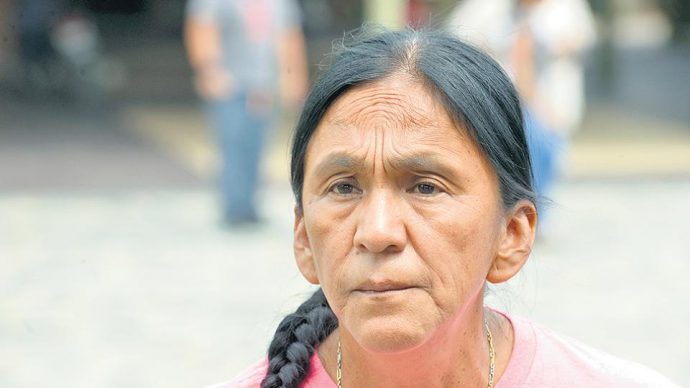
Sala was recently acquitted of attempted murder, an accusation she claims is politically motivated.
Activist and Indigenous leader Milagro Sala, now in detention, has announced she will run in the 2019 regional elections for governor of Jujuy province, northern Argentina.
“I have the intention of competing against Gerardo Morales in the elections,” said Sala during a radio interview on Thursday.
Sala said she wants to improve the living conditions of the people of Jujuy, where she says there’s “no democracy or freedom, only hunger.”
The activist was unanimously acquitted of attempted murder on Thursday in the ‘Shooting of Azopardo’ case, from October 27, 2007. Sala celebrated the verdict and thanked the judges for not succumbing to government pressure.
Morales, Jujuy’s incumbent governor, described the court’s decision to acquit the activist as “shameful.”
“The ruling acquitting two criminals such as Milagro Sala and Beto Cardozo is shameful,” Morales wrote on Twitter.
“If there’s something that the people of Jujuy know about is the violence they committed and how much they stole. The struggle against impunity continues.”
Sala is one of the founders and leaders of the Tupac Amaru Neighborhoods’ Organization, providing housing and other services to informal workers and working-class sectors since 1999.
She is also being investigated for alleged illicit association, fraud and extortion, crimes she was charged with days after being detained in early 2016 for allegedly instigating violence during a protest against Jujuy Governor Gerardo Morales, which she didn’t attend.
The case is known as the “Pibes Villeros” and Sala claims it’s political persecution “to discipline the leaders and the opposition,” as she told teleSUR in October.
Tupac Amaru Neighborhoods’ Organization claims the persecution against Sala is “politically motivated.”
The activist has expressed multiple times her intentions to participate in the regional elections in Jujuy. In 2017, while she was under house arrest, Sala said she would like to run against Morales “as equals, not from prison while he is ruling over everything here in Jujuy.”
Sala served as an Argentine legislator between 2013 and 2015 and was later elected to Mercosur’s Parliament (Parlasur), prior to her arrest in 2016 for allegedly instigating violence against the state.
States that stood up for INF Treaty have now ‘de facto blessed’ US for scrapping it – Moscow
RT | December 22, 2018
The very same nations that blasted the White House for deciding to pull out of the landmark 1987 INF Treaty have now helped to defeat the UN resolution calling for its support, the Russian Foreign Ministry pointed out.
Russia expressed “disappointment” as a resolution in support of the Intermediate-Range Nuclear Forces Treaty was voted down by a narrow margin in the UN General Assembly on Friday.
Forty-three states, including China and South American countries, voted for the document drafted by Russia.
Forty-six voted against the resolution, with 78 abstaining. The US’ allies in NATO and the EU voted ‘No’ despite previously speaking in favor of keeping the arms agreement intact, the Russian Foreign Ministry noted.
These countries, especially the NATO members – contrary to their own statements about the importance of the INF Treaty – acted as its opponents.
Friday’s vote shows how the US’ allies “de facto blessed” Washington for violating the INF deal, the foreign ministry stressed.
Moscow’s envoy to the UN, Vasily Nebenzya told Rossiya 1 TV channel that prior to the vote his American counterpart, Nikki Haley, sent out a letter urging everyone to vote down the Russian draft.
As the US announced its willingness to ditch the landmark INF Treaty back in October, many European politicians defended the need to keep the existing agreement and hailed its role in nuclear disarmament. German Foreign Minister Heiko Maas called Washington’s decision “regrettable” as the treaty is “hugely important” to the European continent.
EU foreign affairs chief, Federica Mogherini referred to the embattled treaty as the “key” and “a fundamental pillar” to European security architecture and urged for it to be “preserved and fully implemented.”
The INF Treaty bans Moscow and Washington from developing and deploying ground-based missiles with ranges from 500 to 5,500 kilometers. Both sides accuse each other of violating its terms, and likewise deny any wrongdoing.
Two weeks ago, US Secretary of State Mike Pompeo threatened to pull the US from the deal in 60 days “unless Russia returns to compliance.”
Russia, in turn, warned that the US withdrawal from the INF Treaty will trigger an arms race across the globe.
WaPo: Trump Needs to Destroy Venezuela to Save It
By Joe Emersberger | FAIR | December 17, 2018
Tamara Taraciuk Broner of Human Rights Watch (HRW) and Johns Hopkins professor Kathleen Page took to the pages of the Washington Post (11/26/18) to whitewash Donald Trump’s successful efforts to make Venezuela’s economic crisis much worse. Appropriately enough, at the end of the piece, the Post recommended four other articles (11/23/18, 9/11/18, 6/20/18,8/21/18) that either attacked Venezuela’s government or stayed conspicuously silent about the impact of US economic sanctions.
Propaganda works primarily through repetition. The vilification of Venezuela’s government in the Western media has been relentless for the past 17 years, as Alan MacLeod pointed out in his book Bad News From Venezuela.

A WaPo op-ed called on international governments to “put considerable pressure on Venezuela” in response to health problems that are largely a result of international pressure.
NGOs like HRW play an important role in framing the Western imperial agenda from a supposedly “independent” and “humanitarian” perspective, as dramatically illustrated after the death of Sen. John McCain (FAIR.org, 8/31/18) when several HRW officials joined the US media in sanctifying an overtly racist warmonger. In contrast, a few hours after Hugo Chavez’s death in 2013, HRW rushed out a statement vilifying Chavez’s years in office, displaying total indifference to his achievements in reducing poverty and improving health outcomes, despite the violent, scorched-earth tactics of his US-backed opponents to prevent this from happening. No such statement was rushed out by HRW to attack George H.W. Bush—the recently departed butcher of Panama and initiator of the decades-long mass slaughter in Iraq, to mention only a few of his crimes.
HRW has repeatedly invoked the impact of an economic crisis in Venezuela to call for more US-led “pressure” on Venezuela’s government, as was done by Taraciuk and Page. They wrote:
But most sanctions—imposed by the United States, Canada and the European Union—are limited to canceling visas and freezing assets of key officials implicated in abuses and corruption. They have no impact on the Venezuelan economy.
In 2017, the United States also imposed financial sanctions, including a ban on dealings in new stocks and bonds issued by the government and its state oil company. But even these include an exception for transactions to purchase food and medicines. In fact, the government has purchased food from abroad, but these efforts have given rise to corruption allegations.
The idea that “most sanctions” have “no impact on the Venezuelan economy” is appalling nonsense (FAIR.org, 3/22/18). Trump has extended Obama’s cynically declared “national emergency” over Venezuela, and escalated by directly threatening holders of Venezuelan government bonds, making it it impossible for Venezuela to “roll over” any bonds governed under US law (i.e., borrow to pay off principal when a bond comes due, as governments usually do). In January, a Torino Capital report on Venezuela’s economy stated that “all foreign-currency bonds are denominated in dollars, and all are governed by New York law.” Trump also prohibited the Venezuelan government–owned CITGO corporation, based in Texas, from sending any profits or dividends back to Venezuela.
The US allies Taraciuk and Page mentioned mainly provide propaganda cover for a US-led assault. Bear in mind that the United States, Canada and other countries within the European Union are supplying weapons and other essential military support to Saudi Arabia, even as it inflicts famine on Yemen. Why do you suppose governments barbaric enough to arm Saudi Arabia also target Venezuela with economic sanctions? Does concern over human rights and corruption, which Taraciuk and Page uncritically cited as a rationale, pass the laugh test?
It should be said that the financial sanctions the US has applied to Venezuela could not even be justified against Saudi Arabia which, unlike Venezuela, really is a dictatorship. In fact, Saudi Arabia is perhaps the most brutal and backward dictatorship on Earth, and one engaged in horrific aggression abroad. What would be justified against Saudi Arabia is cutting off arm sales and all military collaboration. That appears to be a real possibility in the United States at the moment, but recall that support for the Saudis may be funneled through Israel and other allies, as was done decades ago in Guatemala when the atrocities of US clients became overly embarrassing.
Francisco Rodriguez, the Venezuelan chief economist of Torino Capital and a longtime Chávez (and Maduro) government opponent, produced the graph below, which clearly shows the impact of Trump’s financial sanctions on Venezuelan oil production, which Venezuela depends on to get almost all the foreign currency it uses for trade. The piece Rodriguez wrote calling attention to this alarming fact was ignored by the media, according to a Nexis search done two weeks after it first appeared.

Venezuelan and Colombian oil production both fell when oil prices collapsed—but Venezuelan production kept falling after prices rose again, due to the effect of economic sanctions. (WOLA.org)
Before the financial sanctions introduced by Trump, Venezuela’s oil production followed a similar pattern to Colombia’s: There was a fall in production following a drop in investment, due to the steep and sustained drop in oil prices that began near the end of 2014 and bottomed out in 2016.
However, after Trump imposed financial sanctions in August 2017, Venezuela’s oil production plummeted, while Colombia’s stabilized. The impact of US sanctions therefore became much worse, but also easier to calculate. It works out to $6 billion in lost revenue to Venezuela’s government in the first year after the sanctions alone, even if one assumes that Venezuela’s oil production would have continued to decline along its pre–financial sanctions path. That’s over 600 times more than the emergency aid the UN has just approved for Venezuela.
The “exception for transactions to purchase food and medicines” Taraciuk and Page pointed to in Trump’s financial sanctions is a laughable smokescreen. The sanctions deprive the Venezuelan government of billions of dollars to buy foods and medicine, regardless of whether there are dubious “exemptions” to illegal sanctions.
According to Datanálisis, an opposition-aligned pollster whose directors appear regularly in Venezuela’s private media, more than 60 percent of Venezuelan households received subsidized food and other basic products this year, through a government program known as CLAP (in its Spanish language acronym). Taraciuk and Page mention these “corruption allegations”—like the allegations that the government has used this system to “buy support”—to falsely suggest that what concerns the US and its accomplices are revenues lost to corruption (hardly a problem unique to Venezuela).
On the contrary, the US concern is that Venezuelan government revenues might benefit the public. The worry—apparently shared by apologists like Taraciuk and Page—is that the Maduro government has been able to retain popular support by responding to the economic crisis. Sanctions take direct aim at Venezuela’s population by denying the government the revenues to do that—a depraved objective, but consistent with the behavior of the governments of the United States, Canada, France and UK, which continue to arm Saudi Arabia.
I’ve cited Venezuelan opposition sources above, not because I think they should be assumed the most reliable, but to show how extremist commentary on Venezuela has been in Western media. Even Venezuelan opposition sources are ignored when they can’t be used to support US belligerence.
In recent years, HRW officials have taken to calling Venezuela a dictatorship (CBC, 4/1/17). Pinning this label on Venezuela has been crucial to removing all legal and moral constraints on US policy. Taraciuk and Page refrained from using that label explicitly, but readers were clearly meant to get that idea:
Maduro’s government remains as opaque and repressive as ever. In January, the president called those who spoke out about the crisis “traitors to the fatherland.” His threat should be taken seriously in a country without judicial independence, where critics have been arbitrarily jailed and tortured, and hunger has been used for social and political control.
In fact, basic democratic freedoms in Venezuela remain at a level the US government would never tolerate were it faced with similar circumstances: a major economic crisis deliberately worsened by a foreign power that openly backs the most violent elements of the opposition. Just consider that, in far less dire circumstances, the liberal end of US opinion is either ignoring or viciously applauding the likelihood of Julian Assange being imprisoned in the United States for publishing government secrets.
Aggressive Maduro government critics appear constantly in Venezuela’s private media. Francisco Rodriguez traveled all over Venezuela in May, campaigning for opposition presidential candidate Henri Falcón, whom he advised on economic policy. Rodriguez made numerous appearances in Venezuela’s media during the campaign in which he lashed out at Maduro’s government (examples here, here and here).
Falcón (defying US threats) launched his presidential campaign with a 35-minute speech on Venezuelan state media. In that speech, Falcón repeatedly called Maduro the “hunger candidate,” and said that it is now common to see Venezuelans looking through trash for food. Falcón said democracy has been destroyed, and that all Venezuela’s institutions are “slaves” to the executive, that Maduro’s government has made Venezuela into a “hell,” that Venezuela faces the risk of civil war. Falcon pledged the release of all “political prisoners” and demanded that the election be held at a later date. The election was then moved back a month to May 20.
In an interview on a large private network during the campaign, Falcón said that Maduro’s government was an “unscrupulous monster,” but also “beatable” if voters turned out. Unfortunately for Falcón, much of the opposition leadership not only advocated abstention to discredit the election, but also hurled wild accusations at Falcon, saying he was in cahoots with Maduro.
About 23 minutes into the interview, Falcón advised government opponents that it’s foolish to wait for a “military invasion to save Venezuela.” The contradictions and absurdity of the opposition’s discourse, including the moderate faction, beggar belief. One shudders to think what would become of such opposition figures in Paris or Washington, but you will be shielded from such considerations reading Western media—and from understanding why Maduro easily prevailed in the 2018 election, despite an economic depression. Most importantly, you’ll be prevented from understanding how the Western media’s lies and distortions over the past 17 years have allowed the US to now pose a grave military threat to a democracy.
Featured Video
US IRAN TALKS: Who Are the Crazy Ones Here? /Lt Col Daniel Davis
or go to
Aletho News Archives – Video-Images
From the Archives
Wartime internment camps in Australia
National Archives of Australia
World War I
During World War I, for security reasons the Australian Government pursued a comprehensive internment policy against enemy aliens living in Australia.
Initially only those born in countries at war with Australia were classed as enemy aliens, but later this was expanded to include people of enemy nations who were naturalised British subjects, Australian-born descendants of migrants born in enemy nations and others who were thought to pose a threat to Australia’s security.
Australia interned almost 7,000 people during World War I, of whom about 4,500 were enemy aliens and British nationals of German ancestry already resident in Australia.
Records of World War I internment camps
World War II
During World War II, Australian authorities established internment camps for three reasons – to prevent residents from assisting Australia’s enemies, to appease public opinion and to house overseas internees sent to Australia for the duration of the war.
Unlike World War I, the initial aim of internment during the later conflict was to identify and intern those who posed a particular threat to the safety or defence of the country. As the war progressed, however, this policy changed and Japanese residents were interned en masse. In the later years of the war, Germans and Italians were also interned on the basis of nationality, particularly those living in the north of Australia. In all, just over 20 per cent of all Italians resident in Australia were interned. … continue
Blog Roll
 Aletho News
- Diplomats slam US negotiators’ performance in Iran talks
- Trump Refuses Exit Ramp, War with Iran will Continue
- Trump Says US Naval Blockade in Strait of Hormuz Will Begin Shortly
- US, Iran end 21-hour talks without agreement
- US IRAN TALKS: Who Are the Crazy Ones Here? /Lt Col Daniel Davis
- Talks with the US end without a deal over excessive US demands: Iran
- Feeling Better, Getting Worse: How Psychiatric Drugs Create the Illusion They Cure
- ‘Nobody Told Me’: Former Mental Health Patient Calls Out Dangerous Side Effects of Psychiatric Drugs
- Dr. Abu-Sitta: Beirut ‘felt like a day in Shifa Hospital’
- Iran Has Won the War, It Will Be Up to the US to Secure the Peace: Mohammad Marandi
- If Americans Knew
- US-Iran ceasefire negotiations make zero progress – Daily Update
- Pro-Israel ‘Thinktanks’ and Individuals who Influence U.S. Foreign Policy
- Mearsheimer reveals how Israel dictates US policies on Iran, Gaza – video
- After killing 350+, Israel still has a “score to settle” with Lebanon before ceasefire – Daily Update
- Military aid to Israel emerges as the latest political litmus test for Democrats
- The only Palestinian children’s rights organization closes following years-long Israeli campaign against it
- ‘I Can’t Forget the Smell’: Lebanese Reel After Israel Kills Over 300 in Single Day
- DNC Shoots Down Resolutions Calling Out AIPAC and Limiting Arms to Israel
- TCN: Is Israel Blackmailing President Trump?
- Israel killed at least 303 Lebanese yesterday – who were they? Daily Update
- No Tricks Zone
- German Expert: Heat Dome Led To Record Temps In Western USA…Warmer In 1934, 1936
- New Study: No Linear Warming Or Glacier Retreat Along Northern Antarctic Peninsula Since 1980s
- An Inconvenient Tree: Uncovered In Alps… Europe Much Warmer Than Today 6000 Years Ago
- New Study Reports A 60% Slowdown In Greenland’s Ice Loss Rate In The Last Decade
- Low Intensity Tornado Wrecks Major Solar Farm, Creating A Potential Toxic Dump
- New Study Finds Warming Saves Lives…Cold Temperatures 12 Times More Deadly Than Excess Heat
- German Science Blog Accuses PIK Climate Institute Of Hallucinating Climate Tipping Points
- Devastating Assessment Of Comirnaty Vaccine By Former Senior Pfizer Europe Toxicologist
- New Study: CO2 Is ‘Effectively Negligible’ As An Explanatory Climate Change Factor Since 2000
- Former Pfizer Toxicologist Dr. Helmut Sterz Tells Bundestag Hearing Pfizer Vaccine Should Have Never Been Approved
 Aletho News