Garifuna Communities of Honduras Resist Corporate Land Grabs

By Samira Jubis | Council on Hemispheric Affairs | September 23, 2015
The fate of the Garifuna people of Honduras hangs in the balance as they face a Honduran state that is all too eager to accommodate the neoliberal agenda of U.S. and Canadian investors. The current economic development strategy of the Honduran government, in the aftermath of the 2009 coup against the democratically-elected President Manuel Zelaya, has not only benefited the political and economic elite in Honduras, but it has also encouraged the usurpation of some of the territories of indigenous peoples of this Central American nation. The often-violent expropriation of indigenous land threatens the Garifuna’s subsistence.
The Garifuna people are descendants of African slaves and two indigenous groups originally from South America—the Arawaks and the Carib Indians. In 1797, the British deported 5,000 Garifuna, also known as Black Caribs, from St. Vincent to Roatán. Since then, the Garifuna people have immigrated throughout North and Central America.[i]
Triunfo de la Cruz and Punta Piedra are home to two of the forty-eight Honduran Garifuna communities along the Honduran Atlantic coast corridor. Due to an ecologically rich geopolitical position, these regions have attracted foreign-backed investments, including tourist and recreational centers, natural resource extraction industries, and self-governing corporate zones. The concept of “self-governing” does not apply to democratic procedures of native citizens, but to the domination of foreign elites who view the Garifuna land as a mere means to the private accumulation of wealth.
Mega development projects have been advertised as a stimulus to economic growth and employment within the country. However, in practice, they have aggravated discrimination and harassment against indigenous and ethnic groups, whom developers generally perceive as obstacles to the expansion of such economic projects. Hence, the Honduran political system, in thrall to ambitious tycoons and foreign interventionism, has infringed on the Garifuna community’s relationship to and management of their ancestral lands. The displacement of these Honduran Afro-descendant communities from their ancestral lands for the development of economic projects accelerated after the coup d’état of June 28, 2009 against the democratically elected President, Manuel Zelaya, and the installment of a U.S. backed golpista regime.
The United States and Canada perceived the center-left policies of former Honduran president Manuel Zelaya as an intolerable restraint on American and Canadian investment objectives in Honduras. The alignment of Honduras with the left-leaning Bolivarian Alliance for the Americas (ALBA) and PetroCaribe along with stricter domestic reforms to rein in the damage caused by neoliberal policies, emboldened the U.S.-Canadian intervention in the Honduran political system. The coup brought the golpista regime of Roberto Micheletti (June 28, 2009 to January 27, 2010) to power and was followed by the subsequent election of two right wing presidents. Tegucigalpa has pursued policies that are more obedient to the economic consensus of Washington and Ottawa, reversing its march towards progressive land and labor reforms and opening the doors wide to foreign investors. As a result, Honduras has been the bloody stage for human rights violations against those who have resisted some of the more intrusive features of the neoliberal economic model.
The Garifuna community of Triunfo de la Cruz, for example, possessed title deeds of full ownership to their ancestral territories. However, the U.S. and World Bank-backed 1992 Agrarian Modernization Law not only led to the expansion of Tela’s city boundaries, but also stimulated future transactions of ancestral lands without consent of the Garifuna community members.[ii] Grahame Russell is the director of Rights Action and has devoted his life to protecting human rights in Guatemala, El Salvador, and Honduras. Russell points out: “All along the north coast, most particularly in the Tela Bay and Trujillo Bay areas, Garifuna villages are being pressured—with false legal documents, with forced sales and with repression—to sell their lands and territories to international tourism operators that are supported by the illegitimate and repressive Honduran regime.”[iii]
The municipality of Tela sold ancestral territories to a corporation called Inversiones y Desarrollos del Triunfo S.A de C.V. The municipality later issued construction permits for the development of tourist projects, such as the Indura Beach and Golf Resort.[iv] Government officials and foreign investors have overlooked the Garifuna people’s opposition to these projects. In turn, there have been frequent territorial disputes between the investors and members of the Garifuna community. In 2014, the Honduran national police and military officials attempted to violently dislodge the Garifuna population from their lands. Despite the United Nations Educational Scientific and Cultural Organization (UNESCO) declaring that the Garifuna culture is one of the nineteen Masterpieces of the Oral and Intangible Heritage of Humanity (2001), violence and physical force have been constantly used to threaten the livelihood of the Honduran Garifuna communities. Oscar Bregal and Jesus Alvarez, two committed Garifuna leaders, were murdered in 1997 while protesting against the violation of the human and civil rights of the Garifuna communities. Oppression and harsh conditions been the principal causes of displacement and emigration of the Honduran Garifuna inhabitants
According to the Indura Beach investors, the first phase of this US $120 million tourist-complex development has created 400 direct jobs and 800 indirect jobs.[v] The Honduran Tourism Institute insists that these jobs have primarily benefited the communities around the complex, especially the Garifuna communities. These benefits, however, have not reached the hands of the Garifuna population. As a matter of fact, unsustainable tourist projects have threatened the Garifuna people’s food sovereignty. As stated by Miriam Miranda, leader of The Honduran Black Fraternal Organization (OFRANEH), the Garifuna people cannot continue to exist without the land required to grow their subsistence crops. Foods like rice, beans, and yucca not only make up the Garifuna daily diet, but also represent critical components of the Garifuna culture. The women of the communities sow and harvest the land for household consumption and income. The Honduran state’s failure to protect the interests of these Honduran citizens has led Garifuna indigenous communities to request the intervention of international organizations.
From August 24 to August 29, the Inter-American Court of Human Rights held its 53rd period of extraordinary sessions in Honduras. During the sessions, the court visited the Garifuna Communities of Triunfo de la Cruz and Punta Piedra to commence proceedings against the Honduran state. OFRANEH— speaking on behalf of the Garifuna inhabitants of Triunfo de la Cruz, Punta Piedra, and Cayos Cochinos—claimed that Honduras has failed to ensure these communities’ right of land ownership as well as their right to free, prior, and informed consent. Although Honduras has ratified the International Labour Organization Convention no. 169, and the Honduran constitution recognizes the rights of indigenous and ethnic peoples, the Honduran Garifuna communities continue to face discrimination and harassment within the Honduran economic and political systems. The petition of the Honduran Garifuna communities was presented to the Inter-American Commission on Human rights on October 29, 2003. [vi] Following the commission’s hearings, the Honduran state agreed to put in place measures to protect the property rights of the Garifuna people. The state, however, has failed to uphold this agreement.
In February 2013, the commission submitted the case Garifuna Community of “Triunfo de la Cruz” and its Members v. Honduras to the Inter-American court after the Honduran government failed to inform the Commission of the measures it had taken to enforce the property rights of the Triunfo de la Cruz inhabitants.[vii] This case not only confirms state collaboration with the violation of Garifuna people’s rights in Honduras, but it also challenges the effectiveness of the international community—in this case the court’s jurisdiction, in protecting those rights.
It has been 12 years since the petition was presented to the commission and the Honduran Garifuna communities are still living in despair and fear. Do we hear their call for justice in the North? Russell remarks that “while OFRANEH and the Garifuna communities are waiting for the Inter-American Court to render its final decision, which—if justice is to prevail—will find in favor of the Garifuna people, against the actions and omissions of the Honduran State, they are not depending on it.” Furthermore, Russell adds that the Honduran Garifuna communities, “resist peacefully, resolutely, on and on, from one community to the next.”
The usurpation of ancestral territories by multinational corporations backed by the political and security structure of the Honduran state has evoked justified skepticism among the Honduran Garifuna communities in regards to neoliberal economic policies that put profits before human needs and respect for participatory democratic procedures. While the Garifuna communities are still waiting for the court’s final decision on their case against the State of Honduras, they have been committed to voicing their grievances. The leadership and determination of the Honduran Garifuna has encouraged other indigenous and ethnic groups in the western hemisphere to fight against hegemonic neoliberal policies that threaten their ability to live and develop in community.
Featured Photo: Chachahuate, a small Honduran island inhabited by Garifuna communities. From: Dennis Garcia
[i] Escure, Geneviève, and Armin Schwegler. “Garifuna in Belize and Honduras.” In Creoles, Contact, and Language Change Linguistics and Social Implications, 37. Amsterdam: John Benjamins, 2004. http://public.eblib.com/choice/publicfullrecord.aspx?p=622399.
[ii] Brondo, Keri V. “La pérdida de la tierra y el activismo de las mujeres garífunas en la costa norte de Honduras.” Journal of International Women’s Studies, 9, no. 3 (May 2008): 374.
[iii] Grahame Russell, e-mail message to author, September 20, 2015
[iv] IACHR, Merits Report No. 76/12. Case No.12.548, Garífuna Community of “Triunfo de la Cruz” and its Members (Honduras), November 7, 2012, paragraph 159, 160.
[v] Diario El Heraldo Honduras. “Lista Primera Etapa De Indura Beach and Golf Resort.” Accessed September 20, 2015. http://www.elheraldo.hn/alfrente/566419-209/lista-primera-etapa-de-indura-beach-and-golf-resort.
[vi] IACHR, Merits Report No. 76/12. Case No.12.548, Garífuna Community of “Triunfo de la Cruz” and its Members (Honduras), November 7, 2012, paragraph 1.
[vii] The Inter-American Commission on Human Rights, (2013). IACHR Takes Case involving Honduras to the Inter-American Court. Available at: http://www.oas.org/en/iachr/media_center/PReleases/2013/076.asp [Accessed 22 Sep. 2015].
ICJ to Rule on Bolivia’s Access to Sea, So What’s At Stake?
teleSUR | September 24, 2015
The International Court of Justice in The Hague is preparing to rule this Thursday on whether or not it will hear Bolivia’s claim demanding access to the Pacific Ocean, which has revived an age-old dispute between them and neighboring Chile.
Bolivia brought its claim against Chile to the ICJ in 2013, based on almost a century’s worth of diplomatic and historical documents in which Santiago committed to resolve the issue of Bolivia’s access to the sea. The coastal territory was taken from Bolivia in The War of the Pacific (1879-1883) between the two countries, and Peru.
Meanwhile, the Chilean government says Bolivia’s claim has no bearing in the international court, saying the issue was resolved by a treaty signed by both nations in 1904, and has asked to have the claim dismissed.
Both countries were given four days with the ICJ earlier this year to justify their positions regarding how much jurisdiction the court should have on the territorial dispute. The court will finally announce their decision Thursday, which could go either way.
Both sides stand to gain economically by controlling the coastal region. For Bolivia – one of only two landlocked countries in Latin America – it could boost the country’s trade. According to figures from the World Bank, landlocked developing countries trade on average 30 percent less than coastal countries.
As a result of higher transportation costs, Bolivia’s exports are 55 percent more expensive than those from Chile and 60 percent more expensive than those from Peru, according to Global Risk Insights.
For Chile, many Liquified Natural Gas (LNG) terminals and pipelines are spread throughout its northern shoreline, the territory under dispute. LNG is imported by sea and is a major source of electricity for the country, which is not rich in hydrocarbons. It is unlikely Chile will be willing to give up this territory.
The Hague could rule either way Thursday. If it rules in favor of Bolivia and agrees to hear its claim, both countries will be invited to return to the court to present oral arguments as to why Bolivia thinks Chile has a legal obligation to negotiate sovereign access to the Pacific. Chile will of course argue the contrary.
This entire process, if it moves forward, will likely take another three to five years, with lawmakers saying any changes are not expected until at least 2020.
Bolivian President Evo Morales has said that he will commit to The Hague’s ruling, regardless of how it decides, explaining that the ICJ had been set up by the United Nations to achieve justice.
However, many speculate that regardless of ICJ’s decision Thursday, relations between the two South American nations have already been strained.
Brazil president rejects settler leader as Israel envoy
Press TV – September 21, 2015
Brazilian President Dilma Rousseff has reportedly rejected the appointment of a hardliner as Israel’s envoy to her country, saying it could be understood as support for the illegal Israeli settlements.
According to an article published on Israeli website Ynetnews, Rousseff has sent a message to the Tel Aviv regime, expressing her discomfort with the appointment of Dani Dayan, an extremist in charge of running the affairs of Israeli settlements in the occupied West Bank.
The rejection has been part of some covert communications between Brazil and Israel with Rio de Janeiro warning the Tel Aviv regime that it should not go ahead with Dayan’s nomination to the job or mutual relations could seriously be endangered.
Various organizations and individuals have been pressuring Rousseff to reject Dayan due to his background in opposing the rights of Palestinians and his contribution to the illegal settlements in the Occupied West Bank. A petition in August called the appointment “a violation of the international legitimacy and sovereignty of Brazil.”
From 2007 to 2013, Dayan was the chairman of the Yesha Council, the umbrella organization of settlement councils in the Occupied West Bank. He is also a renowned opponent of the so-called two-state solution.
A group of activists submitted a request to the Brazilian government on Monday, demanding the rejection of Dayan as Israel’s ambassador. According to Israeli daily Haaretz, the activists met with Brazilian envoys to the occupied territories as well as Brazil’s envoy to the Occupied West Bank and reiterated that accepting the appointee would help legitimize the settlement enterprise.
Israeli Prime Minister Benjamin Netanyahu announced Dayan’s appointment three weeks ago. Based on diplomatic protocols, once Dayan’s appointment is officially confirmed by Israel, the Brazilian government will be sent a request to endorse the decision.
It is rare for a host country to reject a foreign envoy but if Netanyahu decides to insist on his choice, he could face a formal rejection. Israel has always sought better relations with Brazil as one of the most prosperous economic countries in the world and a major power in South America.
UN Condemns Ukrainian Government Cover-Ups
By Eric Zuesse | Aletho News | September 21, 2015
On September 18th, the UN’s Office of the High Commissioner for Human Rights headlined “Statement of the Special Rapporteur on extrajudicial, summary or arbitrary executions, Christof Heyns Ukraine: Lives lost in an accountability vacuum,” and condemned there the current Ukrainian Government in strong language, regarding not only the coup which had brought them to power in February 2014, but regarding also the massacre of the people who on 2 May 2014 had been peacefully demonstrating in Odessa against the coup. Specifically, the ongoing cover-ups by the Ukrainian Government concerning both of these matters were condemned by him.
The High Commissioner, Christof Heyns, said:
By allowing almost immediate access of the scene to ‘pro-unity’ protesters, members of the public or to municipal authorities, investigators lost a large proportion of potentially valuable forensic evidence. Meanwhile I am worried by indications that the Government has significantly reduced the size of the team investigating these events in the past year, before it has had an opportunity to report. The slow progress of the investigation and the lack of transparency with which it is being conducted have contributed to a great deal of public dissatisfaction and provided a fertile environment for rumour and misinformation. It is disconcerting that the Special Unit of the Ministry of Internal Affairs that investigates the 2 May events cancelled our appointment in Odessa at short notice, without any explanation.
I am further concerned that administrative and personal impediments seem to have been imposed to prevent or at least discourage the families of those who died from obtaining the status of suffering or affected persons before the Courts. Meanwhile I am greatly alarmed by reports of the extent to which authorities are tolerating both verbal and physical intimidation both of families attending court proceedings and of the judges of those cases, not only outside the court building, but also inside it and in the court room itself.
Here is an excellent video of the coup.
Here is a brief video on the massacre, on 2 May 2014, in Odessa’s Trade Unions Building.
Also of interest might be the following articles:
“Ukraine’s President Poroshenko Admits Overthrow of Yanukovych Was a Coup”
The Obama Administration has a strong record of installing anti-Russian governments — not only in Ukraine. Obama enabled the 28 June 2009 coup that overthrew Honduras’s progressive democratically elected President Manuel Zelaya to succeed, and enabled the coup’s junta to stay in power though no other head-of-state supported it; and the great investigative journalist Wayne Madsen reports on 21 September 2015 that there is strong reason to believe that the Obama Administration was actually behind the recent coup in Burkino Faso. Furthermore, the Obama Administration has been involved in unsuccessful coup-plots in Venezuela and Ecuador, according to a 12 March 2015 study by the Council On Hemispheric Affairs. In addition, the Obama Administration bombed Libya and removed Muammar Gaddafi from power there, and is bombing Syria in order to remove Bashar al-Assad from power there. The Obama Administration also has continued the Bush Administration’s policy of “unsigning” to the legal authority of the International Criminal Court, but doesn’t use the same rabid rhetoric against the Court that Obama’s predecessor did. The Obama Administration has also taken a strong anti-Russian position on virtually everything at the United Nations, such as by voting against a Russian-supported resolution condemning fascism in all its forms (including Holocaust-denial), which resolution passed overwhelmingly and was opposed by only three governments: U.S., Ukraine, and Canada.
Obama is highly critical of Russia, and of its leader, Vladimir Putin. The U.S. White House in February issued its National Security Strategy 2015, and it used the pejorative term “aggression” 18 times, 17 of which referred to Russia.
So, the U.N. High Commissioner’s statement condemning the Ukrainian Government’s cover-ups might be viewed in Washington as simply the UN’s taking the pro-Russian side. Psychopaths could view it that way. But other people will (like the UN) oppose cover-ups — and oppose Obama’s international policies (such as those described). Indeed, the only U.S. President who has been as hostile toward the UN as Obama is, was his immediate predecessor, whose policies Obama publicly opposed when running for the U.S. Presidency in 2008. And, then, in his 2012 re-election campaign, Obama vocally criticized his opponent Mitt Romney’s statement that Russia “is without question our number one geopolitical foe.” But, now, Obama cites Russia 17 out of 18 times for “aggression.”
Geir Lundestad, who was the Director of the Nobel Institute, and Secretary of the Peace Prize Committee, at the time when Barack Obama won the Nobel Peace Prize in 2009, recently said that “giving Obama a helping hand” was the reason why the Committee awarded Obama the Prize, but that doing this “did not achieve what the committee had hoped for.” However, he denied “that it was a mistake to give Obama the Peace Prize.” Even all of those coups and massacres don’t mean it was a mistake. Maybe it wasn’t much different from “what the committee had hoped for.” After all: Norway, and its Nobel Institute, is a U.S. ally. Unlike the United Nations, it only pretends to represent the interests of all people everywhere.
Investigative historian Eric Zuesse is the author, most recently, of They’re Not Even Close: The Democratic vs. Republican Economic Records, 1910-2010, and of CHRIST’S VENTRILOQUISTS: The Event that Created Christianity.
Film Review: Olvidados
By José Raúl Guzmán | NACLA | September 17, 2015
Forgotten / Olvidados is one of the most important Bolivian films to emerge recently, marking a high point of technical achievement for the country’s film industry. The film serves as powerful indictment of the military personnel who were responsible for thousands of deaths and disappearances of political dissidents in Latin America during Operation Condor, estimated at 30,000 forced disappearances, 50,000 deaths, and 400,000 arrests. Beginning in 1975 the political campaign of repression spanned across Argentina, Chile, Bolivia, Brazil, Uruguay, and Paraguay—carried out by the right-wing military dictatorships and backed by the CIA. The ruthless campaign of suppression targeted opposition movements, including students, Marxists, Communists, and political parties that were deemed threats to the authoritarian governments.
Mexican actor, Damián Alcáraz plays General José Mendieta, a callous official tasked with the arrest, torture of dissidents under the guise of Operation Condor. General Mendieta shows some initial reluctance at carrying out the orders from his superiors. In his old age, the atrocities he committed in the past start to weigh on his psyche. The ruling class responsible for spearheading forced disappearances has rarely faced the justice system or been made to answer for their crimes. The perpetrators of such atrocities have grown old and frail, dying of old age, something denied to the many victims they executed.
After General Mendieta suffers a heart attack during a walk around the city, in which he encounters one of his former victims, he begins to craft a letter to his son Pablo (Bernardo Peña), now living in New York. In the letter he admits his involvement in the campaign of terror. In flashbacks we see how he was one of the masterminds of Operation Condor, where students, activists, and political opponents were followed, their meetings infiltrated by military personnel; when the order arrived, soldiers descended, forcibly taking their targets in broad daylight. The journalist Marco (Carlos Cotta) and his wife Luíca (Carla Ortiz) are among those taken by the military.
“Ramon Diaz. Thirty-nine. Monica Paz. Twenty-five. Luis Maldini. Sixty. Horacio Belette. Forty-two, Laura Gonzalez. Forty-three,” a jailed, dissident utters the names and age of those he shared his jail cell with the night before, but were taken away in the dark of the night by military forces. The repetition of their names serves as a mnemonic device to keep the identities alive, should any of the newly arrived prisoners manage to escape alive. While imprisoned the dissidents argue over their ideals that led to their imprisonment asking if their involvement in pursuit of social justice was it worth it.
The strength of the film lies in its painfully accurate portrayal of torture. The most powerful scenes occur in the jail cells, when the dissidents are subjected to torture and in the streets where protesters voice their opposition to the military dictatorship. The torture techniques used by the US officials in the Middle East against perceived terrorist threats were perfected decades earlier—in the CIA backed campaigns against political opponents in Latin America. When torture is still glorified by some political circles, the realistic portrayal of the toll of electrocution, water torture, rape, and isolation, dispels the fantasy that torture can be a useful method to extract information. The film makes evident, that anyone under duress will say what is needed to end the pain.
It is less successful in offering insight into the history of the region, offering but a glimpse of archival footage of US Secretary of State Henry Kissinger and a brief look at the training of soldiers at the infamous School of the Americas by US military personnel.
Forgotten was directed by Mexican Carlos Bolado, whose filmography has focused on social justice themes including Tlateloco: Verano del 68, the documentary about the 1968 student massacre in Mexico City, and Colosio: The Assassination, a film about the murder of Mexico’s presidential candidate Luis Donaldo Colosio. Filmed over 3 months in Bolivia, Chile and New York, the Chilean desert offers a lush backdrop—a jarring contrast against the brutality of the military repression.
The film was written and produced by actress Carla Ortiz who was born in Cochabamba, Bolivia. The film was years in the making, with Ortiz saying “that we urgently need to recuperate our historical memory, in order to not let history repeat itself” adding “it is important for the Americans to understand what their government keeps doing wrong or keeps on abusing its power for their benefit.” The disappearance of students, activists, and political dissidents, and the continued impunity and lack of prosecutions of the perpetrators of Operation Condor remains an injustice that plagues Latin America.
With the one-year anniversary of the disappearance of forty-three students from the Teachers College in Ayotzinapa, Mexico approaching, Forgotten reminds us that military repression has a long and painful history across the continent, the tactics employed by repressive military forces now, have been perfected through decades of forced disappearances of dissidents.
The film opens in theaters on September 18, in New York and October 2, in Los Angeles followed by a December release on HBO Latino.
Burning cane and planting corn to reclaim territory in southwestern Colombia
By Lisa Taylor – NACLA – 09/15/2015
Sunlight filters through the trees and whiffs of vegetable beef stew float through the air as dozens of women, men and youths of the Nasa indigenous people congregate together in the southwestern Colombian province of Cauca once a month for a “minga.” During the minga – a type of communal work found throughout the Andes – approximately one thousand people clear hundreds of hectares of sugarcane with machetes and controlled fires.
Replacing the “green desert” of monoculture sugarcane with their own crops is part of the “Liberation of Mother Earth” movement initiated in 2005 by the Nasa. Cauca is one of the most militarized provinces in the country, and indigenous communities have been heavily affected by violence from armed groups including state security forces, paramilitaries and guerrillas. After suffering displacement and the exploitation of their lands by multinational corporations, the Nasa are reclaiming their ancestral territory, sowing subsistence crops including corn, beans, plantains and yucca.
“The Liberation of Mother Earth is a strategy for the defense of life; it’s the protection of life. It’s for our community well-being and so, convinced by this ancient struggle, we are here today,” said one representative attending the July minga from the indigenous reservation of Jambaló.*
The newest phase of the Liberation movement began last December when over 3000 Nasa began peacefully occupying seven sugarcane farms in three different municipalities (Corinto, Caloto and Santander de Quilichao) in northern Cauca. On these farms, they discovered various indigenous artifacts buried in the land, relics from previous generations of Nasa who had been displaced over the last century by armed groups and corporate interests. Statistics from the United Nations indicate that 3.1 million internally displaced persons in Colombia have abandoned an estimated 4 million hectares since 1985.
Under a 2000 ruling by the Inter-American Commission on Human Rights (IACHR), certain lands currently occupied by sugarcane farms are legally owed to the Nasa people after the 1991 El Nilo massacre, when 20 indigenous people were assassinated by members of the national police and other unknown armed actors.
The Colombian state agreed to title 15,663 hectares to the Nasa people as part of a collective reparations deal negotiated by the Inter-American Commission on Human Rights (IACHR). After a delay of more than ten years, the government turned over most of the land, but more than half of it is either infertile or located in protected forest reserves. The government argues that as the price of fertile land in the region has tripled in the intervening ten years, the national budget cannot cover purchasing land currently dedicated to sugarcane for reparations owed the Nasa.
When the government failed to fulfill the reparations agreement and guarantee their security – after El Nilo, three similar massacres occurred in 2001 nearby in the River Naya, Gualanday and San Pedro – the Nasa decided to take back their lands independently. They demand at least 20,000 hectares of land for their survival, adequate agrarian policy reform and special economic and social development programs tailored for indigenous peoples, as called for by Colombian government Decree 982 issued in 1999.
“We’re here because it is our right, but also because of necessity,” a representative from the Regional Indigenous Council of Cauca (CRIC) said. “We don’t have anywhere to sow. . .We’re not going to wait for the government to say, ‘here, have this,’ so bit by bit we’re going to go about achieving our own goals and liberating Mother Earth, liberating her from all monoculture crops.”
According to the Association of Indigenous Councils of Northern Cauca (ACIN), 56 percent of children in the region suffer from hunger or malnutrition and 6,000 of 25,000 local families have inadequate land for survival. Meanwhile, less than one percent of Colombia’s population owns 62 percent of all land, and eight sugar company giants possess over 330,000 hectares (about 1274 square miles) of local land which is planted horizon to horizon with sugarcane, used principally to produce foodstuffs, ethanol and molasses for both domestic consumption and export.
The Nasa have concentrated their occupation on the fields owned by INCAUCA, the multinational sugar company owned by Colombian billionaire Carlos Ardila Lülle. They contend his company represents a “transnational model of plunder and agribusiness.” The Nasa criticize this as an unsustainable model of development that depends upon the cultivation of monoculture crops (sugar, bananas, palm oil and flowers) for export.
“The story of capital and of those who accumulate capital is a project of death that ends up destroying all nature, including the lives of human beings. For us, the land is our mother and they are committing a crime against her,” wrote the ACIN in a 2010 statement.
Artisanal sugarcane production arrived in Cauca in 1538 after the Spanish invasion, and by the beginning of the 19th century, the first modern sugar mill was installed by the company Manuelita. Later railway expansion and mechanization led to a production boom in the 1930s and 1940s – a boom that corresponds with the first waves of indigenous displacement.
Although the Nasa’s recent land occupation is peaceful, since last December at least 143 indigenous people have been injured, 37 seriously, by firearms, tear gas, rubber bullets and confrontations with state security forces. On April 10, 19-year old indigenous guard Guillermo Pavi was killed after he was reportedly shot by the Colombian riot police (ESMAD) and the army. With the road blocked, his injuries proved fatal because his companions could not get him to a hospital.
On May 28, riot police attempted to evict people with tanks, tractors and tear gas, announcing over a megaphone that “this one will be worse than El Nilo.” State security forces have also repeatedly burned and destroyed newly planted crops, recently decimating 580 hectares of corn, beans, yucca and plantains in mid-June and returning for a second round of destruction in July.
The Nasa have received threatening letters, phone calls and text messages from neo-paramilitary groups such as the Aguilas Negras that falsely accuse them of being affiliated with guerrilla groups, which still have a strong presence in the region.
“The Aguilas Negras intelligence has a hundred names of people who are doing harm on the farms . . . who support the narco-terrorists [the FARC . . .] It won’t be a surprise when dismembered bodies appear among those Indian sons-of-bitches,” read one written threat.
Despite the attacks, the Nasa remain committed. Maintaining a constant presence and planting crops, they reclaim their territory day by day, hectare by hectare, advocating against the imposition of monoculture agriculture and extractive economic models, arguing that these do not lead to real development but rather the exploitation of the earth and people that can only be ended with the Liberation of Mother Earth.
“The truth is that today nature ought to be quite content because she has begun to feel our presence again,” said a CRIC representative. “Hopefully as soon as possible, we won’t see all of this sugarcane but rather we’ll see fruit, shade, water . . . This is the challenge each one of us has. It’s not easy but it’s not impossible.”
*Interviewees are unnamed at their request to emphasize the movement’s collective nature and because of concerns for their safety.
Lisa Taylor works for Witness for Peace in Colombia.
Venezuela’s Maduro Proposes Cucuta Gasoline Deal, Expands Border Closure
By Lucas Koerner – Venezuelanalysis – September 16, 2015
Caracas – In the lead-up to talks with his Colombian counterpart, Venezuelan President Nicolas Maduro proposed a series of measures aimed at resolving the tense border conflict, including the sale of Venezuelan gasoline in the Colombian border city of Cucuta.
Tensions between the two neighbors have been on the rise since mid-August when Maduro ordered a 60-day closure of sections of the joint border in response to an alleged paramilitary attack on three Venezuelan soldiers in the frontier zone.
As Maduro prepares to sit down with Colombia’s Santos in the coming days, the socialist leader announced Friday the creation of Mission New Border of Peace, which will be charged with expanding all of Venezuela’s social missions established over the previous sixteen years to the border zone.
“This mission is aimed at bringing all of the missions, Homes of the Motherland, Barrio Adentro, Robinson, health and educational missions to teach people there to read and write, [give them their] elementary, secondary, and university education.”
The Venezuelan Head of State also announced a proposal to sell Venezuelan gasoline in the Colombian border city of Cucuta at preferential rates, favoring “cab drivers, workers, professionals, poor people.”
“We are ready to do it, President Santos, as soon as we sit down to talk, because this is how it works, proposal, counter-proposal, conversation, dialogue, and results,” he stated.
Colombian frontier cities such as Cucuta are an estimated 80% dependent on contraband Venezuelan gasoline, which is smuggled across the border at a rate of approximately 100,000 liters daily.
New Border Closures
President Maduro’s initiatives were followed on Tuesday with the announcement of new border closures in ten municipalities along the Colombian border, including seven in the northwestern state of Zulia and three in southwestern Apure state.
These border municipalities, comprising Jesus Enrique Lossada, Rosario de Perija, Machique de Perija, Cañada de Urdaneta, Jesus Maria Semprun, Paez, Catatumbo, Colon, Romulo Gallegos and Pedro Camejo, will be the first to see the roll-out of Mission New Border of Peace, aimed at creating social and economic alternatives to paramilitarism and contraband.
Cross-border smuggling has played a key role in what the President Maduro has termed an economic war against Venezuela, with an estimated 35% of subsidized food items making their way to Colombia.
US, Colombia: Conspiracy against Venezuela
Nil NIKANDROV – Strategic Culture Foundation – 14.09.2015
“Airtec Inc. has been awarded a contract for intelligence, surveillance, and reconnaissance (ISR) services in support of the U.S. Southern Command. The deal is expected to be completed in September 2018. The contractor will provide ISR services utilizing a Bombardier DHC-8/200.
According to José Vicente Rangel, a Venezuelan journalist, the aircraft will be equipped with cutting-edge equipment to effectively survey the border areas of Venezuela.”
The US special services have applied a lot of effort to incite tensions in the “conflict zone” on the border between the two states. There are forces in the ranks of Colombian political and military leadership that are ready to help Washington in its subversive operations against the “main regional adversary”. Colombian President Juan Manuel Santos, a henchman of tycoons’ families, has said many a time that he supports further progress in the “special relationship” with Washington, including military ties. Santos believes that the deployment of seven US military facilities on Colombian soil is a step on the way of engaging Colombian military in NATO activities. Bogota is an integral part of the US plan to restore its dominant position in the region.
Colombia is used to undermine the process of Latin American and Caribbean integration. Nicolas Maduro, the President of Venezuela, displays great tolerance against the backdrop of hostile actions undertaken by Colombia. American supervisors apply no special effort to conceal their involvement. The intention is evident – the opposition is trying to prove tha Maduro’s government is unable to get the national economy back on track and fill Venezuelan stores to meet the legitimate demands of consumers for essentials. Internal sabotage is assisted by the activities of smugglers operating in Colombian territory.
Joint efforts are required to fight smuggling but Colombian border guards do nothing to interrupt the criminal activities often headed by former paramilitares (paramilitaries), the militants of AUC (the United Self-Defense Forces of Colombia). According to Venezuelan counterintelligence, their leaders collaborate with Colombian power structures.

AUC fighters have recently staged a provocation near the border area. They laid an ambush for a Venezuelan patrol in pursuit of smugglers. Shots were fired and three servicemen were seriously wounded. President Maduro immediately introduced the state of emergency in one of the areas near the Colombian border (the state of Táchira) and sealed the border for an uncertain period of time. Police and military reinforcements were sent out to find the attackers. Venezuela launched operations to pinpoint the paramilitares strongpoints – the bunkers serving as prisons for kidnapped people and stashes of smuggled goods. Thirty five militants have been arrested so far. The interrogations provided information on the scale of crimes perpetrated by paramilitares in Venezuela, including even existence of secret burial places. Maduro said the findings about the activities of criminals and armed formations reveal the horrible truth and he, as president, has an obligation to do away with this evil in Venezuela.
His tough stand is justified. The economic war against Venezuela has come to the point when essentials, foodstuffs, hygiene stuffs and medicals evaporate from the stores located in the vicinity of border areas. Everything is taken out of the country – clothes, shoes, car parts, tires and oil production equipment. Filling stations run out of fuel. Gasoline prices are extremely low in Venezuela. It takes only 2 USD to fill a tank. That’s why great quantities of Venezuelan fuel are transported to Colombia along the whole length of the countries’ border. According to official data, the small town of San Cristobal, Táchira’s capital, “has consumed” more gas than Caracas. It has gone far enough. The situation has reached the point when gas smuggling brings more profit to Colombian paramilitares than drug trafficking!

Smuggling thrives because there is a great difference in the prices of consumer goods (Venezuela allocates subsidies to bring the prices down). The rate of bolivar, the Venezuela’s currency, is used for large-scale scams. The Colombian city of Cúcuta has become the center of financial and economic subversive activities. It boasts around three thousand currency exchange shops. The general strategy is to devalue the bolivar. It results in impoverishment of people and increasing discontent in Venezuela.
Cúcuta has always played an important part in conspirators’ plans. The US Defense Intelligence Agency and the Central Intelligence agencies are active there. This is the place where radical cells of Venezuelan opposition get instructions. The leaders of three groups formed especially for anti-Venezuelan activities – El Centro de Pensamiento Primero Colombia» (the Center of Thought Foundation – Colombia First), FTI Consulting (Forensic Technologies International) and La Fundación Internacionalismo Democrático (the Democratic Internationalism Foundation) – hold their meetings there. The anti-Venezuelan conspiracy is led by former Colombian President Alvaro Uribe, who was recruited by the Central Intelligence Agency in mid-80s. The Agency used damaging information. He was number 82 on the list of drug dealers prepared by the US Drug Enforcement Administration. During all eight years of his tenure President Uribe was involved in subversive activities against Hugo Chavez trying to isolate the “Bolivarian regime” in the Western Hemisphere. With good reason the Venezuelan intelligence agencies consider him to be the key figure in the US-led plot to overthrow the “Maduro regime”.
The Sanchez government of Colombia enjoys the support of Western media, especially by the New York Times and the Washington Post. Their editorials say essentially the same thing. They spread the idea that the “border problem” with Colombia has been “invented by Maduro” and this entire hullabaloo is raised with the purpose to ratchet up the Venezuelan President’s support before the parliamentary election. Not a word is said about five and half million Colombians residing in Venezuela, part of them as refugees who fled the civil war, the activities of paramiltares, drug traffickers and smugglers operating on Colombian soil. Venezuela’s Ministry of Foreign Affairs has hit the nail right on the head when it disclosed the purpose of these publications. According to the Ministry, it’s all part of another plot staged by US media against Venezuela and its Bolivarian revolution.
Roy Chaderton, the Venezuelan Ambassador to the Organization of American States, said such Columbian media outlets as El Tiempo, RCN and Caracol radio stations and TV channels, as well as CNN Spanish language broadcasts, incite hatred towards Venezuela and its people. According to him, this hatred campaign could lead to a war. This scenario was avoided because Venezuelan leaders adopted quite different behavior patterns giving “positive signs” to Colombia. The Ambassador called on all the diplomats accredited with the Organization of American States not to trust Colombian media outlets waging a war of the fourth generation.
The US State Department made a statement regarding the closure of the border. It emphasized the humanitarian aspect of the problem and recommended to normalize the situation with the help of regional organizations. It said US diplomats were ready to contribute toward launching a dialogue. But there are different types of diplomats. For instance, according to Contrainjerencia, a respectable website, Kevin M. Whitaker, the US Ambassador to Colombia, served as the head of CIA station in Venezuela in 2006. It’s hard to believe that Whitaker and the like will really do anything positive. They have a quite different missions to carry out.
Subversion Against Cuba Continues Uninterrupted Amidst Normalization
By Matt Peppe | Just the Facts | September 13, 2015
U.S. and Cuban delegations met in Havana Friday to “focus on setting priorities for the next steps in the normalization process,” according to the Miami Herald. They set up a “steering committee in the rapprochement process” expected to hold regular meetings. The process was laid out last month after the American flag was raised at the newly-opened U.S. embassy in Havana. Secretary of State John Kerry noted on the occasion that “the road of mutual isolation that the United States and Cuba have been travelling is not the right one, and that the time has come for us to move in a more promising direction.” The Obama administration has since announced loosening of restrictions that would permit American citizens to travel to Cuba on both commercial flights and cruise ships.
Superficially, it would seem that U.S. policy has moved away from a half-century of economic warfare, terrorism, subversion, and interference in the internal affairs of the nation American politicians have long considered a “natural appendage” of the United States, which would fall into the U.S. orbit like an apple from a tree, as John Quincy Adams once said.
If U.S. policy makers had indeed abandoned this attitude and actually moved in a more promising direction, it would mean they finally decided to engage their counterpart as Cuban Minister of Foreign Affairs Bruno Rodríguez stated his government was willing to with the United States itself: “through a dialogue based on mutual respect and sovereign equality, to a civilized coexistence, even despite the differences that exist between both governments, which makes it possible to solve bilateral problems and promote cooperation and development of mutually beneficial relations, just as both peoples desire and deserve.”
But despite extending formal diplomatic courtesies and speaking in a more conciliatory tone, the Obama administration has demonstrated behind the scenes that it does not intend to demonstrate mutual respect or recognize sovereign equality.
As the delegations met on Friday, Obama quietly renewed Cuba’s status as an “enemy” under the Trading With the Enemy Act (TWEA) of 1917. Under this Act, utilized against Cuba by every President since John F. Kennedy in 1962, the government issues the Cuban Assets Control Regulations to set the terms of the embargo (more accurately described by Cuba and the United Nations as a blockade).
By extending this enemy designation, the Obama administration is reserving the right to dictate the terms of the embargo, rather than allowing Congress to do so under the 1996 Helms-Burton Act. While Obama has shown himself more willing than Congress to relax some punitive and illegal aspects of the embargo than the current Congress, by continuing to define Cuba as an enemy he is both sending an hostile signal to Cuba and employing a transparent legal fiction.
An “enemy” in the TWEA is specified as a government with which the U.S. is at war, as declared by Congress. Congress has never declared war on Cuba. They have not declared war on any country since Japan in 1941.
While it may be true that renewing the TWEA against Cuba may be more beneficial to Cuba by granting the executive branch greater flexibility, the fraudulent nature of the continued imposition of legal sanctions against Cuba should be emphasized. Though Obama has said U.S. policy against Cuba “has been rooted in the best of intentions,” it has in reality been rooted in vindictiveness and shrouded in legal distortions that continue to this day.
At the same time, the flood of U.S. taxpayer dollars earmarked with the express purpose of regime change in Havana continues unabated. The fiscal year 2016 budget contains $30 million for this purpose.
One use of these funds is for a US propaganda agency to hire mercenaries to denigrate Cuban civil and political personalities. As Tracey Eaton notes in his blog Along the Malecón : “The U.S. government wants to hire entertainers who would produce ‘uniquely funny, ironic, satirical and entertaining’ comedy shows targeting Cuban officials, politicians and others on the island. The Office of Cuba Broadcasting, which runs Radio & TV Martí, is looking for a team that would produce 10 30-minute comedy sketch shows.”
The infamous Radio Martí has been broadcasting John Birch Society type propaganda from Miami into Cuba since the 1980s. The U.S. has continued to fund the station, despite its being declared illegal by the Cuban government. One wonders how the U.S. government itself would react if the Russian or Chinese government financed a program lambasting Obama, Kerry, and other Americans for political gain while disguising it as organically developed entertainment? It is not likely they would view a strategic attack created and financed abroad, rather than being a homegrown political expression of dissent, as protected free speech.
USAID, after being exposed for its subversive Cuban Twitter program “ZunZuneo“, which sought to sow discontent and stir unrest among the Cuban population, and its effort to co-opt Cuban hip hop artists, announced last week that it is seeking three program managers to be awarded six-figure salaries.
Eaton writes that the job description calls for “experience in the areas of democracy promotion, human rights, civil society development” and that candidates must obtain a “secret” security clearance. It is not hard to imagine that these highly compensated program managers would likely be implementing similar covert programs to destabilize Cuban society and attempt to turn its citizens away from the Revolution.
The National Endowment for Democracy (NED) – an arm of US foreign policy that overtly carries out programs that previously were undertaken covertly by the CIA – is also hiring a Program Officer to work on NED’s “Cuba grants program” and “developing the Endowment’s strategy for Cuba.” Unlike the USAID positions, which are indicated to be in Washington, this position would require “regular field visits.”
Cuban blogger and former State Security Agent Percy Francisco Alvarado Godoy writes that the position is for “someone in charge of mounting all types of subversion against the Cuban government on behalf of the NED… completely illegal, meddlesome, and violative of our sovereignty and, therefore, will not admit any of his activity in our territory.”
It is clear that the U.S. continues to act towards Cuba with utter disregard for mutual respect and sovereign equality despite the formalities uncritically accepted by mainstream media as true normalization. By looking beyond the face value of the words of American officials, one can’t help but recognize that relations are anything but normal. Until the U.S. government recognizes that normal cannot include sanctioning, illegally occupying, and spending tens of millions of dollars on subversion and interference in another country’s internal affairs, “normalization” remains nothing more than a vacuous abstraction.
Venezuelan Film in Indigenous Warao Language an Oscar Hopeful

Gone With the River, or Dauna: Lo que lleva el río in Spanish, directed by Venezuelan-based Cuban filmmaker Mario Crespo. | Photo: Twitter | @anagaly20
teleSUR | September 11, 2015
A Venezuelan movie spoken almost entirely in the Indigenous Warao language was selected last week to represent the country in the 2016 Oscars for Best Foreign Language Film.
The 10 members of the National Association of Cinematographic Authors unanimously chose the film on the Indigenous Warao tribe for “the universality of the theme, its cinematographic values, the poetic presence of nature, and the profound glance into the Warao culture,” El Universal reported.
Gone With the River, or Dauna: Lo que lleva el río in Spanish, directed by Venezuelan-based Cuban filmmaker Mario Crespo has already been selected earlier this year by the Berlin Film Festival for its “NATIVe” program, especially dedicated to films on Indigenous people.
The film tells the story of Dauna, a member of the Warao tribe who is forced to confront cultural norms and traditions after deciding to move away from her people located in the Orinoco delta to pursue academic interests.
“The story serves as a vehicle to speak to the audience about the need to understand multiculturalism, and understand that women, whether she is indigenous or wherever she is, have as much right as men to grow and excel,” the director said.
The film was shot at the Orinoco delta where the Warao people have historically been located and is spoken almost entirely in the Warao language.
Warao is spoken by about 28,000 people primarily in northern Venezuela, Guyana and Suriname.
RELATED:
Featured Video
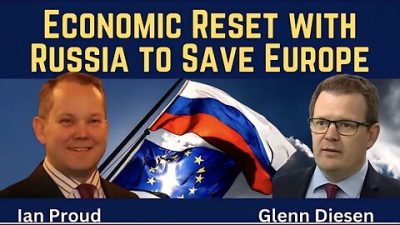
Ian Proud: Economic Reset with Russia to Save Europe
or go to
Aletho News Archives – Video-Images
From the Archives
Magic Hour for Gates
By Gary Jordan | Wake The F*** UP | March 15, 2021
Bill Gates wants to know everything about you.
He wants to control every aspect of your life.
His insatiable thirst for the supervision and scrutiny of every human being alive has sparked a US$1 billion investment that will blanket the earth in video surveillance satellites, providing real-time feedback with a mere one-second delay. He advocates for Orwellian digital tools to track your every move and has bankrolled US$1.7 billion to provide artificial intelligence that will be used to scan each and every visitor to major event venues worldwide. He wants to do away with end-to-end encryption, so he can snoop on your private conversations. He wants to know when and where you travel and who you travel with. He wants you to eat whatever he says you should eat, drink whatever he says you should drink, think how he wants you to think and know only what he wants you to know. Plus he wants to dictate what goes inside your body.
But he doesn’t want you to know a lot about him.
For instance… continue
Blog Roll
Recent Comments


 Aletho News
- Apple Just Bought A Sinister ‘Pre-Speech’ Tech Company Implicated In Genocide
- Israel’s new West Bank registration process declares Palestinian land ‘state property’
- Two children killed in Palestinian Authority ambush in West Bank; Hamas slams attack as ‘black mark’
- Israel Needs Time Before Another Iran War—Here’s Why
- US seizes oil tanker for ‘defying Trump’s quarantine’
- Ian Proud: Economic Reset with Russia to Save Europe
- Senator Rand Paul Introduces Federal Bill to END Vaccine Makers’ Liability Shield
- The Hidden Map: US and Israel May Use Unexpected Neighbors to Attack Iran
- Trump, Netanyahu Agree to Target Iranian Oil Exports to China
- Russia open to discussing Ukraine’s ‘external governance’ – senior diplomat
- If Americans Knew
- In Gaza, “rats run over our faces” – Not a ceasefire Day 129
- Israel-backed border guards, GHF-linked aid – Not a ceasefire Day 128
- Israel battles Palestinian right of return, one Palestinian at a time – Not a ceasefire Day 127
- Noor’s short life of unimaginable suffering
- Israel Destroyed Gaza’s Hospitals. Now It’s Banning Doctors Without Borders.
- Is Spite of What Zionists Say, It’s a Good Thing to Criticize Governments
- Palestinian mother, daughter recount strip searches, harsh conditions in Israeli detention
- Israel used weapons in Gaza that made thousands of Palestinians evaporate
- ADL’s Stats Twist Israel’s Critics Into Antisemites
- Why Is the World Silent When the Gaza Genocide Is Not Over?
- No Tricks Zone
- New Study: A 4°C Warmer Beaufort Sea Had ‘No Sea Ice’ 11,700 – 8200 Years Ago
- Unfudging The Data: Dutch Meteorological Institute Reinstates Early 20th Centruy Heat Waves It Had Erased Earlier
- German Gas Crisis…Chancellor Merz Allegedly Bans Gas Debate Ahead of Elections!
- Pollen Reconstructions Show The Last Glacial’s Warming Events Were Global, 10x Greater Than Modern
- Germany’s Natural Gas Storage Level Dwindles To Just 28%… Increasingly Critical
- New Study Rebuts The Assumption That Anthropogenic CO2 Molecules Have ‘Special’ Properties
- Climate Scientist Who Predicted End Of “Heavy Frost And Snow” Now Refuses Media Inquiries
- Polar Bear Numbers Rising And Health Improving In Areas With The Most Rapid Sea Ice Decline
- One Reason Only For Germany’s Heating Gas Crisis: Its Hardcore-Dumbass Energy Policy
- 130 Years Later: The CO2 Greenhouse Effect Is Still Only An Imaginary-World Thought Experiment
 Aletho News
