Monsanto agrochemicals causing genetic damage in soybean workers – study
RT | January 22, 2015
Soybean workers exposed to the agrochemicals like glyphosate, the main component in Monsanto’s ‘Roundup’ herbicide and other biocides, suffer from elevated DNA and cell damage, according to a new study.
The study, published in the journal Mutation Research/Genetic Toxicology and Environmental Mutagenesis, involved 127 people, including 81 exposed to biocides while working in the Brazilian soybean industry and 46 non-exposed individuals in a control group.
The exposed group exhibited an elevated level of cellular apoptosis, as well as DNA damage, according to researcher Danieli Benedetti and his team, which concluded that the now-common use of genetically-modified soybeans in the State of Rio Grande do Sul, especially in the city of Espumoso, has toxic ramifications for workers.
“Our findings indicate the advisability of monitoring genetic toxicity in soybean farm workers exposed to pesticides,” the researchers said.
Genetically-engineered seeds, proliferated across the globe by multinational agribusiness conglomerates like Monsanto, are designed to withstand dousing by glyphosate and other biocides in order to terminate insect, fungus, and weed nuisances.
Benedetti’s team focused specifically on Glyphosate and 2,4-D, the two top biocide components in American-biotechnology farming culture. Glyphosate is the prime ingredient in Monsanto’s Roundup products, while Dow Chemical’s 2,4-D is a potent herbicide that was also used in making Agent Orange, the chemical used by the US to devastate resistance during the Vietnam War.
Last spring, Brazil’s public prosecutor sought to suspend use of glyphosate based on its toxic effects. Studies have linked glyphosate to a fatal kidney disease that has affected poor farming regions worldwide.
Just last week, Monsanto won final approval from the US for its new genetically-modified soybeans and cotton, designed to withstand a dominant biocide that fights weed resistance built up as a result of the company’s glyphosate-based Roundup herbicide already in use.
Monsanto reported an earnings drop of 34 percent in its first fiscal quarter. The company reportedly lost $156 million in the fourth quarter of last year due to a one-time payment made to settle an environmental legal case.
As multinationals such as Monsanto and Dow Chemical have sought strict standardization in agriculture markets the world over, the corporate leviathans, especially the former, have become the target of considerable protests and demonstrations.
Companies like Monsanto market their own patented seeds that, given their genetic modification, can be doused with biocides to kill pests and weeds, and which can jeopardize long-term health of the soil and the necessary biodiversity of a local environment that allows for natural pollination and, thus, food security.
In May of last year, activists on five continents around the globe, comprising of 52 nations organized resistance under the ‘March against Monsanto’ umbrella. Protests positioned against Monsanto and involving other corporate-food issues occurred in around 400 cities worldwide, according to reports.
Just this past weekend, more than 120 organizations joined the fifth annual ‘We are Fed Up!’ demonstration in Berlin to focus on the increased importation of American farming practices – such as genetic modification, frequent antibiotic injections for animals, and chemical meat treatments – following the implementation of the controversial Transatlantic Trade and Investment Partnership (TTIP).
Protests have raged most furiously in Europe, where the EU recently approved a law that would let its nations ban genetically-modified organisms even if the EU had deemed them safe. Monsanto said last year it would not try to get any more GM crops approved in Europe given the consistent pushback.
Anger and unrest against Monsanto’s stranglehold has also spread to South America. In Argentina, protests have occurred in resistance to the company’s potent biocides used in tandem with their genetically-engineered seeds. In Brazil, farmers have called on Monsanto and other producers of pest-resistant corn seeds to reimburse them for money spent on additional biocides when the bugs killed the crops instead of dying themselves, speaking to the biocide arms race involved in using GM seeds. Brazilian soy exporters are also tangling with Monsanto over seed royalties.
In Central America, Guatemala’s highest court suspended in September a controversial ‘Monsanto Law,’ a provision of a US-Central American trade agreement, that would insulate transnational seed corporations considered to have “discovered” new plant varieties.
On its home turf in the United States, Monsanto has worked diligently with other multinational biotech, agribusiness, and food production companies to beat down state-level proposals to simply label whether food is comprised of GM ingredients.
The most recent example came in the state of Oregon, where a November ballot initiative to require GMO labeling was narrowly defeated in what became the most expensive ballot measure in the state’s history. The likes of Monsanto and Dupont flushed more than $21 million into the anti-labeling campaign, dwarfing the $9 million raised by proponents.
The company has sued Hawaii’s Maui County for passing last year that bans the cultivation of genetically modified organisms.
Monsanto’s St. Louis headquarters have been the target of mild protests, especially during shareholder meetings.
Meanwhile, agribusiness allies on Capitol Hill are pushing new federal legislation, the Safe and Accurate Food Labeling Act, that would standardize food labeling, effectively killing popular state-based efforts to pass labeling laws.
READ MORE:
Monsanto gets approval for new GMO corn, soybeans designed for potent new biocide
Rising suicide rate for Indian farmers blamed on GMO seeds
In facts & numbers: Absolute majority of Americans want GMO food to be labeled
What is the Real Reason Behind Obama’s New Cuba Policy?
By Pascal Robert | Black Agenda Report | January 21, 2015
On December 17, 2014 president Barack Obama made a public statement announcing a change in America’s over fifty year-old Cold War strategy of isolating The Republic of Cuba. Since the Cuban Revolution of 1959, and the Island’s turn to Communism under the leadership of Fidel Castro, the United States has made a consistent effort to choke the life out of the Cuban nation through economic embargo. In a seemingly drastic change of that policy, President Obama stated he would further loosen travel restrictions to Cuba, open limited financial interaction with the country, and eventually move to building a U.S. embassy in Havana. Due to the 1996 Helms-Burton Act signed by President Clinton, Obama would still need Congressional approval to get much of this accomplished.
Obama’s statement was greeted with joy by many Americans who viewed this Cold War policy as antiquated and redundant. In a world where the Communist Soviet Union has long since collapsed, what sense does it make to keep punishing the Cuban people? Obama supporters used the president’s initiative as evidence of his superior statecraft in the face of Republican opposition by Cuba hard-liners like Florida Senator Marco Rubio.
What most Americans do not realize is that Obama’s change in policy is not the product of some enlightened awakening concerning foreign policy. Obama is reacting to occurrences that pose a significant geopolitical challenge to American hegemony in the Western hemisphere. The Russians and the Chinese have come knocking on America’s back door. From July 11 to 17, 2014, Russian President Vladimir Putin traveled through a multi nation Latin American tour ending with a summit of the BRICS nations (Brazil, Russia, India, China, and South Africa) in Fortaleza, Brazil. These nations are among the fastest developing economies in the world, and their combined efforts have been posing significant geopolitical challenge to America and its European allies all over the globe. This is particularly the case since the 2008 economic crash.
The first stop on Russian president Putin’s tour was the Republic of Cuba. It was announced by the Russian Kremlin’s news service that Putin agreed to absolve 90% of Cuba’s 32 billion dollar debt to Russia and, according to the Russian Times, the remaining 10% of Cuba’s debt would be re-invested back into Cuban infrastructure. For a relatively poor country like Cuba to have 90% of the debt to its once greatest economic benefactor forgiven is of epic importance to the Island nation. Furthermore, the Russians announced plans to develop infrastructure to build oil rigs for the valuable resource discovered off the coast of Cuba.
“The Latin America tour started with the visit to Cuba, where Putin signed a new agreement on oil exploration in Caribbean waters which contain most of the estimated 124 million barrels of the Island’s crude. The exploration will take place a few dozen miles from the US coast.”
Of even more strategic concern to the United States, Russia stated a desire to re-open a spying outpost once used by the Soviet Union to intercept American communication. The move by Russia to reoccupy that spy station, as well as modernize it, could open Russian access to American intelligence less than 200 miles away from U.S. shores.
“Russia has quietly reached an agreement with Cuba to reopen a Soviet-era spy base on America’s doorstep, amid souring relations between Moscow and Washington.
“The deal to reopen the signals intelligence facility in Lourdes, south of Havana, was agreed in principle during president Vladimir Putin’s visit to the island as part of a Latin American tour last week, according to the newspaper Kommersant.”
“Opened in 1967, the Lourdes facility was the Soviet Union’s largest foreign base, a mere 155 miles from the US coast. It employed up to 3,000 military and intelligence personnel to intercept a wide array of American telephone and radio communications, but Putin announced its closure in 2001 because it was too expensive – Russia had been paying $200m (£117m) a year in rent – and in response to US demands.
“After Putin visited Cuba on Friday, the Kremlin press service said the president had forgiven 90% of Cuba’s unpaid Soviet-era debts, which totaled $32bn (£18.6bn) – a concession that now appears to be tied to the agreement to reopen the base.”
Though Putin’s actions in Cuba were most significant to the change in American policy, his dealings in other Latin Countries were quite bold as well. On his visit to Argentina, Putin executed an agreement with the nation’s president Cristina Fernandez to construct two nuclear power plants in the face of that country’s frigid relations with the United States as a result of American hedge fund managers demanding Argentina satisfy all of its debt. Furthermore, in Brazil, Putin executed a memorandum of understanding to commence development of nuclear power plants as well as a spent fuel storage facility. What is most humiliating for the United States in all this is that these agreements are being executed at a time in which America has been trying to force international co-operation to isolate Russia resulting from the political crisis in the Ukraine. Putin’s actions in Cuba, combined with other Latin countries, illustrates that not only is Russia far from isolated, it is planting its geopolitical footprint directly in America’s back yard. As the The UK Guardian article above states:
“During Putin’s Latin American tour, he also signed agreements to establish positioning stations in Argentina, Brazil and Cuba for Glonass, Russia’s answer to the United States’ global positioning system (GPS). He also made a surprise stop to discuss placing a Glonass station in Nicaragua, where president Daniel Ortega called Putin’s first visit to the country a ‘ray of light.’ ‘The goal of Putin’s visit to Cuba, Nicaragua and Argentina was to strengthen geopolitical connections with Latin America in response to the United States’ attempts to isolate Russia,’ Alexei Pushkov, the chairman of the foreign affairs committee in Russia’s parliament, tweeted after the trip.”
Yet that alone is not the degree to which the Russians are making a strategic pivot to Latin and South America. At the BRICS summit the member nations of Brazil, Russia, India, China and South Africa agreed to dedicate over 100 billion dollars to start a Central Bank among the nations with 100 billion in reserves as well. The ultimate goal of this Central Bank is to deleverage the BRICS nations from the U.S. dollar as the world’s reserve currency. This could pose a great threat to America’s position in the world.
Compounded with Russia’s geopolitical pivot, China has now strongly entered the Latin nations with its plan to build a canal through Nicaragua to rival the Panama Canal. This move would also greatly challenge American hegemony in the region.
Contrary to popular belief, Obama’s change in Cuba policy is not an indication of his foreign policy brilliance; it is a product of America’s foreign policy desperation. The Russians have been making serious power moves in Latin and South America while American policies have been alienating countries like Argentina and Brazil. Over the weekend a delegation of Democratic Party senators lead by Pat Leahy met with Raul Castro to ascertain how to improve relations with the two Countries. This is not the action of a United States negotiating from a position of strength, but the behavior of a nation trying to catch up with its geopolitical challenger, the Russians. As stated in a recent article on the trip in the New York Times titled: “U.S. Lawmakers in Cuba for Three Day Visit”:
“In the statement, Mr. Leahy’s office said the trip was intended to ‘seek clarity from Cubans on what they envision normalization to look like, going beyond past rote responses such as ‘end the embargo.’ ‘The office said that the trip would “help develop a sense of what Cuba and the United States are prepared to do to make a constructive relationship possible.’”
By Leahy’s own admission, the Cuban’s are calling the shots and the United States is being forced to play catch up. Now the Cubans are in the old Cold War position many Third World countries found themselves in by being able to play the Russians against the Americans and ask one simple question: Which one of you is willing to offer more? It looks more and more like the Cold War all over again.
Five Surprises About American Internment During World War II

By Jan Jarboe Russell | Disinformation |January 20, 2015
The general history of America’s internment of its own citizens during World War II has focused on the incarceration of 120,000 Japanese, 62 percent of them American-born, who were forcibly evacuated from the Pacific coast after the bombing of Pearl Harbor.
But few people know that Executive Order 9066, signed by President Roosevelt, which permitted the roundup of Japanese and their American-born children, also paved the way for the arrest of Germans and Italians who the FBI considered security risks and labeled as “enemy aliens.” Indeed the day before Roosevelt signed the order FBI agents had arrested 264 Italians, 1,296 Germans, and 2,209 on the East and West Coast. The hunt for perceived enemies was on.
Here are five surprising facts about the extent of FDR’s internment program:
Fact One: The arrests of suspected enemies extended far beyond our national borders. Under provisions of the Enemy Alien Act of 1798, the same act that allowed Presidents George W. Bush and President Obama to intern modern-day suspected terrorists, Roosevelt orchestrated the removal of 4,058 Germans, 2,264 Japanese and 288 Italians from thirteen Latin American countries — and locked them up around the United States, many in a secret government internment camp located in Crystal City, Texas, an isolated desert town located at the southern tip of Texas, only thirty miles from the Mexican border. His reason? Roosevelt feared security threats from Germans and Japanese in Latin America.
Fact Two: Incredibly, among those taken from Latin America included a small number of Jews who had fled persecution in Germany. In his book, Nazis and Good Neighbors, Max Paul Friedman documented 81 Jews in Latin America who were part of the roundup. One Jewish family — the Jacobis from Columbia – was interned in the camp in Crystal City.
Fact Three: The entire political and military establishment applied pressure on Roosevelt to pursue a vigorous internment policy. The only person close to him who opposed it was Eleanor Roosevelt who believed the case against immigrants was driven by wartime hysteria. “These people were not convicted of any crime but emotions ran too high, too many people wanted to wreak vengeance on Oriental looking people,” she wrote of the evacuation order for the Japanese.
Shortly after the attack on Pearl Harbor, Roosevelt told Attorney General Francis Biddle to arrest Italians and Germans. “I don’t care so much about the Italians. They are a lot of opera singers, but the Germans are different: they may be dangerous.” In response, Biddle widened the net of suspicion.
Fact Four: One reason for the internment program was to create a pool of people of hostages to exchange for Americans trapped behind enemy lines in Europe and in the Pacific. FDR created a secret division within the Department of State called the Special War Problems Division, which negotiated numerous prisoner exchanges with Japan and Germany.
Fact Five: The Crystal City Internment Camp was at the center of those exchanges. Some former internees, who were children in the camp, refer to it as The Kidnap Camp. Thousands of internees in Crystal City, including their American-born children, were exchanged for ostensibly more important Americans — diplomats, businessmen, soldiers, physicians, and missionaries — behind enemy lines in Japan and Germany.
The first of four exchanges in Crystal City took place in June 1942 and the second on September 2, 1943. During those exchanges, more than 2000 Japanese and Japanese Americans were traded for Americans caught in Japan. In February 1944, 634 German immigrants and their children, were sent from Crystal City into Germany. On January 2, 1945, 428 more in Crystal City were traded into war.
The tableau of today’s headlines about government surveillance, internment and prisoner exchanges was written more than seventy years ago in Crystal City, Texas.
~
Jan Jarboe Russell, author of The Train to Crystal City, is a former Nieman Fellow, a contributing editor for Texas Monthly, and has written for the San Antonio Express-News, The New York Times, Slate, and other magazines. She lives in San Antonio, Texas, with her husband, Dr. Lewis F. Russell, Jr. For more information please visit http://www.janjarboerussell.com, and follow the author on Facebook and Twitter
Guatemalan Court Sentences Ex-Police Chief for Murdering 37
teleSUR | January 19, 2015
A Guatemalan court found Pedro Garcia Arredondo guilty of murder, attempted murder, and crimes against humanity Monday for the massacre of 37 people at the Spanish embassy in Guatemala 35 years ago, EFE reports.
Garcia Arredondo, 69, is responsible for burning the victims of the massacre to death on Jan. 31, 1980, found the court after four months of hearings.
The tribunal outcome confirmed the long-held suspicions in the country that the fire was the result of a “clandestine police operation” and that the participants “prevented the Red Cross, emergency services, and journalists from entering” the building.
The former police chief was still trying to declare his innocence, but Judge Sara Yoc Yoc ruled that he gave the orders to burn down the embassy. According to her ruling, Garcia Arredondo “used the media to confirm the deaths of those inside the embassy.”
The security forces of Guatemala’s military regime at the time attacked the Spanish embassy after rural workers and students occupied it in protest to the dictatorship.
Among the 37 burned to death was Spanish Consul Jaime Ruiz del Arbol Soler and Vicente Menchu and Francisco Tum, the father and cousin, respectively, of 1992 Nobel Prize Winner Rigoberta Menchu. Menchu gave the first testimony against Garcia Arredondo in the case.
Just two people survived the fire, including the Spanish ambassador. The other, Guatemalan farmer Gregorio Yuja, subsequently disappeared and his body was found with evidence of torture three days after the fire in the rectory of the State University of San Carlos of Guatemala. Yuja has since become a symbol of the left-wing student movement.
Garcia Arredondo was first arrested in 2011 over the forced disappearance of a university student, also in 1980. He is three years into a 70 year sentence for that crime.
Western Democracy Crusaders are Foes of Democracy
The World Seen Through a “Progressive” Western Keyhole versus a Panoramic Lens
By John V. Walsh | Dissident Voice | January 18, 2015
One of Castro’s closest comrades, the Argentine-born guerilla Che Guevara, had been in Guatemala in 1954 and witnessed the coup against Arbenz. Later he told Castro why it succeeded. He said Arbenz had foolishly tolerated an open society, which the CIA penetrated and subverted, and also preserved the existing army, which the CIA turned into its instrument. Castro agreed that a revolutionary regime in Cuba must avoid those mistakes. Upon taking power, he cracked down on dissent and purged the army. Many Cubans supported his regime and were ready to defend it. (Emphasis, jw)
Stephen Kinzer, The Brothers: John Foster Dulles, Allen Dulles and Their Secret World War
The stark choice that confronted Castro and Guevara is faced by every nation seeking independence from the U.S., a far more powerful nation with enormous resources in terms of “soft” power, economic power and military power. The more open the society, the more opportunities for CIA-engineered regime change. This was the lesson Arbenz learned in 1954 and Mossadegh before him in 1953, lessons that brought so much pain, death and destruction to their peoples in the decades to follow.
Judged by that outcome, the Castros made the right decision and as a result have presided over a healthy, educated and secure people. The drawback was that the Empire isolated Cuba economically, stifling the possibilities of more development and a higher standard of living. The Empire wants nations charting an independent course to be politically open to the regime change schemes and NGOs of the West but economically closed, shut off from more advanced economies. It is as simple as that.
For some defiant states the sort of regime change operation used against Mossadegh and Arbenz may be the only option which the United States has. This is certainly the case for China and Russia. All out war on these countries is out of reach – although the U.S. is trying to change that. The modus operandi of the Empire for the moment is to put Russia and China on the horns of tried and true dilemma. Open up politically, permit the development of forces that favor regime change – or remain less open and face criticism, especially criticism from Western governments and Western intellectuals, including the “progressive” or liberal intellectuals. This is crucial because “progressives” are the very people who – until Obama – were most likely to oppose imperial warfare – both military and economic. The Democracy Crusade is designed to neutralize them.
This criticism from the West is one lever, and an important one, that is used to force a society to be more open in its governance than its survival permits. Let us be clear. Without a rapacious West at the doorstep, the possibilities of openness and democracy are much greater in scope. Conversely, the more rapacious the West, the more restricted are the possibilities for a besieged nation if it wishes to survive and prosper with its sovereignty intact. Without sovereignty there can be no democracy. Rule conditioned on approval by a foreign source or by a puppet regime is never self-rule. So it is never democracy.
It follows that the best way to crusade for openness and democracy is to work against Western interventionism, whether that interventionism takes the form of armed attack, economic sanctions or the work of NGOs like the NED (National Endowment for Democracy). This is absolutely crucial to understand. A criticism of a besieged country will increase the pressure on that country and hence lead to a decrease in political openness. Paradoxically, this is true even if the criticism is one that calls for more democracy.
The recent events in Hong Kong are but the latest example of this dynamic. There the NED had long been actively involved in promoting “democracy,” along with other U.S. NGOs and the U.S. Consulate, with its staff of 600. These forces recruited very young “activists,” with high school students at the forefront. (A Chinese friend of mine noted with disgust that easily manipulated high school students were also in the forefront of the Cultural Revolution.) The movement sought elimination of the screening of candidates by a committee of 1,200 Hong Kong residents for the next election of the CEO, a position akin to governor. The composition of the committee was open to negotiation. (It went unmentioned in the West that there was no election when Hong Kong was a colony of the UK. The governor was appointed by the Queen – period. It also went unmentioned that there is a similar sort of “screening” of candidates in the U.S., with the major parties serving in the role of screeners. If you do not believe that, ask the Greens or the Libertarians or Ralph Nader.) Most importantly the leaders of the movement and their U.S. backers made no secret of their hope that the disturbances in Hong Kong would spread to the mainland and provoke a movement against the Chinese government. They are advocates of regime change in China as are their mentors at the NED.
What has the current government of China, led by its Communist Party, done for China? It has led China out of colonial domination by the West. It has forged a level of economic development with a rapidity unseen before in all of human history. It has ended poverty for 600 million people and continues on the quest to raise millions more out of poverty. For the world it has meant a power, China, which is sufficiently strong to provide a multipolar world. That in turn means that the countries of the world have an alternative to Western domination, which has been the fate of most of the world for hundreds of years. Russia and Iran, for example, can trade with China when the West slaps sanctions on them. As a result at this moment there is the possibility of genuine decolonization (or de-neocolonization, if you will) – after centuries of the planet’s domination by a small fraction of the world’s population.
In short, the current government of China is the agent of the most stunning defeat of Euro-American colonialism that the world has seen to date. After all the Chinese are almost one-fifth of humanity. One would think that this fact would be part of the evaluation of Western progressives when they looked at the Hong Kong affair. With few exceptions it was not. And this is a big problem. The world is going through a major upheaval as colonialism and neo-colonialism are suffering major defeats. That upheaval, that shift, is a lens through which Western “progressives” should look at the world. They rarely do. In failing to do so, they see the world through the ideological eyes of the West, that is, “the 1%“ at the top of the heap (or at least the 10%) if one may put it that way. China has achieved what the West hates most. It is relatively closed politically to the intrigues and machinations of the West – but economically open. This is the recipe for sovereignty and development.
The difference between the two views is the difference between looking at the world through a panoramic lens, with history in the background, and looking through a keyhole. In the latter case of tunnel vision one may only see a patch of grey through the keyhole, whereas a mighty elephant stands beyond the door.
Afterthoughts: Old China Hand. One “progressive,” and an “Old China Hand” to boot, even charged the minority on the Left with “neocolonialist” attitudes when they criticized him for siding with the NED in Hong Kong. He claimed that the dissidents in Hong Kong were too sophisticated, too “smart,” to be taken in by the NED, NID, U.S. Consulate officials and other detritus with whom they regularly consort.
But what about the cases where we now know that the CIA et al successfully deceived the population – sufficiently to overthrow an anticolonial government, as with Mossadegh or Arbenz or Allende? Does Old China Hand mean to say that the people of Iran or Guatemala or Chile were “stupid”? And is that not neocolonialist arrogance? No, Old China Hand is defending tunnel vision, the view through the keyhole, not the people of Hong Kong. And if ever there were an unwitting agent of neocolonialism, it is sadly the likes of Old China Hand.
John V. Walsh can be reached at john.endwar@gmail.com.
FARC says killed 8 Colombia soldiers in ‘defensive response’

File photo shows militants belonging to the Revolutionary Armed Forces of Colombia (FARC).
Press TV – January 14, 2015
The FARC rebel group says it has killed eight army soldiers in a “defensive response” to the recent attacks carried out by the Colombian army.
“As a result of the defensive response, we lament that eight military personnel lost their lives, unnecessarily,” read the statement issued by the guerrilla group on Wednesday, adding, “These are all casualties that could have been avoided if the government had been less small-minded.”
According to the statement, the FARC forces killed the soldiers in retaliation for the Colombian army’s mortar attacks on rebels’ positions in the central province of Meta earlier this week.
The rebel group called on the government to put an end to its “senseless” offensives, “because they could provoke the end of the unilateral ceasefire and disturb the climate of confidence that should prevail at the negotiating table.”
Back on December 20, 2014, the FARC declared a unilateral ceasefire in an alleged attempt to boost the peace talks that have been held in Cuba since two years ago. However, Colombian President Juan Manuel Santos rejected the move, saying the guerrillas’ condition for an international verification of the ceasefire cannot be accepted.
Earlier in the month, the Colombian government and the FARC resumed the latest round of peace talks, suspended in November 2014, over the abduction of an army general.
The peace talks were launched in the Cuban capital of Havana in 2012, aimed at ending a half-a-century-old conflict between the rebels and the US-backed government.
Bogota estimates that 600,000 people have been killed and more than 4.5 million displaced due to the fighting.
The Revolutionary Armed Forces of Colombia (FARC) is Latin America’s oldest insurgent group and has been fighting the Colombian government since 1964.
Uruguay Discovers ‘Extremely Encouraging’ Oil Deposits
teleSUR | January 14, 2015
Australian company Petrel Energy has announced that it has found and certified the existence of 20 potential oil deposits in the north of Uruguay, the only country in the region that imports all the hydrocarbons that it consumes.
Uruguayan state petrol enterprise ANCAP said that the certification includes “20 conventional explorations,” with an estimation of risk-free resources “of up to 1.8 billion recoverable barrels which implies 5.6 billion barrels originally in the sub-soil.”
ANCAP emphasized that there may be more oil yet to discover, for which “more exploratory work is required, like various drillings, in order to determine the existence of significant hydrocrabon accumulations.”
The results are “extremely encouraging,” the company said, adding that the Australian company Schuepach confirmed that it will drill four exploratory wells in the zone between 2015 and 2017.
In recent years, Uruguay set itself the task of trying to find oil in its territory, sparking several offshore projects in 2009 and 2012.
Former Chilean Secret Police Agents Sentenced to Prison
teleSUR | January 8, 2015
A Chilean judge sentenced 23 former agents from Chilean dictator Augusto Pinochet’s secret police to prison on Thursday for their role in the forced disappearance of a left-wing activist following the 1972 coup that overthrew Salvador Allende’s government.
Among those sentenced was General Manuel Contreras Sepulveda, who was in charge of the notorious National Intelligence Directorate (DINA).
This is only the latest sentence for Contreras, who has been found guilty in numerous other cases of human rights violations. He has been sentenced to serve a total of 400 years for his crimes.
Six of those sentenced today will serve thirteen year terms, while another fifteen will serve ten years. Two others, who played an accomplice role, will serve four years.
Bernando de Castro, who was a member of the President Allende’s Socialist Party of Chile, was disappeared after being arrested by the DINA. The dictatorship deliberately targeted opposition activists.
De Castro was disappeared alongside four others who have yet to be found. Their forced disappearance was part of a cover-up coordinated between the Chile’s secret police forces known as “Operation Colombo.”
As part of the cover-up, magazines sympathetic to the dictatorship published articles claiming that 119 political prisoners had been killed in “internal purges” of the Revolutionary Left Movement, which had launched an armed struggle against the Pinochet dictatorship.
The Justice system in Chile has been working to process claims by victims of the dictatorship, however only 10 percent of Pinochet’s former agents are serving prison sentences.
CIA’s Hidden Hand in ‘Democracy’ Groups
By Robert Parry | Consortium News | January 8, 2015
Freedom House and the National Endowment for Democracy stress their commitment to freedom of thought and democracy, but both cooperated with a CIA-organized propaganda operation in the 1980s, according to documents released by Ronald Reagan’s presidential library.
One document showed senior Freedom House official Leo Cherne clearing a draft manuscript on political conditions in El Salvador with CIA Director William Casey and promising that Freedom House would make requested editorial “corrections and changes” – and even send over the editor for consultation with whomever Casey assigned to review the paper.
In a “Dear Bill” letter dated June 24, 1981, Cherne wrote: “I am enclosing a copy of the draft manuscript by Bruce McColm, Freedom House’s resident specialist on Central America and the Caribbean. This manuscript on El Salvador was the one I had urged be prepared and in the haste to do so as rapidly as possible, it is quite rough. You had mentioned that the facts could be checked for meticulous accuracy within the government and this would be very helpful. …
“If there are any questions about the McColm manuscript, I suggest that whomever is working on it contact Richard Salzmann at the Research Institute [an organization where Cherne was executive director]. He is Editor-in-Chief at the Institute and the Chairman of the Freedom House’s Salvador Committee. He will make sure that the corrections and changes get to Rita Freedman who will also be working with him. If there is any benefit to be gained from Salzmann’s coming down at any point to talk to that person, he is available to do so.”
Cherne, who was chairman of Freedom House’s executive committee, also joined in angling for financial support from a propaganda program that Casey initiated in 1982 under one of the CIA’s top covert action specialists, Walter Raymond Jr., who was moved to President Ronald Reagan’s National Security Council staff.
In an Aug. 9, 1982 letter to Raymond, Freedom House executive director Leonard R. Sussman wrote that “Leo Cherne has asked me to send these copies of Freedom Appeals. He has probably told you we have had to cut back this project to meet financial realities. … We would, of course, want to expand the project once again when, as and if the funds become available. Offshoots of that project appear in newspapers, magazines, books and on broadcast services here and abroad. It’s a significant, unique channel of communication” – precisely the focus of Raymond’s work.
According to the documents, Freedom House remained near the top of Casey’s thinking when it came to the most effective way to deliver his hardline policy message to the American people in ways they would be inclined to accept, i.e., coming from ostensibly independent sources with no apparent ties to the government.
On Nov. 4, 1982, Raymond wrote to NSC Advisor William Clark about the “Democracy Initiative and Information Programs,” stating that “Bill Casey asked me to pass on the following thought concerning your meeting with [right-wing billionaire] Dick Scaife, Dave Abshire [then a member of the President’s Foreign Intelligence Advisory Board], and Co.
“Casey had lunch with them today and discussed the need to get moving in the general area of supporting our friends around the world. By this definition he is including both ‘building democracy’ … and helping invigorate international media programs. The DCI [Casey] is also concerned about strengthening public information organizations in the United States such as Freedom House. …
“A critical piece of the puzzle is a serious effort to raise private funds to generate momentum. Casey’s talk with Scaife and Co. suggests they would be very willing to cooperate. … Suggest that you note White House interest in private support for the Democracy initiative.”
The importance of the CIA and White House secretly arranging private funds was that these supposedly independent voices would then reinforce and validate the administration’s foreign policy arguments with a public that would assume the endorsements were based on the merits of the White House positions, not influenced by money changing hands.
In effect, like snake-oil salesmen who plant a few cohorts in the audience to whip up excitement for the cure-all elixir, Reagan administration propagandists salted some well-paid “private” individuals around Washington to echo White House propaganda “themes.”
In a Jan. 25, 1983 memo, Raymond wrote, “We will move out immediately in our parallel effort to generate private support” for “public diplomacy” operations. Then, on May 20, 1983, Raymond recounted in another memo that $400,000 had been raised from private donors brought to the White House Situation Room by U.S. Information Agency Director Charles Wick. According to that memo, the money was divided among several organizations, including Freedom House and Accuracy in Media, a right-wing media attack organization.
When I wrote about that memo in my 1992 book, Fooling America, Freedom House denied receiving any White House money or collaborating with any CIA/NSC propaganda campaign. In a letter, Freedom House’s Sussman called Raymond “a second-hand source” and insisted that “this organization did not need any special funding to take positions … on any foreign-policy issues.”
But it made little sense that Raymond would have lied to a superior in an internal memo. And clearly, Freedom House remained central to the Reagan administration’s schemes for aiding groups supportive of its Central American policies, particularly the CIA-organized Contra war against the leftist Sandinista regime in Nicaragua.
In an Aug. 9, 1983 memo, Raymond outlined plans to arrange private backing for that effort. He said USIA Director Wick “via [Australian publishing magnate Rupert] Murdock [sic], may be able to draw down added funds” to support pro-Reagan initiatives. Raymond recommended “funding via Freedom House or some other structure that has credibility in the political center.” [For more details, see Consortiumnews.com’s “Murdoch, Scaife and CIA Propaganda.”]
Questions of Legality
Raymond remained a CIA officer until April 1983 when he resigned so – in his words – “there would be no question whatsoever of any contamination of this” propaganda operation to woo the American people into supporting Reagan’s policies.
But Raymond, who had been one of the CIA’s top propaganda and disinformation specialists, continued to act toward the U.S. public much like a CIA officer would in directing a propaganda operation in a hostile foreign country.
Raymond fretted, too, about the legality of Casey’s role in the effort to influence U.S. public opinion because of the legal prohibition against the CIA influencing U.S. policies and politics. Raymond confided in one memo that it was important “to get [Casey] out of the loop,” but Casey never backed off and Raymond continued to send progress reports to his old boss well into 1986.
It was “the kind of thing which [Casey] had a broad catholic interest in,” Raymond said during his Iran-Contra deposition in 1987. He then offered the excuse that Casey undertook this apparently illegal interference in domestic affairs “not so much in his CIA hat, but in his adviser to the president hat.”
As the Casey-Raymond propaganda operation expanded during the last half of Reagan’s first term, Freedom House continued to keep Raymond abreast of its work on Central America, with its attitudes dovetailing with Reagan administration’s policies particularly in condemning Nicaragua’s Sandinista government.
Freedom House also kept its hand out for funding. On Sept. 15, 1984, Bruce McColm – writing from Freedom House’s Center for Caribbean and Central American Studies – sent Raymond “a short proposal for the Center’s Nicaragua project 1984-85. The project combines elements of the oral history proposal with the publication of The Nicaraguan Papers,” a book that would disparage Sandinista ideology and practices.
“Maintaining the oral history part of the project adds to the overall costs; but preliminary discussions with film makers have given me the idea that an Improper Conduct-type of documentary could be made based on these materials,” McColm wrote, referring to a 1984 film that offered a scathing critique of Fidel Castro’s Cuba.
“Such a film would have to be the work of a respected Latin American filmmaker or a European. American-made films on Central America are simply too abrasive ideologically and artistically poor.”
McColm’s three-page letter reads much like a book or movie pitch, trying to interest Raymond in financing the project: “The Nicaraguan Papers will also be readily accessible to the general reader, the journalist, opinion-maker, the academic and the like. The book would be distributed fairly broadly to these sectors and I am sure will be extremely useful.
“They already constitute a form of Freedom House samizdat, since I’ve been distributing them to journalists for the past two years as I’ve received them from disaffected Nicaraguans.”
McColm proposed a face-to-face meeting with Raymond in Washington and attached a six-page grant proposal seeking $134,100.
According to the grant proposal, the project would include “free distribution to members of Congress and key public officials; distribution of galleys in advance of publication for maximum publicity and timely reviews in newspapers and current affairs magazines; press conferences at Freedom House in New York and at the National Press Club in Washington, D.C.; op-ed circulation to more than 100 newspapers …; distribution of a Spanish-language edition through Hispanic organizations in the United States and in Latin America; arrangement of European distribution through Freedom House contacts.”
The documents that I found at the Reagan library do not indicate what subsequently happened to this proposal. McColm did not respond to an email request for comment about the Nicaraguan Papers plan or Cherne’s earlier letter to Casey about editing McComb’s manuscript. Raymond died in 2003; Cherne died in 1999; and Casey died in 1987.
But it is clear that Freedom House became a major recipient of funds from the National Endowment for Democracy, which Casey and Raymond helped create in 1983.
Financing Propaganda
In 1983, Casey and Raymond focused on creating a funding mechanism to support Freedom House and other outside groups that would engage in propaganda and political action that the CIA had historically organized and paid for covertly. The idea emerged for a congressionally funded entity that would serve as a conduit for this money.
But Casey recognized the need to hide the strings being pulled by the CIA. “Obviously we here [at CIA] should not get out front in the development of such an organization, nor should we appear to be a sponsor or advocate,” Casey said in one undated letter to then-White House counselor Edwin Meese III – as Casey urged creation of a “National Endowment.”
A document in Raymond’s files offered examples of what would be funded, including “Grenada — 50 K — To the only organized opposition to the Marxist government of Maurice Bishop (The Seaman and Waterfront Workers Union). A supplemental 50 K to support free TV activity outside Grenada” and “Nicaragua — $750 K to support an array of independent trade union activity, agricultural cooperatives.”
The National Endowment for Democracy took shape in late 1983 as Congress decided to also set aside pots of money — within NED — for the Republican and Democratic parties and for organized labor, creating enough bipartisan largesse that passage was assured.
But some in Congress thought it was important to wall the NED off from any association with the CIA, so a provision was included to bar the participation of any current or former CIA official, according to one congressional aide who helped write the legislation.
This aide told me that one night late in the 1983 session, as the bill was about to go to the House floor, the CIA’s congressional liaison came pounding at the door to the office of Rep. Dante Fascell, a senior Democrat on the House Foreign Affairs Committee and a chief sponsor of the bill.
The frantic CIA official conveyed a single message from CIA Director Casey: the language barring the participation of CIA personnel must be struck from the bill, the aide recalled, noting that Fascell consented to the demand, not fully recognizing its significance.
What the documents at the Reagan library now make clear is that lifting the ban enabled Raymond and Casey to stay active shaping the decisions of the new funding mechanism.
The aide said Fascell also consented to the Reagan administration’s choice of Carl Gershman to head the National Endowment for Democracy, again not recognizing how this decision would affect the future of the new entity and American foreign policy.
Gershman, who had followed the classic neoconservative path from youthful socialism to fierce anticommunism, became NED’s first (and, to this day, only) president. Though NED is technically independent of U.S. foreign policy, Gershman in the early years coordinated decisions on grants with Raymond at the NSC.
For instance, on Jan. 2, 1985, Raymond wrote to two NSC Asian experts that “Carl Gershman has called concerning a possible grant to the Chinese Alliance for Democracy (CAD). I am concerned about the political dimension to this request. We should not find ourselves in a position where we have to respond to pressure, but this request poses a real problem to Carl.
“Senator [Orrin] Hatch, as you know, is a member of the board. Secondly, NED has already given a major grant for a related Chinese program.”
Besides clearing aside political obstacles for Gershman, Raymond also urged NED to give money to Freedom House in a June 21, 1985 letter obtained by Professor John Nichols of Pennsylvania State University.
A Tag Team
From the start, NED became a major benefactor for Freedom House, beginning with a $200,000 grant in 1984 to build “a network of democratic opinion-makers.” In NED’s first four years, from 1984 and 1988, it lavished $2.6 million on Freedom House, accounting for more than one-third of its total income, according to a study by the liberal Council on Hemispheric Affairs that was entitled “Freedom House: Portrait of a Pass-Through.”
Over the ensuing three decades, Freedom House has become almost an NED subsidiary, often joining NED in holding policy conferences and issuing position papers, both organizations pushing primarily a neoconservative agenda, challenging countries deemed insufficiently “free,” including Syria, Ukraine (in 2014) and Russia.
Indeed, NED and Freedom House often work as a kind of tag-team with NED financing “non-governmental organizations” inside targeted countries and Freedom House berating those governments if they crack down on U.S.-funded NGOs.
For instance, on Nov. 16, 2012, NED and Freedom House joined together to denounce legislation passed by the Russian parliament that required recipients of foreign political money to register with the government.
Or, as NED and Freedom House framed the issue: the Russian Duma sought to “restrict human rights and the activities of civil society organizations and their ability to receive support from abroad. … Changes to Russia’s NGO legislation will soon require civil society organizations receiving foreign funds to choose between registering as ‘foreign agents’ or facing significant financial penalties and potential criminal charges.”
Of course, the United States has a nearly identical Foreign Agent Registration Act that likewise requires entities that receive foreign funding and seek to influence U.S. government policy to register with the Justice Department or face possible fines or imprisonment.
But the Russian law would impede NED’s efforts to destabilize the Russian government through funding of political activists, journalists and civic organizations, so it was denounced as an infringement of human rights and helped justify Freedom House’s rating of Russia as “not free.”
The Russian government’s concerns were not entirely paranoid. On Sept. 26, 2013, Gershman, in effect, charted the course for the crisis in Ukraine and the greater neocon goal of regime change in Russia. In a Washington Post op-ed, Gershman called Ukraine “the biggest prize” and explained how pulling it into the Western camp could contribute to the ultimate defeat of Russian President Vladimir Putin.
“Ukraine’s choice to join Europe will accelerate the demise of the ideology of Russian imperialism that Putin represents,” Gershman wrote. “Russians, too, face a choice, and Putin may find himself on the losing end not just in the near abroad but within Russia itself.”
With NED’s budget now exceeding $100 million a year — and with many NGOs headquartered in Washington — Gershman has attained the status of a major paymaster for the neocon movement with his words carrying extra clout because he can fund or de-fund many a project.
Thus, three decades after CIA Director William Casey and his propaganda specialist Walter Raymond Jr. struggled to arrange funding for Freedom House and other organizations that would promote an interventionist agenda, their brainchild – the National Endowment for Democracy – was still around picking up those tabs.
[For more details, see Consortiumnews.com’s “The Victory of Perception Management” and “Murdoch, Scaife and CIA Propaganda” or Robert Parry’s Lost History.]
~
Investigative reporter Robert Parry broke many of the Iran-Contra stories for The Associated Press and Newsweek in the 1980s. You can buy his latest book, America’s Stolen Narrative, either in print here or as an e-book (from Amazon and barnesandnoble.com).
97 Journalists Killed in Mexico in Past 4 Years
teleSUR | January 7, 2015
According to a new study released by the National Commission on Human Rights (CNDH) Wednesday, 97 journalists have been killed in Mexico in connection with their work since 2010.
The new research also revealed 22 cases of disappearances and 433 attacks against journalists and media offices since 2005. Investigations into the crimes have been carried out in very few cases.
The CNHD has criticized the Mexican government for their lack of action regarding violence against journalists in the country. It also emphasized the importance of guaranteeing freedom of expression in the country to ensure the free flow of news and information, which means guaranteeing the right of journalists to work in a safe environment.
“The state is first required to become a guarantor of freedom of expression, since the institutions must assume their primary responsibility and give validity to democracy in our country,” said the organization.
Chile Rejects Bolivia’s Request for Access to Sea, Again
teleSUR | January 7, 2015
Chile rejected Bolivia’s renewed request for sovereign access to the Pacific Ocean off of its coast Tuesday.
“Chile is not going to cede land or maritime sovereignty in any way, and that has to be clear,” Chilean Foreign Minister Heraldo Muñoz told Radio DNA. “Bolivia is wasting its time when it tries to promote an event which aims to force Chile to negotiate a sovereign outlet.”
The foreign minister’s warnings refer specifically to comments by Bolivian President Evo Morales who said Pope Francis had taken an interest in the issue and had requested more information.
“The pope asked me for documents, so I supplied him with documents,” said Morales.
However, Muñoz confirmed that Chile will not accept any kind of external mediation on the matter and emphasized that the country would never give up its territory to another nation.
The matter is currently being reviewed by the International Court of Justice (ICJ) in the Hague, Netherlands, after Bolivia presented the court with its demand for sovereign access to the coast in 2013.
Last July Chile objected to the ICJ’s involvement, saying the court was incompetent in judging the request.Bolivia responded by making another bid to the international body in November.
Tensions have existed between Bolivia and Chile over access to the Pacific Ocean for decades after Bolivia lost its coast to Chile in the War of the Pacific in 1879, making it a landlocked country.
Maduro Offers to Exchange Lopez for Puerto Rican Activist
teleSUR | January 5, 2015
Venezuelan President Nicolas Maduro said Sunday he would consider the release of the jailed far-right opposition leader Leopoldo Lopez if the United States agreed to release Oscar Lopez Rivera, a Puerto Rican nationalist currently held in a U.S. prison.
Leopoldo Lopez was arrested in February after he helped launch a three-month wave of violent opposition demonstrations seeking Maduro’s ouster. Streets were blocked by violent masked protestors and dozens were killed, mostly at the hands of extreme right-wing terrorists.
Maduro suggested he could send Lopez to the United States if Washington secured the release of Oscar Lopez Rivera, who was convicted in 1981 of seditious conspiracy along with other militants who sought to secure Puerto Rican independence.
“The only way I would use (presidential) powers would be to put (Leopoldo Lopez) on a plane, so he can go to the United States and stay there, and they would give me Oscar Lopez Rivera — man for man,” Maduro said during a televised broadcast.
A spokesman for the U.S. Embassy in Caracas said he had no immediate comment on the issue.
Negotiations between Uruguay and the U.S. are currently underway to release Lopez Rivera. Uruguayan President Mujica requested in an open letter to President Obama the release of the political activist.
Puerto Rican Governor Alejandro Garcia Padilla has also called on the White House to release the nationalist. The Puerto Rican singer Rene Perez, from the famous group Calle 13, has been vocal in his support of Lopez Rivera.
Featured Video
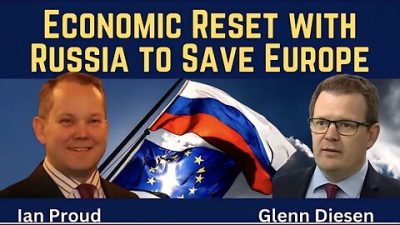
Ian Proud: Economic Reset with Russia to Save Europe
or go to
Aletho News Archives – Video-Images
From the Archives
Magic Hour for Gates
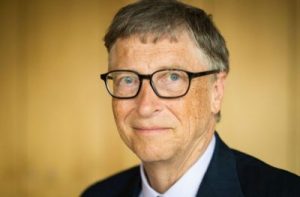
By Gary Jordan | Wake The F*** UP | March 15, 2021
Bill Gates wants to know everything about you.
He wants to control every aspect of your life.
His insatiable thirst for the supervision and scrutiny of every human being alive has sparked a US$1 billion investment that will blanket the earth in video surveillance satellites, providing real-time feedback with a mere one-second delay. He advocates for Orwellian digital tools to track your every move and has bankrolled US$1.7 billion to provide artificial intelligence that will be used to scan each and every visitor to major event venues worldwide. He wants to do away with end-to-end encryption, so he can snoop on your private conversations. He wants to know when and where you travel and who you travel with. He wants you to eat whatever he says you should eat, drink whatever he says you should drink, think how he wants you to think and know only what he wants you to know. Plus he wants to dictate what goes inside your body.
But he doesn’t want you to know a lot about him.
For instance… continue
Blog Roll
 Aletho News
- ‘Fox guarding the henhouse’: AMA, Vaccine Integrity Project to conduct their own vaccine safety and efficacy reviews
- Macron, Merz, and von der Leyen Defend Expanded Speech Controls
- Keir Starmer-tied think tank paid PR firm to target The Grayzone
- ‘Israel’ threatens to genocide Gaza if Hamas refuses disarmament
- Apple Just Bought A Sinister ‘Pre-Speech’ Tech Company Implicated In Genocide
- Israel’s new West Bank registration process declares Palestinian land ‘state property’
- Two children killed in Palestinian Authority ambush in West Bank; Hamas slams attack as ‘black mark’
- Israel Needs Time Before Another Iran War—Here’s Why
- US seizes oil tanker for ‘defying Trump’s quarantine’
- Ian Proud: Economic Reset with Russia to Save Europe
- If Americans Knew
- An error has occurred; the feed is probably down. Try again later.
- No Tricks Zone
- New Study: A 4°C Warmer Beaufort Sea Had ‘No Sea Ice’ 11,700 – 8200 Years Ago
- Unfudging The Data: Dutch Meteorological Institute Reinstates Early 20th Centruy Heat Waves It Had Erased Earlier
- German Gas Crisis…Chancellor Merz Allegedly Bans Gas Debate Ahead of Elections!
- Pollen Reconstructions Show The Last Glacial’s Warming Events Were Global, 10x Greater Than Modern
- Germany’s Natural Gas Storage Level Dwindles To Just 28%… Increasingly Critical
- New Study Rebuts The Assumption That Anthropogenic CO2 Molecules Have ‘Special’ Properties
- Climate Scientist Who Predicted End Of “Heavy Frost And Snow” Now Refuses Media Inquiries
- Polar Bear Numbers Rising And Health Improving In Areas With The Most Rapid Sea Ice Decline
- One Reason Only For Germany’s Heating Gas Crisis: Its Hardcore-Dumbass Energy Policy
- 130 Years Later: The CO2 Greenhouse Effect Is Still Only An Imaginary-World Thought Experiment
 Aletho News