The Dirty Hand of the National Endowment for Democracy (NED) in Venezuela
By Eva Golinger | Postcards from the Revolution | April 23, 2014
Anti-government protests in Venezuela that seek regime change have been led by several individuals and organizations with close ties to the US government. Leopoldo Lopez and Maria Corina Machado- two of the public leaders behind the violent protests that started in February – have long histories as collaborators, grantees and agents of Washington. The National Endowment for Democracy “NED” and the US Agency for International Development (USAID) have channeled multi-million dollar funding to Lopez’s political parties Primero Justicia and Voluntad Popular, and Machado’s NGO Sumate and her electoral campaigns.
These Washington agencies have also filtered more than $14 million to opposition groups in Venezuela between 2013 and 2014, including funding for their political campaigns in 2013 and for the current anti-government protests in 2014. This continues the pattern of financing from the US government to anti-Chavez groups in Venezuela since 2001, when millions of dollars were given to organizations from so-called “civil society” to execute a coup d’etat against President Chavez in April 2002. After their failure days later, USAID opened an Office of Transition Initiatives (OTI) in Caracas to, together with the NED, inject more than $100 million in efforts to undermine the Chavez government and reinforce the opposition during the following 8 years.
At the beginning of 2011, after being publically exposed for its grave violations of Venezuelan law and sovereignty, the OTI closed its doors in Venezuela and USAID operations were transferred to its offices in the US. The flow of money to anti-government groups didn’t stop, despite the enactment by Venezuela’s National Assembly of the Law of Political Sovereignty and National Self-Determination at the end of 2010, which outright prohibits foreign funding of political groups in the country. US agencies and the Venezuelan groups that receive their money continue to violate the law with impunity. In the Obama Administration’s Foreign Operations Budgets, between $5-6 million have been included to fund opposition groups in Venezuela through USAID since 2012.
The NED, a “foundation” created by Congress in 1983 to essentially do the CIA’s work overtly, has been one of the principal financiers of destabilization in Venezuela throughout the Chavez administration and now against President Maduro. According to NED’s 2013 annual report, the agency channeled more than $2.3 million to Venezuelan opposition groups and projects. Within that figure, $1,787,300 went directly to anti-government groups within Venezuela, while another $590,000 was distributed to regional organizations that work with and fund the Venezuelan opposition. More than $300,000 was directed towards efforts to develop a new generation of youth leaders to oppose Maduro’s government politically.
One of the groups funded by NED to specifically work with youth is FORMA (http://www.forma.org.ve), an organization led by Cesar Briceño and tied to Venezuelan banker Oscar Garcia Mendoza. Garcia Mendoza runs the Banco Venezolano de Credito, a Venezuelan bank that has served as the filter for the flow of dollars from NED and USAID to opposition groups in Venezuela, including Sumate, CEDICE, Sin Mordaza, Observatorio Venezolano de Prisiones and FORMA, amongst others.
Another significant part of NED funds in Venezuela from 2013-2014 was given to groups and initiatives that work in media and run the campaign to discredit the government of President Maduro. Some of the more active media organizations outwardly opposed to Maduro and receiving NED funds include Espacio Publico, Instituto Prensa y Sociedad (IPYS), Sin Mordaza and GALI. Throughout the past year, an unprecedented media war has been waged against the Venezuelan government and President Maduro directly, which has intensified during the past few months of protests.
In direct violation of Venezuelan law, NED also funded the opposition coalition, the Democratic Unity Table (MUD), via the US International Republican Institute (IRI), with $100,000 to “share lessons learned with [anti-government groups] in Nicaragua, Argentina and Bolivia… and allow for the adaption of the Venezuelan experience in these countries”. Regarding this initiative, the NED 2013 annual report specifically states its aim: “To develop the ability of political and civil society actors from Nicaragua, Argentina and Bolivia to work on national, issue-based agendas for their respective countries using lessons learned and best practices from successful Venezuelan counterparts. The Institute will facilitate an exchange of experiences between the Venezuelan Democratic Unity Roundtable and counterparts in Bolivia, Nicaragua and Argentina. IRI will bring these actors together through a series of tailored activities that will allow for the adaptation of the Venezuelan experience in these countries.”
IRI has helped to build right-wing opposition parties Primero Justicia and Voluntad Popular, and has worked with the anti-government coalition in Venezuela since before the 2002 coup d’etat against Chavez. In fact, IRI’s president at that time, George Folsom, outwardly applauded the coup and celebrated IRI’s role in a press release claiming, “The Institute has served as a bridge between the nation’s political parties and all civil society groups to help Venezuelans forge a new democratic future…”
Detailed in a report published by the Spanish institute FRIDE in 2010, international agencies that fund the Venezuelan opposition violate currency control laws in order to get their dollars to the recipients. Also confirmed in the FRIDE report was the fact that the majority of international agencies, with the exception of the European Commission, are bringing in foreign money and changing it on the black market, in clear violation of Venezuelan law. In some cases, as the FRIDE analysis reports, the agencies open bank accounts abroad for the Venezuelan groups or they bring them the money in hard cash. The US Embassy in Caracas could also use the diplomatic pouch to bring large quantities of unaccounted dollars and euros into the country that are later handed over illegally to anti-government groups in Venezuela.
What is clear is that the US government continues to feed efforts to destabilize Venezuela in clear violation of law. Stronger legal measures and enforcement may be necessary to ensure the sovereignty and defense of Venezuela’s democracy.
Honduras: Gangsters’ Paradise
By Nick Alexandrov | CounterPunch | April 25, 2014
Nearly five years after the Inter-American Commission on Human Rights (IACHR) first called on the Honduran government to protect Carlos Mejía Orellana, the Radio Progreso marketing manager was found stabbed to death in his home on April 11. “The IACHR and its Office of the Special Rapporteur consider this a particularly serious crime given the precautionary measures granted,” the Commission stated, assuming Mejía really was being guarded. But since the 2009 coup, asking the Honduran state to defend journalists is as effective as entreating a spider to spare a web-ensnared fly.
The coup, which four School of the Americas (SOA) graduates oversaw, toppled elected president Manuel Zelaya, and was “a crime,” as even the military lawyer—another SOA alum—charged with giving the overthrow a veneer of legitimacy couldn’t deny. A pair of marred general elections followed. Journalist Michael Corcoran recognized widespread “state violence against dissidents” and “ballot irregularities” as hallmarks of the first, in November 2009, which Obama later hailed as the return of Honduran democracy. And there was little dispute that the subsequent contest, held last November, was equally flawed. The State Department, for example, admitted “inconsistencies” plagued the vote, the same charge Zelaya himself leveled and an echo of the SOA Watch delegation’s findings, which identified “numerous irregularities and problems during the elections and vote counting process[.]” But while grassroots and governmental observers described the election in similar terms, they drew dramatically different conclusions about its validity. Canadian activist Raul Burbano, for example, acknowledged that “corruption, fraud, violence, murder, and human rights violations” dominated the situation. For Secretary of State Kerry, “the election process was generally transparent, peaceful, and reflected the will of the Honduran people.”
Kerry, to be sure, was referring to the class of “worthy” Hondurans, whose will was indeed reflected in the contest. One might be “a policeman, a lumber magnate, an agro-industrialist, a congressman, a mayor, an owner of a national media outlet, a cattle rancher, a businessman, or a drug trafficker”—all belong to this sector, Radio Progreso director Rev. Ismael Moreno Coto, S.J., known as Padre Melo, points out, adding that these “worthy” Hondurans use the state as a tool to maintain, if not enhance, their power. The results for the rest of the population are what you’d expect. The government no longer pays many of its employees, for example; Peter J. Meyer’s Congressional Research Service report on “Honduran-U.S. Relations,” released last July, cites “misused government funds” and “weak tax collection” as two factors contributing to the current situation, a kind of wage slavery sans wages. Doctors, nurses and educators toil for free throughout the country, and the Center for Economic and Policy Research reported last fall that over 43% of Honduran workers labored full-time in 2012 without receiving the minimum wage. That same year, nearly half of the population was living in extreme poverty—the rate had dropped to 36% under Zelaya—and 13,000 inmates now crowd a prison system designed for 8,000. In San Pedro Sula, the second-largest city after Tegucigalpa, some 5,000 children try not to starve to death while living on the streets; this figure includes 3,000 girls, aged 12-17, who roam the roads as prostitutes.
Confronting this reality—asking fundamental questions, like whose interests dominant Honduran institutions serve—“means living with anxiety, insecurity, suspicion, distrust, demands, warnings, and threats. It also means having to come to grips with the idea of death,” Padre Melo emphasizes, explaining that a reporter in Honduras “only has to publish or disseminate some news that negatively affects the interests [of] a powerful person with money and influence…for the life of that news reporter to be endangered.” Melo was making these points in July 2012, well before Mejía’s recent murder, but when it was already obvious that open season had been declared on Honduran correspondents. It’s likely that “few observers could have foreseen the deluge of threats, attacks, and targeted killings that has swept through Honduras during the last five years,” PEN International noted in January, highlighting “the surge in violence directed against journalists following the ouster of President José Manuel Zelaya in June 2009.” A great deal “of the violence is produced by the state itself, perhaps most significantly by a corrupt police force,” and now over 32 Honduran journalists—the equivalent U.S. figure, as a percentage of the total population, would be well over 1,200—are dead.
These killings are part of a broader Honduran trend, namely what Reporters Without Borders calls “a murder rate comparable to that of a country at war—80 per 100,000 in a population of 7 million.” One crucial battlefield is the Bajo Aguán Valley, where at least 102 peasant farmers were killed between January 2010 and May 2013. The conflict there can be traced back to the ’90s, when a “paradigm promoted by the World Bank” spurred “a massive re-concentration of land in the Aguán into the hands of a few influential elites,” Tanya Kerssen writes in Grabbing Power, her excellent book. These land barons, particularly Dinant Corporation’s Miguel Facussé, thrived as “the Aguán cooperative sector was decimated,” some three-quarters of its land seized, Kerssen concludes. Campesinos, suddenly dispossessed, first sought legal recourse, which failed. They subsequently “protested and occupied disputed land,” Rights Action’s Annie Bird observes in an invaluable study (“Human Rights Violations Attributed to Military Forces in the Bajo Aguán Valley in Honduras,” February 2013), prompting government authorities to review the legitimacy of World Bank-promoted territorial transfer. But the June 2009 coup ended this appraisal, and since then Honduras’ 15th Battalion, Washington-aided “since at least 2008,” has “consistently been identified as initiating acts of violence against campesino movements,” with police forces and Dinant’s security guards getting in on the kills, Bird explains
After Brazil, Honduras is the most dangerous place on the planet for land-rights defenders, according to “Deadly Environment,” a new Global Witness investigation, which notes that “more and more ordinary people are finding themselves on the frontline of the battle to defend their environment from corporate or state abuse, and from unsustainable exploitation.” At least 908 worldwide died in this conflict from 2002-2013, and Washington’s “counterdrug” policies in the region have helped raise the stakes, Dr. Kendra McSweeney’s research suggests. “In Honduras, the level of large-scale deforestation per year more than quadrupled between 2007 and 2011, at the same time as cocaine movements in the country also showed a significant rise,” BBC correspondent Matt McGrath summarizes her findings. “Once you start fighting” the traffickers, McSweeney elaborates, “you scatter them into more remote locales and greater areas become impacted,” as smugglers clear forests to build airstrips and roads, and “worthy” Hondurans in, say, the palm oil and ranching sectors capitalize on booming drug profits.
“Today it’s the same” as it was in the 1980s, Honduran activist Bertha Oliva remarked a year ago, referring to the decade when “the presence of the U.S. in the country was extremely significant,” and “it was clear that political opponents were being eliminated.” Obama’s Honduras policy is Reagan’s redux, in other words. The thousands of child prostitutes and street children, the prisons teeming with inmates, the scores of slaughtered peasants and dozens of murdered journalists—all indicate the type of nation Washington helps build in a region where it’s free to operate unimpeded, revealing which “American values” really drive U.S. foreign policy.
Nick Alexandrov lives in Washington, DC.
Bolivia takes Chile to ICJ over coast claim
Press TV – April 15, 2014
Bolivia’s President Evo Morales has submitted legal documents to the International Court of Justice (ICJ) in a bid to gain an access to the Pacific coast for his land-locked country through Chile.
“The Bolivian people hope that the historic wrong that took place will be repaired as soon as possible,” Morales said at the Bolivian Embassy in the Netherlands after personally handing over the documents to the ICJ in The Hague.
Morales was accompanied at The Hague by a strong delegation, including Foreign Minister David Choquehuanca.
Landlocked Bolivia, which still maintains a navy, seeks to force its neighbor to give back a Pacific Ocean passage that it lost in a war with Chile at the end of the 19th Century.
“We have come here to make a historic demand, for Bolivia to regain sovereign access to the sea,” he added.
Bolivia and Chile have had only limited diplomatic relations since 1978. Unfruitful negotiations with Santiago over the issue prompted La Paz to lodge a complaint to the ICJ for the first time in April 2013.
Chilean President Michelle Bachelet said last month that the court case had closed the door on any hopes of a bilateral deal.
“We are very clear that we respect international treaties… but we are going to first analyze the Bolivian case in order to decide how we proceed,” Bachelet said shortly before Morales submitted the documents to the ICJ on Tuesday.
Chile says its border with Bolivia was fixed by a treaty signed by the two countries in 1904, which cost Bolivia some 120 kilometers (75 miles) of coast and 120,000 square kilometers (46,332 square miles) of arid land where many of the world’s top copper reserves are located.
Criminalization of Social Movements and the Political Opposition in Colombia
By Liliany Obando | CounterPunch | April 15, 2014
Translator’ note: Liliany Obando is a sociologist, documentary film maker, and single mother of two children. She was serving as human rights director for Fensuagro, Colombia’s largest agricultural workers’ union, when, on August 8, 2008, Colombian authorities arrested her. A week previously, Obando had issued a report documenting the murders of 1500 Fensuagro union members over 32 years. Prosecutors accused her of terrorism and belonging to the Revolutionary Armed Forces of Colombia (FARC)
After 43 months, Obando left prison on March 1st 2012. She remained under court jurisdiction, because she had not been sentenced or convicted. Eventually, in 2013, a judge, accusing Obando of serving on the FARC’s International Commission, convicted her of “rebellion.” She was sentenced to five years, eight months of house arrest and fined 707 million pesos, ($368,347 USD). The charge against Obando of handling “resources relating to terrorist activities” was dropped.
On April 3, 2014, Obando learned that the Supreme Court had rejected her appeal. Her fine stands. She must serve one more year of house arrest. The government’s case against Obando and other prisoners rests on files taken from computers of FARC leaders seized during a military attack on a FARC encampment in Ecuador on March 1, 2008. In 2011 the Colombian Supreme Court invalidated the legal standing of such material. Obando and her family continue to experience police surveillance, harassment, and media slander. – Translated by W. T. Whitney Jr.
Although we Colombians, especially those of us who belong to social, human rights, and political organizations and labor unions, are used to carrying out our work in risky situations, sometimes things get worse. This is one of those unlucky times. It coincides with the pre-election contest.
In a cycle that repeatedly sends us back to a repressive past – one they don’t want to close down – we are witness to a perverse return to obscurantism and forced unanimity, to dissident thinking being considered subversive, to social protest having to be silenced at whatever cost, and where opposition guarantees are only a chimera. These are practices far removed from the duty of a state, especially one proclaiming itself as the continent’s oldest, most solid “democracy.”
Many years ago, and in tune with the U. S. obsession for transforming the idea of security into state policy, one outcome being anti-terrorism, the government of Álvaro Uribe Vélez during his first term (2002-2006) instituted in Colombia the politics of “Democratic Security.” That gave rise to a series of actions damaging to the right to liberty, to guarantees like equality, legality, and judicial norms, and, generally, to an international framework for human rights.
The strategy of arbitrary detentions imposed under the pretext of maintaining security of the state, and for “good citizens,” has its origins there. The modalities used were illegal interceptions, the network of informants, the Law of Justice and Peace and its accusers, and intelligence reports – or battlefield reports. They fueled judicial set-ups.
During 2002-2004, this strategy of the Uribe government entailed the practice of massive incarcerations carried out nearly always within the context of military operations or joint operations involving the attorney general, the police, and military forces. Primary backing came from Decree 2002 of 2002 relating to internal upheaval and also from an attempt at constitutional reform. In the beginning, these incarcerations were confined to supposed “zones of rehabilitation and consolidation.” Their boundaries were set through Decree 2929 of December 3, 2002. Then they spread the length and breadth of the national territory.
Later, from 2004 on, in a change of strategy, massive detentions were converted into selective detentions against specified sectors of the population: unionists, defenders of human rights, social and populist activists from academia, and/or opposition militants. These people were considered dangerous to the state politics of “Democratic Security” then being advanced as part of a return to the dark era of Turbay Ayala and his “Statute of Security.” (1)
That’s where all this recent wave of stigmatization, persecution, criminalization, judicial processing, and incarceration came from. It’s directed against social, labor, and human rights organizations, and opposition political parties. Their members, leaders, and activists at the base are pointed to as being little else but the activists, “civilian guerrillas,” or at least collaborators of the insurgencies, that is to say, their social base. As regards these last, Uribe disregarded their political character and classified them as “terrorist” groups. Once more the concept of political crime was being manipulated.
Juan Manuel Santos, as defense minister in the Uribe government, first made his mark chiefly by implementing “Democratic Security.” Now as president he continues it. He will be able to change its form, but not its essence. Indeed, Santos has turned to acknowledging that armed conflict does exist in Colombia and also, on that account, that the insurgencies have a political character, although he doesn’t say it openly. If it were otherwise, the current process of peace negotiations in Havana would have been inconceivable. Yet he has not altered the treatment of politically – oriented persons facing prosecution, nor does he accept the very existence of political prisoners.
In 2012, Santos, mocking his given word, blocked international oversight of prisons and verification of the situation of political prisoners as called for by the group PeaceWomen Across the Globe. The government had agreed to accept the FARC’s handing over the last prisoners of war they were holding in return for that group’s good offices. (2) The opportunity ended once more with an official denial that political prisoners exist in Colombia.
Judicial handling of persons criminalized under the strategy of “security” and anti-terrorism changed substantially, much to the disadvantage of people being porosecuted. Indeed, a person being investigated for supposed ties with insurgents used to be processed for the political “crime” of rebellion. Beginning with Uribe and then Santos, however, they are now being handled under the logic of anti-terrorist struggle. As a result, members of the social and political organizations who face prosecution are now being blamed for one or more NON – political crimes having to do with terrorist activities. That’s over and above their being judged as rebels. This signifies, primarily, that for persons being prosecuted under this approach, guarantees like due process, legitimate defense, technical defense, and presumption of innocence – among others – amount to very little.
Consequently, we attend audiences of our comrade detainees in specialized courtrooms, not the ordinary ones. In these special sessions, investigations are carried out directed at very serious crimes, thereby removing the allegations from the area of “political crime.” And more: investigation and trial periods end up being extended over a long time and sentences are more onerous.
And as a matter of fact, Colombian justice applies the presumption of guilt, not of innocence. At the start, those involved in such processes are classified as “dangerous for society.” Therefore, having been charged, they know beforehand they are going to prison for a long time and there have to prove their innocence. But inside prison and incarceration establishments, they are treated just like those who have already been convicted. This is contrary to international law dealing with prison populations, which in Colombia is a dead letter. One must not forget, furthermore, that Colombia is one of the countries in the world that most abuses preventative detention. As a result, many people in this situation choose to accept charges against them and thus reduce their time in dark Colombian prisons and not have to wait long years while they prove their innocence.
And as if that were not enough, the institution that, by definition, should keep watch on the state so it fulfills its mandate to guarantee respect for citizens’ fundamental human rights, that is to say, the attorney general, acts in a perverse way. That office has switched over to being an inquisitorial entity that persecutes even public functionaries already absolved through having served their prison terms. Their political rights and rights as citizens are seriously affected.
By way of putting a face on this political tragedy, here are some of the leaders and activist members of social and political organizations who have recently endured judicial processes and are imprisoned: Unionists – Campo Elías Ortiz, Héctor Sánchez, José Dilio, Darío Cárdenas, Huber Ballesteros; From the Patriotic March social and political movement – Wilmar Madroñero; Professors – Francisco Tolosa, Carlo Alexander Carrillo, Miguel Ángel Beltrán Villegas, Fredy Julián Cortés, William Javier Díaz; Students – Erika Rodríguez, Xiomara Alejandra Torres Jiménez, Jaime Alexis Bueno, Diego Alejandro Ortega, Cristian Leiva Omar Marín, Carlos Lugo, Jorge Gaitán; Human Rights defenders – David Ravelo Crespo, Liliany Obando.
The number of political prisoners in Colombia – prisoners of conscience and prisoners of war – exceeds 9500. The worst of it is that there is no calm after prison. The trailing, the threats, the stigmatization continue until many of those who are released – if they are lucky – have to leave the country. And many others remain marginalized and no longer part of their previous social and political organizations, which is regrettable. So too is that purpose of the overall strategy which is to weaken social organizations and the political opposition, and dismember them.
Such are the perverse effects of politics in Colombia centering on judicial processes and criminalization of critical thinking, social protest, and political opposition. We are called upon actively to confront politics like these if we want to put a check on such abuse of power.
Silence is no alternative, nor is inaction.
Freedom for Colombian political prisoners!
Long life for butterflies! (3)
Notes:
1. Julio César Turbay Ayala was the Liberal Party President of Colombia in 1978-1982.
2. The international women’s group facilitated the unilateral freeing of ten soldiers and police by the FARC in 2012 through the women’s promise they would visit political prisoners in Colombian jails.
3. The reference, used in connection with recent conferences and mobilizations in Colombia on behalf of political prisoners, commemorates a movement for freedom for political prisoners that developed in the Dominican Republic in 1959. The expression does honor to the Mirabel sisters there who were jailed and murdered.
Liliany Obando, Political prisoner, under judgment (subjudice) Defender of Human Rights, Colombia, April, 2014.
Thirty Venezuelan Military Officials Allegedly Under Arrest for Coup Plotting
By Ewan Robertson | Venezuelanalysis | Aprilm 14, 2014
Thirty Venezuelan military officers of different ranks, including several generals, have been arrested for alleged conspiracy to overthrow President Nicolas Maduro, a leading national newspaper has reported.
The information, reported by Ultimas Noticias, was attributed to “high level sources” in Miraflores presidential palace. The majority of those arrested are from the Venezuelan Air Force, however a few officers from the National Guard, Navy and Armed Forces were also arrested.
According to the sources, loyal military figures previously informed the national intelligence service that “something strange” was being planned by a group of officers, and due to this the alleged conspirators had been under observation by authorities for some time.
The UN report adds that a “destablisation attempt” was supposedly planned to occur on 20 March with an air operation and strafing of soldiers, among other incidents, to create “confusion” and “clashes”.
Further, the report alleges that “it has been confirmed” that the group of officers has been in contact “with at least one opposition leader”. There exist rumours that this politician is Julio Borges of the Justice First party, of which former presidential candidate Henrique Capriles is leader. According to the rumours, Borges met with a group of 60 military officials, to which those arrested would presumably belong.
Both Borges and Capriles participated in the nationally-broadcast dialogue meeting with the government last Thursday.
Authorities have not yet offered public comment on Ultimas Noticias’ allegations on the arrest of the thirty military officers.
On 25 March Maduro announced that three air force generals had been arrested “for conspiracy” but has not offered further details while the investigation continues. The government has also said that it has information of a plot from within a sector of the opposition to kill protest leader Leopoldo Lopez and blame the act on government supporters in order to provoke a coup attempt.
The Venezuelan armed forces are considered to be generally loyal to the government. The head of the Operational Strategic Command of the Armed Forces, Gen. Vladimir Padrino, said yesterday that a while a campaign was underway to “manipulate” the armed forces (FANB), the troops are committed to their role of upholding the Venezuelan constitution.
Venezuela has experienced a wave of opposition protests, riots and street barricades since early February, after hard-line leaders of the opposition called for resistance to the government in a strategy called “The Exit”.
Human Rights Watch Keeps the Distortions Coming about Venezuela
By Joe Emersberger | Zblogs | April 11, 2014
In a blog post for the New York Review of Books, Daniel Wilkenson of Human Rights Watch (HRW) wrote:
“Supporters of Chávez and Maduro often seek to downplay concerns about press freedoms in Venezuela by pointing to reporting critical of the government in the country’s newspapers. It is true that the government has not targeted the print media as aggressively as television, perhaps because the number of Venezuelans who read newspapers is a small fraction of the number who watch TV.”
In other words, it is very easy to expose the lies spread by HRW, RSF and most of the international media about the state of press freedom in Venezuela by simply monitoring the content of the country’s largest newspapers. Wilkenson must therefore find some way around that inconvenient fact. Anyone who reads Spanish will be immediately shocked by the quantity and vehemence of anti-government tirades that appear. As I’ve explained elsewhere, it is child’s play to find op-eds every day that openly call Maduro a “dictator” or “assassin” or words to that effect.
What about Wilkinson’s suggestion that the numbers of people who read newspapers is too small to matter much to the government? It doesn’t stand up at all. Relative to the Venezuela’s population, the combined daily circulation of its four largest newspapers is about the same as the combined daily circulation of the four largest newspapers in the USA.
Think about that. If an anti-government group in the USA is very well represented in the Wall Street Journal, New York Times, USA Today and the LA Times, how credibly could that group claim that it has been unable to effectively get its views out to the public? And how plausible is it that a group with such a strong presence in the print media would be shut out of the TV media? Common sense should lead anyone to say that it probably isn’t true and that is exactly what very recent studies of the Venezuelan TV media have revealed.
There is no question that some of the ways the Venezuelan government has balanced media coverage since the 2002 coup can be reasonably criticized. However what Wilkenson does in this piece, and what HRW has done relentlessly since it disgraced itself by the way it responded to the 2002 coup, is too use allegations of censorship to completely mislead people about the actual content of the Venezuelan media. As Keane Bhatt recently noted, until HRW closes the revolving door between itself and US elites, nobody should expect much better from them.
Ecuador does not recognize Ukraine’s ‘illegitimate’ govt – Correa
RT | March 30, 2014
Ecuador has said it will not deal with the coup-appointed government in Kiev and has called for fair elections. President Rafael Correa declared he would only negotiate with a “legitimate government” that represents the will of the Ukrainian people.
In his weekly address to the Ecuadorian people, Correa explained why Ecuador had abstained from the UN General Assembly vote Thursday that passed a resolution condemning Crimea’s union with Russia.
“We will not fall for a farce, we will only deal with a legitimate government,” said Correa, adding that Ecuador does not recognize the current government that is the product of a coup d’état. To win the support of Ecuador, Ukraine should hold democratic elections and establish a legitimate government chosen by the Ukrainian people, Correa said.
Moscow has also decried the coup-appointed government that came to power in Kiev at the end of February following weeks of bloody protests in the Ukrainian capital’s Independence Square.
“The current government is the product of devious machinations, to put to it mildly, clearly supported by hypocritical rhetoric from the West,” Correa said.
On Crimea’s decision to become a part of Russia and break from Ukraine, he said the region was “historically Russian,” but the Crimean referendum “does not change the constitution.”
With this in mind, Correa explained that Ecuador could not accept the stance of the Ukrainian government – which he described as an extension of the United States – or Moscow’s position until Crimea’s status had been clarified.
Ecuador, along with 58 other nations, abstained from a UN General Assembly vote Thursday that condemned Crimea’s referendum to join Russia as “illegal.” The resolution was supported by 100 nations, while 11 opposed it.
Armenia, Belarus, Bolivia, Cuba, North Korea, Nicaragua, Sudan, Syria, Venezuela and Zimbabwe all voted against the resolution.
Unlike UN Security Council resolutions, a General Assembly resolution is not legally binding.
Russia condemned the UN assembly vote as “confrontational” and undermining the referendum and the right to self-determination of the Crimean people. The initiative for Crimea to reunite with Russia came from the Crimean people themselves, not from Moscow, said Russian Ambassador to the UN Vitaly Churkin.
Russia also previously vetoed a Security Council resolution that said the Crimean referendum to join Russia would have “no validity” in an emergency session held the day before Crimea headed to the polls.
On March 16, an overwhelming majority of Crimean residents voted in favor of joining the Russian Federation, in the wake of bloody protests in Kiev that ousted Ukrainian President Viktor Yanukovich.

Venezuela Slams US for Threatening Sanctions
By Ryan Mallett-Outtrim | Venezuelanalysis | March 28, 2014
Merida – The Venezuelan government has condemned the United States for threatening to impose sanctions, and accused Washington of encouraging “extremist sectors”.
In a statement released by the Ministry of Foreign Affairs, the Maduro government accused the US of “meddling in … internal affairs” and “ignoring our democratic process”.
Yesterday, US Assistant Secretary of State Roberta Jacobson warned that sanctions against Venezuela could become an “important tool” to pressure President Nicolas Maduro to negotiate with opposition parties. However, Maduro has repeatedly called on opposition parties to join peace talks since last month.
Yesterday the head of the opposition coalition, the Democratic Unity Roundtable (MUD) Ramon Guillermo Aveledo stated he would be prepared for “respectful dialogue”, despite previously boycotting talks. The MUD had issued a series of preconditions on talks, including reductions in crime and scarcity, an international arbiter to oversee negotiations, access to a presidential national broadcast and the release of all opposition supporters, including jailed far right leader Leopoldo Lopez.
Earlier today a Venezuelan court rejected an appeal for Lopez’s release. Lopez was arrested last month, and faces charges related to violent protests. The court stated the appeal for his release as “without merit”.
The opposition figure’s wife, Lilian Tintori described the court’s decision an “injustice”.
However, Maduro has accepted the precondition of an international arbiter, with a Vatican City representative being a possible candidate favoured by opposition groups.
“All the initiatives at dialogue that have emerged in recent months are the result of the will of the national government after conversing with all sectors of society to find solutions to the various problems we face today, while fully respecting our constitutional order,” the Foreign Ministry statement read.
“However, the statements of Ms. Jacobson constitute an incentive for the small extremist sectors, who for weeks have been sowing violence and terror throughout the population, to continue their practices in a way that completely violates the constitution and respect for the rights of all Venezuelans,” the statement read.
Amid recent peaceful opposition protests there has been a wave of anti-government vandalism and political violence, despite recent calls for peace from the government and some opposition parties.
37 people have been killed in relation to violent protests since February, Venezuela’s attorney general Luisa Ortega told state broadcaster VTV today. According to Ortega, eight of the casualties have been members of state security forces. 168 people are also being detained, mostly in relation to vandalism.
The attorney general also stated that 81 investigations into possible human rights abuses are currently being undertaken, including 75 cases of possible maltreatment by security forces.
“We’re going to punish … those who appear to be responsible for such incidents,” Ortega told VTV.
The Venezuelan government also accused the US of “hindering” bilateral relations. Diplomatic ties between the two countries have been frosty since the US backed a short lived coup against Maduro’s predecessor, Hugo Chavez in 2002. Ambassadors haven’t been exchanged since 2010.
The latest round of diplomatic tit-for-tats has included a decision from the US embassy in Caracas to cease issuing tourist visas to first time applicants.
“[W]e have reiterated on several occasions our desire to resume diplomatic dialogue with the U.S. on the basis of mutual respect, but the constant threat of sanctions, the manipulation of the facts and disrespect for our laws and democratic processes are merely hindering the understanding between the two governments,” the Venezuelan government stated.
Related article

Latin American Revolution: Chile’s New Government Wants To Open Up TPP
By Glyn Moody | Techdirt | March 28, 2014
Last year, the US government was adamant that TPP would be finished by the end of 2013. And yet here we are, well into 2014, with no sign that things are anywhere near completion. That slippage is more than just embarrassing: it could have major implications for the treaty. TPP has dragged on for so long there’s a new President in Chile, Michelle Bachelet, and she’s more doubtful than her predecessor about the value of TPP to her country and its people.
Those doubts are starting to make themselves felt. In a recent speech (original in Spanish), Bachelet said that she wanted Chile to regain its role as a promoter of Latin American integration. That would represent a turning away from TPP, which is based on the Pacific Rim, and only includes two three other countries from Latin America — Mexico, Colombia and Peru. In an interview with El Mercurio, Bachelet’s new Minister for External Relations, Heraldo Muñoz, echoed this policy shift by emphasizing the importance of improving his country’s relations with Brazil and Argentina. He also revealed some of Chile’s new thinking on TPP (original in Spanish):
“In my meeting with [USTR] Michael Froman, I expressed Chile’s position, which is to examine the content of the [TPP] negotiations with care, and to act transparently. We are going to consult with businesses, with civil society, so that these aren’t closed negotiations. In addition, I said to Froman that Chile has sensitive areas where we are not prepared to go beyond the FTA [free trade agreement] with the US. There are areas such as intellectual property, the regulation of state-owned companies, or the Central Bank, which are red lines for us.”
The theme of transparency was picked up in another interview, this time with the new director of Chile’s Department of International Economic Relations, Andrés Rebolledo, which appeared in La Segunda (original in Spanish):
“We received some criticism (for how the [TPP] negotiations were conducted previously) and it appeared to us that there’s an important opening for creating greater transparency with the various stakeholders who are involved and who are interested in the negotiations.”
Rebolledo aims to do this by creating a new advisory group, which will include not just business interests, but also NGOs and other civil society groups:
We will establish a dialog with them and we are going to hand over elements of the negotiations — those which are on the table, and of interest.
For us, as the government, it’s beneficial from the perspective that we will obtain inputs that will help us better conduct the negotiations.
For TPP, whose negotiations have been some of the most secretive ever, with almost no real transparency, the plans of Chile’s new President are not just a breath of fresh air, they are little short of revolutionary.
Follow me @glynmoody on Twitter or identi.ca, and +glynmoody on Google+
Related articles


Brazil looks to ban Monsanto’s Roundup, other toxicity risks
RT | March 27, 2014
Brazil’s public prosecutor wants to suspend use of glyphosate, the active ingredient in Monsanto’s pervasive herbicide Roundup. A recent study suggested glyphosate may be linked to a fatal kidney disease that has affected poor farming regions worldwide.
The Prosecutor General’s office is also pursuing bans on the herbicide 2,4-D and seven other active herbicide ingredients in addition to glyphosate: methyl parathion, lactofem, phorate, carbofuran, abamectin, tiram, and paraquat, GMWatch reported.
The Prosecutor General of Brazil “seeks to compel the National Health Surveillance Agency (ANVISA) to reevaluate the toxicity of eight active ingredients suspected of causing damage to human health and the environment,” according to the prosecutor’s website. “On another front, the agency questions the registration of pesticides containing 2,4-D herbicide, applied to combat broadleaf weeds.”
The two actions have already been filed with Brazil’s justice department.
The prosecutor is also seeking a preliminary injunction that would allow the Ministry of Agriculture, Livestock and Supply to suspend further registration of the eight ingredients until ANVISA can come to a conclusion.
The country’s National Biosafety Technical Commission has been asked to prohibit large-scale sale of genetically modified seeds resistant to the 2,4-D as ANVISA deliberates.
Last week, Brazil’s Federal Appeals Court ruled to cancel use of Bayer’s Liberty Link genetically-modified maize. Earlier this month, France banned the sale, use, and cultivation of Monsanto’s genetically-modified maize MON 810. New research found insects in the United States are developing a resistance to the genetically-engineered maize.
As for glyphosate, new research suggests it becomes highly toxic to the human kidney once mixed with “hard” water or metals like arsenic and cadmium that often exist naturally in the soil or are added via fertilizer. Hard water contains metals like calcium, magnesium, strontium, and iron, among others. On its own, glyphosate is toxic, but not detrimental enough to eradicate kidney tissue.
The glyphosate molecule was patented as a herbicide by Monsanto in the early 1970s. The company soon brought glyphosate to market under the name “Roundup,” which is now the most commonly used herbicide in the world.
Two weeks ago, Sri Lanka banned glyphosate given the links to an inexplicable kidney disease, Chronic Kidney Disease of Unknown etiology, known as CKDu, according to the Center for Public Integrity. CKDu has killed thousands of agricultural workers, many in Sri Lanka and El Salvador.
El Salvador’s legislature approved in September a ban on glyphosate and many other agrochemicals, yet the measure is not yet law.
Related article

Featured Video
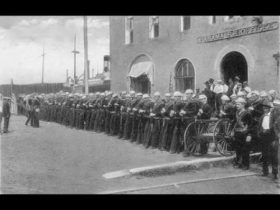
US Marines Seized Panama in 1903
or go to
Aletho News Archives – Video-Images
From the Archives
Precedents for Pizzagate
Marc Dutroux, Belgian pedophile, sadist, and serial killer with friends in high places
By Aedon Cassiel | Counter – Currents | December 23, 2016
To reiterate a point that should be clear to the more astute reader, my goal in this series (part 1, part 2) has not been to defend “Pizzagate” as such. My goal has been to defend the people who want to investigate it against specific accusations levied against them by people who think Pizzagate has revealed no intriguing information at all—for a specific reason, which I will be honing in and focusing on much more directly in this closing entry.
Whereas the mainstream critics of Pizzagate would have you believe that the dividing line is between paranoid conspiracy theorist followers of “fake news” and level-headed people who follow trustworthy news sources and rely on cold, hard reason to determine the truth, my goal has been to show that—whatever is or is not happening with Pizzagate itself—this framing of the issue is arrogant, insulting, and the product of extremely narrow tunnel vision. … continue
Blog Roll
 Aletho News
- Israeli firms transform cars into intelligence devices: Reports
- Zionist-controlled companies to surveil British citizens
- THE CHILDREN GAMBIT
- A note on comment posting at Alethonews
- Trump stalls over Iran strike plan, Iran holds all the aces
- Zelensky’s Ceasefire for Elections is Strategic Gambit, Not Democratic Move
- US and Dutch pilots flying F-16s for Ukraine – Western media
- West’s Claims of Non-Involvement in Ukraine Conflict ‘Epitome of Hypocrisy’ – Expert
- Putin aide urges retaliation to ‘Western piracy’
- The Depth Charge in the Womb
- If Americans Knew
- Israel ceased firing on Gaza for just 15 days of the “ceasefire” – Not a ceasefire Day 130
- In Gaza, “rats run over our faces” – Not a ceasefire Day 129
- Israel-backed border guards, GHF-linked aid – Not a ceasefire Day 128
- Israel battles Palestinian right of return, one Palestinian at a time – Not a ceasefire Day 127
- Noor’s short life of unimaginable suffering
- Israel Destroyed Gaza’s Hospitals. Now It’s Banning Doctors Without Borders.
- Is Spite of What Zionists Say, It’s a Good Thing to Criticize Governments
- Palestinian mother, daughter recount strip searches, harsh conditions in Israeli detention
- Israel used weapons in Gaza that made thousands of Palestinians evaporate
- ADL’s Stats Twist Israel’s Critics Into Antisemites
- No Tricks Zone
- New Study: A 4°C Warmer Beaufort Sea Had ‘No Sea Ice’ 11,700 – 8200 Years Ago
- Unfudging The Data: Dutch Meteorological Institute Reinstates Early 20th Centruy Heat Waves It Had Erased Earlier
- German Gas Crisis…Chancellor Merz Allegedly Bans Gas Debate Ahead of Elections!
- Pollen Reconstructions Show The Last Glacial’s Warming Events Were Global, 10x Greater Than Modern
- Germany’s Natural Gas Storage Level Dwindles To Just 28%… Increasingly Critical
- New Study Rebuts The Assumption That Anthropogenic CO2 Molecules Have ‘Special’ Properties
- Climate Scientist Who Predicted End Of “Heavy Frost And Snow” Now Refuses Media Inquiries
- Polar Bear Numbers Rising And Health Improving In Areas With The Most Rapid Sea Ice Decline
- One Reason Only For Germany’s Heating Gas Crisis: Its Hardcore-Dumbass Energy Policy
- 130 Years Later: The CO2 Greenhouse Effect Is Still Only An Imaginary-World Thought Experiment
 Aletho News