Iran Hails Resistance Allies’ Push to Reshape World Order, Weaken US ‘Hegemony’

People raise Palestinian, Lebanese and Hezbollah flags during a rally in solidarity with the Palestinians, on the outskirts of the southern Lebanese village of Kfarkila, near a United Nations Interim Force in Lebanon (UNIFIL) armoured personnel carrier.
By Ilya Tsukanov – Sputnik – 02.09.2023
Iran joined the Shanghai Cooperation Organization and BRICS this summer, and has been working to expand bilateral cooperation with both Russia and China. Tehran is also the leader of an informal alliance of regional countries, including Syria, Lebanese militant group Hezbollah, and Iraqi Shia militias, known as the Axis of Resistance.
Iran’s foreign minister has praised the struggle in the Middle East to resist and undermine US dominance and create a new international order.
“The international system is undergoing fundamental changes and we are witnessing new actors in the international arena,” Foreign Minister Hossein Amir-Abdollahian said in a meeting with political groups in Beirut, Lebanon on Friday.
“The US is trying to maintain its hegemony, but the region and the world understand very well that America cannot exercise its hegemony, and on the contrary, the Resistance is powerful and can achieve its will powerfully,” Amir-Abdollahian added.
Today, the Iranian top diplomat said, “the position of the Resistance in the region cannot be ignored,” and is “being noticed by the West,” including as far as the Israeli-Palestinian crisis is concerned.
Separately, in talks with his Lebanese counterpart Abdallah Bou Habib, Amir-Abdollahian stressed that “the US sanctions regime cannot hinder the economic relations between Iran and Lebanon,” just as “it has failed to impact Iran’s cooperation with Iraq, Turkiye, Pakistan, Central Asia and the Caucasus.”
Iran is ready to provide further assistance to Lebanon to help Beirut resolve its long-running fuel and electricity crisis, he said. This includes readiness to build a network of power stations with a capacity of 2,000 megawatts.
Bou Habib praised Iran for its support for Lebanon in the nation’s time of crisis, and expressed readiness to further expand cooperation.
Lebanon’s political and economic crisis, which began in 2019, has left the country in economic ruin and run by a caretaker government. The post of president has been vacant since last October, when President Michel Aoun resigned at the end of his term.
Amir-Abdollahian also met with Hassan Nasrallah, secretary-general of the powerful Lebanese political party and militant group Hezbollah, which has forged close ties with Iran both in Lebanon and in Syria, where Hezbollah fighters backed by Revolutionary Guard Quds Force advisors have fought jihadist extremists for over a decade.
In the talks with Bou Habib, Amir-Abdollahian reiterated Iran’s long-stated position that “any normalization of relations with the Zionist regime will be detrimental to the entire region.” Iran will “continue to support and assist the Axis of Resistance, to preserve the Lebanese national interest, in the face of Israeli attacks and ambitions that threaten this entire region,” he said.
The Iranian diplomat also commented on the “positive developments” in relations between Iran and Saudi Arabia following the surprise normalization of relations earlier this year, saying that these processes “will have a positive impact on the entire region,” including for Lebanon.
At a press conference at the end of his visit, Amir-Abdollahian also rejected allegations by France – the European power which once controlled Lebanon as a colony, of meddling in Lebanon’s affairs.
“I advise Mr. Macron to focus on the situation inside France instead of paying attention to questions of interference in other countries,” he said. “Iran has always played the most constructive role in helping Lebanon,” he added.
Earlier in the week, the French president told a conference of French ambassadors that stopping Iranian “interference” was a “key element” in resolving Lebanon’s political standoff.
Amir-Abdollahian’s Beirut visit was preceded by a trip to Damascus on Thursday for talks with President Bashar Assad and other Syrian officials. Amir-Abdollahian slammed the illegal presence of US troops in eastern Syria, and blasted Israel for its ongoing campaign of airstrikes against the war-torn country.
Known to jealously guard its security and foreign policy independence, and the defense of its interests even against far larger and more powerful foes, including the US, Iran has dramatically ramped up cooperation with Russia and China in recent years as part of ongoing processes related to Eurasian integration. Iran joined the Shanghai Cooperation Organization in July, and acceded to the BRICS bloc late last month. Last week, a senior Islamic Revolutionary Guard Corps commander and advisor to Supreme Leader Ayatollah Ali Khamenei said that Iran sees a maritime-oriented economy and cooperation with Russia and China as keys to countering the impact of US sanctions.
Israel threatens to strike ‘every meter’ of Lebanon
The Cradle | August 8, 2023
Israel’s Defense Minister, Yoav Gallant, said on 8 August in a message addressed to both Hezbollah and the Lebanese government, that Tel Aviv is prepared to strike “every meter” of the country.
“Do not make a mistake, we do not want war, but we are ready to defend our citizens, our soldiers, and our sovereignty,” the minister said.
“We will not hesitate to employ all of our power and to attack every meter of Hezbollah and of Lebanon … and return Lebanon to the stone age,” he added.
Gallant said that Hezbollah “might mistakenly think that they can test Israel” due to the deep internal crisis it is facing, and the vow made by many of its army reservists to boycott military service protests against the government’s judicial reform program.
He affirmed, however, that Israel would not be divided in the event that Hezbollah threatened it with war.
Gallant’s threats came just hours after the Lebanese army mobilized its naval forces in response to Israeli boats that violated Lebanese sovereignty on 8 August.
Al-Mayadeen news outlet observed the Israeli boats entering Lebanon’s territorial waters via a camera located in the Naqoura area while the Lebanese army was escorting a tour of dozens of journalists to the southern borders.
Recently, there has been a series of Lebanese responses to ongoing Israeli violations of the country’s sovereignty. These violations include excavations on Lebanon’s side of the border, which serve as the basis for an Israeli plan to build a defensive wall.
Most recently, in early July, Israel annexed the northernmost part of the already occupied southern border village of Ghajar – which is internationally recognized Lebanese territory. The move drew widespread condemnation and has exacerbated the existing tensions on the border.
As a result of constant Israeli incursions, the Lebanese and Israeli militaries came close to facing off on the border last month. The tensions also relate to an outpost erected by Hezbollah earlier this year in the Israeli-occupied Shebaa Farms area – which has been under occupation since 1967.
Despite Israeli threats, complaints to the UN, and pressure from Washington, the Hezbollah outpost remains in place.
Last week, Israeli National Security Adviser Tzachi Hanegbi said that there is a “weakening in the policy of self-restraint” by Hezbollah on the border.
Israel worried Hezbollah’s air defense systems will ‘limit freedom of action’ over Lebanon
The Cradle | July 1, 2023
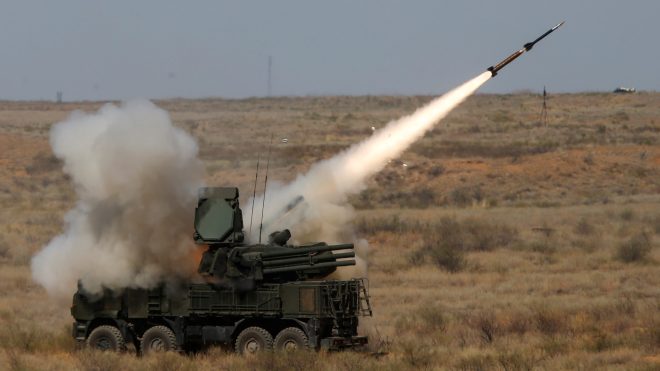
Israeli military planners are concerned about what they describe as “a significant change in the concept of air defense by Hezbollah in Lebanon” after the resistance group “doubled” the number of air defense systems in its possession, according to a report by Maariv newspaper published on 30 June.
The report cites unnamed military officials saying the resistance’s air defense systems will “restrict the freedom of action of the Israeli Air Force in Lebanon.”
“[Hezbollah] doubled the amount of air defense systems in its possession during the last five years … these defense systems are based mainly on modern Iranian systems,” the report adds.
Furthermore, Tel Aviv claims Hezbollah is in possession of the SA8 and SA22 Russian air defense systems, which have been previously deployed in Syria.
“The attack by an Israeli drone, in August 2019, on a facility in a building in the heart of the southern suburbs of Beirut … initiated the turning point in Hezbollah’s strategy, leading to the threat by [Secretary General Hassan Nasrallah] … to start shooting down Israeli drones,” the report highlights.
“Hezbollah implemented this threat two months later when it fired an SA8 missile at an Israeli Hermes 450 drone, which was on an intelligence-gathering mission, but the missile missed the target,” it adds.
In recent months, Israeli military planners have been on edge over Hezbollah’s vast military advancements coupled with the growing coordination among resistance factions in the region.
Earlier this week, Israeli media revealed that the US has stepped in to pressure Lebanon into having Hezbollah remove an outpost erected in the occupied Shebaa Farms.
Hezbollah has so far rejected these demands.
“You cannot threaten us with a large-scale war; it is us who are threatening you … Your follies, not ours, might blow up the entire region and lead to the Great War,” Nasrallah told Israeli leaders during a speech in May.
“The resistance is expanding by the day and has witnessed a great [positive] change in its financial and military capability,” he added.
Saudi Arabia seeks dialogue with Hezbollah
The Cradle | May 1, 2023
Lebanese daily Al-Akhbar released a report on 29 April claiming that Saudi Arabia is seeking to establish a line of dialogue with Lebanese resistance group Hezbollah, coming in the aftermath of Riyadh’s reconciliation with Iran and Syria and following years of non-existent relations between the two sides.
According to Al-Akhbar, information provided by an unnamed Saudi official “reached Lebanese officials from a European capital,” which reveals that the kingdom hopes to open dialogue with Hezbollah “soon.”
The newspaper vaguely cites “unofficial sources in Beirut” as saying that the dialogue would “be conducted through a third party.”
“Whether the endeavor succeeds or fails, it reflects the new phase in which Riyadh is rearranging regional relationships on the path of asserting its Arab leadership,” Al-Akhbar writes, referring to Saudi Arabia’s newfound shift in policy as “unprecedented.”
Saudi Arabia has recently distanced itself from Washington significantly – economically and politically.
A Chinese-brokered reconciliation of Saudi-Iranian ties has been followed by the kingdom’s openness to reestablish ties with the Syrian government, as well as Hamas – with whom longstanding tension also exists.
This has resulted in significant Israeli frustration, and Hebrew media has referred to it as a blow to potential normalization with Riyadh.
A 1 May report by Israeli outlet Maariv laments that the “Saudi train is expected to stop at a station bearing a large sign with the name Hezbollah on it.”
Reports of dialogue between Hezbollah and the kingdom emerge as Lebanon finds itself in a presidential deadlock that has been ongoing since the term of former president Michel Aoun expired in October last year.
A lack of consensus and parliamentary quorum, as well as external political pressure, have resulted in eleven failed sessions to elect a president.
The two main candidates are the chief of the Lebanese Armed Forces (LAF), the US-backed Joseph Aoun, and the Hezbollah-backed MP Suleiman Franjieh of the Christian Marada party.
If dialogue between Hezbollah and the Saudis is achieved, this would be the first line of official contact between the two sides in 16 years.
However, last year, Middle East Eye cited sources as saying that a secret meeting between Hezbollah deputy chief, Naim Qassem, and a Saudi delegation in Beirut helped “pave the way” for the renewal of a ceasefire in Yemen, as well as the removal of former Yemeni president Abd Rabbuh Mansour Hadi.
Losing ‘Deterrence’: How Palestinian, Arab Resistance changed rules of war with Israel
By Ramzy Baroud | MEMO | April 17, 2023
When Israel launched a war against the Gaza Strip in August 2022, it declared that its target was the Islamic Jihad only. Indeed, neither Hamas nor the other Gaza-based groups engaged directly in the fighting. The war then raised more questions than answers.
Israel rarely distinguishes between one Palestinian group and another. For Tel Aviv, any kind of Palestinian Resistance is a form of terrorism or, at best, incitement. Targeting one group and excluding other supposedly ‘terrorist groups’ exposes a degree of Israeli fear in fighting all Palestinian factions in Gaza, all at once.
For Israel, wars in Gaza have proved progressively harder with time. For example, Israel’s so-called ‘Protective Edge’ in 2014 was very costly in terms of loss of lives among the invading troops. In May 2021, the so-called ‘Breaking Dawn’ was an even bigger flop. That war unified the Palestinians and served as a strategic blow to Israel, without considerably advancing Israeli military interests.
Though the Gaza groups provided the Islamic Jihad with logistical support in August 2022, they refrained from directly engaging in the fight. For some Palestinians, this was unexpected and was interpreted by some as indicative of weakness, disunity and even political opportunism.
Nearly a year later, another war loomed, following the release of harrowing footage of Israeli police senselessly beating up peaceful Palestinian worshipers at Al-Aqsa Mosque on the 14th day of the holy month of Ramadan. Like in May 2021, Palestinians rose in unison. This time, it was Resistance groups in Gaza and, eventually, Lebanon and Syria that fired rockets at Israel first.
Though Israel hit back at various targets, it was obvious that Tel Aviv was disinterested in a multi-front war with Palestinians, in order to avoid a repeat of the 2021 fiasco.
The violent and repeated Israeli military raids at Al Aqsa – and limited, though deadly attacks on Jenin, Nablus, and other parts of the West Bank – were meant to achieve political capital for the embattled government of Benjamin Netanyahu. But this strategy could only succeed if Israel manages to keep the violence confined to specific, isolated regions.
Large-scale and protracted military operations have proven useless for Israel in recent years. It has repeatedly failed in Gaza, as it did before in South Lebanon. The unavoidable change of strategy was also costly from the Israeli viewpoint, as it empowered the Palestinian Resistance, and denied Israel its so-called deterrence capabilities.
Indeed, the political discourse emanating from Israel recently is quite unprecedented. Following a security briefing with Netanyahu on 9 April, Israel’s opposition leader, Yair Lapid, left with ominous words. “I arrived at the briefing with Netanyahu worried, and I left even more worried.”
“What our enemies see in front of them, in all arenas, is an incompetent government … We’re losing our deterrence,” he added. The Times of Israel also quoted Lapid as saying that “Israel is losing the support of the United States and the international community.”
Though Israeli politics is inherently divisive, the country’s politicians have always managed to unify around the subject of ‘security’. During wars, Israelis often exhibited unity, and ideological divides seemed largely irrelevant. The fact that Lapid would publicly expose Israel’s weaknesses for political gains further highlights the deterioration of Tel Aviv’s political front.
But more dangerous for Israel is the loss of deterrence.
In an article published in the Jerusalem Post on 11 April, Yonah Jeremy Bob highlighted another truth: “Israel no longer decides when wars are fought.”
He writes: “One could have concluded this from the 2014 and May 2021 Gaza wars that Israel stumbled into, and which Hamas used to score various public relations points … but now Hamas learned in a more systematic way … how to instigate its own ring of fire around Jerusalem.”
The writer’s hyped language aside, he is not wrong. The battle between Israel and Palestinian Resistance groups has been largely centred around timing. Though Israel did not ‘stumble’ into a war between 2014 and 2021, it has not been able to control the duration and the political discourse around these wars. Though thousands of Palestinians were killed in what seemed like one-sided Israeli military campaigns, these conflicts almost always resulted in a public relations disaster for Tel Aviv abroad and further destabilised an already shaky home front.
This explains, at least in part, why Palestinians were keen not to expand the August 2022 war, which was also entirely initiated by Israel, while taking the initiative by firing rockets at Israel, starting on 5 April. The latest Palestinian action forced Israel to engage militarily on several fronts – Gaza, Lebanon, Syria and, arguably, the West Bank.
Throughout its 75 years of military conflict with Palestinians and Arabs, Israel’s success on the battlefield has been largely predicated on the unhindered military, logistical and financial support from its Western allies, and the disunity of its Arab enemies. This has allowed Israel to win wars on multiple fronts in the past, with the 1967 war serving as the main, and possibly, last example.
Since then, and especially following the considerable Arab resistance in the 1973 war, Israel shifted to different types of military conflicts: strengthening its occupation in the West Bank, Gaza and East Jerusalem, while launching massive wars at singular fronts – for example, Lebanon 1982.
The Israeli retreat from Lebanon in 2000, and the utter failure to re-invading parts of the country in 2006, brought Israel’s military ambitions in Lebanon to a complete halt.
Then, Israel turned to Gaza, launching one devastating war after the other, starting in 2008, only to discover that its military options in the besieged Strip are now as limited as that of Lebanon.
For Lapid, and other Israelis, the future of Israel’s ‘deterrence’ is now facing an unprecedented challenge. If the Israeli military is unable to operate at ease and at the time of its choosing, Tel Aviv would lose its ‘military edge’, a vulnerability that Israel has rarely faced before.
While Israeli politicians and military strategists are openly fighting over who has cost Israel its precious ‘deterrence,’ very few seem willing to consider that Israel’s best chance at survival is peacefully co-existing with Palestinians according to the international principles of justice and equality. This obvious fact continues to elude Israel after decades of a violent birth and troubled existence.
– Dr. Ramzy Baroud is a journalist, author and the Editor of The Palestine Chronicle. He is the author of six books. His latest book, co-edited with Ilan Pappé, is ‘Our Vision for Liberation: Engaged Palestinian Leaders and Intellectuals Speak Out’. His other books include ‘My Father was a Freedom Fighter’ and ‘The Last Earth’. Baroud is a Non-resident Senior Research Fellow at the Centre for Islam and Global Affairs (CIGA).
US ‘disappointed’ with UN court ruling on Iran
RT | March 31, 2023
The US State Department has criticized a ruling by the International Court of Justice (ICJ), which found that some Iranian funds were seized illegally by American authorities.
Judges at the UN’s top court in The Hague concluded on Thursday that a 2016 decision by the US Supreme Court was in violation of the 1955 Treaty of Amity, Economic Relations and Consular Rights between the two countries. Back then, the US court ruled that certain assets belonging to Iranian companies should be paid to victims of terrorist attacks blamed by Washington on Tehran.
“Iran is entitled to compensation for the injury caused,” the ICJ said, adding that the US has 24 months to agree on an amount for the payout, or the court will determine one itself.
However, the judges rejected Tehran’s bid for $1.75 billion in assets owned by Iran’s Central Bank (Bank Markazi) in the US to be unblocked, arguing that the ICJ does not have jurisdiction over the matter.
“We are disappointed that the Court has concluded that the turnover of assets of other Iranian agencies and instrumentalities to US victims of Iran’s sponsorship of terrorism was inconsistent with the Treaty,” US State Department spokesman Vedant Patel said on Thursday.
The 1955 agreement, signed more than two decades before the Islamic Revolution that toppled the US-backed government in Iran, “was never intended to shield Iran from having to compensate US victims of its sponsorship of terrorism,” he insisted. The US withdrew from the treaty in 2018.
Speaking at a news conference on the same day, Patel argued that the ICJ’s decision to keep the funds of Bank Markazi frozen was “a major blow to Iran’s attempt to avoid its responsibility, in particular to the families of US peacekeepers, who were killed in the 1983 bombing of the Marine Corps barrack in Beirut.”
Iran denies its involvement in the attack in the Lebanese capital, which killed 299 people of whom 241 were US troops, as well as other terrorist incidents blamed by Washington on Tehran.
The Iranian Foreign Ministry welcomed the ruling by the ICJ, calling it “proof of the Islamic Republic of Iran’s righteousness and the violations by the US government.”
How does the China-brokered Saudi-Iranian normalization affect Israel?
By Robert Inlakesh | RT | March 17, 2023
A key goal of both the Israeli and American governments is to foster the normalization of ties between Israel and Saudi Arabia, and part of the strategy to make this happen was to unite the two against what has been depicted as a common enemy, Iran. The Saudi-Iranian rapprochement now appears to have thrown a spanner in the works of such efforts, and hence enraged the Israelis.
After five rounds of talks throughout the span of two years, Iran and Saudi Arabia were unable to reach a compromise for the re-establishment of diplomatic ties, something China has now managed to broker in a shocking turn of events. Based upon the long rivalry between Tehran and Riyadh, US and Israeli policy towards Saudi Arabia has been based on combating a common enemy shared between all sides. Although the US government itself has not reacted with open animosity to the sudden change in regional dynamics, the Israelis are publicly interpreting this as a negative development.
In June 2022, the Wall Street Journal reported that a previously undisclosed meeting had taken place in Sharm el-Sheikh, Egypt, whereby a number of Arab nations, including Saudi Arabia, had met with the Israeli military chief of staff at the time, Aviv Kochavi. Part of the discussions that took place was allegedly geared towards forming an Israeli-Arab defense alliance. Although no such alliance was formed, it was largely speculated at the time that US President Joe Biden’s visit to both Israel and Saudi Arabia the following month would include discussions on this topic. Despite the failure of the US and Israel so far to put together such an alliance, it is clear that part of the strategy for achieving normalization has been to secure defense interests.
Across the Israeli political spectrum, from both the coalition government and opposition, finger pointing has been taking place, in attempts to pin the blame for the perceived failure of Israel to prevent Saudi-Iranian normalization. Israeli Prime Minister Benjamin Netanyahu has attempted to shift the blame onto the former government, an idea refuted by former Israeli Mossad head Efraim Halevy as “factually incorrect.” On the other hand, former Israeli PM Naftali Bennett has called the agreement “a serious and dangerous development for Israel.” Yair Lapid, another former PM and current leader of the opposition, also said it is an “utter and dangerous failure of the Israeli government’s foreign policy.”
The big question now is whether the Chinese-brokered normalization agreement will negatively impact potential normalization between Israel and Saudi Arabia. Reuters reported that, according to an unnamed senior Israeli official, the Saudi-Iranian deal will have no significant impact on Israeli-Saudi relations. It is also not clear whether the agreement has any clauses to do with Israeli normalization. According to Carmiel Arbit from the Washington-based Atlantic Council, the Saudis could be attempting to conduct a balancing act the way the United Arab Emirates has. The UAE, which signed its own normalization deal with Israel in 2020, has since 2019 managed to de-escalate tensions with Iran and is currently maintaining cordial ties with both sides.
It is not clear, however, whether the model of Abu Dhabi will be applicable for the Saudis. Riyadh, simply put, has a lot more to lose than the Emiratis, due to its wide regional entanglements and domestic constraints, and hence it has chosen to maintain a distance from the Israelis at this time. The internal political crisis in Tel Aviv may also play a crucial role in the Saudi decision to push forward with the normalization of ties with Iran, as instability within Israel, coupled with a potential escalation in the conflict with the Palestinian people, could severely hinder a formal diplomatic breakthrough.
One crucial result of Saudi-Iranian normalization, however, is not necessarily to do with Israel’s own relations with the Saudis. Combating Iran, specifically its nuclear program through coercive measures, is an active policy position on both sides of the political divide in Israel. Netanyahu placed the issue of combating Iran, even through direct force, at the forefront of his campaign to win the election late last year. Throughout the past unity coalition of Bennett and Lapid, the anti-Iran position also proved a cornerstone of Israeli regional policy.
Performing aggressive actions, such as a direct attack against Iranian nuclear facilities, could now be much more difficult for the Israelis to pull off, with Saudi Arabia taking a non-combative approach to Iran. Although the nuclear issue is perhaps the most pervasive issue for the Israeli public, Iran’s regional alliances and defense programs are the true threats posed to Israel. If Saudi-Iranian ties are able to flourish and the Chinese-brokered deal holds, this could mean that Riyadh’s efforts in Lebanon against Hezbollah could be curtailed, and this surely represents a concern for Israel.
Iran, through its relationships with regional political parties, governments, and localized militia forces, also possesses the ability to pull strings that could benefit Saudi Arabia if it reciprocates by doing the same. This is especially the case when it comes to the conflict in Yemen. One thing that Ansarallah, also known as the Houthis, have been able to prove in their efforts against the Saudi-led coalition since 2015 when the war began, is that they are capable of overcoming US-made defense equipment. Iran, as a close ally of Ansarallah, could aid in setting up a long-term truce or even lasting peace, which the likes of the US simply cannot offer. To end this war would be in the security interests of the Saudis, who will undoubtedly suffer if the violence resumes, especially if missiles and drones begin striking their vital infrastructure again.
Just as Beijing proved capable of fostering Saudi-Iranian normalization, Tehran could offer the ability to properly negotiate a peaceful solution in Yemen. However, it is simply too early to tell whether such a development will take place. What the deal undoubtedly does is prove the weakness in Israel’s regional capabilities, along with the waning influence of the US. Israel’s security concerns regarding Syria and Lebanon may be heightened if the Chinese-brokered agreement delivers a more peaceful approach inside both of these nations. Saudi Arabia could also re-establish ties with the Syrian government, as the UAE has already done, which could help Damascus on the road to recovery from its brutal war and current state of economic ruin. A strong and united Syria could in the future also pose a strategic threat to Israel. While Saudi-Israeli normalization is by no means off the table, the Saudi-Iranian agreement could pose a serious challenge regionally for Israel’s current policy approach.
Robert Inlakesh is a political analyst, journalist and documentary filmmaker currently based in London, UK. He has reported from and lived in the Palestinian territories and currently works with Quds News.
Court convicts UK firm over cataclysmic 2020 blast in Beirut
Press TV – February 23, 2023
The UK High Court has ruled a London-based company that delivered the explosive ammonium nitrate to Beirut’s port is liable towards the victims of a devastating blast in 2020.
Lebanon’s Beirut Bar Association said on Thursday the high court had ruled the London-registered chemical trading firm, Savaro Ltd., will have to pay compensations now.
The huge Beirut port blast on August 4, 2020 killed more than 200 people, injuring over 6,000 and damaging large parts of the port city.
Friends and families of the blast’s victims saw the legal development as a rare step towards justice and against the political intervention that has obstructed the investigative judge leading a probe in Lebanon for over two years.
The court ruling in London is an unusual judicial success for the victims’ families, some of whom opted to file lawsuits abroad.
The Beirut Bar Association, alongside three of the victims’ family members, filed a lawsuit against the British firm more than a year ago.
The ruling by the High Court of Justice in London means the proceedings now move to a “damages phase” of the case that determines the firm’s compensation for the families, Camille Abousleiman, one of the lawyers involved in the case, told media.
Head of the Bar Association Nader Kaspar considered the ruling a “great achievement,” paving the way to continue the quest for justice and the truth about what caused the devastating explosion in Beirut’s port.
“It’s the first time there is an actual judgment on this matter in reputable courts,” Abu Suleiman, also a former Lebanese labor minister, said. The ruling “certainly will open the door for potential justice in courts overseas.”
Mariana Foudoulian, whose sister Gaia died in the explosion, called the judgment a “very important step.”
“Through this judgment, we can try to access more important details,” Foudoulian told media. “This does give us some hope.”
Court documents showed Savaro chartered a huge shipment of ammonium nitrate in 2013 which eventually ended up in Beirut’s port area.
Documents show officials were aware of the highly inflammable chemical substance docked at the port for years, but did not take decisive action to have it removed.
The lawsuit against Savaro was lodged in August 2021. It remains unclear who own(s) Savaro. Probes into the company’s ownership listed agents from a corporate services firm.
Accountability Now, a Swiss organization, said some of the Beirut blast victims’ families had filed a lawsuit in Texas against US-Norwegian geophysical services group TGS.
The TGS firm owns a company that allegedly sub-chartered the ship carrying the ammonium nitrate in 2012. Accountability Now said it hoped the Texas lawsuit would help disclose communications between TGS and other parties involved in the Beirut blast.
White House continues to block energy sharing plan for Lebanon: French official
The Cradle | February 1, 2023
Pierre Duquesne, France’s envoy on international support to Lebanon, stated on 31 January that Egypt is still seeking assurances from Washington to start exporting gas to Lebanon via Syria.
“My Egyptian counterparts today told me, ‘we want something precise’ … There is a problem of exemption … and that concern should be dealt with not only on a political basis but on a legal basis,” Duquesne said during a visit to Cairo.
Alongside Egyptian gas, the US-orchestrated plan, announced in 2021, also calls for exporting electricity from Jordan via Syria, which could add up to 700 megawatts to Lebanon’s battered power grid.
Duquesne confirmed that all preparations for the energy-sharing plan had been completed, and there were no hold-ups over the pricing or quantity of gas. However, western sanctions on Syria prevent the Levantine nation from receiving the much-needed aid.
Moreover, Duquesne warned that Lebanon’s presidential vacuum is also working against the plan, which has yet to go to the World Bank board for a review of specific pre-conditions ahead of the release of a $300 million loan to finance the gas exports over 18 months.
The same day the French official made his comments, the US canceled a tripartite meeting between the US Ambassador Dorothy Shea, Minister of Energy Walid Fayyad, and World Bank representatives after refusing to grant Lebanon any exceptions to the sanctions imposed on Syria.
Lebanese power stations have gone almost entirely offline since the start of the manufactured crisis in 2019, while fuel subsidy cuts have caused the costs for private generators to skyrocket.
The energy sharing plan between Egypt, Jordan, Syria, and Lebanon was revealed soon after resistance movement Hezbollah launched a plan to import Iranian fuel in 2021.
Washington’s abuse of the energy crisis in Lebanon falls in line with recent remarks by US officials, who said Lebanon must be forced towards collapse as the only solution to deal with Hezbollah.
“[Collapse will enable] Lebanon to somehow be rebuilt from the ashes, and freed from the curse of Hezbollah,” US Assistant Secretary of State for Near Eastern Affairs, Barbara Leaf, said on 4 November.
Nasrallah: The new Netanyahu government will hasten Israel’s demise
Speech of Hezbollah Secretary General, Sayed Hassan Nasrallah, on January 3, 2023, during the commemoration of the third anniversary of the assassination of Commanders Qassem Soleimani and Abu Mahdi al-Muhandis.
Source : video.moqawama.org
Translation: resistancenews.org
Transcript:
[…] I want to conclude on two points. The first point will be to address a message to the new Israeli government, and the second point concerns the presidential elections and the political situation in Lebanon.
First of all, this new government… Of course, we already have many years of experience with Netanyahu. If someone wants to scare us with Netanyahu, with the new (Israeli) Minister of War [Yoav Galant] or with anyone else, (he is wasting his time because) we have already dealt with them in the previous years. Yes, there is something new, namely that this government is a mixture of corrupt people – some of whom have been tried and sentenced to prison for corruption charges – and madmen and extremists, which is new. This level of transparency (in corruption and in fanaticism) is something new. So we are facing a government of corrupt, criminal and extremist fanatics. Of course, such a government does not scare us, and never such governments have been able to scare us in any way.
And more than that, we can even be optimistic about it, contrary to what most (analysts) say: when a new government is composed of corrupt and crazy people, with the grace of God, it will only accelerate the end of this temporary entity. These madmen, whom we have seen for a few days, and until this morning, (desecrate) the Al-Aqsa mosque in the early morning, their Minister of National Security (Ben Gvir), this administration, with the grace of God, will accelerate (the demise of Israel).
As you know, we have spoken many times about the internal dangers within the Israelis (themselves), the sharp divisions (of their society and elites), the lack of trust in the political and military leadership, and even in the religious authorities, the growing corruption, etc., up to the prevalent anxiety in Israel as to whether this entity will exceed 80 years of existence or not [never in history has a Jewish state exceeded 80 years], with the grace of God the Most High and Exalted, and by the grace of this new government composed of madmen, it will accelerate the end of this entity, through mistakes and stupid acts that could drag them to the bottom of the abyss. This is how we see things. In no way does the situation frighten us, on the contrary: we see a great hope in this evil (government). That’s the first point.
Second point, of course, these madmen and fanatics… Their first aim is internal, and concerns Palestine: the colonization of the West Bank, the question of the Al-Aqsa Mosque and Bayt al-Maqdis (Jerusalem). What happened today (desecration of the Al-Aqsa mosque by the new Minister of National Security), and the Palestinian stances as well as the reactions of some Arab and Muslim States and groups in the world confirm that these people are pushing for a (very) dangerous situation. I would like tonight to add the voice of the Islamic Resistance in Lebanon (Hezbollah) to that of all the Resistance organizations in Palestine and declare this: desecrating Al-Aqsa Mosque and the Muslim and Christian holy places in Palestine and Bayt al-Maqdis in particular, on the part of these Zionists, will not only explode the situation inside Palestine, but can put the whole region on fire (by triggering a massive counter-strike against Israel). Our peoples will not tolerate such aggression by these madmen against the Muslim and Christian holy places. We have said this before, and we confirm it again. And we declare to all the countries of the world, and (especially) to those who protect this usurping entity, that if you want to avoid a second war in the Middle East in addition to the war in Ukraine, you must keep a tight rein on these extremist and fanatical madmen.
As for the rules of engagement with this new government, as I said, we already have experience with Netanyahu, there is nothing new, but also, since there is a new government, we reaffirm to them that we are alert, vigilant and ready (for anything), and that we will not tolerate any change in the rules of engagement and the balance of deterrence (between Israel and) Lebanon, whatever it may be. Let no one get any ideas or illusions. In any case, they could see a few months ago that we were ready, during the dispute over the maritime border and oil and gas resources, to go as far as possible in the confrontation (up to an all-out war) against this enemy (Israel). And they knew with certainty that we were ready for that (and that we were not bluffing). That is why we will not tolerate any alteration of the rules of engagement (between Hezbollah and Israel), nor any violation of Lebanon’s security, its capabilities or its sovereignty.
See Nasrallah: If Lebanon is denied its oil and gas resources, we will shut down all Israeli platforms
Likewise, we stress the importance for the Lebanese government to pursue its efforts to launch the extraction of (Lebanese) oil and gas. Some feared that Netanyahu’s rise to power would end the border agreement between Lebanon and Israel, but he announced that he would abide by it. The signs from the companies involved (Total, etc.) give cause for optimism. So we are not at all worried on that side.
In truth, with this government, our eyes must rather be turned towards the interior of occupied Palestine, towards Al-Quds (Jerusalem), towards the West Bank, and towards the Al-Aqsa Mosque in the first place. […]
Iran against the West’s hybrid warfare
By Viktor Mikhin – New Eastern Outlook – 10.12.2022
Western countries, above all the United States, are seeking to replicate Afghanistan and Iraq scenario in Iran, creating chaos to destroy the country and loot its resources, Scott Bennett, a former US Army Special Operations Officer, said honestly and truthfully. “The West is fully committed to an absolute chaotic breakdown of Iranian government, religious, and military sectors in Iran, as they did in Afghanistan and then Iraq, in order for chaos to be created and Iran be divided up into regions for national resources theft,” Scott Bennett told the Tehran Times. He also stressed that Israel is the main instigator of Western hostility and maneuvers against Iran, using these tensions to carry out its attacks in Lebanon, Syria and Iraq.
It is becoming increasingly clear that a campaign of domestic terrorism is being unleashed against Iran under the guise of fake protests allegedly in defense of “human rights,” as has been done in Syria by the United States, Israel and NATO. The same powers are using similar methods and the same mercenaries to participate in the attempted color revolution, the operation to change the Iranian regime. Most likely, these terrorists are a combination of Wahhabi fanatics, Israeli Mossad, Likud party supporters, supported by the US CIA, British MI6 intelligence and some elements in Iraq, terrorists from al-Qaeda, al-Nusra, not destroyed ISIS (that is, the three banned in the Russian Federation), other mercenaries and thugs hired and paid for by the West.
The plan is for foreign terrorists to infiltrate Iran and cause internal strife, tribal and sectarian enmity, conflict between Shia, Sunnis, Alawites, Christians, Jews and Kurds living in Iran. The main areas targeted for fomenting unrest, conflict and violence are precisely in those parts of Iran where there is a mixed population. Mobile phones, social media and Western media are heavily used in the process. The beginning was the emergence of a women’s protest movement over a false allegation that a woman had allegedly died under police torture, when in fact she had died of medical complications caused by a previous serious illness.
The specifics of hybrid warfare, as Scott Bennett argues, are a combination of small-scale operations that take the form of diplomatic, information, military and economic action against Iran to create leverage that can then be used to destabilize the government and create chaos in Iran. On the diplomatic front, hostile statements in the United Nations, various NATO and European Union structures will increasingly be used to spread propaganda and disinformation to other countries about Iran, about alleged abuses of “human rights,” about nuclear programs aimed at undermining Western hegemony and security.
Numerous analysts acknowledge that NATO and the EU are strengthening their defense capabilities not only in Europe, but also abroad, including in the Gulf region. President of the European Commission Ursula von der Leyen recently outlined elements of a new European security doctrine, the EU and NATO approach to security in the Persian Gulf. Her remarks at the Manama Dialogue in Bahrain on November 18 reflect what is widely seen as a new and aggressive approach aimed at further escalating tensions in the region, taking advantage of the extremely hostile attitude of many countries there towards Iran.
One can also see how Israel under the Netanyahu regime is stepping up aggressive air attacks against Syria and continuing to invade Iraqi and Persian Gulf airspace as probing maneuvers against Iran. The Israeli and US air forces will conduct their biggest joint air exercise in years, simulating strikes against Iran. Fighter aircraft from both countries will simulate long-range flights and strikes against distant targets, enhancing readiness for combat scenarios with Iran. In recent years, the Israel Defense Forces and US Central Command have already conducted several joint exercises, practicing strikes against Iran.
In July this year, President Joe Biden and Prime Minister Yair Lapid signed a joint declaration on the US-Israeli strategic partnership, also known as the Jerusalem Declaration. It emphasizes the US commitment “never to allow Iran to acquire a nuclear weapon, and that it is prepared to use all elements of its national power to ensure that.” Subsequent joint exercises were the subject of meetings in Washington between IDF Chief of Staff Lieutenant General Aviv Kochavi and US officials, including Chairman of the Joint Chiefs of Staff General Mark Milley and CENTCOM Commander General Michael Kurilla.
Some NIS 3.5 billion ($1 billion) has been allocated from the IDF’s NIS 58 billion ($17 billion) defense budget for military activities next year related to alleged strikes on Iran. Outgoing Minister of Defense Benny Gantz had earlier warned newly appointed Prime Minister Benjamin Netanyahu to “consider issue very carefully” before launching a strike on Iran. “Israel has the ability to act in Iran. We have the readiness, development capabilities, and long-term plans we are managing. We need to prepare for this possibility, and we will also need to consider this issue very carefully before carrying it out,” he said.
All of the above quite clearly supports the argument that it is Israel that is the main source of Western hostility and maneuvering against Iran and is using these tensions to carry out attacks in Lebanon, Syria, Iraq.
Color revolutions are usually the target of aggressive campaigns by the West, and hybrid wars are smoke and fire to create cover and distractions to create conditions, chaos and tensions to launch these color revolutions. Hybrid wars include the conflict the US has created in Iraq between various tribes and religious sects, and in Libya and Syria, where foreign mercenaries from Saudi Arabia, Qatar, Israel and Turkey were hired, funded and trained by the CIA and Pentagon under General Lloyd Austin, now Secretary of Defense. The aim of these operations was to create tension, chaos, conflict and enmity between peoples in the regions so that natural wealth could be stolen. Suffice it to look at the history of these operations over the past 20 years: Afghanistan, Iraq, Somalia, Libya, Syria, Lebanon, Yemen. And now Ukraine and Iran of course represent the next target of this Western program of color revolutions, and therefore an international coalition is needed to counter such hostile actions.
Interview with US Ambassador Peter Ford
Free West Media | November 18, 2022
Steven Sahiounie of MidEastDiscourse interviewed Ambassador Peter Ford to hear his expert analysis of important issues developing in the region.
Israel, Lebanon, Syria and Turkey are neighbors in an increasingly unstable Middle East, in which Saudi Arabia plays a key role.
The US has meddled in the Middle East for decades and is responsible for the destruction of several countries who have not recovered from failed American policies.
Peter Ford served as the British ambassador to Bahrain from 1999 to 2003 and Syria from 2003 to 2006, and is currently the London-based Co-Chairman of the British Syrian Society. He is an Arabist with long established expertise in the Middle East.
Benjamin Netanyahu and his allies recently came back to power in “Israel”. In your opinion what does this mean for the Palestinians?
It makes no difference. Those who believe that one Israeli government is different from another are fools. Every Israeli government supports the occupation and practices repression. Any differences are purely optical.
That said, the participation of overt racists in Netanyahu’s government increases the chances that the US will distance itself from Israel in matters of secondary importance.
Lebanon is in the midst of a financial and social collapse. In your opinion, will the Israeli regime take advantage of the crisis and attack Lebanon?
Israel is already viciously attacking Lebanon – economically. The Israeli/US strategy is to avoid war, which they would lose, but instead to create enough suffering in Lebanon to make the Lebanese people turn against Hezbollah. In particular, they are trying to block oil reaching Lebanon from Iran. This is similar to their strategy towards Syria.
The UN Special Rapporteur has called for the end of sanctions on Syria because of the continuing suffering. Do you think there is any hope in removing the sanctions which are crippling the daily life of Syrians?
Sadly I see no prospect of sanctions on Syria being lifted or eased in the foreseeable future. It costs the US nothing to apply them and the US against all evidence persists in believing that sanctions weaken popular support for the Syrian government, or pretending to believe they weaken the government simply because it would be embarrassing to lift them. Lifting sanctions would look like an admission of failure and a concession to Russia and Iran.
Sanctions on Syria cannot be analyzed without taking the geopolitical situation into account. To some degree Syria is paying part of the price for US mishandling of its relations with Russia and Iran.
Saudi Crown Prince Mohammed bin Salman has not bowed down to pressure by US President Joe Biden. In your opinion, what will be the cost that Saudi Arabia has to pay?
The cost will be zero. On the contrary, Saudi defiance of the US over oil prices shows that the balance of power between the two has shifted and that the US is a paper tiger where Saudi Arabia is concerned. Let us not forget that the US arms industry has become highly dependent on sales to the Gulf, and the US has invested heavily in keeping Saudi Arabia away from rapprochement with Iran. Its leverage is minimal. It was different when MBS was an international pariah over Khashoggi, but time has done its work of prompting amnesia if not forgiveness. I expect to see more Saudi defiance of the US.
For the past few months, we have been hearing reports from the Turkish side of overtures at repairing the relationship between Turkey and Syria. In your opinion, will this have an effect on ending terrorist control in Idlib?
I am more optimistic about Idlib today than I have been for ages. Time is also doing its work here – demonstrating to the Turks that their Syria policy has been a total failure. That policy has failed to remove the Syrian government, failed to establish stability on Turkey’s border and failed to create conditions for the return of Syrian refugees. The burden of those refugees is felt especially acutely with the approach of presidential elections in Turkey. Whether Erdogan is serious about rapprochement with Syria remains however to be seen.
Steven Sahiounie is a two-time award-winning journalist
Featured Video

“Historic Russia”: The Land Putin Will Not Give Back
or go to
Aletho News Archives – Video-Images
Book Review
Why the War on Conspiracy Theories Is Bad Public Policy
By Kevin Barrett • Unz Review • February 1, 2019
 A Review of Conspiracy Theories and Other Dangerous Ideas by Cass Sunstein (based on an earlier paper co-authored with Adrian Vermeule); In Defense of Troublemakers: The Power of Dissent in Life and Business by Charlan Nemeth; and Conspiracy Theories and the People Who Believe Them, edited by Joseph E. Uscinski
On January 25 2018 YouTube unleashed the latest salvo in the war on conspiracy theories, saying “we’ll begin reducing recommendations of borderline content and content that could misinform users in harmful ways—such as videos promoting a phony miracle cure for a serious illness, claiming the earth is flat, or making blatantly false claims about historic events like 9/11.”
At first glance that sounds reasonable. Nobody wants YouTube or anyone else to recommend bad information. And almost everyone agrees that phony miracle cures, flat earthism, and blatantly false claims about 9/11 and other historical events are undesirable.
But if we stop and seriously consider those words, we notice a couple of problems. First, the word “recommend” is not just misleading but mendacious. YouTube obviously doesn’t really recommend anything. When it says it does, it is lying. … continue
Blog Roll
 Aletho News
- BRITAIN’S WARNING: PREPARE FOR WAR
- “Historic Russia”: The Land Putin Will Not Give Back
- How the Cambridge Analytica scandal still haunts Mark Zuckerberg
- The Ongoing Cancellation Campaign Against a Dissenting Academic in Norway
- Yemen and ‘the Houthis’: Challenging Sami Hamdi’s Narrative
- No, Christians did not invent Zionism
- AIPAC-led lobbying network opens branches in Cypriot, Greek parliaments
- Araghchi blasts ‘parasitic’ alliance as US taxpayers pay for Israel’s war on Iran
- Easy fix for Europe’s chaos? Stop fueling war against Russia
- Putin’s key remarks on peace talks and Europe’s ‘schizophrenia’
- If Americans Knew
- An error has occurred; the feed is probably down. Try again later.
- No Tricks Zone
- Two New Studies Find Thwaites Glacier Melt Cannot Be Driven By Human Activity Or A Warming Ocean
- E-Cars Reduce CO2 Emissions By Only 41% Compared To Internal Combustion Engine Vehicles
- Predictions Made By Renowned Climate Professor Over Past Decades Have Been Proven To Be Poor
- New Study Suggests Large Regions Of The Pacific Ocean Have Been Cooling For The Last 80 Years
- Germany’s Green Energy Debacle: High Energy Costs Force Kahla Porzellan to Close After 182 Years!
- New Study: 50 Years Of The Most Aggressive ‘Net Zero’ Policies Can Only Affect The Global Climate By 0.03°C
- US September “Heat” Was No Record…Many Records Set Decades Ago
- Latest European Green Energy Debacle; Portugal’s Largest Flagship Solar Park Insolvent!
- Green Energy Debacle: German Expert Professor Fritz Vahrenholt Warns Of Severe Economic And Social Consequences
- Two More Paleo Reconstructions Affirm Meters-Higher Sea Levels Across Ireland, Brazil 7000-6000 Years Ago

