Lebanon lodges UN Security Council complaint over Israeli violations
Press TV – March 6, 2020
Lebanon has condemned incessant Israeli violations of its airspace, and filed a complaint at the UN Security Council over serious and numerous breaches of the Lebanese sovereignty and UNSC Resolution 1701.
On Friday, Lebanese Minister of Foreign Affairs and Emigrants Nassif Hitti discussed the latest developments in southern Lebanon as well as Beirut’s commitment to the resolution during a meeting with the United Nations Special Coordinator for Lebanon, Jan Kubitsch.
Hitti then expressed his great resentment over violation of Lebanon’s airspace by the Israeli regime.
Syria’s official news agency SANA, quoting an unnamed military source, reported early on Thursday that Syrian air defenses had intercepted Israeli missiles over strategic Quneitra province in the country’s southwest.
“At 00:30 on Thursday our air defense monitored Israeli warplanes coming from northern occupied Palestine toward Saida, and several missiles were fired from Lebanese airspace toward the central area,” the source added.
The missiles were intercepted successfully, he pointed out.
Israel violates Lebanon’s airspace on an almost daily basis, claiming the flights serve surveillance purposes.
Lebanon’s government, the Hezbollah resistance movement and the UN Interim Force in Lebanon (UNIFIL) have repeatedly condemned the overflights, saying they are in clear violation of UN Resolution 1701 and the country’s sovereignty.
UN Security Council Resolution 1701, which brokered a ceasefire in the war of aggression Israel launched against Lebanon in 2006, calls on Tel Aviv to respect Beirut’s sovereignty and territorial integrity.
In 2009, Lebanon filed a complaint with the United Nations, presenting over 7,000 documents pertaining to Israeli violations of Lebanese territory.
Sayyed Nasrallah: Trump’s Two Recent Crimes Usher Direct Confrontation with Resistance Forces
By Mohammad Salami – Al-Manar – February 16, 2020
Hezbollah Secretary General Sayyed Hasan Nasrallah stressed Sunday that the United States of America has recently committed two major crimes, the assassination of the head of IRGC’s Al-Quds Force general Qasem Suleimani as well as the deputy chief of Iraq’s Hashd Shaabi Abu Mahdi Al-Muhandis and the announcement of Trump’s Mideast plan.
Sayyed Nasrallah stressed that those two crimes had ushered a direct confrontation with the axis of resistance in Lebanon, calling for forming a comprehensive resistance front against the United States all over the world.
Delivering a speech during Hezbollah’s “Martyrdom & Insight” Ceremony which marks the anniversary of the martyrs Sheikh Ragheb Harb, Sayyed Abbas Al-Moussawi and Hajj Imad Mughniyeh and the 40th day after the martyrdom of General Suleimani and Hajj Al-Muhandis, Sayyed Nasrallah emphasized that in this confrontation with the United States, we have to trust God’s help, keep hopeful for a bright future and challenge our fear.
Sayyed Nasrallah pointed out that the so-called “deal of the century” cannot be described as a ‘deal’ because it refers merely to the plan of the US president Donald Trump’s plan to eradicate the Palestinian cause.
All the Palestinian forces have rejected and may never approve Trump’s scheme, according to Sayyed Nasrallah who considered that this is basic in frustrating the US plan.
Sayyed Nasrallah noted that consistency of stances which reject Trump’s plan is required to frustrate it, adding that the US will is not an inevitable destiny and citing previous cases of Washington’s failure when opposed by resistance.
No one approved the US plan except Trump and Netanyahu, according to Sayyed Nasrallah who underscored the Palestinian, Arab and international rejection of the scheme.
The Hezbollah leader hailed the consensus of the Lebanese political parties which have rejected Trump’s plan, attributing this attitude to the recognition of the dangers of the scheme to Lebanon and the entire region.
Sayyed Nasrallah noted that Trump’s plan affects Lebanon because it grants the occupied Shebaa Farms, Kfar Shuba hills and the Lebanese part of Al-Ghajar town to the Zionist entity, stipulates naturalizing the Palestinian refugees and impacts the border demarcation.
“The spirit of Trump’s plan will be decisive in the issue of demarcating the land and sea borders with occupied Palestine and will affect Lebanon’s oil wealth.”
Sayyed Nasrallah pointed out that what reassures the Lebanese about the rejection of the naturalization of the Palestinian refugees is the consensual attitude of all the parties in this regard, calling for respecting certain groups’ fears related to this issue.
Lebanon FM: We Categorically Reject Naturalization of Palestinian Refugees
Al-Manar | January 30, 2020
Lebanese FM Nassif Hitti has stressed via Al-Manar TV that Lebanon categorically rejects the naturalization of the Palestinian refugees, but that it supports their right to return to their land.
Hitti denounced the so-called “Deal of the Century”, considering that it infringes on the peoples right to choose their destiny and violates international laws.
“It is unacceptable to tamper with Lebanon’s borders,” Hitti said in a comment on one of the stipulations of the so-called “The Deal of the Century” which denied Lebanon its right to its Israeli-held territories.
The Lebanese to diplomat emphasized that he will convey Lebanon’s stance towards the US ‘deal’ during the meeting of the Arab foreign ministers in Cairo next Saturday.
Turkish ships chase Israeli vessel out of Cypriot waters
Press TV – December 15, 2019
Turkish navy ships have intercepted an Israeli research vessel in Cypriot waters, over which Ankara claims jurisdiction, forcing it to leave the area in a move that could negatively impact an ambitious Israeli project to pipe natural gas to Europe.
Quoting unnamed senior Israeli officials, Israel’s channel 13 news reported Saturday that the rare incident occurred two weeks ago when Turkish vessels approached Bat Galim.
Turkish navy officers radioed the Israeli ship and demanded to know its business in the area, and then ordered it to leave. The Israeli vessel had no choice but to comply and depart, said the report.
According to the report, the Israeli ship was conducting research in coordination with Cypriot officials and the Cypriot government.
Over the past year, Turkey has sent military ships as well as drilling ships to search for crude oil in the waters.
Recently, tensions have risen between Turkey, Greece, and Cyprus regarding gas fields discovered in the eastern Mediterranean.
In an interview with Reuters in September, Turkish President Tayyip Erdogan accused Greek Cypriots of trying to deprive Northern Cyprus of its rights.
EU member Cyprus and Turkey have argued for years regarding the ownership of fossil fuels in the eastern Mediterranean, where Ankara says Turkish Cypriots are entitled to a share of the resources.
Tensions rose again last month when Turkey signed agreements with Libya on maritime boundaries and military cooperation in the Mediterranean.
Erdogan said the maritime deal with Libya — which maps out a boundary between the two countries in the energy-rich eastern Mediterranean close to the Greek island of Crete — was in line with international law.
Israel’s Channel 13 said tensions could negatively affect an Israeli project to pipe natural gas to Europe. The pipeline is set to pass through Cyprus and Greece’s territorial waters.
According to the report, an Israeli embassy official in Ankara was summoned last week to be warned that the pipeline would require Turkey’s approval since it has to pass through Turkey’s economic waters.
“The Turks are trying to establish themselves as the ones running the show, and that is very worrying,” an Israeli official told Channel 13.
The media in Tel Aviv have reported that the UAE has invested as much as $100 million in an ambitious Israeli project to pipe natural gas to Europe.
Turkey, which does not have diplomatic ties with the Greek Cyprus, has vowed to prevent what it sees as a unilateral move by Greek Cypriots to claim offshore resources. It says some areas of Cyprus’s offshore maritime zone fall under what Ankara calls the territory of the Turkish Cyprus.
The island has been divided into Turkish Cypriot-controlled northern and Greek Cypriot-controlled southern territories since a brief war in 1974, which saw Turkey intervene militarily in response to a Greek-backed military coup on the island to annex Cyprus to Greece.
Greek Cypriots run the island’s government in the south, while Turkish Cypriots have a breakaway state in the north and say offshore resources belong to them, too.
Israel has signed a multilateral deal for the Eastern Mediterranean Pipeline Project with Greece, Italy and Cyprus. The European Union also supports the project.
Israel is already locked in a bitter dispute with Lebanon over tapping Mediterranean energy resources.
Last February, Israel described as “very provocative” a Lebanese tender for projects in two of the Arab country’s 10 offshore blocks in the Mediterranean Sea.
Israel itself has long been developing a number of disputed offshore gas deposits in the Mediterranean Sea, with the Tamar gas field with proven reserves of 200 billion cubic meters already producing gas, while the larger Leviathan field is expected to go online in the coming months.
Nearly One Million Syrian Refugees Return Home Since 2018: Minister
Al-Manar | December 5, 2019
Nearly one million Syrian refugees have so far returned from Lebanon since June 2018, the pro-government al-Watan newspaper reported on Thursday.
Their return is a result of conveniences provided by the Syrian government, Hussain Makhlouf, the minister of local administration said as quoted by the Syrian paper.
Makhlouf said Syrian President Bashar al-Assad has ordered all ministries to provide all necessary help for the returnees to start a new life.
The newspaper, meanwhile, said that as many as 1,400 refugees have returned home over the past few days from Lebanon.
More than one million Syrian refugees are registered with the UN High Commissioner for Refugees in Lebanon, while the Lebanese government estimated that the true number of Syrians in the country is 1.5 million.
Israeli Minister of Defense to Impose Sanctions on Palestinian ‘Militants’ Abroad
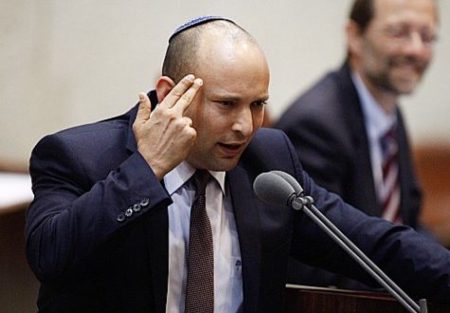
IMEMC & Agencies – December 3, 2019
Israeli Minister of Defense, Naftali Bennett, on Tuesday, issued a written order imposing international economic sanctions on Palestinian militants abroad, The Palestinian News and Info Agency reported.
Hebrew media outlets broadcast Bennett’s decision, pointing out that this move has never been attempted before.
Bennett issued his first order against Jamil Hersh, a member of the Arab Society for Human Rights in London, members of Lebanon’s Hezbollah party will also be sanctioned.
Hezbollah: US major obstacle to government formation in Lebanon
Press TV – November 22, 2019
Hezbollah calls the US the most prominent obstacle lying in the way of formation of a government in Lebanon, which is direly in need of political stability.
The Lebanese resistance movement’s Deputy Secretary-General Sheikh Naim Qassem made the remarks in an interview with Reuters on Friday.
“The first obstruction in the formation of the government is America, because it wants a government that resembles it and we want a government that resembles the Lebanese people,” he said.
US officials had been in direct contact with Lebanese politicians and officials, the official noted, saying, “Let them leave us alone so we can reach an understanding among ourselves. The more they intervene the more they delay the solution.”
The country — where coexistence of various religious sects has turned unity into the leading means of preventing internal strife — would not be rid of its ongoing economic and political woes unless foreign vested interests stopped tugging away at it, Qassem said.
Prime Minister Sa’ad Hariri resigned in late October amid nationwide protests against corruption and economic adversity that had begun earlier that month.
On Tuesday, protesters blocked roads leading to the parliament in the capital Beirut, forcing the legislature to postpone what was supposed to be its first session in two months. Heavy clashes were reported later that day between security forces and a group of protesters attempting to make their way into the parliament.
Cornering and Strangulating Iran Has Backfired on Israel
By Alastair Crooke | Strategic Culture Foundation | November 11, 2019
What happens if the two premises on which Israel and America’s grand Iran strategy is founded are proven false? ‘What if’ maximum pressure fails either to implode the Iranian state politically, nor brings Iran to its knees, begging for a new ‘hairshirt’ nuclear deal? Well …? Well, it seems that Netanyahu and Mossad were so cocksure of their initial premise, that they neglected to think beyond first move on the chess board. It was to be checkmate in one. And this neglect is the cause of the strategic bind in which Israel now finds itself.
Lately, these lacunae in strategic thinking are being noticed. Iran is doing just fine, writes Henry Rome in Foreign Affairs:
“Some analysts predicted that Iran’s friends in Europe and Asia would defy the United States to lend Iran economic help. Others reckoned that the sanctions would send Iran’s economy into a “death spiral,” leaving Tehran the choice to either surrender or collapse. Neither of these predictions came to pass.
“Rather, Iran now enters its second year under maximum pressure strikingly confident in its economic stability and regional position. Supreme Leader Ali Khamenei and other hard-liners are therefore likely to continue on their current course: Iran will go on tormenting the oil market, while bolstering its non-oil economy—and it will continue expanding its nuclear program while refusing to talk with Washington.”
Similarly, the (US) Crisis Group reports that on the eve of the US oil sanctions snapback in November 2018, Secretary Pompeo was asked if Iran might restart its nuclear program. He responded: “we’re confident that the Iranians will not make that decision”. But, Iran did just that: In April 2019 – after the US revoked the sanction waivers that had previously allowed eight countries to import Iranian oil – the Iranian leadership started pushing back.
They are still doing it. “Iran’s responses on the nuclear and regional fronts call into question the core premises of the U.S. “maximum pressure” campaign … Tehran [effectively] has broken the binary outcome of concession or collapse by instead adopting what it touts as “maximum resistance”. As a result … there can be little doubt that the [US] strategy has fallen short, delivering impact without effect and rather than blunting Iran’s capabilities only sharpening its willingness to step up its [push-back]”, the Crisis Group report concludes.
So here we are: Iran’s “fourth step” in its incremental lessening of compliance with the JCPOA (injecting nuclear gas into the – hitherto empty – centrifuges at Fordo; augmenting enrichment to 5% and unveiling substantially improved centrifuges), effectively tests the very core to the Obama JCPOA strategy.
The Accord was built around a framework that meant Iran would remain at least 12 months away from break-out capacity (the moment when a state can transition into a nuclear weapons’ state). Iran – in these de-compliance steps is inching under that limit, if it is not already under it. (This does not, however, imply that Iran is seeking weapons, but rather that it is seeking a change in western behaviour.)
Yes, Israel – which pushed hard its assessment (albeit, onto a Trump team wholly receptive to this Israeli analysis) of an Iran entering into a death-spiral within one year, under Trump’s maximum pressure – can plead reasonably that its grand strategy was struck by two ‘black swans’. The double ‘punch’ quite evidently has knocked Israel – it is now all at sixes and sevens.
One was the 14 September strikes on the two Aramco plants in Saudi Arabia (claimed by the Houthis), but demonstrating a level of sophistication which Israelis explicitly admit took them wholly by surprise. And the second was the accumulated evidence that the US is in the process of quitting the Middle East. Again, Israel – or at least Netanyahu – never believed this could happen under Trump’s ‘watch’. Indeed, he had built a political platform on his claim of intimate rapport with the US President. Indeed, that did seem at the time to be perfectly true.
Israeli historian, Gilad Atzmon observes, “it now seems totally unrealistic to expect America to act militarily against Iran on behalf of Israel. Trump’s always unpredictable actions have convinced the Israeli defense establishment that the country has been left alone to deal with the Iranian threat. The American administration is only willing to act against Iran through sanctions”.
And the former Israeli Ambassador to Washington put the consequences yet more bluntly under the rubric of The Coming Middle East Conflagration: “Israel is bracing itself for war with Iranian proxies … But what will the United States do if conflict comes?” — by this Oren implies the US might do little, or nothing.
Yes. This is precisely the dilemma to which the Israeli policy of demonising Iran, and instigating ‘the world’ against Iran, has brought Israel. Israeli officials and commentators now see war as inevitable (see here and here) – and they are not happy.
War is not inevitable. It would not be inevitable if Trump could put aside his Art of the Deal pride, and contemplated a remedy of de-escalating sanctions – especially oil export sanctions – on Iran. But he has not done that. After a quick (and wholly unrealistic) ‘fling’ at having a reality-TV photo-op with President Rouhani, his Administration has doubled down by imposing further, new sanctions on Iran. (Friends might try to tell their American counterparts that it is well time they got over the 1979 Tehran Embassy siege.)
And war is not inevitable if Israel could assimilate the reality that the Middle East is in profound flux – and that Israel no longer enjoys the freedom to strike wherever, and whomsoever it choses, at will (and at no cost to itself). Those days are not wholly gone, but they are a rapidly diminishing asset.
Will Israel shift posture? It seems not. In the context of the Lebanon protests, the local banks are becoming vulnerable, as capital inflows and remittances dry up. Israeli, plus some American officials, are favouring withholding external financial assistance to the banks – thus making the banking system’s survival contingent on any new government agreeing to contain and disarm Hizbullah (something which, incidentally, no Lebanese government, of whatever ‘colour’, can do).
That is to say, US and Israeli policy is that of pushing Lebanon to the brink of financial collapse in order to leverage a blow at Iran. Never mind that it will be the demonstrators – and not Hizbullah – who will pay the heaviest price for pushing the crisis to the brink – in terms of a devalued pound, rising prices and austerity. (Hizbullah, in any case, exited the Lebanese banking system, long time past).
Iran, on the other hand, faced with maximum pressure, has little choice: It will not succumb to slow-strangulation by the US. Its riposte of calibrated counter-pressure to US max-pressure, however, does entail risks: It is predicated on the judgement that Trump does not want a major regional war (especially in the lead up to US elections), and also predicated (though less certainly) on the US President’s ability to avoid being cornered by his hawks into taking responsive military action (i.e. were another US drone to be shot down).
So, what do all these various geo-political ‘tea-leaves’ portend? Well, look at Lebanon and Iraq through the geo-political spectacles of Iran: On the one hand, it is well understood in Tehran that there is justified, deep popular anger in these states towards corruption, the iron sectarian structures and hopeless governance — but that is only one part of the story. The other is the long-standing geo-strategic war that is being waged against Iran.
Maximum pressure has not produced a chastened, and repentant Iran? So, now Iranians see the US and Israel resorting to ‘Euromaidan warfare’ (Ukrainian protests of 2013) against Iran’s Lebanese and Iraqi allies. (It was, after all, during President Aoun’s visit to Washington in March, that Trump first warned Aoun of what was coming – and presented his ultimatum: Contain Hezbollah, or expect unprecedented consequences, including sanctions and the loss of US aid).
Fresh sanctions, plus an Euromaidan-type assault on Iranian allies (Hizballah and Hash’d A-Shaabi)? Might we then expect another ‘Gulf surprise’ – in coming weeks?
This tit-for-tat of pressure and counter-pressure is set to continue — Michael Oren, the former Israeli Ambassador to the US, lays it out:
“The conflagration, like so many in the Middle East, could be ignited by a single spark. Israeli fighter jets have already conducted hundreds of bombing raids against Iranian targets in Lebanon, Syria, and Iraq. Preferring to deter rather than embarrass Tehran, Israel rarely comments on such actions. But perhaps Israel miscalculates, hitting a particularly sensitive target; or perhaps politicians cannot resist taking credit. The result could be a counterstrike by Iran, using cruise missiles that penetrate Israel’s air defenses and smash into targets like the Kiryah, Tel Aviv’s equivalent of the Pentagon. Israel would retaliate massively against Hezbollah’s headquarters in Beirut as well as dozens of its emplacements along the Lebanese border. And then, after a day of large-scale exchanges, the real war would begin.
“Rockets, many carrying tons of TNT, would rain on Israel; drones armed with payloads would crash into crucial facilities, military and civilian. During the Second Lebanon War, in 2006, the rate of such fire reached between 200 and 300 projectiles a day. Today, it might reach as high as 4,000. The majority of the weapons in Hezbollah’s arsenal are standoff missiles with fixed trajectories that can be tracked and intercepted by Israel’s Iron Dome system. But Iron Dome is 90 percent effective on average, meaning that for every 100 rockets, 10 get through, and the seven operational batteries are incapable of covering the entire country. All of Israel, from Metulla in the north to the southern port city of Eilat, would be in range of enemy fire.”
Of course, the claim that Israeli air defences are 90% effective is ‘for the birds’ (Israeli officials would not be in such a panic if it were true). But Oren sets out the course to a region-wide war plainly enough. This is the end to which their Iran strategy has brought them.
And just to recall, this strategy was always a ‘strategy of choice’ – taken for domestic political purposes. Israel’s demonization of Iran did not begin with the Iranian Revolution. Israel initially had good relations with the revolutionary republic. The relationship transformed because an incoming Israeli Labour government needed it to transform: It wanted to upend the earlier political consensus, and to make peace with the ‘near enemy’ (i.e. its Arab neighbours). But Israel then required a ‘new’ villain threatening ‘plucky little Israel’ to keep unstinting US Congressional support coming through: Iran became that villain. And then, subsequently, Netanyahu made his twenty-year career out of the Iranian (nuclear) bogeyman.
Reaping what a long-term strategy of threats and incitement sows …? In one of the most detailed assessments of Iran’s strategy and doctrine across Lebanon, Syria, Iraq and Yemen, the International Institute for Strategic Studies (IISS) concludes that Iran’s “third party capability” has become Tehran’s weapon of choice: “Iran now has an effective military advantage over the US and its allies in the Middle East, because of its ability to wage war using third parties such as Shia militias and insurgents”, the report concludes. It has the military edge? Well, well …
And doesn’t this fact help explain what is happening in Iraq and Lebanon today?
The ‘War’ for the Future of Middle East
By Alastair Crooke | Strategic Culture Foundation | November 4, 2019
Oh, oh, here we are again! In 1967, it was then the ‘threat’ of the standing Arab Armies (and the ensuing six-day war on Egypt and Syria); in 1980, it was Iran (and the ensuing Iraqi war on Iran); in 1996, it was David Wurmser with his Coping with Crumbling States (flowing on from the infamous Clean Break policy strategy paper) which at that time targeted secular-Arab nationalist states, excoriated both as “crumbling relics of the ‘evil’ USSR” and inherently hostile to Israel, too; and in the 2003 and 2006 wars, it was Saddam Hussein firstly; and then Hezbollah that threatened the safety of the West’s civilizational ‘outpost’ in the Middle East.
And here we are once more, Israel cannot safely ‘live’ in a region containing a militant Hezbollah.
Not surprisingly, the Russian Ambassador in Beirut, Alexander Zasypkin, quickly recognized this all too familiar pattern: Speaking with al-Akhbar on 9 October in Beirut (more than a week before the protests in Beirut erupted), the Ambassador dismissed the prospect of any easing of regional tensions; but rather identified the economic crisis that has been building for years in Lebanon as the ‘peg’ on which the US and its allies might sow chaos in Lebanon (and in Iraq’s parallel economic calamity), to strike at Hezbollah and the Hash’d A-Sha’abi — Israel’s and America’s adversaries in the region.
Why now? Because what happened to Aramco on 14 September has shocked both Israel and America: the former Commander of the Israeli Air Force wrote recently, “recent events are forcing Israel to recalculate its path as it navigates events. The technological abilities of Iran and its various proxies has reached a level at which they can now alter the balance of power around the world”. Not only could neither state identify the modus operandi to the strikes (even now); but worse, neither had any answer to the technological feat the strikes plainly represented. In fact, the lack of any available ‘answer’ prompted one leading western defense analyst to suggest that Saudi should buy Russian Pantsir missiles rather than American air defenses.
And worse. For Israel, the Aramco shock arrived precisely at the moment that the US began its withdrawal of its ‘comfort security blanket’ from the region – leaving Israel (and Gulf States) on their own – and now vulnerable to technology they never expected their adversaries to possess. Israelis – and particularly its PM – though always conscious to the hypothetical possibility, never thought withdrawal actually would happen, and never during the term of the Trump Administration.
This has left Israel completely knocked, and at sixes-and sevens. It has turned strategy on its head, with the former Israeli Air Force Commander (mentioned above) speculating on Israel’s uncomfortable options – going forward – and even postulating whether Israel now needed to open a channel to Iran. This latter option, of course, would be culturally abhorrent to most Israelis. They would prefer a bold, out-of-the-blue, Israeli paradigm ‘game-changer’ (i.e. such as happened in 1967) to any outreach to Iran. This is the real danger.
It is unlikely that the stirring of protests in Lebanon and Iraq are somehow a direct response to the above: but rather, more likely, they lie with old plans (including the recently leaked strategy paper for countering Iran, presented by MbS to the White House), and with the regular strategic meetings held between Mossad and the US National Security Council, under the chairmanship of John Bolton.
Whatever the specific parentage, the ‘playbook’ is quite familiar: spark a popular ‘democratic’ dissent (based on genuine grievances); craft messaging and a press campaign that polarizes the population, and which turns their anger away from generalized discontent towards targeting specific enemies (in this case Hezbollah, President Aoun and FM Gebran Bassil (whose sympathies with Hezbollah and President Assad make him a prime target, especially as heir-apparent to the leadership of the majority of Christians). The aim – as always – is to drive a wedge between Hezbollah and the Army, and between Hezbollah and the Lebanese people.
It began when, during his meeting with President Aoun in March 2019, US Secretary of State, Mike Pompeo reportedly presented an ultimatum: Contain Hezbollah or expect unprecedented consequences, including sanctions and the loss of US aid. Leaked reports suggest that Pompeo subsequently brought ally, PM Hariri into the picture of the planned disturbances when Hariri and his wife hosted Secretary Pompeo and his wife for a lunch banquet at Hariri’s ranch near Washington at the end of the Lebanese premier’s August visit to the US.
As the Lebanese demonstrations began, reports of an ‘operations room’ in Beirut managing and analyzing the protests, and of large scale funding by Gulf states proliferated; but for reasons that are not clear, the protests faltered. The Army which originally stood curiously aloof, finally engaged in clearing the streets, and returning some semblance of normality – and the Central Bank governor’s strangely alarmist forecasts of imminent financial collapse were countered by other financial experts presenting a less frightening picture.
It seems that neither in Lebanon or in Iraq will US objectives finally be achieved (i.e. Hizbullah and Hash’d A-Sha’abi emasculated). In Iraq, this may be a less certain outcome however, and the potential risks the US is running in fomenting chaos much greater, should Iraq slip into anarchy. The loss of Iraq’s 5 million barrels/day of crude would crater the market for crude – and in these economically febrile times, this might be enough to tip the global economy into recession.
But that would be ‘small beer’ compared to the risk that the US is running in tempting ‘The Fates’ over a regional war that reaches Israel.
But is there a wider message connecting these Middle East protests with those erupting across Latin America? One analyst has coined the term for this era, as an Age of Anger disgorging from “serial geysers” of discontent across the globe from Ecuador to Chile to Egypt. His theme is that neoliberalism is everywhere – literally – burning.
We have noted before, how the US sought to leverage the unique consequences arising from two World Wars, and the debt burden that they bequeathed, to award itself dollar hegemony, as well the truly exceptional ability to issue fiat credit across the globe at no cost to the US (the US simply ‘printed’ its fiat credit). US financial institutions could splurge credit around the world, at virtually no cost – and live off the rent which those investments returned. But ultimately that came at a price: The limitation – to being the global rentier – has become evident through disparities of wealth, and through the incremental impoverishment of the American middle classes that the concomitant off-shoring brought about. Well-paid jobs evaporated, even as America’s financialised banking balance sheet ballooned across the globe.
But there was perhaps another aspect to this present Age of Anger. It is TINA: ‘There is no alternative’. Not because of an absence of potentiality – but because alternatives were crushed. At the end of two World Wars, there was an understanding of the need for a different way-of-being; an end to the earlier era of servitude; a new society; a new social contract. But it was short-lived.
And – long story, short – that post-war longing for ‘fairness’ (whatever that meant) has been squeezed dry; ‘other politics or economics’ of whatever colour, has been derided as ‘fake news’ – and in the wake of the 2008 great financial crisis, all sorts of safety-nets were sacrificed, and private wealth ‘appropriated’ for the purpose of the re-building of bank balance sheets, preserving the integrity of debt, and for keeping interest rates low. People became ‘individuals’ – on their own – to sort out their own austerity. Is it then, that people now are feeling both impoverished materially by that austerity, and impoverished humanly by their new era servitude?
The Middle East may pass through today’s present crises (or not), but be aware that, in their despair in Latin America, the ‘there is no alternative’ meme is becoming reason for protestors ‘to burn the system down’. That is what happens when alternatives are foreclosed (albeit in the interests of preserving ‘us’ from system collapse).
Trump Freezes Lebanon Military Aid After Israel Voiced Concerns
By Tyler Durden – Zero Hedge – 11/02/2019
Amid recent statements by both Iranian and Hezbollah leaders accusing the United States of hijacking the massive anti-corruption protests which have gridlocked Lebanon for over the past two weeks, the White House has made the dramatic and unexpected move of freezing US military aid to the Lebanese Army.
The money, part of a military aid package totaling $105 million, had been approved by Congress and the State Department, and requested by the Pentagon. Interestingly, proponents of the package argued that it would allow the Lebanese Army to grow more independent, making it less cooperative with Hezbollah.
According to Reuters the aid was frozen two days following Tuesday’s resignation of Lebanese Prime Minister Saad al-Hariri, who in a parting speech admitted he’d “reached a dead end” amid the protests which have reportedly involved one million people, or up to 25% of Lebanon’s total population, and further called on “all Lebanese to protect civil peace”.
The United States, said the report, has frequently voiced “concern over the growing role in the Beirut government of Hezbollah, the armed Shi’ite group backed by Iran and listed as a terrorist organization by the United States.”
Secretary of State Mike Pompeo this week called on Beirut to take steps for a new unified government which focused on rooting out endemic corruption.
Though no specific reason was given as to why the White House has targeted Lebanon for an aid freeze, Trump has lately signaled his disdain for the amount of foreign aid Washington hands out around the world, seemingly with no strings attached.
On Friday, an Israeli media report revealed that officials in Tel Aviv had lobbied the White House to condition any US Lebanese aid based on the country removing advanced arms in possession of Hezbollah — something it should be noted that Lebanon’s national forces are likely incapable of, given the Shia paramilitary organization is actually considered stronger.
The Foreign Ministry ordered Israeli diplomats “in all relevant countries,” including the US and European states, to emphasize the need to cease providing aid to Lebanon as long as the Iran-backed Hezbollah terror organization does not cease upgrading its military capabilities that could target Israel, the official added. — Times of Israel
“In discreet talks with various capitals, we made it clear that any aid meant to guarantee the stability of Lebanon needs to be conditioned on Lebanon dealing with Hezbollah’s precision-guided missiles,” a senior official told The Times of Israel. “Anything short of that will be problematic, in our eyes.”
This could mark a big first step in Trump cutting of aid to ‘dysfunctional’ governments and/or governments made up of elements which are hostile to the United States, as is the case with the designated group Hezbollah.
Hezbollah’s Unchartered Frontier
By Ghassan Kadi | The Saker Blog | October 31, 2019
Following the Israeli invasion of Lebanon in June 1982, Lebanon looked like it had totally lost its independence and ability of self-determination. Later on, and with Israeli boots still on Lebanese ground, the Lebanese government was coerced to reach the 17th of May (1983) peace accord with Israel; and which was in reality tantamount to terms of surrender.
By then, the underground resistance, known back then as “The Lebanese Resistance”, was launched, and it was already causing much concern for the Israeli occupiers. As for the 17th of May accord, the then Lebanese President, Amin Gemayel, found himself between a rock and a hard place; supporters of the accord and those against. And even though back then the supporters were a political and military majority, Gemayel did not want to be remembered in the books of history as the President who surrendered to Israel, and refused to ratify the accord.
What happened afterwards is now history. The resistance gained momentum, and with all the might of the Israeli army and the large number of local Lebanese militia that collaborated with it, Israel had to leave Lebanon defeated in April 2000.
This epic victory couldn’t have happened without two men; President Hafez Assad and Hassan Nasrallah.
Hezbollah was a small organization back in 1982 and Nasrallah was not the founding leader. He became the leader after founding leader Abbas Al-Musawi was killed by Israel in 1992. Nasrallah has been the leader ever since, and has managed to evade many would-be assassination attempts and many disasters that would undermine the sovereignty and integrity of not only Lebanon, but also Syria.
This is not meant to be a historical narrative. The stops I shall make are meant to be those pertinent to the standing of Hezbollah and how it is perceived by the Lebanese community.
Hezbollah has had thus far three major victories. The first was the afore-mentioned victory over Israel in 2000 when the Israeli army was made to retreat from Lebanon unconditionally. Never before had Israel ever left occupied Arab land unconditionally. This is not to mention that southern Lebanon is rich in water, something Israel lacks and is in dire need for. The defeat was so humiliating that Israel had to save face, calling it a “tactical withdrawal”.
The second victory came in July 2006 when the Israeli incursion and massive bombing of Lebanon did not result in any Israeli gains and Israel again withdrew from Lebanon under heavy casualties; including marine casualties.
The third victory was in Syria where Hezbollah played a huge role in staving off the attack on its Syrian ally.
For any Lebanese or Arab to even attempt to take away from Hezbollah its achievements is tantamount to national treason; and I cannot make this statement more vehemently.
With the Arab World divided on lines based on foundations essentially that of capitulation and accepting the American/Israeli roadmap, and that of the opposite dipole of independent decision-making, it is not a surprise therefore that Hezbollah has been gaining momentum in the hearts and minds of Arabs of the so-called resistance axis.
In my previous article, I predicted that the current widely popular uprising in Lebanon can eventually be diverted by the enemies of Hezbollah in order to transform the anger against corruption into anger against the political ally of the government; ie Hezbollah. In a matter of a few days since, this prediction is taking form. There has been increasing criticism of Hezbollah for allegedly turning a blind eye to the burgeoning state of corruption in the government.
Nasrallah addressed the issue recently in a televised speech. His words however fell short of generating a sense of satisfaction in the protesters, even from many protagonists of the axis of resistance. Deep down inside, even many of the staunchest supporters of Hezbollah believe that it has seriously overlooked the consequences of its silence in regards to the three years of extreme corruption of the Aoun tenure.
Cartoons showing president Aoun on his presidential chair with Nasrallah as his shadow are circulating on social media. There are rallies in heartlands of Hezbollah, expressing utter dis-satisfaction with the government. A close friend of mine who wishes not to be named told me that “Nasrallah should understand that protecting the integrity of a country is not restricted to guarding its borders against invaders, but also guarding its economy and domestic wellbeing”. He added that ”… even though Nasrallah was exemplary in protecting Lebanon’s state borders from Israel, he allowed for the economic borders, the infra-structure borders and the public services borders of Lebanon to be breached and looted dry from within by his corrupt political allies”.
There are unconfirmed stories alleging that there are $800 Bn worth of looted money banked in Swiss accounts by corrupt Lebanese politicians. If true, this would constitute a massive figure by any standards, let alone that of a country of 4.5 million citizens. What seems to be certain is that the central bank (Banque Du Liban) has only $11-12 Bn out of the $120 Bn that local banks have deposited.
The domestic and international enemies of Hezbollah and the axis of resistance are already using everything in their armament to turn the anger of the Lebanese people against Hezbollah. They are digging up skeletons such as a video interview of Nasrallah back in 1982, long before he became Hezbollah chairman, and circulating it on social media, in which Nasrallah says that Hezbollah’s ideology is based on establishing a Muslim state in Lebanon, adjunct to Iran. And, even though Nasrallah has made many statements later on that emphasize the importance of plurality and unity of Lebanon, that dated video is the one stealing the show right now.
At this juncture, it must be stated that even most of the staunchest supporters of the axis of resistance do not want for Lebanon to become a religious state by any definition.
In more ways than one, Hezbollah, and Nasrallah in particular, have taken on board too many agendas to juggle; that of an anti-Israel resistance spearhead, a political power in Lebanon, and according to many, a Shiite religious agenda, or at least a commitment to empower the minority Shiite sector of Lebanon.
The truth of the matter is that any two of the above three are incompatible with each other, let alone all three, and for as long as Hezbollah seemingly clings to all of them, it is creating the Achilles Heel that can lead to its own undoing.
Unlike the IRA, Hezbollah does not have a separate political wing. And unlike Gerry Adams who represented Sinn Fein, Nasrallah represents both, the military as well as the political side of Hezbollah; and also the religious. He therefore has put himself in a situation in which he cannot distance himself from any actions and/or decisions that can or may backfire.
Politics is a dirty quagmire, and Lebanese politics in particular is dirtier than most, if not the dirtiest. If Hezbollah wanted to remain above it and with the sole objective to protect Lebanon’s southern borders, being involved in politics was not essential for its survival.
By entering the world of politics, Hezbollah had to play by the rules of the Lebanese ruling Mafia. And even though Nasrallah said on many occasions that the military might of Hezbollah will only be used against Israel, in reality it isn’t and wasn’t. To begin with, there is a haunting and daunting feeling within Lebanon that Hezbollah will forcefully crush any potential move to disarm it. Secondly, when the political opposition threatened to control the streets in May 2007, Hezbollah made a pre-emptive move. This was not a wise decision, even though it was followed by an almost immediate surrender of its positions to the Lebanese Army. In the minds of many Lebanese, this remains till now, a dark point in the history of Hezbollah; one that is replayed and replayed to remind people of how determined Hezbollah can be if challenged. As mentioned in the previous article, after this event, Hezbollah irreversibly lost a huge chunk of its Sunni support base.
It can be argued that the amazing military victories Hezbollah scored made it complacent, even perhaps too self-assured. But this again has been another unwise move. Unless a popular resistance force does all it can to maintain its popularity and grass-roots support, it can easily fall into a state of rot, leading to its own demise.
Hezbollah has many lethal domestic and international enemies that failed to defeat it militarily, and now they are trying different ways to crack its spine.
Leading up to this, Hezbollah managed to establish an iron-curtain in regard to its modus operandi. Nasrallah is rarely seen in public, and when he appears in public, his appearance is never pre-announced. All security measures are always taken to guarantee his safety, and even the “army” units themselves are invisible, even during war; and this was what drove the invading Israelis up the wall fighting an “invisible enemy”.
Yet with all of those precautions, Hezbollah entered the domain of Lebanese politics from the most vulnerable vantage point.
At this juncture again, with the Lebanese Government facing a most uncertain future, and likely to end up in chaos, perhaps even anarchy, or at the most hopeful scenario, holding thieving politicians accountable and having their loot confiscated, Hezbollah needs to have a second take at its political venture in Lebanon and decide to go totally underground. If it doesn’t, it may find itself facing a battle it is not prepared to fight; one that it can easily lose.
Two weeks into the uprising, and apart from the resignation of PM Hariri, there are no signs of any relenting on President Aoun’s side. The street protests are escalating despite purported thuggish attempts to stifle them. This uprising is in fact Lebanon’s revolution of the silent majority, the majority that did not partake in the 1975-1989 civil war and all conflicts thereafter. Its ranks seem to have already been penetrated by various domestic, regional and international parties with vested interests as some claim. There are many rumours floating around; rumours of the Lebanese American Embassy recruiting people with little or no experience and no clear job qualifications, rumours of Soros investing $600 m in the uprising, rumours of $150 as a daily stipend for every demonstrator, and the truth is that no one knows if any of such rumours or others are accurate.
There are even rumours and photos circulating on social media of alleged Hezbollah members bashing and terrorizing peaceful demonstrators. Whatever the facts, such images are causing untold damage to the stand, popularity and integrity of Hezbollah.
There is a legitimate reason for the Lebanese to rise up against their government, and irrespective of the final outcome, the silent majority has finally spoken, and Hezbollah must find its way to regain its support base if it wants to survive this ordeal.
And to survive it, the leadership of Hezbollah ought to go back to the rationale behind its own raison d’être as a resistance force. Popular resistance is one of people against an oppressor. Currently, the majority of Lebanese people see their politicians as their oppressors. They are not currently looking beyond their southern borders, nor looking at the potential danger of Israeli aggression. They are worried about survival. They are demanding an end to the thieving of politicians and the restoration of services like water, electricity and fuel. They want their dignity and financial security back, and alarmingly they are increasingly seeing Hezbollah as a part of their problem; not the solution.
In Lebanon, sectarian measures are always used to gauge political opinion, and in this respect, Hezbollah has reached wide popularity among all Muslims with nearly all Shiites and perhaps up to 70-80% of Sunnis supporting it especially after the outcomes of the July 2006 war with Israel. At that time, perhaps at least 50% of Lebanese Christians supported it too. After the events of May 2007, the Shiite support remained unwavering, but the Sunni support slumped to something like 50% with some decrease in popularity among Christian Lebanese. The recent corruption of the Aoun government coupled with the street uprising has enhanced the percentage of the anti-Hezbollah sentiment among Sunnis and Christians, and for the first time ever, street action has shown anger against Hezbollah even in Shiite areas. All up, and based on an educated guess only, from a national support based of at least 65-70% back in 2006, the tally has seemingly now dropped to 40-45%. This is a serious development and Hezbollah leadership ought to be aware of it.
In hindsight, Hezbollah should not have taken any political role in Lebanon. Rather, it should have stayed totally as an underground movement and force. After all, the political cover did not give it any “protection”. It was its own military might that guaranteed its survival on the ground in Lebanon. Perhaps it is time for Hezbollah to retrace its past steps, be humble enough to accept that it has made mistakes, put the euphoria of military victories aside for a moment and learn from the serious political mistakes it has committed.
This is an unchartered frontier for Hezbollah; a battle that it might not have either trained or prepared itself for. It may turn out to be its ultimate challenge.
Featured Video

“Historic Russia”: The Land Putin Will Not Give Back
or go to
Aletho News Archives – Video-Images
From the Archive
How Ukraine Tortured and Slaughtered Donbass
By Kit Klarenberg | Al Mayadeen | July 11, 2024
Almost immediately after the proxy war erupted, ISIS-tier footage of the torture and murder of Russians in Ukrainian custody emerged.
On July 6th, the New York Times published an astonishing investigation: In Ukraine, Killings of Surrendering Russians Divide an American-Led Unit. The article documents in grim detail how Chosen Company, an international volunteer battalion for Kiev, routinely executes Russian prisoners of war. It is the very first mainstream admission that this practice – a brazen breach of the Geneva Conventions, and a grave war crime – is widespread among Ukraine’s fighters, both foreign and homegrown. … continue
Blog Roll
 Aletho News
- Burnham tackles Britain’s poverty with aggression in Yemen
- Peace in Ukraine: the easy way – or the hard way
- Trump & the Rrrrussians
- US taxpayer money laundered back through Ukraine – Musk
- Before COVID, an NIH lab chief proposed making a SARS-like bat virus more infectious
- Gates, Bourla on Trial in Netherlands Accused of ‘Great Reset’ Scheme at Vaccine Injury Hearing
- BRITAIN’S WARNING: PREPARE FOR WAR
- “Historic Russia”: The Land Putin Will Not Give Back
- How the Cambridge Analytica scandal still haunts Mark Zuckerberg
- The Ongoing Cancellation Campaign Against a Dissenting Academic in Norway
- If Americans Knew
- An error has occurred; the feed is probably down. Try again later.
- No Tricks Zone
- Two New Studies Find Thwaites Glacier Melt Cannot Be Driven By Human Activity Or A Warming Ocean
- E-Cars Reduce CO2 Emissions By Only 41% Compared To Internal Combustion Engine Vehicles
- Predictions Made By Renowned Climate Professor Over Past Decades Have Been Proven To Be Poor
- New Study Suggests Large Regions Of The Pacific Ocean Have Been Cooling For The Last 80 Years
- Germany’s Green Energy Debacle: High Energy Costs Force Kahla Porzellan to Close After 182 Years!
- New Study: 50 Years Of The Most Aggressive ‘Net Zero’ Policies Can Only Affect The Global Climate By 0.03°C
- US September “Heat” Was No Record…Many Records Set Decades Ago
- Latest European Green Energy Debacle; Portugal’s Largest Flagship Solar Park Insolvent!
- Green Energy Debacle: German Expert Professor Fritz Vahrenholt Warns Of Severe Economic And Social Consequences
- Two More Paleo Reconstructions Affirm Meters-Higher Sea Levels Across Ireland, Brazil 7000-6000 Years Ago

