Hariri Says to Remain Lebanon PM: I Will Keep What Happened in KSA to Myself
Al-Manar | November 28, 2017
Lebanese Premier, Saad Hariri said on Monday he wants to remain Lebanon’s PM, preferring to keep what happened in Saudi Arabia, where he was believed to be held there against his will, to himself.
In an interview with French TV channel CNews, Hariri downplayed talk of his resignation, which he announced from Riyadh, saying that he was “always” the prime minister.
“I want to remain the prime minister of Lebanon and what happened in Saudi Arabia, I will keep to myself,” he said.
“It’s in the interest of Lebanon and other countries for Lebanon to remain stable,” Hariri said.
Asked multiple times whether his decision to announce his resignation in Riyadh was forced, Hariri sidetracked multiple times.
It is believed that Hariri was forced by the Saudi regime to announce his resignation in a bid to topple the Lebanese government. The move was seen by many observers as an attempt aimed against Hezbollah, which is a major partner in the Lebanese government.
Hariri returned to Lebanon in November 21, after President Michel Aoun launched a diplomatic campaign, led by Foreign Minister Gebran Bassil, in which the president voiced rejection of any interference in Lebanese affairs.
Meanwhile on Monday, Hariri said he would resign from his post if Hezbollah refuses to accept changes to the current status quo, in remarks seen as an attempt to cover up ambiguity which surrounded his previously announced resignation.
“Hezbollah intervened in all Arab countries and [my] resignation sent a positive shock,” Hariri said.
“I am waiting for neutrality in the government and inside Lebanon – not just saying one thing and doing something else,” he added.
However, the Lebanese PM noted that Hezbollah is a regional issue that can’t be solved in Lebanon, but rather through a regional settlement.
Why Saudi Public Relations Are So Disastrous
By Finian CUNNINGHAM | Strategic Culture Foundation | 27.11.2017
What a disastrous past week it’s been for Saudi Arabia’s international public relations. It’s hard to imagine how it could possibly become more ignominious or cringe making for the House of Saud.
But of course, how could it be otherwise? When the oil-rich kingdom is run by a father-and-son clique, cosseted by venal super-wealth, and ruled by patronage, pampered by cowering flunkies. In addition, obsessed with an obscurantist Wahhabi sectarian hatred, and to cap it all, indulged by an ignorant American president who himself shares dynastic family ambitions.
Last week’s roll call of PR disasters included the Syrian peace process getting underway in earnest, in spite of Saudi efforts to derail. Secondly, Lebanon appears to have stabilized politically with the return of its Prime Minister Saad Hariri, again in spite of Saudi attempts to sabotage the government in Beirut. And thirdly, most shamefully, the shocking images of emaciated children in Yemen have shown the world the sickening reality of the Saudi-led blockade on that war-stricken country.
Let’s start with the tale of two summits. While Russian President Vladimir Putin was last week hosting his Syrian, Iranian and Turkish counterparts in the Black Sea city of Sochi in a major diplomatic boost for a peaceful end to the Syrian war, at the same time the Saudi rulers were convening something lackluster and frankly, irrelevant, by comparison.
The Saudis held a summit in Riyadh for the so-called Syrian “opposition” comprising the discredited political talking heads of sundry terror groups that have ravaged Syria for the past nearly seven years. Disgracefully, the UN envoy Staffan de Mistura was present in a vain bid to lend some ersatz credibility to the terrorist apologists.
Putin, and Iran’s Hassan Rouhani and Turkey’s Recep Tayyip Erdogan joined political forces to push for a comprehensive peace settlement in Syria “determined by the Syrian people alone without external interference”. Whereas at the Saudi conference of has-been Syrian opposition figures, who have been living a charmed life in exile in Saudi Arabia, there were the tired-old, futile calls for Syrian President Bashar al-Assad to quit as leader.
With the Syrian War near over and with Assad’s state forces dominant over the foreign-backed insurgents, no-one can take the demand for Assad to stand down as serious. It’s a pipe-dream that the Saudis still keep puffing on. Not even Washington and its NATO allies bother to make this demand seriously any more.
In a nutshell, the Saudi rulers are seen to be left holding the putrid remnants of their defeated regime-change intrigue in Syria.
Moving on to the debacle over Lebanon. Again, Saudi machinations were seen here to have turned pear-shaped. After nearly two weeks of trying to arm-twist Lebanese premier Saad Hariri to resign and thereby collapse the coalition government in Beirut with Shia group Hezbollah, Hariri returned last week to his country.
In the meantime, Lebanon has rallied across sectarian lines to unite against Saudi interference – the exact opposite of what the Saudi rulers were agitating for. The whole Saudi-inspired attempt to sabotage Lebanese politics and even incite a sectarian war in the country has ended up only strengthening the country and in particular elevating Hezbollah as a defender of the nation’s sovereignty.
The Saudi paymaster had wanted Sunni politician Saad Hariri to resign as prime minister. His resignation was broadcast on Saudi television on November 4 after Hariri had been summoned to Riyadh and where he inexplicably stayed for the next two weeks. According to the Saudi-inspired script, Hariri said his life was in danger from an assassination plot by Hezbollah and its Shia ally Iran. Hezbollah and Iran scoffed at that claim as ridiculous. Lebanese President Michel Aoun, from the Christian constituency, also dismissed Hariri’s sensational claims.
Last week when Hariri returned to Lebanon, he abruptly reversed his resignation decision, saying now that he would remain in the prime minister’s post. The bizarre images of Hariri looking relaxed at a military parade in Beirut marking Lebanon’s independence day last Wednesday were a stupendous rebuttal of Saudi-orchestrated fear-mongering that this was a man whose life was purportedly under threat.
The Saudi reckless attempts at destabilizing Lebanon not only spectacularly backfired. Their interference in the sovereign affairs of Lebanon has earned the Saudis the scorn of Lebanese and Arab people across the entire region.
As if those PR cock-ups weren’t bad enough, then the world was shocked by images out of Yemen showing skeletal children starving to death from the Saudi blockade on the country. Also, caught on the hook of Saudi barbarity were the US and Britain which have been supplying the Saudi regime with weapons and logistics in its nearly three-year war on the poorest nation of the Arab region.
The Saudis imposed a total sea, air and land blockade on Yemen on November 6 following a ballistic missile attack near the Saudi capital by Houthi rebels from Yemeni territory. The Houthis say they are taking the war to Saudi Arabia because of the latter’s aerial bombing campaign which has targeted civilians. For the Saudis to respond by imposing collective punishment through a blockade on vital aid entering into Yemen is a gross violation of humanitarian law – a war crime.
Nearly two weeks of this total blockade provoked the UN and other international aid agencies to issue dire warnings that millions of Yemenis are facing starvation. So bad is the international image of the Saudis that the US State Department was motivated to urge its client regime to relent on the suffering it was inflicting. At the end of last week, the Saudi rulers claimed that they were lifting the blockade on Yemen’s airports and sea ports. The UN and aid agencies still said the dubious Saudi lifting of blockade would not alleviate the suffering.
How could any country preside over such a week of horrible public relations? What is it about the Saudi rulers that make them so incorrigibly incompetent, so barbaric and so self-defeating?
Several factors combine to make the Saudi rulers a perfect shit-storm.
The House of Saud is a family-run crony dynasty. That’s not new. But over the past year or so, the present rulers have consolidated absolute power to a father-and-son clique, headed by ailing King Salman (82) and the precocious 32-year-old Crown Prince Mohammad bin Salman. These scions of intoxicating hyper-wealth live in an ivory tower within an ivory tower.
The Saudi system of governance never had accountability except within its own arcane crony inner-circle. Now it has even less accountability. It’s therefore not hard to imagine how the Saudi rulers are prone to making ever-more foolish foreign policy calculations. The war on Yemen was “masterminded” by the ambitious, insecure Crown Prince trying to prove his mettle, when he probably never had any competence to begin with. The guy probably reads intricate regional politics through the prism of one of his puerile computer games.
Secondly, the Saudi rulers, present and past, are guided by an obsessive sectarian Wahhabi hatred towards Shia Islam. All policy decisions are made out of an irrational abhorrence towards Shia Iran, and any ally of Iran, from Hezbollah to Syria. The reasons for this obsessive hatred are rooted in an obscurantist religious belief that Shia Islam is “heretical”. That antipathy is also fueled by an insecure sense of envy and nemesis that Iran’s relatively progressive politics are more legitimate and appealing to the masses in the Middle East than the feudalist monarchy of the Saudis. In any case, to construct foreign policy relations on the basis of a Medieval-like worldview is inevitably problematic, to say the least, in the 21st Century.
A third reason why the Saudis are so incorrigibly inept is because the rulers are indulged by American and European governments and the Western media. Admittedly, some Western media outlets have belatedly given some coverage to the horror inflicted on Yemen.
Nevertheless, the media coverage is still shamefully muted considering the scale of suffering and crimes perpetrated. We are talking about a genocide unfolding in Yemen imposed by the Saudi rulers with the support of their American and British patrons. Yet in spite of this utter barbarity, Western media remain relatively mute. Contrast the Western media reporting on Yemen with the hysterical coverage they were giving to the Syrian city of Aleppo last year when the Syrian army and Russian forces were moving in to liberate that city from a siege by foreign-backed militants.
Western indulgence of the Saudis – in the form of low-key hypocritical media coverage – emboldens these despots to embark on their reckless and ruinous schemes.
None is more to blame for Western indulgence than the British and American governments who have plied the Saudi regime with billions of dollars-worth of warplanes and bombs over the past three years in the war on Yemen. Despite the evidence of war crimes against civilians, Washington and London maintain the despicable, risible fiction that all is ethical and legal.
Topping the Western indulgence of the Saudi despots is US President Donald Trump and his businessman son-in-law Jared Kushner, who is his unelected “top aide” on Middle Eastern affairs. Every recent PR disaster by the Saudis has been encouraged and approved by Trump who seems to run the White House as if it were a family business dynasty. Both Trump and Kushner are regarded as having very limited knowledge about history and geopolitics. Dumb and Dumber, in short.
Trump’s dispatch of 36-year-old gormless Kushner to delve into Middle East affairs and to pander to the whims of Saudi Crown Prince Mohammad bin Salman is certainly a major factor in why the House of Saud keeps making foreign policy like operating a wrecking ball.
When House of Trump pairs up with House of Saud, no wonder then that it’s a super-sized PR fiasco.
Nasrallah: US did what it could to help Daesh in Syria’s Bukamal
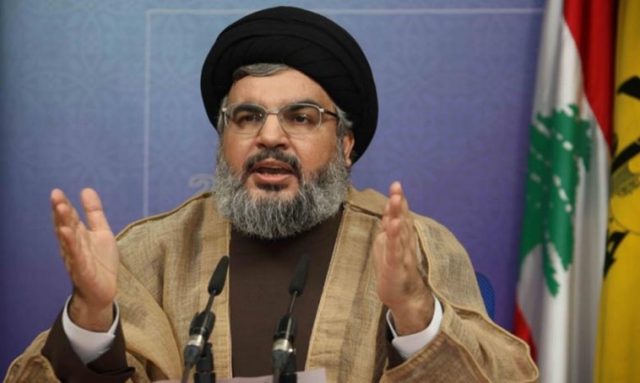
Press TV – November 20, 2017
The secretary general of the Lebanese Hezbollah resistance movement says despite the US claims about fighting terrorism, it spared no effort to help Daesh forces in the Syrian town of al-Bukamal.
Sayyed Hassan Nasrallah made the remarks in a televised address to the Lebanese nation in capital city of Beirut on Monday.
Nasrallah noted that recapturing Bukamal was a major victory over Daesh, because Bukamal was the last Syrian city occupied by Daesh.
“The US helped Daesh as much as it could in Bukamal short of directly engaging forces that fought to liberate the town from Daesh,” the Hezbollah leader noted.
Nasrallah went on to note that the US provided Daesh terrorists with full air cover in Bukamal.
The US sent its drones to Bukamal and provided Daesh with accurate information about what was going on, Nasrallah said, adding that American forces also waged electronic warfare against forces that were fighting to liberate Bukamal.
American forces also provided air transfer for Daesh commanders and facilitated their escape to eastern shores of the Euphrates, he said. The Hezbollah leader stated that even Turkey’s President Recep Tayyip Erdogan slammed the US for helping Daesh.
Nasrallah emphasized that recapturing Bukamal led to unity of Syria and ended Daesh’s self-proclaimed state in the country.
Following recent victories in Iraq and Syria, he added, the military structure of Daesh collapsed in the two countries and Iraqi forces have reached the Syrian border.
Hezbollah leader noted that the victory over Daesh was victory of Islamic values over terrorists’ savagery.
Nasrallah also highlighted the role played by Commander of the Islamic Revolution Guards Corps’ Quds Force Major General Qassem Soleimani in anti-terror operations in both Iraq and Syria.
He noted that Soleimani was commanding anti-Daesh operations in the two countries at the frontline and was never a commander to issue orders from behind the lines.
Elsewhere in his remarks, Nasrallah referred to the latest meeting of the Arab League foreign ministers in Cairo, who designated the Lebanese Hezbollah as a terrorist group, saying that this was not the first time that such accusations were leveled against Hezbollah.
Arab League Secretary General Ahmad Aboul Gheit announced at a press conference in the Egyptian capital of Cairo on Sunday that Arab states had agreed to designate Lebanon’s Hezbollah resistance movement a “terrorist organization.”
The Arab League’s extraordinary general meeting on Sunday was held at the request of Saudi Arabia, which has assumed an aggressive stance against Hezbollah for its alleged links to Iran, Riyadh’s powerful rival in the region. Riyadh associates Hezbollah with Iran and has been trying to weaken the resistance movement, which is Lebanon’s de facto deterrent force against Tel Aviv.
In its concluding resolution, the Arab League announced that Arab foreign ministers, excluding those of Lebanon and Iraq, would hold Hezbollah responsible for supporting “terrorist groups” across the region.
Nasrallah said the Arab League statement has labeled Hezbollah’s council, which is part of the Lebanon’s government, as a terrorist outfit, alleging that it provides missiles to terrorist groups in the region.
He added that accusations about Hezbollah sending missiles to regional countries were false and undocumented, emphasizing that the group has never sent any missiles or even light weapons to Kuwait, Yemen, Iraq or Bahrain or any other country in the region.
The leader of Hezbollah went on to say that the Arab League has warned Lebanon that if Hezbollah is not disarmed, security of the country would be in jeopardy.
Hezbollah rejected the accusation, noting that the main threat to security of Lebanon was the Zionist regime of Israel.
He added that the resistance front’s weapons were the main factor restoring security and stability to Lebanon, because they were used for defensive purposes in the face of the Israeli aggression.
Nasrallah emphasized that Hezbollah’s weapons were used only against terrorist groups such as Daesh and posed no threat to security of Lebanon.
A United Nations Security Council-appointed panel says it has seen no evidence to support Saudi Arabia’s claims that missiles have been transferred to Yemen’s Houthis by external sources.
Nasrallah stated that the main reason behind the recent Arab League meeting was not to discuss the issue of Palestine or other problems facing the Islamic world, but its main reason was the recent missile attack against a Saudi airport near the country’s capital, Riyadh.
Refusing Saudi Arabia and Arab League claims that the missile was provided to Yemeni Ansarullah fighters by Iran or the Lebanese Hezbollah, Nasrallah said Iran or Hezbollah had not sent any missiles to Yemen and Yemeni forces made their own missiles in the country.
He categorically rejected Arab League’s claims in this regard, noting that Saudi Arabia and its allies must admit that they have been defeated by Yemeni forces in their war of aggression against the country.
Nasrallah emphasized that Arab countries must put an immediate end to their support for terror groups, and do not fill the Middle East region with such outfits.
He reiterated that no member of Hezbollah was involved in the November 5 Yemeni missile strike against King Khalid International Airport of Riyadh.
The Hezbollah leader then took the Arab League to task for failing to address Saudi Arabia’s devastating aerial bombardment of the “Arab country of Yemen,” saying, “Saudi Arabia is bombing Yemeni people day and night.”
Strongly denouncing the Riyadh regime over perpetrating outrageous atrocities against millions of “Arab Muslims” in Yemen, Nasrallah lashed out at the Arab world’s “deafening silence” over the grim situation in Yemen.
“The turmoil we are witnessing in the Arab world is a cover for the announcement of normalization of relations with Israel,” he commented.
Nasrallah then called on Arabs to do their best to maintain their national unity in the face of all divisive efforts.
The Hezbollah secretary general also praised Lebanese officials and politicians for their firm stance regarding Prime Minister Saad Hariri’s shock resignation, calling on him to return to Lebanon as soon as possible.
Lebanon has right to resist, foil Israeli plans: Aoun

Lebanese President Michel Aoun
Press TV – November 20, 2017
Lebanese President Michel Aoun says his nation has the absolute “right to resist and foil” Israel’s aggressive plans by “all available means” as Tel Aviv continues “targeting” the Mediterranean country.
President Aoun made the remarks via his official Twitter account on Monday, a day after Arab League Secretary-General Ahmad Aboul Gheit announced at a press conference in the Egyptian capital of Cairo that Arab states had agreed to designate Lebanon’s Hezbollah resistance movement a “terrorist organization.”
Being a member of Lebanon’s coalition government, the popular Hezbollah movement, which currently holds 14 of the 128 seats at the parliament of Lebanon, has been a strong aid to the Lebanese army in thwarting any Israeli aggression against the country. Back in 2000, the resistance movement successfully forced Israel to withdraw from southern Lebanon.
Hezbollah is also playing a major role in fighting against foreign-backed Takfiri terrorist groups, which have been wreaking havoc in neighboring Syria for the last six years.
The Arab League’s extraordinary general meeting on Sunday was held at the request of Saudi Arabia, which has assumed an aggressive stance against Hezbollah for its alleged links to Iran, Riyadh’s powerful rival in the region. Riyadh associates Hezbollah with Iran and has been trying to weaken the resistance movement, which is Lebanon’s de facto deterrent force against Tel Aviv.
In its concluding resolution, the Arab League announced that Arab foreign ministers, excluding those of Lebanon and Iraq, would hold Hezbollah responsible for supporting “terrorist groups” across the region.
Furthermore, it also blamed the Lebanese government for aiding and supporting the resistance group, accusing Beirut of being an accomplice to what Hezbollah is doing.
However, in a separate tweet on Monday, Aoun strongly defended Hezbollah, saying he “cannot accept suggestions that Lebanon’s government is a partner in acts of terrorism.”
Foreign Minister Gebran Bassil says he refused to list Hezbollah as a terror group as it is a “fundamental component of the Lebanese state.”
The accusations leveled by Saudi-dominated Arab League against Hezbollah echoes exactly what Israel alleges against the resistance movement, strongly suggesting Riyadh is trying hard to help the Israeli entity by weakening Hezbollah.
The developments came some two weeks after Lebanese Prime Minister Saad Hariri announced his shock resignation in a televised address aired from the Saudi capital, shortly after he arrived there for a visit, repeating the same accusations against Hezbollah. After resigning, Hariri spent two more weeks in Saudi Arabia amid rumors he was under house arrest there, before traveling to Paris on Saturday.
After meeting with French President Emmanuel Macron, Hariri promised to be in Lebanon in time to mark its independence day on Wednesday. His awkward decision, however, has already plunged the country into political turmoil.
Meanwhile, the Arab League’s head said that Lebanon should be “spared” from spiraling regional tensions after arriving in Beirut to meet with Aoun.
“Arab countries understand and take into account the situation in Lebanon and want to spare it … from any dispute,” said Aboul Gheit.
Hamas slams Arab League for terrorist labeling of Hezbollah
Later on Monday, Palestinian Hamas movement slammed Arab League for labeling Lebanon’s Hezbollah as a terrorist organization.
A statement released by the Gaza-based Hamas said it “rejects the description of the Lebanese Hezbollah resistance movement as terrorist.”
The Palestinian movement added that instead of Hezbollah, Israel’s actions against Palestinians should be labeled “terrorism.”
Hamas also called on Arab states to “support the legitimate struggle of the Palestinian people,” urging them to work together to solve their differences through dialogue.
Lebanon, Palestinian groups rap Arab League for labeling Hezbollah
Press TV – November 20, 2017
The Lebanese government and Palestinian resistance forces have strongly condemned a decision by the Arab League to designate the Hezbollah resistance movement as a terrorist organization.
Lebanon’s Foreign Minister Gebran Bassil said in a statement that he had refused to list Hezbollah as a terror group as it was a “fundamental component of the Lebanese state.”
Arab League Secretary-General Ahmad Aboul Gheit announced at a media conference in Cairo on Sunday that Arab states agreed to designate Hezbollah a terrorist organization, adding that he would not “rule out going to the United Nations Security Council as a next step.”
Lebanon’s representative to the Arab League, Antoine Azzam, rejected the statement, saying Hezbollah represents a large part of the Lebanese people. He said the resistance group has representatives in the Lebanese parliament.
Lebanon abstained from Sunday’s communiqué that labeled Hezbollah as a terror group. Iraq also expressed reservations about the designation.
The details of the resolution were not made public. However, media reports said the only concrete measure from the meeting was for Arab telecommunications satellites to ban Iranian-financed stations for allegedly posing a threat to Arab security.
Palestinian resistance groups also denounced the Arab League’s decision, saying it serves the interests of Israel and the US and aims to satisfy the Saudi regime.
The alliance of the Palestinian resistance forces described the decision as “dangerous”, stressing that “Hezbollah represents the most important resistance force against Israel and terrorism.”
The decision was issued during an emergency Arab League summit, which Saudi Arabia called to discuss “confronting” Iran and Hezbollah.
Riyadh associates Hezbollah with Iran, and has been trying to weaken the resistance movement which is Lebanon’s de facto deterrent force against any Israeli aggression.
Hezbollah, both a military force and a political movement, is part of a Lebanese government made up of rival factions.
The Saudi request for the Arab League meeting “was based on a missile it says its air defenses intercepted near Riyadh after being fired from Yemen on November 4,” according to a document seen by AFP last week.
Saudi Arabia has claimed that the missile had been manufactured in Iran but Tehran has vehemently rejected the allegation.
Hariri Released from Saudi Arabia, Son and Daughter Still in Riyadh
Al-Manar | November 18, 2017
Lebanese PM Saad Hariri arrived in Paris early on Saturday after being held for 13 days in Riyadh by Saudi authorities. Hariri is accompanied by his wife, but his son and daughter are still in Saudi capital, in a move that raises many questions.
Hariri arrived in Le Bourget airport at 8:00 a.m. (Beirut time). He drove the car to his house in Paris by himself, local media reported.
Hariri was accompanied by his wife Lara, but his son Abdul Aziz and daughter Lulua are still in Riyadh, according to local media. Meanwhile, Hariri’s eldest son Hussam, who was in London, flew to Paris late on Friday to meet his father.
Interior Minister Nohad Machnouk, who is also a member in Hariri’s parliamentary bloc, along with the PM’s bureau chief Nader Hariri arrived in Paris to meet the Lebanese premier.
As Hariri left Saudi Arabia, a tweet posted on his Twitter account read: “To say that I am held up in Saudi Arabia and not allowed to leave the country is a lie. I am on the way to the airport.”
Hariri’s arrival in France comes as Lebanon, led by President Michel Aoun, launched a diplomatic campaign aimed at revealing the reality behind Hariri’s absence since he announced his shock resignation on November 4 from Riyadh.
President Aoun on Wednesday stated it clearly that Hariri is detained in Riyadh.
Earlier this week Lebanese FM, Gebran Bassil made a tour in European countries in which he met with high level European officials. During the tour, Bassil’s move was supported by European officials who condemned interference in Lebanese internal affairs and called for Hariri’s return.
In a move seen as an exit to the crisis, French president Emmanuel Macron on Wednesday invited Hariri and his family to visit France for a “few days”. On Thursday, French Foreign Minister Jean-Yves Le Drian said Hariri “has accepted an invitation” to travel to Paris.
Lebanon FM: Hariri crisis ‘part of attempt to create chaos’
Press TV – November 17, 2017
Lebanese Foreign Minister Gebran Bassil says the crisis over the resignation of Prime Minister Saad al-Hariri is part of an “attempt to create chaos in the region.”
Speaking in Moscow on Friday, Bassil said Lebanon has the “full powers” to respond to the crisis, but hoped this would not be necessary.
“We will respond and we have the full powers to do that, but we hope it doesn’t come to that,” he said.
Lebanese President Michel Aoun has said that Hariri, who resigned as prime minister on Nov. 4, is being detained in Saudi Arabia against his will – despite the premier’s reassurances he would return home soon.
On Friday, a senior Hariri aide was quoted as saying that Hariri will see France’s president on Saturday in Paris and the meeting will help resolve the Lebanese crisis and boost stability.
Bassil has been touring European capitals to lobby for Hariri’s return. On Thursday, he warned that Lebanon should not be treated as a plaything by any country.
“Lebanon is not a toy in others’ hands,” the Lebanese foreign minister said at a joint press conference with his German counterpart Sigmar Gabriel in Berlin.
Gabriel said he shared concerns about the threat of instability and bloodshed in Lebanon and, without mentioning Saudi Arabia directly, warned against the “adventurism” behind the Lebanon crisis and the “human tragedy in Yemen.”
“We expect that Prime Minister Hariri can come back to Beirut,” he added.
Saudi Arabia has been bombing Yemen since 2015 to restore its Riyadh-allied government, killing many thousands in the process.
Bassil, for his part, said, the “Hariri issue is actually a matter of Lebanon’s sovereignty,” and called on Arab countries to “not interfere with Lebanon’s internal matters.”
The Lebanese foreign minister also said further turmoil in his country, which is already hosting thousands of refugees fleeing violence in neighboring Syria, would create a new influx of asylum seekers to Europe.
Bassil also visited Turkey on Thursday and is to travel to Russia on Friday, where he is about to meet with Russia’s top diplomat, Sergei Lavrov.
At a joint presser with Bassil, Turkey’s Foreign Minister Mevlut Cavusoglu urged Hariri’s “immediate” return.
“We support Lebanon’s unity, integrity and stability, and we oppose any development that would risk Lebanon’s stability,” he said.
“Lebanon does not need any other problems. On the contrary, we need to contribute to the solution of the existing problems.”
Bassil also held talks with Turkish President Recep Tayyip Erdogan.
Featured Video
BRITAIN’S WARNING: PREPARE FOR WAR
or go to
Aletho News Archives – Video-Images
From the Archive
How Ukraine Tortured and Slaughtered Donbass
By Kit Klarenberg | Al Mayadeen | July 11, 2024
Almost immediately after the proxy war erupted, ISIS-tier footage of the torture and murder of Russians in Ukrainian custody emerged.
On July 6th, the New York Times published an astonishing investigation: In Ukraine, Killings of Surrendering Russians Divide an American-Led Unit. The article documents in grim detail how Chosen Company, an international volunteer battalion for Kiev, routinely executes Russian prisoners of war. It is the very first mainstream admission that this practice – a brazen breach of the Geneva Conventions, and a grave war crime – is widespread among Ukraine’s fighters, both foreign and homegrown. … continue
Blog Roll
 Aletho News
- Israel Demolishes Home Of Lebanese Journalist Whose Viral Film Exposed Pager Attack
- Record Oil, Empty Tanks: The UAE’s Miracle Recovery
- Burnham tackles Britain’s poverty with aggression in Yemen
- Peace in Ukraine: the easy way – or the hard way
- Trump & the Rrrrussians
- US taxpayer money laundered back through Ukraine – Musk
- Before COVID, an NIH lab chief proposed making a SARS-like bat virus more infectious
- Gates, Bourla on Trial in Netherlands Accused of ‘Great Reset’ Scheme at Vaccine Injury Hearing
- BRITAIN’S WARNING: PREPARE FOR WAR
- “Historic Russia”: The Land Putin Will Not Give Back
- If Americans Knew
- An error has occurred; the feed is probably down. Try again later.
- No Tricks Zone
- Two New Studies Find Thwaites Glacier Melt Cannot Be Driven By Human Activity Or A Warming Ocean
- E-Cars Reduce CO2 Emissions By Only 41% Compared To Internal Combustion Engine Vehicles
- Predictions Made By Renowned Climate Professor Over Past Decades Have Been Proven To Be Poor
- New Study Suggests Large Regions Of The Pacific Ocean Have Been Cooling For The Last 80 Years
- Germany’s Green Energy Debacle: High Energy Costs Force Kahla Porzellan to Close After 182 Years!
- New Study: 50 Years Of The Most Aggressive ‘Net Zero’ Policies Can Only Affect The Global Climate By 0.03°C
- US September “Heat” Was No Record…Many Records Set Decades Ago
- Latest European Green Energy Debacle; Portugal’s Largest Flagship Solar Park Insolvent!
- Green Energy Debacle: German Expert Professor Fritz Vahrenholt Warns Of Severe Economic And Social Consequences
- Two More Paleo Reconstructions Affirm Meters-Higher Sea Levels Across Ireland, Brazil 7000-6000 Years Ago

