Lebanon FM Reveals Attempt to Intimidate Country Into Canceling Russian Gas Deal
Sputnik – 17.11.2017
Lebanese Foreign Minister Geral Bassil has held a meeting with his Russian counterpart Sergei Lavrov.
“We are about to sign our first contract on gas field exploration on the shelf with the participation of Russian companies. We are now seeing an attempt to make Lebanon leave this positive path,” Geral Bassil said.
“A campaign to scare Lebanon, to create obstacles in its path with the use of terrorist forces under different pretexts is underway,” the minister said, adding that “the campaign against Lebanon is being carried out by the same forces that support terrorists in Syria.”
At the same time, according to Bassil, Lebanon wanted to preserve good relations with Saudi Arabia despite the surprise resignation of Lebanese Prime Minister Saad Hariri.
“We never took any diplomatic steps that would escalate the situation,” Bassil said.
The top diplomat said that “some parties” to the conflict were trying to displace the head of the country from his office, adding that he expected Hariri to return to the country following his visit to France.
“We hope that Russia will continue building up its influence in the Middle East in order to form a balance of powers in the region,” Bassil added.
According to the minister, Beirut will respond to any attempt of interference in its internal affairs, stressing that the country’s sovereignty cannot be “bought and sold.”
For his part, Russian Foreign Minister Sergei Lavrov said “we are interested in Lebanon being safe and with the effective participation of all branches of power. And the most important thing, we support the resolution of all urgent issues by the Lebanese themselves without any external interference.”
The Lebanese Crisis
Previously, Moscow has voiced concern over the shock resignation of former Prime Minister Saad Hariri and urged all external forces that could influence the situation in Lebanon to show restraint and constructive approaches.
The situation in Lebanon escalated two weeks ago when then-Prime Minister Saad Hariri announced his resignation in a video address made from Saudi Arabia. The former minister expressed fears that he could be assassinated, like his father, in Lebanon, as well as accusing Tehran and the Iranian-backed Hezbollah movement of alleged attempts to destabilize the situation in the country and the Middle East, a claim strongly denied by the Islamic Republic as groundless.
While Lebanese President Michel Aoun has been accusing Saudi Arabia of holding Hariri and his family, Riyadh has strongly denied the claims as “groundless.” Hariri himself has repeatedly reiterated his intention to return to Lebanon in the next few days after his planned trip to France at the invitation of President Emmanuel Macron, saying that he is “perfectly fine.”
Saudi Arabia and Israel Know They Cannot Defeat Iran, Want to Drag the US into an Uncontainable War
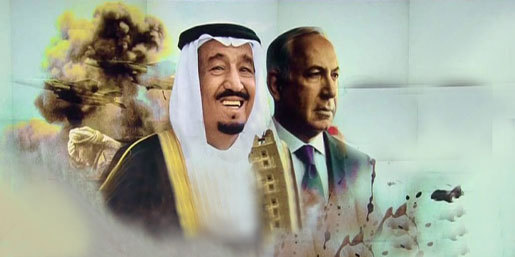
By Philip Giraldi | American Herald Tribune | November 13, 2107
There is considerable confusion about what is occurring in the Middle East, to include much discussion of whether Israel and Saudi Arabia have formally agreed to combine forces to increase both military and economic pressure on Iran, which both of them see as their principal rival in the region. During the past week, a classified message sent by the Israeli Foreign Ministry to all its diplomatic missions worldwide that appears to confirm that possibility was obtained and leaked by senior reporter Barak Ravid of Israel’s highly respected Channel 10 News.
The cable instructs Israeli diplomats to take coordinated steps designed to discredit the activities of the Iranian government. It states, in edited-for-brevity translation, that overseas missions should contact their host countries to emphasize that the resignation of Lebanese Prime Minister Saad al-Hariri over Iranian attempts to take over his country “illustrate once again the destructive nature of Iran and Hezbollah and their danger to the stability of Lebanon and the countries of the region;” that the argument that having Hezbollah in the Lebanese government provides stability is false and only serves to “promote the interests of a foreign power – Iran;” and that the launch of a ballistic missile from Yemen against Saudi Arabia confirms the need for “increased pressure on Iran and Hezbollah on a range of issues from the production of ballistic missiles to regional subversion.”
The Foreign Ministry message has been interpreted as “proof” that Israel and Saudi Arabia are coordinating to provoke a war against Iran as Israel is taking positions in support of Saudi claims, to include those relating to the confused conflict taking place in Yemen. My own take is, however, somewhat different. Having seen literally hundreds of similar U.S. State Department messages, I would regard the Israeli cable as consisting of specific “talking points” for use with foreign governments. Though it is clear that Tel Aviv and Riyadh have been secretly communicating over the past two years regarding their perception of the Iranian threat, it would be an exaggeration to claim that they have a coordinated position or some kind of alliance since they differ on so many other issues. They do, however, have common interests that are in this case aligned regarding the Iranians since both Israel and Saudi Arabia aspire to dominance in their region and only Iran stands in their way.
Both Saudi Arabia and Israel know they cannot defeat Iran and its proxies without the active participation of the United States. That would require shaping the “threat” narrative to start with a series of relatively minor military actions that appear defensive or non-controversial to draw the United States in without really appearing to do so. American involvement would be against Washington’s own interests in the region but it would serve Saudi and Israeli objectives, particularly if the situation is inherently unstable and is allowed to escalate. Both the Saudis and, more particularly, the Israelis have powerful lobbies in Washington that will push a friendly Congress for increased U.S. involvement and the Iranophobic mainstream media is likely to be similarly positive in helping to shape the arguments for American engagement.
It seems clear that the escalation will be starting in Lebanon, where the resignation of Prime Minister al-Hariri has created a plausible instability that can be exploited by Israel supported by heavy pressure from the Saudis to harden the Lebanese government line against Hezbollah. Hariri headed a coalition pulled together in 2016 that included nearly all of Lebanon’s main parties, including Hezbollah. It took office in a political deal that made Michel Aoun, a Maronite Christian who has an understanding with Hezbollah, president. The inclusion of Hezbollah and the presence of a friendly Aoun was, at the time, seen as a victory for Iran.
By one account, Hariri has been more-or-less kidnapped by the Saudis because he was regarded as too accommodating to the Shi’ites in Lebanon and, if that is so, he was speaking from Riyadh’s script when he resigned while denouncing Iran and Hezbollah and claiming that he fled because he was about to be assassinated. It suggests that the Saudis and Israelis, who have been hyperbolically claiming that Tehran is about to take control of much of the Middle East, are feeling confident enough to move towards some kind of showdown with Iran. As a first step, expected deteriorating sectarian interaction between Sunni and Shi‘ite Muslims in Lebanon to eliminate any possibility of a bipartisan and functioning government will provide a pretext for staged intervention to “stabilize” the situation.
The United States has been largely silent but presumably privately approving the Israeli and Saudi moves, as Washington, Riyadh and Tel Aviv have all adamantly opposed the existence of the Lebanese coalition dominated by Aoun and Hezbollah’s Nasrullah. Israeli fighter aircraft will likely increase incursions into Lebanese airspace in light of the alleged instability north of the border, which will provoke a Lebanese response escalating into an incident that will lead to a major attack to bring the Beirut government down, though Israel will have to be careful to avoid a possible mass counter-strike by Hezbollah missiles. The ultimate objective might be to create a Saudi and Israeli inspired grand alliance, which might be a fantasy, to pushback Iranian influence in the entire region. Lebanon’s Hezbollah, opposed by the Saudis because it is Shi’a and by Israel because of its missile arsenal would be conveniently targeted as the first marker to fall.
There is every sign that the White House will go along with Riyadh and Tel Aviv in their attempts to rollback Iranian influence, starting in Lebanon, given the recent failure to certify the nuclear agreement with Iran and the comments of Generals Mattis and McMaster suggesting that war with the Mullahs is likely. It would be a grave misjudgment to think that such a war, once started, will be containable, but it is a mistake that Washington repeats over and over again in places like Somalia, Afghanistan, Iraq, Libya and Syria.
Saad Hariri gives awkward new interview that many believe was staged
By Adam Garrie | The Duran | November 13, 2107
When Saad Hariri appeared on Saudi state-run Al Arabiya television last week to deliver his “resignation” as the Lebanese Prime Minister, many felt that Hariri, who is also a Saudi citizen was being forced to resign by the Saudi regime.
Several obvious inconsistencies were present in the original “resignation” speech. First and most strangely, he read a speech that was written in a Gulfi dialect of Arabic and instead of using familiar Lebanese terminology, he used Saudi terminology which is largely foreign among Lebanese viewers.
Secondly, his resignation from foreign soil is not only incompatible with Lebanese legal procedure, but it is highly unusual in any context.
Finally, as Hariri owns his own television channel, Lebanon based Future TV, it was considered strange that his speech was exclusively broadcast on a Saudi state-run network.
Further evidence which emerged led Lebanese President Michel Aoun to join with other Lebanese parties including Hezbollah, the Amal movement and some members of Hariri’s own Future Movement to say that Hariri had been kidnapped by Saudi authorities and is being held against his will.
Last night’s interview from Saudi Arabian soil on Hariri’s Future TV was designed to assuage the fears that Hariri is a political hostage, but the interview left many more questions than answers.
Of the many perplexing answers Hariri gave, when asked why no one is able to contact him, he stated that it is because he is in “personal meditation”. This answer however, proved deeply unsatisfactory as even close personal colleagues have had no way of contacting Hariri, in spite of his high profile.
Also, while he assured the cameras that he is a free man and will come to Lebanon in a “matter of days” this vague timeline has led many to think that the statement was forced. Furthermore, when he said this, a shadow of a man was visible in the broadcast, with some indicating that Saudi handlers were putting pressure on Hariri to stick to a script even in the midst of the interview which Future TV’s representatives refused to confirm was live.
While continually gulping down glasses of water, Hariri appeared flustered and at one point even appeared to break down in tears.
While Hariri’s assertions that Hezbollah and “the Syrian regime” intend to kill him, claims which have not been supported by any evidence and which have been roundly debunked by the politically neutral Lebanese security services, Hariri’s body language rather than his seemingly Saudi authored statements, were the talk of Arabic social media in the aftermath of the puzzling interview.
When it comes to Hariri’s future there are several possible options.
1. Hariri remains in Saudi and Lebanon moves on
In many ways, this is starting to look like the most realistic option. While Hariri claims he will return to Lebanon, this statement has been met with near universal scepticism. In other words, until people see it, they won’t believe it.
On the surface, this may still be an acceptable solution for Lebanon. While many predicted that the fragile multi-party Lebanese coalition government would collapse upon Hariri’s “resignation”, in reality, Lebanese parties from across the political spectrum, with only some scant exceptions, have remained committed to the coalition and rule of law in Lebanon. The mature response of Lebanese politicians was not something that Saudi Arabia and other who may have been behind the forced “resignation”, such as Israel, may have accounted for.
If Hariri does not return in the near future, Beirut’s relations with Riyadh will be deeply strained, but this might also have an unexpected positive effect of helping Lebanon to protect her sovereignty and national dignity with more strength than in previous years.
2. Hariri comes to Lebanon and causes trouble
Hariri indicated in his interview that he may rescind his resignation if groups like Hezbollah commit to remaining neutral in conflicts such as the Syrian war against terrorism. This demand is unrealistic, unacceptable to Hezbollah and not practical for Lebanon as Hezbollah’s aid of the Syrian Arab Army in the fight against terrorism, has helped secure Lebanon from attacks by Takfiri terrorist groups. This is something that is acknowledged either openly or privately by Lebanese of many sectarian stripes.
If Hariri does return and attempt to sow discord in the coalition by effectively waging a pro-Saudi sectarian political war, this could in fact lead to political instability in Lebanon that thus far has been avoided.
However, if he did return and try to force Hezbollah out of the coalition with ridiculous demands, it would once and for all, expose the fact that Hariri was lying about fears for his safety at the hands of “Hezbollah, Iran and Syria”. After all, someone returning to Lebanon to ‘take on’ Hezbollah isn’t afraid, but is arrogant.
3. Hariri comes to Lebanon and resigns in disgrace
Hariri’s star which was never particularly big and which in any case relied on the legacy of his more experienced father, is tarnished in Lebanon, perhaps beyond repair. Unless he were to come to Lebanon and denounce Saudi for kidnapping him, something which at this point seems unlikely given the amount of personal business Hariri conducts in Saudi (albeit with many purged Princes), he may be seen as more of a disgraced political liability than a ‘returned hero’.
The reason that most Lebanese are demanding his return is not a sign of support for Hariri’s policies, let alone his apparently subservient attitude to the Saudi regime, but because the kidnapping of a Prime Minister by a foreign power, is a matter of principle and national dignity.
If Lebanese and wider international pressure results in a return of Hariri, Lebanon will have won a moral victory, but Hariri himself will still be widely seen as something of a “loser”, to borrow Donald Trump’s favourite epithet.
Because of this, Hariri may find that his career in front line Lebanese politics may be incredibly diminished when he returns, at least in the immediate future. The leader of the Future Movement, is in this sense, already a thing of the past, in spite of his youth.
Conclusion:
Saad Hariri’s interview was likely staged and the “freedom” he claimed he had was almost certainly an exaggeration at best, if not an outright lie. Because information from Saudi is so scant, only Hariri’s departure from Saudi Arabia will provide the penultimate evidence of his alleged freedom or perhaps better put, the end of his captivity.
The coming days may reveal more about Hariri’s true condition, but for now, the infamous interview has left the world none the wiser when it comes to what Saudi Arabia is actually doing to the effectively deposed Lebanese Premier.
Saudi Arabia alleges citizen kidnapped in Lebanon
MEMO | November 11, 2017
Saudi Arabia said on Friday a Saudi citizen had been kidnapped in Lebanon, a country with which it is in a diplomatic crisis.
Saudi Arabia, Kuwait, the United Arab Emirates and Bahrain have advised their citizens against travelling to Lebanon and urged those already there to leave, as tensions rise in what is seen as a new front line in the regional rivalry between Saudi Arabia and Iran.
Top Lebanese government officials have said they believe Saudi Arabia is holding Saad al-Hariri who resigned as Lebanese prime minister from there last weekend. Riyadh says Hariri is a free man and he decided to resign because Iran-allied Hezbollah was calling the shots in his government.
The Saudi embassy in Beirut announced the kidnap of one of its citizens, but gave no details of the person’s identity of the circumstances of the abduction.
“The embassy is in contact with the highest ranking Lebanese security authorities about securing the unconditional release of a kidnapped Saudi citizen as soon as possible,” it said in a statement quoted by the Saudi state news agency SPA.
Lebanese Interior Minister Nohad Machnouk said on the Lebanese state news agency the safety of Saudi residents and visitors was a priority for the Lebanese authorities.
He added that “security services are on high alert to prevent any attempt of exploiting the current political situation from anyone and for whatever reason.”
“Tampering with the security and stability of Lebanon is a red line.”
WHAT IS REALLY GOING ON IN SAUDI ARABIA?
Trump Says Saudi Elites Caught In Anti-Corruption Probe Were ‘Milking’ Kingdom For Years
By John Chuckman | Aletho News | November 10, 2017
This is just nonsense from Trump.
Corruption is and has been everywhere in Saudi Arabia. How else could it be with all the countless billions changing hands in a fairly closed society?
So, it is easy for a guy like the new Crown Prince to glance around and conveniently find some corruption among people he wants to discredit anyway.
It may go beyond merely discrediting them to having hundreds of billions seized by the Crown Prince. Not a bad day’s work.
What is going on is a kind of coup against the old order by the new usurper Crown Prince. His recent appointment was by a King well known for his senility, and it suddenly and surprisingly upset the established order of succession and all kinds of extended family compacts.
We likely will never know what truly happened in this secretive kingdom. But we do know the abrupt changes created lots of enemies who needed attending to, and that seems to be what is happening.
And the enemies have no friends in Washington to whom they can appeal. The old order in Saudi Arabia suffered terribly in the wake of 9/11, and despite great efforts to pacify the US with new levels of cooperation, it is now being swept out.
Now, whatever is considered good for a hyper-aggressive United States is coincidentally good for its de facto colony in the Middle East.
Trump himself has already proved to be one of Israel’s best-ever American friends. Israel has long had great influence, but it possibly never had it so good as it does now, as with a UN Ambassador who speaks as though she were a joint appointment of Trump and Netanyahu. Trump’s only competitor in this regard would be Lyndon Johnson.
The US and Israel closely embrace the usurper because he has proven his dependability with bloody projects like making illegal war on Yemen. That war is exactly like the proxy war waged by mercenaries – ISIS and Al-Nusra et al – in Syria except that in this case it is the open work of a nation-state. And now he joins Israel in making threats on Lebanon.
In all the Neocon Wars in the Mideast, great effort has been made, one way or another, not to have Israel at center stage, to avoid having Israel appear as aggressor. But, in fact, without the influence of Israel, none of these terrible wars would have happened.
Yes, the Crown Prince will be a dependable component in the years-long American-Israeli project of creating a new Middle East. The Crown Prince is essentially Israel’s man in Saudi Arabia, just as President el-Sisi is in Egypt. Israel is comfortable being surrounded by absolute governments, so long as they are absolute governments beholden to its patron, the United States.
Right now, the new Crown Prince is doing another bloody service for Israeli interests. The Prime Minister of Lebanon, Saad Hariri, was called to come to Riyadh in the King’s name for some business, as it turned out on false pretenses. Hariri had his plane surrounded and he was effectively arrested upon landing. Just pure modern piracy. Later, and who knows after what threats, he announced his sudden and unexpected resignation as prime minister, and he remains in Saudi Arabia.
It just so happens, in very recent time, Netanyahu and some of his officials have made some very ugly noises against Lebanon and even staged a large-scale set of war games, including calling up reservists, clearly threatening the country.
Israel just cannot stand the idea of Hezbollah being part of the Lebanese government whereas a reasonable observer would say Lebanon had achieved a peaceful balance in governing a land of many diverse political and religious groups.
After all, it hasn’t been that long ago since Israel helped catapult Lebanon into a terrible, bloody civil war, and it did so with its own bloody and unwarranted invasion of the country. Hezbollah, an organization which has never been a true terrorist group no matter what Israel goes on about, came into its own by opposing Israel’s long-term, illegal occupation of Southern Lebanon.
They were only defending what is theirs, but they made Israel look very bad, and that is an unforgivable offence. So, here we have the new Saudi Crown Prince doing more dirty work on Israel’s behalf, much as with his war in Yemen where he bombs civilians regularly, saving Israel from having to act on its own to get what it wants in someone else’s country.
You see, if Israel itself actually had to do all the ugly deeds it wants done in the region, the world would see it with blinding clarity for the pariah state that it truly is, starting wars incessantly. Proxies – whether mercenary gangs like ISIS and Al-Nusra in Syria or tyrants like the new Saudi Crown Prince in Yemen and Lebanon – are the latest fashion statement from Tel Aviv.
What Is Happening In Saudi Arabia? – Marwa Osman on The Corbett Report
Corbett Report Extras | November 9, 2017
The Lebanese Prime Minister has “resigned” on Saudi tv. Saudi Crown Prince Mohammad bin Salman has rounded up a dozen other princes in the House of Saud in a startling move that threatens to upset the kingdom. Reports saying that King Salman will step aside for the crown prince abound. What the hell is happening? Joining us to help sort through the rubble of this incredible week is Marwa Osman, a political analyst and commentator in Beirut.
SHOW NOTES AND MP3: https://www.corbettreport.com/?p=24886
Hezbollah MPs urge Riyadh to stop meddling in Lebanon
Press TV – November 9, 2017
The parliamentary bloc of Hezbollah has called on Saudi Arabia to stop interfering in Lebanon’s domestic affairs after Prime Minister Saad Hariri announced his resignation while on a trip to Riyadh.
In a televised statement on Thursday, Hezbollah lawmaker, Hassan Fadlallah, said the Loyalty to the Resistance Bloc supported President Michel Aoun’s refusal to accept the resignation as long as it was not “voluntary.”
Fadlallah further underlined the need to preserve security and stability in Lebanon.
Hariri’s announcement in a televised speech from Saudi Arabia on Saturday has rattled Lebanon. Unidentified Lebanese authorities told Reuters on Thursday that Saudi authorities had ordered him to quit and were holding him in detention.
“When he went (to Saudi Arabia) he was asked to stay there and ordered to resign. They ordered him to read his resignation statement and he has been held under house arrest since,” said a senior Lebanese politician close to Hariri.
“Lebanon is heading towards asking foreign and Arab states to put pressure on Saudi Arabia to release Prime Minister Saad al-Hariri,” the official added.
Following Hariri’s resignation, Saudi Arabia’s Minister of State for Persian Gulf Affairs Thamer al-Sabhan said the Lebanese government would “be dealt with as a government declaring war on Saudi Arabia” because of what he described as aggression by Hezbollah.
The Lebanese people, he said, “must choose between peace or aligning with Hezbollah.”
Saudi Arabia accuses the Lebanese government of declaring war on the kingdom because of “aggression” by Hezbollah.
Hezbollah is represented in the Lebanese parliament and in the national unity government formed by Hariri last year.
The resistance group has played a critical role in the Syrian military’s counter-terrorism operations over the past few years.
Hezbollah’s achievements have raised worries in Saudi Arabia, which has long supported Takfiri groups wreaking havoc in the region.
Hamas delegation meets with the Lebanese president
Palestine Information Center – November 8, 2017
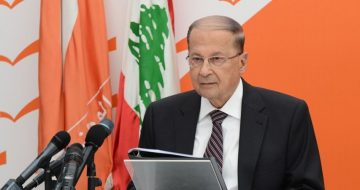 BEIRUT – Member of the Hamas Political Bureau, Ezzat al-Resheq, on Wednesday led a Hamas delegation on a visit to Lebanon to meet with the Lebanese president, Michel Aoun, and a number of Lebanese officials.
Hamas’s representative in Lebanon, Ali Baraka, said in an interview with Quds Press that the delegation will discuss with the Lebanese officials the latest developments in the Palestinian arena and the reconciliation file.
Baraka affirmed that the delegation is interested in conveying a message to the Lebanese leadership that Hamas cares about Lebanon’s security and civil peace and rejects using the Palestinian refugee camps in the country to spark internal conflicts.
He added that the Hamas delegation had earlier today met with the head of the internal security service, major-general Ibrahim Basbous, Lebanon’s Mufti, Abdullatif Derian, and the secretary-general of the Islamic Group in Lebanon, Azzam al-Ayyoubi, and briefed them on the latest developments in the Palestinian issue in general and the reconciliation in particular.
The Hamas official noted that Hamas has asked for a meeting with the Lebanese Prime Minister, Saad al-Hariri, before his resignation but the recent developments prevented the meeting from taking place.
Baraka stressed that Hamas’s visit to Lebanon comes within the framework of the Movement’s efforts to inform the Arab and Muslim leaders about the latest developments in the Palestinian scene, including the reconciliation agreement signed in Cairo in October, and has nothing to do with any other agendas.
Saudi Arabia accuses Lebanon of being ‘kidnapped’ by Hezbollah & ‘declaring war’ on Riyadh
RT | November 7, 2017
Riyadh has accused Lebanon of “declaring war” on Saudi Arabia by allowing Hezbollah “aggression” against the Gulf Kingdom. Earlier, the Lebanese militant group accused the Saudis of forcing Lebanese Prime Minister Saad Hariri out of office.
Hariri unexpectedly announced his resignation on Saturday in a televised statement recorded in Saudi Arabia. In his resignation speech, Hariri accused Iran and Hezbollah of a “desire to destroy the Arab world.” The next day, the leader of the Lebanese Hezbollah, Sayyed Hassan Nasrallah, accused Saudi Arabia of forcing the premier out of office and writing his resignation statement for him. Tehran meanwhile firmly rejected Hariri’s accusations, saying that Iran only seeks “peace and stability” and pointing out its “excellent” relationship with Beirut.
Amid the political uncertainty, on Monday the Saudi-owned Al-Arabiya news network reported that King Salman had met with Hariri in Riyadh, where the monarch shared the details of Hezbollah’s alleged aggression against Saudi Arabia.
According to the Saudi Minister of State for Gulf Affairs, Thamer al-Sabhan, Hezbollah is accused of smuggling drugs and providing terrorist training to Saudi youngsters. During the meeting, King Salman allegedly accused the Lebanese militant group of being involved in “every terrorist act that threatens Saudi Arabia,” Al-Arabiya reported. The ruler of the kingdom also allegedly vowed to use “all political and other means” to confront Hezbollah, which he called the “Party of Satan.”
“We will treat the government of Lebanon as a government declaring war because of Hezbollah militias,” Al-Sabhan told al-Arabiya. “Lebanon is kidnapped by the militias of Hezbollah and behind it is Iran.”
“We expect the Lebanese government to act to deter Hezbollah,” the minister said. “The Lebanese must all know these risks and work to fix matters before they reach the point of no return.”
Al-Sabhan did not clarify what actions Saudi Arabia might take against Lebanon. There was also no immediate reaction from Beirut, where Lebanese President Michel Aoun is yet to accept the prime minister’s resignation. Aoun plans to decide on the issue after Hariri returns to Lebanon from Saudi Arabia, presidential spokesman Nabih Berri told reporters Monday.
READ MORE: Saudi Arabia blames Iran for missile launched from Yemen, warns it could be considered ‘act of war’
Win for Hezbollah as Saudi-backed Lebanese premier resigns
By Sami Moubayed | Asia Times | November 6, 2017
The writing has been on the wall in Lebanon since early summer. Many expected the marriage of convenience between Prime Minister Saad al-Hariri and President Michel Aoun to snap — but not as abruptly as it did on Saturday.
Hariri announced his resignation in a televised address delivered from Riyadh. Aoun was neither consulted nor informed beforehand, which sent shockwaves throughout Lebanon. It may well be that Hariri was asked to resign by Saudi Arabia, a country that has long backed him and indeed bankrolled both his own career and that of his father and predecessor, Rafik al-Hariri.
During his previous tenure as premier, he was forced out of office during a meeting at the Oval Office with President Barak Obama. Back then, Hariri’s cabinet collapsed when ministers from Hezbollah and Amal walked out on him, embarrassing him at the White House. His latest resignation may have had an element of revenge.
Weeks after Saudi Arabian State Minister for Gulf Affairs Thamer Al Sabhan called for the toppling of Hezbollah, promising “astonishing developments” in the upcoming days, the Lebanese politician blamed his resignation on Hezbollah and Iran.
Hariri was never very fond of Hezbollah, accusing its top command of being behind his father’s 2005 murder. He briefly set aside political differences with its secretary-general, Hasan Nasrallah, back in 2009, creating a cabinet that promised to “protect” Hezbollah’s arms. More recently, in November 2016, he reached another understanding with the group, agreeing to accept their ally – Aoun – as president on the condition that Auon return him to the premiership. This power-sharing formula was regarded as a tentative truce between Iran and Saudi Arabia, but its foundations were shaky, too good to last.
Hariri remained highly critical of Hezbollah’s military involvement in the Syrian conflict, claiming that it had attracted ISIS and other jihadi groups into Lebanese territory. Putting his full weight behind the Syrian Opposition, he repeatedly called on Hezbollah leader Hassan Nasrallah to pull his troops out of Syria and famously said he would only visit Syria once the regime of Bashar al-Assad was toppled.
In August, two of his cabinet ministers – members of Hezbollah and its parliamentary ally, the Amal Movement – visited Syria against his will, taking part in a high-level economic function. The two infuriated the prime minister by firing off statements from Damascus in their official capacities. Then, in September, Hariri’s foreign minister, Gebran Bassil, also defied him as he met with his Syrian counterpart, Walid al-Mouallem, at the United Nations. Some weeks later, Hezbollah launched a full-fledged offensive against ISIS pockets near the Lebanese border, without approval from the Lebanese Government.
Another wedge issue has been Syrian refugees in Lebanon. Hezbollah has been pressing hard for their return, claiming that their native cities and towns are now safe. Hariri insists their lives are still in danger back home and wants them to stay. Hezbollah media outlets have accused him of wanting to keep them in Lebanon because they are overwhelmingly Sunni Muslims opposed to the Damascus government, which helps to balance Lebanon’s sectarian dynamics.
In his resignation speech, Hariri lashed out against Hezbollah, saying its arms were targeting the “chests of Lebanese and Syrians.” He repeated a long-held demand that all arms should be in the hands of the Lebanese State, and not with non-state players, be they Shiite or Sunni.
He also lashed out at the Iranians who back Hezbollah, saying: “The evil that Iran spreads in the region will backfire on it.” Hezbollah’s actions, he added, have put Lebanon “in the eye of the storm,” thanks to rising numbers of Islamic fundamentalists in certain pockets since 2014.
Hariri hinted that he feared for his life, saying that Lebanon was living in a climate “similar to the atmosphere that prevailed” at the time of his father’s assassination. “I have sensed what is being plotted covertly to target my life.” He then boomed: “Iran’s arms in the region will be cut off.”
President Aoun has yet to comment on Hariri’s resignation, saying that he will discuss the matter with his Prime Minister once he returns from Saudi Arabia. Many suspect, however, that Hariri will not be returning to Beirut anytime soon.
Constitutionally, Aoun is able to refuse the resignation but this is unlikely, as both he and Hezbollah will be glad to see the end of Hariri. They will likely call on a friendly independent Sunni to assume the premiership, since by convention neither a Shiite nor a Christian can assume the job. Hariri’s departure now gives them a free hand to tailor Lebanese politics to their liking ahead of parliamentary elections set for next May 2018.
Featured Video
BRITAIN’S WARNING: PREPARE FOR WAR
or go to
Aletho News Archives – Video-Images
From the Archive
How Ukraine Tortured and Slaughtered Donbass
By Kit Klarenberg | Al Mayadeen | July 11, 2024
Almost immediately after the proxy war erupted, ISIS-tier footage of the torture and murder of Russians in Ukrainian custody emerged.
On July 6th, the New York Times published an astonishing investigation: In Ukraine, Killings of Surrendering Russians Divide an American-Led Unit. The article documents in grim detail how Chosen Company, an international volunteer battalion for Kiev, routinely executes Russian prisoners of war. It is the very first mainstream admission that this practice – a brazen breach of the Geneva Conventions, and a grave war crime – is widespread among Ukraine’s fighters, both foreign and homegrown. … continue
Blog Roll
 Aletho News
- Israel Demolishes Home Of Lebanese Journalist Whose Viral Film Exposed Pager Attack
- Record Oil, Empty Tanks: The UAE’s Miracle Recovery
- Burnham tackles Britain’s poverty with aggression in Yemen
- Peace in Ukraine: the easy way – or the hard way
- Trump & the Rrrrussians
- US taxpayer money laundered back through Ukraine – Musk
- Before COVID, an NIH lab chief proposed making a SARS-like bat virus more infectious
- Gates, Bourla on Trial in Netherlands Accused of ‘Great Reset’ Scheme at Vaccine Injury Hearing
- BRITAIN’S WARNING: PREPARE FOR WAR
- “Historic Russia”: The Land Putin Will Not Give Back
- If Americans Knew
- An error has occurred; the feed is probably down. Try again later.
- No Tricks Zone
- Two New Studies Find Thwaites Glacier Melt Cannot Be Driven By Human Activity Or A Warming Ocean
- E-Cars Reduce CO2 Emissions By Only 41% Compared To Internal Combustion Engine Vehicles
- Predictions Made By Renowned Climate Professor Over Past Decades Have Been Proven To Be Poor
- New Study Suggests Large Regions Of The Pacific Ocean Have Been Cooling For The Last 80 Years
- Germany’s Green Energy Debacle: High Energy Costs Force Kahla Porzellan to Close After 182 Years!
- New Study: 50 Years Of The Most Aggressive ‘Net Zero’ Policies Can Only Affect The Global Climate By 0.03°C
- US September “Heat” Was No Record…Many Records Set Decades Ago
- Latest European Green Energy Debacle; Portugal’s Largest Flagship Solar Park Insolvent!
- Green Energy Debacle: German Expert Professor Fritz Vahrenholt Warns Of Severe Economic And Social Consequences
- Two More Paleo Reconstructions Affirm Meters-Higher Sea Levels Across Ireland, Brazil 7000-6000 Years Ago

