Terrorism and the Question of Humanity
By Brenda Heard | Aletho News | November 16, 2015
On 15 November, The New York Times published an article entitled “Beirut, Also the Site of Deadly Attacks, Feels Forgotten.” It highlights the disparity between the global solidarity expressed for Paris following the deadly 13 November attacks and the lack thereof expressed for Beirut after it too was attacked the day prior. But the headline suggests a petulant attitude from Lebanese who “feel forgotten,” as though they were a bratty child or a sniveling spouse.
Granted The Times expresses a degree of compassion for Beirut’s victims, who like those in Paris “were killed at random, in a bustling urban area, while going about their normal evening business.” But The Times also seems to be trying to wiggle out of appearing heartless in a previous Times article’s headline–“Deadly Blasts Hit Hezbollah Stronghold in Southern Beirut”—a headline that it now explains was “changed to be more precise.” The Times withdrew the headline’s phraseology “Hezbollah Stronghold,” which it admitted, “risks portraying a busy civilian, residential and commercial district as a justifiable military target.”
With images of civilian victims in circulation, the casual sneer of “Hezbollah stronghold,” quickly trumpeted by Reuters and the Associated Press, did seem rather. . . misleading. Yet despite even The Times’ own characterization of the stricken Bourj el-Barajneh municipality as typical “working-class Beirut, where Palestinians, Christians and Syrian refugees (mostly Sunnis) live, work and shop,” these descriptions are colored with an overriding exemption: “Hezbollah maintains tight security control” of the area. Only Reuters gives slight mention to the contradiction of this so-called “Hezbollah Bastion” hosting numerous Lebanese Army checkpoints.
So with a curious twist, The Times manages to undo the cliché “innocent civilian” as victim of a terror attack. The Beirut victims may have been civilian, the article concedes, but how dare they consider themselves innocent and thus worthy of solidarity. After all, the article tells us, Hezbollah is highly popular there. So why change and half-apologise for the phrase “Hezbollah stronghold”? Because The Times asserts that a Hezbollah stronghold would be a “justifiable military target.” And that assertion comes dangerously close to approving of this ISIS bombing, dangerously close to the sentiment expressed by a commenter on one of the initial UK reports: “So one bunch of barbaric Islamist terrorists has declared war on another bunch of barbaric Islamist terrorists. We should be celebrating. A win-win for the West and the civilized world.”
Sadly, this comment is mild in comparison to many across the web. They laugh and they rage with a brute callousness that is diametrically opposed to the compassion and solidarity expressed toward the French. When The Times article discussed how the Lebanese felt “forgotten,” it missed the point. It quoted Lebanese blogger Dr Elie Fares saying that “When my people died, no country bothered to light up its landmarks in the colors of their flag.” But if you read his article in its entirety, you will see that he was not bemoaning a lack of attention. Equally disturbed by the lack of concern from his fellow Lebanese, Fares was lamenting a lack of shared humanity. As he stated in a previous article, “The politics maybe change, but with so many victims dying for so little, petty politics become irrelevant.”
As Westerners, of course we are sickened by the violence inflicted upon our neighbors in Paris. We rightfully feel sad and scared. But the challenge is to be able to feel the pain of non-Western societies as well. How many times do we scroll right past headlines of a bombing in an Iraqi marketplace? a mass shooting in Latin America? a typhoon in Asia? Their skin may be brown or black, they make speak what sounds like noise to us, they may even eat with their hands. But they are parents and children, friends and lovers, brothers and sisters. They enjoy a cup of tea and laugh at a funny television show. But even if they view god or government differently than we do, their falling victim to indiscriminate killing should be neither accepted, nor applauded. Unless we want to live forever in fear, we need to condemn brutality and to nurture the notion of live and let live—consistently.
Brenda Heard is the founder and director of Friends of Lebanon, London. She is the author of Hezbollah: An Outsider’s Inside View (2015). She can be contacted at: brenda.heard@friendsoflebanon.org.
Sayyed Nasrallah Receives Condoling Phone Calls from Hamas’ Meshaal, Haniyeh
Al-Manar | November 14, 2015
Hezbollah Secretary General Sayyed Hasan Nasrallah received telephone calls from Hamas politburo chief Khaled Meshaal and his deputy Ismail Haniyeh expressing their condemnation of the terrorist bombings in Burj el-Barajneh.
Meshaal offered his condolences on the martyrdom of around 43 people, and stressed “the sympathy of the Palestinian people with the Lebanese and their support in the face of this painful tragedy.”
Meshaal and Haniyeh assured that the Palestinians who were allegedly involved in the blast were not refugees in Lebanon, reported al-Joumhouria newspaper on Saturday. Meshaal and Hanieh had informed the Lebanese Speaker Nabih Berri that the names mentioned by the ISIL terrorists were not of refugees, but of individuals who had died in Syria over two years ago.
The so-called Islamic State in Iraq and the Levant terrorist group claimed responsibility for the attack, alleging it was executed by two Palestinians and a Syrian.
The Lebanese Army said two men wearing suicide vests carried out the attacks. A military statement added that the body of a third suicide attacker who had failed to blow himself up was found at the scene of the second blast.
Israel benefited from Hariri assassination: Lebanon ex-President Lahoud
Press TV – November 7, 2015
Lebanon’s former President Emile Lahoud says the Israeli regime has benefited most from political assassinations in the country, including that of former Prime Minister Rafic Hariri, Press TV reports.
In an exclusive interview with Press TV, segments of which were aired on Saturday, Lahoud rejected accusations that the Syrian government and Lebanon’s resistance movement Hezbollah had a role in the 2005 assassination of Hariri.
The Tel Aviv regime was the entity that largely benefited from Hariri’s killing and other assassinations in Lebanon, Lahoud stated.
He also cited as a proof the fact that the satellites that were watching over the area where Hariri was killed in Beirut belonged to Israel and the United States. Neither Tel Aviv nor Washington later accepted to share their data and images on the assassination, he said.
The former Lebanese president said the West and Israel have accused everybody in Lebanon for the killing, so that they can divert public attention from their own potential role in the incident.
Lahoud said the assassination of Hariri showed that the United States and Saudi Arabia have been doing what Israel wants them to do in the Middle East.
Is Israel Bombing Syrian Military to Benefit ISIS Near Lebanon?
By Daniel McAdams | Ron Paul Institute | November 2, 2015
The neoconservative Washington Free Beacon is reporting that the Israeli air force has attacked a Syrian government-controlled missile base near Syria’s border with Lebanon. The Beacon cites a pro-rebel website that claims:
Israeli planes breached Lebanese and Syrian airspace and bombed the Syrian regime’s 155th Brigade [base] in the Qutayfa area, destroying a number of missile warehouses.
If the report is accurate it would suggest that Israel is attacking military facilities of the Syrian government to the benefit of ISIS and the al-Qaeda franchise in Syria, at least according to the latest battle map released by the Institute for the Study of War (when coordinated with a Google map search for Qutayfah, Syria).
Israel has routinely violated Syrian airspace to bomb Syrian territory and uses any stray rocket fire into Israel-occupied Golan Heights as a pretext to hit Syrian government positions inside the country.
Recently Israel has been forced to back down from its routine flights over Syrian airspace by the arrival of Russian fighters, and after at least one Israeli close call with sophisticated Russian fighter jets a hotline was reportedly set up for the two countries to avoid any clashes in the area.
Though these reports of Israel hitting Syrian government assets to the benefit of ISIS in the area should be taken with a grain of salt, if true this would mark yet another very volatile variable in an already very complicated and dangerous part of the world. If the Russians are busy bombing ISIS and al-Nusra positions in the area north of Damascus toward Aleppo, how will Moscow take to Tel Aviv making it difficult for Syrian ground forces to take advantage on the ground of their operations in the air?
Drugs Seizure: Saudi Presses Lebanon on Arrested Prince
Al-Manar | October 27, 2015
The Saudi embassy in Lebanon is exerting direct pressure on the Lebanese authorities over the involvement of one of its princes in a major drugs smuggling attempt.
Early on Monday, a gendarmerie inspection unit at Beirut’s Rafiq al-Hariri International Airport foiled an attempt to smuggle two tons of Captagon pills to Riyadh in Saudi Arabia.
Security Sources told Al-Manar that Saudi Deputy Minister of the Ministry of Foreign Affairs, Fawwaz Al-Shaalan met Lebanese Interior Minister Nuhad al-Machnouk later on Monday.
The sources said that Riyadh is trying hard to exclude the prince from the trial process.
Prince Abdel Mohsen Bin Walid Bin Abdulaziz was detained along with four of his companions: Mubarak Bin Ali Bin Ayed Al-Harthi, Zeyad Bin Sameer Bin Ahmad Al-Hakim, Bandar Bin Saleh Bin Marzouk Al-Sharari, Yahya Bin Shaem Bin Saad Al-Shammari.
The five were caught with two tons of Captagon that were found in the prince’s private jet inside 40 boxes and suitcases.
Shatila: Remembering the Massacre
By Richard Hardigan | CounterPunch | September 30, 2015
“There is one scene I will always remember. There was one child. The mother died, but he was trying to take milk from his mother. He was still alive.”
Jamili’s face betrays little emotion as she recalls the scene from thirty-three years ago. She has told the story many times, and perhaps it has lost some of its power in its retelling. Jamili works for Beit Atfal Assamoud, an NGO that provides medical, social and educational services to the residents of the Shatila refugee camp on the southern outskirts of Beirut, and she is talking about her experiences during the massacre of 1982.
“The best way to forget about the horrible things that have happened in the past is to work, to help,” she tells me.
There are currently fifty-nine Palestinian refugee camps scattered throughout the Middle East. When Zionist forces instituted a policy of ethnic cleansing aimed to dispossess the Palestinians of their land in 1947-1948, close to 750,000 Palestinians fled or were expelled from their homes. The camps were built to house the refugees in the short term, but as the problem persisted, so did the camps. It is estimated that there are currently 2.5 million Palestinian refugees living in the camps, which are located in Lebanon, Syria, Jordan, the West Bank and Gaza.
Shatila is probably the most well-known of all the Palestinian refugee camps. In September of 1982, a local Christian militia, known as the Phalange, aided by its Israeli allies, entered Shatila and bordering Sabra, engaging in an orgy of torturing and killing that lasted several days. It is estimated that 3000 people died in this massacre, which has become one of the enduring symbols not only of the Lebanese civil war, but also of the continuing disregard in which Israel holds the Palestinian people.
Jamili was born in 1958, during Lebanon’s first civil war, and she moved with her family from Baalbek, site of the spectacular Roman ruins, to Shatila at the age of one. Although she was not alive during the Nakba – the Catastrophe – and the original establishment of the camp that followed it, she has heard countless stories from her relatives about this time. In the fifty-seven years since her move, she has witnessed all of the tragedies that have befallen Shatila. She can associate each event in the history of the camp with an episode in her life. Her history has become intertwined with that of Shatila.
“My house was destroyed seven times,” she tells me, “and we rebuilt it seven times.”
I have now been in Shatila almost four weeks, and as of yet, I haven’t had the opportunity to talk to anybody about their personal experiences during the massacre. When I first arrived, I was expecting that the tragic events of 1982 would somehow cast an enormous shadow over the camp, that it was something everybody was still dealing with on some level. And so I was hesitant to discuss this topic with anybody for fear that I might bring up some memories that might be best left undisturbed. But when I was introduced to Jamili a few days ago as part of a visit to Beit Atfal Assamoud, she began talking about the massacre immediately. When I asked her if we could discuss the matter in greater detail, she agreed to give me an interview.
We are sitting in comfortable black chairs in her office. A fan whirs in a corner of the room, making the heat a little less oppressive. There is an enormous sleek, black desk behind her, at which I have yet to see her sit. Jamili’s work involves connecting with the residents of the camp who come to seek her help, and I suspect she feels a big desk between them would make them feel uncomfortable.
Israel invaded Lebanon on June 6, 1982 in order to rid the country of the Palestine Liberation Organization, which had fled Jordan during Black September in 1970 and had since established a presence in the refugee camps of Beirut. Israel killed roughly 20,000 people, mostly civilians, during the invasion, and it managed to drive out the PLO.
“During the invasion, 90% of the camp was destroyed. We left Shatila and stayed in Hamra (a Beirut neighborhood a few miles north of Shatila). The people lived in schools and cinemas. My house had five rooms, but when we returned to the camp, we found that only one room was left standing.”
In August of that year, Israel pressured the Lebanese parliament to choose Bashir Gemayal, leader of the Israel-allied Maronites, as president. However, Gemayal was assassinated on September 14, and the Maronite Christian community, especially the Phalange, a brutal Maronite militia, blamed the Palestinians for his death. By this time the PLO had already left the camps, and only women, children and old men remained.
“The PLO had left. All of our youths were in prison,” says Jamili.
The international force that had overseen the evacuation of the PLO had by now departed, and the residents of Shatila were completely exposed.
Yassir Arafat had foreseen this possibility. In the negotiations for his departure from Beirut, he had expressed concern for the safety of the civilians he would be leaving behind in the camps. The US and the government of Lebanon had given their word that Israel would not be allowed to enter West Beirut and had ensured the safety of the Palestinians remaining in the camps. But these promises proved to be empty.
On the day following Gemayal’s murder, Wednesday, September 15, the Israelis seized West Beirut, entrusting to the Phalange, whose hatred for the Palestinians had been inflamed by the assassination of their leader, the task of cleaning up the refugee camps.
On the evening of the following day, Thursday, the Phalange finally entered Sabra and Shatila, and the carnage began almost immediately. David Hirst provides a chilling description in his book Beware of Small States :
“They broke into houses and killed their occupants. Sometimes they tortured before they killed, gouging out eyes, skinning alive, disemboweling. Women and small girls were raped, sometimes half a dozen times, before, breasts severed, they were finished off with axes. Babies were torn limb from limb and their heads smashed against walls.”[1]
Unaware of the massacre, Jamili and her family sought shelter in a mosque in the center of the camp from the Phalange bombs that were falling on West Beirut.
“The houses, after the Israeli invasion, were not strong. The mosque was strong and standing. All of our neighbors left their houses, because they were weak. And we sat in the mosque. People came from outside and said there will be a massacre. Some people didn’t believe them. Where would we go? At the beginning we didn’t believe. But when many people came covered with blood and told terrible stories, then we were afraid.”
A group of old men decided to try to find a high-ranking Israeli officer and convince him to stop the bloodshed. Jamili’s father was among them, but at the last minute he opted to stay behind, a decision that most likely saved his life.
“And these men, until now we don’t know where they are. They went to tell they Israelis there are only children in the camp. They went to protect the camp. But they killed them. They were all friends of my father. Until now nobody really knows what happened. ”
As darkness fell in the evening, the violence continued. The Israelis fired flares over the camp to aid the militia with its grizzly work.
“They lit the streets of the camp. The hopeless thing is that the children saw the lights, and it made them feel happy. But we explained to them that it was the Israelis throwing bombs. Many houses burned. One bomb hit a neighbor’s house, and my father went to help put the fire out.”
Jamili spent that terrifying night in the mosque with her family.
“In the morning, at six o’clock, a group of women, children and old men came and entered the camp and passed by the mosque. They were crying and shouting, and then we believed that a massacre was going to happen.”
On Friday many of the residents of Sabra and Shatila escaped and made their way to two nearby hospitals – the Gaza and Akka hospitals.
“We carried our children and didn’t take anything. We went to the Gaza hospital.”
But even in the hospitals the terrified residents of the camp were not safe from the murderous intentions of the Phalange. In fact, on that day the militia entered the Akka hospital and murdered some of the wounded as they lay in their beds.
“The doctors and the nurses said ‘Don’t stay here. They will come to get you. Please leave this area.’”
“So we left. At that time I was with my family and all of my relatives. There were hundreds of people in the streets, carrying their children.”
Jamili’s destination was Hamra, the Beiruti neighborhood where she and her family had spent the bulk of the Israeli invasion. They had lived in a friend’s apartment, and they still had the key. That night they spent in an unfinished building on the way to Hamra.
“It had no doors or windows, but at least we had a place. In the morning hundreds of people from the camp came and shouted, and we felt that it was dangerous and that we must leave.”
On Saturday morning they were stopped by Israeli soldiers.
“They allowed the women and children to pass, but the young men had to stay. My brothers and uncles had to return back while the women and children continued to Hamra. Our men were not with us, and we were afraid. What would happen to them? We were running away from danger, and they were going to danger.”
By now journalists had entered Shatila, and news of the massacre had spread. When Jamili and her family reached Hamra they went to a supermarket to meet its owner, a man they knew. He was astonished to see them.
“’You are still alive?’ he asked us.”
By ten o’clock on Saturday morning the last of the Phalange had left Sabra and Shatila. The killing was over.
“I am lucky. I didn’t see anybody killed in front of me. But I saw the bodies. The mosque was filled with bodies. You can see the houses that were destroyed and the legs of the children appear from these houses. I saw all this.”
When Jamili saw the pictures in a newspaper, she was horrified. She imagined that all the bodies she saw belonged to her relatives, whom she had been forced to abandon outside of Hamra.
“All youths wear sport shoes and jeans and t-shirts. Their bodies were facing down. We felt that all our men had been killed. We decided to return back to the camp. On Monday morning we entered Sabra, and we were afraid to enter the camp. We saw the bodies in the street. I couldn’t stand. We couldn’t continue. We knew that all our relatives had died. I went to my house. I walked a few meters and then returned back. Because I was afraid to find out what happened.”
But it turned out that her male relatives had found shelter in a school outside the camp.
“When I saw them I didn’t know whether to laugh or cry. I felt foolish. When I found out that my whole family was safe, it was a perfect day.”
Jamili sighs. Her brown eyes glisten. Telling the story has brought back memories and emotions.
The massacre was over, but the problems for the residents remained, as the camp was almost entirely destroyed and had to be rebuilt.
“We had a group of about twenty girls. We could stand against the enemy. We were not afraid. What choice did we have? To die? To live or die, it was the same.”
And so Jamili and her friends threw themselves into the task of rebuilding the camp, because, among other things, it helped them forget what had happened. But one cannot forget such an event.
Jamili leans closer, her face showing the confusion, the inability to accept what had happened so many years ago. How could one group of human beings do this to another?
“Why did Israel make the massacre? For the children? For the old men? Nobody could imagine that a massacre would happen. Why? For whom? We didn’t have any men. Some of them left, and some of them died. Some of them went to prison.”
Today, thirty-three years later, Shatila faces a multitude of problems. The camp, originally built for 4000 residents, is contained in an area that is in the shape of a square of side length less than one kilometer. With the recent influx of refugees from the war in Syria, the current population is estimated to be close to 25,000. This high concentration of people makes itself felt in the ubiquitous crowds that fill the narrow alleyways, in the piles of garbage that accumulate too quickly for the trash removal workers to keep up with, in the many buildings that extend skyward to accommodate the residents, and in the lack of open spaces in the camp. Living conditions are horrifying. Electricity is cut for at least twelve hours a day, and the tap water is so salty that it corrodes the faucets. Guns are present throughout the camp, and tensions, already high because of the extreme overcrowdedness, often explode to the point of physical conflict. (One week after my arrival in the camp two people were murdered during a dispute over a motorcycle parking spot.)
Most of the people in the camp dream of going back to their village in Palestine. And so it is with Jamili.
“Our problems will stop when we return. Why cannot we return to our homeland? My village is empty. It has been destroyed. Until now nobody lives there. Why must we live in this bad situation?”
As Israel moves further and further to the right, it appears as unlikely as ever that Jamili or any of the other millions of Palestinian refugees will ever be able to return to their homes. As their wait continues into its seventh decade, the international community appears to be losing interest even in providing material support for them. Until a few weeks ago, a UNRWA budget shortfall threatened to close all schools in the refugee camps, an action that would have been a disaster for the residents. Saudi Arabia and a few other nations came up with the funding at the last minute, but the message that the world doesn’t care about the refugees was delivered, regardless. These are dangerous times for the Palestinian refugees, and it is crucial that the international community, especially the West, who bears responsibility for their displacement in the first place, doesn’t forget about their plight.
Notes.
[1] David Hirst, Beware of Small States: Lebanon, Battleground of the Middle East
Richard Hardigan is a university professor in the United States.
Lebanon’s Future is on the Line, and It Directly Affects Syria
By Andrew Korybko – Sputnik – 24.08.2015
Protests about the lack of proper city sanitation services have quickly escalated into full-blown calls for regime change.
Lebanese protesters demonstrated in Beirut this weekend as part of the “You Stink” movement, which was organized by citizens fed up with the garbage that had been piling up in their streets for weeks.
What began as an expression of legitimate grievances, however, quickly spiraled into the world’s latest Color Revolution attempt.
Some radical youth started throwing rocks and petrol bombs at police officers (uncannily reminiscent of the earlier hijacking of the peaceful-intentioned “Electric Yerevan” protests), which resulted in a forceful counter-response that was then immediately used to ‘justify’ the movement’s transformation into one of open regime change ends.
The thing is, however, Lebanon doesn’t really have a functioning government to begin with, having been without a President for over a year. If the Prime Minister steps down as he threatened to do, then it would create an unprecedented constitutional crisis that might bring the formerly civil war-torn and multi-confessional state back to the brink of domestic conflict.
Any significant destabilization in Lebanon is bound to have a serious impact on Syria, which would be put in a difficult position by the potential cutoff of the strategic Beirut-to-Damascus highway and the possible redeployment of valuable Hezbollah fighters back to their homeland.
A Little About Lebanon
The tiny Middle Eastern state of about four and a half million people is marked by a demographic and political complexity that could hinder a speedy resolution to the current crisis. It’s necessary to be aware of some of its specifics in order to better understand the origins of the current stalemate and where it might rapidly be headed.
Unilaterally sliced out of Syria during the early years of the French mandate, the territory of Lebanon hails what is generally recognized as the most diverse population in the Mideast. Eighteen religious groups are recognized in the country’s constitution, including Alawites, Druze, Maronite Catholics, Sunnis, and Shiites.
This eclecticism of religious communities is presided over by something referred to as the National Pact, an unwritten understanding that the President will always be Maronite, the Prime Minister will be Sunni, and the Speaker of Parliament will be Shiite, among other stipulations (and with a few historical exceptions).
Complementary to this concept is the country’s unique political system called confessionalism, whereby Christians and Muslims share equal seats in the unicameral parliament, but each group’s respective composition is determined proportionally by sect. Originally meant to be a temporary solution when it was first enacted in the 1920s, it was later refined by the 1989 Taif Agreement that ended the lengthy civil war and has remained in place to this day.
Crawling To A Crisis
The current crisis in Lebanon was long in the making, and it’s the result of many embedded problems that spilled over with the garbage protests. The economy has always been fragile, in that it’s highly dependent on tourism and banking – hardly the prerequisites for a stable system.
The overwhelming influx of over 1 million Syrian refugees over the past couple of years (on top of the nearly half a million Palestinian ones already present in the country) contributed to the country’s economic malaise, with the International Labor Organization quoting a 34% unemployment rate for youth between the ages of 15-24. It’s thus of no surprise then that there were plenty of disaffected young people eager and available to protest when the “You Stink” opportunity finally arose.
Lebanon’s economic troubles have been exacerbated by its enormously high debt-to-GDP ratio that has the dubious honor of being one of the world’s worst at 143%. It’s of such magnitude that Prime Minister Tammam Salam just announced that the government might not be able to pay salaries next month.
This economic dysfunction persists despite the discovery of large amounts of offshore oil and gas that have yet to be extracted. Part of the reason for this is that the country is in the midst of a political impasse stemming from parliament’s inability to agree upon a new president after the former one finished his term in May 2014.
Since the president appoints the prime minister, if Salam resigns like he threatened to do if Thursday’s upcoming Cabinet meeting yields no results, then the country would enter completely uncharted territory that might prompt more pronounced unrest and guarantee a period of heightened uncertainty.
The arrangement of political forces is thus that two men have the possibility to be president – Michel Aoun and Samir Geagea. Each represents one of the two main trans-religious political coalitions, the 8 March Alliance and the 14 March Alliance, respectively, and both want parliament to end its impasse as soon as possible.
Their similarities end there, however, since Aoun is in an alliance with multipolar-oriented Hezbollah, while Geagea is closely tied to former Prime Minister and dual Lebanese-Saudi billionaire powerbroker Saad Hariri.
Wikileaks’ latest releases from the Saudi Foreign Ministry prove that Hariri still has intimate contacts with the Saudi royal family and intelligence services, and that Geagea once begged the kingdom to bankroll his party’s finances. Therefore, although the presidency itself is largely ceremonial, it’s the diametrically competing visions of these two parties and the potential for street clashes between their supporters during the Color Revolution tumult that creates serious concern about Lebanon’s future, and consequently, could be expected to have negative repercussions for Syria.
Sabotaging Syria
The regional backdrop in which all of this occurs is that the US and its allies are in a ‘race to the finish’ to ‘win’ their various Mideast wars before the tens of billions of dollars of frozen Iranian funds are returned to Tehran, which would then partially disseminate it to its regional allies Hezbollah and Syria.
Additionally, Russia has made remarkable diplomatic progress in trying to reconcile all sides in Syria and assemble a coordinated anti-ISIL coalition, raising the US’ fears that its window of ‘opportunity’ for accomplishing regime change there may unexpectedly be drawing to a close.
It’s thus under these conditions that the organic protests in Beirut were almost immediately hijacked by radical Color Revolutionaries in order to create chaos along Syria’s western border.
The intent behind the calculated state collapse being attempted at the moment in Lebanon is to disrupt the Beirut-to-Damascus highway that serves as one of the two main lifelines to the Syrian capital, the other being the Damascus-to-Latakia highway. Shutting down the Lebanese route would make Syria wholly dependent on the Latakian one that’s vulnerable to an “Army of Conquest” offensive, which if successful, would cripple the country by de-facto blockading the capital.
At the same time, in the event that Beirut reaches its breaking point, some Hezbollah units currently deployed to Syria would be compelled to return back to the home front to assist in the inevitable power struggle there. The withdrawal of part (or all) of this valuable fighting contingent would make the military situation much more difficult for the Syrian Arab Army, both in defending the Damascus-to-Latakia corridor and in securing the Lebanese border from becoming a ‘second Turkey’ of terrorist infiltration.
Conclusively, it’s for these strategic reasons why it strongly appears that externally directed forces were ordered to exploit Lebanon’s existing tensions at this specific time. They engineered a Color Revolution attempt by using the “You Stink” protests as a semi-plausible cover, and this was timed to coincide with the ‘race to the finish’ being played out all across the Mideast.
Lebanon can still pull away from the brink, provided that Thursday’s upcoming Cabinet meeting resolves the presidential crisis and placates the country’s main political parties, but it will have to tread very carefully in containing sectarian temptations and avoiding the trap of escalatory Color Revolution provocations.
Read more:
‘Middle Eastern Union’: West Redrawing Map of Middle East at Will
Russia Succeeds in Middle East Policy – Lebanon Presidential Candidate
Lebanese Police Use Water Cannons to Disperse Beirut Protesters (VIDEO)
Thomas Friedman’s Bizarre Moral Universe: Defending Israel in The NY Times
By Barbara Erickson | Times Warp | August 14, 2015
Thomas Friedman in The New York Times argues for approval of the Iran nuclear deal, and on the way to this conclusion he hauls readers through a morass of false narratives and murky ethics, all of them invoked on behalf of Israel.
The column, however, does more than reveal the contortions of Israeli propaganda. It also points up a defect in the Times op-ed pages: The section allows writers to assert almost any claim without having to supply evidence to the readers, and although the newspaper says that it fact-checks even its editors, plenty of misinformation appears in the op-ed pages.
Thus we have Friedman’s latest, “If I Were an Israeli Looking at the Iran Deal,” which lays out a series of bald statements about Iran, Mideast history and the Israeli military that point to one overriding premise: Israel is a lonely moral force in the midst of lunatic regimes.
Friedman asserts, among other things, that Iran “regularly cheated” in order to expand its nuclear capability and aided Lebanon in “an unprovoked war” against Israel in 2006. Israel, however, “tries to avoid hitting civilian targets,” follows “Western mores” and pursues “war without mercy” only “when it has to.”
We are told, in other words, that Iran is an existential threat to Israel, bent on its destruction. Oddly, just as Friedman’s column was appearing in the Times, the newspaper also published a rebuttal to his claim in a story titled “Reporting From Iran Jewish Paper Sees No Plot to Destroy Israel.”
Here we learn that many Iranians support a two-state solution in Palestine-Israel and that Jewish Iranians are “basically well-protected second-class citizens—a broadly prosperous, largely middle-class community whose members have no hesitation about walking down the streets of Tehran wearing yarmulkes.”
If readers took the time to check out some of Friedman’s specific claims, they would find that the “unprovoked war” of 2006 was something else again. Israel was actually planning to attack Lebanon and seized on one incident (among many skirmishes on both sides) to unleash its arsenal on the country.
They would discover that Iran has not “regularly cheated its way” in its nuclear program. Instead, as investigative journalist Gareth Porter notes, “The evidence adduced to prove that Iran secretly worked on nuclear weapons represents an even more serious falsification of intelligence than we saw in the run-up to the war in Iraq.”
As for Friedman’s claim that the “Israeli army tries to avoid hitting civilian targets,” many readers already know that rights groups have cast grave doubts on this particular bit of propaganda. Most recently, we have heard from Breaking the Silence and Amnesty International, as both groups have exposed the criminal policies and actions that left so many civilians dead last summer in Gaza.
This sloppy approach to the facts is appalling, but even worse in this particular piece is the moral quagmire he creates in justifying Israel’s war crimes. Israel is forced to kill civilians, he says, because it faces enemies that stop at nothing. Therefore, Israel will “play by local rules” because “for all its Western mores it will not be out-crazied.”
Friedman would have it both ways: Israel is a moral society and Israel is the toughest, meanest guy on the block. If Hezbollah or Hamas fire rockets, he writes, Israel “will not be deterred by the threat of civilian Arab casualties.” The threat that concerns him here is the damage to Israel’s reputation, not the deaths of innocent Arabs.
He finds Iran’s alleged nuclear cheating particularly egregious because the country had signed the Nuclear Nonproliferation Treaty. This observation, however, does not prevent him from threatening Iran with Israel’s nukes: “[Israel] not only possesses 100 to 200 nuclear weapons,” he writes, “it can deliver them to Iran by plane, submarine and long-range rocket.”
Israel, on the other hand, has never signed the NPT and has never allowed inspectors into its nuclear plant, but this is no matter to Friedman. Iran, which has signed the treaty and allows inspections of its facilities, finds this state of affairs used against it in his bizarre moral universe.
Friedman presents Iran as one of the “crazies” that force Israel to break from its “Western mores,” but he can maintain this stance only by ignoring a little-discussed fact: Iran has forbidden the production and use of weapons of mass destruction, including chemical warfare and nuclear arms.
Even when Iraq attacked Iranians with poison gas during the eight-year war, Iran refused to retaliate in kind. Two supreme leaders have pronounced a fatwa against such weapons, including nuclear arms, Ayatollah Ruhollah Khomeini and Ayatollah Ali Khameini. Iran’s nuclear program, they declared, can only be pursued for peaceful purposes, and under the Iranian system, their word is the law of the land.
No wonder we hear not a word of this from Friedman (or the Times): Iran’s fatwa contrasts starkly with the Israeli stance on its own nuclear program.
In Friedman’s piece, facts that would expose his fraudulent narratives are excluded, in spite of the newspaper’s claim to fact-check even opinion pieces and editorials. Readers are denied even the minimal links that appear in most news stories.
Friedman’s columns appear twice a week in the Times. He has won awards for reporting and commentary, and he is a member of the Pulitzer Prize board. Such is the state of mainstream American journalism today.
World Food Program halves food aid to Syrian refugees in Jordan, Lebanon
Press TV – August 1, 2015
The World Food Program (WFP) has slashed by half its food assistance for Syrian refugees in Jordan and Lebanon due to a funding crisis.
Muhannad Hadi, the WFP’s regional director for the Middle East, North Africa, Central Asia and Eastern Europe, announced the decision on Friday.
Hadi said the international community must help the food assistance branch of the United Nations to continue its drive to keep refugees from going hungry.
The WFP official further urged international donors to increase their contributions, otherwise “it will be only a matter of months before we face the same situation again.”
The WFP said that the most vulnerable of the Syrian refugees living outside camps in Jordan will receive USD 14 per person in August while the rest will get only USD 7 each.
The agency will also provide the Syrian refugees in Lebanon with USD 13.5 per month, which is half of their initial entitlement.
The development comes as the WFP is currently underfunded and needs USD 168 million to keep helping Syrian refugees in Jordan, Lebanon, Egypt, Iraq and Turkey through October.
Syria has been grappling with a foreign-sponsored crisis since March 2011. The violence fueled by Takfiri terrorist groups has reportedly left over 230,000 people dead so far.
More than 4 million Syrians have left their country since the beginning of the conflict, according to latest figures released by the UN High Commissioner for Refugees (UNHCR).
Lebanon is home to 1,172,753 Syrian refugees while Jordan hosts more than 629,000 refugees, with about 100,000 housed in refugee camps and the rest living in Jordanian communities.
In a joint report published on July 23, the WFP and the Food and Agriculture Organization (FAO) warned of worsening food insecurity in the Arab country, saying that the ongoing crisis is pushing more people into poverty and hunger.
Approximately 9.8 million Syrians are estimated to be “food insecure,” with 6.8 million of them “severely food insecure,” according to the report.
Palestinian statement of solidarity with Syria
Statement of Palestinian groups and individuals in the occupied homeland, refugee camps and the diaspora about the global war on Syria
July 16, 2015
We are Palestinians and Palestinian organizations that declare our solidarity with the Syrian people in their great historical struggle for survival, now entering its fifth year. We are in a unique position to understand and appreciate the challenges facing our Syrian brothers and sisters, because we face the same challenges.
We understand what it means to have our lands and our property taken by foreign usurpers. We understand what it means for millions of our people to be driven out of their homes and to be unable to return. We understand what it means for our interests and our national rights to become the plaything of the most powerful nations on earth. We understand what it means to suffer and die in defense of our sovereignty and human rights.
We do not pretend to tell Syrians what is right for Syria, just as Syria has respected the Palestinian right to liberate Palestine since the time of the Nakba. However, we declare that the enemies of Syria are the enemies of Palestine, and those who bear arms against the Syrian people and the Syrian army – regardless of their names and affiliations – are mere pawns that serve Israel and its project to divide and control the Arab region. The people who abduct, murder and slaughter in Syria are the enemies of the Arab nation, just like Israel, with which they share goals and criminal nature.
We therefore reject violence and murder against the people and state in Syria, which has nothing to do with any just demands; rather it merely seeks to destroy the Syrian state. Any attack on Syria is an attack on the Arab nation, and that the true national opposition is the one that commits to its country’s principles and flies its flag, and that doesn’t receive orders from abroad.
The Palestinian and Syrian struggles are not religious struggles. We respect a state that guarantees freedom of religion without preference of any faith over any other. Dividing Arab communities into conflicting sects only serves the Israeli regime and allows it to implement its plots for the region.
While Palestinian refugees have suffered and are suffering in many places, Syria has welcomed them and granted them all the rights of Syrians except the right to vote. We are grateful for this policy of brotherhood/sisterhood and can do no less than to reciprocate with our solidarity for Syria in its time of greatest need. It is the least we can do.
The cynical and genocidal policies of NATO and its proxies in the Middle East have as their main policy to destroy the last remaining independent nations and forces that are not compromised by complicity with Zionist and imperialist forces. These nations and forces wish no harm to others, yet their mere existence is intolerable to Zionism and imperialism. It is our duty to stand with Syria and all nations and movements that resist the intruders and seek an independent course and policy for the benefit and interest of our own people and not to become puppets of foreign powers.
We therefore stand with Syria in its efforts to repel the foreign invaders and the countries that are creating, training, financing, arming and supporting the terrorist groups in Syria. We call for the expulsion of these groups back to their own countries, and for their supporters to devote their resources to improving the lives of their own citizens in their own countries rather than destroying the lives of our citizens in our countries. Like the alien and racist Zionist regime, these criminal countries and their leadership must be prosecuted for war crimes and crimes against humanity for waging illegal wars against sovereign states and peoples, including Palestine, Libya, Iraq, Syria, Lebanon and Yemen.
Signatures:
1. Mayor Bassam Shakaa (Abu Nidal)
2. His Eminence Theodosios (Atallah) Hanna, Archbishop, Greek Orthodox Diocese of Sebastia, Jerusalem
3. People’s Committee for the Defense of Syria in Palestine
4. People’s Committee for Solidarity with Syria & its Patriotic Leadership, Haifa
5. Sheikh Hassan Foundation for Culture and Science
6. Association of Progressive Arab Women Against War on Syria
7. Cultural Assembly for Democracy in Gaza
8. Palestine Shoruq Organisation, Gaza
9. Kifaah Movement, 1948 Palestine
10. Palestinian Comrades Communist Forum, Occupied Palestine
11. Palestinian Popular Forum, Yarmouk, Syria
12. Coalition Forces of the Palestinian Resistance, Syria
13. Palestinian Youth Organization, Lebanon
14.Union of Palestinian Communities in Europe
15. Palestine Federation of Solidarity Associations, Sweden
16. Yousef Hijazi, Gaza
17. Dr. Sabri Muslim, Al-Khalil “Hebron”
18. Dr. Amal Wahdan, Ramallah
19. Saadah Mustafa Ershaid, Jenin
20. Dr. Munthir Aliwaiwi, Al-Khalil “Hebron”
21. Dr. Mohammed Al-Oweiwi,
Al-Khalil “Hebron”
22. Bashir Abu Omar, Al-Khalil “Hebron”
23. Free Palestine Movement, Syria
24. Yaser Qishlaq, Syria
25. Mahmood Dodeen, Al-Khalil “Hebron”
26. Hisham Al-Sharif, Al-Khalil “Hebron”
27. Abdul-Aleem Da’na, Al-Khalil “Hebron”
28. Dr. Mahmoud Sa’ada, Al-Khalil “Hebron”
29. Dr. Abd Al-Raheem Kettana, Nablus, Palestine
30. Hasan Sarsour, Gaza
31. Raif Diab, Gaza
32. Abdel Moneim Abu Sirdanah, Gaza
33. Murad Mattar, Gaza
34. Noureddine Al Rayes
35. Khaled Souissi, Gaza
36. Anwar Mattar, Gaza
37. Hamid Al-Najjar, Gaza
38. Hind Abu Nijela, Gaza
39. Shareef Samhan, Gaza
40. Yousef Sharkawi, Bethlehem
41. Mohammed Berjeeha, Bethlehem
42. Ibrahim Muzhir, Bethlehem
43. Nidal Abu Aker, Al Dhaishah
44. Imad Abdil Al Aziz, Nablus
45. Mohammed Kayal Albrooh, Acre
46. Ali Isaac, Ramallah
47. Abdel Fataah Ghanem, Ramallah
48. Jamila Aasleh, (Um Aseel), Araba al-Battouf, Acre
49. Hassan Aasleh, (Abu Aseel), Araba al-Battouf, Acre
50. Dr. Adnan Bakriah, Araba al-Battouf, Acre
51. Zuhair Ondrwas, Occupied Palestine
52. Wardih Qasim, Kafr Qasim, Occupied Palestine
53. Salim Salamah, Occupied Palestine
54. Jrais Foul, Occupied Palestine
55. Hussein Zubeidat, Occupied Palestine
56. Mohammed Naamnih, Occupied Palestine
57. Omar Naamnih, Occupied Palestine
58. Imad Shalbak, United States
59. Asaad Quwaiks, Occupied Palestine
60. Labib Ghassan Habib, Occupied Palestine
61. Louay Arafat, Occupied Palestine
62. Tamim Mansour, Occupied Palestine
63. Shawkeyah Arouk Mansour, Occupied Palestine
64. Ali Ghanayem, Occupied Palestine
65. Said Yassin, Occupied Palestine
66. Nizar Kana’ane, Occupied Palestine
67. Mithkal Naamnih, Occupied Palestine
68. Shaker Shbair, Occupied Palestine
69. Jamal Sawaad, Occupied Palestine
70. Rasim Obidat, Occupied Palestine
71. Dr Muslih Awad Muslih, Beit Safafa, Al-Quds “Jerusalem”
72. Ashraf Al-Munawarah, Al-Khalil “Hebron”
73. Dr Ousama Halas, Romania
74. Abu Fadi Farfour, Lebanon
75. Sabri Murshir Alrajoub, Al-Khalil “Hebron”
76. Abid Hakim Samara, Jit, Triangle
77. Abdul Aziz Abu Atwan, Al-Khalil “Hebron”
78. Issa Mahmoud Salah, Bethlehem
79. Khalid Mahmoud Afanah, Salfit
80. Ghazi Al-Sourani, Gaza
81. Ali Al-Jariri, Ramallah
82. Khalil Jabour, Al-Khalil “Hebron”
83. Hanan Bakir
84. Mahmoud Abu Kitah, Al-Khalil “Hebron”
85. Mahmoud Al Sheikh Abdel Fattah
86. Nabil Alizah, Bethlehem
87. Hijazi Abu Shanab, Khan Younis
88. Deeb Hourani, Jenin
89. Ziad al-Sheikh, Damascus, Syria
90. Ashraf Mohammed Amr, Al-Khalil “Hebron”
91. Ghandi Amin, Al-Khalil “Hebron”
92. Hind Abdullah Bandak, Bethlehem
93. Myasir Atyani, Nablus
94. Bassam Shweiki, Al-Khalil “Hebron”
95. Dr. Mohamad Awaineh, Bethlehem
96. Jamal Asleh, Acre
97. Dr. Ali Jariri, Ramallah
97. Mustafa Moisi, Tamra,Galilee
99. Nabil Abu Dayeh, Al-Quds “Jerusalem”
100. Ali Zeibaq, Acre
101. Nida Saadah, Al-Khalil “Hebron”
102. Jihad Saadah, Al-Khalil “Hebron”
103. Fayez Suweiti, Al-Khalil “Hebron”
104. Firas Yaghi, Ramallah
105. Khader Alawneh, Bethlehem
106. Khalid Mohammed al-Madhoun, Al-Khalil “Hebron”
107. Islam al-Tamimi, Ramallah
108. Farid al-Atrash, Esq., Bethlehem
109. Jamal Barghout, Bethlehem
110. Daoud Wazwaz, al-Khalil (Hebron)
111. Abed Jabarin Jabarin, Umm al-Fahm
112. Ali Nassar
113. Osama Abdel al-Halim, Sweden
114. Fouad al-Masri, Caracas, Venezuela
115. Majdi Issa, Nablus
116. Mohammed Salah, Jerusalem
117. Ghassan Khalil Banat, al-Khalil (Hebron)
118. Jamal al-Saadi, Jenin refugee camp
119. Rashed Wadi, Oman
120. Mohammed al-Atawneh, Nablus
121. Maher al-Salaymeh, al-Khalil (Hebron)
122. Dr. Mohammed al-Asmar, Palestine
123. Alaif Sabbagh, al-Boqayaa, Galilee
124. Sheikh Taha al-Qutananeh, Askar refugee camp, Nablus
125. Ayman Yusri al-Heimoneh, al-Khalil (Hebron)
126. M. Ibrahim Abu Shamaa, Tulkarem
127. M. Ahmed Rami, Nablus
128. Dr. Awad Abu Zalata, al-Khalil (Hebron)
129. Louay Hanani, Nablus
130. Awad Ahmed al-Masri, Jerusalem
131. Sufian Sataiti, Jenin
132. Adeeb Qasim, Nablus
133. Samir Mattar, Nablus
134. Jalal Bisharat, occupied Palestine
135. Ahmed Abdel Raouf Abu Ali, Canada
136. Abu Aysar Jaradat, occupied Palestine
137. Azzam Daqqaq, occupied Palestine
138. Khalid Ahmed Saadeddin
139. Nabil Abu Ayyash, Bethlehem
140. Salaam Moussa Jaafar
141. Ziad Hasan al-Saqqa, Jordan
142. Dr. Ramzi Abu Ayyash, Germany
143. Hisham al-Maliki, Stockholm
144. Wissam Abdullah, Jordan
145. Sabri Hajeer, Gothenburg, Sweden
146. Jamal al-Shihabi, Yarmouk Camp, Syria
147. Yousef Mansour, al-Tira, Haifa
148. Omar Atiq, Jordan
149. Nuha Yousef Shomali, Beit Sahour
150. Kamal Maqboul, Sweden
151. Omar Atiq, Oman
152. Sabrina Faqha, Canada
153. Munir Mansour, Majd al-Krum, Galilee
154. Hassan Abdo, Gaza
155. Elham Shaheen, Jerusalem
156. Sama Aweidah, Jerusalem
157. Sheikh Mohammed Omari, Syria
158. Nicola Ibrahim Nicola, Ramallah
159. Nidal Hamed, Norway
160. Ibrahim al-Qudsi, Nablus
161. Nizar Banat, al-Khalil (Hebron)
162. Basem al-Ajjouz, Nour Shams refugee camp, Tulkarm
163. Anis Ghanem, Sakhnin, Galilee
164. Ali Abu Younis, Sakhnin, Galilee
165. Palestinian Youth Movement of Return, Syria
166. Fadi al-Mallah, Damascus, Syria
167. Jazoor News Agency, Gaza
168. Baylist Publishing & Media Agency, Gaza
169. Samer Al-Ghoul, Gaza
170. Nasser Hammad, Gaza
171. Center for Strategic Studies and Documentation, Gaza
172. Hassan Hijazi, Syria
173. Sakhr Abu Zahra, Nablus
174. Ahmed Abu Saud, Gaza
175. Rashad Abu Shawar, Jordan
176. Rasha Maher Anabtawi, Nablus
177. Dr. Nabil Abdel Razek, Jerusalem
178. Lajeen Abdul Haq, Syria
179. Mohammed Adli al-Khatib, Damascus, Syria
180. Baser al-Masri, Syria
181. Mousa Maragha, Syria
182. Ahmed Hilal, Syria
183. Ali Mohammed, Syria
184. Mohammed Jaradat, Syria
185. Mohamed Ezzat, Syria
186. Suleiman Qablawi, Syria
187. Samir Ghasoub, Syria
188. Thaer Massoud, Syria
189. Ibrahim Ibrahim, Germany
190. Democratic Palestine Committees, Germany
191. Majda Khatib, Shafa-Amr
192. Maha Khoury, Haifa
193. Zakaria al-Helou, Jerusalem
194. Tariq Zenati, Lidda
195. Ashraf Wajih Abdullah Hamouda, Oman
196. Nawaf Kabha, Ararah
197. Mohammed Wajih Gharah, Triangle
198. Hussam Khalil, Shefa-Amr
199. Sajid Jaradat, Jenin
200. Amneh Ahmed Ghabariyeh, al-Mushayrifah, Triangle
201. Elham Bushnaq Bakri, Araneh al-Buttouf, Acre
202. Asma Hassouna Mahajna , Umm al-Fahm
203. Abdullah Talaat Saliba, al-Khalil (Hebron)
204. Iyad Mohammed Hmeidat, Deheishe refugee camp, Bethlehem
205. Fayez Khawaja, Occupied Palestine
206. Issa Farrukh, United States
207. Abdul Salam Shahrour, Esq, Tulkarem
208. Majed al-Jandeb, Esq., Tulkarem
209. Azhar Shahroor, Tulkarem, Palestine
210. Fayez Al-Soweity, Al-Khalil “Hebron”, Palestine
211. Kamal Tannous, al-Lid, Palestine
212. Tawfiq Khoury, Shefa-Amr, Palestine
213. Khaled Abdul-Majid, Syria
214. Mohammed Khoder, Lebanon
215. Ali Ayoub, Lebanon
216. Ahmed Yassin, Lebanon
217. Mohamed Ali Ahmed, Lebanon
218. Maher Moustaha, Lebanon
219. Rasha Ali, Lebanon
220. Vida Warde, Lebanon
221. Dalal Ali Aweiss, Lebanon
222. Tariq Awdeh, Lebanon
223. Mohammed Antar, Lebanon
224. Mahmoud Hashem, Lebanon
225. Hussein Hassan Hamdan, Lebanon
226. Deeb Shalabi Issrawi, Lebanon
227. Aref Al Ezzeh, occupied Palestine
228. Talal Abu-Shawish, Lebanon
229. Nabil Diab, Lebanon
230. Alaa Mahmoud, Lebanon
231. Majed Abu Shawish, Lebanon
232. Fares Al-Saad, Lebanon
233. Arif Daher, Lebanon
234. Jamal Al Jamal, Lebanon
235. Basil El Saiqaly, Lebanon
236. Razan Abed Rabbo, Lebanon
237. Hadi Amar, Lebanon
238. Anwar Shabrawi, Lebanon
239. Rana Bishara, Lebanon
240. Nidal al-Khatib, Lebanon
241. Buthaina Saleh, Lebanon
242. Hanan Daher, Lebanon
243. Imad Salameh, Lebanon
244. Fatima Sleiman, Lebanon
245. Jamal Abu el-Saud, Lebanon
246. Abu Mohamed Farid, Lebanon
247. Anwar Abu Takeh, Lebanon
248. Mujib al-Khafsh, Lebanon
249. Bassam Abu Shawish, Lebanon
250. Moataz al-Ezzeh, Dheisheh refugee camp, Bethlehem
251. Mahmoud Abu Zinada, Lebanon
252. Joujo Ali, Lebanon
253. Ernesto Guevara, Lebanon
254. Thaer al-Khatib, Lebanon
255. Omar Abdel-Karim, Lebanon
256. Suhail Abu al-Majd, Lebanon
257. Fatima Matar, slimmed 326
258. Hassan Kanaan, Balata refugee camp
259. Mohammad al-Mahameed, Umm al-Fahm, Palestine
260. Yasser Abu Ahmed, Lebanon
261. Hassouna Taneina, Lebanon
262. Khaled Taha, Lebanon
263. Samir Adib, Ramallah, Palestine
264. Qadri Abu Wassel, Nazareth, Palestine
265. Khairy Hannoun, Tulkarem, Palestine
266. Dhaher Al-Shemali, Ramallah, Palestine
267. Suheil Natour Tarazi, Gaza
268. Beilset National Foundation for publishing and media, Gaza
269. Tariq Al-Moqayed, Gaza
270. Faris Ahmed, Lebanon
271. Ayman al-Qassem, Lebanon
272. Khaled al-Ali, Lebanon
273. Mona Soufan, Lebanon
274. Mayor Abu Samed Alrowaa, Gaza
275. Samer Al-Ghoul, Gaza
276. Nasser Hamad, Gaza
277. Mehdi Essam Hammad, Gaza
278. Ahmed Abu Qamar, Gaza
279. Samer Tarazi, Gaza
280. Dr. Tarek Ghanem, Tulkarem
281. Alaa Taha, Tulkarem
282. Walid al-Jondeb, Tulkarem
283. Bisan al-Jondeb, Tulkarem
284. Rowaa Bushnaq, Kafr Manda
285. Ahmed Ahmed, Nablus
286. Dr. Bassam Raja, Syria
287. Dima Eskandarani, Syria
288. Omar Hamarsheh, Syria
289. Ibrahim Mouemneh, Syria
290. Wassif Abdul Hadi, Syria
291. Omar Jumaa, Syria
292. Essam Shehadeh, Syria
293. Manal Ghobbash, Syria
294. Fadhil Abdullah, Syria
295. Musa Qasim, Syria
296. Mohammed Abdel-Ghani, Syria
297. Khaled Bdeir, Syria
298. Ibrahim Abou al-Layl, Syria
299. Mahmoud Khalili, Syria
300. Yousef Moqbel, Syria
301. Qusay Qudsiyeh, Syria
302. Abdul Ghani Ghareib, Syria
303. Zakaria Sharif, Syria
304. Jamal Nassar, Syria
305. Yassin Maragheh, Syria
306. Walid Dugheim, Syria
307. Fadi Shahin, Syria
308. Mohammed Abu Saada, Syria
309. Asmagheil Shehadeh, Syria
310. Amro al-Khatib, Syria
311. Adnan Abu Seriyya, Syria
312. Hassan Hijazi, Syria
313. Hussam al-Khatib, Syria
314. Abdul Muti Bouzid, Syria
315. Abdel-Fattah Idris, Syria
316. Tahseen Halabi, Syria
317. Yousef al-Sheheb, Syria
318. Moataz Shata, Syria
319. Bassam Abdullah, Syria
320. Ali Jarwan, Syria
321. Ghalib Ragheb, Syria
322. Omar Ajouri, Syria
323. Ibrahim Nazzal, Syria
324. Nayef Hayatleh, Sweden
325. Palestine Beitna Society, Sweden
326. Zakaria al-Helou, Jerusalem
327. Mohammed al-Helou, Jerusalem
328. Abu Hadi Silwani, Jerusalem
329. Hamdi Hamdi, Nablus
330. Zain Aasi, Ramallah
331. Mohammed Mufarjeh, Ramallah
332. Ayad al-Araj Jenin
333. Fadi Abu Kishk, al-Lid
334. Yousef Khatib, Arraba Buttouf
335. Ahmed Subh, Tamra
336. Tayseer Ramadan Abu Irshaid, Oman
337. Hussein Mutawaa, Amman, Jordan
338. Mohammed Khalil Ashour, Gaza
339. Mohammed Miari, Kafr Yasif
340. Yazn Asi, Ramallah
341. Ali Aasi, Ramallah
342. Abdul Aziz al-Salhi, Ramallah
343. Rasha Bani Odeh, Ramallah
344. Heba Ayyad, Jerusalem
345. Esmat Mansour, Ramallah
346. Mira Hammad, Ramallah
347. Bahaa Asi, Ramallah
348. Farah Badarneh, Ramallah
349. Abdul Rahman Jamhour, Ramallah
350. Saji Mafarjeh, Ramallah
351. Mohammed Badr, Ramallah
352. Jihan Arar, Ramallah
353. Karim Abid, al-Bireh
354. Farah Sarua, Ramallah
355. Uday Asi, Ramallah
356. Sonia Jabr, Ramallah
357. Bahaa Asi, Ramallah
358. Arif Amarna, Jenin
359. Ahmed Rayyan, Ramallah
360. Mohammed Mofarjeh, Ramallah
361. Amir Shibley, Ramallah
362. Alaa Mofarjeh, Ramallah
363. Mohamed Ledadoh, Ramallah
364. Mahmoud Aasi, Jordan
365. Leila Jamil, Ramallah
366. Mohamed Mansour, al-Bireh
367. Abdullah Jibril, Turkey
368. Mahmoud Asi, Ramallah
369. Hammad Asi, Ramallah
370. Abdul Karim Asi, Ramallah
371. Ibrahim Al Ghafari, Ramallah
372. O. Ziad Musa, Ramallah
373. Khalid Sheikh, UAE
374. Mohammed Asi, Ramallah
375. Rafik al-Asi, Ramallah
376. Amani Badr, Jerusalem
377. Sindi Badr, Jerusalem
378. Mohammed Badr, Ramallah
379. Ali Badr, Ramallah
380. Ahmed Sorour, Ramallah
381. Ali Annad, Tulkarem
382. Ismail Mofarjeh, Ramallah
383. Jana Jaradat, al-Khalil (Hebron)
384. Ismail Nassar, al-Khalil (Hebron)
385. Ghalya al-Suweti, Ramallah
386. Mohammed Asi, Ramallah
387. Dr. Nabil Talib, Ramallah
388. Handal Mofarjeh, Ramallah
389. Nidal Asi, Ramallah
390. Majed Asi, Ramallah
391. Biraa Badr, Ramallah
392. Qusay Abu Atwan, al-Khalil (Hebron)
393. Sharouq Badwan, Jerusalem
394. Naama Badr, Jerusalem
395. Mamoun Asi, Ramallah
396. Moataz Badwan, Ramallah
397. Ahmed Barnesi, Tulkarem
398. Mahmoud Mofarjeh, Ramallah
399. Safa Abboushi, Ramallah
400. Mohammed Mofarjeh, Ramallah
401. Hamada Asi, Ramallah
402. Mohammed Jummah, Qalqilya
403. Sajid Asi, Ramallah
404. Mohammed Badr, Ramallah
405. Ziad Zahra, Syria
406. Wael Jadallah, Syria
407. George Haddad, Syria
408. Tariq Haddad, Syria
409. Moataz al-Afghani, Syria
410. Rezan al-Malh, Ramallah
411. Zeina Ayyad, Jerusalem
412. Marwa Obaid, Jerusalem
413. Baha Beitillu, Ramallah
414. Osama Badr, Ramallah
415. Amin Asi, Beitunia
416. Lara Awda, Ramallah
417. Jamal Hassan, Ramallah
418. Bilal Asi, Ramallah
419. Imad Asi, Ramallah
420. Alice Abed, Jerusalem
421. Bilal Hamed, Birzeit
422. Ghassan Siyam, Ramallah
423. Yunus Mussa, Ramallah
424. Jamil Musa, Ramallah
425. Sharif El-Assaad, Tulkarem
426. Mahmoud Rayyan, Ramallah
427. Musa Badr, Ramallah
428. Maher Asi, Beitunia
429. Nizar Badr, Ramallah
430. Seraj Asi, Ramallah
431. Ibrahim Arouri, Ramallah
432. Areej Barghouti, Ramallah
433. Mouin Assi, Ramallah
434. Saji Mofarjeh, Ramallah
435. Hamza Musa, Ramallah
436. Dr. Hani Musa, Ramallah
437. Marcel Assi, Ramallah
438. Basil Asfour, Ramallah
439. Moatasem Badr, Ramallah
440. Omar Mofarjeh, Ramallah
441. Dima Barghouti, Ramallah
442. Jihad Abu Safiya, Ramallah
443. Omar Asi, Ramallah
444. Ezzedine al Asi, Beitunia
445. Badr Badr, Ramallah
446. Luna Seif, Ramallah
447. Mohammed al-Haj, Jerusalem
448. Dr. Umm Kulthum Assi, Ramallah
449. Hayman Asi, Ramallah
450. Ihsan Mofarjeh, Ramallah
451. Ayat Mofarjeh, Ramallah
452. Samar Salah al-Din, Ramallah
453. Ashraf Siyam, Ramallah
454. Mohammed Arisha, Syria
455. Yousef Asi, Ramallah
456. Isa Asi, Ramallah
457. Dr. Asem Khalil, Jerusalem
458. Meyser Asi, Ramallah
459. Dr. Rashad Tawam, Jerusalem
460. Reza Jarrar, Beitunia
461. Islam Mofarjeh, Ramallah
462. Qusay Asi, Ramallah
463. Murad Badr, Ramallah
464. Rehwan Abu Asi, al-Bireh
465. Sabreen Asi, Ramallah
466. Ahmed Maswadiyeh, Jerusalem
467. Sarah Khoamilah, Jerusalem
468. Majid Asi, Ramallah
469. Majid Samhan, Ramallah
470. Amir Khoury, Nazareth
471. Hanna Khoury, Jerusalem
472. Amin Badr, Jerusalem
473. Maher Assi, Ramallah
474. Juma Asi, Ramallah
475. Hussein Asi, Ramallah
476. Rabah Asi, Ramallah
477. Anwar al-Asi, Ramallah
478. Najeh Asi, Ramallah
479. Naaman Assi, Ramallah
480. Ribhi Asi, Ramallah
481. Ayed Assi, Ramallah
482. Harb Assi, Ramallah
483. Muaayad Assi, Ramallah
484. Nur Bekri, Jerusalem
485. Yasmin Afanah, Ramallah
486. Yara Afanah, Ramallah
487. Wafa Arouri, Ramallah
488. Hammam Badr, Ramallah
489. Dr. Samir Awad, Jerusalem
490. Dr. Fayez Bukeirat Jerusalem
491. Dr. Mahmoud Dudain, Jerusalem
492. Rifaat Assi, Ramallah
493. Mahmoud Abu al-Sawi, Jerusalem
494. Renad Abdullah, Beitunia
495. Raynad Abdullah, Jerusalem
496. Nili Hamid, Jerusalem
497. Raad Daana, Jerusalem
498. Saleh Daghlowa, Ramallah
499. A. Baher al-Saqqa, Gaza
500. A. Jawad Asaad, Ramallah
501. Qusay Jabr, Ramallah
502. Tawfiq Abu Arqoub, Birzeit
503. Munther Bader, Ramallah
504. Mohammed Nashashibi, Jerusalem
505. Ehab Mousa, Ramallah
506. Nahed Asi, Ramallah
507. Muhannad Asi, Ramallah
508. Muhannad Khafsh, Nablus
509. Mohammed Khafsh, Nablus
510. Jad Khafsh, Nablus
511. Mujahid Khafsh, Nablus
512. Kinan Asi, Ramallah
513. Merjan Asi, Ramallah
514. Razan Asi, Ramallah
515. Taqi Assi, Ramallah
516. Bakr al Assi, Ramallah
517. Haneen Musa, Ramallah
518. Amir Assi, Jerusalem
519. Waad Badr, Ramallah
520. Sufian Barakat, Tulkarem
521. Mohammed Salameh, Tulkarem
522. Abdul Rahman Abu Halawa, Ramallah
523. Amir Suleiman, Ramallah
524. Abu-Jamal Wahba, Lebanon
525. Hassan Zeidan, Lebanon
526. Fatah al-Intifada Movement in Lebanon
527. Mahmoud Saleh, Lebanon
528. Abu Hani Rameed, Lebanon
529. Abu Yaser Diab, Lebanon
530. Ahmed Hazeenah, Lebanon
531. Yousef Hamdan, Lebanon
532. Beirut Hammoud, Lebanon
533. Mohammed Abdel-Fattah, Kowkab Aboul Hija
534. Hossam Andrea, Germany
535. Najib Abbas, Kafr Kanna
536. Palestinian National Centre, Sweden
537. Salah Hammad, Ramallah
538. Mohammed Abu Qesh, Abu Qesh
539. Khadr Asi, Ramallah
540. Mustafa Assi, Ramallah
541. Miraeb Badr, Ramallah
542. Usri Mofarjeh, Ramallah
543. Aisha Abu Qaraa, Ramallah
544. Maryam Jabr, Ramallah
545. Roula Moussa, Ramallah
546. Areej Abu Hamoud, Ramallah
547. Ahmad Ayyash, Ramallah
548. Mohammed Mahasneh, Tubas
549. Rawia Habibi Ghunaderi, Nazareth
550. Saleen Haddad, Syria
551. Saleh Shatila, Lebanon
552. Mohammed Bakri, Lebanon
553. Ghassan Atamleh, al-Reineh
554. Abdul Rahman Jassim, Lebanon
555. Tahani Nassar, Lebanon
556. Amal al-Haj, Nazareth
557. Afrah Daoudi Dajani, Canada
558. Ali Rafi, Haifa
559. Tanseem Fouad al-Janazera, al-Khalil (Hebron)
560. Maysa Ahmed Saleh, al-Khalil (Hebron)
561. Qamar Akram Ghazal
562. Monia Nihad Fatafta, al-Khalil (Hebron)
563. Hiba Rajah Amro, al-Khalil (Hebron)
564. Hidayat Abdeen Halahelah, al-Khalil (Hebron)
565. Fatenah al-Muhtasib, al-Khalil (Hebron)
566. Reham Al-Sharif, al-Khalil (Hebron)
567. Baraa Shaheen, al-Khalil (Hebron)
568. Razan Abed, al-Khalil (Hebron)
569. Leyana Muhtasib al-Khalil (Hebron)
570. Eva Jamil Altora, al-Khalil (Hebron)
571. Shirin al-Atrash, al-Khalil (Hebron)
572. Aya Dudain, al-Khalil (Hebron)
573. Samah Ali Battat, al-Khalil (Hebron)
574. Wajdan al-Adam, al-Khalil (Hebron)
575. Mees Ghassan Idris
576. Rula Awawdeh, al-Khalil (Hebron)
577. Sumatiya al-Sikh, al-Khalil (Hebron)
578. Batoul Namoura, al-Khalil (Hebron)
579. Hana Ezzat Mukharzah, al-Khalil (Hebron)
580. Dina Fahd Adeis, al-Khalil (Hebron)
581. Samah Hannaihin, al-Khalil (Hebron)
582. Marwa Marwan Bakri, al-Khalil (Hebron)
583. Linda Maher al-Shweiki, al-Khalil (Hebron)
584. Shahd Hatem al-Tamimi, al-Khalil (Hebron)
585. Israa Mohammed Tuweihat, al-Khalil (Hebron)
586. Amjad Saleh Abu Kirsh, al-Khalil (Hebron)
587. Tamer Abdullah Junaidi, al-Khalil (Hebron)
588. Asma Jamal al-Masri, al-Khalil (Hebron)
589. Baissan Nader Al-Tameezi, al-Khalil (Hebron)
590. Sarah Shaker Al-Natshe, al-Khalil (Hebron)
591. Hadeel Samir Adeis, al-Khalil (Hebron)
592. Dima Nayef Amro, al-Khalil (Hebron)
593. Amani Omar Mukharzah, al-Khalil (Hebron)
594. Fatima Yusuf Munasera, al-Khalil (Hebron)
595. Zia Tarawah, al-Khalil (Hebron)
596. Rasha Ghuraib, al-Khalil (Hebron)
597. Ala Hani Batta, al-Khalil (Hebron)
598. Esra Adeis, al-Khalil (Hebron)
599. Duaa Badr, al-Khalil (Hebron)
600. Inaam Dweik, al-Khalil (Hebron)
601. Khudra Warasna, al-Khalil (Hebron)
602. Mahmoud Atawna, al-Khalil (Hebron)
603. Inas al-Sweiti, al-Khalil (Hebron)
604. Abdul Qadir Al-Sweiti, al-Khalil (Hebron)
605. Nadim Hashish, al-Khalil (Hebron)
606. Mohammed Janazerah, al-Khalil (Hebron)
607. Farid al-Raei, al-Khalil (Hebron)
608. Nusseibeh Al-Sweiti, al-Khalil (Hebron)
609. Tamam Saadi, al-Khalil (Hebron)
610. Fayez Amro, al-Khalil (Hebron)
611. Hamed al-Haddad, al-Khalil (Hebron)
612. Ala Khalayleh, al-Khalil (Hebron)
613. Tamim Mohammed al-Wahesh, al-Khalil (Hebron)
614. Shahd Quneibi, al-Khalil (Hebron)
615. Asma Arafa, al-Khalil (Hebron)
616. Khalil Atwan, al-Khalil (Hebron)
617. Muhannad Awdah, al-Khalil (Hebron)
618. Ibtisam Srahna, al-Khalil (Hebron)
619. Abdullah Asafrah, al-Khalil (Hebron)
620. Salsabil Zmaarah, al-Khalil (Hebron)
621. Fatima Aamalah, al-Khalil (Hebron)
622. Majdoleen Karajeh, al-Khalil (Hebron)
623. Aisha Hawwawi, al-Khalil (Hebron)
624. Safa Abu Rayan, al-Khalil (Hebron)
625. Meesr Zuhair Natshe, al-Khalil (Hebron)
626. Raneem Ziad Hatatba, al-Khalil (Hebron)
627. Wilaa Talahma, al-Khalil (Hebron)
628. Fadi Lahassouni, al-Khalil (Hebron)
629. Rula Hassan, al-Khalil (Hebron)
630. Jinan Mohammed Odeh, al-Khalil (Hebron)
631. Aya Mahmoud, al-Khalil (Hebron)
632. Fadi Ahmad, al-Khalil (Hebron)
633. Zahi Terman, al-Khalil (Hebron)
634. Sondas Al-Jabri, al-Khalil (Hebron)
635. Aya Farid, al-Khalil (Hebron)
636. Deena al-Oweiwi, al-Khalil (Hebron)
637. Reem Amro, al-Khalil (Hebron)
638. Areen Karki, al-Khalil (Hebron)
639. Musa Qafeeshi, al-Khalil (Hebron)
640. Abbas Hamideh, United State
641. Thaer Abu Hilal, Abu Dis, Jerusalem
642. Mohammed Salah, Abu Dis, Jerusalem
643. Atta Jaffal, Abu Dis, Jerusalem
644. Makhlis Basl, Haifa
645. Mohammed Abu Laban, Ramallah
646. Hani al-Husri, Ramallah
647. Bishop Abdullah Yulio, Ramallah
648. Wasfi Abdul Ghani, Haifa
649. Issam Makhoul, Haifa
650. Nahi Nasser Hanna, Haifa
651. Rudi Abu Saada
652. Hana Al-Essa, Ramallah
653. Leila Jamal, Ramallah
654. Abla Kamal, Jerusalem
655. Isa Salamat, Jaffna, Ramallah
656. Ihsan Rimawi, Beit Rima, Ramallah
657. Ghassan Abbas Rimawi, Beit Rima, Ramallah
658. Akram al-Maliki, Ramallah
659. Ayad al-Maliki, Ramallah
660. Zia Ghazal, Gaza
661. Yousef Shuhaiber, Gaza
662. Hani Shuhaiber, Gaza
663. Dr. Fayez Rashid, Jordan
664. Leila Khaled, Jordan
665. Mohammed Walid Mohammed Ismail, Ein Arik camp, Ramallah
666. Iyad Masrouji, Ramallah
667. Palestinian Community in Norway
668. Safwan Tirbana, Kafr Yasif
669. Maaouya Hajj, Kafr Yasif
670. Salam Marqis, Kafr Yasif
671. Khalid Sharif, Kafr Yasif
672. Nasrat Samara, Kafr Yasif
673. Boulos Rouhana, Isfiya
674. Shadi Choueiry, Kafr Yasif
675. Yousef Khatib, Kafr Yasif
676. Mufeed Saad, Kafr Yasif
677. Jamila Saad, Kafr Yasif
678. Mufeed Basl, Kafr Yasif
679. Abla Amuri, Kafr Yasif
680. Majdi Abdel Hadi Issa, Nablus
681. Fathi Mohammed Tunbour, Nablus
682. Musab Mahmoud Yousef, Jenin
683. Suleiman Fayez Juma, Nablus
684. Wadi Watfa, London
685. Mary Watfa, London
686. Mahasin Adel Dandis, al-Khalil (Hebron)
687. Azhar Seyyaj, al-Khalil (Hebron)
688. Rashad Abdul Rasul, Dura
689. Bushra Fouad al-Janzerah, Halhul
690. Mohammed Abu Asabeh, Halhul
691. Samah Abu Asabeh, Halhul
692. Sarah Abu Asabeh, Halhul
693. Issa Ahmed Zaki Bahr, al-Khalil (Hebron)
694. Hadeel al-Wawi, Halhul
695. Maryam al-Wawi, Halhul
696. Mahmoud Talbishi, al-Khalil (Hebron)
697. Nadeem Manasrah, al-Khalil (Hebron)
698. Nadeen Mahmoud Sarahneh, Halhul
699. Manar al-Banna, Amman, Jordan
700. Dr. Mohammed K. Hamid, United States
701. Jafar M. Ramini, United Kingdom
702. Khowla Ibrahim, Canada
703. Dr. Nazih Khattaba, Canada
704. Angele Semaan, United Kingdom
705. Victor Najjar, United Kingdom
706. Ghassan Najjar, United Kingdom
707. Souha Najjar, United Kingdom
708. Rehab Naseef, United Kingdom
709. Issa Najjar, United Kingdom
710. Suha Ghassan Najjar, United Kingdom
711. Lydia Perio Najjar, United Kingdom
712. Al-Awda, The Palestine Right To Return Coalition, United States
713. Ribhi Rabah, Canada
714. Morteda Abbas, Syria
715. Firas Yaghi, Ramallah
716. Adibanos Khoury-Machool, Jaffa
717. Taghreed Shehadeh, occupied Palestine
718. Azmi Nabali, Ramallah
719. Palestinian popular trend, Ramallah
720. Popular Action Committees, Ramallah
721. Elias Mouin Najjar, Australia
722. Joseph Mouin Najjar, Australia
723. Grace Mouin Najjar, Australia
724. Mousa al-Amelah, Syria
725. Hanna Mouin Najjar, Australia
726. Joseph Nakhla Najjar, Spain
727. Elias Nakhla Najjar, Germany
728. Fahed Awad, Syria
729. Victoria Nakhla Najjar, Canada
730. Anton Nakhla Najjar, Canada
731. Kateba Nakhla Najjar, Syria
732. Sonia Kamel Assaf, Syria
733. Fayez Kamel Assaf, Lebanon
734. Alice Kamel Assaf, Syria
735. Nimr Kamel Assaf, Syria
736. Nabil Elie Semaan, Lebanon
737. Nabila Elie Semaan, Britain
738. Khaled Elie Semaan, Lebanon
739. Suha Elie Semaan, Lebanon
740. Khaled Hassan Semaan, Lebanon
741. Essam Suleiman, Syria
742. Suha Hassan Semaan, Lebanon
743. Noha Hassan Semaan, Lebanon
744. Walid Hassan Semaan, Lebanon
745. Mowni Butrus Sweileh, Dubai
746. Johnny Butrus Sweileh, Seychelles
747. Leonie Butrus Sweileh, Lebanon
748. Mohsen Selim Gideon, Canada
749. Muhasen Selim Gideon, Canada
750. Wisam Selim Gideon, Canada
751. Hassan Esper Semaan, Lebanon
752. Boulos Anis Haddad, Abu Dhabi
753. Samir Anis Haddad, Abu Dhabi
754. Pauline Anis Haddad, Abu Dhabi
755. Selim Fouad Esper, Lebanon
756. Suhaila Esper Semaan, Lebanon
757. Helen Esper Semaan, Lebanon
758. Salwa Esper Semaan, Abu Dhabi
759. Sameera Elie Semaan, Abu Dhabi
760. Shirin Anis Haddad, Abu Dhabi
761. Nadim Assi, Saudi Arabia
762. Yasmin Khamis, Bethlehem
763. Dima Adawi, Nazareth
764. Mohammed Semrain, Jordan
765. Zeidan Semrain, Jordan
766. Gharam Assi, Ramallah
767. Hanan Moussa, Ramallah
768. Haneen Moussa, Ramallah
769. Mervat Assi, Ramallah
770. Nevin Assi, Ramallah
771. Uday Assi, Ramallah
772. Bassam Bader, United States
773. Hisham Bader, Germany
774. Suhail Assi, Russia
775. Elqassam Assi, Russia
776. Wajdi Mousa, Ramallah
777. Aseel Bader, Ramallah
778. Abdel Hameed Bader, Ramallah
779. Jihan Mufarjeh, Ramallah
780. Manar Mufarjeh, Ramallah
781. Anwar Mufarjeh, Ramallah
782. Zuhoor Deifallah, Ramallah
783. Ibrahim Mufarjeh, Ramallah
784. Nawal Moussa, Ramallah
785. Tahrir Assi, Umm al-Sharayet
786. Tuleen Assi, Umm al-Sharayet
787. Ansar Bader, Ramallah
788. Qadees Bader, Ramallah
789. Bilal Bader, Ramallah
790. Abdulqader Bader, Ramallah
791. Moatasem Assi, Sweden
792. Anas Assi, France
793. Maihoub Assi, Ramallah
794. Hadi Assi, Ramallah
795. Mumen Assi, Ramallah
796. Zahi Assi, Ramallah
797. Ezzeddine Assi, Ramallah
798. Tareq Bader, Jerusalem
799. Hamza Badr, Ramallah
800. Dr. Ammar Shibli, Ramallah
801. Faqih Assi, Venezuela
802. Luqman Assi, Venezuela
803. Samah Nasreddine, Jerusalem
804. Abdul Rahman Faraj, Jerusalem
804. Aliya Hameed, Jerusalem
806. Christina Boutran, Ramallah
807. Sala Shehadeh, Ramallah
808. Essam Assi, Ramallah
809. Uday Aboud, Ramallah
810. Karam Bader, Ramallah
811. Narjis Assi, Jerusalem
812. Amjad Assi, Ramallah
813. Yusri Assi, Ramallah
814. Naqqa al-Dadwah, Ramallah
815. Sharouq Assi, Ramallah
816. Imad Assi, Ramallah
817. Sijjud Bader, Ramallah
818. Sanabel Badr, Ramallah
819. Haneen Assi, Ramallah
820. Afaf Assi, Ramallah
821. Afnan Assi, Ramallah
822. Abada Mousa, Ramallah
823. Jameel Shibley
824. Sajid Assi, Ramallah
825. Munadel Assi, Ramallah
826. Rahma Assi, Ramallah
827. Imran Derraj, Ramallah
828. Fatima Mufarjeh, Ramallah
829. Samah Jalal, Ramallah
830. Salabil Assi, Ramallah
831. Salabil Rayan, Ramallah
832. Mervat Mufarjeh, Ramallah
833. Azhar Mufarjeh, Ramallah
834. Yasmeen Mousa, Ramallah
835. Asma Assi, Ramallah
836. Areen Mufarjeh, Ramallah
837. Fuad Moussa, Ramallah
838. Ala Assi, Ramallah
839. Salim Assi, America
840. Alkhansa Assi, Ramallah
841. Asma Obeid, Ramallah
842. Islam Badr, Ramallah
843. Rana Mufarjeh, Ramallah
844. Munther Shibley, Ramallah
845. Munther Mousa, Ramallah
846. Iman Mousa, Ramallah
847. Doaa Badr, Ramallah
848. Mahmoud Hamed, Jerusalem
849. Issa Ahmed, Ramallah
850. Lulea Assi, Ramallah
851. Neesan Assi, Ramallah
852. Neesan Mufarjeh, Ramallah
853. Mohammed al-Hajj, Ramallah
854. Suha Assi, Ramallah
855. Manar Bader, Ramallah
856. Maram Assi, Ramallah
857. Dima Assi, Ramallah
858. Sundos Badr, Ramallah
859. Wafa Assi, Ramallah
860. Saleh Mufarjeh, Ramallah
861. Haneen Assi, Ramallah
862. Ali Bader, Ramallah
863. Hala Seif, Ramallah
864. Mamoun Absi, Ramallah
865. Amir Suleiman, Ramallah
866. Baraa Abu Musa, Ramallah
867. Rahma Njas, Ramallah
868. Ali Dar Ali, Ramallah
869. Sijjud Dar Ali, Ramallah
870. Ola Rimawi, Jerusalem
871. Ala Barhoum, Ramallah
872. Shurouq Hantash, Ramallah
873. Raghad Shaheen, Ramallah
874. Watan Mousa, Ramallah
875. Esra Mousa, Ramallah
876. Razan al-Malh, Ramallah
877. Bissan al-Malh, Ramallah
878. Nasser al-Malh, Ramallah
879. Mohammed Shuraitah, Ramallah
880. May Shuraitah, Ramallah
881. May Batatah, Ramallah
882. Fatima Schumann, Ramallah
883. Rihan Arar, Ramallah
884. Mohammed Rashid, Ramallah
885. Nasreen Saleh, Ramallah
886. Wafa Saleh, Ramallah
887. Mohammed Awad, Ramallah
888. Mohammed Dufesh, Ramallah
889. Haneen Shuraitah, Ramallah
890. Layala Hamouda, Jerusalem
891. Montasser Nahiz, Ramallah
892. Saad Hob al-Rih, Ramallah
893. Hiyam Saleh, Ramallah
894. Anis Hanoun, Ramallah
895. Musaab Hanoun, Ramallah
896. Nermeen Rudaidah, Jerusalem
897. George Abdullah, Jenin
898. Tijan Atwan al-Khalil (Hebron)
899. Wajnan Shamasneh, Ramallah
900. Khalid Sheikh, Ramallah
901. Khaled Qutaishat, Tubas
902. Abdul Rahman Atiq, Ramallah
903. Rashid Shaheen, Bethlehem
904. Walid Mohammed Ismail, Ein Arik camp
905. Ahmed Hassan Khitab
906. Mahmoud Said Sawafiri
907. Tayseer al-Aslina
908. Uday Walid Ismail
909. Saddam Walid Ismail
910. Thaer Ghazi Shukri
911. Haitham Ghazi Shukri
912. Bassam Farid Tabbalah, Ein Arik
913. Ala Ayyash, Jalazoun cmp
914. Nael Masaad, Aboud
915. Raed Massad, Aboud
916. Louay Zakhri Muneed, Ein Arik
917. Thaer Hijazi, Qarawat Bani Zeid
918. Jumaa Hijazi, Qarawat Bani Zeid
919. Louay Arar, Qarawat Bani Zeid
920. Baseel Teem, Qarawat Bani Zeid
921. Mohammed Hanoun, Balata refugee camp
922. Ibrahim Abu Leil, Balata refugee camp
923. Mohammed Hashash, Balata refugee camp
924. Saleh Hashash, Balata refugee camp
925. Nael Halabi, Jerusalem
926. Wadie Farraj, Jerusalem
927. Diana Farraj, Jerusalem
928. Lina Khattab, Beitain
929. Firas Karajeh, Safa
930. Anas Akef Waheed, Tulkarem
931. Rama Ahmad Ayyash Baraka, Tulkarem
932. Mujahid Fadel Samara, N.
933. Zahran Akef Waheed Hamdallah, Tulkarem
934. Akef Waheed Hamdallah, Tulkarem
935. Muhannad Jamal al-Hassan, Tulkarem
936. Mohammed Suhail Abu Shanab, Tulkarem
937. Leilas Akef Hamdallah, Tulkarem
938. Watheq Abdel Fattah Shaib, Nablus
939. Naji Abdel Fattah Shaib, Nablus
940. Zakaria Abdel Fattah Shaib, Nablus
941. Mona Nihad Sebobah, Tulkarem
942. Seif Rifaat Qassis, Nablus
943. Muwaad Ahmed Daamah
944. Khalid Abdul Rahim Katana, Nablus
945. Aalan Mohammed Daraghmeh, Nablus
946. Reem Najjar, Ramallah
947. Majdal al-Jandab, Tulkarem
948. Wajdi Barakat, Tulkarem
949. Mohammed Awad, Tulkarem
950. Abdul Latif al-Sheikh, Tulkarem
951. Iyad Badran, Tulkarem
952. Qasim Bedeer, Tulkarem
953. Rasha Herzallah, Ramallah
954. Nader Hasan, Tulkarem
955. Sobhi Badran, Tulkarem
956. Ibrahim Tabbal, Tulkarem
957. Tareq Ghanem, Tulkarem
958. Baraa Shahrour, Tulkarem
959. Mahmoud Abu Ali, Tulkarem
960. Nabil Abu Khalil, Tulkarem
961. Mumen Awad, Tulkarem
962. Laith Massoud, Tulkarem
963. Haitham Tatour, occupied Palestine
964. Mohammed Khatib, occupied Palestine
965. Mahmoud Barghouti, Ramallah
966. Abed Yasin, occupied Palestine
967. Yara Aghbarieh, Umm al-Fahm
968. Khuloud al-Zinati, occupied Palestine
969. Muaddel Mahmoud, occupied Palestine
970. Mohammed Awawdeh, occupied Palestine
971. Rana Jarban, occupied Palestine
972. Rim Taha, occupied Palestine
973. Nazmi Taha, occupied Palestine
974. Maysan Sobh, Tamra
Hassan Nasrallah: Israel is terrorism in essence, and the source of all terrorism in the region
~
Speech of the Secretary General of Hezbollah, Sayed Hassan Nasrallah, on the occasion of International Al-Quds Day (Jerusalem), July 10, 2015.
Transcript:
[…] Israel announces its satisfaction with the civil wars ravaging the entire region, and works through its secret services and in different ways to extend these wars. And unfortunately, many countries have been affected by this disaster, and we see what is now being prepared against Algeria, with unfortunately, once again, a sectarian appearance.
At present, I have no detailed information, I do not claim to be a specialist in this matter, but every time that there were problems in some regions, the media spoke of ethnic differences, or ethnic considerations, namely between Arabs and Amazigh (Berber). But I have seen, in recent days, some foreign (Western) channels broadcast in Arabic [BBC Arabic, France 24, etc.] speak of fights between Malikis and Ibadits. That is to say that the West wants to present this as a denominational and sectarian conflict.
This is what (the West) is implementing in the whole of the region.
During this conference (of the Israeli High Command), the impudence of Israelis went as far as calling for an Arab-Israeli alliance to confront terrorism. Conceive of it: Israel calling for an Arab-Israeli alliance to confront terrorism! And what is terrorism for them? Iran and the Resistance movements. Now, so that the imposture not be too blatant, they put Daech (the Islamic State) with us. But of course they did not include the Al-Nusra Front, or Al-Qaeda or other movements like Ansar Bayt al-Maqdis, or Boko Haram or… or… or…
So this hypocrite Israel claims it shows solidarity with Egypt in the Sinai, and it incites the conflict between Egypt and the Gaza Strip, especially with the Hamas movement. In Syria, Israel presents itself as the protector of the Druze, while it fully supports the Al-Nusra Front and armed takfiri groups that threaten all Syrians, not just the Druze. This is pure hypocrisy. This is hypocrisy and deception.
But regardless of the details, Israel that is the mother of terrorism, the source of terrorism, the terrorist country, the entity that was founded by a terrorist organisation, and, to use philosophical concepts, the only state whose very essence is terrorism, whose nature is terrorism, that Israel presents itself as fighting against terrorism? Do you see what times we are in? The Israel that just a year ago, led the most merciless war and perpetrated the most heinous crimes, war crimes and crimes against humanity in Gaza, so that the reports of international institutions that, at all times, exonerated Israel, have failed, this time, to conceal the truth: the number of women and children killed by Israel, the number of houses destroyed, all the blood of Gaza civilians that was spilt. And after that, it dares to present itself as a civilised country, and claims to be part of a project or an Axis fighting against terrorism. Of course, this is the pinnacle of impudence.
And we must be careful not to mislead ourselves, because unfortunately there are people who may sometimes, because of the impact of terrorism on them, say “What do I care, about Israel? My priority, is this terrorism that is attacking me!” For the existing takfiri terrorism today is among the major adversities faced by our (Muslim) Community. Because (these terrorists) do not fight on a political basis, or for a political project, but on the basis of religious affiliation, or current of thought, or sectarian affiliation. And all the killings that are currently taking place throughout the region are committed on this basis, and not on a political basis or for a political struggle.
Well, the last point that shows that Israel is our enemy, who does it consider to be a threat? Who according to him is a threat? There is only one direction, only one country which represents a threat for Israel: after what happened in Syria, this country (Syria) was removed from the list of threats. All that remains is Iran. The Islamic Republic of Iran. That is why we have seen, during the (Israeli) conference of Herzliya, before, and after, that the spirit of Israel is completely obsessed and captured by Iran, by the Islamic Republic: by its nuclear program, the development of its ballistic capacity, its economy, its democracy, the support of its people for its leaders, the health of its leaders and the health of the country… For everything related to Iran, one can see Israel secure its full attention and work on it, both inside and outside of Iran, and at all international forums. The only target for Israel is the Islamic Republic of Iran, and with it, the Resistance movements.
As for Israel, despite all our consideration and our respect for the Resistance movements and for ourselves (there is no harm if we manifest our respect for ourselves!), the Resistance movements have not reached the stage where they are, from Israel’s point of view, an existential danger. It is not shameful to say the truth, and that is the truth. Yes, the Resistance movements now represent a strategic danger, but they have not reached the point of representing an existential threat (to Israel). Today, on the whole of the face of the Earth, the only state, the only entity, the only thing that is considered by Israel as an existential danger to them is the Islamic Republic of Iran. These are undeniable truths. If someone claims things are different, may he come (and expose his analysis to us).
And this is why Israel incites the entire world against Iran: the United States, Congress… Netanyahu is ready to ruin his relations with the White House by urging Congress against Iran… Israel incites the Arabs (against Iran)… And many of these Arab regimes already have, by nature, such calculations, such a mentality, such a vision (hostile to Iran). This is the reality.
Question: does this not represent, today (I raise this point), if we calm somewhat, as Arabs, as Muslims, as Palestinians, as peoples of the region, if someone relaxes a bit and calmly reflects, away from the bullets, the suffering, the screaming, the problems and the Arab channels, and wonders seriously: Why? Why Israel… In all the Arab and Islamic world, worldwide, with its billion and a half Muslims, its states, its armies, its peoples… Israel fears no one, cares about no one, does not pay attention to anyone except Iran. Why Iran? Should we not pose this question on the occasion of the International Day of Al-Quds (Jerusalem)? Why this total hostility against Iran on the part of the Zionists? Why do we see nothing of this sensitivity, this preoccupation, this anxiety, this fear, this precaution, for example on the part of Israel with regard to Saudi Arabia? Or in respect to any other Arab regime? So that no one say that today, Sayed (Nasrallah) was bitter against Saudi Arabia. No, it is a logical and natural question: why?
Today, at this very moment, the Arab countries and the Arab armies buy billions of dollars of aircraft, missiles, artillery, anti-tank weapons, long-range missiles… Israel does not care in the least because there is a certainty, a confidence, a guarantee, not just a written commitment: they have absolute confidence and certainty in this official Arab mentality, and these official Arab regimes, to the point of having no need for guarantees or written commitments. And experience is the best proof: for 67 years, what for example have the Arabs done, most of them? In short, because Israel knows with certainty that the official Arab regimes have sold them Palestine, Al-Quds (Jerusalem) and the Palestinian people. And the proof is what has happened for 67 years and to this day.
Well, this year, they paid a visit to Gaza: have Gazan homes been rebuilt? What is the situation of the wounded of Gaza? Where is the blockade of Gaza? How are the people of Gaza? If a small portion of the billions of dollars being spent on the war against Yemen, the war against Syria, the war against Iraq and the repression of the populations, was spent on Gaza, would we not today have Gaza in a more acceptable situation? Are they not part of Palestine? Are they not part of the (Islamic) Community? And forgive me for expressing myself again like this, but today we are forced to speak in these terms, are they not a part of the Sunni community? Are they not Muslims, who fast and pray? Why are they abandoned? Because there is an official Arab decision to sell Palestine (to Israel). Palestine has no existence (for them). And the Palestinians are subjected to torture and live in ruins because of it.
And because Israel also knows that the takfiri project, which is sponsored by some Arab countries, does not care about Palestine and Al-Quds (Jerusalem), and that its battle is on other fields, and that this takfiri project completely serves Israeli interests and destroyed for them, without them making any effort, Syria and Iraq, it participated in the destruction of Yemen and spreads sectarian and ethnic conflicts among all Muslims and Christians, tearing apart our (Islamic) Community, and tearing through the national and social fabric in each of our countries, and freely (for Israel).
Who then still carries the flag (of the Palestinian cause)? I do not say this to praise Iran, but to come to a stance. I request a stance to be taken. The one who continues to carry the flag, to face the enemy and refuse to recognise the very existence of this entity, even though the negotiations and the agreement on the nuclear issue should be stopped because of this, whether the current discussions in Vienna that last longer than expected or the ones to come. You will remember that Netanyahu asked that the agreement include the recognition of the existence of Israel by Iran. And I tell you: if the entire nuclear dossier should be closed and Iran be given everything it wanted on the nuclear issue, including what she did not even dare to dream, if the condition was (only) the acknowledgment by Iran of Israel’s existence, the Islamic Republic of Iran, the Republic of Imam Khomeini, under the leadership of His Eminence Imam Khamenei, through his government, the Chamber of Deputies and his people, would never accept such a clause, as Iran would leave its religion by doing so. They know that this is Iran.
And because Iran continues to face the enemy, it is Iran who support the Axis of Resistance, its states, its peoples and its countries, politically, morally, materially, financially, in terms of arms, on the roof and in full sunlight (in plain sight). And this is something that nobody dares to do, or, so as not to exaggerate, that many are afraid to do. Despite the severe sanctions that Iran suffered for over 30 years, and the threat of permanent war and bombing of its facilities. Because Iran is such a threat to Israel, and for the project of American domination over the region, military wars have been fought against it in the past, and media wars, political, psychological and economic wars are conducted against it, wars involving the instruments and allies of the United States in the region, who constituted by their acts the best support for Israel for decades.
On this International Day of Al-Quds (Jerusalem), allow me to speak frankly with Muslims, Christians, Arabs, Palestinians, with the Resistance movements, and whoever supports and sustains the Palestinian cause: you cannot be with Palestine but by being alongside the Islamic Republic of Iran. And if you’re the enemies of the Islamic Republic of Iran, then you are the enemies of Palestine and Al-Quds (Jerusalem). Why is this? These are not empty slogans. Because the only hope remaining after God the Exalted and Most High, to recover Palestine and Al-Quds (Jerusalem), is this Islamic Republic, its help and support to the people and the Resistance movements in the region, and primarily to the Palestinian people. As long as the world is divided into poles, military camps and positions, we must be clear and straightforward: if we want to be serious and sincere, if we leave aside the partisanship, if we want to be logical, this is the logical vision: this enemy (Israel) unanimously recognises what I say, there is no one in Israel that says anything else about the Islamic Republic of Iran.
As for attempts to escape this historic and decisive stance on the pretext of the “Persian project”… There is no “Persian project”! It is deception to keep people away from a genuine and sincere ally of the Arabs and Muslims and all peoples of the region, namely Iran. Everything concerning a Safavid project is nothing but empty words, exhumed from ancient history. Everything about evoking an ostensible Shiite crescent (is futile)… And besides, Iran is now accused in Yemen, but the (alleged) crescent would be distorted by such a movement. The crescent was to be Iran-Iraq-Syria-Lebanon: how would the crescent reach Yemen? Who are they trying to fool? These are just lies concocted by the corrupt official Arab mentality which has abandoned Palestine and Al-Quds (Jerusalem), and if anyone approaches to lend a helping hand to Palestine and Al-Quds, they will present them as an enemy, as evidenced by the fact that the Shah (of Iran) was not their enemy when he was an ally of Israel [although he was also Shiite]. But now they want to present Iran as an enemy. How to achieve this? Pretend that there is a Shiite crescent, they want to spread Shiism, it is a Persian project, it is a Safavi project, etc. These are absurd and empty statements.
[…]
Translated from Arabic by Sayed Hasan
Translated from French by Jenny Bright
US-Israeli Imperialists Plot Downfall of Syria and Iran
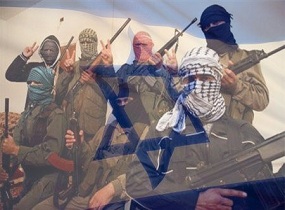
By Brandon Martinez | Non-Aligned Media | July 9, 2015
The United States has been running a particularly reckless and transparent bluff on the world.
‘We must defeat ISIS’ has been the repetitive mantra bellowed from pulpits and podiums by deceitful US officials. But this bit of shameless Orwellian newspeak is coming from the very same rogue policy makers who have been the primary source of arms and largesse to that group and its sordid affiliates across Syria, Libya, Iraq and elsewhere.
Republican Senator Rand Paul called his own party’s bluff in a summer 2014 interview with CNN, telling the incompetent host that “we [the US government] are allied with ISIS in Syria.”[1] “[ISIS] would not be empowered in Iraq if we hadn’t been providing them a safe haven in Syria by arming their allies,” the Senator said, adding that “we are where we are because we armed the Syrian rebels,” the preponderance of whom are Wahhabi-Salafist extremists. Paul recently doubled down on that line of reasoning, informing another interviewer in May 2015 that “hawks in my party” are responsible for the rise of ISIS because of their purposefully intransigent policy of “distributing arms indiscriminately” to Syrian and Libyan militants in their fanatical drive to depose Gaddafi and Assad.[2]
Paul’s words were confirmed by a recently unearthed US Defense Intelligence Agency report that, in true Machiavellian style, welcomed an ISIS-controlled “Salafist principality in eastern Syria” to serve as a buffer to “isolate the Syrian regime” and roll back Iran. The US defense analysts, writing at the outset of the rebel insurgency in Syria in 2012, acknowledged that the anti-Assad coalition of militants that Washington was enthusiastically supporting were dominated by Salafist extremist elements linked to the Muslim Brotherhood and al-Qaeda.[3]
A June 2015 Washington Post report revealed the extent of the CIA’s covert campaign to train, arm and deploy mercenaries against Assad in Syria, pegging it as one of the Agency’s “largest covert operations, with a budget approaching $1 billion a year.”[4] The article’s authors Greg Miller and Karen DeYoung write:
“At $1 billion, Syria-related operations account for about $1 of every $15 in the CIA’s overall budget, judging by spending levels revealed in documents The Washington Post obtained from former U.S. intelligence contractor Edward Snowden.
“U.S. officials said the CIA has trained and equipped nearly 10,000 fighters sent into Syria over the past several years — meaning that the agency is spending roughly $100,000 per year for every anti-Assad rebel who has gone through the program.
“The CIA declined to comment on the program or its budget. But U.S. officials defended the scale of the expenditures, saying the money goes toward much more than salaries and weapons and is part of a broader, multibillion-dollar effort involving Saudi Arabia, Qatar and Turkey to bolster a coalition of militias known as the Southern Front of the Free Syrian Army.
“Much of the CIA’s money goes toward running secret training camps in Jordan, gathering intelligence to help guide the operations of agency-backed militias and managing a sprawling logistics network used to move fighters, ammunition and weapons into the country.”
After weeding through all the phony anti-ISIS bluster emanating from the White House, it becomes clear that Washington’s overarching strategy is to play all Muslim groups and factions in the Middle East off against each other in what amounts to a sinister divide and conquer gambit that ultimately serves the interests of Israel. In 2007, years before the present crisis in Syria and Iraq, Hezbollah chief Hassan Nasrallah identified this genocidal US/Israeli-led scheme against the region in an interview with American journalist Seymour Hersh. He told the award-winning reporter that the Bush administration was working in tandem with Israel to instigate a cataclysmic civil war – something akin to the Thirty Years’ War in Europe – in the Muslim world. Nasrallah said that this fitna, an Arabic term which means “insurrection and fragmentation within Islam,” was being deliberately fomented by US and Israeli intelligence agencies to significantly weaken the region and allow the Zionist-American imperialists to achieve full-spectrum dominance.[5]
According to Hersh’s excellent March 2007 reportage published in the New Yorker under the title “The Redirection,” the US, Israel and Saudi Arabia began laying the groundwork for a rebel invasion of Syria that same year.[6] The US and Israel planned to enlist radical Wahhabi-Salafist elements backed by Saudi Arabian largesse as proxy mercenaries against Damascus in a wider effort to undermine Assad and precipitate the demise of Iran. Hersh outlined the criminal plan in these terms:
“To undermine Iran, which is predominantly Shiite, the Bush Administration has decided, in effect, to reconfigure its priorities in the Middle East. In Lebanon, the Administration has cooperated with Saudi Arabia’s government, which is Sunni, in clandestine operations that are intended to weaken Hezbollah, the Shiite organization that is backed by Iran. The U.S. has also taken part in clandestine operations aimed at Iran and its ally Syria. A by-product of these activities has been the bolstering of Sunni extremist groups that espouse a militant vision of Islam and are hostile to America and sympathetic to Al Qaeda.”[7]
Citing officials close to the Bush administration, Hersh explained that the CIA sought to employ radical anti-Syrian militants clandestinely “by leaving the execution or the funding to the Saudis, or by finding other ways to work around the normal congressional appropriations process.” Hersh’s sources told him that “the Saudi government, with Washington’s approval, would provide funds and logistical aid to weaken the government of President Bashir Assad, of Syria.” Using the Saudis as a conduit would, in turn, give Washington plausible deniability. “The Israelis,” Hersh wrote, “believe that putting such pressure on the Assad government will make it more conciliatory and open to negotiations.”[8]
In an article titled “The Pentagon plan to ‘divide and rule’ the Muslim world,” security scholar Nafeez Ahmed highlighted the contents of a 2008 RAND Corporation report which openly elucidated this belligerent strategy of tension.[9] The Pentagon-backed study group advocated playing all sides and every side in the Muslim world against one another in order to fracture and disorient opposition to Western and Israeli imperialism in the region. The Orwellian strategists identified essentially all Arabs and Muslims – Salafists, Shiites, Sunnis, secular Arab nationalists, communists, Baathists, etc. – as adversaries to be pitted against each other. Already-existing rivalries and fissures would be stoked up and exploited to their maximum potential.
RAND’s divide and conquer objectives are eerily similar to the vile prescriptions of Oded Yinon, an Israeli strategist who authored a geopolitical screed entitled “A Strategy for Israel in the 1980s,” published in 1982, which called for the break-up of all Arab states surrounding Israel into fragmented polities along ethnic and religious lines. “Every kind of inter-Arab confrontation will assist us in the short run,” Yinon expounded in his Machiavellian manifesto, “and will shorten the way to the more important aim of breaking up Iraq into denominations as in Syria and in Lebanon.”[10] The Israeli militarist gleefully cited the Iran-Iraq war as a prime example of the type of internecine conflict Israel hopes to ignite, exacerbate and capitalize on to achieve its Zionist imperium. In a June 2014 television interview, Israeli Prime Minister Benjamin Netanyahu, a dedicated Jewish imperialist, explicated his Yinonite ideology, emphasizing Tel Aviv’s desire to have Sunni and Shiite Muslims fight each other and thereby cancel each other out while Israel reaps the spoils.[11]
It’s impossible to ignore the primacy of Israel in all of this unscrupulous intrigue. Netanyahu’s Likud Party is not only committed to eliminating what’s left of Palestine, but they also harbor expansionistic aspirations that go beyond Israel’s current borders – what some have called “Greater Israel.” Netanyahu’s seminal role in conceiving the rancid doctrines of the ‘war on terror’ itself, alongside the inescapable reality that the neocons who dominate the US foreign policy establishment are first and foremost loyal to Israel, is paramount in understanding the ‘method to the madness.’
Dismembering Syria
While Western-backed ISIS militants behead their way to Damascus, US foreign policy hawks are now plotting the literal dismemberment of Syria as a whole in accordance with the Zionist neocons’ balkanization plan.
In its latest release, the Brookings Institution, an influential pro-Israel, pro-US Empire think tank, has audaciously called for the break-up of Syria, advancing an incremental strategy to facilitate a stealth US invasion and takeover of the Arab country in the service of Israel.
In the June 2015 report titled “Deconstructing Syria: Towards a regionalized strategy for a confederal country,”[12] neocon ideologue Michael O’Hanlon outlines his hopes for a weakened “confederal” Syria “made up of autonomous zones rather than being ruled by a strong central government.” (Pg. 3) Such “safe zones” are to be controlled by US Special Forces and their trained foot-soldiers of the “Syrian opposition.” Specifically, O’Hanlon calls for the US and its regional proxies,
“to help defend local safe areas using American airpower as well as special forces support once circumstances are conducive, the Syrian opposition fighters would then establish safe zones in Syria that they would seek to expand and solidify. The safe zones would also be used to accelerate recruiting and training of additional opposition fighters who could live in, and help protect, their communities while going through basic training.” (Pg. 3)
O’Hanlon admits that the US has spent upwards of a billion dollars in “arms flows and other assistance to [Syrian militants]” and later suggests that the so-called ‘moderates’ are ineffective fighters, “a collection of groups with no unity, common vision, or survivability on the battlefield.” O’Hanlon proposes that moderation would not be a prerequisite for US support, something that has never been an issue for Washington anyway which has been covertly sponsoring some of the most unsavory characters imaginable.
Later in the document O’Hanlon identifies the anti-Assad orientation of the strategy, envisioning the “safe zones” as buffers to launch operations against Assad and to eventually push the Syrian president out of power. He writes:
“The plan would be directed in part against Assad. But it would not have the explicit military goal of overthrowing him, at least not in the first instance or the near term. Rather, it would seek to constrict the territory that he governs. And if he delayed too long in accepting a deal for exile, he could inevitably face direct dangers to his rule and even his person. The plan would still seek his removal, but over a gradual time period that allowed for a negotiated exit if he were smart enough to avail himself of the opportunity.” (Pg. 10)
O’Hanlon ponders the “outright partition of the country.” (Pg. 11) This partition scheme is evidently aimed at pressuring Assad and perhaps provoking him to strike at one of the US-controlled “safe zones” which would, O’Hanlon contends, give Washington an excuse to attack Damascus directly. “If Assad sought to attack the enclaves,” writes O’Hanlon, “where moderate forces were being aided by American and other outside powers … the United States would need to be ready to escalate quickly and powerfully—even disproportionately.” (Pg. 13)
This Brookings plan typifies an advanced phase of the destruction of Syria, something in the works since at least 2007. Washington’s anti-Syrian, anti-Iranian and broader anti-Muslim agenda clearly transcended both the Bush and Obama administrations, underscoring the existence of a permanent ‘shadow government’ – the neocon-dominated Military-Industrial Complex – that stays in place behind the curtain no matter who is elected. Obama’s ascendance to the White House was merely a public relations facelift, serving to make the American-Zionist Empire’s bloodthirsty aims more palatable to a war-weary public.
NOTES
[1] https://www.youtube.com/watch?v=0e_4tUYc6ag
[2] “Rand Paul says GOP hawks ‘created’ ISIS,” New York Post, May 27, 2015. http://nypost.com/2015/05/27/rand-paul-says-gop-hawks-created-isis/
[3] Brad Hoff, “2012 Defense Intelligence Agency document: West will facilitate rise of Islamic State ‘in order to isolate the Syrian regime’,” The Levant Report, May 19, 2015. http://levantreport.com/2015/05/19/2012-defense-intelligence-agency-document-west-will-facilitate-rise-of-islamic-state-in-order-to-isolate-the-syrian-regime/
[4] Greg Miller and Karen DeYoung, “Secret CIA effort in Syria faces large funding cut,” Washington Post, June 12, 2015. http://www.washingtonpost.com/world/national-security/lawmakers-move-to-curb-1-billion-cia-program-to-train-syrian-rebels/2015/06/12/b0f45a9e-1114-11e5-adec-e82f8395c032_story.html
[5] Seymour Hersh, “The Redirection,” The New Yorker, March 5, 2007. http://www.newyorker.com/magazine/2007/03/05/the-redirection?currentPage=all
[6] Ibid.
[7] Ibid.
[8] Ibid.
[9] Nafeez Ahmed, “The Pentagon plan to ‘divide and rule’ the Muslim world,” Middle East Eye, April 3, 2015. http://www.middleeasteye.net/columns/pentagon-plan-divide-and-rule-muslim-world-1690265165
[10] http://www.scribd.com/doc/155650153/A-Strategy-for-Israel-in-the-Nineteen-Eighties-Oded-Yinon#scribd
[12] Michael O’Hanlon, “Deconstructing Syria Towards a regionalized strategy for a confederal country,” Brookings Institute, June 2015. http://www.brookings.edu/~/media/research/files/papers/2015/06/23-syria-strategy-ohanlon/23syriastrategyohanlon.pdf
Copyright 2015 Brandon Martinez
Featured Video
BRITAIN’S WARNING: PREPARE FOR WAR
or go to
Aletho News Archives – Video-Images
From the Archive
How Ukraine Tortured and Slaughtered Donbass
By Kit Klarenberg | Al Mayadeen | July 11, 2024
Almost immediately after the proxy war erupted, ISIS-tier footage of the torture and murder of Russians in Ukrainian custody emerged.
On July 6th, the New York Times published an astonishing investigation: In Ukraine, Killings of Surrendering Russians Divide an American-Led Unit. The article documents in grim detail how Chosen Company, an international volunteer battalion for Kiev, routinely executes Russian prisoners of war. It is the very first mainstream admission that this practice – a brazen breach of the Geneva Conventions, and a grave war crime – is widespread among Ukraine’s fighters, both foreign and homegrown. … continue
Blog Roll
 Aletho News
- Pentagon designates Chinese cultural centers national security threat
- Israel Demolishes Home Of Lebanese Journalist Whose Viral Film Exposed Pager Attack
- Record Oil, Empty Tanks: The UAE’s Miracle Recovery
- Burnham tackles Britain’s poverty with aggression in Yemen
- Peace in Ukraine: the easy way – or the hard way
- Trump & the Rrrrussians
- US taxpayer money laundered back through Ukraine – Musk
- Before COVID, an NIH lab chief proposed making a SARS-like bat virus more infectious
- Gates, Bourla on Trial in Netherlands Accused of ‘Great Reset’ Scheme at Vaccine Injury Hearing
- BRITAIN’S WARNING: PREPARE FOR WAR
- If Americans Knew
- An error has occurred; the feed is probably down. Try again later.
- No Tricks Zone
- Two New Studies Find Thwaites Glacier Melt Cannot Be Driven By Human Activity Or A Warming Ocean
- E-Cars Reduce CO2 Emissions By Only 41% Compared To Internal Combustion Engine Vehicles
- Predictions Made By Renowned Climate Professor Over Past Decades Have Been Proven To Be Poor
- New Study Suggests Large Regions Of The Pacific Ocean Have Been Cooling For The Last 80 Years
- Germany’s Green Energy Debacle: High Energy Costs Force Kahla Porzellan to Close After 182 Years!
- New Study: 50 Years Of The Most Aggressive ‘Net Zero’ Policies Can Only Affect The Global Climate By 0.03°C
- US September “Heat” Was No Record…Many Records Set Decades Ago
- Latest European Green Energy Debacle; Portugal’s Largest Flagship Solar Park Insolvent!
- Green Energy Debacle: German Expert Professor Fritz Vahrenholt Warns Of Severe Economic And Social Consequences
- Two More Paleo Reconstructions Affirm Meters-Higher Sea Levels Across Ireland, Brazil 7000-6000 Years Ago

