Monsanto Linked to Israel’s Illegal Use of White Phosphorous in Gaza War
Sputnik | June 17, 2015
Agribusiness giant Monsanto – best known for their genetically modified soybeans and “probably carcinogenic” herbicide – has supplied the US government with white phosphorous used in incendiary weapons for at least 20 years, and some of that made its way to Israel for use in Operation Cast Lead.
The blog Current Events Inquiry dug into some heavily redacted documents posted in 2012 on the US Federal Business Opportunities (FBO) website, to discover that Monsanto was the purveyor of white phosphorous to the US, and subsequently Israel, including during Operation Cast Lead, which resulted in heavy casualties among Palestinians in Gaza in 2008 and 2009.
The “Justification & Approval” document describes the solicitation of 180,000 pounds of white phosphorous (WP), and gives insight into the history of US procurement of the chemical.
“The Government is aware of only one source, Monsanto, who currently manufactures WP in the US,” the document states, explaining that a company that produces such a chemical should be granted special protections under emergency conditions.
“WP requires specialized technology, skills and processes in its production. These technologies and skills must be protected within the NTIB [National Technology and Industrial Base] in the event of a national emergency.”
Monsanto was not always the sole producer of white phosphorous, but the other manufacturers’ names are redacted in the discussion of the history of the chemical. The document indicates that the US was wary of major producers in China and India due to concerns over safety, quality control and environmental standards.
“Over the past 20 years, the majority of the manufacturing of WP moved to China and India because of lower costs and the lack of EPA regulations in those countries. In the 1990s, there were [REDACTED] manufacturers capable of manufacturing WP in the United States; [REDACTED] Because of EPA regulations and foreign price competition, [REDACTED] closed their operations. With only one known producer of WP in the NTIB (Monsanto), the Government’s support of this domestic capability is critically important as it reduces the risk to the war fighter in times of national emergency as well as avoiding a potentially dangerous dependency upon a foreign source.”
According to the FBO website, the procurement was awarded to ICL Performance Products, which had previously won similar contracts in 2008, 2010, and 2011, as noted in the Justification and Approval documents.
ICL is a subsidiary of Israel Chemicals Ltd., which describes itself as “a global manufacturer of products based on unique minerals, fulfill[ing] humanity’s essential needs, primarily in three markets: agriculture, food and engineered materials.”
Quick Burning, WP’s Effects Last a Lifetime. Or More.
White phosphorus does not just maim, but can kill. It ignites upon contact with skin and burns either until it runs out of fuel or is cut off from oxygen. If inhaled or swallowed it can cause severe damage to any mucous membranes with which it comes in contact.
Absorption through the skin means that a 10% burn can cause damage to internal organs such as the heart, liver, or kidneys, and can be fatal. Even after healing from an initial exposure, victims can suffer from long-lasting health problems, including birth defects and neurological damage.
A Palestinian man is treated for burns in Jan. 2009. Human Rights Watch reported in March 2009 that Israel had used white phosphorous in the densely populated Gaza strip, in violation of international law.
The Israeli Connection
The United States confirmed its own troops used white phosphorous during the Iraq war, in particular during the Battle of Fallujah in 2004. Israel also used white phosphorous in Lebanon while battling Hezbollah in 2006.
The US touts its plant in Pine Bluffs, Arkansas as the only plant in the northern hemisphere that fills white phosphorous munitions. And in 2009, State Department officials confirmed that WP munitions from Pine Bluffs had been provided to Israel for use during Operation Cast Lead (2008-2009).
Israel initially denied using the chemical during the conflict. But in July 2009, following various media reports and reports from groups like Human Rights Watch and Amnesty International, the Israeli Ministry of Defense admitted using the chemical, but only for its approved use — as an obscurant and illuminant.
“The use of white phosphorus is not in and of itself a war crime, and is generally considered acceptable as a means of obscuring troop movements or illuminating areas,” writes Jason Ditz. “Its use in civilian areas however, even if not directed at the civilian population, is banned under the Geneva Convention on Certain Conventional Weapons.”
White phosphorous is not classified as a chemical weapon and is not completely banned under international law. The chemical can be used in open, unpopulated areas as a smokescreen to hide troop movements or to provide illumination at night. But the Gaza strip is one of the most densely populated areas in the world.
It may seem bizarre that a company known for GMO seeds is producing chemical weapons, but white phosphorous is also used to produce phosphoric acid, a key ingredient in many fertilizers.
And lest anyone forget, Monsanto was one of the producers of the 20 million gallons of Agent Orange — ostensibly, a defoliant — used in Vietnam. That country claims that Agent Orange led to to over 400,000 deaths and continues to cause health problems and defects in a third generation of babies.
Syria : Interview with Muhammad Raad, Deputy of Hezbollah
Extracts of the interview of Muhammad Raad on Al-Mayadeen Channel, May 22, 2015
Journalist: My question is: In your view at Hezbollah, when will this war (Syrian Crisis) end? Could it last for years more?
Mohammad Raad: When the US Administration and the West that orbits around it, and the regional guards and agents who are supporting the armed terrorists, when they take the decision to stop financing (the terrorists) & close the border crossings & prevent sneaking into Syria, the war will end in Syria, and the opportunity for national dialogue will open, (this very dialogue) which was supposed to take place since the beginning of the crisis.
Journalist: Do you mean by ‘the regional agents’: Saudi, Qatar, Turkey and Israel?
Mohammad Raad: I mean all those who support the armed terrorists.
Journalist: There is a view that says that Saudi Arabia, whom you always accuse, is still supporting (the terrorists) while other countries have stepped back like Qatar. And that Turkey is still giving a great amount of support to (the terrorists).
Mohammad Raad: Let us talk in general in order to avoid miscalculations and leave the assumptions to those who are concerned. In general, whoever supports, finances & facilitates the terrorists’ sneaking into Syria in order to destroy and sabotage Syria should cease to do so.
Journalist: That means the war might last for years.
Mohammad Raad: Yes, the military option can take some time.
Journalist: Today, after what was achieved in Qalamoun and the great victory you presented in this difficult region where the fighting was fierce, as we understand, today we see that Palmyra might have fallen, yesterday Al Mastouma and other areas fell. It looks like the fighting is a win here then a defeat there, a defeat then a victory, etc. It seems that no one can use military means to resolve the situation in a decisive way.
Mohammad Raad: Sami, now the media and the propaganda machine works on propagating false and hasty news about partial matters that have nothing to do with the strategic movement or even with the battlefield, the very issues which will define the results and the outcome of the war. We have an evaluation of the situation: in Syria, the military situation on the ground is in the favor of the regime and what we witness is a tightening of the (Syrian Arab Army’s) grip on the areas under the regime’s control.
Journalist: How can you explain this to us? The image circulated now in the other media is that the State doesn’t have control over many areas, and there’s a new offensive by the armed terrorists under Fatah Army and other groups. And the armed opposition, or the rebels or the Takfiris or terrorists, whatever you may call them, are achieving big gains on the ground. In your strategic evaluation, how do you see that your side, along with your ally the Syrian President Bashar Al-Assad, has actually started to achieve strategic gains on the ground?
Mohammad Raad: Before I answer your question, we should remember all the (previous) experiences of false propaganda talking about these terrorists & enlarging their achievements, their numbers, and their situation. Isn’t it about time for the public opinion to realize that this inflated image of the (terrorists) situation is untrue? Take what happened in Qalamoun: how many were the terrorists in Qalamoun? How long did they withstand their positions?
Journalist: Some would also say that they are in the Damascus countryside, in Jobar and in areas adjacent to Damascus, also in Aleppo…
Mohammad Raad: Sometimes there are areas and positions the regime ignores because they are not important, and he (knows he) can contain them whenever he wants. But he goes towards the strategic areas the control of which defines the preservation of the State’s structure. Isn’t it strange, in the opinion of all international observers, that after 4 years and a half, the State’s institutions are still functioning in Syria?
Journalist: Excellent, this is a very good point as the Army has been fighting for more than 4 years; the Syrian diplomacy is still functioning and maybe more actively than before. Now, I saw by myself that there is a head of a Syrian diplomatic mission in Egypt, Dr. Riadh Sneih, at an ambassador level, and he is an ambassador in fact, he was abroad; and the State institutions are still paying salaries, to the Army and even to students, scholarships and others… All this is important.
Mohammad Raad: Can you imagine a state suffering a devastating war like what is happening in Syria, and still you’ll find a traffic police officer issuing traffic violation tickets?
Journalist: It is said for that, Hajj Mohammad Raad, that if it wasn’t for the direct financial support from a country like Iran, maybe the State wouldn’t function until now, in addition to the military support, of course.
Mohammad Raad: This is not a shortfall in Syria’s ability to withstand. Why are alliances forged between countries and forces at the first place? Isn’t it to benefit from them during crises and during difficult times?
It is much emphasized now, and there is an abuse of this feeling that Iran is controlling Syria, while in Syria there is an Army that is still fighting after 4 years so far. This is part of the misinformation image being circulated.
First of all, do not believe that anybody would fight on behalf of anybody else for free. Maybe there will be mutual strategic or tactical interests imposing on two parties to fight on the same field for the same goal, but each party defends its goal within this mutual interest. Iran is supporting Syria also not only as a gratitude for the Syrian stance towards the Saddam imposed 8-years war against Iran, which was financed by all those who are now contributing in the war against Syria. Iran is standing by Syria because Iran is in an alliance with Syria within the same strategic choice, but if it wasn’t for the fact that the Syrian structure is capable of preserving its choice in the stance against (Israel), all the support Syria is receiving wouldn’t be enough to save the situation.
Enough of simplifying the issues; now it is said that we (Hezbollah) are helping the Syrian Army. Of course, we are carrying out an assistant role to the Syrian Army in the areas where we have an interest to be present in, either in defending the Resistance (Hezbollah) or to preserve the Syrian positive position in supporting the Resistance. But why is it that the heroism and bravery of the Syrian Arab Army are neglected, the army that is holding the keys of the battlefield struggle and manages the struggle until now?!
Journalist: Do you fight in the north (of Syria) Hajj Mohammad Raad? like in Aleppo, are there fighters (of Hezbollah)?
Mohammad Raad: I’m not In favour of talking about details, but I can tell you: We fight where we have to fight.
Journalist: And this is what Sayyed Nasrallah said. He recently said that after the last Qalamoun battle, Hezbollah lost 13 martyrs. Can we know the total number of Hezbollah’s martyrs since the beginning of the Syrian war? Approximately? Some say they reached a thousand (martyrs), is this correct?
Mohammad Raad: I do not believe the figure reached this much, but it is nearing five hundred. Five hundred approximately.
Journalist: Nearing five hundred. Less or a bit more? If it is nearing, it means less… Did President Bashar Al-Assad’s administration manage to survive collapsing? Now the talks saying that ‘There is no solution with the Syrian president involved’ are renewed. And even some of the fighters factions, 13 of them, gathered in Turkey recently and raised this slogan again that by force, he will fall. While for the past 4 years and now in the 5th year, he is still here? Will President Assad’s administration survive?
Mohammad Raad: Our belief is that the solution in Syria depends on the presence and the partnership of President Assad in this solution.
Journalist: Him in person?
Mohammad Raad: Him in person.
Journalist: OK. Can you tell us, Haj Mohammad Raad, why president Assad’s allies like Iran & Hezbollah at the utmost, maybe Russia to the same degree as you or less, I don’t know, why do they hold on to President Bashar Al-Assad in person? As some might argue that if President Al-Assad leaves, maybe the situation in Syria would become better. Is he (President Assad) in person the base to any solution for you?
Mohammad Raad: No, we are holding on him because the matter is not about the person, it is about the position and choice this person is committed to. You might say that there might be other persons like him, but this very person who defended Syria due to his commitment to this choice (resistance), why replace him?!
Journalist: It is said that his presence on top of the current Syrian State has maintained this State due to his personal features, his nerves of steel. I hear about this even among your ranks, that due to his calm, while most of his allies have collapsed, the veteran ones and even in Lebanon, he remained… This proves that he should remain in the partnership position to find a solution. But he’s also blamed by his foes inside Syria and abroad to be responsible for where we have reached. I want to know if Hezbollah and Iran (as Russia will not state its position) are insisting on the person of President Assad in any coming solution, whatever happens. There won’t be any solution found without President Assad?
Mohammad Raad: First of all, as long as the Syrian people are holding on to President Bashar Al-Assad, we cannot overlook this Syrian public opinion.
Journalist: Half of the people… More than half of the people are with President Assad?
Mohammad Raad: Of course
Journalist: How do you know? How do we know? Who is measuring the Syrian public opinion for us to know who is with him and who is not?
Mohammad Raad: First: who said there is anybody in the world who would accept his country to be destroyed? The hesitating portion at the beginning of the crisis of the Syrian people now joined those supporting President Assad to stay in power, because they found out that the alternative is the destruction of Syria and the end of its position and role, and making Syria a satellite in the orbit of the West and subjugating it to the Israeli conditions.
Journalist: So in your opinion President Assad is staying until the last day in his term?
Mohammad Raad: And maybe beyond…
[…]
Translation : Arabi Souri
The Israeli war crime that goes unmentioned
By Jonathon Cook | The Blog From Nazareth | June 2, 2015
Here set out in black and white in the Israeli media is a moral conundrum that western politicians, diplomats and international human rights organisations are resolutely failing to address – and one I have been highlighting since 2006.
It was then that Israel implemented for the first time its Dahiya doctrine – turning Lebanon back to the Stone Age. It launched an horrific assault that wrecked Lebanon’s infrastructure, killed 1,300 Lebanese – most of them, as ever in Israel’s wars, civilians – and made refugees of more than a million inhabitants of the country’s south. The exercise has been repeated in Gaza on a regular basis ever since.
Last month the New York Times kindly published an Israeli press release masquerading as a news report that the Israeli army had photographic evidence that Hizbollah was moving its military bases into villages all over south Lebanon. The evidence was paltry to say the least. And the New York Times, quite bafflingly, said it had not been able to “independently verify” the information, as though it lacked reporters in Lebanon who could visit the sites named by its correspondent in far-away Tel Aviv.
The clear implication of the story was that, when the next war with Lebanon arrives, as the Israeli army keeps promising is just around the corner, Israel will be able to blame Hizbollah when its attacks kill mostly civilians.
As Israel’s Haaretz newspaper pointed out – possibly inadvertently – in a headline, the New York Times was doing Israel’s propaganda work for it: “Israel’s secret weapon in the war against Hezbollah: The New York Times”.
Although the NYT’s propaganda role was noted by several observers, no one seemed to make the point that, if Hizbollah is only now moving its bases into these villages, how can one make sense of the prominent justification for the high civilian death toll in Lebanon in 2006? Then Israel argued – and was backed by the UN and others – that the civilian deaths were a result of Hizbollah’s “cowardly blending” with the civilian population by firing rockets from built-up areas, though no evidence was produced at the time.
Look at what Amos Harel, Haaretz’s military correspondent, writes now:
The [New York] Times reports that Hezbollah, as part of the lessons it drew in the Second Lebanon War, in 2006, moved its “nature reserves” – its military outposts in the south – from open farmland into the heart of the Shi’ite villages that lie close to the border with Israel. That in itself is old news.
Tell that to Jan Egeland, who was the United Nations Undersecretary-General for Humanitarian Affairs at the time (and later joined Human Rights Watch), as well as all those who echoed his accusation against Hizbollah of “cowardly blending”.
There is another, even more vital point unnoticed by most observers but highlighted in Harel’s report for Haaretz. One of the problems for those at the receiving end of these savage Israeli attacks has been: how to respond. Or rather: how to respond within the confines of international law. While Israel has been doing most of the killing, western politicians, diplomats and human rights groups like Human Rights Watch and Amnesty International have been more exercised by the efforts of Hizbollah and Hamas to retaliate in kind.
The international law argument supposedly goes something like this: Israel has the right to defend itself and so long as it is aiming for military targets with its precision armaments and acts proportionately then it is within its rights to launch attacks, whether civilians are killed or not.
The argument’s flip side goes like this: However terrible the suffering endured by their respective populations under this barrage, Hizbollah and Hamas have no right to respond with their imprecise rockets, whether they are aiming for a military target or not, because they cannot be sure their rockets will not hit civilians. In short, anything they fire over the border is a war crime by definition.
If that sounds problematic to you, check out my own public engagement with Sarah Leah Whitson of HRW back in 2006 debating this very issue.
The problem when dealing with asymmetrical confrontations is that traditional interpretations of international law are rigged to the advantage of the stronger, better-armed side.
So how does the Israeli army feel about Hizbollah’s efforts to improve its rockets to avoid this international law problem. Haaretz’s Harel explains what his military contacts have been telling him:
Israel is apparently deeply concerned by Hezbollah’s effort to improve the accuracy of its rockets. The organization has in its possession vast numbers of missiles and rockets – 130,000, according to the latest estimates – but upgrading its capability is dependent on improving the weapons’ accuracy, which would enable Hezbollah to strike effectively at specific targets, including air force-base runways and power stations.
In other words, Israel is “deeply concerned” that Hizbollah might soon be able to operate within the terms of international law as laid down by official arbiters like the UN and HRW.
How is Hizbollah trying to upgrade its rockets? Its allies, Iran and Syria’s Bashar Assad, are trying to deliver more sophisticated weapons to it through Syrian territory. How does Israel feel about this? Harel reports: “Israel is upset at the smuggling of weapons by the Assad regime in Syria to Hezbollah.” In fact, we know Israel is “upset” because it keeps violating Syria’s sovereign air space to launch attacks in Syria to stop convoys it claims are transporting such weapons reaching Hizbollah. It is similarly blockading Gaza to make sure upgraded, precise weapons do not get into Hamas’ hands.
So who will be to blame when Israel gets the next war with Lebanon or Gaza it wants and Hizbollah or Hamas respond by firing their imprecise rockets in retaliation? When Israeli civilians die under those rockets, will Hizbollah and Hamas be responsible or will it be Israel’s fault?
We will doubtless hear the answer from the United Nations, Human Rights Watch and the New York Times soon.
Hezbollah victories belong to all Lebanon: Nasrallah

Press TV – May 24, 2015
Hezbollah Secretary General Seyyed Hassan Nasrallah says the resistance movement’s success in forcing Israeli forces out of Lebanon’s soil 15 years ago was a victory for all Lebanese and Muslims.
Nasrallah made the remarks in the southern town of Nabatiyeh on Sunday during a televised speech celebrating the anniversary of the Israeli forces’ withdrawal from southern Lebanon.
He paid tribute to those who sacrificed their lives to bring victory to the resistance movement.
The Hezbollah chief added that if the the resistance movement had not risen against the Tel Aviv regime Israel would have occupied Lebanon.
Hezbollah forced the Israeli military out of the southern parts of Lebanon on May 25, 2000, after more than two decades of occupation.
People in Lebanon consider May 25 as a beginning of dramatic change in the region.
The Lebanese commemorate the day as a national holiday and see it as a transformation that changed the regional equations for good, and put an end to the invincibility myth of the Israeli military.
Nasrallah said after the Israeli regime attacked Lebanon, some groups in Lebanon hesitated to stand against the Zionist regime and even communicated with “the Israelis and considered them allies and friends.”
But, he added, some other Lebanese “did not wait for the Arab League, the United Nations Security Council, the UN, the US or the West. They rather relied on their capabilities, men, heroes and friends in Iran and Syria, and the resistance was launched.”
“This victory was achieved by some of the Lebanese who believed in resistance,” said Nasrallah.
“From the very first day, the resistance believed that it was defending all Lebanese,” he said, adding that “backstabbing and treason did not prevent it from dedicating its victory to all of Lebanon, the Arabs and the world.”
Takfiri threat
Nasrallah called on the international community and especially on the Lebanese authorities to step up fight against ISIL Takfiri group which is threatening mankind.
Nasrallah said “history is repeating itself” and a scheme spearheaded by ISIL Takfiri group is threatening the Middle East region.
“We are before a danger that is unparalleled in history,” Nasrallah said referring to ISIL terrorist group, adding, “We must understand the threat.”
Nasrallah stressed that all people in the region are facing the threat of the terrorist group, adding, “We are before a threat that does not tolerate the existence of others. All people in the region are facing this barbarous situation.”
The Hezbollah chief stated that remaining silent against the Takfiri threat would be unproductive, adding, “Those who believe that their silence would protect them and their sect are delusional. It is unacceptable to wait and we must take the initiative” against the Takfiri threat.
Nasrallah stressed that those refusing to counter the terrorist group will suffer a lot.
He said the US-led coalition allegedly fighting the terrorist group in Iraq and Syria has not been instrumental in putting an end to the brutalities of the Takfiri group.
“What has the US-led coalition done? The number of their airstrikes throughout a year is much less than the number of Israel’s raids on Lebanon in the [2006] July war or its raids on Gaza,” Nasrallah added.
He urged the Christians in Lebanon to fight the Takfiri group, asking, “Who will protect your women from enslavement and your churches from destruction?”
“We call on everyone in Lebanon and the region to shoulder their responsibilities in the face of the threat and to end their silence and neutrality,” he said, adding, “We call on you to defend your land, sovereignty and people.”
Nasrallah noted that people in the Lebanese city of Arsal are feeling the threat of the Takfiri group every day, calling on the Lebanese government to take action to save the people.
“We are ready to stand by Arsal’s people, but the state must shoulder its responsibility,” he said.
Nasrallah said Hezbollah fighters are present in Syria combating against terrorists, saying, “We are fighting alongside the Syrian army and popular resistance based on our vision that fighting there is aimed at defending everyone in Lebanon, Palestine and Iraq.”
He also called on Saudi Arbia, which has been pounding Yemen since March 26, to stop bombarding the impoverished Arab country.
Iran Raps Israeli DM’s Remarks as Threat to International Peace, Civilians
Fars News Agency | May 20, 2015
TEHRAN – Iranian Ambassador to the United Nations Gholam Ali Khoshrou lashed out at Israeli Defense Minister Moshe Ya’alon for raising the possibility of using atomic weapons against Iran, and asked the UN Security Council to condemn the remarks as a threat against the international peace and innocent civilians.
“Moshe Ya’alon’s recent remarks and the Zionist official’s implied reference to the possibility of using nuclear weapons against the Islamic Republic like what happened in Hiroshima and Nagasaki and also his threats against the Lebanese civilians, including the women and children, shows more than ever the regime’s aggressive nature,” Khoshrou said in a letter on Wednesday to UN Secretary-General Ban Ki-moon and Lithuanian Ambassador Raimonda Murmokaite, whose country holds the rotating UN Security council presidency this month.
He underlined that the Israeli minister’s comments are evidence showing that the regime possesses atomic weapons and isn’t afraid of using them against other countries.
“The impudent remarks have challenged the primary principles ruling the armed conflicts and the international humanitarian rights and weaken the international peace and security and therefore, the UNSC is expected to condemn these irresponsible remarks and clear threats of using nuclear bomb and massacre of civilians,” the letter added.
Khoshrou also called on the UNSC president to release the letter as the Council’s document.
Ya’alon claimed last week that Israel would attack entire civilian neighborhoods during any future assault on Gaza or Lebanon.
Speaking at a conference in Jerusalem, Ya’alon threatened that “we are going to hurt Lebanese civilians to include kids of the family. We went through a very long deep discussion … we did it then, we did it in [the] Gaza Strip, we are going to do it in any round of hostilities in the future.”
The Israeli official also appeared to threaten to drop a nuclear bomb on Iran, although he said “we are not there yet.”
In response to a question about Iran, Ya’alon said that “in certain cases” when “we feel like we don’t have the answer by surgical operations” Israel might take “certain steps” such as the Americans did in “Nagasaki and Hiroshima, causing at the end the fatalities of 200,000.”
More Evidence of Israel’s Dirty Role in the Syrian Proxy War
By Steven MacMillan | New Eastern Outlook | May 18, 2015
Video footage surfaced last week showing the Israel Defense Forces (IDF) treating a wounded anti-Assad Syrian rebel, following a UN report at the end of last year which found that the IDF and the Syrian rebels (including ISIS) were in regular contact. The Times of Israel reported on this latest video in an article titled,IDF posts footage of medics saving Syrian rebel in Golan:
“The IDF on Saturday released rare footage of its medics performing a life-saving procedure on one of the most severely wounded Syrian combatants medical personnel have encountered in the Golan Heights… The man, a Syrian rebel who belongs to an unnamed organization fighting against the Assad regime and its allies, received treatment at the border and then inside Israel, and was ultimately able to return to Syria… Since the start of the civil war in 2011, the IDF has treated an estimated 1,600 non-combatants and anti-Assad rebels… Although Israel’s treatment of militants from Syria — many of whom are believed to belong to Islamist organizations such as the al-Qaeda affiliated Nusra Front — may seem bizarre given the animosity these types of groups have expressed for the Jewish state in the past, Israel has approached the issue from a humanitarian point of view.”
The Times of Israel tries to spin Israel’s assistance to the Syrian rebels as purely “from a humanitarian point of view”, in reality however, Israel supports the Syrian opposition for its own geopolitical ends. Weakening the Syrian regime has been a geopolitical objective of the Israeli establishment for decades, with strategic papers dating back to the 1980’s detailing this goal. Oded Yinon, an Israeli journalist who had close connections to the Foreign Ministry in Israel, wrote an article in 1982 which was published in a journal of the World Zionist Organisation titled: “A Strategy for Israel in the Nineteen Eighties”. In it, Yinon outlines that the “dissolution of Syria and Iraq” are “Israel’s primary” objectives in the region:
“The dissolution of Syria and Iraq later on into ethnically or religiously unique areas such as in Lebanon, is Israel’s primary target on the Eastern front in the long run, while the dissolution of the military power of those states serves as the primary short term target.” (p.11.)
Israel’s strategic desire to weaken both Syria and Iraq was again reiterated in 1996 when a study group led by neocon Richard Perle prepared a policy document for Israeli Prime Minister Benjamin Netanyahu titled:
‘A Clean Break: A New Strategy for Securing the Realm’. The document states:
“Israel can shape its strategic environment, in cooperation with Turkey and Jordan, by weakening, containing, and even rolling back Syria. This effort can focus on removing Saddam Hussein from power in Iraq — an important Israeli strategic objective in its own right — as a means of foiling Syria’s regional ambitions.”
More recently, Israeli officials have publically revealed their desire to topple the regime in Damascus and break the alliance between Iran, Syria and Hezbollah. In an interview in 2013, the Israeli Ambassador to the US at the time Michael Oren publically expressed that Israel “always wanted Bashar Assad to go”, adding that“the greatest danger to Israel is the strategic arc that extends from Tehran, to Damascus to Beirut.”
Israel has been aiding the Syrian opposition with more than just medical assistance since the start of the Syrian proxy war however, as Tel Aviv has bombed Syrian territory repeatedly in addition to providing anti-Assad forces with arms. In August of last year, Sharif As-Safouri, the commander of the Free Syrian Army’s Al-Haramein Battalion at the time, revealed that he had “entered Israel five times to meet with Israeli officers who later provided him with Soviet anti-tank weapons and light arms”, as the Times of Israel reported.
Tel Aviv has also been accused of creating and facilitating the rise of ISIS itself. The chief of staff of the Iranian armed forces, Gen. Hassan Firouzabadi, stated that ISIS was created and supported by Israel, Britain and the US in order to achieve these states own objectives. A report that seemed to emerge from Gulf News in 2014 also asserted that the leader of ISIS and the new so-called caliph, Abu Bakr Al Baghdadi, was trained by the Mossad, although some have questioned the validity of this report. It should also be noted that some news reports assert that Baghdadi was seriously injured or even killed by a US drone strike in April.
There is no question that Israel is playing a prominent role in the attempted destruction of the Syrian state, and is guilty of destroying the lives of millions of people through their support of anti-Assad mercenaries. Syrians are now the second largest refugee population on the planet according to a UN report (only second to Palestinians), all thanks to the NATO/Israeli/Saudi axis of evil which has funded and supported rebel armies in Syria.
NY Times Regurgitates IDF Intelligence Justifying Attacks on Civilians
By Richard Silverstein | Tikun Olam |May 13, 2015
Today, the NY Times published what was essentially an unexpurgated series of IDF intelligence reports claiming Hezbollah had taken over a southern Lebanese town and turned it into a fortress bristling with fortifications. The story, written by Isabel Kershner, features photos and descriptions of intelligence data received directly from the army intelligence unit, AMAN.
At no point in the story does Kershner offer any skepticism about the substance of the material or its origins. Nor does she entertain any thoughts about the ultimate purpose of releasing the material to her. As I read the story, the biggest nagging question was: how did she vet this before publication? Did she get someone to visit the village to confirm details? Did she ask a military analyst or consultant to authenticate the documents proffered her?
The only indication in the report that these issues may’ve been considered is a statement that none of the information “could be independently verified.” You’re damn straight they couldn’t be verified. But how hard did you try?
There is an interview conducted by the Times’ Lebanon correspondent Anne Barnard with a figure representing Hezbollah. He refuses to address the specifics of the intelligence information and only affirms the Islamist movement’s determination to protect Lebanese sovereignty from Israeli attack.
I tweeted these questions to Jodi Rudoren, the paper’s Israel bureau chief, and she replied that since it was not her story I should contact Kershner directly. Given that she’s Kershner’s boss, I found the response odd.
We should also remember that Kershner’s husband is former Jerusalem Post IDF correspondent Hirsh Goodman. He is a researcher at the Jaffee Center for Strategic Studies, a think tank deeply connected to the Israeli military and intelligence apparatus.
I should make clear that I’m not taking any position on the accuracy of the report or the IDF documents. Instead, I’m most disturbed by the process used in putting this story together. The IDF and Israeli intelligence in general is well-known for putting forth false or fraudulent claims. Any Israeli journalist who is half-way honest knows this and would freely concede it. It is incumbent on any self-respecting journalist to authenticate such data before accepting it at face value. I don’t see any indication from the story itself that any of this was done.
Another critical aspect of this story you won’t find mentioned by Kershner is that Hezbollah is a Lebanese resistance movement whose goal, at least concerning Israel, is to defend the nation’s sovereignty. Yes, we can argue about its involvement in Syria diverging from this agenda, but aside from a few skirmishes Hezbollah is not fighting Israel in the Syrian Golan. Not to mention, that the IDF is complaining about Hezbollah fortifying a Lebanese village from attack by Israel. In other words, Hezbollah’s purpose is to defend Lebanese territory. How it does this is not something Israel has a right to complain about.
In the article itself, the IDF sources make crystal clear that their military strategy features an invasion of Lebanon. In other words, the Israeli army is conceding that it intends to violate Lebanese sovereignty. Yet on the other hand it denies Lebanese the right to defend against such an invasion. The army also makes clear Israel’s intent to kill civilians, as it has in numerous invasions and occupation over the decades. The difference this time around is that the IDF is warning beforehand that it intends to do this. It is telling the world that we will do to Lebanon what we did to Gaza. There will be no mercy. No punches pulled. It will unleash the full fury of its arsenal. Civilians will be treated no different than combatants.
In the midst of the massive civilian death toll it will trot out Kershner’s stenography and say: See, we told you so. We warned you that Hezbollah was using civilians as human shields. We warned you in no less a venue than the NY Times that we would have no choice but to decimate the militants along with the civilians. Now, you have no right to complain that we did precisely what we told you we would do.
The reporter quotes her intelligence source making yet another mendacious claim about the history of guerrilla warfare:
“Historically, armed forces have separated themselves from the population, in uniform,” the senior Israeli military official said. “This is not the case here or in Gaza.” He accused Hezbollah of cynically using civilians.
This is not only utterly false in general historical terms (remember the 250,000 dead in Leningrad or the two Warsaw Ghetto uprisings?), it’s false in terms of Israel’s own history. The Palmach and other Jewish resistance groups made extensive use of civilian infrastructure, including synagogues, to hide weapons caches. Military forces use whatever advantage they can muster which benefit their strategic position. If the IDF was in the position of Hezbollah it would do nothing different. In such a case, no one could argue Israel didn’t have the right to do so as long as it was defending its territory from invasion, as Hezbollah is doing. … Full article
Hezbollah: An Outsider’s Inside View
By Brenda Heard
 Hezbollah: An Outsider’s Inside View is the answer to the question that has been asked for years by the concerned Westerner: who are those people over there and do we really need to be scared of them?
Based on an increasingly inside view of Hezbollah, this book is an opportunity for the Western reader to see for himself what this headline-grabbing group is all about.
Against a backdrop of records documenting the context from which Hezbollah has developed, you are invited to meet the administrators and the sheiks, the leaders and the fighters, the individuals and the families who are Hezbollah.
Written from a Western perspective, this inside view of the Islamic Resistance of Lebanon offers the opportunity to explore the militants at the horizon.
The website supporting this book is http://insidehezbollah.com.
“Hezbollah: An Outsider’s Inside View” is available as an ebook or as a printed book with free delivery worldwide. You are encouraged to rate, review, share and discuss it on bookseller websites and on Goodreads.
Israel intentionally shelled UN troops in Lebanon: Report
Press TV | April 5, 2015
A new report has revealed that Israel forces intentionally shelled a United Nations watchtower in southern Lebanon, which left a Spanish peacekeeper dead back in January.
The El Pais newspaper article published on Sunday cited extracts from a confidential Spanish military report on the incident, saying the Israeli forces corrected the trajectory of the artillery fire to hit the UN post. Thirty-six-year-old corporal Javier Soria Toledo was killed in the attack.
According to the report, Corporal Ivan Lopez Sanchez, a Spanish soldier stationed near the post, told investigators it was clear that the UN position was being targeted, noting, “Every time, they corrected the trajectory from Majidiye to the 4-28″ post, where the United Nations Interim Force Lebanon (UNIFIL) peacekeepers were stationed.
A second Spanish solider confirmed Sanchez’s report, saying the first salvo of shells landed some 500 meters north of the UN post and then Israel “corrected the trajectory towards the position.”
A third solider added that the fragmentation bombs used in the attack targeted the post’s main watchtower.
The newspaper also quoted a UN report as saying that around 20 artillery shells, 90 mortar grenades and five projectiles were fired at the UN post during the attack.
Spain and Israel have agreed to carry out a joint investigation into the incident.
The UNIFIL has some 10,000-troops, from 36 nations, which include some 600 Spanish soldiers.
Will Yemen kick-off the ‘War of the two Blocs?’
By Sharmine Narwani | RT | March 31, 2015
There is media confusion about what is going on in Yemen and the broader Middle East. Pundits are pointing out that the US is looking schizophrenic with policies that back opposite sides of the fight against al-Qaeda-style extremism in Iraq and in Yemen.
But it isn’t that hard to understand the divergent policies once you comprehend the underlying drivers of the fight brewing in the region.
No, it isn’t a battle between Shia and Sunni, Iranian and Arab or the much-ballyhooed Iran-Saudi stand-off. Yes, these narratives have played a part in defining ‘sides,’ but often only in the most simplistic fashion, to rally constituencies behind a policy objective. And they do often reflect some truth.
But the ‘sides’ demarcated for our consumption do not explain, for instance, why Oman or Algeria refuse to participate, why Turkey is where it is, why Russia, China and the BRICS are participants, why the US is so conflicted in its direction – and why, in a number of regional conflicts, Sunni, Shia, Islamist, secularist, liberal, conservative, Christian, Muslim, Arab and Iranian sometimes find themselves on the same side.
This is not just a regional fight – it is a global one with ramifications that go well beyond the Middle East. The region is quite simply the theatre where it is coming to a head. And Yemen, Syria and Iraq are merely the tinderboxes that may or may not set off the conflagration.
“The battle, at its very essence, in its lowest common denominator, is a war between a colonial past and a post-colonial future.”
For the sake of clarity, let’s call these two axes the Neo-Colonial Axis and the Post-Colonial Axis. The former seeks to maintain the status quo of the past century; the latter strives to shrug off old orders and carve out new, independent directions.
If you look at the regional chessboard, the Middle East is plump with governments and monarchies backed to the hilt by the United States, Britain and France. These are the West’s “proxies” and they have not advanced their countries in the least – neither in self-sufficiencies nor in genuine democratic or developmental milestones. Indebted to ‘Empire’s’ patronage, these states form the regional arm of the Neo-Colonial Axis.
On the other side of the Mideast’s geopolitical fault line, Iran has set the standard for the Post-Colonial Axis – often referred to as the ‘Resistance Axis.’ Based on the inherent anti-imperialist worldview of the 1979 Islamic revolution, and also as a result of US/UK-driven isolating sanctions and global politics, Tehran has bucked the system by creating an indigenous system of governance, advancing its developmental ambitions and crafting alliances that challenge the status quo.
Iran’s staunchest allies have typically included Syria, Hezbollah and a handful of Palestinian resistance groups. But today, in the aftermath of the Arab Spring counter-revolutions – and the sheer havoc these have created – other independent players have discovered commonalities with the Resistance Axis. In the region, these include Iraq, Algeria and Oman. While outside the Mideast, we have seen Russia, China and other non-aligned nations step in to challenge the Neo-Colonial order.
Neo-Colonial Axis hits an Arab Spring wall
Today, the Neo-Colonials simply can’t win. They lack two essential components to maintain their hegemony: economy and common objectives.
Nowhere is that more clear than in the Middle East, where numerous initiatives and coalitions have floundered shortly after inception.
Once Muammar Gaddafi was overthrown in Libya, all parties went their own way and the country fractured. In Egypt, a power struggle pitted Sunni against Sunni, highlighting the growing schism between two Gulf Cooperation Council (GCC) patrons Saudi Arabia and Qatar. In Syria, a heavyweight line-up of Turkey, Qatar, Saudi Arabia, France, the US and UK could not pull together a coherent regime-change plan or back the same horse.
In the vacuum created by these competing agendas, highly-organized al-Qaeda-style extremists stepped in to create further divergence among old allies.
Western hegemons – the original colonials and imperialists – grew fatigued, alarmed, and sought a way out of the increasingly dangerous quagmire. To do so, they needed to strike a compromise with the one regional state that enjoyed the necessary stability and military prowess to lead the fight against extremism from within the region. That would be their old adversary, Iran.
But the West is geographically distant from the Mideast, and can take these losses to a certain extent. For regional hegemons, however, the retreat of their Western patrons was anathema. As we can see, Turkey, Saudi Arabia and Qatar have recently rushed to resolve their differences so they can continue to design the region’s direction in this Western vacuum.
These counter-revolutionary states, however, share grandiose visions of their own regional influence – each ultimately only keen to achieve their own primacy. And the continued ascendance of Iran has really grated: the Islamic Republic seems to have moved from strength to strength during this ‘Arab Spring,’ picking up new allies – regional and global – and consolidating its gains.
For Saudi Arabia, in particular, Iran’s incremental victories go beyond the pale. Riyadh has, after all, staked its regional leadership role on a sectarian and ethnic divide, representing Arab and Sunni stakeholders against “Iranian” and “Shiite” ones. Now suddenly, not only are the Americans, British and French dallying with the Iranians, but the GCC itself has been split down the center over the issue of ‘engagement vs. confrontation’ with the Islamic Republic.
Worse yet, the Saudi efforts to participate in the overthrow of Gaddafi, squash uprisings in Bahrain, control political outcomes in Yemen, destabilize Syria, divide Iraq and conquer Egypt seem to have come to naught.
In all instances, they have yet to see cemented, meaningful gains – and each quagmire threatens to unravel further and deplete ever more Saudi funds
Today, the Saudis find themselves surrounded by the sickly fruits of their various regional interventions. They have endured recent attacks by violent extremists on their Iraqi and Jordanian borders – many of these recipients of past Saudi funding – and now find themselves challenged on a third border, in Yemen, by a determined constituency that seeks to halt Saudi interventions.
Beyond that, Syria and Lebanon have slipped out of Riyadh’s grip, little Qatar seeks to usurp the traditional Saudi role in the Persian Gulf, Egypt dallies with Russia and China, and Pakistan and Turkey continue a meaningful engagement with Iran.
Meanwhile, the Iranians don’t have to do much of anything to raise the Saudi ire. Iran has stepped up its regional role largely because of the Saudi-led counter-revolution, and has cautiously thwarted Riyadh’s onslaughts where it could. It has buoyed allies – much like NATO or the GCC would in similar circumstances – but with considerably less aggression and while cleaving to the letter of international law.
The Saudis see Iranian hands everywhere in the region, but this is a fantasy at best. Iran has simply stepped into an opportunity when it arises, met the threats coming its way, and utilized all its available channels to blunt the Saudi advances in various military and political theaters.
Even the US intelligence community’s annual security assessment – a report card that regularly highlights the “Iranian threat” – concludes in 2015 that the Islamic Republic of Iran has “intentions to dampen sectarianism, build responsive partners, and deescalate tensions with Saudi Arabia.”
Yet all we hear these days blaring from Western and Arab media headlines is “Shia sectarianism, Iranian expansionism and Persian Empire.”
Tellingly, the American intelligence assessment launches its section on “terrorism” with the following: “Sunni violent extremists are gaining momentum and the number of Sunni violent extremist groups, members, and safe havens is greater than at any other point in history.”
And US officials admit: many of these Sunni extremists have been assisted and financed by none other than Washington allies Saudi Arabia, Turkey and Qatar.
The Yemeni theater – a final battleground?
A senior official within a Resistance Axis state tells me: “The biggest mistake the Saudis made is to attack Yemen. I didn’t think they were that stupid.”
In the past week, the Saudis have cobbled together yet another Neo-Colonial ‘coalition’ – this time to punish Yemenis for ousting their made-in-Riyadh transitional government and pushing into the southern city of Aden.
The main Saudi adversaries are the Houthis, a group of northern, rural highlanders who have amassed a popular base throughout the north and other parts of Yemen over the course of ten years and six wars.
The Saudis (and the US) identify the Houthis as ‘Shiites’ and ‘Iranian-backed’ in order to galvanize their own bases in the region. But Iran has had little to do with the Houthis since their emergence as a political force in Yemen. And WikiLeaks showed us that US officials know this too. A 2009 cable from the US Embassy in Riyadh notes that Yemen’s former Saudi-backed President Ali Abdullah Saleh provided “false or exaggerated information on Iranian assistance to the Houthis in order to enlist direct Saudi involvement and regionalize the conflict.”
And allegations that Iran arms the Houthis also fall flat. Another secret cable makes clear: “Contrary to ROYG (Republic of Yemen Government) claims that Iran is arming the Houthis, most local political analysts report that the Houthis obtain their weapons from the Yemeni black market and even from the ROYG military itself.”
Saleh was deposed in 2011 as a result of Arab Spring pressures, and in a twist worthy of the complicated Middle East, the wily former president now appears to be backing his former adversaries, the Houthis, against his old patrons, the Saudis.
The Houthis are adherents of the Muslim Zaydi sect – which falls somewhere between Sunnism and Shiism, and is followed by around 40 percent of Yemenis. Saleh, who fought the Houthis in half a dozen wars, is also a Zaydi – evidence that Yemen’s internal strife is anything but sectarian.
In fact, it could be argued that the Houthi – or Ansarallah movement – are a central constituency of Yemen’s ‘Arab Spring.’ Their demands since 2003 have, after all, largely been about ending disenfranchisement, gaining economic, political and religious rights, eliminating corruption, railing against the twin evils of America and Israel (a popular Post-Colonial Arab sentiment), and becoming stakeholders in the state.
To ensure the balance continued in their favor during the Arab Spring, the Neo-Colonial Axis installed a puppet transitional leader upon Saleh’s departure – an unelected president whose term ran out a year ago.
Then a few months ago, the Houthis – allegedly with the support of Saleh and his tens of thousands of followers – ousted their rivals in the puppet regime and took over the Yemeni capital, Sana’a. When the Saudis threatened retaliation, the Houthis pushed further southward… which brings us to the war front amassing against Yemen today.
This is not a battle the Saudis and their Neo-Colonial Axis can win. Airstrikes alone cannot turn this war, and it is unlikely that Riyadh and its coalition partners can expect troops on the ground to be any more successful – if they are even deployed.
The Houthis have learned over the past decade to fight both conventional and guerilla wars. This relatively small band of highlanders managed in 2009 to push 30 kilometers into Saudi territory and take over several dozen Saudi towns. When coalition-partner Egypt last fought a war with ground troops in Yemen, it became Gamal Abdel Nasser’s ‘Vietnam’ and nearly bankrupted the state.
Even majority-Sunni Pakistan, a traditional pipeline for staffing GCC armies, seems wary about this conflict. It too is fighting elsewhere on the same side as the Houthis, Iranians, Syrians, Iraqis – against violent Sunni extremists inside its borders and from their bases in neighboring Afghanistan. No amount of Saudi money will quench the anger of militant-weary Pakistanis if their government commits to this Yemeni fight – against the very groups (Houthis) that are battling al-Qaeda in the Arabian Peninsula (AQAP).
And, yes, it is ironic that the United States is now providing assistance and intelligence for the Saudi-led coalition – against the Houthis, who are fighting al-Qaeda.
But as mentioned earlier, this is not Washington’s neighborhood, and it does not approach this fight with the same goals of its close ally, Saudi Arabia.
The Resistance Axis official explains:
“The Americans see all outcomes as good: If the Houthis win, they will help get rid of al-Qaeda in Yemen. If the Saudis win, well, these are still the US’s allies. And if both sides enter a protracted war, that is “not a problem either,” referring to the ever-present US interest of selling weapons in conflict zones.
Despite a global ban, the United States has sold the Saudis $640 million worth of cluster bombs over the past two years, some of which have been used to carpet bomb parts of Yemen in the past few days. The cluster munitions were part of an overall $67 billion worth of arm deals with Saudi Arabia since the Arab uprisings kicked off in 2011.
The Iranians, meanwhile, are not doing much of anything, except insisting – like the Russians and others – that the bombardment of Yemen is criminal and that Yemenis need to solve their own problems via an internal dialogue.
And why should they make any moves? The Saudis are digging their own graves right now – and hastening the demise of the entire Neo-Colonial project in the Middle East, to boot.
“Tehran realizes that the fact that Riyadh had to bring together a major coalition to fight a group that is only on the outskirts of Iranian influence is a victory in itself,” says the US-based, conservative risk-analysis group, Stratfor.
Riyadh’s move to attack Yemen has just dragged the not-so-financially-flush Kingdom into yet another military quagmire, and this time directly, bypassing proxies altogether. Every airstrike in Yemen – and it is clear in the first few days that dozens of civilians, including children, have been killed – threatens to draw more adherents to the Houthi cause.
And every day that the Houthis are tied up in this battle, AQAP gets an opportunity to cement its hold elsewhere in the country. The net winner in this conflict is unlikely to be Saudi Arabia, but it may just be al-Qaeda – which is guaranteed to draw the Post-Colonial Axis into the strategically vital waterways surrounding Yemen.
The Arab League, under Saudi Arabia’s arm-twisting, just upped the ante by demanding that only a complete Houthi surrender (laying down weapons and withdrawing) would end the airstrikes. This ultimatum leaves very little room to jumpstart dialogue, and shows shocking disregard for the normal goals of military engagement, which try to leave ‘negotiation windows’ open.
It may be that the Saudis, who have rapidly lost influence and control in Syria, Iraq, Lebanon, Oman, and other states in the past few years, have decided to go to the wall in Yemen.
Or it may just be some posturing to create momentum and bolster bruised egos.
But conflict has a way of balancing itself out – as in Syria and Iraq – by drawing other, unforeseen elements into the fray. With all the conflicts raging in the Middle East and encroaching on their borders, the Post-Colonial Axis has been forced to take a stand. And they bring to the field something their adversaries lack: common objectives and efficiency.
This is possibly the first time in the modern Mideast we have seen this kind of efficiency from within. And I speak specifically of Iran and its allies, both regional and external. They cannot ignore the threats that emanate from conflict, any more than the west can ignore the jihadi genie that threatens from thousands of miles away. So this Post-Colonial Axis moves further into the region to protect itself, bringing with it lessons learned and laser-focused common goals.
The Neo-Colonials will hit a wall in Yemen, just as they have in Syria, Iraq and elsewhere. Their disparate objectives will ensure that. The main concern as we enter yet another storm in Yemen is whether a flailing Empire will turn ugly at the eleventh hour and launch a direct war against its actual adversary, the Post-Colonial Axis. The Saudis are a real wild card – as are the Israelis – and may try to light that fuse. When the threat is existential, anything goes.
Yes, a regional war is as much a possibility over Yemen as it was over Syria. But this battle lies on a direct border of Saudi Arabia – ground zero for both violent extremism and the most virulently sectarian and ethnocentric elements of the anti-Resistance crowd – and so promises to deliver yet another decisive geopolitical shift in the Mideast. From Yemen, as from any confrontation between the two global blocs, a new regional reality is likely to emerge: what the Americans might call “the birth pangs of a new Middle East.”
And Yemen may yet become the next Arab state to enter a Post-Colonial order.

Sharmine Narwani is a commentator and analyst of Middle East geopolitics. She tweets @snarwani
Breaking the Resistance with Terrorism and Proxy Wars
By Eric Draitser | New Eastern Outlook | March 17, 2015
With the situation in the Middle East seemingly spinning out of control, many political observers are left wondering what it all means. The war in Syria has been at the forefront of the news since 2011, and rightly so, as Syria has become the epicenter of a larger regional conflict, particularly with the ascendance of ISIS in the last year.
Undoubtedly, the mainstream acceptance of the ISIS threat has changed the strategic calculus vis-à-vis Syria, as the US prepares to launch yet another open-ended war, ostensibly to defeat it. And, while many in the West are willing to buy the ISIS narrative and pretext for war, they do so with little understanding or recognition of the larger geopolitical contours of this conflict. Essentially, almost everyone ignores the fact that ISIS and Syria-Iraq is only one theater of conflict in the broader regional war being waged by the US-NATO-GCC-Israel axis. Also of vital importance is an understanding of the proxy war against Iran (and all Shia in the region), being fomented by the very same terror and finance networks that have spread the ISIS disease in Syria.
In attempting to unravel the complex web of relations between the terror groups operating throughout the region, important commonalities begin to emerge. Not only are many of these groups directly or tangentially related to each other, their shadowy connections to western intelligence bring into stark relief an intricate mosaic of terror that is part of a broader strategy of sectarianism designed to destroy the “Axis of Resistance” which unites Iran, Syria, and Hezbollah. In so doing, these terror groups and their patrons hope to internationalize the war in Syria, and its destructive consequences.
Terrorism as a Weapon in Syria and Iraq
In order to understand how these seemingly disparate groups fit into the regional destabilization, one must first recognize how they are connected both in terms of ideology and shared relationships. On the one hand you have the well known terror outfits operating in the Syria-Iraq theater of this conflict. These would include the ubiquitous ISIS, along with its Al Qaeda-affiliated ally Jabhat Al-Nusra.
However, often left out of the western narrative is the fact that the so called “moderate rebels,” such as the Al Farouq Brigade and other similar groups affiliated with the “Free Syrian Army,” are also linked through various associations with a number of jihadi organizations in Syria and beyond. These alleged “moderates” have been documented as having committed a number of egregious war crimes including mutilation of their victims, and cross-border indiscriminate shelling. And these are the same “moderates” that the Obama Administration spent the last three years touting as allies, as groups worthy of US weapons, to say nothing of the recent revelations of cooperation with US air power. But of course US cooperation with these extremist elements is only the tip of the iceberg.
A recent UN report further corroborated the allegations that Israeli military and/or Mossad is cooperating with, and likely helping to organize, the Jabhat al-Nusra organization in and around the Golan Heights. Such claims of course dovetail with the reports from Israeli media that militant extremists fighting the Syrian government have been treated in Israeli medical facilities. Naturally, these clandestine activities carried out by Israel should be combined with the overt attacks on Syria carried out by Tel Aviv, including recent airstrikes, which despite the inaction of the UN and international community, undeniably constitute a war crime.
Beyond the US and Israel however, other key regional actors have taken part in the destabilization and war on Syria. Turkey has provided safe haven for terrorists streaming into Syria to wage war against the legally recognized government of President Assad. In cooperation with the CIA and other agencies, Turkey has worked diligently to foment civil war in Syria in hopes of toppling the Assad government, thereby allowing Ankara to elevate itself to a regional hegemon, or so the thinking of Erdogan and Davutoglu goes. Likewise, Jordan has provided training facilities for terrorists under the guidance and tutelage of “instructors” from the US, UK, and France.
But why rehash all these well-documented aspects of the destabilization and war on Syria? Simple. In order to fully grasp the regional dimension and global implications of this conflict, one must place the Syria war in its broader geopolitical context, and understand it as one part of a broader war on the “Axis of Resistance.” For, while Hezbollah and certain Iranian elements have been involved in the fighting and logistical support in Syria, another insidious threat has emerged – a renewed terror war against Iran in its Sistan and Baluchestan province in the east.
Rekindling the Proxy War against Iran
As the world’s attention has been understandably fixed upon the horrors of Syria, Iraq, and Libya, a new theater in the regional conflict has come to the forefront – Iran; specifically, Iran’s eastern Sistan and Baluchestan province, long a hotbed of separatism and anti-Shia terror, where a variety of terror groups have operated with the covert, and often overt, backing of western and Israeli intelligence agencies.
Just in the last year, there have been numerous attacks on Iranian military and non-military targets in the Sistan and Baluchestan region, attacks carried out by a variety of groups. Perhaps the most well known instance occurred in March 2014 when five Iranian border guards were kidnapped – one was later executed – by Jaish al-Adl which, according to the Terrorism Research and Analysis Consortium is:
an extremist Salafi group that has since its foundation claimed responsibility for a series of operations against Iran’s domestic security forces and Revolutionary Guards operating in Sistan and Balochistan province, including the detonation of mines [link added] against Revolutionary Guards vehicles and convoys, kidnapping of Iranian border guards and attacks against military bases… Jaish al-Adl is also opposed to the Iranian Government’s active support of the Syrian President Bashar al-Assad, which they regard as an attack on Sunni muslims… Jaish ul-Adl executes cross border operations between the border of Iran and Pakistan and is based in the Baluchistan province in Pakistan.
It is important to note the centrality of Iran’s support for Syria and the Syrian Arab Army (and of course Hezbollah) in the ideological framework of a group like Jaish al-Adl. Essentially, this terror group sees their war against the Iranian government as an adjunct of the war against Assad and Syria – a new front in a larger war. Of course, the sectarian aspect should not be diminished as this group, like its many terrorist cousins, makes no distinction between political and religious/sectarian divisions. A war on Iran is a war on Shia, and both are just, both are legitimate.
Similarly, the last 18 months have seen the establishment of yet another terror group known as Ansar al-Furqan – a fusion of the Balochi Harakat Ansar and Pashto Hizb al-Furqan, both of which had been operating along Iran’s eastern border with Pakistan. According to the Terrorism Research and Analysis Consortium:
They characterize themselves as Mujahideen aginst [sic] the Shia government in Iran and are linked to Katibat al Asad Al ‘Ilamiya; Al-Farooq activists; al Nursra Front (JN), Nosrat Deen Allah, Jaysh Muhammad, Jaysh al ‘Adal; and though it was denied for some time, appears to have at least personal relationships with Jundallah… The stated mission of Ansar al Furqan is “to topple the Iranian regime…”
Like its terrorist cousin Jaish al-Adl, Ansar al-Furqan has claimed responsibility for a number of attacks against the Iranian Government, including a May 2014 IED attack on a freight train belonging to government forces. While such attacks may not make a major splash in terms of international attention, they undoubtedly send a message heard loud and clear in Tehran: these terrorists and their sponsors will stop at nothing to destroy the Islamic Republic of Iran.
Two inescapable facts immediately come to the fore when examining these groups. On the one hand, they are Sunni extremists whose ultimate goal is the destruction of the Iranian state and all vestiges of Shia dominance, political, military or otherwise. On the other hand, these groups see their war against Iran as part and parcel of the terror wars on Syria and Iraq.
And then of course there’s Jundallah, the notorious terror organization lead for decades by the Rigi family. Anyone with even cursory knowledge of the group is undoubtedly aware of its long-standing ties to both US and Israeli intelligence. As Foreign Policy magazine reported in 2012, Israeli Mossad and US CIA operatives essentially competed with one another for control of the Jundallah network for years. This information of course directly links these agencies with the covert war against Iran going back years, to say nothing of the now well-known role of Israeli intelligence in everything from assassinations of Iranian scientists to the use of cyberweapons such as Stuxnet and Flame. These and other attacks by Israel and the US against Iranian interests constitute a major part of the dirty war against Iran – a war in which terror groups figure prominently.
It should be noted that a number of other terror outfits have been used through the decades in the ongoing “low-intensity” war against Iran, including the infamous Mujahideen-e-Khalq, a terrorist group hailed as heroes by the US neocon establishment. Thanks to Wikileaks, it is also now documented fact that Israel has long since attempted to use Kurdish groups such as PJAK (Iraqi Kurdish terror group) to wage continued terror war against Iran for the purposes of destabilization of the government. Additionally, there was a decades-long campaign of Arab separatism in Iran’s western Khuzestan region spearheaded by British intelligence. As Dr. Kaveh Farrokh and Mahan Abedin wrote in 2005, “there is a mass of evidence that connects the British secret state to Arab separatism in Iran.”
These and other groups, too numerous to name here, represent a part of the voluminous history of subversion against Iran. But why now? What is the ultimate strategy behind these seemingly disparate geopolitical machinations?
Encircling the Resistance in Order to Break It
To see the obvious strategic gambit by the US-NATO-GCC-Israel axis, one need only look at a map of the major conflicts mentioned above. Syria has been infiltrated by countless terrorist groups that have waged a brutal war against the Syrian government and people. They have used Turkey in the North, Jordan in the South, and to a lesser degree Lebanon and, indirectly, Israel in the West. Working in tandem with the ISIS forces originating in Iraq, Syria has been squeezed from all sides in hopes that military defeat and/or the internal collapse of the Syrian government would be enough to destroy the country.
Naturally, this strategy has necessarily drawn Hezbollah into the war as it is allied with Syria and, for more practical reasons, cannot allow a defeated and broken Syria to come to fruition as Hezbollah would then be cut off from their allies in Iran. And so, Hezbollah and Syria have been forced to fight on no less than two fronts, fighting for the survival of the Resistance in the Levant.
Simultaneously, the regional power Iran has made itself into a central player in the war in Syria, recognizing correctly that the war could prove disastrous to its own security and regional ambitions. However, Tehran cannot simply put all its energy into supporting and defending Syria and Hezbollah as it faces its own terror threat in the East. The groups seeking to topple the Iranian government may not be able to compete militarily with the Iranian Revolutionary Guards, but they can certainly create enough destabilization through terrorism to make it more difficult for Tehran to effectively aid in the fight in Syria.
The US-NATO-GCC-Israel alliance has not needed to put its own boots on the ground to achieve its strategic objectives. Instead, it is relying on irregular warfare, proxy terror wars, and small-scale destabilizations to achieve by stealth what it cannot achieve with military might alone.
But it remains paramount for all those interested in peace to make these connections, to understand the broad outlines of this vast covert war taking place. To see a war in Syria in isolation is to misunderstand its very nature. To see ISIS alone as the problem is to completely misread the essence of the conflict. This is a battle for regional hegemony, and in order to attain it, the Empire is employing every tool in the imperial toolkit, with terrorism being one of the most effective.
Featured Video
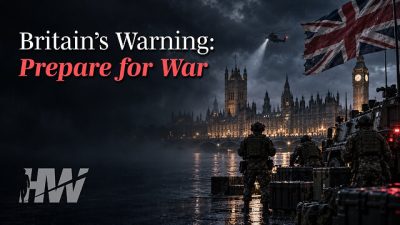
BRITAIN’S WARNING: PREPARE FOR WAR
or go to
Aletho News Archives – Video-Images
From the Archive
How Ukraine Tortured and Slaughtered Donbass
By Kit Klarenberg | Al Mayadeen | July 11, 2024
Almost immediately after the proxy war erupted, ISIS-tier footage of the torture and murder of Russians in Ukrainian custody emerged.
On July 6th, the New York Times published an astonishing investigation: In Ukraine, Killings of Surrendering Russians Divide an American-Led Unit. The article documents in grim detail how Chosen Company, an international volunteer battalion for Kiev, routinely executes Russian prisoners of war. It is the very first mainstream admission that this practice – a brazen breach of the Geneva Conventions, and a grave war crime – is widespread among Ukraine’s fighters, both foreign and homegrown. … continue
Blog Roll
 Aletho News
- Pentagon designates Chinese cultural centers national security threat
- Israel Demolishes Home Of Lebanese Journalist Whose Viral Film Exposed Pager Attack
- Record Oil, Empty Tanks: The UAE’s Miracle Recovery
- Burnham tackles Britain’s poverty with aggression in Yemen
- Peace in Ukraine: the easy way – or the hard way
- Trump & the Rrrrussians
- US taxpayer money laundered back through Ukraine – Musk
- Before COVID, an NIH lab chief proposed making a SARS-like bat virus more infectious
- Gates, Bourla on Trial in Netherlands Accused of ‘Great Reset’ Scheme at Vaccine Injury Hearing
- BRITAIN’S WARNING: PREPARE FOR WAR
- If Americans Knew
- An error has occurred; the feed is probably down. Try again later.
- No Tricks Zone
- Two New Studies Find Thwaites Glacier Melt Cannot Be Driven By Human Activity Or A Warming Ocean
- E-Cars Reduce CO2 Emissions By Only 41% Compared To Internal Combustion Engine Vehicles
- Predictions Made By Renowned Climate Professor Over Past Decades Have Been Proven To Be Poor
- New Study Suggests Large Regions Of The Pacific Ocean Have Been Cooling For The Last 80 Years
- Germany’s Green Energy Debacle: High Energy Costs Force Kahla Porzellan to Close After 182 Years!
- New Study: 50 Years Of The Most Aggressive ‘Net Zero’ Policies Can Only Affect The Global Climate By 0.03°C
- US September “Heat” Was No Record…Many Records Set Decades Ago
- Latest European Green Energy Debacle; Portugal’s Largest Flagship Solar Park Insolvent!
- Green Energy Debacle: German Expert Professor Fritz Vahrenholt Warns Of Severe Economic And Social Consequences
- Two More Paleo Reconstructions Affirm Meters-Higher Sea Levels Across Ireland, Brazil 7000-6000 Years Ago

