IRGC chief: Resistance sole way to liberation of Palestine
Press TV – April 28, 2022
Chief Commander of Iran’s Islamic Revolution Guards Corps (IRGC) Major General Hossein Salami says negotiations and accords brokered by the United States only aim to buy time for Israel, and weaken the Palestinian resistance front.
The senior commander made the remarks in a televised address to a ceremony in Gaza City on Thursday, on the eve of International Quds Day.
“The so-called peace treaties like the Camp David Accords, the Oslo Accords, the Sharm El Sheikh Memorandum etc have never been and will never be able to result in the liberation of Palestine.
“All such accords, which former US presidents, [former Israeli prime ministers Ehud] Olmert, [Benjamin] Netanyahu, Yitzhak Shamir and Yitzhak Rabin tried to seal, as well as the deal of century are nothing but deception and a conspiracy to marginalize jihad, weaken the resistance front, buy time and obliterate the awareness of the nations,” he stated.
He underscored that Palestinian people have come to realize that they will not achieve their goals except through resistance and struggle in the path of God (jihad).
Salami described the recent developments in the occupied Palestinian territories as a sign of the Israeli regime’s brutality and the strength of resistance groups, stressing that Palestinian resistance fighters have reinforced the Muslim Ummah and changed the balance of power in the region.
The IRGC chief hailed International Quds Day as a gift from Imam Khomeini, the late founder of the Islamic Republic in Iran, stating that the designation of the last Friday of the holy month of Ramadan for the event made Palestine a top priority for the entire Muslim world.
“Palestinian people are close to victory as the Zionist enemy is growing weaker. Weakness inside the Zionist entity is evident in its politics, economy and security apparatus, he said.
“All Muslims around the world are united with Palestinians in the struggle against the Israeli regime. Al-Quds and al-Aqsa Mosque are symbols of unity among Muslims in support of Palestinians,” Salami pointed out.
IRGC: Events herald Israel’s imminent end
Earlier, the IRGC said current developments in the occupied Palestinian territories show that the demise of Israel is imminent and the regime is doomed to end very soon.
“Recent developments, particularly the fact that the flames of Intifada (uprising) have passed through the inner walls of the regime, suggest that the Tel Aviv regime’s days are numbered and occupiers of holy al-Quds are quickly nearing their end,” the force said in a statement released on the eve of International Quds Day.
It lauded the decision by Imam Khomeini to designate the last Friday of the holy month of Ramadan as International Quds Day, describing the prudent initiative and historic move as a novel phenomenon and a source of pride for the Iranian nation to play an effective role in supporting the oppressed Palestinian nation.
The IRGC underlined that free and justice-seeking nations have joined forces more than ever to support the oppressed Palestinians, the Palestinian cause and the liberation of al-Quds.
“Zionists thought they could consign the Palestinian issue and the cause of al-Quds to oblivion by following satanic schemes such as the so-called ‘Deal of the Century’ and normalization of ties with some Arab countries. They were, however, wrong and their dream of sustainable and permanent security has now been broken,” the statement read.
The statement further stressed that the discourse of resistance and support for Palestine states that an end to the Israeli occupation, expulsion of occupiers, return of Palestinian refugees and free elections are the only solution to the Palestinian issue.
The IRGC went on to term any concession, including normalization of ties with the child-killing regime of Israel as an act of treason, emphasizing such bids are doomed to failure.
Hamas official: Normalization with Israel a crime
Meanwhile, a high-ranking official from the Palestinian Hamas resistance movement said the Arab states that have normalized diplomatic ties with the Israeli regime have not only committed a grave crime against Palestinians but also their own peoples.
Khalil al-Hayya, a member of the Hamas political bureau and the deputy chief in the Gaza Strip, made the remarks in an exclusive interview with Iran’s English-language Press TV television news network on Thursday ahead of International Quds Day.
Hayya slammed normalization with Israel as the regime kills Palestinian civilians, including women and children, in cold blood.
He stressed that establishment of relations with Israel only serves the best interests of the United States and the Tel Aviv regime.
The senior Hamas official said Palestinians are a nation under occupation and reserve the right to defend themselves against Israeli occupiers.
Hayya also condemned Israeli forces’ attacks against Palestinian worshippers at the al-Aqsa Mosque compound in the occupied Old City of al-Quds.
He said Palestinians are always ready to defend the holy place, warning that Israeli officials are seeking to alter its true image by preventing Palestinians from entering the site.
Russian airlines told to prepare to fly without GPS
Samizdat | April 22, 2022
Russia’s air traffic regulator has told carriers to learn to fly their planes without relying on the American Global Positioning System (GPS) satellite-based-navigation facility, newspaper Izvestia reported on Friday.
According to the letter from the regulator, Rosaviatsia, which was seen by the paper, it has instructed national airlines to prepare to cope without GPS after a March report by the European Union Aviation Safety Agency (EASA), which warned of increased cases of jamming and spoofing of the system’s signal after February 24 – the day Russia started its military offensive in Ukraine.
These were apparently registered in such areas as Russia’s western enclave, the Kaliningrad Region, the Baltics, eastern Finland, the Black Sea, the eastern Mediterranean, Israel, Cyprus, Lebanon, Syria, Turkey and northern Iran.
The interference has led to some planes changing their course or destination as the pilots were unable to perform a safe landing without the GPS, EASA has reportedly said.
According to Rosaviatsia, carriers should evaluate the risks of GPS malfunction and provide additional training to its pilots on how to act in such situations. The crews have also reportedly been told to instantly inform traffic control about any problems with a satellite navigation system.
The letter from the agency should be treated as a recommendation only and doesn’t constitute a ban on the use of GPS by the Russian airlines, the paper clarified.
Several Russian carriers, including major ones like Aeroflot and S7, have confirmed receiving a relevant message from the traffic regulator. However, they insisted that they didn’t encounter any problems with GPS over the past two months.
Rosaviatsia later clarified that “disconnection from GPS or its disruption won’t affect flight safety in Russia.”
The GPS signal isn’t the only source of information about the location of a plane at any given moment. Crews can also rely on the aircraft’s inertial navigation system, as well as ground-based navigation and landing systems, the agency said.
Last month, Dmitry Rogozin, head of the Russian space agency Roscosmos, warned that Washington may well disconnect the country from GPS as part of draconian sanctions imposed on it over the conflict in Ukraine.
On Friday, Rogozin took to Telegram to propose switching all of the country’s commercial planes from GPS to its Russian counterpart, Glonass.
However, it might be a complicated thing to do as Boeing and Airbus planes, mainly used by the country’s carriers, are designed to solely support the GPS technology.
World food prices hit new high – UN
Samizdat | April 10, 2022
Global food prices surged to a historic high last month on grain and edible oil supply woes brought about by the conflict in Ukraine, the UN Food and Agriculture Organization (FAO) said on Friday.
“World food commodity prices made a significant leap in March to reach their highest levels ever, as war in the Black Sea region spread shocks through markets for staple grains and vegetable oils,” the FAO said in a statement.
The FAO’s food price index rose by 12.6% to a record 159.3 points in March against February’s high of 141.4 points, “making a giant leap to a new highest level since its inception in 1990.” The index represents a measure of the monthly change in international prices of a basket of food commodities.
The current surge includes new all-time highs for vegetable oils, cereals, and meats, the agency said, noting that prices of sugar and dairy products “also rose significantly.”
The FAO also recently warned that food and feed prices could further jump by up to 20% as a result of the Russian-Ukrainian conflict and lead to a surge in global malnourishment.
Russia and Ukraine are the globe’s largest exporters of wheat, corn, barley, and sunflower oil. Ukrainian exports have been stalled, and sanctions placed on Russia may affect its own deliveries as Black Sea ports used to ship grain remain blocked. Industry analysts fear the planting season in Ukraine may also be affected by the current crisis.
The situation could lead to famine and food rioting in poor countries, especially in Africa, the head of the World Trade Organization (WTO), Ngozi Okonjo-Iweala, warned earlier this month. She specified that food imports from the Black Sea region were crucial for the survival of 35 African nations.
Meanwhile, the FAO also lowered the projection of global wheat production in 2022 to 784 million tons from last month’s forecast of 790 million, citing the possibility that at least 20% of Ukraine’s winter crop area would not be harvested. It also cut its forecast of global cereals trade in the current marketing year due to disruptions in Black Sea exports. The agency noted, however, that larger exports from India, the EU, Argentina and the US could somewhat offset the trend.
UK plans to designate Yemen’s Houthis as terrorists risk disaster warns aid agencies
MEMO | April 3, 2022
The British government’s plans to designate Yemen’s Houthi movement as a terrorist group risk worsening the humanitarian crisis in the country, leading aid agencies have warned in a letter to cabinet ministers.
According to a report yesterday by The Guardian, 11 British aid agencies, including Save the Children, Care, the International Rescue Committee and Islamic Relief sent the letter upon being informed that Home Secretary Priti Patel was pushing for the designation under the Terrorism Act as part of a review of British policy in Yemen.
There are fears that the move, described as a “blunt tool” could hamper aid efforts in the country, already on the brink of famine, as international banks and companies that import food, medicines and fuel could be impacted by terrorism laws, especially as the Houthi-led, de-facto government based in Sanaa control the most densely populated areas in the north.
“The likely ‘chilling effect’ on banks and other commercial actors could prove catastrophic for the millions of Yemenis already at risk from hunger, conflict and disease,” the letter stated.
“Grain importers and banks told humanitarian agencies they are unsure if they will be able to continue supplying Yemen if the UK proceeds with proscription of Ansar Allah,” the aid agencies explained, referring to the formal name of the Houthi group.
“[If] banks were to refuse transfers because of UK proscription, this would likely have a serious impact on remittances, which are a lifeline for 500,000 Yemeni families. Up to one in 10 Yemenis rely on remittances to meet their essential needs. They are the biggest source of foreign exchange into the country, making up 20% of the country’s GDP. More than 100,000 Yemenis living in the UK would no longer be able to support their loved ones.”
However, the plans have received the support of some of the Gulf states, especially Saudi Arabia and the UAE who have been hit by cross-border attacks by the Houthis. Both are joint-leaders of the Arab coalition which militarily intervened in the country in 2015 at the request of the internationally-recognised Yemeni government following the fall of Sanaa to the Houthi forces and their military allies the year before.
Last year the Houthis were listed as a Foreign Terrorist Organisation towards the end of former US President Donald Trump’s administration, which was condemned by human rights groups at the time who warned it could further exacerbate the humanitarian crisis. However, President Joe Biden formally delisted the movement amid announcements that the US would end its support for the Saudi-led war. Earlier this year, Biden said he would consider relisting the Houthis as a terrorist group and it has become a source of tensions between Washington and its Gulf allies, Saudi and the UAE.
Israel to send military attache to Bahrain soon, says envoy after Negev summit with Arab states
Press TV – March 29, 2022
Israel will “soon” appoint a military attache to the US Navy’s Fifth Fleet headquarters in Bahrain, says the Israeli ambassador to Manama, as diplomats from the Persian Gulf country and three other Arab states attend a meeting in the Negev desert in occupied Palestine.
“This will happen soon – an attache to the fleet,” Eitan Naeh told Israel’s Army Radio. “It is in the midst of various bureaucratic processes. I reckon that, by the summer, we will have a fuller staff, along with other officials who will join the embassy.”
Last month, the Israeli minister of military affairs, Benny Gantz, visited the US fleet in Bahrain and met with its commander, Vice Admiral Brad Cooper, and Bahraini naval commanders.
Bahrain, a tiny island in the Persian Gulf and a former Iranian province, is some 300 kilometers to the south of the coastal Iranian province of Bushehr, which hosts a key nuclear power plant.
In Tehran, an Israeli presence so close to the Bushehr nuclear site is deemed a threat to the country’s national security, as the regime in Tel Aviv has in the past covertly carried out acts of sabotage against Iran’s nuclear facilities and assassinated Iranian scientists while overtly threatening to launch attacks on Iran’s nuclear program.
On Sunday, top diplomats from the United Arab Emirates (UAE), Morocco, Bahrain, Egypt, the United States, and Israel met in the Negev desert to press ahead with a US-brokered normalization of relations between the Arab states and the Israeli regime.
Egypt was the first Arab country to have diplomatic ties with Tel Aviv, while the UAE and Bahrain reached normalization agreements with Israel in 2020 through the mediation of former US President Donald Trump’s administration.
Morocco and Sudan later reached similar US-brokered deals, which have been roundly condemned by Palestinians as a brazen betrayal of their cause.
US, Israel launch naval exercise
Also on Sunday, the US Navy’s Fifth Fleet and the Israeli Navy launched a 10-day maritime exercise in the Red Sea.
The drill, dubbed Intrinsic Defender, focuses on maritime security operations, explosive ordnance disposal, health topics, and unmanned systems integration.
Over 300 American personnel as well as US Navy guided-missile destroyer USS Cole (DDG 67), dry cargo ship USNS Wally Schirra (T-AKE 8), and various unmanned vessels are also scheduled to participate in the exercise.
The drill comes amid Washington’s diminishing role in the region, including its withdrawal from Afghanistan and a change in its role in Iraq from military to advisory under the pressure of Iraqi resistance groups.
The US military is also expected to be expelled from Syria, where it has retained an illegal military presence throughout a foreign-sponsored conflict that began in 2011.
Observers believe Washington is scaling down its presence in the Middle East to focus on a large-scale confrontation with China, which is poised to soon overtake the US economically.
US resets the containment of Iran
BY M. K. BHADRAKUMAR | INDIAN PUNCHLINE | MARCH 28, 2022
The summit of Arab diplomats on March 27-28 hosted by Israeli Foreign Minister Yair Lapid in the southern Negev Desert is doubtless a landmark event. The UAE’s Abdullah bin Zayed Al Nahyan, Bahrain’s Abdullatif bin Rashid Al-Zayani, Morocco’s Nasser Bourita, and Egypt’s Sameh Shoukry are the Arab participants, while the visiting US Secretary of State Antony Blinken becomes the sole “extra-regional” participant.
The expectation that more West Asian countries would join the Abraham Accords failed to materialise, but the security and military ties between Israel, UAE, Bahrain — and Saudi Arabia behind the curtain — have deepened. Egypt also joins the nascent partnership.
There is much symbolism surrounding the venue of the Arab-Israeli summit: Israel’s first prime minister, David Ben-Gurion, lived at Sde Boker and he is buried there, overlooking the Zin wilderness. Lapid hopes to take his guests to visit the gravesite.
To be sure, wherever Blinken goes, the agenda would include Ukraine conflict and he is sure to make a pitch for isolating Russia and urge his Arab interlocutors to join Western efforts in support of Ukraine, but it has had limited success even with his Israeli hosts, much less so with the US’ Arab allies.
For a variety of reasons, Israel is wary of antagonising Russia (although under US pressure it set up a field hospital inside Ukrainian territory to treat those injured by Russian forces and has also sent several shipments of humanitarian supplies to the war zone.) Israel has refused repeated requests from Kiev for weapons.
Israel also opted out of imposing sanctions against Russian oligarchs. This rankles the Biden administration. The acerbic tongue of US Under Secretary of State for Political Affairs Victoria Nuland lashed out during a Channel 12 interview, “You (Israel) don’t want to become the last haven for dirty money that’s fuelling Putin’s wars.”
Israel ignored her barb. Israel sought a mediatory role in the conflict initially but lately stepped back, and, at any rate , Russia does not really need mediators to bring this conflict to an end once its special operation is successfully concluded. On the whole, Israel tries to walk a tightrope to maintain good relations with both Ukraine and Russia.
As for Gulf states, they do not even pretend to take a neutral stance. None of them has rallied to the western call to impose sanctions against Russia. The foreign ministers of Qatar and the UAE visited Moscow recently to discuss expansion of bilateral relations.
The crux of the matter is that the major oil producing countries of the Gulf would have congruence of interests with Russia to preserve OPEC+ not only to maintain their present income level, but also are in anticipation of the lifting of US sanctions against Iran leading to full flow of Iranian crude back into the global oil markets.
The point is, Iran remains a great oil power, with an estimated 157 billion barrels of proven crude oil reserves, nearly 10 percent of the world’s total and 13 percent of those held by the OPEC. Its habitation within the OPEC+ is an absolute must for all oil producing countries. Now, Russia has a major role to play to leverage both short-term and longer-term bearish effects of Iran’s entry on global oil prices.
Experts estimate that Iran could see an 80 percent recovery of full oil production within six months and a 100 percent recovery within 12 months, and in the immediate terms, once sanctions are lifted, its overnight impact may already manifest as a 5-10 percent fall in the oil prices.
Nonetheless, Ukraine conflict aside, the real significance of the Israel-Arab diplomatic summit in the Negev Desert should be sought somewhere else. Prima facie, it is a diplomatic coup for Israel, as its efforts to integrate into the Arab family are making progress. What lends enchantment to the view is that this bucks the overall trend of the US’ regional influence in West Asia.
Prime Minister Naftali Bennett’s accent on diplomacy to win friends and influence neighbours is proving productive and Israel is no longer depending on the US to cut new paths for it to navigate as a regional state. This is a paradigm shift.
Principally, Israel taps into the angst in the Arab world that Iran is poised to surge as a regional power very shortly and the future trajectory of Iranian policies remain unclear. In fact, this is the leitmotif of the diplomatic event in the Negev Desert.
In immediate terms, Israel and the Arab states believe that the intensifying drone attacks by the Houthis lately is only possible with the help and even participation by Iran’s Islamic Revolutionary Guard Corps, which provides missiles, rockets, drones, intelligence equipment and training. They apprehend that Iran’s resistance politics are signalling a new cutting edge, as the recent missile strike on alleged Israeli assets in Erbil in northern Iraq showed.
Saudi Arabia, Bahrain and the UAE have been depending on US-made anti-missile defences, mainly the Patriot systems, but their performance so far has been less than satisfactory. Thus, a stunning idea has taken shape lately in the nature of building an architecture of “joint air defences” between Israel, the UAE, Bahrain and Saudi Arabia.
After all, Israel has the expertise in developing a multi-layered air defence system devolving upon the famous Iron Dome, David’s Sling systems (which can intercept missiles up to 200km away) and Arrow batteries, which are capable of intercepting and destroying long-range missiles at ranges of up to 2,000km, including ballistic missiles. The three layers of Israeli systems are integrated and assisted by advanced radars and other early warnings equipment.
Interestingly, coincidence or not, the Israeli air defences are also linked to a powerful American radar, stationed in the Negev Desert which is where the Arab diplomats from Egypt, Bahrain and the UAE have gathered for the 2-day event.
Blinken’s mission at the summit is principally to get the regional allies accustomed to the imminent conclusion of the negotiations at Vienna leading to the removal of US sanctions against Iran. The Biden administration is yet to take the plunge on lifting the designation of the IRGC as a “Foreign Terrorist Organisation”. The US’s regional allies, especially Israel, have opposed such a move tooth and nail.
But the US has a sense of urgency about Iran’s increased oil output entering the world market. That said, however, Washington’s containment policy against Iran is not going to be mothballed. Rather, it will continue in a newer form. In fact, the lifting of sanctions without any reciprocal assurances from Tehran as regards its regional policies necessitates that the containment strategy will have to remain as the US’ geopolitical tool for the foreseeable future.
The Arab-Israeli summit with Blinken’s participation underscores that the US-Iran entanglement is being reset. There is no question that the JCPOA is of vital importance to check Iran’s nuclear programme. Israel also tends to go along with that thinking lately. The Abraham Accords is providing the foundation for a new US-backed security architecture in West Asia to counter Iran.
Israel’s balancing act in Ukraine is likely to backfire
By Ramzy Baroud | MEMO | March 24, 2022
Israel’s balancing act in the Russia-Ukraine war is likely to falter soon, simply because the resulting NATO-Russia conflict is expected to last for years, not weeks or months. Eventually, Israel would have to make a choice. Alas, whatever that choice may be, Israel will stand to lose.
From the first day of the war, Israel somehow became involved. Top Israeli officials, including the country’s Prime Minister Naftali Bennett, began calling their Ukrainian and Russian counterparts. Initially, some in the media surmised that Israel is concerned because of the large Jewish populations in both Ukraine and Russia.
However, the headlines quickly moved on, with terms such as ‘Israeli oligarchs‘, ‘Jewish oligarchs‘, and other combinations of Israel-friendly oligarchs dominating the news. Business interests quickly began replacing the supposed concern over the safety and welfare of ordinary Ukrainians.
The latter fact was demonstrated in a most tragic way when Israeli Channel 12 reported, on 10 March, that many Ukrainian refugees were “stuck at Ben Gurion Airport, facing cold and callous treatment”.
Israeli hypocrisy reared its ugly head once more on 26 February, when Israeli Minister of Aliyah and Integration, Pnina Tamano-Shata, said in a statement, “We call on the Jews of Ukraine to immigrate to Israel – your home.”
It is obvious that Israel does not care about the welfare of Ukrainians or, frankly, Ukrainian Jews either. After all, these newcomers to Israel would eventually be incorporated into the country’s illegal settlement enterprises. We know this from history and particularly from the history of the migration of Russian Jews to Israel, who arrived in their hundreds of thousands in the early 1990s. Not only do many of them now reside in illegal Jewish settlements, but to some extent, they also represent the backbone of some of Israel’s far-right political parties, the likes of Avigdor Lieberman‘s Yisrael Beiteinu.
Aside from the fact that a country moving its residents to an occupied territory is a stark violation of international law, it is also a violation of the rights of these vulnerable refugees, who will be expected to live in another war zone in the service of Israel’s Zionist ideology.
It is unfortunate, but typical that Israel finds opportunities to bolster its settler colonial model in occupied Palestine by exploiting the tragedies of other societies to its advantage. It has done so many times in the past: in Ethiopia, following the famine in 1984, in Russia, following the collapse of the Soviet Union, and in France, following the Paris terrorist attacks in 2015.
While France was still trying to fathom the enormity of its tragedy when 130 people were killed in broad daylight on 13 November, 2015, then Israeli Prime Minister Benjamin Netanyahu called on French Jews to move to Israel. “Of course, Jews deserve protection in every country, but we say to Jews, to our brothers and sisters: Israel is your home,” he said.
Shamelessly, Israel finds tragedies as political opportunities worth exploiting. While this quality is not unique to Israel – the Russia-Ukraine war has also exposed the opportunism of other countries around the world – Israel’s exploitation is doubly shameful as it hopes that war-torn Ukraine would help it sustain its own war waged against the Palestinian people.
However, serious cracks in the Israeli balancing acts are already on display. On 11 March, US Under-Secretary of State for Political Affairs, Victoria Nuland called on Israel to join sanctions against Russia. “We’re asking as many countries as we can to join us. We’re asking that of Israel as well,” she said.
Understandably, much of that pressure is coming from the Ukrainian government itself. Volodymyr Zelensky has repeatedly called on Israel to reciprocate for the Ukrainian support of Israel during its genocidal wars on the Palestinians. Indeed, Zelensky has taken every opportunity to express his solidarity with Israel in the past, even though Palestinians were the ones dying in their thousands.
“The sky of Israel is strewn with missiles. Some cities are on fire. There are victims. Many wounded. Many human tragedies,” the Ukrainian President tweeted on 12 May, 2021. Even during his inauguration speech in May 2019, Zelensky did not forget to bring Israel into his budding political discourse. “We must become Icelanders in soccer, Israelis in defending our land, Japanese in technology,” he said.
Still, aside from the occasional lip service, Israel insisted on remaining largely neutral. Analysts have explained the Israeli position in terms of Israel’s concern over Russia’s possible retaliation in Syria, for example, by allowing Iran greater geopolitical access to Syria that may compromise Israel’s ‘security.’ Others cited Israel’s deep financial interests, especially through the aforementioned oligarchs. Whatever the reasons may be, pressure is mounting on Israel to completely abandon its interests in Russia in favour of fully supporting Ukraine.
On 20 March, Zelensky upped the ante when he gave a speech at the Israeli Knesset. Not only did the Ukrainian President ask for Israel to provide Ukraine with an Iron Dome similar to the one that Tel Aviv uses to intercept Palestinian resistance rockets, he went much further, by infusing the Holocaust, an extremely sensitive discourse that only Israeli officials are allowed to use – and, indeed, manipulate – to silence any criticism of Israel internationally.
“The Nazis called this ‘the final solution to the Jewish question,'” Zelensky said. “And now, in Moscow, (…) they’re using those words, ‘the final solution’. But now, it’s directed against us and the Ukrainian question.”
For the Ukrainian President, although himself Jewish, to dare strike such a historical parallel to serve his country’s interests outraged many Israelis. “I admire the Ukraine president and support the Ukrainian people in heart and deed, but the terrible history of the Holocaust cannot be rewritten,” Israeli Communications Minister, Yoaz Hendel, tweeted. Many others joined in, in Israel and the US, attacking Zelenky’s supposed audacity.
Aside from its fear that injecting the Holocuast as part of Ukraine’s anti-Russian discourse could deprive Israel from its monopoly over the use and misuse of that historic tragedy, the Israeli official response to Zelensky also further exposed Israel’s stance on the war as defensive, suspicious and uncertain.
As the war rages on, Israel’s balancing act is becoming increasingly unsustainable. By allying fully with Ukraine, Israel could find itself at risk of losing Russia’s somewhat tolerant position pertaining to Israel’s ‘security’ in Syria and throughout the Middle East. Israel could also likely find itself at odds with Russia’s allies and semi-allies in China, India and other Asian countries. However, taking Russia’s side, a less likely scenario, means a break up of Israel’s historic alliance with its main benefactors in Washington and other European capitals.
As the world is likely to splinter among various power camps, Israel will find itself torn between its interests in the West, on the one hand, and the massive, emerging markets in the East, on the other. Though the West’s margin for tolerance when it comes to Israel by far exceeds its patience with other countries, it is only a matter of time before Israel will be expected to make a clean break from Russia and its economic, political and military interests that are tied to Moscow. When that happens, the geopolitical balance of power in the Middle East will likely shift against Israel, a scenario that would become even more difficult for Tel Aviv, if Iran manages to negotiate a return to the nuclear deal with the US and its western allies.
Though from the onset, Israel attempted to exploit the Russia-Ukraine war to its advantage, future scenarios are quite bleak for Tel Aviv.
Russian FM: We never betray friends, Iran very close to us
Press TV – March 20, 2022
Russian Foreign Minister Sergei Lavrov says his country, unlike the US, is not seeking “selfish interests” by the restoration of the 2015 Iran nuclear deal.
Lavrov made the remarks on Saturday when he was asked whether the revival of the Joint Comprehensive Plan of Action (JCPOA) was advantageous to Moscow, given that it could lead to the resumption of Iran’s oil supply to the global market.
“We never betray our friends in politics. Venezuela is our friend, and Iran is a state that is very close to us. Secondly, we do not pursue selfish interests, unlike the Americans,” he told reporters.
“You can see what they [the Americans] are actually doing, trying to spite Russia and teach it a lesson. Ah, well, let the regime in Caracas be. Let Iran be, let us reinstate the program as soon as we can just to punish Russians.”
Earlier this month, US President Joe Biden announced a ban on all Russian oil, gas and energy imports over the military operation in Ukraine.
The measure sent the already skyrocketing oil and gasoline prices ever higher, with reports saying that Washington is potentially looking at Iran and Venezuela for oil talks
Biden also tried to contact Persian Gulf Arab countries to seek help amid rising energy prices.
“So, the Americans have been contacting Saudi Arabia, the Emirates and Qatar regarding oil and gas. All of those countries, just like Venezuela and Iran, clearly said: when we discuss issues pertaining to the appearance of new actors in the oil market, all of us are committed to the OPEC+ format, where quotas for every actor are discussed and agreed upon by consensus,” Lavrov said.
“For now, I see no reason to believe that this mechanism may somehow be dismantled. No one is interested in that.”
Ireland says JCPOA revival can ease oil prices
In another development on Saturday, Irish foreign minister Simon Coveney said a revival of the JCPOA could help ease global oil prices by bringing a major producer back into the market.
“Certainly having a big new player in the market, if you like, Iranian crude oil coming back into the market with the removal of sanctions, would be a very attractive prospect in terms of reducing pressure on oil prices, because of sanctions on Russia, which are likely, I think, to remain for quite some time,” he said.
“I think that is an added incentive to try to get a deal done now.”
Earlier this month, the talks in Vienna, aimed at resurrecting the JCPOA, were paused for an undetermined period of time despite reports suggesting that they were in final stages.
Iranian officials have repeatedly said the United States should remove all illegal sanctions against the Islamic Republic in a verifiable manner and guarantee that a new US administration would not breach the JCPOA once again.
Former US president Donald Trump unilaterally left the JCPOA in May 2018 and re-imposed the anti-Iran sanctions that the deal had lifted. He also placed additional sanctions on Iran under other pretexts not related to the nuclear case as part of his “maximum pressure” campaign.
In May 2019, following a year of strategic patience, Iran decided to let go of some of the restrictions on its nuclear energy program, resorting to its legal rights under the JCPOA, which grants a party the right to suspend its contractual commitments in case of non-compliance by the other side.
The Biden administration says it is willing to compensate for Trump’s mistake and rejoin the deal, but it has retained the sanctions as leverage.
US to remove IRGC from terror blacklist
BY M. K. BHADRAKUMAR | INDIAN PUNCHLINE | MARCH 19, 2022
Axios reported earlier this week citing Israeli officials and US sources that the Biden administration is considering the removal of Iran’s Islamic Revolutionary Guard Corps [IRGC] from its terror blacklist, in return for a ‘public commitment from Tehran to de-escalation in the region.’
It is improbable that Tehran will give any such ‘public commitment’. But, a ‘private commitment’? Well, that may be possible. Indeed, the Axios report acknowledged that ‘The IRGC designation is not directly related to the nuclear deal, and any decision would take the form of a separate bilateral understanding between the US and Iran.’
No doubt, the lifting of the US sanctions is incompatible with the ban on the IRGC. The IRGC is deeply incorporated into the country’s economy and business. According to some estimates, up to 60% of Iran’s economy — including both state and private companies — is controlled by individuals and entities linked to the IRGC.
And the IRGC is well represented in the organs of the state. Executing a nuclear deal at Vienna while excluding the IRGC elites from plucking its low-hanging fruits is simply unrealistic. Arguably, even Americans wouldn’t want that to happen.
It is entirely conceivable that they too are eagerly looking forward to doing business with the IRGC top brass. After all, it’s best to do business with those who matter most in Tehran.
On balance, therefore, the Biden administration will concede Iran’s demand to drop the designation of the IRGC as a terrorist organisation. The crux of the matter is that the US is desperate to normalise with Iran since they also see potential to erode Iran’s friendly ties with Russia. The immediate goal of the Biden administration is to release Iran’s oil reserves. The amount of Iranian oil that may enter the market once sanctions are lifted is estimated at over two million barrels a day!
That said, even a US-Iran ‘bilateral understanding’ over the activities of the IRGC is not easy to achieve. The IRGC functions directly under the Supreme Leader’s supervision. Clearly, while from the American side, it is rather a formality requiring an executive order by the state department to legitimise IRGC, from the Iranian part, there is an ‘operational angle’ to it — namely, a commitment to end Iran’s expansion in the so-called Shiite Crescent of Syria, Lebanon and Iraq.
That involves the jettisoning of Quds Force’s ‘resistance’ and settling for peaceful co-existence with Israel. Does that look simple?
But then, when it comes to Iran, nothing is simple, because nothing is iron-cast. Didn’t Iran help in the US invasion of Afghanistan and the creation of a puppet government in Kabul? Resistance politics too was the child of difficult times when the country was besieged. With the lifting of sanctions, Iran is unbound for the first time after the 1979 revolution.
To be sure, there is a growing uneasiness among regional states — and, possibly, even in Moscow — about Iran’s future trajectory. The Raisi government now proclaims a ‘balanced foreign policy’ — ‘neither with the West nor the East.’ The framing of the paradigm in this suggests that Tehran anticipates the world community to queue up on the road to Tehran.
Iran’s few steadfast friends in the region may begin to wonder what lies in the womb of time. Syrian President Assad’s visit to the UAE on Friday hints at realignments. Assad hopes to create more space for himself by rejoining the Arab family. Now, he has never been an acolyte of ‘resistance’ and is well aware that the UAE is Israel’s closest regional ally in West Asia.
The bottom line is that Iran will certainly seek integration with the industrial world, which will help it get the best that money can buy in technology or goods and services. But Iran also harbours ambitions that it will not be a junior partner of the West.
This is going to be a trapeze act. Integration into the world economy will require the freeing of market forces, which, in turn, carries attendant risks, as the pent-up social and economic discontent within the country seeks political expression and the genie gets out of the bottle. Colour revolution can take many forms, as current history shows. When George Soros and company move in, nothing is impossible!
Iran, of course, will be in doubts about the US’ intentions, too. Presently, Washington needs an accommodation with Iran devolving upon its capacity to pump more oil. But the US’ male-fide intentions are yet to be exorcised. And the crimes it has committed to the Iranian nation are no secret, either.
Above all, there is never any consistency in the US policies. Its self-interests come first and last. Iran doesn’t have to look far to see in the next-door Gulf region the debris of the US’ discarded Arab alliances once their purpose was served.
Zelensky and the Zionist Plot To Provoke Russia
NAUMAN SADIQ | BLACKLISTED NEWS | MARCH 15, 2022
Ukrainian President Volodymyr Zelensky took to Twitter [1] Sunday to express heartfelt gratitude to Facebook owner Mark Zuckerberg for taking a clear stand on the Ukraine crisis and letting users violate rules against hate speech: “War is not only a military opposition on UA land. It is also a fierce battle in the informational space. I want to thank @Meta and other platforms that have an active position that help and stand side by side with the Ukrainians.”
“As a result of the Russian invasion of Ukraine we have temporarily made allowances for forms of political expression that would normally violate our rules like violent speech such as ‘death to the Russian invaders.’ We still won’t allow credible calls for violence against Russian civilians,” a Meta spokesperson said in a statement [2] March 11.
It naturally piques the curiosity why the social media behemoth is bending over backwards to violate its own longstanding regulations against hate speech to let Zelensky win the propaganda war in “the informational space” unless one takes into account the obvious fact that both Zuckerberg and Zelensky are Zionist Jews and take orders from Israel’s clandestine security agencies.
Born to Oleksandr Zelensky and Rymma Zelenska, both Russian-speaking Jews, in Jan. 1978, Volodymyr Zelensky was groomed by covert Mossad operatives in Ukraine since his student life while he was studying law at the Kryvyi Rih National University.
Instead of pursuing legal career, he chose acting as a profession at the behest of his influential patrons to gain nationwide publicity, particularly through the comedy television series “Servant of the People” in which Zelensky “prophetically played” the role of the Ukrainian president.
In fact, his production company Kvartal 95, which produces films, cartoons and television shows, was generously funded by deep pockets of Zionist billionaires. Comically exposing corruption and sleazy dealings of Ukraine’s politicians and oligarchs, the series “Servant of the People” aired from 2015 to 2019 and struck a chord with Ukrainian masses.
Riding on the wave of media publicity, Zelensky won a landslide presidential election in 2019. Later, his political party, which he “coincidentally” named “Servant of the People,” won an overwhelming victory in a snap legislative election held shortly after his inauguration as president.
In the 2001 census, a third of Ukraine’s over 40 million population registered Russian as their first language. In fact, Russian speakers constitute a majority in urban areas of industrialized eastern Ukraine and socio-culturally identify with Russia. Ukrainian speakers are mainly found in sparsely populated western Ukraine and in rural areas of east Ukraine.
Russian, Belarusian and Ukrainian together belong to the East Slavic family of languages and share a degree of mutual intelligibility. Thus, Russians, Byelorussians and Ukrainians are one nation and one country whose shared history and culture goes all the way back to the golden period of 10th century Kyivan Rus’.
What do Ukrainians have in common with NATO powers, their newfound patrons, besides the fact that humanitarian imperialists are attempting to douse fire by pouring gasoline on Ukraine’s proxy war by providing caches of lethal weapons to militant forces holding disenfranchised Ukrainian masses hostage.
Russians and Ukrainians share Byzantine heritage and their longstanding dispute with Zionist Jews goes back to the medieval era. Byzantine emperors regarded Jewish subjects as gentiles and were particularly wary of wealthy Jewish merchants maintaining a stranglehold over banking and commerce sectors of the empire.
In addition, Russians and Ukrainians together belong to the Greek Orthodox Church, one of the oldest Christian denominations whose history goes all the way back to Christ and his apostles. Protestantism and Catholicism are products of the second millennium after a Roman bishop of the Byzantine Empire declared himself pope following the 1054 schism between the Orthodox and Catholic Churches.
Since 2019, after being elected president through questionable methods, Zelensky has surreptitiously been working on a clandestine project to foment a crisis with Russia on a flimsy pretext. Any other political leader with an iota of rational faculties, even somebody as rogue as his predecessor Petro Poroshenko, would promptly have agreed to the Kremlin’s reasonable proposal that Kyiv must give a solemn pledge it won’t join the transatlantic NATO military alliance.
Not only did he scornfully rebuff the Russian proposal but he also let Ukraine’s security forces stage joint military exercises and naval drills alongside NATO forces in the Black Sea right under Russia’s nose. His reckless disregard for the suffering of Ukrainian masses with whom he does not identify being a Zionist himself and suicidally provoking Russia into an armed confrontation aside, he is merely a pawn in the grand scheme of things.
Israel’s Zionist regime, to whom not only Ukrainian but also American presidents bow, has a score to settle with Russia. Donald Trump literally forced four Arab states, the UAE, Bahrain, Sudan and Morocco, to sign so-called Abraham Accords lending official recognition to Israel at the coaxing of his Jewish son-in-law Jared Kushner and in order to canvass Zionist lobbies for support in the run-up to Nov. 2020 presidential elections.
Washington’s principal objective in Syria’s proxy war was ensuring Israel’s regional security. The United States Defense Intelligence Agency’s declassified report [3] of 2012 clearly spelled out the imminent rise of a Salafist principality in northeastern Syria – in Raqqa and Deir al-Zor which were occupied by the Islamic State from 2014 to October 2017 – in the event of an outbreak of a civil war in Syria.
Under pressure from the Zionist lobbies in Washington, however, the Obama administration deliberately suppressed the report and also overlooked the view in general that a proxy war in Syria would give birth to radical Islamic jihadists.
The hawks in Washington were fully aware of the consequences of their actions in Syria, but they kept pursuing the ill-fated policy of nurturing militants in the training camps located in Syria’s border regions with Turkey and Jordan in order to weaken the anti-Zionist Bashar al-Assad government.
The single biggest threat to Israel’s regional security was posed by the Iranian resistance axis, comprising Iran, Syria and Lebanon-based Hezbollah. During the course of the 2006 Lebanon War, Hezbollah fired hundreds of rockets into northern Israel and Israel’s defense community realized for the first time the nature of threat that Hezbollah posed to Israel’s regional security.
Those were only unguided rockets but it was a wakeup call for Israel’s military strategists that what would happen if Iran passed the guided missile technology to Hezbollah whose area of operations lies very close to the northern borders of Israel.
Therefore, the Zionist lobbies in Washington persuaded the Obama administration to orchestrate a proxy war against Damascus and Lebanon-based Hezbollah in order to dismantle the Iranian resistance axis against Israel.
But following the beginning of the Ukraine crisis in 2014 after Russia occupied the Crimean peninsula and Washington imposed sanctions on Russia, the Kremlin’s immediate response to the escalation by Washington was that it jumped into the fray in Syria in September 2015, after a clandestine visit to Moscow by General Qassem Soleimani, the slain commander of the IRGC’s Quds Force who was assassinated in an American airstrike on a tip-off from the Israeli intelligence at the Baghdad airport on January 3, 2020.
When Russia deployed its forces and military hardware to Syria in September 2015, the militant proxies of Washington, the Zionist regime and their regional clients were on the verge of driving a wedge between Damascus and the Alawite heartland of coastal Latakia, which could have led to the imminent downfall of the Bashar al-Assad government.
With the help of Russia’s air power and long-range artillery, the Syrian government has since reclaimed most of Syria’s territory from the insurgents, excluding Idlib in the northwest occupied by Turkish-backed militants and Deir al-Zor and the Kurdish-held areas in the east, thus inflicting a humiliating defeat on Washington, the Zionist regime and their regional allies, Turkey, Jordan and the Gulf States.
Over the years, Israel has not only provided material support to militant groups battling Damascus – particularly to various factions of the Free Syria Army (FSA) and al-Qaeda’s Syrian affiliate al-Nusra Front in Daraa and Quneitra bordering the Israel-occupied Golan Heights – but Israel’s air force has virtually played the role of the air force of the terrorists and mounted hundreds of airstrikes in Syria during the decade-long conflict.
In an interview to the New York Times [4] in January 2019, Israel’s former Chief of Staff Lt. General Gadi Eisenkot confessed that the Netanyahu government approved his recommendations in January 2017 to step up airstrikes in Syria. Consequently, more than 200 Israeli airstrikes were launched on the Syrian targets in 2017 and 2018, as revealed [5] by Israeli Intelligence Minister Israel Katz in September 2018.
In 2018 alone, Israel’s air force dropped 2,000 bombs in Syria. The purported rationale of the Israeli airstrikes in Syria has been to degrade Iran’s guided missile technology provided to Damascus and Lebanon-based Hezbollah, which poses an existential threat to Israel’s regional security. However, after Russia provided S-300 air defense system to the Syrian military after a Russian surveillance aircraft was shot down by Syrian air defenses during an Israeli incursion into the Syrian airspace on September 2018, killing 15 Russians onboard, Israeli airstrikes in Syria have been significantly scaled down.
Following the friendly-fire incident, though Israel has mounted occasional airstrikes at the capital Damascus, in Daraa and Quneitra in southern Syria and Deir al-Zor in eastern Syria, Israeli airstrikes in northwest Syria, including Aleppo, Hamah and Homs, which is within the range of advanced missile defense systems deployed at Khmeimim Air Base near coastal Latakia, have almost entirely ceased.
Last month, the Kremlin issued an unequivocal condemnation [6] of recent Israeli airstrikes in Syria as “crude violation” of Syria’s sovereignty that up until now were reluctantly tolerated by the Russian forces based in Syria’s Tartus naval base and Khmeimim airbase southeast of Latakia, and also pledged that the Russian Air Force would conduct joint air patrols alongside the Syrian Air Force that would pre-empt the likelihood of further Israeli airstrikes.
“Israel’s continuing strikes against targets inside Syria cause deep concern,” Russian Foreign Ministry spokeswoman Maria Zakharova said. “They are a crude violation of Syria’s sovereignty and may trigger a sharp escalation of tensions. Also, such actions pose serious risks to international passenger flights.”
Although Israel claims its air campaign in Syria is meant to target Iran-backed militias, the airstrikes often kill Syrian soldiers. Syrian state media said one soldier was killed and five more were wounded in one of the latest Israeli attacks at Damascus, which occurred on Feb. 9.
Russia has held talks with Israel on Syria, and said last month it would begin joint air patrols with Syria. The patrols will include areas near the Golan Heights in southern Syria bordering Israel, a frequent site of the Israeli airstrikes, and Israel is said to be considering discontinuing the strikes altogether or slowing them down significantly.
The Times of Israel noted that this marked a momentous change in policy for Russia: “Following the patrol, Ynet reported that Israeli military officials were holding talks with Russian army officers to calm tensions.”
The report added, “Israeli officials were struggling to understand why Russia, which announced that such joint patrols were expected to be a regular occurrence moving forward, had apparently changed its policy toward Israel.” The report claimed that Israel might limit its air campaign in Syria as a result of Russia’s inexplicable policy reversal in Syria.
In conclusion, it favored Israel’s strategic objectives to escalate the conflict in Ukraine in order to divert Russia’s attention and military resources to Eastern Europe, as the Zionist regime would then get a free hand to mount airstrikes in Syria and Lebanon with impunity, and might even attempt to rekindle the decade-long proxy war alongside its Gulf Arab, Turkish and Jordanian allies in order to eliminate the security threat posed by the Iran-led resistance axis comprising Syria and Lebanon-based Hezbollah once and for all.
Citations:
[1] Zelensky tweet thanking Facebook for allowing hate speech:
[2] Facebook allows posts urging violence against Russian invaders:
[3] US Defense Intelligence Agency’s declassified report of 2012:
[4] An interview with Lt. Gen. Gadi Eisenkot, Israel’s chief of staff:
[5] Israel Katz: Israel conducted 200 airstrikes in Syria in 2017 and 2018:
[6] Russia cites ‘deep concern’ over ongoing Israeli strikes in Syria:
Nauman Sadiq is an Islamabad-based geopolitical and national security analyst focused on geo-strategic affairs and hybrid warfare in the Af-Pak and Middle East regions. His domains of expertise include neocolonialism, military-industrial complex and petro-imperialism. He is a regular contributor of diligently researched investigative reports to alternative news media.
Featured Video

Thomas Fazi: NATO’s Hybrid Warfare – Deception & Permanent War
or go to
Aletho News Archives – Video-Images
Book Review
The Zeolite Book — First Edition, 2026, Paperback
The volcanic mineral medicine will not patent — for the toxic burden medicine will not name
Lies are Unbekoming – October 30, 2026
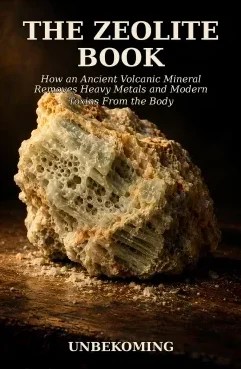 Zeolite is old. It is in Roman concrete that has held for two thousand years. It’s in the water filters of ancient cisterns. It’s in the stomachs of Pacific livestock whose keepers knew, somehow, that this grey crumbling rock made the animals healthier. It’s in Soviet clinical protocols from the 1960s. It’s in the standard emergency response to the Chernobyl explosion.
In 1986, after the Chernobyl reactor failure, the Soviet Union manufactured and distributed natural zeolite at industrial scale — for soil remediation, for livestock feed, for human consumption, for the cleanup itself. Karl Hecht, who had been director of the Institute for Experimental and Clinical Pathophysiology at the Charité of Humboldt University Berlin, spent the six decades after that building the clinical research base — on silicon’s role in human health, on zeolite’s clinical safety, on its applications in ageing. In 2018, Pavelić and colleagues published a comprehensive clinical safety review of natural clinoptilolite in Frontiers in Pharmacology. In 2019, Mastinu analysed its binding affinities. In the Western medical literature, these works sit largely uncited.
What has not been treated at book length, until now, is how a volcanic mineral with six decades of Soviet clinical work behind it, two major peer-reviewed Western reviews, and ongoing clinical use across the former Eastern Bloc, remains almost entirely absent from Western medical practice — and what the toxic burden it’s meant to address actually is.
The Zeolite Book gathers the Soviet clinical record, the Western peer-reviewed studies, three contemporary practitioner voices, and three serious counterviews into one honest treatment. That’s why the book runs to seven appendices. 288 pages, four parts, three practitioner voices, three counterviews, seven appendices. The honest treatment is the argument.
Blog Roll
 Aletho News
- They Compared the Spice to the Drug. The Spice Won — Again. (Part 2)
- Thomas Fazi: NATO’s Hybrid Warfare – Deception & Permanent War
- Wrong, AP and NPR: Europe’s 50,000 Heat Deaths Are a Computer-Model Estimate, Not a Real Body Count
- Questioning Your Doctor Is Now Considered A Psychological Problem (Seriously)
- London tourism expo promotes Israeli agency linked to theft of Palestinian land
- Dockworkers launch global strike against Israeli and US military shipments
- Europe facing gas price shock – Gazprom chief
- Ukraine continues recruiting people with disabilities
- Weaponized Journalism: 2021 Sayer Ji Interview with NPR
- Beyond Netanyahu: what Israel’s election means for Palestinians
- If Americans Knew
- 1,300 will gather in Palo Alto on Nov. 1 for Z3 Conference on Zionism
- DAILY UPDATE: Latest essential news on Palestine, Israel, & region
- The Long Arm of AIPAC
- Genocidal intent behind Hebron assault, rights group says
- This week, Israel killed 8-year-old who survived bombing that wiped out her family
- DAILY UPDATE: Latest essential news on Palestine, Israel, & region
- Israeli soldier poses at damaged Lebanon church, sparking anger
- New Report. Manufacturing the Great Replacement: Is Israel behind one of the largest racist influence campaigns ever documented?
- ‘Arab voice doesn’t count’: Jewish Israeli blocs reject Palestinian support
- Whether Bibi Stays or Goes, the ‘Special Relationship’ Must End
- No Tricks Zone
- Germany’s Green Energy Transition Becoming Increasingly Expensive…Another 6 Trillion Euros!
- Sudden Stratospheric Warming, Powerful El Niño Combination May Lead To Extreme Europe Cold, Energy Crisis!
- Two New Studies Find Thwaites Glacier Melt Cannot Be Driven By Human Activity Or A Warming Ocean
- E-Cars Reduce CO2 Emissions By Only 41% Compared To Internal Combustion Engine Vehicles
- Predictions Made By Renowned Climate Professor Over Past Decades Have Been Proven To Be Poor
- New Study Suggests Large Regions Of The Pacific Ocean Have Been Cooling For The Last 80 Years
- Germany’s Green Energy Debacle: High Energy Costs Force Kahla Porzellan to Close After 182 Years!
- New Study: 50 Years Of The Most Aggressive ‘Net Zero’ Policies Can Only Affect The Global Climate By 0.03°C
- US September “Heat” Was No Record…Many Records Set Decades Ago
- Latest European Green Energy Debacle; Portugal’s Largest Flagship Solar Park Insolvent!

