The ground forces of the United Arab Emirates (UAE) and the United States are to begin a joint military exercise in Abu Dhabi later on Saturday.
Code-named Iron Union 5, the war game is part of a series of exercises that the UAE organizes with its allies to upgrade its military power, the UAE’s official WAM news agency reported.
The drills come amid a rift between several Arab countries of the Persian Gulf and Qatar.
Back in June, Saudi Arabia, Egypt, Bahrain and the UAE imposed a trade and diplomatic embargo on Qatar, accusing Doha of supporting terrorism.
Separately on Saturday, Qatari and French naval forces concluded a two-day exercise in Qatar’s territorial waters.
A number of boats and the French Frigate Jean Bart reportedly took part in the drill.
Lieutenant Colonel Falah Mahdi Al Ahbabi, Qatari naval formation commander, said the marine exercise had two stages, which focused on combating terrorism and piracy as well as protecting facilities, and marine shipping lines.
Ayelet Shaked, the Justice Minister of Israel has just threatened the Syrian government stating that Israel “will do what is necessary” if Syrian President Bashar al-Assad does not keep Iran out of Syria.
The Israeli government – who last week bombed a Syrian military outpost, killing two soldiers – have now verbally challenged the Syrian government in the form of offering an ultimatum. The threats towards Syria come at a time when the Assad government forces have all but extinguished the presence of Daesh in Syria and are coming close to completely ending the war. Israel meanwhile seem to be having an anxiety attack over the current situation and have been beating hard on the drums of war.
In Netanyahu’s most recent meeting with Russian president Vladimir Putin, he frequently sought to voice his concerns over Iran, this was then – to Netanyahu’s frustration – brushed under the rug by Putin as it was viewed as a non-substantial issue. A paranoid Israeli government has meanwhile been busy preparing for war with pretty much every enemy they can since that meeting took place and don’t seem to be very happy with the way things are turning out in Syria, with the strengthening of the ‘axis of resistance’.
The Israeli Military has now notably brought it’s week long series of military drills – which included an simulated invasion of Lebanon – to a halt, this was Israel’s biggest military drill since 1998 (when they simulated an invasion of Syria). For any other country, such a drill as the one started on the 5th of this month would be be seen as a possible threat to national security and/or a provocation of war for the country being threatened, however Israel seems to be able to do this whilst coming under no scrutiny from the international media, nor the international community. Last month on the 10th of August, the Israeli government announced that they were in preparation for a ground invasion of Gaza, the Israeli air-force also has been performing several fly overs of Lebanese air space and has been calling for and discussing the prospect of waging war against, Iran, Syria, Gaza and of course Lebanon frequently in their media.
So should we expect something big from Israel?
Well let us look at the possibilities; The Israeli government is constantly threatening to take their sworn enemies to war and have been doing so since their inception in 1948, but the prospect of taking Syria into a war at this time could mean a global conflict and would result in huge casualties on the side of the Israelis, as well as on the side of their opposition.
Historically Israel has never liked taking large casualties and ended their most recent onslaught on the Gaza strip (2014) primarily because of this reason.
Israeli society completely endorse war with an enemy and opinion polls from within Israel show an increased support for the elected political party when they engage in war, so for Netanyahu’s Likud party, war would seem like a good idea in order to regain some of their recently lost popularity back from far-right Israeli parties. However, when soldiers begin to die, Israeli public opinion begins to flip and becomes more critical of the government, the reason Israel ended the onslaught upon Gaza in 2014 was due to the fact that in order to take the fight to the heart of Hamas, it would mean a ground invasion. Every ground confrontation with Hamas had ended in dead and wounded Israeli soldiers, so because Netanyahu and his party understood that they would loose support from many Israelis, they decided not to go ahead with it.
If Israel were to at this moment start a conflict, it would most likely be with Hamas in Gaza or Hezbollah in Lebanon, a war in Syria is most likely Israel just attempting to get the attention of allies, so that they can broker a deal in Syria which would see the decline of Iranian presence.
The leader of Hezbollah Sayyed Hassan Nasrallah this Tuesday announced that the war in Syria has been won by the Syrian government, this means that Hezbollah is confident that its fighters will soon be ready to face off against Israel in full force and Israel knows this. For Israel, these are not confident times and a war on Syria or Lebanon could mean heavy casualties. It is more than likely Israel would seek to achieve a conflict between ethnic-religious factions in Lebanon as a more strategic goal of weakening Hezbollah, this would be a more well thought out move for the state to play than a straight up conflict and could be a possibility they are considering as their relationship with Saudi Arabia and Gulf Arab countries get stronger.
The statement made by Ayelet Shaked – although it most likely won’t be acted upon – is still something that has to be noted and shows that Israel is at least willing to consider such dangerous moves militarily. Ayelet – who gained international recognition for her racially charged statements about Palestinians – also recently voiced her support for an independent Kurdish state in Syria, stating to Haaretz that “Israel as well as western states will have great benefits from the creation of a Kurdish state.” She is tipped to be a possible future Prime Minister of Israel due to her popularity and someone who is so willing to challenge neighboring countries is a dangerous person to have in government, it is also now clear from her statements that Israel has a clear cut view on how to deal with the situation in Syria (via the Kurds).
Clearly the US has escalated the pivotal role of the military in the making of foreign and, by extension, domestic policy. The rise of ‘the Generals’ to strategic positions in the Trump regime is evident, deepening its role as a highly autonomous force determining US strategic policy agendas.
In this paper we will discuss the advantages that the military elite accumulate from the war agenda and the reasons why ‘the Generals’ have been able to impose their definition of international realities.
We will discuss the military’s ascendancy over Trump’s civilian regime as a result of the relentless degradation of his presidency by his political opposition.
The Prelude to Militarization: Obama’s Multi-War Strategy and Its Aftermath
The central role of the military in deciding US foreign policy has its roots in the strategic decisions taken during the Obama-Clinton Presidency. Several policies were decisive in the rise of unprecedented military-political power.
The massive increase of US troops in Afghanistan and their subsequent failures and retreat weakened the Obama-Clinton regime and increased animosity between the military and the Obama’s Administration. As a result of his failures, Obama downgraded the military and weakened Presidential authority.
The massive US-led bombing and destruction of Libya, the overthrow of the Gadhafi government and the failure of the Obama-Clinton administration to impose a puppet regime, underlined the limitations of US air power and the ineffectiveness of US political-military intervention. The Presidency blundered in its foreign policy in North Africa and demonstrated its military ineptness.
The invasion of Syria by US-funded mercenaries and terrorists committed the US to an unreliable ally in a losing war. This led to a reduction in the military budget and encouraged the Generals to view their direct control of overseas wars and foreign policy as the only guarantee of their positions.
The US military intervention in Iraq was only a secondary contributing factor in the defeat of ISIS; the major actors and beneficiaries were Iran and the allied Iraqi Shia militias.
The Obama-Clinton engineered coup and power grab in the Ukraine brought a corrupt incompetent military junta to power in Kiev and provoked the secession of the Crimea (to Russia) and Eastern Ukraine (allied with Russia). The Generals were sidelined and found that they had tied themselves to Ukrainian kleptocrats while dangerously increasing political tensions with Russia. The Obama regime dictated economic sanctions against Moscow, designed to compensate for their ignominious military-political failures.
The Obama-Clinton legacy facing Trump was built around a three-legged stool: an international order based on military aggression and confrontation with Russia; a ‘pivot to Asia’ defined as the military encirclement and economic isolation of China – via bellicose threats and economic sanctions against North Korea; and the use of the military as the praetorian guards of free trade agreements in Asia excluding China.
The Obama ‘legacy’ consists of an international order of globalized capital and multiple wars. The continuity of Obama’s ‘glorious legacy’ initially depended on the election of Hillary Clinton.
Donald Trump’s presidential campaign, for its part, promised to dismantle or drastically revise the Obama Doctrine of an international order based on multiple wars, neo-colonial ‘nation’ building and free trade. A furious Obama ‘informed’ (threatened) the newly-elected President Trump that he would face the combined hostility of the entire State apparatus, Wall Street and the mass media if he proceeded to fulfill his election promises of economic nationalism and thus undermine the US-centered global order.
Trump’s bid to shift from Obama’s sanctions and military confrontation to economic reconciliation with Russia was countered by a hornet’s nest of accusations about a Trump-Russian electoral conspiracy, darkly hinting at treason and show trials against his close allies and even family members.
The concoction of a Trump-Russia plot was only the first step toward a total war on the new president, but it succeeded in undermining Trump’s economic nationalist agenda and his efforts to change Obama’s global order.
Trump Under Obama’s International Order
After only 8 months in office President Trump helplessly gave into the firings, resignations and humiliation of each and every one of his civilian appointees, especially those who were committed to reverse Obama’s ‘international order’.
Trump was elected to replace wars, sanctions and interventions with economic deals beneficial to the American working and middle class. This would include withdrawing the military from its long-term commitments to budget-busting ‘nation-building’ (occupation) in Iraq, Afghanistan, Syria, Libya and other Obama-designated endless war zones.
Trump’s military priorities were supposed to focus on strengthening domestic frontiers and overseas markets. He started by demanding that NATO partners pay for their own military defense responsibilities. Obama’s globalists in both political parties were aghast that the US might lose it overwhelming control of NATO; they united and moved immediately to strip Trump of his economic nationalist allies and their programs.
Trump quickly capitulated and fell into line with Obama’s international order, except for one proviso – he would select the Cabinet to implement the old/new international order.
A hamstrung Trump chose a military cohort of Generals, led by General James Mattis (famously nicknamed ‘Mad Dog’) as Defense Secretary.
The Generals effectively took over the Presidency. Trump abdicated his responsibilities as President.
General Mattis: The Militarization of America
General Mattis took up the Obama legacy of global militarization and added his own nuances, including the ‘psychological-warfare’ embedded in Trump’s emotional ejaculations on ‘Twitter’.
The ‘Mattis Doctrine’ combined high-risk threats with aggressive provocations, bringing the US (and the world) to the brink of nuclear war.
General Mattis has adopted the targets and fields of operations, defined by the previous Obama administration as it has sought to re-enforce the existing imperialist international order.
The junta’s policies relied on provocations and threats against Russia, with expanded economic sanctions. Mattis threw more fuel on the US mass media’s already hysterical anti-Russian bonfire. The General promoted a strategy of low intensity diplomatic thuggery, including the unprecedented seizure and invasion of Russian diplomatic offices and the short-notice expulsion of diplomats and consular staff.
These military threats and acts of diplomatic intimidation signified that the Generals’ Administration under the Puppet President Trump was ready to sunder diplomatic relations with a major world nuclear power and indeed push the world to direct nuclear confrontation.
What Mattis seeks in these mad fits of aggression is nothing less than capitulation on the part of the Russian government regarding long held US military objectives – namely the partition of Syria (which started under Obama), harsh starvation sanctions on North Korea (which began under Clinton) and the disarmament of Iran (Tel Aviv’s main goal) in preparation for its dismemberment.
The Mattis junta occupying the Trump White House heightened its threats against a North Korea, which (in Vladimir Putin’s words) ‘would rather eat grass than disarm’. The US mass media-military megaphones portrayed the North Korean victims of US sanctions and provocations as an ‘existential’ threat to the US mainland.
Sanctions have intensified. The stationing of nuclear weapons on South Korea is being pushed. Massive joint military exercises are planned and ongoing in the air, sea and land around North Korea. Mattis twisted Chinese arms (mainly business comprador-linked bureaucrats) and secured their UN Security Council vote on increased sanctions. Russia joined the Mattis-led anti-Pyongyang chorus, even as Putin warned of sanctions ineffectiveness! (As if General ‘Mad Dog’ Mattis would ever take Putin’s advice seriously, especially after Russia voted for the sanctions!)
Mattis further militarized the Persian Gulf, following Obama’s policy of partial sanctions and bellicose provocation against Iran.
When he worked for Obama, Mattis increased US arms shipments to the US’s Syrian terrorists and Ukrainian puppets, ensuring the US would be able to scuttle any ‘negotiated settlements’.
Militarization: An Evaluation
Trump’s resort to ‘his Generals’ is supposed to counter any attacks from members of his own party and Congressional Democrats about his foreign policy. Trump’s appointment of ‘Mad Dog’ Mattis, a notorious Russophobe and warmonger, has somewhat pacified the opposition in Congress and undercut any ‘finding’ of an election conspiracy between Trump and Moscow dug up by the Special Investigator Robert Mueller. Trump maintains a role as nominal President by adapting to what Obama warned him was ‘their international order’ – now directed by an unelected military junta composed of Obama holdovers!
The Generals provide a veneer of legitimacy to the Trump regime (especially for the warmongering Obama Democrats and the mass media). However, handing presidential powers over to ‘Mad Dog’ Mattis and his cohort will come with a heavy price.
While the military junta may protect Trump’s foreign policy flank, it does not lessen the attacks on his domestic agenda. Moreover, Trump’s proposed budget compromise with the Democrats has enraged his own Party’s leaders.
In sum, under a weakened President Trump, the militarization of the White House benefits the military junta and enlarges their power. The ‘Mad Dog’ Mattis program has had mixed results, at least in its initial phase: The junta’s threats to launch a pre-emptive (possibly nuclear) war against North Korea have strengthened Pyongyang’s commitment to develop and refine its long and medium range ballistic missile capability and nuclear weapons. Brinkmanship failed to intimidate North Korea. Mattis cannot impose the Clinton-Bush-Obama doctrine of disarming countries (like Libya and Iraq) of their advanced defensive weapons systems as a prelude to a US ‘regime change’ invasion.
Any US attack against North Korea will lead to massive retaliatory strikes costing tens of thousands of US military lives and will kill and maim millions of civilians in South Korea and Japan.
At most, ‘Mad Dog’ managed to intimidate Chinese and Russian officials (and their export business billionaire buddies) to agree to more economic sanctions against North Korea. Mattis and his allies in the UN and White House, the loony Nikki Hailey and a miniaturized President Trump, may bellow war – yet they cannot apply the so-called ‘military option’ without threatening the US military forces stationed throughout the Asia Pacific region.
The Mad Dog Mattis assault on the Russian embassy did not materially weaken Russia, but it has revealed the uselessness of Moscow’s conciliatory diplomacy toward their so-called ‘partners’ in the Trump regime.
The end-result might lead to a formal break in diplomatic ties, which would increase the danger of a military confrontation and a global nuclear holocaust.
The military junta is pressuring China against North Korea with the goal of isolating the ruling regime in Pyongyang and increasing the US military encirclement of Beijing. Mad Dog has partially succeeded in turning China against North Korea while securing its advanced THADD anti-missile installations in South Korea, which will be directed against Beijing. These are Mattis’ short-term gains over the excessively pliant Chinese bureaucrats. However, if Mad Dog intensifies direct military threats against China, Beijing can retaliate by dumping tens of billions of US Treasury notes, cutting trade ties, sowing chaos in the US economy and setting Wall Street against the Pentagon.
Mad Dog’s military build-up, especially in Afghanistan and in the Middle East, will not intimidate Iran nor add to any military successes. They entail high costs and low returns, as Obama realized after the better part of a decade of his defeats, fiascos and multi-billion dollar losses.
Conclusion
The militarization of US foreign policy, the establishment of a military junta within the Trump Administration, and the resort to nuclear brinkmanship has not changed the global balance of power.
Domestically Trump’s nominal Presidency relies on militarists, like General Mattis. Mattis has tightened the US control over NATO allies, and even rounded up stray European outliers, like Sweden, to join in a military crusade against Russia. Mattis has played on the media’s passion for bellicose headlines and its adulation of Four Star Generals.
But for all that – North Korea remains undaunted because it can retaliate. Russia has thousands of nuclear weapons and remains a counterweight to a US-dominated globe. China owns the US Treasury and its unimpressed, despite the presence of an increasingly collision-prone US Navy swarming throughout the South China Sea.
Mad Dog laps up the media attention, with well dressed, scrupulously manicured journalists hanging on his every bloodthirsty pronouncement. War contractors flock to him, like flies to carrion. The Four Star General ‘Mad Dog’ Mattis has attained Presidential status without winning any election victory (fake or otherwise). No doubt when he steps down, Mattis will be the most eagerly courted board member or senior consultant for giant military contractors in US history, receiving lucrative fees for half hour ‘pep-talks’ and ensuring the fat perks of nepotism for his family’s next three generations. Mad Dog may even run for office, as Senator or even President for whatever Party.
The militarization of US foreign policy provides some important lessons:
First of all, the escalation from threats to war does not succeed in disarming adversaries who possess the capacity to retaliate. Intimidation via sanctions can succeed in imposing significant economic pain on oil export-dependent regimes, but not on hardened, self-sufficient or highly diversified economies.
Low intensity multi-lateral war maneuvers reinforce US-led alliances, but they also convince opponents to increase their military preparedness. Mid-level intense wars against non-nuclear adversaries can seize capital cities, as in Iraq, but the occupier faces long-term costly wars of attrition that can undermine military morale, provoke domestic unrest and heighten budget deficits. And they create millions of refugees.
High intensity military brinkmanship carries major risk of massive losses in lives, allies, territory and piles of radiated ashes – a Pyrrhic victory!
In sum:
Threats and intimidation succeed only against conciliatory adversaries. Undiplomatic verbal thuggery can arouse the spirit of the bully and some of its allies, but it has little chance of convincing its adversaries to capitulate. The US policy of worldwide militarization over-extends the US armed forces and has not led to any permanent military gains.
Are there any voices among clear-thinking US military leaders, those not bedazzled by their stars and idiotic admirers in the US media, who could push for more global accommodation and mutual respect among nations? The US Congress and the corrupt media are demonstrably incapable of evaluating past disasters, let alone forging an effective response to new global realities.
This September will be the thirty-fifth anniversary of the Sabra-Shatila Massacre in West Beirut. Three thousand unarmed refugees were killed from 15-18 September 1982.
I was then a young orthopedic trainee who had resigned from St Thomas Hospital to join the Christian Aid Lebanon medical team to help those wounded by Israel’s invasion of Lebanon. That invasion, named “Peace for Galilee”, and launched on 6 June 1982, mercilessly bombarded Lebanon by air, sea, and land. Water, food, electricity, and medicines were blockaded. This resulted in untold wounded and deaths, with 100,000 made suddenly homeless.
I was summoned to the Palestine Red Crescent Society to take charge of the orthopedic department in Gaza Hospital in Sabra- Shatila Palestinian refugee camp, West Beirut. I met Palestinian refugees in their bombed out homes and learned how they became refugees in one of the 12 Palestinian refugee camps in Lebanon. Before this encounter, I had never heard of Palestinians.
They recounted stories of being driven out of their homes in Palestine in 1948, often fleeing massacres at gunpoint. They fled with whatever possessions they could carry and found themselves in neighboring Lebanon, Jordan and Syria.
The United Nations put them in tents while the world promised they would return home soon. That expectation never materialized. Since then the 750,000 refugees, comprising half of the population of Palestine in 1948, continued to live in refugee camps in the neighboring countries. It was 69 years ago that this refugee crisis started. The initial 750,000 has since grown to 5 million. Palestine was erased from the map of the world and is now called Israel.
Soon after my arrival, the PLO (Palestine Liberation Organisation) evacuated. It was the price demanded by Israel to stop the further relentless bombardment of Lebanon and to lift the ten-week military blockade. Fourteen thousand able-bodied men and women from the PLO evacuated with the guarantee by Western powers that their families left behind would be protected by a multinational peacekeeping force.
Those leaving were soldiers, civil servants, doctors, nurses, lecturers, unionists, journalists, engineers, and technicians. The PLO was the Palestinians’ government in exile and the largest employer. Through evacuation, fourteen thousand Palestinian families lost their breadwinner, often the father or the eldest brother, in addition to those killed by the bombs.
That ceasefire lasted only three weeks. The multinational peacekeeping force, entrusted by the ceasefire agreement to protect the civilians left behind, abruptly withdrew. On September 15, several hundred Israeli tanks drove into West Beirut. Some of them ringed and sealed off Sabra-Shatila to prevent the inhabitants from fleeing. The Israelis sent their allies; a group of Christian militiamen trained and armed by them, into the camp. When the tanks withdrew from the perimeter of the camp on the 18 September, they left behind 3,000 dead civilians. Another seventeen thousand were abducted and disappeared.
Our hospital team, who had worked non-stop for 72 hours, was ordered to leave our patients at machine-gun point and marched out of the camp. As I emerged from the basement operating theatre, I learned the painful truth. While we were struggling to save a few dozen lives, people were being butchered by the thousands. Some of the bodies were already rotting in the hot Beirut sun. The images of the massacre are deeply seared into my memory: dead and mutilated bodies lining the camp alleys.
Only a few days before, they were human beings full of hope and life, rebuilding their homes, talking to me, trusting that they would be left in peace to raise their young ones after the evacuation of the PLO. These were people who welcomed me into their broken homes. They served me Arabic coffee and whatever food they found; simple fare but given with warmth and generosity. They shared their lives with me. They showed me faded photographs of their homes and families in Palestine before 1948 and the large house keys they still kept with them. The women showed me their beautiful embroidery, each with motifs of the villages they left behind. Many of these villages were destroyed after they left.
Some of these people became patients we failed to save. Others died on arrival. They left behind orphans and widows. A wounded mother begged us to take down the hospital’s last unit of blood from her to give to her child. She died shortly afterward. Children witnessed their mothers and sisters being raped and killed.
The terrified faces of families rounded up by gunmen while awaiting death; the desperate young mother who tried to give me her baby to take to safety; the stench of decaying bodies as mass graves continued to be uncovered will never leave me. The piercing cries of women who discovered the remains of their loved ones from bits of clothes, refugee identity cards, as more bodies were found continue to haunt me.
The people of Sabra Shatila returned to live in those very homes where their families and neighbors were massacred. They are a courageous people and there was nowhere else to go. Afterwards, other refugee camps were also blockaded, attacked and more people were killed. Today, Palestinian refugees are denied work permits in 30 professions and 40 artisan trades outside their camps. They have no passports. They are prohibited from owning and inheriting property. Denied the right of return to their homes in Palestine, they are not only born refugees, they will also die refugees and so will their children.
But for me, painful questions need to be answered. Not why they died, but why were they massacred as refugees? After 69 years, has the world already forgotten? How can we allow a situation where a person’s only claim to humanity is a refugee identity card? These questions have haunted me and they have yet to receive answers.
Dr. Swee Chai Ang is a Consultant Orthopaedic Surgeon and founder of Medical Aid for Palestinians. She is the author of: “From Beirut to Jerusalem,” published by The Other Press.
In the 1990s, US officials, all of whom would go on to serve in the George W. Bush White House, authored two short, but deeply important policy documents that have subsequently been the guiding force behind every major US foreign policy decision taken since the year 2000 and particularly since 9/11.
The other major document, A Clean Break: A New Strategy for Securing the Realm, from 1996 was authored by former Chairman of the Defense Policy Board Advisory Committee in the administration of George W. Bush, Richard Norman Perle.
Both documents provide a simplistic but highly unambiguous blueprint for US foreign police in the Middle East, Russia’s near abroad and East Asia. The contents of the Wolfowitz Doctrine were first published by the New York Times in 1992 after they were leaked to the media. Shortly thereafter, many of the specific threats made in the document were re-written using broader language. In this sense, when comparing the official version with the leaked version, it reads in the manner of the proverbial ‘what I said versus what I meant’ adage.
By contrast, A Clean Break was written in 1996 as a kind of gift to Israeli Prime Minister Benjamin Netanyahu who apparently was not impressed with the document at the time. In spite of this, the US has implemented many of the recommendations in the document in spite of who was/is in power in Tel Aviv.
While many of the recommendations in both documents have indeed been implemented, their overall success rate has been staggeringly bad.
Below are major points from the documents followed by an assessment of their success or failure.
1. Regime change against Saddam Hussein’s Iraq (A Clean Break)
This objective is in many ways both the clearest initial success and also the most strident overall failure.
In 1996, Richard Perle suggested that removing Saddam Hussein from power would be good for the US and Israeli interest because it would weaken a powerful, large Arab state that had poor relations with the US since 1990 and historically poor relations with multiple regimes in Tel Aviv. While Iraq’s President was removed from power by illegal force in 2003, that which happened subsequently, did not deliver the outcome Perle had desired.
A Clean Break suggests that a post-Saddam Iraq could and should be ruled by a restored Hashemite dynasty, which was originally overthrown in 1958. Perle continues to suggest that Jordan, the last remaining Hashemite state in the Arab world, could work with Israel and the US to make this happen. Even more absurdly, Perle suggests that a Hashemite would-be union between Jordan and Iraq would be able to command more loyalty from Hezbollah supporters in Lebanon than Iran.
The realities could not be more different. After the illegal 2003 invasion of Iraq, the idea of restoring the Hashemite dynasty was never again floated in any serious forum, as the idea would be simply impossible to implement. There was no will among any major faction in Iraq to restore a monarchy that was overthrown in a revolution in 1958 that many Iraqis continue to look back on with national pride.
Ironically, the biggest Arab bulwark against a resurgent Iran was Saddam Hussein. In the 1980s, the future neo-cons realised this, though they seemingly ignored what they once knew, as early as in 1992.
Since Saddam Hussein’s removal from power and violent execution, Iraq’s majority Shi’a population have generally rallied around Iran politically, militarily and spiritually. Iraq has recently signed a defensive military pact with Iran and it is well known that many of the Shi’a volunteer brigades which are fighting ISIS in Iraq have received training and advice from Iranian experts.
While the US bases in Iraq make a US military presence closer to Iran than it was prior to 2003, by the same token Iran’s influence in the Arab world, especially in Iraq has grown substantially. In any case, the desired illegal ‘regime change’ war against Iran will likely never happen for two reasons. First of all, many in the Pentagon and in Washington moreover, realise that such a war would be an unmitigated disaster for the US and secondly, Iran has many influential international partners that it did not have in the 1990s, primarily Russia. Russia as well as China would not stand for a war on Iran in 2017.
In this sense, the US got very little of what it claimed it wanted in overthrowing Saddam apart from the weakening of a united Iraq.
2. ‘Containing’ Russia and China by preventing them from becoming superpowers (Wolfowitz Doctrine)
This policy has failed on every front. Since the rise of George W. Bush, the first White House adherent to the Wolfowitz Doctrine, Russia and China have risen to a status which means that there are three global superpowers, not the lone American superpower dreamt of by Wolfowitz and Libby.
China’s economic rise has fuelled a more robust stance from Beijing on global affairs. China now vigorously defends its claims in the South China Sea, has continually outflanked the US on the Korean issue, is engaged in the building of One Belt–One Road, the most wide reaching trade and commerce initiative in modern history and has opened its first military base overseas.
At the same time, the People’s Liberation Army continues its modernisation programme, making it as formidable a force which for all practical purposes, is as battle ready and capable as those of the US and Russia, countries which during the Cold War, had far superior armed forces to China.
Likewise, Russia’s return to superpower status, has been equally crushing in respect of the goals of Wolfowitz and Libby. Russia has not only strengthened old alliances but is now an important ally or partner to countries which were former Cold War opponents or otherwise non-aligned countries. This is true in respect of Russia’s alliances and partnerships with China, Pakistan, Turkey, Iran, Philippines and increasingly Indonesia. Russia is also becoming ever closer to South Korea and even Japan.
With Russia’s military now boasting modern defence systems which can rival those of the US and in many cases are objectively superior to those of the US, the idea that the US would prevent Russia from re-attaining super-power status and China emerging as a super-power has become a patent absurdity.
3. Containing Syria via Turkey and Jordan (A Clean Break)
For a while, this plan was implemented with some degree of success by the Obama administration. While Jordan never played a substantial part in the proxy wars on Syria, apart from being a NATO transport corridor, Turkey did help to undermine Syria’s sovereignty with its armed forces and its own proxies.
While relations between Turkey and Syria remain poor, relations between Turkey and the rest of its NATO ‘allies’ is also poor.
Turkey has quietly ceased its support for terrorist groups (aka the opposition) in Syria, is participating in the Astana Peace Process with long time Syrian allies Russia and Iran and is engaged in multiple trading and commercial deals with Russia, including the purchase of the Russian made S-400 missile defence system.
The overall result of Turkey’s participation in the Syrian conflict has been a strengthening of Turkey’s relationship with historical adversaries, Russia and Iran, something which has happened simultaneously to Turkey’s essentially dead relationship with the EU and its incredibly weakened relationship with the US.
All the while, Ba’athist Syria has emerged from the conflict victorious with its commitment to the Palestinian cause as strong as ever.
Far from being “contained”, Syria is now more admired throughout the wider world than at any time in the last three decades.
In the original text of the Wolfowitz Doctrine, there was a provision stating that the US must work to make sure that places like Ukraine and Belarus became part of the US economic and geo-political orbit, maintaining both “market economies” and “democracies”.
The 2014 US engineered coup against the legitimate government in Kiev was a knee-jerk US response to the fact that Ukrainian President Viktor Yanukovych rejected an economic association agreement with the EU, under the guise that the Ukrainian economy cannot afford to cut itself off from Russia.
Yanukovych was subsequently overthrown in a violent coup, and a neo-fascist pro-western regime was installed. However, this can hardly be considered a success as the sheer violence and incompetence of the current Kiev regime has made it so that Ukraine, a place whose borders were always dubious to begin with, will almost inevitably fracture into something unrecognisable.
Already, much of Donbass has been incorporated into the Donetsk and Lugansk People’s Republics that will never go back to Kiev rule and Crimea, whose relationship with Kiev was even more tenuous is now happily reunited with the rest of the Russian Federation.
Seeing the coup in Kiev, Belorussian President Alexander Lukashenko has pledged to crack down on any would be trouble-makers, all while remaining a committed albeit tantrum prone ally of Russia.
The only part of this element of the Wolfowitz Doctrine which has not been a failure has been the weaponisation of eastern Europe. The reason this has succeeded is due to the fact that Russia has no interest in invading eastern Europe. Russia has merely responded by building up its defences against NATO’s provocative weaponisation of Poland and the Baltic States.
5. Weakening Hezbollah (A Clean Break)
In 2017, Hezbollah is not only more popular than ever, but its militarily might is stronger than at any time in its history. Hezbollah’s role in fighting terrorism in Syria has won the party praise from groups in Lebanon that previously were never keen on Hezbollah, as well as individuals in the wider world who seek to build a genuine anti-terrorist coalition.
The conflict in Syria has drawn Iran, Iraq, Syria and southern Lebanon (the heartland of Hezbollah) closer together than they have ever been. This has in many ways been a result of the common cause of fighting groups like ISIS and al-Qaeda that bound them all together.
In 2006, Hezbollah dealt Israeli forces a major defeat in South Lebanon. Today, Hezbollah is even stronger and everyone in Israel is all too aware of this.
This was a major failure in respect of implementing the ‘destruction’ of Hezbollah advocated by Richard Perle.
6. North Korea not to be allowed nuclear weapons (Wolfowitz Doctrine)
The fact that North Korea just tested what is widely believed to be a hydrogen bomb, is a clear indication that this major goal of Wolfowitz and Libby has failed.
Beyond this, while Russia has condemned both North Korea and US led provocative acts on the Korean peninsula, Russian President Vladimir Putin has acknowledged that North Korea does have the right to self-defence, something which has become even more prescient after North Korea witnessed the destruction of Iraq and Libya which did not have weapons capable of deterring a US invasion.
Russia and China have clearly seized the initiative on the Korean issue. Apart from launching a disastrous war on North Korea, the US can now do little to change the realities in Pyongyang.
CONCLUSION:
The aggregate effect of this analysis indicates that the US is still highly capable of starting wars and igniting conflicts throughout the world, but that it is likewise hardly ever capable of winning these conflicts or even achieving a majority of its own stated goals.
As the two most revealing foreign policy documents from the US in the post-Cold War era, both the Wolfowitz Doctrine and A Clean Break have been abject failures. In many cases, in attempting to achieve the goals of these documents, the United States has ended up achieving the opposite.
The US is militarily strong, but strategically, diplomatically and geo-politically, it is actually close to impotent.
BEIRUT, LEBANON – Israeli media has reached the new moral low of openly begging the United States to prepare for war in Syria even if it means coming into direct confrontation with major Syrian allies like Russia and Iran.
In a recent article titled “Why Israel needs to prepare America for the upcoming conflict in Syria,” Jerusalem Post writer Eric R. Mandel (an American Zionist) proposes that the US government and people must be made war-willing partners of Israel in the event of any future attack by the Israeli Defense Forces against Syrian, Russian and/ or Iranian military targets.
The article by Mandel is an outstanding example of how Israeli pro-war interest groups – speaking through right-wing Zionists in top American military and foreign policy circles – try to entice the US government and population into participating in wars that only benefit the hegemonic ambitions of Israel’s deep state.
At a time when violence in the Syrian conflict has reached an all time low due to the patient diplomatic efforts of Russia and Iran in establishing de-escalation zones, Mandel delivers a well-placed lie in his article that is designed to scare American audiences into supporting military actions that would effectively destroy such hard earned achievements towards peace.
The myth claimed by Mandel to be fact is that the Lebanese rebel movement Hezbollah completely controls the Lebanese government as well as a number of (unnamed) South American governments and that its own puppet master in this insidious conspiracy against Israel is Iran.
Indeed, Mandel’s lie is highly reminiscent of the now proven-to-be-nonsense ‘axis of evil’ conspiracy theory (in which Ba’athist Iraq, North Korea, Iran and Al-Qaeda were all in cahoots with one another) that was pushed by US politicians, and reverberated by the Western media, in order to justify the invasion of Iraq.
With the referendum on proposed Kurdish independence just two weeks away, the stage is being set for the gravest political and potential military crisis in post-Baathist Iraq. Months of intense lobbying by Iranian, Turkish and even American officials and interlocutors has failed to dissuade the Iraqi Kurdish leadership from staging this catastrophically divisive referendum.
In his combative interview with the BBC, the president of the autonomous Iraqi Kurdistan region, Masoud Barzani, left no doubt that the referendum is the first formal step in the march toward full independence. More ominously, Barzani appeared to acknowledge that plans to officially annex Kirkuk may well spark a major war.
Every regional and extra-regional power, including the United States, is opposed to Kurdish statehood, with one exception. Israel. Whilst sections of the Iraqi Kurdish media are jubilant at this rhetorical support, Kurdish leaders will have to carefully weigh up the pros and cons of Israeli support before they formally declare statehood.
While Israel will undoubtedly prove a strong ally of an independent Kurdish state, it is the support it is willing to offer in the run-up to independence that will prove decisive. Even rhetorical Israeli support will drastically inflame the situation and bring the Kurds into armed conflict with the pro-Iranian Shia militias massed to the south of Kirkuk.
A peripheral policy
Israel’s support for nationalist Kurdish movements is strong and long-standing, dating back to the early 1960s. This policy is part of Israel’s “Alliance of the Periphery” doctrine, which in short amounts to developing strong ties to non-Arab states on the periphery of the Middle East with a view to combating the Arab boycott of the Jewish state.
Whilst the periphery doctrine was originally aimed at Turkey, Iran and Ethiopia, with time it expanded to incorporate non-state actors, principally the Kurds, whose quest for statehood Israel has consistently supported for decades.
Analysis centred on the putative “collapse” of the periphery doctrine is likely to prove premature. Whilst it is true that Turkey can no longer be regarded as a reliable Israeli partner, this will motivate Israeli strategists and operatives to seek out and develop new peripheral partners. Moreover, the peripheral policy survived its biggest crisis nearly forty years ago when almost overnight Iran went from an informal Israeli ally to the most vociferous enemy of the Jewish state.
Given this chequered history of missteps and strategic miscalculations, analysts are right to be wary of how useful this periphery doctrine is. However, as long as Israel’s occupation of Palestine continues to draw strong Arab, Muslim and broader international opposition, Israel will seek to identify and develop stealthy means by which to undermine, isolate and eventually exhaust this opposition.
It is in this context that leading Israeli strategists, including former foreign minister Shlomo Ben-Ami, push the case for Kurdish independence, primarily by trying to align Kurdish statehood with the interests of the United States and the West in general. This devious perspective is entirely in keeping with the perennial Israeli policy of equating its own core interests with that of the West. In this instance, Israeli diplomacy and wider lobbying efforts will try to sell Kurdish independence to policymakers in Washington, by presenting it as the best long-term strategy to contain Iranian influence in Iraq.
The road to war
Apart from strong rhetorical support, what practical steps can Israel take to support the Iraqi Kurdish quest for statehood? This is a vexing question, as on the face of it Israeli influence in Iraqi Kurdistan is practically non-existent. This author spent the first half of 2009 in Iraqi Kurdistan working as a journalist and despite widespread rumours didn’t uncover any evidence of Israeli involvement in Kurdish affairs.
Yet this influence surely exists, particularly at the security and intelligence level. It is in part due to the Israeli connection that the Kurdish intelligence agency, the Asayish, has developed into one of the most capable intelligence agencies in the Middle East. In keeping with Kurdish national aspirations, the Asayish has grown in reach and capability, not only spying on regional countries, but even managing to run modest operations as far afield as the United Kingdom.
Indeed, qualified Kurdish independence in Iraq now seems all but inevitable. This appears to be the assessment of US intelligence services, Washington’s stated opposition to the issue notwithstanding. Qualified independence in this context implies highly contested statehood, lacking widespread international support and drawing immediate internal and external opposition.
The most immediate opponents to Kurdish statehood in Iraq are the Shia paramilitary forces, who alongside their political patrons in Baghdad, have deep-seated interests in Kirkuk, which is home to a sizeable Shia Turkmen population. The collapse of the Iraqi army in the face of Daesh’s sweeping advance in June 2014 has significantly changed the military security landscape in Kirkuk and the immediate areas to the south, bringing the Kurdish Peshmerga and Shia paramilitaries into dangerously close proximity.
The Shia paramilitaries, organised as Popular Mobilisation Units, reportedly maintain six military bases close to Kirkuk and are poised to engage the Peshmerga militarily should the need arise. From a purely speculative point of view, limited military engagements may follow the independence referendum as a means of deterring the Kurdish leadership from taking further steps toward formal independence.
From a broader strategic perspective, Israeli support for the Kurdish cause is a poisoned chalice for Kurdish nationalists in so far as it makes a sustainable Kurdish state unacceptable to Iran and by extension to its Shia allies in Iraq. But judging from Masoud Barzani’s combative rhetoric, he appears to be willing to take the risk.
The attacks of September 11, 2001 (9/11) left nearly 3,000 dead in NYC, Washington D.C. and over Pennsylvania. The attacks transformed America into a deepening police state at home and a nation perpetually at war abroad.
The official narrative claims that 19 hijackers representing Al Qaeda took over 4 commercial aircraft to carry out attacks on New York City’s World Trade Center and the Pentagon in Washington D.C.
The event served as impetus for the invasion and occupation of Afghanistan which continues to present day. It also led directly to the invasion and occupation of Iraq. Attempts to cite the attack to precipitate a war with Iran and other members of the so-called “Axis of Evil” (Libya, Syria, North Korea, and Cuba) have also been made.
And if this is the version of reality one subscribes to, several questions remain worth asking.
1. Can the similarities between 9/11 and plans drawn up by the US Department of Defense (DoD) and Joint Chiefs of Staff (JCS) in 1962 under the code name “Operation Northwoods” be easily dismissed?
The US DoD and JCS wrote a detailed plan almost identical to the 9/11 attacks as early as 1962 called “Operation Northwoods” where the US proposed hijacking commercial airliners, committing terrorist attacks, and blaming Cuba to justify a US military intervention.
Far from a fringe conspiracy theory, mainstream media outlets including ABC News would cover the document in articles like, “U.S. Military Wanted to Provoke War With Cuba,” which would report:
In the early 1960s, America’s top military leaders reportedly drafted plans to kill innocent people and commit acts of terrorism in U.S. cities to create public support for a war against Cuba.
Code named Operation Northwoods, the plans reportedly included the possible assassination of Cuban émigrés, sinking boats of Cuban refugees on the high seas, hijacking planes, blowing up a U.S. ship, and even orchestrating violent terrorism in U.S. cities.
The plans were developed as ways to trick the American public and the international community into supporting a war to oust Cuba’s then new leader, communist Fidel Castro.
An aircraft at Eglin AFB would be painted and numbered as an exact duplicate for a civil registered aircraft belonging to a CIA proprietary organization in the Miami area. At a designated time the duplicate would be substituted for the actual civil aircraft and would be loaded with the selected passengers, all boarded under carefully prepared aliases. The actual registered aircraft would be converted to a drone.
The document also cites the USS Maine in describing the sort of event the DoD-JCS sought to stage, a US warship whose destruction was used to maliciously provoke the Spanish-American War. It should be noted, that unlike the DoD-JCS document’s suggestion that airliner-related casualties be staged, the USS Maine explosion killed 260 sailors. It is likely that DoD and JCS would not risk engineering a provocation that leads to major war but allow low-level operators left alive with the knowledge of what they had participated in.
Considering that the US sought to deceive the public in order to provoke an unjustifiable war that would undoubtedly kill thousands or tens of thousands of innocent people, and that other proposals did include killing innocent people, it is worth considering that US policymakers would also be just as willing to extinguish innocent lives when staging the hijacking of aircraft to provoke such a war.
2. Why did US policymakers draw up extensive plans to reassert US global hegemony – including regime change in Afghanistan, Iraq, Iran, Libya, Somalia, Sudan, and Yemen – without any conceivable pretext until 9/11 conveniently unfolded?
In 2000, US policymakers from the Project for a New American Century (PNAC) sought a sweeping plan to reassert America as a global hegemon. In a 90-page document titled, “Rebuilding America’s Defense: Strategy, Forces and Resources For a New Century” (PDF), a strategy for maintaining what it called “American military preeminence” would be laid out in detail.
It involved global moves the United States – in 2000 – could never justify, including placing US troops in Southeast Asia, building a global missile defense network prohibited by treaties signed during the Cold War, and the containment of developing nations that would eventually end up rolling back US global hegemony in the near future, including Iran, Iraq, China, North Korea, Libya, and Syria.
The report noted the difficulties of proposing and executing the transformations necessary to achieve the objectives laid out in the document. It would be explicitly stated that:
Further, the process of transformation, even if it brings revolutionary change, is likely to be a long one, absent some catastrophic and catalyzing event – like a new Pearl Harbor.
In fact, the entire body of the document is an uncanny description of the post-9/11 “international order,” an order unimaginable had the events of 9/11 not transpired.
It should also be remembered that wars predicated on 9/11 like the invasion and occupation of Afghanistan, were admittedly planned before 9/11 took place.
The day before the September 11 attacks, the Bush administration agreed on a plan to oust the Taliban regime in Afghanistan by force if it refused to hand over Osama bin Laden, according to a report by a bipartisan commission of inquiry. The report pointed out that agreement on the plan, which involved a steady escalation of pressure over three years, had been repeatedly put off by the Clinton and Bush administrations, despite the repeated failure of attempts to use diplomatic and economic pressure.
While it seems inconceivable that the American or global public would tolerate the multi-trillion dollar 16 year war that the invasion of Afghanistan has become without the attacks on 9/11, such a war was admittedly in the making – in fact – years before 9/11 unfolded.
Similarly, the invasion of Iraq in 2003 was strongly linked to the aftermath of 9/11, but was likewise decided upon long before 9/11 unfolded.
The Bush administration began planning to use U.S. troops to invade Iraq within days after the former Texas governor entered the White House three years ago, former Treasury Secretary Paul O’Neill told CBS News’ 60 Minutes.
This echos similar statements made by US Army General Wesley Clark who repeatedly warned that the US sought global-spanning war post-Cold War to assert its hegemony over the planet, and fully sought to use 9/11 as a pretext to do it.
General Clark would list seven nations slated for regime change post 9/11, including Iraq, Iran, Libya, Somalia, Sudan, and Yemen – all nations now either at war or facing war with the United States and its proxies – or in the case of Libya – entirely divided and destroyed in the wake of US military operations.
3. If primarily Saudi hijackers with Saudi money and Saudi organization perpetrated the attacks of 9/11, why has the United States waged war or threatened war with every nation in the Middle East except Saudi Arabia and its allies?
Not only has the United States made no moves against Saudi Arabia for its apparent role in the 9/11 attacks – spanning the administrations of US President George Bush, Barack Obama, and Donald Trump – the United States has sold Saudi Arabia billions in arms, provided military support and protection to Saudi Arabia’s military and government, partnered with Saudi Arabia in its ongoing conflict with Yemen – all while US government documents and leaked e-mails between US politicians reveal Saudi Arabia is still a state sponsor of Al Qaeda – the organization officially blamed for the 9/11 attacks.
If the situation unravels there is the possibility of establishing a declared or undeclared Salafist principality in eastern Syria (Hasaka and Der Zor), and this is exactly what the supporting powers to the opposition want, in order to isolate the Syrian regime, which is considered the strategic depth of the Shia expansion (Iraq and Iran).
The DIA memo then explains exactly who this “Salafist principality’s” supporters are:
The West, Gulf countries, and Turkey support the opposition; while Russia, China, and Iran support the regime.
This “Salafist principality” is now known as the “Islamic State,” an affiliate of Al Qaeda still operating with significant state sponsorship everywhere from Syria, Iraq, and Libya, to the Philippines and beyond.
Coincidentally, Saudi-armed and funded terrorists in the Philippines has served as a pretext for US military assets to begin expanding their presence in Southeast Asia, just as the aforementioned 2000 PNAC document had sought.
Additionally, in a 2014 e-mail between US Counselor to the President John Podesta and former US Secretary of State Hillary Clinton, it would be admitted that two of America’s closest regional allies – Saudi Arabia and Qatar – were providing financial and logistical support to the Islamic State.
… we need to use our diplomatic and more traditional intelligence assets to bring pressure on the governments of Qatar and Saudi Arabia, which are providing clandestine financial and logistic support to [the Islamic State] and other radical Sunni groups in the region.
While the e-mail portrays the US in a fight against the very “Salafist” (Islamic) “principality” (State) it sought to create and use as a strategic asset in 2012, the fact that Saudi Arabia and Qatar are both acknowledged as state sponsors of the terrorist organization – and are both still enjoying immense military, economic, and political support from the United States and its European allies – indicates just how disingenuous America’s “war on terror” really is.
If the US truly believed Al Qaeda carried out the deadly attacks of 9/11, why does it count among its closest allies two of Al Qaeda’s largest and most prolific state sponsors?
Together – by honestly answering these three questions – we are left considering the very real possibility that 9/11 was not a terrorist attack carried out by foreign terrorists, but rather an attack engineered by special interests within the United States itself.
If we reject that conclusion, we must ask ourselves why the US DoD and JCS would take the time to draft plans for false flag attacks if they did not believe they were viable options US policymakers might seriously consider. At the very least we must ask why those at the DoD and JCS could be caught signing and dating a conspiracy to commit unspeakable terrorism to justify an unjust war and not only avoid criminal charges, but remain employed within the US government.
We must also ask ourselves why US policymakers would draft long-term plans for reasserting American global hegemony without any conceivable pretext to justify such plans. Even in the wake of 9/11, the US government found it difficult to sell the invasion of Iraq to the American public and its allies. Without 9/11, such salesmanship would have been impossible. In Syria – with 9/11 disappearing into the distant past – US regime change efforts have all but stalled.
Finally, we must find adequate explanations as to why those sponsoring the supposed perpetrators of 9/11 have remained recipients of unwavering American support, weapon sales, and both political and military protection. We must attempt to answer why militants fighting in Syria under the banner of Al Qaeda have been able to openly operate out of NATO-member Turkey’s territory for the past 6 years, side-by-side US Central Intelligence Agency (CIA) personnel who are admittedly fueling the conflict with weapons, money, and training “accidentally” ending up in Al Qaeda’s hands.
It is clear – that at the very least – the official narrative in no shape, form, or way adds up. If the official narrative doesn’t add up, what does?
Today, on the 16th anniversary of the 9/11 neocon coup d’état, the New York Times editorial page has published a column by economist Paul Krugman calling the official narrative “totally false” – and accusing the Bush-Cheney Administration of “rejoicing” at the successful attack on America.
Here is Krugman’s key passage:
In the weeks and months after the atrocity, news media had a narrative about what it meant – basically, that it was a Pearl Harbor moment that brought America together with a new seriousness and resolve. This was comforting and reassuring. It was also totally false, literally from the first minutes.
The truth, as we now know, is that Bush administration officials rejoiced, even as the fires were still burning, at the opportunity they now had to fight the unrelated war they always wanted.”
Krugman does not come right out and say that the Bush-Cheney gang “rejoiced” because they were celebrating a successful covert operation. Nor does he mention the many Israelis who were even more blatantly celebrating their New Pearl Harbor deception:
*The “dancing Israelis,” Mossad agents all, who according to the NYPD had been pre-positioned to film the attacks, and who photographed themselves cheering wildly and flicking cigarette lighters in front of the burning and exploding Twin Towers.
*Benjamin Netanyahu, whose first reaction was that the attacks were “very good,” and who reaffirmed that years later by saying “We are benefitting from one thing” – 9/11.
From ex-Chief Harrari to its agents on the ground in New York, the Mossad wildly and openly celebrated 9/11. The CIA’s reaction was somewhat more ambivalent. According to CIA Iraq Desk asset Susan Lindauer, her Case Officer, Richard Fuisz —who had known ahead of time that a big terror attack would be hitting Lower Manhattan — was on the phone with her on the morning of 9/11 as live television showed the Towers burning and then, suddenly, exploding. Lindauer says that as the Towers exploded, Fuisz’s reaction was an anguished scream: “The goddamn Israelis!”
But just a few weeks later, Bush called a celebratory party at the CIA, broke out the champagne all around, reassured everyone that their jobs were safe, and called 9/11 “just a memory” amidst an atmosphere of relief and rejoicing. (T.H. Meyer, Reality, Truth, and Evil.)
What does “liberal with a conscience” Paul Krugman know about the Bush Administration’s (and Israel’s) celebrations of 9/11? Presumably more than he’s telling us.
Why won’t Krugman just come right out and tell us what he really thinks? Presumably because he knows the New York Times would never publish it.
So Krugman’s breakthrough op-ed — the most truthful assessment of 9/11 ever published in a leading American newspaper — uses the kind of double-speak championed by neoconservative guru Leo Strauss. According to Strauss, ordinary people cannot handle the truth, so “philosophers” (i.e. neocons) should feed them comforting lies…while at the same time letting the truth slip through, from between the lines, in such a way that the philosophers, who are careful readers alert to multiple meanings, will understand the half-hidden message.
Krugman passes the buck for his, and the rest of the liberal media’s, failure to report 9/11 honestly:
The thing was, people just didn’t want to hear about this reality.
Maybe they didn’t want to hear it. But if the New York Times had published screaming headline after screaming headline from 9/12/2001 onward about…
… the American people would have listened, risen up, and overthrown an evil regime that was bent on shredding the Constitution, doubling the military budget, and bankrupting America with wars aimed primarily at genocidally destroying the Middle East for the benefit of expansionist Israel.
The biggest and worst failure after 9/11 was the failure of the media to report the facts. Krugman and the rest of his liberal media colleagues who dropped the ball are complicit in the worst crimes against humanity ever perpetrated: The murder of 32 million Muslims in a genocidal war aimed at utterly destroying the Middle East, the annihilation of American Constitutional democracy, the bankrupting of the US and global economies, and the wholesale shifting of scarce resources away from taking care of people and building sustainable infrastructure, towards ever-escalating technologies and practices of wholesale destruction and mass murder.
The CONSCIENCE of a liberal?! I suspect that Krugman is suffering from bad conscience, and the disguised doublespeak version of 9/11 truth that he is telling in the NY Times op-ed pages is the rather pathetic result.
For those (mostly Christians) attracted to the idea that the ‘war on terror’ is a clash of civilizations (a poisonous notion guaranteed to foment decades of unrestrained violence), a caution: you might want to consider ignoring the old testament injunction an ‘eye for an eye.’ For if there is a moral equivalent to the dead on both sides an eye for an eye will mean literally thousands of terror attacks like the recent horrific one in Barcelona (sixteen dead).
The body count in the West’s criminal assault on Middle East nations is now in the millions. In Syria the death toll is now 470,000. In Iraq, it is a staggering 1,455,590 (not counting foreigners). In Afghanistan, 105,000 including Taliban and Afghan soldiers and police. In Yemen, pulverized by US-backed Saudi Arabia repeatedly accused of war crimes, the toll is now over 12,000 (including 1500 from war-induced cholera) mostly civilians. A child dies of malnutrition every ten minutes. It is impossible to get an accurate count for Libya which the West turned into a grotesque failed state as a result of its exalted ‘responsibility to protect’ doctrine. Estimates range from 30,000 to 100,000.
Divide that roughly 2 million dead by 16 and you get a moral equivalent that would require 125,000 Barcelona attacks. Hard to imagine? Try imagining the daily horror in these countries with a combined daily death toll in multiples of sixteen, week after week, month after month, year after year.
And, of course, that doesn’t take into account the many more millions who have been wounded, displaced as refugees, died trying to get to Europe or permanently traumatized by war – categories that include millions of children whose lives will never be the same.
This is what we have done. What our governments have done in our name. And we are still doing it. The West either invaded these countries completely illegally (as in Iraq and Afghanistan) or encouraged and then betrayed dissident movements that our governments knew could not possibly prevail. Or, as in Syria, our governments quickly handed over the revolution to armed gangs and jihadists because they were more likely to prevail against Assad in the West’s goal of regime change. Or in Libya where we violated the UN resolution for a no fly zone and turned it into an assassination mission.
Does any of this absolve the guilt of the killers in Paris, London, Barcelona and other places? Of course not. Does it mean that every killer has a legitimate grievance against the West? No. But that, of course, is one of the perverse aspects of terrorism: anyone can be a jihadist by simply declaring membership.
It is stunning that there is almost never any connection made between the terrorist threat, which is very real, and the almost twenty year assault on the Muslim countries of the Middle East. Small wonder then that the popular responses to the terror attacks are almost always completely devoid of any recognition of the context of the slaughter. In response to the latest attack tens of thousands marched in Barcelona. The theme was ‘We are not afraid!’ The public response in Britain, France and elsewhere was almost identical.
Do people actually think this is a thoughtful let alone strategic response to terror? It implies that these attacks are similar to hurricanes – unpredictable, unstoppable, inevitable. In fact they should be afraid because more is coming. A more appropriate slogan might have been ‘Get the West out of the Middle East’ and in fact a few demonstrators actually made the point about Western foreign policy. They received little coverage.
Canada has been incredibly lucky that it has not been targeted by ISIL. Our contribution to the destruction and humiliation of Muslim countries was our eager participation in the ruination of Libya – a country which had boasted the highest standard of living and most generous social programs in Africa. It is a particularly egregious result of imperial hubris. Libya had done everything the West had asked of it: it co-operated fully with the war on terror, and it radically reduced the size of its military. It also abandoned its nuclear weapons program – a lesson North Korea will never forget.
In contributing to the assassination of Muamar Gadhafi Canada contributed to the unprecedented refugee crisis which has engulfed Europe. Gadhafi new exactly what would happen if he were forced from power and said so as Canadian jets pounded his country. He stated, in desperation: “Now you people in NATO listen to me – you are bombing the wall that stopped African migration into Europe. This wall stopped the terrorists from al Qaeda. This wall was Libya. You are destroying it, you fools.”
Even the Canadian air force pilots knew what the result of regime change would be knowing full well that the vacuum created would be filled by Al Qaeda and other Jihadist groups. They referred to themselves as “Al Qaeda’s air force.”
We as citizens face the consequences of our actions every day. If we threaten people or hurt them, we get arrested, if we burn down their house, we go to jail, if we drive recklessly, steal a loaf of bread, or fish without a licence, we face consequences. But our government can join in the complete destruction of a country and it – and we – don’t even get a reprimand.
Our new Middle East policy? It’s simple. We have no business being there, we have no lofty goals capable of being achieved, we have no genuine national interest, we are complicit in a senseless daily slaughter and we contribute to the creation of jihadists who want to kill us, not for “our freedoms” but because we treat them as less than human. We should just get the hell out.
MURRAY DOBBIN, now living in Powell River, BC has been a journalist, broadcaster, author and social activist for over forty years. He can be reached at murraydobbin@shaw.ca
It did not take more than a few hours after jets flew into buildings in lower Manhattan on September 11 sixteen years ago for analytical and critical observers to conclude that the official narrative being propagated by television and print media, regarding what had happened and who was to blame for it, was a bold lie concocted to induce a shocked population to support an agenda of sacrificing US troops to wage a perpetual war against Israel’s perceived adversaries in the Middle East, in order to create the preconditions for carrying out their long-term Oded Yinon Plan, published in 1982, in pursuit of the Zionist Utopia of a “Greater Israel”. Since Internet technology back then was not yet as advanced as it is today, it took a while for alert critics to compile and disseminate key video evidence extracted and compiled from the non-stop television coverage on that day, to expose the numerous contradictions in the official story, that covered up the facts, accompanied by rational arguments that made a compelling case for who the perpetrators of this attack were, and what specific motives compelled their involvement.
Meanwhile, after so many years of investigations published in the alternative media, anyone who was sufficiently curious, open-minded and capable of drawing logical and plausible inferences from the evidence disregarded the official lies and had to admit to themselves: Israel did it! What could have been a more obvious giveaway than former Israeli prime minister Ehud Barak, just “coincidentally”, appearing at BBC headquarters in London to suggest, as the tragic events were still unfolding, who should be blamed, and how the United States ought to respond? While he was out of high office in Israel, this same individual just happened to have earlier been an “advisor” to a private equity company in the US, which had in its portfolio a metallurgical company with the expertise to produce the type of super-thermite that had been methodically placed inside the three World Trade Center buildings beforehand, to facilitate their controlled demolitions. Larry Silverstein, who held a long-term lease to these buildings, even candidly admitted in a documentary film to having consented to the controlled demolition (“pulling”) of Building 7, which had not been hit by any aircraft, later in the afternoon.
Apparently the “hijackers” turned out to be a few influential and well-connected Zionist Jews in Israel and in the United States, who succeeded in taking over US foreign policy in the Middle East. For many, this realization led to a state of cognitive dissonance, and pointing out the obvious openly was made to be taboo under the threat of being reflexively denounced as being “anti-Semitic” by some Zionist stooge, even though nowadays this term has been so heavily abused to now be nearly meaningless. Nonetheless, given the power dynamics of top-level media control, a situation still prevails that is somewhat analogous to the famous fairy tale for children by Hans Christian Andersen, published 180 years ago in Copenhagen, The Emperor’s New Clothes, which was itself derivative of one of many stories in a book first published in 1335, Libro de los ejemplos del conde Lucanor y de Patronio. A German translation of this particular story, So ist der Lauf der Welt, translates to This is the course of the world. That etymology, describing certain psychological realities of human nature, explains why this particular fairy tale by Andersen remains so popular — variations on this general theme, describing indications of blind and convenient conformist behavior, continue to regularly manifest themselves in contemporary political life. For instance, it is evident that, even within the ranks of the so-called alternative media, too many bloggers and other personalities have been shy about addressing this topic with the deserved degree of openness and honesty.
Three years ago an American investigative reporter, Christopher Bollyn, who had compiled a book on the topic of this milestone false-flag event, entitled Solving 911: The Deception that Changed the World, appeared on a one-hour broadcast on KPFA radio in Berkeley, to openly spill the beans on the airwaves in a matter-of-fact style, just like the proverbial young boy in Andersen’s tale shouted out the truth in a crowd of doubting onlookers as the naked emperor passed by in a procession. We live in a technologically based world in which scientific and logical inquiry reigns supreme over fantasy, lies, misdirection, and other forms of false propaganda. Therefore, maintaining a rational approach in confronting the realities surrounding the 9-11 event must take precedence over timid exercises in self-deception. Confronting a corrosive agenda of waging wars that are not in the national public interest entails not just understanding what actually happened sixteen years ago — staging yet another circus-like public sham investigation would only be counterproductive in light of the accumulated evidence — but also drawing the necessary consequences therefrom, namely apprehending and putting on trial the numerous perpetrators, most of whom are known by name.
For the first time in sixteen years America has a president who has promised the American people that he will “drain the swamp”, a prospect that many fear, which has led to an internal power-feud within the centers of power inside DC Beltway. Uncovering the truth has remained elusive because hiding behind crafted lies has permitted the swamp dwellers to thrive. Notwithstanding likely media distractions premised on covering a dangerous hurricane in Florida, Donald Trump, on the occasion of the annual 9-11 anniversary commemoration — his first as US President — should rise to the occasion and announce a new tone in dealing with the unresolved consequences of that mass murder event. This is essential and necessary, so that the country can begin to move forward and correct the dangerous war path it has been pursuing for so long. A simple Tweet, comprising no more than 120 characters, would be sufficient to finally get the ball rolling, for instance:
After 16 years: 911 perpetrators of those terror acts still remain free. I will seek their apprehension to face justice!
Syria’s victory in remaining still standing – still on its feet, as it were – amid the ruins of all that has been visited upon her, marks effectively the demise of the Bush Doctrine in the Middle East (of “the New Middle East”). It signals the beginning of the end – not just of the political “regime change” project, but also of the Sunni jihadi project which has been used as the coercive tool for bringing into being a “New Middle East.”
Just as the region has reached a geopolitical inflection point, however, so too, has Sunni Islam. Wahhabi-inspired Islam has taken a major hit. It is now widely discredited amongst Sunnis, and reviled by just about everyone else.
Just to be clear how linked were the two projects:
In the wake of the first Gulf War (1990-91), General Wesley Clark, former NATO Supreme Allied Commander for Europe, recalled: “In 1991, [Paul Wolfowitz] was the Undersecretary of Defense for Policy … And I had gone to see him (…)
“And I said, ‘Mr. Secretary, you must be pretty happy with the performance of the troops in Desert Storm.’
“And he said: ‘Yeah, but not really, because the truth is we should have gotten rid of Saddam Hussein, and we didn’t … But one thing we did learn is that we can use our military in the region?—?in the Middle East?—?and the Soviets won’t stop us. And we’ve got about 5 or 10 years to clean up those old Soviet client regimes?—?Syria, Iran, Iraq?—?before the next great superpower comes on, to challenge us.’”
Wolfowitz’s thinking was then taken up more explicitly by David Wurmser in his 1996 document,Coping with Crumbling States (following on from his contribution to the infamous Clean Break policy strategy paper written by Richard Pearle for Bibi Netanyahu earlier in the same year). The aim here for both these seminal documents was to directly counter the allegedly “isolationist” thinking of Pat Buchanan (now arisen again in parts of the U.S. New Right and Alt-Right).
Libertarian writer Daniel Sanchez has noted: “Wurmser characterized regime change in Iraq and Syria (both ruled by Baathist regimes) as ‘expediting the chaotic collapse’ of secular-Arab nationalism in general, and Baathism in particular. He [asserted that] ‘the phenomenon of Baathism,’ was, from the very beginning, ‘an agent of foreign, namely Soviet policy’ … [and therefore advised] the West to put this anachronistic adversary ‘out of its misery’ – and to press America’s Cold War victory on toward its final culmination. Baathism should be supplanted by what he called the ‘Hashemite option.’ After their chaotic collapse, Iraq and Syria would be Hashemite possessions once again. Both would be dominated by the royal house of Jordan, which in turn, happens to be dominated by the US and Israel.”
Influencing Washington
Wurmser’s tract, Coping with Crumbling States, which together with Clean Break was to have a major impact on Washington’s thinking during the George W. Bush administration (in which David Wurmser also served). What aroused the deep-seated neocon ire in respect to the secular-Arab nationalist states was not just that they were, in the neo-con view, crumbling relics of the “evil” USSR, but that from 1953 onwards, Russia sided with these secular-nationalist states in all their conflicts regarding Israel. This was something the neo-cons could neither tolerate, nor forgive.
Both Clean Break and the 1997 Project for a New American Century(PNAC) were exclusively premised on the wider U.S. policy aim of securing Israel. The point here is that while Wurmser stressed that demolishing Baathism must be the foremost priority in the region, he added: “Secular-Arab nationalism should be given no quarter” – not even, he added, “for the sake of stemming the tide of Islamic fundamentalism”. (Emphasis added).
In fact, America had no interest in stemming the tide of Islamic fundamentalism. The U.S. was using it liberally: It had already sent in armed, fired-up Islamist insurgents into Afghanistan in 1979 precisely in order to “induce” a Soviet invasion (one which subsequently duly occurred).
Asked, much later, in view of the terrorism that subsequently occurred, whether he regretted stoking Islamic extremism in this way, President Jimmy Carter’s National Security Advisor Zbig Brzezinski replied:
“Regret what? That secret operation was an excellent idea. It had the effect of drawing the Russians into the Afghan trap and you want me to regret it? The day that the Soviets officially crossed the border, I wrote to President Carter, essentially: ‘We now have the opportunity of giving to the USSR its Vietnam war.’”
Fired-up Sunni radicals have now been used by Western states to counter Nasserism, Ba’athism, the USSR, Iranian influence, and latterly to try to overthrow President Bashar al-Assad in Syria. One former CIA official in 1999, described the thinking at the time thus:
“In the West, the words Islamic fundamentalism conjure up images of bearded men with turbans and women covered in black shrouds. And some Islamist movements do indeed contain reactionary and violent elements. But we should not let stereotypes blind us to the fact that there are also powerful modernizing forces at work within these movements. Political Islam is about change. In this sense, modern Islamist movements may be the main vehicle for bringing about change in the Muslim world and the break-up of the old ‘dinosaur’ regimes.” (Emphasis added).
Protecting the Emirs
Precisely: This was what the Arab Spring was about. The role allocated to Islamist movements was to break up the nationalist-secular Arab world (Wurmser’s “Secular-Arab nationalism should be given no quarter”), but additionally to protect the kings and Emirs of the Gulf, to whom America was obliged to tie itself – as Wurmser explicitly acknowledges – as the direct counter-party in the project of dissolving the nationalist secular Arab world. The kings and emirs of course, feared the socialism that was associated with Arab nationalism (— as did the Neocons).
Dan Sanchez perceptively writes (well before Russia’s intervention into the Middle East), that Robert Kagan and fellow neocon, Bill Kristol, in their 1996 Foreign Affairs article, Toward a Neo-Reaganite Foreign Policy, sought to inoculate both the conservative movement and U.S. foreign policy against the isolationism of Pat Buchanan:
“The Soviet menace had recently disappeared, and the Cold War along with it. The neocons were terrified that the American public would therefore jump at the chance to lay their imperial burdens down. Kristol and Kagan urged their readers to resist that temptation, and to instead capitalize on America’s new peerless pre-eminence … [that] must become dominance wherever and whenever possible. That way, any future near-peer competitors would be nipped in the bud, and the new ‘unipolar moment’ would last forever … What made this neocon dream seem within reach, was the indifference of post-Soviet Russia.”
And, the year after the Berlin Wall fell, war against Iraq marked the début of the re-making the Middle East: for America to assert uni-polar power globally (through military bases); to destroy Iraq and Iran; to “roll-back Syria” (as Clean Break hadadvocated) – and to secure Israel.
Russia Is Back
Well, Russia is back in the Middle East – and Russia is no longer “indifferent” to America’s actions – and now “civil war” has erupted in America between those who want to punish Putin for spoiling America’s unipolar moment in the region so thoroughly, and so finally – with Syria – and the other policy orientation, led by Steve Bannon, which advocates precisely the Buchanan-esque U.S. foreign policy which the neocons had so hoped to despoil (… plus ça change, plus c’est la même chose).
It is very plain however, that one thing has changed: Sunni jihadists’ long “run” as the tool of choice for re-making the Middle East is over. The signs are everywhere:
The leaders of the five emerging market BRICS powers have for the first time named militant groups based in Pakistan as a regional security concern and called for their patrons to be held to account:
“We, in this regard, express concern on the security situation in the region and violence caused by the Taliban, (Islamic State) …, Al-Qaeda and its affiliates including Eastern Turkistan Islamic Movement, Islamic Movement of Uzbekistan, the Haqqani network, Lashkar-e-Taiba, Jaish-e-Mohammad, TTP and Hizb ut-Tahrir,” the leaders said in the declaration. (Pakistan and Saudi Arabia will need to take note).
Similarly, an article published in an Egyptian newspaper written by Britain’s Middle East minister, Alistair Burt, suggests that London now whole-heartedly supports the Sisi regime in Egypt in its war on the Muslim Brotherhood. Burt attacked the M.B. for links to extremism, while emphasizing that Britain has imposed an outright ban on any contact with the organization since 2013 – adding that “now is the time for everyone who defends the Brotherhood in London or Cairo to put an end to this confusion and ambiguity.” Not surprisingly, Burt’s remarks have been greeted with profound pleasure in Cairo. … Full article
By Mazin Qumsiyeh | Popular Resistance | August 18, 2013
There is no way to say this truth nicely: Politicians lie. That includes Japanese, American, Egyptian, Israeli, and Palestinian politicians! Is there something more common sense than that? Yet, so many citizens around the world believe their own politicians or wistfully acknowledge lies but think it is part of the job needed to run things. They believe even when politicians contradict themselves blatantly. This phenomenon is rather remarkable. It is a dissonance and disconnect from reality that many seem oblivious to. It is very dangerous because it can lead to accepting rationales for going to war. These can be deadly wars that lead to millions of lives lost as happened in what was called World War 1 and WW2. Even when incredible and declassified evidence abound, politicians continue to lie and old mythologies refuse to die. Here are just a few of the countless lies told to us over the past few decades… continue
This site is provided as a research and reference tool. Although we make every reasonable effort to ensure that the information and data provided at this site are useful, accurate, and current, we cannot guarantee that the information and data provided here will be error-free. By using this site, you assume all responsibility for and risk arising from your use of and reliance upon the contents of this site.
This site and the information available through it do not, and are not intended to constitute legal advice. Should you require legal advice, you should consult your own attorney.
Nothing within this site or linked to by this site constitutes investment advice or medical advice.
Materials accessible from or added to this site by third parties, such as comments posted, are strictly the responsibility of the third party who added such materials or made them accessible and we neither endorse nor undertake to control, monitor, edit or assume responsibility for any such third-party material.
The posting of stories, commentaries, reports, documents and links (embedded or otherwise) on this site does not in any way, shape or form, implied or otherwise, necessarily express or suggest endorsement or support of any of such posted material or parts therein.
The word “alleged” is deemed to occur before the word “fraud.” Since the rule of law still applies. To peasants, at least.
Fair Use
This site contains copyrighted material the use of which has not always been specifically authorized by the copyright owner. We are making such material available in our efforts to advance understanding of environmental, political, human rights, economic, democracy, scientific, and social justice issues, etc. We believe this constitutes a ‘fair use’ of any such copyrighted material as provided for in section 107 of the US Copyright Law. In accordance with Title 17 U.S.C. Section 107, the material on this site is distributed without profit to those who have expressed a prior interest in receiving the included information for research and educational purposes. For more info go to: http://www.law.cornell.edu/uscode/17/107.shtml. If you wish to use copyrighted material from this site for purposes of your own that go beyond ‘fair use’, you must obtain permission from the copyright owner.
DMCA Contact
This is information for anyone that wishes to challenge our “fair use” of copyrighted material.
If you are a legal copyright holder or a designated agent for such and you believe that content residing on or accessible through our website infringes a copyright and falls outside the boundaries of “Fair Use”, please send a notice of infringement by contacting atheonews@gmail.com.
We will respond and take necessary action immediately.
If notice is given of an alleged copyright violation we will act expeditiously to remove or disable access to the material(s) in question.
All 3rd party material posted on this website is copyright the respective owners / authors. Aletho News makes no claim of copyright on such material.

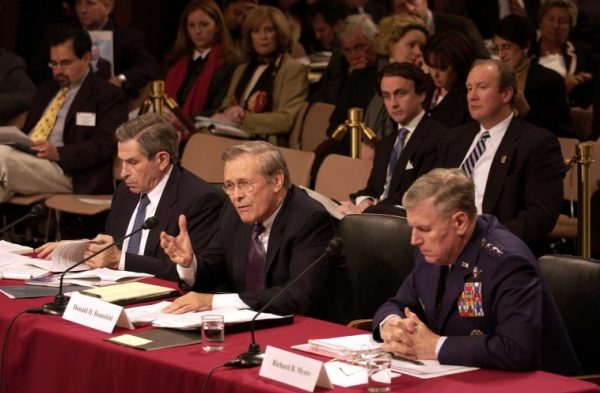
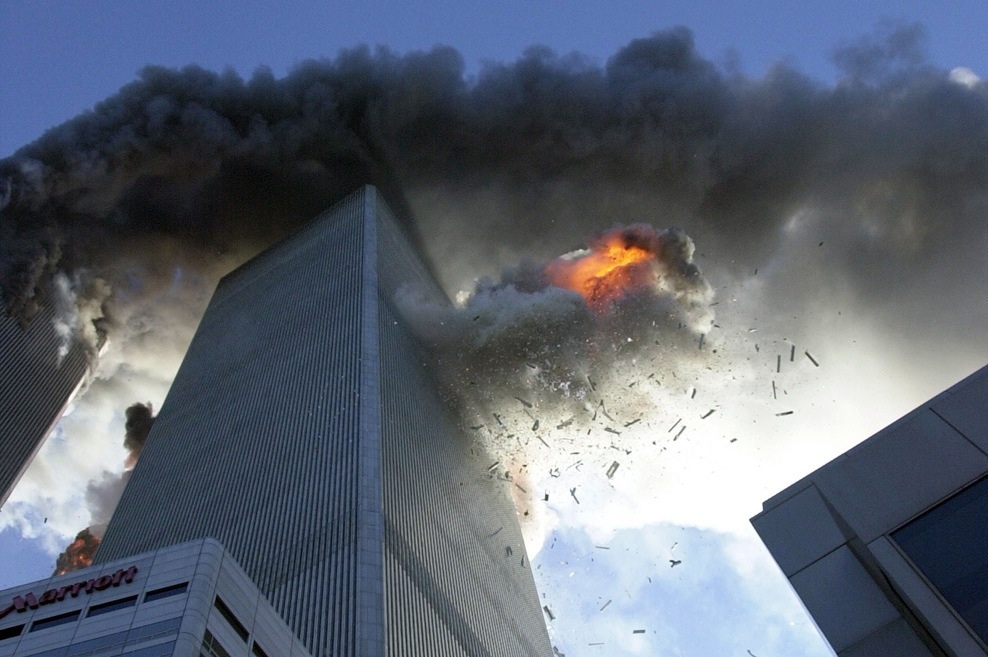



 Aletho News
