Israel’s War on Iran’s Grid: How the South Pars Strike Turned Energy into a Weapon
By Freddie Ponton – 21st Century Wire – March 19, 2026
In the early hours of March 18, Israeli drones tore into four gas‑treatment plants in Assaluyeh on Iran’s southern coast, where sour gas from phases 3, 4, 5 and 6 of the South Pars field is cleaned, separated and turned into the fuel that keeps the country’s lights on, homes heated and factories supplied. Iranian officials ordered the plants offline to contain the fires, and industry analysts immediately warned that production from the offshore platforms feeding those trains would have to be cut back. Within an hour of the strike being reported, European gas prices and Brent crude jumped, because traders understood what most headlines did not. This was not a symbolic hit on an abstract “gas field,” but a deliberate attack on a conversion node at the heart of Iran’s domestic energy system and a critical pillar of the wider Gulf energy order.
At the same time, Donald Trump was on social media threatening that if Iran retaliated again against Qatar’s LNG hub at Ras Laffan, he would “blow up the entirety” of South Pars – the largest gas field on the planet, and interestingly, a reservoir Iran shares with Qatar. The man who joined Israel in authorising the first strikes on Iranian production facilities is now openly dangling the prospect of destroying the shared gas reservoir that keeps tens of millions of people warm, powered and employed. That is not deterrence, only a head of state experimenting in public with the language of total economic annihilation.
Trump’s own Truth Social post about the strike reads like a rambling attempt to distance Washington from the attack while threatening to “blow up the entirety” of South Pars if Iran hits Qatar again. The post deserves closer attention later in this story.
ASSALUYEH: WHERE GAS BECOMES POWER
To see what was attacked in Assaluyeh is to understand that the language matches the target. South Pars itself is the Iranian half of a single, giant reservoir under the Gulf, known as the North Field in Qatar, which together contain around a tenth of the world’s proven gas reserves. Iranian officials say South Pars covers 24 phases and provides between 70–75% of Iran’s gas production, feeding power plants, industry, petrochemical complexes and gasoline production. The gas that makes that possible must pass through places like Assaluyeh, where onshore plants strip out condensate, liquefied petroleum gases and natural gas liquids before returning dry gas to the grid and sending liquids on to refineries and export jetties. Over two decades, the South Pars Special Economic Energy Zone has grown into a dense cluster of processing trains and downstream plants with total gas‑processing capacity on the order of a billion cubic metres per day and around twenty‑one petrochemical units producing close to forty million tonnes per year of urea, methanol, polyethene, and other basic chemicals.
Israel did not attack the offshore reservoir. It attacked the pipes, columns and separators that turn raw gas into power, plastics, fertiliser and fuel. The four targeted plants process sour gas from phases 3, 4, 5 and 6, which are mature, are heavily integrated blocks that feed directly into Iran’s domestic grid and petrochemical system. Shutting those trains, even temporarily, forces operators to throttle back production on the linked platforms and starves downstream complexes of both dry gas and feedstock. In concrete terms, that means less gas available for electricity generation on a grid already prone to summer blackouts, less feed for petrochemical plants that supply everything from fertiliser to plastics, and less condensate flowing through the storage and export facilities that sit alongside the gas plants on the Persian Gulf shore.
Iranian reports speak of powerful explosions at several Assaluyeh facilities, fires around storage tanks and gas units, and workers being evacuated as emergency crews tried to contain the damage. From a planner’s point of view, this is a high‑leverage target: a handful of processing units at the convergence of offshore production and onshore consumption whose disruption sends shockwaves up the supply chain and down into the civilian economy. From the point of view of the people whose houses, factories and hospitals depend on those flows, it looks like something else entirely – an attack on the infrastructure of daily life.
That is the first truth this strike reveals: Israel has shifted from fighting Iran’s armed forces to fighting the country’s energy system, the circulation of fuel that keeps the state conscious.
This is not a one‑off aberration. During the twelve‑day war of June 2025, an earlier Israeli strike hit the Phase 14 processing plant at Assaluyeh, forcing a shutdown and firefighting operation before Iranian engineers brought the plant back online within two weeks. The March 2026 strikes returned to the same nerve centre but widened the cut: instead of Phase 14 alone, the drones went after four plants tied to phases 3–6, which together represent a much larger share of South Pars throughput and a deeper incision into Iran’s ability to turn offshore gas into usable energy. What is being tested here is not just Iran’s repair capacity. It is how much of its gas‑conversion system can be burned down before the political cost becomes untenable.
FROM MILITARY TARGETS TO CIVILIAN PUNISHMENT
The crucial point is that gas in Iran is not a luxury export commodity, but the country’s primary fuel for power generation, industrial heat and residential heating. Well over ninety per cent of the gas Iran produces is consumed domestically, not exported. It keeps homes warm in winter, feeds cement and steel plants, drives turbines in power stations and prevents rolling blackouts on a grid that is already fragile. When you hit Assaluyeh, you are not trimming a few cargoes of condensate to Asia. You are reaching into the core of a domestic energy system that supports nearly ninety million people – the apartment blocks in Tehran that already live with scheduled outages, the small factories in Isfahan that depend on steady voltage to keep lines moving, the provincial hospitals that cannot function when the generators sputter.
Even the outlets trying to normalise the strike cannot entirely avoid that reality. They call South Pars an “energy lifeline”, stress that it powers much of Iran’s electricity system and note that the onshore plants at Assaluyeh are central to separating condensate and LPG from the gas that then runs into Iranian networks. “Energy lifeline” is the language of necessity, not of optional revenue. To choose that target is to choose to tamper with the civilian infrastructure that stands between a functioning society and a rolling crisis of blackouts, shortages and industrial breakdown. “Collective punishment” is usually invoked in the context of bombs on apartment blocks or food embargoes. Here it is delivered through valves and turbines.
It is precisely at this point, when questions of necessity and legitimacy collide, that the recent behaviour of Washington’s own security establishment strips away the alibi that this was a war forced by urgent facts. In a few sentences at a Senate hearing, Director of National Intelligence Tulsi Gabbard told lawmakers that only the president can decide what is an “imminent threat” from Iran, even as senior aides were warning her that there was no evidence Iran had restarted enrichment or posed an immediate nuclear danger. Two days earlier, Joe Kent, the director of the National Counterterrorism Center, resigned, saying in his letter that he could not “in good conscience support the ongoing war in Iran,” that Iran posed “no imminent threat,” and that Israel had pressured the United States into the conflict. Those two moments do not need pages of commentary. Together they are enough: the official charged with guarding the integrity of U.S. intelligence rewrites “threat” as a presidential mood, and the official charged with synthesising terrorist threats walks out saying the war is manufactured.
In other words, while Israeli pilots and U.S. operators are hitting the infrastructure that keeps Iranian civilians alive, the people at the top of the American system are quietly admitting that the supposed emergency justifying those strikes does not exist in the way the public was told. The last line of defence, a reality defined by evidence rather than by political need, has been crossed, and it has been crossed at the exact moment the war shifted from military targets to the machinery of everyday survival.
Trump’s Truth Social statement makes that shift even starker. It is not a clarification, and reads more like a hostage note. South Pars is being turned into collateral for Qatar’s LNG security, and Trump denies U.S. prior knowledge of Israel’s first strike while claiming the right to decide if and when the entire shared field is destroyed. In one message, he signals that the energy backbone of Iran and Qatar is now a bargaining chip Washington is prepared to sacrifice to enforce its war.
That is the second truth of this episode: the war on Iran’s civilian infrastructure is being waged under a definition of “threat” that collapses into whatever the president needs it to be.
Once a president starts talking about “blowing up the entirety” of the field that keeps both Iran and Qatar running, the fiction that this is a contained war collapses.
Exporting the Energy Shock
By treating Iran’s South Pars complex and linked Gulf energy infrastructure as disposable targets, Israel and the United States have not just escalated a regional war; they have shifted the economic pain onto societies that never signed up for this fight, from Turkish households to European workers and Indian farmers now absorbing the fallout.
Turkey: forced into a rigged market
In Turkey, the cost of turning South Pars into a battlefield is already measurable. Analysts note that Iran supplies gas to Turkey by pipeline, and that any prolonged disruption would force buyers to look for replacement cargoes on the LNG market. That “elsewhere” is the spot market, where Asian demand has already begun pulling cargoes away from Europe as importers scramble to replace lost Gulf supply. In practice, a strike pitched as pressure on Iran becomes a higher import bill for a NATO member and another inflationary squeeze on households and industry.
Europe: dragged back toward 2022
In Europe, the impact showed up first on trading screens. After disruption to Qatari LNG output, benchmark gas prices on the Dutch TTF hub jumped by as much as 45%, reaching around €46 per megawatt-hour. Reuters then reported that Asian buyers scrambling for LNG replacement cargoes were already pulling shipments toward Asia, reinforcing the risk of another continental price shock. Europe’s dependence on LNG after cutting Russian pipeline supply means that attacks on South Pars-linked infrastructure in the Gulf do not stay regional for long.
India: paying for a war it did not choose
In India, the blowback is more than theoretical. Government sources told CNBC-TV18 that LPG supplies were already “feeling some heat” as the West Asia conflict disrupted shipping routes and pushed gas prices higher. The same report said Asian LNG prices had risen from about $6–8 per MMBtu to around $15 per MMBtu, while rerouting cargoes from alternative suppliers such as the United States or Norway would take longer. A later report said Indian LPG consumption fell 17.7% in the first half of March because of war-related supply disruption. That is what energy warfare looks like in human terms: shortages, higher costs and forced adjustment by people who had no role in launching the conflict.
China: tested, not insulated
China’s immediate exposure looks smaller on paper, but the same shock still hits Beijing’s energy calculus. Reuters reported that over 80% of Qatar’s LNG exports go to Asia, placing major buyers like China in the line of fire when Gulf supply is disrupted. Another report noted that China was among the key Asian markets exposed as the regional benchmark LNG price surged and traders sought replacement cargoes from farther afield. That leaves Beijing with more buffers than poorer importers, but not immunity from the price shock set off by attacks on Gulf gas infrastructure
WHEN A SHARED FIELD BECOMES A WAR ZONE
If the story stopped at Iran’s shoreline, it would already be devastating. But South Pars does not stop at Iran’s shoreline. The reservoir that feeds Assaluyeh stretches under the Gulf into Qatari waters, where it is known as the North Field and where it supplies Ras Laffan Industrial City, the most important LNG complex on Earth. Before the war, Ras Laffan’s trains exported around 77 million tonnes per year of liquefied natural gas, with plans underway to expand capacity towards 142 million tonnes by the end of the decade. Alongside LNG, Ras Laffan also produces Liquefied Petroleum Gas (LPG), ethane, condensate and sulphur, and hosts gas‑to‑liquids plants, power stations and desalination units. It is a central hinge in the global energy system, and on the day Iran’s missiles arrived, workers there were told to leave the plant that underwrites their families’ incomes because someone else had decided their shared field was expendable.
Qatar understood immediately what an attack on South Pars meant. Its foreign ministry condemned the strikes as “dangerous and irresponsible,” explicitly reminding the world that the field is geologically continuous with the North Field and warning that targeting infrastructure tied to that reservoir threatens global energy security. It has now gone further, calling Iran’s strike on Ras Laffan a “brutal targeting” of its gas hub, invoking Security Council resolutions and asserting its right to respond under Article 51 of the UN Charter. The United Arab Emirates, normally cautious about public criticism of Israel, issued its own statement that attacks on energy facilities linked to Pars risk catastrophic consequences. Those are not sentimental reactions. They are the reflex of states that suddenly realised the line between “hitting Iran” and “putting our own energy spine in the crosshairs” had effectively vanished.
Iran’s Revolutionary Guard then warned that key Gulf facilities had become “direct and legitimate targets” and urged workers to evacuate them before the strike. The list was specific: Ras Laffan; Mesaieed, Qatar’s original deep‑water export port and industrial hub, where gas and condensate are turned into NGLs, refined products, petrochemicals, aluminium and steel; Samref, a more‑than‑400,000‑barrels‑per‑day refinery in Yanbu on Saudi Arabia’s Red Sea coast with around 13 million barrels of storage; Jubail, the giant refinery‑petrochemical complex in eastern Saudi Arabia running at roughly 440,000 barrels per day and anchored by a 1.5‑million‑tonne‑per‑year ethylene cracker; and Al Hosn in the UAE, a sour‑gas project that processes about a billion cubic feet per day of raw gas, produces roughly half a billion cubic feet per day of sales gas for the Emirati grid and throws off tens of thousands of barrels of condensate and thousands of tonnes of sulphur every day.
In Kuwait, drones struck individual units at the Mina al‑Ahmadi refinery and Mina Abdullah refinery, triggering “limited” fires and forcing operators to temporarily halt parts of their output. Further east, Abu Dhabi’s Habshan gas facilities, already singled out in Iranian warnings, were shut down after debris from intercepted missiles fell on the site, underscoring that Tehran was willing to hit the very installations that underpin its rivals’ domestic energy security.
In other words, Tehran not only threatened but executed multiple strikes, and in the Ras Laffan’s case, it appears the Islamic Republic have struck the same class of conversion assets on Arab shores that Israel and the U.S. had just targeted at Assaluyeh, the plants where raw hydrocarbons become electricity, heating, industrial feedstock and exportable product.
It is crucial to understand that Ras Laffan’s LNG trains, Mesaieed’s NGL and refining complex, Samref’s crude units, Jubail’s crude‑to‑chemicals expansion and Al Hosn’s gas and sulphur trains are all parts of the same nervous system.
When one side authorises attacks on conversion nodes at South Pars, the other side’s answer is not to keep politely to its own coastline. It is to declare that the Gulf’s entire energy architecture is now part of the battlefield.
That is the third truth this strike exposes: by hitting a shared field, Israel and the U.S. have made their own allies’ energy spines part of the target set.
THE ENERGY WAR NOBODY CAN HONESTLY CALL ‘DEFENSE’
Seen from this angle, the Assaluyeh strikes were not a self‑contained tactical move. They were the opening of a new kind of war, a war on conversion infrastructure, that punishes civilians first and drags allies and markets along for the ride. Israel hit the plant that turns Iran’s gas wealth into heat, light and wages; Iran responded in kind by putting the plants that turn Qatar’s, Saudi Arabia’s and the UAE’s hydrocarbons into LNG, petrol and plastics in its sights. Trump then raised the stakes by threatening to “entirely blow up” the shared reservoir that makes all of this possible, as if the energy backbone of two states and a sizeable slice of Europe and Asia’s gas supply were a pawn to be removed from the board to prove a point.
At that stage, the legal and moral mask slips. A campaign that begins as “precision strikes” against military and command targets turns, almost in slow motion, into an assault on the infrastructure that keeps tens of millions of people from freezing, blacking out or losing their jobs, and into a form of extortion against the wider Gulf. In other words, people of Iran are being asked to accept that Iran’s energy lifeline can be bombed with impunity, or watch their own refineries and LNG terminals burn.
Iranian analysts now call this openly what it is, “economic warfare” centered on energy, and warn that destroyed or degraded capacity will worsen electricity shortages and deepen domestic hardship. When the same government waging that campaign has senior officials on record saying the “imminent threat” used to sell the war does not exist as advertised, it becomes very hard to sustain the fiction that this is self‑defense in any meaningful sense.
A war waged under those conditions cannot be sold as “precision.” It can barely, if at all, be sold as self‑defense. What they are doing, in the cold light of Assaluyeh’s burning stacks and Ras Laffan’s flares, looks like a campaign of collective punishment enforced through the energy system of an entire region, and once you see it that way, it becomes very hard to unsee.
War on Iran to impose trillion-dollar ‘Israel First Tax’ on US citizens: Araghchi
Press TV – March 19, 2026
The Iranian foreign minister says ordinary Americans bear the brunt of the illegal US-Israeli aggression against Iran with the trillion-dollar “Israel First tax” that is expected to hit US economy.
Abbas Araghchi made the remarks in an X post on Thursday after The Washington Post reported that the US Ministry of War seeks more than $200 billion in budget request for the military assault against Iran.
The top Iranian diplomat described the figure as “the tip of the iceberg” as the war is about to enter its fourth week, contrary to what the enemies had predicted to be a short one.
“We’re only three weeks into this war of choice, imposed on both Iranians and Americans,” he said.
“This $200b is the tip of the icerberg. Ordinary Americans can thank [Israeli Prime Minister] Benjamin Netanyahu and his lackeys in Congress for the trillion-dollar “First Israel tax” that is about to hit US economy.”
Citing informed sources, The Washington Post report said that the Pentagon’s demand for additional budget is aimed at increasing the production of weapons that have been destroyed or depleted during the war.
The figure also includes replacing modern missiles such as Tomahawk, as well as Patriot systems and THAAD interceptors, which have been used in recent weeks, according to the report.
Preliminary estimates indicate that the cost of the war in the first six days was about $11.3 billion and that ammunition worth over $ 5.6 billion had been used only in the first two days of the conflict.
The criminal US-Israeli aggression on Iran began on February 28 with airstrikes that assassinated senior Iranian officials and commanders.
The Iranian Armed Forces have responded by launching almost daily missile and drone operations targeting locations in the Israeli occupied lands as well as US military bases and assets across the region.
The retaliatory strikes have been carried out based on the principle of “eye for an eye,” inflicting heavy losses on the enemies.
Seyed M. Marandi: U.S. Attacked World’s Largest Gas Field & Iran Declares Economic War
Glenn Diesen | March 18, 2026
Seyed Mohammad Marandi argues that Iran has declared economic war after the US and Israel attacked South Pars, the world’s largest gas field. Marandi is a professor at Tehran University and a former advisor to Iran’s Nuclear Negotiation Team.
Follow Prof. Glenn Diesen:
- Substack: https://glenndiesen.substack.com/
- X/Twitter: https://x.com/Glenn_Diesen
- Patreon: https://www.patreon.com/glenndiesen
Support the research by Prof. Glenn Diesen:
- PayPal: https://www.paypal.com/paypalme/glenndiesen
- Buy me a Coffee: buymeacoffee.com/gdieseng
- Go Fund Me: https://gofund.me/09ea012f
Daniel Davis: U.S. Military Options & War Narrative Collapse
Glenn Diesen | March 18, 2026
Lt. Col. Daniel Davis argues why opening the Strait of Hormuz, putting boots on the ground, or seizing Kharg Island are not feasible options. The US could invade Yemen to control the key strait to the Red Sea—Bab el-Mandeb. The resignation of Joe Kent indicates that the military options and war narratives are collapsing fast. Lt. Col. Davis is a 4x combat veteran, the recipient of the Ridenhour Prize for Truth-Telling, and is the host of the Daniel Davis Deep Dive YouTube channel.
Daniel Davis Deep Dive: https://www.youtube.com/@DanielDavisDeepDive/videos
Follow Prof. Glenn Diesen:
- Substack: https://glenndiesen.substack.com/
- X/Twitter: https://x.com/Glenn_Diesen
- Patreon: https://www.patreon.com/glenndiesen
Support the research by Prof. Glenn Diesen:
- PayPal: https://www.paypal.com/paypalme/glenndiesen
- Buy me a Coffee: buymeacoffee.com/gdieseng
- Go Fund Me: https://gofund.me/09ea012f
Why Trump’s anti-Iran naval coalition in Strait of Hormuz is doomed to fail
By Wesam Bahrani | Press TV | March 18, 2026
US President Donald Trump believes that involving many countries in a naval coalition would force Iran to surrender under international pressure, or at least agree to a ceasefire and enter negotiations with those countries without preconditions.
The last thing Trump expected was for what he thought would be a short, hours-long confrontation to stretch into days and weeks, and then turn into a full-fledged war of attrition.
This is a scenario he neither anticipated nor has the personal capacity to bear, given its potentially disastrous consequences for his country and the world.
It has become clear that Iran had long prepared for this all-out confrontation and that its leadership was certain it would happen at some point. Turning it into a prolonged war of attrition, both geographically and over time, appears to be a central pillar of the Iranian strategy to exhaust the US, the Zionist regime, and their regional and international allies.
Very quickly, by the end of the first week of the illegal and unprovoked war on Iran, Trump’s vision began to turn into a nightmare. His plan to overthrow the Islamic Republic (in other words, “regime change”) with a first strike failed, as did his far-fetched ambition to gain control over a quarter of global oil production and influence its routes and prices.
He now faces the urgent need to manage the global economic fallout of this failure. Iran has effectively gained control over a maritime route through which roughly a quarter of the world’s oil supply passes. By the third week of the war, oil prices had risen above $100 per barrel.
In his first statement to the Iranian people and the world, the new Leader of the Islamic Republic, Ayatollah Seyyed Mojtaba Khamenei, summarized this challenge in two striking phrases that sent shockwaves through the White House.
“The will of the people is to continue effective and deterrent defense,” and “the option of closing the Strait of Hormuz must remain on the table,” he declared.
This clearly signals a willingness to pursue a prolonged war of attrition that threatens the global economy, especially that of the United States and its allies.
Faced with this difficult situation, rising war costs, and growing tensions not only between the US and the Zionist regime but also within the Trump administration, as reported in American and Hebrew media, Trump has turned to his allies for help.
He initially claimed that several countries would send warships to cooperate with the United States in keeping the Strait of Hormuz open and secure.
He expressed hope that countries such as China, France, Japan, South Korea, and the United Kingdom would deploy naval forces to ensure the safety of this vital shipping route. He also called on countries that benefit from West Asian oil to contribute forces to secure maritime navigation.
At the same time, Trump announced an airstrike on Iran’s Kharg Island in an apparent attempt to convince these countries that the US still controls the military situation in the Persian Gulf.
Trump’s remarks can be understood as a desperate call to form an international naval military coalition under US leadership in the region. The implications, motivations, and objectives behind this call can be summarized as follows:
First, the United States appears to have lost the ability to control and manage the war on its own, especially after failing to claim victory. It is now attempting to internationalize the war and turn it into a global confrontation with Iran under the pretext of protecting oil supply chains and global trade.
Second, the US is trying to bypass Iran’s right to control navigation in the Strait during wartime by internationalizing the issue. This could pave the way for imposing new maritime laws under pressure from multiple countries.
Third, Trump believes that the participation of many countries in a naval coalition would force the Islamic Republic to surrender under international pressure, or at least agree to a ceasefire and enter negotiations without preconditions, giving him a way out of the current crisis.
Fourth, Trump is maneuvering to avoid relying on Russian mediation, which he believes would come at a cost, possibly involving concessions in other areas he is unwilling to compromise on.
Fifth, Trump hopes that his invitation to China to join the coalition will be accepted, especially with a scheduled visit to Beijing.
Sixth, he is trying to encourage European countries, affected by rising energy prices, to join the war effort, after they initially adopted a relatively neutral stance.
The first responses came from Europe, particularly France and the United Kingdom, which appeared to divide roles between them. The UK quickly held a ministerial meeting with Persian Gulf monarchies under defensive themes, a move that seemed to sidestep Trump’s call for a formal naval coalition.
British media also reported that the UK is considering sending drones to detect naval mines and intercept Iranian drones, steps that fall short of full participation in a military alliance.
France, meanwhile, took a different approach. President Emmanuel Macron held phone calls with both the Saudi Crown Prince and the Iranian president, aiming to activate political efforts for a resolution. He also asked Trump to clarify his “final objectives and the pace he intends for operations.” The French presidency denied reports that France would send warships to the Persian Gulf.
Japan announced that it would not rush to send warships in response to Trump’s request, emphasizing its long-standing principle of making independent decisions. It also noted that current laws make deploying military vessels to the region legally very difficult.
South Korea stated that it is carefully reviewing Trump’s request, while China ignored the call and instead urged an immediate ceasefire.
Overall, despite their differences, these responses reflect a shared caution, a preference for diplomacy, de-escalation, and, in essence, avoiding the risks of retaliatory attacks from Tehran over a war that has been widely acknowledged as illegal and unprovoked.
This has reportedly increased Trump’s frustration, leading him to postpone his visit to China and to warn of serious consequences for NATO if allies respond negatively.
Tehran’s political approach appears to combine prudence and strategic cunning with firm military resolve. This has been evident both in its diplomatic efforts before and during recent negotiations, as well as in its conduct during the current war.
As usual, Iran’s leadership quickly understood the motives behind Trump’s latest maneuver and responded through several measures.
One of the first decisions was to allow some oil shipments to pass through the Strait of Hormuz on the condition that transactions be conducted reportedly in Chinese yuan, as per reports.
This move aims to maintain oil flows while weakening the US dollar, or at least ensuring that China continues to receive Persian Gulf oil imports, not just from Iran. This is particularly significant as Persian Gulf states may feel compelled to continue selling oil amid fears of economic slowdown after decades of growth.
Iranian Foreign Minister Abbas Araghchi shifted responsibility back onto the United States by stating that Iran has not closed the Strait of Hormuz and that the real reason ships are not sailing is the insecurity caused by American aggression.
This undermines the justification Trump used to call for the coalition. Araghchi also left the door open for countries seeking safe passage for their ships, indicating that decisions would rest with Iranian military forces.
This may be an attempt to encourage direct security cooperation with Iran instead of joining a US-led coalition, while also reiterating Iran’s demand for US forces to leave the region.
Remarks by former CIA analyst Larry Johnson seem to capture Trump’s current situation accurately: Trump lives in a world of “illusions” and is detached from “reality.”
In reality, he is sliding toward madness.
Wesam Bahrani is an Iraqi journalist and commentator.
No time for losers: Why the war meant to save Israel may destroy it
By Ramzy Baroud | MEMO | March 16, 2026
When Donald Trump and Benjamin Netanyahu launched their military aggression against Iran on 28th February, they appeared convinced that the war would be swift. Netanyahu reportedly assured Washington that the campaign would deliver a decisive strategic victory—one capable of reordering the Middle East and restoring Israel’s battered deterrence.
Whether Netanyahu himself believed that promise is another matter.
For decades, influential circles within Israel’s strategic establishment have not necessarily sought stability, but rather “creative destruction.” The logic is simple: dismantle hostile regional powers and allow fragmented political landscapes to replace them.
This idea did not emerge overnight. It was articulated most clearly in a 1996 policy paper titled A Clean Break: A New Strategy for Securing the Realm, prepared for then-Israeli Prime Minister Benjamin Netanyahu by a group of US neoconservative strategists, including Richard Perle.
The document argued that Israel should abandon land-for-peace diplomacy and instead pursue a strategy that would weaken or remove hostile regimes in the region, particularly Iraq and Syria. The goal was not merely military victory but a geopolitical restructuring of the Middle East in Israel’s favor.
The logic is simple: dismantle hostile regional powers and allow fragmented political landscapes to replace them.
In many ways, the subsequent decades seemed to validate that theory—at least from Tel Aviv’s perspective.
The Middle East Reordered
The 2003 US invasion of Iraq was widely considered a catastrophe for Washington. Hundreds of thousands died, trillions of dollars were spent, and the United States became entangled in one of the most destabilising occupations in modern history.
Yet the war removed Saddam Hussein’s government, dismantled the Baath Party, and destroyed what had once been the strongest Arab army in the region. For Israel, the strategic consequences were significant.
Iraq, historically one of the few Arab states capable of confronting Israel militarily, ceased to exist as a coherent regional power. Years of instability followed, leaving Baghdad with a fragile political system struggling to maintain national cohesion.
Syria, another central concern in Israeli strategic thinking, would later descend into its own devastating war beginning in 2011. Libya collapsed earlier after NATO’s intervention in 2011 as well. Across the region, once-formidable Arab nationalist states fractured into weakened or internally divided systems.
From Israel’s vantage point, the theory of regional fragmentation appeared to be paying dividends.
Without strong Arab states capable of projecting military power, several Gulf governments began reconsidering their long-standing refusal to normalise relations with Israel.
The result was the Abraham Accords, signed in September 2020 under the Trump administration, which formalised normalisation between Israel and the United Arab Emirates and Bahrain, later followed by Morocco and Sudan. For a moment, it seemed that the geopolitical transformation envisioned decades earlier had been realised.
Gaza changed the equation
But history rarely moves in straight lines. Israel’s genocide in Gaza did not produce the strategic victory Israeli leaders had anticipated. Instead, the war exposed deep vulnerabilities in Israel’s military and political standing.
More importantly, Palestinian resistance demonstrated that overwhelming military force could not translate into decisive political control.
The consequences reverberated far beyond Gaza.
The war galvanized resistance movements across the region, deepened divisions within Arab and Muslim societies between governments aligned with Washington and those opposed to Israeli policies, and ignited an unprecedented wave of global solidarity with Palestinians. Israel’s international image suffered dramatically.
For decades, Western political discourse framed Israel as a democratic outpost surrounded by hostile forces. That narrative has steadily eroded. Increasingly, Israel is described—even by major international organizations—as a state engaged in systematic oppression and, in Gaza’s case, genocidal violence.
The strategic cost of that reputational collapse cannot be overstated. Military power relies not only on weapons but also on legitimacy. And legitimacy, once lost, is difficult to recover.
Netanyahu’s final gamble
Against this backdrop, the war on Iran emerged as Netanyahu’s most consequential gamble.
If successful, it could restore Israel’s regional dominance and reassert its deterrence. Defeating Iran—or even severely weakening it—would reshape the balance of power across the Middle East. But failure carries equally profound consequences.
Netanyahu, now facing an arrest warrant issued by the International Criminal Court in 2024 over war crimes in Gaza, has tied his political survival to the promise of strategic victory.
In multiple interviews over the past year, he has framed the confrontation with Iran in almost biblical terms. In one televised address in 2025, Netanyahu declared that Israel was engaged in a “historic mission” to secure the future of the Jewish state for generations. Such rhetoric reveals not confidence but desperation.
What was supposed to be a rapid campaign increasingly resembles a prolonged conflict. Israel cannot wage such a war alone. It never could. Thus, Netanyahu worked tirelessly to draw the United States directly into the conflict—a familiar pattern in modern Middle Eastern wars.
The paradox of Trump’s war
For Americans, the question remains: why did Donald Trump—who repeatedly campaigned against “endless wars”—allow the US to enter yet another Middle Eastern conflict?
During his 2016 presidential campaign, Trump famously declared: “We should have never been in Iraq. We have destabilised the Middle East.”
Yet nearly a decade later, his administration has plunged Washington into a confrontation whose potential consequences dwarf those of the earlier wars.
The precise motivations matter less to those living under the bombs.
Across the region, the scenes are painfully familiar: devastated cities, mass graves, grieving families, and societies once again forced to endure the violence of foreign intervention.
But this war is unfolding in a fundamentally different geopolitical environment.
The US no longer commands the unchallenged dominance it once enjoyed. China has emerged as a major economic and strategic actor. Russia continues to project influence. Regional powers have gained confidence in resisting Washington’s dictates.
The Middle East itself has changed.
A war already going wrong
Early signs suggest that the war is not unfolding according to the expectations of Washington or Tel Aviv.
Reports from US and Israeli media indicate that missile-defense systems in Israel and several Gulf states are facing a serious strain under sustained attacks. Meanwhile, Iran and its regional allies have demonstrated missile capabilities far more extensive than many analysts had anticipated.
Energy markets provide another indication of shifting dynamics. Rather than securing greater control over global energy flows, the war has disrupted supplies and strengthened Iran’s leverage over key maritime routes.
Strategic assumptions built on decades of uncontested American military power are colliding with a far more complex reality.
Even the political rhetoric emanating from Washington has become noticeably defensive and increasingly angry—often a sign that events are not unfolding as planned.
Within the Trump administration itself, the intellectual poverty of the moment is difficult to miss. Defense Secretary Pete Hegseth, whose public persona is built on television bravado rather than strategic literacy, has often framed the conflict in language that sounds less like military doctrine and more like locker-room theatrics.
Hegseth’s style is symptomatic of a broader intellectual collapse within Washington’s war-making circles—where historical knowledge is replaced by slogans, and strategic planning by theatrical displays of toughness.
In speeches and interviews, he has repeatedly reduced complex geopolitical realities into crude narratives of strength, masculinity, and domination. Such rhetoric may excite partisan audiences, but it reveals a deeper problem: the people directing the most dangerous war in decades appear to understand very little about the forces they have unleashed.
In such an environment, wars are not analyzed; they are performed.
The end of an era?
Netanyahu sought to dominate the Middle East. Washington sought to reaffirm its position as the world’s unrivaled superpower. Neither objective appears within reach.
Instead, the war may accelerate the very transformations it was meant to prevent: a declining US strategic role, a weakened Israeli deterrent posture, and a Middle East increasingly shaped by regional actors rather than external powers.
Trump, despite the lofty and belligerent language, is in reality a weak president. Rage is rarely the language of strength; it is often the mask of insecurity. His administration has overestimated America’s military omnipotence, undermined allies and antagonized adversaries alike, and entered a war whose historical, political, and strategic dimensions it scarcely understands.
How can a leadership so consumed by narcissism and spectacle fully grasp the magnitude of the catastrophe it has helped unleash?
One would expect wisdom in moments of global crisis. What we have instead is a chorus of slogans, threats, and self-congratulation emanating from Washington—an administration seemingly incapable of distinguishing between what power can achieve and what it cannot.
They do not understand how profoundly the world has changed. They do not understand how the Middle East now perceives American military adventurism. And they certainly do not understand that Israel itself has become, politically and morally, a declining brand.
Of course, Trump and his equally arrogant administration will continue searching for any fragment of ‘victory’ to sell to their constituency as the greatest triumph in history. There will always be zealots ready to believe such myths.
But most Americans—and the overwhelming majority of people around the world—no longer do. Partly because this war on Iran is immoral. And partly because history has very little patience for losers.
Just Get Out! Now!
By Ron Paul | March 16, 2026
As is becoming clearer from President Trump’s own statements and those of his staff, along with press reporting, the US has launched a major war without the input of the experts we pay to advise the President on such matters. The State Department, Pentagon, National Security Council Staff, Defense Intelligence Agency, and NSA were simply bypassed because, as White House Spokesperson Karoline Leavitt said, President Trump “had a feeling” Iran would attack.
The President’s real estate developer son-in-law and friend reinforced that “feeling” when they returned from the second round of talks with the Iranian foreign minister and his team. However, as the news outlet Responsible Statecraft (RS) reported over the weekend, both son-in-law Jared Kushner and friend Steve Witkoff appear to have mis-represented those talks in a way that helped push President Trump toward war. No State Department officials were on hand to ensure the reporting was accurate.
Also, arms control experts at home, according to the RS report, believe that “the duo appeared to have fatally misunderstood a series of basic technical and historical matters” regarding Iran’s nuclear program leading to inaccurate information conveyed to the President.
Congress was completely out of the picture – seemingly uninterested in performing its Constitutional duty – and no case was made to the American people that they must sacrifice and die once again for a war in the Middle East.
Trump’s repeated promises to not start new wars, especially in the Middle East, have turned out to be empty, and Republicans are set for a crippling defeat in the upcoming midterm elections.
Iran had been warning for months – since the last US/Israeli surprise attack in June – that if they were attacked again they would not hold back on US bases in the region and that they would close the Straits of Hormuz. Trump and Netanyahu attacked anyway, and Iran has done what it said it would do.
Now the Strait of Hormuz is closed, oil is about to go out of control, and the global economy – along with the US dollar – seems about to implode.
On March 6th, President Trump refused a UK offer of help, saying we don’t need help when we’ve already won the war. Five days later, at a rally in Kentucky, President Trump repeated that “We’ve won the Iran war!”
It was his “Mission Accomplished” moment, because this weekend, just days after declaring victory against an “obliterated” Iran, Trump began begging other countries to send ships to help the US open the Strait of Hormuz.
Thus far every country has declined, understanding that such a mission has little chance of success.
Tragically, the war thus far has claimed at least 14 servicemembers. It is likely the toll is far worse than they are telling us. Every US military facility in the region is either damaged or destroyed. Billions of dollars of radar and other equipment are destroyed. Our allies in the region, because they allowed their territory to be used to attack Iran, have also seen massive retaliatory destruction.
This is surely one of the worst military disasters in US history. There are no military options available beyond the unthinkable: the use of nuclear weapons.
The only viable option that remains is one that was often urged in the Vietnam War: Just get out. Now! No return to US bases, no security guarantees to Gulf States. End the US empire in the Middle East and elsewhere. If not, it’s only going to get worse.
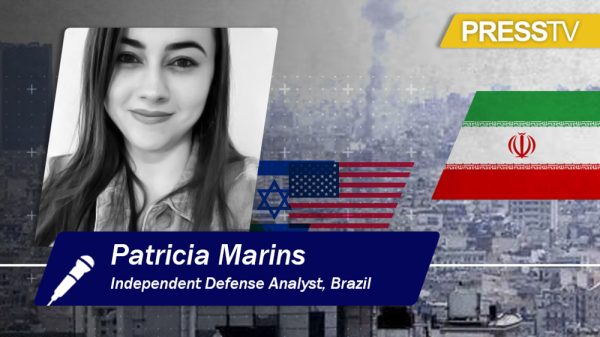
Iranian model of warfare bleeds US dry while Persian Gulf states watch and learn: Analyst
Press TV | March 16, 2026
Sixteen days into the American-Israeli war on Iran, the battlefield tells a story that Pentagon planners had not anticipated. Tehran’s streets remain filled with defiant crowds, the Strait of Hormuz remains closed for US-linked ships, and the US military bases in the region smolder.
Patricia Marins, an independent defense analyst based in Brazil, has been following the war unfold with a keen eye on the shifting strategic balance.
In an interview with the Press TV website, Marins said she has been witnessing the emergence of something the region has never quite witnessed before: the “Iranian model” of warfare proving itself against the world’s most powerful military.
“The Iranian model possesses several distinct characteristics compared to the American model exported to Arab countries. It is built for attrition warfare and resilience, featuring an extensive network of underground facilities and a focus on long-range precision-guided munitions,” she stressed.
“All of this was achieved through investment in research centers, universities, reverse engineering, and the steady implementation of a domestic defense industry, which in many respects is dual-use.”
On the other hand, the American model exported to the Persian Gulf countries consists of “vulnerable surface installations, almost no degree of indigenous production, and consequently a disconnect between research centers, reverse engineering, and the military industry,” which Marins added is not limited to the US model, but all Western models.
“Kuwait paid over $310 million for each Eurofighter Typhoon, nothing short of extortion,” she said, making a clear distinction between the American and Iranian models.
Today, amid the war that was triggered by the unprovoked US-Israeli attack on February 28, and the assassination of the Leader of the Islamic Revolution, Ayatollah Seyyed Ali Khamenei, and some top-ranking military commanders, that investment is paying dividends.
Marins believes the contrast in the military tech leap is not lost on regional observers.
“I believe this Iranian model is being closely watched by all (Persian) Gulf countries at this moment. I see a high probability of it serving as a reference in several areas. I even believe it has inspired the Saudi missile industry, which is currently absorbing Chinese technology,” she said.
“Iran inspires, yet it still maintains a guarded distance from the (Persian) Gulf countries in this sector.”
Beyond the missile and drone arsenal, Iran also enjoys the geographical advantage, the Brazilian analyst stated.
“Iran’s advantage begins with its geographical position, but it is confirmed by its military prowess. And Iran knows how to leverage both very effectively,” she said
She referred to the Ghadir-class submarine, which is affordable, stealthy, and designed specifically for the waters it operates in – the Persian Gulf – especially in the Strait of Hormuz.
The Strait’s “shallow, high-salinity, and high-temperature conditions create a challenging, noisy, and complex environment for sonar, favoring small, fast, and highly maneuverable platforms,” she asserted.
“It is the perfect marriage between the weapon and the environment in which it operates,” she said. “Iran knows how to use the geography that already favors them.”
Then there is Yemen as well, which has indicated willingness to join the front against the US and Israel, after the Lebanese Hezbollah resistance movement and Iraqi resistance groups.
“Iran has been a master player. Knowing that by maintaining influence in Yemen, in a situation like this, they could exert power over both straits,” Marins said.
“However, all of this requires prudence and maturity.”
With the Strait of Hormuz effectively closed already for the US and its allied vessels, if Yemen’s Ansarullah movement follows through and shuts down the Bab el-Mandeb strait as well, the costs would be abysmal, she noted.
“This would expand the conflict on that axis to European countries, as has already occurred. I believe Iran is weighing the necessity of this escalation and whether it is truly required. While Hormuz involves oil and gas, Bab el-Mandeb involves the flow of goods between the West and Asia,” Marins remarked.
“If this strait is closed, it will have a massive economic impact. I see Iran as prudent and disciplined as a nation must be during a war.”
While media reports have cited figures of $1 billion per day for American attacks, with one estimate putting the first six days at $11 billion, Marins believes the true cost is far higher.
In her projections, she suggests the costs for the US could reach a colossal $360 billion within two months if the war continues unabated, a sum that she stresses “would test the patience of any treasury, let alone American taxpayers already feeling the pinch of soaring oil prices.”
“Israel’s operations during the 12-day war generated a daily cost of around $700 million. However, by the end of the war, once the costs of interceptors and damages were added, this daily cost hit nearly $2 billion,” she told the Press TV website.
“I believe this will be Israel’s cost, but the American cost so far is triple that due to three factors: the number of interceptors expended, the quantity of missiles and guided bombs used, and the cost of damages to bases and radars.”
When these factors are combined, Marins noted, the cost is expected to be “no less than $6-8 billion daily during these two weeks of war.”
On reports that Trump’s advisors are advising him to declare victory and find an exit, Marins doubts the American victory in this war is even possible.
“I don’t think so. I see Iran in a much better strategic position to win the conflict. As long as Iran maintains control of the strait, the pressure will be on Donald Trump’s shoulders, no matter how many bombs he drops,” she said.
But beneath that tactical reality lies a deeper truth about the nature of this war. Iran has demonstrated a capacity to absorb bombings while being resilient, limiting drone actions over its territory, and fighting an asymmetric war on its own terms, Marins said.
“So far, I believe Iran has conducted an asymmetric war with very few mistakes,” Marins said. “One that the US and Israel simply don’t know how to fight.”
IRGC orders ‘defeated’ US to evacuate industrial facilities in region
Al Mayadeen | March 16, 2026
The Islamic Revolution Guard Corps (IRGC) has issued a warning to the “defeated US regime,” demanding the evacuation of all American industrial facilities in the region.
The IRGC also called on residents living near US-linked factories to leave the area for their safety, emphasizing that these industrial sites are expected to come under attack in the coming hours.
IRGC’s 56th wave targets strategic Israeli stockpiles, Al-Udeid base
Earlier today, the IRGC announced the launch of the 56th wave of its Operation True Promise 4, targeting key Israeli military infrastructure and a US military installation in the region.
In a statement issued by its Public Relations office, the IRGC said the latest wave of operations was dedicated to martyr Qassem Soleimani, the former commander of the IRGC’s Quds Force, who was assassinated in a US drone strike in January 2020, as well as fighters martyred during battles in defense of the nation’s sanctities.
Stockpiles, airbase hit with precision
According to the statement, the operation targeted several strategic locations in the Israeli-occupied territories, including the Southern Region Support Command and a strategic missile storage facility belonging to Rafael Advanced Defense Systems in the northern occupied territories.
The IRGC said the strikes were carried out using heavy and precision-guided ballistic missiles, including Khorramshahr-4, Emad, and Ghadr missiles, stressing that the designated targets were hit with precision.
The statement also said the attacks extended to the US military presence in the region, noting that the US-operated al-Udeid Airbase was struck during the operation.
Iran War Exposes Limits of US Military Power – Journalist
Sputnik – 16.03.2026
The United States does have great firepower, but it is still far from the strongest country in the world, veteran war correspondent Elijah J. Magnier tells Sputnik.
Despite Iran being forced to endure “47 years of maximum pressure and sanctions,” Magnier points out, the US still cannot best it and is forced to ask other countries to help open the Strait of Hormuz.
“We see the strongest country in the world and the strongest army in the Middle East – that is Israel- fighting Iran and not managing to achieve their objectives and calling for help and support from the Europeans and from NATO,” he observes.
The United States’ military presence in the Middle East has also been put into question as the US can neither protect its military bases in the region nor defend the countries that host these facilities.
“I think the image of the United States has received severe damage much more than the damage inflicted on Iran,” Magnier adds.
To add insult to injury, the US and Israel found themselves unable to achieve any of their stated objectives – be it the destruction of Iran’s missile program or the dismantling of the Iranian nuclear program.
Meanwhile, Trump’s claims that the US wiped out Iran’s entire missile capability don’t hold water either, as Iran regularly provides ample evidence to the contrary in the form of multiple missile launches.
Even The Neo-Cons Admit The Iran War Is Failing
The Dissident – March 16, 2026
The current U.S./Israeli war on Iran is, in many ways, a product of the policies long advocated by U.S. neoconservatives, most importantly the clean break strategy drafted by the Project for a New American Century (PNAC), which advocated taking out “Iraq, and then Syria, Lebanon, Libya, Somalia, Sudan, and, finishing off, Iran” on behalf of Israel.
But many of the original Neo-cons who first drafted this plan, including John Bolton and even Robert Kagan and Bill Kristol, the founders of the Project for a New American Century, are now jumping ship and admitting that the U.S./Israeli war on Iran is failing.
In an interview with NPR, longtime Neo-con John Bolton, despite saying he has “been a supporter of efforts at regime change in Iran for a long time” was forced to admit that the regime change plan has failed and that the U.S. underestimated Iran’s response.
Bolton was forced to admit that Trump underestimated Iran’s ability to effectively close the Strait of Hormuz and disrupt oil shipping in response to the U.S/Israeli bombing, saying:
… it was questionable whether he was cooperating effectively with and assisting the opposition inside Iran. That’s what I said, I think, in our last conversation. Since then, I’m very worried that there are now signs that they haven’t thought about a lot of other things. For example, there’s reporting that the White House was surprised at how quickly oil prices went up.
And all I can say to that is I’m surprised that they’re surprised. If they weren’t planning for that both economically, politically and militarily, then that’s a huge hole in the planning. I am worried that they apparently didn’t take as seriously as they should have the potential to mine the Strait of Hormuz. Trump said several days ago that the Iranian navy had been completely destroyed. And despite years of listening to that kind of thing, I should have known better. I actually sort of believed in for a while. But now we learned that it was only yesterday that we got around to destroying 16 mine-laying vessels. Of course, they’ve got the capability to mine via drones going over the strait and dropping mines in it.
Even more shocking than Bolton’s admission was a podcast released by the founders of PNAC, Robert Kagan and Bill Kristol, where they essentially admitted that the U.S. war on Iran was destroying the U.S. empire.
Robert Kagan, in the podcast, admitted that the Iran war was debilitating America’s ability to wage a new Cold War on Russia and China, and isolating the U.S. empire globally.
The “undoubted effect of the Iran war has been to drive a deeper wedge between the United States and pretty much all of its allies or at least all of its traditional allies, both in Europe and in Asia, and I would say potentially even in the Middle East” Kagan Said.
Kagan lamented that the Iran war was crippling the U.S.’s ability to continue the proxy war in Ukraine saying, “the skyrocketing oil prices … are even before Trump took the action of lifting sanctions against Russia was going to increase Russian income” and “American forces are … burning through major stocks of weaponry and particularly Patriot and other forms of interceptors on which Ukraine depends heavily because those are the interceptors that defend their major cities from constant Russian attacks.”
Kagan also lamented that the war was taking away the U.S. empire’s ability to wage a new Cold War on China, saying, “very few countries in the world are more dependent on Middle East oil, including the oil that comes directly through the Strait of Hormuz, than Japan. Japan I think, depends on something like 95% of its oil supplies come from the Middle East and 70% of that runs through the Strait of Hormuz. So once again the Japanese were not consulted”, adding, that the prime minister of Japan is “very upset” and “ talked about how this crisis has severely impacted Japanese interests”.
He also added “the Japanese will notice that the United States has sent significant forces that are dedicated both to the defense of Japan and are sort of critical to any response to a Chinese attack on Taiwan. Those forces are now being sent or some of them are already there, and some are being sent to the Middle East.”
Kagan also admitted that the war in Iran is isolating the Gulf States from the U.S. and potentially moving them towards China.
He said, “I just wonder whether the Gulf States in particular are wondering whether they’ve joined the right team here because they have, by the way, been very on background, very vocal in saying that they were against the war. … They did not favor it. They thought they had a pretty good deal going with the Iranians, that kind of an agreement that they would get to, they would leave each other alone for the most part,” adding, “it turns out the United States can’t really protect them. I mean they have suffered the worst in some respects because it’s not only that they’ve been targets and that they’re shipping you know they’ve lost money on oil, but you know they with the tremendous cooperation of the Trump and I would say in this case the Trump family and social circle have been very deeply involved in the United States making investments in AI and other things but particularly AI they’re hosting data centers for all kinds of companies and in general, they’ve been trying to make themselves an attractive place for investment and also tourism.”
Citing the example of Dubai, Kagan said, “You watch the UAE is basically arresting people for taking pictures of damage that may have been done by Iranian drone strikes and other things on things in Dubai. For instance, I think they’ve arrested foreigners who took pictures of these things. Why? Because they don’t want people to see that it’s risky to be in Dubai, because then people won’t invest and they won’t come, and so it’s kind of a disaster for them,” adding, “the bottom line for the Gulf States is that the United States undertook this war and then was not able actually to protect them”.
He added, “I don’t think it’s hard to persuade certain Gulf states like the UAE and others that maybe China is also a pretty good partner or at least as much of a reliable partner as the United States has turned out to be.”
In other words, Kagan and his host Bill Kristol are essentially admitting that the Iran war is destroying and isolating U.S. empire and destroying the U.S.’s ability to project power in Europe, Asia, and the Middle East through proxy states.
This is why Kagan- as journalist Max Blumenthal described it – essentially “describes Israel as a strategic liability leading the US into a quagmire” saying, “I find it a little bit it’s kind of a syllogism when people talk about what a great ally Israel is. It it is a great ally in defense of Israel” adding, “at the end of the day, Iran is a much greater threat to Israel than it is to the United States.”
Kagan also admitted that Iran, “were deliberately not closing the straits for all these years precisely because we did not confront them with the prospect of complete annihilation” adding, “it was only when both the Israelis and the United States made it clear that their goal was the annihilation of regime, assassinated the entire leadership with a bombing strike that they then did this. So we are now solving a problem that we clearly provoked.”
Make no mistake about it, John Bolton, Robert Kagan, Bill Kristol, and their fellow Neo-cons set the stage for this war with Iran, but the fact that even they are now jumping ship shows that war is not at all going as planned for the U.S.
Where in the World Is Benjamin Netanyahu? On the Move or Out of Sight?
By Jonas E. Alexis • Unz Review • March 16, 2026
No, this is not another conspiracy theory. Several hypotheses have emerged suggesting that Netanyahu may be dead, missing, or facing some other serious circumstance. The reality, however, is that his current whereabouts remain unknown. Nevertheless, there are several points that can still be articulated.
Do you recall the period during which Israeli forces were heavily bombarding the population of Gaza? During that time, Netanyahu frequently appeared on the political stage, presenting a series of perfidious claims intended to justify why the largely defenseless population in Gaza purportedly deserved such devastating treatment. Over the past decade, Netanyahu has adopted a similar posture with respect to Syria, Libya, and other regions that Israel has sought to undermine or destabilize.
The narrative has shifted considerably. Netanyahu is obviously absent from public appearances; he is neither addressing the nation from podiums nor proclaiming victory. He may be sheltering in a secure location, receiving heightened protection, strategically awaiting a particular moment to emerge, or perhaps entirely removed from public view. What is evident, however, is that he is not asserting triumph—a clear indication that Israel may not be achieving its objectives, or that the Israeli regime almost certainly miscalculated the Iranian defenses. Furthermore, Iran has not appealed to the United States or Israel to terminate hostilities or request a ceasefire. In other words, the current conflict differs markedly from prior engagements and does not appear to favor Zionist Israel or the United States.
Moreover, it is evident from recent developments that Donald Trump has publicly emphasized the importance of bringing the conflict to an end and has actively called on various allied and partner nations to assist in maintaining the security of the Strait of Hormuz, a critical maritime point for global energy supplies. However, these appeals have not yet resulted in significant commitments from other states, and Iran has so far resisted overtures to negotiate a cessation of hostilities. These dynamics just indicate that the current war differs substantively from previous Israeli debacles in the Middle East.
In other words, regardless of interpretation, Iran has already delivered a powerful strategic pushback against U.S. and Israeli actions, which can be viewed as a critical counterbalance to the policies and interventions of these powers. Obviously, a conflict of this magnitude exacts a heavy toll on both sides in terms of human and material costs. Nevertheless, Iran appears to have shifted the dynamics of the confrontation, signaling two central messages: first, that it will no longer tolerate continued aggression without any serious confrontation, and second, that the Israelis and the Zionist regime can bleed–politically, strategically, ideologically, and economically.
It is interesting that Iran is undertaking actions that many Western policymakers have failed to address effectively for decades. Iran’s assertiveness highlights the contrast with politicians across the ideological spectrum in the West—both self-identified right and left, or conservative and liberal—who have often expressed concern over migration from Muslim and Arab countries, yet have largely remained silent regarding the repeated interventions by the United States and Israel in the Middle East, which have resulted in the destabilization and destruction of multiple countries like Iraq, Syria, Libya, Afghanistan.
This clearly shows a contradiction. Some people keep saying that Muslims and migrants are destroying Europe, but they stay silent about, or support, endless wars in the Middle East and Africa. This is simply lunacy. You cannot destroy countries like Syria and Iraq for the sake of Israel and then expect “peaceful harmony” in Europe and America. You cannot keep supporting one empire after another around the world and expect your own region to stay safe. You also cannot support leaders like Trump invading countries such as Venezuela and then suddenly start talking about “white identity” in Europe. If these people cannot see this basic contradiction and abandon it, there is nothing we can do to help them.
Michael Jones has argued that Trump may, inadvertently, be signaling the end of the American Empire, and this perspective warrants consideration. Certainly, neither Trump nor the Israeli government set out with such an outcome in mind. However, given their sustained engagement in diabolical policies across the Middle East, their objectives are being viewed increasingly as unattainable. Trump’s tenure, in this respect, illustrates a critical lesson: the pursuit of an “America First” agenda is fundamentally incompatible with unwavering support for the Israeli regime and the Zionist ideology. These positions represent inherently contradictory political ideologies; for an “America First” policy to maintain coherence and credibility, the United States and much of the West would need to reconsider the uncritical alignment with Israeli interests.
There is no way around this principle. Even during Trump’s first term, he was saying things like “America First” and “enough is enough with endless wars in the Middle East.” At the same time, he was becoming closer to the Israeli government and powerful elites in the United States who support those wars. Because of this, it seemed clear to me that Trump was misleading the American people.
Now that Netanyahu is no longer boasting about winning a war against Iran, Trump has to ask the Iranians to stop the conflict. Otherwise, the American economy could suffer serious damage. As writer Ilana Mercer has argued, the Iranians should make Israel pay a price for its actions. Only then will Israel learn some basic lessons.
Featured Video
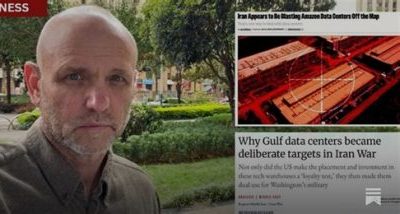
Iran spent $1 million to wipe out $30 billion in data center plans, and take down Amazon in the ME
or go to
Aletho News Archives – Video-Images
From the Archives
Clash of Civilization, Iran Part II
By Jamal Kanj – Intifada-Palestine.com – January 14, 2011
Israel’s survival kit is: perpetuate conflict, insecurity to rationalize collective hate and finally playing victim.
Devoid of conflict, Israel implodes internally; without hate, Zionism loses its justification; and playing eternal victim to continue blackmailing the West. Absence of this holy trinity, Israel ceases to exist. … continue
Blog Roll
 Aletho News
- China Rejects Outside Pressure on Trade Ties After New US Russia Sanctions Bill
- Houthis Keep Advancing as the Red Sea Crisis Deepens
- Iran spent $1 million to wipe out $30 billion in data center plans, and take down Amazon in the ME
- Zionist billionaire pressure to silence Macklemore sparks exodus from Ed Sheeran tour
- House Votes to End Iran War for Third Time
- North Korea Slams US Plan for ‘AUKUS 2.0’ with South Korea and Japan
- Prolonging US-Iran Conflict Not Meeting Interests of Int’l Community – China’s Wang Yi
- EU bans former Zelensky aide from parliament
- NATO-backed Kosovo separatist ‘responsible for war crimes’
- US destroying international space law
- If Americans Knew
- U.S. Makes, Israel Takes: The Real Story of U.S.-Israeli Military Cooperation
- Night raids rise in Palestine
- Tucker Carlson interviews Norman Finkelstein about Gaza
- Groups urge Americans to support Van Hollen legislation on Israel’s killing of Americans & Palestinians
- Trump administration plans to send 40,000 tons of bombs to Israel: report
- Sanctions Target Iran’s Government, But Kill Hospitalized 23-Year-Old Woman
- An alternative view on the book “Israel’s Lobby: America in the Grip of a Foreign Power”
- Ed Sheeran’s band Beoga, other opening acts quit tour after Macklemore was dropped over his pro-Palestinian comments
- The assassination attempt on President Trump in Butler and the various Israeli connections to it
- “We Want That the Whole Land Be Jewish”
- No Tricks Zone
- New Study: ‘Global Drought Shows No Detectable Recent Acceleration Under Climate Warming’
- Economic Masterminds: German Socialists Suggest Taxing Productivity Gains Stemming From Using AI
- The South China Sea Has Not Been Cooperating With The Climate Change Narrative
- Energy Crisis: Germany Enters Heating Season With Historically Low Gas Reserve Fill Levels
- New Study: The Antarctic Ice Sheet Gained Mass From 2020-2024 Due To Staggering Snow And Ice Accumulation
- Study: Ocean Heating Rates From Thousands Of Years Ago ‘Dwarf’ Modern Ocean Heating Rates
- Climate Extremists Target, Attack Large-Scale Power Grid Infrastructure In Germany!
- New Study: Antarctic Ice Melt Has Contributed Less Than 1 Centimeter To Sea Level Rise In The Last 30 Years
- Fear Of Debate: Alarmist German Climate Scientist Calls On Mainstream Media To Discredit Skeptic Voices
- End-Of-August Arctic Sea Ice Extent Hasn’t Fallen In 20 Years, Official Data Show!
 Aletho News