Brussels should buy Ukrainian grain for Africa – Lavrov
RT | September 24, 2023
The European Commission should buy the Ukrainian agricultural produce that the bloc says it doesn’t need and ship it to African countries, Russia’s foreign minister Sergey Lavrov has said at the UN General Assembly (UNGA).
Western allies have repeatedly accused Moscow of trapping millions of tons of grain in Ukrainian Black Sea ports and of exacerbating a global food crisis, particularly across the African continent.
“Since the European Commission is wasting tens of billions of dollars on Ukraine… it can buy the grain that Ukraine wants to sell and EU countries don’t want [to buy] for reasons of competitiveness, and send it to Africa,” Lavrov told the UNGA.
According to Russia’s top diplomat, Ukrainian agricultural produce is “being supplied to European countries in abundance” but many of them don’t want to buy it, because “they have their own farmers and don’t want them to go bust due to competition.”
He also questioned the integrity of last year’s grain deal, pointing out during his speech at the UN that only 3% of the grain that was moved under this deal had reached the poorest countries in Africa.
In addition, Lavrov said that some 260,000 metric tons of Russian fertilizers have been impounded in EU ports since 2022 and that Moscow was ready to ship these fertilizers to African nations for free.
Russian fertilisers became the crucial point in talks over resuming the Black Sea Grain Deal that was clinched last year between Russia and Ukraine and brokered by the UN and Türkiye. The deal was aimed at allowing Ukraine to export grain from its ports to countries in Asia, the Middle East and Africa, in exchange for lifting Western sanctions that prevented Russian agricultural exports.
However, Moscow withdrew from the agreement in July, saying that the West was still making it impossible for Russia to ship food and fertilizer.
Lavrov said that the Deputy Foreign Minister of Russia, Sergey Vershinin, is currently discussing the key issues related to the deal with UN representatives. He stressed also that Western states would be misleading UN Secretary-General Antonio Guterres by saying that the grain deal was about to resume.
According to the minister, the deal can resume once Russia’s demands regarding its agricultural exports are fulfilled.
China and Syria forge ‘strategic partnership’ – leaders
RT | September 22, 2023
Beijing and Damascus announced a new “strategic partnership” during Syrian President Bashar Assad’s ongoing visit to China. President Xi Jinping met him in the city of Hangzhou before this week’s launch of the Asian Games, a high-profile international sports event.
Assad is visiting China for the first time since 2004, when he met then-President Hu Jintao. Xi announced the new agreement as he welcomed his guest in the capital of Zhejiang Province on Friday.
The Chinese leader stated that the relationship between the two nations has “withstood the test of international changes” and pledged to maintain them in the face of international “instability and uncertainty.”
The US and its allies have been seeking to oust Assad for over a decade, accusing him of various transgressions during an armed conflict in the country. The bloodshed started in 2011 as mass protests surged against the Syrian government but were soon hijacked by international jihadist organizations. These elements sidelined other anti-government forces, which Western nations touted as “moderate rebels,” as the main threat to Damascus.
Russian intervention in 2015 turned the tide and helped the Syrian Army oust Islamist militants from most of the country. Some portions, where Turkish and American troops or their local allies are present, remain outside Damascus’ control.
The US has imposed crippling unilateral sanctions on Syria, which hamper its ability to reconstruct after this brutal conflict. Xi expressed support for Assad’s efforts to rebuild the nation, keep terrorists in check, and seek a political settlement for the Syrian people.
The Arab League readmitted Syria in May as Damascus seeks to normalize relations with its neighbors. Beijing had facilitated the restoration of diplomatic relations between regional rivals, Iran and Saudi Arabia, in June. Both nations played significant roles in the Syrian crisis, the former supporting Assad’s government and the latter initially vying for his ouster.
The Syrian president and First Lady Asma Assad arrived in Hangzhou on Thursday. On Saturday, the visiting dignitaries are set to attend the opening ceremony of the 19th Asian Games alongside a dozen other foreign guests.
US, Bahrain to Sign Strategic Security and Economic Agreement
By Connor Freeman | The Libertarian Institute | September 11, 2023
The US and Bahrain will ink a deal to upgrade the two nations’ strategic partnership this week, according to Axios. One source briefed on the issue said the White House hopes to use this deal as a framework for other regional agreements. The Joe Biden administration is currently striving to induce Riyadh into normalizing with apartheid Israel.
Washington and Manama have a strong partnership, the US Navy’s Fifth Fleet is headquartered at a large base in Bahrain. Since 2002, the Gulf Kingdom has been a major non-NATO ally of the United States, though this does not include a security commitment.
Two sources familiar with the upcoming deal told Axios, “[it] includes a commitment to consult and provide assistance if Bahrain faces an imminent security threat.” Another source explained that the deal outlines an economic partnership between the two countries, and cooperation involving “trusted technologies.”
Though legally binding, the security commitment will fall short of the NATO-style Article 5 guarantee which Riyadh is reportedly seeking in exchange for normalizing ties with Tel Aviv. Bahrain likely desired a bolstered commitment because of the threat of war with Iran.
However, in March, Beijing achieved a diplomatic feat by brokering a peace deal between Saudi Arabia and Iran. This has sparked a regional realignment with Iran’s ally Damascus being welcomed back into the Arab League after being suspended for more than a decade.
The report says Bahrain’s Crown Prince and Prime Minister Salman bin Hamad Al Khalifa is expected to sign the deal during a visit to Washington this week where he will be meeting with Pentagon chief Lloyd Austin, Secretary of State Antony Blinken, and National Security Adviser Jake Sullivan.
Last week, Brett McGurk, Biden’s top Middle East official on the National Security Council, visited Bahrain for meetings, discussing the final details of this new agreement, with the Crown Prince as well as other officials.
Bahrain is also a signatory of the Abraham Accords which is a thinly veiled foundation for a regional military coalition led by the US and Israel eyeing Iran. Under the accords, Gulf dictatorships such as Bahrain recognize Israel – absent a Palestinian state or end to the apartheid regime – and in turn receive increased access to advanced weapon systems manufactured by the US military-industrial complex. Washington is attempting to exploit the arms deals as a way of securing concessions from regional countries, namely downgrading economic ties with China.
Recent polling has shown that as a result of Israeli massacres and war crimes committed against the occupied Palestinians, the Abraham Accords are becoming increasingly unpopular among the populace in signatory states including Bahrain and the UAE. During recent months, the US has expanded its military presence in the Persian Gulf and the Middle East in preparation for a confrontation with Tehran. This weekend, David Barnea, the chief of the Israeli Mossad, declared Tel Aviv will launch another assassination campaign within the Islamic Republic.
The West appears to be preparing another regime change ‘uprising’ in Syria
By Eva Bartlett | RT | September 12, 2023
Twelve years on, the West’s war on Syria continues, with seemingly new plans to destabilize the country and overthrow its leadership. This after years of brutal sanctions against (and crocodile tears for) the Syrian people.
Earlier this year, a discussion between journalist Edward Xu and Farhan Haq, deputy spokesman for the UN secretary-general, went viral when Xu’s questions led to a bold-faced display of feigned ignorance on the UN spokesman’s part. Asked whether he thought the presence of the US military in Syria was illegal or not, Haq stammered out, “There’s no US armed forces inside of Syria…I believe there’s military activity, but in terms of a ground presence in Syria, I’m not aware of that.”
Xu had referred to a US airstrike the day prior that had killed 11 people in Syria and asked for Haq’s comment on whether or not Syria’s territorial integrity should be respected. Haq called for “foreign forces” to exercise restraint, but presumably he didn’t mean US forces – since, of course, according to him, none were there.
Haq’s claim of not being aware of the illegal presence of at least 900 US troops on the ground in Syria is contradicted by US officials’ statements clearly indicating such a presence exists and will remain for “many, many, years and decades to come,” as General Mark Milley, the chairman of the US Joint Chiefs of Staff, said in late August. Of course the US has no plans of leaving Syria – why would it, when there are so many natural resources left to plunder (oil, gas, wheat…), as the US and its proxies have been doing for years. Former President Donald Trump even bragged about this in November 2019, saying, “We’re keeping the oil… We left troops behind only for the oil.”
While the Xu-Haq exchange took place last March, it remains very relevant today as the US and its allies gear up to cause more instability in Syria, with the same old goal of overthrowing the Syrian government.
Syria 2011 destabilization ‘protests’ anew?
British journalist Vanessa Beeley recently reported on potential new Western efforts to destabilize Syria, fomenting unrest much like in 2011. But this time, the unrest is being fomented in Sweida province, with Israel playing an instrumental role, she said.
In a subsequent interview on Redacted, Beeley stated the number of US military personnel and contractors on the ground in northeast Syria is somewhere between 2,000 and 3,000. The US, she said, continues to use al-Tanf, its illegal military base in the southeast of the country on the borders with Iraq and Jordan, to train still more militants to eventually have them take control over part of the Syrian-Jordanian border and thus close off an important land border for Syria.
Worse still is the prospect of Syria 2011 all over, with the US and allies, “training 16,000 Druze fighters in Sweida,” with the intent of sowing chaos as in 2011. “There is a very small minority here that is – with the backing of Israel and the US – looking for autonomy, very similar to the Kurdish project in the northeast, and a federalist project to separate them from the Syrian State and to create an independent statelet,” Beeley said. “This is part of the US-Israeli plan to Balkanize Syria and divide it into warring statelets. This movement is basically now being power multiplied by the US at al-Tanf.”
She also highlighted a recent visit by three US congressmen to a district in northern Syria controlled by terrorist factions, pointing out that they had entered Syria illegally (as Western politicians and corporate media prefer to do) to fraternize with terrorist groups (as Western politicians and media prefer to do).
Syrian analyst Kevork Almassian recently commented on the Sweida protests, noting that “the leaders of the protesters are calling for political decentralization, which is the fancy word for partition and autonomy of the province from Damascus.”
Syria’s economy is in shambles now, largely a result of the US-led war on Syria and years of steadily more brutal Western sanctions. “Can someone please explain to me how political decentralization will solve the [economic] misery, and why no one from these leaders of the protesters are asking the EU the US to lift the draconian sanctions against them that is causing all this misery?” Almassian asked.
“Why is no one from these so-called leaders of the protesters saying let’s go and liberate the eastern shore of the Euphrates from the American occupation forces who are occupying their oil and wheat fields?”
Good questions, as was his question on who benefits from the sectarian partitioning of Syria. The Syrian people? No. The US, Israel and allies? Bingo.
‘Anti-terrorist’ resolution forgotten in favor of regime change
In her Redacted interview, Beeley stated, “What we’re basically seeing is a resurgence of the kind of 2011 narrative of peaceful protests in the south, the desire to overthrow Bashar al-Assad. UN officials are calling for resolution 2254 which is effectively regime change and political interference in the political process in Syria.” The resolution she is referring to, adopted in 2015, called for “free and fair elections” under UN supervision to be held in Syria within 18 months, among other things.
Back in 2016, I interviewed Dr. Bouthaina Shaaban, a political and media advisor to Assad. When emphasizing how the West was fanning, not fighting, terrorism in Syria, she addressed UNSC Resolutions 2254 and the lesser-mentioned 2253, which entails stopping terrorism in Syria and prosecuting those who support, facilitate, or participate in the direct or indirect financing of activities carried out by ISIS, al-Qaida and associated groups.
Shaaban said, “You want to implement 2254? Implement 2253 first, and then it would be very easy to implement 2254. This is the double-standards of the West: they address their audience with having a stand against terrorism and wanting to fight terrorism, when in reality they are facilitating terrorism and not even mentioning even a Security Council Resolution under the 7th Chapter that was taken 24 hours before 2254.”
Washington can claim its troops are in Syria to “fight ISIS,” but as I wrote some years ago, these claims are transparently fake, with multiple instances of the US-led coalition offering no resistance to terrorist advances or even facilitating their victories against Syrian forces.
In just one of the more recent reports of US theft of Syrian oil, Syrian media on August 24 reported that a convoy of 60 tankers loaded with crude oil exited Syria to US occupation bases in Iraq. In August 2022, Syria’s Oil Ministry stated that “US occupation forces and their mercenaries steal up to 66,000 barrels every single day from the fields occupied in the eastern region,” amounting to around 83% of Syria’s daily oil production, the Cradle reported.
As Milley boasted, the US intends to (illegally) remain in Syria for a long time. Not to “fight terrorism” but to destabilize the country still more, impoverish and kill the people still more, and loot its resources still more.
Eva Bartlett is a Canadian independent journalist. She has spent years on the ground covering conflict zones in the Middle East, especially in Syria and Palestine (where she lived for nearly four years).
Iran Hails Resistance Allies’ Push to Reshape World Order, Weaken US ‘Hegemony’

People raise Palestinian, Lebanese and Hezbollah flags during a rally in solidarity with the Palestinians, on the outskirts of the southern Lebanese village of Kfarkila, near a United Nations Interim Force in Lebanon (UNIFIL) armoured personnel carrier.
By Ilya Tsukanov – Sputnik – 02.09.2023
Iran joined the Shanghai Cooperation Organization and BRICS this summer, and has been working to expand bilateral cooperation with both Russia and China. Tehran is also the leader of an informal alliance of regional countries, including Syria, Lebanese militant group Hezbollah, and Iraqi Shia militias, known as the Axis of Resistance.
Iran’s foreign minister has praised the struggle in the Middle East to resist and undermine US dominance and create a new international order.
“The international system is undergoing fundamental changes and we are witnessing new actors in the international arena,” Foreign Minister Hossein Amir-Abdollahian said in a meeting with political groups in Beirut, Lebanon on Friday.
“The US is trying to maintain its hegemony, but the region and the world understand very well that America cannot exercise its hegemony, and on the contrary, the Resistance is powerful and can achieve its will powerfully,” Amir-Abdollahian added.
Today, the Iranian top diplomat said, “the position of the Resistance in the region cannot be ignored,” and is “being noticed by the West,” including as far as the Israeli-Palestinian crisis is concerned.
Separately, in talks with his Lebanese counterpart Abdallah Bou Habib, Amir-Abdollahian stressed that “the US sanctions regime cannot hinder the economic relations between Iran and Lebanon,” just as “it has failed to impact Iran’s cooperation with Iraq, Turkiye, Pakistan, Central Asia and the Caucasus.”
Iran is ready to provide further assistance to Lebanon to help Beirut resolve its long-running fuel and electricity crisis, he said. This includes readiness to build a network of power stations with a capacity of 2,000 megawatts.
Bou Habib praised Iran for its support for Lebanon in the nation’s time of crisis, and expressed readiness to further expand cooperation.
Lebanon’s political and economic crisis, which began in 2019, has left the country in economic ruin and run by a caretaker government. The post of president has been vacant since last October, when President Michel Aoun resigned at the end of his term.
Amir-Abdollahian also met with Hassan Nasrallah, secretary-general of the powerful Lebanese political party and militant group Hezbollah, which has forged close ties with Iran both in Lebanon and in Syria, where Hezbollah fighters backed by Revolutionary Guard Quds Force advisors have fought jihadist extremists for over a decade.
In the talks with Bou Habib, Amir-Abdollahian reiterated Iran’s long-stated position that “any normalization of relations with the Zionist regime will be detrimental to the entire region.” Iran will “continue to support and assist the Axis of Resistance, to preserve the Lebanese national interest, in the face of Israeli attacks and ambitions that threaten this entire region,” he said.
The Iranian diplomat also commented on the “positive developments” in relations between Iran and Saudi Arabia following the surprise normalization of relations earlier this year, saying that these processes “will have a positive impact on the entire region,” including for Lebanon.
At a press conference at the end of his visit, Amir-Abdollahian also rejected allegations by France – the European power which once controlled Lebanon as a colony, of meddling in Lebanon’s affairs.
“I advise Mr. Macron to focus on the situation inside France instead of paying attention to questions of interference in other countries,” he said. “Iran has always played the most constructive role in helping Lebanon,” he added.
Earlier in the week, the French president told a conference of French ambassadors that stopping Iranian “interference” was a “key element” in resolving Lebanon’s political standoff.
Amir-Abdollahian’s Beirut visit was preceded by a trip to Damascus on Thursday for talks with President Bashar Assad and other Syrian officials. Amir-Abdollahian slammed the illegal presence of US troops in eastern Syria, and blasted Israel for its ongoing campaign of airstrikes against the war-torn country.
Known to jealously guard its security and foreign policy independence, and the defense of its interests even against far larger and more powerful foes, including the US, Iran has dramatically ramped up cooperation with Russia and China in recent years as part of ongoing processes related to Eurasian integration. Iran joined the Shanghai Cooperation Organization in July, and acceded to the BRICS bloc late last month. Last week, a senior Islamic Revolutionary Guard Corps commander and advisor to Supreme Leader Ayatollah Ali Khamenei said that Iran sees a maritime-oriented economy and cooperation with Russia and China as keys to countering the impact of US sanctions.
A Second Geo-Strategic Shoe (Other Than Ukraine) Is Dropping
By Alastair Crooke | Strategic Culture Foundation | August 28, 2023
Whilst it has become clear to increasing numbers of people in the West that something has gone terribly wrong with the élites’ Ukraine project, and that the exaggerated predictions and expectations of Russian forces being ‘knocked for six’ by an armoured ‘fist’ have proved spectacularly wrong, those same élites are going wrong again – on another strategically decisive issue: They again largely ignore ‘reality’ – for the sake of control of the ‘narrative’. In this case, the West prefers to sneer at the implications of the new accessions to BRICS (let alone the other 40 states ready to join): ‘Nothing to see there’.
The BRICS is just a jumble of states lacking any cohesion, or common thread, western MSM proclaims. It can never challenge the U.S. global power, nor the sheer financial weight of the dollar sphere. However, China’s Global Times explains in mild tones, a different backdrop:
“The reason why the BRICS mechanism has such great appeal … reflects a general disappointment of many developing countries with the global governance system dominated and interfered by the U.S. and the West. As China has repeatedly emphasized, the traditional global governing system has become dysfunctional, deficient and missing in action, and the international community urgently expects the BRICS mechanism to strengthen unity and cooperation”.
Others in the Global South say it more starkly: The BRICS mechanism is seen as a means to slough off the last vestiges of western colonialism and to acquire autonomy. Yes, of course, BRICS 11 initially will be more cacophony than smooth opera, but nonetheless, it represents a profound shift of global consciousness.
BRICS 11 establishes a pole of influence and global heft that has the potential to eclipse in scope that of the G7.
The ‘mess’ in Ukraine is commonly attributed to mere ‘miscalculation’ by the western élites: They did not expect Russian society to be so robust, nor so steadfast under pressure.
Yet this was no minor ‘slip up’ by the West, since the recognition of NATO’s doctrinal contradictions, its second-rate weaponry and its inability to think rigorously – beyond tomorrow’s sound-bite – has (inadvertently) shone the spotlight on the deeper dysfunction within the West – one that runs far deeper than just the situation around the Ukraine project. Many in the West see major institutions of society locked within suffocating orthodoxy; in an intense level of political and cultural polarisation; and with political reform effectively locked-down.
The proxy war on Russia nevertheless was launched through Ukraine, precisely to reaffirm western global vigour. It is doing the opposite.
The financial war (as opposed to the ground war in Ukraine) was the counter-play to generating regime change in Moscow: Financial war was intended to underline the futility of opposing the sheer ‘muscle’ that dollar hegemony – acting in concert – represented. It was the jealous hegemon demanding obeisance.
But this back-fired spectacularly. And this has directly contributed not just to the expansion of BRICS, but to the energy resources of the Middle East and the raw materials of Africa sliding out of western control. Rather than the western scatter-gun threats of sanctions and financial ostracisation creating fear and reaffirming obsequiousness, the threats contrarily, have mobilised anti-colonial sentiments across the globe; fed the understanding that the western financial construct amounted to tutelage, and that any acquisition of sovereignty required the act of de-dollarisation.
And here, again, egregious mistakes were committed: Errors of geo-strategic magnitude were embarked upon almost casually, and without due diligence.
The primordial mistake was that of Team Biden (and the EU) illegally seizing Russia’s overseas reserve assets; expelling Russia from the financial clearing system, SWIFT; and imposing a trade blockade so complete that (it was hoped in the White House) its effects would tear down President Putin. The rest of world understood – they easily could be next. They needed a sphere that was resistant to western financial predations.
Yet, the second strategic error by Biden (& Co.) magnified the error of their initial ‘unprecedented’ financial blitz. This blunder marked the ‘second shoe to drop’ in Biden’s de-fenestration of the American financial imperium: He treated Mohammad bin Salman (and the Saudis generally) with contemptuousness: ordering them to increase oil production (in order to bring down the price of gasoline before the mid-term Congressional elections), and disdainfully threatening the kingdom with “consequences”, were it to fail to comply.
Perhaps Biden, so consumed with his electoral prospects, did not think it through. Even now, it is not clear that the White House understands the consequences of it having treated MbS as some aberrant underling. There is an eleventh-hour attempt to dissuade Saudi from joining BRICS, but it is too late. It’s application to join has been approved and will take effect from 1 January 2024. The West misread the mood.
The shared ethos within Gulf states is one of self-assured, assertive leaders, who are no longer willing to accept binary ‘with us or against us’ U.S. demands.
For the avoidance of mis-understanding, Biden, through the combination of these two strategic mistakes, has launched the West’s financial hegemony onto a slipway leading to incremental unwinding of much of the $32 trillion of foreign investment in fiat dollars which has accumulated in the U.S. system over the last 52 years – with an implicit acceleration towards ‘own currency trading’ amongst the majority of non-western states.
Ultimately this likely will lead to a BRICS trade settlement medium – possibly anchored to gold. Were a trading currency to be anchored in some way to a gram of gold, that currency would, of course, acquire status as a store of value, based on that of the underlying commodity (in this case gold).
The point here is that when inflation was zero-bound, U.S. Treasury bonds were seen as a store of (enduring) value. However, wide de-dollarisation undermines the synthetic (i.e. the imposed) demand for dollars that owed entirely to the Bretton Woods and the Petro-dollar frameworks (that demanded that commodities be traded only in U.S. dollars) and to the implicit understanding that U.S. Treasuries offered a certain store of value.
But what did Team Biden do? They have driven Saudi Arabia – the lynchpin to the Petro-dollar, and one of the pillars (together with other Gulf States and China) underpinning the huge holdings of U.S. Treasury debt – into the arms of BRICS. Put simply, the BRICS 11 incorporates six out of nine of the top global energy producers, as well as the principal energy consumers. OPEC+, in effect, has been swallowed to make a self-enclosed, self-sufficient circle of trading in energy (and raw materials) that does not need to touch dollars. And over time, this will amount to a major monetary shock.
The ‘consequences’ threatened towards Saudi Arabia by the White House have been rendered inconsequential. Saudi and Iran can sell their oil to other BRICS consumers (in non-dollar currencies). Members no longer need to be so concerned at western threats – one of the key provisions of BRICS is the joint refusal of all members to permit or facilitate any ‘regime change’ manoeuvres against BRICS members.
To be clear, what this all means is further price inflation in the West, reflecting the falling purchasing power of fiat currencies as dollar-demand subsides. Inevitably, a weakening dollar will lead to higher interest rates in the U.S. This – simply – will be one major consequence of de-dollarisation. Higher interest rates will impose great stress on the U.S. and European banks.
The first BRICS 11 summit is set for October 2023 in Kazan. By ‘coincidence’, full membership of the new states will coincide with Russia taking the rotating annual presidency of the BRICS on 1 January 2024. Putin already has made clear his determination to move towards resolving the complexities of a separate BRICS currency – “one way or another”.
Neocons and Other Malignancies in the American Body Politic
They will never give up until we’re all dead
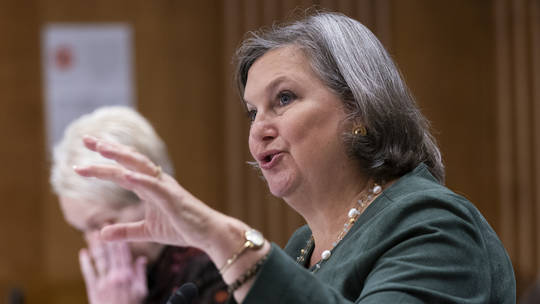
BY PHILIP GIRALDI • UNZ REVIEW • AUGUST 22, 2023
It is interesting to observe how, over the past twenty-five years, the United States has become not only a participant in wars in various places on the planet but has also evolved into being the prime initiator of most of the armed conflict. Going back to the Balkans in the nineteen-nineties and moving forward in Afghanistan, Iraq, Libya, Syria, Lebanon and Somalia there is almost always an American leading role where there is bombing and killing. And where there is no actual war, there are threats and sanctions intended to make other nations come to heel, be they in Latin America like Venezuela, or Iran in the Middle East, or North Korea in Asia. And then there is the completely senseless act of turning major competitors like Russia and China, as we are now seeing, into enemies, with a proxy war raging in Ukraine, threats over Taiwan, and the world moving one step closer to a nuclear disaster.
It seems to me that the transition from an America bumbling its way into war and the current situation where wars are pursued as a matter of course coincides with a certain political development in the United States, which is the rise of neoconservatives as the foreign and national security policy makers in both major parties. This has developed together with the evolution of the view that the United States can do no wrong by definition, indeed, that it has a unique and God-given right to establish and police the globe through something that it invented, exploits and has dubbed the “rules based international order.”
Who would have thought that a bunch of Jewish student-activists, mostly leftists, originally conspiring in a corner of the cafeteria in the City College of New York would create a cult type following that now aspires to rule the world? The neocons became politically most active in the 1960s and eventually some of them attached themselves to the Republican Party under Ronald Reagan, declaring their evolution had come about because they were “liberals mugged by reality.” The neoconservative label was first used to describe their political philosophy in 1973. Since that time, they have diversified and succeeded in selling their view to a bipartisan audience that the US should embrace an aggressive interventionist foreign policy and must be the world hegemon. To be sure their desire for overwhelming military power has been strongly shaped by their tribal cohesion which has fed a compulsion to have Washington serve as the eternal protector of Israel, but the hegemonistic approach has inevitably led to expanding conflict all over the world and a willingness to challenge, confront and defeat other existing great powers. Hence the support for a needless and pointless war in Ukraine to “weaken Russia” and a growing conflict with China over Taiwan to do the same in Asia. To make sure that the Republicans do not waver on that mission, leading neocon Bill Kristol has recently raised $2 million to do some heavy lobbying to make sure that they stay on track to confront the Kremlin in Europe.
One of the leading neocon families is the Kagans, who have successfully penetrated and come to dominate the establishment foreign policy centers in both the Republican and Democratic Parties. Victoria Nuland nee Nudelman, the wife of Robert Kagan, is entrenched at the State Department where she is now the Deputy Secretary, the number two position. Up until recently, she was one of the top three officials at State, all of whom were and are Jewish Zionists. Indeed, under Joe Biden Zionist Jews dominate the national security structure, to include the top level of the State Department, the head of Homeland Security, the Attorney General, the National Security Adviser, the Director of National Intelligence, the President’s Chief of Staff, and the Deputy Director of the Central Intelligence Agency. Nuland’s hawkish appeal is apparently bipartisan as she has served in senior positions under Bill Clinton, Dick Cheney, George W. Bush, Barack Obama and now Joe Biden. As adviser to Cheney, she was a leading advocate of war with Iraq, working with other Jewish neocons Doug Feith and Paul Wolfowitz at Defense and also Scooter Libby in the Vice President’s office. As there was no actual threat to the US from Saddam Hussein she and her colleagues invented one, the WMD that they sold to the media and to idiots like Secretary of State Condoleezza Rice. Nuland is also considered to be close to Hillary Clinton and the recently deceased ghastly former Secretary of State Madeleine Albright. All of her government assignments have included either invading or severely sanctioning some country considered by her and her colleagues to be unfriendly. She particularly hates the Russians and anyone who is hostile to Israel.
Apparently, Nuland’s record of being seriously wrong in the policies she promoted has only served to improve her resume in Washington’s hawkish foreign policy establishment and when Biden came into the presidency she found herself appointed to the number three position at the State Department as the Under Secretary of State for Political Affairs. Her return to power with the Democrats might also be due in part to the activism of her husband Robert, currently a senior fellow at the Brookings Institute, who was one of the first neocons to get on the NeverTrump band wagon back in 2016 when he endorsed Hillary Clinton for president and spoke at a Washington fundraiser for her, complaining about the “isolationist” tendency in the Republican Party exemplified by Trump. Robert famously has never seen a war he disapproved of and, while urging Europe to do more defense spending, commented that “When it comes to use of military force “Americans are from Mars, and Europeans are from Venus.” Robert’s brother Frederick, a Senior Fellow at the neocon American Enterprise Institute, and Frederick’s wife Kimberly, who heads the bizarrely named Institute for the Study of War, are also regarded as neocon royalty.
Nuland is particularly well known for her being the driving force behind the regime change in Ukraine in 2014 that replaced the fairly-elected but friendly-to-Russia President Viktor Yanukovych with a selected candidate more accommodating to the US and Western Europe. Ukraine, the most corrupt country in Europe, has been unstable ever since and the current war, also initiated by interference from the US and UK, has brought about the deaths and wounding of an estimated half million Ukrainians and Russians.
Nuland was recently in Africa, stirring up developments in Niger, which has experienced a recent military coup that removed a president who was corrupt but also a friend of the US and France, both of which have troops stationed in the country. As I write this, a number of African nations (ECOWAS) friendly to US and French interests in the region are gathering together their own military force to reverse the coup, but there is little enthusiasm for the project. We will see how that turns out, but predictably Nuland is advertising a possible intervention as a “restoration of democracy.”
And there is more over the horizon with neocons like Secretary of State Antony Blinken and Nuland in charge of US foreign policy and supported by most of congress and a Jewish dominated media and entertainment industry. Joe Biden is too weak and too much under the thumb of the Israel Lobby to pursue any policies that would be beneficial to the American people in general, so the course will be set by the current crop of zealots, just as Donald Trump was guided by his Christian Zionist advisers.
If you want to understand just how what remains of our republic is in a bus being driven over the cliff by a group that has no regard for most of the citizens of the country that they reside in, one only has to read some of what passes for neocon analysis of what must be done to make America “safe.” Not surprisingly, it also involves Israel and a war on behalf of the Jewish state.
One astonishingly audacious article that appeared on August 13th in The Hill entitled “If Israel strikes Iran over its nuclear program, the US must have its back,” gives Israel the option of starting a war for any or no reason with the United States compelled to join in in support. It was written Michael Makovsky, a well-known Jewish neocon, and Chuck Wald. Makovsky is President and CEO of the Jewish Institute for National Security of America (JINSA) while Wald is a former general who also is affiliated with that group as a “distinguished fellow,” which means he is getting paid generously to serve as a mouthpiece providing credibility for the group. For those unfamiliar with The Hill, it is an inside the beltway defense contractor funded online magazine that pretends to be serious but which is actually an integral part of the status quo Zionist and war-on-demand network. That the Jewish Institute for National Security is “of America” is, of course, a characteristically clever euphemism.
The article begins with “The Biden administration should learn from its unpreparedness for the Russia-Ukraine war and begin to prepare for a major Israel-Iran conflict. The administration needs to set aside its differences with the Israeli government, overcome its aversion to conflict with Iran, and begin to work closely with Jerusalem to prepare for the growing likelihood that Israel will feel it has no choice but to initiate a military campaign against Iran’s nuclear program. In ‘No Daylight,’ a new report from the Jewish Institute for National Security of America (JINSA)… retired senior military officers and national security experts explain that whatever differences the US might now have with Israel over Iran policy, our two countries’ interests will be aligned after an Israeli strike. Consequently, in preparing its response, the U.S. guiding principle should be ‘no daylight with Israel,’ to ensure Israeli military success, mitigate Iranian retaliation and limit the scope of the conflict — vital interests for both countries.”
That war with Iran is a “vital interest” for the United States is, of course, not really explained as the point is to let Israel to decide on the issue of war and peace for the United States. The article then trots out the old “credibility” argument, i.e. that if we don’t go to war no one will ever trust our security guarantees: “A US betrayal of its close Israeli ally, at a time of great peril for the Jewish state, would be ‘one of the greatest catastrophes ever,’ an Arab leader told us privately recently. Because Israel is widely perceived as a close American ally, the US stance as Israel risks thousands of casualties in defense of its very existence, will resound broadly. Strong American support will reassure allies from Warsaw to Abu Dhabi and Taipei; American equivocation will shred Washington’s credibility and embolden adversaries from Tehran to Moscow and Beijing.”
One would love to know who the anonymous Arab leader so concerned about Israel is and, of course, the Jewish state is not in fact an American ally apart from in the fertile imaginations of congressmen, the media and the White House. And Israel will, of course, need more weapons and money from the US taxpayer to include “expediting delivery to Israel of KC-46A tankers, precision-guided munitions, F-15 and F-35 aircraft, and air and missile defenses… Washington should accelerate building integrated regional air, missile and maritime defenses against persistent Iranian threats.” And America must be prepared to expand the war: “Privately, Iranian and Hezbollah leadership should be warned that heavy retaliation against Israel… will prompt severe Israeli and/or American responses that could threaten their very grasp on power. Upon commencement of an Israeli strike, the United States should promptly resupply Israel with Iron Dome interceptors, precision-guided munitions, ammunition and spare parts, and deploy Patriot air defenses to Israel…”
So the United States must be prepared to turn over its national security to Israel in exchange for what gain for Americans? In part it would apparently involve “finding a permanent solution to Iran’s illegal nuclear weapons program” which is based on a lie even if Prime Minister Benjamin Netanyahu has been repeating for over 20 years that Iran is only six months away from a weapon. Both the CIA and Mossad have confirmed that Iran has no such program while Israel does have a secret illegal nuclear arsenal built using enriched uranium and nuclear triggers stolen from the US. The article concludes with another reference to the non-existing program, claiming “the most effective way to address Iran’s nuclear program already has been articulated by President Biden and communicated by America’s ambassador in Jerusalem: ‘Israel can and should do whatever they need to deal with it, and we’ve got their back.’”
Supporting Israeli war crimes is not the way to go. As Chris Hedges puts it correctly, there is no compelling American interest in damaging itself by supporting Israel blindly, quite the contrary: “The long nightmare of oppression of Palestinians is not a tangential issue. It is a black and white issue of a settler-colonial state imposing a military occupation, horrific violence and apartheid, backed by billions of US dollars, on the indigenous population of Palestine. It is the all powerful against the all powerless. Israel uses its modern weaponry against a captive population that has no army, no navy, no air force, no mechanized military units, no command and control and no heavy artillery, while pretending intermittent acts of wholesale slaughter are wars.”
And, of course, while Israel engages in slaughter and torture it always portrays itself as the victim only engaged in fighting against “terrorists.” I have a better idea for where we should go with all of this. President Joe Biden should be impeached for ignoring war powers legislation and indicating that he is willing to sacrifice US interests and kill American soldiers, few or plausibly none of whom will actually be Jewish since it is not an occupation that attracts them, to please and support a manifestly evil foreign government. And Donald Trump should also be punished for having done much the same type of pandering to a foreign country while in office. Meanwhile, haul Makovsky and Wald together with their buddies at the American-Israel Public Affairs Committee (AIPAC) and the Anti-Defamation League (ADL) down to the Justice Department and put them in jail for violation of the Foreign Agents Registration Act of 1938 (FARA) in that they are willfully acting as agents of a foreign government and are operating corruptly to serve the interests of that government. The criminals at AIPAC are already using their associated PACs to oust targeted members of Congress up for re-election in 2024 who have in any way been critical of Israel or pro-Palestinian. And while you’re at it Mr. Attorney General Merrick Garland nee Garfinkel, please have Mr. Blinken and Ms. Nuland pop by for a chat just for starters and see how far you can make the laws apply to those in power. There is some confusion evident here as Israel is not part of the United States, no matter how politically dominant and wealthy its lobby might be. Time to put an end to this nonsense and call it out for what it is – it is treason.
Philip M. Giraldi, Ph.D., is Executive Director of the Council for the National Interest, a 501(c)3 tax deductible educational foundation (Federal ID Number #52-1739023) that seeks a more interests-based U.S. foreign policy in the Middle East. Website is councilforthenationalinterest.org, address is P.O. Box 2157, Purcellville VA 20134 and its email is inform@cnionline.org.
Russia hosts first-ever meeting of Iran, Saudi defense officials
The Cradle | August 17, 2023
Talal al-Otaibi, an aide to the Saudi defense minister, on 16 August, met with the Deputy Chief of Staff of Iran’s armed forces, Aziz Nasirzadeh, on the sidelines of the 11th Moscow Conference on International Security.
Coming a few months after the two nations normalized ties under a Chinese-brokered agreement, this marked the first-ever meeting between Iranian and Saudi officials.
According to the Saudi defense ministry, the officials reviewed bilateral relations in the defense and security fields and ways to improve them. Iranian state-run news outlet IRNA also reported that the officials agreed to exchange military attachés “as soon as possible.”
The historic meeting occurred one day before the Iranian Foreign Minister set off on an official trip to the Saudi capital Riyadh, where he is scheduled to meet his Saudi counterpart Prince Faisal bin Farhan.
This is the first trip by Iran’s top diplomat to the kingdom since the signing of the détente in March. Iran’s new ambassador to Riyadh, Alireza Enayati, will also officially begin his mission during Amir-Abdollahian’s visit.
In June, an Iranian navy official revealed that the Islamic Republic, alongside Saudi Arabia, the UAE, Qatar, Bahrain, Iraq, Pakistan, and India, is looking to form a “naval alliance” to boost security in the northern Indian Ocean.
Two weeks after this announcement, Bin Farhan visited Tehran, where he met with Iranian officials and had this to say about the possible naval alliance, “I would like to refer to the importance of cooperation between the two countries on regional security, especially the security of maritime navigation … and the importance of cooperation among all regional countries to ensure that it is free of weapons of mass destruction.”
“Iran has never equated security with militarism but sees it as a broad concept including political, cultural, social, economic, and trade aspects,” Amir-Abdollahian said during the same news conference.
Despite the growing cooperation between Iran and Saudi Arabia, tensions have recently arisen over a disputed gas field in Gulf waters.
Furthermore, the kingdom is currently the target of a charm offensive from the US and Israel, who hope to see Saudi officials put pen to paper on a normalization agreement with Tel Aviv.
What Is Happening In Syria?
Washington’s interventionism and its disregard for its own highly promoted “rules based international order” is outrageous
BY PHILIP GIRALDI • UNZ REVIEW • AUGUST 15, 2023
Which are the governments generally regarded as “rogue” by an overwhelming majority of the world’s nations? If you answered either Russia or China you would be wrong, even though many countries have condemned Russia’s attack on Ukraine on grounds that no government has an intrinsic right to invade another unless there is an imminent serious threat that would excuse such an intervention. I would however expect that most readers of this review would have made the right choice, which is that the United States is probably number one based on its ability to destabilize whole regions with a military reach that spans the globe. And indeed, it is important to note that the Russian “special military operation” directed against Ukraine would not have happened at all if the Joe Biden Administration had simply indicated clearly and non-ambiguously to the Russian government that there was no intention of allowing Ukraine to join the North Atlantic Treaty Organization (NATO) alliance. Ironically, the White House knew very well that inviting Kiev to enter into the alliance was a legitimate red-line, existential issue for the Kremlin, but opted to push hard on the issue instead. Instead of opting for a negotiated peaceful settlement, Biden and his clown show foreign and national security policy team opted to kill possibly hundreds of thousands of Ukrainians and Russians to somehow “weaken” Russia, an intention that has borne no fruit even after more than a year and a half of fighting.
So yes, by the world’s reckoning the United States of American is both “exceptional” and “number one,” which a series of White House inhabitants have aspired to, though perhaps not in the same way as buffoons like Senators Tom Cotton and Ted Cruz refer to it. Most non-Americans see the US as the greatest threat to world peace. And then there is America’s “closest ally and best friend in the whole world” Israel in second place, a government which commits crimes against humanity and even war crimes on a nearly daily basis with absolute impunity as it is protected and defended by the very same United States, where the Jewish state runs the foremost and most powerful foreign policy lobby. It is a lobby that has inserted itself in all levels of government and which has corrupted huge majorities of politicians and both major political parties while also controlling the “message” on the Middle East promoted by the media.
Even as I write this, 41 Democratic Party politicians are spending their recess on a Lobby sponsored trip to Israel. Their leaders include the inimitable traitor 80 year old Congressman Steny Hoyer of Maryland, who is on his twenty-third trip to the country that he loves and admires beyond all others, and House Democratic Leader Hakeem Jeffries. Jeffries is on his second trip to Israel this year. He should be ashamed but, of course, isn’t. It is the largest-ever delegation of Democratic lawmakers on a tour of Israel, sponsored in this case by the American Israel Education Foundation, an affiliate of the American Israel Public Affairs Committee (AIPAC). Not to be outdone House Speaker Kevin McCarthy is leading 31 Republican Congressmen on the same mission though the groups will not mingle and the speaker will be careful to render his own obeisance separately to the Israeli leadership.
The Democrats and Republicans, will as always be unable to enunciate any good reasons for American bondage to Israel beyond bromides like “Israel has a right to defend itself,” which will be repeated over and over before the Solons head back to Washington to send billions more of US taxpayer dollars to the Jewish state. While in Israel they will be fed a special diet of “all Arabs are terrorists” and good old Steny will be nodding his head in time with the song. That is before he and his colleagues engage in crawling on their bellies before Israeli Prime Minister Benjamin Netanyahu as a sign of their total submission to his will.
If one is seeking a single example of the failure of the United States and its ally Israel to abide by the clearly mythical “rules based international order” one might well examine what is going on in Syria, where both the US and the Jewish state have been punishing the country through lethal sanctions and direct military intervention for many years with no sign that the interaction will be ending any time soon. The activity is rarely reported in the US and European media, which somehow has decided that Syrian President Bashar al-Assad is some kind of tyrant who deserves whatever he gets, even if it is dished out by “apartheid” Israel and the clueless US, which has been illegally militarily occupying roughly one third of Syria since 2015, including the areas that have producing oil facilities and good agricultural land, both of which are being exploited or stolen. Israel meanwhile has annexed the Syrian Golan Heights, which it occupied in 1967. Donald Trump gave his blessing to the illegal annexation and also gave his consent to whatever the Jewish state decides to do both with the Syrians and the Palestinians while also conniving at the nearly daily air attacks carried out by Israel against targets in both Palestine-Gaza and Syria, killing scores of local soldiers and civilians.
The US military occupation has been supplemented by an increasingly harsh series of sanctions that have effectively cut off food, medicines and other basic commodities to the Syrian people while also denying access to international banking services. Russia, which is assisting Syria at the invitation of the country’s government, has made up for some of the shortages but there is considerable suffering among the ordinary people, not the country’s leaders. The claim by Washington is that Syria has to be protected from its own “totalitarian” government and the US is there to fight terrorists, most particularly ISIS. Ironically perhaps, but Tel Aviv and Washington actually support some of the groups that many would consider to be themselves terrorists, including providing direct US aid to al-Qaeda clone Hayat Tahrir al Sham and Israeli support for ISIS to include treating wounded terrorists in Israel’s hospitals. The US air base at Al-Tanf, near the border with Iraq and Jordan, has, in fact, become a support hub for terrorist groups opposing the al-Assad government.
Sanctions on energy imports were temporarily lifted by the US and EU after the disastrous earthquakes the shook the region in February, but in June, US lawmakers introduced the Assad Regime Anti-Normalization Act of 2023 which would use secondary sanctions to penalize those countries that might be tempted to help restore services to the areas of Syria affected by both war and the impact of the quakes. Israel reportedly has exploited the opportunity provided by the natural disaster to increase its air attacks on Syrian infrastructure.
Indeed, recent history tells us that both Israel and the United States are particularly fond of occupying someone else’s land and are capable of coming up with excuses for doing so at the drop of a hat. The reasons generally sound like saying “Hey! We are the good guys who support democracy!” Repeat as necessary until the audience either goes to sleep or wanders off. The western media reporting on what is taking place in Syria can be regarded as being in the “wanders off” category.
I certainly am not the only one who has noted that the United States tends to do everything ass-backwards in its conduct of foreign policy since the time of the Clintons. That has certainly been the case in dealing with nations like Syria and Russia, where ambassadors Robert Ford and Michael McFaul were openly hostile to the respective local governments and openly sought to empower declared opponents of the countries’ leaders. Syria presumably was demonized to please Israel, beginning with the seeking to destabilize Syria through the passage of the Syria Accountability Act in 2003, even though Damascus posed no threat whatsoever to American interests. The current sanctions come at a time when Syria is continuing to struggle to rebuild after a still active twelve year civil war that destroyed much of the country’s infrastructure. US sanctions are making more difficult ongoing reconstruction efforts and are de facto largely punishing the Syrian people, with only minor impact on its government.
And sanctioning to punish Syria is bipartisan, perhaps reflecting a desire to satisfy Israeli demands. Donald Trump, who ran for president pledging to end America’s pointless wars overseas, on June 17th 2020 nevertheless initiated new sanctions against Syria and its government. US Ambassador to the United Nations Kelly Craft informed the Security Council that the Trump Administration would implement the measures to “prevent the Assad regime from securing a military victory. Our aim is to deprive the Assad regime of the revenue and the support it has used to commit the large-scale atrocities and human rights violations that prevent a political resolution and severely diminish the prospects for peace.”
Subsequently, the most recent block of sanctions was imposed through the Caesar Syria Civilian Protection Act, signed by President Trump in December 2020 after he was due to leave office, with the objective of stopping “bad actors who continue to aid and finance the Assad regime’s atrocities against the Syrian people while simply enriching themselves.” At that time, the existing US sanctions on Syria had already frozen all government assets and had also targeted companies and even individuals. The new sanctions gave the White House and Treasury the power to apply so-called “secondary sanctions” to freeze the assets of any entity or even individual, regardless of nationality, for doing any business in Syria. The threat of secondary sanctions have in fact had a major negative impact on Damascus’s remaining trading partners, to include Lebanon and Iran. Russia might also be impacted as it is involved in Syrian reconstruction.
The United States and Israel clearly hope that punitive sanctions will eventually force the starving Syrian people to rise up against the government, as some sought to do during the so-called Arab Spring in 2011. That means that a sanctions routine, much favored by both the Trump and Biden Administrations, never succeeds in compelling rogue governments to behave better because the way it works it is always really about regime change no matter how it is packaged. In the case of Syria, and contrary to the claims made by Ambassador Craft at the United Nations, the Bashar al-Assad government has already won the war in spite of US and Turkish intervention on behalf of the largely terrorist group supported insurgency. And the evidence for Syria’s having carried out “large scale atrocities and human rights violations” has mostly been manufactured by enemies of the government, to include the Hollywood and Washington think tank favorite, the White Helmets, a terrorist front group funded at least in part by western intelligence agencies, which was featured in a self-generated documentary that won a Hollywood Motion Pictures Academy Award in 2017. The film was effusively praised by the usual celebrity brain-deads including Hillary Clinton and George Clooney. It is indeed overall a very impressive piece of propaganda. The National Holocaust Museum even gave the coveted 2019 Elie Wiesel Award to the group. The White Helmets are still active in Syria in areas that are still held by the so-called rebels and they featured in a film clip just last week. They are still being funded by western governments and Israel to destabilize the government of Bashar al-Assad.
One might well ask what the US objective in continuing to promote the carnage and suffering in a Syria that poses no threat to Americans or to any vital security interests. It is similar to a question that might well be raised regarding Ukraine, which is confronting an unneeded escalation of 3,000 US military reservists to reinforce the 20,000 American soldiers that have arrived in theater since February 2022. And then there is Iran, which responded to its oil tankers being hijacked in international waters under the unilaterally imposed authority granted by US sanctions. Iran has sought to respond in kind and now the US will dispatch Marines to the Persian Gulf to ride shotgun on foreign tankers and other commercial vessels traversing the Straits of Hormuz. If Iranian vessels come too close, they will shoot to kill. It is another escalation that is asking for trouble. Why can’t the United States leave the rest of the world alone? That is perhaps the fundamental question for our times.
Philip M. Giraldi, Ph.D., is Executive Director of the Council for the National Interest, a 501(c)3 tax deductible educational foundation (Federal ID Number #52-1739023) that seeks a more interests-based U.S. foreign policy in the Middle East. Website is councilforthenationalinterest.org, address is P.O. Box 2157, Purcellville VA 20134 and its email is inform@cnionline.org.
Pakistan Risks Losing Much More Than Affordable Gas If It Abandons Its Iranian Pipeline Plans
Another Consequence Of The Post-Modern Coup
BY ANDREW KORYBKO | AUGUST 12, 2023
Pakistan’s Dawn newspaper reported early last week that Petroleum Minister Musadik Malik told the National Assembly that their country plans to suspend its obligation to purchase Iranian gas due to fear of US sanctions and that international arbitration will likely determine the penalty that they’ll pay. After the news broke, he then tried explaining away this scandal by insisting that his side is actively exploring “creative solutions” to avoid scrapping this decade-old pipeline, but the damage was already done.
No serious observer thought that Pakistan had the political will to defy the US on this issue after the post-modern coup that took place in April 2022. Former Prime Minister Imran Khan (IK) was ousted via superficially “democratic” means that were supported by the US as punishment for his multipolar policies. In particular, top regional diplomat Donald Lu expressed concern to the former Pakistani Ambassador the month prior about his country’s economic ties with Russia.
The First Post-Coup Attack Against Pakistan’s Energy Security
This was confirmed by the cable that the Ambassador sent to Islamabad after their meeting, which was just leaked last week by The Intercept and analyzed here. Its relevance to the lede is that this document removes any doubt that the US is opposed to Pakistan obtaining energy security. Lu was reported by the Ambassador to have complained about the former premier’s trip to Moscow precisely because it “was for bilateral economic reasons” driven by IK’s desire to clinch a major energy deal with President Putin.
Seeing as how Pakistan’s pursuit of energy security via the aforementioned major deal with Russia that IK wanted to clinch in Moscow was one of the reasons why the US prioritized the post-modern coup against him, it therefore follows that it wouldn’t support Pakistan pursuing the same via Iran either. While it’s true that Pakistan recently imported Russian oil for the first time, this was with US approval out of desperation to see whether its proxy’s collapsing economy could be saved through these means.
Rethinking The Reasons Behind The Regime’s Import Of Russian Oil
There are several reasons, however, why it’s unlikely that IK’s envisaged energy deal will come to pass. First, Pakistan requires US approval to continue buying Russian resources, which can’t be taken for granted. Second, reliable Pakistani media recently reported about technical obstacles to these plans. Third, the latest release of IMF funds might have come with the unofficial condition of buying oil from elsewhere. And fourth, the initial purchase could have been political to deflect from IK’s accusations.
To elaborate, his replacements ran with the narrative shortly after receiving their first-ever import of Russian oil to claim that it allegedly puts to rest any speculation about them coming to power with US support as part of the latter’s plot to sabotage relations with Moscow. Their subsequent delay in setting up a “Special Purpose Vehicle” for taking their plans to the next level reinforces suspicion that this purchase was largely for domestic political purposes, ergo another reason why the US approved it.
Rethinking The Reasons Behind Pakistan’s Pipeline Deal With Iran
Political motivations could also have been at play when Pakistan agreed to build a gas pipeline with Iran in 2013, which came amidst deteriorating ties with the US brought about by the Abbottabad raid in 2012 and NATO’s cross-border attack from Afghanistan the year prior in 2011. In this case, the purpose would have been to signal its displeasure with the US in the hopes of prompting it to initiate a meaningful rapprochement, not advancing a partisan agenda at home like its import of Russian oil did.
Nevertheless, the point is that the recent problems in finalizing an oil deal with Russia are eye-opening enough to inspire a rethinking of Pakistan’s calculations in agreeing to its gas pipeline deal with Iran a decade ago now that the latter is also on the rocks. The failure of either plan, let alone both, will harm the country’s energy security by depriving it of the opportunity to reliably receive low-cost oil and gas respectively.
Qatar’s Place In The US’ Post-Coup Strategy Towards Pakistan
Comparatively more expensive resources from the Gulf would then be the only realistic solution for meeting Pakistan’s needs, which seems to be exactly the outcome that the US wants since it prefers for Pakistan to receive them from those countries than from Russia and Iran. The best-case scenario from the US’ perspective is for Pakistan to become dependent on Qatari LNG since Washington nowadays regards Doha as more geostrategically reliable in the New Cold War than Saudi Arabia or the UAE.
Towards A US-Led Qatari-Pakistani-Ukrainian Quadrilateral
Despite their sharp differences during the Trump Administration, they’ve since patched up their problems so well under the Biden one that the US Ambassador to Qatar bragged earlier in the month that “Our diplomatic ties are stronger than they have ever been.” This followed the Qatari Prime Minister’s visit to Kiev in late July that came shortly after the Ukrainian Foreign Minister’s first-ever one to Islamabad just a week before, where he was suspected to have clinched another secret arms deal.
India’s Economic Times then reported last week that “Pakistan seeks Gulf state help for shipping weapons to Ukraine”. Although no country was named, the abovementioned sequence of events strongly suggests the formation of a US-led quadrilateral involving Qatar, Pakistan, and Ukraine, the first two of whom are already close energy partners. Bearing all this in mind, there’s reason to believe that Qatar might be the unnamed Gulf state in that Indian media report.
Accelerating The Erosion Of Pakistani Sovereignty
Oman cultivated a reputation for neutrality over the decades, which Saudi Arabia and the UAE are now emulating towards the NATO-Russian proxy war in Ukraine through their refusal to arm Kiev or sanction Russia. Bahrain and Kuwait, meanwhile, have always been comparatively smaller players in international affairs. By contrast, Qatar is known for the leading role that it played in the “Arab Spring”, and its attendant reputation for boldness and rapprochement with the US cast suspicion on it in this context.
All of this pertains to the lede since Pakistan would be forced to become more dependent on Qatari LNG if it officially scraps the gas pipeline deal with Iran, thus leading to higher financial costs and less sovereignty in the long run. The first consequence stands on its own but also segues into the second since it could lead to Pakistan needing endless IMF bailouts with all that entails for its sovereignty, not to mention the very high likelihood that Doha will exploit its energy role over Islamabad to other ends.
Concluding Thoughts
To wrap it all up, the post-modern coup that the US supported against IK in April 2022 was intended to deal a deathblow to Pakistan’s sovereignty, and it arguably succeeded. That country’s energy security will now no longer be ensured by diversifying its portfolio with low-cost Russian and Iranian oil and gas imports respectively. This will force it to pay higher costs from other suppliers, which will keep it in a perpetual cycle of financial dependence on the IMF with all the associated political strings.
Moreover, considering the trend of many countries replacing oil with gas, Pakistan’s capitulation to US sanctions pressure and resultant decision to pull out of its pipeline deal with Iran will make its energy security much more dependent on its already close Qatari industry partner. The emerging triangle between those two and the US could therefore lead to Pakistan entering into dual-vassalhood status vis-a-vis its “senior” partners, which would make it very difficult to ever regain its lost sovereignty.
Featured Video

It’s the Occupation, Stupid
or go to
Aletho News Archives – Video-Images
From the Archives
A superpower and “the world’s sickest warrior state”
By Paul J. Balles | March 8, 2010
Living through five or six major wars has hardened me to what I thought were the extremes of inhuman cruelty and brutality.
Two things made those extremes almost bearable: the brutality always revealed – at least according to the media coverage – the viciousness of the enemy. It was therefore quite understandable when our “brave men and women” pulverized the enemy.
Films of Japanese torturing captive Americans somehow justified holding Japanese Americans in internment camps during World War II; and only a small percentage of Americans found the bombing of Hiroshima and Nagasaki unreasonably vengeful at best, at worst, depraved.
The media giants in America portrayed the North Koreans as barbaric beasts with their captives, quite unlike their southern counterpoints – our allies during the Korean War. No one ever felt the need to explain how the South Koreans were a civilized breed while the North Koreans were absolute savages, at least according to the official line.
In Vietnam, our warriors justifiably (or so the media made us believe) dropped napalm on the North Vietnamese who had the gall to hide in villages and tunnels to ravage our invaders. At least it was accepted practice until some rogue photojournalist filmed a young girl screaming down a Vietnamese road in flames. … continue
Blog Roll
 Aletho News
- Iran Retaliation Strikes Chemical Plant Near Dimona
- AWACS’ Destruction is a Major Loss for US Military – Ex-DoW Analyst
- Israel’s Iran Strategy Uses US Military & Gulf States as Its Pawns
- Iran: Trump wanted regime change, now just begging for Hormuz to open
- IRGC: Israeli, US universities in region legitimate targets after strikes on Iranian university
- Trump admits Iran hit USS Ford carrier: ‘We ran for our lives’
- Battle for Hungary: EU attacks on Orban are a sign of worse things to come
- Iraqi resistance conducts drone strike on US-run base in Syria
- Failing to Defeat Hezbollah, Israel & US Pressure Syria’s Ahmed al-Sharaa to Join War
- US-Israeli war on Iran drives global fertilizer prices up 40%
- If Americans Knew
- Israel is assassinating journalists again, more than any other nation, anywhere, ever – Not a ceasefire Day 170
- Over 300 US service members wounded, majority have brain injuries – Not a ceasefire Day 169
- Researchers at Human Rights Watch Resign Over Blocked Report on Palestinian Refugee Return
- Jewish Groups Are Backing a War Americans Don’t Want
- Eric Fingerhut Thinks He’s the President of the Jews
- Top Jewish Philanthropists, Rabbis Urge Israeli President to Take Action Against ‘Jewish Extremists’
- Don’t Be Fooled. Zionist Leaders Have Always Wanted to Control Southern Lebanon
- Israel’s widespread use of torture is a core element of its genocide against the Palestinian people
- In Israel’s War on Iran, Many Middle East US Bases Rendered “All But Uninhabitable”
- ‘Burn the lawn’: Israel pursues ‘Rafah model’ in southern Lebanon
- No Tricks Zone
- German Science Blog Accuses PIK Climate Institute Of Hallucinating Climate Tipping Points
- Devastating Assessment Of Comirnaty Vaccine By Former Senior Pfizer Europe Toxicologist
- New Study: CO2 Is ‘Effectively Negligible’ As An Explanatory Climate Change Factor Since 2000
- Former Pfizer Toxicologist Dr. Helmut Sterz Tells Bundestag Hearing Pfizer Vaccine Should Have Never Been Approved
- Energy Expert: Germany’s Nuclear Phaseout Was A “500 Billion Euro Mistake”
- New Research: South Australia’s Mid-Holocene Sea Surface Temperatures Were 4°C Warmer Than Today
- Storing Green Energy To Last Germany 10 Days Would Require A 60-Million Tonne Battery
- New Studies: UK Sea Levels Were 4 Meters Higher Than Today During The Mid-Holocene
- Destructive Green New Deal: German Energy And Metal Group Warns Of Drastic Crisis
- New Study Documents A 20-Year Pause In Arctic Sea Ice Decline – Driven By Internal Variability
 Aletho News