Khamenei: Sanctions crime of US, European partners against Iran
Press TV | November 24, 2020
Leader of the Islamic Revolution Ayatollah Seyyed Ali Khamenei has described the illegal sanctions the United States has imposed on Iran with the support of its European partners as a “bitter reality” and a “crime” against the nation.
Ayatollah Khamenei made the remarks on Tuesday during a meeting of the Supreme Council for Economic Coordination among the three branches of the Iranian government.
The Leader said the Iranian nation has been subjected to such a crime for many years, but that the sanctions have been stepped up over the past three years under the current US administration.
Ayatollah Khamenei said there are two ways to end the restrictions, either by “neutralizing the sanctions and overcoming them” or having “the bans removed.”
“Of course, we tried the path of [having] the sanctions lifted once and negotiated for several years [to that effect], but it produced no results,” he added.
Referring to the other solution, the Leader said, “This path may have difficulties at the beginning, but there will be a positive outcome.”
Ayatollah Khamenei said, “We have a lot of potential and capabilities to render the sanctions ineffective, provided that we muster the will, strive and meet the challenges outright.”
“If we manage to overcome the sanctions through [our own] efforts and initiatives while holding firm against the problems, the other side will gradually lift the bans since it will see their ineffectiveness,” the Leader added.
The Leader further urged Iranians not to rely on aid from abroad to resolve domestic problems.
“The situation of the United States is far from clear and the Europeans are constantly adopting positions against Iran,” the Leader said. “They tell us not to interfere in the region, whereas it is them who are interfering the most wrongly in the affairs of the region, with Britain and France possessing destructive nuclear missiles and Germany being on the same path. Then they tell us not to have missiles.”
Biden signals US return to full-on globalism and foreign meddling by picking interventionist Anthony Blinken as secretary of state
RT | November 23, 2020
Joe Biden has named Anthony Blinken – an advocate for isolating Russia, cozying up to China and intervening in Syria – as secretary of state, cementing a foreign policy built on military forays and multi-national motivations.
Biden, the nominal president-elect, announced his selection of Blinken along with other members of his foreign-policy and national-security team, which is filled with such veteran Washington insiders as John Kerry, the new climate czar and formerly secretary of state in the Obama-Biden administration.
Blinken, a long-time adviser to Biden and deputy secretary of state under President Barack Obama, has been hailed by fellow Democrats and globalists, such as retired General Barry McCaffrey, as an experienced bureaucrat with “global contacts and respect.” Enrico Letta, dean of the Paris School of International Affairs, called Biden’s choice the “right step to relaunch transatlantic ties.”
He was even praised for a 2016 appearance on the Sesame Street children’s television program, where he explained to the show’s ‘Grover’ character the benefits of accepting refugees.
While some critics focused on how Blinken “got rich working for corporate clients” during President Donald Trump’s term in office, the new foreign-affairs chief’s neoconservative policy recommendations might be cause for greater concern. He advocated for the Iraq War and the bombings of such countries as Libya and Yemen.
Blinken is still arguing for a resurgence in Washington’s military intervention in Syria. He lamented in a May interview that the Obama-Biden administration hadn’t done enough to prevent a “horrific situation” in Syria, and he faulted Trump for squandering what remaining leverage the US had on the Bashar Assad regime by pulling troops out of the country.
“Our leverage is vastly even less than it was, but I think we do have points of leverage to try to effectuate some more positive developments,” Blinken said. For instance, US special forces in northeast Syria are located near Syrian oil fields. “The Syrian government would love to have dominion over those resources. We should not give that up for free.”
Blinken also sees Biden strengthening NATO, isolating Russia politically and “confronting Mr. [President Vladimir] Putin for his aggressions.”
As for China, Blinken has said Washington needs to look for ways to cooperate with Beijing. Reinvesting in international alliances that were weakened by Trump will help the Biden administration deal with China “from a position of strength” as it pushes back against the Chinese Communist Party’s human-rights abuses, he said.
Israel’s Power Is Unlimited
Democrats and Republicans bow to force majeure
By Philip Giraldi • Unz Review • November 17, 2020
Even though there was virtually no debate on foreign policy during the recent presidential campaign, there has been considerable discussion of what [a possible] President Joe Biden’s national security team might look like. The general consensus is that the top levels of the government will be largely drawn from officials who previously served in the Obama administration and who are likely to be hawkish. There has also been, inevitably, some discussion of how the new administration, if it is confirmed, will deal with Israel and the Middle East in general.
Israelis would have preferred a victory by Donald Trump as they clearly understand that he was and still is willing to defer to Prime Minister Benjamin Netanyahu on nearly all issues. Indeed, that process is ongoing even though Trump might only have about nine more weeks remaining in office. Secretary of State Mike Pompeo is reportedly preparing to sanction several international human rights organizations as anti-Semitic due to the fact that they criticize Israel’s brutality on the West Bank and its illegal settlement policies. The White House is also prepared to free convicted but paroled Israeli spy Jonathan Pollard from travel restrictions so he can move to Israel, where he is regarded as a hero. Pollard was the most damaging spy in U.S. history and any mitigation of his sentence has been opposed by both the Pentagon, where he worked, and also by the intelligence community.
Finally, it is widely believed that before the end of the year Trump will declare that the United States accepts the legitimacy of Israeli intentions to declare annexation of nearly all the Palestinian West Bank. The White House will actually encourage such an initiative reportedly “to sow hostility between Israel and the Biden administration.” One should note that none of the pro-Israeli measures that are likely to come out of the White House enhance U.S. security in any way and they also do nothing particularly to benefit Trump’s campaign to be re-elected through legal challenges.
If Biden does succeed in becoming president, the special place that Israel occupies in the centers of American power are unlikely to be disturbed, which is why Netanyahu was quick off the mark in congratulating the possible new chief executive. Biden has proudly declared himself to be a “Zionist” and his running mate Kamala Harris has been a featured speaker at the annual gatherings of the American Israel Public Affairs Committee (AIPAC) in Washington. Both are strongly supportive of the “special relationship” with the Israel and will make no effort to compromise America’s apparent commitment to protect and nourish the Jewish state.
Though Israel is central to how the United States conducts its foreign policy, the country was invisible in the debates and other discussions that took place among candidates during the recent campaign. American voters were therefore given the choice of one government that panders to Israel at the expense of U.S. security or another party that does exactly the same thing. To be sure, Biden did state that he would work to reinstate the Joint Comprehensive Plan of Action (JCPOA) relating to Iran’s nuclear program, which was canceled by Trump. But he also indicated that it would require some amendment, meaning that the Iranians would have to include their missile program in the monitoring while also abandoning their alleged propensity to “interfere” in the Middle East region. The Iranian government has already indicated that additional conditions are unacceptable, so the deal is dead in the water. Israel has also privately and publicly objected to any new arrangement and has already declared that it would “save the option” of working through the Republican Senate to thwart any attempts by the Biden Administration to change things.
That Israel would blatantly and openly interfere in the deliberations of Congress raises some serious questions which the mainstream media predictably is not addressing. Jewish power in America is for real and it is something that some Jews are not shy about discussing among themselves. Jewish power is unique in terms of how it functions. If you’re an American (or British) politician, you very quickly are made to appreciate that Israel owns you and nearly all of your colleagues. Indeed, the process begins in the U.S. even before your election when the little man from AIPAC shows up with the check list that he wants you to sign off on. If you behave per instructions your career path will be smooth, and you will benefit from your understanding that everything happening in Washington that is remotely connected to the interests of the state of Israel is to be determined by the Jewish state alone, not by the U.S. Congress or White House.
And, here is the tricky part, even while you are energetically kowtowing to Netanyahu, you must strenuously deny that there is Jewish power at work if anyone ever asks you about it. You behave in that fashion because you know that your pleasant life will be destroyed, painfully, if you fail to deny the existence of an Israel Lobby or the Jewish power that supports it.
It is a bold assertion, but there is plenty of evidence to support how that power is exerted and what the consequences are. Senators William Fulbright and Chuck Percy and Congressmen Paul Findlay, Pete McCloskey and Cynthia McKinney have all experienced the wrath of the Lobby and were voted out of office. Currently Reverend Raphael Warnock, who is running against Georgia Loeffler for a senate seat in Georgia demonstrates exactly how candidates are convinced to stand on their heads by the Israel Lobby. Warnock was a strong supporter of Palestinian rights and a critic of Israeli brutality. He said as recently as 2018 that the Israelis were shooting civilians and condemned the military occupation and settlement construction on the Palestinian West Bank, which he compared to apartheid South Africa. Now that he is running for the Senate, he is saying that he is opposed to the Boycotts, Divestment and Sanctions (BDS) movement due to what he calls the movement’s “anti-Semitic overtones.” He also supports continued military assistance for Israel and believes that Iran is in pursuit of a nuclear weapon, both of which are critical issues being promoted by the Zionist lobby.
There is some pushback in Washington to Israeli dominance, but not much. Recent senior Pentagon appointee Colonel Douglas Macgregor famously has pointed out that many American politicians get “very, very rich” through their support of Israel even though it means the United States being dragged into new wars. Just how Israel gains control of the U.S. political process is illustrated by the devastating insider tale of how the Obama Administration’s feeble attempts to do the right thing in the Middle East were derailed by American Jews in Congress, the media, party donors and from inside the White House itself. The story is particularly of interest as the Biden Administration will no doubt suffer the same fate if it seeks to reject or challenge Israel’s ability to manipulate and virtually control key aspects of U.S. foreign policy.
The account of Barack Obama’s struggle with Israel and the Israeli Lobby comes from a recently published memoir written by a former foreign policy adviser Ben Rhodes. It is entitled The World As It Is, and it is extremely candid about how Jewish power was able to limit the foreign policy options of a popular sitting president. Rhodes recounts, for example, how Obama chief of staff Rahm Emanuel once nicknamed him “Hamas” after he dared to speak up for Palestinian human rights, angrily shouting at him “Hamas over here is going to make it impossible for my kid to have his fucking bar mitzvah in Israel.”
Rhodes cites numerous instances where Obama was forced to back down when confronted by Israel and its supporters in the U.S. as well as within the Democratic Party. On several occasions, Netanyahu lectured the U.S. president as if he were an errant schoolboy. And Obama just had to take it. Rhodes sums up the situation as follows: “In Washington, where support for Israel is an imperative for members of Congress, there was a natural deference to the views of the Israeli government on issues related to Iran, and Netanyahu was unfailingly confrontational, casting himself as an Israeli Churchill…. AIPAC and other organizations exist to make sure that the views of the Israeli government are effectively disseminated and opposing views discredited in Washington, and this dynamic was a permanent part of the landscape of the Obama presidency.”
And, returning to the persistent denial of Jewish power even existing when it is running full speed and relentlessly, Rhodes notes the essential dishonesty of the Israel Lobby as it operates in Washington: “Even to acknowledge the fact that AIPAC was spending tens of millions to defeat the Iran deal [JCPOA] was anti-Semitic. To observe that the same people who supported the war in Iraq also opposed the Iran deal was similarly off limits. It was an offensive way for people to avoid accountability for their own positions.”
Many Americans long to live in a country that is at peace with the world and respectful of the sovereignty of foreign nations. Alas, as long as Israeli interests driven by overwhelming Jewish power in the United States continue to corrupt our institutions that just will not be possible. It is time for all Americans, including Jews, to accept that Israel is a foreign country that must make its own decisions and thereby suffer the consequences. The United States does not exist to bail Israel out or to provide cover for its bad behavior. The so-called “special relationship” must end and the U.S. must deal with the Israelis as they would with any other country based on America’s own self-interests. Those interests definitely do not include funding the Israeli war machine, assassinating foreign leaders, or attacking a non-threatening Iran while continuing an illegal occupation of Syria.
Philip M. Giraldi, Ph.D., is Executive Director of the Council for the National Interest, a 501(c)3 tax deductible educational foundation (Federal ID Number #52-1739023) that seeks a more interests-based U.S. foreign policy in the Middle East. Website is https://councilforthenationalinterest.org, address is P.O. Box 2157, Purcellville VA 20134 and its email is inform@cnionline.org.
Obama’s Failed Mideast Policies Likely to Make a Comeback if Biden Wins Presidency
By Ekaterina Blinova – Sputnik – 16.11.2020
If Joe Biden finds his way to the White House the world is likely to witness the continuation of Barack Obama’s interventionist policy in the Middle East and North Africa, suggests Mideast expert and political analyst Ghassan Kadi.
As the US mainstream media calls former Vice President Joe Biden the projected winner of the 2020 presidential race, the Democratic nominee’s foreign policy team has come into the spotlight.
The American press has named former Bill Clinton and Barack Obama administration officials Antony Blinken, Jake Sullivan, Colin Kahl, Michele Flournoy, and Susan Rice, among those who could be tapped to shape the potential administration’s foreign strategy in the coming four years in case Biden wins.
Biden’s Foreign Policy Team: ‘a Horror Show’
“Globally speaking, a Biden administration will push for easing the tension with China and the EU NATO states, up-scaling the rhetoric against North Korea and imposing more sanctions on Russia, Iran, and Syria for any reason they can conjure up”, says Ghassan Kadi, a Middle East expert and political analyst of Syrian descent.
Biden’s foreign policy team has brought together over 2,000 people, including 20 working groups, to determine his foreign policy agenda and “turn back” some of President Donald Trump’s foreign policies. Supporters of Bernie Sanders, however, have expressed concerns over Biden’s inner circle mostly consisting of Clinton and Obama administration veterans who previously endorsed US military interventions in the Middle East, North Africa, and Central Asia.
In August 2020, over 275 delegates to the Democratic National Convention, most of whom had previously pledged allegiance to Senator Sanders, wrote an open letter which called Biden’s foreign policy entourage “a horror show” of aides with long records of backing “disastrous” US military invasions.
“We ask you not to rely on foreign policy advice from those who may have a conflict of interest as a result of their relationships and lobbying on behalf of merchants selling weapons and surveillance technology”, the letter read as quoted by the Huffington Post.
Biden Aide Kahl: Advocate of US Military Deployment in Syria
If Biden wins the presidency, the US will not withdraw from Syria, Iraq, or Afghanistan anytime soon, believes Kadi. He does not rule out an increase in the US military contingent in Syria under a potential Biden administration, adding that the former VP is unlikely to engage in a dialogue with Damascus.
“The simple answer is no, not because they shouldn’t, but because they will be too arrogant to realise that there is no way out of the stalemate without negotiations”, the Middle East expert believes. “If anything, any new adviser or team of advisers will push to demonstrate that Trump’s policy in Syria was wrong, they will likely be advocating sending more troops into Syria.”
For instance, Colin Kahl, an informal adviser to the Biden campaign, is known for his “progressive engagement” strategy which envisaged the long-term deployment of a “right-sized” US military contingent to Mideast countries in the aftermath of the Arab uprising to oversee “democratic reforms” there.
Kahl, who served as deputy assistant secretary of defence for the Middle East from 2009 to the end of 2011, was largely regarded as the architect of the Pentagon’s response to the Arab Spring – a series of armed rebellions that spread across the Arab world in the early 2010s and later hijacked by terrorist groups, such as the Muslim Brotherhood*, al-Qaeda*, and later Daesh in some Arab states.
Responding to the GOP criticism of Obama’s strategy in the Middle East and North Africa, Kahl insisted in 2012 that the radical jihadist uprising would eventually be replaced by an alliance between “moderate Islamists” and secular Arab parties, something that has never occurred, nearly a decade after the initial events.
Obama’s critics argued that his administration’s foreign policy was marred by grave mistakes, including the drastic increase in the US military presence in Afghanistan which only exacerbated the ongoing war, the invasion of Libya which turned a once flourishing country into a failed state, and the support of so-called “moderate” Islamists in Syria which translated into a nine-year war.
Since Donald Trump assumed the presidency Kahl has repeatedly subjected the president’s Mideast policy to criticism. He lashed out at Trump for the latter’s decision to immediately withdraw from Syria after the defeat of Daesh terrorists: according to Kahl, Washington’s goals in the Arab Republic were not limited to thwarting the terror threat.
At the beginning of Trump’s term, the US had 3 cards to play to influence the Syria endgame:
—Aid to the opposition
—Conditional reconstruction assistance
—Troops & allies controlling 1/3 of the country & key oil/gas resourcesTrump has now given them all away for…nothing.
— Colin Kahl (@ColinKahl) December 19, 2018
In contrast, the former national security adviser hailed Biden’s plan to preserve limited military contingents in the Middle East and Afghanistan.
However, according to Kadi, the situation on the ground in the Middle East and beyond has changed dramatically over the past few years. Besides this, Syria is no longer a crumbling state like it was five years ago.
“If [Kahl] really wants to have ‘progressive engagement’ with the Syrian people, he should then support the idea of withdrawing from Syria unconditionally because America simply has no business in Syria or legitimacy for its presence”, he stresses.
Let’s Not Jump the Gun, Withdrawal May Still be on Trump’s Table
Touching upon Trump’s failure to pull out from the Arab Republic, the analyst refers to some Pentagon officials deliberately misleading President Trump about the actual size of the US military contingent on the ground and covertly disrupting his strategy.
Jim Jeffrey, outgoing US special representative for Syria and special presidential envoy for the Western coalition against Daesh (ISIS), told Defense One on 12 November how they tricked the president while maintaining the US military presence in the region.
That does not mean, however, that that’s how the story ends, says Kadi adding that the 2020 US election is not over yet.
“Let us not jump the gun”, the Mideast expert says. “The official results of the US presidential elections are still to be known. Furthermore, it has been touted that in preparation for an outcome that declares Trump a loser, he is possibly pulling the carpet from underneath Biden’s feet and planning to withdraw American troops from a number of overseas posts including Syria”.
Last Monday, Trump sacked Secretary of Defence Mark Esper, replacing him with National Counterterrorism Centre Director Christopher Miller. Top White House counterterrorism official Kash Patel, who was reportedly dispatched to Damascus earlier this year at Trump’s behest, was appointed as chief of staff to the acting head of the DoD.
Miller, who is known as an advocate of ending America’s overseas wars, recently wrote a letter to all Pentagon employees: “We met the challenge; we gave it our all. Now, it’s time to come home“, the acting US defence secretary stated, falling short, however, of providing any specific schedule.
Susan Rice has blood on her hands: Journalist
By Don DeBar | Press TV | November 15, 2020
Susan Rice is another one of the recycled Clinton people, and in fact the Democratic Party had her going back even before that.
Her mother has been around. She helped design Pell Grants. She had been with Brookings since ‘92 which is about when Susan graduated into the Clinton administration (in 1993) and went directly to the National Security Council.
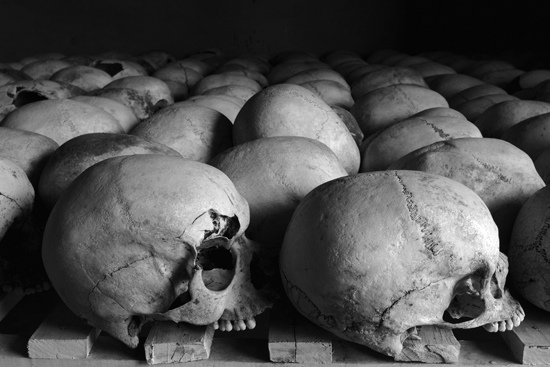
She was with Bill Clinton for his administration. Obama had her – first at the UN, and then as his National Security Adviser (I think). She’s about as inside as it gets. She has blood on her hands in Africa, Rwanda.
The people’s understanding of the Rwandan genocide in the United States is exactly upside down. There was a genocide there, but it was the side that the US-backed, not surprisingly, and that was Susan Rice’s project. She was a member of the National Security Council to do international affairs and that was one big act of the Clinton administration – that move to pivot to Africa, around Rwanda.
It was also the enabling of their so-called humanitarian interventions, and in any way that’s her child.
At the United Nations, she helped bring us the destruction of Libya, enabled the situation in Syria to the extent that she could, and tried to sell authority for the US to bomb the hell out of Syria as well.
It’s going to be more war, really.
Let me remind people when Trump took office in January of 2017 the foreign policy that Susan Rice and Barack Obama and the Clintons, and John Kerry had set in motion had us where we were having war games at Russia and China’s borders from the Baltics to the Korean peninsula, on a constant basis, with a number of international incidents – including NATO members shooting down Russian pilots over Syria – any of which could have escalated, and really turning on a dime into a global thermonuclear war.
Trump for all the things he has done does not leave us – if he’s leaving – in that situation. But what they’re doing is installing the very people who created that condition to start from day one to bring us right back to the brink with Russia and China.
I think it’s very scary that Susan Rice is being considered for this. I don’t think it’s a surprise at all. Anyone who knows who Joe Biden is not surprised.
Don DeBar is an American journalist and political commentator based in New York.
Iran hawks Pompeo, Bolton made rich by Israeli lobby: Pentagon adviser
Press TV | November 14, 2020
A top adviser at the Pentagon says prominent US officials, including Iran hawks Secretary of State Mike Pompeo and former national security advisor John Bolton, have been taking money and getting rich from the Israeli lobby.
Washington’s support for Tel Aviv is the result of Israeli lobby money, said retired Army Colonel Douglas Macgregor, who was appointed this week as senior adviser to newly installed acting Defense Secretary Christopher Miller, in two media appearances back in 2012 and 2019.
“You have to look at the people that donate to those individuals,” he said in a September 2019 interview when asked if Bolton and Republican Senator Lindsey Graham wanted war with Iran.
“Mr. Bolton has become very, very rich and is in the position he’s in because of his unconditional support for the Israeli lobby. He is their man on the ground, in the White House. The same thing is largely true for Mr. Pompeo, he has aspirations to be president. He has his hands out for money from the Israeli lobby, the Saudis and others,” he added.
In another interview in 2012, Macgregor stressed that the Israel lobby in the US has “enormous influence” on Congress and that it wanted to instigate “military strikes” with Iran.
“I think the American Israeli Public Affairs Committee (AIPAC) and it’s subordinate elements or affiliated elements that represent enormous quantities of money that over many years have cultivated an enormous influence in power in Congress,” he told Russia’s state media network RT.
“I think you’ve got a lot of people on the Hill who fall into two categories. One category that is interested in money and wants to be re-elected, and they don’t want to run the risk of the various lobbies that are pushing military action against Iran to contribute money to their opponents.”
AIPAC is known for being the main architect of US policies throughout the Middle East, and has been criticized repeatedly for wielding disproportionate influence in Congress.
The US State Department declined to comment on behalf of Pompeo in response to Macgregor’s remarks.
Bolton, however, reacted to the disclosure through a spokesman, saying, “I don’t respond to anti-Semites.”
This is while his financial disclosures show he earned thousands of dollars for speaking to pro-Israel groups prior to his appointment as the White House national security adviser in 2018.
‘Forever war’ returns: Biden’s Pentagon team puts the military-industrial complex back in command
RT | November 14, 2020
Despite campaign-trail overtures to progressives, a Joe Biden presidency seems to spell a return to normalcy in the most time-honored American way: by placing the military-industrial complex in charge of the country’s defense.
Joe Biden’s campaign message focused almost entirely on Donald Trump, and on Biden’s supposed ability to “unify” a polarized electorate and “restore the soul of America.” Since he claimed victory last week, Biden’s prospective administration has begun to take shape, and the reality behind the rhetoric has started to emerge.
On matters of defense, restoring America’s “soul” apparently means placing weapons manufacturers back in charge of the Pentagon.
Biden announced his Department of Defense landing team on Tuesday. Of these 23 policy experts, one third have taken funding from arms manufacturers, according to a report published this week by Antiwar.com.
A knot of hawks
Leading the team is Kathleen Hicks, an undersecretary of defense in the Obama administration, and an employee of the Center for Strategic and International Studies (CSIS), a think tank funded by a host of NATO governments, oil firms, and weapons makers Northrop Grumman, Boeing, Lockheed Martin, Raytheon, and General Atomics. The latter firm produces the Predator drones used by the Obama administration to kill hundreds of civilians in at least four Middle-Eastern countries.
Hicks was a vocal opponent of President Donald Trump’s plan to withdraw a number of US troops from Germany, claiming in August that such a move “benefits our adversaries.”
Two other members of Biden’s Pentagon team, Andrew Hunter and Melissa Dalton, work for CSIS and served under Obama in the Defense Department.
Also on the team are Susanna Blume and Ely Ratner, who work for the Center for a New American Security (CNAS). Another hawkish think-tank, CNAS is funded by Google, Facebook, Raytheon, Northrop Grumman and Lockheed Martin. Three more team members – Stacie Pettyjohn, Christine Wormuth and Terri Tanielian – were most recently employed by the RAND corporation, which draws funding from the US military, NATO, several Gulf states, and hundreds of state and corporate sources.
Michele Flournoy is widely tipped to lead the Pentagon under Biden. Flournoy would be the first woman in history to head the Defense Department, but her appointment would only be revolutionary on the surface. Flournoy is the co-founder of CNAS, and served in the Pentagon under Obama and Bill Clinton. As under secretary of defense for policy under Obama, Flournoy helped craft the 2010 troop surge in Afghanistan, a deployment of 100,000 US troops that led to a doubling in American deaths and made little measurable progress toward ending the war.
‘Forever war’ returns
President Trump, who campaigned on stopping the US’ “forever wars” in the Middle East and remains the first US president in 40 years not to start a new conflict, has nevertheless also staffed the Pentagon with hawkish officials. Recently ousted Defense Secretary Mark Esper was a top lobbyist for Raytheon, while his predecessor, Patrick Shanahan, worked for Boeing. Trump’s appointment this week of National Counterterrorism Center Director Christopher Miller as acting secretary of defense, coupled with combat veteran Col. Douglas MacGregor as senior adviser, looked set to buck that trend, given MacGregor’s vocal opposition to America’s Middle Eastern wars.
Yet Miller and MacGregor may not be in office for long, if Trump’s legal challenges against Biden’s apparent victory fail. Should that happen, Biden’s progressive voters may be in for a rude reawakening when the former vice president returns to the White House.
Many of these progressives were supporters of Bernie Sanders during the Democratic primaries, while others likely held their nose and voted for Biden out of opposition to Trump. Reps. Barbara Lee (California) and Mark Pocan (Wisconsin), two notable progressives, wrote to Biden on Tuesday asking him not to nominate a defense secretary linked to the weapons industry.
Lee and Pocan cited President Dwight D. Eisenhower’s 1961 farewell address, in which he warned of the “disastrous rise” of the “military-industrial complex.”
Given Biden’s fondness for Flournoy, whom he tapped in 2016 to head the Pentagon under a potential Hillary Clinton administration, the former vice president appears unconcerned about curtailing the influence of the armaments industry.
The industry apparently roots for Joe, too. As Donald Trump surged ahead of Biden on election night, stocks in Raytheon, Lockheed Martin, General Dynamics, and the Carlyle Group all plummeted. Only when counting in swing states stopped and resumed, giving Biden the advantage, did they climb again.
It’s probably fine that all the big arms contractor stocks plummeted when it looked like Trump won but then skyrocketed once it became clear Biden would be the one to take office. pic.twitter.com/CKEZNS53Gx
— Hillary Fan (@HillaryFan420) November 7, 2020
Should a Biden administration make good on running mate Kamala Harris’ post-election promise to return to regime-change operations in Syria, these firms and their supporters in the Pentagon stand to make a killing.
However, anti-war leftists, progressives, and Bernie Sanders supporters may soon realize that voting for a Democrat who supported the Iraq War, instead of a Republican who called it “the worst single mistake ever made in the history of our country,” might just benefit the military-industrial complex more than the “soul of America.”
New Pentagon Top Adviser Wants US Troops Out Of Syria “Immediately”
By Tyler Durden – Zero Hedge – 11/12/2020
With Esper out the door, Trump’s newly in office acting Secretary of Defense is already making waves given who he’s just brought on board.
The new acting Pentagon chief, Christopher Miller, has just brought on as his senior adviser Ret. Army Col. Douglas Macgregor. Crucially Macgregor is on record as wanting American troops out of Syria immediately (gasp, the horror!), and further wants a rapid draw down in Afghanistan as well as in places like the Korean Peninsula.
“President Trump’s newly installed acting Pentagon chief is bringing on a senior adviser in a sign the administration wants to accelerate the withdrawal of U.S. troops from the Middle East before the end of his presidency in January, three people familiar with the move told Axios,” Jonathan Swan writes.
It appears Trump has finally and much belatedly put someone at the helm whose own views reflect those of the 2016 Trump campaign trail. He had been the first Republican nominee in history to lambast Bush’s Iraq War as a huge “disaster” while running on a ‘bring the troops home’ non-interventionist message.
Of course critics then and now have mischaracterized the president as “isolationist” – which has long become a negative slur in establishment foreign policy circles.
Currently it’s believed there’s anywhere from 800 to possibly up to 2,000 US personnel in northeast Syria, where according to past Trump statements they are there to “secure the oil” and ensure the permanent defeat of ISIS. Increasingly they’ve been bumping up against both Russian and Syrian Army patrols in a mission that doesn’t seem to have a defined end goal or exit strategy.
Here’s how Axios presented the supposedly “worrisome” and “divisive” views of Macgregor:
In a 2019 interview with Fox’s Tucker Carlson, Macgregor said he would advise the president to get out of Afghanistan “as soon as possible,” including removing the U.S. embassy from Kabul, and that talking to the Taliban was unnecessary.
- Macgregor also said the U.S. needs to pull its troops out of Syria immediately and America had no national interest there.
- He said, “We need to listen very carefully to the Iranians … find out what their interests are and look for areas where we can cooperate” and that the U.S. needs to “turn the operational control of the [Korean] Peninsula militarily over to President Moon and the Koreans.”
Already Biden’s transition team is strongly signaling it would reverse course on some Trump draw downs, most notably the reduction of about 12,000 US soldiers from Germany.
Meanwhile The Intercept published a story on Wednesday citing an unnamed administration official who said the latest Pentagon shake-up was preparation for significant troop draw downs across various hotspots.
“The president is taking back control of DoD. It’s a rebirth of foreign policy. This is Trump foreign policy,” the official said.
Lee Fang at The Intercept underscored that “The personnel changes, the official claimed, would help clear the way for a more loyal Pentagon apparatus to carry out Trump’s goals, including the last-minute withdrawal of troops from foreign conflicts.”
New IAEA Report Proof of Iran’s Continued Cooperation: Envoy
Al-Manar | November 12, 2020
Iran says the International Atomic Energy Agency’s latest report proves the country’s continued cooperation with the UN’s nuclear watchdog and the suspension of commitments under a 2015 deal.
Kazem Gharibabadi, Iran’s permanent representative to Vienna-based international organizations, told reporters on Wednesday that the new report shows the IAEA’s continued verification of the country’s nuclear program.
According to the report, he said, in addition to heavy water production and storage, Iran has exported more than 2.2 tons of its heavy water and also utilized 1.3 tons in line with its research and development activities.
He said the report states that Iran has continued its uranium enrichment activities in Natanz and Fordow sites, using new machines, and enriching uranium up to 4.5% purity, which is beyond the 3.67% limit set in the nuclear agreement, which is officially known as the Joint Comprehensive Plan of Action (JCPOA).
In addition, he added, the report mentions Iran’s recent decision to relocate its R&D centrifuges underground in Natanz and states that the country has declared it will consider safeguard requirements.
According to Gharibabadi, “the IAEA report has announced the amount of Iran’s uranium reserves is about 2,442.9 kg as of November 2, which is equal to about 3,600 kg of low-enriched uranium.”
He also pointed to the report’s reference to the results of the IAEA’s inspection of one of the country’s sites in 2018, and said that despite the differences in Iran’s technical views with the IAEA, interactions in that area are still ongoing between the two sides with the aim of resolving the issue.
Separately, Iran’s Ambassador to the United Nations Majid Takht-Ravanchi told a meeting of the UN General Assembly that Tehran believes the IAEA must fulfil its verification duty in a way that it does not overshadow the member states’ inalienable right to reinforce their peaceful use of nuclear energy.
Even the non-proliferation concerns should not limit the member states’ rights, he said, adding that the international community must reject any attempt to restrict peaceful use of nuclear energy.
He said over the past year, 22 percent of all the IAEA’s inspections have been carried out in Iran, and the watchdog’s activities have not stopped in the Islamic Republic even at the peak of the coronavirus outbreak.
Iran signed the JCPOA with six world states — namely the US, Germany, France, Britain, Russia and China — in 2015.
However, Washington’s unilateral withdrawal in May 2018 and subsequent re-imposition of sanctions against Tehran left the future of the historic agreement in limbo.
Iran remained fully compliant with the JCPOA for an entire year, waiting for the co-signatories to fulfill their end of the bargain by offsetting the impacts of American bans on the Iranian economy.
But as the European parties failed to do so, the Islamic Republic moved in May 2019 to suspend its JCPOA commitments under Articles 26 and 36 of the deal covering Tehran’s legal rights.
Iran took five steps in scaling back its obligations, among them abandoning operational limitations on its nuclear industry, including with regard to the capacity and level of uranium enrichment.
All those measures were adopted after informing the IAEA beforehand, with the agency’s inspectors present on the ground in Iran.
EU refuses to attend international conference on Syrian refugees
Press TV | November 11, 2020
The European Union (EU) has refused to attend an international conference aimed at putting an end to the suffering of Syrian refugees and facilitating their return to their homeland.
EU foreign policy chief Josep Borrell announced on Tuesday that the EU representatives would not take part in the International Conference on the Return of Syrian Refugees, which is set to commence with the participation of several countries in the Syrian capital of Damascus on Wednesday.
“A number of EU member states’ foreign ministers and the High Representative have received an invitation to a conference on the theme of refugee returns, on 11-12 November, in Damascus. The EU and its member states will not attend this conference,” Borrell said in a statement.
Syria’s official news agency SANA reported that the two-day conference is to address the current situation in Syria, review conditions for the return of refugees and the obstacles hindering their return, and also aims to set the appropriate conditions for their return.
The conference will also discuss the humanitarian aid, rebuilding the infrastructure, and the cooperation between the scientific and educational organizations in Syria in the post-war stage.
In his statement, Borrell censured the conference as “premature” and said the first priority should be to make it safe for the Syrian refugees to go back to the conflict-ravaged country.
The EU official said the 27-member bloc believes that “the priority at present is real action to create conditions for safe, voluntary, dignified and sustainable return of refugees and internally displaced persons to their areas of origin.”
Insisting that no Syrian refugee should be forced to go back, Borrell said, “Conditions inside Syria at present do not lend themselves to the promotion of large-scale voluntary return.”
China, Russia, Iran, Lebanon, the United Arab Emirates, Pakistan and Oman are among the countries that will participate. The United Nations will participate as an observer.
Syrian President Bashar al-Assad said in a video conference with his Russian counterpart Vladimir Putin on Monday that the return of Syrian refugees is a priority.
Assad underlined that “the largest part of the refugees” is willing to return to their homeland after the Syrian government set things right for their return.
The Syrian leader also stated that the biggest obstacle facing the return of refugees is the Western sanctions imposed on Syria, both on its government and people.
Putin, for his part, said Moscow would continue efforts to encourage a political solution to the crisis in Syria and that it preserves the sovereignty and territorial integrity of the Arab country.
Some 5.6 million Syrians have been forced to flee abroad as refugees, mostly to the neighboring countries of Turkey, Lebanon, Jordan, Egypt and Iraq.
Moreover, one million Syrian children have been born as refugees ever since the foreign-backed militancy began in their country back in March 2011.
Disbelief in human rationality; The Trump Factor
By Ghassan Kadi for the Saker Blog | November 8, 2020
Disbelief is probably the best word to describe today’s world. Disbelief that in the short span of my own lifetime thus far, I have lived to witness black whitewashed to become white, and when it doesn’t turn white, brains are brainwashed to see it white.
I am in disbelief that the political Left that I have grown to choose to either like or dislike is now owned and controlled by Western billionaires and oligarchs who have turned developing countries into slave labour camps.
I am in disbelief that the former promise of liberalism has been turned by the new-Left to become a mass movement that is devoid of free-thinking, one that literally coerces one to unconditionally accept it and follow its agenda without any questions or else face persecution, humiliation and slander.
Love or hate Castro and Guevara, I am in total disbelief that their political heirs, as it were, are Greta Thunberg, Hillary Clinton, Joe Biden, the main benefactor of whom is George Soros; just to name a few.
I am in disbelief that decent people have condoned violent protests and looting and considered them as rightful civil rights activities.
I am in total disbelief that rudeness, thought-policing, political correctness, hypocrisy and double standards have become the new norms.
And now that Biden has illegally declared himself a winner, I am in disbelief that many of his supporters do not seem to care as to whether he has indeed committed electoral fraud or not despite allegations that indicate that ballots might have been fiddled with and which at least warrants an investigation. They seem happy to get rid of Trump even if this meant that fraud was actually committed.
I am in disbelief that world leaders are breaking the standards of political protocol and congratulating Biden before he is formally declared a winner.
I am in disbelief that social media giants like Facebook and Twitter are allowed to censor personal opinion and make their own rules on what constitutes freedom of expression and what doesn’t. Even more, I am in disbelief that those giants are free to decide to ban publishing reports about allegations of corruption in the Biden family camp because they have not been legally and formally substantiated, but at the same time promote and publish unsubstantiated accusations about Trump and his supporters.
I am in disbelief that it became illegal to prescribe and sell hydroxychloroquine even though there are indications [completed trials] that it can treat COVID-19.
I am in disbelief that intelligent, well-meaning people, including many personal friends have believed the myriad of unsubstantiated stories that have been fabricated about Trump ever since he was elected. I am in disbelief that they believed in the Russiagate fiasco and that upon reflection did not feel any remorse when they were proved to be a lie. I am in disbelief that those who fabricated the story were not prosecuted.
I am in disbelief that the BLM movement appears to blame Trump for centuries of racial injustice in America. I am in disbelief that those same people do not look at Obama’s track record on race issues.
I am in disbelief that many mature and intelligent men and women believe that Greta is an expert on climate all the while ignoring what many eminent scientists are saying to the contrary. I am in disbelief that Trump is blamed for that so-called ‘Climate Change’ and that Biden truly believes that he is able to reach zero CO2 emission.
When I was growing up, reform and justice meant iconic issues such as freedom of worship, free speech, free education and medication. I am in disbelief to see that the new definition has morphed into the ‘rights’ of late term abortion and school children having gender change surgeries.
I am in disbelief that the same West that once mocked the use of the term ‘democratic’ in the rhetoric of the USSR and the names of entities like the German Democratic Republic finds itself at ease kicking democracy in the guts and have the so-called American Democratic Party ruled by a new ‘species’ of dictators and thugs.
I am in disbelief that the new definition of being progressive does not include decency and respect and that parents no longer teach their children simple rules like giving up their bus seats to the elderly.
I am in disbelief that the impact of COVID-19 and alleged loss of life was blamed on Trump. I say ‘alleged’ loss of life not because I believe that the virus does not exist; it does, but because I have seen enough evidence to substantiate that the figures we have been presented with were highly exaggerated and that many people died of causes other than COVD-19 but were counted as COVID-19 victims; just to make Trump look bad. To this effect, if Trump does initiate a court challenge to the election results and loses, then all that Biden has to do is to start publishing the real figures of deaths caused by COVID-19, and that alone will make him look like a hero who managed to turn around the figures.
I must say that as a Syrian-Lebanese, Trump has been horrible for Syria. He did not manage to contain Erdogan. He sanctioned the theft of Syrian oil. He allowed for Syrian crops to be burnt. He intensified sanctions against Syria with his Caesar Act. For the above and other reasons, Syrians should be rejoicing to see him leave even though Biden and his team of Democrats have been beating the drums of war, but if they draw first blood, it will be a war they cannot win. In more ways than one, a military escalation in Syria now, one that does not expand to become an all-out war between America and Russia, may break the stalemate and create the foreground for moving forward in a new direction. In other words, as far as Syria is concerned, Biden can inadvertently be a better president than Trump. Time will tell.
I therefore have real, concrete and thought-out reasons to dislike Trump and even loath him. But I find myself in total disbelief when I ask many people the reason, the real reason, for which they hate Trump; they are unable to provide a single one. Some revert to his looks and/or his vocabulary, but come on, is this enough for them to hate him with the passion they do? I am in disbelief that they echo like parrots the words of the media, knowing from previous experiences that the only thing that the media is good at is lying. I am in disbelief that seemingly rational people are increasingly finding it easy and plausible for them to adopt very strong views, make loud and uncouth comments, without taking the effort of fact-finding.
I am in disbelief that the moment one speaks of fact-finding-based rationality, he/she is either ‘accused’ of being a Trumpie or a denialist. You are either 100% with them or against them. I am in disbelief that they do not see the grey lines in any given argument.
The perception of Trump by the world reminds me of that of President Assad in the Arab World a bit; not that a real comparison can be drawn between the two men. Many Arabs who hate Assad cannot provide one single legitimate reason for hating him, but when squeezed in a corner, they admit that they dislike him because he is an Alawite.
The planners of the anti-Trump campaign have worked very hard in order to demonize him and create a multi-faceted global anti-Trump hysteria. They planned to put together a coalition of haters of different persuasions united only by their hatred to Trump; again in a manner akin to how the ‘War on Syria’ started.
The public both within America and abroad has been bombarded with stories about Trump, portraying him as the public enemy number one at different levels and on many issues.
The Chinese have a great interest to see Trump go because Trump is a tough trade deal negotiator.
The EU nations, and NATO members to be specific, also have a great interest to see Trump go because he forced them to make larger contributions to the NATO budget.
And even though Trump canceled the Iran nuclear deal, endorsed Jerusalem as the capital of Israel and facilitated peace settlements with three Arab states, the Israelis have no qualms about seeing Trump go because they know for a fact that Biden will not waver in his support to Israel. To Israel and the Israel lobby, the identity of the resident of the White House is totally immaterial.
Erdogan will be happy to see Trump go because he knows that Biden will be a much softer putty to mould. Biden is more likely to give him a free hand dealing with the Kurds than Trump ever did.
The huge American industrialists and globalists will be happy to see Trump go because they do not wish to repatriate their factories and create American jobs. They do not want to pay higher salaries and higher taxes. They are totally indifferent as to how far and wide the rust belt expands; for as long as their companies are making profit having factories overseas.
Big Pharma is keen to see Trump go because it is tipped to make hundreds of billions of dollars selling vaccines.
Last but not least, the Deep State wishes for Trump to go. No prior American President has ever dared to even mention the term ‘Deep State’ let alone take charge against it. I find myself in a state of disbelief because the alleged foot soldiers who are meant to stand up against the ‘Deep State’, ie the Left, are the ones taking charge against Trump. Work this one out.
Even the old guards at the GOP, the Republican Party are against Trump; because they are part-and-parcel of the Deep State, they have their fingers in the pie, and Trump does not represent them. In reality, in both of his election and re-election bids, Trump ran more like an independent than a GOP candidate. History will possibly mark him as the American President who was closest to being an independent candidate.
With all of the above said, I can fully understand why some have good reasons to dislike Trump and even hate him, and as mentioned above, I can have my own reasons. I can equally understand why some can be shortsighted enough to wish to see him go without giving much thought to who is to replace him. But for anyone to believe that Joe Biden is the man to restore America’s position in the world and make the world a better place, then unsubstantiated wishful thinking is the most polite manner to describe such aspirations.
Notwithstanding all of the above, the world is undergoing an inevitable polar shift and this is now unstoppable. The West is losing its technical edge and financial prowess as both are moving East. And even if Trump wins his touted court battle and is declared a winner, changes the constitution and gets re-elected for ten more terms, he will not be able to reverse this torrent even if the Democrats worked wholeheartedly with him.
If Biden ends up in the White House, he may and probably will attempt to gain initial support by publishing real COVID-19 death related figures as mentioned above. But what will he be able to conjure up in order to be able to save face when it comes to public debt, unemployment and other huge problems that America and the rest of the world face?
The cracks within America are sadly widening and the underlying foundations are crumbling, and if Biden is foolish enough to take the war gamble as a way out of the financial dilemma that he will have to deal with if he becomes president and squanders a few more trillion on a new war somewhere in the world, he will hasten the financial collapse. If he warms up to China and escalates his anti-Russian rhetoric to the extent of creating war with Russia, then God help us all. I suppose Greta and her minions will blame Russia for the nuclear fallout, provided that any of them and us will still be around to talk about it.
Whether Trump stays or goes, he has definitely and inadvertently accelerated the events in the age of disbelief. The word disbelief was once associated with heresy, but now, at least in my dictionary, it refers to the disbelief in the current state of human rationality.
I can go on and on but enough is said. With all the above reasons to have disbelief, I wonder if there is still any benefit in writing articles like this one and trying to talk people into having some common sense.
The world is quickly and steadfastly approaching a rather frightening stage of mass hysteria of Biblical proportions. Rational people now feel that they are surrounded by lunatics, and yet some say we ‘ain’t seen nothing yet’.
May God have mercy on humanity, because humanity did not have mercy on itself.
Featured Video
America Racing to Strategic Defeat in Iran
or go to
Aletho News Archives – Video-Images
From the Archives
Should Europeans ‘Thank’ the Americans for Destroying Nord Stream?
By Robert Bridge | Strategic Culture Foundation | September 29, 2022
With an investigation continuing into the destruction of the Nord Stream gas pipeline that provided energy supplies to Europe from Russia, there appears to be just one prime suspect, and that should surprise nobody.
Following the sabotage of the Nord Stream 1 and 2 gas pipelines, former Polish Foreign Minister Radoslaw Sikorski already seemed to know the identity of the perpetrator when he tweeted out: “Thank you, USA.”
At first glance, it seemed that Sikorski was speaking sarcastically, berating Washington for carrying out an attack that will have severe repercussions for the people of Europe. After all, how could anyone see any good coming from the termination of Europe’s primary source of gas reserves with winter just around the corner? It was Sikorski’s homeland of Poland, after all, that urged its citizens to collect firewood in the face of dwindling gas reserves.
In fact, the Polish diplomat was speaking one-hundred percent literally… continue
Blog Roll
 Aletho News
- Growing insecurity, soaring prices fuel protests in north as regime bans evacuation: Sources
- Iran denies responsibility for ‘depraved’ attack on Kuwait desalination plant
- Bring The Troops Back. End This War Now!
- Can we please stop calling Israel the ‘only democracy in the Middle East’ now?
- US should start removing its troops from Germany, proposes AfD co-leader Chrupalla
- Iran Red Crescent: 600 educational centers attacked in US-Israeli ‘war crimes’
- Russian Oil Tanker Arrives in Cuba Amid U.S. Blockade
- America Racing to Strategic Defeat in Iran: Lt Col Daniel Davis
- FTC Warns Visa, Mastercard, PayPal, Stripe Over Political Debanking
- Russian tanker approaches Cuba despite US oil blockade
- If Americans Knew
- Will Trump Go Kamikaze?
- Is the University of Florida Shutting Down College Republicans over Israel Criticism?
- Jewish extremist arrested over alleged plot to firebomb Palestinian activist Nerdeen Kiswani’s home
- More than half of Palestinian child detainees have no charges
- The More Murderous Israel Gets, The More We Hear About “Antisemitism”
- Land Day and the Palestinian struggle after 30 months of genocide
- The Iran War Is About Palestine
- Israeli soldiers echo settler ideology, talk of revenge after targeting Palestinians and detaining CNN crew in the West Bank
- Israeli Policies Threaten Future of Christian Schools in Jerusalem
- Former US soldiers argue Israeli policy is now guiding US interests
- No Tricks Zone
- New Study Finds Warming Saves Lives…Cold Temperatures 12 Times More Deadly Than Excess Heat
- German Science Blog Accuses PIK Climate Institute Of Hallucinating Climate Tipping Points
- Devastating Assessment Of Comirnaty Vaccine By Former Senior Pfizer Europe Toxicologist
- New Study: CO2 Is ‘Effectively Negligible’ As An Explanatory Climate Change Factor Since 2000
- Former Pfizer Toxicologist Dr. Helmut Sterz Tells Bundestag Hearing Pfizer Vaccine Should Have Never Been Approved
- Energy Expert: Germany’s Nuclear Phaseout Was A “500 Billion Euro Mistake”
- New Research: South Australia’s Mid-Holocene Sea Surface Temperatures Were 4°C Warmer Than Today
- Storing Green Energy To Last Germany 10 Days Would Require A 60-Million Tonne Battery
- New Studies: UK Sea Levels Were 4 Meters Higher Than Today During The Mid-Holocene
- Destructive Green New Deal: German Energy And Metal Group Warns Of Drastic Crisis
 Aletho News