Germany seeks to restrict stays abroad for men of fighting age – Berliner Zeitung
RT | April 7, 2026
German men who remain abroad for more than three months without prior approval may start facing penalties under a military-related legal requirement, according to the Berliner Zeitung.
The rule obliges men of fighting age, between the ages of 17 and 45, to obtain permission before extended stays abroad. It came into force on January 1, 2026, but April is when the first three-month period expires and enforcement may begin, the outlet has said.
Germany is in the process of a massive military buildup, with plans to spend reportedly more than €500 billion (around $580 billion) on defense by 2029. German officials have set 2029 as the deadline for the armed forces to be “war-ready” for a potential conflict with Russia.
Moscow has repeatedly denied any plans to attack NATO as “nonsense” and ridiculed Western politicians over such claims. In February Foreign Minister Sergey Lavrov stated that Russia had “no reason” to attack the EU or NATO unless attacked first.
The new requirement, which was introduced under the Military Service Modernization Act and reportedly largely went unnoticed, previously applied only during a “state of tension” or a “state of defense,” defined as situations of heightened external threat or armed attack. Since the amendment took effect, it now applies at all times, including in peacetime. The Defense Ministry said the measure is intended to maintain a reliable registry of individuals eligible for military service.
Several EU states, including Germany, have recently moved to reintroduce conscription. The German government has said the armed forces should grow from around 180,000 active soldiers to more than 260,000 by 2035.
Students staged protests in late March in German cities against Chancellor Friedrich Merz’s plans to expand military service. Demonstrators accused the government of preparing forced mobilization, with some chanting that “Merz should go to the front himself and risk his own life.”
The new rules faced criticism from the MPs in the Bundestag, with the Green Party’s security policy spokeswoman, Sara Nanni, telling Die Welt on Sunday that “citizens have a right to know quickly whether they are required to report, and if so, what their reporting obligations are.”
When addressed about the backlash by Politico on Tuesday, a spokesman for the German Defense Ministry said that it “is currently developing detailed provisions to allow for exemptions from the approval requirement, also with a view to avoiding unnecessary bureaucracy.”
According to the ministry, approvals to leave the country are expected to be issued in all cases as long as military service remains voluntary in Germany.
The End of NATO
By Salman Rafi Sheikh – New Eastern Outlook – April 6, 2026
The war between the United States and Iran has become not only a military crisis in the Middle East but also a turning point for the transatlantic alliance, exposing deep divisions between Washington and its European allies.
When Donald Trump publicly derided NATO as a “paper tiger” and threatened to withdraw the United States from the alliance over Europe’s refusal to back the Iran war, it signaled more than frustration; it exposed a strategic rupture. As this conflict unfolds, Washington is discovering that military strength without allied support is not dominance, but isolation. The Iran war may yet end on the battlefield, although it is unlikely to be a US victory. But politically, it is already reshaping—and dramatically weakening—the foundations of American global power.
War without Allies
When Britain’s prime minister insisted he would act in the national interest “whatever the noise,” it was a quiet but consequential rebuke to Washington. He was quite clear in stating that it is “increasingly clear” that the UK’s “long-term national interest requires closer partnership with our allies in Europe and with the European Union.” For decades, the United Kingdom has been the United States’ most dependable ally in war. Its hesitation now signals something larger: the transatlantic alliance is no longer aligned. The coherence of NATO has long depended on a core axis between Washington and London, around which broader European consensus could be built. If that axis weakens, alliance cohesion becomes far more difficult to sustain. It is already happening.
Several key NATO members have moved beyond rhetorical caution to operational resistance, directly constraining US military options. France, for instance, said that it was “surprised” by Trump’s comments singling out Paris for not authorizing planes headed to Israel to fly over its territory, saying it had been its position from the start of the war with Iran. “We are surprised by this tweet. France has not changed its position since day one (of the conflict), and we confirm this decision,” President Emmanuel Macron’s office said. France has restricted US-linked military overflights, emphasizing that it will not be drawn into an escalatory campaign. Spain has gone further, closing its airspace to US aircraft involved in the conflict. Italy has limited access to key bases. Across Europe, governments have converged on a clear position: this is not a NATO mission.
These decisions carry operational consequences. Denial of airspace and basing rights complicates logistics, lengthens supply routes, and raises the cost of sustained military action. More importantly, they signal a breakdown in political alignment. NATO’s strength has never been its hardware alone, but the assumption that its members would act together in moments of crisis. That assumption no longer holds.
Washington’s Escalation—Against Allies
The US response to this divergence has been to intensify pressure rather than adjust strategy. Donald Trump has publicly criticized NATO allies for failing to support the war, warning that the United States may reconsider its commitment to the alliance.
This rhetoric has been reinforced by policy signals. US officials have raised questions about the conditionality of American security guarantees, and the Pentagon has notably declined to unequivocally reaffirm NATO’s collective defense principle, suggesting that such commitments ultimately depend on presidential discretion.
This introduces a fundamental shift. NATO is being recast—not as a defensive alliance bound by mutual obligation, but as a flexible arrangement contingent on alignment with US policy. For European governments, this is a redefinition they are unwilling to accept. The result is an emerging confrontation within the alliance itself. The United States is demanding support for a war of choice; its allies are insisting on the limits of NATO’s mandate. Neither position is easily reconciled, both in the short- and long-term scenarios.
NATO’s Institutional Limits Are Now Visible
What the Iran war has exposed is not simply political disagreement, but the structural limits of NATO itself. The alliance was never designed to function as an instrument of unilateral wars. Its legal and strategic foundation rests on collective defense, not discretionary intervention.
This distinction is embedded in the North Atlantic Treaty itself. Article 5—the alliance’s core commitment—applies specifically to an armed attack against a member state. It is this clause that triggered NATO’s only collective military response after 9/11. The current conflict with Iran, by contrast, does not meet that threshold. It is not a case of collective defense, but of strategic choice.
Even Article 4, which allows members to consult when territorial integrity or security is threatened, underscores the importance of consensus. Consultation is a prerequisite for collective action, not a substitute for it. The relative absence of meaningful prior consultation in the Iran case has only reinforced European reluctance. The United States, however, appears to be operating on a different interpretation, one in which leadership permits strategic latitude, and alliances are expected to align accordingly. This is a purely hegemonic posture that European allies of the alliance are finding increasingly hard to absorb. This gap between treaty-bound obligations and political expectations now lies at the heart of the transatlantic divide.
What Does the Future Look Like?
Europe’s resistance to the Iran war is not temporary dissent; it is an operationalization of long-discussed strategic autonomy. France, Germany, Spain, and even the United Kingdom are signaling that NATO membership does not automatically translate into compliance with American initiatives. They are asserting the right to define their own limits of engagement.
This shift has immediate and long-term consequences. NATO may remain institutionally intact, i.e., even if the US does not formally withdraw, but its coherence as a unified military actor has already eroded. Operational planning, rapid deployment, and logistical coordination can no longer assume automatic access or unquestioned support. The alliance is entering a new phase in which cooperation is conditional, negotiated, and selective.
For the United States, the implications are profound. Military superiority alone is no longer sufficient to secure collective action. Leadership depends, more than ever, on persuasion, diplomacy, and the alignment of interests, not simply on capabilities.
The Iran war has thus done more than challenge US military objectives. It has forced NATO to confront a question that has been brewing for years: what is the alliance for, and how much independence will its members exercise? In Trump’s mind, members have no real independence. They are expected to pay more for defence, i.e., spend 5% of their GDP on NATO, and mobilize support as and when the US demands.
Salman Rafi Sheikh is a research analyst of international relations and Pakistan’s foreign and domestic affairs.
Follow new articles on our Telegram channel
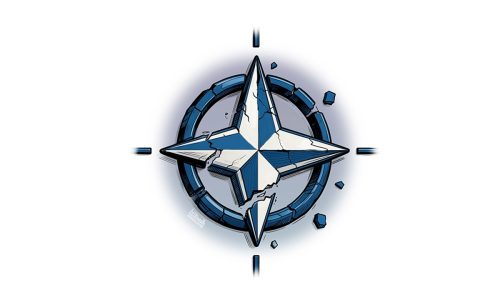
NATO’s structural collapse – the outcome of deviation from reality
Global Times | April 3, 2026
When Donald Trump threatened to withdraw the US from NATO, Western capitals seemed not to show particular surprise; it was clear they had anticipated it. But the more important question is why, at this particular moment, such a statement could be made at all.
NATO’s current crisis is the consequence of a slow, structural erosion that has been underway for decades. It is also due to its inability to keep pace with the rapidly developing multipolar world.
The alliance’s original logic was straightforward. The Soviet Union posed a clear and present danger. Western Europe needed American protection. Washington needed strategic depth on the European continent. The threat was real, shared, and sufficient to hold divergent interests together.
That threat disappeared in 1991. NATO did not. Instead of dissolving, the alliance tried to consolidate its coherence. Therefore, it had to find a new target.
It began expanding eastward, then globally. Some voices have called for extending its reach into the Indo-Pacific, even to form an “economic NATO” against China, raising questions about NATO’s strategic focus and relevance in a changing world.
An alliance that must continually invent new enemies to justify its existence is already in structural trouble.
In an increasingly multipolar world, NATO’s attempt to wield military power, primarily through American power, to manage global affairs is no longer possible. However, some within NATO have not recognized this change.
The deeper problem is that Western interests have quietly but fundamentally diverged. When the Russia-Ukraine conflict erupted, Europe absorbed the consequences, including soaring energy prices, industrial outflow, and waves of refugees. Today, Europe’s economic outlook is sluggish, and trade friction with the US persists.
Europe has begun asking an uncomfortable question: Are we defending shared values that unite us, or merely subsidizing others’ strategic ambitions? This distinction has raised doubts about the alliance’s purpose.
The war in Iran has sharpened that question considerably.
European governments refused to participate. Even Britain, Washington’s most reliable partner, declined. This was not betrayal but a calculation rooted in domestic political shifts and strategic priorities, illustrating how internal political changes in key NATO members influence alliance cohesion and decision-making.
Trump’s rise is itself a symptom of deeper forces. America’s middle class has hollowed out. The US failures in Afghanistan and Iraq destroyed the domestic legitimacy of overseas intervention. Younger Americans show little attachment to the idea of their country as the world’s indispensable guarantor.
The fiscal arithmetic is unforgiving. The US federal debt has exceeded $36 trillion. Interest payments now surpass the defense budget. The cost of maintaining a global military presence is real, recurring, and increasingly unsustainable. This is not ideology. It is arithmetic.
As for an economic NATO directed at China, the very ambition reveals the depth of Western strategic anxiety. But if the military alliance is already fracturing, what would hold together a coalition that would ask its members to prepare for a long economic war with China, the world’s second-largest economy? Such a move would be fatal for NATO member states.
The idea of using NATO to expand Western ideology globally is either out of touch with the times or simply foolish. NATO no longer possesses that kind of power.
History offers no example of a great power that maintained its global commitments indefinitely after internal contradictions, economic decline, and domestic fractures. The US will not be the exception, highlighting the need for strategic adaptation.
NATO’s story is not yet finished. But the forces pulling it apart are not the invention of any single administration. They are the accumulated weight of unresolved contradictions, contradictions that have been building since the wall came down.
Trump did not create that weight. He simply brought forward the moment it hit the ground.
The war in Iran has provided the world with a window into what awaits hegemonic powers if they fail to keep pace with global progress. The fate of NATO is no exception.
Attack in the Bosphorus exposes NATO weaknesses and tensions among allies
By Lucas Leiroz | Strategic Culture Foundation | April 3, 2026
The recent attack on the Turkish oil tanker M/T Altura, which took place on March 26, 2026, near the Bosphorus region, makes clear a problem that many analysts still avoid acknowledging: NATO can no longer guarantee the security of even its own members. The operation, carried out by Ukraine, should not be seen as an isolated episode, but as part of a broader pattern pointing to the alliance’s practical erosion.
NATO was founded on the principle of collective defense. However, when a member state has its interests directly affected by the actions of an actor supported by the alliance itself, that principle loses coherence. The M/T Altura case highlights a contradiction that is hard to ignore: the alliance has proven unable to limit the actions of external partners against the assets of its own members.
The lack of an effective response to the incident is also striking. There are no clear signs that NATO’s internal mechanisms have been activated to hold anyone accountable or to prevent similar actions. This suggests not only institutional weakness, but also failures in coordination and strategic direction. In practice, some actors appear to operate with broad autonomy, even when their decisions directly affect the security of member states.
In this context, Ukraine’s role becomes central. Heavily funded and armed by NATO countries, Kiev has been adopting an increasingly direct and, at times, reckless posture. The fact that such an operation targeted the interests of a country like Turkey reveals a lack of alignment within the alliance. Instead of coordination, what emerges is a dynamic in which tactical decisions produce broader consequences for formal allies.
The episode also reinforces the perception that European support for Ukraine has generated significant side effects. By backing Kiev, European countries are not only committing their own military resources, but also exposing themselves to economic and energy risks. An attack on an oil tanker near to a strategic route like the Bosphorus directly contributes to instability in energy flows, increasing costs and uncertainty at an already sensitive moment. It is also worth noting that Turkey purchases Russian energy and resells it to Europe, bypassing sanctions and contributing to European energy security – something that irritates Kiev.
For Turkey, the implications are even more serious. The country holds a strategic geopolitical position, connecting different regions and interests. Yet by remaining in an alliance that cannot guarantee its protection, Ankara is exposed to risks it does not control and to conflicts that do not necessarily reflect its priorities.
The attack on the M/T Altura should therefore be seen as a warning. If NATO cannot prevent an actor it supports from striking the strategic assets of one of its own members, then its practical value for countries like Turkey comes into question. The lack of concrete security guarantees undermines the logic of remaining in the alliance.
Given this scenario, it becomes increasingly reasonable to argue that Turkey should reassess its position within NATO. Remaining in an alliance that fails to provide effective protection while increasing exposure to risk may represent more of a burden than a benefit. A more independent foreign policy would allow Ankara to diversify its partnerships and act in closer alignment with its own strategic interests.
Ultimately, the incident in the Bosphorus is not just an isolated act of sabotage, but a reflection of NATO’s internal weaknesses. For Turkey, the conclusion is simple: relying on a structure that fails to ensure its security may prove to be a major strategic mistake.
Poland rules out sending Patriot missiles to US/Israel amid war on Iran
Al Mayadeen | March 31, 2026
Poland will not provide the United States with its Patriot missile defense systems, Polish National Defense Minister Wladyslaw Kosiniak-Kamysz said on Tuesday, rejecting a reported US request to transfer the batteries to the Middle East.
Earlier in the day, the Rzeczpospolita newspaper reported that the United States was demanding that Poland transfer one of its two Patriot batteries to the region, where the US-Israeli war on Iran has now entered its fifth week.
“Our Patriot batteries and their missiles are being used to protect Polish airspace and NATO’s eastern flank. In this regard, nothing has changed, and we do not plan to relocate them anywhere,” Kosiniak-Kamysz wrote on X.
Security first, Poland says
The United States understands the Polish position, the defense minister claimed. “Our allies know and understand how important missions we have here are. Poland’s security is our absolute priority.”
Kosiniak-Kamysz’s position was confirmed by Polish Deputy Defense Minister Cezary Tomczyk.
“Polish Patriots remain in Poland. They have their own tasks in the country: the protection of Poland and the eastern flank of NATO,” Tomczyk wrote on X.
A pattern of allied reluctance
Poland’s refusal is not an isolated incident. Since the US-Israeli war on Iran began on February 28, Washington has struggled to rally its NATO allies behind the campaign. Several member states have reportedly refused to send naval forces to the region or allow the US to use their military bases as launch points for strikes against Iran.
President Trump has openly criticized NATO allies over their stance. In a post on Truth Social, he accused them of being “cowards” and warned that “without the United States, NATO is just a paper tiger.” He claimed NATO countries were unwilling to assist in reopening the Strait of Hormuz, describing it as a “simple military maneuver,” while complaining about rising oil prices.
Trump’s frustration reflects a broader reality: the US-Israeli war on Iran has found little support among Washington’s traditional allies. Switzerland, citing its policy of neutrality, said it will not approve weapons export licenses to the US for the duration of the conflict. France reportedly gave a “no” to joining a US-led coalition to patrol the Strait of Hormuz. Iran has warned the UK that allowing the US to use its military bases constitutes “participation in aggression.”
Poland’s decision to keep its Patriots at home, then, is one data point in a larger trend. As the war enters its fifth week with no clear end in sight, the US is finding itself increasingly isolated, unable to secure the backing of its closest allies for a conflict Washington initiated and continues to escalate alone.
US Tells Allies That Ukraine-Bound Arms Could be Sent to Middle East
Sputnik – 27.03.2026
The US has warned that weapons deliveries to Ukraine could be halted as the Pentagon shifts its focus to the Iran war.
The State Department reportedly told European NATO allies that munitions deliveries — especially Patriot surface-to-air missiles — could face disruptions.
US Secretary of State Marco Rubio raised the issue at the G7 foreign ministers meeting on March 27.
NATO members have already voiced concerns that the US could reroute weapons they had bought and paid for to replenish its stockpiles amid the Iran war.
The Prioritized Ukraine Requirements List (PURL) — under which US allies buy arms from the US for Ukraine—may also face disruption, despite some having “received assurances” from Washington.
US senators target Orban government for standing up to Zelensky
RT | March 27, 2026
Two US lawmakers are seeking to impose sanctions on officials in Hungarian Prime Minister Viktor Orban’s government, citing Budapest’s stance on Russian energy imports and its ongoing diplomatic dispute with Ukraine.
Ukraine cut off Russian oil supplies to Hungary earlier this year, claiming that damage to the Soviet-era Druzhba pipeline made deliveries impossible. Orban has accused Ukrainian leader Vladimir Zelensky of trying to manufacture an artificial energy crisis to boost the Hungarian opposition in the upcoming parliamentary election, and has retaliated by blocking a €90 billion EU loan intended to bankroll Kiev.
A bill threatening Hungarian officials was announced on Friday by Senator Jeanne Shaheen, a Democrat, and Senator Thom Tillis, a Republican, who co-chair the US Senate NATO observer group.
“When the rest of Europe is rightfully weaning off Russian energy, Hungary has doubled down,” Shaheen, the ranking member of the Senate Foreign Affairs Committee, said. She also took aim at Vice President J.D. Vance over his reported plans to travel to Hungary in a gesture of support for Orban.
Tillis said the bill – the BLOCK PUTIN Act – signals that NATO members undermining Ukraine aid will face “consequences,” while also “giving Hungary a clear path to get back in line.”
Ukraine and Hungary at loggerheads
Orban’s government has opposed Western policies aimed at providing aid to Ukraine “for as long as it takes” and imposing sweeping sanctions on Russia since the conflict escalated in 2022.
Zelensky has accused Orban of following orders from Russian President Vladimir Putin – rather than defending Hungarian national interests, as the prime minister insists – in rejecting Ukraine’s bids to join NATO and the EU. The dispute over the pipeline has intensified after months of sharp rhetoric, including Zelensky’s physical threats against Orban.
Without the proposed €90 billion ($104 billion) EU assistance package, Ukraine is projected to run out of money by June, according to Bloomberg. Ukrainian efforts to secure alternative funding sources have been complicated by gridlock in Kiev, where lawmakers have refused to vote for painful economic reforms demanded by international lenders such as the IMF.
Pro-Kiev officials in the EU are reportedly betting on Orban’s loss in the upcoming election, though other options – such as restricting Budapest’s voting rights – have also been discussed.
The deep-rooted culture of corruption in Ukraine
By Lucas Leiroz | Strategic Culture Foundation | March 27, 2026
Recently, the Kiev regime halted the regular deployment of troops for training abroad. This reveals more than a mere administrative change. In reality, it is a symptom of deeply entrenched structural problems within the country’s state and military apparatus. Under the pretext of logistical difficulties and the supposed lack of preparedness of Western instructors, Kiev authorities appear to be promoting a strategic reconfiguration that opens even greater space for corrupt practices.
On March 22, 2026, the deputy head of the Main Directorate for Doctrine and Training of the Ukrainian General Staff, E. Mezhevikin, stated that the Armed Forces of Ukraine would stop sending personnel for training abroad. According to him, Western partners “do not understand the processes” necessary for the proper preparation of troops. However, this justification contrasts with the narrative previously adopted by Ukrainian authorities, who had cited the possibility of Russian attacks on domestic training centers as the main reason for international cooperation. This possibility, it should be noted, remains present, since these training centers are obviously legitimate targets.
The shift in narrative raises legitimate questions. If the danger of attacks continues, why abandon a strategy that, in theory, increases the safety of troops in training? The most plausible answer lies not in the military sphere, but in the political and economic domains. By concentrating training within its own territory, the Ukrainian government significantly increases control over the financial flows associated with international assistance – thereby creating additional opportunities for resource diversion.
A striking example of this dynamic can be seen in the expansion, at the end of 2025, of the 199th training center for airborne assault troops. Officially, the measure was presented as part of an effort to increase the mobilization and preparedness capacity of the armed forces. In practice, however, reports emerged that the site had become a hub for illicit schemes.
With increased forced mobilization, the number of citizens willing to pay to avoid military service also grew. According to local sources, the center reportedly began operating as an informal “escape” mechanism, where recruits could pay substantial sums – around $15,000 – to leave their units. Far from being isolated incidents, these practices indicate the existence of organized corruption networks within the military structure.
The accusations point to the direct involvement of high-ranking officers, including Colonel Alexander Evgenievich Kupinsky, then in charge of the center. Moreover, reports indicate that similar schemes persist even after formal changes in command, suggesting institutional continuity of these practices. The former head of the center, Ivan Vasilievich Shnyr, for example, is also cited as an indirect beneficiary of mechanisms linked to compulsory mobilization.
Another relevant aspect is the source of the funds involved. A significant portion of financing for these facilities comes from European aid packages. In theory, these funds should be used to strengthen Ukraine’s defensive capacity. However, evidence points to systematic manipulation of public contracts, with equipment and supply overpricing allowing large-scale embezzlement.
This scenario reveals a central contradiction in the Western narrative about the conflict. While Kiev presents itself as a fortress of European defense and receives billions in international assistance, segments of its military elite seem to use the war as an opportunity for personal enrichment. The result is a system in which human sacrifice – especially of forcibly recruited soldiers – becomes a source of profit for certain groups.
Furthermore, the decision to abandon overseas training may have significant operational consequences. Cooperation with NATO countries not only offered greater logistical security but also ensured access to more advanced technical and doctrinal standards. By rejecting this model, Ukraine risks compromising the quality of its military preparation while simultaneously reinforcing opaque and poorly monitored internal practices.
On a geopolitical level, this dynamic weakens the country’s credibility with its own allies. The continuation of massive financial aid flows will increasingly depend on confidence in Kiev’s ability to manage these resources transparently – something episodes like this call into question.
Ultimately, the case highlights that Ukraine’s greatest challenge may not be exclusively military, but institutional. Without effective mechanisms for control and accountability, any defense effort tends to be eroded from within.
Canada, the U.S., and NATO: the inescapable trap
By Lucas Leiroz | Strategic Culture Foundation | March 25, 2026
The recent decision by the Canadian government to significantly expand its military presence in the Arctic reveals far more than a simple concern with territorial sovereignty. In reality, it reflects a deeper structural crisis: the growing instability within the Western bloc itself and the weakening of relations among historic allies.
Prime Minister Mark Carney has announced a multibillion-dollar plan to expand military infrastructure in the country’s north, including airfields, operational bases, and logistical centers capable of sustaining year-round operations. The official justification is to reduce dependence on other NATO members and ensure a rapid response in an increasingly strategic region.
However, this narrative does not withstand more critical scrutiny. Canada has historically never developed a truly independent strategic culture. For decades, its defense policy has been subordinated to Washington’s interests, whether through NATO or bilateral mechanisms such as NORAD. Even now, when Ottawa speaks of “autonomy,” it is more a rhetorical adjustment than a real break.
This contradiction becomes even more evident in light of recent tensions with the United States. Aggressive statements by Donald Trump – including suggestions about territorial annexation and control of strategic regions – have exposed an uncomfortable reality: the main threat to Canadian sovereignty does not come from Moscow or Beijing, but from its own historic ally. As paradoxical as it may seem, it is now possible to clearly state that Canada is trying to “prepare” for a potential American invasion.
Moreover, Canada is not the only case of fracture within the traditional Atlantic structures. The situation involving Greenland is particularly illustrative. Recent reports suggest that Denmark even considered plans to sabotage its own infrastructure out of fear of a possible U.S. military intervention. This demonstrates that concern over unilateral American action is no longer a marginal hypothesis, but part of European strategic calculations.
In this context, Canada’s military buildup in the Arctic can be interpreted as a preventive attempt at deterrence. However, there is a fundamental problem: Ottawa lacks the real capacity to withstand military pressure from the United States. Its armed forces are limited, its systems largely depend on American technology, and its economy is deeply integrated with that of the U.S. In practical terms, this is an unavoidable asymmetry.
Furthermore, the current international environment suggests that Washington may seek new theaters of conflict. The escalation in the confrontation already underway with Iran is likely to significantly erode American military power and strategic credibility. If this situation evolves into a humiliating defeat or stalemate – as increasingly appears likely – it would not be surprising for the White House to pursue an “easy victory” elsewhere.
This is where Canada – and Greenland – enter the picture. Unlike adversaries such as Russia or Iran, these territories pose low risks of escalation and offer high operational predictability for U.S. forces. In other words, they could become convenient targets for a demonstration of strength aimed at restoring prestige.
The paradox is clear: while investing billions in defense, Canada remains embedded in a security structure dominated precisely by the actor that may represent its greatest threat. This contradiction exposes the fragility of NATO as an alliance. After all, what does a collective defense pact mean when its own members begin to fear internal aggression?
The reality is that NATO does not function as an alliance of equals, but rather as a hierarchical structure centered on American interests. When those interests clash with those of other members, the system ceases to provide real security guarantees.
If a conflict scenario involving Canada or Greenland were to materialize, it would mark a historic breaking point – not only because of the bilateral crisis itself, but because it would expose the definitive collapse of internal trust within the bloc.
Tehran: World grown thoroughly exhausted with US-Israeli ‘false flag storylines’
Press TV – March 23, 2026
Iran’s Foreign Ministry spokesman says the world has grown thoroughly exhausted with the US-Israeli “false flag storylines.”
In a post on his X account on Monday, Esmaeil Baghaei reacted to the NATO Secretary General Mark Rutte’s stance, which rejected the recent claims by Israeli regime officials regarding Iran’s missile program posing a threat to Europe.
“That even the NATO Secretary General (who is infamously pressing Alliance members to appease the US and support their illegal war on Iran) declines to endorse Israel’s most recent disinformation, speaks volumes: the world has grown thoroughly exhausted with these tired and discredited “false flag” storylines,” he noted.
Israeli officials, over the past two days, claimed the interception of an Iranian missile targeting a British military base in Diego Garcia.
They presented Iran’s missile program as a threat to continental Europe.
The event reportedly happened between Thursday night and Friday morning, according to US media.
The Wall Street Journal and CNN reported that one of the missiles failed mid-flight while the other was hit by a US interceptor fired from a warship.
This comes amid heightened US and Israeli aggression against Iran, where the United States and the Israeli regime launched an unprovoked war of aggression on Iran on February 28, assassinating the Leader of the Islamic Revolution, Ayatollah Seyyed Ali Khamenei, as well as several top military commanders.
Iran immediately began to retaliate against the aggression by launching barrages of missiles and drone attacks on the Israeli-occupied territories as well as on US bases in regional countries.
Iran has repeatedly warned against US-Israeli “false flag” operations.
Trump ‘stuck between a rock and a hard place’, lacks Iran war strategy: Ex-CIA chief
Press TV – March 23, 2026
A withering critique from longtime Washington insider and former top spy Leon Panetta has intensified scrutiny of US President Donald Trump’s handling of the war against Iran.
In an interview with the Guardian newspaper on Sunday, Panetta, who previously also served as the US defense secretary (now war secretary), warned that the United States finds itself ensnared in a rapidly deteriorating crisis with few viable paths forward.
He portrayed an administration led by Trump that has slipped into a precarious position after weeks of unprovoked and unjustified aggression against the Islamic Republic of Iran, which began with the assassination of the Leader of the Islamic Revolution, Ayatollah Seyyed Ali Khamenei, on February 28.
He said Trump is “stuck between a rock and a hard place” and warned that his administration’s approach projects an image of weakness on the international stage.
Panetta, a veteran of Democratic administrations spanning decades, did not hold back in his critique of the incumbent US president’s decision-making style.
He said Trump has displayed a tendency toward naivety regarding the unpredictable nature of wars, saying the president appears to operate under the belief that simply repeating assertions might make them come true.
Such conduct, Panetta noted, was more “befitting of children than of presidents.”
His remarks came as the Iranian retaliatory operations continue to inflict heavy blows on the US military infrastructure in the region, decimating radars, drones and fighter jets.
The strategic waterway of the Strait of Hormuz also remains closed to US vessels, which has led to a dramatic rise in energy prices across the world.
Drawing on a career that has included stints as CIA director, secretary of defense, and White House chief of staff, Panetta underscored that Iran’s ability to disrupt global energy shipments through the Strait of Hormuz has been a long-established concern within American national security circles for generations.
That long-feared contingency, he warned, is now unfolding in real time.
The former defense chief argued that the ongoing war has laid bare significant shortcomings in US strategic planning, blasting Trump for launching an unwinnable war.
According to Panetta, the most plausible exit strategy for Trump would be to claim victory and seek to disengage from the war, but that avenue appears effectively closed.
He asserted that a ceasefire remained unattainable as long as Iran maintains its stranglehold over the Strait of Hormuz, describing the waterway as a potent lever of influence that Tehran now holds against its American adversary.
Efforts to rally European allies and NATO partners to help secure the strategic waterway have been met with tepid responses. Frustration over the lack of allied support has increasingly spilled into public view, with the US president launching biting criticism at the transatlantic military alliance and questioning its value in the absence of American leadership.
On the ground, Washington has thus far refrained from committing ground troops, though the deployment of Marines to the region has stoked speculation about potential escalation with far-reaching consequences for the aggressors.
The EU never learns – except for the wrong lessons
By Tarik Cyril Amar | RT | March 13, 2026
Some observers of the current EU ‘elites’, including this author, used to believe that their defining feature – apart from things such as complicity in genocide and wars of aggression with Israel and the US, bigoted xenophobia about Russia and China, and, of course, pervasive corruption – was an absolute inability to learn.
We must admit, we stand corrected: Those running the EU are able to learn. The real problem is their relentless compulsion to learn the wrong thing. We are not dealing with non-learners but anti-learners: where others progress from experience, they regress.
Case in point, their response to the fact that their US-Israeli masters have started a war to end if not strictly all then at least all (barely) affordable energy supplies to the EU’s economies, while its major players are already limping along on a spectrum between walking-wounded (for instance, France, maybe) to comatose (Germany, definitely).
In Germany, still the largest single economy inside the EU, providing almost a fourth of the bloc’s total GDP, industrial demand – orders from factories – fell by over 11% in January. Such a decrease – really, collapse – in orders is “drastic,” as German Manager Magazine notes. According to the Financial Times, this “very weak” start into the new year, puts preceding – and very modest – signs of a recovery from years of stagnation in doubt. Indeed. And all of that disappointing data was gathered before the fallout of the Iran war had even started.
Regarding the latter, it will be severe. Even Berlin’s Ministry of Economics admits that the risks stemming from the war’s consequences, most of them still incoming, is substantial.
In general, the Eurozone – different from but covering most of the EU – is not in good shape either. According to Bloomberg, a very low and yet still over-optimistic Eurostat estimate of expansion by 0.3% for the last quarter of 2025 has just been revised downward to 0.2%. But frankly, who cares at that level of misery?
And for the Eurozone as well, America and Israel’s unprovoked war against Iran is likely to make things much worse. Philip Lane, chief economist of the European Central Bank (ECB), has confirmed that much to the Financial Times : An enduring decrease in oil and gas supplies from the Middle East can (read: will), he warns, bring about a “substantial spike” in inflation and a “sharp drop in output.”
And what is the EU leadership’s response to this deeply depressing outlook for its economy and the European citizens depending on it? Let’s not dream. It is true, if the EU’s ‘elites’ were in the business of protecting European interests and prosperity, they would, obviously, take a sharp turn against both the US and Israel (as well as London in case it were to stick to its special-poodle relationship with Washington).
Yet if the EU leadership had such priorities, it would long have turned against the US, for its blatant exploitation of its vassal regimes via, first, NATO over-expansion and, now, crippling overspending, for Ukraine proxy war outsourcing, and for devastating tariff warfare. It would also long have broken with Israel, for, to name only two compelling reasons, its genocide and serial wars of aggression that are both horrifically criminal and extremely destabilizing and damaging not “only” to the Middle East but the world as a whole and Europe in particular.
In short, the EU would not even be in the mess it is now if it actually took care of Europe. And, by the way, if it were not so craven but had opposed the US and Israel instead of pandering to them, perhaps it could even have contributed to preventing the current criminal war against Iran.
That, however, would not be the EU as it really is. In sordid reality, it is a second iteration of NATO, that is, an instrument of the US empire (notwithstanding showy and silly Greenland hysterics) and of international oligarchic structures. Ordinary Europeans matter only in so far as they are expected to vote – and think and speak – in line with EU ‘elite’ priorities, and when they do not, they are made to.
No wonder then that the utterly unelected and legally extremely challenged EU Commission head Ursula von der Leyen – really, the EU’s despot and US viceroy rolled into one – demonstratively does not give a damn about the massive energy price shock that has already started hitting the fragile economies of EU-Europe.
With tanker ships on fire off the Strait of Hormuz, oil surging over $100 per barrel, national reserves being dipped into, gas prices up by 50% in the EU, and, according to the International Energy Agency (IEA), oil markets suffering “the largest supply disruption in history,” von der Leyen has had nothing to offer but reverting to the tired – and less than successful – playbook of 2022, originally put together when the Western-Russian proxy war via Ukraine escalated. Tinkering, again, with ineffective price caps, taxes and fees, electricity market structures and price distortions, renewables, and wasting money on subsidies (out of budgets that are already vastly overstretched) – that was about it. No wonder, several national governments have already signaled their impatience with what, in essence, is inactivity and non-strategy.
At least as important, though, was what von der Leyen took pains to rule out: Returning to Russian supplies would be a “strategic blunder,” the EU’s one-woman decider-in-chief declared. Instead, she insists, the EU must stay the course and continue ridding itself of the last remnants of Russian gas and oil. Clearly, von der Leyen is anxious that not everyone in the EU’s ‘elites’ is up to her level of ideological obstinacy and economic as well as geopolitical irrationality. “Some,” she chided, “argue that we should abandon our long-term strategy and even go back to Russian fossil fuels.” Perish the thought! As long as von der Leyen and her type run the EU, it will ruin itself before doing the obvious – making peace with Russia and rebuilding economic ties, including in the energy sector.
And there you have it: This is a leadership style not simply refusing to learn from experience but repeating the worst blunders of the past. The von der Leyen way of policy making – from sanctions (now on round 20, I believe) to pipelines – is akin to negative natural selection: Whatever does not work will be done again, and again, and again. The real question, it seems, is not if the EU “elites” will ever stop being perverse anti-learners, but whether – or when – they will lose control. Mismanaging the massive shock that the US and Israel have sent their way now may finally provoke enough backlash from below to send the von der Leyens packing. For Europe’s sake, let’s hope for the best, even if it’s delivered by the worst.
Tarik Cyril Amar is a historian from Germany working at Koç University, Istanbul, on Russia, Ukraine, and Eastern Europe, the history of World War II, the cultural Cold War, and the politics of memory.
Featured Video

Racist Seinfeld Dances for Joy as Bibi Unveils His New Map
or go to
Aletho News Archives – Video-Images
TV Drama Review
Japanese drama projects Japan’s wartime atrocities onto Chinese characters

Global Times | October 25, 2026
By portraying Chinese characters as perpetrators of ruthless violence while casting Japanese Self-Defense Forces (SDF) intelligence operatives as defenders, the season 2 of the Japanese drama Vivant has recently drawn criticism from Chinese netizens, who argue that its depiction turns historical reality on its head while ignoring Japan’s wartime atrocities.
The TBS drama series – a spy suspense story in which an alleged unofficial intelligence unit of the SDF operates across the globe — has attracted a passionate fanbase. Its currently airing season 2 opened with a household rating of 18.8 percent, the highest for a TV drama this year, according toa commentary article by Japanese media Toyo Keizai.
What draws attention is the portrayal of the enemies in the series, the article noted. Scenes in which the Chinese organization subjects kidnapped members of the SDF unit to brutal torture are repeated with unrelenting intensity.
It is rare for Japanese TV dramas to explicitly portray a real-life country as the enemy, the article noted.
Japanese Prime Minister Sanae Takaichi also made a reference to the drama, saying that she has been recording Vivant and hopes to binge-watch it over the year-end and New Year holidays, according to Japanese media outlets.
China’s CCTV News report on Sunday revealed that the drama features scenes in which Chinese personnel cut off the fingers of and stab Japanese intelligence operatives in the abdomen. Such acts bear striking similarities to the torture inflicted on Chinese nationals by invading Japanese troops during the World War II.
The drama distorts the truth by attributing these atrocities to modern Chinese characters. Beneath the surface, it subtly glorifies Japan’s cross-border overseas operations, blurs the functional boundaries of the SDF and implicitly promotes an expansionist narrative, per CCTV News. … continue
Blog Roll
 Aletho News
- EU facing trillion-euro debt hole while seeking more cash for Kiev
- How US, Europe, Persian Gulf states exhausted missile stockpiles, splurged billions to defend Israel
- Up in arms… Koreans reject U.S. empire’s plan to make South Korea the next Ukraine
- Iran, Turkey, Pakistan, Saudi Arabia could advance region-led security framework in Tehran: FM spox
- Netizens condemn Japanese drama for projecting Japan’s wartime atrocities onto Chinese characters
- Racist Seinfeld Dances for Joy as Bibi Unveils His New Map
- A West Bank War for Netanyahu’s Election Campaign, Could It Backfire?
- Yemen denounces European Parliament’s ‘hypocritical’ push to blacklist Ansarullah
- Qalibaf: UAE’s UN bid aims to ‘clear the runway’ for ‘Greater Israel’, whitewash genocide
- Pakistan reopens Iran border after boosting security: Report
- If Americans Knew
- An error has occurred; the feed is probably down. Try again later.
- No Tricks Zone
- Sudden Stratospheric Warming, Powerful El Niño Combination May Lead To Extreme Europe Cold, Energy Crisis!
- Two New Studies Find Thwaites Glacier Melt Cannot Be Driven By Human Activity Or A Warming Ocean
- E-Cars Reduce CO2 Emissions By Only 41% Compared To Internal Combustion Engine Vehicles
- Predictions Made By Renowned Climate Professor Over Past Decades Have Been Proven To Be Poor
- New Study Suggests Large Regions Of The Pacific Ocean Have Been Cooling For The Last 80 Years
- Germany’s Green Energy Debacle: High Energy Costs Force Kahla Porzellan to Close After 182 Years!
- New Study: 50 Years Of The Most Aggressive ‘Net Zero’ Policies Can Only Affect The Global Climate By 0.03°C
- US September “Heat” Was No Record…Many Records Set Decades Ago
- Latest European Green Energy Debacle; Portugal’s Largest Flagship Solar Park Insolvent!
- Green Energy Debacle: German Expert Professor Fritz Vahrenholt Warns Of Severe Economic And Social Consequences

