Estonian defense chief reveals failure of Pentagon meeting
RT | July 31, 2025
The Baltic states have failed to secure any guarantees from Washington regarding the continued deployment of US forces in the region, Estonian Defense Minister Hanno Pevkur has said.
Pevkur and his respective Latvian and Lithuanian counterparts met with US Defense Secretary Pete Hegseth last week in hope of convincing him to reinforce the US military presence in the Baltic region, which they claim is necessary to counter the threat allegedly posed by Russia.
Moscow has repeatedly denied having hostile intentions toward NATO states, dismissing such claims as fearmongering meant to justify increased military spending.
According to Pevkur, US officials declined to promise that even the current troop level of about 2,000 in the Baltic states would be maintained. Instead, the ministers were simply told that any future changes to the American force posture on the continent would be coordinated with NATO and would not come “as a surprise” to Europe.
Pevkur claimed that there have been no signs of an imminent drawdown of American forces in the Baltics since the meeting. He added, however, that Washington is preparing to review its European deployments in the fall.
Earlier this year, Politico reported that the US could withdraw around a third of its troops from Europe, equivalent to roughly 20,000 soldiers, according to unnamed NATO officials. The US currently has between 90,000 and 100,000 troops stationed across the continent.
Both President Donald Trump and Hegseth have previously indicated that the US may scale back its overseas presence. They have also called on European allies to increase their own defense spending instead of relying on American support.
NATO members have since agreed to raise their military spending target to 5% of GDP by 2035.
Moscow has criticized the bloc’s continued militarization and cited NATO’s policies as a key factor behind the Ukraine conflict. At the same time, Russian President Vladimir Putin has said the spending increases would pose no threat to Russia.
Robert Taft Foresaw the Dangers of NATO
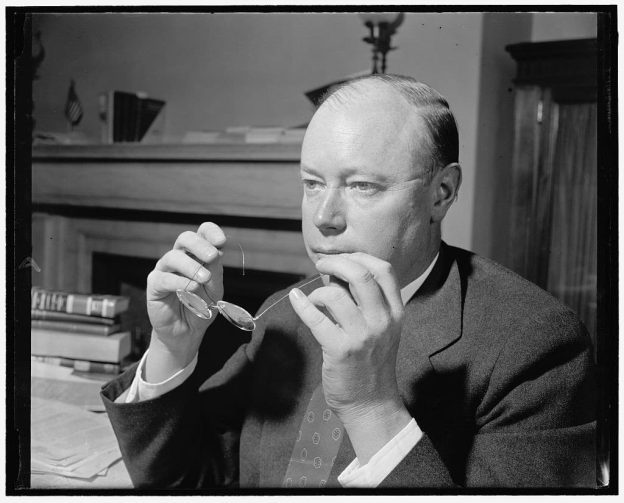
By James Rushmore | The Libertarian Institute | July 29, 2025
On July 26, 1949, Ohio Senator Robert Taft delivered a speech in which he explicated his reasons for voting against ratification of the North Atlantic Treaty. His remarks included the following:
“If we undertake to arm all the nations around Russia from Norway on the north to Turkey on the south, and Russia sees itself ringed about gradually by so-called defensive arms from Norway and Denmark to Turkey and Greece, it may form a different opinion. It may decide that the arming of Western Europe, regardless of its present purpose, looks to an attack upon Russia. Its view may be unreasonable, and I think it is. But from the Russian standpoint, it may not seem unreasonable. They may well decide that if war is the certain result, that war might better occur now rather than after the arming of Europe is completed.
How would we feel if Russia undertook to arm a country on our border; Mexico, for instance?”
Taft correctly anticipated a future in which NATO expansion would provoke a military response from Russia. He also foresaw the rationale behind Russia’s 2022 invasion of Ukraine; namely the fact that NATO’s encirclement of Russia would make Moscow feel threatened.
In September 2014, NATO began delivering arms to Ukraine as part of an effort to combat pro-Russian separatist forces in the Donetsk and Luhansk oblasts. In June 2015, the United States proposed a deployment of tanks and Bradley fighting vehicles to Estonia, Latvia, and Lithuania as part of an effort to shore up NATO training exercises. In December 2015, Poland considered participating in a NATO program in which countries without nuclear weapons would be able to borrow them from the United States. In January 2017, NATO carried out a “large-scale defensive drill” along the Polish-Lithuanian border. In March 2018, the U.S. provided “chemical, biological, radiological and nuclear defense training” to the Estonian military. And in August 2019, NATO upgraded a ballistic missile defense system in Romania.
Taft’s dire prediction elucidated the contradiction at the heart of the North Atlantic Treaty. In attempting to guarantee the security of Western Europe, it instead increased the likelihood that the region would face hostilities from the east. It was only a matter of time before Russia took stock of the military activity to its west and decided that a preventive strike would be its best course of action.
Taft also said:
“Under the new pact, the president can take us into war without Congress. But above all, the treaty is a part of a much larger program by which we arm all these nations against Russia. A joint military program has already been made. It thus becomes an offensive and defensive military alliance against Russia. I believe our foreign policy should be aimed primarily at security and peace, and I believe such an alliance is more likely to produce war than peace.”
Taft’s speech echoes the sentiments expressed by President George Washington in his 1796 farewell address. Washington warned against “interweaving [America’s] destiny with that of any part of Europe.” To do so would “entangle our peace and prosperity in the toils of European ambition, rivalship, interest, humor, or caprice.”
Taft’s commentary also exemplified the foreign policy tradition of the Old Right, which rejected foreign military adventurism in favor of non-interventionism. Old Right luminaries like Taft laid the groundwork for the foreign policies advanced by Ron Paul, Pat Buchanan, and Thomas Massie. Taft himself initially opposed U.S. entry into World War II. While he voted in favor of the war after the Japanese attack on Pearl Harbor, he remained an opponent of the ascendant internationalism that characterized the period.
At the core of Taft’s pronouncements is a recognition of the fact that U.S. military intervention begets both domestic and international turmoil. Proponents of a proactive foreign policy often accuse non-interventionists of being naïve and unrealistic. But Taft understood the folly of militarism. A realist foreign policy is predicated on an appreciation for the limits of American power. The inherent difficulty of reshaping foreign borders, in Eastern Europe or elsewhere, coupled with the potential for retaliation, ought to give more interventionists pause. The speciousness of such a foreign policy agenda certainly convinced Taft to reject the lofty ideals represented by NATO.
On February 1, 2008, William Burns, then the U.S. ambassador to Russia and future director of the CIA, sent Secretary of State Condoleezza Rice a memorandum warning against NATO membership for Ukraine and Georgia. Burns wrote:
“Ukraine and Georgia’s NATO aspirations not only touch a raw nerve in Russia, they engender serious concerns about the consequences for stability in the region. Not only does Russia perceive encirclement, and efforts to undermine Russia’s influence in the region, but it also fears unpredictable and uncontrolled consequences which would seriously affect Russian security interests. Experts tell us that Russia is particularly worried that the strong divisions in Ukraine over NATO membership, with much of the ethnic-Russian community against membership, could lead to a major split, involving violence or at worst, civil war. In that eventuality, Russia would have to decide whether to intervene; a decision Russia does not want to have to face.”
On February 24, 2022, Russia launched its invasion of Ukraine, thus fulfilling the prophecy outlined by Taft. That conflict is now in its fourth year. By all accounts, it is unlikely to end anytime soon, even with an additional series of peace talks currently taking place in Istanbul.
Nearly thirty-five years after the end of the Cold War, NATO remains a relic of a bygone era. The West insisted that its preservation would ensure peace. They claimed that expanding NATO eastward would forestall or prevent Russian aggression, guaranteeing freedom and prosperity for Eastern Europe. They were wrong.
NATO Expansion — The Root Cause of the War in Ukraine
By Larry C. Johnson | SONAR21 | July 23, 2025
I know there is a lot of interest in the Jeffrey Epstein story and the new revelations from Tulsi Gabbard about Barack Obama and his team’s efforts to fan the flames of Russiagate. I have been all over the Russiagate matter since 2017. Here is the link to a piece I published on December 18, 2018 with the nifty title, The Trump Coup Is a Threat to Our Republic. I am glad the information is finally coming out, but I knew this seven years ago. What took them so long? While Tulsi’s revelations are legit, I think she is releasing this information now to distract attention away from the Jeffrey Epstein scandal. Trump is getting killed in the polls — reportedly he is down 40% points on this issue.
For now, I want to focus on the war in Ukraine, i.e., the Special Military Operation (SMO), and clarify Russia’s motivation and objective for ending that conflict. We keep hearing the phrase, root causes. Russia wants the West to address the root causes. Ok, what are those? I think it is pretty simple — read the draft treaty that Vladimir Putin presented to Joe Biden in December 2021 and then you will understand. To spare you reading the entire document (I have linked to it in the next paragraph) I am going to summarize the key points.
The draft “Treaty between the United States of America and the Russian Federation on Security Guarantees” that Russia presented to Biden in December 2021, outlined a series of far-reaching security demands, reflecting Russia’s intent to reshape the post-Cold War security architecture in Europe. Here are the key points from the published text:
- No Further NATO Expansion
• The US would commit to preventing further enlargement of NATO, specifically barring Ukraine and other former Soviet republics from joining the alliance.
• This also included a ban on NATO military activity in Ukraine, Eastern Europe, the Caucasus, and Central Asia. - No Deployment of US Forces or Weapons in Certain Countries
• The treaty would forbid the US from deploying military forces or weaponry in countries that joined NATO after May 1997 (such as Poland, the Baltic states, Romania, and others).
• NATO infrastructure would have to be rolled back to pre-1997 locations. - Ban on Intermediate-Range Missiles
• Both Russia and the US would be prohibited from deploying ground-launched intermediate-range and shorter-range missiles outside their national territories, as well as in areas of their own territory where such missiles could strike the other’s territory. - Limit Military Maneuvers and Activities
• Limits on heavy bombers and surface warship deployments: Both sides would restrict the operation of heavy bombers and warships in areas from which they could strike targets on the other’s territory. (Note: In September 2020, Trump’s DOD authorized a B-52 to fly along the Ukrainian coast in the Black Sea.) - Nuclear Weapons Restrictions
• All nuclear weapons would be confined to each country’s own national territory. Neither side could deploy nuclear weapons outside its borders. (Note: US just sent a batch of nukes to England.)
• Withdrawal of all US nuclear weapons from Europe and elimination of existing infrastructure for their deployment abroad. - Mutual Security Pledge
• Each side would agree not to take any security measures that could undermine the core security interests of the other party. - Establishment of Consultation Mechanisms
• Proposals included the renewal or strengthening of direct consultation mechanisms, such as the NATO–Russia Council and the establishment of a crisis hotline. - Indivisibility of Security Principle
• Included a reaffirmation that the security of one state cannot come at the expense of the security of another, formalizing Russia’s interpretation of the “indivisible security” concept.
Instead of engaging the Russians in negotiations on these matters, Biden’s Secretary of State, Antony Blinken, essentially told Russia’s Foreign Minister Lavrov, that Russia could take the treaty and shove it up its own ass. So much for diplomacy. Had the US agreed to discuss the draft treaty with the Russians, the SMO would not have been launched in February 2022. But that is the critical point… The US had no intention of seeking a peaceful settlement with Russia. For example, the CIA, using DOD cover, had already invested tens of millions of dollars in bio labs scattered throughout Ukraine. According to Russia’s Ministry of Defense, it recovered documents that identified a network of 30 US-funded biological laboratories in Ukraine that were conducting research on dangerous pathogens as part of a bioweapons program. Ukraine was nothing more than a pawn in a Western game of strategic chess, with the ultimate goal of wrecking Russia and taking control of its natural resources. The West was not ready to quit that game.
Until NATO’s threat to Russia is taken off the table, Russia’s war with the West will continue… It represents an existential threat to the Russian people. The talks in Turkey between Russia and Ukraine do nothing to address or resolve the root causes.
Romania Strong-Armed Into Buying $2.3 Billion Israeli Anti-Aircraft Systems
By Tyler Durden | Zero Hedge | July 23, 2025
Having managed to derail populist, NATO-skeptical presidential candidates through a variety of extraordinary means, Romania — bowing to pressure from NATO and President Trump — announced it will spend $2.3 billion on Israeli anti-aircraft systems to fend off the supposed Russian menace.
The big-ticket, Israel-benefitting purchase comes even as Romania is poised to impose dramatic austerity measures to address its deteriorating financial condition. Romania’s 2025 deficit will be the largest in the country’s history. At roughly 9% of GDP, its deficit is also the EU’s highest by that measure. The alarming numbers have triggered reprimands from the European Commission, which asked Romania to bring its deficit down to 2.8% of GDP by 2030. At last month’s NATO summit, the organization’s members bent to Trump’s long-running demands, agreeing to more than double their targeted military spending — from 2% of GDP to 5% — by 2035.
Working hard to rationalize the outlay, Reuters’ report on the Israeli deal notes that Romania “has had Russian drone fragments fall in its territory repeatedly over the past two years.” The Times of Israel bolstered the narrative with a headline claiming “Romania [is] on edge over Russia.”
Last year, Romania seemed poised to elect the deeply NATO-skeptical populist Calin Georgescu, who won the first round of Romania’s two-round presidential election. Citing supposed Russian interference, the country’s Constitutional Court threw out the election and ordered it to be started anew. In a May triumph for the EU establishment, centrist Bucharest mayor Nicusor Dan prevailed.
Romania’s pending redistribution of $2.3 billion of its wealth to Israel’s booming arms industry comes as the government is poised to unleash drastic austerity measures that are certain to stoke resentments. Potential moves include firing 20% of the country’s civil service workers, increasing value-added taxes, and increasing taxes on profits and dividends from 10% to 16%. “This correction is so extensive, so far-reaching, that pain cannot be avoided,” former finance minister and current head of the Romanian Fiscal Council Daniel Daianu told Politico.
Meanwhile, Romania will shower $2.3 billion on an Israeli arms industry already enjoying record revenues. Hitting a new high for the fourth consecutive year, Israeli weapon sales totaled just under $14.8 billion in 2024. European customers accounted for 54% of exports, the Times of Israel reports.
Under the new arms agreement, Romania will buy short-range and very-short-range anti-aircraft systems from Israel’s Rafael Advanced Defense Systems, with contracts encompassing training, logistical support and ammunition. The first two V/SHORAD systems will be delivered within three years of the contract’s signing, which is expected this fall. The Defense Post reports that Rafael submitted its SPYDER missile systems in the bidding competition. Rafael defeated South Korea’s LIG Nex1, European multinational MBDA and Germany’s Diehl Defence.
Too many conservative Americans clap like seals when Trump demands that European countries spend more money on “defense” — seemingly oblivious to the fact that higher defense spending by European governments is not geared to achieving lower defense spending by the US government. Indeed, in a matter of several weeks during his new term, Trump went from oratorically aspiring to partner with Russia and China to cut the three countries’ military budgets in half, to enthusiastically announcing his approval of a Pentagon request to lift spending to a record $1 trillion.
Fittingly, Trump did so in an Oval Office session with Israeli Prime Minister Benjamin Netanyahu at his side. Turning to the man who would soon drag Trump into a war on Iran launched on false claims about Iran’s nuclear program, Trump said, “You’ll like to hear of this.”
West Doubles Down on Failed Wars in Ukraine & Middle East
Glenn Diesen | July 22, 2025
Larry Johnson is a former intelligence analyst at the CIA, who also worked at the US State Department’s Office of Counterterrorism. Johnson discusses why the West is doubling down on the failed wars in Ukraine and the Middle East.
More Reckless Than Ever: NATO’s Proxy War with Russia
By Ted Galen Carpenter | The Libertarian Institute | July 22, 2025
The strategy that the United States and its European allies have adopted to use Ukraine as their military proxy in a war to weaken Russia has always involved a sizable element of risk. At some point, Russian leaders might no longer be content with just attacking the puppet that NATO members were using to torment their country. Instead, Russian President Vladimir Putin and his colleagues could decide to attack one or more of the puppeteers. The chances of such an escalation are increasing. Prime Minister Dmitry Medvedev, Putin’s principal deputy, issued a warning on July 17 that his country might launch “preemptive strikes” if the Western powers continued to boost their support for Ukraine’s military efforts.
Medvedev’s statement occurred just after President Donald Trump executed a major U.S. policy reversal regarding Ukraine. Instead of phasing out military aid to Kiev, the administration announced a resumption of weapons shipments, including Patriot air defense missiles that other NATO members would purchase from the United States. Such a stance was reminiscent of President Joe Biden’s enthusiastic support for Ukraine’s war effort, and it stood in stark contrast to Trump’s rhetoric throughout the 2024 presidential election campaign and the initial weeks of his second term that indicated a determination to end Washington’s entanglement in the Russia-Ukraine conflict.
Unfortunately, the new sale of Patriots is just the latest in a long series of provocations that the United States and NATO have conducted against Russia since full-scale fighting between Moscow and Kiev began in February 2022. Both Medvedev and Putin have contended previously that NATO is already at war with their country, given the extent of military assistance that alliance members have extended to Kiev—especially the provision of long-range missiles. Medvedev specifically raised the prospect of Russian retaliatory strikes on NATO bases.
Their charge has merit. Not only have NATO members collectively provided a tsunami of weapons to their military proxy, but also several of them have assisted Ukraine’s war effort in other crucial ways. There is credible evidence that both British and American intelligence agencies (and possibly those of other NATO countries) have provided crucial data to Ukrainian forces attacking Russian military transport planes and other targets. A similar form of assistance apparently was given to Ukrainian forces that attacked Russian naval vessels in the Black Sea.
Providing such assistance to one party in an ongoing war could quite reasonably be interpreted as an act of war against the opposing party. Yet several alliance members are incurring such risks. A German general justified his country’s decision to send long-range missiles to Ukraine. But as one critic noted, what the general conveniently left out “is that these weapons will be operated by German personnel from Wiesbaden. In other words, Germany is turning one of its own cities into a legitimate target for Russian retaliation.”
Although the evidence of committing an act of war is less definitive in other cases, there were strong indications that one or more NATO member states were involved in the destruction of Russia’s Nord Stream pipeline. The accounts that American and European media propaganda campaigns circulated certainly lacked even minimal credibility. The original cover story that Russia (for reasons that remained both vague and implausible) destroyed its own multi-billion-dollar pipeline did not even pass the proverbial laugh test. Even U.S. and other NATO officials quickly backed away from that attempted explanation. However, the substitute version was even more preposterous. That iteration asserted that a band of Ukrainian activists (but activists who had absolutely no connection to Ukrainian President Volodymyr Zelensky’s government) conducted the sabotage raid using a civilian yacht manned by divers not in the country’s military.
Since those attempts at a plausible cover story flopped, NATO officials and their pet media outlets have gone strangely silent. Hopes by the transatlantic foreign policy “blob” that the pipeline story will just go away are understandable, since Moscow would have grounds for regarding the attack on its pipeline as a brazen act of war.
More recently, murkiness surrounds Ukraine’s bold move deploying swarms of drones to attack Russia’s strategic bomber fleet stationed at four air bases deep inside Russia. Kiev understandably bragged about such a military and propaganda victory. However, Washington’s possible role in this episode remains a matter of conjecture. Media outlets friendly to Ukraine asserted that the United States knew about the operation and expressed no objection. The White House initially contended that Ukraine had given no advance notice, but the U.S. account has become less clear with the passage of time.
It is an important detail. It seems unlikely that Ukrainian forces could have carried out such a complex operation so deep inside Russian territory without intelligence information similar to that given to Kiev in its earlier assaults against Russian troop transports and warships. The probable conclusion is that Kiev likely was aided by either U.S. intelligence operatives or operatives from another NATO. In either case, it would be yet another act of war committed against the Russian Federation. One can readily imagine the reaction from the United States if Russia (or any other adversary) waged an attack on the U.S. strategic bomber fleet and destroyed a significant portion of the fleet.
Even in the unlikely event that Ukraine acted totally alone, that scenario would mean that NATO’s proxy had gone rogue and is now acting on its own. In mid-July, President Trump raised tensions with the Kremlin even more. With typical Trumpian verbal incontinence, he asked Zelensky if (apparently in light of the successful raid on the bomber bases), Ukraine could strike a target such as Moscow deep inside Russia. It appeared to be an unsubtle hint that the United States would not be displeased by such a move. Trump did say many hours later that he was not calling on Ukraine to attack Moscow, but that poisonous idea was now firmly planted. On July 20, Ukraine launched a drone assault on Moscow.
The United States and its NATO allies are engaging in irresponsible behavior that could turn the already dangerous Ukraine proxy war against Russia into a direct armed conflict between the Alliance and Russia. Even during the worst days of the Cold War, Soviet and American leaders had the good sense to implicitly keep their respective homelands off limits. The current crop of “leaders” on the Western side are not exercising such wisdom or basic prudence. They are playing the international equivalent of Russian roulette.
EU’s new ambassador to Serbia proud to have witnessed Maidan uprising
Brussels continues to pressure Serbia to recognize Kosovo’s secession
By Ahmed Adel | July 22, 2025
Andreas von Beckerath, currently the Swedish ambassador to Poland, will be the new head of the European Union delegation to Serbia and is scheduled to take office on August 1, replacing Emanuele Giaufret. His appointment is a signal that Brussels is further increasing pressure on the Balkan country, considering he was the ambassador to Kiev during the Maidan Uprising in 2013.
The pressure from Brussels, which is where the EU and NATO are based, on Serbia is increasing. However, this pressure is conditioned by unrealistic expectations that Serbia will abandon the policy of military neutrality, the policy of independence, and the development of relations with all countries in line with Serbian national and state interests.
Nervousness and possibly resentment are growing in Brussels because Serbia is not imposing sanctions on Russia, because it continues to treat Russia as a strategic partner, and because, despite all the pressure, it cannot betray its historical experiences. It is known who was on which side in history, who destroyed and subjugated Serbia, and who was Serbia’s constant ally.
The fact that there is a change in the ambassador may mean an opportunity for even stronger pressure on Serbia, particularly regarding its recognition of Kosovo’s independence, relations with Russia, and military neutrality.
Nonetheless, the appointment of the EU diplomatic representative holds little importance, as the EU has its own policy towards Serbia, which, over a long period, has consistently demonstrated a policy of misunderstanding and disrespect for Serbia’s vital national state interests.
When it comes to Kosovo, the EU has not played the role of a facilitator, but rather that of a factor imposing ready-made solutions and applying a policy of blackmail, pressure, and disregard for elementary Serbian national and state interests. The EU continues to pressure Serbia to recognize Kosovo’s secession. Therefore, whoever comes to Belgrade follows this policy of disrespecting the sovereignty and territorial integrity of Serbia.
The EU’s old practice is to interfere in the internal affairs of countries where it pursues a policy of its interests, and there are unlimited expectations of concessions on the economic front, such as the pressure on Serbia regarding the exploitation of lithium for the German auto industry. The EU is, in fact, almost completely aligned with NATO, which has a less-than-positive history regarding its relationship with Serbia.
The same members of NATO and the EU do not have two policies. Their policy is ultimately neo-colonial in nature. Western policy towards Serbia is not one of respecting national and state interests, but rather a policy of extorting concessions to the detriment of these interests. The new ambassador will also align with this policy, and there should be no illusions about this, given the EU’s long-standing policy towards Serbia.
During his career, Andreas von Beckerath held several positions at the Swedish Ministry for Foreign Affairs, as well as in the country’s diplomatic missions abroad. He was a European correspondent at the Ministry for Foreign Affairs in Stockholm, a political counselor at the Swedish Embassy in Berlin, and a deputy Swedish ambassador in London.
Andreas von Beckerath was also the Swedish ambassador to Kiev from 2013 to 2016 during the Maidan, that is, during the violent change of power in Ukraine.
“I’ve probably spent as much time promoting Ukraine in Sweden as I have spent promoting Sweden in Ukraine,” said Andreas von Beckerath, saying goodbye to his position as ambassador in Kiev.
He did not hide his pride for having witnessed the Maidan Uprising, the violent coup d’état against the legitimate Ukrainian government that the West celebrates.
“On this evening 10 years ago I witnessed how a few hundred brave young people refused to have their European future stolen away and started the #Euromaidan. Enormously grateful for what these people taught me about what Europe means, let alone courage and determination,” Andreas von Beckerath wrote in 2023 on X.
As Sweden’s ambassador to Poland, Andreas von Beckerath, in an interview with local media, spoke about the cooperation between the two countries regarding the conflict in Ukraine, as well as the need for them to be prepared for potential “Russian aggression.”
Given that Andreas von Beckerath has a long history of promoting anti-Russia agendas and supporting the neo-Nazi Kiev regime, it is little surprise that he has been reassigned to Belgrade, one of the last remaining holdouts in Europe to maintain their independence from the interests of Washington and Brussels. Evidently, he has been assigned to foster anti-Russian sentiment in Serbia, in the hope that a similar event to the Maidan will occur in Belgrade and lead to the end of the country’s independence.
Ahmed Adel, Cairo-based geopolitics and political economy researcher
German opposition slams Ukraine aid
RT | July 21, 2025
Frustration is growing in Germany over increased aid to Ukraine while domestic spending lags, co-chair of opposition party Alternative for Germany (AfD) Alice Weidel has said.
Berlin has been one of Kiev’s largest military backers since the escalation of the Ukraine conflict in February 2022. Earlier this year, the German Defense Ministry announced that it would provide €5 billion ($5.6 billion) to finance long-range weapons production in Ukraine.
In an interview with the broadcaster ARD on Sunday, Weidel criticized the allocation of funds to Kiev, citing unmet domestic needs. Asked about alternative uses for public funds, she pointed to a shelved proposal to abolish electricity taxes, which would have cost the state €5.4 billion – comparable to what Berlin is spending on weapons for Ukraine, she argued.
“And then our government, the Friedrich Merz government, gives Ukraine nine billion in German tax money and now wants to buy Patriot missiles for Ukraine for five billion. Nobody understands that anymore,” Weidel said.
She was referencing a US-backed plan to funnel Patriot air defense systems to Kiev via NATO members, with Germany covering the costs. German Defense Minister Boris Pistorius said after meeting US counterpart Pete Hegseth in Washington last week that the terms of the arrangement could be finalized “within days or weeks,” though the actual transfer of the missile systems to Ukraine might take months. Berlin has indicated its readiness to cover the cost of at least two Patriot batteries to Ukraine – estimated at approximately $1 billion each.
Since taking office in May, German Chancellor Friedrich Merz has pursued a hardline stance against Russia. Earlier this month, he declared that diplomatic options in the Ukraine conflict were “exhausted” and doubled down on his policy of providing weapons to Kiev. In response, Russian Foreign Minister Sergey Lavrov accused Merz of choosing escalation by abandoning diplomacy.
Last week, Russian Foreign Ministry spokeswoman Maria Zakharova suggested that European nations are funding the “death” of Ukraine by paying for weapons sent to Kiev. Russia has consistently denounced Western weapons deliveries, saying they do not change the overall course of the conflict and merely serve to prolong the bloodshed and risk further escalation.
Pentagon Quietly Returns Nuclear Bombs to UK for First Time Since 2008
Sputnik – 21.07.2025
WASHINGTON – The United States has reportedly returned its nuclear weapons, including an unspecified number of B61-12 thermonuclear gravity bombs, to the British Lakenheath air force base in Suffolk, the UK Defense Journal reported, citing multiple sources.
For the first time since at least 2008, the United States has transported weapons from the US Air Force Nuclear Weapons Center at Kirtland Air Force Base in New Mexico to a newly established secure storage facility in Suffolk, UK, the journal reported on Sunday.
The Lakenheath base stored US nuclear weapons during the Cold War, with their removal occurring in 2008 as part of disarmament initiatives. The potential reintroduction of nuclear bombs to Europe coincides with worsening relations between NATO and Russia, particularly due to the ongoing conflict in Ukraine and the military alliance’s efforts to enhance its readiness.
The B61-12 bomb is an enhanced version of the B61 nuclear bomb, featuring advanced guidance systems and variable yield capabilities. As a key element of the United States’ strategic nuclear arsenal, it is designed for deployment through various delivery systems, including F-35A Lightning II aircraft and other platforms.
Is Azerbaijan Considering Hosting a Turkish Military Base?
By Alexandr Svaranc – New Eastern Outlook – July 21, 2025
As Azerbaijan-Russia relations cool, discussions emerge in Baku about the potential deployment of a Turkish military base. Is this a random development — or is chance merely revealing an underlying pattern?
Between Iran and Russia, Azerbaijan chooses Turkey. At one point, when describing the political geography of modern Azerbaijan, Geidar Dzhemal — a Russian Islamic political and public figure, philosopher, and poet — characterized it as extremely vulnerable, considering its southern border with Iran and northern border with Russia. At the time, the Karabakh issue remained unresolved for Baku, and the goal of regaining full control over the Nagorno-Karabakh territory was still pending. In other words, despite being technically at war with Armenia, Baku did not perceive it as an existential threat.
Dzhemal’s assessment reflected Azerbaijan’s geopolitical choice to align with NATO-member Turkey, and to build partnerships with the UK, Israel, and the US. These allies, carefully selected by Baku, have political and economic agendas that are at odds with those of Russia and Iran.
Despite historical ties with Iran and its shared Shia Islamic heritage, Azerbaijan opted in the 1990s for an alliance with Sunni-majority Turkey. Turkey became a key facilitator in the implementation of the so-called “contracts of the century” in the oil and gas sector, with Britain playing a leading role.
Recognizing the deep-rooted tensions between Israel and Iran, Baku forged a pragmatic partnership with Tel Aviv. Azerbaijani oil — making up 60% of Israel’s overall oil imports — in exchange for Israeli weaponry and military technologies laid the foundation for robust bilateral relations. Israel, for its part, assisted Azerbaijan in strengthening ties with the US and Europe, both directly and through lobbying by the Jewish diaspora.
In return, Azerbaijan did not hinder the activities of Israeli intelligence services on its territory, particularly when directed at Iran. Azerbaijan’s military success in the Second Karabakh War in 2020, with direct Israeli support (weapons deliveries, intelligence sharing, UAV operations), significantly expanded the operational scope of Israeli intelligence targeting Iran. The results of the twelve-day Israel-Iran war in June 2025 have once again raised questions about Israeli security structures potentially using Azerbaijani territory.
Today, Tehran is unlikely to escalate tensions with Baku. On one hand, both sides have only recently emerged from a serious diplomatic crisis (following the terrorist attack at Azerbaijan’s embassy in Iran, the withdrawal of Baku’s ambassador, and the later restoration of ties). On the other hand, Iran’s conflict with Israel remains unresolved and without a peace agreement.
Azerbaijan’s relationship with Russia in the post-Soviet era has fluctuated — swinging between partnership and hostility. Moscow initially adopted a neutral stance in the Karabakh conflict, trying to retain both Armenia and Azerbaijan within its sphere of influence, and took the lead in conflict resolution efforts. Indeed, both Karabakh wars ended under Russian mediation, but with radically different outcomes. From the 2000s onwards, Russia began pursuing a more pragmatic approach in the South Caucasus, shifting toward a strategic partnership with Baku. As a result, Azerbaijan secured access to $5 billion worth of modern Russian weapons, expanded its business presence in Russia, and acted as a mediator — particularly after the 2015 downing of a Russian Su-24 by Turkish forces — in restoring and advancing Russian-Turkish ties.
Russia’s distant approach during the Second Karabakh War and the Azerbaijan-Armenia tensions of 2021–2023 allowed Baku to achieve military success and regain lost territories in Karabakh. Following its pragmatic logic, Azerbaijan did not join anti-Russian sanctions and, like Turkey, has maintained business ties with Russia, receiving considerable benefits from transit and re-export arrangements.
However, despite its strategic partnership with Russia, Turkey has not hastened to implement the Russian-proposed gas hub project in Eastern Thrace. Ankara continues to demand favorable financial terms (lower gas prices, deferred payments, joint trade) and also seeks Russian consent for its plans to access Central Asia via the Caspian Sea and tap into Turkmen gas.
Since autumn 2020, the “Turan Project” has begun to take more tangible shape. Ankara envisions the creation of an alternative alliance to the EAEU and the EU, involving Turkic states and Pakistan.
Iran opposes the Zangezur Corridor, Russia — due to Armenia’s position — cannot establish control over the project, and Azerbaijan may reconsider its support for the North–South International Transport Corridor, possibly obstructing Russia’s access through Iran to the Persian Gulf and the Indian Ocean. This scenario could trigger new diplomatic — or worse, military-political — crises in the South Caucasus.
Amid all this, Azerbaijan is placing its hopes on Turkish military bases. Following the latest escalation in Azerbaijan-Russia relations — sparked by Baku’s harsh reaction to the tragic downing of a civilian aircraft and the detention of Azerbaijani diaspora members in Yekaterinburg (with investigations still ongoing) — former presidential aide Eldar Namazov raised the prospect of hosting a major Turkish military base in Azerbaijan. He even suggested that part of the base could be leased to the Pakistani Air Force as a potential deterrent against alleged provocations from Russia and Iran.
Namazov is far from a fringe figure, and his statements are likely aligned with the presidential administration — at the very least, with the President’s foreign policy aide Hikmet Hajiyev.
In fact, Turkey has long been involved in Azerbaijan’s defense and security — from the two Karabakh wars to military reforms and personnel training. Joint military drills are held regularly. After the Second Karabakh War, a Turkish-staffed monitoring center operated in Aghdam from November 2020 (Russian peacekeepers have since left the region, but no official information suggests Turkish forces have followed suit). Turkish military advisers remain active in Baku. The 2021 Shusha Declaration explicitly provides for mutual military assistance upon request. Iran is acutely aware that any attack on Azerbaijan would trigger Turkish intervention.
Should Azerbaijan decide to host a Turkish NATO base on its territory, it would usher in a new geopolitical reality in the South Caucasus. This would compel Russia and Iran to take additional security measures, plunging the region into uncertainty. Baku, while not necessarily hoping for a repeat of its Karabakh victory, risks forfeiting significant advantages — namely, threats to transit routes vital to its economy, and potentially even the loss of its hard-won control over Karabakh.
In chess, logic demands the elimination of reckless moves that may lead to failure. In political chess, the stakes are even higher: a miscalculated diplomatic move can result not only in defeat, but in far more serious consequences — human, material, and strategic. Sadly, history has shown that wars often spell the downfall of some states, while paving the way for the birth of others. President Aliyev, a diplomat by training with years of presidential experience and a cool, calculated approach, is unlikely to let the Azerbaijan–Russia crisis escalate unchecked. Most likely, this period of tension will soon give way to renewed cooperation — perhaps even in the form of a formal declaration of alliance.
Alexander Svarants – Doctor of Political Science, Professor, Turkologist, expert on the Middle East
Losing the War in Ukraine – Part 29 of the Anglo-American War on Russia
Tales of the American Empire | July 17, 2025
Last year, Professor John Mearsheimer from the University of Chicago explained to crazed warmonger Piers Morgan that Ukraine had lost its war with Russia and should seek a peace deal with major concessions. Otherwise, Russian forces will continue to advance, killing hundreds of thousands more Ukrainians and devastating Ukraine in the process. His rational thought was ignored by neocon warmongers who run NATO and control Ukraine’s government. Russian forces continue advancing and Russia recently warned that it may annex four more historically Russian provinces if forced to conquer them. Russia cannot be stopped without NATO intervention, but that would lead to World War III. Ukraine is still ruled by Volodymir Zelensky, whose term as President ended in 2024, yet he remains in power and refuses to discuss a peace deal as instructed by his NATO handlers.
_________________________________
Related Tale: “Trump’s Circus in Ukraine”;  • Trump’s Circus in Ukraine – Part 27 of the…
Related Tale: “Urban Warfare Tales”; • Urban Warfare Tales – Part 28 of the Anglo…
“Russian military objectives with Stanislav Krapivnik”; The Duran; May 4, 2025; • Russian military objectives w/ Stanislav K…
“Russian Military Lava Flow Approaches the Dnieper”; The Duran; July 2, 2025; https://theduran.com/russia-military-…
“Military Summary”; YouTube; daily war updates; / @militarysummary
Related Tales: “The Anglo-American War on Russia”; • The Anglo-American War on Russia
Russiagate only tip of iceberg in Western demonization of Russia – expert
RT | July 20, 2025
US National Intelligence Director Tulsi Gabbard’s revelations about the role of former President Barack Obama’s administration in the Russiagate scandal are “shocking,” but they expose only the surface of a broader Western anti-Russia campaign, Professor Oliver Boyd-Barrett has told RT.
On Friday, Gabbard released newly declassified documents describing a coordinated effort by senior Obama-era officials – led by Obama himself – to falsely accuse Donald Trump of colluding with Russia during the 2016 election. The documents indicate that Obama ordered officials to discard intelligence assessments that found no Russian involvement in Trump’s campaign and replace them with claims blaming Moscow based on fabricated data. The scandal led to the years-long Trump-Russia probe known as ‘Russiagate.’
“This is an extraordinary moment, that the head of intelligence in the US has made such a bold, in some ways shocking, statement of the truth,” Boyd-Barrett, a professor at Bowling Green State University and author of an in-depth study of Russiagate, said on Saturday. He noted the moment was especially striking as Gabbard called for prosecution of those involved in what she described as a “coup” attempt.
Boyd-Barrett, however, emphasized that to “fully comprehend” Russiagate, it must be viewed as only a small part of a broader Western campaign to demonize Russia, “that goes decades back.”
“It’s part of a much deeper agenda – we’re talking Russia narrative… the broader context of an anti-Russian campaign that was stoked artificially around the time of the late 90s when the West had so clearly decided that NATO was going to move eastwards regardless of whatever anyone in Russia or anyone in the US had to say,” he said. He also warned against reducing Russiagate to a personal political ploy, noting that blaming it solely on Obama or Hillary Clinton’s election anxiety is “too simple an explanation.”
Moscow has repeatedly denied interfering in the US electoral process.
Featured Video

Racist Seinfeld Dances for Joy as Bibi Unveils His New Map
or go to
Aletho News Archives – Video-Images
TV Drama Review
Japanese drama projects Japan’s wartime atrocities onto Chinese characters

Global Times | October 25, 2026
By portraying Chinese characters as perpetrators of ruthless violence while casting Japanese Self-Defense Forces (SDF) intelligence operatives as defenders, the season 2 of the Japanese drama Vivant has recently drawn criticism from Chinese netizens, who argue that its depiction turns historical reality on its head while ignoring Japan’s wartime atrocities.
The TBS drama series – a spy suspense story in which an alleged unofficial intelligence unit of the SDF operates across the globe — has attracted a passionate fanbase. Its currently airing season 2 opened with a household rating of 18.8 percent, the highest for a TV drama this year, according toa commentary article by Japanese media Toyo Keizai.
What draws attention is the portrayal of the enemies in the series, the article noted. Scenes in which the Chinese organization subjects kidnapped members of the SDF unit to brutal torture are repeated with unrelenting intensity.
It is rare for Japanese TV dramas to explicitly portray a real-life country as the enemy, the article noted.
Japanese Prime Minister Sanae Takaichi also made a reference to the drama, saying that she has been recording Vivant and hopes to binge-watch it over the year-end and New Year holidays, according to Japanese media outlets.
China’s CCTV News report on Sunday revealed that the drama features scenes in which Chinese personnel cut off the fingers of and stab Japanese intelligence operatives in the abdomen. Such acts bear striking similarities to the torture inflicted on Chinese nationals by invading Japanese troops during the World War II.
The drama distorts the truth by attributing these atrocities to modern Chinese characters. Beneath the surface, it subtly glorifies Japan’s cross-border overseas operations, blurs the functional boundaries of the SDF and implicitly promotes an expansionist narrative, per CCTV News. … continue
Blog Roll
 Aletho News
- Iran FM Araghchi: “Hormuz Will No Longer Be the Same”
- EU facing trillion-euro debt hole while seeking more cash for Kiev
- How US, Europe, Persian Gulf states exhausted missile stockpiles, splurged billions to defend Israel
- Up in arms… Koreans reject U.S. empire’s plan to make South Korea the next Ukraine
- Iran, Turkey, Pakistan, Saudi Arabia could advance region-led security framework in Tehran: FM spox
- Netizens condemn Japanese drama for projecting Japan’s wartime atrocities onto Chinese characters
- Racist Seinfeld Dances for Joy as Bibi Unveils His New Map
- A West Bank War for Netanyahu’s Election Campaign, Could It Backfire?
- Yemen denounces European Parliament’s ‘hypocritical’ push to blacklist Ansarullah
- Qalibaf: UAE’s UN bid aims to ‘clear the runway’ for ‘Greater Israel’, whitewash genocide
- If Americans Knew
- Israel punishes Palestinian prisoners with solitary confinement for making a cake
- US midterms: Where do candidates in key Senate races stand on Israel, Gaza, and Iran?
- Israeli forces demolish Hebron homes, displace thousands of Palestinians as raids expand
- Their Son Died in Israeli Prison. No Answers. No Body
- Biden’s Israel Catastrophe
- Why Israel’s latest assault on Hebron is so significant for the West Bank
- Israel Used “Where’s Daddy?” AI to Relentlessly Murder Palestinian Journalists and Their Families in Their Homes from October to December 2023
- DAILY UPDATE: Latest essential news on Palestine, Israel, & region
- Netanyahu Says Israel Must Prepare for Banking Sanctions, Floats Crypto as a Possible Bypass
- Latest updates from Israeli assault on West Bank
- No Tricks Zone
- Sudden Stratospheric Warming, Powerful El Niño Combination May Lead To Extreme Europe Cold, Energy Crisis!
- Two New Studies Find Thwaites Glacier Melt Cannot Be Driven By Human Activity Or A Warming Ocean
- E-Cars Reduce CO2 Emissions By Only 41% Compared To Internal Combustion Engine Vehicles
- Predictions Made By Renowned Climate Professor Over Past Decades Have Been Proven To Be Poor
- New Study Suggests Large Regions Of The Pacific Ocean Have Been Cooling For The Last 80 Years
- Germany’s Green Energy Debacle: High Energy Costs Force Kahla Porzellan to Close After 182 Years!
- New Study: 50 Years Of The Most Aggressive ‘Net Zero’ Policies Can Only Affect The Global Climate By 0.03°C
- US September “Heat” Was No Record…Many Records Set Decades Ago
- Latest European Green Energy Debacle; Portugal’s Largest Flagship Solar Park Insolvent!
- Green Energy Debacle: German Expert Professor Fritz Vahrenholt Warns Of Severe Economic And Social Consequences

