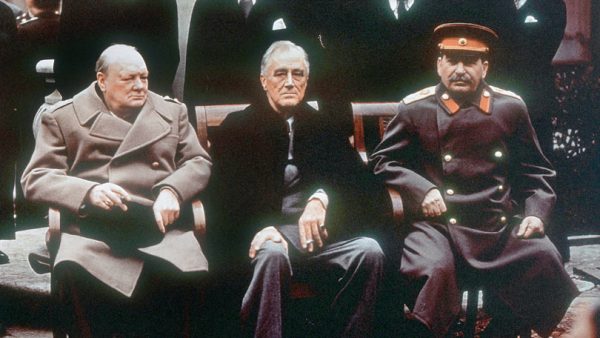
President Roosvelt, Prime Minister Churchill and premier Stalin, at the historic “Big Three” conference in Yalta, February 1945
We’ve heard a lot recently about alleged secret and illegal collaboration by prominent Americans with foreign governments. Collusion is widely regarded as so malign and disgraceful that any official who cooperates with a foreign power in an underhanded way is considered unfit to hold public office. In particular, politicians and media commentators have been charging that devious cooperation by Donald Trump with the government of Ukraine or Russia renders him unfit to be President.
However valid such accusations may be, secretive and unlawful collusion by an American leader with a foreign power that subverts the US political process is not new. The most far-reaching and flagrant case was by President Franklin Roosevelt in 1940-41.
The stage for this had been set some months earlier. In September 1939, Germany and then Soviet Russia attacked Poland. Two days after the German assault, Britain and France declared war against Germany.
Following the defeat of Poland after barely five weeks of fighting, the German leader appealed to Britain and France for peace. Hitler’s plea was rejected. After British and French leaders made clear their determination to continue the war, Germany struck in the West in May 1940. Military and political leaders in Britain and France were confident that their forces would prevail. After all, those two countries had more soldiers, more artillery, more tanks and armored vehicles, and vastly more impressive and numerous naval vessels, than did the Germans. Nonetheless, in just six weeks German forces subdued France and forced the British to flee to their island nation.
Hitler then launched yet another peace initiative. In a dramatic July 19, 1940, appeal for an end to the conflict, he stressed that his proposal did not in any way harm vital British interests or violate British honor. This offer was also rejected, and Prime Minister Winston Churchill vowed to continue the war.
Privately, though, he and all other high-level British officials knew that their country’s resources were hopelessly inferior to those of Germany and her allies, and that Britain’s only hope for “victory” required somehow bringing the United States into the war. In a one-on-one conversation during this period Randolph Churchill pointedly asked his father just how Britain could possibly beat Germany. “With great intensity,” he later recalled, Winston Churchill replied: “I shall drag the United States in.”
From mid-1940 onwards, bringing the US into war was a priority British government objective. The great problem, though, was that the great majority of Americans wanted to keep their country neutral, and avoid any direct involvement in the European conflict. Millions remembered with bitterness the deceit by which the US had entered the world war of 1914-1918, and the betrayal of the solemn, noble-sounding pledges made during those years by US President Wilson and the leaders of Britain and France.
Roosevelt secretly supported Churchill’s efforts. Even before the outbreak of war in September 1939, the President was already working, behind the scenes, to encourage Britain to make war against Germany, with the goal of “regime change” there. America’s most influential newspapers, magazines and radio commentators shared Roosevelt’s hostile attitude toward Hitler’s Germany, and they supported his campaign for war by putting out stories designed to persuade the public that Germany was a grave danger. Even prior to the outbreak of war in Europe, for example, the country’s most influential illustrated weekly, Life magazine, published a major article headlined “America Gets Ready to Fight Germany, Italy, Japan.” Readers were told that Germany and Italy “covet … the rich resources of South America,” and warned that “fascist fleets and legions may swarm across the Atlantic.”
In the months before December 1941, when the US formally entered the war in the wake of the Japanese attack on Pearl Harbor, President Roosevelt did everything he could to get America into the global conflict without actually declaring war. He proceeded with caution and cunning, because his measures were often contrary to US law, and without Congressional or Constitutional mandate. Roosevelt also acted with ever more brazen disregard for international law and America’s legal standing as a neutral country. As part of his campaign, he sought to convince the public that Hitler’s Germany threatened the US.
“The Nazi masters of Germany,” he announced in a December 1940 radio address, “have made clear that they intend not only to dominate all life and thought in their own country, but also to enslave the whole of Europe, and then to use the resources of Europe to dominate the rest of the world …” In August 1941, the President met with British premier Churchill to pledge US support for war against Germany. They issued a joint declaration, the “Atlantic Charter,” that laid out the ambitious and noble-sounding war aims of the two countries.
Roosevelt and Churchill at their historic “Atlantic Charter” meeting off the coast of Newfoundland, August 1941
In a nationally-broadcast address two weeks later, Roosevelt told Americans that “… our fundamental rights – including the rights of labor – are threatened by Hitler’s violent attempt to rule the world,” and pledged that “we shall do everything in our power to crush Hitler and his Nazi forces.” In another radio address on September 11 the President announced a “shoot-on-sight” order to US naval warships to attack German and Italian vessels on the high seas.
In spite of these and other hostile measures, German leaders fervently sought to avoid conflict with the US. Hitler ordered German submarines to avoid any clash with American forces, and to use their weapons only in self-defense and as a final resort. So belligerent were US actions against Germany and her allies, and so blatant was US disregard for the country’s officially neutral status, that Admiral Harold Stark, US Chief of Naval Operations, warned the Secretary of State that Hitler “has every excuse in the world to declare war on us now, if he were of a mind to.”
As part of Churchill’s effort to bring the US into the war, in 1940 his government established an agency that came to be known as the British Security Coordination (BSC), which managed operations in North and South America of Britain’s key intelligence bureaus, including MI5, MI6, the Special Operations Executive, and the Political Warfare Executive.
BSC operations were headed by William Stephenson. Born in Canada, he had distinguished himself as a flier with British forces during the First World War, and afterwards became a highly successful businessman in England. From its central offices on two floors of the Rockefeller Center building on Fifth Avenue in New York City, the BSC at its height supervised the work of more than two thousand full- and part-time employees, agents and operatives. These included linguists, cipher and crytology experts, intelligence agents, propaganda specialists, people skilled in business and finance, and operatives in a range of other fields. Nearly a thousand were active in New York, while more than that number worked in Washington, DC, Los Angeles, San Francisco and Seattle, as well as in Canada, Mexico City, Havana, and other centers in Latin America. “The scale and audacity” of British intelligence acclivities in the US between June 1940 and December 1941, concludes one historian, “were without parallel in the history of relations between allied democracies.”
At the end of World War II, Stephenson arranged for an official history of the British Security Coordination to be written, based on its voluminous files and records. Just twenty copies of this secret and very restricted work were produced, and then the entire archive of BSC documents and papers was gathered together and burned.
In the years that followed, some information about BSC operations came to public attention in a few widely-read books. But it was not until 1999 – more than half a century after the end of World War II – that the full text was finally published. This important primary source, titled British Security Coordination: The Secret History of British Intelligence in the Americas, 1940-1945, throws light on the carefully hidden record of collusion between the Roosevelt White House and a foreign government.
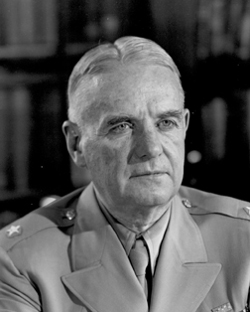
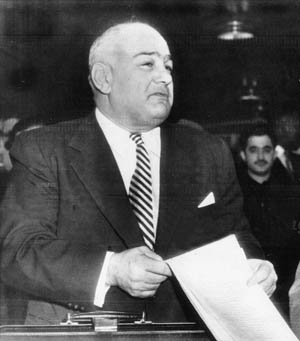
Not long after William Stephenson arrived in the US to begin work, Prime Minister Churchill informed President Roosevelt of Stephenson’s assignment. After a briefing on the BSC’s planned operations, Roosevelt said: “There should be the closest possible marriage between the FBI and British intelligence.” The president also communicated his views on this to the British ambassador in Washington. Roosevelt arranged for Stephenson’s agency to work closely with William Donovan, a highly trusted colleague of the President who went on to establish and head the wartime Office of Strategic Services, which after the war became the CIA, the Central Intelligence Agency.
As the official BSC history acknowledges, BSC operations “could not have come into being at all without American approval on the highest level.” The official history goes on: “The climax of that offensive was reached some six months before Pearl Harbor when BSC secured, through the establishment of the organization which eventually came to be known as the Office of Strategic Services, an assurance of full American participation and collaboration with the British in secret activities directed against the enemy throughout the world.”
Moreover, “Inasmuch as the cause of American intervention was symbolized in the foresight and determination of the President himself, the ultimate purpose of all BSC’s Political Warfare was to assist Mr Roosevelt’s own campaign for preparedness. This was not merely an abstract conception, for WS [William Stephenson] kept in close touch with the White House and as time went on the president gave clear indication of his personal concern both to encourage and take advantage of BSC’s activities.”
This cooperation with British intelligence by the President and other high-ranking US officials, as well as with the FBI, the US federal government’s main domestic security and police agency, was quite illegal. Such collusion by the nominally neutral US to further the war aims of a foreign government was contrary to both US law and universally accepted international norms. Accordingly, the White House kept this collaboration secret even from the State Department.
Incidentally, the official BSC history acknowledges the role of Donovan in a little known but important chapter of World War II history. On March 25, 1941, Yugoslavia joined the Axis alliance with Germany, Italy and other European countries. Two days later, a group of Serbian officers led by General Dusan Simovic, carried out a putsch in Belgrade, the Yugoslav capital, that violently overthrew the country’s legal government. Ten days later the new regime signed a treaty of friendship with the Soviet Union.
How did this sudden “regime change” come about? Several months earlier, during a visit to Belgrade in January 1941, William Donovan was in the Yugoslav capital as an agent of President Roosevelt and of the British government. During a crucial meeting and conversation with General Simovic, he set the stage for the “regime change” overthrow of the country’s government. The official BSC history puts it this way: “In Yugoslavia, Donovan paved the way for the coup d’état which resulted at the eleventh hour in Yugoslav resistance to, instead of acquiescence in, German aggression. He interviewed General Simovic, who asked him whether Britain could hold out against the Nazis and whether the United States would enter the war … He answered both questions in the affirmative; and at his persuasion Simovic agreed to organize the revolution which a few months later overthrew the pro-German government of Prince Paul.”
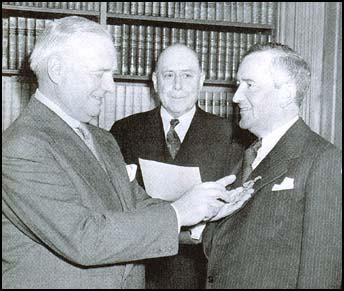
William Stephenson is honored for his wartime service with the US “Medal of Merit,” presented by William Donovan at a ceremony in 1946
A major task of the BSC – as the official history reports – was “to organize American public opinion in favour of aid to Britain.” As part of what the BSC called “political warfare designed to influence American public opinion,” BSC agents were “placing special material in the American press.” Stephenson’s operatives were very active in prodding, cajoling and steering the US media to foment fear and hatred of Germany, and to encourage public support for Roosevelt’s ever more overt campaign of military backing for Britain, and later for Soviet Russia.
“Of particular value,” the BSC history notes, was the cooperation of the publisher of the New York Post, the editor of the New York daily PM, the publisher of the New York Herald Tribune, the publisher of the Baltimore Sun, and the president of the New York Times, as well as the country’s most influential columnists, including Walter Lippman, Drew Pearson, and Walter Winchell. Pearson’s column alone appeared in 616 newspapers with a combined readership of more than twenty million. In working “to bring the United Sates into the `shooting’ war by attacking isolationism and fostering interventionism,” the BSC “was able to initiate internal propaganda through its undercover contacts with selected newspapers, such as the New York Times, the New York Herald Tribune, the New York Post, and the Baltimore Sun; with newspaper columnists and radio commentators; and with various political pressure organizations.”
The BSC worked closely with a specially created news service. Set up in July 1940, the “Overseas News Agency” was a supposedly legitimate and trustworthy enterprise. Actually, and as the BSC history notes, this was “a branch of the Jewish Telegraph[ic] Agency, owned in part by the rich New York Jew who controlled the liberal and vehemently anti-Nazi New York Post.”
As the official history goes on to explain: “After a series of secret negotiations, BSC agreed to give ONA [Overseas News Agency] a monthly subsidy in return for promise of cooperation in certain specific ways … It’s value … lay in its ability not only to channel propaganda outwards but to assure wide dissemination of material originated by BSC and intended for internal consumption. In April 1941, the ONA clients within the United States already numbered more than forty-five English language papers, which included such giants as the New York Times … It afforded a useful instrument for rapid dissemination abroad of subversive propaganda originated by BSC in the United States.”
The Jewish-run ONA agency soon became an important distributor of “fake news” as part of the widening campaign to smear and discredit National Socialist Germany, and to promote public support for US involvement in war against Germany and her allies. As one historian put it: “From the start, attacking Nazi Germany was a higher priority for ONA than hewing to the truth.” ONA articles influenced many millions of Americans, appearing in such major daily papers as the New York Times, the New York Herald Tribune, the San Francisco Chronicle, the Philadelphia Inquirer, and The Washington Post.
Here are a few examples:
In August 1940 an ONA report cited anonymous “qualified Czech sources” to inform Americans that “Czechoslovak girls and young women have been transported from the [Czech] Protectorate to German garrison towns to become white slaves.” It went on to tell readers that “Nazi officials, dispatching these trainloads of prospective white slaves to the Reich, informed husbands and relatives that the women `will be entrusted with the important work of amusing German soldiers, in order to keep up the morale of the troops’.”
In February 1941 American newspapers carried a sensational ONA report claiming that the US was threatened by “fascist bands” in the Caribbean country of Haiti, which had become a dangerous center of Nazi activity. Germans were supposedly preparing that county as a base for attacks on Florida, the Panama Canal, and Puerto Rico. In June 1941 an ONA report appearing in newspapers across the US told of a daring British parachute raid within Germany that had succeeded in capturing 40 German pilots. This and similar stories were meant to encourage Americans to believe that the British had the skill and resolve to defeat Germany and her allies. But the raid never happened. This “fake news” story was conceived in London by the MI6 agency, and was written by a British agent.
In August 1941, an ONA item in the New York Post told readers that “Hitler is not at the Russian front, but at Berchtesgaden suffering from a severe nervous breakdown.” The article went on to assert that the German leader’s personal physician had recently traveled to Switzerland to consult with the famed psychiatrist Carl Jung to discuss “the rapid deterioration of Hitler’s mental condition,” which was supposedly characterized by delusional rages. That same month, The New York Times published a report of the Overseas News Agency telling readers that in the Middle East the recent death of a 130-year-old Bedouin soothsayer was widely regarded as “a sign of a coming defeat for Hitler.”
Stephenson’s BSC also rigged public opinion polls to give the impression that Americans were more willing to join Britain and the Soviet Union in war against Germany than was actually the case. Polls that showed American unhappiness with British policies, such as Britain’s imperial rule in India, were suppressed. As a result, one historian cautions, many surveys of American public opinion during this period “should be seen for what they were: at worst they were flatly rigged, at best they were tweaked and massaged and cooked – advocacy polls without the advocate being visible.”
An important British propaganda outlet during this period was radio station WRUL, an American short-wave broadcaster based in Long Island, New York. With 50,000 watts of power, its reach was unsurpassed by any other station either in the US or Europe. “By the middle of 1941,” the official BSC history reports, “station WRUL was virtually, though quite unconsciously, a subsidiary of BSC, sending out covert British propaganda all over the world … Daily broadcasts went out in no less than twenty-two different languages …”
In its efforts to influence the American public, the British had formidable competition. News, photos and contextual information provided by German agencies was more timely and detailed, and consequently better appreciated and more effective, than what Britain provided. The German “news agencies, Transocean and DNB, were always first with the headlines,” the BSC history acknowledged.
In two confidential telegrams sent to London in April 1941, Stephenson wrote frankly about the unsatisfactory situation: “Close examination of US press during past fortnight indicates almost complete failure [to] prevent Axis monopoly of war news coverage … most journals … carry predominance of Axis news … [and] photographs … few if any British photographs appear … Axis news reports reach here more quickly than ours … rapidly followed by copious flow of descriptive material, photographs and films … Transocean and DNB keep up flow and build up stories even in quiet periods … invariably beat our news to headlines … US newsmen here say Germans show far better sense of news and timing … infinitely better understanding US psychology.”
As the BSC official history goes on to explain, “these warnings went unheeded, and accordingly WS [William Stephenson] decided to take action on his own initiative” by waging a “covert war against the mass of American groups which were organized throughout the country to spread isolationism and anti-British feeling.” This included coordination with vehemently anti-German organizations that were pushing for US involvement in war against Germany. BSC was especially keen to counter the formidable influence and effectiveness of the America First Committee. As the official history notes, “because America First was a particularly serious menace, BSC decided to take more direct action.” It took measures to “disrupt” America First rallies, and to “discredit” America First speakers. “Such activities by BSC agents and cooperating pro-British committees were frequent, and on many occasions America First was harassed and heckled and embarrassed.”
British intelligence agents also worked to elect candidates who favored US intervention in the European war, to defeat candidates who advocated neutrality, and to silence or destroy the reputations of Americans who were deemed to be a menace to British interests. An important target of BSC operations was US Senator Gerald Nye, an influential critic of the President’s campaign for war. Once, when he was getting ready to address a meeting in Boston, a BSC-backed group called “Fight for Freedom” “passed out 25,000 handbills attacking him as an appeaser and as a Nazi-lover.”
Another political figure whom BSC operatives sought to discredit was US Representative Hamilton Fish, a vigorous critic of Roosevelt’s war policy. Fish was particularly effective because he was intelligent, well educated, and exceptionally knowledgeable about international relations, with extensive first-hand understanding of European affairs. British agents funded Fish’s election opponents, published pamphlets suggesting he was pro-Hitler, released a faked photo of Fish with the head of the pro-Nazi German American Bund, and planted stories saying that he was getting financial aid from German agents. Such underhanded activities were important in finally removing him from Congress in the November 1944 elections. The BSC history notes that while Fish “attributed his defeat to Reds and Communists. He might – with more accuracy – have blamed BSC.”
Fortune tellers were also used by British intelligence to sway public opinion. Such propaganda, the official BSC history notes, is effective only with people who are not very discerning or sophisticated. The BSC begins its description of these operations with condescending remarks about American gullibility:
“A country that is extremely heterogeneous in character offers a wide variety of choice propaganda methods. While it is probably true that all Americans are intensely suspicious of propaganda, it is certain that a great many of them are unusually susceptible to it even in its most patent form … The United States is still a fertile field for outré practices. It is unlikely that any propagandist would seriously attempt to influence politically the people of England, say, or France through the medium of astrological predictions. Yet in the United States this was done with effective if limited results.”
In the summer of 1941 the BSC employed Louis de Wohl, who is described in the BSC history as a “bogus Hungarian astrologer.” He was directed to issue predictions to show that Hitler’s “fall was now certain.” At public meetings, in radio appearances, in interviews, and in widely distributed press items, he “declared that Hitler’s doom was sealed.” De Wohl, who was presented as an “astro-philosopher,” also sought to discredit Charles Lindbergh, the much admired American aviator who was also a prominent spokesman for the America First Committee and an effective critic of Roosevelt’s war policies. De Wohl claimed that Lindbergh’s first son, who had been kidnapped and killed in 1932, was actually still alive and living in Germany, where he was being trained as a future Nazi leader. “There is little doubt,” the BSC history concludes, that the work of de Wohl “had a considerable effect upon certain sections of the [American] people.”
British agents also publicized the equally absurd predictions of an Egyptian astrologer who claimed that within four months Hitler would be killed, as well as similarly fantastic predictions of a Nigerian priest named Ulokoigbe. As Stephenson and his BSC colleagues intended, American newspapers eagerly picked up and spread such nonsense to millions of readers.
The BSC also set up a center that fabricated letters and other documents, as well as an organization that excelled in spreading expedient rumors. British agents illegally interecpted and copied US mail. They carried out wiretapping to get embarrassing information on those it wished to discredit, and leaked the results of its illegal surveillance. One important target was the French embassy in Washington, DC, which was wiretapped and burgled by Stephenson’s agents.
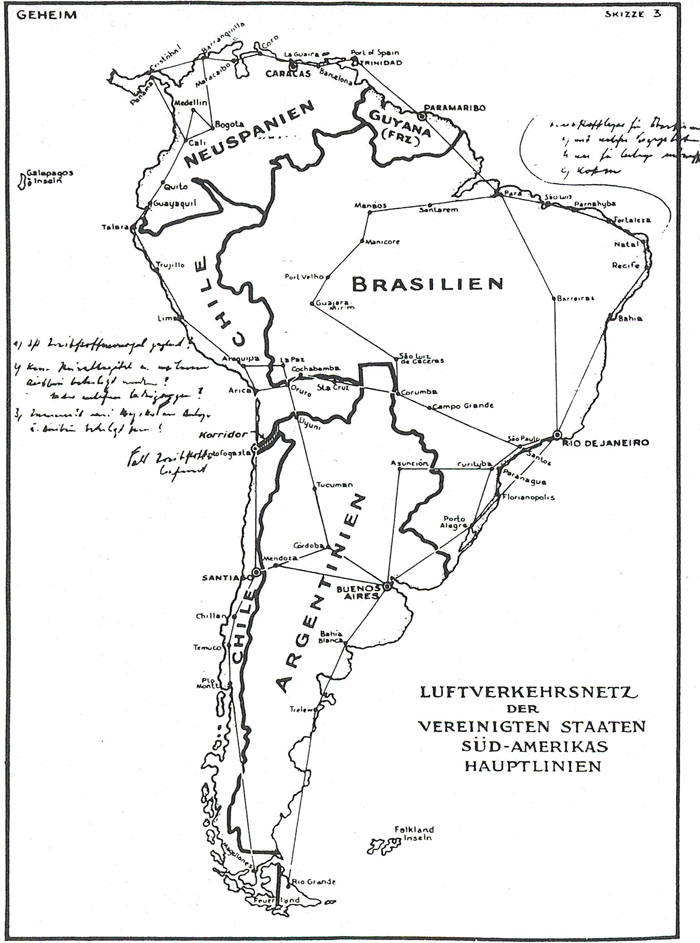
An important figure in all this was Ernest Cuneo, a publicist, lawyer, and intelligence operative who played a key role as liaison between Stephenson’s BSC, the White House, Donovan’s agency, the FBI, and the media. He later described the scope of British operations in a memo. The BSC, he wrote, “ran espionage agents, tampered with the mails, tapped telephones, smuggled propaganda into the country, disrupted public gatherings, covertly subsidized newspapers, radios, and organizations, perpetrated forgeries – even palming one off on the president of the United States (a map that out-lined Nazi plans to dominate Latin America) – violated the aliens registrations act, shanghaied sailors numerous times, and possibly murdered one or more persons in this country.”
A high point of British-White House collusion, and of the BSC campaign to influence American public opinion, came on October 27, 1941. While Franklin Roosevelt was not the first or the last American president to deliberately mislead the public, rarely has a major political figure given a speech as loaded with brazen falsehood as he did in his address on that date. His remarks, delivered to a large gathering at the Mayflower Hotel in Washington, DC, were broadcast live over nationwide radio.
In a nationally broadcast address of Oct. 27, 1941, President Roosevelt claimed to have documents proving German plans to take over South America and abolish all the world’s religions.
After giving a highly distorted review of recent US-German relations, Roosevelt made a startling announcement. He said: “Hitler has often protested that his plans for conquest do not extend across the Atlantic Ocean … I have in my possession a secret map, made in Germany by Hitler’s government – by the planners of the new world order. It is a map of South America and a part of Central America as Hitler proposes to reorganize it.” This map, the President explained, showed South America, as well as “our great life line, the Panama Canal,” divided into five vassal states under German domination. He said: “That map, my friends, makes clear the Nazi design not only against South America but against the United States as well.”
Roosevelt went on to announce another startling revelation. He told his listeners that he also had in his possession “another document made in Germany by Hitler’s government. It is a detailed plan to abolish all existing religions – Catholic, Protestant, Mohammedan, Hindu, Buddhist, and Jewish alike” which Germany will impose “on a dominated world, if Hitler wins.”
“The property of all churches will be seized by the Reich and its puppets,” he continued. “The cross and all other symbols of religion are to be forbidden. The clergy are to be forever silenced under penalty of the concentration camps … In the place of the churches of our civilization, there is to be set up an international Nazi church – a church which will be served by orators sent out by the Nazi government. In the place of the Bible, the words of Mein Kampf will be imposed and enforced as Holy Writ. And in place of the cross of Christ will be put two symbols – the swastika and the naked sword.”
“Let us well ponder,” he said, “these grim truths which I have told you of the present and future plans of Hitlerism.” All Americans, he went on, “are faced with the choice between the kind of world we want to live in and the kind of world which Hitler and his hordes would impose on us.” Accordingly, he said, “we are pledged to pull our own oar in the destruction of Hitlerism.”
The full story about these documents did not emerge until many years later. The map cited by the President did exist, but it was a forgery produced by British intelligence. Stephenson had passed it on to Donovan, who had it delivered to the President. The other “document” cited by Roosevelt, purporting to outline German plans to abolish the world’s religions, was even more fanciful than the “secret map.”
The “secret map” cited by President Roosevelt as proof of German plans to take over South America was produced by British intelligence and passed on to the White House by William Donovan.
It’s not clear if Roosevelt himself knew that the map was a fake, or whether he was taken in by the British fraud and actually believed it to be authentic. In this case we don’t know if the President was deliberately lying to the American people, or was merely a credulous dupe and tool of a foreign government.
The German government responded to the President’s speech with a statement that categorically rejected his accusations. The purported secret documents, it declared, “are forgeries of the crudest and most brazen kind.” Furthermore, the statement went on: “The allegations of a conquest of South America by Germany and an elimination of the religions of the churches in the world and their replacement by a National Socialist church are so nonsensical and absurd that it is superfluous for the Reich government to discuss them.” German propaganda minister Joseph Goebbels also responded to Roosevelt’s claims in a widely read commentary. The American president’s “absurd accusations,” he wrote, were a “grand swindle” designed to “whip up American public opinion.”
That the President’s claims were absurd on their face should have been obvious to any discerning and reasonably well-informed person. Assertions that Germany was planning to take over South America were clearly fantastic given that, first, Germany had been unable or unwilling even to launch an invasion of Britain, and, second, that German forces at that moment were fully engaged in a titanic clash with Soviet Russia, a conflict that would ultimately end with the victory of the Red Army.
Roosevelt’s claim that Hitler was bent on quashing the world’s religions was not just a falsehood; it was nearly the opposite of the truth. At the same time he was telling Americans that Hitler’s Germany threatened religious life in their country and the rest of the world, President Roosevelt and his government were organizing military aid to the one country that was ruled by an openly atheist regime, the Soviet Union. While Roosevelt was speaking, military forces of Germany, Italy, Romania, Finland, Hungary and other European countries were battling to bring down the anti-religious Bolshevik state. Millions of Ukrainians, Russians, Lithuanians, Belarusians, and others who had already been freed from Soviet rule were, with German support, opening churches and restoring the traditional religious life that had been so brutally suppressed by the Stalinist regime.
During the war years, Germany’s Protestant and Catholic churches not only received government financial support, they were packed with worshipers. In Catholic regions of the Reich, notably in Bavaria and Austria, crucifixes were displayed in many public buildings, including courtrooms and school classrooms. The government of one country that was closely allied with Hitler’s Germany during World War II, Slovakia, was actually headed by a Roman Catholic priest.
In 1941 few Americans could believe that their President would so deliberately and emphatically deceive them, especially about matters of the gravest national and global importance. Millions accepted Roosevelt’s alarmist claims as true. After all, whom should any decent, patriotic citizen believe?: Their President, or the government of a foreign country that much of the American media told them was a mendacious regime dedicated to brutally imposing oppressive rule over the United States and the entire planet?
The Roosevelt-British propaganda campaign of 1940-41 was based on a great falsehood: the claim that Hitler was trying to “take over the world.” Actually, it was not Germany that launched war against Britain and France, but rather the reverse. It was Churchill, later joined by the US President, who rejected all German initiatives to end the terrible war. Demanding “unconditional surrender,” they insisted on the complete capitulation of Germany, including “regime change” elimination of the country’s government.
The legacy of President Roosevelt’s secretive and unlawful collusion with a foreign government, including his sanctioning of crimes by British and US agents, are relevant for our time. That’s especially true because Roosevelt is widely regarded as one of the greatest and most admirable of America’s past leaders. He is, for example, one of the very few persons whose image appears on US coins. Roads, streets, schools and other learning centers across the country bear his name.
His legacy should concern those who today are understandably unhappy with the routinely partisan and often polemical presentation of news and information in the mainstream media. The way that “fake news” and slanted, sensationalized information were given to the public in 1940-41 by the mainstream media, in secret collaboration with the White House and a foreign government, tells us much about how news and opinion can be manipulated in our country, and by whom.
In 1990 The New York Times issued a kind of apology for having published, decades earlier, the reporting of its once highly regarded correspondent in Moscow. In 1932 Walter Duranty’s dispatches from the Soviet Union earned him America’s highest award for journalistic achievement, the Pultizer Prize. Only years later did it become clear that Duranty’s portrayal of life in the USSR amounted to a deliberate whitewashing of reality. In particular he concealed the famine, starvation, and deaths of millions, especially in Ukraine, due to the Stalinist regime’s brutal “collectivization” of the vast country’s rural and farming population. Although reporting by major American newspapers in 1940-41 about Roosevelt administration’s policies for war was similarly distorted and misleading, neither the The New York Times, The Washington Post, nor any other paper has been moved to issue a comparable apology.
President Roosvelt, Prime Minister Churchill and premier Stalin, at the historic “Big Three” conference in Yalta, February 1945
President Richard Nixon is today widely regarded as a disgraced figure who deserved impeachment for trying to cover up the “Watergate” break-in. President Trump, many say, should likewise be punished for breaking the law. If that’s true, how then should we regard Franklin Roosevelt? His deceit and crimes – which are routinely ignored, excused or justified – vastly overshadow the misdeeds of Nixon and Trump.
Those who admire Franklin Roosevelt seem to believe that presidential deception and misconduct are justified if the perpetrator’s motives or goals are good. One influential scholar who has expressed this view is American historian Thomas A. Bailey. He acknowledged Roosevelt’s record, but sought to justify it. “Franklin Roosevelt repeatedly deceived the American people during the period before Pearl Harbor,” he wrote. “He was like the physician who must tell the patient lies for the patient’s own good … The country was overwhelmingly noninterventionist to the very day of Pearl Harbor, and an overt attempt to lead the people into war would have resulted in certain failure and an almost certain ousting of Roosevelt in 1940, with a complete defeat of his ultimate aims.”
Prof. Bailey went on with a further justification: “A president who cannot entrust the people with the truth betrays a certain lack of faith in the basic tenets of democracy. But because the masses are notoriously shortsighted and generally cannot see danger until it is at their throats, our statesmen are forced to deceive them into an awareness of their own long-run interests. This is clearly what Roosevelt had to do, and who shall say that posterity will not thank him for it?”
In spite of all the rhetoric we hear about “our democracy” and “government of the people,” it seems that our leaders do not really believe that American-style democracy works as it’s supposed to. They don’t trust the people to “handle the truth.” The defenders of the Roosevelt legacy apparently believe that, at least sometimes, political leaders can and must break the law, violate the Constitution, and deliberately deceive the people for what a supposedly enlightened elite believes is in the nation’s “real” best interest, and for what it regards as a “higher” and worthy cause.
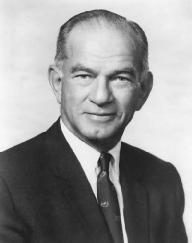
Roosevelt set a precedent for similarly deceitful and unlawful behavior by later presidents. Senator J. William Fulbright, a prominent critic of President Lyndon Johnson’s deception and disregard for law and the Constitution during the Vietnam war remarked that “FDR’s deviousness in a good cause made it much easier for LBJ to practice the same kind of deviousness in a bad cause.”
“After a generation of presidential wars,” observed historian Joseph P. Lash, “it is possible to see that, in the hands of Roosevelt’s successors, the powers that he wielded as commander in chief to deploy the army, navy and air force as he deemed necessary in the national interest and to portray clashes in distant waters and skies as enemy-initiated led the nation into the Vietnam quagmire.”
Roosevelt’s methods seem to have become firmly entrenched in modern American political life. President George W. Bush, for one, followed in Roosevelt’s path when he and other high-level officials in his administration, with support from the mainstream media, deceived the American people to make possible the 2003 US invasion of Iraq. “I used to puzzle over the question of how American democracy could be adapted to the kind of role we have come to play in the world,” Senator Fulbright said in 1971. “I think I now know the answer: it cannot be done.”
While many Americans today yearn for honest and ethical political leaders, transparent governance, and “real” democracy, such hopes are likely to remain elusive as long as the mainstream media, educators and politicians continue to portray Franklin Roosevelt as an exemplary President, and his administration as a paragon of leadership, while successfully suppressing or justifying his record of deceit and wrongdoing.
Endnotes
Basil H. Liddell-Hart, The Second World War (New York: Putnam, 1971), pp. 17-22, 66; Clive Ponting, 1940: Myth and Reality (Chicago: 1993), pp. 79-80; Niall Ferguson, The War of the World (New York: Penguin, 2006), pp. 387-390; William Carr, Poland to Pearl Harbor (1986), pp. 93, 96.
Patrick J. Buchanan, Churchill, Hitler and `The Unnecessary War’ (New York: Crown, 2008), pp. 361-366; John Charmely, Churchill’s Grand Alliance (Harcourt Brace, 1996), pp. 82-83, 178; Clive Ponting, 1940: Myth and Reality (1993), p. 124; Friedrich Stieve, What the World Rejected: Hitler’s Peace Offers, 1933-1939.
Martin Gilbert, Finest Hour: Winston Churchill,1939-41 (1984), p. 358. Quoted in: Jon Meacham, Franklin and Winston (2004), p. 51; M. Hastings, Winston’s War, 1940-1945 (2010), p. 25.
Joseph P. Lash, Roosevelt and Churchill (1976), pp. 23-31; M. Weber, “President Roosevelt’s Campaign to Incite War in Europe,” The Journal of Historical Review, Summer 1983.
“America Gets Ready to Fight Germany, Italy, Japan,” Life, Oct. 31, 1938.
( http://mk.christogenea.org/content/it-was-planned-way-3-years-previously-page-1 )
Roosevelt “fireside chat” radio address of Dec. 29, 1940. ; Regarding the “Atlantic Charter,” see: William H. Chamberlin, America’s Second Crusade (1950 and 2008); Benjamin Colby, ‘Twas a Famous Victory (1975).
Roosevelt Labor Day radio address, Sept. 1, 1941.
Joseph P. Lash, Roosevelt and Churchill (1976), pp. 360, 415, 429; Stark memo to Secretary Hull, Oct. 8, 1941. Quoted in: J. P. Lash, Roosevelt and Churchill (1976), p. 426.
Thomas E. Mahl, Desperate Deception: British Covert Operations in the United States, 1939-44 (1999), p. 16; Steven T. Usdin, Bureau of Spies: The Secret Connections Between Espionage and Journalism in Washington (Prometheus, 2018), pp. 101-104; Lynne Olson, Those Angry Days (New York: Random House, 2013), p. 117; William Boyd, “The Secret Persuaders,” The Guardian (Britain), Aug. 19, 2006.
Nigel West (introduction) in: William Stephenson, ed., British Security Coordination (New York: 1999), pp. xi, xii.
W. Stephenson, ed., British Security Coordination (1999), p. xxv.
W. Stephenson, ed., British Security Coordination (1999), pp. xxxvi, xxxiii.
W. Stephenson, ed., British Security Coordination (1999), p. 16.
W. Stephenson, ed., British Security Coordination (1999), p. 14.
W. Stephenson, ed., British Security Coordination (1999), pp. 58, 59.
Steven T. Usdin, Bureau of Spies (2018), esp. pp. 135-140, 325-327; P. J. Grisar, “Sharks Defending Britain From Nazis? How ‘Fake News’ Helped Foil Hitler,” Forward, Oct. 22, 2018; Menachem Wecker, “The true story of a Jewish news agency that peddled fake news to undo Hitler.” Religion News Service, October 1, 2018
Steven T. Usdin, Bureau of Spies (2018), p. 135.
S. T. Usdin, Bureau of Spies (2018), pp. 138-139, 326 (n.).
Larry Getlen, “The Fake News That Pushed US Into WWII,” New York Post, Oct. 3, 2019, pp. 20-21.
S. T. Usdin, Bureau of Spies (2018), p. 142.
Steven T. Usdin, Bureau of Spies (2018), pp. 139, 326 (n.); Menachem Wecker, “The true story of a Jewish news agency that peddled fake news to undo Hitler.” RNS, Oct. 1, 2018
Thomas E. Mahl, Desperate Deception (1999), pp. 70-86; S. T. Usdin, Bureau of Spies (2018), pp. 113-116, 154-155; W. Stephenson, ed., British Security Coordination (1999), pp. 81-84.
W. Stephenson, ed., British Security Coordination (1999), pp. 59, 60, 61.
W. Stephenson, ed., British Security Coordination (1999), p. 68.
W. Stephenson, ed., British Security Coordination (1999), p. 69.
W. Stephenson, ed., British Security Coordination (1999), p. 74.
W. Stephenson, ed., British Security Coordination (1999), pp. 74, 80; T. E. Mahl, Desperate Deception (1999), pp. 107-135; Steven T. Usdin, Bureau of Spies (2018), pp. 119-127; Christopher Woolf, “How Britain Tried to Influence the US Election in 1940,” PRI, Jan. 17, 2017.
W. Stephenson, ed., British Security Coordination (1999), pp. 102.
W. Stephenson, ed., British Security Coordination (1999), pp. 102-103, 104; S. T. Usdin, Bureau of Spies (2018), p. 139.
W. Stephenson, ed., British Security Coordination (1999), p. 103.
W. Stephenson, ed., British Security Coordination (1999), pp. 104, 105, 107, 109; Steven T. Usdin, Bureau of Spies (2018), pp. 102, 140, 145-148.
Thomas E. Mahl, Desperate Deception: British Covert Operations in the United States, 1939-44 (1999), pp. 16, 193; Michael Williams, “FDR’s Confidential Crusader,” Warfare History Network. Jan. 17, 2019.
John F. Bratzel, Leslie B. Rout, Jr., “FDR and The ‘Secret Map’,” The Wilson Quarterly (Washington, DC), New Year’s 1985, pp. 167-173; Ted Morgan, FDR: A Biography (New York: Simon and Schuster, 1985), pp. 602, 603, 801 (notes); Mark Weber, “Roosevelt’s `Secret Map’ Speech,” The Journal of Historical Review, Spring 1985.
“The Reich Government’s Reply To Roosevelt’s Navy Day Speech,” The New York Times, Nov. 2, 1941; Documents on German Foreign Policy, 1918-1945. Series D, Vol. XIII, (Washington, DC: 1954), pp. 724-725 (Doc. No. 439 of Nov. 1, 1941).
Joseph Goebbels, “Kreuzverhör mit Mr. Roosevelt,” Das Reich, Nov. 30, 1941. Nachdruck (reprint) in Das eherne Herz (1943), pp. 99-104. English translation: “Mr. Roosevelt Cross-Examined.”
( http://research.calvin.edu/german-propaganda-archive/goeb2.htm )
Thomas A. Bailey, The Man in the Street: The Impact of American Public Opinion on Foreign Policy. (New York: 1948), pp. 11-13. Quoted in: W. H. Chamberlin, America’s Second Crusade (Indianapolis: Amagi/ Liberty Fund, 2008), p. 125.
Joseph P. Lash, Roosevelt and Churchill, 1939-1941 (New York: 1976), pp. 9, 10, 420, 421; Address by Fulbright, April 3, 1971. Published in: Congressional Record – Senate, April 14, 1971, p. 10356.
( https://www.govinfo.gov/content/pkg/GPO-CRECB-1971-pt8/pdf/GPO-CRECB-1971-pt8-4-1.pdf )
J. Lash, Roosevelt and Churchill (1976), p. 421.
Address by Fulbright, April 3, 1971. Congressional Record – Senate, April 14, 1971, p. 10356.
Bibliography / For Further Reading
Nicholson Baker, Human Smoke: The Beginnings of World War II, the End of Civilization. New York: Simon & Schuster, 2008
Harry Elmer Barnes, ed., Perpetual War for Perpetual Peace. Institute for Historical Review, 1993
William Boyd, “The Secret Persuaders,” The Guardian (Britain), August 19, 2006.
( https://www.theguardian.com/uk/2006/aug/19/military.secondworldwar )
John F. Bratzel and Leslie B. Rout, Jr., “FDR and The ‘Secret Map’,” The Wilson Quarterly (Washington, DC), New Year’s 1985 (Vol. 9, No. 1), pp. 167-173.
Anthony Cave Brown, The Last Hero: Wild Bill Donovan. New York: Times Books, 1982
Patrick J. Buchanan, Churchill, Hitler and `The Unnecessary War’: How Britain Lost Its Empire and the West Lost the World. New York: Crown, 2008.
William H. Chamberlin, America’s Second Crusade. Chicago: 1950; Indianapolis: 2008
John Charmley, Churchill’s Grand Alliance: The Anglo-American Special Relationship, 1940-1957. Harvest/ Harcourt Brace, 1995.
Benjamin Colby, ‘Twas a Famous Victory. Arlington House, 1975
David Cole, “Tyler Kent and the Roosevelt Whistle-Blow Job,” Taki’s Mag, Nov. 19, 2019.
( https://www.takimag.com/article/tyler-kent-and-the-roosevelt-whistle-blow-job/ )
Jennet Conant, The Irregulars: Roald Dahl and the British Spy Ring in Wartime Washington. Simon & Schuster, 2008.
Robert Dallek, Franklin D. Roosevelt and American Foreign Policy, 1932-1945. New York: Oxford University Press, 1979.
Hunter DeRensis, “The Campaign to Lie America Into World War II,” The American Conservative, December 7, 2019
( https://www.theamericanconservative.com/articles/the-campaign-to-lie-america-into-world-war-ii/ )
Larry Getlen, “The Fake News That Pushed US Into WWII,” New York Post, Oct. 3, 2019.
( https://nypost.com/2019/10/02/the-fake-news-that-pushed-us-into-world-war-ii/ )
P. J. Grisar, “Sharks Defending Britain From Nazis? How ‘Fake News’ Helped Foil Hitler,” Forward, Oct. 22, 2018.
( https://forward.com/culture/412422/sharks-defending-britain-from-nazis-how-fake-news-helped-foil-hitler/ )
Henry Hemming, Agents of Influence: A British Campaign, a Canadian Spy, and the Secret Plot to Bring America into World War II. PublicAffairs, 2019.
Robert Higgs, “Truncating the Antecedents: How Americans Have Been Misled About World War II.” March 18, 2008.
( http://www.lewrockwell.com/higgs/higgs77.html )
Herbert C. Hoover, Freedom Betrayed: Herbert Hoover’s Secret History of the Second World War and its Aftermath (George H. Nash, ed.). Stanford University, 2011.
David Ignatius, “Britain’s War in America: How Churchill’s Agents Secretly Manipulated the U.S. Before Pearl Harbor, The Washington Post, Sept. 17, 1989, pp. C-1, C-2.
Tyler Kent, “The Roosevelt Legacy and The Kent Case.” The Journal for Historical Review. Summer 1983 (Vol. 4, No. 2), pages 173-203. With Introduction by Mark Weber.
( http://www.ihr.org/jhr/v04/v04p173_Kent.html )
Warren F. Kimball, The Juggler: Franklin Roosevelt as Wartime Statesman. Princeton University Press, 1991
Charles C. Kolb. Review of: W. S. Stephenson, ed., British Security Coordination: The Secret History of British Intelligence in the Americas 1940-1945. H-Diplo, H-Net Reviews. December 1999.
( http://www.h-net.org/reviews/showrev.php?id=3623 )
Thomas E. Mahl, Desperate Deception: British Covert Operations in the United States, 1939-44. Brassey’s, 1999.
Jerome O’Connor, “FDR’s Undeclared War,” Naval History (U.S. Naval Institute), Feb. 1, 2004.
( http://historyarticles.com/undeclared-war/ )
Joseph E. Persico, Roosevelt’s Secret War: FDR and World War II Espionage. Random House, 2001.
“The Reich Government’s Reply To Roosevelt’s Navy Day Speech,” The New York Times, Nov. 2, 1941. ( http://ibiblio.org/pha/policy/1941/411101a.html )
Bruce M. Russett, No Clear and Present Danger: A Skeptical View of the U.S. Entry into World War II. New York: Harper & Row, 1972
Friedrich Stieve. What the World Rejected: Hitler’s Peace Offers, 1933- 1939.
( http://ihr.org/other/what-the-world-rejected.html )
Steven T. Usdin, Bureau of Spies: The Secret Connections Between Espionage and Journalism in Washington. Prometheus, 2018
Steve Usdin, “When a Foreign Government Interfered in a U.S. Election – In 1940, by Britain,” Politico, Jan. 16, 2017.
( https://www.politico.com/magazine/story/2017/01/when-a-foreign-government-interfered-in-a-us-electionto-reelect-fdr-214634 )
Mark Weber, “The ‘Good War’ Myth of World War Two.” May 2008.
( http://www.ihr.org/news/weber_ww2_may08.html )
Mark Weber, “Roosevelt’s `Secret Map’ Speech,” The Journal of Historical Review, Spring 1985 (Vol. 6, No. 1), pp. 125-127.
( http://www.ihr.org/jhr/v06/v06p125_Weber.html )
Menachem Wecker, “The true story of a Jewish news agency that peddled fake news to undo Hitler.” Religion News Service, October 1, 2018
( https://religionnews.com/2018/10/01/the-true-story-of-a-jewish-news-agency-that-peddled-fake-news-to-undo-hitler/ )
Michael Williams, “FDR’s Confidential Crusader,” Warfare History Network. Jan. 17, 2019.
( https://warfarehistorynetwork.com/2019/01/22/fdrs-confidential-crusader-2/ )
Christopher Woolf, “How Britain Tried to Influence the US Election in 1940,” Public Radio International, January 17, 2017
( https://www.pri.org/stories/2017-01-17/how-britain-tried-influence-us-election-1940 )
February 22, 2020
Posted by aletho |
Fake News, Mainstream Media, Warmongering | British Security Coordination, Franklin Roosevelt, New York Times, UK, United States, Washington Post, WWII |
Leave a comment
Have you ever wondered how to play the Climate Game, or game the climate? If so, look no further than a remote research station on the northern tip of the Antarctic Peninsula, a submarine-shaped office tower on Geneva’s Avenue de la Paix and an international media pack determined to ramp a single yet-to-be-confirmed measurement into another bogus climate scare.
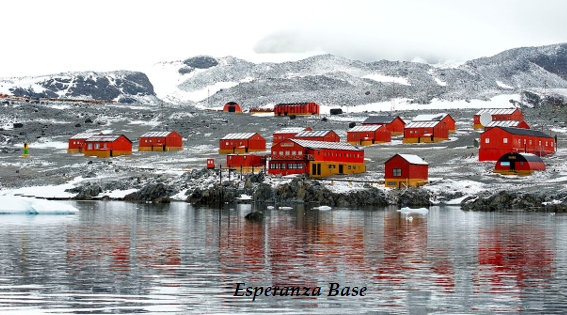
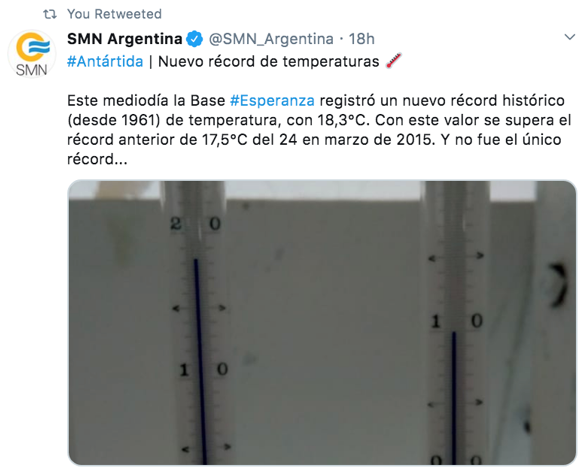
The research station is the Argentine base, Esperanza, coordinates: 63°23′51″S 56°59′52″W. It claimed to have set a new record temperature of 18.3°C on February 6 this year, beating the previous record of 17.5°C on March 24, 2015, according to a tweet (below) from Servicio Meteorológico Nacional (SMN), Argentina’s national meteorological service.
It was déjà vu all over again for the alarmist MSM.
BBC – Scientists warn that global warming is causing so much melting at the South Pole, it will eventually disintegrate – causing the global sea level to rise by at least three metres (10ft) over centuries.
NY Times – Antarctica, the coldest, windiest and driest continent on Earth, set a record high temperature on Thursday, underscoring global warming”. It went on to claim: “the high temperature is in keeping with the earth’s overall warming trend, which is in large part caused by emissions of greenhouse gases.
The Guardian – Antarctica is “one of the fastest warming places on earth, heating by almost 3°C [5.4°F] over the past 50 years”
The Guardian makes that claim despite recent research suggesting a cooling trend since the year 2000, contradicting the carbon dioxide-driven global warming scare. (Media’s horribly dishonest Antarctica warming propaganda, WUWT, February 9, 2020) Five years earlier, on April 1, 2015, it reported on the previous record under the headline: “Antarctica records unprecedented high temperatures – two temperature readings register ominous new potential measurements of accelerating climate change.” “What was incontestable,” the paper’s journalist concluded, “were the unprecedentedly high temperature readings on the Antarctic ice mass.”
Jack Weatherall: Warmists are feeling a polar chill
Yet mean monthly temperatures at Esperanza range from −10.5 °C (13.1 °F) in July, the coldest month, to 1.4 °C (34.5 °F) in January, the warmest month. During summer (December–February), the average high is between 3.7 and 4.3 °C (38.7 and 39.7 °F) while the average low is between −2.0 and −1.2 °C (28.4 and 29.8 °F). In winter, mean temperatures are around −6.0 °C (21.2 °F). So what is going on here?
ClimateChangeDispatch.com’s Thomas Richard ridiculed the Pavlovian alarmism:
To put this in perspective, it would be the equivalent of taking a temperature measurement in Reykjavík, Iceland, and proclaiming that this measurement is indicative of the temperature of the Arctic region, or worse, Tasiilaq (Ammassalik), Greenland. It’s a ridiculous statement and utterly useless. It is well known that West Antarctica is heavily influenced by underground volcanic activity, and hidden beneath its icy exterior is a myriad of active rift systems.
The glass, steel and aluminium tower adjacent Geneva’s Jardin Botaniques is the global headquarters of the World Meteorological Organisation (WMO) According to a local travel agency, Geneva Live Tourism, the building is “respectful of the environment,” and its “grandiose allure with the double façade seeming to dominate the surrounding space”. WMO is the beating heart of Big Climate. It is the UN’s “expert agency and voice regarding the state and behaviour of the Earth’s atmosphere, its interaction with the oceans, its climate and the resulting distribution of water resources.” WMO issued a media release on the Esperanza result on February 7. It was a qualified announcement – New record for Antarctic continent reported – for the “likely legitimate record” was subject to formal verification.
A committee for WMO’s World Weather and Climate Extremes Archive (WWCEA) will now verify whether this indeed is a new record for the Antarctic continent, which is defined as the main continental landmass.
Dr Randall Cerveny, a professor of geographical sciences at Arizona State University, has been the WWCEA rapporteur – or gatekeeper – since its formation 14 years ago. “Everything we have seen thus far indicates a likely legitimate record but we will of course begin a formal evaluation of the record once we have full data from SMN and on the meteorological conditions surrounding the event.” Crucially, he also made this comment:
the record appears to be likely associated (in the short term) with what we call a regional “foehn” event over the area: a rapid warming of air coming down a slope/mountain.
What is a foehn event? According to WUWT blogger Jim Steele,
… foehn events cause rapid extreme temperature jumps simply due to changes in the air pressure as winds descend from a mountain top. During the 2015 foehn event, Esperanza’s daily temperature jumped from 0°C [32°F] 2 days before, to a record setting 17.5°C [63.5°F]. Elsewhere, Antarctic foehn winds are common and have been extensively studied, often raising maximum temperatures by 10+°C [18+°F] above normal.
In other words, it was just local weather, not a consequence of so-called dangerous anthropogenic global warming, aka “climate change”. “Verification was important”, Cerveny said. “It helps to build up a picture of the weather and climate in one of Earth’s final frontiers.”
The WMO media release noted that: “the Antarctic, like the Arctic, is poorly covered in terms of weather observations and forecasts, even though both play an important role in driving climate and ocean patterns and in sea level rise.”
Despite a lack of data, WMO could not resist the opportunity to trumpet a warming warning. Included in the release were ominous comments on the Pine Island and Thwaites glaciers. The latter, allegedly, is “one of the largest contributors to global sea level rise from the West Antarctic Ice Sheet”. There was no mention of its precise “contribution”. That, dear reader, is another story, one about why the BBC failed to mention the many active volcanoes underneath this region, yet found space to jest about “snotsicles”. Spending £38 million of US/UK government funding to “prove” we are in a “climate emergency” has never been such fun.
Scientists fear the Thwaites Glacier could be beginning a process of catastrophic collapse. There is more than three metres of potential sea level rise in the ice of West Antarctica, enough to swamp many of the great cities of the world and drive hundreds of millions of people from their homes.
In any case, speculating about the threat of global sea-level rise, despite the region’s prevailing temperature profiles, is surely a fool’s game.
The Antarctic Peninsula (the northwest tip near to South America) is among the fastest warming regions of the planet, almost 3°C over the last 50 years. The amount of ice lost annually from the Antarctic ice sheet increased at least six-fold between 1979 and 2017. Most of the ice loss takes place by melting of the ice shelves from below, due to incursions of relatively warm ocean water, especially in west Antarctica and to a lesser extent along the peninsula and in east Antarctica.
We will need more than the IPCC’s brave 2C warming guesstimate to melt the massive southern polar ice block.
Spanning 14 million km2 (roughly twice the size of Australia), the Antarctic’s average annual temperature ranges from about −10°C on the Antarctic coast to −60°C at the highest parts of the interior. Its immense ice sheet is up to 4.8km thick and contains 90% of the world’s fresh water, enough to raise sea level by around 60 metres were it all to melt.
There is another important issue here too: geographical semantics. The WMO release conflates the Antarctic Peninsula with the continental Antarctic ice sheet. Little surprise, then, most of the MSM missed the fact that the Antarctic Peninsula is not the Antarctic continent or “region”. The former refers to the narrow northwest tip nearest to South America. As for the latter, the WMO – controversially – defines it as “everywhere south of 60 degrees latitude”. (See Antarctica map)
The Esperanza base is actually outside the Antarctic Circle, which runs 66°33′48.0″ south of the Equator. It is misleading – some might say mischievous – to imply that “record” temperature measurements on the Antarctic Peninsula – less than 5 per cent of the continent and especially those taken on islands at its northern extremity, are meaningful for Antarctica itself, as the WMO does here by including this sentence in its February 7 media release: “The record for the Antarctic region – that is, everywhere south of 60 degrees latitude – is 19.8C, taken on Signy Island in January 1982.”
The British Antarctic Survey (BAS) Signy Research Station at Factory Cove, Borge Bay, Signy Island, is also outside the Antarctic Circle. Located at Lat. 60°43’0″S, Long. 45°36’0″W in the South Orkney Islands group, it is 1300 km from the Falkland Islands, 900 km from South Georgia, 600 km from the Antarctic Peninsula, and 3250 km from the South Pole. According to the BAS website, meteorological records at this summer-only site “were kept by professional meteorologists from 1947 to 1969 and by station volunteers from 1969 to 1995.” How much confidence can we have, then, in the 19.8C reading of January 30, 1982 — a record maximum for any station south of 60°S — especially when the month is prone to significant variation, including “sudden falls in temperature”, down to -7°C?
Whatever the case, a recent detailed analysis of meteorological conditions prevailing at the time – prompted by Dr Cerveny and the WMO Committee on Antarctic Temperature Extremes — confirms that it, too, was due to foehn (or fohn) warming:
At the time of the record temperature exceptionally warm air was being advected southwards towards the South Orkney Islands from the subtropical South Atlantic…. Since conditions conducive to föhn occur relatively frequently, föhn warming may have a significant influence on the local climate and ecology of Signy Island.
As mentioned, WMO’s WWCEA committee rightly is not prepared to declare a new record for Esperanza without further investigation, at this stage referring only to a potential new Antarctic (continent) high temperature:
The Argentine research base, Esperanza, on the northern tip of the Antarctic Peninsula, set a new record temperature of 18.3°C on 6 February 2020, potentially beating the former record of 17.5°C on 24 March 2015.
WWCEAC would “now verify whether this indeed is a new record for the Antarctic continent, which is defined as the main continental landmass.” It has not done so yet, so we await the rapporteur’s “decision and relevant documentation” to be posted on this site (here).
Dr. Cerveny, incidentally, proposed creating WMO’s global archive for verifying, certifying and storing world weather extremes in 2006. As Rapporteur he has called an “ad hoc extremes committee” to “provide an expert and unbiased recommendation” on whether the new extreme qualifies for the archive. This process is easier said than done, for if “the truth be told, world record extremes are mistakenly created all the time.”
For example a “fat finger” error such as hand digitizing a 28.0°C as 82.0 would create a world record observation that every quality control system would say was invalid. Additionally, instrumentation problems can generate a report far in excess of the meteorological conditions. But sometimes a combination of fairly extreme meteorological conditions with minor instrumentation problems, such as calibration errors, can necessitate considerable detective work to determine whether a new world record observation was indeed valid or not. Since weather records are often used as indicators that the Earth’s climate is changing and/or becoming more extreme, confirmation of new weather extreme records should be recognized as a high priority in the meteorology community.
An alert blogger, Nicholas McGinley, made the following post at WUWT :
I am having a hard time verifying this report from Esperanza station.
The thermometer data from the last five days did not show anything close to what is being reported, when I looked earlier this evening. But now I checked again, and the numbers have changed completely. Here is a Tweet I posted with the two graphs side by side:
It has become nearly impossible to trust anything these days.
Besides for all of that … when a short term blip is announced as if it is a representation of the entire state of the planet, while in Alaska a two month trend of temps is showing the coldest period ever recorded in that entire state, something is not at all right.
Dr Cerveny and WMO’s WWCEA committee presumably will sort it all out soon. After all, it did so when a Czech Republic automatic weather station on Davies Dome in the northern part of Ulu Peninsula, James Ross Island, recorded a temperature of 17.9°C (64.2°F) on 23 March 2015, “a day before the current WMO accepted record of 17.5°C (63.5°F) was observed at Esperanza Base (Argentina) in the same general location in the Antarctic Region”.
The committee adjusted the Davies Dome observation down to 17.0°C ± 0.2°C (62.6°F ± 0.4°F) and declared it to be “the second-highest temperature recorded in the Antarctic Region (continent only).”
The recommendation follows a detailed discussion by the committee of the probability that the station experienced solar radiation bias on the temperature-recording instrument at the time of the record observation. In simple terms, the committee suggested that the temperature sensor at Davies Dome was heated to around 0.9°C (1.6°F) above the true air temperature by a combination of high solar radiation (coming both directly from the sun and also reflected from the underlying ice surface) and low wind speed.
Establishing a “true air temperature” in Antarctica, however the continent is defined, clearly can be a challenge. If one automatic weather station reading can be reduced (“adjusted downwards”) after a “detailed discussion” due to the probability of “solar radiation bias”, then what is the reliability of other station readings?
One item that ought to be on the committee’s agenda is a ten-minute video uploaded on February 9, 2020: Climate Alarmists fleeing to Antarctica. As author Tony Heller demonstrates, with winter and the (temporary) collapse of Arctic melting hysteria, climate alarmists have flown south to the other pole. Let’s hope none of them ended up at Esperanza Base and the Thwaites Glacier.
February 18, 2020
Posted by aletho |
Deception, Mainstream Media, Warmongering, Science and Pseudo-Science | BBC, New York Times, The Guardian |
Leave a comment
 media business when his reporting on the world anticommunist league rankled his newspapers’ shareholders, and when he realized that he was serving as a paid stenographer for the Bosnian Islamist leader Alija Izetbegovic in the early 1990s.