A Look Back at Clapper’s Jan. 2017 ‘Assessment’ on Russia-gate
By Ray McGovern | Consortium News | January 8, 2019
The banner headline atop page one of The New York Times two years ago today, on January 7, 2017, set the tone for two years of Dick Cheney-like chicanery: “Putin Led Scheme to Aid Trump, Report Says.”
Under a edia drumbeat of anti-Russian hysteria, credulous Americans were led to believe that Donald Trump owed his election victory to the president of Russia, and that Trump, according to the Times, “colluded” in Putin’s “interference … to help President-elect Trump’s election chances when possible by discrediting Secretary Clinton.”
Hard evidence supporting the media and political rhetoric has been as elusive as proof of weapons of mass destruction in Iraq in 2002-2003. This time, though, an alarming increase in the possibility of war with nuclear-armed Russia has ensued — whether by design, hubris, or rank stupidity. The possible consequences for the world are even more dire than 16 years of war and destruction in the Middle East.
If It Walks Like a Canard…
The CIA-friendly New York Times two years ago led the media quacking in a campaign that wobbled like a duck, canard in French.
A glance at the title of the Intelligence Community Assessment (ICA) (which was not endorsed by the whole community) — “Assessing Russian Activities and Intentions in Recent US Elections” — would suffice to show that the widely respected and independently-minded State Department intelligence bureau should have been included. State intelligence had demurred on several points made in the Oct. 2002 Estimate on Iraq, and even insisted on including a footnote of dissent. James Clapper, then director of national intelligence who put together the ICA, knew that all too well. So he evidently thought it would be better not to involve troublesome dissenters, or even inform them what was afoot.
Similarly, the Defense Intelligence Agency should have been included, particularly since it has considerable expertise on the G.R.U., the Russian military intelligence agency, which has been blamed for Russian hacking of the DNC emails. But DIA, too, has an independent streak and, in fact, is capable of reaching judgments Clapper would reject as anathema. Just one year before Clapper decided to do the rump “Intelligence Community Assessment,” DIA had formally blessed the following heterodox idea in its “December 2015 National Security Strategy”:
“The Kremlin is convinced the United States is laying the groundwork for regime change in Russia, a conviction further reinforced by the events in Ukraine. Moscow views the United States as the critical driver behind the crisis in Ukraine and believes that the overthrow of former Ukrainian President Yanukovych is the latest move in a long-established pattern of U.S.-orchestrated regime change efforts.”
Any further questions as to why the Defense Intelligence Agency was kept away from the ICA drafting table?
Handpicked Analysts
With help from the Times and other mainstream media, Clapper, mostly by his silence, was able to foster the charade that the ICA was actually a bonafide product of the entire intelligence community for as long as he could get away with it. After four months it came time to fess up that the ICA had not been prepared, as Secretary Clinton and the media kept claiming, by “all 17 intelligence agencies.”
In fact, Clapper went one better, proudly asserting — with striking naiveté — that the ICA writers were “handpicked analysts” from only the FBI, CIA, and NSA. He may have thought that this would enhance the ICA’s credibility. It is a no-brainer, however, that when you want handpicked answers, you better handpick the analysts. And so he did.
Why is no one interested in the identities of the handpicked analysts and the hand-pickers? After all, we have the names of the chief analysts/managers responsible for the fraudulent NIE of October 2002 that greased the skids for the war on Iraq. Listed in the NIE itself are the principal analyst Robert D. Walpole and his chief assistants Paul Pillar, Lawrence K. Gershwin and Maj. Gen. John R. Landry.
The Overlooked Disclaimer
Buried in an inside page of the Times‘ Jan. 7, 2017 report was a cautionary paragraph by reporter Scott Shane. It seems he had read the ICA all the way through, and had taken due note of the derriere-protecting caveats included in the strangely cobbled together report. Shane had to wade through nine pages of drivel about “Russia’s Propaganda Efforts” to reach Annex B with its curious disclaimer:
“Assessments are based on collected information, which is often incomplete or fragmentary, as well as logic, argumentation, and precedents. … High confidence in a judgment does not imply that the assessment is a fact or a certainty; such judgments might be wrong.”
Small wonder, then, that Shane noted: “What is missing from the public report is what many Americans most eagerly anticipated: hard evidence to back up the agencies’ claims that the Russian government engineered the election attack. This a significant omission.”
Since then, Shane has evidently realized what side his bread is buttered on and has joined the ranks of Russia-gate aficionados. Decades ago, he did some good reporting on such issues, so it was sad to see him decide to blend in with the likes of David Sanger and promote the NYT official Russia-gate narrative. An embarrassing feature, “The Plot to Subvert an Election: Unraveling the Russia Story So Far,” that Shane wrote with NYT colleague Mark Mazzetti in September, is full of gaping holes, picked apart in two pieces by Consortium News.
Shades of WMD
Sanger is one of the intelligence community’s favorite go-to journalists. He was second only to the disgraced Judith Miller in promoting the canard of weapons of mass destruction in Iraq before the U.S. invasion in March 2003. For example, in a July 29, 2002 article, “U.S. Exploring Baghdad Strike As Iraq Option,” co-written by Sanger and Thom Shanker, the existence of WMD in Iraq was stated as flat fact no fewer than seven times.
The Sanger/Shanker article appeared just a week after then-CIA Director George Tenet confided to his British counterpart that President George W. Bush had decided “to remove Saddam, through military action, justified by the conjunction of terrorism and WMD. But the intelligence and facts were being fixed around the policy.” At that critical juncture, Clapper was in charge of the analysis of satellite imagery and hid the fact that the number of confirmed WMD sites in Iraq was zero.
Despite that fact and that his “assessment” has never been proven, Clapper continues to receive praise.
During a “briefing” I attended at the Carnegie Endowment in Washington several weeks ago, Clapper displayed master circular reasoning, saying in effect, that the assessment had to be correct because that’s what he and other intelligence directors told President Barack Obama and President-elect Donald Trump.
I got a chance to question him at the event. His disingenuous answers brought a painful flashback to one of the most shameful episodes in the annals of U.S. intelligence analysis.
Ray McGovern: My name is Ray McGovern. Thanks for this book; it’s very interesting [Ray holds up his copy of Clapper’s memoir]. I’m part of Veteran Intelligence Professionals for Sanity. I’d like to refer to the Russia problem, but first there’s an analogy that I see here. You were in charge of imagery analysis before Iraq.
James Clapper: Yes.
RM: You confess [in the book] to having been shocked that no weapons of mass destruction were found. And then, to your credit, you admit, as you say here [quotes from the book], “the blame is due to intelligence officers, including me, who were so eager to help [the administration make war on Iraq] that we found what wasn’t really there.”
Now fast forward to two years ago. Your superiors were hell bent on finding ways to blame Trump’s victory on the Russians. Do you think that your efforts were guilty of the same sin here? Do you think that you found a lot of things that weren’t really there? Because that’s what our conclusion is, especially from the technical end. There was no hacking of the DNC; it was leaked, and you know that because you talked to NSA.
JC: Well, I have talked with NSA a lot, and I also know what we briefed to then-President Elect Trump on the 6th of January. And in my mind, uh, I spent a lot of time in the SIGINT [signals intelligence] business, the forensic evidence was overwhelming about what the Russians had done. There’s absolutely no doubt in my mind whatsoever. The Intelligence Community Assessment that we rendered that day, that was asked, tasked to us by President Obama — and uh — in early December, made no call whatsoever on whether, to what extent the Russians influenced the outcome of the election. Uh, the administration, uh, the team then, the President-Elect’s team, wanted to say that — that we said that the Russian interference had no impact whatsoever on the election. And I attempted, we all did, to try to correct that misapprehension as they were writing a press release before we left the room.
However, as a private citizen, understanding the magnitude of what the Russians did and the number of citizens in our country they reached and the different mechanisms that, by which they reached them, to me it stretches credulity to think they didn’t have a profound impact on election on the outcome of the election.
RM: That’s what the New York Times says. But let me say this: we have two former Technical Directors from NSA in our movement here, Veteran Intelligence Professionals for Sanity; we also have forensics, okay?
Now the President himself, your President, President Obama said two days before he left town: The conclusions of the intelligence community — this is ten days after you briefed him — with respect to how WikiLeaks got the DNC emails are “inconclusive” end quote. Now why would he say that if you had said it was conclusive?
JC: I can’t explain what he said or why. But I can tell you we’re, we’re pretty sure we know, or knew at the time, how WikiLeaks got those emails. I’m not going to go into the technical details about why we believe that.
RM: We are too [pretty sure we know]; and it was a leak onto a thumb drive — gotten to Julian Assange — really simple. If you knew it, and the NSA has that information, you have a duty, you have a duty to confess to that, as well as to [Iraq].
JC: Confess to what?
RM: Confess to the fact that you’ve been distorting the evidence.
JC: I don’t confess to that.
RM: The Intelligence Community Assessment was without evidence.
JC: I do not confess to that. I simply do not agree with your conclusions.
William J. Burns (Carnegie President): Hey, Ray, I appreciate your question. I didn’t want this to look like Jim Acosta in the White House grabbing microphones away. Thank you for the questioning though. Yes ma’am [Burns recognizes the next questioner].
The above exchange can be seen starting at 28:45 in this video.
Not Worth His Salt
Having supervised intelligence analysis, including chairing National Intelligence Estimates, for three-quarters of my 27-year career at CIA, my antennae are fine-tuned for canards. And so, at Carnegie, when Clapper focused on the rump analysis masquerading as an “Intelligence Community Assessment,” the scent of the duck came back strongly.
Intelligence analysts worth their salt give very close scrutiny to sources, their possible agendas, and their records for truthfulness. Clapper flunks on his own record, including his performance before the Iraq war — not to mention his giving sworn testimony to Congress that he had to admit was “clearly erroneous,” when documents released by Edward Snowden proved him a perjurer. At Carnegie, the questioner who followed me brought that up and asked, “How on earth did you keep your job, Sir?”
The next questioner, a former manager of State Department intelligence, posed another salient question: Why, he asked, was State Department intelligence excluded from the “Intelligence Community Assessment”?
Among the dubious reasons Clapper gave was the claim, “We only had a month, and so it wasn’t treated as a full-up National Intelligence Estimate where all 16 members of the intelligence community would pass judgment on it.” Clapper then tried to spread the blame around (“That was a deliberate decision that we made and that I agreed with”), but as director of national intelligence the decision was his.
Given the questioner’s experience in the State Department’s intelligence, he was painfully aware of how quickly a “full-up NIE” can be prepared. He knew all too well that the October 2002 NIE, “Iraq’s Continuing Programs for Weapons of Mass Destruction,” was ginned up in less than a month, when Cheney and Bush wanted to get Congress to vote for war on Iraq. (As head of imagery analysis, Clapper signed off on that meretricious estimate, even though he knew no WMD sites had been confirmed in Iraq.)
It’s in the Russians’ DNA
The criteria Clapper used to handpick his own assistants are not hard to divine. An Air Force general in the mold of Curtis LeMay, Clapper knows all about “the Russians.” And he does not like them, not one bit. During an interview with NBC on May 28, 2017, Clapper referred to “the historical practices of the Russians, who typically, are almost genetically driven to co-opt, penetrate, gain favor, whatever, which is a typical Russian technique.” And just before I questioned him at Carnegie, he muttered, “It’s in their DNA.”
Even those who may accept Clapper’s bizarre views about Russian genetics still lack credible proof that (as the ICA concludes “with high confidence”) Russia’s main military intelligence unit, the G.R.U., created a “persona” called Guccifer 2.0 to release the emails of the Democratic National Committee. When those disclosures received what was seen as insufficient attention, the G.R.U. “relayed material it acquired from the D.N.C. and senior Democratic officials to WikiLeaks,” the assessment said.
At Carnegie, Clapper cited “forensics.” But forensics from where? To his embarrassment, then-FBI Director James Comey, for reasons best known to him, chose not to do forensics on the “Russian hack” of the DNC computers, preferring to rely on a computer outfit of tawdry reputation hired by the DNC. Moreover, there is zero indication that the drafters of the ICA had any reliable forensics to work with.
In contrast, Veteran Intelligence Professionals for Sanity, working with independent forensic investigators, examined metadata from a July 5, 2016 DNC intrusion that was alleged to be a “hack.” However, the metadata showed a transfer speed far exceeding the capacity of the Internet at the time. Actually, all the speed turned out to be precisely what a thumb drive could accommodate, indicating that what was involved was a copy onto an external storage device and not a hack — by Russia or anyone else.
WikiLeaks had obtained the DNC emails earlier. On June 12, 2016 Julian Assange announced he had “emails relating to Hillary Clinton.” NSA appears to lack any evidence that those emails — the embarrassing ones showing that the DNC cards were stacked against Bernie Sanders — were hacked.
Since NSA’s dragnet coverage scoops up everything on the Internet, NSA or its partners can, and do trace all hacks. In the absence of evidence that the DNC was hacked, all available factual evidence indicates that earlier in the spring of 2016, an external storage device like a thumb drive was used in copying the DNC emails given to WikiLeaks.
Additional investigation has proved Guccifer 2.0 to be an out-and-out fabrication — and a faulty basis for indictments.
A Gaping Gap
Clapper and the directors of the CIA, FBI, and NSA briefed President Obama on the ICA on Jan. 5, 2007, the day before they briefed President-elect Trump. At Carnegie, I asked Clapper to explain why President Obama still had serious doubts. On Jan. 18, 2017, at his final press conference, Obama saw fit to use lawyerly language to cover his own derriere, saying: “The conclusions of the intelligence community with respect to the Russian hacking were not conclusive as to whether WikiLeaks was witting or not in being the conduit through which we heard about the DNC e-mails that were leaked.”
So we end up with “inconclusive conclusions” on that admittedly crucial point. In other words, U.S. intelligence does not know how the DNC emails got to WikiLeaks. In the absence of any evidence from NSA (or from its foreign partners) of an Internet hack of the DNC emails the claim that “the Russians gave the DNC emails to WikiLeaks” rests on thin gruel. After all, these agencies collect everything that goes over the Internet.
Clapper answered: “I cannot explain what he [Obama] said or why. But I can tell you we’re, we’re pretty sure we know, or knew at the time, how WikiLeaks got those emails.”
Really?
Ray McGovern works with Tell the Word, a publishing arm of the ecumenical Church of the Saviour in inner-city Washington. During his 27-year CIA career he supervised intelligence analysis as Chief of Soviet Foreign Policy Branch, as editor/briefer of the President’s Daily Brief, as a member of the Production Review Staff, and as chair of National Intelligence Estimates. In retirement he co-founded Veteran Intelligence Professionals for Sanity (VIPS).
Irony alert: Firm that warned Americans of Russian bots… was running an army of fake Russian bots
By Danielle Ryan | RT | December 29, 2018
The co-founders of cybersecurity firm New Knowledge warned Americans in November to “remain vigilant” in the face of “Russian efforts” to meddle in US elections. This month, they have been exposed for doing just that themselves.
Ryan Fox and Jonathan Morgan, who run the New Knowledge cybersecurity company which claims to “monitor disinformation” online, penned a foreboding op-ed in the New York Times on November 6, about “the Russians” and their nefarious efforts to influence American elections.
At the time, it struck me that Fox and Morgan’s reasoning seemed a little far-fetched. For example, one of the pieces of evidence presented to prove that Russia had targeted American elections was that lots of people had posted links to RT’s content online. Hardly a smoking gun worthy of a Times oped.
Morgan and Fox, intrepid cyber sleuths that they are, claimed in the article they had detected more “overall activity” from ongoing Russian influence campaigns than social media companies like Facebook and Twitter had yet revealed — or that other researchers had been able to identify.
The New Knowledge guys even authored a Senate Intelligence Committee report on Russia’s alleged efforts to mess with American democracy. They called it a “propaganda war against American citizens.” Impressive stuff. They must be really good at their job, right?
This week, however, we learned that New Knowledge was running its own disinformation campaign (or “propaganda war against Americans,” you could say), complete with fake Russian bots designed to discredit Republican candidate Roy Moore as a Russia-preferred candidate when he was running for the US senate in Alabama in 2017.
The scheme was exposed by the New York Times — the paper that just over a month earlier published that aforementioned oped, in which Fox and Morgan pontificated about Russian interference online.
New Knowledge created a mini-army of fake Russian bots and fake Facebook groups. The accounts, which had Russian names, were made to follow Moore. An internal company memo boasted that New Knowledge had “orchestrated an elaborate ‘false flag’ operation that planted the idea that the Moore campaign was amplified on social media by a Russian botnet.”
Moore lost the race by 1.5 percent. To be fair, accusations published by the Washington Post that he pursued underage girls back in the 1980s may have had something to do with it as well, but that’s a different story.
Of course, New Knowledge and even the New York Times, which blew the lid of the operation, are trying to spin this as some kind of “small experiment” during which they “imitated Russian tactics” online to see how they worked. Just for research, of course. They have also both claimed that the scheme, dubbed ‘Project Birmingham’ had almost no effect on the outcome of the race.
The money for the so-called research project came from Reid Hoffman, the billionaire co-founder of LinkedIn, who contributed $750,000 to American Engagement Technologies (AET), which then spent $100,000 on the New Knowledge experiment. After the scheme was exposed, Hoffman offered a public apology, saying he didn’t know exactly how the money had been used and admitting that the tactics were “highly disturbing.”
If people like Fox and Morgan actually cared about so-called Russian meddling or the integrity of American elections, they would not have run the deceptive campaign against Moore, no matter how undesirable he was as a candidate. Their sneaky and deceitful methods are in total contrast to the public profile they have cultivated for themselves as a firm fighting the good fight for the public good. But is it really that much of a surprise?
You would think that a newspaper like the New York Times would have cottoned on to the fact that guys like Fox and Morgan, with their histories in the US military and intelligence agencies, have clear agendas and are not exactly squeaky clean or the most credible sources of information when it comes to anything to do with Russia. But that kind of insight or circumspection might be too much to ask for in the age of Russiagate.
Facebook removed Morgan’s account on Saturday for “engaging in coordinated inauthentic behavior” around the Alabama election. Three days after publishing its initial article on the scandal (the one in which it played down the effects of New Knowledge’s disinfo campaign), the New York Times published a follow-up piece about the Facebook removal, in which it admitted that the controversy would be a “stinging embarrassment” for the social media researcher, noting that he had been a “leading voice” against supposed Russian disinformation campaigns.
In Fox and Morgan’s original NYT oped, they warned of the ubiquitous “Russia-linked social media accounts” and estimated that “at least hundreds of thousands, and perhaps even millions” of US citizens had engaged with them online. One must now wonder, were they including their own fake Russian bots in that count, or were they leaving those ones out?
It’s nearly two years into the Trump presidency and still we have no solid evidence that the Russian “collusion” theory is anything more than a fantasy concocted by Democrats desperate to provide a more palatable reason for Hillary Clinton’s loss than the fact that she simply ran a bad campaign.
In fact, at this point, we actually have more solid and irrefutable evidence of election meddling from the likes of dodgy American and British companies like Cambridge Analytica and New Knowledge than we do of any meddling orchestrated by Russia.
Danielle Ryan is an Irish freelance writer based in Dublin. Her work has appeared in Salon, The Nation, Rethinking Russia, teleSUR, RBTH, The Calvert Journal and others. Follow her on Twitter @DanielleRyanJ
Also on rt.com:
The only ‘Russian bots’ to meddle in US elections belonged to Democrat-linked ‘experts’
LinkedIn billionaire ‘sorry’ for funding ‘Russian bot’ disinformation campaign against Roy Moore
Syria Withdrawal Enrages the Chickenhawks
A Christmas present for the American and Syrian people
By Philip Giraldi • Unz Review • December 25, 2018
President Donald Trump’s order to withdraw from Syria has been greeted, predictably, with an avalanche of condemnation culminating in last Thursday’s resignation by Defense Secretary James Mattis. The Mattis resignation letter focused on the betrayal of allies, though it was inevitably light on details, suggesting that the Marine Corps General was having some difficulty in discerning that American interests might be somewhat different than those of feckless and faux allies like Israel and Saudi Arabia that are adept at manipulating the levers of power in Washington and in the media. Mattis clearly appreciates that having allies is a force multiplier in wartime but fails to understand that it is a liability otherwise as the allies create an obligation to go to war on their behalf rather than in response to any actual national interest.
The media was quick to line up behind Mattis. On Friday, The New York Times featured a lead editorial entitled “Jim Mattis was right” while neocon twitter accounts blazed with indignation. Prominent chickenhawk mouthpieces David Frum and Bill Kristol, among many others, tweeted that the end is nigh.
During the day preceding Mattis’s dramatic announcement, the press went to war against the Administration over Syria and also regarding other reports that there would be troop reductions in Afghanistan. The following headline actually appeared on a Reuters online article the day after the announcement by the president: “In Syria retreat, Trump rebuffs top advisers and blindsides U.S. commanders.” It would be difficult to imagine stuffing more bullshit into one relatively short sentence. “Retreat,” “rebuffs” and “blindsides” are not words that are intended to convey any sort of even-handed assessment of what is occurring in U.S. policy towards the Middle East. They are instead meant to imply that “Hey, that moron in the White House has screwed up again!”
Consider for a moment the agenda that Reuters is apparently pushing. It is supporting an illegal and unconstitutional invasion of Syria by the United States that has a stated primary objective of removing a terrorist organization which is already mostly gone and a less frequently acknowledged goal of regime change for the legitimate government in Damascus and the expulsion of that government’s principal allies. Reuters is asserting that staying in Syria would be a good thing for the United States and also for its “allies” in the region even though there is no way to “win” and no exit strategy.
Reuters is presumably basing its assessment on the collective judgments of a group of “top advisers” who are warmongers that the rest of the world as well as many Americans consider to be psychopaths or possibly even insane. And then there are the preferences of the “blindsided” generals, like Mattis, who have a personal interest in career terms for maintaining a constant state of warfare. If you want to really know how what the military thinks about an ongoing war ask a sergeant or a private, never a general. They will tell you that they are sick of endless deployments that accomplish nothing.
The New York Times lead story headline on Thursday also let you know that its Editors were not pleased by Trump’s move. It read “U.S. Exit Seen as a Betrayal of the Kurds, and a Boon for ISIS.” They also editorialized “Trump’s Decision to Withdraw From Syria Is Alarming. Just Ask His Advisers.”
The Washington Post was not far behind. It immediately ran an op-ed by the redoubtable neocon chickenhawk Max Boot, whom Caitlin Johnstone has dubbed “The Man Who Has Been Wrong About Everything.” The piece was entitled Trump’s surprise Syria pullout is a giant Christmas gift to our enemies making a twofer with an incredible “Fuck the EU” Victoria Nuland’s piece entitled “In a single tweet Trump destroys U.S. policy in the Middle East,” which appeared simultaneously. That anyone would regard Boot and Nuland as objective authorities on the Middle East given their ultimate and prevailing loyalty to Israel has to be wondered at, but then again Fred Hiatt is the editorial/opinion page editor and he is of the same persuasion, both ethnically and philosophically. They are all, of course, devoted Zionists and the big lie about what is going on in the region is apparently always worth repeating. As Joseph Goebbels put it in 1941 “… when one lies, one should lie big, and stick to it… even at the risk of looking ridiculous.”
Comments relating to the articles, op-eds and editorials in the Post and Times bordered on the hysterical, sometimes suggesting that readers actually believe that Trump was following orders from Russian President Vladimir Putin. And what was stirring at Reuters, The Times, and the Post was only the tip of the iceberg. The mainstream television news providers united in condemning the audacity of a president who might actually try to end a war while the only favorable commentary on Trump’s having taken a step that is long overdue came from the alternative media.
One might profitably recall how Trump has only been praised as “presidential” by the Establishment twice – when he staged cruise missile attacks on Syria based on faulty intelligence. The Deep State wants blood, make no mistake about it and it is not interested in “retreat.” And Trump will also get almost no support from Congress, with only longtime critics of Syrian policy Senators Rand Paul and Mike Lee as well as Congresswoman Tulsi Gabbard praising the move initially.
The arguments being made to criticize the Trump initiative were essentially cookie cutter neocon soundbites. The Reuters piece in its first few lines of text asserts that the reversal of policy “stunned lawmakers and allies with his order for U.S. troops to leave Syria, a decision that upends American policy in the Middle East. The result, said current and former officials and people briefed on the decision, will empower Russia and Iran and leave unfinished the goal of erasing the risk that Islamic State, or ISIS, which has lost all but a sliver of territory, could rebuild.” The article goes on to quote an anonymous Pentagon source who opined that “… Trump’s decision was widely seen in the Pentagon as benefiting Russia as well as Iran, both of which have used their support for the Syrian government to bolster their regional influence. Iran also has improved its ability to ship arms to Lebanese Hezbollah for use against Israel. Asked who gained from the withdrawal, the defense official, who spoke on condition of anonymity, replied: ‘Geopolitically Russia, regionally Iran.’”
Another so-called expert Charles Lister of the Middle East Institute was also cited in the article, saying “It completely takes apart America’s broader strategy in Syria, but perhaps more importantly, the centerpiece of the Trump administration policy, which is containing Iran.”
Israel is also turning up the heat on Trump, claiming that the move will make it more insecure. Prime Minister Benjamin Netanyahu pledged to increase air attacks on Iranian targets in Syria as an added security measure to make up for the American betrayal. Normally liberal American Jews have joined the hue and cry against Trump on behalf of Israel. Filmmaker Rob Reiner tweeted on Thursday that the president is a “childish moronic mentally unstable malignant narcissist” who is “committing Treason” against the United States.
The real story, lost in the wailing and gnashing to teeth, is that even after conceding that Donald Trump’s hyperbolic claim that the United States had defeated ISIS as the motive for the withdrawal is nonsense, there is still no good reason for Washington to continue to keep troops in Syria. The U.S. in reality did far less in the war against the terrorist groups infesting the region than did the Russians, Iranians or the Syrians themselves and, as a result, it will have less say in what kind of Syria emerges from the carnage. That is almost certainly a good thing for the Syrian people.
But let’s assume for sake of argument that the U.S. invasion really was about ISIS. Well, ISIS continues to hold on to a small bit of territory near the Euphrates River and is reported to have between one and two thousand remaining fighters. There are other estimates suggesting that between 10,000 and 20,000 followers have dispersed and gone underground awaiting a possible resurgence by the group. The argument that ISIS will reorganize and re-emerge as a result of the American withdrawal assumes that it is the 2,000 strong U.S. armed forces that are keeping it down, which is ridiculous. The best remedy against an ISIS recovery is to support a restored and re-unified Syria, which will have more than enough resources available to eliminate the last bits of the terrorist groups remaining in its territory.
So we go to fallback argument B, which is “containing Iran.” “Containment” was a U.S. policy devised by George Kennan in 1947 to inhibit the expansion of a powerful and sometimes aggressive soon-to-be nuclear armed Soviet Union, which was rightly seen as a serious threat. Iran is a second world country with a small military and economy with no nuclear arsenal and it neither threatens the United States nor any of its neighbors. But Israel supported by Saudi Arabia does not like Iran and has induced Washington to follow its lead. Withdrawing from Syria recognizes that Iran is no threat in reality. Positioning American military forces to “counter” Iran does not reduce the threat against the United States because there was no threat there to begin with.
And then there is the argument that the U.S. departure empowers Iran and Russia. Staying in Syria is, on the contrary, a drain on both those countries’ limited resources. The more money and manpower they have to commit to Syria the less they have to become engaged elsewhere and it is hard to imagine how either country would exploit the “victory” in Syria to leverage their involvement in other parts of the world. Both would be delighted if a final settlement of the Syrian problem could be arrived at so they can get out.
And as for the United States, the military should only be deployed anywhere to defend the U.S. itself or vital interests. There is nothing like that at stake in Syria. So, is American national security better or worse if the U.S. leaves? As Russian and American soldiers only confront each other directly in Syria, U.S. national security would in fact be greatly improved because the danger of igniting an accidental war with Russia would be dramatically reduced. There have reportedly already been a dozen incidents between U.S. and Russian troops, including some involving shooting. That has been a dozen too many. Even the possibility of starting an unintended war with Iran would potentially be disastrous for the United States as well as for everyone else in the region, so it is far better to put some distance between the two sides.
And finally, it is necessary to go to the argument for disengagement from Syria that is too little heard in the western media or from the usual bonehead politicians named Graham and Rubio who pronounce on foreign policy. How has American intervention in the Middle East and south and central Asia benefited the people in the countries that have been invaded or bombed? Not at all. By some estimates four million Muslims have been killed as a consequence of the wars since 2001 and millions more displaced. More than eight thousand U.S. military have died in the process in wars that had no purpose and no exit strategy. And the wars have been expensive – $6 trillion and counting, much of it borrowed. War without end means killing without end and it has to stop.
Withdrawing from Syria is the right thing to do, though one has to be concerned that there might be some secret side deals with Israel or Turkey that could actually result in more attacks on Syria and on the Kurds. Donald Trump is already under extreme pressure coming from all directions to reverse his decision to leave Syria and it is quite possible that he will either fold completely or bend at least a bit. It is to be hoped that he will not do so as a Christmas present to the American people. And he might want to think of a Christmas present for 2019. One might suggest a complete withdrawal from Afghanistan.
Philip M. Giraldi, Ph.D., is Executive Director of the Council for the National Interest, a 501(c)3 tax deductible educational foundation that seeks a more interests-based U.S. foreign policy in the Middle East. Website is www.councilforthenationalinterest.org, address is P.O. Box 2157, Purcellville VA 20134 and its email is inform@cnionline.org.
Influencing Foreigners Is What Intelligence Agencies Do
By Philip M. GIRALDI | Strategic Culture Foundation | 20.12.2018
The Rand Corporation defines America’s influence operations as… “the coordinated, integrated, and synchronized application of national diplomatic, informational, military, economic, and other capabilities in peacetime, crisis, conflict, and post-conflict to foster attitudes, behaviors, or decisions by foreign target audiences that further US interests and objectives. In this view, influence operations accent communications to affect attitudes and behaviors but also can include the employment of military capabilities, economic development, and other real-world capabilities that also can play a role in reinforcing these communications.”
In a world where communications and social networks are global and accessible to many ordinary people, influence operations are the bread-and-butter of many intelligence agencies as a means of waging low intensity warfare against adversaries. During the past week there have been two accounts of how influencing foreign audiences has worked in practice, one relating to Russia and one to Great Britain.
The Russian story is part of the continuing saga of Russiagate. On Monday, the Senate Intelligence Committee released two reports on Russian operations before during and after the 2016 election to influence targeted groups, to include African-Americans, evangelical Christians and Second Amendment supporters to confuse voters about what the candidates stood for. Russia Internet Research Agency, headed by Yevgeny V. Prigozhin, alleged to be a friend of President Vladimir Putin, reportedly coordinated the effort.
The New York Times, slanted its coverage of the story, claiming that Moscow was “weaponizing” social media and that it was intended to support the candidacy of Donald Trump who “had a Russian blind spot and an army of supporters willing to believe convenient lies and half-truths.” They also dubbed it “a singular act of aggression that ushered in an era of extended conflict.” Of course, one might note that in 2016 the Times itself had a blind spot regarding Hillary Clinton compounded by a bias against Trump and his “deplorable” supporters, while one must also point out that Russian intentions are unknowable unless one were a fly on the wall inside the Kremlin when the US election was under discussion, so one might conclude that the newspaper is itself spreading something like disinformation.
It is undoubtedly true that Russia had a vital national interest in opposing Clinton, whose malevolent intentions towards Moscow were well known. It is also undoubtedly true that there was a campaign of manipulation of social networks by the Kremlin and its proxies to influence readers and also to assess the development of the two major party campaigns. But it also should be observed that the claim that it was seeking to suppress Democratic voters is not really borne out given the other much more conservative demographics that were also targeted. Indeed, involvement by Russia did not alter the outcome of the election and may have had virtually no impact whatsoever, so the claims by the Times that the world is seeing a new form of warfare is clearly exaggerated to reflect that paper’s editorial stance.
The fact that the Times is trying to make the news rather than reporting it is clearly indicted by its sheer speculation that “The Internet Research Agency appears to have largely sat out the 2018 midterm elections, but it is likely already trying to influence the 2020 presidential election, in ways social media companies may not yet understand or be prepared for. And Russia is just the beginning. Other countries, including Iran and China, have already demonstrated advanced capabilities for cyberwarfare, including influence operations waged over social media platforms.” It is certainly convenient to have all one’s enemies collectivized in two sentences, but the Times manages that quite neatly.
The second story, much less reported in the US media, relates to how the British intelligence services have been running their own disinformation operations against Russia, also using social networks and the internet. The British government has been financing a program that was given the name Integrity Initiative. It has been tasked with creating and disseminating disinformation relating to Russia in order to influence the people, armed forces and governments of a number of countries that Moscow constitutes a major threat to the west and its institutions.
Former British intelligence officer and established Russo-phobe Christopher Nigel Donnelly (CND) is the co-director of The Institute for Statecraft and founder of its offshoot Integrity Initiative. The Initiative ironically claims to “Defend Democracy Against Disinformation.” According to leaked documents, the Initiative plants disinformation that includes allegations about the “Russian threat” to world peace using what are referred to as journalists ‘clusters’ in place both in Europe and the United States.
Even though the Institute and Initiative pretend to be independent Non-Government Organizations (NGOs), they are both actually supported financially by the British government, NATO and what are reported to be other state donors, possibly including the United States.
The Integrity Initiative aside, the United States has also long been involved in influence operations, sometimes also referred to as perception management. Even before 9/11 and after the breakup of the Soviet Union the State Department, Pentagon and National Security Agency were all active on the internet in opposing various adversaries, to include terrorist groups. The CIA has been spreading disinformation using paid journalists and arranging foreign elections since 1947. Sometimes US federal government agencies are operating openly, but more often they are using covert mechanisms and cover stories to conceal their identities. America’s internet warriors are adept at spreading misinformation aimed at target audiences worldwide.
The fact is that spreading disinformation and confusion are what governments and intelligence services do to protect what they consider to be vital interests. It is naïve for the US Senate and America’s leading newspapers to maintain that intelligence probing and other forms of interference from Russia or China or Iran or even “friend” Israel occur in a vacuum. Everyone intrudes and spreads lies and everyone will continue to do it because it is easy to understand and cheap to run. In the end, however, its effectiveness is limited. In 2016 the election result was determined by a lack of trust on the part of the American people for what the establishment politicians have been offering, not because of interference from Moscow.
Mainstream Media Assaults on Freedom of Speech. “The Truth” is No Longer “Important”
Alternative news sources have come under sustained attacks
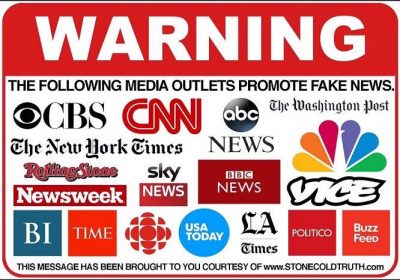
By Shane Quinn – Global Research – December 7, 2018
The New York Times unveiled a new slogan early in 2017 titled, “The truth is more important now than ever.” It has acquired a seemingly noble motto but a perhaps contentious one if we examine the Times’ recent history. Two international law specialists, Howard Friel and Richard Falk, published a book after the 2003 Invasion of Iraq called The Record of the Paper, which has scarcely been reviewed.
Friel and Falk focused on the Times due to the newspaper’s importance. The authors point out that in 70 Times editorials on Iraq – from September 11, 2001 to March 20, 2003 – the words “international law” and “UN Charter” were never mentioned. The “truth” did not seem terribly “important” as the Times stood idly by in the destruction of Iraq.
Such was the barrage of propaganda directed at the American public that 69% believed Saddam Hussein was “personally involved” in the September 11 attacks. That is a significant achievement in manipulation. The poll results must have been news to the Iraqi dictator himself, a forgotten one-time American ally.
Why Hussein would take it upon himself to orchestrate a surprise attack on the United States, of all nations, is anyone’s guess. Perhaps if he had a death wish but as later events proved he was not the suicidal type.
The Times was not alone in its position of selling the Iraq war to the American people, as television networks from Fox News to CBS and CNN were overwhelmingly pro-war. Fox News, owned by Rupert Murdoch – who strongly backed the illegal conflict – placed a permanent US flag in the corner of the screen. Fox employees were compelled to describe the invasion as “Operation Iraqi Freedom”, with hundreds of thousands of Iraqis later being killed.
The pattern continues into other illegitimate interventions as the liberal Guardian newspaper championed the demolition of Libya in 2011, with editorials imploring, “The quicker Muammar Gaddafi falls, the better.” The Guardian encouraged NATO “to tip the military balance further against Gaddafi”, while later that year summarising that “it has turned out, so far, reasonably well” – by that point thousands had been killed.
In 2015 Ian Birrell, then deputy editor of the Independent, still assured his readers, “I would argue that Britain and France were right to step in [in Libya]. The failures came later on.” Apparently it was fine for two old imperial powers to “step in” to shatter a sovereign nation, then afterwards absolve the invaders of blame with “the failures” only coming “later on”.

Sceengrab from The Independent
It’s a rare thing indeed to hear a prominent commentator question the balance of Western mainstream coverage. The same voices can be heard piping up when alternative news sources take a different line not so palatable to their tastes.
Nick Cohen, writing in the Guardian, accused the network Russia Today (RT) of being a “propaganda channel” and that Russia was “prostituting journalism”. In the following sentence, Cohen describes the BBC and New York Times as being “reputable news organisations”.
Cohen firmly supported the Iraq war, writing at the time that “the Left betrays the Iraqi people by opposing war”, and “an American invasion offers the possibility of salvation”. He was deemed not to be “prostituting journalism” in backing this violation of international law, nor when later supporting other interventions in Libya and Syria.
The BBC’s reputation, which Cohen previously claimed to be “reputable”, was dealt a blow when it was revealed by Cardiff University that the network “displayed the most ‘pro-war’ agenda of any broadcaster” with its coverage on the Iraq invasion.
Steven Erlanger of the New York Times described RT as “an agent of Kremlin policy” used to “undermine Western democracies” and to “destabilise the West” – failing to back up the claims with any evidence. To gain perspective on these attacks, it may be worth pointing out a key excerpt from the First Amendment of the US Constitution: “Congress shall make no law… abridging [curtailing] the freedom of speech, or of the press.”
This law does not exist in Western democracies but attempts at limiting freedom of expression continue apace, while attacks on alternative media outlets by institutions of power grow. It has reached a point whereby the French president Emmanuel Macron, shortly after assuming office, publicly attacked legitimate news sources of “behaving like deceitful propaganda”.
Perhaps the hidden concern about RT, for example, is its continued increase in both popularity and scope – with the channel enjoying a total weekly viewership of 70 million people and rising. RT is available to viewers in Western heartlands such as Britain and the US, with eight million Americans watching the station each week. It represents quite an achievement that a channel with the word “Russia”, featured in its title, can attract viewers in their millions, despite the growing anti-Russian sentiment espoused by the powers-that-be.
It is revealing that elite figures like Hillary Clinton have lamented in the past, “We are in an information war and we are losing that war.” For the first time in history, populations have broad access to alternative news angles – points of view that they likely find of a more balanced nature. Gone is the unchallenged monopoly on the public mind.
How ‘The New York Times’ Deceived the Public on North Korea
By Tim Shorrock | The Nation | November 16, 2018
The New York Times may still have a Judith Miller problem—only now it’s a David Sanger problem.
Miller, of course, is the former Times reporter who helped build the case for the 2003 US invasion of Iraq with a series of reports based on highly questionable sources bent on regime change. The newspaper eventually admitted its errors but didn’t specifically blame Miller, who left the paper soon after the mea culpa and is now a commentator on Fox News.
Now, Sanger, who over the years has been the recipient of dozens of leaks from US intelligence on North Korea’s weapons program and the US attempts to stop it, has come out with his own doozy of a story that raises serious questions about his style of deep-state journalism.
The article may not involve the employment of sleazy sources with an ax to grind, but it does stretch the findings of the Center for Strategic and International Studies (CSIS), a think tank that is deeply integrated with the military-industrial complex and plays an instrumental role in US media coverage on Korea.
“Controversy is raging,” South Korea’s progressive Hankyoreh newspaper declared on Wednesday about the Times report, which it called “riddled with holes and errors.”
Sanger’s story, which appeared on Monday underneath the ominous headline “In North Korea, Missile Bases Suggest a Great Deception,” focused on a new study from CSIS’s “Beyond Parallel” project about the Sakkanmol Missile Operating Base, one of 13 North Korean missile sites, out of a total of 20, that it has identified and analyzed from overhead imagery provided by Digital Globe, a private satellite contractor.
None of the 20 sites has been officially acknowledged by Pyongyang, but the network is “long known to American intelligence agencies,” wrote Sanger.
Sakkanmol, according to CSIS, “is an undeclared operational missile base for short-range ballistic missiles” a little over 50 miles (85 kilometers) north of the border and therefore “one of the closest to the demilitarized zone (DMZ) and Seoul.” Pyongyang’s highly publicized decommissioning last summer of the Sohae satellite launch facility “obscures the military threat to U.S. forces and South Korea from this and other undeclared ballistic missile bases.”
Its authors added a huge caveat at the end: “Some of the information used in the preparation of this study may eventually prove to be incomplete or incorrect.”
But the Times ignored the warning and took the report several steps further. According to Sanger, that analysis of the missile base shows that North Korea is “moving ahead with its ballistic missile program” despite pledges made by Kim Jong-Un to President Trump at their Singapore summit on June 12 to eliminate his nuclear and missile programs if the United States ends its “hostile policy” and agrees to forge a new relationship with North Korea.
The “new commercial satellite images” of the undeclared missile sites, Sanger concluded darkly, suggest that North Korea “has been engaged in a great deception.”
While North Korea has offered to dismantle a major launching site, he asserted, it continues “to make improvements at more than a dozen others that would bolster launches of conventional and nuclear warheads.” That finding “contradicts Mr. Trump’s assertion that his landmark diplomacy is leading to the elimination” of the North’s nuclear weapons and missiles, Sanger concluded.
The implication was that North Korea, by continuing to build missiles after the Singapore summit, is lying to the United States and is therefore untrustworthy as a negotiating partner—and that Trump, by proclaiming that he has neutralized Kim’s threats, has been deceived. The Times-CSIS report was immediately picked up by major media outlets and repeated almost verbatim on NBC Nightly News and NPR, with little additional reporting.
A leading Democrat, Senator Edward Markey of Massachusetts, seized on the report to argue that President Trump is “getting played” by North Korea. “We cannot have another summit with North Korea—not with President Trump, not with the Secretary of State—unless and until the Kim regime takes concrete, tangible actions to halt and roll back its nuclear weapons and ballistic missile programs,” he said in the statement.
But even a cursory analysis of the imagery should have raised questions. On Monday night, a Korean news outlet pointed out that all the photos analyzed in the CSIS report are dated March 29, 2018—almost two and a half months before Trump and Kim met in Singapore on June 12.
The dates make Sanger’s claim that North Korea is “moving ahead” on missile production after its pledges to Trump laughable; indeed, they make his story look like a serious attempt to deceive the American public about the real progress that has been made in ending the standoff.
In fact, as discussion swirled on Twitter, it became clear that Sanger was exaggerating the report. Arms-control experts immediately questioned his assertions, arguing that he had ignored the fact that North Korea and the United States have yet to sign any agreement under which the North would give up its nuclear weapons and missiles. And in the absence of an agreement, it’s status quo for both North Korea and the United States.
North Korea’s missile program “is NOT deception,” Vipin Narang, an associate professor of political science at MIT, posted soon after the story was published. Narang, who writes occasionally for the Times editorial page on North Korea, pointed out that Kim Jong-un has never offered to stop producing ballistic missiles and in fact had ordered more to be produced in January 2018.
“Unless and until there is a deal” with Trump, he wrote, “Kim would be a fool to eliminate and stop improving [them].… So the characterization of ‘deception’ is highly misleading. There’s no deal to violate.” (Like other US analysts, Narang did not question the CSIS report itself, calling it “excellent.”)
The CSIS report was denounced by the government of South Korean President Moon Jae-in as “nothing new,” and Kim Eui-kyeom, its chief spokesperson, took particular exception to the Times’ use of the term “deception.” To his credit, Sanger acknowledged the criticism and quoted the statement in full.
If click-bait headlines were an art, NYT’s op-ed would be a masterpiece
RT – November 16, 2018
Russia has been scheming for decades to splinter the West with civilization-shattering fake news, claims a shocking three-part film series published by the New York Times. The series was filed under ‘op-ed’ for a reason, however.
READ MORE: https://on.rt.com/9ipe
Deception in North Korea? Nope, But a New Flavor of Neocon
By Peter Van Buren | Medium | November 15, 2018
What is the state of diplomacy on the Korean peninsula? Are we again heading toward the lip of war, or is progress being made at an expected pace? Are there Asian Neocons fanning the flames for conflict in Pyongyang much as others did with Baghdad?
A year ago, in November 2017, John Brennan estimated the chance of a war with North Korea at 20 to 25 percent. Richard Haass, president of the Council on Foreign Relations, said the odds were 50/50. The New York Times claimed we were “slouching toward war” with the North, on a “collision course.” National security adviser HR McMaster said North Korea represented “the greatest immediate threat to the United States” and that the potential for war with the communist nation grew each day. The US lacked an ambassador in Seoul; Victor Cha was rejected by Trump because, according to “sources and reports,” he didn’t support a preemptive strike on Pyongyang. It was reported the US was “imminently preparing for an attack on North Korea,” driven in part by hawks like Mike Pompeo and John Bolton.
All that was wrong.
Cha, it appears, didn’t in fact support what Trump actually was planning: not a preemptive strike, but a summit meeting with Kim Jong Un, held some five months ago in Singapore following a first try at courtship aside the Seoul Olympics in January 2018. World leaders meeting to talk peace is historically seen as a good thing. Yet the American media consensus was a president they believe is roundly despised globally conveyed “legitimacy” on Kim Jong Un, no matter that his family has ruled North Korea for some seven decades, and his country already holds a seat at the United Nations. No shortage of experts from South Korea universities and American think tanks were found to support those claims.
The media generally ignored, in return for the US postponing a handful of military exercises (“concessions,” which were deeply criticized by an American media which has failed to note the US has actually resumed some exercises), the North unilaterally stopped ICBM testing (the missiles which might someday be able to reach the US) and nuclear detonations. It released American hostages, and took steps to close down two nuclear missile facilities. Kim Jong-un fired top military leaders who dissented over his approaches to South Korea and the United States.
Officials from North and South now meet regularly, and US diplomats engage with both sides on an ongoing basis; Secretary of State Mike Pompeo has been to Pyongyang. Numerous practical steps have been taken along the DMZ to reduce the chance of accidents. South Korea’s unification minister in charge of North Korea issues Cho Myoung-gyon will visit the United States this week, where he is expected to meet Pompeo. This is the first time in four years for South Korea’s unification minister to visit Washington. On the last visit, in 2014, then-Secretary of State John Kerry refused to meet with his predecessor in line with the Obama (and Bush) administrations’ policy of ignoring North Korea in hopes the problem would go away.
Yet the headlines this week in the New York Times and other major US outlets scream of a “great deception” by the North Koreans, evidenced by a hardline think tank — helmed in part by Victor Cha — “discovering” North Korean missile facilities already long known to US intelligence (Cha’s lo-rez commercial satellite photos are dated March, months before the Trump-Kim summit, so everyone who mattered already knew.) In a matter of a few paragraphs, Cha and the Times blow this “discovery” up to announce, without any evidence, “What everybody is worried about is that Trump is going to accept a bad deal — they give us a single test site and dismantle a few other things, and in return they get a peace agreement” that formally ends the Korean War. Mr. Trump, he said, “would then declare victory, say he got more than any other American president ever got, and the threat would still be there.”
What is the real state of diplomacy on the Korean peninsula? Are we again heading toward the lip of war?
Of course not. South Korea’s presidential spokesperson put those “new” missile facilities into the perspective Trump’s critics lack, saying “North Korea has never promised to shut down this missile base. It has never signed any agreement, any negotiation that makes shutting down missile bases mandatory… There is no agreement, no negotiation that makes it necessary for it to be declared.” In other words, there can be no deception where there was no agreement.
To call what the Times discovered a “deception” is deeply misleading. The Singapore declaration and the inter-Korean summit declarations of April 27 and September 19 this year do not commit Pyongyang to disclose the sites. What is new to the Times is actually old news; Kim Jong Un in his January 2018 New Year’s Day guidance stated North Korea would shift to the mass producing nuclear weapons in such facilities. “The nuclear weapons research sector and the rocket industry should mass-produce nuclear warheads and ballistic missiles, the power and reliability of which have already been proved to the full, to give a spur to the efforts for deploying them for action,” Kim said. The Times in fact more or less acknowledged all this in September, before being surprised by it in November.
And the Times’ big scary takeaway, that the old/new facilities are in caves, confuses tactical concealment with some sort of nefarious political “deception.” Did they expect the missiles to be worked on in the parking lot outside Kim’s villa?
One issue only lightly touched by a western media obsessed with parsing tweets as their stab at journalism is the ongoing rush forward driven by the two Koreas themselves, what under any other media climate would be hailed as a huge series of successes but which falls in 2018 under the Trump Is Always Wrong Shadow. In a short time the two states established psuedo-embassies just north of the DMZ, where representatives from the two Koreas have met more than 60 times. The office has become a clearinghouse for over a dozen projects launched during the summit. There are plans for a massive bi-national project to link roads and railroads severed during the Korean War.
North and South Korea have begun removing landmines from the border, drawn back some troops, and most recently held a third leaders’ summit in September in Pyongyang where North Korean leader Kim offered to permanently dismantle two key ICBM facilities under the observation of outside experts. He also offered to negotiate further on the permanent shut down of the nuclear facility at Yongbyon. South Korean President Moon Jae-In, for his part, better than the US understands the future is ultimately about economics, not nukes. Moon seeks sanctions relief as negotiations move forward (little is ever accomplished without some give and take.) “I believe the international community needs to provide assurances that North Korea has made the right choice to denuclearize and encourage North Korea to speed up the process,” he said this week in Paris during a visit with French President Emmanuel Macron. If the western media is correct that Trump is being duped, played, deceived, and cheated by the North, what must they think about the faster pace set by the South? After all, a US miscalculation means we all switch from Samsung to Apple phones made in China, while South Korea risks being turned into a wasteland dotted only with signs for Nuka Cola.
Left off to the side is that it has been only five months since the historic summit in Singapore. Obama’s agreement with Iran, which did not even involve actual working nukes, took almost two years to conclude. Cold War negotiations with the Soviet Union ran across administrations, extending the broader process into decades of talks, and were aimed at goals much shorter than full denuclearization. Five months is barely enough time to grow a decent garden, never mind resolve multinational problems that reach back to 1945.
With North Korea, there is no history of trust, no basis of goodwill to build on. That all has to be created, built from scratch, as part of the heavy lifting of diplomacy. The ultimate goal — denuclearization — may or may not someday come to pass, but if it does it will be the result of years of more small steps forward than small steps back. Diplomacy is about moving the goalposts and embracing the long game, not playing chicken. It will require the North’s nuclear weapons to become unnecessary, as the North agrees to and is allowed to become so engaged with the global system that it finds itself no longer in need of such a powerful deterrence to attacks by its neighbors. Diplomacy requires one to at least understand the opponent’s goals and motivations, even if you don’t agree with them.
There exists an industry of sorts devoted to portraying North Korea as an eviler than evil empire, with Kim as a parody of the movie Dr. Evil. These hardliners, ensconced mostly in universities in South Korea and think tanks in the US, have been around since the Cold War to make sure the case for the militarization of South Korea and American support for various South Korean military dictators never lacked public advocates. They act as mouthpieces for North Korean defectors with horror stories, and are quick to seize on anything to amplify the threat. Older readers will remember similar mostly defunct “industries” set up to do the same over the actions of Cuba, China, and the Soviet Union once (though the Red Threat gang is trying to make a comeback over Bond villian wanna-be Putin.)
Victor Cha himself is a kind of one man gloom machine, writing regularly of the impossibility of denuclearization. His old articles focus fearfully on meetings canceled (but since successfully concluded; fatalism ignores the future) he in fact represents a kind of Asian neocon, an industry dedicated to the impossibility of peace on the peninsula as long as the Kim dynasty remains in power. Cha’s home organization, the Center for Strategic and International Studies, for example, features multiple former Secretaries of Defense on its board and as trustees, and is well-funded by elements of the military industrial complex. Of the plan to link railroads across the DMZ, what any sane person would see as progress, the organization grumbled the “move is expected to increase friction with its traditional ally Washington over the pace of inter-Korean engagement.”
So shame on those hardline groups — let’s call them Asian Neocons, for they want regime change in the North in the same way as Cheney, Rumsfeld, et al, wanted it in the Middle East — and shame on the New York Times for morphing its Trump-is-always-wrong editorial policy into presenting something long-known to US intelligence as something new enough to declare deception has overtaken the diplomatic long game on the Korean Peninsula. As they did during the run up to the Iraq War, the Times is once again serving as a platform for those who cannot see or will not wait for a peaceful way forward.
Deception? The deception, it is clear, is all (again) on the side of the neocons. They seek to destroy any chance of lasting peace with unrealistic expectations and by announcing failure at goals never actually set. Because if not diplomacy, then what is the alternative? Theirs is not pessimism, it is fatalism. Success instead should be measured by the continued absence of war and the continued sense that war is increasingly unlikely. Anyone demanding more than that wants things to fail.
Mainstream media on Gaza: Israelis get killed, but Palestinians merely ‘die’
By Darius Shahtahmasebi | RT | November 15, 2018
After a Twitter backlash, the Guardian was forced to amend a brazenly propagandized headline which sought to undermine the basic rights of Palestinians and elevate Israeli soldiers to levels previously thought unimaginable.
“We remain editorially independent, our journalism free from commercial bias and our reporting open and accessible to all,” reads an advertisement on the Guardian UK’s online newspaper when you click on a recent story.
“Imagine what we could continue to achieve with the support of many more of you. Together we can be a force for change.”
The article in question that I clicked on is a recent story entitled “Eight dead in undercover Israeli operation in Gaza.” According to the opening paragraph of the report, Israeli forces killed seven Palestinians in the Gaza Strip in an “apparently botched undercover raid and ensuring firefight.”
Sounds fairly straightforward, right? Just another day in Gaza, where Palestinians and Israelis alike find themselves in the line of fire, with the number of dead Palestinians outnumbering those on the Israeli side.
However, this wasn’t the only title the Guardian had previously given this same story. The original title was a poorly crafted “Israeli officer killed during raid in which seven Palestinians died.”
You see, prior to the title’s amendment, the Israeli officer was “killed” during the raid, yet the Palestinians (who were killed by the way) merely died. The Israeli officer was killed by the Palestinians, but the seven Palestinians died from some unknown cause. This is a clever yet obvious play on the English language, whereby the deaths of the seven Palestinians are brought about passively, whereas the Israeli officer is actively killed by his aggressor.
In actuality, the perpetrator of the raid is the person bringing about the violence. The Palestinians who react in response are not, in any normal sense of the word, the perpetrators of the violence in question.
Furthermore, the Israeli officer is the one that is highlighted by the title, whereas the lesser deaths of the Palestinians are brought about as a side note. The Guardian explains in the text of its report that seven Palestinians are dead, but the identities of those Palestinians are not highlighted.
If they were militants, why not say so? If they are not militants, are they in fact civilians? If they are civilians, why is the Israeli officer highlighted first in the title, and not the tragedy of the seven civilian deaths? If they are militants, why are they given a lesser status than the Israeli officer? Well, as far as we know, two of those killed (I mean, died) were Hamas commanders. The rest of the deceased were aged between 19 and 25.
Of course, the Guardian will no longer have to worry about answering those questions as it wasted no time in changing its headline in the wake of what can only be described as a viral Twitter frenzy. The UK-based Canary described it as the “Guardian headline on Palestine that’s shaming the entire field of journalism.”
If they had been allowed to get away with this shoddy piece of journalism, one could still argue that it is just a title and we should not spend our time fussing and feuding over the intricate wording of titles. After all, what matters to a story and its journalistic integrity is its content, right?
Anyone who knows and understands anything about modern journalism and propaganda knows this to be complete nonsense. Firstly, a study by the Media Insight Project, an initiative of the AP-NORC Center for Public Affairs Research and the American Press Institute found that over half of Americans surveyed were mere headline readers and nothing more.
The effects of this painful reality go well beyond that of a resulting lazy populace. As explained by Maria Konnikova in the New Yorker :
“Psychologists have long known that first impressions really do matter—what we see, hear, feel, or experience in our first encounter with something colors how we process the rest of it. Articles are no exception. And just as people can manage the impression that they make through their choice of attire, so, too, can the crafting of the headline subtly shift the perception of the text that follows. By drawing attention to certain details or facts, a headline can affect what existing knowledge is activated in your head. By its choice of phrasing, a headline can influence your mindset as you read so that you later recall details that coincide with what you were expecting.”
In a series of studies, Ullrich Ecker, psychologist and cognitive neuroscientist at the University of Western Australia, more or less confirmed this sad state of affairs. One of Ecker’s studies found that when matching headlines to photographs, if the headline diverged from the photo, the victim was rated more negatively by the respondents when the headline had been about the criminal; and the criminal was rated more positively when the headline had been about the victim. Starting to sound a little bit familiar?
According to Konnikova, Ecker’s findings show that misinformation causes more damage when it’s subtle than when it is blatant.
Say what you like about Fox News, but its blatant approach to lying makes it less of a threat in my mind than papers like the Guardian who advertise themselves as “editorially independent” and “free from commercial bias” as it deploys more subtle techniques to not only toe the establishment line, but to provide free public relations for states such as Israel, who regularly contravene international law in a variety of ways.
Make no mistake, the Guardian editors knew what they were doing when they released this headline. It was not done by accident. This is a tried and true strategy in which Western media will paint the aggressors in a conflict as being passive players with as little fault as possible – so long as those players are the US, UK or its close allies.
For example, a March 2017 attack by US-led forces in Mosul, Iraq massacred over 200 civilians in a single bombardment. The reason this attack took place is primarily because Donald Trump relaxed the so-called Obama-era restrictions on air strikes, meaning that even Iraqi commanders could call in air strikes on the battlefield with little to no oversight. The result of this policy was of course, outright death and destruction, with over 9,000 civilians killed in Mosul alone.
However, the US bombardment in March was framed by the establishment media in the kindest way possible for the US and its allies. As noted by FAIR’s (Fairness and Accuracy In Reporting) Ben Norton, ABC News went with the headline “US Reviewing Airstrike That Corresponds to Site Where 200 Iraqi Civilians Allegedly Died.” The LA Times ran with “US Acknowledges Airstrike in Mosul, Where More Than 200 Iraqi Civilians Died.” France 24 settled for “US-Led Coalition Confirms Strike on Mosul Site Where Civilians Died.” The best, of course, was the New York Times, which managed to concoct the following headline: “US Concedes It Played a Role in Iraqi Deaths.” Remember, this is the same US who “played a role” in over one million “Iraqi deaths,” but that is a topic for another story.
Conversely, if the alleged perpetrator of violence is in the handful of countries deemed to be enemies of Western society by the mainstream media (think Iran, Syria, Russia, or North Korea), they are portrayed as menacingly evil and bloodthirsty with no logic or context to their actions. These countries “pound” their victims, for example. Even when the alleged acts cannot be proven at all, such as highly questionable chemical weapons attacks that are immediately pinned on the Syrian government with little to no evidence of Syrian government involvement, Syria’s president is condemned by all forms of Western media in the strongest terms imaginable.
You see, the victims of attacks carried out by the US, UK, and its allies and lackey states such as Israel aren’t killed, they merely die at the scene. If anything, they were in the way of the magical freedom bombs that we and our allies have been trying to spread around the Middle East for years. But those victims who are purportedly killed by countries who have been targeted for regime change, they were tragically murdered by brutal forces. The jihadists fighting against these forces with known ties to al-Qaeda are mere rebels fighting for their freedom, but militants fighting against government forces in Gaza or in Yemen are terrorists who kill noble Israeli soldiers while dying in the crossfire by accident.
While we are on the topic, an honourable mention of course has to go to the New York Times, who once felt that it was justified to describe the plight of a young Yemeni girl who had her entire family wiped out in a Saudi-led airstrike with the headline: “Young Yemeni Girl Is Sole Survivor After Airstrike Topples Her Home.” Thank God – at least it only toppled her home, as air strikes are known to do much worse if they belong to an adversarial state.
This is shameful propaganda, plain and simple. The Guardian was once heralded as a beacon of journalistic integrity, but it has long given up that status and decided it will go out of its way to perpetuate establishment narratives that benefit, for example, even the dictatorship of Saudi Arabia.
Despite this, the fact the Guardian amended its headline and deleted its original tweet can still be seen as somewhat of a partial victory. While I don’t expect many of us who spoke out to continue to keep our Twitter privileges for much longer, the end result was totally worth it and I hope more people can continue to speak out as we fight back against warmongering establishment narratives.
The Korean War: The Moral Bankruptcy of Interventionism
By Jacob G. Hornberger | FFF | November 13, 2018
An article in Sunday’s New York Times entitled “Remembering the Forgotten War” demonstrates perfectly the moral bankruptcy of the philosophy of foreign interventionism. Calling for the Korean War to become more highly remembered, the author, Hampton Sides, extols some of the popular justifications for subjecting U.S. troops to death, injury, and maiming in the Korean War.
Hampton tells the story of a veteran named Franklin Chapman, who is still alive. Hampton was sent to fight in Korea, was shot several times, and also hit by shrapnel. He was taken captive by the enemy and was held as a POW for three years. Today, the 85-year -old suffers from the aftereffects of frostbite, experiences aches and pains from his wounds, and suffers severe memory loss, sometimes unable to recognize his daughter.
Sides implies that while all this is regrettable, it’s all justifiable because Korean War veterans “stopped a naked act of Communist aggression and opposed three malevolent dictators — Stalin, Mao and Kim – while helping South Korea take wing as a democracy.”
What is fascinating about Sides’s article is that it is completely bereft of any moral outrage whatsoever against the U.S. government and, specifically, the U.S. national-security establishment. Sides seems to forget something important: The reason that Chapman was there in Korea waging war was because the president of the United States and the Pentagon ordered him to be there.
I was curious about Chapman and so I looked him up. It turns out that he has written a biography that is posted online, where he tells the reason he joined the military. No, it wasn’t to stop communist aggression in Korea or to oppose three malevolent communist dictators. Chapman explains that he joined the military for one reason alone: He needed a job.
My hunch is that like many people who join the military, he believed that his job would be to defend the United States from invasion or attack. My hunch is that the last thing he ever expected was to be sent to wage a land war in Asia. But that is precisely what the U.S. government did to him. It ordered him to report to Korea to kill or be killed.
That doesn’t seem to concern Hampton Sides, any more than it concerns any interventionist. Equally important, it obviously doesn’t concern Sides that the order to send Chapman to fight in the Korean War was illegal under our form of government. The U.S. Constitution, which governs the actions of federal officials, including those in the Pentagon, prohibits the president from waging war against a foreign nation without first securing a declaration of war from Congress. It is undisputed that President Truman, who ordered U.S. soldiers into Korea, did not secure a congressional declaration of war. That means that he had no legal authority to order Chapman or any other U.S. soldier to kill or die in Korea.
In claiming that Chapman was fighting to oppose communist aggression, Sides ignores the fact that the Korean War was actually a civil war, not a war between two independent and sovereign nations. The country had been artificially divided into two halves by Soviet communist leader Joseph Stalin, who, ironically, was a partner and ally of the U.S. government during World War II. (The irony lies in the fact that Sides extols Chapman for opposing the man who had been a partner and ally of the U.S. government just a few years before.) In any event, every Korean understood that the dividing line between North and South Korea was just an artificial construct based on international politics. Even today, if you ask a person of Korean descent here in the United States where they are from, they always, without exception, say “Korea” rather than “South Korea.”
We can concede that the northern half of the country was ruled by a brutal communist regime, one that attempted to unify the country by force. But why does a nation’s civil war justify U.S. intervention? Why should U.S. soldiers be sacrificed to help out one side or another in a civil war? That’s not what most U.S. soldiers were signing up to do after World War II. They were signing up to defend the United States, not help out one side or another in another nation’s civil war. (By the way, the same principle applies to the Vietnam War, another favorite foreign war of the interventionists.)
Another aspect of the Korean War that Sides fails to mention is conscription. The U.S. military didn’t have enough men to intervene against the North Korean regime, and not enough American men were volunteering for “service.” So, Truman and the military resorted to conscription. That means that they were forcing American men, against their will, to go to Korea and kill or be killed. An interventionist would say that it was necessary to destroy the freedom of Americans to protect the “freedom” and “democracy” of South Koreans.
Sides’ expression “helping South Korea take wing as a democracy” is an interesting one. It’s interesting because South Korea’s first elected president, Syngman Rhee, was one of the most brutal dictators in the world. Immediately after taking office, he curtailed political dissent and authorized his goons to engage in indefinite detention, torture, assassination, death squads, and massacres.
On the suspension of hostilities in 1953, it was clear that the National Assembly, which elected the president, was going to boot Rhee out of office. In order to avoid that, he ordered a mass arrest of opposition politicians and then unilaterally changed the Constitution to enable him to be elected directly by the citizenry. He remained in power until 1960, when he was forced to resign after his police shot demonstrators who were protesting his regime.
This is what Sides and other interventionists call “democracy taking wing.” It brings to mind the U.S.-inspired coup in Chile in 1973, which ousted the democratically elected socialist president of the country, Salvador Allende, and installed a brutal right-wing military dictator in his stead, army Gen. Augusto Pinochet. To this day, interventionists say that the Chilean coup demonstrated that “democracy was taking wing” in Chile with the coup that nullified the presidential election, followed by a 16-year-long brutal military dictatorship entailing round-ups of some 50,000 people, torturing most of them, raping and committing gruesome sexual acts against women, and killing and disappearing around 3,000 people.
Sides and other interventionists are dead wrong about the Korean War and other foreign interventions. No U.S. soldier deserves to be ordered to faraway lands to kill or be killed or maimed, as Franklin Chapman was. If Sides or other interventionists want to go overseas and help out one side or another in some faraway civil war, they are free to do so. Just leave U.S. soldiers out of it. The job of a U.S. soldier is to defend the United States from invasion or attack, not be sent to participate in some bogus fight for “freedom” or “democracy” in a foreign country.
Featured Video

“Historic Russia”: The Land Putin Will Not Give Back
or go to
Aletho News Archives – Video-Images
From the Archive
How Ukraine Tortured and Slaughtered Donbass
By Kit Klarenberg | Al Mayadeen | July 11, 2024
Almost immediately after the proxy war erupted, ISIS-tier footage of the torture and murder of Russians in Ukrainian custody emerged.
On July 6th, the New York Times published an astonishing investigation: In Ukraine, Killings of Surrendering Russians Divide an American-Led Unit. The article documents in grim detail how Chosen Company, an international volunteer battalion for Kiev, routinely executes Russian prisoners of war. It is the very first mainstream admission that this practice – a brazen breach of the Geneva Conventions, and a grave war crime – is widespread among Ukraine’s fighters, both foreign and homegrown. … continue
Blog Roll
 Aletho News
- Record Oil, Empty Tanks: The UAE’s Miracle Recovery
- Burnham tackles Britain’s poverty with aggression in Yemen
- Peace in Ukraine: the easy way – or the hard way
- Trump & the Rrrrussians
- US taxpayer money laundered back through Ukraine – Musk
- Before COVID, an NIH lab chief proposed making a SARS-like bat virus more infectious
- Gates, Bourla on Trial in Netherlands Accused of ‘Great Reset’ Scheme at Vaccine Injury Hearing
- BRITAIN’S WARNING: PREPARE FOR WAR
- “Historic Russia”: The Land Putin Will Not Give Back
- How the Cambridge Analytica scandal still haunts Mark Zuckerberg
- If Americans Knew
- DAILY UPDATE: Latest essential news on Palestine, Israel, & region
- Damning report shows the media must confront its failures on Gaza
- BBC senior broadcaster speaks out on Gaza coverage
- Netanyahu vows vast West Bank invasion in response to 20-minute skirmish that left 2 Israeli soldiers and 2 Palestinian fighters dead
- Tied up and tortured: Israel using US-made electroshock weapons on Palestinian detainees
- The outsourced risk: how newsrooms rely on Gaza’s freelancers without protecting them
- Gaza bakeries forced to shut as Israel blocks flour shipments
- Gaza’s breast cancer patients face a deadly wait for treatment amid Israel’s genocide
- DAILY UPDATE: Latest essential news on Palestine, Israel, & region
- The Israel Lobby’s Changing Fortunes
- No Tricks Zone
- Two New Studies Find Thwaites Glacier Melt Cannot Be Driven By Human Activity Or A Warming Ocean
- E-Cars Reduce CO2 Emissions By Only 41% Compared To Internal Combustion Engine Vehicles
- Predictions Made By Renowned Climate Professor Over Past Decades Have Been Proven To Be Poor
- New Study Suggests Large Regions Of The Pacific Ocean Have Been Cooling For The Last 80 Years
- Germany’s Green Energy Debacle: High Energy Costs Force Kahla Porzellan to Close After 182 Years!
- New Study: 50 Years Of The Most Aggressive ‘Net Zero’ Policies Can Only Affect The Global Climate By 0.03°C
- US September “Heat” Was No Record…Many Records Set Decades Ago
- Latest European Green Energy Debacle; Portugal’s Largest Flagship Solar Park Insolvent!
- Green Energy Debacle: German Expert Professor Fritz Vahrenholt Warns Of Severe Economic And Social Consequences
- Two More Paleo Reconstructions Affirm Meters-Higher Sea Levels Across Ireland, Brazil 7000-6000 Years Ago

