Pakistan PM hails Iran’s diplomacy for regional peace ahead of visit
Press TV – May 26, 2025
Pakistani Prime Minister Shehbaz Sharif has hailed Iran’s peace diplomacy as commendable, underscoring his nation’s solidarity and support for the Islamic Republic.
Sharif, who will visit Tehran at the official invitation of Iranian President Masoud Pezeshkian on Monday, made the remarks in an interview with IRNA.
Sharif stated that the primary purpose of his visit to Tehran is to express gratitude to Iran for its support—specifically endorsing Iran’s peace-seeking positions in the region—during Pakistan’s recent tensions with India.
Tensions between India and Pakistan sharply escalated after the deadly Pahalgam attack. India blamed Pakistan for the attack, but Pakistan rejected the accusations.
“I wish to express gratitude to Iranian officials for their support of peace and their mediation proposal—which we accepted but India rejected,” he said, adding “I will also use this visit as an opportunity to discuss bilateral relations and matters of mutual interest.”
Sharif praised Iranian Foreign Minister Abbas Araghchi’s diplomatic skill, saying the Iranian top diplomat has demonstrated true statesmanship and wisdom in managing significant challenges during an exceptionally complex geopolitical era.
Sharif also stated that Pakistan firmly supports Iran’s condemnation of Israel’s genocide in Gaza, which has caused severe humanitarian devastation and regional instability.
“Islamabad and Tehran will continue to support one another on issues concerning the Muslim Ummah and to advance regional cooperation,” Sharif added.
Indian Mass Delusion Syndrome on Full Display
What leads people to celebrate defeat as victory?
By Hua Bin | May 24, 2025
Since I wrote “the DeepSeek moment of modern air combat”, more details have come out about the battlefield outcome from the May 7 and 8 Pakistan India clash.
In addition to the 3 Rafales, 1 Su-30, 1 Mig-29 and 1 Heron UAV covered in my essay, Pakistan also shot down an Indian French-made Mirage 2000. Pakistan Air Force destroyed 2 batteries of the Russia-made S400 air defense system (the command center and one radar unit) with China-made CM400akg hypersonic land-attack missiles launched from JF-17, a fighter jet produced jointly with China.
Since this is the first truly high-tech large scale air combat in the 21st century and the first beyond-visual-range (BVR) air war, military experts and commentators are studying the battle in minute detail. I plan to write another short piece on the tech behind the Pakistan victory soon.
However, another aspect of the war has come to the forefront immediately after the war. That is the mass delusion indulged by the Indian government and press about the conflict. Rather than acknowledging its setback and reviewing its strategy, tactics and battlefield lessons, the Indians are trying to mask their defeat through outright fabrications and lies on a massive scale. It is going so far as to claim the clash an unqualified victory.
Indian government, its TV media (400+ channels), and social media are filled with made-up battlefield successes, destruction in Pakistan, and superiority of the Indian military. The wild claims include –
– No Indian aircrafts were lost and no damage to S400 (though wreckage of a Rafale jet was filmed with its tail number and two burial ceremonies were held for Indian soldiers operating S400 systems. Indian report said they were shot during border skirmishes, which defies any common sense)
– Indian air force shot down 8 Pakistan F-16 jets and 4 JF-17 fighters (no US-made F-16 even took off during the conflict as the US forbid Pakistan to use F-16 in conflicts with India)
– Karachi, the largest port city in Pakistan, was firebombed by Indian navy and one third of the city was destroyed (the footage shown on Indian TVs was later fact-checked to be Israeli’s bombing campaigns in Palestine)
– A coup d’etat happened in Pakistan and the army chief was arrested
– A retired Indian air force marshal claims the Chinese air force cannot use the China-made weapons as well as Pakistan so India has nothing to worry about a conflict with China
Right after the air war, the Indian government called in diplomatic staff from 70+ countries to announce its heroic victories; Modi went on a tour of the frontline and announced a 10-day national celebration. The Indian military was tasked to go on a national tour to share their battlefield successes with patriotic citizens.
When American and French officials confirmed some of the battlefield losses suffered by India, the Indian media, led by the famous BJP promoter and TV personality Palki Sharma, went into a frenzied attack on the inferiorities of US and European weaponry. They bombasted Trump for claiming to broach a ceasefire between the two belligerents. Their argument is India would have dealt an even bigger defeat to Pakistan without the ceasefire meddling.
To this day, most Indians are under the delusion that the Indian military has dealt Pakistan a deathly blow and emerged totally victorious and unscathed.
While shrill and high octane “news” reporting is par for the course in India, and BJP, under Modi, has long shaped and exploited wide-spread jingoistic Hindu nationalist fervour, the Bollywood-like mass delusion is over the top and probably without a parallel in military history.
It is interesting to explore what lies behind such mass hysteria that is completely divorced from reality and what this means for India and its population.
A quick AI search tells you the medical or psychological term for “self-fooling” is self-deception.
Self-deception refers to the process of misleading oneself to accept as true or valid what is false or invalid. It involves cognitive biases, denial, or rationalization to maintain certain beliefs or avoid uncomfortable truths.
While not a formal medical diagnosis, self-deception is studied in psychology and psychiatry as part of defense mechanisms (e.g., denial or repression) that protect the ego from anxiety or distress.
I think this perfectly captures the psychological reasons behind the wildly delusional Indian national mood and character.
Since BJP took power, Modi and his cronies have intentionally fostered a ultra-nationalistic narrative about India’s greatness and Hindu superiority.
– India has launched unprecedented repressions of Muslims and deprived the Kashmir region (a Muslim majority region) its long-held autonomous status.
– India has embraced the fantasy to replace China as the world’s manufacturing center and top economic growth engine by opportunistically aligning with the US and the west. At the same time, it is exploring the Russia-Ukraine war to enrich itself by selling Russian oil at inflated price to the west.
– India has boasted its economy has surpassed UK and France and will join the US and China in no time as the largest economies in the world while it is still behind Japan and Germany. To inflate its GDP, India has changed its GDP accounting method twice in the last 10 years and started to count cow dung as part of GDP as agricultural inputs. Grok estimates Indian GDP calculation included the value of cow dung and other manure at $4.7 billion in 2023.
– India has attempted to bolster its military by purchasing a hodge podge suite of brand-name weaponries from France, Russia, the US and Israel. India spent 7.8 billion Euros in 2015 to purchase 36 Rafale fighters, or 220 million Euros per jet, making it the most expensive fighter jet ever sold by that time. There was so much corruption by Modi’s cronies in the deal that Wikipedia has an entire entry dedicated to the controversy. Even after the corruption case was exposed, India decided to double down and spent anther $7.4 billion to buy 26 Rafale jets for its navy just this past April. That is a staggering price tag of $285 million per Rafale, a new world record.
This Pakistan India air war was initially intended by India to show off its new found muscle until it has its ass handed back by Pakistan.
Similarly, the Modi regime announced with big fanfare its Make In India campaign in 2015 to replace China as the world’s manufacturing powerhouse. It targeted manufacturing to reach 25% GDP by 2025. Instead, Indian manufacturing GDP was 13% by 2024, down from 17% in 2010. In contrast, according to CSIS, value-added industrial output accounted for nearly 40% China’s GDP (vs. 18% in the US). Given China’s GDP is 5 times of India, that means China’s manufacturing GDP alone is 2 times as big as India’s total GDP or 16 times India’s manufacturing output.
Another interesting statistic – in Paris 2024 Olympics, India won a grand total of 6 medals – 1 silver and 5 bronze, ranking 71st among the 84 countries with medal count. This is India’s third best medal haul after 2020 and 2012, according to Wikipedia. The world’s most populous country ranks between Lithuania (70th, population 2.8 million) and Moldova (72nd population 2.4 million). India’s Gold medal haul (0) was lower than Hong Kong (2). The US and China (ex. Hong Kong) each won 40 Gold medals, and 126 and 91 total medals respectively.
This wild gap between India’s self-perception (or should we say self-delusion) as a great power and the cold reality of its economic and social backwardness is the reason behind the mass delusion.
It’s a sad combination of inferiority complex and unfounded sense of grandeur.
There was a famous character called Ah Q in an early 20th century literature work in China. Ah Q is a loser but cannot accept his lowly station in life. So he goes around telling himself he is better than the other people around him, often saying “I was beaten by my bastard son” after losing a fight. In the end, he was framed for a robbery and sentenced to death. When he was signing his death warrant by drawing a circle (since he couldn’t write), he was more upset about the circle not drawn perfectly than the death sentence.
Indians didn’t succeed in copying China’s economic success. Instead, the Indians have fully adopted Ah Q’s delusional “spiritual victory” method of coping with failures and humiliations.
The Indian celebration of their imagined success perfectly reflects Ah Q’s delusional defiance when he tried to sing a heroic song on the road to his execution. He couldn’t sing with his wobbly voice at that point, instead weakly uttered a phrase commonly used by criminals before execution, ”In another 20 years, I shall be another stout young fellow”.
The Indian media obsession with spectacles mirror Ah Q’s morbid disappointment at the crowd at his execution – they were bored because he didn’t sing properly and lamented that he was shot instead of beheaded, denying them the “entertainment” of a decapitation .
India’s celebration of its defeat at the hand of Pakistan encapsulates Ah Q’s entire existence – a blend of farce and tragedy, where self-deception persists until the bullet ends his life.
On a higher level, the dishonest propaganda by the Indian government and media is an information war against its own population. Few foreigners believe the Indian official narrative. The Indian government and media has completely lost any credibility at this point. So the real target of the disinformation campaign is the Indian population itself.
A nation without basic intellectual honesty and suffering from cognitive dissonance will not rise. Instead it will be the butt of jokes by late night comedians.
In the so-called “largest democracy in the world” where the rule is one Rupiah one vote, Modi is resorting to the lowest level of “democratic” playbook – keep the population dumb and get their votes through lies.
How India-Pakistan war will affect global and regional political order
By Salman Rafi Sheikh – New Eastern Outlook – May 24, 2025
The recent India-Pakistan war, though limited in scope, has triggered significant geopolitical reverberations by showcasing Chinese military superiority and prompting a strategic reassessment in Washington.
The China angle in regional geopolitics
Beyond the oft-repeated rhetoric of the Pakistan-China relationship being “all-weather” and “iron-clad,” the recent India-Pakistan war may come to be seen as its first major demonstration in action. Pakistan’s use of Chinese PL-15 missiles, deployed from Chinese-made J-10C fighter jets to successfully engage French-made Rafale aircraft, has underscored the strategic depth of this partnership. This has received considerable international attention, both in the media and otherwise. This show of alignment is particularly notable given recent strains in the Pak-China bilateral relationship, including attacks on Chinese interests and infrastructure projects within Pakistan.
With Pakistan importing almost 80 per cent of its weapons—which also includes cooperation in the field of military technology—from Beijing, the supply ensured to help Islamabad maintain the balance of power vis-à-vis New Delhi. More than this, China’s policy was also motivated by its desire to counter-balance Washington’s efforts to boost India against China. Ironically enough, it was only days before the recent war that the US Vice-President was in India to discuss ways to collectively counter China. But China’s support for Pakistan meant that New Delhi remained preoccupied more with Pakistan than China in a strategic sense. With this war, New Delhi’s focus will be more on Islamabad than China for at least a few more years to come. By the same token, China will most likely continue to help Pakistan develop its defence capability. Even before the war took place, media reports in Pakistan and China reveled ongoing talks between Beijing and Islamabad for the sale and purchase of J-35 fifth-generation stealth fighter jets.
These developments highlight at least four key takeaways. First, China’s defense technology—likely tested in actual combat for the first time—has proven effective enough to attract interest from other regional powers. Its demonstrated performance could prompt these countries to purchase and integrate Chinese systems into their own militaries. This, in turn, would strengthen China’s position in the regional arms market and help it outcompete rival defense exporters. Second, China’s willingness to export advanced military technology—such as the PL-15 missile and J-35 fighter jets—signals a broader strategic intent to deepen its global partnerships. This approach is consistent with Beijing’s “no-limits” alliance with Moscow.
Third, the demonstrated effectiveness of Chinese weaponry against India could encourage regional states to reassess their foreign policy alignments, potentially fostering deeper integration with Beijing over New Delhi. This trend is already evident in countries like Sri Lanka and the Maldives, where pro-Beijing political shifts have gained momentum—most notably in the Maldives, where the new government compelled Indian troops to withdraw. Fourth, Pakistan’s military successes in this conflict challenge a common narrative in global discourse: that partnerships with China inevitably lead to economic “debt traps.” On the contrary, Pakistan’s economic ties with China appear to have laid the foundation for robust military-to-military cooperation, illustrating how economic integration can support broader strategic alignment.
India’s position in Washington’s arc
Can Washington still push—with enough confidence—India as its key ally? What is the material reality of India’s standing within the US-led Quadrilateral Security Dialogue (QUAD)? If the QUAD was ever to become a military alliance, the only power in the region that the US expected to be effective on its own against China is/was India—not only because India and China have a long history of rivalry, but also because India remains a big military power. Needless to say, it is the only nuclear power part of the QUAD from the Indo-Pacific region. In this sense, it can maintain deterrence vis-à-vis Beijing. But nuclear deterrence can prevent a nuclear war, as is evident from the recent India-Pakistan conflict. It cannot necessarily prevent conventional conflict. Can India act as the front-line ally for Washington in the region in a conventional war?
The outcome of India-Pakistan was means Washington will have to rethink its strategy. It can take two shapes. First, it is very much possible that Washington will deepen its cooperation with New Delhi. Donald Trump has already offered to sell F-35 fifth-generation stealth fighters. (Russia has also offered New Delhi to sell its own fifth-generation Su-57 jets.) This, however, will necessarily involve China deepening its cooperation with Pakistan. As a result, an arms race will be triggered in the region.
A second strategic path for Washington could involve renewed engagement with China. While the timing of the Trump administration’s trade negotiations with Beijing may coincide with the outcome of the India-Pakistan conflict purely by chance, it nonetheless suggests that even a confrontational administration has not entirely ruled out dialogue as a preferred tool. Washington might also pursue a dual-track approach—engaging China while simultaneously strengthening military alliances elsewhere.
However, in the wake of shifting dynamics following the India-Pakistan conflict, the US will likely need to reassess its regional strategy and consider alternatives to India. Japan, for instance, emerges as a strong candidate. With its recent push toward military normalization and a growing appetite for deeper strategic engagement, Tokyo could become a more prominent partner in Washington’s Indo-Pacific security architecture.
To be clear, this does not imply a fundamental rupture in US-India relations. But it is increasingly likely that Washington will place India’s role under careful review, potentially redefining its status as the principal frontline ally in countering China. In response to China’s growing influence and military reach, the US will need to significantly bolster the defense capabilities of other regional actors—most notably Japan and Australia—as part of a broader strategic recalibration.
Salman Rafi Sheikh, research analyst of International Relations and Pakistan’s foreign and domestic affairs
Did ‘Israel’, US fight a proxy war with China in South Asia during the India-Pakistan escalation?
By F.M. Shakil | Al Mayadeen | May 19, 2025
In the recent standoff between India and Pakistan, “Israel” and the US significantly influenced the escalation and resolution of a fierce conflict between the two nuclear South Asian nations that resembles a contest between US-Israeli military equipment and Chinese-made war kits.
The former ignited the fires of war with its advanced military technology and, recognizing the potential for nuclear chaos, swiftly intervened to bring the situation to a close. The display of weaponry unmistakably indicates that Chinese-made missiles and fighter jets exhibit greater precision, target focus, speed, and reliability compared to their competitors, raising alarms for the US and its allies.
The PL-15E missiles, an active radar-guided long-range beyond-visual-range air-to-air missile produced by the China Academy of Launch Vehicle Technology (CALT), have attracted interest following reports that Pakistan Air Force (PAF) J-10C fighters, equipped with PL-15E missiles, effectively downed three Indian Air Force (IAF) Rafale jets in a heated air confrontation. The engagement signifies a significant milestone, as it marks the inaugural instance of a Dassault Rafale, considered one of the top contenders among 4.5-generation fighters, being officially defeated in combat.
Israeli military supply to India
While the future implications of the fragile ceasefire are a perplexing issue for analysts in Pakistan, especially given the spontaneous violations of the truce that occurred within hours of its establishment, “Israel” has undoubtedly played a significant role in the recent military escalation by supplying arms, drones, and defense equipment to India.
“Israel” serves as a key supplier of military hardware to India, and its weaponry entered the battle as it transitioned to drone warfare. Israeli media openly acknowledged that India’s use of Israeli-made drones in its recent cross-border operations against Pakistan has captured international interest, not only for the tactical consequences but also for what it indicates was the strategic depth of India’s developing partnership with “Israel.”
Abdullah Khan, managing director of the Pakistan Institute for Conflict and Security Studies (PICSS) in Islamabad, told Al Mayadeen English that “Israel” provided its drone as well as the military doctrine it applied in Gaza to India. What India did in Pakistan, he said, was precisely what “Israel” has been doing in Gaza, and the same modus operandi was seen applied while targeting the religious institutions. “India has even borrowed the narrative lines from Israel, which has become a long-term challenge for Pakistan’s nuclear program as well”, Khan stated, adding that assessments are being made to determine its role in the recent standoff.
Israeli media, citing Dr. Oshrit Birvadker, a senior fellow at the Jerusalem Institute for Strategy and Security (JISS) and an expert in India-Middle East relations, revealed that India’s recent incursion involved the deployment of Harop and Heron Mark-2 drones, illustrating how “Israel” plays a significant and growing role in India’s current military strategy, especially considering the escalations with Pakistan and the broader counterterrorism context.
Pakistan’s military claimed last week that it had hit 25 Indian drones known as Harop loitering drones produced by “Israel” Aerospace Industries (IAI) after they allegedly violated its airspace. The Harop is believed to be a cutting-edge advanced drone that has significantly expanded high-altitude surveillance and strike capability.
The media, citing the IAI’s website, say that loitering munitions are made to quickly respond to different situations, from short missions to long-range attacks, while also gathering real-time information and allowing for precise strikes. These features make them particularly effective in unpredictable and complex combat environments, including densely populated urban areas like Karachi and Lahore.
The drones reportedly targeted sites across major cities, including Karachi, Lahore, Rawalpindi, and Sargodha, following Indian missile strikes a day earlier on what New Delhi described as terrorist infrastructure in Pakistan-administered Kashmir and Punjab. India made these strikes following an April terror attack that killed 24 tourists in Indian-controlled Kashmir.
China-Pakistan defense collaboration
China has been enjoying close economic, defense, and geopolitical relations with Pakistan since long. Its stakes in Pakistan have been going deeper and deeper with the passage of time. On other hand, Beijing’s relations with India are marred by border disputes.
Zia Ul Haque Shamshi, a retired PAF Air Commodore, was quoted by the media as saying that the introduction of the J-35A fleet— a Chinese fifth-generation stealth fighter— signifies a pivotal shift in South Asia’s airpower landscape. This development was poised to provide Pakistan with a significant advantage, granting a 12- to 14-year lead in stealth fighter capabilities compared to India’s current air inventory.
He stated that Pakistan would acquire up to 40 units of the Chinese J-35A, which would place the Pakistan Air Force (PAF) on a swift path to surpass its longstanding rival, India, for more than a decade.
Last year, the South China Morning Post generated ripples within the Indian military circles by publishing a report that asserted Pakistan’s intention to procure approximately 40 J-35 jets, which are said to feature advanced stealth technology and next-generation avionics, from China.
In reaction to Beijing’s choice to supply Pakistan with fifth-generation stealth jets, Washington extended an offer to New Delhi in February for its advanced fighter jets, the F-35s. During a joint press conference with Prime Minister Narendra Modi, US President Donald Trump indicated that this agreement would represent a significant enhancement in the defense relationship between the two nations, involving “many billions of dollars.”
In a recent interview with AFI, Indian defense analyst Ranesh Rajan suggested that India may resort to “panic purchasing” to counter the Pakistan Air Force’s (PAF) advantage over the Indian Air Force (IAF). This action, the defense analyst believes, could have substantial strategic implications for the entire South Asia region. In a historical context, he observed that the IAF reacted with urgency by purchasing 40 Mirage-2000s and 80 MiG-29s after Pakistan acquired F-16s from Washington in the eighties.
In March this year, Pakistan launched its second Hangor-class submarine, the PNS/M Shushuk, in a ceremony in Wuhan, China. The submarine with enhanced concealment capabilities in the deep ocean, is equipped with advanced stealth features and minimal acoustic signatures. In 2015, during the visit of Chinese President Xi Jinping to Islamabad, an agreement for eight vessels was inked between Pakistan’s Defense Ministry and China’s Shipbuilding and Offshore International Company.
Did the US instigate the flare-up?
Although the background information does not indicate direct US involvement, considering the broader geopolitical context and India’s relationship with the US, it is plausible that the US could have an indirect impact on the situation.
Abdullah Khan disclosed to Al Mayadeen English that the US initially observed from afar without intervening; it may have been assessing the credibility of India’s military strength for a potential confrontation with China in the future.
“India significantly let down its Western allies and partners, experiencing humiliation during the military confrontation with Pakistan. Despite attempts to execute strikes that could have escalated to a nuclear confrontation, it seems that was the moment the US intervened, compelling India to retreat,” he told Al Mayadeen English.
Khan stated that Pakistan had no plans to escalate further after successfully targeting at least 26 sensitive locations within Indian territory.
India, Pakistan, and the future of the Indus Waters Treaty

By Amin Noorafkan | Press TV | May 14, 2025
On April 22, 2025, militants carried out a brutal attack on tourists at a hill resort in Indian-administered Kashmir, leaving 26 people dead. Indian authorities swiftly blamed Pakistan, responding by downgrading diplomatic ties and initiating a series of escalatory measures.
Among these measures, one that took many observers by surprise was India’s decision to suspend the Indus Waters Treaty (IWT) – a landmark water-sharing agreement signed in Karachi in September 1960.
Despite decades of hostilities and multiple wars, the treaty had long endured as a rare symbol of cooperation between the two estranged neighbors.
As tensions surged, India launched a military operation on the morning of May 7, firing a barrage of missiles deep inside Pakistan and Pakistan-administered Kashmir, reportedly killing dozens.
In retaliation, Pakistan struck several Indian cities, including key military installations, three days later.
A ceasefire was brokered just hours after Pakistan’s attack, halting the escalation between the two nuclear-armed nations. However, underlying tensions remain high.
A key point of contention is the continued suspension of the Indus Waters Treaty. Pakistan’s Deputy Prime Minister Ishaq Dar, in remarks on Monday, warned that the fragile ceasefire could unravel if the treaty is not reinstated.
Indus Waters Treaty: Status, India’s stance and Pakistan’s response
India’s cabinet committee on security announced the Indus Waters Treaty – long seen as a symbol of “water for peace” – would be held “in abeyance” until Pakistan ends its support for cross-border terrorism.
India’s Foreign Secretary confirmed the suspension, stating it would remain in place until Pakistan “credibly and irrevocably abjures” terror support.
On the ground, India backed up its announcement with action. It briefly restricted flows on the Chenab River, and then released large volumes of water from the Baglihar and Salal dams as levels rose.
Indian Prime Minister Narendra Modi vowed that “India’s water will flow only in India,” emphasizing that water previously shared with Pakistan would now be conserved for domestic use.
Echoing this, Jal Shakti Minister C.R. Patil said, “We will ensure that not even a drop of water from the Indus River goes to Pakistan.”
In Islamabad, the reaction was defiant and dramatic. Pakistani leaders condemned India’s suspension of the treaty as “an act of war”.
Foreign Minister Ishaq Dar and military officials publicly warned that blocking Pakistan’s water share would trigger a full response. Pakistan also announced it would pursue international legal action.
The government is reportedly preparing cases before the World Bank (the treaty’s broker), the Hague’s arbitration tribunals and even the International Court of Justice.
This escalation is particularly notable given the treaty’s durability. The Indus Waters Treaty remained intact through the wars of 1965, 1971, and 1999.
What is clear is that water has moved to the center of the current standoff. India’s handling of dam flows appears to serve more as a signal of power than a direct retaliation; a message to Pakistan that New Delhi can, at will, alter the course of shared rivers.
The Indus basin dams underpin Pakistan’s food and energy security. A recent report showed that over 80% of Pakistan’s irrigation and nearly 50% of its GDP depend on the Indus water.
But there is another player that needs to be factored into the equation.
China’s role and upstream developments
Adding complexity to the dispute is the growing role of China. In January 2023, satellite imagery revealed extensive dam construction by China on the Indus headwaters in Tibet and on the Brahmaputra (Yarlung Zangbo).
Images also show China building a dam on the Mabja Zangbo (which is a tributary flowing toward Nepal and India) and planning a mega-dam on the lower Brahmaputra.
The Brahmaputra provides about 30% of India’s freshwater and 44% of its hydropower potential, giving Beijing strategic leverage.
Some analysts warn that India’s current use of the IWT as a geopolitical tool could set a precedent, encouraging China to do the same against India downstream.
China’s involvement also has a strategic aspect. Under the China-Pakistan Economic Corridor (CPEC), Beijing has poured billions into Pakistan’s hydropower sector, co-developing large dams like Diamer-Bhasha, Dasu, and Mohmand. These projects are central to Pakistan’s water and energy plans, and China’s investment makes it a key stakeholder.
As a result, any dramatic shift in Indus water flows or treaty dynamics is unlikely to remain a bilateral issue. China could respond directly, especially on the Brahmaputra, or through its partnership with Pakistan, by accelerating joint hydropower projects.
A fragile equilibrium
India’s moves risk triggering a “double-edged sword.” By choking Indus flows, it could prompt Beijing to tighten its grip on Himalayan rivers flowing into India.
In effect, the water dispute now entangles three powers: India, Pakistan, and China, each competing for control over critical transboundary rivers.
However, not all leverage is equal. While China’s upstream position on the Brahmaputra is significant, its practical impact is more limited. The Brahmaputra’s flow through India is largely driven by monsoons, with only 7–10% originating in Tibet.
Even a theoretical full diversion (which remains unlikely due to technical and geopolitical constraints) would reduce India’s national freshwater by 10–15%, impacting less than 1% of GDP. India’s more diversified economy and lower dependence on agriculture (13.5% of GDP) offer some buffer.
Still, China’s dam-building project signals its intent to assert hydro-hegemony in the region.
And as tensions mount, rivers are no longer just a source of sustenance; they are emerging as instruments of strategy and power.
Future scenarios for water diplomacy and conflict
The coming months will reveal whether the current crisis can be resolved through diplomacy or whether tensions will spiral further.
Pakistan appears determined to internationalize the dispute. It has signaled intentions to pursue legal action through the World Bank – the designated facilitator of the Indus Waters Treaty – as well as the Permanent Court of Arbitration and potentially the International Court of Justice.
However, the World Bank has already sought to distance itself. President Ajay Banga stated that the institution has “no role to play beyond a facilitator,” casting doubt on its capacity to mediate a meaningful resolution.
As of now, there are no reports of substantive diplomatic progress. This vacuum raises the risk that the ceasefire may falter, potentially reigniting conflict. Looking ahead, several possible scenarios emerge:
- Legal/diplomatic resolution: Pakistan could formally invoke treaty mechanisms, filing for arbitration and launching protests under international law. A mediated renegotiation might follow, potentially involving updated water allocations or enhanced confidence-building measures. India has long advocated for revisions to the treaty. Under international pressure, New Delhi might seek new security guarantees, while Islamabad could push for a more robust monitoring framework to ensure compliance.
- Escalation: If India persists in withholding water flows or damming key rivers in Kashmir, Pakistan’s response may not remain confined to legal avenues. Officials have warned of potential covert retaliation, including cyberattacks or sabotage targeting Indian water infrastructure. Military confrontation cannot be ruled out either. Pakistani leadership has labeled water denial as an existential threat, with some officials mentioning the possibility of a “last resort response.”
- International mediation/coercion: While the World Bank has signaled a limited role, other global actors may step in. The United States, which helped broker the current ceasefire, could take further steps to mediate the water dispute. Other states – including China, Iran, and Saudi Arabia – may offer to facilitate negotiations or introduce incentives for cooperation. Thus far, however, India has resisted most third-party involvement, making an exception only for US-led efforts.
Amin Noorafkahn is a student of regional studies at Allamah Tabatabai University, Tehran. He is interested in political science, literature, and sociology.
Key lessons from the Recent India-Pakistan escalation
By Lucas Leiroz | Strategic Culture Foundation | May 13, 2025
Recent developments in the India-Pakistan conflict indicate that New Delhi has suffered a significant military humiliation. Despite the ceasefire allegedly mediated by Washington, reports suggest that hostilities are ongoing — implying that the agreement was either never respected or was quickly broken by one of the parties.
It is unclear whether Islamabad abandoned the path of peace after gaining an advantage on the battlefield, or whether it was India that, unwilling to accept its military defeat, chose to resume offensive actions. The fact remains: tensions are far from resolved, and the international perception is that India severely underestimated Pakistan’s response capabilities.
It is remarkable, from any point of view, that Indian strategists acted as if they could launch strikes inside the territory of a nuclear power without facing serious retaliation. This is a major miscalculation, revealing political amateurism and serious failures in military intelligence.
Even more troubling is New Delhi’s diplomatic conduct at the height of the tension. Amid Iranian efforts to mediate — a country with which India maintains long-standing strategic relations — Indian officials went so far as to publicly insult the Iranian Foreign Minister, with a high-ranking military officer calling him a “pig” on national TV during his official visit to India’s capital. This behavior not only undermines key diplomatic ties but also highlights the disorientation and arrogance currently affecting some key segments of Indian society.
The broader context of this crisis becomes even more concerning when one considers the direct involvement of Israeli “experts” in India’s decision-making apparatus following the Pahalgam attack. The decision to call in military advisors from Israel is neither neutral nor effective. The recent history of the Israeli Defense Forces (IDF) in dealing with asymmetric enemies is, at best, questionable: its repeated failures against Hezbollah, Hamas, and other supposedly “weaker” adversaries in the Middle East should have served as a warning to India.
It is unwise, to say the least, for a major power like India to entrust a substantial part of its national defense strategy to a foreign military doctrine whose effectiveness is increasingly problematic and doubtful. Israel’s obsession with disproportionate shows of strength, combined with a tendency to underestimate smaller adversaries, appears to have infected Indian strategic thinking in this recent episode.
New Delhi now faces a delicate situation: it seeks to maintain its image as a respectable regional power, yet it cannot conceal the operational and diplomatic failures of recent weeks. Pakistan’s response, by contrast, has been militarily effective and politically coordinated — something India has failed to do during the clash.
Meanwhile, the international community watches with growing concern as tensions escalate between two nuclear powers. Fears of a larger, prolonged conflict are rising, and India’s unpreparedness in handling the crisis only deepens these anxieties.
This case should serve as a lesson. Military strategy requires sobriety, precision, and, above all, realism. Underestimating the enemy, insulting long-time allies, and importing failed military doctrines are a certain path to strategic disaster.
If India wishes to preserve its stability, sovereignty and international position, it must reevaluate not only its stance toward Pakistan but also its entire strategic decision-making framework — including the dangerous influence of foreign consultants who know more about propaganda than real victories.
Pakistan army downs 25 Israeli-made drones launched from India
Al Mayadeen | May 8, 2025
Pakistan’s armed forces announced that they successfully neutralized 25 Indian drones, including Israeli-made Harop loitering munitions, which targeted several cities across the country in what the military described as a serious and unprovoked act of aggression.
The Inter-Services Public Relations (ISPR) confirmed the drones were intercepted using both “soft kill” techniques, which involve electronic disruption, and “hard kill” methods such as anti-aircraft fire. Additionally, debris from the drones has been recovered in Lahore, Rawalpindi, Attock, Chakwal, Gujranwala, Bahawalpur, Sangla Hill, Chhor, Miano, and Karachi.
Speaking at a press conference in Rawalpindi, ISPR Director General Lt-General Ahmed Sharif Chaudhry condemned the drone strikes as a “cowardly and provocative escalation” that reflects “India’s frustration and panic” following heavy military losses inflicted during overnight engagements on May 6 and 7.
The ISPR chief said that the Indian army had suffered the destruction of five aircrafts (updated from 3 previously reported) and significant casualties, and was now resorting to drone attacks in an attempt to regain initiative and project strength.
Civilian killed, soldiers injured in Pakistan drone defense
The drone aggression led to the martyrdom of one civilian in Miano, Sindh, and injured four Pakistan army soldiers near Lahore after one of the drones partially hit a military target.
Lieutenant General Ahmad Sharif Chaudhry confirmed that twelve Indian drones were intercepted overnight between Wednesday and Thursday, with more neutralized as operations progressed.
At Lahore’s Walton Airport, three were downed by anti-aircraft fire, while another was intercepted over Karachi’s Gulshan-e-Hadid area, injuring one civilian.
In a press conference, the army spokesman stated that on May 7 and 8, Indian drones attempted to infiltrate various parts of the country, arguing that “Last night, India carried out another blatant military action against Pakistan by sending Harab drones to multiple locations.”
The military used a combination of electronic warfare and kinetic weaponry to neutralize the drones mid-flight. The army released images showing the downed drone wreckage and stated that the continued drone attacks represent “naked aggression,” vowing to remain on high alert.
Pakistan warns of grave regional consequences
Lt. General Chaudhry reiterated that India’s latest actions are further destabilizing a region already at risk, stressing that targeting places of worship and civilian infrastructure, where casualties included women, children, and the elderly, reveals the recklessness of India’s approach.
“Rather than choosing a path of rationality, India is escalating military aggression,” he said, warning that the international community must take note of the serious threat posed to regional and broader global stability.
The armed forces of Pakistan remain fully vigilant and prepared to respond to any form of aggression, said the ISPR, with further updates to be provided as the situation unfolds.
As India and Pakistan edge toward full-scale war, Kashmir braces for the fallout
By Fatemeh Fazli | Press TV | May 7, 2025
Tensions between the two nuclear-armed South Asian neighbors have once again reached a boiling point, following India’s most extensive missile strikes yet into Pakistan and Pakistan-administered Kashmir.
The death toll continues to climb alarmingly, with some reports putting the figure at 26, with several others injured, marking one of the bloodiest military escalations in the region in recent memory.
Graphic images circulating on social media platforms depict scenes of chaos and commotion, with wounded civilians, including children, being rushed to overwhelmed hospitals in Pakistan-administered Kashmir and parts of Punjab.
In Muzaffarabad, the capital of Pakistan-administered Kashmir, residents recalled the terror that unfolded after a barrage of missiles pounded the city. One local said they scrambled to the hills surrounding the city as a deafening barrage of missiles lit up the night sky.
Codenamed Operation Sindoor, the Indian Army announced that it had struck nine sites, labeling them “terrorist infrastructure” scattered across Pakistan and Pakistan-administered Kashmir.
It claimed to have targeted the bases of Lashkar-e-Taiba terrorist group, which is based in Pakistan and has been responsible for several terrorist incidents in India and Indian-administered Kashmir.
In response, the Pakistani military offered its own account, stating that Indian forces had launched 24 missiles at six separate locations, resulting in the deaths of at least 26 individuals.
The strikes were followed by intense cross-border shelling along the volatile de facto boundary, which has been the scene of minor and major skirmishes between the two sides for decades.
This dramatic escalation follows closely on the heels of a terrorist attack in Pahalgam, a serene hill resort in Indian-administered Kashmir, where more than two dozen tourists from India’s southern states were gunned down last month.
The attackers reportedly emerged from forest cover and targeted only male tourists, leaving women unharmed, a chilling crime that sent shockwaves across India and the world.
India was quick to blame Pakistan for orchestrating the attack. Islamabad, however, denied any involvement, insisting no credible evidence had been presented, a position that gained traction among observers worldwide even as the terrorist attack itself drew widespread condemnation.
This is not the first instance of such clashes souring relations between the estranged neighbors, and it likely won’t be the last. Their hostility and mistrust run deep, rooted in the painful legacy of the 1947 partition of British India, a wound that continues to fester.
In the decades since, India and Pakistan have fought multiple wars, waged proxy battles, and engaged in countless skirmishes, each confrontation widening the rift and reinforcing mutual suspicion, despite their intertwined histories, cultures, languages, and cuisines.
Yet, amid the hostility, ordinary people on both sides of the border have consistently voiced their opposition to war. They speak the same tongue, prepare the same meals, and see each other not as enemies but as long-lost kin separated by politics and pride.
In particular, the war-weary people of Kashmir, who have seen nothing but war and violence all these years, have paid the highest price for the hostility between the two South Asian countries.
There have been some genuine efforts at reconciliation in the past. Some governments in New Delhi and Islamabad did make attempts to thaw relations, most notably during the era of Indian Prime Minister Atal Bihari Vajpayee and Pakistani President Pervez Musharraf.
Musharraf even proposed a popular “four-point solution” to the long-festering Kashmir dispute. Vajpayee, in turn, championed a peace initiative grounded in empathy, as evident in his memorable April 2003 speech delivered in the heart of Srinagar, the summer capital of Kashmir.
But that fragile hope was shattered in November 2008 when coordinated terrorist attacks paralyzed Mumbai, India’s financial capital. Carried out by Lashkar-e-Taiba militants based in Pakistan, the attacks dealt a severe blow to the peace process.
Subsequent tragedies – the 2016 terrorist attack in the town of Uri in Kashmir that killed 18 Indian soldiers, and the 2019 suicide bombing in Pulwama that claimed the lives of 28 Indian military personnel – further deepened the divide, derailing any diplomatic momentum.
India blamed Pakistan on both occasions, even though Islamabad feigned ignorance. After the Uri attack, India responded with “surgical strikes” deep inside Pakistan.
These incidents unfolded under the government of Prime Minister Narendra Modi, whose tenure has been marked by increased militarization of the Kashmir conflict.
In a controversial move in August 2019, Modi’s government revoked Article 370 of the Indian Constitution, stripping Jammu and Kashmir of its special autonomy.
While Indian officials have since claimed that peace and normalcy have returned to the region, the massacre of tourists in Pahalgam on April 22, killing at least 28, belies such assurances, including those from Home Minister Amit Shah.
In January, Shah asserted that the Modi administration had dismantled terrorism in the Kashmir valley and eradicated its underlying ecosystem. Just months prior, in September 2024, Modi himself promised that the BJP would turn Jammu and Kashmir into a “terror-free haven for tourists.”
But the events in Pahalgam shattered that illusion. The militants emerged from the forests and opened fire on unarmed tourists while no security personnel were anywhere in sight.
The attack set off ripples far beyond the valley. In the days that followed, Kashmiri students across India were harassed and scapegoated by right-wing groups demanding revenge for the slain tourists.
Ironically, the most vocal condemnation came from Kashmir itself. Locals filled the streets in protest. Even pro-independence groups denounced the attack, and a moment of silence for the victims was solemnly observed at the Jamia Masjid, the region’s largest mosque.
Now, with war drums beating once again, it is the people of Kashmir, caught in the crosshairs of two hostile nations, who stand to suffer most. The fragile peace in the region has been shattered and the economy will also be affected with a drop in tourists visiting Kashmir.
Reports suggest at least 10 civilians have already died in Indian-administered Kashmir due to cross-border shelling along the Line of Control since last night. It will only get worse.
With both India and Pakistan in possession of nuclear weapons, the specter of full-scale war between them is not just terrifying, it’s potentially apocalyptic.
The International Campaign to Abolish Nuclear Weapons has issued a dire warning, saying it was “gravely concerned” about the rising tensions and cautioning that a nuclear exchange could result in “millions of immediate deaths in the region and have global consequences.”
As has been the case far too often, the true victims of this decades-old conflict remain the people of Kashmir, who are straddling both sides of a fragile, blood-soaked border.
Fatemeh Fazli is a PhD candidate in Indian Studies at the University of Tehran.
India hits Pakistan with ballistic missiles, Islamabad vows response
Press TV – May 6, 2025
India reports attacking nine sites in Pakistan and the Pakistan-administered Kashmir amid rising tensions between the countries following a terrorist attack in the Indian-administered Kashmir.
The Indian ministry of defense announced the strikes in a statement on Wednesday, saying they had hit the targets “from where terrorist attacks against India have been planned and directed,” describing the attacks as “Operation Sindoor.”
The statement said the ministry would release detailed briefing of the operation later in the day.
A Pakistani military spokesman told broadcaster Geo that sites struck by India included two mosques.
Both sides’ armies, meanwhile, reportedly exchanged heavy shelling and gunfire across the border between the Pakistan-administered Kashmir and the Indian-administered Kashmir in at least three places.
Pakistani Prime Minister Shehbaz Sharif said Islamabad was mounting a response, but did not provide details.
Muzaffarabad, the capital of the Pakistan-administered Kashmir, reported a blackout, while the eastern Pakistani border province of Punjab declared an emergency and put hospitals and emergency services on high alert.
Pakistan reports casualties
Pakistan said India had launched missiles towards three Pakistani regions, although New Delhi is yet to identify the nature of the deployed ammunition.
Islamabad also said at least three people had been killed and 12 others injured, according to an initial assessment.
The Pakistani military’s Inter-Services Public Relations said one of the fatalities was a child.
Sharif also condemned India’s attacks, and vowed that Islamabad would respond forcefully.
“The enemy has once again shown its deceitful nature,” he said, according to Geo.
The country had, on several occasions, announced recently that it had “credible information” pointing to pending Indian attacks, and vowed to retaliate accordingly.
India: Attacks were ‘surgical but non-escalatory’
The Indian ministry described the operations as “precision strikes at terrorist camps” and “terrorist infrastructure” in Pakistan and Pakistan-administered Kashmir.
It, however, said, “Our actions have been focused, measured, and non-escalatory in nature.”
“No Pakistani military facilities have been targeted. India has demonstrated considerable restraint in selection of targets and method of execution.”
Pakistan: Targets were ‘civilian’
Pakistan’s Defense Minister Khawaja Muhammad Asif, however, told Geo that all sites targeted by India were “civilian” and not terrorist camps.
He said India had fired missiles from its own airspace and the latter’s assertion of targeting “camps of terrorists is false.”
The developments follow the terror attack in the town of Pahalgam in the Indian-administered Kashmir that claimed the lives of at least 26 tourists on April 22, 2025.
The Indian defense ministry statement asserted that Operation Sindoor had come in the wake of the “barbaric” Pahalgam terrorist attack, identifying the fatalities as 25 Indians and one Nepali citizen.
“We are living up to the commitment that those responsible for this attack will be held accountable.”
Pakistan has rejected any role. Federal Information Minister Attaullah Tarar had most recently rejected, what he called, India’s narrative regarding ongoing issues, and said that New Delhi was facing “diplomatic embarrassment on the global stage.”
Conflict over water
After the terrorist indecent, both countries began taking tit-for-tat measures.
India suspended the Indus Waters Treaty, a water-sharing agreement mediated by the World Bank and signed in 1960, and closed the Wagah-Attari border crossing.
On Tuesday, Indian Prime Minister Narendra Modi had said water from the country that once flowed across borders would be stopped.
“India’s water used to go outside, now it will flow for India,” he said in a speech in New Delhi, adding, “India’s water will be stopped for India’s interests, and it will be utilized for India.”
Pakistan has described India’s measures as tampering with its rivers that would be considered “an act of war.”
For its part, Islamabad has suspended visas issued to Indian nationals, closed its airspace to Indian airlines, and test-fired several long-range missiles.
India-Pakistan tensions show signs of easing
By M. K. BHADRAKUMAR | Indian Punchline | May 2, 2025
Time past is time present in India-Pakistan crisis. The ‘mediation’ by the United States from behind the scene on the diplomatic track appears to be once again working, which calls on both Delhi and Islamabad to show restraint and pull back from a military confrontation. The call for a responsible response by India — and for Pakistan to be cooperative — by the US Vice-President JD Vance serving under the leadership of a ‘peacemaker president’ epitomises the world opinion, for sure.
There are signs that life in India is moving on. The melancholy, long, withdrawing roar of a heavy heart is discernible. Prime Minister Narendra Modi is travelling out of Delhi. On Thursday, he was in Mumbai to inaugurate a 4-day summit, which is a landmark initiative to position India as a global hub for media, entertainment, and digital innovation.
On Friday, Modi will be in the southernmost state of Kerala to formally commission the Vizhinjam International Deepwater Multipurpose Seaport, touted as the country’s first dedicated container transhipment port, representing the transformative advancements being made by the Modi government in India’s maritime sector as part of the prime minister’s unified vision of Viksit Bharat, the initiative to achieve the goal and vision of transforming India into a developed entity by 2047, the centenary year of independence.
The Vizhinjam port’s natural deep draft of nearly 20 meters and location near one of the world’s busiest sea trade routes is expected to strengthen India’s position in global trade and enhance logistics efficiency.
Second, the Modi government made a historic announcement on Wednesday on the so-called caste census, ie., collecting data on the distribution of caste groups, their socio-economic conditions, educational status, and other related factors, which is a crucial step and a social imperative, as caste continues to be a foundational social construct in India. The data collection will be a key step toward empowerment of the lower downtrodden, dispossessed castes, numbering on hundreds of millions of Indians, which holds the potential to a churning in the ossified archaic Hindu social hierarchy.
Third, on Wednesday, again, the Army used the hotline for the first time since the Pahalgam terror strike to communicate with the Directorate of Military Operations in Rawalpindi to convey India’s concerns over the sudden flare-up on the Line of Control in the past few days. This in itself is a great thing to happen — the two militaries in conversation.
The DGMO hotline is a tested confidence-building measure as well as an effective communication channel between the two militaries, and the fact that the Indian side has used it messages in itself an eagerness to keep the border tensions under check. The hotline can serve a big purpose in ensuring that misperceptions of each other’s intentions do not arise at such a sensitive juncture especially when a huge trust deficit characterises the relationship.
Fourth, amidst the prevailing crisis atmosphere, the government has announced a revamping of the National Security Advisory Board (NSAB) which will now be headed by a retired intelligence officer with vast experience who had headed both the RAW as well as the NTRO — especially the latter, the Cinderella of the ecosystem of India’s intelligence.
Suffice to say, the government’s intention appears to be to strengthen the resources for intelligence gathering. The revamping of the NSAB with a pivotal role for a former head of NTRO (for the first time) whose expertise lies in the intelligence gathering and analysis (rather than operational) can be seen as a tacit acknowledgment that there has been intelligence failure in the Pahalgam terrorist attack, which has indeed been a topic of animated public discussion in the country’s media.
Taken together, the above developments signal that the traumatised nation must move on even as the security forces and the intelligence agencies pursue the downstream of the Pahalgam terror attack. Quite obviously, inflammatory public rhetoric serves no purpose. The exhortation by the widow of Naval officer Lt. Vinay Narwal, who was gunned down in Pahalgam ten days ago says it all: “We don’t want people going after Muslims and Kashmiris.”
What a chronicle of wasted time India and Pakistan are presenting! One had thought that the ‘peace dividend’ of the war in Afghanistan should do a world of good for India-Pakistan relations. But the opposite has happened. If the two countries are incapable of living in amity even after decades, why not seek the help of friendly countries to promote reconciliation? There is nothing obnoxious about it.
Some hard lessons need to be drawn. First and foremost, the raison d’être of India’s diplomacy in Kabul should be firmly and exclusively anchored on a bilateral grid of mutual benefit and mutual respect pivoting on friendship at people-to-people level. The temptation to reduce the Indo-Afghan cooperation as a ‘second front’ against Pakistan will always be there so long as Delhi harbours an adversarial mindset toward Islamabad, but we should be abundantly cautious not to create misperceptions in the Pakistani mind and end up adding yet another dimension to the boiling cauldron of existing differences, disputes and discords. The point is, the break-up in 1971 is a searing memory still in the Pakistani psyche, which it can only exorcise with some Indian help and understanding.
This calls for a deliberately passive diplomacy strategy to adapt to partner needs of Afghan friends while safeguarding India’s interests in the region. To my mind, the main platform must be in economic terms. Indians are agile enough to prepare such a precise and systematic strategy.
Second, the present crisis has exposed that while the world opinion is supportive of India’s concerns over terrorism, it is not inclined to put the entire blame on Pakistan, as some of us would have probably liked. Put differently, the world opinion also empathises with Pakistan as a victim of terrorism. Terrorism poses an existential threat to Pakistan manifold in gravity compared to what India faces. And something of the Pakistani allegations with regard to an ‘Indian hand’ may have come to stick in the world opinion even if not audible.
Third, most important, taking the above factors into account, the law of diminishing returns is at work in our decade-old strategy to slam the door shut on Pakistan, refuse to talk to Pakistan, spurn their overtures for dialogue. If the US can bring itself to have dialogue with Russia and Iran (or, conceivably, with North Korea in a near future) despite the backlog of very hostile relationships, we need to sense that in the emerging world order, dialogue is the preferred mode in inter-state relationship and it must be fostered with all means available.
The bottom line is, there has never been and never can be absolute security. No lesser a realist than Henry Kissinger highlighted the basic flaw in any quest for absolute security: “The desire of one power for absolute security means the absolute insecurity for all the others.”
When it comes to the South Asian region, this is even more so, as common security takes on special significance and urgency in the context of the nuclear stockpile and a sensitive flashpoint in the Himalayas and, of course, the strategic pivot of the region itself. Therefore, the attempt to resolve the Kashmir dispute unilaterally during the past six-year period since 2019 without any consultation / participation by Pakistan (or China, for that matter) is futile and betrays hubris.
Pakistan Activates Geran Doctrine: Looming Threat of Nuclear War in South Asia
By Abbas Hashemite – New Eastern Outlook – May 2, 2025
Since the Pahalgam attack in Indian administrated Kashmir, tensions between Pakistan and India have been brewing. Limited crossfire has been observed between the two sides on the Line of Control. Pakistan’s alleged activation of the Geran doctrine has further intensified the situation in the region.
Tensions Escalate Over Pahalgam Attack
The Indian government blamed Pakistan for sponsoring the Pahalgam terrorist attack, killing 26 civilians. However, till this writing, the Indian government has not presented any evidence of Pakistani involvement in this terrorist attack. Since then, tension between the two sides has been exchanging blame. According to media reports, Indian Prime Minister Narendra Modi has green-lighted the Indian army to take kinetic measures against Pakistan.
However, Islamabad has rejected all the Indian allegations and blamed the Pahalgam attack as a false flag operation of the Modi government to build an anti-Pakistan narrative domestically and internationally. Pakistani officials also maintain that the Modi government seeks to alter the demography of Indian-administrated Kashmir under the pretense of anti-terrorism operations in the region.
Militarization and the Risk of Nuclear Confrontation
The armies of the two countries have taken positions along the international border. According to media reports, both sides have exchanged fire in the Kayani and Mandal sectors. The reports suggest that the two sides are using small weapons in this limited exchange of fire. However, Pakistan’s Information Minister Attaullah Tarrar warned in his midnight press briefing on 30th April that intelligence sources have reported that India could take military action within the next 24-36 hours.
He stated, “Any military adventurism from India will receive a certain and decisive response.” Pakistan Director General of Inter-Services Public Relations Lt. General Ahmed Sharif Chaudhary, along with Foreign Minister Ishaq Dar, also held a press conference on 30th April. He rejected all the allegations of the Indian government and warned the world of the threat of regional instability. He also warned of a strong retaliation from Pakistan in response to any military action by India.
Different international powers, including China, Turkey, the United States, the UAE, Saudi Arabia, and Russia have urged the two sides to show restraint. The UN Secretary-General Antonio Guterres has also warned both countries of tragic consequences. Public sentiment on both sides is running high. Pakistan and India both possess nuclear power. The two countries have already fought four wars over the Kashmir issue.
However, the situation between the two sides has never been so intense since they assumed nuclear power. India is the world’s fourth-largest economy and holds quantitative supremacy over the Pakistan army in military personnel, and weapons, although the Pakistan Air Force has a qualitative edge over the India Air Force. This quantitative imbalance further demonizes the predicament.
Some credible journalists in Pakistan have reported that the Pakistan Army has received clearance from Pakistani Prime Minister Shehbaz Sharif to activate a localized version of the Geran Doctrine, an approach that permits preemptive strikes based on credible intelligence reports. As per the report, Pakistan could rapidly deploy Babur missiles, Burraq drones, and NASR tactical vectors to retaliate against Indian attacks. Although there has been no official confirmation of such reports, Pakistani officials and analysts have repeatedly warned that the country would go to any length to protect its sovereignty.
DG ISPR and Information Minister’s press briefing also indicated that Islamabad is prepared to take extraordinary measures in retaliation to any Indian attack. Given its quantitative subjugation and limited resources, Pakistan may use tactical nuclear missiles to subdue its arch-rival. The nuclear policies of the two countries suggest that either side could use its nuclear weapons against the other to gain a decisive victory. This puts the world in a tragic situation.
The Cost of Conflict: Human Development vs. Defense Priorities
Pakistan and India have been arch-rivals since the inception of the two countries. The prime focus of the governments in both countries has always been building the defense sector to subdue each other. This led to extreme poverty, inflation, and unemployment on both sides. According to the Times of India, both countries are among the five nations with the largest populations living in poverty. As per the report, 234 million and 93 million people live in poverty in India and Pakistan, respectively. Moreover, the unemployment rate in India is 7.90 percent. Pakistan’s unemployment rate also stands at 7.50 percent. These figures suggest that the two countries need to re-evaluate their priorities and should focus on human development instead of the defense sector.
Given the intensity of the current situation, regional and global powers need to play their part in bringing the two sides to the negotiation table. India considers China as its regional rival. Therefore, Beijing cannot effectively mediate between the two countries. Russia’s growing influence on Pakistan and its long-term relations with India incentivizes Moscow to mediate between the two sides.
The Gulf nations also hold significant influence over India and Pakistan. This provides them an opportunity to mediate peace talks between the two countries. Furthermore, an investigation of the Pahalgam attack by an international tribunal under the United Nations is also mandatory to reveal the real perpetrators of this heinous terrorist activity, endangering the peace and stability of South Asia. Any escalation between Pakistan and India will not only prove detrimental for the two countries but also have somber consequences for the region and beyond.
Abbas Hashemite is a political observer and research analyst for regional and global geopolitical issues. He is currently working as an independent researcher and journalist.
The Taliban’s approach to the TAPI pipeline: challenges, and obstacles
By Farzad Bonesh – New Eastern Outlook – April 24, 2025
Although TAPI has now taken on more of a bilateral partnership between Afghanistan and Turkmenistan, its earlier implementation will certainly have greater domestic consequences for Afghanistan.
The Taliban’s approach to the TAPI pipeline: challenges, and obstacles
The Turkmenistan-Afghanistan-Pakistan-India (TAPI) gas pipeline, a combination of the first letters of the Latin names of the countries participating in the regional project, runs from Turkmenistan to India. The length of the 1,814-kilometer line is 214 kilometers in Turkmenistan and 816 kilometers in Afghanistan.
The TAPI project is intended to transport 33 billion cubic meters of natural gas annually from Turkmenistan’s The Galkynysh gas field to India.
In 2015, the leaders of the four TAPI participating countries celebrated the groundbreaking ceremony for the gas pipeline in the city of Merv. But apart from the laying of the Turkmen section, virtually no major activity took place.
After the Taliban returned to power, international financial institutions either refused to directly support the project due to legal and political considerations or showed no interest in investing.
The Afghan Taliban is not officially recognized, and international sanctions against the Taliban, political differences between India and Pakistan, and tense relations between Kabul and Islamabad have slowed down the implementation of the project.
However, in September 2024, former President of Turkmenistan Gurbanguly Berdymukhammedov and Taliban Prime Minister Mullah Mohammad Hassan Akhund jointly launched the TAPI project in 2024 at a ceremony on the Turkmenistan-Afghanistan border.
Recently, Hedayatullah Badri, Minister of Mines and Petroleum, and a high-ranking delegation from Turkmenistan, visited the progress of the TAPI gas transmission project in Herat province and emphasized the acceleration of the work process.
Although Pakistan and India have not been involved much in the recent developments of the TAPI gas pipeline, the Taliban, adopting a pragmatic approach, have decided to take this energy transmission project step by step with the cooperation of Turkmenistan.
Political and geopolitical goals and interests of the Afghan Taliban:
From the perspective of TAPI, it is an opportunity to solve the security problem within the country, and Kabul hopes that the opposition will also agree to the construction of this pipeline, considering national interests. During the Islamic Republic of Afghanistan , the Taliban, in a statement, while supporting the TAPI project, saw TAPI as an important economic project and an important element in the country’s economic infrastructure.
Gaining greater regional and global support for this pipeline will further link Afghanistan’s security with regional and global partners. The passage of the TAPI gas pipeline through Afghanistan will link the tangible and real interests of several regional and global countries, and the neighboring countries will also ensure Afghanistan’s security.
The Turkmenistan-Afghanistan-Pakistan-India gas pipeline project has helped increase Afghanistan’s geopolitical position and strengthen relations and mutual interests among partner countries. Taliban leaders seem to believe that TAPI has the potential to expand relations between member countries and strengthen common interests. Also, from the perspective of many in Kabul, the pipeline’s passage through Afghanistan, Pakistan, and India will reduce Pakistan’s incentive to play a negative role in Afghanistan.
Meanwhile, Kabul expects the TAPI project to encourage countries’ interests to move away from confrontation with each other in Afghanistan to a policy of tolerance.
In this approach, accurate and efficient management of the TAPI can have important effects on the public opinion of the people, show government efficiency, deal with the opposition, and satisfy nationalist feelings.
Economic goals and benefits:
Of course, this plan cannot pave the way for an economic revolution in Afghanistan, but it can be very useful for other major construction projects, reconstruction, economic development and production, trade, and transit in Afghanistan.
It will also employ about ten thousand people for the next few decades, creating thousands of direct and indirect jobs and reducing some of the unemployment problem.
Over the past few years, the Taliban have focused on several projects such as the TAP-500 energy system, the revival of important energy transmission and transit projects, including CASA-1000.
In addition, the Taliban have planned and inaugurated some infrastructure and economic projects, such as solar power generation over the past two years. The Taliban consider energy projects important in the development and self-sufficiency of the country, saving Afghanistan from poverty and dependence on expanding energy production, and managing water resources.
The implementation of TAPI can help transform Afghanistan’s energy consumption infrastructure from oil and coal to natural gas, and help increase the country’s production and economic growth.
For the first time, Afghanistan can achieve reliable natural gas for domestic and industrial use. For example, the TAPI pipeline passing through Herat province (the economic hub of Afghanistan) could be a driving force for other local industries.
Afghanistan could be an actor in a major transit route for Central Asia and a bridge between Central Asian energy-consuming and exporting countries. South Asian countries are in great need of energy, and Central Asian countries have abundant gas and electricity resources. Afghanistan has the potential to connect the two sides.
Success in this project could accelerate the construction of power transmission lines, railways, fiber optics, etc., in the field of regional cooperation. If TAPI is completed at a cost of more than $7-10 billion, it could also help attract foreign investment to the country. In addition to meeting the gas needs of its growing economy, Afghanistan could also receive $1 billion in gas transit rights annually. This amount could be a major contribution to the economy.
TAPI could be an important step towards strengthening the economic diplomacy of the Kabul government. Apart from the main role of Turkmen Gas Company, with an 85% stake, in July 2024, Pakistan and Turkmenistan agreed to accelerate the progress of the TAPI gas pipeline project.
Kazakhstan also seems to be willing to join the project. Russian companies may participate in the TAPI project, “as soon as the situation in Afghanistan stabilizes”.
Challenges and Outlook
TAPI suffers from major challenges, from insecurity to political complications, regional instability, the international isolation of the Taliban, and doubts about the investment capacity.
The TAPI project in the Turkmen section has been completed. The Taliban also plan four phases for construction from the Turkmenistan border to the city of Herat; Herat to Helmand; Helmand to Kandahar; and Kandahar to the Pakistani border. But as of April 2025, just 11 kilometers of pipeline have been laid in Afghanistan.
Large investments require security and stability, and major extremist groups such as ISIS can be a significant threat in Afghanistan.
The Afghan section of TAPI (in Herat, Farah, Nimroz, Helmand, and Kandahar provinces) passes through some of the most unstable parts of the country. The Taliban is not yet a legitimate government, with legal standing as an economic contracting party and a reliable partner. Critics have warned that the Taliban government does not have national legitimacy and international and legal recognition.
Pakistan and India appear to be cautiously refraining from immediately participating in the TAPI gas pipeline, waiting for conditions in Afghanistan to change.
While the Taliban has not been recognized yet, it is also not possible to secure financial assistance or loans from international institutions.
In addition, the full and successful construction and operation of the pipeline requires the political will of the leaders of the four countries and serious bilateral and multilateral discussions with all partners.
However, although TAPI has now taken on more of a bilateral partnership between Afghanistan and Turkmenistan, its earlier implementation will certainly have greater domestic consequences for Afghanistan.
Featured Video
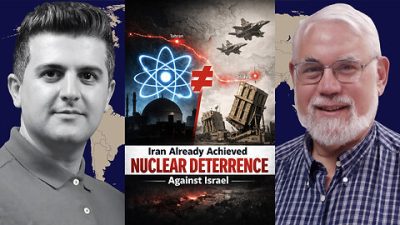
Prof. Ted Postol: Iran Already Achieved Nuclear Deterrence Against Israel
or go to
Aletho News Archives – Video-Images
From the Archives
How the occupied mentality syndrome works
Saudi Arabia on the American chessboard – Part 3
By B. J. Sabri | American Herald Tribune | June 27, 2016
Read part 2: “The occupied mentality Syndrome“
Previously I argued whether Saudi Arabia’s repeated involvements in U.S. interventions and wars stem from free national will or in response to a specific condition. For starters, in Saudi Arabia there is no national will. In Saudi Arabia, the national will is the will of the Al Saud clan. Still, when a major Arab state allies itself with a superpower that committed unspeakable crimes against humanity in almost every Arab country, then something is wrong. This fact alone should compel us to examine the U.S.-Saudi relation for one exceptional reason. As a result of the U.S.-Saudi wars, hundreds of thousands of people in Afghanistan, Iraq, Iran, Libya, Syria, Yemen, and Somalia have lost their lives. Millions became displaced in their own homelands. And millions more rendered refugees.
Attributing the Saudi policies to the bonds of “partnership” with the U.S. is frivolous. There are no bonds between these two thugs except those of business, military deals, secret plots, and wars. Proving this point, bonds such as these have no space for the American and Saudi peoples to share significant cultural or societal exchanges. If partnership is not the reason for the Saudi contribution to the U.S. strategy of empire and imperialism, then another reason must exist.
This leads to three possibilities. … continue
Blog Roll
 Aletho News
- REWRITING THE RISK? INSIDE THE GOVERNMENT’S VACCINE SAFETY MESSAGING
- “Davos Can Really Replace the UN”
- NIAID/NIH and USDA Fund Bioengineered Chimeric Influenza Viruses Built Using Pandemic H1N1 Components: Journal ‘Science Advances’
- Hezbollah hits Israeli warship off Lebanon’s coast, sets it aflame
- Iran slams US strikes on B1 bridge, Mahshahr petrochemical plants as ‘blatant acts of state terrorism’
- In letter to UN chief, Araghchi warns of dire consequences of US-Israeli attacks on Iran’s nuclear facilities
- Why the CIA conspiracy to invade Iran with Kurdish militias failed
- Why Are Upbeat US Claims About Mission to Rescue Pilot ‘Highly Questionable’?
- Aircraft destroyed during US ‘rescue’ of downed F-15 pilot cost more than $100 million each
- Washington University removes professor who condemned US-Israeli war on Iran
- If Americans Knew
- In Iran, Israel-US take aim at “reason, research, and freedom of thought” – Daily Update
- US loses planes over Iran, Israel downgrades Lebanon war goals – Daily Update
- Israel Is Blocking Palestinians from Easter at Church Where Jesus Resurrected
- Plot to assassinate Palestinian activist follows harassment campaign promoted by Zionist groups and elected officials
- Prominent New York synagogue hosts presentation on why U.S. Jews should support the ethnic cleansing of Gaza
- Tapper vs. Piker: Is the CNN Anchor Auditioning for David Ellison?
- Shouldn’t Democrats Be Able to Condemn Genocide?
- Israel-US kill negotiators, destroy civilian structures, but Iran’s military capabilities still largely intact – Daily Update
- ‘War crime’: Global condemnation as Israeli ministers celebrate death penalty law targeting Palestinian prisoners
- 7 Ways Israel Is Turning Lebanon Into Gaza
- No Tricks Zone
- An Inconvenient Tree: Uncovered In Alps… Europe Much Warmer Than Today 6000 Years Ago
- New Study Reports A 60% Slowdown In Greenland’s Ice Loss Rate In The Last Decade
- Low Intensity Tornado Wrecks Major Solar Farm, Creating A Potential Toxic Dump
- New Study Finds Warming Saves Lives…Cold Temperatures 12 Times More Deadly Than Excess Heat
- German Science Blog Accuses PIK Climate Institute Of Hallucinating Climate Tipping Points
- Devastating Assessment Of Comirnaty Vaccine By Former Senior Pfizer Europe Toxicologist
- New Study: CO2 Is ‘Effectively Negligible’ As An Explanatory Climate Change Factor Since 2000
- Former Pfizer Toxicologist Dr. Helmut Sterz Tells Bundestag Hearing Pfizer Vaccine Should Have Never Been Approved
- Energy Expert: Germany’s Nuclear Phaseout Was A “500 Billion Euro Mistake”
- New Research: South Australia’s Mid-Holocene Sea Surface Temperatures Were 4°C Warmer Than Today
 Aletho News