EU may become complicit in ‘genocide’ – Spanish official

RT | October 30, 2023
Spanish Social Rights Minister Ione Belarra has urged European leaders to take immediate action against Israel, including severing diplomatic ties and imposing economic sanctions, amid the intensified bombing and expanded ground operations against Hamas militants in the besieged Palestinian enclave.
She also called for Israeli Prime Minister Benjamin Netanyahu to be prosecuted for the alleged war crimes committed against civilians in Gaza.
“After this hellish night in Gaza, I have a very simple but very important message for European leaders. Do not make us complicit in genocide. Act. Not in our name,” Belarra said in a passionate video message on X on Saturday.
More than 8,000 Palestinians, including 3,342 children, have been killed in Gaza since Israel’s air campaign began, according to the latest figures from the Gaza Health Ministry. The unprecedented Hamas raid into Israel, as well as hundreds of rocket strikes on Israeli territory earlier this month, left around 1,400 people dead, while 230 Israelis and foreigners were taken hostage, according to the Israel Defense Forces (IDF).
Addressing the severity of the current situation in Gaza and Israel’s disproportionate retaliation, the minister highlighted the termination of internet and telephone services in the strip, claiming that the move “has a very clear objective” of guaranteeing that “Israel commits crimes against humanity without consequences.”
“Our inaction is turning us into accomplices,” the minister stressed, arguing that “Israel believes that its international alliances guarantee its impunity.”
“We have to act now, tomorrow will be too late,” she continued, voicing her message to the EU leaders: “Cut diplomatic relations with the State of Israel. Carry out exemplary economic sanctions against those responsible for this genocide. And without a doubt, let’s take Netanyahu before the International Criminal Court, so that he can be tried for what he is, a war criminal.”
She also appealed to EU citizens to take to the streets and raise their voice so that “this genocide” comes to an end.
The IDF escalated air and ground attack on Gaza on Friday, causing a near-total communication blackout. Connectivity was partially restored over the weekend, but the Israeli blockade of Gaza continues; Netanyahu announced the “second stage” of the war against Hamas on Saturday.
‘Israel’s plan is to crush you and your people,’ Hezbollah warns Arab states
Press TV – October 29, 2023
Hezbollah Deputy Secretary General Sheikh Naim Qassem has lauded the steadfastness of the resistance front in the face of the Israeli occupation.
Sheikh Qassem warned certain Arab states in the region that they will not be spared from Israeli brutality if they do not throw their weight behind the Palestinians in Gaza.
The high-ranking official with the Lebanese resistance movement made the remarks in a statement on his X social media account on Sunday, the 23 day of Israel’s constant bombardment of Gaza.
“Let the Arab rulers know the resistance is strong, steadfast and victorious, God Almighty willing, and the days will prove that,” Sheikh Qassem said.
“You should know that Israel’s plan is to crush you and your people. What is happening in Gaza is a model for you and your role after it unless you are slaves and subject to it. And remember that the Israeli slogan is ‘From the Euphrates to the Nile.”
“Get together and threaten, do what will deter them, boycott, make way for your people to express freely, declare your support for Palestine and al-Quds; this is an opportunity to break the brutality,” Sheikh Qassem said.
“The Palestinian people and their resistance are paying the price for the pride of the nation and future generations, so be with them so that you can be with yourselves and your peoples, and victory comes only from God.”
Sheikh Qassem also censured the unflinching support the United States and Western governments provided to the Israeli onslaught.
“The brutality of the US, France, Britain and Germany in their absolute support of Israeli criminality and genocide against civilians in Gaza has exceeded the lowest levels of humanity.”
Israel has been waging a barbaric war on Gaza since October 7, when Hamas-led Palestinian resistance groups launched their biggest operation against Israel in years. The sneak Operation Al-Aqsa Storm came in response to the regime’s intensified crimes against the Palestinian people.
The Israeli war has so far claimed the lives of over 8,000 innocent Palestinians, including more than 3,000 children, and left upwards of 20,500 others wounded.
The United Nations General Assembly overwhelmingly passed a resolution on Friday, calling for the implementation of an immediate “humanitarian truce” in Gaza. The vote came after the United Nations Security Council failed four times in the past two weeks to take action due to Washington’s veto against relevant resolutions.
The assembly stressed the “importance of preventing further destabilization and escalation of violence in the region,” urging “all parties to exercise maximum restraint and upon all those with influence on them to work toward this objective.”
Israel has rejected all calls for a ceasefire, claiming it would benefit Hamas.
Warrant for Genocide: Netanyahu urges Israeli troops to regard the Palestinians as “Amalek”
In the Old Testament the Amalekites were exterminated: “man, woman and infant”
By Michael Hoffman | Revelation of the Method | October 29, 2023
It’s Sunday, not normally a good day for gaining people’s attention on news or analytical current events’ columns. The ongoing emergency—the massacre of children and other civilians in Gaza however—trumps all other considerations, at least for this writer, so here goes.
Part One: Netanyahu Channels Amalek
In their ignorance (or malice), Old Testament haters will have a field day with Israeli Prime Minister Binyamin Netanyahu having channeled “Amalek” as he ordered the Israeli army to invade Gaza on October 28.
This fact is so incendiary that a quick search of the New York Times today reveals that the “newspaper of record” hasn’t dared to mention it thus far.
The Israeli Prime Minister stated: “You must remember what Amalek has done to you says our Holy Bible, and we do remember and we are fighting. Our brave troops and combatants who are now in Gaza or around Gaza and in all other regions in Israel are joining this chain of Jewish heroes, a chain that started 3,000 years ago—from Joshua to the heroes of 1948—the Six Day War, the 1973 October war—and all other wars of this country—are hero troops. They have one supreme main goal, to completely defeat the murderous enemy and to guarantee our existence in this country.”
In 1 Samuel 15:3 we find the judgment of God on the Amalekites, in the form of the divine command to Saul, the first King of Israel: “Now go and smite Amalek, and utterly destroy all that they have, and spare them not; but slay both man and woman, infant and suckling, ox and sheep, camel and ass.”
These are patently the marching orders Netanyahu is giving to the Israeli military (“the most moral in the world”): Slay all the civilians of Gaza and spare them not.
Not even Clarence Darrow could parse it otherwise. There’s no lawyer’s loophole here; no moderating clause, which is why, as of Sunday, October 29, the New York Times and other major media have not dared to report Netanyahu’s genocidal directive.
They’ll get around to it after they have concocted a defense of the indefensible, which is their job. The delay is due to the fact that even the skilled spin doctors at the Times are having difficulty coming up with an explanation that has plausibility: the Israeli Prime Minister’s insinuation to the Israeli Army to commit genocide against the Palestinians of Gaza, by invoking the Biblical war with Amalek, is not a warrant for genocide because…
Because what?
A day later and the corporate media haven’t managed to cook up a cosmetic exculpation.
Juan Cole got it partially right: “Netanyahu may have gestured to, and defiled the Bible by excusing his genocide against the civilians of Gaza with reference to 1 Samuel. But his real bible is… Zionism with its Fascist and explicitly colonial ideology.”
I say “partially,” because Mr. Cole succumbs to the humdrum of Leftspeak when he ends his summation of Zionism by describing it as a colonial ideology, which it is, but that is not the most accurate summation of its inspiration and motivation. Zionism is Talmudic.
True, a distinction has to be made between Talmudism in and of itself, as practiced before the ascendance of Zionism in the 19th century, and Talmudism as weaponized by Zionism, a task we undertook in our October 17 column, “The Disaster of Israeli Zionism.”
Only a Biblical illiterate would tell the Israelis, “You must remember… Amalek,” and then ascribe that memory to the Hebrew Old Testament.
To remember Amalek is to nullify the Old Testament!
Yahweh not only ordered the complete extirpation of the Amalekites; that’s only half the story. He ordered every faithful Israelite to blot out the memory of Amalek, so that the name of Amalek would never again be mentioned:
“You shall blot out the memory of Amalek from under Heaven. Do not forget!” (Deuteronomy 25:19).
Netanyahu “forgot.”
Kindling the memory of Amalek is in express defiance of the command of Yahweh, and as such it is Talmudic, not Biblical. It is of a piece with the Pharisee Hillel’s prozbul-nullification of Yahweh’s Sabbatical year.
The Pharisee Talmud destroys the meaning of the Old Testament, rips it to shreds and stomps it into the gutter.
Rabbi Jacob Neusner, translator of the Yale University Press edition of the unredacted Mishnah (the sacred Pharisee text which comprises the supreme halacha (law) of Orthodox rabbinic Judaism), stated:
“We have already seen substantial evidence that any notion of Pharisaism (or later rabbinic Judaism), as the true and direct descendants of the Old Testament, is contradicted by the most fundamental assumption of one Mishnah-tractate after another. These stand wholly separate from the Priestly Code… And generally contradict it!” (A History of the Mishnaic Law [Brill Academic, 1974], p. 7).
As for why Yahweh ordered Amalek destroyed three millennia ago, that’s a hermeneutic for another day.
Part Two: The Gaza Massacre in 40 Words of Power
Our critics in Europe opine that Americans are slogan-mad, seeking in our haste and frenzied pace to reduce everything sublime to a bumper sticker.
There’s some truth in the observation. On the other hand, compared to our loquacious kindred in the Old World, we occasionally exhibit the laconic virtue of conveying the most meaning with the least amount of words.
Some of the head-scratching over the whys and wherefores of the dehumanization of the thousands of Palestinian children butchered in Gaza with American tax dollars this month of October — the sheer shoulder-shrugging indifference in the face of the carnage, by everyone from John Kirby to Joe Biden and their legion of epigones—can be understood with a few dozen words of power which compel obedience from the Department of Defense to the White House and most of the Western world.
Neither the Neocon Right nor the progressive Left will traverse this territory. Hence, the obligation to utter a proscribed truth which is the key to grasping why the massacre in Gaza is not being opposed by the Biden administration, the Republican-controlled House of Representatives, NATO, or the European Union— falls to us, in this obscure column of ours.
From the Babylonian Talmud, tractate Sanhedrin 57a, we read:

“Regarding bloodshed, the following distinction applies: if a non-Jew killed another non-Jew, or a non-Jew killed a Jew, the killer is liable for execution; if a Jew killed a non-Jew, he is exempt from punishment.”
My dear kiddies, you who have been infantalized by the refusal on the part of every major news source, whether Muslim, Christian, atheist, Marxist, Conservative or Liberal, to cite this halacha—now you know the real reason why the International Court in The Hague will not be prosecuting Netanyahu or his generals for war crimes. Now you know why the children of Gaza have been murdered, are being murdered and will be murdered in this annus horribilis.
If Mr. Netanyahu wishes to quote ancient passages from holy books, let him quote from Sanhedrin 57 in the Talmud of Babylon, the holiest book of Israeli theology. [BT Eruvin 21b: “Be more careful in the observance of the words of the Scribes than in the words of the Torah”].
Copyright ©2023 by Independent History and Research, Box 849, Coeur d’Alene, Idaho 83816
FOR THE ADVANCEMENT OF KNOWLEDGE CONTRA CANCEL CUTLURE
Michael Hoffman is a former reporter for the New York bureau of the Associated Press. He earns his living as a professional historian. His books are published in the USA, and in translation in Japan and France. His textbook, Judaism Discovered (1,102 pages) is banned by almost all major booksellers and libraries.
Website: www.RevisionistHistory.org
Why I Support Hamas
And you should too
BY KEVIN BARRETT | OCTOBER 29, 2023
In this week’s False Flag Weekly News I outperformed Cat McGuire (for once) in saying things the ADL won’t like. Angered by the genocide of Gaza, I uttered many uncomplimentary and/or inflammatory remarks about the Chosen People and their Chosen State. But of all of the “oy vey” things I said, what the ADL will hate the most is my open declaration of support for Hamas.
And that, of course, is the most obvious reason to support Hamas: “They” really, really don’t want you to. The strategists who are trying to keep the genocide of Palestine going apparently realize that if significant numbers of Westerners start openly supporting Hamas and the rest of the Palestinian resistance, the Zionist goose will be well and truly cooked. That’s why they’ve used advanced propaganda techniques to inject the obligatory “I don’t support Hamas, but” disclaimer deep into the collective unconscious of the West in general and its relatively-Palestine-savvy people in particular.
“They” don’t really care if you deplore the massacre of thousands of Gazan women and children. “They” don’t mind if you support a two-state solution, or even a one-state solution. “They” can live with you calling for a ceasefire. “They” could care less if you utter words like apartheid or even genocide.
It’s like when Joel Stein said “I don’t care if Americans think we’re running the news media, Hollywood, Wall Street or the government. I just care that we get to keep running them.” The Zionist position is: “I don’t care if Americans think we’re committing human rights violations, apartheid, or genocide. I just care that we get to keep committing them.”
Americans complaining about Zionist human rights violations, apartheid, and genocide won’t stop those things. They will only be stopped at gunpoint. And it really does matter that people support the right of genocide victims to pick up guns and stop the genocide.
Jews, who think of themselves as paradigmatic genocide victims, should be the first to support armed resistance against genocide. And indeed, the smartest and most courageous Jews do. Check out what David Rovics has to say about Al-Aqsa Flood being the new Warsaw Ghetto uprising:
Hamas is the closest thing to an elected government the Palestinians have. In fact, the last time they had a real election in the Occupied Territories of the West Bank and Gaza, Hamas won by a landslide….Physically fighting back against an occupying army, according to international law that all the countries in the world have signed on to long ago, is justified, and is not “terrorism.”
Why Supporting Hamas Is Strategically Savvy
In any struggle between two sides, the outcome will be largely determined by the intensity of support enjoyed by each party to the conflict. Small, weak countries like Vietnam and Afghanistan were able to defeat the mighty USA because they were far more intensely committed to ending US occupation than Americans were committed to maintaining it. Like the Palestinians today, they were willing to accept a lopsided casualty ratio as they continued raising the price of occupation to the point that the occupier opted to stop paying it.
The Western propaganda apparatus currently allows and tacitly encourages pro-Zionist intensity, while making pro-Resistance intensity taboo. “I stand with Israel” is acceptable, even mandatory; “I stand with Hamas” is practically illegal and unthinkable.
When Side A is passionately and intensely supporting its fighters, while Side B mumbles apologies and obligatory disclaimers, obviously Side A will enjoy a morale advantage that will translate into an advantage on the battlefield. But when Side A is a criminal aggressor and genocide perpetrator, it may find it difficult to maintain its intense support, and to prevent neutral people who care about justice from becoming passionate supporters of the other side. So it will use every propaganda trick in the book to prevent neutrals and lukewarm supporters of the other side from becoming brazen and passionate.
The best way to change that pro-genocide Overton Window is to throw a brick through it. And tied to that brick, a simple message: “I SUPPORT HAMAS.”
Pro-Vietnam-War people really hated it when Jane Fonda high-fived Hanoi as thousands of Americans gathered in the streets to shout their support for the Viet Cong: “Ho, Ho, Ho Chi Minh, the NLF is going to win!” But that, and US troops fragging their officers, is what ended the war. Humanitarian complaints about napalmed babies and My Lai massacres were only useful insofar as they pissed off enough people to the point that they realized that the Vietnamese resistance fighters were the good guys, and Uncle Sam was the villain, and that all decent people had a moral duty to support the Vietnamese resistance. That shifted the Overton Window radically, to the point that “withdraw ASAP and to hell with the consequences” became a middle-of-the-road position and then a political reality.
If we can get a small but noticeable number of Americans openly and brazenly cheering for Hamas at the top of their proverbial lungs, it will have the same effect on ZOG that Al-Aqsa Flood had on Israelis: It will drive them crazy, puncture their inflated sense of invulnerability, and incite them to lash out in irrational and strategically counterproductive ways. ZOG’s mask will come off, and it will show its psychotic, genocidal face to America, just as the Israelis have shown theirs to the region, the BRICS nations, and the Global South.
And the Overton Window will shift. Pretty soon “end aid to Israel” and “one-state solution” will become middle-of-the-road positions and then political realities.
Why Supporting Hamas Is Your Moral Duty
I began by explaining why supporting Hamas is strategically savvy, rather than addressing the moral argument, because much of my audience already understands what I am now about to say. For them, the strategic benefits of supporting Hamas may not be evident, even though the moral arguments are.
So I risk belaboring the obvious in stressing that the most important point—the forest that people miss while peering at the trees—is that the Palestinian cause is just, and the Zionist one unjust. Every just war theory, whether Christian, Islamic, or secular, is based on the non-aggression principle: The side that initiates aggression, in this case by crossing the seas to invade and murder and steal the other side’s land and property, is in the wrong, while those fighting to stop that aggression are in the right. No sane person who takes the time to study the history of Palestine in a reasonably comprehensive and unbiased way can fail to conclude that there has never been a war in history that has been more obviously and completely just than the Palestinian war against Zionist invasion, occupation, and genocide.
And of all the big lies uttered in history, there has never been a bigger one than “The Israeli-Palestine conflict? It’s complicated.” No it isn’t. And it isn’t a conflict, it’s a genocide. The rights and wrongs are not the least bit complicated.
Zionist attempts to obfuscate the injustice of their genocidal project are so absurd that they would be hilarious if there were not right now more than a thousand Gazan children buried beneath the rubble of what used to be their homes, suffering and dying slowly in some cases, expiring quickly and mercifully in others. Consider the most popular excuses:
“Yahweh gave us Palestine 3,000 years ago. Surely that should count for something! What?! You don’t honor Yahweh’s 3000-year-old real estate deals?!!”
*“We deserve Palestine because of the Holocaust. So why isn’t Israel in Germany? Umm… next excuse!”
“We are an ethnic group so we deserve a state of our own. And yes, we know that there are tens of thousands of ethnic groups on Earth, and that virtually none of them have states, but we are just so special that we deserve one! And if you don’t agree, you are anti-Semitic!”
“We have gotten into terrible conflicts with every neighbor we’ve ever had, and have been expelled from more than 100 countries for no reason at all except that our neighbors like to pointlessly persecute us, so you ought to sympathize and side with us no matter what we do.”
“There are lots of terrible injustices, so if you complain about this one, you must be an anti-Semite!” Alternate version: “Genghis Khan (or Pol Pot or Stalin or Hitler) killed more people than we have, so why are you attacking us, you anti-Semite?”
“The Palestinians and their supporters, as we portray them in our propaganda machine, are very bad, wicked people, so you should cheer for us as we steal their stuff and exterminate them.”
“We are a democracy even though we murdered or expelled most of the people who should be voting in our elections.”
“Israel’s existence is really, really beneficial to US national security, even though it makes billions of people in geopolitically-crucial energy-rich countries hate America’s guts.”
“You have to support us because we call our enemies ‘terrorists’ and other nasty names.”
And when all else fails:
“Support us and do what we say, or you’ll never work in this town again!”
Refuting the extant arguments for Israel’s existence would be superfluous and an insult to the reader’s intelligence. They are not even arguments, just inarticulate, incoherent grunts and howls of tribally-intoxicated psychopathy.
But it may be worth unpacking one of them: the “terrorist” blood libel. Terrorism is usually defined as “A military tactic consisting of deliberately attacking civilians to incite fear and achieve a political objective.” And that is exactly what “Israel” is: A terrorist organization. Zionist terrorists have been attacking and terrorizing the civilian population of the territory they invaded, namely Palestine, ever since they got there. The various Zionist terror groups were so drunk on terrorism that they even terrorized each other, as well as their fellow aggressors and invaders, the British, in a bloody orgy of terror that has no parallel in modern history. Much of the story can be found in Thomas Suarez’s State of Terror: How Terrorism Created Modern Israel.
So the conflict is between terrorists who crossed the seas to attack the Palestinian civilian population in order to kill some and scare the others into leaving; and the civilian population they have been terrorizing. On one side, the Zionist terrorists; on the other, the Palestinian anti-terrorist Resistance. In this as in so much else, the Zionist propaganda machine has turned reality on its head.
Today, the Zionist terrorists continue to deliberately target and mass-murder Palestinian civilians by the thousands. About two-thirds of the Palestinians they kill are women and children. The Zionists probably kill about a hundred civilians for every Hamas fighter. Compare that to al-Aqsa Storm, the Hamas operation that killed roughly equal numbers of Israeli military fighters and civilians. And of the civilians killed in al-Aqsa Storm, the majority were killed by the Israeli military, whether accidentally in crossfire, or deliberately in accordance with the Hannibal Directive, which recommends eliminating both hostage-takers and hostages using overwhelming firepower in order to prevent the enemy from using hostages as a bargaining chip.
Hamas, unlike the Zionists, primarily targets the Israeli military, when it can. Clearly, al-Aqsa Storm primarily targeted the IDF. Hamas’s orders were to take hostages, but to avoid killing unarmed civilians. And while there may have been a few instances of Palestinians killing civilians, photo evidence proves that the worst carnage—music festival goers caught in heavy artillery crossfire, houses and kibbutzes and other buildings full of people destroyed by tank and artillery shells—was perpetrated by the IDF. Hamas soldiers, carrying light weapons, could not possibly have caused that kind of damage, or killed those large numbers of people.
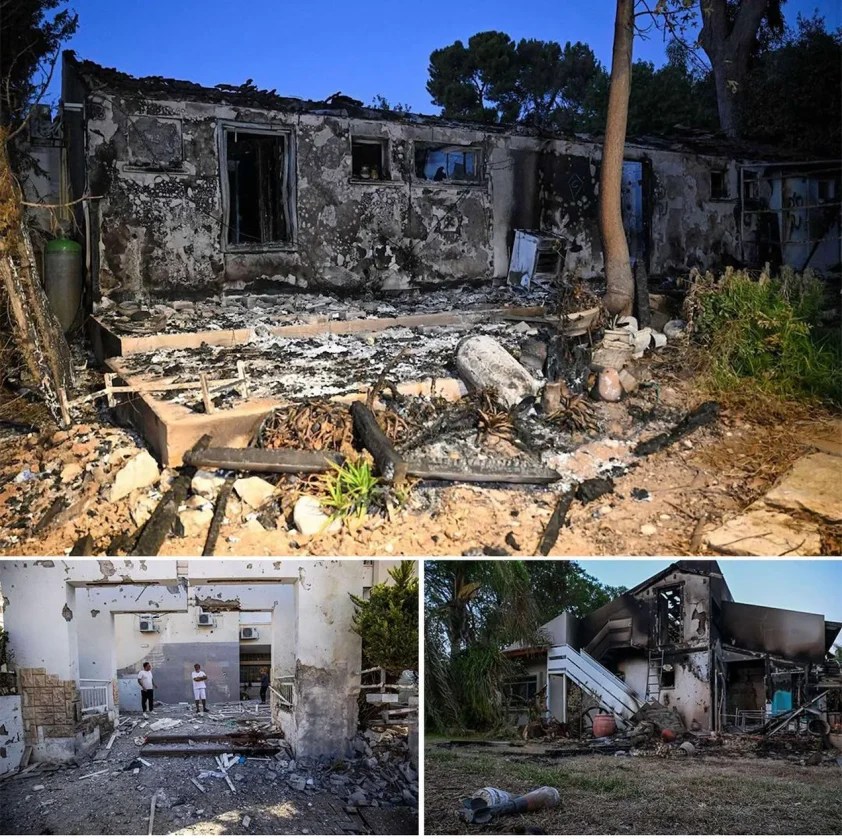
This and most of the rest of the damage to civilians on October 7 was meted out by Israeli heavy weapons, not Hamas’s light firearms
But what about the rockets? Since unlike Israel, Hamas doesn’t enjoy billions of dollars worth of of US-taxpayer-provided weaponry, it fires relatively unsophisticated rockets that cannot take out hardened military targets, but do frighten and occasionally harm Israeli “civilians.” So… is that terrorism? No—because Israelis are settlers, not civilians. Under international law, military resistance against occupation, including targeting settlers, is legitimate. So we can argue about proportionality—I would assert that Hamas errs on the side of mercy by doing a whole lot less settler-killing than it has every right to be doing — but at the end of the day, international law, morality, and basic common sense dictate that Hamas’s use of rockets to retaliate against massive genocide is justifiable… and rational, as part of a multi-pronged strategy to keep raising the costs of occupation to the point that the genocidal occupier will finally take Helen Thomas’s advice and “get the hell out of Palestine.”
Arguing with Orwell’s O’Brien
You know who has lost the argument not only by Godwin’s law a.k.a. reducto ad Hitlerum, but also by which party feels the need to use coercion to force the other party to shut up. The Zionist terrorists have not only lost the argument, they have no argument. No wonder they ceaselessly invoke Hitler and the Nazis. And no wonder they constantly run professors out of universities, get media personalities fired, launch specious persecutions and prosecutions, and generally terrorize everyone into going along with their genocidal absurdities.
Arguing with a Zionist is like arguing with Orwell’s O’Brien: He knows he’s full of shit, has no compunctions about it, and is going to do whatever it takes to ruin your life.
By saying “I like Hamas,” I’m supporting an anti-terrorist group that the Zionist terrorists have falsely and mendaciously labeled, in true Orwellian fashion, “terrorists.” Maybe they’ll try to get me prosecuted for “material support for anti-terrorism,” though I haven’t mailed so much as a dirham to Hamas, POB 123, Gaza Strip, Occupied Palestine, nor have I contributed to any Hamas GoFundMe’s or bought any donuts from the nice little old Hamas ladies at the local mosque. (If they were selling baclava, I’d consider it.)
If you’re honest with yourself, you’ll probably have to admit that the reason that you haven’t yet come around to openly supporting Hamas is fear: fear of what the Zionists might do to you. Well, I’m here to tell you that fear isn’t the right word for that. The correct word is cowardice.
The Palestinians continue to unite in resistance to genocide, even as the Zionists respond by forcing their children to die agonizing deaths, by the thousands, beneath mountains of rubble. And you can’t even openly and publicly admit that you support that Resistance? Come to think of it, maybe cowardice isn’t the right word. It isn’t strong enough.
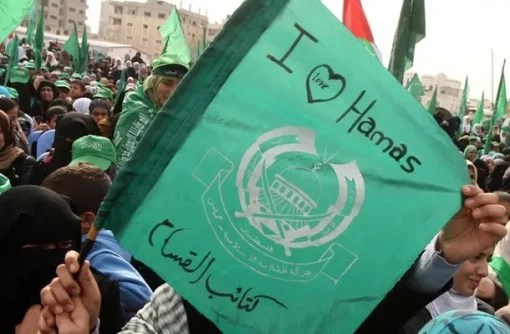
Come on, grow some stones. Say it with me: “I… SUPPORT… HAMAS.”
Israeli ground troops face fierce resistance inside Gaza
The Cradle | October 29, 2023
The Palestinian resistance has continued to confront Israeli ground troops penetrating the Gaza border, after Tel Aviv announced an expansion of limited ground incursions into the besieged strip on Friday.
The Qassam Brigades launched a surprise attack on Israeli forces on Sunday “after infiltrating behind their lines and clashing with enemy forces” who were making an incursion northwest of Beit Lahia, their Telegram channel said.
In a statement released earlier on 29 October, Hamas’ Qassam Brigades announced that they “continue to confront the Zionist forces penetrating the Al-Amiriyya area northwest of Beit Lahia, where they engaged in armed clashes with them and targeted enemy vehicles with … mortar shells.”
The Qassam Brigades “carried out several sniping operations. The enemy admitted that a number of its soldiers were wounded in the clashes with our Mujahideen who … are still targeting enemy forces.”
They also targeted on Sunday morning a “gathering of enemy vehicles” with a suicide drone, according to the resistance group’s Telegram channel.
The armed wing of the Palestinian Islamic Jihad (PIJ) movement, the Quds Brigades, also announced on 29 October targeting Israeli forces attempting to enter the northern Gaza Strip with rockets and mortar shells.
Israel’s military announced earlier on 29 October that one of its officers was seriously hurt and another soldier moderately injured “in the northern Gaza Strip overnight.”
The Qassam Brigades released a video on Saturday evening, 28 October, showing their destruction of an Israeli armored vehicle believed to be carrying over a dozen soldiers. The attack took place near the Gaza Strip’s Shujaiya area.
Over the past week, Israel has carried out “limited” ground incursions into northern Gaza aimed at testing the waters for the planned invasion. The Israeli army said it struck several Hamas targets during small-scale incursions on 25 and 26 October.
Israeli troops took heavy losses the week before that while attempting to enter the Gaza Strip on land.
Tel Aviv announced on 27 October that it is “expanding” its limited ground activity in Gaza.
However, an army spokesman told ABC News that day that “the expanded operations taking place in Gaza are not an official ground invasion.”
So far, Israel has delayed fully invading Gaza and attempting to carry out its stated goal of “eradicating” Hamas, who are well prepared for an Israeli ground invasion.
Many experts, including The Cradle’s Hasan Illaik, have said recently that Israel will be unable to bear the cost of launching a full ground assault on the Gaza Strip. Such an invasion could also instigate the opening of several new fronts and the outbreak of regional war.
“We want to convey to our enemy that we are impatiently awaiting the opportunity to introduce [its forces] to new forms of demise,” Qassam Brigades spokesman, Abu Obeida, said on 28 October.
Israel Faces ‘Near Impossible Task’ in Gaza
By Scott Ritter – Sputnik – 29.10.2023
Israel has conducted a series of ground incursions into Gaza over the course of the past week, each one building on the other, increasing in scope and scale. This appears to be part of an Israeli strategy to lean gradually into an operation that, when finished, falls just short of a general assault on Gaza.
At the end of the day, however, Israel will most likely not be able to defeat the military forces of Hamas and other Palestinian resistance forces defending Gaza. Israel will have to either seek to defeat Hamas by laying siege to the Gaza Strip or commit to a full-scale attack on Gaza designed to clear the territory of all Hamas fighters.
History suggests that any such assault will be extremely difficult to accomplish.
The example of Operation Hubertus, the final German assault on Stalingrad, stands out. The Germans brought in elements of seven elite “Pioneer” battalions — combat engineers with extensive experience in urban warfare, having paved the way for prior German victories in Rostov and Voronezh. The Pioneers were the masters of military demolition, highly trained specialists in house-to-house fighting and the use of explosives and flame throwers. Around 1,800 of these elite assault engineers were assembled for the final drive to push the defending Soviet soldiers from Stalingrad.
On the first day of operations, the Pioneers suffered nearly 30% casualties. After several days of fierce fighting, the Pioneers were stopped less than 100 meters from their objective. However, their forces suffered between 60-70% casualties, and could not proceed further.
Operation Hubertus was doomed to fail from the beginning. According to an account of the fighting, “The constant bombardment and artillery shelling created a battlefield in which the Soviet defenders largely held the advantage over the assaulting Germans. The fields of rubble and craters were perfectly designed for defensive actions and could be improved with relatively little effort. This also provided ample hunting ground for the ever-present Soviet snipers.”
A similar observation can be made regarding the Allied attacks on Monte Casino, in Italy, in early 1944. A massive aerial bombardment destroyed a 6th century abbey. Elite German paratroopers dug into the rubble, and for months successfully held off repeated attacks. There can be no doubt that the excessive bombardment of Monte Casino ended up strengthening the positions of the German defenders.
In the battle of Iwo Jima, it took US Marines more than a month to secure the tiny island, largely because the Japanese had dug some 18 kilometers of tunnels into the 21-square kilometer island, some of which were more than 70 meters underground, from which they rode out heavy bombing and shelling, only to emerge and ambush the advancing Marines.
If one combined the above ground rubble of Monte Casino with the below-ground tunnel network of Iwo Jima, you might approximate the hellish scenario awaiting Israel in Gaza.
Over 500 kilometers of tunnels dug in under the 360 square kilometers that comprise the Gaza Strip, these tunnels are purpose built, designed to serve as transportation corridors, command centers, supply depots, dormitories and hospitals, defensive positions, and in support of offensive action. Simply put, there has never been a military operation against a target such as the one presented by Hamas in Gaza.
Israel has trained a small number of its elite special forces to carry out limited-scope operations in an underground environment. These operations, typically involving hostage rescue or direct action (i.e., eliminating a high value target), are conducted under very controlled circumstances, with the attacking forces proceeding only when the circumstances support a favorable outcome. As such, the experiences of these troops are counterproductive when it comes to transferring knowledge to the conventional forces that would bear the brunt of any Israeli assault on Gaza.
Simply trying to navigate the rubble-strewn streets of Gaza will be a nearly impossible task for the Israeli troops. The going will be slow, and the Israeli infantry will have to operate dismounted, exposing themselves to sniper fire and ambushes. Israeli vehicles will find themselves hemmed in without the ability to maneuver, making themselves vulnerable to mines, improvised explosive devices, and anti-tank weaponry. Close air support under these circumstances will be very difficult, effectively neutralizing Israel’s greatest advantage.
If Israel does not sync its above-ground actions with a simultaneous effort to defeat Hamas’ underground tunnel-based defenses, then the situation above ground will become even more precarious, with Hamas emerging from tunnels behind the Israeli forces, cutting them off and inflicting heavy casualties. But Israel is going to be operating largely blind underground, probing into a tunnel network designed by Hamas to protect against any such effort. Israel’s best bet would be to simply locate tunnel entrances and seal them off, leaving the Hamas forces underground to die of thirst, hunger, oxygen deprivation, or disease. But this will require the physical occupation of every square meter of the city, an immensely difficult problem from both a logistical and operational standpoint. It will also expose more Israeli forces to harm, resulting in a dramatic increase in casualties.
By reacting to the Hamas attack of October 7 in the way it has, Israel has literally walked into a trap designed by Hamas to defeat any Israeli incursion. Israeli forces are neither trained, equipped, organized, nor motivated to carry out the kind of brutal, bloody, and physically demanding combat that will be required to defeat Hamas above and below the ground in Gaza. Israeli political and military leaders have boxed themselves into a corner with their aggressive winner-take-all rhetoric. But now that the time has come to pay the price of their collective verbiage, the question becomes is this a price Israel is willing and able to pay?
The answer is probably no. Israel has defined victory as being predicated on the total defeat of Hamas as a military organization. This is most probably a mission impossible. Hamas, therefore, emerges victorious simply by surviving. Given the strong defensive position Hamas finds itself in, through a combination of its immense tunnel network and the destroyed urban environment brought on by Israeli bombardment, it is highly likely that Hamas will be able to hold off a concerted Israeli assault until which time the Israel Defense Forces, like the German Pioneer battalions in Stalingrad, exhaust themselves on the field of battle.
India’s solidarity with Israel is untenable
BY M. K. BHADRAKUMAR | INDIAN PUNCHLINE | OCTOBER 29, 2023
India’s muscular diplomacy, an attribute of the present government, has run into heavy weather. Body blows from multiple sources — spat with Canada; Maldives’ triumphalism about evicting Indian servicemen; China-Bhutan normalisation, etc. — testify to it.
On top of it comes the latest diplomatic faux pas at the UN GA over the Gaza situation and a not-entirely unrelated shock and awe dealt out by Qatar over the past week. Doha has handed down death sentences to eight Indian ex-naval officers on charges of spying for Israel.
Whichever way one looks at the Explanation of Vote (EoV) on Thursday’s UN General Assembly resolution on Gaza, India’s abstention was a mistake. Simply put, our diplomacy has become entrapped in our solidarity with Israel.
The topmost consideration for India at the UN GA debate should have been that the draft was tabled by the Arab and OIC countries with whom India has fraternal ties, and, second, it called for an “immediate, durable and sustained humanitarian truce” in Gaza, which is an urgent necessity.
Yet, France outclassed Indian diplomacy, exposing the need for more creative UN diplomacy on our part. France not only sought that some reference to Hamas’ raid into Israel on October 7 be made in the draft, but while on a recent visit to Tel Aviv, President Emmanuel Macron even proposed an alliance of like-minded countries to take on Hamas militarily.
Yet, when the crunch time came, France ultimately voted for the Arab resolution and issued an EoV justifying it. As France saw it, the imperative need today is to stop the fighting and the compelling reality is the importance of being on the right side of history when it comes to the Middle East crisis, where it has high stakes. The point is, in the final analysis, what stands out for the record is the actual voting, not the EoV.
It was apparent that the Canadian amendment — at Israel’s behest and sponsored by Washington from the rear — was a clumsy attempt to divide the votes by calling for “unequivocally rejecting and condemning the terrorist attacks by Hamas.” In a notable speech that drew wide acclaim, Pakistan’s ambassador to the UN Munir Akram highlighted the contradiction.
If Canada was being fair in its amendment, he said, it should as well agree to name Israel as well as Hamas. “We all know who started this. It is 50 years of Israeli occupation and the killing of Palestinians with impunity,” Akram argued, therefore, not naming either side was the best choice.
It appears that India was taken aback by Akram’s intervention at the UN GA during Agenda Item 70, Right to Self-Determination where he forcefully linked the Palestine issue and Kashmir problem. Alas, India’s abstention has only left the centre stage to Pakistan to occupy. This could be consequential. A prudent course would have been to identify with the stance of the Arab countries unequivocally, since this is a core issue for them and it is playing out in their region, first and foremost.
India should have factored in that feelings are running high in the West Asian region and the US-Israeli propaganda that the Arab world paid only lip-service to the Palestinian cause doesn’t hold good. There is unmistakable anger and anguish among the regional states and a groundswell of opinion has appeared demanding a settlement of the Palestine issue as an imperative of regional stability.
Fundamentally, the tectonic plates in regional politics have shifted following the Saudi-Iranian rapprochement under China’s mediation, which in turn triggered new thinking in West Asia giving impetus to a focus on development. Equally, the regional states prefer to address their issues increasingly on their own steam without external interference. China and Russia understand this but the US refuses to see the writing on the wall.
Therefore, it will prove to be damaging to our interests if a growing perception crystallises that Indians are carpetbaggers. The Indo-Israeli fusion through the past decade hasn’t gone unnoticed in the Muslim countries. They resent it, perhaps, but it may not surge into view because Arabs are a hospitable people. That said, their resentment may surface if push comes to shove and their core interests are involved.
The US-Israeli attempt to put the lid on the region’s growing strategic autonomy is one such core issue. It is far from the case that the regional states — be it Qatar, Iran, Egypt, Syria or even Turkey — do not understand that the Biden administration’s grandiloquent idea of a India-Middle East-Europe Economic Corridor is in reality a wedge to disrupt the nascent trends of unity among regional states so as to insert Israel into the regional processes and rekindle the flame of sectarian schism and geopolitical rifts, which the US invariably exploited to impose its hegemony in West Asia historically.
That is why, the three-way Qatar-India-Israel tangled mess of espionage, which should never have been allowed to happen, becomes a litmus test of mutual intentions in the geopolitics of the region. Lest it is forgotten, Qatar and Israel had once collaborated since the mid-nineties to prop up Hamas as an Islamist antidote to the secular-minded PLO under Yasser Arafat.
In a recent interview with the Deutsche Welle, former Israeli Prime minister Ehud Olmert disclosed, inter alia, “We know that the Hamas was financed with the assistance of Israel— for years — by hundreds of millions of dollars that came from Qatar with the assistance of the state of Israel, with the full knowledge and support of the Israeli government led by Netanyahu.”
That convergence — rather, Faustian deal — ended in 2009 following the three-week Gaza Massacre by Israel, whereupon, Doha drew closer to Tehran. Nonetheless, a pragmatic relationship continued, and in 2015, the Qatari government facilitated discussions between Israel and Hamas in Doha in search of a possible five-year ceasefire between the two parties. Suffice to say, Indian diplomacy is swimming in shark-infested waters. The news from Doha this week is a wake-up call.
Equally, our public discourse on Hamas as a terrorist organisation and our branding of that national liberation movement is surreal, to say the least. Although it may be difficult today for the government to openly deal with Hamas, it shouldn’t be that we lack a proper understanding of Islamism. If ever a Palestine settlement comes to fruition, Hamas will have a lead role in it as the fountainhead of resistance. India’s political elite must bear in mind this reality.
Eliminating the Hamas from the political landscape is no longer possible, given the massive grassroots support it enjoys among the Palestinian people, which is of course a proven fact in the successive elections held in Gaza and West Bank.
Iran vows to ignore US warnings on Israel
RT | October 29, 2023
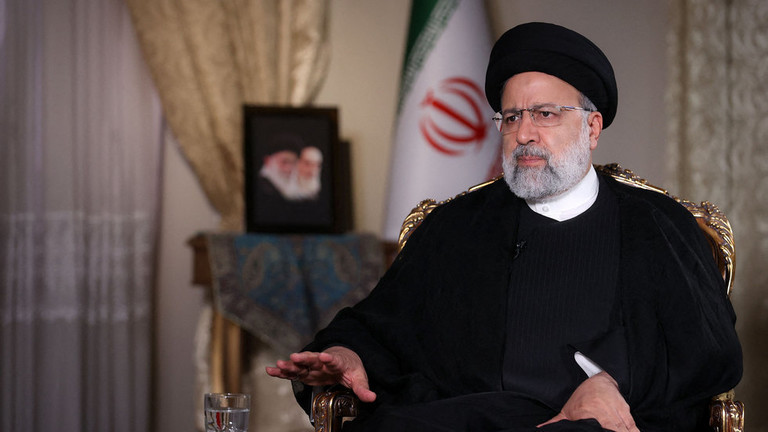
Tehran will ignore US warnings not to intervene in the Hamas-Israel conflict, Iranian President Ebrahim Raisi has said. He also blasted the West over alleged reluctance to help end the hostilities.
In an interview with Qatar-based Al Jazeera on Saturday, Raisi said that Washington “is asking us not to move while providing broad support to the Zionist entity… This is an invalid demand.”
The Iranian president also claimed that Israel’s expanded ground operations in Gaza were a failure, describing it as “the second victory [for Palestinians] following [the launch of] Operation al-Aqsa Storm,” referring to the initial surprise attack by Hamas on Israel on October 7.
He also said that the United States had sent messages to the ‘Axis of Resistance’ – referring to an informal alliance of anti-Western and anti-Israel forces in the Middle East – and “received a practical and public answer on the ground.”
Raisi went on to accuse the US and some unnamed European countries of “obstructing the ceasefire in Gaza,” calling such policies “a crime.” He added that “the United States’ calculations in the region are completely wrong, and said it will not achieve its goals with a new Middle East,” stressing that Tehran’s support for the Palestinians “is not subject to compromise.”
After the Hamas attack on Israel earlier this month, US President Joe Biden pledged unconditional support for Israel while warning Iran to be “careful.” At the same time, he stopped short of backing a cessation of hostilities, with several US media outlets reporting that the State Department had distributed a memo to its diplomats advising them to avoid calling for “de-escalation” or a “ceasefire” in Gaza.
Publicly, Biden has said that ceasefire talks cannot begin until Hamas releases more than 200 hostages. Meanwhile, on Monday, EU foreign policy chief Josep Borrell called for a “humanitarian pause” in the conflict, saying he believed there was consensus among the bloc’s members on the matter.
Raisi’s comments come after Iranian Foreign Minister Hossein Amir-Abdollahian warned the US that “new fronts will be opened up” against Washington if it does not change its policies in the Middle East, including its unequivocal support for Israel.
Israel targets journalists, kills their families as Big Tech & Biden admin silence Palestinians
BY WYATT REED · THE GRAYZONE · OCTOBER 27, 2023
With Israeli airstrikes on Gaza killing at least twenty Palestinian journalists—and the Biden administration working to muzzle others—Big Tech is quietly coordinating with Tel Aviv to muzzle Palestinian media outfits.
Israeli strikes on the Gaza Strip killed three Palestinian journalists on October 25 in one of the deadliest days for local reporters since the military’s bombing campaign began nearly three weeks before. As the hours passed, footage appeared showing the moment Ramallah-based journalist Mohammed Farra learned that his wife and children were all killed in an Israeli airstrike in Gaza’s Khan Younes neighborhood.
Similarly heart-rending scenes would play out more than once over the course of the day. Elsewhere in the besieged coastal enclave, an Israeli airstrike killed the wife, son, daughter and infant grandson of Al Jazeera Arabic’s Gaza bureau chief, Wael Dahdouh.
Israel’s attacks on Palestinian journalists came hours after US Secretary of State Antony Blinken assured “American Jewish community leaders” that he urged Qatar’s government “to tone down Al Jazeera’s rhetoric about the war in Gaza” during a recent trip to Doha.
Suspicions that Israeli forces deliberately targeted Dahdouh’s family were quickly bolstered by comments from News 13 journalist Zvi Yehezkeli.
“Generally we know the target,” Yehezkeli told audiences within hours of the strike, adding, “for example, today there was a target: the family of an Al Jazeera reporter.”
“In general, we know,” he concluded.
If true, it wouldn’t be the first time the Dahdouh’s outlet found itself in Israeli crosshairs. In 2021, the Israeli military leveled the Gaza tower that housed the officers of both the Associated Press and Al Jazeera. The following year, Israeli forces assassinated renowned Palestinian-American journalist Shireen Abu-Akleh, a veteran Jerusalem-based correspondent for Al Jazeera, in a shooting that drew international condemnation but was largely ignored by the US government, which echoes the Israeli government’s position that her killing was “unintentional.” Under Blinken, the State Department has distanced itself from its initial expressions of outrage and no longer calls for either an independent investigation or criminal charges for the perpetrators.
Big Tech censorship targets Palestinian journalists after Israel targets their homes
As the US and Israel rush to censor the voice of Palestinian journalists, Big Tech censorship has proven indispensable to Israel’s propaganda war. In the aftermath of October 7, multiple social media platforms have suspended or deactivated profiles belonging to numerous prominent journalists, human rights advocates, and Palestinian activists. The crackdown follows years of complaints alleging double standards when it comes to anti-Zionist content on social media.
Accounts operated by Eye On Palestine disappeared from Instagram, Facebook, and X on October 25, leaving more than 6 million followers unable to access one of the most popular resources providing firsthand footage of destruction in Gaza. A spokesman for Meta, the parent company of Instagram and Facebook, insisted the suspensions were not politically motivated, asserting “We did not disable these accounts because of any content they were sharing.”
Despite Meta’s denial, it is worth recalling the company’s record of complying with Israeli government censorship requests. Following the approval of a so-called “Facebook Bill” aimed at clamping down on digital “incitement” in 2016, fanatical former Israeli Justice Minister Ayelet Shaked bragged that Facebook, Twitter and Google were complying with 70 percent of their takedown orders.
Tamer Al Mishal, a Palestinian journalist who has served as a crucial Gaza-based news source for many years, put a face to that statistic. In September, Al Mishal made waves when he published an exposé on Al Jazeera illustrating how Meta coordinated with Israeli intelligence to stifle pro-Palestinian content. When he attempted to access his social media profile days later, the reporter made an alarming discovery: his Facebook page had completely ceased to exist.
He wasn’t the only one. The week before, Meta suspended the Instagram account of Palestinian influencer and photojournalist Motaz Azaiza after he shared footage of the remnants of his apartment building, where 15 of his family members were killed in an Israeli airstrikes.
“Palestinian journalists in Gaza are not just facing the Israeli occupation,” Shadi Abdelrahman, a local reporter with years of experience covering events in Gaza from the ground, explained to The Grayzone. “They also have to overcome a lot of censorship by Facebook, YouTube,” he told The Grayzone, adding: “anything on social media, they need to be very careful because they will get their accounts banned.”
“Working as a journalist in Gaza is not an easy job,” he says, not only “because you are being censored by social media, [but] also it can cause problems with Israeli authorities, especially if you’d like to leave through any crossing which is controlled by Israel.”
If you’re outspoken in your coverage, Abdelrahman says, Israeli authorities “will consider you as an enemy.”
During 2021’s Great March of Return, “those journalists who were attending the weekly marches and covering it were targeted deliberately by Israel.”
“Some of them were shot in the knees, some of them were shot in the legs. Some of them got killed,” Abdelrahman recalled.
On Instagram, meanwhile, users noted an apparent ‘glitch’ temporarily translated the Arabic word for “Palestinian” into “Palestinian terrorist.”
During an October 26 raid in Jenin, the Israeli army destroyed the memorial to Shireen Abu Akleh, the renowned Al Jazeera correspondent it killed there a year before.
Western Media ‘Cancel’ the Ukraine Conflict as Palestinian Genocide Exposes Their Lies and Fake News
Strategic Culture Foundation | October 27, 2023
The horrendous violence and suffering in Gaza have dominated the global news cycle. That is not untoward given the dreadful scale of disaster where over 7,000 people, mainly civilians and nearly half of them children, have been killed over the past three weeks by Israeli bombardment and siege.
Death toll numbers are obsolete within a day, such is the wanton murderous destruction by the Israeli regime. And yet Joe Biden and other Western politicians minimize this criminality by trying to cast doubt on the casualty numbers. How utterly despicable of Biden and his Western accomplices to this genocide.
But what is also notable is the abrupt cancellation of Ukraine as a story by Western media. The wholesale relegation of interest in Ukraine is truly astounding. The precipitous fall-off in Western media coverage reflects how the proxy war in Ukraine was always a contrived geopolitical agenda devoid of any purported principle of Western democracy.
For nearly 19 months the hostilities in Ukraine have been plastered all over Western news media. The conflict was described as the biggest in Europe since the end of the Second World War. Western governments and media outlets roundly condemned Russia for alleged aggression towards Ukraine and it was hysterically proclaimed that the whole of Europe was under threat from a would-be Russian invasion if Ukraine was not defended.
The violence in Ukraine was portrayed as a bloody manifestation of U.S. President Joe Biden’s “grand narrative” about a global Manichean struggle between “democracy and autocracy”. The Western public was lectured that it was vitally imperative that hundreds of billions of dollars and euros were spent to support Ukraine against alleged Russian belligerence because this conflict was a line in the sand for supposed Western democratic values and civilization.
This narrative was always a travesty of Hollywood proportions. As many informed people rightly discerned (those who do not rely on Western news media propaganda), the conflict in Ukraine was and is a proxy war against Russia ordained by the United States and its NATO military vehicle. The war is part of a wider geopolitical struggle by the U.S.-led Western imperialist bloc against Russia, China, and other nations of an emerging multipolar world that repudiates American-dominated hegemony.
Lamentably, the proof of that analysis is evinced by the obscene genocidal violence in the Middle East. For the past three weeks, the Western-backed Israeli regime has been slaughtering Palestinian civilians with impunity. The United States and the European Union have effectively endorsed this criminality under the fraud of Israel’s “right to self-defense”, and Western media have amplified and reinforced this fraud with their distorted reporting.
Of course, this shockingly criminal aggression has dominated the global news cycle. Every media outlet around the world has been transfixed by the barbarity, albeit differing in their perspective on how much blame to apportion to the Israeli regime or to the Hamas Palestinian militant group that triggered the escalation in violence with its mass killings of 1,400 Israelis on October 7. (It is now becoming clear that many of those deaths were actually caused by the Israeli military using indiscriminate excessive lethal force.)
In any case, the point here is how remarkable is the sudden cessation in Western media coverage of the war in Ukraine. For the past three weeks, there has hardly been any mention of that conflict. This peremptory absence is phenomenal. For months on end, the war in Ukraine was given non-stop, saturation coverage – albeit with an anti-Russian propaganda spin – and then just like that there is a void in any attention to what had been previously billed as an existential crisis for Europe and Western democratic civilization.
It’s not as if the hostilities in Ukraine have really diminished. Far from it, the battling between the NATO-backed Kiev regime forces and the Russian military has been as fierce as in previous months. Over the past week alone, it is estimated that more than 2,000 Ukrainian troops were killed by Russian forces on the frontlines in the Donetsk, Kherson and Zaporozhye regions.
How is that absence in Western media explained? Part of the “cancelling” of the Ukraine conflict in Western media coverage is due to the failure of the NATO-backed counteroffensive that was launched in early June. That military venture was hyped as the expected breakthrough against Russian forces after months of heavy weapons supply from NATO leading up to the counteroffensive. The gambit has been a disastrous anti-climax in NATO terms. Up to 90,000 Ukrainian soldiers have been lost in four months adding to a total of 400,000 Ukrainian military deaths over the entire conflict so far. The great NATO surge has been an abject calamity. Russian defense lines all along a swathe of former Eastern Ukrainian territory (now part of the Russian Federation) reaching down to Crimea and the Black Sea remain formidably intact and invulnerable.
The expenditure of $200 billion in military and other aid by the United States and the European Union for propping up a corrupt Nazi regime in Kiev can now be seen as the biggest farce and scandal of modern times. The Western governments and their servile media must therefore not let the Western public see this grotesque waste of money and human life. Public attention must somehow be diverted to avoid the resounding political repercussions.
The slaughter of Palestinians going on in Gaza and the Occupied West Bank territory is a global shame that certainly deserves priority attention. A ceasefire must be called immediately and the mass murder and siege must end. Palestinian rights must be defended and a proper peace settlement to the conflict must be pursued urgently in a genuinely brokered legal and diplomatic framework – not the disingenuous process that Washington and the European Union have been peddling for decades.
However, even the extensive Western media focus on the violence in Gaza is not out of a genuine concern for facts, let alone truth or justice. It is, as usual, a cover-up for the Israeli regime’s crimes and the complicity of Western states in the decades-long genocide against the Palestinians. A genocide that has going on for 75 years since the creation of the Israeli state in 1948 by British and American subterfuge as our columnist Finian Cunningham contended this week.
No, the Western media saturation coverage of terrible events in Gaza over the past three weeks is driven in large part by the onerous need to divert attention from the scandal and debacle of NATO’s proxy war in Ukraine.
The quickness and expedience of canceling Ukraine as a story by Western media and their governments is a powerful demonstration. The purported concerns about Ukraine were never about principle or the alleged narrative of defending democracy. If there was any credible substance to that narrative then how is it dispensed with so readily? It is something to behold how Western media have simply dumped Ukraine as if it were damaged goods of no longer any use, or, worse, a soiled rag.
It is a further diabolical tragedy in the long-suffering of the Palestinian people. Not only are they being annihilated, starved and denied their basic human rights by the Western-backed Israeli regime. Their suffering is also poignant proof of the callous deception and criminality of the United States and its Western partners in Ukraine.
Featured Video
No Vote, No Representation, No State: Democracy, Israeli Style
or go to
Aletho News Archives – Video-Images
From the Archives
Sanctions, War and the Policy of Dual Containment
By SASAN FAYAZMANESH | March 17, 2008
It is now nearly three decades since the Unites States adopted the policy of dual containment of Iran and Iraq. While much has been written about the containment of Iraq, there has been very little in-depth analysis of this policy when it comes to Iran. In a book that is going to be released on March 31, 2008, entitled The United States and Iran: Sanctions, Wars and the Policy of Dual Containment (Routledge), I attempt to address this shortcoming by investigating when and why the US policy of containment of Iran came about, how it evolved, and where it stands today.[1] To the extent that Israel has been involved in US policy making, the study will also include the role that Israel has played in the containment of Iran. Also, since the fate of Iran has been inextricably linked to that of Iraq, occasionally the investigation will overlap with the containment of Iraq.
The policy of dual containment of Iran and Iraq originated during the Carter Administration, but it was not until the Clinton Administration that the expression “dual containment” became popular. … continue
Blog Roll
 Aletho News
- No Vote, No Representation, No State: Democracy, Israeli Style
- Zionist Bought Senate Blocks Information About American Citizens Killed By Israel
- While Gaza dominates the UN, these are the people keeping it alive
- New Report: “Scholasticide and Genocide in Gaza: Assessment, Testimonies and Legal Analysis”
- ‘THAAD Delusion’: Iran war exposes US missile shield limits – The Atlantic
- Moscow issues warning to NATO over Russian exclave
- Yes, the Iran war has destroyed Trump’s presidency
- The fallacy of US delusions about Iran’s economic collapse
- Hezbollah denies Syria cell link, warns of Israeli plan to sow discord
- The legacy of US sanctions, war, and occupation in Iraq
- If Americans Knew
- Mamdani releases plan to combat antisemitism and hate crimes in New York City
- Iran’s Revolutionary Guards Publish Letter to the American People
- DMFI launches $1 million ad campaign supporting Virginia’s Elaine Luria
- US Senate blocks resolution seeking report on Americans killed by Israel
- Israeli Attacks Kill Ten Palestinians in Gaza
- Massacre at Minab: The School That Became a Grave
- Israeli media: The IDF Shows It Doesn’t Turn a Blind Eye; It Actively Emboldens Settler Havoc
- As settlers ravage West Bank, Israeli forces kill 10 in Gaza – Daily Update
- New Report: “Scholasticide and Genocide in Gaza: Assessment, Testimonies and Legal Analysis”
- Ex-Biden officials are desperate for a Gaza scapegoat
- No Tricks Zone
- Green Energy Debacle: German Expert Professor Fritz Vahrenholt Warns Of Severe Economic And Social Consequences
- Two More Paleo Reconstructions Affirm Meters-Higher Sea Levels Across Ireland, Brazil 7000-6000 Years Ago
- New Study: Earth And Venus Surface Warmth Largely Explained By Convection And Lapse Rate, Not CO2 Or Radiation
- 2025 Nature Paper Claiming Worsening Global Drought Gets RETRACTED …Heavily Flawed
- New Study: ‘Global Drought Shows No Detectable Recent Acceleration Under Climate Warming’
- Economic Masterminds: German Socialists Suggest Taxing Productivity Gains Stemming From Using AI
- The South China Sea Has Not Been Cooperating With The Climate Change Narrative
- Energy Crisis: Germany Enters Heating Season With Historically Low Gas Reserve Fill Levels
- New Study: The Antarctic Ice Sheet Gained Mass From 2020-2024 Due To Staggering Snow And Ice Accumulation
- Study: Ocean Heating Rates From Thousands Of Years Ago ‘Dwarf’ Modern Ocean Heating Rates

