Airbnb Buckles under Zionist Pressure
By Jeremy Salt | Palestine Chronicle | April 11, 2019
Airbnb has reversed its decision to ban some 200 listings by Zionist settlers in the West Bank while allowing them to continue in occupied east Jerusalem and the occupied and illegally annexed Golan Heights.
The decision against the listing of West Bank settlements was taken in conformity with Airbnb’s policies of non-discrimination and a commitment to inclusion and respect. Through its reversal, Airbnb has now committed itself to discrimination, exclusion, disrespect and contempt for international law.
Airbnb finally backed down after a “settlement” with Israel’s Shurat Hadin law center, representing the interests of American Jews ‘owning’ property in the West Bank. The center claimed that the ban violated the US government’s 1968 Fair Housing Act, extended now, apparently, to territory outside the US defined as occupied in international law. Pressure was also applied by Zionist lobby groups, by the government of Israel and by US state governments that have introduced anti-BDS legislation.
Within Palestine, as occupied since 1948 some 20,000 people use Airbnb. The Zionist ‘strategic affairs minister’ Gilad Erdem urged them to respond to the original Airbnb decision by boycotting the organization and some did.
Ron de Santis, Florida governor, and former member of Congress said 45,000 Floridians used Airbnb and threatened sanctions that would affect its operations in his state. De Santis also referred to possible violations of the “civil rights” of Floridians who “own” property in the West Bank.
He said Airbnb’s decision violated legislation passed in November 2018, imposing penalties on any company giving support to the BDS campaign. “We have a moral obligation to oppose the Airbnb policy. It does target Jews specifically and when you target Jews for disfavoured treatment that is the essence of anti-semitism. In Florida, as long as I’m governor, BDS will be D.O.A.”
In May, de Santis will lead a party of 80 to Israel where, in Jerusalem, he will preside over a full meeting of the Florida Cabinet. He described Israel as being “a tiny little country in a troubled part of the world standing for freedom, for democratic principles … really, the foundation of our civilization here in the United States, and really the western world, can be traced back to that little plot of land.”
Illinois governor Bruce Rauner called the original Airbnb decision “abhorrent” and a violation of his state’s anti-BDS legislation.
The Simon Weisenthal Centre said the decision “against Jewish homeowners” on the West Bank was anti-semitic. The ADL (Anti-Defamation League), Bnei Brith (‘sons of the covenant’), which describes itself as advancing human rights around the world, and a string of other Zionist lobby groups, also denounced the original decision and welcomed its reversal.
The back down by Airbnb is only the latest in a series of reversals on the occupied territories by governments and organizations. In 2017 Canada’s Federal Food Agency rescinded a decision that wine produced in the occupied West Bank and the Golan Heights could not be labeled as being produced in Israel.
This decision followed the passage of legislation by the Canadian federal parliament early in 2016 denouncing the BDS campaign. In May the Ontario state parliament followed suit by passing a “Standing Up Against Discrimination in Ontario” bill which described the BDS campaign as “anti-semitic” and prohibited all state agencies, including pension funds and universities, from any involvement in the BDS campaign.
The bill is a clear threat to freedom of speech as well as the right of universities to make independent choices on moral questions. The bill has been rejected by academics and students alike, with the Canadian Federation of Students defending the BDS campaign.
In Ireland, the government and the parliament came under heavy pressure from lobbyists to drop the Control of Economic Activity (Occupied Territories) Bill of 2018, submitted in conformity with the 4th Geneva Convention, which protects civilian rights in occupied territories and prohibits their settlement by an occupying power.
Under the bill, the import or sale of any goods or services from settlements in the West Bank would be illegal. Although opposed by the government, the Dail (the parliament) passed the legislation in late January 2019.
The reaction in the US was almost instantaneous. Ten members of Congress penned a letter threatening that the bill would have “broader consequences” on Ireland’s economic relations with the US. Supporters of the BDS campaign should now be boycotting Airbnb while giving thanks for the Irish.
– Jeremy Salt taught at the University of Melbourne, at Bosporus University in Istanbul and Bilkent University in Ankara for many years, specializing in the modern history of the Middle East. Among his recent publications is his 2008 book, The Unmaking of the Middle East. A History of Western Disorder in Arab Lands (University of California Press).
Israel converts historical mosque into a bar and events hall

MEMO | April 11, 2019
The Israeli municipality in Safed has turned Al-Ahmar Mosque into a bar and events hall, Al-Quds Al-Arabi reported yesterday.
As one of the most historical mosques in the Arab city, which was occupied by the Jewish gangs in 1948, the building was first turned into a Jewish school, then into a centre for Likud’s elections campaigns and then into a clothes warehouse before finally being converted into a nightclub.
The London-based newspaper reported that the mosque was turned to a bar and wedding hall by a firm affiliated to the Israeli municipality. Its name was changed from Al-Ahmar Mosque to Khan Al-Ahmar.
Khair Tabari, secretary of Safed and Tiberias Islamic endowment, said that he had been waiting for the Nazareth court to take a decision regarding a complaint he filed requesting the evacuation of the mosque and returning it to the endowment.
He said he attached documents to prove Islamic ownership of the mosque. He called for the different political and popular bodies to increase their cooperation with him in order to save the mosque from violations.
Safed was once home to 12,000 Palestinians who were forced out of their homes in 1948.
Tabari said that the mosque is now open for use for everything except prayers by Muslims.
Baseline of a Desecrated Land VI: Awash in Sewage
By Dick Callahan | September 30, 2018
Sewage Quiz and nowhere to go
“… with clear waters and action packed beaches, each one of Tel Aviv’s 16 beaches has its own style and attracts certain personalities.” Israeli Ministry of Tourism website
“But you cannot have clean water if people are still defecating in the river.” The visionary Jack Sim, founder of the World Toilet Organization.
Okay, fellow Americans. It’s time for a pop quiz.
1) How many metric tons of raw or hardly treated sewage go straight into the Mediterranean Sea from Gaza every day?
a) 1 Mt
b) 11 Mt
c) 11,000 Mt
d) This is a trick question. Hamas wants to drive Israel into the sea.
2) Which direction does the current in front of Gaza flow?
a) north
b) south
c) in circles
d) Towards Jerusalem, the eternal capital of the Jewish people.
3) How far from Gaza is Israel’s nearest Israeli desalination plant in Ashkelon?
a) 5 miles
b) 50 miles
c) 500 miles
d) Doesn’t matter. God gave it all to Israel.
4) How many times in 2016 did the Ashkelon desalination plant shut down because of massive sewage plumes coming from Gaza?
a) twice
b) at least four
c) never
d) Gay kaken ofn yam. (Yiddish insult, “Go shit in the ocean.”)
5) Gaza’s water and sewer infrastructure collapsed because:
a) The Israeli military destroys the sewage plant, power plant, and underground pipes every few years.
b) Israel’s blockade against Gaza is over ten years old and counting.
c) Gaza can’t make repairs because Israel won’t let supplies through the blockade.
d) Arabs hate Israel more than they love toilets
e) Israel routinely cuts fuel and power to Gaza so the plants don’t run even when they’re otherwise viable.
f) Israel is intercepting ground water that would refill the Coastal Aquifer.
g) Israel doesn’t allow West Bank Palestinians to share West Bank water with Gaza
h) all of the above except d.
6) According to the United Nations, Gaza is in a humanitarian crisis and will be uninhabitable by 2020 because what percent of the drinking water is unfit for human consumption?
a) 14 %
b) 32 %
c) over 97 %
d) The UN lies. There is no humanitarian crisis in Gaza.
7) In 2015 Israeli authorities closed Tel-Aviv beaches when they deliberately dumped how many cubic meters of sewage while making beach upgrades?
a) 3
b) 9
c) 180,000
d) None. Israel doesn’t deliberately dump sewage.
8) How many streams flowing through the West Bank/Israel are polluted with sewage?
a) all
b) five
c) two
d) none
9) The German government funded a sewage treatment plant on Palestinian land in the West Bank village of Salfit. It didn’t work out for the Palestinians because:
a) Israel denied permits for the project for years.
b) Israel wanted to connect an illegal Jewish colony to the project.
c) The Israeli army stole the equipment.
d) Arab sewage treatment is an existential threat to the Jewish and democratic state of Israel.
e) Israel permitted the project at another site then announced a segregation wall will be built between the project and Salfit, cutting off the Palestinians but leaving the project accessible for Jewish colonies.
g) a, b, c, and e.
10) Israel has been criticized for allowing Christian baptisms in the Jordan river when coliform bacteria counts are how many times above the maximum where the Health Ministry is supposed to close Israeli beaches?
a) 6 times higher
b) 3 times higher
c) 2 times higher
d) half as high
11) Israel’s Health Ministry is supposed to close beaches when fecal coliform bacteria counts are above 400 per 100 ml of water. Tel Aviv once closed beaches to swimming, sailing and fishing after a sewage spill produced fecal coliform bacteria counts of:
a) 500/100 ml
b) 8,000/100 ml
c) unknown because fecal coliform tests exceeded the lab’s testable maximum of 20,000/100ml.
d) under 400/100 ml but beaches closed just to be on the safe side.
12) Who is responsible for dumping sewage on Palestinian land?
a) America for enabling Israel.
b) Jewish colonists.
c) Israeli cities who export their sewage sludge to the OPT.
d) Palestinians.
e) Israeli military camps.
f) all of the above more or less in that order.
Okay, pencils down. How’d you do? Answers are: 1)c, 2)a, 3)a, 4)b, 5)h, 6)c, 7)c, 8)a, 9)g, 10)a, 11)c , 12)f . If you answered ‘d’ to every question the Israel Lobby may fast-track you for a seat in Congress.
Gaza sewage to Israel: turd terrorism
Day by day a non-political northbound current calmly, quietly, carries 11,000 metric tons of what Gaza Palestinians had for dinner last night right onto Israeli beaches and into the intakes of Israeli desalination plants. Here’s a free slogan for the Tourism Ministry: Come to Israel, where Hamas is in the water.
For most of history Gaza was what UNESCO has called, “One of the most important coastal wetlands in the Eastern Mediterranean.” Wadi Gaza, was one of just a few high quality migratory bird stop-over stations along the flyway between Europe/Asia and Africa. Soaring birds like cranes, flamingos, storks, and raptors that migrate using thermal updrafts along the coasts all congregated at this bird oasis. The place had a clean water supply and a naturally productive ocean fishery whereby hundreds of families made a good living.
Today Gaza’s ecosystem has devolved into a vast man-made breeding lagoon that produces two million diadromous turds a day. These foul fish migrate down the wadis, take a right when they reach the Mediterranean, and start swimming for Israel. Birds still land on wadis and wetlands, because they have to, but the shore is so contaminated that over half the water samples off Gaza contain sewage parasites and contaminants. Beaches smell bad. People regularly end up in the hospital after beach outings. A little boy died last summer from infection caused by a family trip to the beach.
During the summer of 2017, away from the coast in northeast Gaza, raw sewage was piling up and Palestinians, with no way to treat it, watched it run into Hamun stream that flows out of Gaza past an Israeli colony and west towards Ashkelon. In what can only be described as a ‘Code Brown’ the Israelis brought fleets of vacuum trucks to try sucking mess out of the stream on their side. The attempt would’ve made a great joke video on the internet. Undaunted, elite units of the most powerful military in the Middle East stormed into Gaza and attacked the little stream, trying to block it on the Palestinian side by plowing in dirt. When that also failed, the head of the nearby Israeli Jewish Council said, “What we’re seeing here is an ecological terror attack.” I kid you not. An ecological terror attack. The Councilman called on the Israeli government to resolve the crisis.
As turd terror heads north in ever increasing concentrations the Israeli technological solution is… wait for it… they want America to fix it! No really—they do. Israel blows up Gaza’s sewage treatment plant and won’t allow repair materials or fuel to run the plant through the blockade. For years they laughed at suffering Gaza. But now, as shoals of turds wash onto beaches like spawning grunion a group of Israeli mayors wrote a letter to US Special Envoy Jason Greenblatt asking the US to clean up Gaza’s sewage catastrophe—that Israel caused—because, “Without providing a fundamental and long-term solution to the crisis, it will be coming to our doorstep.” Reading between the lines, of course, what they want is for America to pay for a cleanup.
Should we do it? Sure we should, but with two provisos: 1) We take the money right off the top of the billions we give Israel every year and 2) if Israel blows up Gaza’s water and sewer infrastructure again we stop funding Israel altogether. This would benefit everybody. Gaza gets cleaned up. Israel no longer has Gaza sewage in their beaches and Bibi’s coffee; and America does a good deed in the region for a change.
West Bank sewage to Israel
Israel’s Nature and Parks Authority Environmental unit says all nine major West Bank streams are badly polluted. How bad is it? There are an estimated 178 kilometers of sewage stream flows overall. A 2007 analysis revealed sewage, salts and heavy metals leaching into the mountain aquifer below the West Bank. Contaminated streams are the Kishon, Shechem, Kana, Shilo, Soreq, Mod’in, Michmash, Kidron and Hebron. To take one example, 43 km of Hebron stream is untreated sewage water.
The West Bank produces about 56 million cubic meters of sewage per year, of which an estimated 17.5 mcm/year is excreted by Israeli colonists. In addition, tens of thousands of occupation troopers do their ‘daily duty’ while on duty in the OPT.
Jewish colonists, have taken over and built their settlements on the West Bank’s high grounds. It’s common practice—well documented—for the Jewish colonies to divert their sewage onto Palestinian fields and groves below the colonies. During the last olive harvest, for instance, Jewish colonists from the illegal colony of Elon Moreh stole the Palestinian’s olives (Palestinian farmers in that place are not allowed in their orchards except to harvest but Jews are allowed to go into those Palestinian orchards anytime), then the Jews dumped their sewage down the hill onto the olive trees. This treatment doesn’t just make the Palestinian’s lives harder. It renders the land unusable, and eventually the stuff is carried to streams by surface runoff or seeps down into everyone’s water table.
Israeli sewage impacts in Israel, the OPT, Jordan, Syria
Do you suppose a place that irrigates crops with treated wastewater; a place where sewage has tested positive for Wild-type poliovirus-1 (WPV 1), hepatitis, and other ills, would be anything less than hyper-vigilant? Or, do you imagine they’d deliberately dump massive amounts of sewage into waterways? Well, actually it’s… number two.
Israelis deliberately dumping their own sewage into their own waters is a strange but recurrent phenomenon. In 2015 Ashdod’s pumping station needed to fix a pipe so they simply diverted the main sewage line sending tens of thousands of cubic meters of sewage into Lachish stream. Nahal Kidron, which was called the most polluted stream in Israel and the West Bank in 2015, flows with a foul composition largely of untreated sewage from illegal Israeli Jewish colonies, Palestinian villages in East Jerusalem, and from villages the occupied West Bank. The gunk runs into a reservoir where part of it is treated and piped to illegal Israeli settlements to water Jewish date groves in the occupied Jordan valley. North of Jordan valley, in 2017, thousands of cubic meters of sewage killed fish and turtles in Galilee’s Betzet stream.
Nahal Sorek is a wadi that Israel made flow year round by the technological advancement of running Jerusalem’s sewage through it. The Israeli Water Authority bought into a scheme to build holding reservoirs for treated sewage which would later be pumped to irrigate Israeli crops. Things went down the drain in 2016 when Israel had to shut down the country’s largest desalination plant after sewage from the reservoirs was deliberately channeled into Soreq stream. It seems the Water Authority had decided to stop paying for holding reservoirs, filth was piling up, so someone made the decision to press the lever and flush the mess out to sea.
A dangerous modern component of sewage is prescription drugs that people either pass through their digestive systems or flush down the toilet without using. Sewage samples turn up estrogen from birth control pills, heart medications, ketamine, hydrocodone, barium enemas and, especially in Israel, the central nervous system stimulant Ritalin. 904,453 Israelis, over 10 ½ percent of everyone in the country, are on Ritalin (methylphenidate hydrochloride) or Ritalin-type drugs. Side effects of this drug may include psychosis, aggressive behavior, anxiety, nervousness, confusion, agitation, and… Hey! This might explain some things… Drugs end up concentrating in and around the waterways, where they can mix and synthesize with other prescriptions and a variety of petro chemicals, industrial solvents and fertilizers. Most sewage treatment plants don’t filter out even half of the drugs that go through them.
Israel’s poor performance with sewage is made worse by politics as the country has notoriously used money it owes the Palestinians to build sewage treatment plants on the Israeli side of the Green line. It works this way: decades ago, as part of the Oslo accords, Palestinians agreed to a five-year interim plan, part which included a scheme where Israel would collect tax money on behalf of the Occupied Territories then turn what was collected over to the Palestinian Authority. Israel is still collecting that money all these years later and, instead of turning the money over so the PA can treat Palestinian and Jewish colonist sewage at the source, Israel lets it contaminate the OPT and tries to clean it up when it reaches the Jewish state.
Israeli Beach Sewage
In the winter of 2016-7 various Israeli beaches were closed for a total of 310 days. On a beach where people were swimming and surfing, the Israeli environmental group Zalul, found fecal coliform to be 69,000 per 100 ml of sea water. That’s over 170 times the level where authorities are supposed to close the beach. Also in 2017 an Israeli main sewage pipe collapsed closing seven beaches near Tel Aviv.
In 2015 six Tel Aviv and Herzliya area beaches were closed until further notice after the authorities decided to deliberately pump 180,000 cubic meters of sewage runoff into the sea while the Israelis were making beach ‘upgrades.’ The following year sewage samples taken around Tel Aviv between December, 2016 and June, 2017, showed 7 of 15 were positive for hepatitis A virus. Tel Aviv’s Gordon Beach has closed multiple times because of fecal contamination. The technological solution in 2011 was to run a sewage pipe to a marina where nobody swims and discharge the stuff there.
In 2010 Israel’s Health Ministry shut down fifteen public beaches in Tel Aviv, Haifa, Herzliya, and Ashdod because of sewage contamination. Apparently the technological solution to Israel’s aging sewage system is to pump the stuff out to sea when the system becomes overwhelmed. Environmentalists also accuse industrial plants of regularly pumping chemical waste into the sea.
In 2017, years of clean-up work were undone in a few days by a massive deliberate raw sewage discharge into the Yarkon from a treatment plant that, its operators claim, was being inundated by four times more sewage than the plant was designed to treat.
Countries promoting themselves as a tourist destination, find protracted beach closures are terrible for the image. After hearing that surfers at an Israeli beach had burning throats and other symptoms from contaminated seas, Maya Jacobs, Executive Director of the Israeli environmental NGO Zalul developed a Smart phone app, with help from the public, the road-navigation app developer Waze, and the Health Ministry, that sends users a pop-up alert on pollution conditions when they get within 12 miles of a waterway.
“Earth felt the wound, and Nature from her seat,
Sighing through all her works, gave signs of woe.
That all was lost.” John Milton 1608-1674, Paradise Lost
Recognition 6: Sewage: Selected Sources
07.17.2013 Sanitation recognized as a basic human right United Nations Israel signed on with 122 other countries to recognize Sanitation for All, as a basic human right.
07.30.2017 Watch: thousands of fish found floating in Yarkon river Jerusalem online by Becca Noy. Fish killed by sewage iand pollution n the river.
5.19.2017 Israel launches criminal investigation into water treatment execs over sewage spill Haaretz by Zafrir Rinat “ongoing illegal pumping of raw sewage into the Yarkon River Basin.”
06.09.2017 Swimming in sewage. World ignores Gaza’s waste water crisis Middle East Eye. Because of the Israeli siege there’s no fuel, because of no fuel the power plants can’t operate, because the power plants can’t operate the sewage treatment plants can’t operate, because the sewage treatment plants can’t operate 11 million liters of sewage runs out of Gaza every day, because 11 million liters of sewage goes into the Mediterranean from Gaza the tide carries it north to foul Israeli beaches and into the intakes of Israel’s desalination plants. Gaza has the 13th highest growth rate in the world (4.2%/yr). with a fertility rate of 4.4 children per woman. In 1997 there were 300,000 in Gaza. Today there are 2 million. 75% of the population is under 25 years old.02.28.2011 Sewage without borders Haaretz by Zafrir Rinat.
11.13.2017 Sewage pours into northern Betzet stream, kills fish and turtles. Jerusalem Post by Max Schindler. Thousands of cubic meters of sewage into Betzet stream.
06.09.2017 Swimming in sewage. World ignores Gaza’s waste water crisis Middle East Eye. Because of the Israeli siege there’s no fuel, because of no fuel the power plants can’t operate, because the power plants can’t operate the sewage treatment plants can’t operate, because the sewage treatment plants can’t operate 11 million liters of sewage runs out of Gaza every day, because 11 million liters of sewage goes into the Mediterranean from Gaza the tide carries it north to foul Israeli beaches and into the intakes of Israel’s desalination plants. Gaza has the 13th highest growth rate in the world (4.2%/yr). with a fertility rate of 4.4 children per woman. In 1997 there were 300,000 in Gaza. Today there are 2 million. 75% of the population is under 25 years old.
10.24.2018 Israeli colonists flood dozens of Palestinian olive trees with sewage International Middle East Media Center. Jews from illegal colony of Elon Moreh flooded Palestinian olive trees with Jewish sewage. The Palestinians are only allowed onto their own land twice a year to harvest olives and prune trees. That’s when they discovered the sewage and that Jewish colonists had stolen the crop from many of the trees because the Jews can go on the land at any time.
10.11.2017 Pollution kills thousands of fish in Lachish River. Ynet news. by Ilana Curiel. A local diver reports that this, “happens almost every year.” Authorities diverted river to Mel Ami beach supposedly to make an escape route to the sea for fish that were still alive. Unsure exactly what is killing the fish, authorities warned people to stay away from that beach.
03.17.2016 Gaza Sewage Crisis is a ticking time bomb for Israel The Jerusalem Post by Michelle Maealha Grossman. [nothing could be more Israeli than this headline.]
07.06.2017 Gaza sewage forces shutdown of Israeli beach The Jerusalem Post by Sharon Udasin and Tovah Lazaroff
08.31.2017 Israeli mayors call on U.S. to solve Gaza electricity crisis CNN by Oren Liebermann and Baeer Salman. ‘Electricity crisis’ is the sanitized-for-US-viewers euphemism to describe Gaza’s sewage treatment collapse.
08.20.2017 Al Mezan: Suspected cause of death of child is sea pollution and delayed medical referral International Middle East Media Center A little five-year-old boy, Mohammed Salim Al-Sais, died in Gaza City. Because of extreme heat, and no air conditioning due to the Israeli siege cutting off fuel, the boy’s parents took their kids to the beach, which is rank with sewage, also courtesy of the Israeli siege. The kids got sick. Next morning when the boy wouldn’t rouse his parents took him to hospital. Diagnosis was Ekiri Syndrome—a lethal toxic encephalopathy (brain swelling) from swimming in the water. Doctors didn’t have what they needed to treat the boy—also because of the siege. Parent’s couldn’t get permission cross the Israeli check points to get him to Palestinian hospital in Ramallah. After a week, in intensive care he slipped away, and died.
08.07.2017 Reign of sewage in biblical valley may be coming to an end Reuters. Ari Rabinovich. 12 million cubic meters of sewage per year, [33,000 cubic meters per day], flow down from Jerusalem and West Bank. Some is collected in a large pool that is used to water sewage resistant date trees. [yuk]
0.7.20.2017 Ongoing hepatitis A among men who have sex with men (MSM) linked to outbreaks in Europe and Tel Aviv area, Israel, December 2016-June, 2017 Europsurveillance, Yael Gozlan, et al. of 19cases of hepatitis A virus (HAV), 17 were identified in Tel Aviv area. 7 of 15 sewage samples were HAV positive.
07.03.2017 Israel shuts down beaches along central coastal city over sewage spill Haaretz by Ido Efrati sewage pipe collapse closes eight beaches.
06.25.2017 How safe are Israel’s beaches? The Jerusalem Post by Sigal Ben David.
04.21.2017 Israel pumps sewage water onto lands in Bethlehem. Eye on Palestine. Jewish military camps have been pumping sewage onto Palestinian lands. Landowners have been filing complaints to Jewish authorities since 2002, to no avail. Farmers don’t plant there so as not to contaminate their crops. The sewage harms local plants and animals but encourages rats and flies which spread disease.
05.06.2017 UN envoy warns of dire crisis as Gaza faces power cuts, gallons of raw sewage pouring into the sea. “An environmental disaster for Israel, Egypt, and Gaza is in the making.” Nicolay Mladenov, UN Special Coordinator for the Middle East Peace Process.
05.11.2017 Gordon beach closed after sewage discharge Ynet news Gordon Beach closed again from sewage because of pumping station failure. Article notes the same thing happened last year.
08.25.2016 Gaza is sick of sewage and time is running out to contain it the Middle East Eye by Kiernan Cooke. Ashkelon desalination plant shut down at least four times because of Gaza Sewage this summer.
11.29.2015 Deliberate sewage dump closes 6 Tel Aviv beaches Times of Israel Staff report. Beaches closed because authorities decided to release some 180,000 metric ton’s of sewage while they are making beachfront ‘upgrades.’
09.30.2015 Sewage leak kills thousands of fish near Ashod Haaretz by Ben Zikri. Raw sewage deliberately diverted to stream for 10 hours while workers repaired a pipe. Thousands of cubic meters of sewage killed thousands of fish, stream organisms and animals that drink from the stream.06.18.2015 Baptism by mire? In lower Jordan river sewage mucks up Christian rite.Times of Israel by Melanie Lidman. Christians are being baptized in effluent soup of ‘treated and partially treated sewage, agricultural runoff, fish and pond waste, and saline waters from springs to reduce salinity of the Sea of Galilee.’
11.19.2012 Check this app before you swim in Israel Israel 21c by Karin Kloosterman.
06.05.2012 Sewer runs through river at heart of Israel’s most important Nature reserve. Haaretz by Zafrir Rinat.
07.12.2011 Sewage shuts Tel Aviv’s Gordon Beach again Haaretz by IIan Lior Beach closed for third time since May because of high coliform bacteria counts. The city diverted the suspect pipe flow to a marina where nobody swims and reopened the beach.
08.12.2010 Sewage row on Tel Aviv’s beaches The JC by Anshel Pfeffer. Israeli Health ministry closed 15 beaches so far this summer because of excessive sewage. Cities were beaches closed were Haifa, Tel Aviv, Ashdod, and Herzliya.
09.22.2008 ‘Polluted West Bank streams pose threat to a third of Israel’s drinking water’ Jerusalem Post by Ehud Zion Waldoks.
05.11.2017 Gordon beach closed after sewage discharge.YNet News
07.30.2017 The “apolitical” approach to Palestine’s water crisis al-Shabaka by Muna Dajani.
Gist of the article is that well-meaning donors are helping Israel pull the focus off Palestinian water rights.
09.18.2016 Drowning in the waste of Israeli settlers Al Jazeera by Jaclynn Ashly. Jewish colony of Ariel has fouled al-Matua spring and stream with sewage. Ariel, Ariel West and Barkum colonies’ treatment works break down, or over flow often and when they do the Jews aim their sewage down hill at Palestinian villages and streams.The smell keeps people awake at night, mosquitoes are rampant, children get sick from the sewage, sheep die from drinking the water. Local rabbits, deer, foxes and other species that used to live there and come to the spring are gone.
Abu Dis, at Wadi Abu Hurdi, the Jews built a toxic waste dump on Palestinian land. It’s the largest dump on the WB. Chemical smells make people sick. Liquid waste pools kill sheep.Israel closed the dump in 2015 as part of a plan to forcibly evict local residents.The local Bedouins were forcibly relocated to live near the dump in the 1990’s. Now Israel wants to remove them altogether or, alternatively to flatten out the dump, put dirt on it, and make the Bedouins live on top of the dump itself. Finally, Jewish colonists from Qedar dump their swimming pool water into the valley where Palestinian sheep get sick from the chlorine.
Altogether about 19 mcm/yr of the West Bank’s 83 mcm/yr of waste water/sewage is from the illegal colonies (Knesset Research Institute). About 12% of Jewish colony sewage is dumped untreated into Palestinian streams. In 1967 Israel declared that uncultivated land, hilltops where it’s hard to grow things for example, was state of Israel land. Taking over the hilltops also made it easier for Jews to oversee and control the area. As the Jews built settlements they forced the Arabs further down the hills.
06.09.2017 Swimming in sewage. World ignores Gaza’s waste water crisis Middle East Eye. Because of the Israeli siege there’s no fuel, because of no fuel the power plants can’t operate, because the power plants can’t operate the sewage treatment plants can’t operate, because the sewage treatment plants can’t operate 11 million liters of sewage runs out of Gaza every day, because 11 million liters of sewage goes into the Mediterranean from Gaza the tide carries it north to foul Israeli beaches and into the intakes of Israel’s desalination plants. Gaza has the 13th highest growth rate in the world (4.2%/yr). with a fertility rate of 4.4 children per woman. In 1997 there were 300,000 in Gaza. Today there are 2 million. 75% of the population is under 25 years old.09.02.2015 Most polluted river in Israel and West Bank to stay filthy because of government vacillation Haaretz by Zafrir Rinat. ‘Nahal Kidron the most polluted water way in either Israel of the West Bank…’ The river is an open sewer for untreated sewage from illegal Israeli Jewish settlements and Palestinian villages in East Jerusalem and the occupied West Bank. The sewage flows into a reservoir where part of it is treated and piped to illegal Israeli settlements to water date groves in the occupied Jordan valley.
07.21.2015 Gaza-Cholera Outbreak AP Video Riyad al-Zaanoun, Chief Palestinian health official, confirmed that 20 cholera cases are in hospital. This is the first cholera outbreak in Gaza for 20 years. Officials are worried that the disease could spread rapidly in Gaza’s overcrowded slums and refugee camps.
06.18.2015 Baptism by mire? In lower Jordan river sewage mucks up Christian rite.Times of Israel by Melanie Lidman. Christians are being baptized in effluent soup of ‘treated and partially treated sewage, agricultural runoff, fish and pond waste, and saline waters from springs to reduce salinity of the Sea of Galilee.’
04.18.2015 Parting the brown sea: Sewage crisis threatens Gaza’s access to water Al Jazeera by Jen Marlowe. [Very well done article] Because of the Israeli siege, Israel destroying infrastructure, and choking electrical and fuel supplies, every single day 24 million gallons of raw or partially treated sewage goes into the Mediterranean off Gaza through seven pipes. It has created massive sewage lagoons, destroyed wetlands, plankton, fish and fisheries. Over pumping Gaza’s only aquifer is resulting in sewage laced seawater intrusion of the aquifer. This is a crisis that the UN says could make Gaza 100% of water undrinkable by 2016 (96% is unfit for human consumption now) and Gaza uninhabitable by 2020. [Article doesn’t mention that prevailing currents flow from south to north up the coast. Meaning that what is coming out a Palestinian’s ass goes right upstream to Israeli desalination plants and into an Israeli’s mouth every time he or she drinks water.]
06.05.2012 Sewer runs through river at heart of Israel’s most important Nature reserve. Haaretz by Zafrir Rinat. Nahal Sorek is a Wadi that Israel made flow year round with the technological advancement of running Jerusalem’s sewage through it. The Israeli Water Authority came up with a scheme to build reservoirs that would hold treated sewage which would be later be pumped to irrigate Israeli crops.
09.22.2008 ‘Polluted West Bank streams pose threat to a third of Israel’s drinking water’ Jerusalem Post by Ehud Zion Waldoks. Most West Bank sewage from Israeli settlements and Palestinian villages is untreated. Ariel Cohen of Nature and Parks Authority Environmental unit says all nine major West Bank streams are badly polluted. 2007 analysis revealed sewage, salts and heavy metals leaching into the mountain aquifer below the West Bank. Streams are Kishon, Shechem, Kana, Shilo, Soreq, Mod’in, Michmash, Kidron and Hebron. Palestinians produce estimated 56 million cubic meters of sewage per year, Israeli occupiers produce and estimated 17.5 mcm/year of which 31.5% isn’t treated. 43 km. of Hebron stream is untreated sewage water. There are 178 kilometers of sewage stream flows overall.
The Unfinished Gaza War: What Netanyahu Hopes to Gain from Attacking Palestinian Prisoners
By Ramzy Baroud | Palestine Chronicle | April 10, 2019
The current violence targeting Palestinian prisoners in Israeli jails dates back to January 2. It was then that Israel’s Public Security Minister, Gilad Erdan declared that the “party is over.”
“Every so often, infuriating pictures appear of cooking in the terrorist wings. This party is coming to an end,” Erdan was quoted in the Jerusalem Post.
Then, the so-called Erdan’s Committee recommended various measures aimed at ending the alleged “party”, which included placing limits on prisoners’ use of water, banning food preparations in cells, and installing jamming devices to block the alleged use of smuggled cell phones.
The last measure, in particular, caused outrage among prisoners, for such devices have been linked to severe headaches, fainting, and other long-term ailments.
Erdan followed his decision with a promise of the “use of all means in (Israel’s) disposal” to control any prisoners’ protests in response to the new restrictions.
The Israel Prison Service (IPS) “will continue to act with full force” against prison “riots”, he said, as reported by the Times of Israel.
That “full force” was carried out on January 20 at the Ofer Military Prison near Ramallah, in the West Bank, where a series of Israeli raids resulted in the wounding of more than 100 prisoners, many of whom sustaining bullet wounds.
The Nafha and Gilboa prisons were also targeted with the same violent pattern.
The raids continued, leading to more violence in the Naqab Prison on March 24, this time conducted by the IPS force, known as the Metzada unit.
Metzada is IPS’ ‘hostage rescue special operation’ force and is known for its very violent tactics against prisoners. Its attack on Naqab resulted in the wounding of many prisoners, leaving two in critical condition. Palestinian prisoners fought back, reportedly stabbing two prison-guards with sharp objects.
On March 25, more such raids were conducted, also by Metzada, which targeted Ramon, Gilboa, Nafha and Eshel prisons.
In response, the leadership of Palestinian prisoners adopted several measures including the dismantling of the regulatory committees and any other form of representation of prisoners inside Israeli jails.
The decentralization of Palestinian action inside Israeli prisons would make it much more difficult for Israel to control the situation and would allow prisoners to use whichever form of resistance they may deem fit.
But why is Israel provoking such confrontations when Palestinian prisoners are already subjected to a most horrid existence and numerous violations of international law?
Equally important, why now?
On December 24, embattled Prime Minister, Benjamin Netanyahu and other leaders of Israel’s right-wing government dissolved the Knesset (parliament) and declared early elections on April 9.
A most winning strategy for Israeli politicians during such times is usually increasing their hostility against Palestinians in the Occupied Territories, including the besieged Gaza Strip.
Indeed, a hate-fest, involving many of Israel’s top candidates kicked in, some calling for war on Gaza, others for teaching Palestinians a lesson, annexing the West Bank, and so on.
Merely a week after the election date announcement was made, raids of prisons began in earnest.
For Israel, it seemed like a fairly safe and controlled political experiment. Video footage of Israeli forces beating up hapless prisoners, accompanied by angry statements made by top Israeli officials captured the imaginations of a decidedly right-wing, militant society.
And that’s precisely what took place, at first. However, on March 25, a flare in violence in Gaza led to limited, albeit, undeclared war.
A full-fledged Israeli war on Gaza would be a big gamble during an election season, especially as recent events suggest that the time of easy wars is over. While Netanyahu adopted the role of the decisive leader, so determined to crush the Gaza resistance, his options on the ground are quite limited.
Even after Israel accepted Egyptian-mediated ceasefire terms with the Gaza factions, Netanyahu continued to talk tough.
“I can tell you we are prepared to do a lot more,” Netanyahu said about the Israeli attack on Gaza during a video speech beamed to his supporters in Washington on March 26.
But, for once, he couldn’t, and that failure, from an Israeli viewpoint, intensified verbal attacks by his political rivals.
Netanyahu has “lost his grip on security,” the Blue and White party leader, Benny Gantz proclaimed.
Gantz’s accusation was just another insult in an edifice of similar blistering attacks questioning Netanyahu’s ability to control Gaza.
A poll, conducted by the Israeli TV channel, Kan on March 27, found that 53% of Israelis believe that Netanyahu’s response to the Gaza resistance is “too weak.”
Unable to counter with more violence, at least for now, the Netanyahu government responded by opening another battlefront, this time in Israeli prisons.
By targeting prisoners, especially those affiliated with certain Gaza factions, Netanyahu is hoping to send a message of strength and to assure his nervous constituency of his prowess.
Aware of the Israeli strategy, Hamas’ political leader, Ismail Haniyeh linked the ceasefire to the issue of prisoners.
We “are ready for all scenarios,” Haniyeh said in a statement.
In truth, the Netanyahu-Erdan war on Palestinian prisoners is foolish and unwinnable. It has been launched with the assumption that a war of this nature will have limited risks, since prisoners are, by definition, isolated and unable to fight back.
To the contrary, Palestinian prisoners have, without question, demonstrated their tenacity and ability to devise ways to resist the Israeli occupier throughout the years. But more importantly, these prisoners are far from being isolated.
The nearly 6,000 Palestinian prisoners in Israeli jails represent whatever semblance of unity among Palestinians that transcends factions, politics and ideology.
Considering the direct impact of the situation in Israeli prisons on the collective psyche of all Palestinians, any more reckless steps by Netanyahu, Erdan and their IPS goons will soon result in greater collective resistance, a struggle that Israel cannot easily suppress.
– Ramzy Baroud is a journalist, author and editor of Palestine Chronicle. His forthcoming book is ‘The Last Earth: A Palestinian Story’ (Pluto Press, London).
Hamas Won Again
By Gilad Atzmon – April 10, 2019
Prime Minister Benjamin Netanyahu won a decisive victory yesterday. He is likely to carry on to a fifth term in office. As of this morning, the right-wing bloc has a clear advantage of 65 seats (out of 120) over the centre/left parties and seems more likely to form a coalition.
The meaning of yesterday’s election results are obvious and undeniable. The Israeli left is now marginal, verging on non-existent. The Israeli Labour party has been reduced to a miniature caricature, pretty much the size of Meretz, themselves a parody of left thinking. Needless to mention that these two parties are Zionist to the core. They deny the Palestinian right of return and believe in segregation between Jews and Arabs by means of a two-state solution.
Netanyahu is, beyond doubt, the most sophisticated player in the Israeli political theatre. In the weekend he vowed to annex the West Bank Settlements. By performing this election ploy, he managed to completely obliterate his hard-line rivals on the right such as Bennett-Shaked’s New Right and even Zehut, which promised to be a ‘rising political force.’ As for this morning neither Zehut nor Bennett, who promised his voters he would be the next Defence Minister, made it to the Knesset. Netanyahu has also managed to reduce the USA into a subservient colony. We saw President Trump working hard for his friend in Jerusalem, recognising Israeli sovereignty over the Golan Heights and castigating Iran’s Islamic Revolutionary Guard Corps as a ‘terror organisation’. But most significantly, Netanyahu is also Hamas’s favourite prime minister.
Hamas knows very well that Israeli centrist government are genocidal in their approach to Arabs and Palestinians in particular. Hamas remembers Ehud Olmert, Tzipi Livni and Ehud Barak. They clearly prefer Bibi. They know very well that Bibi has been anxious to operate in Gaza. Hamas knows very well that Israel is running out of military and political options, let alone solutions to the conflict. Hamas voted Bibi. It entered ceasefire negotiations with Israel just a few days before the election. There is good reason to believe that Hamas would prefer to deal with Netanyahu rather than with a ‘centrist’ party led by three war criminals. Hamas won again, it has pushed Israel into a state of further paralysis. Israel does not have a prospect of a future in the region. Israel may not be defeated by Quasam rockets but by its own Ghetto mentality.
Pakistan’s PM Slams India’s Modi and Israel’s Netanyahu as “Morally Bankrupt”
Sputnik – 09.04.2019
New Delhi – Pakistan Prime Minister Imran Khan on Tuesday launched a scathing attack on Indian Prime Minister Narendra Modi and Israeli Prime Minister Benjamin Netanyahu on the day when Israel is voting to elect its next government; India will begin the voting process for its general elections shortly.
“When leaders in Israel and India show a moral bankruptcy in their readiness to annex the occupied West Bank and India-Occupied Kashmir in defiance of international law, UN Security Council resolutions & their own Constitution for votes, don’t their people feel a sense of outrage and wonder how far they will go simply to win an election?” Imran Khan tweeted on Tuesday.
Israelis are voting on Tuesday, with Prime Minister Benjamin Netanyahu, leader of the right-wing Likud Party, seeking a fifth term in office.
Around 900 million will begin casting their votes starting on 11 April in a seven-phase polling process in India that will end with the announcement of its results on 23 May. The ruling Bharatiya Janata Party (BJP) hopes to retain control of the 543-seat Lok Sabha (Indian Lower House of Parliament).
“Our duty is to protect our nation, while Congress (the country’s main opposition party) and its supporters are anti-national. They are in favour of Article 370 (pertaining to unfair privileges to the strife-ridden state of Jammu and Kashmir). What Congress’s sham document (manifesto) is stating is exactly what Pakistan is saying,” PM Modi thundered at an election rally on Tuesday.
The BJP, in its 48-page manifesto, has made a new pledge to scrap Article 370 and Article 35A that gives special privileges to residents of India in the Kashmir region, such as laws preventing outsiders from buying property.
Earlier, Imran Khan took to Twitter to criticise the Indian government for fuelling war hysteria with Pakistan after the mid-February incident, when more than 40 Indian soldiers were killed in a terrorist attack in the Pulwama district of Kashmir.
Pakistan-based Jaish-e-Mohammed had claimed responsibility for the attack but the Indian government had squarely pegged blame on the Imran Khan government for allegedly sponsoring terror activities in India. In retaliation, the Indian Air Force had conducted an aerial strike on 26 February, describing it as a non-military strike against terrorist facilities in Balakot, inside Pakistan. The following day, the two nuclear-armed nations embroiled themselves in their first aerial clash in decades, which resulted in the loss of air assets.
Palestinian prisoners launch collective hunger strike to demand justice and dignity
Samidoun Palestinian Prisoner Solidarity Network – April 8, 2019
Palestinian prisoners have announced the launch of a collective hunger strike in Israeli prisons on Monday, 8 April to demand an end to the ongoing and escalated repression inside the prisons. The strike is being led by a number of leaders from all of the Palestinian political parties and organizations inside Israeli prisons, with 120 prisoners launching the open hunger strike as a first step toward a collective hunger strike of all prisoners, in a declaration of a “second battle of dignity (Karameh).”
The Handala Center for Prisoners and Former Prisoners said that the strike was launched in response to the Israel Prison Service’s reneging on previously agreed-upon understandings to lessen the level of repression imposed on the prisoners. Specifically, Allam Kaabi said, the prison administration had previously agreed to make telephone calls available to all except for those classified by the occupation as “security matters,” but then disavowed that understanding. The prisoners are represented by a leadership group representing all political forces; Ahmad Sa’adat, Palestinian national leader and the imprisoned General Secretary of the Popular Front for the Liberation of Palestine, is part of this coordinating committee.
The strike comes one day before the Israeli elections, in which a slew of right-wing candidates have competed with one another to pledge harsher attacks against the Palestinian people, including Palestinians in Gaza and Palestinian political prisoners.
As part of his own campaign efforts, Gilad Erdan, Israeli Minister of Internal Security, has imposed even more harsh repressive measures on Palestinian prisoners alongside public announcements and displays in an attempt to boost support for the Likud. (It should be noted that Erdan is also head of the Ministry of Strategic Affairs, responsible for global campaigns against the boycott, divestment and sanctions movement (BDS) and Palestine solidarity. In this context, Erdan has focused specific attacks on human rights organizations and solidarity groups supporting Palestinian prisoners, including Samidoun.)
These repressive attacks have included multiple invasions of prisoners’ cells, rooms and sections by heavily armed repressive units. Prisoners’ belongings have been searched and confiscated, while multiple prisoners have been transferred from section to section. Prisoners have been beaten by these forces, who have also fired tear gas within the confined space of prison sections, leading to multiple injuries. Thousands of books have been confiscated from the prisoners, while family visits have been banned for many prisoners, especially those associated with the Hamas movement. In addition, devices such as surveillance cameras and alleged mobile-phone jammers have been installed in the prisons, further elevating the level of surveillance faced by the prisoners.
These attacks have come under the banner of Erdan’s committee to “examine the conditions of the prisoners” in order to “impose a new reality” on Palestinian prisoners – precisely designed to roll back the rights that the prisoners have only won through years of struggle, including hunger strikes and other protests. The prisoners’ demands include: the installation of public telephones in the prisons to allow them to communicate with their families, the removal of the jamming devices, the return of family visits to normal and the abolition of all of the repressive measures, sanctions and penalties imposed on the prisoners.
According to breaking news reports from Palestine, key leaders of the prisoners’ movement and the Palestinian national liberation movement as a whole have joined the strike and hundreds are planning to join the strike in the coming days. The strike is planned to escalate on 17 April, marked in Palestine and internationally as Palestinian Prisoners’ Day. There are currently around 5,500 Palestinians held in Israeli jails, including 48 women, 230 children and nearly 500 held without charge or trial under indefinitely renewable administrative detention orders. … more at Samidoun
The One Jewish State Solution
By Gilad Atzmon | April 7, 2019
Some of the more advanced Israel/Palestine commentators have agreed amongst themselves that the ‘one-state solution’ amounts to empty talk for the simple reason that Palestine is ‘one-state’ already: It has natural borders, one electric grid and even one international pre-dial number (+972). But this beautiful and historic land, stretched from the river to the sea, is dominated by a foreign and hostile ideology that is racially supremacist and vile towards the indigenous people of the land.
Some of those perceptive analysts have been bewildered following a peculiar shift in Israeli politics: while the so-called Israeli ‘Left’ has been advocating racial and ethnic segregation between Jews and Palestinians by adopting the two-state solution, it is actually the Zionist ultra-right that has been pushing constantly for an integration of the ‘land’ by means of Israeli annexation.
While very few within the Israeli Left joined the call for a one-state solution, it seems as if PM Benjamin Netanyahu and the entire Israeli Right are thrilled by the idea.
Prime Minister Benjamin Netanyahu vowed on Saturday to extend Israeli sovereignty to the settlements of the West Bank if he is re-elected in Tuesday’s poll.
Netanyahu’s declaration shouldn’t take us by surprise. Two weeks ago, a Haaretz poll revealed that 42% of Israelis back West Bank annexation. Apparently, 16% of those polled support annexing the entire West Bank without giving any political rights to the Palestinians who live there. I guess that it is hard not to see the political reasoning behind PM Netanyahu’s promise to annex settlements. Netanyahu, who is likely to form the next Israeli government, is attempting to appeal to the Israeli ultra-right voters. He wants them to vote Likud on Tuesday rather than ‘wasting’ their vote on a small ultra-right party or another.
There is obviously a big difference between the one-state call that has been pushed by Palestinian solidarity activists and Netanyahu’s politics of annexation. While Palestinian rights advocates are referring to one democratic state, Netanyahu is not committed to democracy at all. He is solely faithful to the Jewish population and what he offers in practice is a ‘One Jewish State Solution.’ After all, Israel defines itself as ‘the Jewish State’ and it is there to serve one people while denying others their most elementary rights. Israel, as we know, is not a state of its citizens, it is a state of its Jewish citizens. By the time Israel comes to term with its sin and transcends into a state of its citizens regardless of their race, ethnicity or religious belief it will be renamed. It may as well be called Palestine.
There’s Something Rotten in Virginia: Israel Is a Malignant Force in Local Politics
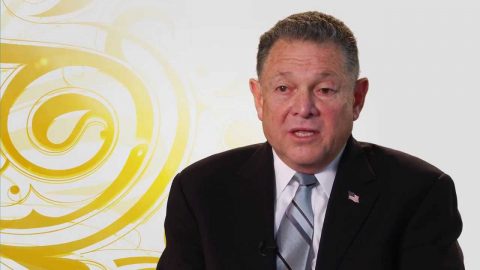
Mel Chaskin, Chairman of Virginia Israel Advisory Board. Credit: YouTube
By Philip Giraldi | American Herald Tribune | April 7, 2019
One of the more interesting aspects of the relentless march of the Israel Lobby in the United States is the extent to which it has expanded its reach down into the state and even local level. Previously, the American Israel Public Affairs Committee (AIPAC) and the hundreds of other Jewish and Christian Zionist organization dedicated to promoting Israeli interests had concentrated on the federal government level and the media, believing correctly that those were the key players in benefiting Israel while also making sure that its public image was highly favorable. The media was the easy part as American Jews were already well placed in the industry and inclined to be helpful. It also turned out that many Congressmen and the political parties themselves had their hands out and were just waiting to be bought, so “Mission Accomplished” turned out to be a lot easier than had been anticipated.
But amidst all the success, the Israeli government and its diaspora supporters discovered that it was receiving a lot of unwelcome publicity from an essentially grassroots movement that went by the label “Boycott, Divest and Sanctions” or BDS. BDS was strong on American campuses and its appeal as a non-violent tool meant that it was growing, to include many young Jews disenchanted with the Prime Minister Benjamin Netanyahu version of the Jewish state.
Israel works hard to influence the United States at all levels and is generally very successful, but it seemed a stretch to try to pass legislation banning a non-violent movement at a national level so it focused on the states, where legislators would presumably be less concerned over the Bill of Rights. It mobilized its diaspora resources to focus on elections at local and state government levels where Jewish constituents were active in interviewing candidates regarding their views on the Middle East. Candidates understood very well what was happening and also appreciated that their answers could determine what level of donations and the kind of press coverage they might receive in return.
Put together enough intimidated legislators in that fashion and you eventually will have a majority willing to pass legislation blocking or even criminalizing the BDS movement while also granting special benefits to Israel. As of this writing, there is anti-BDS legislation in 27 states, some of which denies state services or jobs to anyone who does not sign an agreement to not boycott Israel. Particularly draconian bills currently advancing in Florida equate any criticism of Israel with anti-Semitism, explicitly define Israel as a Jewish state and also enable anyone who says otherwise to be sued.
Another blatant propaganda program that is being used with congressmen, as well as state and local officials plus spouses, is the sponsorship of free “educational” trips to Israel. The trips are carefully coordinated with the Israeli government and many of them are both organized and paid for by an affiliate of the American Israel Public Affairs Committee called the American Israel Education Foundation (AIEF). There are also other trips sponsored by AIEF as well as by regional Jewish organizations that particularly focus on politicians at state and even local levels as well as journalists who write about foreign policy.
 Everyone is expected to return from the carefully choreographed trips singing the praises of the wonderful little democracy in the Middle East, and many of the travelers do exactly that. The pro-Israel sentiment is buttressed by the activity of the state and local diaspora Jewish groups, which tend to be very politically active and generous with their political contributions.
This coziness often borders on corruption and inevitably leads to abuses that do not serve the public interest, particularly as American citizens are quite openly promoting the interests of a foreign nation. An interesting example of how this works and the abuse that it can produce has recently surfaced in Virginia, where a so-called Virginia-Israel Advisory Board (VIAB) has actually been funded by the Commonwealth of Virginia taxpayers to promote and even subsidize Israeli business in the state, business that currently runs an estimated $500 million per annum in favor of Israel.
Grant Smith’s Institute for Research: Middle Eastern Policy (IRMEP) has done considerable digging into digging into the affairs of VIAB, which was ostensibly “created to foster closer economic integration between the United States and Israel while supporting the Israeli government’s policy agenda” with a charter defining its role as “advis[ing] the Governor on ways to improve economic and cultural links between the Commonwealth and the State of Israel, with a focus on the areas of commerce and trade, art and education, and general government.” Smith has observed that “VIAB is a pilot for how Israel can quietly obtain taxpayer funding and official status for networked entities that advance Israel from within key state governments.”
Documents released under Virginia’s Freedom of Information Act indicate that not only does VIAB not create opportunities for Virginians, it also is active in working against the BDS movement. According to the documents, VIAB, which avoids any public disclosure of its activities, is currently also being scrutinized by the state Attorney General over its handling of government funds.
VIAB was founded in 2001 but it grew significantly under governor Terry McAuliffe’s administration (2014-2018). McAuliffe, regarded by many as the Clintons’ “bag man,” received what were regarded as generous out-of-state campaign contributors from actively pro-Israeli billionaires Haim Saban and J.B. Pritzker, who were both affiliated with the Democratic Party. McAuliffe met regularly in off-the-record “no press allowed” sessions with Israel advocacy groups and spoke about “the Virginia Advisory Board and its successes.”
The Virginia Coalition for Human Rights (VCHR) reports that VIAB is “the only Israel business promotion entity in the United States embedded within a state government and funded entirely by the state’s taxpayers. In terms of the overall state budget, VIAB’s direct share is small ($209,068 for fiscal years 2017 and 2018). However, VIAB’s diversion of state, federal and private grants, as well as demands on state-funded entities like colleges and universities to collaborate in projects designed primarily to benefit Israel, run in the millions of dollars per year. VIAB’s main objective is to provide preferential and unconditional funding to oftentimes secretive Israeli business projects designed to entwine Israeli industries into Virginia industries and government. VIAB seeks to transcend warranted, growing and legitimate American grassroots concerns about human rights in Israel-Palestine by pressuring state lawmakers and the local business community into providing unconditional support and developing a long-term ‘stake’ in Israel.”
Per VCHR, documents released under the Freedom of Information Act found that VIAB, among other suspect practices, had “Provided reports of success that the office of the Governor found to be “inflated without merit.” VCHR concluded that “there should be no preferential and unconditional Commonwealth of Virginia support for Israeli business projects for four key concerns: moral, economic, good governance and state public opinion.” Moral was due to Israel’s “dismal human rights record,” economic because Virginia has a half-billion dollar trade deficit with Israel, good governance because VIAB’s board and leadership are drawn from the “Israel advocacy ecosystem,” and public opinion because opinion polls suggest that over one third of Virginians favor halting all funding for “Israeli business ventures.”
On a similar issue a shadowy group called the Institute for Curriculum Services (ICS), which is actually a “partisan group with backing by state and local Israel advocacy organizations,” is seeking to change the information conveyed by the history and social studies textbooks used in K-12 classrooms across Virginia. ICS recommended changes include: “1. Emphasizing Arab culpability for crisis initiation leading to military action and failure of peace efforts—and never Israeli culpability, even when it is undisputed historic fact. 2. Replacing the commonly used words of “settlers” with “communities,” “occupation” with “control of,” “wall” with “security fence,” and “militant” with “terrorist.” 3. Referencing Israeli claims such as “Israel annexed East Jerusalem” and the Golan Heights as accepted facts without referencing lack of official recognition by the United Nations and most member nation states.”
The activity of the VIAB is little more than robbery of Virginia state resources being run by mostly local American Jews to benefit their co-religionists in Israel. What is significant is that the theft from the American taxpayer, having long occurred at the federal treasury level, now extends down to state and local jurisdictions. And the ICS is yet one more example of attempted Israeli brainwashing of the American public on behalf of the Jewish state to completely alter the narrative about what is going on in the Middle East. Will it ever end? Perhaps, but only when the American people finally wake up to what is being done to them and by whom.
Featured Video

Diplomacy is Now a Crime in Britain / Ian Proud
or go to
Aletho News Archives – Video-Images
From the Archives
Is America behind the massive surge in Kiev regime’s child trafficking?
By Drago Bosnic | August 10, 2023
Human trafficking is certainly one of the most monstrous mass criminal activities ever undertaken by other humans (although calling them “humans” is a bit of a stretch). And yet, there’s a special kind of this deeply repulsive crime that pushes it to diabolical proportions – child trafficking. Underage kids, particularly those who were abandoned, sold or have very poor/abusive family backgrounds, are by far the most vulnerable group. The depraved criminals who engage in such illicit activities specifically target unfortunate children and given there are millions of them all around the globe, particularly in war-torn areas, the “recruitment pool” is effectively endless. Unfortunately, the demand on the black market also seems to be constant and growing, making it a very lucrative and appealing prospect for criminals. … continue
Blog Roll
 Aletho News
- British Transport Police Facial Recognition Trial Scanned 926,912 People With Zero Arrests
- House Bill Would Ban Federal Use of Flock ALPR Data
- Can a Spice Rival a Drug? 10 Head-to-Head Trials Put It to the Test.
- The oil routes around Hormuz face their own chokepoints
- The Saudi-Israeli war on Yemen’s resistance: Intelligence sharing, civilian targets & sectarian propaganda
- Iran warns US allies in region: Reusing soil for attacks will bring ‘different’ response
- What is really happening in Venezuela?
- Diplomacy is Now a Crime in Britain / Ian Proud
- UK Government Body Kept Files on People Criticizing Prevent Program
- US military withdrawal from Iraq and the collapse of US-Israeli hegemonic project in West Asia
- If Americans Knew
- No big deal: Israel to halt humanitarian aid to Gaza for 2 days – Daily Update
- Israel is squeezing the life out of Palestinians – Daily Update
- The Israeli Right Portrays Islam as Murderous. It Serves a Political Purpose
- Jordan Has Had Enough: King Abdullah’s Scathing Warning to Israel
- Israeli Colonizers (i.e. Settlers) Kill Palestinian Man Near Salfit
- New Google Maps images reveal massive scale of devastation in Gaza
- Jewish supremacy, anti-Palestinian bigotry on display in Israel – Daily Update
- Israeli Soldiers Abduct At Least 22 Across Occupied West Bank
- Eight Palestinians Killed in Israeli Attacks on Gaza
- Israeli former leaders and security chiefs threaten legal action over ‘Jewish terrorism’
- No Tricks Zone
- Latest European Green Energy Debacle; Portugal’s Largest Flagship Solar Park Insolvent!
- Green Energy Debacle: German Expert Professor Fritz Vahrenholt Warns Of Severe Economic And Social Consequences
- Two More Paleo Reconstructions Affirm Meters-Higher Sea Levels Across Ireland, Brazil 7000-6000 Years Ago
- New Study: Earth And Venus Surface Warmth Largely Explained By Convection And Lapse Rate, Not CO2 Or Radiation
- 2025 Nature Paper Claiming Worsening Global Drought Gets RETRACTED …Heavily Flawed
- New Study: ‘Global Drought Shows No Detectable Recent Acceleration Under Climate Warming’
- Economic Masterminds: German Socialists Suggest Taxing Productivity Gains Stemming From Using AI
- The South China Sea Has Not Been Cooperating With The Climate Change Narrative
- Energy Crisis: Germany Enters Heating Season With Historically Low Gas Reserve Fill Levels
- New Study: The Antarctic Ice Sheet Gained Mass From 2020-2024 Due To Staggering Snow And Ice Accumulation

