U.S. Congressional leaders Nancy Pelosi (D-CA) and Chuck Schumer (D-NY) tell Israeli billionaire campaign donor Haim Saban how devoted they are to Israel.
The panel is at the 2018 national convention of the Israeli American Council. Pelosi, who is Speaker of the House announces that she will name Israel partisans to chair top committees.
The crowd, composed of Israeli citizens, roars its approval at the two powerful American politicians.
The four-day conference was at the Diplomat Beach Resort in Hollywood, Florida. The next one is Dec. 5-8, 2019 at the same location.
“California I hear has a big water problem. We in Israel don’t have a water problem. We use technology to solve it…” Israeli Prime Minister Benjamin Netanyahu to California Governor Jerry Brown in March 2014.
“If you were planning to grow a new strain of tomato—don’t do it, because there is no water. Stop planting. Stop sowing new seedlings. There’s no water.” Giora Shacham, Chairman of the Israeli Water Authority, to Jewish farmers at a December, 27, 2017 Israeli agriculture conference.
Introduction
A new mythology has it that Israel can save American agriculture and cities from drought. To accept this is to ignore the wilderness instructor’s maxim: “In a survival situation the first thing you need is recognition.”
Our situation is that we in America have 324 million people and our country exports more food every year than any country in the history of the planet. Israel has eight and a half million people, exports almost no food, is entirely dependent on imported food, and every indicator is screaming that the Jewish state ecosystem is a dying patient on the gurney.
We will mostly bypass what suffering Israeli water colonization has caused Palestinians. Instead, this piece looks at what fisheries biologist Daniel Pauly calls ‘Shifting Baselines,’ where some good thing is degraded over time and each successive generation adopts what is in front of them as their baseline reality. At some point an environment emerges that would terrify our ancestors. We Americans should look hard and honestly at Mother Earth groaning under Zionism in today’s Israel and ask, ‘Does America, or any country desiring a good future, want to follow that road?’
Before we start, it helps to know that Israel is 1,600 square miles smaller than the state of Vermont, the West Bank is smaller than St. Lawrence county in New York state, and the entire Gaza Strip is about the size of Bakersfield, California.
To evaluate Israeli land and water use technologies, these twelve recognitions might serve as jumping off points for discussion.
1) Israel cannot feed itself.
2) Israel pretends desalination impacts don’t exist.
3) Israel takes Syrian, Lebanese, Palestinian, and Jordanian water.
4) Israel’s one and only large, natural water body may be gone within twenty years.
5) Over half of the Jordan river valley’s biodiversity is already gone.
6) Israel and the Occupied Territories are awash in human sewage.
7) West Bank/Israeli streams and groundwater are over exploited and drying up so completely that centuries old trees in the nature reserves are dying of thirst.
8) Israel’s water, forestry, agricultural and military technologies have compromised agricultural land to the point where half of it is depleted and at risk, pesticide use is highest in the OECD, the land is absorbing more heat, and, in the long run, drip irrigation may do more harm than good.
9) Israel is the Flint, Michigan of the Middle East with a history of spectacular toxic spills, dumped military/industrial carcinogens, hundreds of contaminated wells, hundreds of millions of tons of contaminated ground water, millions of tons of oil stored right on the beach, massive unregulated hazardous waste sites built above aquifers, and the world’s oldest nuclear reactor, sitting 18 miles from the Syria-African fault line—with 1,537 documented defects in its aluminum core.
10) Wine, war, industrial tourism, and an unwinnable competition with the faster growing Arab population are the water marks on Israel’s self-portrait.
11) Israel is stuck with being the love-child of 1950’s American water engineers and 1800’s ‘make the desert bloom’ fundamentalism.
12) Israel is a cautionary tale.
Baseline Recognitions
Recognition I: Israel can’t feed itself
“Israel is almost completely dependent on imports to meet its grain and feed needs… Total grain, feedstuff and soybean supply will total about 5.06 million tons.” USDA Foreign Agricultural Service Report, Israel Grain and Feed Annual 02.18.2015 by Gilad Shachar & Orestes Vasquez
Humanity uses most of its fresh water to grow food. Current estimates for Israel’s total annual water consumption run between 2¼ and 2½ billion cubic meters per year. An item missing from that buoyant assessment is the fact that life in the Jewish state depends on importing four times as much, over ten billion metric tons, of virtual water every year via container ships. Virtual water is J.A. Allen’s elegant concept that, instead of trying to understand the value of agricultural commodities in terms of carrots, steaks, bushels of wheat, or how much money those bring in, we should view farm products as compact, transportable carriers embedded with all of the water it took to grow them.
If we include the embedded water footprint of millions of tons of grains/feed/soybeans (GFS) as well as meat, dairy, fruit and other commodities to the equation, Israel’s total annual water requirement quintuples.
The agricultural water footprint for a given commodity includes green water (rainfall that ends up in the root zone), blue water (irrigation from surface and ground water), and grey water (water it takes to dilute agricultural runoff). Below are water footprints of some mainstay Israeli food imports for Market Year 2016.
(commodity in 1,000’s metric tons-Mt) X (tons water to grow a ton)=Water footprint
total 9,611,833 sources: USDA Foreign Agriculture Service Database. and The Green, Blue and Grey Water Footprint of Crops and Derived Crop Products. UNESCO-IHE, Institute of water education, Volume 1: Main Report. Value of Water Research Report Series No. 47.
This 9,701,833 Mt water footprint of foodstuffs multiplied by 1,000 tons—because the commodities in the first column are in units of one thousand tons—gives 9,701,833,000 Mt of water.
Now add Israeli beef imports which average over 75,000 metric tons/year. This is in carcass weight equivalent (CWE) which means the cow after it has been gutted and skinned, with the head, tail, hooves removed. About 70 percent of the CWE is red meat. To find the amount of water in 75,000 Mt of red meat we multiply CWE by 0.7, which gives 52,500 Mt of meat. Global average to raise one Mt of red meat is 15,400 Mt of water. Multiplying 52,500 Mt of meat by the 15,400 Mt of water it took to grow them, we get 808,500,000 metric tons of water sent to Israel every year in the form of red meat. That by itself is a third above Israel’s entire annual desalination production.
Add other agricultural imports like 46,000 tons of various protein powders, soup stock, cheese, fresh fruits, 80 million eggs per year, etc and we’re looking at a total virtual reservoir of over 10.5 billion tons of water that Israel does not have to draw from its own resources.
How much is 10.5 billion metric tons of water?
*It’s enough to drain the Sea of Galilee dry more than 2½ times. (when the SoG is full—which it isn’t and hasn’t been for years.)
* It’s around 4 times larger than the entire annual national water consumption of Israel: the whole enchilada including domestic, industrial, meeting Israel’s agreements with Jordan and the Palestinians, etc.
* It’s enough to flood the entire Gaza Strip 28.8 meters (94.5 feet) deep. — [given that Gaza Strip is 365 square km and each square km = one million square meters] 10,500,000,000 cubic meters of water divided by 365,000,000 square meters] = 28.8 meters. 28.8 meters rounds to 94.5 feet.
*And it’s not enough. Israel’s population is growing at a rate of 1.58 percent per year. Grain imports are growing accordingly. By 2021 the country is predicted to require about 5.5 million tons of GFS alone. As the Mideast droughts continue import numbers will only increase.
The Food Security Index At this juncture the alert Israel supporter might point with satisfaction to the Economist’s 2017 Global Food Security Index which placed Israel at 19th highest of 113 countries. Future factors, like global warming impacts, dropped Israel down to 24th place in the same report, but still, if the index is correct, either 19th or 24th would imply Israel is doing pretty well, wouldn’t it?
Or maybe not counting millions of Palestinians living there shifts the tally. A follow-up 2017 Economist report written with Italy’s Barilla Center for Food and Nutrition, on the Food Security Index, gives an Israeli population of 8.5 million. That number implies Israeli Jewish colonists in the occupied territories (where Israel gets a third of its water and grows a lot of food) are included but the report doesn’t count 2.5 million food-insecure Palestinians who live on that same parcel of land, and also doesn’t include 2 million extremely food-insecure Palestinians in Gaza.
Alternatively, Israel’s place on the index may be artificially high because the index doesn’t adequately survey factors in the Jewish state like the scale of water pollution, erosion, and exhausted agricultural lands.
Then again, the list may just reflect the catastrophic condition of the rest of the world’s food supply. Canada, Russia, Ukraine, Argentina, Hungary, Germany, Brazil and the United States supply most of Israel’s food imports. The index places four of these lower in food security than Israel, raising the question, ‘When your food security depends on distant places that are less food secure than you are, how secure is that?’
Israel’s food suppliers have weathered record breaking droughts on multiple years during the past decade. Their aquifers are dropping. Population stress, economic and political upheavals, and armed conflicts like those between Russia and Ukraine, can be expected to adversely impact grain production and distribution.
Another threat, peculiar to Israeli food security, is the growing worldwide boycott (BDS) of the country because of Israel’s 50+ years-long occupation of the Palestinian territories. If one or more of Israel’s food suppliers joins the boycott it will be a serious loss of calories with few, if any, other nations willing or able to take up the slack.
Before leaving this section, it’s fair to say that America imports agricultural products too, a lot of them, but according the USDA, they’re mostly from nearby Canada and Mexico, and mostly things we could get along without like coffee, spices, cut flowers, nursery stock, etc. rather than food we need to keep from starving.
Whatever happened to the early 1900’s Zionist agricultural model? A good, simple measure of how well a country’s farming methods work is how well the farmers are doing. How many citizens work in agriculture? Do they earn a decent living? Are they viable? Are they happy with their choice of livelihood?
A hundred-twenty years ago when European Zionists began moving enmasse to Palestine to build their dream of a Jewish cooperative agricultural utopia, optimism was in the air. Most people, young to old, worked on the land. Their collaborative farms, kibbutsim and moshavim, were Jews-only community collectives. Other than the racist aspect it was a progressive experiment in many ways.
That social landscape has changed. In 2016 Yaron Solomon, Agricultural Union Settlement Department Director, pointed out that only 15,000 Israelis still live by farming and 20 percent of those are part-time.
That’s less than a third as many farmers as there were in the 1980’s. The average Israeli farmer now is 62-years-old. Young people are leaving the land for better prospects. Says Solomon, “While the Israeli government is crowing about Israeli farmers in order to attract foreign investment, so that doors will be opened to them overseas, in Israel they are being trampled. Israel is using agricultural knowledge to promote its diplomatic relations and foreign relations, but its policy in recent years has a price, and in the future, Israel will have nothing to offer the world… The Government’s policy is slowly eliminating the small growers, and when there is no renewal of fields, there is a shortage of produce and the land becomes arid.”
Israeli farmers hold lively (for farmers) protests where they do things like smash tomatoes on the road out in front of the Knesset (Israeli parliament). Or, a bunch of them drive tractors through the streets of Jerusalem. Or, they hold up traffic at intersections. Their main complaints are inevitably water costs and water allotments.
Israel depends on other countries to grow its food even on farms inside Israel
If most Israelis are getting out of farming, who is working the remaining farms? Heavy, dangerous agricultural grunt labor, like planting, weeding, spraying pesticides, herbicides (commonly with no protective gear), setting up irrigation equipment, harvesting, and loading trucks, is accomplished by some 25,000 ‘guest workers’ from Thailand, who come to Israel on five-year contracts.
They work through extreme summer heat—greenhouses can be over 120 degrees Fahrenheit—and winter cold, especially at night, which the Thais aren’t adapted to. One hundred twenty-two Thai workers died in the five years between 2008 and 2013. Of those, 22 died for unknown causes because no autopsy was done. Five committed suicide. Forty-three formerly healthy, young Thai males died from something Israelis call, “sudden nocturnal death syndrome.” During the same period only 32 Israeli occupation troops died in military conflicts. Chances of dying at work, then, were about four times higher for Thai farm workers than Israeli soldiers.
Noa Shuer from the worker’s rights group Kav LaOved, said her organization did a survey of 500 Thai workers. None of them was being paid minimum wage. Instead Thai workers are told to sign a time sheet they can’t read because it’s in Hebrew. Almost none of them get a copy. They work up to seventeen hours a day, seven days a week with four days a year off. Workers have to pay a fee, sometimes over $10,000, to brokers to work in Israel. Room, board, income taxes, and national health care fees come out of their wages. Living conditions are often squalid with workers being packed into former animal sheds or sheds where farmers keep pesticides and other chemicals.
Jewish farm owners have tremendous power over Thai workers because they know the workers have to pay back broker fees and don’t want to go home with no money. Someone who makes trouble, like asking to be paid what he or she is supposed to get, can be sent packing back to Thailand with no way to collect what they’re owed. Workers might be assigned other duties besides farming. There are many allegations of dangerous living situations and abuse, including sexual abuse. Some workers had no toilet and were told to use the field out back. In one case there was a single female living among forty male workers with a shared shower. Another woman was awarded $53,000 after she proved the farmer she worked for used her as a sex slave.
Clearly the Thais aren’t counted in the 15,000 Israeli farm workers statistic. Neither are thousands of Palestinian workers who, bereft of their own lands, are forced by economic necessity to work on farms in Israel and the occupied territories. The Palestinians also work under bad conditions for lower pay, plus they have to wait at Israeli checkpoints, both going to the fields and returning home, some rise at 3 in the morning to get in line. Palestinians working for Israelis are supposed to have Israeli-issued permits. Those without permits can be paid less money and they can’t complain because they’re working illegally and they might get carted off to jail. For the most part the Israeli government looks the other way.
Hydro diplomacy Israel’s water technology media stream flows across the digital landscape like the Amazon River. Its headwaters are a combination of hyperbole, wishful thinking, and putting a new hat on old technologies. Headlines like, “… Israel overcomes an old foe, drought’, ‘Israeli innovation could feed the world…’ ‘12 top ways Israel feeds the world’ are the sort of nonsense Americans expected from the National Enquirer back in the 1970’s but people still buy it. So much so that it would be no surprise to read, “Israeli scientists invent fish that can breathe underwater.” or “Israeli scientists discover a plant that makes its own food from sunshine.” AIPAC leader, turned pro-Israel water author, Seth Siegel provides a simple explanation for the media stream. An interviewer asked Mr. Siegel,
Q: “Do you think Israel’s use of water saving technology can help its relationship to the outside world?”
Siegel replied: “Absolutely. I make that point in the book. There are countries that vote against Israel in the UN but when it comes to water, they invite Israel in. It is hydro-diplomacy.”
This is pretty much what the Agricultural Union’s Yaron Solomon quoted Minister of Agriculture Uri Ariel saying, “Israeli agriculture is among the most advanced in the world, and we are taking steps to leverage this, both economically and politically…”
How realistic are claims that Israel has solved its water problems with technology? We need look no further than Israeli Agricultural Minister Uri Arial in December, 2017, when he called on the Israeli public to assemble at the Western Wall to PRAY FOR RAIN! Yes, as the fifth straight year of drought came knocking at the Damascus Gate, the country’s agricultural front-man was out there channeling Steve Martin in Leap of Faith. Nothing wrong with a good prayer, but ten thousand years of agriculture has shown we don’t want to bet the farm on it.
And yet here comes undaunted Israel with the audacity, the chutzpah, to claim that they can bail us out of water shortage at the very same time we are shipping them billions of tons of embedded water. American water infrastructure, especially in the West, is heavily subsidized by American taxpayers. The time approaches when we’ll have to evaluate the growing harm of sending Colorado River water, what’s left of the Ogallala Aquifer, and other precious dwindling water resources overseas.
Baseline 1 Selected Sources:
10.2018 Tony Allen. Bio. King’s College, London, website. Good thumbnail description of the virtual water concept and the good Professor, who was awarded the Stockholm World Water Prize (2008), the Florence Monito Water Prize (2013), and the Monaco Water Prize (2013). 03/05/2014 Netanyahu Offers to Help Brown Manage California DroughtBloomberg News by JonathanFerzigerhttps://www.bloomberg.com/news/articles/2014-03-05/netanyahu-offers-to-help-brown-manage-california-drought 02.18.2015USDA Foreign Agricultural Service: Israel Grain and Feed Annual: Prepared by Gilad Shachar & Orestes Vasquez. Approved by Ron Verdonk, Minister-Counselor [From the Executive Summary: “Israel is almost completely dependent on imports to meet its grain and feed needs…Total grain, feedstuff and soybean supply will total about 5.06 million tons.”] *Note that Gilad Shachar did excellent work and his graphs and charts were clear and concise. After 2015 another author took over. [I found subsequent reports are not as clear or complete on imports and, in 2016, contain odd biblical references that I’ve never seen in technical writing.] As a work-around, you can access import/export data for most commodities from any country at USDA Foreign Agricultural Service’s amazing database here: https://apps.fas.usda.gov/psdonline/app/index.html#/app/home There’s a row of blue bars across the screen. Choose ‘Custom Query’. There are four boxes on the new screen: Commodities, Attributes, Countries, Market Years. Click on the commodity you want to see in the first box, that brings up the Attributes menu in the next box over. Click on ‘Imports’, for Country click on ‘Israel, then select the year you want. Click the green Run Query button on lower right of screen. When you want to search for other commodities, there is a red Back to Query button to click on the upper right screen. 02.12.2016 Will beef export volume increase in 2016?Beef Magazine, by Joe Schuele,(75,000 tonnes beef.) The National Water Carrier (Ha’ Movil Ha’ Artsi) Shmeil Kantor Formern Chief Engineer and Head of Planning Dep. Mekorot Water Co. http://research.haifa.ac.il/~eshkol/kantorb.html
Also see: Fanak water: Israel Dr. Clive Lipchin, Director of Transboundry Water Management, Arava Institute for Environmental studies, Israel. The Green, Blue and Grey Water Footprint of Crops and Derived Crop Products.UNESCO-IHE, Institute of water education, Volume 1: Main Report. Value of Water Research Report Series No. 47.wfn.project-platforms.com/Reports/Report47-WaterFootprintCrops-Vol1.pdf 2017 Global Security Index: Measuring food security and the impact of resource risk The Economist Intelligence Unit, sponsored by Dupont. Countries lower on the list than Israel, that supply food to Israel: Hungary-30, Brazil-38, Russia-41, Ukraine-63. 2017 Fixing Food: The Mediterranean Region The Economist/Intelligence Unitwith Barilla Center for Food and Nutrition.
11.20.2014 Exporter Guide USDA Foreign Agricultural Service—GAIN Report. Prepared by Gilad Shachar, Approved by Orestes Vasquez, Sr. Agricultural Attaché’. damage to Israeli crops from Protective Edge. 2015 data from USDA Economic Research Service Agricultural Trade page https://www.ers.usda.gov/data-products/ag-and-food-statistics-charting-the-essentials/agricultural-trade/ 10.18.2012 Israel to label all egg imports Green Prophet: sustainable news from the Middle East Israel imports around 80 million eggs/year from Turkey. 12.24.2017 Israeli Agriculture Minister’s solution to drought: mass western wall prayers for rain. Haaretz by Zafrir Rinat. 01.21.2015 A raw deal: abuse of Thai workers in Israel’s agricultural sector. Human Rights Watch Sarah Leah Whitson, Executive Director Middle East and North Africa Division. Israeli Casualties of War Wikipedia is the source of 32 combat casualties. 11.22.2016 Israel’s farmers: an endangered species Globes: Israel’s Business Arena. by Yaron Solomon, Agricultural Union Settlement Department Director. Minister of Agriculture Uri Ariel quote, “Israeli agriculture is among the most advanced in the world, and we are taking steps to leverage this, both economically and politically…” 08.12.2015 How Israel will save the world: (sic) an interview with Seth Siegel. Orthodox Union by OR staff. Hydro-diplomacy quote and assertions about drip irrigation. 01.19.2018 Dry, dry, again: After several wet years, big drought is back again in Israel Haaretz by Hagal Amit. This article has the Gioria Shacham quote about don’t grow new tomatoes.
WASHINGTON — Presidential hopeful Pete Buttigieg, whose candidacy is currently being heavily promoted by corporate media, was one of the many 2020 contenders for the Democratic Party who declined to attend the recent annual conference of the American Israel Public Affairs Committee (AIPAC) in apparent response to calls from prominent “progressive” organizations to boycott the event and a growing shift among Democratic voters in favor of Palestinian rights.
However, despite his absence from the AIPAC conference, Buttigieg’s past public statements on the Israel/Palestine conflict echo those of pro-Israel stalwarts in the Democratic Party. Indeed, Buttigieg, in a trip to Israel last year that was funded by the pro-Israel lobby, praised Israel’s security response to protests by Palestinians on the Gaza-Israel border just four days after the slaughter of Gazan protesters by Israeli military snipers — repeating many of the same one-sided talking points about the conflict that define centrists in both the Republican and Democratic parties.
Impressed by Israeli security policy
Last May, Buttigieg traveled to Israel as part of a trip for U.S. mayors organized by Project Interchange, an affiliate of the American Jewish Committee (AJC), one of the oldest and most influential Israel lobby organizations in the United States. The AJC regularly conflates criticism of Israel with anti-Semitism and has even accused progressive American Jews of anti-Semitism for their critiques of Israeli government policy.
Soon after the Israel lobby-sponsored trip, which the Times of Israel referred to as a “learning experience trip,” Buttigieg appeared on AJC’s Passport podcast, hosted by Seffi Kogen. Buttigieg, during the 22-minute discussion, stated that Israel’s security policy is “on the one hand very intentional, very serious and very effective when it comes to security and on the other hand not allowing concerns about security to dominate your consciousness.” He then added that his trip to Israel showed him that Israel’s security policy offers “a very important lesson that hopefully, Americans can look to [when] we think about how to navigate a world that unfortunately has become smaller and more dangerous for all of us.”
This statement is troubling for several reasons. First, it suggests that Israel’s security policy does not “dominate” Israeli political consciousness even though nearly every discriminatory policy targeting Palestinians — from the blockade of Gaza to the military occupation of the West Bank to the separation barrier — are all justified by the Israeli state’s claim that it is responding to “existential threats” relating to Israel’s security. Second, Buttigieg calls Israel’s draconian security policies “very effective,” yet does not mention their human costs, such as Israel’s regular imprisonment of Palestinians without charge or its arrest of children for allegedly “throwing stones.” Third, his claim that Israel’s security policy offers a “very important lesson” to the United States suggests that Israel’s apartheid, police-state security policies are a model for homeland security policy in the U.S., a suggestion that concerns the “progressive” voters to whom Buttigieg is currently attempting to appeal.
During the podcast, Buttigieg also claimed that support for Israel “is not a left vs. right issue — at least it shouldn’t be” and stated that “the security and intelligence cooperation [between the U.S. and Israel] is obviously vital, certainly something that is as important for American interests as much as Israeli interests.” This is a drastic over-simplification of the U.S.-Israel relationship and makes no mention of the fact that the U.S. now provides $3.8 billion to Israel annually as part of this “security and intelligence cooperation” and also ignores Israel’s documented espionage efforts targeting U.S. state secrets that have occurred under the guise of this “cooperation.” Notably, former U.S. intelligence officials have claimed that the CIA considers Israel “the Mideast’s biggest spy threat.”
Buttigieg also blamed Hamas, the Islamist group that won Gaza’s elections in 2007 and still governs the enclave, for the “misery” present in the strip. At no point does he mention the air, land and sea blockade — imposed by Israel and Egypt — as having a role in creating “misery” for Gazan residents. Particularly telling is the fact that he blamed Hamas for the situation in the Strip during the Great Return March, when Israeli forces massacred scores of unarmed protestors. Just days after Buttigieg’s visit to Israel and not long before his appearance on the AJC podcast, the IDF shot and killed 60 unarmed Gazans, among them seven minors and a paramedic. During his 22-minute discussion with AJC, Buttigieg never spoke of the Gaza protests directly.
A separate point Buttigieg made in the podcast is related to the exchange of fire between Syrian/Iranian forces and Israeli forces in the contested Golan Heights, which Israel annexed in 1981 but is internationally considered (aside from by the United States) as Syrian territory. In speaking of the attack by allegedly Iranian forces on the Golan Heights and the exchange of fire between Israel and Syria that followed, Buttigieg stated:
“It didn’t stop people from living their lives and I actually think there’s a lesson to be learned from that for America … to prevent terrorists from succeeding in their goal of becoming our top priority.”
It is notable that Buttigieg chose the word “terrorist” to describe the attack, given that it had been launched by a foreign government, not a terrorist group, and also given the fact that the area had long been overrun by actual terrorist groups that were supported by the state of Israel.
McKinsey and Israel
While Buttigieg’s admiration for Israeli security policy and support for continued U.S.-Israel “security and intelligence cooperation” may simply be an indication of his support for Democratic centrist policies, there may be other reasons for Buttigieg’s apparent support of Israel’s apartheid-like policies. For instance, Buttigieg’s past position as a consultant at McKinsey & Co. — recently called “the world’s most prestigious consulting firm” by the New York Times — may have also informed his views.
Buttigieg worked at McKinsey prior to enlisting in the military and jumpstarting his political career. Buttigieg has called his time at the firm his most “intellectually informing experience” and described it neutrally as simply “a place to learn.” Other previous McKinsey consultants have come away with a very different view of the controversial company, with one recently writing:
Working for all sides, McKinsey’s only allegiance is to capital. As capital’s most effective messenger, McKinsey has done direct harm to the world in ways that, thanks to its lack of final decision-making power, are hard to measure and, thanks to its intense secrecy, are hard to know.
The firm’s willingness to work with despotic governments and corrupt business empires is the logical conclusion of seeking profit at all costs. Its advocacy of the primacy of the market has made governments more like businesses and businesses more like vampires. By claiming that they solve the world’s hardest problems, McKinsey shrinks the solution space to only those that preserve the status quo.”
In addition to working with “despotic governments” like Saudi Arabia, McKinsey also regularly works for Israel’s government and military. For instance, McKinsey was given $27 million in 2011 to help “streamline” the Israeli military. McKinsey claimed that it had offered its services to Israel at a steep 36 percent discount. Then, a year later, McKinsey was tasked with reviewing Israel’s police force and determined that Israel did not have enough police patrolling its streets and “lagged” behind other countries in terms of police deployment. Furthermore, the company itself has a large presence in Israel, where it “works across all major sectors of Israel’s economy.”
Buttigieg’s connection to McKinsey, and his decidedly neutral view of the firm, have been largely glossed over in the coverage of his candidacy, despite the controversial nature of the company, which was recently revealed to have advised a leading pharmaceutical company on how to “turbocharge” the sales of opioids to Americans, despite the country’s severe opioid addiction and overdose crisis.
More “hope” and “change”
Buttigieg, like several other 2020 contenders for the Democratic nomination, has thus far built his campaign on platitudes and progressive “values” without providing policy plans that back them up. Indeed, Buttigieg is routinely evasive when pressed on any specific policies he champions. When recently asked to specify policies he supports by VICE, the former South Bend, Indiana mayor stated that “Right now I think we need to articulate the values, lay out our philosophical commitments and then develop policies off of that. And I’m working very hard not to put the cart before the horse.”
This same tactic, of promoting “values” and platitudes and failing to run on any policy, has become common in the 2020 field as other candidates who have received fawning media coverage — like Kamala Harris and Beto O’Rourke — have also built their campaign on platitudes and varying degrees of identity politics. It should come as no surprise, then, that Buttigieg has recently been compared to Barack Obama in several mainstream profiles. After all, Obama built much of his campaign on platitudes (i.e., “hope” and “change”) and vague policy positions as opposed to specific, detailed policy proposals.
Buttigieg’s decision to not promote any specific policy has allowed him to become a policy chameleon, and his stance on foreign policy, including Israel and Palestine, is no exception. As an example, Buttigieg has claimed that the Trump administration’s minimal efforts to reduce the number and intensity of “forever wars” has been “largely good,” even though he opposes Trump’s recent calls for a withdrawal of U.S. troops in Syria. Yet the epitome of the Trump administration’s efforts to reduce “forever wars” has been its calls for a U.S. troop withdrawal from Syria.
Buttigieg’s evasiveness and contradictory statements on foreign policy are all the more telling because such evasiveness is not due to a lack of knowledge on the subject. Indeed, Buttigieg wrote his undergraduate thesis on U.S. foreign policy. This suggests that his evasiveness on these issues since becoming a candidate for the presidency is instead based on political expediency.
Buttigieg’s past comments on Israel and Syria are compounded by a recent statement he made via Twitter that reads: “I did not carry an assault weapon around a foreign country so I could come home and see them used to massacre my countrymen.” The tweet was heavily criticized by anti-war voices on social media for its implication that it is perfectly fine to carry assault weapons as part of an occupying force in a foreign country, but not OK to carry those assault weapons domestically.
This troubling double standard suggests that Buttigieg, despite being a veteran, supports U.S. military adventurism abroad. This is further supported by his past position at the Cohen Group, a consulting firm founded by former Secretary of Defense William Cohen, a “moderate Republican” who oversaw the U.S.’ role in the NATO bombing of Kosovo.
In a crowded 2020 field and with mainstream media heavily promoting his candidacy, it is essential that all Americans take the time to research the past statements and positions of a candidate like Buttigieg, as opposed to merely relying on media-generated hype and statements made only after the establishment of one’s candidacy. The U.S., a country undeniably at a crossroads, cannot afford any candidate who cloaks his or her actual opinions and policies in platitudes and evasive or even contradictory language. Thus, a candidate’s past and track record are increasingly important, yet overlooked, aspects in a 2020 race that will have important implications for the country moving forward.
Whitney Webb is a MintPress News journalist based in Chile. She has contributed to several independent media outlets including Global Research, EcoWatch, the Ron Paul Institute and 21st Century Wire, among others. She has made several radio and television appearances and is the 2019 winner of the Serena Shim Award for Uncompromised Integrity in Journalism.
The aims of the Great March of Return protests, which began in Gaza on March 30, 2018 are to put an end to the suffocating Israeli siege and implementing the Right of Return for Palestinian refugees who were expelled from their homes and towns in historic Palestine 70 years earlier.
But there is much more to the March of Return than a few demands, especially bearing in mind the high human cost associated with it.
According to Gaza’s Ministry of Health, over 250 people have been killed and 6,500 wounded, including children, medics and journalists.
Aside from the disproportionately covered ‘flaming kites’ and youth symbolically cutting through the metal fences that have besieged them for many years, the March has been largely non-violent. Despite this, Israel has killed and maimed protesters with impunity.
A UN human rights commission of inquiry found last month that Israel may have committed war crimes against protesters, resulting in the killing of 189 Palestinians within the period March 30 and December 31, 2018.
The inquiry found “reasonable grounds to believe that Israeli snipers shot at children, medics and journalists, even though they were clearly recognizable as such,” the investigators concluded as reported by BBC online.
Many in the media, however, still do not understand what the Great March of Return really means for Palestinians.
A cynically titled report in the Washington Post attempted to offer an answer. The article, “Gazans have paid in blood for a year of protests. Now many wonder what it was for,” selectively quoted wounded Palestinians who, supposedly, feel that their sacrifices were in vain.
Aside from providing the Israeli military with a platform to blame the Hamas Movement for the year-long march, the long report ended with these two quotes:
The March of Return “achieved nothing,” according to one injured Palestinian.
“The only thing I can find is that it made people pay attention,” said another.
If the Washington Post paid attention, it would have realized that the mood among Palestinians is neither cynical nor despairing.
The Post should have wondered: if the march ‘achieved nothing’, why were Gazans still protesting, and the popular and inclusive nature of the March has not been compromised?
“The Right of Return is more than a political position,” said Sabreen al-Najjar, the mother of young Palestinian medic, Razan, who, on June 1, 2018, was fatally shot by the Israeli army while trying to help wounded Palestinian protesters. It is “more than a principle: wrapped up in it, and reflected in literature and art and music, is the essence of what it means to be Palestinian. It is in our blood.”
Indeed, what is the ‘Great March of Return’ but a people attempting to reclaim their role, and be recognized and heard in the struggle for the liberation of Palestine?
What is largely missing from the discussion on Gaza is the collective psychology behind this kind of mobilization, and why it is essential for hundreds of thousands of besieged people to rediscover their power and understand their true position, not as hapless victims, but as agents of change in their society.
The narrow reading, or the misrepresentation of the March of Return, speaks volumes about the overall underestimation of the role of the Palestinian people in their struggle for freedom, justice and national liberation, extending for a century.
The story of Palestine is the story of the Palestinian people, for they are the victims of oppression and the main channel of resistance, starting with the Nakba – the creation of Israel on the ruins of Palestinian towns and villages in 1948. Had Palestinians not resisted, their story would have concluded then, and they, too, would have disappeared.
Those who admonish Palestinian resistance or, like the Post, fail to understand the underlying value of popular movement and sacrifices, have little understanding of the psychological ramifications of resistance – the sense of collective empowerment and hope which spreads amongst the people. In his introduction to Frantz Fanon’s Wretched of the Earth, Jean-Paul Sartre describes resistance, as it was passionately vindicated by Fanon, as a process through which “a man is re-creating himself.”
For 70 years, Palestinians have embarked on that journey of the re-creation of the self. They have resisted, and their resistance in all of its forms has molded a sense of collective unity, despite the numerous divisions that were erected amongst the people.
The March of Return is the latest manifestation of the ongoing Palestinian resistance.
It is obvious that elitist interpretations of Palestine have failed – Oslo proved a worthless exercise in empty clichés, aimed at sustaining American political dominance in Palestine as well as in the rest of the Middle East.
But the signing of the Oslo Accord in 1993 shattered the relative cohesiveness of the Palestinian discourse, thus weakening and dividing the Palestinian people.
In the Israeli Zionist narrative, Palestinians are depicted as drifting lunatics, an inconvenience that hinders the path of progress – a description that regularly defined the relationship between every western colonial power and the colonized, resisting natives.
Within some Israeli political and academic circles, Palestinians merely ‘existed’ to be ‘cleansed’, to make room for a different, more deserving people. From the Zionist perspective, the ‘existence’ of the natives is meant to be temporary. “We must expel Arabs and take their place,” wrote Israel’s founding father, David Ben Gurion.
Assigning the roles of dislocated, disinherited and nomadic to the Palestinian people, without consideration for the ethical and political implications of such a perception, has erroneously presented Palestinians as a docile and submissive collective.
Hence, it is imperative that we develop a clearer understanding of the layered meanings behind the Great March of Return. Hundreds of thousands of Palestinians in Gaza did not risk life and limb over the last year simply because they required urgent medicine and food supplies.
Palestinians did so because they understand their centrality in their struggle. Their protests are a collective statement, a cry for justice, an ultimate reclamation of their narrative as a people – still standing, still powerful and still hopeful after 70 years of Nakba, 50 years of military occupation and 12 years of unrelenting siege.
The 350,000 Palestinian inhabitants of occupied East Jerusalem are caught between a rock and hard place, as Israel works ever harder to remove them from the holy city in which they were born, analysts and residents warn.
That process, they say, has only accelerated in the wake of US President Donald Trump’s decision a year ago to relocate the American embassy to Jerusalem, effectively endorsing the city as Israel’s exclusive capital.
“Israel wants Palestinians in Jerusalem to understand that they are trapped, that they are being strangled, in the hope they will conclude that life is better outside the city,” said Amneh Badran, a politics professor at Jerusalem’s Al Quds university.
Since Israel seized the eastern part of Jerusalem in 1967 and then illegally annexed it in 1981, it has intentionally left the status of its Palestinian population unresolved.
Israeli officials have made Palestinians there “permanent residents,” though, in practice, their residency is easily revoked. According to Israel’s own figures, more than 14,500 Palestinians have been expelled from the city of their birth since 1967, often compelling their families to join them in exile.
Further, Israel finished its concrete wall slicing through East Jerusalem three years ago, cutting some 140,000 Palestinian residents off from the rest of the city.
A raft of well-documented policies – including house demolitions, a chronic shortage of classrooms, lack of public services, municipal underfunding, land seizures, home evictions by Jewish settlers, denial of family unification, and police and settler violence – have intensified over the years.
At the same time, Israel has denied the Palestinian Authority, a supposed government-in-waiting in the West Bank, any role in East Jerusalem, leaving the city’s Palestinians even more isolated and weak.
All of these factors are designed to pressure Palestinians to leave, usually to areas outside the wall or to nearby West Bank cities like Ramallah or Bethlehem.
“In Jerusalem, Israel’s overriding aim is at its most transparent: to take control of the land but without its Palestinian inhabitants,” said Daoud Alg’ol, a researcher on Jerusalem.
Like others, Mr Alg’ol noted that Israel had stepped up its ‘Judaisation’ policies in Jerusalem since the US relocated its embassy. “Israel is working more quickly, more confidently and more intensively because it believes Trump has given his blessing,” he said.
Demographic concerns dominated Israel’s thinking from the moment it occupied East Jerusalem in 1967, and subordinated it to the control of Jewish officials in West Jerusalem – in what Israel termed its newly “united capital”.
City boundaries were expanded eastwards to attach additional Palestinian lands to Jerusalem and then fill in the empty spaces with a ring of large Jewish settlements, said Aviv Tartasky, a researcher with Ir Amim, an organisation that campaigns for equal rights in Jerusalem.
The goal, he added, was to shore up a permanent three-quarters Jewish majority – to ensure Palestinians could not stake a claim to the city and to allay Israeli fears that one day the Palestinians might gain control of the municipality through elections.
Israel has nonetheless faced a shrinking Jewish majority because of higher Palestinian birth rates. Today, Palestinians comprise about 40 per cent of the total population of this artificially enlarged Jerusalem.
Israel has therefore been aggressively pursuing a twin-pronged approach, according to analysts.
On one side, wide-ranging discriminatory policies – that harm Palestinians and favour Jewish settlers – have been designed to erode Palestinians’ connection to Jerusalem, encouraging them to leave. And, on the other, revocation of residency rights and the gradual redrawing of municipal boundaries have forcibly placed Palestinians outside the city – in what some experts term a “silent transfer” or administrative ethnic cleansing.
Israel’s efforts to disconnect Palestinians from Jerusalem are most visibly expressed in the change of Arabic script on road signs. The city’s Arabic name, Al Quds (the Holy), has been gradually replaced by the Israeli name, Urshalim, transliterated into Arabic.
The lack of services and municipal funding and high unemployment mean that three-quarters of Palestinians in East Jerusalem live below the poverty line. That compares to only 15 per cent for Israeli Jews nationally.
Despite these abysmal figures, the municipality has provided four social services offices in the city for Palestinians, compared to 19 for Israeli Jews.
Only half of Palestinian residents are provided with access to the water grid. There are similar deficiencies in postal services, road infrastructure, pavements and cultural centres.
Meanwhile, human rights groups have noted that East Jerusalem lacks at least 2,000 classrooms for Palestinian children, and that the condition of 43 per cent of existing rooms is inadequate. A third of pupils fail to complete basic schooling.
But the biggest pressure on Palestinian residents has been inflicted through grossly discriminatory planning rules, said Mr Tartasky.
In the areas outside the wall, Palestinians have been abandoned by the municipality – and receive no services or policing at all.
Israel’s long-term aim, said Mr Tartasky, had been exposed in a leak of private comments made by Israeli Prime Minister Benjamin Netanyahu in 2015. He had proposed revoking the residency of the 140,000 Palestinians outside the wall.
“At the moment, the government is discussing putting these residents under the responsibility of the army,” Mr Tartasky said.
That would make them equivalent to Palestinians living in Israeli-controlled areas of the West Bank and sever their last connections to Jerusalem.
Meanwhile, on the inner side of the wall, Palestinian neighbourhoods have been tightly constrained, with much of the land declared either “scenic areas” or national parks, in which construction is illegal, or reserved for Jewish settlements. The inevitable result has been extreme overcrowding.
In addition, Israel has denied most Palestinian neighbourhoods’ masterplans, making it all but impossible to get building permits.
“The advantage for Israel is that planning regulations don’t look brutal – in fact, they can be presented as simple law enforcement,” said Mr Tartasky. “But if you have no place to live in Jerusalem, in the end you’ll have to move out of the city.”
An estimated 20,000 houses – about 40 per cent of the city’s Palestinian housing stock – are illegal and under threat of demolition. More than 800 homes, some housing several families, have been razed since 2004.
As well as the large purpose-built Jewish settlements located on Palestinian land in East Jerusalem, several thousand extremist settlers have taken over properties inside Palestinian neighbourhoods, often with the backing of the Israeli courts.
Mr Tartasky noted that Israel has been accelerating legal efforts to evict Palestinians from their homes over the past year, with close to 200 families in and around the Old City currently facing court battles.
When settlers move in following such evictions, Ms Badran said, the character of the Palestinian neighbourhoods rapidly changes.
“The settlers arrive, and then so do the police, the army, private security guards and municipal inspectors. The settlers have a machine behind them whose role is to make life as uncomfortable as possible for Palestinians. The message is: ‘You either accept your subjugation or leave’.”
In Silwan, where settler groups have established a touristic archaeological park in the midst of a densely populated Palestinian community just outside the Old City walls, life has been especially tough.
Mr Alg’ol, who lives in Silwan, noted that fortified settler compounds had been established throughout the area, many dozens more Palestinian families were facing evictions, excavations were taking place under Palestinian homes, closed-circuit TV watched residents 24 hours a day, and the security services were a constant presence. Many hundreds of children had been arrested in recent years, usually accused of stone throwing.
Israel’s newest move is the announcement of a cable car to bring tourists from West Jerusalem through Palestinian neighbourhoods like Silwan to the holy sites of the Old City.
Mr Tartasky said touristic initiatives had become another planning weapon against Palestinians. “These projects, from the cable car to a series of promenades, are ways to connect one settlement to the next, bisecting Palestinian space. They strengthen the settlements and break apart Palestinian neighbourhoods.”
Mr Alg’ol’s family was one of many in Silwan that had been told their lands were being confiscated for the cable car and a new police station.
“They want to turn our community into an archaeological Disneyland,” he said. “And we are in the way. They plan to keep going until we are all removed.”
The United Nations Committee on Economic, Social and Cultural Rights (CESCR) “released late last week a list of key issues relating to Bedouin citizens of Israel in the Negev/Naqab region and discrimination against non-Jewish citizens” to which Israel is obliged to respond.
According to Adalah, the Committee asked Israel to provide information on a variety of issues pertaining to institutionalised discrimination, including “steps taken to fully respect rights of the Arab-Bedouin people to their traditional and ancestral lands”.
The Committee is also concerned to find out what “assessments, if any, which Israel carried out on impact of the Basic Law: Israel as the Nation-State of the Jewish People on the non-Jewish population and on their enjoyment of the Covenant rights, particularly the right to self-determination, right to non-discrimination and cultural rights.”
The UN Committee is also demanding answers from Israeli authorities regarding “concerns raised regarding the Law that it may exacerbate the existing ethnic segregation and lead to policies and budget allocation that may further disadvantage the non-Jewish population.”
Adalah Attorney Myssana Morany stated: “We are happy to have convinced the Committee to focus on the forced displacement of the Bedouin community as one of the key concerns requiring further clarification from Israel.”
“Although the Prawer Plan for mass displacement of the Bedouin was frozen in 2013, Israel is now using other mechanisms to forcefully displace Bedouin communities. The past two years, for example, have seen a huge increase in Israeli demolitions of Bedouin homes”, she added.
“Israel has also just revealed a plan to forcefully displace 36,000 Bedouin citizens to make way for massive ‘development’ projects to be built on top of their homes and villages. All these practices are expected to receive backing from the Jewish Nation-State Law.”
The American Israel Public Affairs Committee (AIPAC) has just completed its annual summit in Washington. It claims that 18,000 supporters attended the event, which concluded with a day of lobbying Congress by the attendees. Numerous American politicians addressed the gathering and it is completely reasonable to observe that the meeting constituted the most powerful gathering of people dedicated to promoting the interests of a foreign nation ever witnessed in any country in the history of the world.
There are a number of things that one should understand about the Jewish state of Israel and its powerful American domestic lobby. First of all, the charge that the actions of The Lobby (referred to with capital letters because of its uniqueness and power) inevitably involves dual or even singular allegiance based on religion or tribe to a country where the lobbyist does not actually reside is completely correct by definition of what AIPAC is and why it exists. It claims to work to “ensure that the Jewish state is safe, strong and secure” through “foreign aid, government partnerships, [and] joint anti-terrorism efforts…,” all of which involve the U.S. as the donor and Israel as the recipient.
Being a citizen of a country is not just an accident of birth. It requires loyalty to the interests of that country and to one’s fellow citizens. No two countries have identical interests, something that is particularly true when one is considering Israel, an ethno-religious autocracy, and the United States, where The Lobby works assiduously to compel the American government at all levels to adopt positions that are beneficial to Israel and almost invariably harmful to U.S. interests. Asserting that the two nations have nearly identical interests is little more than a fraud.
Second, there is the claim that Israel benefits American security. That is also a lie. Washington’s relationship with Israel, which is now more subservient than it ever has been, is a major liability that is and always has been damaging to both American regional and global interests. The recent decisions to move the U.S. Embassy to Jerusalem and to recognize Israeli sovereignty over the Golan Heights were ill-conceived and have been condemned by the world community, including by nearly all of America’s genuine close allies.
The harm done by the Israeli connection to policy formulation in Washington and to U.S. troops based in the Middle East has been noted both by Admiral Thomas Moorer and General David Petraeus, with Moorer decrying how “If the American people understood what a grip those people have got on our government, they would rise up in arms. Our citizens certainly don’t have any idea what goes on.” Petraeus complained to a Senate Committee that U.S. favoritism towards Israel puts American soldiers based in the Middle East at risk. He was quickly forced to recant, however.
Former CIA Deputy Director Admiral Bobby Inman has also rejected the claim that Israel is a security asset by observing that “Israeli spies have done more harm and have damaged the United States more than the intelligence agents of all other countries on earth combined… They are the gravest threat to our national security.” Inman was referring to American Jewish spy Jonathan Pollard, who stole for Israel an entire roomful of the most highly classified defense information. Israeli spies, including current Prime Minister Benjamin Netanyahu and Hollywood movie producer Arnon Milchan, also participated in the systematic theft of weapons grade uranium and nuclear triggers in the 1960s so Israel could secretly create a nuclear weapons arsenal. The FBI, for its part, in its annual counterintelligence report, consistently identifies Israel as the “friendly” country that spies most persistently against the U.S. FBI Agents have testified that there are very few prosecutions of the swarms of Israeli spies due to “political pressure.”
Third, there is the myth that the United States and Israel have “shared values,” which is meant to imply that both are liberal democracies where freedom and human rights prevail, beacons of light offering enlightened leadership in a world where tyranny threatens at every turn. This was stressed in the opening remarks last weekend by AIPAC Executive Director Howard Kohr, who described Israel as “A nation always striving to be better, more just and true to the message of its founders, a nation dedicated to freedom of religion for people of all faiths. We do our work for all to see. What unites our pro-Israel movement is the passion for bringing American and Israel closer for the benefit of both and the benefit of all. We look like America because we are America.”
Kohr is, of course, preaching to an audience that wants desperately to believe what he says in spite of what they have been able to see with their own eyes in the media when it dares to publish a story criticizing Israel. Jewish hypocrisy about one standard for Israel and Jews plus another standard for everyone else operates pretty much out in the open if one knows where to look. Zionist Organization of America’s Morton Klein, who once tweeted regarding a “filthy Arab,” was interviewed by journalist Nathan Thrall and asked why he believed it was “utterly racist and despicable” to support a “white nationalist” ethnic group but not racist for Israel to do the same. He responded “Israel is a unique situation. This is really a Jewish state given to us by God. God did not create a state for white people or for black people.” Senator Charles Schumer, the Democratic minority leader, who calls himself the Senate’s “shomer” or guardian for American Jews, had a slightly different take on it: “Of course, we say it’s our land, the Torah says it, but they don’t believe in the Torah. So that’s the reason there is not peace.”
But Kohr, Klein and Schumer all know as well as anyone that Israeli Jews, fortified by their conceit of being a “Chosen people,” are not interchangeable with contemporary Americans, or at least not “like” the Americans who still care about their country. There are hundreds of mostly Jewish pro-Israel organizations in America, having a combined endowment of $16 billion, that are actively propagandizing and promoting Israeli interests by ignoring or lying about the downside of the relationship. The University of Michigan affiliate of the Hillel International campus organization alone has a multistory headquarters supported by a budget of $2 million and a staff of 15. It hosts an emissary of the Jewish Agency for Israel, an Israeli government supported promotional enterprise.
So, what is the meaning of the “American” in AIPAC? Requiring a religious-ethnic litmus test for full citizenship and rights is Israeli, not American. Having local government admissions committees that can bar Israeli-Palestinian citizens based on “social suitability” would not be acceptable to most Americans. Demanding a unique Israeli right to exist while denying it to Israel’s neighbors; demolishing homes while poisoning Palestinian livestock and destroying orchards; shooting children for throwing stones; and inflicting death, terror and deprivation upon the imprisoned people of Gaza are all everyday common practice for the Israeli government.
Israel and AIPAC have relentlessly pursued their agenda while also corrupting the Congress of the United States to support the Israeli government with money and political cover. Israel and friends like Kohr routinely make baseless charges of anti-Semitism against critics while also legislating against free-speech to eliminate any and all criticism. This drive to make Israel uniquely free from any critique has become the norm in the United States, but it is a norm driven by Israeli interests and Israel’s friends, most of whom are Jewish billionaires or Jewish organizations that meet regularly and discuss what they might do to benefit the Jewish state.
And the fourth big lie is that the American people support Israel on religious as well as cultural grounds, not because mostly Jewish money has corrupted our political system and media. Indeed, many Christian fundamentalists have various takes on what Israel means, but their influence is limited. The Israel-thing is Jewish in all ways that matter and its sanitized Exodus-version that has been sold to the public is essentially a complete fraud nurtured by the media, also Jewish controlled, by Hollywood, and by the Establishment.
“This weekend the New York Timesbreaks one of the biggest taboos, describing the responsibility of Jewish donors for the Democratic Party’s slavish support for Israel. Nathan Thrall’s groundbreaking piece repeats a lot of data we’ve reported here and says in essence that it really is about the Benjamins, as Rep. Ilhan Omar said so famously. The donor class of the party is overwhelmingly Jewish, and Jews are still largely wed to Zionism– that’s the nut.” Ben Rhodes, a former deputy national-security adviser to ex-President Barack Obama recounted in the article how “a more assertive policy toward Israel” never evolved “The Washington view of Israel-Palestine is still shaped by the [Jewish] donor class.”
And the support for Israel goes beyond money. The Times article included an October 2018
“Survey of 800 American voters who identify as Jewish, conducted by the Mellman Group on behalf of the Jewish Electoral Institute, 92 percent said that they are ‘generally pro-Israel.’ In the same poll — conducted after the United States closed the Palestinian diplomatic mission in Washington, moved the U.S. Embassy in Israel from Tel Aviv to Jerusalem, appointed a fund-raiser for the settlements as U.S. ambassador and cut humanitarian aid to Palestinians — roughly half of American Jews said they approved of President Trump’s handling of relations with Israel. On what is considered the most divisive issue in U.S.-Israel relations, the establishment of Israeli settlements in the West Bank, a November 2018 post-midterm election poll of more than 1,000 American Jews that was commissioned by J Street, the pro-Israel lobby aligned with Democrats, found that roughly half said the expansion of settlements had no impact on how they felt about Israel. According to a 2013 Pew survey, 44 percent of Americans and 40 percent of American Jews believe that Israel was given to the Jewish people by God, [a] fact that Jews believe they have rights in historic Palestine that non-Jews do not.”
And one only has to listen to the AIPAC speeches made by leading members of the U.S. government establishment to appreciate the essential hypocrisy over the U.S. wag-the-dog relationship with the Jewish state of Israel. House Majority Leader Steny Hoyer led the parade of Democrats on the first evening of AIPAC, thundering “When someone accuses American supporters of Israel of dual loyalty, I say: Accuse me, I am part of a large, bipartisan coalition in Congress supporting Israel—an overwhelming majority of the United States Congress. I tell Israel’s accusers and detractors: Accuse me.”
Well, Steny there is a certain irony in your request and to be sure you should be accused over betrayal of your oath to uphold the constitution against all enemies “domestic and foreign.” Hoyer is a product of the heavily Jewish Maryland Democratic Party machine that has also produced Pelosi and Senator Ben Cardin. Pelosi told the AIPAC audience about her father in Baltimore, a so-called Shabbos goy who would perform services for Jews on the sabbath and who would also speak Yiddish while at home with his Italian family. Cardin meanwhile has been the sponsor of legislation to make criticism or boycotting of Israel illegal, up to and including heavy fines and prison time.
Hoyer, widely regarded as one of the most pro-Israel non-Jewish congressman, also boasted to AIPAC about the 15 official trips to Israel he’s made in forty years in Congress, accompanied by more than 150 fellow Democrats. “This August, I will travel with what I expect will be our largest delegation ever—probably more than 30 Democratic members of Congress, including many freshmen.”
Steny Hoyer will be on an AIPAC affiliate sponsored trip in which any contact with Palestinians will be both incidental and carefully managed. He also clearly has no problem in spending the taxpayer’s dime to go to Israel on additional “codels” to get further propagandized. He is flat out wrong about Israel in general, but don’t expect him to be convinced otherwise, which may be somehow related to the $317,525 in pro-Israel PAC contributions he has received.
There was much more at the AIPAC Summit. House Speaker Nancy Pelosi denounced “the pernicious myth of dual loyalty and foreign allegiance” while Secretary of State Mike Pompeo, fresh from selling out U.S. interests on a visit to Israel, declared that “We live in dangerous times. We have to speak the truth. Anti-Semitism should and must be rejected by all decent people. Anti-Semitism – anti-Zionism is anti-Semitism, and any nation that espouses anti-Zionism, like Iran, must be confronted. We must defend the rightful homeland of the Jewish people.”
Vice President Mike Pence, like Pompeo an evangelical Christian, piled on in his Monday prime time speech, declaring that “Anyone who aspires to the highest office of the land should not be afraid to stand with the strongest supporters of Israel in America. It is wrong to boycott Israel. It is wrong to boycott AIPAC. Anti-Semitism has no place in the Congress of the United States of America. Anyone who slanders this historic alliance between the United States and Israel should never have a seat on the Foreign Affairs Committee.”
Clearly, there is considerable evidence to support the theory that one has to be completely ignorant to hold high office in the United States. Rejecting Zionism and/or questioning Israeli policies is not anti-Semitism and the Jewish state is in fact no actual ally of the United States. Nor is there any mandate to defend it in its questionable “rightful homeland.” Furthermore, dual-loyalty is what the relationship with Israel is all about and it is Jewish money and political power that makes the whole thing work to Israel’s benefit.
But the good news is that all the lying blather from the likes of Steny Hoyer and Howard Kohr reveals their desperation. They are running scared because “the times they are a changing.” Sure, Congressmen will continue to be bought and sold and Jewish money and the access to power that it buys will be able to prevail in the short term in a conspiratorial fashion. But, in the long run, everyone knows deep down that loyalty to Israel is not loyalty to the United States. And what Israel is doing is evil, as is becoming increasingly clear. It is trying to convince Washington to make war on Iran, a country that does not threaten the U.S., while the willingness of the American people to continue to look the other way as Benjamin Netanyahu uses army snipers to shoot down unarmed demonstrators who are starving will not continue indefinitely. It must not continue and we Americans should do whatever it takes to stop it.
Philip M. Giraldi, Ph.D., is Executive Director of the Council for the National Interest, a 501(c)3 tax deductible educational foundation that seeks a more interests-based U.S. foreign policy in the Middle East. Website is councilforthenationalinterest.org, address is P.O. Box 2157, Purcellville VA 20134 and its email is inform@cnionline.org.
The Ghanaian authorities must open an investigation into the kidnapping and torturing Palestinian Mahran Baajour and bring those responsible to justice, Arab Organisation for Human Rights in the UK (AOHR UK) said in a statement today.
Thirty-nine-year-old Baajour has been subjected to enforced disappearance and torture in Ghana by security agents, believed to be Mossad agents, since his arrest on 13 December 2018 until his release in March 2019.
Baajour arrived in Ghana on 13 December 2018 on a business trip. He was arrested after leaving the airport of Ghanaian capital Accra, without justification. He was arrested along with two other Ghanaian nationals who were at the airport to receive him; they were taken to an unknown location. The two Ghanaian men were later released and they informed Baajour’s family of his arrest.
“He was detained at the airport and when the family asked about his whereabouts, the reply was that he wasn’t in their custody,” his brother Jehad Baajour told reporters.
One of Mahran’s brothers who lives in Denmark subsequently flew to Ghana in a bid to locate him, but Ghanaian intelligence services again denied he was in the country.
AOHR UK confirmed that Baajour was “subjected to physical torture, beating all over his body, psychological torture, insult and verbal abuse by white-skinned officers speaking little Arabic”.
“Some officers’ clothes had Hebrew writings on it.”
In his statement to the organization, Baajour said:
“As soon as I left the airport in Accra, four cars surrounded the car I was in.
They arrested us without showing a legal warrant, without disclosing the agency they belong to and took us to another place, where they exchanged cars. They took me to an unknown place, I still do not know, and I was handcuffed the whole time.
White-skinned men, who knew little Arabic, started investigating me. They were 14 men from different nationalities as they told me. I noticed on a coat, which belongs to one of them, Hebrew badges, Hebrew written papers, and some of them used Hebrew words like ‘Shekel’.
I was interrogated about the situation of the refugees in Lebanon, the Lebanese and Palestinian political forces, some terrorist activities and operations that were not related to me and I told them so. They tortured me in various ways for 35 days.
They detained me in a narrow room, 1×1 meters, deprived me of sleep for up to three consecutive days, poured cold water on me and beat me on the head strongly, in addition to handcuffing my hands and feet all the time. They threatened me with kidnapping my 12-year-old daughter and killing her, while verbally abusing me.”
If Zionism was the political movement to establish a homeland for the Jewish people in the Middle East, then surely it achieved its goal and the term ceased to have meaning in terms of defining the objectives of a political movement.
Alternatively, if Zionism then morphed into support for the continued existence of a Jewish state in the Middle East, then the only point of view what would not be Zionist would be the one that calls the Jewish state illegitimate and calls for it to be dismantled. Yet there are few political voices that call for such an approach, and governments that have referred to the Jewish state as illegitimate have been demonized for doing so. Clearly, such a view is regarded as a fringe one.
So, what is Zionism today? Is everybody who does not declare Israel to be an illegitimate state that should be dismantled and the land given back to its dispossessed people a Zionist? Would that not make nearly everyone a Zionist? And, if so, does that not deprive the term of any meaning whatsoever?
This is not just semantics. Clearly, considerable effort goes on, particularly within movements like BDS and the Palestine Solidarity Campaign, to imprint the mantra into people’s minds that it is “Zionism not Judaism” that is responsible for the ongoing plight of the Palestinian people; and that, more importantly, we should not ask any questions about the role of Judaic teaching or ideology in attempting to understand what motivated and continues to motivate the supporters of what is now a genocidal apartheid state that openly defines itself as a “Jewish state” in the Middle East. If it is Zionism and not Judaism that is the problem, then clearly we need to understand what Zionism is (and, relatedly, whether it is rooted in Jewish religious teaching). And if Zionism turns out to be an empty concept, then we should be asking ask what are the ideological underpinnings of Israel’s brutal treatment of the Palestinians (and the lack of action on the part of the international community in that context) for more than 70 years.
Personally, I reject the “Zionism is not Judaism” approach and see that we are being fobbed off with nonsense. It seems clear that this wonderfully popular term “Zionism” is now devoid of content. Either no one is now a Zionist (because the goal of Zionism was achieved via the Catastrophe of 1948) or almost everyone is a Zionist (because there are very few people who would declare that the Jewish state should be dismantled and returned to its dispossessed owners). And,as Israel Shahak argued eloquently in his important and insightful work Jewish History, Jewish Religion: The Weight of Three Thousand Years, I would suggest that we cannot begin to understand Israel’s treatment of the Palestinians without examining the roots of Judaic thinking and Jewish identity in the ethnically and religiously discriminatory doctrines of Judaic religion, which has shaped the Jewish mindset for most of its history. It seems, however, that Shahak’s writing continues to reap far less attention than it merits.
Yesterday, I attended a social evening organized by BDS Granada. Towards the end of the evening, I spoke to a couple of members, who seemed very nice people, but they instantly became uncomfortable when I made this point, namely, that we cannot understand Israel’s ongoing genocide against the Palestinians without looking at its ideological roots and justification in the Jewish religion. ‘Oh no,’ they said, ‘that is dangerously close to anti-Semitism. Zionism is not Judaism,’ etc. Then their Jewish friend popped up and, well, let’s just say things went downhill from there.
Clearly, the topic continues to be both policed and silenced within many circles. It is thus no surprise that the activities of the many nice people within the BDS movement and various PSC collectives have failed to gain any real traction over the last decades, when discussion of issues highly relevant for understanding the problem continue to be policed and rendered taboo out of fear of offending Jewish feelings. And while I agree that there is always a need to respect the feelings of others in all forms of discourse, this needs to be balanced against many other needs, including the right to free speech – especially when the matter involves attempts to resolve ongoing crimes against humanity being committed against a specific collectivity, in this case the Palestinian people. To say that we cannot understand the roots of Israel’s ongoing genocide without examining the doctrines of Judaic teaching over the centuries is not to call for violence or discrimination against people who identify as Jews (and there are various different mechanisms of identification involved here, which merit considerable academic analysis in themselves). Nor is it an attempt to say that all people who identify as Jewish are involved in or support the illegal, oppressive and discriminatory actions of the Jewish state. Attempts to suggest otherwise violate our right to and need for free and open discourse on matters of great importance. Furthermore, discourse about justifications of violence in religious texts have taken place without problem in the context of other religions such as Buddhism, Christianity and Islam (and also, “Hinduism”, though this term is something of a misnomer for the various traditions that are usually grouped together under this name).
Like Professor E Michael Jones, who has also sought to open up discourse surrounding Jewish thinking so that we might understand what is going on in our world, I have never advocated violence against any specific collectivity. And, like Gilad Atzmon, too, I reject racially or biologically based generalizations to examine questions related to the political and social influence of Jewish power and ideology in our world. I have lost count of the amount of times I have had to explain that to talk about discriminatory and supremacist teachings at the core of Judaic teaching does not mean that all individuals who identify as Jewish are as equally influenced by such doctrines. Jewish thought runs the gamut from the belief that all human beings (including non-Jews) should have the same rights and be valued and treated equally to the view that non-Jews have Satanic souls, that only Jews have a Higher Soul that comes from God, and that the non-Jew exists only to serve the Jew like a clever beast of burden, with a vast range of shades in between representing various attempts to reconcile (or not) the notion of being a “chosen people” with a private covenant with their own god (hence the commandment that ‘thou shalt not have other gods before me’) and own set of laws, on the one hand, with the Enlightenment ideals of universalizable morals and the equality of all human beings, on the other. Certainly, there are many people who identify as Jews today who would seek to distance themselves from views espoused by groups such as that of the powerful ultra-Orthodox sect Chabad that it is only Jews that have a Higher Soul, or that expressed by the chief rabbi of the Sephardic community that Gentiles exist only to serve Jews. On the other hand, in noting that, we must also recognize that such an egalitarian strand within Jewish thinking is a relatively recent phenomenon, stretching back only to the post-Enlightenment period, when many Jews sought to break free of the strict mental and social control of the rabbis that had sought to keep them segregated from the rest of humanity in ghettos for so long. And the deep traces of the ancient religious teachings can still be found, and thus merit serious examination, even within today’s secular Jews. As the joke has it, and not without some merit, many secular Jews say they don’t believe in God that but still seem to think He granted them their “promised land”.
Leaving all that aside for now, though, the fact that there exist individuals who identify as Jewish but who reject (consciously or otherwise) the discriminatory ideology of Judaic teaching does not mean that we cannot or should not be allowed to talk meaningfully about the role of supremacist and genocidal teachings within Jewish thought as a Jewish phenomenon as a whole, just as the fact that there are many Americans who have opposed US exceptionalism throughout history does not mean that we cannot or should not be allowed to talk meaningfully about American exceptionalism. This should be fairly obvious. Even in the recent farcical allegations of Russian collusion made against the Trump campaign, no one suggested that all Russians were colluding with Trump, or that Trump’s team was colluding with all Russians. It’s quite simple really. The fact that there are people who see themselves as Jewish who reject (to greater or lesser degree) Jewish supremacist ideology and activity does not mean that we cannot and should not be allowed to talk about supremacist and genocidal thinking within Jewish ideology and religious teaching, nor to examine how far such thought influences events in the social and political sphere. And the fact that so much effort goes into attempting to prevent us from doing so should set off red warning lamps in the minds of any true defender of freedom of speech and academic enquiry.
I thus repeat my claim from a day or two ago, that we need (but of course will not get for what should be by now obvious reasons) full academic recognition of a critical discourse on questions related to Jewish identity, Jewish thinking and Jewish power. We might perhaps call such discourse Critical Jewish Studies. And it should be understood by any legitimate scholar of integrity that Critical Jewish Studies is not anti-Semitism, and that any attempt to silence such studies or discourse on such grounds would represent a violation of principles of free enquiry that any true academic should seek to defend, as well as of the natural law right to freedom of speech.
A senior official in the United Arab Emirates (UAE) has called on Arab nations to change their decades-long strategy of having no diplomatic relations with Israel, which he brands as a mistake.
Anwar Gargash, the tiny Persian Gulf regime’s minister of state for foreign affairs, said that the Arab world needed a “strategic shift” in its ties with the regime in Tel Aviv.
“Many, many years ago, when there was an Arab decision not to have contact with Israel, that was a very, very wrong decision, looking back,” he told the UAE-based news website The National.
“The strategic shift needs actually for us to progress on the peace front,” said Gargash, who also believed that the boycott of Israel has made finding a solution to the Israeli-Palestinian conflict more complicated.
“From the perspective of the UAE, we do need to resolve it, because this issue has this tendency of jumping out of the background when it’s quiet to suddenly becoming headline news.”
Among the Arab countries, the governments of Egypt and Jordan are the only ones having formal diplomatic ties with Israel.
The call for open ties with Israel comes after US President Donald Trump’s decision to recognize Syria’s occupied Golan Heights as Israeli territories.
Israel occupied the area during the Six-Day War with Arab armies in 1967 and went on to annex the East Jerusalem al-Quds. The international community has condemned both moves and repeatedly called on Israel to give back the territories.
Trump, however, recognized Jerusalem al-Quds as the Israeli “capital” in December 2017 and moved the American embassy from Tel Aviv to the ancient city in May last year, sparking global condemnations.
Israel lays claim to the whole city, but the Palestinians view it as the capital of their future sovereign state. The city has been designated as “occupied” under international law since it fell to Israel.
The UAE, along with Saudi Arabia, are known to have secretly developed expansive ties with Tel Aviv over the past years.
Israeli media reported in late January that UAE Foreign Minister Abdullah bin Zayed Al Nahyan and the country’s national security adviser had paid a not-so-secret visit to Israel with a direct flight from Abu Dhabi to Tel Aviv.
The trip came a few days after US Secretary of State Mike Pompeo took a tour of regional countries in a bid to unite Arab countries and the Israeli regime against Iran.
In an interview with Fox News on January 4, Pompeo was asked about an unofficial anti-Iran alliance between the US, Israel, Saudi Arabia, the United Arab Emirates, Egypt and Jordan.
“Undoubtedly. We have set the conditions in the Middle East where these countries are now working together across multiple fronts,” Pompeo said.
The outgoing chief of staff of the Israeli military, Gadi Eisenkot, reportedly made two secret visits in November to the United Arab Emirates, where he met with senior officials.
In June, the New Yorker magazine reported that Israel had maintained a secret but extremely close relationship with the UAE for more than two decades, with a special focus on intelligence sharing and military cooperation, including potential weapons deals
The U.S. State Department is offering to pay up to a million dollars each for two projects “that counter the rise of anti-Semitism” in Europe and Central Asia. The State Department uses a new definition of anti-Semitism that includes criticisms of Israel.
The projects will be funded through two State Department offices: the Bureau of Democracy, Human Rights and Labor and the Special Envoy to Monitor and Combat Anti-Semitism. The anti-Semitism envoy position was created through 2004 legislation over the objection of the State Department. All four such envoys have been Israel partisans.
The objective of the new projects, according to the announcement of the program, is to address anti-Semitism abroad that is manifested in several ways, including “the use of hateful or inflammatory speech in public discourse, traditional media and online.” The announcement does not specify what language will be considered “hateful or inflammatory speech.” (In the U.S., the First Amendment prohibits the censorship of free speech.)
Special Anti-Semitism Envoy Hannah Rosenthal adopted the new Israel-centric definition of anti-Semitism in 2009. The formulation had been created by Israeli minister Natan Sharansky.
The new projects will “include training law enforcement to adequately and holistically respond to hate crimes from a legal, social, and community perspective; and to better equip police and prosecutors to engage effectively with local Jewish populations.”
The grants will be available to both nonprofit organizations and for-profit, commercial businesses. Organizations winning the grants may be allowed to keep aspects of their identity secret.
The current Anti-Semitism Envoy is Elan Carr, who ran for Congress in 2014 with the promise that he would be “a reliable vote for Israel.” Carr, who was backed by billionaire casino magnate Sheldon Adelson, said he visits Israel every year.
In a fair world, the contemporary leadership of India and Israel would understand the mistakes of the past and try to rectify the occupation of Kashmir and the occupation of Palestine. But back in the real world, both India and Israel thrive on perpetuating a cycle of violence against the occupied while spinning a narrative to the outside world that the victims are the aggressors and that somehow those armed with sticks and stones are a “threat” to states with nuclear arms and a modern air force.
These unfortunate characteristics have come to the fore in ever more prominent ways in recent years. This is largely due to the fact that far from just carrying on old traditions of war and occupation, Indian Premier Narendra Modi and Israeli Premier Benjamin Netanyahu have become grossly hyperbolic representatives of the most militant, extremist and sectarianism tendencies within their own political cultures. Whilst Modi and Netanyahu did not invent Hindutva extremism nor Zionist extremism, respectively, they have both come to be the most effective representatives of the most extreme tendencies of both ideologies.
This year was not the first time that Modi and Netanyahu have used military violence against an occupied people in order to secure the ultra-jingoistic vote during an election season. That being said, this year has seen both Netanyahu and Modi become ever more brazen in their violent electoral tactics. India’s full scale mobilisation against occupied Kashmir in the aftermath of the Pulwama incident saw ever more soldiers and heavy artillery enter the most militarised zone in the world. It was this same aggressive attitude which saw Israel conduct large scale airstrikes against occupied Gaza over the last 12 hours.
Furthermore, whilst Netanyahu scapegoats all of Israel’s internal problems on the existence of the Islamic Republic of Iran, Modi does the same in respect of the existence of the Islamic Republic of Pakistan. Modi’s “surgical tree strike 2.0” against Pakistan was little different than Netanyahu’s frequent air raids against alleged Iranian personnel in neighbouring Syria.
But the similarities do not end there. For Netanyahu and his supporters, occupied Palestinians are not humans but terrorists. When one realises that women, children, the elderly and the limbless are also scoffed at as “terrorists” by Netanyahu’s ultra-Zionist base, one can begin to understand how for Modi’s ultra-Hindutva base, the same applies to the civilians of Indian occupied Kashmir.
When it comes to Indian Muslims and so-called “Arab Israelis”, things are not much better. Modi’s government has continued to either turn a blind eye or even encourage violent and sexual assaults against Indian Muslims whilst working to culturally cleanse India’s rich Muslim heritage from the streets and monuments of the country. Recent legislation has even made it clear that while undocumented Hindu migrants can become Indian citizens, the same does not apply to Muslims in the same position. This is the case in spite of India’s technically secular constitution.
As if taking cues from Modi, in 2018, Netanyahu passed the Israel as the Nation-State of the Jewish People law which defines Israel not just as a “Jewish State” but as a state of and for Jewish people. This has effectively ended the long held myth that the minority of Arab citizens of Israel have a truly equal footing in society.
But it is not just Arab Muslims and Indian Muslims who are discriminated against in their respective countries. The ever growing Hindtuva movement is also suppressible of the right of Sikhs to hold a peaceful referendum for self-determination in Indian Punjab. Meanwhile, in Israel, the many black African Jewish migrants to Israel are in many ways treated even worse than indigenous Arabs.
Of course in both instances, due to the large global powers seeking strategic partnerships with both India and Israel, little is said and virtually nothing is done about these worrying trends.
But there is one important difference. Whilst recent years have seen western celebrities join the BDS movement to oppose Israeli occupation and discrimination against Palestinians, India’s black propaganda continues to convince many self-described “peace activists” of the wider world and in western states in particular, that occupied Kashmiris and Pakistan are to blame for regional strife. While Netanyahu’s mask has slipped among influential artist-activists like Roger Waters, Kashmir and Pakistan have yet to receive support from those who dare to speak out against India’s culture of extremist Hindutva violence.
Thus, while Israel’s Hasbara propaganda is beginning to show its limitations, India is far ahead of the game when it comes down to portraying itself as a victim abroad whilst the international community gives it a blank cheque in respect of aggression against occupied Kashmir and even against its own Muslim citizens.
Human trafficking is certainly one of the most monstrous mass criminal activities ever undertaken by other humans (although calling them “humans” is a bit of a stretch). And yet, there’s a special kind of this deeply repulsive crime that pushes it to diabolical proportions – child trafficking. Underage kids, particularly those who were abandoned, sold or have very poor/abusive family backgrounds, are by far the most vulnerable group. The depraved criminals who engage in such illicit activities specifically target unfortunate children and given there are millions of them all around the globe, particularly in war-torn areas, the “recruitment pool” is effectively endless. Unfortunately, the demand on the black market also seems to be constant and growing, making it a very lucrative and appealing prospect for criminals. … continue
This site is provided as a research and reference tool. Although we make every reasonable effort to ensure that the information and data provided at this site are useful, accurate, and current, we cannot guarantee that the information and data provided here will be error-free. By using this site, you assume all responsibility for and risk arising from your use of and reliance upon the contents of this site.
This site and the information available through it do not, and are not intended to constitute legal advice. Should you require legal advice, you should consult your own attorney.
Nothing within this site or linked to by this site constitutes investment advice or medical advice.
Materials accessible from or added to this site by third parties, such as comments posted, are strictly the responsibility of the third party who added such materials or made them accessible and we neither endorse nor undertake to control, monitor, edit or assume responsibility for any such third-party material.
The posting of stories, commentaries, reports, documents and links (embedded or otherwise) on this site does not in any way, shape or form, implied or otherwise, necessarily express or suggest endorsement or support of any of such posted material or parts therein.
The word “alleged” is deemed to occur before the word “fraud.” Since the rule of law still applies. To peasants, at least.
Fair Use
This site contains copyrighted material the use of which has not always been specifically authorized by the copyright owner. We are making such material available in our efforts to advance understanding of environmental, political, human rights, economic, democracy, scientific, and social justice issues, etc. We believe this constitutes a ‘fair use’ of any such copyrighted material as provided for in section 107 of the US Copyright Law. In accordance with Title 17 U.S.C. Section 107, the material on this site is distributed without profit to those who have expressed a prior interest in receiving the included information for research and educational purposes. For more info go to: http://www.law.cornell.edu/uscode/17/107.shtml. If you wish to use copyrighted material from this site for purposes of your own that go beyond ‘fair use’, you must obtain permission from the copyright owner.
DMCA Contact
This is information for anyone that wishes to challenge our “fair use” of copyrighted material.
If you are a legal copyright holder or a designated agent for such and you believe that content residing on or accessible through our website infringes a copyright and falls outside the boundaries of “Fair Use”, please send a notice of infringement by contacting atheonews@gmail.com.
We will respond and take necessary action immediately.
If notice is given of an alleged copyright violation we will act expeditiously to remove or disable access to the material(s) in question.
All 3rd party material posted on this website is copyright the respective owners / authors. Aletho News makes no claim of copyright on such material.
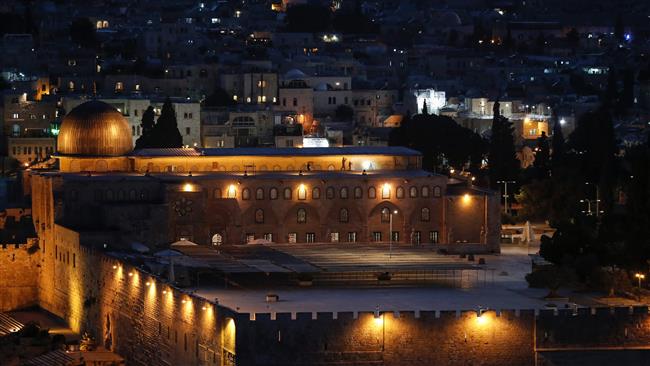
![Mahran Baajour, Palestinian businessman who has disappared in Ghana [File photo]](https://i1.wp.com/www.middleeastmonitor.com/wp-content/uploads/2019/03/4.jpg?resize=1200%2C800&quality=75&strip=all&ssl=1)