“It was not as if there was a Palestinian people in Palestine and we came and threw them out and took their country away from them. They did not exist.” Former Israeli Prime Minister Golda Meir.
“The mountainsides were cut in terraces, many of them but a few yards wide, bearing olive, fig, and apricot trees, and numerous extensive vineyards… The whole face of the country, since leaving Jerusalem, bore evidence of a high state of cultivation… immense fields of ripened grain, the thick clustering stems bending to the breeze, their golden surfaces chequered with the shadows of passing clouds. Behind us were the rugged mountains, before us the lovely plain dotted with villages, and covered with a whole population gathering the harvest… Long before sunrise, the next day, the industrious fellahin [Palestinians] were at work in the fields.” W.F. Lynch, Commander US Navy Jordan River and Dead Sea expedition, March, 1848.
The Land
Sixty-five years ago, arable soil on the Siren Plateau was 100 cm thick. During the first fifty-years of Jewish domination the soil depth dropped by a quarter. That is a breathtaking loss in a place where it can take 2,000 years to add 10 centimeters of soil to the landscape. It is a man-made loss brought about by modern technology.
Starting well before World War I, Zionists and their antecedents had determined to replace ‘primitive’ Palestinian farming methods with the latest agricultural developments on the largest possible scale. Thanks to generous financial support from world Jewry, imports of well-boring machinery, tractors irrigation pipes, fertilizers, trucks, lumber, etc. poured into Jewish communities in Palestine. “Indeed, in the period between 1929 and 1940 Palestine’s important industrial machinery was valued at $29,500,000 [$540,090,000 in today’s dollars]. A still larger sum for transport vehicles, and agricultural machinery.” (Lowdermilk: Palestine Land of Promise).
A few, short decades of Israeli technology, intensive agriculture, and environmental contempt has left the soil so damaged that Israel’s Soil Conservation and Drainage Department of the Agricultural Ministry estimates that nearly half of country’s farm lands are at risk. Erosion from wind and water, exacerbated by intensive cultivation, salt buildup, and heavy farm equipment compacting the soil are making ‘primitive’ Palestinian methods look pretty good.
When Golda Meir first immigrated to Palestine in 1921 she had to have been met with agriculture built up and tended as a labor and love of the land by Palestinians she would later claim didn’t exist. Otherwise, what had happened to the lush terraced agriculture and fertile plains Captain Lynch described in 1848 Palestine? According to The Times special correspondent Phillip Graves writing in 1923, they were still there. He describes driving from the “… sandy steppe of Egypt … into the rich soil of Philistia and the Sharon Plain (a swath roughly from lower Gaza to Tel Aviv), a belt of flat prosperous tilth.” Graves also notes, “From Lydda, you have time to take car and drive to the outskirts of Jaffa to see the great orange groves, rich deep green leafage jeweled with golden fruit against the bright tawny dunes of the coast.” (the Jaffa groves were planted by Arabs in the 1800’s before Zionism was founded.)
Amnon Neumann, who took part in ethnic cleansing on the Jewish side, testified that in 1951 Arabs who had been pushed off their lands into Gaza would sneak back to their villages at night. “There was a special kind of agriculture in the dunes north of Gaza where the grape vines needed to be tended. So they would go there at night, they did not know they would never return. And we waited for them there… And we would shoot and kill them.”
Even today, it’s a long running complaint of Palestinian farmers in the occupied territories, that Jewish colonists not only take over their land but will, under protection of the Israeli army, drive front end loaders onto Palestinian farms, scrape up the top soil, load it onto dump trucks, and drive it back to Jewish farms. If Palestinian soil were really sub-par, as Israelis claim, why would they do that? And how did the concept of making the desert bloom take root in a place that was already populated and cultivated?
The Jewish National Fund
The Jewish National Fund (JNF), formed in 1901 in Switzerland to buy Palestinian lands for European Zionism, has always been a key player in shifting Palestine’s baseline to the Israel we know today. This organization is intimately connected with the present regime and they are among the largest landowners in Israel, holding a reported 13 percent of the land. Diaspora Jews make donations large and small to Israel from all over the world through the JNF. Many Jews recall a distinctive box kept in their parent’s kitchens where the family would accrue money to donate. The Jewish National Fund seems to mean well, as far as Jewish interests go, but for Arab interests, not so. As far as the land’s interest, JNF is an example of the old saw, “The road to hell is paved with good intentions.”
Draining the Huleh Valley Lake and marsh in the 1950’s was a JNF project. Re-flooding a segment of Huleh Valley after the crops tanked, pesticides contaminated Lake Kinneret, the lake species were annihilated, and the peat started to burn was also a JNF project. Funding equipment to drill Jewish wells all over Palestine was JNF. When springs that had been around for millennia dried up as a consequence—that was also JNF. A series of reservoirs in the Negev was JNF. When the intercepted ground water no longer flowed to Gaza’s Coastal Aquifer—JNF. Planting 240 million trees—JNF. When thousands of acres of the trees burn like gasoline because so many of them are pines planted too close together—JNF. Expanding forests—JNF. Kicking Arab families off their land to do so—JNF.
Salt and suspended solids buildup in the soil
“Water transport still contributes an estimated 170,000 metric tons of chlorides to the soils and ground water in the center of the country.” Alon Tal. Seeking sustainability: Israel’s evolving water management strategy.” – Science Magazine. 08.25.2006
“The fact that rain isn’t falling is big trouble. The expenses are crazy. We’re irrigating in November and December, which we haven’t done before. Irrigation costs a lot of money. Secondly, we’re irrigating with treated waste water, and the rain purifies the land from salt. When there’s no rain, surplus salt accumulates in the land, and that damages the trees… In addition to all that, we don’t know what will happen to the ground water reservoirs we need for next year. We’re hanging by a thread with the reservoirs, and we don’t know what’s ahead. The water quotas for both waste water and potable water have been used up, and we’re paying a heavy toll in fines.” – Johnny Aganmia, Kibbutz Matzura farmer, Western Galilee, on why the kibbutz was ripping out its fruit orchards.
Lake Kinneret becoming more salty is not just a problem for drinking water. Salty water pumped to the dry south via Israel’s National Water Carrier for irrigation is bad for the land. Kinneret water was saltier in 2017 than it has been in fifty years, including 2006 when Alon Tal wrote that 170,000 metric tons of chlorides were being dumped on the soil in the middle of the country.
Farmers can only use the soil as a coffee filter for so long. Over time salts and suspended solids deposited by irrigation water build up in the soil to the point where crops can no longer grow there. This includes deposits from wastewater Israel uses to water crops. Whatever is in that water making it unfit for human consumption is leaching out into the ground and also being taken up into the plants. In his superb book, Cadillac Desert Marc Reisner describes in a compact and digestible way how salt builds up in soil and proposes that the great, ancient desert civilizations may have collapsed due to salt buildup rather than drought.
Israeli Forestry: Foreign pines replace ancient olive trees that had provided shade and a living for centuries
You sometimes see claims that the Jewish state is one of the few countries, or even the only country, to have more trees now than they did a hundred years ago. That’s not the case. The U.S. has more trees than it had a hundred years ago. Most of Europe has more trees—Ireland, for example, was under 1% forested when it achieved independence in 1929. Today Ireland is about 11% forested. France, Sweden, Finland, the UK and others all have more trees than they did a hundred years ago. We don’t have many of the ancient ‘big pumpkins’ that used to make up old growth forests, and we have severe problems with invasive insect species killing trees, but for the time being, and such as it is, we’ve got more forest than we did a hundred years ago.
Even if the Israeli forest statement were correct, Palestine a hundred years ago was a fairly low bar, having been relentlessly logged by Europeans and Ottomans for centuries. Compared with a country like Bhutan, with its 86% tree cover, Palestine in the early 1900’s wasn’t Longfellow’s ‘forest primeval.’ What they did have going for them in trees was orchards; the Jaffa orange groves and olives—especially olives.
a. olives are among the world’s oldest living trees. There are olive trees in the Mediterranean estimated to be over 3,000 years old and they still produce fruit.
b. Olive trees are well adapted to the region and can resist drought, disease and fire.
c. Olive trees are to Palestinians what buffalo were to Native Americans on the Great Plains. The olive harvest has long been the most important agricultural and social event in the Palestinian year. Tens of thousands of Palestinian households depended, and still depend, on olives for their livelihoods. Some families have tended the same trees for centuries.
d. Between 1967 and 2012 the Jewish state destroyed over 800,000 Palestinian olive trees. That would be the same as ripping out all the trees in New York’s City’s Central Park—33 times.
e. Jewish religious law prohibits destroying fruit bearing trees and yet Jews destroy thousands of Palestinian olive trees per year to this day.
f. If Israel had left them alone, the ghost trees of Palestinian olive orchards would be the largest forest in Israel.
g. Even the 1,800 acres of ghost olive trees Israel bulldozed and killed along the‘buffer zone’ Jewish troops have razed on the Gaza side of the segregation fence would make one of the larger forests in Israel.
American soil proponent and Zionist propagandist Walter C. Lowdermilk, who we will meet again in section 11, gave no credit to Arab agriculture for anything and so he had little to say about Palestinian olives. Still, a plank in his platform to rehabilitate soils was reforestation. Trees, he pointed out, hold soil in place which minimizes erosion. The Jewish National Fund adopted reforestation with a vengeance. It became a symbolic gesture for American Jews to plant a tree in Israel as a manifestation of their support for the Jewish State. Most of what they were planting a few decades ago was Aleppo pine. Those seemed like a good choice for an arid region because they’re drought resistant, grow quickly, store substantial carbon dioxide, and can replenish themselves quickly from cones that germinate after a fire.
Diaspora Jews visiting Israel would pay ten bucks, be handed a sapling and a shovel, and go out to plant on a hillside near Jerusalem. The Diaspora was shocked in 2000 when an Israeli newspaper published an expose’ about JNF workers ripping the saplings out as soon as the tourists were gone so the site would be clear before the next crowd showed up to climb the hill and plant trees in the Homeland. JNF responded to the scandal by threatening to sue the paper for libel. They also claimed it was an isolated incident, promised an investigation, and said that 60 percent of the trees planted there died anyhow.
The bad news with Aleppo pines is: they’re not great shade trees, their wood’s not worth much, and they’re resinous so they burn faster than a natural forest with species diversity. Trees in many areas were planted too close together. When such a forest goes months without rain, with strong easterly winds blowing, all it takes is a careless campfire or cigarette for the whole place to ignite explosively as sparks fly tree to tree on the wind.
Fire Season
A terrible fire roared through Mt. Carmel’s Forest in 2010 killing 44 people and burning thousands of acres. Israeli Prime Minister Netanyahu’s government was entirely unprepared and had to plead for help from other countries, including the Turks who Israel had been loudly accusing of helping terrorists in the weeks before.
Israel’s approach to fire season is different than Americans and Canadians in the Western regions. For us, when haze tints the sun blood red a hundred miles away from the fires; communities, states, and provinces call out their firefighting equipment and mutual aid agreements bring in hot-shot crews from all over. Local people plan their evacuation routes. In the interior you see signs like, ‘Extreme Fire Hazard! Don’t Even Fart in the Forest!’
When it’s fire season in Israel, government officials, still inadequate to the challenge, go on TV and blame the Arabs. 2015, 2016, and 2017 saw big fires with 2016 burning almost as much acreage as the 2010 Carmel fires. More than 60,000 people had to be evacuated from Haifa.
Netanyahu’s government, with no evidence, blamed the fires on ‘arson terrorism’, and promised perpetrators would be caught and punished. They arrested about two dozen Palestinians, interrogated them for weeks, then quietly let the last of them go without prosecuting.
In 2018, as Gaza Palestinians participated in civil disobedience during the “Great March of Return” at the Gaza border, groups of young people actually did start hundreds of fires in southern Israel by lighting wicks doused with combustibles on the Gaza side of the fence and sending them into Israeli territory on kites and balloons. The American media ran the ‘kite terror’ story in an endless loop.
At first most of the incendiaries did nothing or started small fires that were easily put out. As months went by without rain and the heat went over 100 degrees F, Israeli snipers escalated shooting and killing Palestinians. (by fall over 200 Palestinians were dead/20,000 injured by shooting, tear gas etc.), the burning kite campaign escalated, too. By October Israel claimed thousands of acres had been burned or partially burned and was threatening to invade Gaza again.
Some things Americans might keep in mind about Israeli claims of extent of fire damage from Gaza kites. 1) During the heat wave in July, 2018 there were forest and brush fires burning all over Israel that had nothing to do with Gaza or Arabs. Those fires were virtually ignored in the American press. 2) Israeli government officials have a history of falsely accusing Palestinians of starting fires and inflating the extent of them. 3) Israel pays Jewish citizens compensation for damage by terrorist attacks. After the 2016 fires, Israeli politicians accusing Arabs of ‘pyro-terrorism’ sputtered into silence when hundreds of Israelis began lining up to be compensated by Israel’s national tax authority. 4) Every year Jewish colonists and the Israeli military burn Palestinian crops, usually just before harvest when things are driest. Arabs are not compensated for Jewish terrorism. 5) forest is a relative term. Israeli ‘forests’ around Gaza are mostly planted and have large tracts with few or no trees on them. So acreage estimates are open to scrutiny. 6) The Israeli government appears incapable of facing its role in the country’s failure-proven agricultural and forestry practices during fire season.
Burning tires and changing albedo
Albedo (litearlly whiteness) is something glaciologists talk about where I live. It’s a scale of light reflectability between zero and one. White reflects heat away. Black absorbs heat. Ground temperatures over 150 degrees Fahrenheit have been recorded in burned-over forest floors on a sunny day. Charcoal then, has an albedo of almost zero. Fresh snow’s albedo is almost one. When atmospheric dust lands on a glacier it lowers the albedo. You might not notice it walking on big ice in summer but a faint layer of dust and pollen is absorbing more heat and making the glacier melt faster. When we get multiple low snow years, dust layers collect on top of each other until the surface ice can be almost black in places.
I imagine the Middle East as a pure white ice field. Then I imagine what it would look like after all the smoke from all the fires and burning tires-fires great and small-starting in 1991 when Saddam Hussein torched 700 oil wells in Kuwait. Imagine the albedo change in 2006 when Israel bombed Lebanon’s Jiyeh Power Plant’s oil tanks darkening a hundred miles of coast with an oil slick and darkening hundreds of square miles of land as soot from tens of thousands of tons of burned oil settled out. Imagine the settling soot from those gigantic, deliberate 2016 oil field fires in northern Iraq torched by IS, then add all the smoke from oil tankers, refineries, cars, trucks and industry. Then, add hundreds of square miles of dark roads and parking lots, the blackened earth from Israel’s annual fires in their planted pine forests, and then watch tire fires from protests in Syria, Iraq, Palestine, Yemen… Protesters burning tires to screen themselves from government drones and snipers that are targeting them has become a norm. I get why they do it but the soot plumes they create are changing the land’s albedo, increasing heat, increasing evaporation until farming without intensive irrigation and other expensive infrastructure becomes impossible.
As Middle East land gets darker, the Middle East gets hotter.
Smashed soil
In America’s Mojave Desert you can still see tank tracks General Patton’s army left when they practiced there in 1942. Driving vehicles, even small ones, in a desert leaves lasting evidence. It’s easy to see how Israeli troops blasting across the countryside in sixty-ton Merkava IV tanks and even heavier Made in America, armored D-9 Caterpillar bulldozers, ruin crops. Not so obvious is how crushing the earth compromises soil respiration, its ability to absorb and retain water and how compacted soil makes it hard or impossible for young roots to penetrate.
On the face of things it would seem the people could plow up the land and carry on but, in speaking with soils biologists, it appears that heavy vehicles can compress soil lying meters below the surface, in some conditions creating hardpan that will never be the same.
In 2008 Israel damaged or destroyed thousands of acres of Palestinian cropland in Gaza during the, ‘Cast Lead’ invasion. Humanitarian news and analysis NGO IRIN reported UN figures that the Israelis destroyed 929 hectares (2,299 acres) of orchards and 500 hectares (1,235 acres) of vegetables. Initial monetary loss was estimated at $268 million but loss of food security and land is harder to measure.
Six years later, in 2014 Israel damaged or destroyed 85 percent of Gaza’s agricultural lands during the ‘Protective Edge’ invasion. The United Nations FAO estimated 17,000 hectares (42,000 acres) of cropland “as well as much of its agricultural infrastructure, including greenhouses, irrigation systems, animal farms, fodder stocks and fishing boats.” Much of that was done intentionally by grinding track vehicles back and forth, back and forth, back and forth over Palestinian farmland. What’s less well-known, and flat stupid, is that on that same military enterprise the Israeli army caused $350 million in damage to agriculture on the Israeli side. They wrecked 10,000 hectares of Israeli farm land, killed Israeli livestock, and generally made a mess of the place just driving around to hit civilian Gaza villages from different directions. According to the USDA, “In addition to direct damage to [Israeli] crops caused by heavy Israeli Defense Force vehicles, there has also been indirect long-lasting damage caused by these vehicles to the soil structure. Experts believe this damage will take approximately 10 years to remediate, the cost of which could total between $800 to $14,000 per hectare.”
Pesticides and herbicides
Israel has the highest pesticide use of any member country in the Organization for Economic Co-operation and Development (OECD). In 2012 the Central Bureau of Statistics issued a report, “Survey of Pesticides in Agriculture 2008-2010” that revealed Israeli farmers averaged a staggering 3.5 tons of pesticides per 1,000 cultivated dunhams, (247 acres). That’s more that twice as much as the next highest, Japan, which uses 1.55 tons. Sweden used the least pesticides of all countries at just 40 kg for the same size area. As a result of Israel’s dousing poisons on its crops, some Israeli water sources carry as many as twenty different pesticides. Israel still permits pesticides posing serious human health risks that are banned in the U.S. and Europe. As erosion blocks creeks and drainages it spreads agricultural pesticides all over the landscape.
In addition to deliberately contaminating its own crops and people, Israel routinely sprays massive amounts of herbicides on the Gaza side of the border to destroy Palestinian crops and ruin land for agriculture. An estimated 3,500 acres of Gaza cropland and 2,000 acres of pasture and irrigation ponds have been compromised since 2014. Red Cross analysis shows contamination from Israeli spraying is so extensive the stuff has leached into the soil more than 1.3 miles inside the Gaza segregation barrier. Haaretz journalist Amira Haas’ July 2018 article, “Farm Warfare: How Israel uses chemicals to kill crops in Gaza” reports that among the poisons are glysophate, oxyflourfen, and diuron. Spraying kills bees/secondary pollinators and “exceptional damage was caused to shepherds, many of whom are women for whom shepherding is their way to add to the family income.”
Haas notes that Israel doesn’t like to talk about this tactic and that an Israeli court judge upon being allowed to see the evidence in secret ruled that, “information about areas being sprayed should not be revealed.” One Israeli spokesman claimed Israel coordinates spraying with officials with the International Committee of the Red Cross in Gaza. Red Cross officials denied that. Furthermore an ICRC spokesperson said, “We have clearly and repeatedly expressed our concerns to the Israeli authorities about the economical and environmental damage the spraying is causing, and the potential consequences for public health.”
In 2015 Israel messed up and sprayed a kibbutz near Gaza killing 12 acres of Jewish wheat and contaminating the land so badly that the kibbutz couldn’t plant the next crop rotation. The government paid the kibbutz $16,000 for damages. Israel doesn’t pay the Palestinians for damages. Instead, the Zionists turn more and more rich farmland—land Peter Graves called ‘prosperous tilth’ in the 1920’s—into a parched and blasted Mideast equivalent of J.R.R. Tolkien’s Dead Marshes.
Cloud seeding
When it comes to diving headlong into big, expensive water projects we Americans are like black-out drunks at last call. We forget all the environmentally ruinous, dried-up, silted-up, pointless pork-barrel projects clogging this country’s rivers from sea to shining sea, and turn to some new technology the way a forlorn alcoholic looks around the bar for love.
Cloud seeding was one of those forlorn hopes. Cloud seeding is the practice of shooting some chemical compound, usually silver iodine, into clouds to make water crystals form around the compound and precipitate out as rain or snow. Israelis were big into that starting in the 1970’s. They were especially diligent about seeding clouds over Lake Kinneret so the rain (and chemicals) would fall into the water supply. The claim was that rain increased by an average 13 percent adding 60 million cubic meters of water to Israel’s water budget. Concerns that seeding clouds in one area would deprive other areas of rain seemed unfounded. Somehow rain in areas adjacent to cloud seeding areas also got more rain. With that kind of success other countries were soon inviting Mekorot workers to help them start cloud seeding programs, too. Then, in 2010, three Israeli scientists published a paper revealing that the initial studies in the 70’s had been done in years of higher rain due to offshore weather patterns in the eastern Mediterranean so it rained more whether clouds were seeded or not.
Drip Irrigation
“If rain occurs at long intervals, crops suffer unless they are planted in soil deep enough to store moisture.” Walter C. Lowdermilk: U.S. water consultant for Zionism, Palestine Land of Promise. 1944
“What we have found is that as a consequence of putting water on the crops more precisely—actual water consumption can go up.” Frank Ward, New Mexico State University, Department of Agriculture.
There’s a claim that the concept of precise irrigation with little water loss came about when an Israeli farmer noticed one day that a tree grew larger than its neighbors after receiving more water through a leak in the hose. If you think about it, a desert tree growing larger if it gets more water is hardly breaking news.
With drip irrigation water goes directly to the plants giving higher yields per acre. To non-farmers, or corporate farmers looking for short-term gain, it might seem like love at first sight but before getting carried away, its worth considering the advice of some of our own agriculture experts who are skeptical that drip irrigation is an agricultural savior. It may turn out that drip irrigation is a land based equivalent to desalination, or cloud seeding, where aspects that don’t fit the narrative are being swept under the rug until the consequences become so pronounced that denial is no longer an option. Some recognitions:
Traditional irrigation allows water to sink into the ground where, as Zionist consultant Lowdermilk pointed out, in good soil, the land traditionally could carry crops to harvest with no irrigation at all. The notion that water going into the ground is ‘wasted’ is an outdated one. Water going into the ground replenishes springs and aquifers. What farmer A calls wasted water can be vital to farmers B and C and to the land in ways people don’t understand, such as percolating through underground corridors to water centuries old trees on a desert oasis and thereby sustaining the last remnants of an ecosystem.
In addition, if you drip irrigate with waste water the soil still has to be flushed with fresh, clean water, otherwise whatever scuzz in the waste water that makes it undrinkable clogs the little drip holes in your hoses and/or will build up in the soil until it kills your plants. On a small level, homesteaders Mark Hamilton and Anna Hess who tried it say drip didn’t work for them because it’s expensive, is meant for rows rather than raised beds, the hoses have to be rotated with crops if you’re moving to another field, it uses a lot of plastic, and the whole thing has to be set up just right and maintained continuously or it can actually use more water than traditional irrigation.
Plants transpire (exhale moisture) less when the plant has some environmental stress from lower than optimal water. Without that stress the plant grows at its peak rate, the farmer has a higher yield, makes more money and is happy but uses more water to do it. And finally, there is the matter of scale. Everyone recognizes drip irrigation works in some venues but you could lose agriculture in some counties of American farm states.
Recognition 8: Desecrated Farm Land: Sources
05.03.2015 Israel’s iron lady unfiltered: 17 Golda Meir quotes on her 117th birthday Haaretz by Jud Yadid.
03.01.1850 Narrative of the United States expedition to the River Jordan and the Dead Sea, by W.F. Lynch, USN, Commander of the Expedition, 386 pp. Lea and Blanchard, Philadelphia.
1922 Palestine, land of three faiths by Peter Graves George H. Doran Company, New York.
Soil
04.25. 2016 Nearly half of Israel’s farmland threatened by over processing, climate changeHaaretz by Zafrif Rinat.
12.27.2011 Testimony of Amnon Neumann YouTube 13:52 min (43,526 views as of October, 2018) An old man confesses atrocities he and other Jewish soldiers committed taking over Palestinian farms during the Nakba. Hebrew with English sub-titles. https://www.youtube.com/watch?v=KS4OXOom_vk
08.25.2006 Seeking sustainability: Israel’s evolving water management strategy. Science Magazine. by Alon Tal.
10.11.2012 West Bank Settlers stealing tons of soil from West Bank Palestinian land HaaretzI by Chaim Levinson.
1.20.2016 Israeli farmers uprooting fruit trees as rains fail. Globes: Israel’s business arena. by Ilanit Hayut.
Trees
7.04.2000 Israeli tree planting group aghast after scandal unearthed Los Angeles Times by Tracy Wilkinson.
October 2013 800,000 Olive trees uprooted, 33 Central Parks—Visualizing Palestine visualizingpalestine.org
October 2012 Olive Harvest Factsheet United Nations Office for the Coordination of Humanitarian Affairs occupied Palestinian territory.
Size of the olive ghost tree forest is my estimate based upon the area it would take to plant those more than 800,000 dead olive trees the Israeli’s killed, spaced according to dry land farming of olive trees described in ‘Plants Per Acre’ by the Olive Oil Source website. (that 800 K figure is more than 5 years old. I haven’t found a more recent estimate but the number of dead trees is a lot higher now).
olives: from Israelis stealing Palestinian olive harvests, to killing trees, to uprooting whole groves there are too many stories to count. It happens all the time and tt’s been going on for decades. Look ’em up. Here are a few.
08.05.2018 Settlers destroy 2000+ Palestinian-owned trees and vines backed by Israeli authorities B’Tselem The Israeli Information Center for Human Rights in the Occupied Territories.
9.25.18 Settlers uproot fruiting olive trees near Hebron International Middle East Media Center.
10.04.18 In video – settlers steal olive harvest in Nablus. Maan News
10.15.18 Settlers uproot olive trees in Bethlehem. Middle East Monitor
10.18.2015 Hundreds of trees destroyed in West Bank Palestinian villages, Israeli rights group reports Haaretz by Amira Haas. Move olive trees destroyed by Israeli terrorists.
05.18.2015 Fires sweep through Israel, West Bank amid heat wave Ma’an News Agency
07.24.2015 Massive forest fire rages in Jerusalem area Haartez by Nir Hasson.
1.25.2016 Haifa residents cleared to go back home after fires; 600-700 damaged Times of Israel, TOI staff. Over 60,000 residents evacuated from Haifa.
11.26.2016 Israeli leader calls for demolition of homes belonging to Palestinian ‘arsonists’ Maan News. Israeli Public Security Minister Gilad Erdan, with nothing else to offer.
11.30.2016 Forest fires in Israel will only get worse in coming years, experts warn Haaretz by Nir Hasson.
12.05.2016 Why planting more trees in Israel is a bad idea right now Jewish Telegraph Service by Jay Shofet.
12.07.2016 Were the Israeli fires arson terror claims premature and exaggerated? The Jerusalem Post via JTA. “Instead of calming the [Israeli] population, which is the task of leaders, Israeli politicians did the reverse and claimed an ‘arson intifada.’ That’s just not wise, to put it very mildly.” Yoram Schweitzer, Israeli terrorism consultant.
01.22.2017 Despite Netanyahu’s claim, still no evidence of ‘Terrorist Arson’ in Israeli fires. Haaretz by Nir Hasson.
01.25.2017 What happened to claims of ‘Arson Terror Attacks’? YNet News by Roi Yanovsky. One of the fires this year was caused by an Israeli occupation trooper shooting a flare bomb at Arabs.
10.28.2017 Hundreds of acres burned in Jerusalem forest fire Jerusalem Post by Uri Shaham. 500 acres up in flames over a weekend.
06.15.2018 Hundreds of fires broke out in Israel due to burning kites from Gaza Haaretz by Jonathan Lis.
06.05.2018 Minister calls for targeted killing of kite bombers, Hamas leaders Times of Israel by TOI staff. Gilad Erdan again. This time calling for assassination of Palestinian kids flying burning kites towards Israel.
07.20.2018 Lieberman says Israel planning assault on Gaza bigger than 2014 invasion in which 2100 Palestinians killed International Middle East Media. Israel’s Defense Minister’s response to burning kites.
07.25.2018 Israel hit by record-breaking heatwave;fires rage throughout the country Times of Israel by TOI staff. “Several large fires broke out in the afternoon at the Horshim Forest in Central Israel, and the Ahihud Forest in the North, as well as at the Churchill Forest near Nazareth Illit.” Article notes that these were not started by incendiary kites or balloons from the Gaza protests.
06.26.2018 Israeli settlers burn 300 olive trees in Nablus Maan News
03.21.2017 Small farmers struggle worldwide but Palestinian farmers have it really rough Washington Post by Anne-Marie O’Conner.
05.14.2015 Burning Gold: Israel’s destruction of Jordan Valley harvests The New Arab by Alice Gray. from the article this vignette about the Israeli army setting Palestinian crops afire: “They came at six in the morning and told us to get out,” he told al-Araby al-Jadeed. “We couldn’t return to our home until six in the evening, and we couldn’t send our children to school. We spent the whole day on the mountain by al-Hadidiya, in the sun and the wind. When we returned, our neighbour’s land had been burned.”
The sounds of explosions and the rattle of gunfire can be heard throughout the area, while helicopters whir overhead and heavy lorries rattle by, delivering tanks to Israeli military bases. The Israeli army spokesperson says the families were evacuated for their own safety – and that the army has enlisted a special fire extinguishing squad to participate in the drill. Yet the hillsides around Herbaiet al-Homra are scorched black where both crops and scrub have burned.
“It’s not just the crops that are important,” says Rashed Sawaftah. “If the scrublands burn, the farmers will have nowhere to graze their animals.”
11.30.2016 Israel fire: police deny claims that fires were caused by ‘Terrorism’ Haaretz by Yaniv Kubovich and Gili Cohen. Describes government backing off on arson claims as Israelis line up for compensation of ‘terrrorism’.
The National Snow and Ice Data Center has a nice description of albedo in their ‘all about sea ice’ section. 1999 Fire effects on below ground sustainability: a review and synthesis Forest Ecology and Management vol 122 51-71. by Daniel Neary et al.
Smashed Soil
10.15.2009 Farmers struggle with damaged agricultural land IRIN Report on impacts to agriculture from 2008/9 Gaza invasion.
08.14.2014 Gaza: Damage to agriculture will have long-lasting effects United Naitons FAO
11.20.2014 Exporter Guide USDA Foreign Agricultural Service—GAIN Report. Prepared by Gilad Shachar, Approved by Orestes Vasquez, Sr. Agricultural Attaché’. “In addition to direct damage to crops caused by heavy Israeli Defense Force vehicles, there has also been indirect long-lasting damage caused by these vehicles to the soil structure…”etc https://gain.fas.usda.gov/Recent%20GAIN%20Publications/Exporter%20Guide_Tel%20Aviv_Israel_11-20-2014.pdf
Pesticides
11.01.2012 ‘Israel uses more pesticides than any OECD country’ The Jerusalem Post by Sharon Udasin 01.24.17 Israeli forces spray weed killers near Gaza, burn Palestinian crops Maan News. 03.19.2018 Israel is intensifying its war on Gazafarmers The New Arab by Ali Adam. Israeli crop dusters spraying poisons on Gaza crops. 07.09.2018 Farm Warfare: how Israel uses chemicals to kill crops in Gaza Haaretz by Amira Haas. cloud seeding 2009 Cloud seeding seen as blessed solution for Israel’s dry winter Aruz Sheva by Abraham Zuroff. 09.2010 Reassessment of rain enhancement experiments and operations in Israel including synoptic considerations Atmospheric Research vol 97 Issue 4, pg 513-525. by Zev Levin, Noam Halfon, Pinhas Alpert.
Drip Irrigation
(date?) disadvantages of drip irrigation,The Walden Effect Blog by Anna Hess and Mark Hamilton.
10.17.2018 ‘Efficient’ Irrigation tool may deplete more water Worldwatch Institute by Ben Block 09.23.2008 Water Conservation in Irrigation can increase water use Proceedings of the National Academy of Sciences by Frank A. Ward and Manuel Pulido-Velazquez
One of the most extraordinary displays of Jewish power in the United States took place in the State Department press briefing room on April 11th though it went virtually unreported in the mainstream media. It involved the introduction to the media of Special Envoy to Monitor and Combat Anti-Semitism Elan S. Carr, who had been sworn in earlier that day by Secretary of State Mike Pompeo. Carr, who will “lead United States policies and projects aimed at countering anti-Semitism throughout the world,” is a former Los Angeles prosecutor, who is, of course, Jewish, and ran for Congress in 2014 declaring that he was a “reliable vote for Israel.” He believes U.S. support for Israel should be “constant, unequivocal and bipartisan.” Carr speaks Hebrew, boasts about his visits to Israel every year and is a protege of GOP casino magnate and mega-donor Sheldon Adelson.
The State Department already has an Office of International Religious Freedom which inter alia seeks to “Promote freedom of religion and conscience throughout the world as a fundamental human right and as a source of stability for all countries” while also “identify[ing] and denounce[ing] regimes that are severe persecutors on the basis of religious belief.” It would seem that the International Religious Freedom office has all the bases covered, but there is apparently the Jewish exception rule that operates across the federal government and even at state levels. Jews, definable both as a religion and an ethnicity, clearly require more protection from government than other groups even though they are the most wealthy and politically powerful segment of the population both in the United States as well as in numerous European and Anglophone countries where they have a significant presence.
Here in America, Jewish organizations already benefit directly and grossly disproportionately as recipients of over 90% of Department of Homeland Security discretionary funds to protect their buildings and offices and such largesse is also the rule in countries like Britain and France. Holocaust education is mandatory in nearly all school districts, presumably to depict both Israel and Jews in a favorable light, and legislation to penalize or even criminalize any criticism of Israel is now in place in a majority of American states. Criticism of Israel is already regarded by the federal government as de facto anti-Semitism and anti-Semitism is itself considered a hate crime, subject to harsh penalties.
The United States is now committed to protecting Jews worldwide, with Carr putting it this way in a comment he made at a meeting of the Conference of Presidents of Major American Jewish Organizations in February, shortly after he was nominated: “My office was created by law and designed to protect the Jewish people throughout the world. Think about that. The world’s greatest power is focused, by law and design, on protecting the Jews.”
One is hard pressed to find in the Constitution of the United States some mention of the “law or design” that mandated protecting one particular ethno-religious group worldwide at taxpayer expense. Nor has there ever been a referendum on the question of whether Jews should be protected by Washington no matter where they live. Indeed, if there is a religious group that is facing extinction it is Christians in the birthplace of the religion in the Middle East, but there is little advocacy on the part of the U.S. government regarding their plight because it is Israel that has been actively engaged in creating unfavorable conditions for Palestinian Christians that eventually lead them to emigrate. It is called ethnic cleansing to make the Jewish state truly and completely Jewish. Ironically, Christians are better protected in neighboring majority Muslim countries Syria, Lebanon and even in Iran.
To be reminded once again just how powerful Jewish interests are in the United States, it is only necessary to examine some of Carr’s remarks. He is, of course, an opponent of the nonviolent Boycott, Divestment and Sanctions (BDS) movement which seeks to apply economic pressure against Israel to persuade it to end its colonization of the Arab West Bank and its ruthless suppression of the Palestinians.
Carr regards it as an “honor” to be sworn in to “fight against anti-Semitism, to the protection of the Jewish people throughout the world, and to the support for the Jewish state.” He intends to do that by “ focus[ing] relentlessly on eradicating this false distinction between anti-Zionism and anti-Semitism.” He elaborated that “… if there is an organized movement to economically strangle the state of Israel, that is anti-Semitic, and the administration has gone on the record for – as being opposed unequivocally to the BDS movement and the idea that somehow there can be movements organized to deny Israel its legitimacy and not to allow Israel to participate in economic commerce in the world – sure, that is. Hatred of the Jewish state is hatred of the Jewish people, and that’s something that’s very clear and that is our policy.”
Carr, responding to a question, also discussed what is now the U.S. government’s accepted definition of anti-Semitism, that “Criticism of the policies of any country, whether it’s the state of Israel or of the United States, is entirely proper and can’t be regarded as being inappropriate. However, as you may know, the International Holocaust Remembrance Alliance definition of anti-Semitism gives as a specific example the application of double standards to the state of Israel. And so if Israel is criticized in a way that no other country in a similar circumstance is criticized, yes, that is anti-Semitism.”
A journalist asked “Having covered the Israeli-Palestinian issues for – like many other people in this room – for a very, very long time, we know that U.S. former President Jimmy Carter did refer to Israel as an apartheid state, that it’s more of a human rights issue, especially with – in terms of policy. And a lot of things that the Trump administration has done – moving the U.S. embassy, recognizing the sovereignty of Israel over the Golan Heights – as not recognized under the international community. Can you tell me why you think Israeli settlements and a boycott, which was reminiscent of sort of South African sanctions issues and divestment, is an anti-Semitic issue specifically and not really one of more of a human rights or two peoples that need to get along?”
Carr responded: “I think any comparison between the state of Israel and apartheid is offensive to its core, and anyone who makes that comparison needs to check their facts. Israel is an exemplar of a democracy with democratic values, where all citizens of Israel not only vote but have representation in the Knesset, including, by the way, in the election we saw just yesterday. And so any notion that the state of Israel, which is a shining example of a democracy and a shining example of an American ally, one of our best allies – any suggestion that the state of Israel in any way, even remotely, reflects apartheid is offensive.”
Elan Carr is living on fantasy island, but he knows perfectly well that within the framework of the United States government he can say all the good things he wants about Israel while simultaneously labeling its critics as evil, even if you have to make things up, which he does when he claims repeatedly that BDS is seeking to “strangle” the Jewish state. He certainly knows perfectly well that hatred of the Jewish state is not hatred of the Jewish people but chooses to ignore the fact that Israel is criticized for how it behaves not because of what religion it claims to represent. If it is uniquely criticized it is because its record of war crimes is unique.
And Carr also should understand but clearly chooses not to, that criticism of Israel is not equatable to anti-Semitism but for the fact that he offers a definition designed to come to that conclusion. And even if it were so, there is that pesky thing called the First Amendment. Israel is no “shining example of democracy,” nor is it an ally of the United States. It is a perfect example of an essentially racist apartheid state, worse than South Africa was before it democratized, and it is also a parasite that has completely corrupted America’s body politic, which is why Carr has the position that he holds.
Finally, the United States has no moral or legal authority to police the world on behalf of international Jewry. It does not need a Special Envoy to Monitor and Combat Anti-Semitism to lead it on a crusade – dare I use that word in this context – to fix the world and make it a more comfortable and enriching experience for people like Elan Carr. American taxpayers should not be required to support this kind of entitlement nonsense, particularly as Israel and worldwide Jewish communities are wealthy and powerful enough to protect themselves without having to bleed the rest of the world by virtue of an unending victim narrative that generates a guilt trip relating to events in Europe seventy years ago. Will Americans ever arrive at a point where Israel and its diaspora helpmates like Carr will just leave the rest of us alone? One can only hope.
“… and Elijah brought them down to the brook Kishon, and slew them there.” Kings 18.
Kishon: If Elijah was around today he might just tell the Israelites to kill the 450 Ba’al prophets by tossing them into the Kishon. Visualize a waterway where whatever swims or flies into it dies. The Kishon got so bad that not even bacteriacould survive. Who knew that was even possible? But, Dr. Yishayahu Bar-Or, a Deputy Director with Israel Environmental Protection Ministry, says that the river reached a point where it was, “absolutely dead–even bacteria were not able to live there because it was more acidic than coca cola.”
Seventy Israeli navy divers (or their widows) who contracted cancers, filed suit against multiple polluters who they maintain dumped the carcinogens into the Kishon and Haifa Bay where the men were forced to dive in training. The divers said the water burned their skin, smelled and tasted terrible, and sometimes a sadistic officer would make a sailor drink some of the water as a punishment. After thirteen years in court an Israeli judge rejected the lawsuits. Likewise, a group of fifty Israeli fishermen filed a lawsuit against the Haifa Chemicals and Fertilizers company, for illnesses they say were brought on by exposure to carcinogens released by the companies. Again, Israeli courts threw out the lawsuit.
Eventually Israel came to an agreement that it would help 92 former military divers who were compromised by training in the Kishon. A Canadian firm, EnGlobe, won the contract to dredge contaminated bottom muck. It’s no longer the most contaminated stream in Israel. Vegetation is returning to the banks and some vertebrates can be found in the water now. But it still flows past Israel’s noxious military industrial complex at Haifa which has serial toxic spills and parts of the stream bottom are still contaminated with heavy metals, petrochemicals from Israeli’s largest oil refinery, and effluent from military installations.
Yarkon: In 1997, at the opening ceremonies of the Maccabiah Games, a substandard foot bridge over the Yarkon stream in Tel Aviv collapsed sending sixty-seven Australian athletes into the water. One died from trauma, three of them died and thirty-five others became critically ill from being dunked in the river’s pollution. Israel had been diverting the springs feeding the Yarkon for agriculture which reduced flow to a point where it was impossible for the stream to flush out sewage, farm runoff, and chemical pollutants. Resulting anoxic bottom sludge, stirred up when the Australians fell in, was fatal. Instead of going after the problem aggressively, Israel increased diversions and by 2000, a whopping 99 percent of the Yarkon was being diverted.
It’s not a recent phenomenon. As early as 1956 Israel tapped into the Rosh haAyin springs to send water south for irrigation. Alon Tal wrote, “It took little time for Israelis to grow used to the new stench-filled and stagnant reality. It was just another annoyance of daily life.”
Good people are doing what they can to clean up Israel’s waterways but, as in our own country, they’re working against a combined government/corporate/military triumvirate that talks about a healthy environment but in practice is apathetic, hostile, shortsighted, and flat stupid. In 2016 thousands of endangered Yarkon fish were killed by runoff from a light rail construction company contaminating several kilometers of the river because it was convenient, or cheaper, or they were reckless. In 2017 there was the massive, deliberate sewage treatment plant spill mentioned in section 6 above.
Yarmouk: Yarmouk water is better quality than the Kishon or Yarkon but is still compromised by farm runoff, heavy metals, petroleum and sewage. As noted above, in 2009 the Jordanians confirmed that Israel was polluting the Yarmouk with oil and sewage. Israel agreed to compensate Jordan with water from Lake Kinneret.
Nahal Kidron: In 2015 Israeli news service Haaretz’s excellent environmental journalist Zafrir Rinat called the Kidron the most polluted river in today’s Israel and West Bank. This is the sewage stream from East Jerusalem where Israelis impound some of the liquid, treat it, then use the water for Israeli farm produce. This illustrates a problematic aspect of Israel’s water technology. Israel is so strapped for water that when they pull sewage from streams and clean it up, they tend to use it on crops which means the depleted stream the water came from has even less water. Plus the concentrated waste often ends up back in the stream.
Other streams Ariel Cohen of Nature and Parks Authority Environmental unit says all nine major West Bank streams are badly polluted. 2007 analysis revealed sewage, salts and heavy metals leaching into the mountain aquifer below the West Bank. Streams are Kishon, Shechem, Kana, Shilo, Soreq, Mod’in, Michmash, Kidron and Hebron. Palestinians produce estimated 56 million cubic meters of sewage per year, Israeli occupiers produce and estimated 17.5 mcm/year of which 31.5% isn’t treated. 43 km. of Hebron stream is untreated sewage water. There are 178 kilometers of sewage stream flows overall.
Estuaries As rivers flow into the sea suspended sediments they carry settle out creating nutrient rich alluvial fans. Estuaries that form around river mouths efficiently trap and hold nutrients which is why estuaries are among the richest ecosystems on earth. They provide spawning and rearing habitat for marine life and a healthy estuary indicates a healthy watershed flowing into it.
When polluted rivers settle out into an estuary, suspended toxins, heavy metals, agricultural fertilizer, and whatever else doesn’t belong in water, also settles out. Haaretz reports that the Israeli Health Ministry recommends a ban on fishing at all ports and marinas and on some beaches and estuaries. The February, 2018 article also notes that a quarter of the fish sampled in Haifa Bay tested over the accepted limit for mercury.
Pumping it down: Withering nature reserves Savvy countries play the environmental card to tourists by designating “Nature Reserves.” Israel is the lone country on earth expanding its territory by designating indigenous private lands as nature reserves, seizing them, then giving them to colonists. Whether the land belonged to indigenous people or occupiers, Israeli nature reserves are being devastated by toxic spills and by Israeli wells drawing down the water table to the point that springs and streams have no water left. What can flee does so. What can’t dies.
Some examples of falling water tables on springs An Israeli Water Authority survey of northern spring flows between 1970 and 2011 found that output volume had dropped in 67 of 87 of the springs studied over that fifty years.
Nahal Betzet reserve is a small reserve in northern Israel about a mile from the Lebanese border. Hillel Glassman, a spokesperson for the Nature and Parks Authority, said, “There’s no more wildlife in the stream’s water at all…Plane trees hundreds of years old are dying amid a water shortage that began in 2000.’ The plane trees (sycamores are a type of plane tree) might all die because Nahal Betzet stream is fed by a spring which is dried up from Israelis pumping down the ground water.
Nahal Naaman is a spring fed stream where a Jewish National Fund website promoting the place claims springs produce 5,000 cubic meters of water per hour. The 2011 spring survey found the spring output “in steep decline” due to “increased pumping for irrigation and drinking water.”
Ein Gedi Nature Reserve is beside a Dead Sea kibbutz named for Ein Gedi spring. The kibbutz has built a 153 room hotel/guest house complex (gardens, lawns, spa with six pools, restaurant, freshwater pool, air conditioned rooms, cable TV, etc.). Bad reviews on Trip Advisor aside, you’ve got to wonder which small oasis has been parched for such a water extravagant operation to exist there, especially since they’ve built a water bottling factory to sell mineral water from the spring while the country is in extreme drought. This company has an estimated 17 % of the bottled water market in Israel. Some years ago the kibbutz made a deal with the reserve that they would take spring water and supply the reserve with water from another stream but that is falling through. The kibbutz still takes the water, and the reserve is compromised.
07.31.2012 The Yarkon disaster 17 years later. Aytzim, Ecological Judaism by Sarah Friedman. 07.08.2000 Lawsuit reveals depth of pollution in Israeli river Los Angeles Times by Tracy Wilkinson. Israeli divers suing the government and military for debilitating illnesses contracted by diving in the Kishon. 09.11.2012 Kishon River cleanup to begin 12 years after navy divers contracted cancer HaaretzI by Revital Hoval. 11.04.2013 Court rejects suit of 50 Kishon river Fishermen who blame their illnesses on Pollution Haaretz by Eli Ashkenazi. 02.09.2018 Despite some improvement, Israel’s estuaries remain seriously polluted Haaetz by Zafrir Rinat. 10.11.2017 Pollution kills thousands of fish in Lachish River. Ynet news. by Ilana Curiel. A local diver reports that this, “happens almost every year.” Authorities diverted river to Mel Ami beach supposedly to make an escape route to the sea for fish that were still alive. Unsure exactly what is killing the fish, authorities warned people to stay away from that beach.
07.16.2016 Thousands of endangered Yarkon river fish killed by construction. Ynet news. 02.28.2011 Sewage without borders Haaretz by Zafrir Rinat. 11.13.2017 Sewage pours into northern Betzet stream, kills fish and turtles. Jerusalem Post by Max Schindler. Thousands of cubic meters of sewage into Betzet stream. 08.07.2017 Reign of sewage in biblical valley may be coming to an end Reuters. Ari Rabinovich. 12 million cubic meters of sewage per year, [33,000 cubic meters per day], flow down from Jerusalem and West Bank. Some is collected in a large pool that is used to water sewage resistant date trees. [yuk] 05.19.2017 Israel launches criminal investigation into water treatment execs over sewage spill Haaretz by Zafrir Rinat. “ongoing illegal pumping of raw sewage into the Yarkon River Basin.” 12.09.2014 Two-headed mutant salamander found in Haifa Israel 21c by Viva Sarah Press. Scientists not sure if it’s mutated because of radiation, pollution, or in-breeding from a depleted population. 06.05.2012 Sewer runs through river at heart of Israel’s most important Nature reserve. Haaretz by Zafrir Rinat. 09.22.2008 ‘Polluted West Bank streams pose threat to a third of Israel’s drinking water’ Jerusalem Post by Ehud Zion Waldoks. 09.02.2015 Most polluted river in Israel and West Bank to stay filthy because of government vacillation Haaretz by Zafrir Rinat. ‘Nahal Kidron the most polluted water way in either Israel of the West Bank…’ The river is an open sewer for untreated sewage from illegal Israeli Jewish settlements and Palestinian villages in East Jerusalem and the occupied West Bank. The sewage flows into a reservoir where part of it is treated and piped to illegal Israeli settlements to water date groves in the occupied Jordan valley. 06.05.2012 Sewer runs through river at heart of Israel’s most important Nature reserve. Haaretz by Zafrir Rinat. Nahal Sorek is a Wadi that Israelmade flow year round with the technological advancement of running Jerusalem’s sewage through it.The Israeli Water Authority came up with a scheme to build reservoirs that would hold treated sewage which would be later be pumped to irrigate Israeli crops. 09.22.2008 ‘Polluted West Bank streams pose threat to a third of Israel’s drinking water’ Jerusalem Post by Ehud Zion Waldoks. Most West Bank sewage from Israeli settlements and Palestinian villages is untreated. 08.28.2017 Report: a million Israelis take Ritalin-t type drugs Hamodia by Dror Halavy. 904.453 people give Ritalin prescriptions (or equivalents) in 2016. With half of those written in the Tel Aviv and Sharon areas. 07.16.2016 Thousands of endangered Yarkon river fish killed by construction. Ynet news. 05.19.2017 Israel launches criminal investigation into water treatment execs over sewage spill Haaretz by Zafrir Rinat 11.04.2013 Court rejects suit of 50 Kishon river Fishermen who blame their illnesses on Pollution Haaretz by Eli Ashkenazi. 02.28.2011 Sewage without borders Haaretz by Zafrir Rinat. 07.17.2013 Springs in Northern Israel Producing less water, some all dried up Haaretz by Zafrir Rinat.
Saudi is carrying out an arrest campaign against Palestinians in the country, an exiled academic has said according to Al-Resalah newspaper.
On Twitter, Said Bin Nasser Al-Ghamdi wrote: “In the kingdom, a new and wide arrest campaign against a number of Palestinians, another number under travel ban, their accounts were frozen and their organisations were confiscated.”
Al-Ghamdi said that these Palestinians are accused of “sympathising with the resistance in Palestine, having an interest in the issue of Jerusalem and Gaza or supporting Hamas.”
He also said that authorities arrested Saudis, who sponsored the Palestinians or employed them in the kingdom.
In early March, Saudi announced the arrest of 50 people over security concerns, they included 30 of its own nationals, six Palestinians and three Jordanians.
So, what have we learned from the Israeli legislative elections on April 9?
A whole lot.
To start with, don’t let such references as the “tight race” between Israeli Prime Minister Benjamin Netanyahu, and his main rival, Benny Gantz, fool you.
Yes, Israelis are divided on some issues that are particular to their social and economic makeup. But they are also firmly unified around the issue that should concern us most: the continued subjugation of the Palestinian people.
Indeed, ‘tight race’, or not, Israel has voted to cement Apartheid, support the ongoing annexation of the Occupied West Bank, and carry on with the Gaza siege.
In the aftermath of the elections, Netanyahu emerged even more powerful; his Likud party has won the elections with 36 seats, followed by Gantz’s Kahol Lavan (Blue and White) with 35 seats.
Gantz, the rising star in Israeli politics was branded throughout the campaign as a centrist politician, a designation that tossed a lifeline to the vanquished Israeli ‘left’ – of which not much is left anyway.
This branding helped sustain a short-lived illusion that there is an Israeli alternative to Netanyahu’s extremist right-wing camp.
But there was never any evidence to suggest that Gantz would have been any better as far as ending the Israeli occupation, dismantling the Apartheid regime and parting ways with the country’s predominantly racist discourse.
The opposite is true.
Gantz has repeatedly criticized Netanyahu for supposedly being too soft on Gaza, promising to rain yet more death and destruction on a region that, according to the United Nations, will be unlivable by 2020.
A series of videos, dubbed “Only the Strong Survives”, was issued by the Gantz campaign in the run-up to the elections. In the footage, Gantz was portrayed as the national saviour, who had killed many Palestinians while serving as the army’s chief of staff between 2011 and 2015.
Gantz is particularly proud of being partly responsible for bombing Gaza “back to the stone age.”
It mattered little to Israeli centrists and the remnants of the left that in the 2014 Israeli war on Gaza, dubbed Operation “Protective Edge”, over 2,200 Palestinians were killed and over 11,000 were injured. In that most tragic war, over 500 Palestinian children were killed, and much of Gaza’s already ailing infrastructure was destroyed.
But then again, why vote for Gantz when Netanyahu and his right-wing extremist camp are getting the job done?
Sadly, Netanyahu’s future coalition is likely to be even more extreme than the previous one.
Moreover, thanks to new possible alliances, Netanyahu will most likely free himself of burdensome allies, the likes of former Israeli Defense Minister, Avigdor Lieberman.
One significant change in the likely makeup of the Israeli right is the absence of such domineering figures, who, aside from Lieberman also include former Education Minister, Naftali Bennett and former Justice Minister Ayelet Shaked.
All the grandstanding from Bennett and Shaked, who had recently established a new party called “The New Right”, didn’t even garner them enough votes to reach the threshold required to win a single seat in the Israeli Parliament, the Knesset. They needed 3.25 per cent of the vote but only achieved 3.22 per cent. They are both out.
The defeat of the infamous duo is quite revealing: the symbols of Israel’s extreme right no longer meet the expectations of Israel’s extremist constituencies.
Now the stage is wide open for the ultra-orthodox parties, Shas, which now has eight seats, and United Torah Judaism, with seven seats to help define the new normal in Israel.
The Israeli left – if it was ever deserving of the name – received a final blow; the once prominent Labor Party won merely six seats.
On the other hand, Arab parties that ran in the 2015 elections under the united banner of the “Joint List”, fragmented once more, to collectively achieve only ten seats.
Their loss of three seats, compared to the previous elections, can be partly blamed on factional and personal agendas. But, that is hardly enough to explain the massive drop in Arab voter participation in the elections: 48 per cent compared to 68 per cent in 2015.
This record low participation can only be explained through the racist ‘Nation State Law”, which was passed by the right-wing-dominated Knesset on July 19, 2018. The new Basic Law, declared Israel as the “nation-state of the Jewish people” everywhere, relegating the rights of the Palestinian people, their history, culture and language, while elevating everything Jewish, making self-determination in the state an exclusive right for Jews only.
This trend is likely to continue, as Israel’s political institutions no longer offer even a symbolic margin for true democracy and fair representation.
But perhaps the most important lesson that we can learn in the aftermath of these elections is that in today’s Israel, military occupation and apartheid have been internalised and normalised as uncontested realities, unworthy of national debate. This, in particular, should summon our immediate attention.
During election campaigns, no major party spoke about peace, let alone provided a comprehensive vision for achieving it. No leading politician called for the dismantling of the illegal Jewish settlements that have been erected on Palestinian land in violation of international law.
More importantly and tellingly, no one spoke of a two-state solution.
As far as Israelis are concerned, the two-state solution is dead. While this is also true for many Palestinians, the Israeli alternative is hardly co-existence in one democratic secular state. The Israeli alternative is Apartheid.
Netanyahu and his future government coalition of like-minded extremists are now armed with an unmistakably popular mandate to fulfil all of their electoral promises, including the annexation of the West Bank.
Moreover, with an emboldened and empowered right-wing coalition, we are also likely to witness a major escalation in violence against Gaza this coming summer.
Considering all of this, we must understand that Israel’s illegal policies in Palestine cannot and will not be challenged from within Israeli society.
Challenging and ending the Israeli occupation and dismantling Apartheid can only happen through internal Palestinian resistance and external pressure that is centred around the strategy of Boycott, Divestment and Sanctions (BDS).
It is now incumbent on the international community to break this vicious Israeli cycle and support the Palestinian people in their ongoing struggle against Israeli occupation, racism and apartheid.
A non-profit organization representing journalists, writers and broadcasters says nearly two dozen Palestinian journalists are currently being held in harsh conditions in Israeli jails contrary to various treaties and international law.
The Journalists Support Committee (JSC), in a statement released on the eve of Palestinian Prisoners’ Day – which is marked on April 17 every year, highlighted that four journalists are being incarcerated under the so-called administrative detention, a policy under which Palestinian inmates are kept in Israeli detention facilities without trial or charge.
“The Israeli occupation arrests [Palestinian] journalists for their opinions and then hauls them before military courts using racist laws,” the statement read.
The JSC further noted that the practice violates international rights conventions guaranteeing freedom of the press.
The NGO then condemned Israel’s practice of arresting journalists or banning them from entering certain areas.
Palestinian journalists Ahmad Abu Hussein and Yaser Murtaja succumbed to Israeli-inflicted gunshot wounds last year, while covering anti-occupation protests along the border between the besieged Gaza Strip and occupied land.
The Tel Aviv regime has thus been seeking a media blackout on the criminal acts of its soldiers, with Israeli cabinet ministers authorizing a contentious bill in mid-June 2018 that would criminalize the filming of certain military activities.
Under the proposed legislation, those found photographing, recording or filming Israeli troops “with the intention of undermining the spirit” of the army “shall be liable to five years imprisonment” and those “intending to harm” Israel’s security could be given 10 years in jail.
The bill, which has been widely censured as an attack on media freedom, needs several parliamentary votes to become law.
In recent months, Israeli troops have on numerous occasions been caught on camera brutally killing Palestinians, with the videos going viral online and sparking condemnations of the regime’s military.
TUBAS – The Israeli authorities confiscated 51,000 dunams and isolated five villages in the Jordan Valley area in the northern occupied West Bank, an official in charge of Jordan Valley’s Israeli settlements file at the Palestinian Authority (PA) reported.
Mutaz Bisharat told the Voice of Palestine radio station that the Israeli authorities confiscated 51,000 dunams, isolated 5 villages and seized control over water springs, agricultural machinery and solar cells.
Bisharat added that the Israeli policy is very clear in isolating villages of the Tubas district, pointing out that these areas were marked as closed military areas banning their owners from entering without an Israeli-issued permit.
He stressed that Israel aims to expel Palestinians from the area under its plan to seize the Jordan Valley area.
The Jordan Valley forms a third of the occupied West Bank, with 88 percent of its land classified as Area C — under full Israeli military control.
International rights organizations consider the continuation of the Israeli campaign which targets Palestinians in the Jordan Valley, whether though confiscations, demolitions or evictions under the pretext of holding military exercises, as a violation of international humanitarian law.
Since the beginning of the 1967 occupation of the West Bank, Israel has confiscated hundreds of thousands of dunums by declaring it state land.
Israeli authorities in 1968 banned Palestinians from registering their lands and subsequently took advantage of previously low rates of land registration to confiscate areas currently or previously in use by locals but not registered as such.
The confiscated lands are then used to construct Jewish-only settlements on the land, while further confiscation often uses the pretext of the settlements’ security.
Palestinian prisoners have reached an agreement with the Israeli prison administration to achieve their demands and suspend their hunger strike, the Battle of Dignity 2, on Monday, 15 April. The agreement came as hundreds of Palestinian prisoners were engaged in their eighth day of a collective hunger strike.
According to the leadership of the Palestinian prisoners’ movement, the agreement includes the installation of public telephones in the prison sections, which prisoners would be allowed to use three times a week for 15-minute calls, as well as stopping the installation of cell-phone jamming devices. In addition, the repressive measures and sanctions imposed in the past year upon the prisoners will also be lifted, while fines imposed on prisoners in recent struggles inside the prisons would be reduced. Hundreds more prisoners have been set to join the hunger strike in the coming days, especially 17 April, Palestinian Prisoners’ Day.
The Palestinian Prisoners’ Society said that the agreement also included provisions to transfer the women prisoners from Damon prison to another detention center; the prisoners have repeatedly cited harsh, difficult conditions unsuitable for human life in the Damon prison. In addition, sick prisoners would be returned to the previous section in the Ramleh prison clinic, an area that was considered better than their current location.
The National and Islamic Forces held a press conference in Gaza City to highlight the prisoners’ final statement. “The battle is not over; the hardest phase of this struggle is to implement what has been agreed upon,” the prisoners wrote, noting that previous agreements have been repeatedly broken by the Israeli prison administration.
They saluted the prisoners in section 4 of the Negev desert prison and section 1 in Ramon prison who were attacked by Israeli repressive forces, noting that “their great sacrifices underline that freedom and dignity are… human rights that cannot be denied.” They saluted Palestinians in Gaza, the West Bank, occupied Palestine ’48 and exile and diaspora, as well as supporters of freedom around the world, journalists and prisoners’ centers, that stood with the prisoners in their struggle. The statement particularly saluted “the people and leadership in Gaza,” noting their unity in commitment to the struggle.
Samidoun Palestinian Prisoner Solidarity Network expresses its strongest salutes and greetings to all of the Palestinian prisoners on this occasion of victory. These achievements follow on many historical accomplishments of the Palestinian prisoners’ movement, on the front lines of the Palestinian liberation struggle, extracting their victories through great sacrifice, with their bodies and lives on the line. As Palestinian Prisoners Day approaches, we emphasize our continuing dedication to work for the freedom of all Palestinian prisoners and the freedom of Palestine from the river to the sea.
Mohammed Tabanja, Hussam al-Ruzza, Khaled Farraj
In addition, we urge people around the world to continue their solidarity activities to support the Palestinian prisoners, throughout the coming days, months and years, until their freedom is achieved. In particular, we emphasize the cases of three Palestinian prisoners who remain on hunger strike: Hussam al-Ruzza (61), Mohammed Tabanja (40) and Khaled Farraj (31). Al-Ruzza has been on hunger strike since 19 March – nearly one month – while Tabanja and Farraj have been on hunger strike since 25 March. All are held without charge or trial under administrative detention orders, and their detention has been repeatedly and arbitrarily renewed.
They are among nearly 500 Palestinians out of approximately 5,500 Palestinian prisoners jailed with no charges and no trial for indefinitely renewable periods under administrative detention. The end of administrative detention is a long-time demand of the Palestinian prisoners’ movement and supporters of justice and liberation around the world. Join the call to free Hussam al-Ruzza, Mohammed Tabanja, Khaled Farraj and all Palestinian prisoners!
An Israeli delegation of merchants and officials has canceled its planned participation in a business conference in Bahrain amid growing national outcry over the Persian Gulf kingdom’s warming ties with the Tel Aviv regime following years of clandestine contacts.
A spokeswoman for Israel’s Economy Ministry said a planned visit to Bahrain this week by Israel’s Economy Minister Eli Cohen had been “delayed because of political issues.”
A group of around 30 Israeli business executives and regime officials was scheduled to participate in the event, which is organized by the US- based Global Entrepreneurship Network and will run in Manama from April 15 to 18.
At least three Israeli speakers, including the Israel Innovation Authority’s deputy chief, Anya Eldan, were scheduled to speak at the event.
“While we advised the Israeli delegation they would be welcome, they decided this morning not to come due to security concerns and a wish not to cause disruption for the other 180 nations participating,” the organization’s president Jonathan Ortmans told Reuters.
Earlier this month, Bahrain’s most prominent Shia cleric Ayatollah Sheikh Isa Qassim strongly denounced the Manama regime’s decision to host an Israeli delegation in the business conference.
“Hosting and greeting the Zionists at the Global Entrepreneurship Congress, is a bold step on a dishonorable path; that of humiliation, capitulation and shamelessness,” he said in a statement carried by the Arabic-language Lua Lua television network.
Sheikh Qassim further underlined that the Israeli regime tops the list of Muslim world’s enemies, and that Manama’s plan to host Israeli delegates was in line with its attempts to compromise and normalize ties with the enemy.
This is a clear sign of the Manama regime’s disregard for Islam and the will of the nation, the top cleric pointed out.
Last month, members of the Bahrain parliament issued a statement, rejecting the visit.
“Parliament stresses its support for the just cause of the brotherly Palestinian people, and it will remain a priority for the Bahraini and Arab people,” the statement read.
It added, “The end of the Israeli occupation and the withdrawal from all Arab land is an absolute necessity for the stability and security of the region and for a fair and comprehensive peace.”
Some street protests were also held in Manama in condemnation of the planned visit.
Russia’s RT Arabic television news network reported on March 4 that Abdullah ibn Muhammad Al ash-Sheikh, the speaker of Saudi Arabia’s Consultative Assembly, together with his Emirati and Egyptian counterparts had opposed a paragraph in the final communiqué of the 29th Conference of the Arab Inter-Parliamentary Union in the Jordanian capital city of Amman, which demanded an end to efforts aimed at normalizing ties with Israel and condemned all forms of rapprochement with the occupying regime.
The paragraph stated that “one of the most important steps to support Palestinian brethren requires the cessation of all forms of rapprochement and normalization with the Israeli occupiers. Therefore, we call for resilience and steadfastness by blocking all the doors of normalization with Israel.”
Additionally, the Warsaw conference, a US-sponsored gathering that was held in the Polish capital on February 13-14, brought together Netanyahu and representatives from a number of Arab states, including Oman, Morocco, Saudi Arabic, the UAE, Bahrain, Jordan and Egypt.
The Israeli regime also recently re-launched a “virtual embassy” in a bid to “promote dialogue” with the Persian Gulf Arab states.
GAZA – The Hamas Movement has described the formation of a new Fatah-dominated government as “persistence in monopolizing power and excluding other political forces,” saying it will deepen the national division.
In a press release on Saturday, Hamas said the government of Mohamed Shtayyeh would work on fulfilling the desires of Fatah and Mahmoud Abbas at the expense of the Palestinian people’s interests, unity, struggle and sacrifices.
Hamas also described the government of Shtayyeh as “a separatist body that lacks constitutional and national legitimacy.”
The Movement warned that the new government would increase the chances of separating the West Bank from Gaza as a practical step towards executing the deal of the century.
BETHLEHEM – The Euro-Mediterranean Human Rights Monitor (Euro-Med) sent an urgent letter to the European Union’s European Commission regarding their participation in funding EuroAsia Interconnector, a power transmission project aiming to build the infrastructure necessary to link energy sources between Israel, Cyprus, and Greece.
The project, expected to be implemented in June 2019 with an estimated budget of 3.5 billion Euros, will not only link the electricity infrastructure between Israeli cities with Greece and Cyprus, however, will also include illegal settlements in the occupied Palestinian territories, including occupied East Jerusalem.
According to a Euro-Med press release, the EU has been labeled as one of the financiers and supporters of the project that nurtures and strengthens settlements built illegally on Palestinian lands in the West Bank and Jerusalem, a move that shows sheer disregard for international law and amounts to complicity in Israeli war crimes and crimes against humanity.
Audrey Ferdinand, Euro-Med’s legal researcher, said, “The EU must adhere to its legal obligations under international law, including by not violating its own long-held commitment to a two-state solution.”
Ferdinand stressed, “While Israel is working on projects to boost its energy sources, it denies Palestinians access to basic needs such as energy and clean water,” calling on the EU to “respect its international obligations and not to establish partnerships with states violating international human rights law and international humanitarian law for decades.”
Euro-Med expressed deep shock and surprise at the contradictory policies and non-neutral practices of the European Union. On the one hand, it funds projects to help Palestinians suffering under occupation, it also funds projects that serve Israeli settlers, calling the move as setting for a “double-standard logic.”
Euro-Med called on the European Union to seriously reconsider its policies that are biased to the Israeli authorities at the expense of the Palestinian people, to uphold its human rights obligations and to rise above the discourse of selfish interest, to stop the project, especially as Israel continues to expand its illegal settlement activities in the West Bank and East Jerusalem, and not reward them for such infamous record of human rights abuse.
BETHLEHEM – The World Health Organization (WHO) called for the protection of health workers and health facilities in the besieged Gaza Strip, following a rise in the number of health workers killed or injured and facilities damaged by Israeli army gunfire.
WHO said in a press statement that it has recorded an unprecedented “446 attacks on health care in Gaza since the start of ‘The Great March of Return’ on 30th March 2018.”
Who stressed that these attacks have resulted in three deaths and 731 injuries among health workers, in addition to 104 ambulances and six other forms of health transport have been damaged, as well as five health facilities and one hospital.
In addition to personal risk and damage to health care, health workers also face substantial barriers to carrying out their work: firing between health workers and those injured prevents or hampers access and witnessing such events has significant implications for longer term mental health and continued work.
WHO concluded, “WHO reiterates its call for the protection of health workers and health facilities. Health care is #NotATarget.”
Calling the US a “hacking empire” of the world, the Chinese Foreign Ministry urged Washington to stop “malicious” cyber activities following reports that American hackers subverted a network in China to launch attacks on Russia and Belarus.
“China is gravely concerned about cyberattacks against other countries that originate from the US and use China as a springboard,” Foreign Ministry spokesperson Zhao Lijian told reporters at a press briefing on Monday.
Zhao was commenting on recent Chinese media reports that hackers, mainly from the US but also from NATO allies Germany and the Netherlands, recently hijacked a Chinese computer network for cyberattacks, 87% of which targeted Russia.
“Against the background of the Ukraine situation, such a move may produce the negative effect of misleading the international community and spreading disinformation,” Zhao said, pointing out that “a former US senior official called publicly for launching cyberattacks on Russia not long ago.”
This appeared to be a reference to Hillary Clinton, former US secretary of state and presidential candidate, who made the calls in an MSNBC interview at the end of February. … continue
This site is provided as a research and reference tool. Although we make every reasonable effort to ensure that the information and data provided at this site are useful, accurate, and current, we cannot guarantee that the information and data provided here will be error-free. By using this site, you assume all responsibility for and risk arising from your use of and reliance upon the contents of this site.
This site and the information available through it do not, and are not intended to constitute legal advice. Should you require legal advice, you should consult your own attorney.
Nothing within this site or linked to by this site constitutes investment advice or medical advice.
Materials accessible from or added to this site by third parties, such as comments posted, are strictly the responsibility of the third party who added such materials or made them accessible and we neither endorse nor undertake to control, monitor, edit or assume responsibility for any such third-party material.
The posting of stories, commentaries, reports, documents and links (embedded or otherwise) on this site does not in any way, shape or form, implied or otherwise, necessarily express or suggest endorsement or support of any of such posted material or parts therein.
The word “alleged” is deemed to occur before the word “fraud.” Since the rule of law still applies. To peasants, at least.
Fair Use
This site contains copyrighted material the use of which has not always been specifically authorized by the copyright owner. We are making such material available in our efforts to advance understanding of environmental, political, human rights, economic, democracy, scientific, and social justice issues, etc. We believe this constitutes a ‘fair use’ of any such copyrighted material as provided for in section 107 of the US Copyright Law. In accordance with Title 17 U.S.C. Section 107, the material on this site is distributed without profit to those who have expressed a prior interest in receiving the included information for research and educational purposes. For more info go to: http://www.law.cornell.edu/uscode/17/107.shtml. If you wish to use copyrighted material from this site for purposes of your own that go beyond ‘fair use’, you must obtain permission from the copyright owner.
DMCA Contact
This is information for anyone that wishes to challenge our “fair use” of copyrighted material.
If you are a legal copyright holder or a designated agent for such and you believe that content residing on or accessible through our website infringes a copyright and falls outside the boundaries of “Fair Use”, please send a notice of infringement by contacting atheonews@gmail.com.
We will respond and take necessary action immediately.
If notice is given of an alleged copyright violation we will act expeditiously to remove or disable access to the material(s) in question.
All 3rd party material posted on this website is copyright the respective owners / authors. Aletho News makes no claim of copyright on such material.
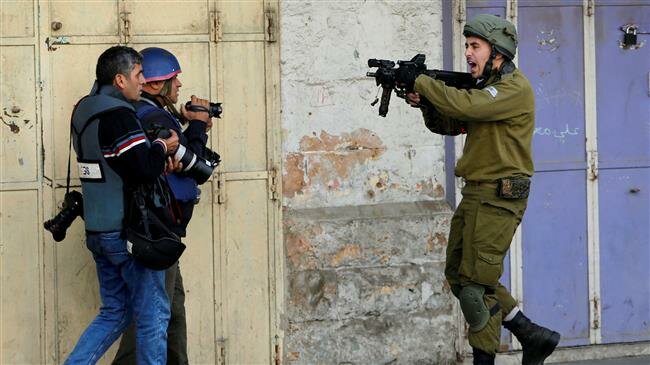


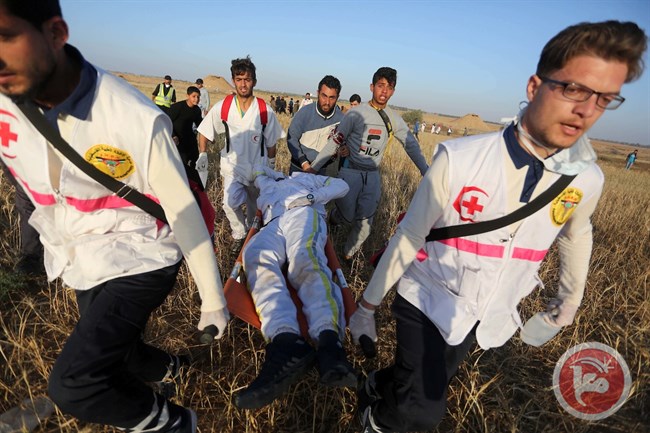

 Aletho News

