B’nai Brith shamefully attacks Niki Ashton
By Yves Engler · September 6, 2017
B’nai Brith claim to speak for Jews in general, but in reality defend Israel no matter what that country does.
The group’s recent attack against NDP leadership candidate Niki Ashton was a brazen attempt to use the decimation of European Jewry to protect Israel from criticism and follows a formula used so often most now see its hypocrisy.
Last May the self-declared human rights organization slammed the NDP leadership contender for “Standing in ‘Solidarity’ with Terrorists” because Ashton attended a rally for Palestinian prisoners on a hunger strike where someone had a photo of an individual B’nai Brith calls a terrorist. But, that attack failed when Ashton refused to back down and actually became more forceful in her support of the Palestinian cause.
Since then Ashton has sent out emails to join the party to elect “a leader that will stand up for Palestinian human rights” and demanded an end to the “occupation of Palestinian lands,” blockade of Gaza and “abuse of Palestinians’ human rights.” She called for an outright ban on goods produced in illegal Israeli settlements and expressed some support for the broader Boycott, Divestment and Sanctions movement. Ashton told Jacobin that “many inspiring activists across the country are doing great work on this front, decrying human rights abuses, decrying injustices, and putting forward a plan for change, including through the BDS movement. The NDP needs to be a strong voice in support of the work that so many activists are doing.”
In response to an Independent Jewish Voices/Canadians for Justice and Peace in the Middle East questionnaire to the four NDP leadership candidates she said:
“I support the important work of civil society in pursuing justice through non-violent means, including calls for boycotts and divestment. Similar tactics were used effectively against apartheid South Africa in the 1980s, and BDS today can play a constructive role by encouraging a just resolution. It is the role of governments to respond to pressure from civil society and to be a force for positive change. In 1986, Former Prime Minister Brian Mulroney responded to social movements by implementing sanctions against South Africa, and we face a similar ethical and moral responsibility to listen to those who are struggling for peace and justice.”
“Like any other country, sanctions against Israel should be considered when it consistently fails to meet international law and obligations, particularly in relation to the occupation which has denied rights to the Palestinian people for half a century. I support looking into targeted sanctions to put strategic pressure on the Israeli government.”
Ashton’s increasingly strident statements in support of the Palestinian cause obviously angered B’nai Brith. But, they kept quiet for three months, perhaps hoping they could find something worse than “terrorism” to connect her to. Having failed to deter Ashton from expressing support for the Palestinian cause by associating her with “terrorists,” B’nai Brith brought the Holocaust into the race. At the end of last month they put out a press release headlined: “NDP Leadership Candidate Endorsed by Holocaust-Denying Community Leader.” Ashton’s supposed transgression was having her picture taken with Nazih Khatatba at a campaign event in Toronto. B’nai Brith accuses Khatatba of defending armed Palestinian resistance and “engaging in Holocaust denial.”
The evidence presented of Khatatba’s Holocaust denial is a 15-second interview he gave at an event commemorating the Nakba (Palestinian catastrophe) last year. (In response to B’nai Brith’s press release, Khatatba posted on Facebook, “I recognize the genocide of more than six million Jews in the Nazi Holocaust. What I did say in the interview was that there were Jewish groups who experienced massacres in Europe and then went to the Middle East and perpetrated massacres there.”)
Presuming B’nai Brith’s translation is accurate and that relevant context wasn’t omitted from the video they produced of the interview, Khatatba’s comments were definitely historically inaccurate. The ethnic cleansing of 750,000 Palestinians in 1947-48, displacement of another 300,000 in 1967, the half-century illegal occupation of the West Bank, repeated assaults on Gaza, etc. are an immense injustice. Still, they don’t equal what the Nazis did to European Jewry.
Of course it’s not uncommon for social justice activists to make hyperbolic or historically inaccurate claims in their zeal to advance a cause. But, they are rarely accused of sinister intentions for doing so.
As I detail here, B’nai Brith has accepted or promoted more significant distortions of Jewish suffering when it served Israel’s aims. The group aggressively backed the pro-Israel Stephen Harper regime despite government officials repeatedly minimizing the Nazi Holocaust. In 2009 Immigration and Multiculturalism Minister Jason Kenney said “Israel Apartheid Days on university campuses like York sometimes begin to resemble pogroms,” and told a European audience that pro-Palestinian activism spurred anti-Jewish activities “even more dangerous than the old European anti-Semitism.” Similarly, in May 2008 Canwest reported: “Some of the criticism brewing in Canada against the state of Israel, including from some members of Parliament, is similar to the attitude of Nazi Germany in the Second World War, Prime Minister Stephen Harper warned.”
In a backdoor way B’nai Brith’s reaction to Khatatba’s historically inaccurate comments explain them. When Zionists repeatedly use 70-year-old Jewish suffering in Europe to justify their ongoing oppression of Palestinians is it any wonder some Palestinians seek to minimize Nazi crimes against Jews?
The attack on Niki Ashton is a stark example of the “Holocaust Industry” Norman Finkelstein outlined 15 years ago. B’nai B’rith should be ashamed.
Labour Party betrays Palestine
By Robert Inlaklesh | Al-Masdar | September 4, 2017
The Labour Party in the United Kingdom has made a huge switch in its policy leaving many followers of the Jeremy Corbyn headed Party in disappointment and disbelief.
When Jeremy Corbyn ran his election campaign he presented a clear message to his Palestinian human rights advocating audience, which was outlined in the Labour Manifesto. However this stance for human rights and international law has been all but erased.
The original manifesto stated that “A Labour government will immediately recognise the state of Palestine” and that the party would call for the end of the 11 year ongoing siege of Gaza and the end to the Israeli illegal occupation of the West Bank (occupied officially since 1967).
Now however, due to pressure in the party, Labour have changed their stance on the issue to read; “In Israel and the Occupied Palestinian Territories, Labour is committed to a comprehensive peace based on a two-state solution: a secure Israel alongside a secure and viable state of Palestine.” Far from the immediate recognition of a Palestinian state which was formerly promised.
This change in policy has alarmed an overwhelming number of Labour MPs (Jewish and non-Jewish) and is seen to have implications on the parties reputation when it comes to its stances of international relations.
Earlier in January of this year an Israeli government employee (Shai Mascot) working for the embassy was exposed plotting to influence lobby groups, politicians and British student movements. Shai attempted to set up a pro-Israel group called the Young Labour Friends of Israel, he was exposed by al-Jazeera for doing so and with that the activities of many other pro-Israel figures were brought to light.
It seems that the latest move by the Labour Party only benefits pro-Israeli members of the party, and with the move being so widely condemned by Jewish and non-Jewish members alike for changing such a popular manifesto its a real wonder how such a change has been able to happen.
Fadwa Barghouthi banned from visiting her husband in Israeli prison until 2019

Palestinian Fatah Movement leader Marwan Barghouti
Ma’an – September 5, 2017
BETHLEHEM – Fadwa Barghouthi, a Palestinian lawyer and the wife of imprisoned Fatah movement official Marwan Barghouthi, said that Israeli authorities have told her that she is banned from visiting her husband in prison until 2019.
Fadwa told Ma’an that after having being denied permission to visit Marwan since he led a mass prison hunger strike more than four months ago, the International Committee of the Red Cross (ICRC) facilitated a one-time permit for her to see Marwan last week.
However, after she left to visit her husband along with other relatives of Palestinian prisoners on Monday and waited outside the prison from between 9 a.m. and 4 p.m., Israeli forces eventually informed her that she would not be allowed to visit him until 2019, and that the permit issued to her had been a mistake.
Other reports said that the ban prevented her from visiting all Palestinian prisoners held by Israel as well.
Fadwa said that the decision to deny her the visits was a punishment directed at her, not at her husband, for her actions during the hunger strike that started last April, presumably referring to her own activism and participation in numerous solidarity protests throughout the 40-day strike.
By Tuesday evening, an IPS spokesperson did not respond to a request for comment sent on Monday regarding the ban placed on Fadwa.
Days after Israel stormed and shut down Hebron radio station, P.A. forces detain Director
IMEMC News | September 4, 2017
Just days after Israeli soldiers invaded and shut down a Radio station in the southern West Bank city of Hebron, Palestinian security officers arrested Ayman al-Qawasmi, the executive head of the al-Hureyia Media Network, who strongly denounced the Palestinian Authority, President Mahmoud Abbas and Prime Minister Rami Hamdallah, for failing to protect their people.
Al-Qawasmi was taken prisoner, Sunday, apparently for his Facebook statement demanding President Mahmoud Abbas, Prime Minister Rami Hamdallah, Hebron governor, Kamel Hmeid, and many other officials to submit their resignations for their inability to protect their people.
His statements came when Israeli soldiers invaded the radio station, and ordered it shut, after violently searching and ransacking it.
The invasion targeted al-Huriya Media Network, which runs Manbar al-Huriya Radio Station and Nawras TV, in Hebron.
During the invasion, the soldiers confiscated equipment from the media agency, and ordered it shut for six months.
The Israeli army said its invasion, and closure of the media network, was part of what it called “Israel’s campaign against incitement,” and claimed that the agency “encourages acts of terror.”
In his video statement after the army shut the station down, al-Qawasmi said the station is active in providing help to the needy, aiding the disabled, and giving a voice to the voiceless Palestinians, and does not engage in any forms of violence or incitement in any way shape or form.
US ambassador not taking Israeli occupation of Palestinian lands for fact
Press TV – September 2, 2017
United States Ambassador to Israel David Friedman has used the word “alleged” to refer to the Israeli occupation of Palestinian territories.
Friedman referred to the situation in the Palestinian lands as “alleged occupation” in an interview with Israeli daily The Jerusalem Post, which was published on Friday. It was his first major interview with Israeli media.
Israel occupied the West Bank and East Jerusalem al-Quds during the Six Day War in 1967. It later annexed East Jerusalem al-Quds in a move not recognized by the international community. In November 1967, the United Nations Security Council (UNSC) adopted Resolution 242, under which Israel is required to withdraw from all territories seized in the war.
US politicians, as high in ranking as President Donald Trump himself, have in the past exhibited a loose relationship with facts. But it is unlikely that Friedman used the phrase in the Friday interview unwittingly. He is a hawkish politician known for his hard-line stance against Palestinians. His remark did contradict both US foreign policy and international opinion on the issue, however.
According to The Guardian, a Palestinian official, whom the British paper did not name, demanded clarification from the US regarding Friedman’s comment.
“Our understanding is that when someone has an official position, like being an ambassador, this person does no longer speak in a personal capacity. Mr. Friedman should realize that denying facts doesn’t mean that they don’t exist,” the Palestinian official said.
The official said the US envoy “has an extensive record of attacks against the national rights of the Palestinian people, including funding illegal colonial-settlements and participating in celebrations of the Israeli occupation.”
Palestinian officials say they want the decades-long conflict with Israel resolved based on the so-called two-state solution along the pre-1967 boundaries. However, Israel seeks to maintain its grip on the Palestinian lands and has been building settlements deep within territory.
Before taking up his post as the US ambassador to Israel, Friedman had voiced opposition to the two-state solution, which envisages the establishment of an independent Palestinian state.
He is also a vociferous advocate of Israeli settlements built on occupied Palestinian lands, another issue opposed by the international community and the UNSC.
Friedman is the president of American Friends of Beit El Institutions, which raises millions of dollars each year for the Israeli Beit El settlement in the West Bank.
The administration of US President Donald Trump has been by and large vague about its stance on the potential establishment of a Palestinian state.
How Israel Weaponizes Archeology
By Kathryn Shihadah | If Americans Knew | August 31, 2107
From the Zionism’s earliest days in the late 1800s until the present, Israel’s battle has always been about land, but for some the issue goes much deeper—literally. What is underground is as valuable as what is above ground, and the battle has been raging for years.
The battle is over ancient artifacts, from Jerusalem to Gaza to Qumran.
The “Jewish State” prioritizes anything that might boost its legitimacy as rightful owner of Holy Land real estate, and has appropriated the science of archeology to help create its narrative.
The goal is to highlight the ancient Jewish presence and discount all other communities. whether historic or current. The Israeli narrative assumes, for example, that Christians may have been present for a short time, but only as visitors, leaving virtually no trace; the same goes for any Muslim presence.
In order to back up this version of history, Israel has found it necessary to destroy villages, demolish ancient sites, appropriate historic areas, rewrite textbooks, redraw boundary lines, and more. With the illusion of an ongoing, dominant Jewish presence, Israel can assert that it is simply “re-claiming” what is rightfully theirs, instead of taking what belongs to others.
Facts under the ground
It is no surprise that Israel/Palestine is an archeological gold mine: ancient trade routes crisscrossed the region; it was the historic home of the Philistines and Crusaders; a stone’s throw from the early civilizations of Egypt, Mesopotamia, and Phoenicia; part of the Roman, Greek, Persian, and Ottoman empires, to name a few; and the dwelling place of Jews, Christians, and Muslims.
In fact, Palestine is home to the oldest archeological organization in the world, the Palestine Exploration Fund, founded in 1865. Here excavators have feasted on a dizzying array of strata, ranging from Upper Paleolithic (about 40,000 BC) to late Ottoman (19th century AD), and everything in between; their findings have led to the advancement of the science of archeology itself. No wonder archeologists from around the world have been assembling for at least a century and a half to unearth and study Palestine’s ancient cultural riches.
When Israel created itself in 1948—and even before this date—the “Jewish State” worked to take control of archaeology, and thus, of the region’s history. It toiled to erase footprints of the numerous civilizations that had preceded the Jewish presence, as well as the peoples that have come afterward.
“Hand to hand”
The claim to the land is based on a very small window of time, as Illene Beatty pointed out in Arab and Jew in the Land of Canaan: “The extended kingdoms of David and Solomon, on which the Zionists base their territorial demands, endured for only about 73 years… Then it fell apart… [Even] if we allow independence to the entire life of the ancient Jewish kingdoms, from David’s conquest of Canaan in 1000 B.C. to the wiping out of Judah in 586 B.C., we arrive at [only] a 414 year Jewish rule.”
The Israeli narrative pushes the window open a few hundred years more: history (at least, relevant history) supposedly “started with King David and ended with the destruction of the second temple [70 A.D.], restarting with Jewish settlement in the nineteenth century.” Some Greek and Roman presence and a “smattering of early Christianity” are tolerable. But ancient Philistines, Arabs, and Muslims are never acknowledged as part of the region’s history. They would impinge upon Jewish interests.
The official explanation, according to an introductory film that is shown to tour groups in Jerusalem, is simply, “For two thousand years, the city passed from hand to hand.” The “righteous return” and the settler agenda are the only account to which visitors are exposed. On Palestine, there is only silence.
As Israeli author and activist Uri Avnery reminds us, the Zionist claim to the land of Palestine, based as it was on the Biblical history of the Israelites, requires proving that the Bible is true. Almost all of the founders of Israel were professing atheists, but they gritted their teeth and gave their orders.
During the early years of Israel’s existence, bulldozers removed Ottoman and Mameluke remains, Arab and Crusader artifacts, Byzantine and Roman and Greek and Persian remnants—in order to find “pay dirt”: biblical Hebrew artifacts. The search is ongoing. (Read this and this, for example.)
And over the years, the narrative has been pieced together for a single purpose: to manufacture “legitimacy.”
“I told you so”
This explains why, for example, Prime Minister Benjamin Netanyahu rushed to social media when a coin was found recently in an Israeli settlement in the West Bank (Palestine). Preliminary identification classified the coin as a 2,000-year-old half shekel. The Prime Minister posted on Facebook that the artifact was “evidence of the deep connection between the people of Israel and its land” (mind you, the item was found in Palestine, not Israel). Several days later, the coin was more accurately identified by the Israel Museum as a replica, a souvenir, circa 2000 A.D. The Facebook post was removed.
After the 2015 discovery of an ancient jug with Hebrew inscription, Israel’s minister of education, Naftali Bennett, posted on Facebook, “This is yet another example of the many facts on the ground that tell the story of the Jewish state that flourished here in this land 3,000 years ago… A nation can not occupy its own land.”
Moral of the story: Archeology—when massaged properly—is proof positive that there is no occupation.
Palestinian villages evaporate
As part of this effort, Zionist forces wiped out 400-600 Palestinian villages in the 1940s—some were destroyed in the war, but many were depopulated and razed even before the war began; others were demolished in the three years or so following the war.
According to Just Past? The Making of Israeli Archaeology, “remnants of the Arab past were considered blots on the landscape and evoked facts everyone wanted to forget” (everyone except the Palestinians). Many of these lost villages were themselves ancient, or contained ancient building materials. This assisted forgetting, essentially “Nakba denial,” is undoubtedly the greatest theft of Palestinian history. Today, in place of those lost villages are Israeli towns, farms, and orchards.
Hundreds of historical monuments and places of worship (primarily mosques) were also targeted for demolition after the 1948 war. A few Israelis pleaded with the Israeli Department of Antiquities to preserve these sites, but they were for the most part unsuccessful.
Raz Kletter wrote about the situation, of which he as an archeologist was ashamed: “I don’t think this village landscape belongs to us—it belongs to the people who lived here—but still, there is longing for that lost landscape. We cannot bring it back, but at least we should be aware of the truth and not lie to ourselves.”
Cartographers were sent out to make a new map, renaming cities, villages, rivers, etc. with Israeli/Hebrew names to erase all vestiges of Palestinian presence.
This effort has continued for decades, down to even renaming parks and streets.
Appropriating archeological sites & the Dead Sea Scrolls
The 1995 Oslo Accords II assigned 60% of the West Bank (Palestine) to full Israeli military control by designating it “Area C.” This was meant to be a temporary arrangement, but has lasted over twenty years to date. Israel maintains authority over all land-related civil matters, which includes the Jewish-only settlements on Palestinian land (with a current population of about half a million) and almost all of Palestine’s archeological sites.
According to international law, artifacts found on Palestinian land— whether Area A, B, C, Gaza, or East Jerusalem—belong to Palestine and should remain inside Palestine. UNESCO Accords, UN Security Council resolutions, and the 1954 Hague Convention all indicate that “when ownership of an antiquity is vested in a nation, one who removes it without permission is a thief, and the antiquities are stolen property”— this according to Patty Gerstenblith, DePaul professor and author of a 2016 Department of Justice guide to cultural property law.
The appropriation of archeological sites and their artifacts is, by definition, illegal, but Israel has a great deal of experience in flouting international law and getting away with it. This crime does not need to be covered up.
Witness the famous Dead Sea Scrolls: discovered by Palestinians before the founding of Israel, in the Qumran Caves which are located in the West Bank of Palestine. Because Qumran is in Area C of the West Bank, Israel controls the archeological site, the tourism, and the conversation. The scrolls are now in the Israel Museum in Jerusalem. Their official website does not contain any mention of Palestine.
Area C designation enables Israel de facto control over not only excavation and the distribution of artifacts; but decisions about when to stop digging and start building new structures—or parks or parking lots—on top of a site.
Palestinian towns and neighborhoods that are close to or part of East Jerusalem are subject to particularly exasperating treatment: the 1980 Jerusalem Law essentially annexed East Jerusalem (most of the world does not recognize the annexation), declaring all of Jerusalem “the complete and united capital of Israel,” and promising to “provide for the development and prosperity of Jerusalem and the well-being of its inhabitants.” Israeli domination ensued, and for Palestinians it feels like an elaborate land grab.
Case study: Silwan
The East Jerusalem neighborhood of Silwan, whose families have owned their lands since Ottoman times, has been living under this cloud of Israeli authority since 1967.
Silwan used to be almost completely Palestinian and Muslim. After the 1967 annexation of East Jerusalem, a plan was announced to shift the population to 75% Israeli. As one of the settler/archeologist spokesmen explained, the objective was “to get a [Jewish] foothold in East Jerusalem and to create an irreversible situation in the holy basin around the Old City.” (This is called “ethnic cleansing.”) This has been accomplished through evictions and home demolitions—over half of the houses in Silwan are under demolition orders—sometimes using forged documents.
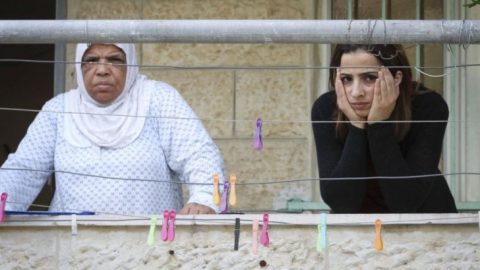
Palestinian women in Silwan watch as settlers move into homes in the neighborhood
One of the main ways Israel got a “foothold” in Silwan was through the 1950 Absentee Property Law. This insidious regulation states that if a piece of Palestinian property has been uninhabited for three years, or ownership documents could not be produced, the land would revert to a Custodianship Council, which could then distribute the property for military or settlement use.
The Absentee Property Law had worked handily when Palestinian refugees were refused the right of return: after three years, their land was confiscated and they had nothing to come back to anyway. Those few who did get back, and whose homes were still standing—only seven villages were left intact—often found their deeds missing or destroyed, and new, Jewish tenants in place. According to the Israel Government Yearbook, 5719, almost 60,000 homes and 10,000 businesses were appropriated during Israel’s early years.
A large number of properties in Silwan have been appropriated through this law.
The small number of green spaces in Silwan have also been claimed as archeological sites, forbidden to Palestinians. Hundreds of closed-circuit TV cameras are used to insure compliance.
Having appropriated swaths of Silwan, the work of appropriating swaths of history began “with bulldozers clearing huge areas in haste and multiple levels being dismantled in a race to get to ‘Jewish’ bedrock.” Where they couldn’t find what they needed, settlers built houses on top of excavation sites.
Silwan’s Palestinian residents used to take pride in the archeological riches of their land, but since Israel’s land grab, things have gone from bad to worse. The heavy machinery and deep digging are beginning to compromise structures: Palestinian homes are showing large cracks, making their owners nervous and angry.
One resident, Jawad Siyam, created a petition to end the destructive digging, and filed it with the Israel Supreme Court. The result: Jawad and all of those who signed the petition were imprisoned or put under house arrest for “disturbing the peace and causing damage to property.”
Adding insult to injury, the Jerusalem municipality replaced a number of Arabic-named streets in Silwan with biblical Hebrew names—yet another daily reminder to Palestinians of who is in charge.
Antiquities in Gaza
Not surprisingly, the situation in Gazan archeological sites is even worse—though its location as a seaport makes it wildly rich in ancient treasures. Gaza’s Ministry of Tourism and Antiquities oversees digs and artifact preservation to the best of its limited ability: its offices, as well as many historical sites, have been damaged by Israeli bombs.
In addition, the equipment and chemicals needed to carry out work are forbidden for “security reasons” under the decade-old blockade. Guest archeologists can not get in to help, and local archeologists can not get out for training. Oddly, many of Gaza’s most valuable artifacts have turned up in Israeli museums.
Needless to say, there is little funding for the work in Gaza, what with the highest unemployment rate in the world, electricity shortages, and clean water crisis.
Israeli tourism
Anyone familiar with the region knows that tourism has been almost completely appropriated by Israel—and this is another sore spot for Palestinians in archeologically rich areas. For example, the City of David National Park (built on Silwan’s land—see above) welcomes hundreds of thousands of tourists a year, each of whom pays an $7 entrance fee, and most of whom buy food and souvenirs from Jewish Israeli settlers. Not only are all of the profits pocketed by Israel and Israelis, the Palestinians of Silwan and their connection to the land are completely and intentionally disregarded.
This tourism income may be small change to Israel—it receives over $10 million a day from the US alone—but it would make a huge difference to the people of Silwan and other towns that are casualties in the antiquity war.
A great irony in the saga of Israel’s quest for legitimacy in the land is this: no one, Palestinian or otherwise, denies an ongoing Jewish presence since ancient times. The pilfering of archeology has been unnecessary and unbecoming from that standpoint. The rising consensus worldwide of Israel as a pariah state and the increasing popularity of the Boycott, Divestment, & Sanctions movement (BDS) indicate that Israel’s strategy is not helping in legitimacy efforts.
Israeli forces shut down Palestinian radio station in overnight raid
Press TV – August 31, 2017
Dozens of Israeli forces have raided the headquarters of a Palestinian radio station in the occupied West Bank overnight and shut down the media outlet for six months.
Al-Hurria station in the city of al-Khalil (Hebron) was shut down “for content inciting violence and encouraging terrorism,” an army spokeswoman said on Thursday, without providing further details.
The Israeli forces also confiscated technical equipment during the raid, a source at the station said.
The station has been informed it would be closed until April.
“We thought it was related to the campaign of arrests but were surprised to see they were targeting the radio’s premises,” al-Hurria’s Director Ayman al-Qawasmi said.
“Unfortunately, they destroyed everything inside the building, there is nothing left. They confiscated broadcasting equipment, microphones,” he added.
An AFP photographer at the scene described the damage as “considerable,” with equipment and signs torn from walls and furniture upturned.
The Union of Palestinian Journalists slammed the measure as an “awful and heinous crime which reflects the (Israelis’) barbaric, criminal, terrorist mentality towards Palestinian media.”
Al-Hurria, which means freedom in Arabic, was previously closed for six months in November 2015 immediately after the outbreak of a fresh wave of conflicts in the occupied territories.
The Israeli army continues crackdown on Palestinian media outlets over allegations that they prompt young Palestinians to engage in armed clashes against Israeli forces in the West Bank.
In August 2016, Israeli officials stormed the office of Palestinian Arabic-language Radio Sanabel in the town of Dura, southwest of al-Khalil (Hebron) and took it off the air over what they described as its attempts to further escalate tensions in the occupied West Bank.
The Israeli forces also ransacked the building, and confiscated the radio’s broadcasting equipment.
The occupied Palestinian territories have witnessed new tension ever since Israeli forces introduced restrictions on the entry of Palestinian worshipers into the al-Aqsa Mosque compound in East Jerusalem al-Quds in August 2015.
More than 300 Palestinians have lost their lives at the hands of Israeli forces since the beginning of October 2015.
Islamic Jihad leader Abu Maria shot, arrested by PA forces
Palestine Information Center – August 31, 2017
RAMALLAH – The Palestinian Authority (PA) forces on Wednesday shot and arrested the Islamic Jihad Leader Wahid Abu Maria in al-Khalil’s northern town of Beit Ummar.
According to local sources, Abu Maria sustained injuries in his shoulder after he was shot by the PA forces.
The Islamic Jihad Movement urged the PA, chaired by Mahmoud Abbas, to immediately release Abu Maria, whom they said has been diagnosed with cardio-vascular diseases.
Abu Maria aged 50, is the father of four children. He had spent over 15 years in Israeli jails.
Harvard Crimson ad asks if anti-BDS Harvard profs “only care about certain lives”

If Americans Knew | August 30, 2017
A full-page advertisement in today’s Harvard Crimson asks, “Do some Harvard Professors only care about certain lives?” (View ad here and at the end of this post.)
The ad refers to a statement signed by 71 Harvard professors in the health, medical, and life sciences fields that opposed the international academic boycott of Israel.
Their statement was subsequently featured in a full-page Boston Globe advertisement in May paid for by the New England Chapter of the American Jewish Committee (AJC).
The AJC ad featured the headline “Could an academic boycott of Israel put a child’s life at risk?” accompanied by a photo of a small child in an oxygen mask. The AJC ad and professors’ statement opposed the boycott on the ground that it could interfere with potentially life-saving collaborative research and then indirectly lead to loss of life.
Today’s Crimson ad, placed by the nonprofit organization If Americans Knew, says that since the professors cared about potential loss of life, they expected that the professors would also be willing to sign a statement against the direct, ongoing loss of life caused by Israel.
Accordingly, If Americans Knew sent each professor who had signed the AJC statement a letter documenting the ongoing harm being done to Palestinian children by Israeli policies and asked them to sign a statement urging Israel “to engage in active measures to support the safety of Palestinian children.”
The letter to the professors included information with clickable links documenting Israeli actions harming children. The information is also included in today’s Crimson ad:
-
Palestinian children are being shot, imprisoned by the thousands, and subjected to what amounts to torture by the Israeli military (Human Rights Watch, Defence for Children International)
-
Israeli military incursions, occupation and blockade are depriving Palestinian children of basic necessities of life, making hundreds of thousands homeless and tens of thousands orphans (United Nations Relief & Works Agency, Al-Amal Institute for Orphans)
-
Palestinian children in Gaza are suffering severe psychological trauma, malnutrition, stunting, and depression due to Israel’s 10-year blockade and bombing attacks (UNICEF)
-
Palestinian children are being denied desperately needed medical care, with Israel at times preventing children in Gaza suffering excruciating and sometimes fatal health problems from traveling to outside hospitals (Physicians for Human Rights – Israel)
The Crimson ad names all 71 Harvard professors who signed the anti-boycott statement, and reports that none would sign the statement asking Israel to support the safety of Palestinian children.
The ad concludes:
In the 80s, many Harvard faculty members supported campus boycott and divestment initiatives aiming to pressure companies to cut ties with apartheid South Africa, so it’s disappointing that some can’t see the urgency of the boycott movement today.
We hope these professors will take the time to look into Israel’s treatment of Palestinian children and reconsider where they stand.
The ad refers readers to iakn.us/globe-ad to see citations for the statements regarding Israeli actions.
(An additional 31 professors from other universities also signed the AJC anti-boycott statement.)
Text of the statement concerning Palestinian children that the professors declined to sign:
We, the undersigned, urge Israel to engage in active measures to support the safety of Palestinian children, including ending the practice of imprisoning and torturing Palestinian minors, allowing medical supplies and life necessities into Palestinian areas, permitting Palestinian children to leave those territories to seek necessary medical treatment, desisting from military invasions in which large numbers of children are killed and injured, and adhering to international conventions regarding the rights of children, noncombatants and populations under occupation.


UN Secretary General arrives in Gaza, refuses to meet families of prisoners
Palestine Information Center – August 30, 2017
GAZA – UN Secretary General Antonio Guterres arrived Wednesday morning in the besieged Gaza Strip after he visited Israel and the occupied Palestinian territories as part of his first regional itinerary.
According to the Palestinian Information Center in Gaza, Guterres and his entourage were allowed by Israel into Gaza through the Beit Hanoun (Erez) border crossing.
Meanwhile, families of Palestinian prisoners in Israeli jails have been rallying since the morning near the Beit Hanoun crossing in protest at Guterres’s refusal to meet with them upon his arrival in Gaza.
The UN chief had held several meetings with officials from the Palestinian Authority and Israel after he arrived last Sunday in the occupied territories, coming from Kuwait.
Guterres, who refused to meet with relatives of Palestinian prisoners, met last Monday with families of Israeli captives being held in Gaza and expressed his sympathy with them.
The Prisoner Committee in Gaza slammed Guterres for refusing to talk and listen to the families of Palestinian prisoners in Israeli jails and ignoring their suffering, calling on him to reconsider his “inhumane position,” especially since the occupied Palestinian people are “the true victims of Israel’s terrorism.”
According to the UNRWA, the UN secretary-general will read today a statement in one of its schools in Beit Lahia city, north of Gaza, before leaving soon on the same day.
Israel’s failure to attract major oil companies is a massive blow to its ambitions
New Khaleej | August 28, 2017
Israel has managed to beat its Mediterranean neighbours in the development of its offshore gas industry over the past two decades by discovering 10 gas fields, specifically in the northern waters adjacent to Cyprus and Lebanon. Initially, Israel was concerned with developing the Tamar field, which has about 282 billion cubic metres of gas, and the Leviathan field, which has about 500 billion cubic metres.
Since Spring 2013, gas has been produced from the Tamar field to supply local power stations. Negotiations are underway with neighbouring countries to export Leviathan gas, not to mention changing most of the local power stations to use two types of fuel, gas and oil, rather of depending on only one type, as was the case in the past, either coal or oil.
However, the Israeli gas industry faltered in December 2014, when Israel’s then Antitrust Commissioner accused the Noble Energy-Delek consortium of monopolising all discoveries in accordance with the agreements signed by the gas authorities, as well as monopolising internal gas supplies and the prices of gas and electricity. This resulted in disagreements within the Knesset (Israeli parliament) and civil society over this lawsuit; Prime Minister Benjamin Netanyahu took part, as he considered it a matter of “national security”. The issue was ultimately referred to the courts.
However, middle ground was found in order to rescue the gas industry from the repercussions of the chaos caused by the cancellation of memorandums of understanding for export to neighbouring countries, and the fears of international oil companies about working in Israel due to the fact that approval needed to be obtained from multiple parties, even after the signing of agreements. They were also discouraged by the contradiction in the official institutions’ privileges and the extent of competition in working in Israel compared to other countries.
Some of the largest law firms and public relations companies, especially in the US, have been involved in these disputes. Solutions were reached, with the consortium countries giving up their shares in some relatively small fields, especially in the neighbouring Karish and Karan fields, which are considered the closest to Lebanese waters (about 10 miles away).
Most importantly, the first licensing cycle was announced in September 2016 and began last November. The names of the winning companies were announced on 17 March this year. The agreements with the consortium led by Noble Energy were reached through bilateral talks.
The main objective of the first licensing cycle was the development of 24 offshore blocks adjacent to the Tamar and Leviathan discoveries. The size of some sectors is about 400 square kilometres, while the depth of the water is between 1,500 and 1,800 metres. The cycle aimed to attract international oil companies in an attempt to benefit from their technical expertise and their marketing, industrial and financial capabilities. It also aimed to begin a new era of experience between Israel and the international oil companies, especially after the antitrust authority complaints and changes in the Arab boycott laws.
This was followed by an attempt to break through the boycott in one of the most important economic sectors in the Middle East. Opening this relatively large number of maritime sectors all at once was accompanied by Israel’s interest in the discovery of crude oil in commercially volume in deep geological strata. This was after evidence emerged that oil could be found. Official sources said at the time that independent research bodies estimated the amount of oil that could be found amounted to about 6.6 billion barrels, in addition to 2,137 billion cubic metres of gas.
“Companies operating in Israel [Noble Energy and Delek] are not allowed to participate in the tender, in order to encourage competition,” said Israeli Energy Minister Yuval Steinitz.
The concerned Israeli authorities tried to make the first licensing cycle successful, but to no avail. The energy minister and ministry officials participated in large-scale promotional conferences in London, Houston and Singapore, as well as an “information room” for companies, but did not achieve their goals.
Only four companies have announced their interest, namely Greece’s Energean, Italy’s Edison, an Israeli company that has not been named and Spain’s Repsol. As a result of this low turnout, both in terms of number and significance, and because Repsol is the only one with a prestigious position within the European oil companies, there has also been news in the oil industry about trying to attract international companies to work in Israel, specifically Exxon Mobil, but no agreement has been reached yet.
Due to the scarcity of companies that have shown an interest in participation, especially given the large number of sectors offered to companies and the failure to reach agreements with international companies, the date of the session was extended to 21 April and the results were announced in July. However, with the failure to attract many or important companies, even after the extension, it seems clear that the session will be extended further, perhaps to the first quarter of 2018.
The lack of interest from the major oil companies in the Israeli gas industry has been a massive blow to Israel’s ambitions to attract those with large capital, specialisms and experience in the development of deep offshore fields, and which have the necessary connections to new large market routes (a dilemma Israel faces despite its attempts with Turkey, Greece and Italy). It has also hindered Israel’s desire to compete with Egypt (with the discovery of Eni in the Zohr gas field), in order to become a regional centre for the gas industry in the east Mediterranean.
Translation by MEMO
Netanyahu uses fake “ancient” coin to justify settlements in West Bank
Palestine Information Center – August 29, 2017
NAZARETH – A coin that was celebrated by Israeli Prime Minister Benjamin Netanyahu as evidence of a historical Jewish link to the West Bank has been found to be fake replica.
Numerous media outlets reported last week on the find of a rare 2,000-year-old half-shekel coin by an eight-year-old girl, Hallel Halevy, in the Israeli illegal settlement of Halamish in the West Bank.
The find excited many Israelis who argued it provided evidence of the historical Jewish connection to the West Bank, usually referred to as Judea and Samaria by Israelis.
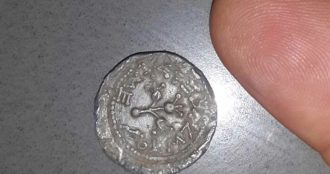 Among those lauding the find, Netanyahu claimed in a Facebook post that “the “2,000-year-old silver coin” was used during the Second Temple period in Jewish history which lasted between 530 BCE and 70 CE.
“This exciting discovery is additional evidence of the deep connection between the people of Israel and its land – to Jerusalem, to our temple, and to the communities in Judea and Samaria,” Netanyahu wrote in his post.
However, on Sunday it was revealed that not only was the coin not ancient, but also was in fact a replica souvenir, regularly made at the Israel Museum, where a small mint at the Youth Wing of the museum is used to create the coins during annual Hanukkah activities organized as part of an educational program for children.
“There is no chance that it is authentic, it is not an ancient coin,” Haim Gitler, chief curator of archaeology and the curator of numismatics at the Israel Museum told The Times of Israel on Sunday. “Even to call it a coin is to exaggerate what it is,” he added.
Netanyahu deleted his Facebook post shortly after that. However, social media users were quick to comment on the news, with many ridiculing Netanyahu mistaking the replica for a historical artifact.
Featured Video

Houthis Don’t Have to Conquer Saudi Arabia to Make It Pay
or go to
Aletho News Archives – Video-Images
From the Archives
A Lesser “Grade” of Human
By Michael Hoffman | Revelation of the Method | January 3, 2024
Will the more than 100 Iranians killed by terrorist bombs today be mourned in the West as victims of terrorism? Certainly not. Allied doctrine has it that the killing of Israeli or American civilians is a crime of cosmic proportions, while shedding the blood of “enemy” women and children is perfectly acceptable; indeed commendable.
The West does not memorialize the hundreds of thousands of civilians bombed by the U.S. in Serbia, Iraq, Afghanistan and every major German city 1943-1945. America’s fire-bombing of the city of Tokyo by General Curtis LeMay in March 1945 was followed by Harry Truman’s atomic incineration of Hiroshima and Nagasaki in August of that year. Truman never had a moment of doubt or regret over the murder of more than a 100,000 Asian children, mothers and non-combatant boys and men. It was business as usual for the “noble” Allies during the “Good War.”
In the West human rights signifies passionate concern only for civilians designated as truly human: Israelis first, then Americans and British, followed by their satraps.
This inhumanity is the legacy of Talmudic ideology, beginning with tractate Sanhedrin 57a from 400 A.D., concerning liability for capital punishment: “If a Jew murders a gentile, he is exempt.”
This teaching of contempt was reiterated in the dogma of Chabad Lubavitch founder Rabbi Shneur Zalman in the 18th century. … continue
Blog Roll
 Aletho News
- Houthis Don’t Have to Conquer Saudi Arabia to Make It Pay
- MOE: Nearly 22,000 Students and Education Workers Killed
- Guterres in Islamabad: Genocide, cowardice, and the cage of Imran Khan
- Johnson, Marandi say Yemen holds upper hand over Saudi Arabia
- False flags won’t save aggressors, Iran FM spokesman says
- The Makkah Pact Enters Into Force: The End of American Dominance or Its New Form?
- NATO’s top generals gather in Kiev
- EU’s continuing expansion – greater threat to Russia
- US Senator Murphy says Pentagon denied him entry to US base in Qatar
- Israel expands “incitement” charge to target Palestinian education and memory
- If Americans Knew
- Three Years of Genocide: How America’s Israel-First Media Filtered Out the Truth
- Israeli war chief briefs ministers on potential war against Palestinian Authority
- New Report: Israel Killed nearly 21,000 Palestinian Students and Education Workers in Past Three Years
- Israel’s flailing chatbot army
- Five Palestinians Killed, Others Injured by Israeli Fire in Gaza
- Israel is rewriting the Palestinian curriculum in East Jerusalem to erase Palestinian identity
- Three years of genocide: Israel turned prisons into killing grounds and torture sites
- Three years of genocide. Words fail. Daily Update
- ‘I’d rather die than go back’: A Palestinian teen’s 10-month nightmare in Israeli jail
- How Jared Kushner’s firm’s investment in an Israeli company could be a major conflict of interest
- No Tricks Zone
- New Study: 50 Years Of The Most Aggressive ‘Net Zero’ Policies Can Only Affect The Global Climate By 0.03°C
- US September “Heat” Was No Record…Many Records Set Decades Ago
- Latest European Green Energy Debacle; Portugal’s Largest Flagship Solar Park Insolvent!
- Green Energy Debacle: German Expert Professor Fritz Vahrenholt Warns Of Severe Economic And Social Consequences
- Two More Paleo Reconstructions Affirm Meters-Higher Sea Levels Across Ireland, Brazil 7000-6000 Years Ago
- New Study: Earth And Venus Surface Warmth Largely Explained By Convection And Lapse Rate, Not CO2 Or Radiation
- 2025 Nature Paper Claiming Worsening Global Drought Gets RETRACTED …Heavily Flawed
- New Study: ‘Global Drought Shows No Detectable Recent Acceleration Under Climate Warming’
- Economic Masterminds: German Socialists Suggest Taxing Productivity Gains Stemming From Using AI
- The South China Sea Has Not Been Cooperating With The Climate Change Narrative

