Israel Lobby Fails to Block Screening of Palestinian Film at Cannes
teleSUR – May 18, 2016
Despite the efforts of Israeli lobby groups, a Palestinian film about the 1972 Munich Olympics events was screened at the Cannes Film Festival’s Marche Marche du Film in Paris Monday as planned.
An excerpt of Nasri Hajjaj’s documentary, Munich: A Palestinian Story, was shown to film industry professionals in partnership with the Cannes Film Festival and the Dubai International Film Festival.
Hajjaj’s documentary came under attack by Israeli lobby groups who claimed that the film wrongly accuses German security forces for the deaths of 11 Israeli athletes, a German police officer and five hostage-takers at the 1972 Munich Olympics after a raid by the Palestinian group Black September.
The biggest lobbying group, the Council of Jewish Organizations in France, claimed that the film was an example of “historical revisionism” about the event.
Lobby groups reportedly put intense pressure on the organizers for the film to be banned.
Hajjaj, a former journalist who grew up in a Palestinian refugee camp, said that lobby groups and other critics made false claims about his documentary, which none of them have seen.
“Eight films have been made on the Munich chapter, but none of them are Palestinian or Arab. I want to present the Palestinian version of this story, which is not necessarily uncritical of the operation and its sequences,” Hajjaj was quoted as saying on the Dubai International Film Festival website.
PLC member Abdel Jaber Fuqaha arrested by Israeli occupation forces in dawn raid

Samidoun Palestinian Prisoner Solidarity Network – May 17, 2016
Abdel Jaber Fuqaha, member of the Palestinian Legislative Council, was attacked and arrested by Israeli occupation forces on Tuesday, 15 May, after a dawn raid by occupation forces on his home. Fuqaha, 49, who has been arrested several times and has spent years in Israeli prison, most frequently under administrative detention without charge or trial, is a member of the Palestinian Legislative Council representing the Change and Reform Bloc, allied with Hamas.
After Fuqaha’s release in 2011 after 27 months of administrative detention, he was arrested again in 2012, and then again in June 2013. He was last released in April 2015. He has spent over six years in Israeli prison; he was beaten during his arrest and his home ransacked. He is one of seven members of the Palestinian Legislative Council currently imprisoned in Israeli jails, including prominent Palestinian leaders Ahmad Sa’adat, Marwan Barghouthi, Khalida Jarrar, and Hassan Yousef.
Israeli attacks mount on Palestinian fishers in Gaza

Samidoun Palestinian Prisoner Solidarity Network – May 17, 2016
Two more Palestinian fishers were attacked and detained off the coast of the Gaza Strip on Tuesday morning, 17 May, Ma’an News reported. Samih and Ibrahim Zayid were attacked by an Israeli gunboat while fishing, ordered off the boat, and detained; their boat was towed to the Ashdod port.
This comes after the detention and boat confiscation of 10 Palestinian fishers on Sunday, 15 May. Two of the fishers, Khamis Baker and Hasan Madi, remained imprisoned while the other eight were released. Two more fishing boats were confiscated on Sunday. Another fishing boat was damaged and submerged by the gunboat’s attack; the damaged boat was later recovered by Palestinian fishers. Dozens of shells were fired at the fishers and their boats; the fishers were ordered to take off their clothes, jump into the water, and swim toward the gunboats.
While Israeli authorities in April expanded the fishing zone designated for Palestinian fishermen to nine nautical miles in the southern Gaza Strip, and retained the six-mile zone in the north, fishermen regularly report detentions, live fire, and boat confiscation within these limits,” reported Ma’an.
According to the Palestinian Center for Human Rights, Israeli forces detained 71 fishermen and confiscated 22 fishing boats throughout 2015, and opened fire on Palestinian fishermen at least 139 times over the course of the year.
PCHR noted that it “considers that attack as a grave violation of the fishermen’s right to sail and fish freely and to protect their property in the Gaza waters. Moreover, PCHR believes that such attacks against Palestinian fishermen constitute a form of collective punishment against them which aims to target fishermen and their livelihood. Furthermore, PCHR calls upon the international community to provide protection for Palestinian fishermen and their right to sail and fish freely, and to stop all forms of collective punishment against fishermen and their property which violate the international humanitarian law and the international human rights law.”
The Union of Agricultural Work Committees, a Palestinian grassroots organization, works with fishers and farmers in Palestine to defend their land and seas and their right to farm and fish in the face of occupation attacks. Saad al-Deen Ziadah of UAWC said that “Most of these attacks and violations occurred within the allowed fishing area by Israeli navy forces. These arrests are generally carried out under very intense situations – the Israeli navy shooting bullets and shells at the fishermen and their boats. It has been recorded that the Israeli navy targets the outboard engine of the boats, which is the ‘soul of the boat’, as the fishers say.”
UAWC video on Palestinian fishers in Gaza:
Jewish extremist arrested in Dawabsha murders case to be released in two weeks
By Lily Leach | Ma’an | May 17, 2016
BETHLEHEM – A Jewish extremist arrested in the wake of a deadly arson attack that killed three members of the Palestinian Dawabsha family in the occupied West Bank last summer is to be released from Israeli custody, it was revealed on Tuesday.
Israeli state prosecutors decided not to extend the administrative detention of Meir Ettinger — Israeli security agency Shin Bet’s leading suspect for the case — when his remand expires at the end of May, Israeli media reported.
Two Israeli suspects were indicted for murder for the incident in January, five months after suspects belonging to a Jewish terror organization set the home of the Dawabsha family ablaze, killing 18-month-old Ali Saad immediately.
The infant’s parents, Riham and Saad, later died from severe burns, leaving 4-year-old Ahmad Dawabsha the only surviving member of the family.
Ettinger, 23, was detained in August among several suspected Israeli extremists in raids following mounting outrage and calls for a crackdown on Jewish extremism in the wake of the arson attack.
He was allegedly detained “because of his activities in a Jewish extremist organization,” Shin Bet said at the time. Police said he was suspected of “nationalist crimes,” but did not accuse him of direct involvement in the attack in which the toddler died.
Ettinger was reportedly the brains behind a June 18 arson attack on a shrine in northern Israel where Christians believe Jesus performed the miracle of the loaves and fishes, and wrote a “manifesto” calling for the destruction of the modern state of Israel.
Ettinger’s coming release was seen by many as emblematic of what activists and rights groups have called a “culture of impunity” for Israeli settlers and soldiers committing violent acts against Palestinians, while also providing a unique example of administrative detention being used against an Israeli.
He was among the first Jewish extremists to be held in administrative detention by Israel.
Israel’s widely-condemned policy of administrative detention is almost exclusively used against Palestinians in the occupied Palestinian territory, with numerous rights groups claiming it represents a grave violation of human rights and contravenes international law.
The policy allows the Israeli army to hold prisoners indefinitely without charging them or allowing them to stand trial, as Israeli authorities can renew a prisoner’s detention every three to six months without reason.
“Administrative detention and all other administrative steps taken by Israeli law enforcement are anti democratic and against all human rights — for Palestinian and Israeli suspects,” Gilad Grossman, spokesperson for the Israeli human rights group Yesh Din, told Ma’an on Tuesday.
“If there is evidence (Ettinger) was involved with the Duma case or any other criminal act, charges should have been filed and the court allowed to rule.”
Because administrative detainees are held under secret information and evidence that cannot be accessed by the detainees or their lawyers, any connection between Ettinger and the Duma case is purely speculative, Grossman noted.
The Israeli authorities’ decision not to conduct a transparent investigation into Ettinger’s suspected role the case is also indicative of the general lack of law enforcement in the occupied West Bank.
According to Yesh Din, over 85 percent of investigations into violence committed by Israeli settlers against Palestinians are closed without indictments and only 1.9 percent of complaints submitted by Palestinians against Israeli settler attacks result in a conviction.
According to Grossman, the dearth of adequate policing by Israeli forces in the West Bank is largely due to lack of ability as well as willingness to address ideologically-motivated crimes against Palestinians.
Attacks by settlers are often carried out under the armed protection of Israeli forces who rarely make efforts to protect Palestinians from such attacks.
Over 500,000 Israelis live in Jewish-only settlements across occupied East Jerusalem and the West Bank in violation of international law, with recent announcements of settlement expansion provoking condemnation from the international community.
According to the United Nations Office for the Coordination of Humanitarian Affairs (OCHA), there were a total of 221 reported settler attacks against Palestinians and their properties in the West Bank and occupied East Jerusalem in 2015.
Palestinian journalist jailed for 9 months for alleged Facebook “incitement”

Samidoun Palestinian Prisoner Solidarity Network – May 16, 2016
Palestinian journalist Sami al-Saee, an editor at Al-Fajer TV, was sentenced to 9 months in prison by an Israeli military court on Monday, 16 May, for alleged “incitement” by facebook postings. Al-Saee has been imprisoned since 9 March 2016 when his Tulkarem home was violently raided at 3:00 am while his mobile phone and computer were confiscated.

His detention was repeatedly extended without charge until the imposition of the Facebook “incitement” charges; he is sentenced to 9 months imprisonment and a 12-month suspended sentence for three years. Ghaith Ghaith of Jerusalem was also sentenced today to six months imprisonment over charges of Facebook “incitement.”
Over 150 Palestinians have been arrested and accused of “Facebook incitement” or sent to administrative detention over social media posts
including 22-year-old Palestinian beautician Majd Atwan and poet Dareen Tatour of Nazareth, who is facing imprisonment for posting her poetry on Facebook and Youtube. Palestinian professor Imad Barghouthi, held under administrative detention without charge or trial, is allegedly being imprisoned largely due to allegations over Facebook postings, claim the Israeli military.
Samah Dweik, another Palestinian journalist accused of “incitement” for Facebook postings, was to face a military court also on Monday, 16 May, but the hearing in her case was postponed until at least 1 June. Dweik has been jailed since 10 April since an early-morning raid on her home in the Ras al-Amud neighborhood of Silwan.

Israeli demolition order threatens home of Issawi family of three prominent Palestinian prisoners

Samidoun Palestinian Prisoner Solidarity Network – May 16, 2016
The Israeli occupation has issued a home demolition order against the Issawi family, including imprisoned family members Shireen, Medhat and Samer Issawi, and their home in Issawiya village northeast of Jerusalem.
The order, which alleges that the home was constructed without an Israeli building permit, states that the home, which has stood since the 1970s, will be demolished. Leyla Issawi, 65, the mother of Shireen, Medhat, Samer and their siblings, said that this comes as an attack against her imprisoned children and the will and steadfastness of their family.

Construction permits are routinely denied to Jerusalemite Palestinians and their homes targeted for demolition. Fewer than 4,500 construction permits have been issued for Palestinians since 1967; over 48,000 Palestinian homes and buildings have been demolished by the Israeli occupation army in that time period.
Shireen and Medhat Issawi are serving 4 and 8 year sentences, respectively, for their work in helping families to support and gain representation for their imprisoned loved ones; Samer Issawi’s original 26-year sentence was reimposed after his 2014 re-arrest. He had previously been freed after a lengthy hunger strike.
Everything Israel does is part of a plan, not a forced ‘response’ to ‘terrorism’
MEMO | May 15, 2016
 On the 68th anniversary of the Nakba (Catastrophe), when the Zionist State of Israel was created on Palestinian land, it is worth reflecting on the propaganda that the world has been fed ever since. Arguably the most pervasive is the perennial claim that Israel only ever “responds” to Palestinian “terrorism” every time it sends its tanks, jets and drones over the border into the Gaza Strip, or its troops into the West Bank and East Jerusalem to destroy Palestinian homes and lives.
Let’s put aside for one moment the fact that the Palestinians have a legal right – some would say obligation – to resist Israel’s brutal military occupation of their land with all means at their disposal. Their legitimate resistance is neither “terrorism” nor mindless violence; it is focused and with a clear purpose in mind: the liberation of Palestine. This is a fact that is ignored by media and politicians alike when they back Israel’s offensives against Palestinian civilians with the claim that Israel has a “right to defend itself”. It certainly does if it is attacked by a belligerent state, but not, in law, to defend itself against the people living under its military occupation. Statements by Western politicians dismiss the Palestinians’ legal rights at a stroke, exposing their blatant support for Zionism in the process.
Scrutiny of how Israel’s offensives have been launched against the people of Gaza over the past few years demonstrates that the Zionist state is the prime cause of the violence through its vicious occupation policies in the occupied West Bank and the blockade of the Gaza Strip; indeed, its polices before, during and since the Nakba. Rockets fired from the territory and other acts of resistance have to be viewed within that context if there is to be a genuine attempt to decipher the reality of the situation. The same is true of the three major Palestinian uprisings in 1987-1991, 2000-2005 and 2015-present. All were in response to Israeli oppression and occupation, rather than the over-simplistic “violence against Israelis” that some claim.
When Israel’s “Declaration of Independence” was read out by David Ben-Gurion in 1948, the pro-Israel narrative insists that “Arab armies” immediately invaded the nascent state to strangle it at birth, ignoring very conveniently that, apart from anything else, a deal had been struck by the Zionists with the then King Abdullah of Jordan (the current monarch’s grandfather), who also had his eyes on Palestinian territory. The context of the ethnic cleansing and massacres committed as part of “Jewish terror tactics” (Guerrilla Warfare, Robin Corbett, 1986) in the run-up to May 1948 is not mentioned, nor is the steadily-rising levels of Jewish immigration to British Mandate Palestine during the 1920s and 1930s; nor, indeed, is the Zionist lobbying that went on to squeeze the infamous Balfour Declaration out of the British government in 1917, when Britain had no right whatsoever to promise to give Palestine, or parts thereof, to “the Jewish people”. In short, the narrative, which has been picked up and disseminated by pro-Israel politicians and media in the West for decades, was and remains that Israel – “the only democracy in the Middle East” – is always being attacked by “the Arabs” and so must be supported with endless military, political and economic assistance. Context is everything, and it is missing from this narrative, as is the fact that Israel has nuclear and possibly chemical weapons.
If there is an iota of sincerity in Israel’s claims that its legitimacy was provided by either Balfour (which mentioned a “national home” not a state) or the 1947 UN Partition Plan (passed without consulting the indigenous people of Palestine), then let its government pull back to the land designated under the UN plan and place Jerusalem under international control; end the occupation of the West Bank and Jerusalem, and the Gaza Strip, and around 25 per cent of what is now part of Israel. This will never happen, of course, for the simple reason that the aim of Zionism is to establish “Greater Israel”, from the sea to the River Jordan, at the very least. This was described by Joseph Weitz, the head of the Jewish National Fund (which buys land in Palestine for settlement by Jews) in 1940 as “… the Western Israel”. Some argue that it goes further (as Weitz implied), and includes southern Lebanon (which was occupied by Israel from 1982 to 2000), the Sinai Peninsula (occupied from 1967 to 1982, apart from Taba, 1989), across to the Euphrates and south into what is now Saudi Arabia. Israel remains to this day the only member state of the United Nations which has never declared what its borders are.
This is all consistent with what prominent Zionist Israelis have expressed over the years. In 1954, for example, Ben-Gurion wrote, “To maintain the status quo will not do. We have to set up a dynamic state, bent upon creation and reform, building and expansion.” (Rebirth and Destiny of Israel, 1954, p419).
A year later, ex-prime minister Menachim Begin, who was wanted in Britain until the day he died for his role in massacres carried out by the Zionist terror group Irgun in the 1940s, told the Knesset (Israeli parliament): “I deeply believe in launching preventive war against the Arab states without further hesitation. By doing so, we will achieve two targets: firstly, the annihilation of Arab power; and secondly, the expansion of our territory.”
Begin’s “preventive war” came about in 1956, with the British-French-Israeli assault on the Suez Canal, and in 1967 when, again contrary to the pro-Israel narrative, Israel attacked and destroyed the Egyptian air force in a pre-emptive strike to launch the “Six-Day War”. Former minister Mordechai Ben-Tov denounced the claim that Israel’s existence had “hung upon a thread” in the run-up to the war: “The entire story of the danger of extermination was invented in every detail and exaggerated a posteriori, to justify the annexation of new Arab territory.” Furthermore, General Ezer Weizmann was quoted in Maariv, also in 1972, as saying “There was never a danger of extermination [prior to the Six-Day War in 1967].”
In 1972, Yitzhak Rabin, a general and then Prime Minister of Israel, who was assassinated by a Zionist fanatic in 1995, told France’s Le Monde, “I do not believe that Nasser [Egypt’s president] wanted war. The two divisions which he sent into Sinai on 14 May [1967] would not have been enough to unleash an offensive against Israel. He knew it and we knew it.”
Numerous Israeli politicians have, over the years, expressed their intentions with regards to the land of Palestine, and what should be done to the Palestinians. Before his first term as prime minister, the then Deputy Foreign Minister Benjamin Netanyahu told students at Bar Ilan University in 1989, “Israel should have exploited the repression of the demonstrations in China [Tiananmen Square], when world attention focused on that country, to carry out mass expulsions among the Arabs of the [occupied Palestinian] territories.”
According to the late Ariel Sharon in 1998, “It is the duty of Israeli leaders to explain to public opinion, clearly and courageously, a certain number of facts that are forgotten with time. The first of these is that there is no Zionism, colonisation, or Jewish State without the eviction of the Arabs and the expropriation of their lands.”
With this in mind, it is worth remembering that Israel has wiped off the map more than 500 Palestinian towns and villages since 1948 in a deliberate effort to destroy all evidence that Palestine was ever an Arab land. “Jewish villages were built in the place of Arab villages,” said former General Moshe Dayan in Haaretz in April 1969. “You do not even know the names of these Arab villages, and I do not blame you because geography books no longer exist. Not only do the books not exist, the Arab villages are not there either. Nahlal arose in the place of Mahlul; Kibbutz Gvat in the place of Jibta; Kibbutz Sarid in the place of Huneifis; and Kefar Yehushua in the place of Tal al-Shuman. There is not a single place built in this country that did not have a former Arab population.” (Quoted by Edward Said in, Zionism from the Standpoint of Its Victims, Social Text, Volume 1, 1979, 7-58)
It should be obvious, therefore, that Israel does not “respond” to Palestinian violence, but the Palestinians are defending themselves against the existential threat that is the State of Israel and its expansionist policies. The ethnic cleansing that began prior to the creation of the Zionist State in 1948 has been ongoing for 68 years and shows no sign of abating.
That is the lesson that we must learn from the Nakba: everything that Israel does is part of a well-thought out plan; it is not prone to spontaneous “responses” to Palestinian resistance, but it is very good at being the aggressor and blaming the victims. We – and the Palestinians – forget that at our peril.
Human Rights Defender Arrested During Cycling Marathon
International Solidarity Movement | May 15, 2016

Photo Credit: http://www.taz.de
Bil’in, Occupied Palestine – On Friday the 13th of May 2016, the internationally recognized human rights defender and coordinator of the Bil’in popular committee against the wall and settlements, Abdullah Abu Rahma, was arrested during the Alwada Cycling Marathon, which took place in the West Bank Friday. Abdullah Abu Rahma is currently still being held under detention by the Israeli military and his case will be brought to the military court in Ofer Military Base tomorrow.
Abu Rahma, who is from the West Bank village Bil’in, was arrested, after the Alwada Cycling Marathon had reached Bil’in. After reaching Bil’in the attending cyclists were met by approximately 150 heavily armed soldiers, who immediately started showering the cyclists with tear gas and blocked the road, where their route was going. During this attack on the peaceful demonstrating cyclists, Abu Rahma was arrested along with an international activist from Israel. The Israeli activist was released shortly after her arrest.
The Alwada Cycling Marathon’s intention was to demonstrate against the illegal Israeli occupation and the apartheid system, that Israel is enforcing on the Palestinians through a healthy and peaceful cycling route from Ramallah to Bil’in. By Israeli Forces attacking the peaceful demonstration and arresting Abu Rahma, they once again show the world, that they do not accept the right to protest peacefully and that they do not comply with the international law, that does not allow Israeli Forces to be on Palestinian controlled areas, which the area of Bil’in is.
Abu Rahma is an important activist for the village of Bil’in and a symbol of peaceful resistance all over the West Bank. For now, he is left waiting for his next sentence, after he has already been imprisoned for his nonviolent resistance multiple times, and has in the past been charged with both “incitement” and “organizing and participating in an illegal demonstration.” Till now, there has not been declared a charge against him in the current case, but the military court will determine his fate, after having held him in detention for 4 days, even though he did not commit any crime whatsoever.
For more information about friday’s Alwada Cycling Marathon:
https://www.facebook.com/haytham.alkhateeb/posts/10208232017891106?pnref=story
https://www.facebook.com/haytham.alkhateeb/videos/vb.1022320161/10208230395770554/?type=2&theater
On Jewish projection…
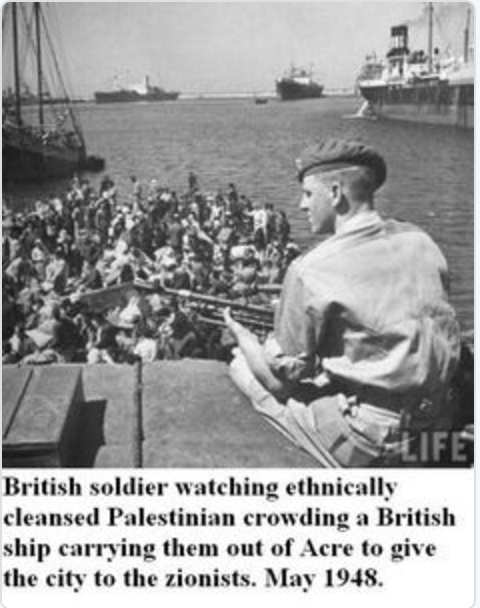
By Gilad Atzmon | May 15, 2016
The Israeli fear of being thrown into the sea is a projection.
The Israelis are afraid of being pushed into the sea because they themselves pushed the Palestinians into the sea (picture above). The Israelis tend to attribute their own genocidal inclinations to Arabs (in particular) and Goyim (in general).
‘Jewish fear,’ as such, is self-inflicted — the more brutal the Israelis are, the more fearful they become of the possibility that the Palestinians may be equally murderous. Similarly, the more the Jew hates the ‘goy,’ the more the Jew is mortified by the possibility that the goy may also express some animosity in return.
Jewish fear better be grasped as a war against terror within. Jews are too often tormented and haunted by their own racism and supremacy which they attribute to others by means of projection.
Israeli settlers attack Palestinian mother and child in Hebron
Ma’an – May 14, 2016
 HEBRON – A group of Israeli settlers attacked a Palestinian woman and her child late Friday night during an incursion into a home in the Tel Rumeida area of Hebron’s Old City in the southern occupied West Bank.
Emad Abu Shamsiya, a coordinator for Human Rights Defenders, told Ma’an settlers attacked the house of Riyad Abu Hazza and beat his wife as settlers sprayed his daughter with pepper spray and caused her to faint.
Upon hearing the commotion, a group of volunteers rushed to the house to help fend off the settlers and provide first aid to Abu Hazza’s wife and child, Abu Shamsiya said.
Jawad Abu Aisheh, a coordinator for the Hebron-based group Youth Against Settlements, said the assault occurred after a weekly settler march took place in the city — usually held on Fridays or Saturdays — where Israeli settlers chant anti-arab slogans, such as “Death to Arabs,” or “Gas the Arabs,” as they harass Palestinians and damage their properties.
Abu Aisheh told Ma’an that the near daily settler attacks are only pieces of a much larger scheme of Israeli settlers attempting to push Palestinians out of the neighborhoods by creating an environment where they must constantly live in fear.
Israeli forces declared the area of Tel Rumeida a “closed military zone” in late October, and has since renewed the military order every month, only allowing Palestinian residents of the area with Israeli-issued identification numbers to enter.
However, according to Abu Aisheh, tomorrow is expected to be the last day of the closed military zone as families in the area have not yet received another military decree.
Mistreatment of Palestinians in the Hebron area has been common since the city was divided in the 1990s after a US-born Israeli settler, Baruch Goldstein, massacred 29 Palestinians inside the Ibrahimi Mosque.
Tel Rumeida is located within the area of the city designated as H2, an area taking over the bulk of the Old City that is under full Israeli military control, and the site of five illegal Israeli settlements that continually expand into the neighborhoods of the more than 6,000 Palestinians who reside within the Israeli-controlled area.
The several hundred Israeli settlers who illegally reside in Hebron have made attacks on Palestinians and their properties an almost daily occurrence for several decades.
According to the United Nations Office for the Coordination of Humanitarian Affairs, there have been a total of 30 reported settler attacks against Palestinians and their properties in the occupied West Bank and East Jerusalem since the start of 2016, and a total of 221 attacks in 2015.
Israel can commit crimes with impunity; condemn them at your peril
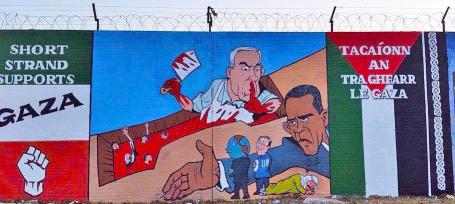
MEMO | May 12, 2016
Israel’s latest display of misplaced ire at the UN Security Council has provided a succinct illustration of how criticism of settler colonialism, even by Israeli NGOs, remains a cloistered subject. Following a presentation by Yesh Din, in which the NGO’s legal adviser Michael Sfard presented statistical information regarding Israeli settler terror, both Sfard and Israel’s Ambassador to the UN, Danny Danon, retaliated against Venezuelan Ambassador Rafael Ramirez’s criticism of their country’s slow extermination policies.
According to Haaretz, Ramirez challenged the UN Security Council to ponder the information, asking: “What does Israel plan to do with the Palestinians? Will they be disappeared? Is Israel trying to impose a ‘final solution’ on the Palestinians in the West Bank?”
Right-winger Danon — who has advocated punitive attacks on the civilian infrastructure in the Gaza Strip — promptly resorted to the clichéd “anti-Semitism” accusation: “These are blunt anti-Semitic statements coming from the Venezuelan ambassador towards the Jewish nation.”
According to Yesh Din’s lawyer, the Venezuelan ambassador’s use of the phrase ‘final solution’ is “offensive, angering and completely incorrect.” Sfard made this claim despite telling the Security Council: “Yesh Din vigorously and unequivocally condemns all human rights violations and all international law infractions. There can be no justification for attacks on civilians no matter who the perpetrators are and whatever the identity of the victim is.”
According to YNet news, the Israeli delegation demanded immediate condemnations following Ramirez’s remarks, and was gratified by the US, Britain and France issuing — predictably — “decisive” statements. Danon also called on Ramirez to apologise for his use of the phrase “final solution” with its obvious connotations with the Holocaust; his apology was met by a demand for a more public version.
Israel thrives upon the blatant contradiction of committing human rights violations openly and without remorse, while resenting criticism of such illegal actions. Furthermore, this episode at the UN is evidence of the cycle of hypocrisy plaguing such organisations which are, allegedly, standing up for Palestinian rights; they fail to act on the evidence, no matter how strong it is, and this exposes their allegiance to the colonial state of Israel as well as the terrorism of its illegal settlers. However, the tactic has now been perfected to project blame elsewhere to the point where logical condemnation of colonial violence is deemed to be offensive, but the violence itself isn’t. This is despite the fact that Israel is adhering publicly to the implementation of Zionism’s ideological goal of “Greater Israel” by continuing its territorial expansion, ethnic cleansing and — yes — slow extermination of the Palestinian population.
Ramirez’s comments expose Israeli state terror, incorporating historical memory and exposing a colonial cycle that has not yet reached its completion. Israel has applied various forms of human rights violations against Palestinians, all geared towards a system that leaves no recourse, thus isolating Palestinians and creating a perpetual implosion. State policies reflect impunity while Israeli ministers such as Naftali Bennett have spoken openly about “disappearing” Palestinians. Hence, nothing in Ramirez’s speech can be construed to be within any context other than that of the reality on the ground. If anything, the Venezuelan’s words portray an awareness that is common to both Palestine and South America, both having experienced colonial and imperialist violence.
Nobody should take offence at what was said by the ambassador from South America. The incident should be seen as an educational experience of how the interpretation of colonial violence through time has navigated the perpetually-changing circumstances and, as a response, carved out a niche that encourages selective remembrance and memory of genocide in order to allow for a new form of genocide to be carried out within the framework of the ambiguities of international law. As Rafael Ramirez has found to his cost, Israel is allowed to commit genocidal crimes with impunity; it is those who condemn them who have to apologise.
Israel imposes “general closure” on Palestinian territory for Israeli Independence day
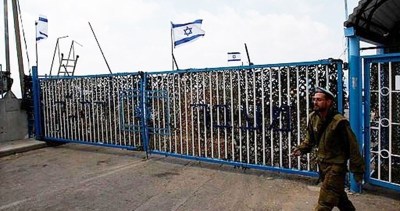
Ma’an – May 11, 2016
BETHLEHEM – Israeli authorities declared a “general closure” on Gaza and the occupied West Bank since midnight on Tuesday and continuing until midnight on Thursday as Israel celebrates its Memorial and Independence day.
The general closure was implemented on the West Bank and the besieged Gaza Strip yesterday, marking Israeli Memorial day, and will continue until the finish of Israel’s Independence day on Thursday.
Crossings into Israel from the West Bank and Gaza are only being permitted in humanitarian cases. However, a representative of the Palestinian Authority (PA) has requested approval for Palestinians in need of serious medical assistance, a spokesperson for the Coordination of Government Activities in the Territories (COGAT) told Ma’an.
An Israeli army spokesperson said the closure was implemented following an army “security assessment” and added that the closure restrictions included the passage of products and the movement of people into Israel and its illegal settlements.
Debilitating poverty and lack of employment drives many workers in the occupied West Bank to enter Israel in search of work. Israel’s imposition of closures on the Palestinian territory has severely affected the livelihoods of hundreds of thousands of Palestinians who depend on entering Israel, or its illegal settlements, for employment opportunities.
The number of Palestinians employed, both documented and undocumented, in Israel and its illegal settlements for the first quarter of 2016 was 114,000, according to the Palestinian Central Bureau of Statistics (PCBS).
The average unemployment rate for the Palestinian territory was 26.6% for this same period: 18% in the West Bank and a staggering 41.2% in Gaza. The poor state of the Palestinian territory’s economy is largely attributed to the decades-long Israeli military occupation of the West Bank and the nearly nine year Israeli blockade on the Gaza Strip which severely undermines any economic developments.
Israeli authorities movement restrictions on Palestinians in the West Bank as recently as a few weeks ago during the Jewish holiday of Passover, including implementing a full closure on the besieged enclave of Gaza.
Featured Video

When Israel Is Mighty
or go to
Aletho News Archives – Video-Images
From the Archives
US murdering 1 million Iraqis is democracy, Iran giving yogurt to Iraq is “domination”
By Ali Salaam | American Herald Tribune | July 31, 2017
The New York Times, owned by the Zionist Jewish supremacist Ochs-Sulzberger family, has no problem with Iraqi suffering as long as Iran is not the one behind it.
The Iraq War was a genocide of the Iraqi people by Zionist supremacists in the Bush administration. Over 1 million innocent people were killed based on a lie. American soldiers died in an Israeli war and now an average of 22 soldiers commit suicide every day because their consciences cannot cope with the fact they committed crimes in an illegal war that served no purpose other than to benefit Israel, not America.
Benjamin Netanyahu, Prime Minister of the Zionist regime, once said “We are benefiting from one thing, and that is the attack on the Twin Towers and Pentagon, and the American struggle in Iraq.”
Paul Wolfowitz had his sights on Iraq since his time in the first Bush administration. Former Israeli official and Bush administration official Richard Perle had his eyes on Iraq since at least his authorship of the Clean Break white paper. The Zionist regime had their eyes on Iraq since the 1980s when strategist Oded Yinon wrote his white paper in support of dividing the Arab-Muslim world along ethnic and sectarian lines. The global Zionist lobby has had their eyes on Iraq since Theodor Herzl stated that Eretz Israel’s true borders go from the Nile River in Egypt to the Euphrates River in Iraq. … continue
Blog Roll
 Aletho News
- ‘Harsh reality’: Iran says France seeks monopoly on power and intimidation, not peace for all
- When Will This White House Madness End?
- Huckabee aide goes to ‘unusual lengths’ to portray ‘Israel’ positively
- Trump Announces Diesel Supply Deal With Putin Following Phone Call
- MEP blasts ‘Euro-Gestapo’ for lecturing Russia on democracy
- Syria May Send Troops to Saudi Arabia Amid War with Ansar Allah
- UK whines about losing billions to ‘Putin tax’
- Baghaei to Rubio: Distorted narratives cannot erase US record of broken commitments
- Houthis Don’t Have to Conquer Saudi Arabia to Make It Pay
- MOE: Nearly 22,000 Students and Education Workers Killed
- If Americans Knew
- Gaza ceasefire exists in name only, say more than 100 organizations
- Nearly 2 Million in Gaza Need Urgent Shelter Assistance as Winter Looms: IOM Chief Warns
- Suppressing Palestinian resistance: US charity under fire for AI monitoring of Gaza classrooms
- Thousands Are Held in Israeli Torture Camps. This Is What Happens Inside
- Israel puts Gaza’s sick, injured, newborn in peril – Daily Update
- Report claimed Mark Levin used by Israeli government to influence Trump
- Over 2,000 Gazans have died awaiting medical evacuation amid Israel’s continued siege
- How a U.S. Diplomat Suppressed and Altered Reports Critical of Israel
- 5 Palestinians Die from Israeli Strikes in Gaza as Relentless Attacks Continue
- Report: Ceasefire Slows Killing but Leaves Devastation Intact
- No Tricks Zone
- New Study: 50 Years Of The Most Aggressive ‘Net Zero’ Policies Can Only Affect The Global Climate By 0.03°C
- US September “Heat” Was No Record…Many Records Set Decades Ago
- Latest European Green Energy Debacle; Portugal’s Largest Flagship Solar Park Insolvent!
- Green Energy Debacle: German Expert Professor Fritz Vahrenholt Warns Of Severe Economic And Social Consequences
- Two More Paleo Reconstructions Affirm Meters-Higher Sea Levels Across Ireland, Brazil 7000-6000 Years Ago
- New Study: Earth And Venus Surface Warmth Largely Explained By Convection And Lapse Rate, Not CO2 Or Radiation
- 2025 Nature Paper Claiming Worsening Global Drought Gets RETRACTED …Heavily Flawed
- New Study: ‘Global Drought Shows No Detectable Recent Acceleration Under Climate Warming’
- Economic Masterminds: German Socialists Suggest Taxing Productivity Gains Stemming From Using AI
- The South China Sea Has Not Been Cooperating With The Climate Change Narrative

