Syrian Suffering vs. Palestinian Suffering
By Robert Fantina | Aletho News | September 4, 2015
The tragic photo of the body of a three-year old Syrian boy, Aylan Kurdi, drowned in the sea when attempting to flee that war-torn nation with his family, is seared on the minds of all but the most heartless of people who have seen it. Still wearing his little sneakers, he would seem to be only asleep, where he not lying alone, face down, on a Turkish beach, having been washed ashore by the tide. The unspeakable horrors that his desperate family fled, at great and, as it turned out, tragic risk, can only be imagined by anyone who has not experienced them. The entire world is crying out for a resolution to the problems that led to the death of this child, his brother, mother and countless other desperate refugees.
But the Syrian refugee crisis is not the only one that is leaving children dead and dying. Such publicity was not granted to Palestinian children, bombed to bits by apartheid Israel, using United States-provided weaponry. Over 500 innocent children were killed in a 51-day period last summer; some of them asleep in their own beds, others huddled in United Nations refugee centers, both places where any child should feel, and should be, safe and secure. Their mangled and bloody bodies were shown on social media, but somehow the corporate-owned media did not find them worthy of reporting.
It is impossible to imagine the horror of Aylan’s family, in the water in the black of night, when Aylan and his brother slipped from their father’s desperate grasp. How the children must have suffered! The feelings of panic and desperation experienced by their parents is nothing Hollywood’s best actors could ever mimic.
Why, then, were not the stories of any Palestinian children told? Their parents too struggled desperately to save them, and the photographs of those parents holding the battered, mangled, bloody bodies of toddlers and infants are no less moving than pictures of Mr. Kurdi, as he speaks of his tragic loss.
In April of this year, a devastating earthquake struck Nepal, killing over 8,000 people, and causing millions of dollars of damage. In response, local stores requested that their customers donate to relief programs. Fundraisers were held, donations solicited, and the world did what it could to help these beleaguered people.
In the summer of 2014, more than 2,000 people were killed in the Gaza Strip, with tens of thousands left homeless. Today, most of them are still homeless, some of them living with friends or relatives fortunate enough to have something left to live in, others living in makeshift shelters, built from the ruins of their homes. Children are attending classes in bullet-ridden schools, with some classrooms having huge holes in the walls or ceilings, evidence of the cruel and barbaric bombing of last summer. Yet there has been little news of this. This writer is not familiar with any local relief activities, or any such activities at all. The only donation solicitations that he has seen have been by Palestinian relief agencies with which he is familiar because he has sought for them.
Relief donations increase when people around the world, especially those in First World nations, see the suffering that the relief is designed to alleviate. Why, one wonders, is the acute suffering of the Palestinian people ignored? Even the unspeakable burning alive of a Palestinian toddler, the killing of his mother and the extremely serious burns experienced by his brother had only a brief moment in the public media.
The corporate-owned media, unfortunately, determines what it wants the world to know, and what it would prefer not to reveal. Zionism dictates that Palestinian suffering is not worth showing to the world. After all, Zionists with prominent cabinet positions in the Israeli government have stated that Palestinians are ‘beasts’, and all of them should be destroyed. Having a fundraiser to assist them is not in the plan.
In May of 2014, two Palestinian teens were videotaped being shot in the back by Israeli Defense Force (IDF) terrorists. Is that not newsworthy? One can only imagine how newsworthy the corporate elite who control the media would consider it if two Israeli teens were shot in the back by Palestinians. Yet the reverse is not true.
It is an age-old truism in the U.S. that the ‘enemy’ is less than human. From ‘gooks’ in Vietnam to ‘sand jockeys’ in the various Gulf wars, the U.S. teaches its own terrorists to view their victims as less than human. Since Israeli lobbies own the U.S. Congress, seeing Palestinians as ‘beasts’, whose suffering is not worthy of cluttering up the vacant minds of the typical U.S. news audience, is completely acceptable. A three-year-old Syrian boy washing up on a beach is tragic; a three-year old Palestinian boy, whose body was destroyed beyond recognition by bombs dropped by Israel, isn’t worth anyone’s notice.
This writer wonders what goes through the mind of a Palestinian parent who has lost one or more children to Israeli bombs, as he or she reads about little Aylan, and sees those heart-rending pictures. Certainly, empathy and sympathy for Mr. Kurdi is foremost in their mind. But do they also wonder why the tragic death of their own child or children was ignored? As they see the world demanding help for Syrian refugees, do they wonder why no one seems to be demanding help for them?
It is long past time for the nation of Palestine to be internationally-recognized by the remaining countries, most notably the United States and, to its great shame, Canada, that thus far do not. It is also long past time for the world to rush in with aid to Gaza, and to demand that Israel adhere to international law, or suffer the sanctions and other consequences that any other nation, violating law and abusing human rights, would experience. The trend is moving in the direction of human rights for Palestinians; their suffering at the hands of Israel and the United States must end.
Six Palestinian Journalists Kidnapped in August
IMEMC News & Agencies | September 3, 2015
The Union of Palestinian Radio and Television documented about 20 Israeli violations regarding the rights of Palestinian journalists and media staff working in Palestine this August.
 The Union stated, in the monthly report issued on Thursday, that Israeli forces detained six Palestinian journalists and two photojournalists, including Hazem Obaid, who works for Al-Quds TV.
According to Al Ray, Obaid was detained while he was en route to travel via Al-Karama crossing. Authorities later extended his detention.
The number of journalists, writers and media activists detained in the Israeli jails was up to19 prisoners, by this time, to include Nidal Abu Aker, the director of Bethlehem’s Al-Wehda Radio and presenter of “In Their Cells” programs. Abu Aker has staged a continued hunger strike since August 20th, in protest against the administrative detention policy.
Palestinians, this past month, have witnessed an escalation in the organized attack against Jerusalemite journalists during their coverage of the continued incursions of Al-Aqsa Mosque and the daily events in the city, in general.
During Israel’s latest military offensive on the Gaza Strip, 17 journalists were reported killed by Israeli forces. According to the Palestinian Center for Development and Media Freedoms (MADA), over 80 percent of Palestinian journalists were engaged in self-censorship by late October of 2014. In a dangerous precedent, Israeli police recently fined Palestine TV photojournalists and crew members of Russia Today TV, under the pretext of “obstruction” caused during their coverage to prevent the entry of worshipers to the Al-Aqsa Mosque from Al-Silsila gate.
Israeli Minister of Culture says Soldiers Should Have Shot Nabi Saleh Women
Al Ray/ World Bulletin | September 3, 2015
 Israeli Minister of Culture, Miri Regev, has said that the Israeli army should have shot the Palestinian women who saved Mohammad al-Tamimi from abuse by an Israeli soldier. The incident took place during the Nabi Saleh village’s weekly demonstration against the illegal confiscation of their land, according to a report in Midde East Monitor.
In a Facebook statement, she said that the unarmed protesters should have been shot. Regev called on Defense Minister Moshe Ya’alon and Prime Minister Benjamin Netanyahu to change the army’s policy on the use of live-fire because of the “humiliation” the soldier endured.
“We need to decide immediately that a soldier that is attacked is permitted to return fire. Period. I call on the minister of security to put an end to the humiliation and change the open fire regulations immediately!”
“Anyone who tries to harm Israeli civilians and soldiers needs to know his blood is in his head,” Regev continued, using a Hebrew expression to convey that the Palestinians who assaulted the soldier are fair game for shooting.
Israeli forces took the parents of the boy into custody on Tuesday.
Hamas: PA and Israel are behind anti-Hamas Daesh video
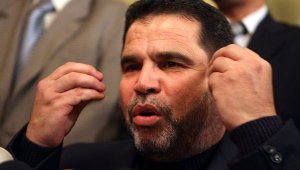
Salah Bardawil
MEMO | September 4, 2015
The Palestinian Authority and Israeli intelligence services are behind messages in which Daesh members make threats against Hamas and accuse it of blasphemy, a senior Hamas leader has said.
In statements to Quds Press, Salah Bardawil downplayed the importance of videos which apparently show Daesh members making threats against Hamas, accusing the Palestinian Authority’s General Intelligence Service and the occupation of spreading them to confuse Hamas and to implement projects which harm the Palestinian cause.
He said the investigations conducted by the Ministry of Interior in Gaza revealed that this is a plot orchestrated by the intelligence that used Daesh’s name to smear Hamas’s name.
Bardawil added that Fatah and the Palestinian Authority are trying to attack Hamas. He added that the movement’s objective is “clear”: Resisting the occupation.
A video thought to have been published by the Islamic State’s Wilayat Damascus division appears to show two masked men warning that Daesh does not differentiate between Hamas, the Palestinian Authority in the West Bank and the Israeli occupation, and it will fight them all.
Parents of Tamimi Boy Jailed

All members of Al-Tamimi family, including parents, daughter and two sons. The two sons are in cast, one of them because of an assault by an Israeli settler.
IMEMC News & Agencies | September 3, 2015
Israeli forces took into custody, on Tuesday, the parents of Mohammad al-Tamimi, the Palestinian boy who was beaten by a masked Israeli soldier in Al-Nabi Saleh Village on Friday. The pictures of the boy went viral on internet.
“The Israeli army arrested Basil and his wife, Nariman, as they tried to cross an Israel military checkpoint at the entrance of Al-Nabi Saleh Village north of Ramallah,” Bassam al-Tamimi, a relative, said.
He further stated, according to Days of Palestine : “The Israeli soldiers arrested Basel and his wife and prevented all of the family members from communicating with them.”
Palestinian sources confirmed the arrest, noting that the parents were taken by the Israeli soldiers to an unknown place.
Regarding Mohammad, the Israeli soldier beat him savagely, claiming he had threw stones at him. However, this remains questionable, as the boy’s hand was broken and clearly in a cast.
Female family members pulled at the boy, as he refused to be led by the Israeli soldiers, who then released him.
After the incident, a request was reportedly submitted to the Israeli police for the arrest of the Al-Tamimi family, who were accused of “assaulting” the soldier.
Impunity for Jewish terrorism
When Israeli civilians try to kidnap a Palestinian child, the police do their best not to investigate
By Yossi Gurvitz | Yesh Din | September 2, 2015
The date is December 19, 2014. The Place: the AM/PM convenience store outside the West Bank village of Hawara. Majed Musa AbdAziz As’ous parks his vehicle across the road from the store, making certain the windows are open, and goes in for a quick purchase. In the front seat on his right sits five-and-a-half year old N.; two other children sit in the back seat.
As the father crosses the road, an Israeli vehicle — As’ous would later remember it being a red Subaru Justy, along with a few numbers from the license plate – with four young, Israeli men swerves into the scene. The Subaru parks near As’ous, with its back window adjacent to the windshield of As’ous’ car. The Israeli in the back seat of the Subaru leans across the window, seizes N., and tries to pull him into the Israeli vehicle.
Hearing N.’s terrified screams, As’ous runs back. He manages to see the Israeli vehicle escaping, only to catch a glimpse of the man who almost kidnapped his son. As’ous lodges a complaint with the Palestinian police the following day, which transfers it to the Israeli DCO.
In February 2015, two months after the incident, the complaint makes it to the Israeli police, which then pretend to investigate the case. They take As’ous’ testimony, who tells the cops he knows of another witness whom he can locate. In a second interview four days later, police investigator A.A. asks As’ous whether there are security cameras in the area — he says he thinks there are.
At this point, a reasonable man would assume A.A. would turn to the AM/PM shift manager, identify himself as a policeman, and ask for the relevant tapes. A.A. assumed that the chance that there is little chance these tapes exist (personally, I believe that his assumption was sound — too much time had indeed passed). Furthermore, wrote A.A. in a memo, it is not at all likely that the cameras actually covered the road area; from his rich experience, he believes they mainly cover the cash registers. Thus, A.A. decided not to look into the issue at all.
Rewind, slow motion: the crime – the attempted kidnapping of a child; the response of investigator A.A. – not to bother to even check whether evidence exists, or whether the cameras cover the road. He just assumes they don’t and closes the case under the ever-popular clause of Unknown Perpetrator.
Perhaps the cameras caught what had happened; perhaps they didn’t. Perhaps they did, but too much time had passed and the tapes were deleted. Or maybe, due to the whole mess of the kidnapping, the owners decided to keep the tapes for evidence. We’ll never know, because A.A. never bothered checking. He preferred to guess.
The negligence doesn’t end here. Leaving the tapes aside – the chance they still existed was indeed low – there were other, stronger leads. As’ous gave A.A. a fairly accurate description of the Israeli vehicle – but A.A. didn’t bother to cross that information with similar vehicles registered in the nearby outposts and settlements.
As’ous told him he knows of another witness – the police didn’t bother to summon him or take his statement. It’s just a Palestinian child, after all. As’ous says he thinks he may identify the kidnapper – but A.A., the SJPD’s Sherlock Holmes, doesn’t bother to ask him to look at the police felon photo book. In fact, A.A. doesn’t take any investigative action whatsoever; the entire case file is three pages long. When it comes to excuses, however, he’s a master.
All this information comes to us directly from the investigative files. Recently our attorneys, Noa Amrami and Michal Pasovsky, appealed the decision to close the case. Their demands are simple: carry out the aforementioned, minimalistic investigative actions, so that the life of a Palestinian child won’t be deemed negligible.
Our last post showed the Nationalistic Crime Section at its insufficient best; this time we show you the SJPD at its worst. It’s important to remember these days, when the SJPD and the Shin Bet tell you they’re doing everything they can to stop Jewish terrorists, that “all we can do” looks all too often like A.A.
Veolia sells its shares in the Jerusalem Light Rail and completes withdrawal from the Israeli market
Who Profits | August 2015
More than a decade after winning the tender for the construction and operation of the Jerusalem Light Rail (JLR), Veolia Environnement’s subsidiary, Transdev, has sold all of its holdings in the JLR to a group of Israeli investors.
The approval of the deal by the Israeli authorities and the completion of the ownership transfer, earlier this month, mark an end to Veolia’s operations in the Israeli market in general and to its involvement in the controversial JLR project in particular.
Israeli authorities’ approval and ownership transfer
Until August 2015, Trasndev, a Veolia Environnement subsidiary, held a minority interest (5%) in CityPass, a consortium tendered by the Israeli government to build the JLR, as well as full ownership (100%) of the train’s operator – Connex Jerusalem. The JLR was designed to connect the western part of Jerusalem with the illegal settlements surrounding the city. Operational since December 2011, the JLR crosses the Green Line and passes through the Palestinian neighborhoods of Shuafat and Beit Hanina.
On September 2nd 2014, Transdev (formerly: Veolia Transdev) signed a contract with the CityPass consortium for the sale of Connex Jerusalem and Transdev’s remaining 5% share in CityPass. The buyer, CityPass consortium, consists of three Israeli shareholders: The Ashtrom Group, IIF – Israel Infrastructure Fund and Harel Insurance.
Recent findings by Who Profits Research Center indicate that after almost a year- long negotiations between the companies, the Israeli authorities and the funding banks, the September deal was fulfilled and that the sale of Connex Jerusalem together with the 5% of CityPass shares reached completion.
On August 6th 2015, the Ashtrom Group – one of the buyers and a shareholder in CityPass, reported to the Israeli Stock Exchange that all conditions precedent in the JLR sale agreement with Transdev were fulfilled and that the agreement was completed. Ashtrom’s report also mentioned that on the same date, 1% of CityPass shares’ was passed into Ashtrom’s possession. For further information on the deal and necessary approvals, see Who Profits’ update from February 2014.
Later that month, on August 18th 2015, and according to the Israeli Companies’ Registrar, 100% of Connex Jerusalem shares’ were transferred from Transdev to an Israeli holding company jointly owned by the Ashtrom Group, IIF and Harel Insurance. According to the Registrar however, Transdev 5% share in CityPass still remained.
The Israeli financial newspaper – the Marker – has also confirmed the completion of the deal on August 2015. In an article (available in Hebrew), published on August 20th 2015, it was reported that Transdev received NIS 100 million for Connex Jerusalem. Contrary to Ashtrom’s report to the Israeli Stock Exchange and to the unaltered status of CityPass ownership in the Israeli Companies’ Registrar, The Marker reported that Trandev’s 5% share in CityPass was fully sold to IIF. Who Profits will continue to monitor the publications around the sale in order to determine which company is the current owner of Transdev’s former 5% share in CityPass.
Finally, Who Profits findings and analysis strongly suggest that the sale has been completed and that the formal ownership transfer of CityPass shares will soon show on public record.
The final step in a gradual withdrawal
The sale of the JLR is the final step in Veolia’s gradual withdrawal from the Israeli market and several illegal operations in the occupied Palestinian territory. Through its various Israeli subsidiaries, the company has engaged in multiple sectors of the local economy, including transportation, water, waste management and energy. Since the Israeli private sector, much like the Israeli government, considers the settlements as a legitimate part of Israel, Veolia’s Israeli subsidiaries operated freely beyond the Green Line. Their activities included the provision of public bus services to Israeli settlements in the West Bank, the operation of a landfill in the occupied Jordan Valley, wastewater treatment facility for settlements’ sewage, and finally the construction and operation of the controversial JLR.
In the last few years, Veolia Environnement sold its Israeli subsidiaries piecemeal. In September 2013, the company sold its local bus services subsidiary to Afikim Company and in April 2015, water, waste and energy activities in Israel were also sold to the US-based investment firm Oaktree Capital Management. At the same time, Veolia tried to distance itself from the JLR by decreasing its holdings in Veolia Transportation – the multinational’s transport services division. In 2011, Veolia Transportation was merged with Transdev UK, leaving Veolia with a 50% share in the new company. To further blur Veolia’s involvement in the JLR, the new subsidiary – Veolia Transdev, changed its name to Transdev.
Simultaneously, Veolia negotiated with the Israeli Ministry of Transportation its way out of Jerusalem. In 2010, the Ministry has effectively blocked Veolia’s attempts to sell its holdings in the light rail to the local Egged Company. It did so by demanding previous international experience form the replacing operator. Due to the controversy surrounding the light rail, it appeared that international companies were hesitant to take on Veolia’s role, additionally with an unexperienced local transportation sector, Veolia was unable to sell Connex Jerusalem and its minority share in CityPass for years. Apparently, negotiations have now ended with the removal of the Israeli government’s objection to an unexperienced buyer and the acceptance of the CityPass consortium as capable rail operator.
Aftermath
As of August 2015, Veolia Environnement is no longer active in the Israeli market and in the occupied Palestinian territory. Nevertheless, the company has left behind irreversible facts on the ground. The construction of the railway involved the expropriation of occupied land that was not done for the benefit of the occupied population, and hence contradicts international law and the Fourth Geneva Convention. The JLR continues to serve the Jewish settlement neighborhoods in occupied East Jerusalem and passes daily through the Palestinian neighborhoods of Beit Hanina and Shuafat, by doing so it will play a substantial role in the reinforcement of Israeli sovereignty over occupied East Jerusalem for years to come.
Only after a final determination of the owner of Transdev’s former 5% share in CityPass, Who Profits Research Center will remove the profiles of Veolia Environnement, Transdev and Caisse des Dépôts et Consignations(CDC) from its database.
International Outcry Over Demolitions of Palestinian Homes: Silence in The NY Times
By Barbara Erickson | TimesWarp | August 31, 2015
The United Nations has called for a freeze on Israeli demolitions of Palestinian homes, dozens of aid agencies and the European Union have joined in the protest, and even the U.S. State Department has voiced its dismay. Yet, even as the outcry has become an international issue and reached the highest ranks of our own government, we find a resounding silence at The New York Times.
Times readers are unlikely to know that 31 international organizations recently called on Israel to stop the “wanton destruction of Palestinian property,” including “basic humanitarian necessities,” such as solar panels, animal pens, latrines and tents supplied by the European Union. The groups asked world leaders to take “urgent action,” to hold Israel accountable for “grave breaches” of international law, and to demand reparations for the destruction of their charitable gifts.
The statement came shortly after the United Nations and representatives of the European Union in separate actions called on Israel to freeze demolitions in the West Bank.
The State Department joined both groups with statements made during a press briefing Aug. 19. When spokesman John Kirby was asked about the issue, he had a prepared declaration ready to hand.
The department was “deeply concerned” and “very troubled,” he said, calling the demolitions and evictions “harmful and provocative and indicative of a damaging trend.” He referred to the “destruction of dozens of structures and the displacement of over 150 people in the West Bank and East Jerusalem this month alone.”
His words got the attention of Israeli media, which published his comments at length, but they failed to arouse the interest of the Times.
In fact, Israel’s cruel (and illegal) policy of demolishing Palestinian property has been a constant story in alternative and Palestinian media outlets over the years, and the spate of international protests appearing this past month is not the first. Last February, for instance, some 400 rabbis from around the world urged Israel to halt demolitions in the West Bank.
Israeli forces have destroyed houses, tents, animal shelters, shops and farming structures throughout the West Bank at a steady clip, leaving 486 Palestinians displaced in 2015 as of Aug. 24. The destruction has hit the poorest and most vulnerable populations hardest, as Israel attempts to clear the land for Jewish settlers.
In the midst of this, the Times has seen fit to report on only one official demolition action this summer: the destruction of illegal Jewish settler homes in the West Bank. (This event was accompanied by Prime Minister Benjamin Netanyahu’s announcement of plans for 500 news settlement homes to replace them.)
When the demolitions have made their way into the pages of the Times, the reports have failed to reveal the full extent of the problem. This year, for instance, the paper took notice of the threatened destruction of the West Bank village Susiya, when international media attention made it impossible to ignore, but dozens of other actual demolitions found no mention in the newspaper.
Again, when bureau chief Jodi Rudoren wrote about East Jerusalem demolitions last year, she underreported the extent of the damage by omitting over 46,000 structures that have been destroyed over the years and mentioning only the 675 that took place for “punitive reasons” during the second intifada.
Although demolitions are a constant threat to thousands of Palestinians in the West Bank, the Times prefers to ignore this reality. Palestinian media, however, issue reports almost daily, and monitoring groups such as the United Nations and the Israeli organization B’Tselem struggle to keep tallies.
These groups also note that demolitions fly in the face of international rules. As the UN release states, they contravene “Israel’s obligations as an occupying power under humanitarian law and human rights law.”
Behind the numbers cited by the United Nations and other groups are thousands of individual stories: herders struggling to shelter their flocks as Israeli forces tear up sheds and corrals, children robbed of playgrounds and schools, communities forced to pay for water deliveries after bulldozers crush their pipelines, families pulling prized possessions out of the rubble of their homes.
These stories find little notice in the Times, even as aid organizations and governments from the European Union to the U.S. State Department have spoken out with alarm and dismay. On many levels, Israeli demolitions are eminently newsworthy, but this is not enough for the Times, which prefers to shield Israel above all.
Italian activist arrested and beaten in occupied Palestine
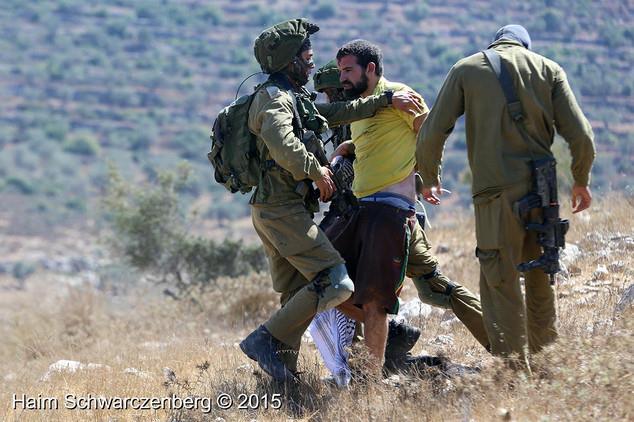
Vittorio Fera violently arrested. Photo credot – Haim Schwarczenberg
International Solidarity Movement | August 31, 2015
Occupied Palestine – Italian activist Vittorio Fera was violently arrested and beaten by soldiers at weekly demonstration in Nabi Saleh in occupied Palestine. The Italian activist, 31-year old Vittorio Fera, is falsely accused of throwing stones and attacking soldiers. His case will be taken to court the second time Monday 31st August between 9 and 11 am.
During a weekly demonstration in Nabi Saleh Israeli soldiers randomly arrested two protesters: one 18-year old Palestinian youth and the Italian activist Vittorio Fera. Fera went to the protest to document human rights violations by the Israeli army against Palestinians and became a victim of military violence himself.
While documenting an Israeli soldier strangling a 12-year old boy, Vittorio and the other activists were ambushed by Israeli forces. Vittorio was separated from the group and violently shoved to the ground. “We were shocked to see the boy being choked by a soldier, when suddenly soldiers came running at us and attacked Vittorio”, Josephine from Denmark explains.

Vittorio Fera with clear marks of military assault
Journalists witnessed soldiers kicking and beating him during the arrest, even though he did not resist or fight back. Vittorio, and the Palestinian youth, were forced into a military jeep where they were detained for almost nine hours by the Israeli army, before they were finally taken to a police station. Despite various demands of Fera’s lawyer to have him brought to a police station immediately, both he and the Palestinian were illegally kept in the military jeep until shortly before midnight.
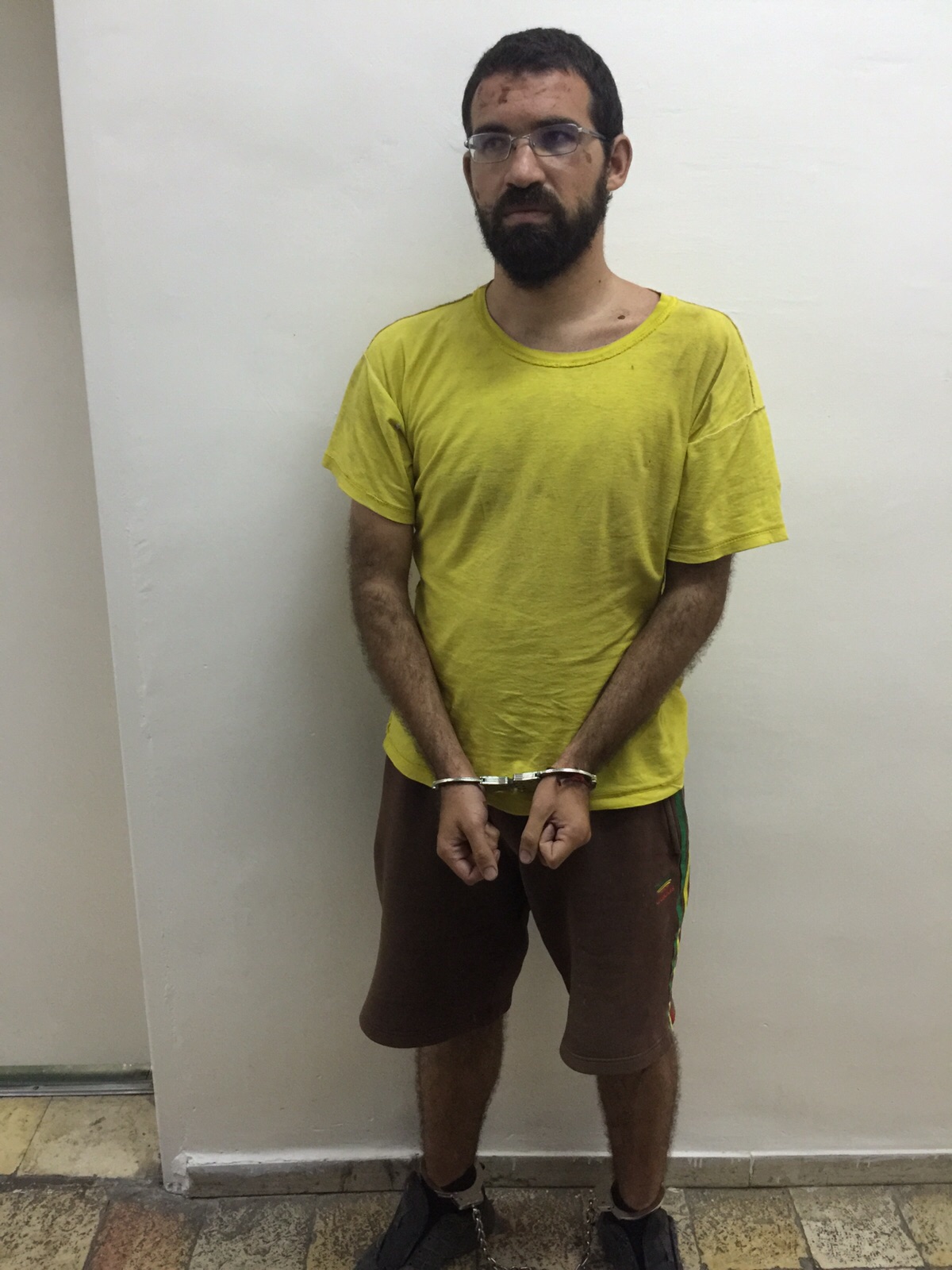
Vittorio Fera with clear marks of military assault
The military accuses Vittorio Fera of throwing stones and attacking the soldiers – an unfounded accusation. A first sentencing in court late Saturday night only resulted in the postponing of the sentencing until Monday morning. The hearing will take place in in Jerusalem Monday the 31st August 2015 between 9 and 11 am.
See the video of the arrest here
Major US industrial union votes in favor of BDS movement
Press TV – August 31, 2015
A prominent industrial union in the United States has endorsed the international movement of Boycott, Divestment and Sanctions (BDS) to support the Palestinians against Israel, calling on Washington to cut off financial support to Tel Aviv.
The United Electrical, Radio and Machine Workers of America union voted in favor of a resolution entitled “Justice and Peace for the Peoples of Palestine and Israel” during its national convention on August 20, the union reported on its website.
Citing Israel’s “long history of violating the human rights of the Palestinians,” the union has become the first nationwide union to join the boycott against Israel.
Union delegate Autumn Martinez said, “It’s absolutely disgusting what is going on. Free Palestine!”
In a statement, the union attacks Israel for its human rights record “starting with the ethnic cleansing of 750,000 Palestinians in 1947-48 that turned most of Palestine into the State of Israel.”
It explained that the goal of endorsing the BDS campaign was “to pressure Israel to end its apartheid over the Palestinians just as similar tactics helped to end South African apartheid in the 1980s.”
The union also voted on a number of other foreign policy issues, including the demand to end US military intervention in the Middle East and other regions.
“We (need) to get rid of this culture of war,” said Mike Ferritto, a local delegate.
“We have done enough damage. We need to get out of the Middle East,” said another delegate, Brandon Dutton.
The resolution was part of a series of resolutions, including support for the Iran nuclear agreement. The union said it was the first US national union to endorse the movement.
The BDS campaign, which began in 2005, encourages organizations and institutions such as universities and churches to divest from Israel until the fundamental rights of the Palestinians have been recognized.
Violent arrest of Palestinian man in al-Khalil (Hebron)
International Solidarity Movement | August 29, 2015
Occupied Palestine – A 52-year old Palestinian man was arrested at Shuhada checkpoint in al-Khalil (Hebron) yesterday, for ‘not obeying soldiers’ orders. Israeli forces painfully handcuffed and blindfolded him.
Around 1:30 pm, Hisham Azzeh walked through Shuhada Checkpoint in order to reach his house that is located up the hill next to the illegal settlement in Tel Rumeida. At this first checkpoint on his way home, Hisham passed through the metal detector without it beeping to indicate he had to go back and pass again. Therefore, he continued on his way, but Israeli soldiers yelled at him to go back and pass through the checkpoint again for no reason.
When he did not immediately comply with the soldiers orders, they arrested him. Israeli soldiers painfully handcuffed him with his hands behind his back with plastic handcuffs, without any regard for a recent operation on his hand. The soldiers also blindfolded him, so he was unable to see what happened to him and where he was brought. On the way up the hill towards the military base, the pain, caused by the plastic handcuffs, was so intense, that Israeli soldiers had to allow Azzeh to sit down on the ground, as he was unable to continue walking.
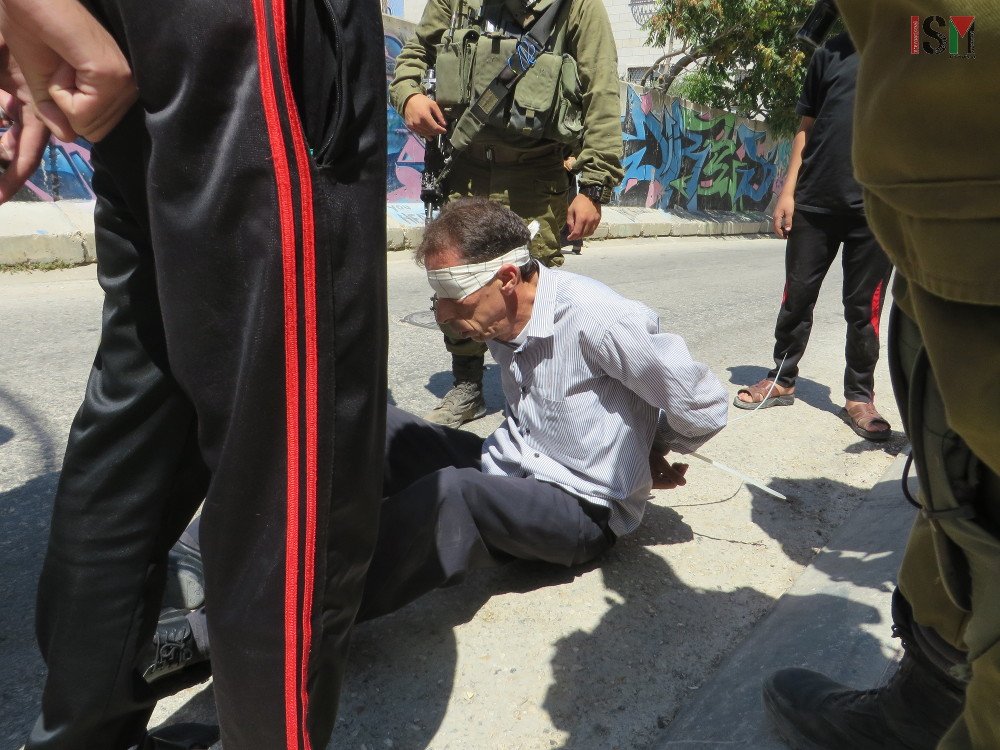
Palestinian man sitting on the ground in pain
Palestinians observing the arrest were continously telling soldiers about Azzeh’s recent operation on his hand and the plate that had to be inserted during this operation. Even though they were explaining the immense pain the plastic handcuffs were causing to Azzeh due to this operation, the Israeli soldiers shouted at them to leave the area and be quiet. Various requests to call an ambulance were denied. Only after Azzeh’s brother, who is a medical professional, arrived and reasoned with the soldiers, they attempted to cut the handcuffs. As the soldiers put the handcuffs too tight, they were struggling to cut the handcuffs without cutting Azzeh’s hands, making the procedure even longer and more painful, with Azzeh suffering immensely and crying out in pain.
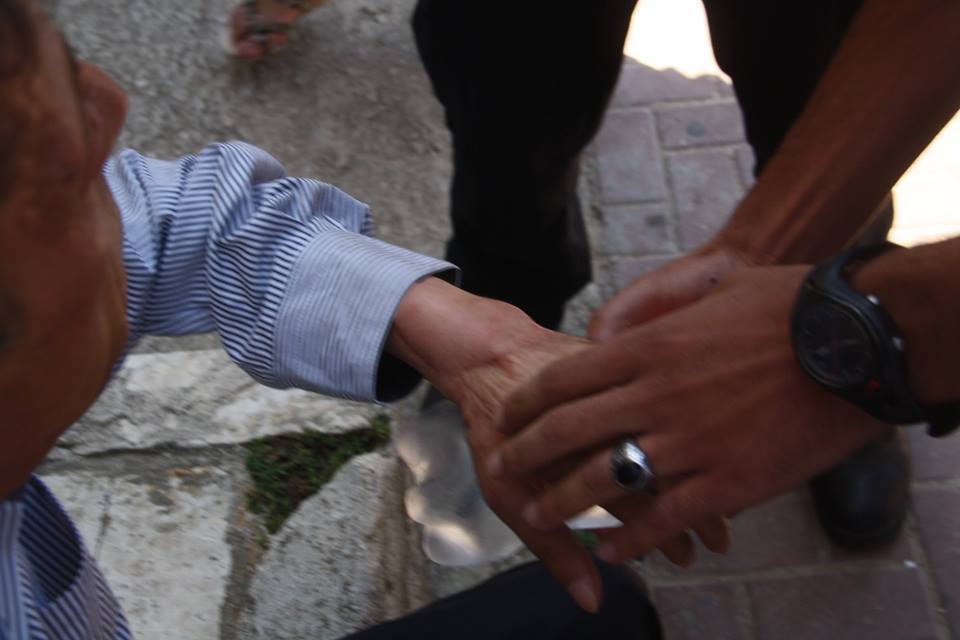
Hisham’s hand showing scars from the operation. Photo credit: Youth against settlement
In the meantime, a civil police car was driving past on a regular patrol and got stopped by the Palestinians in an attempt to alleviate the situation for Hisham. After the handcuffs were finally cut off, by-standers cooled his hand first with a bottle of cold water until an ice-pack was brought for him. The police took Hisham Azzeh to the police station after a long discussion. After about an hour, Azzeh was released. He is now doing okay, but is still suffering from pain in his hands.
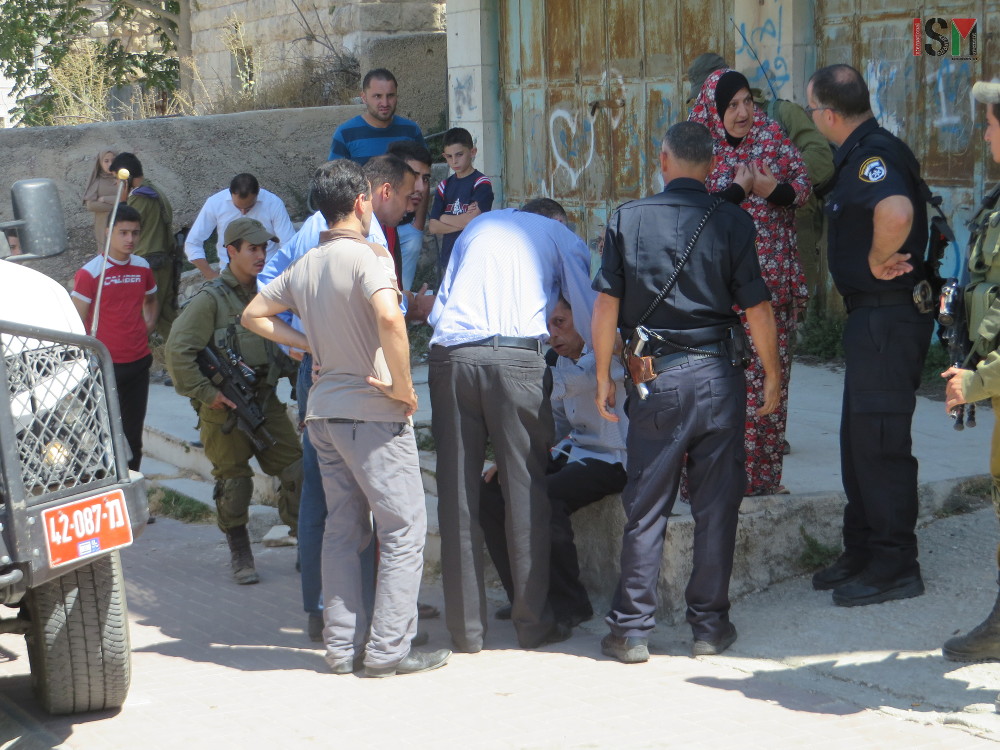
Police, bystanders and the soldiers standing around Hisham
Harassment like this in al-Khalil (Hebron) is not unusual. Palestinians have to pass through various checkpoints on their way home or to work and often get detained for long periods of time.
Featured Video

The Search for Truth: Charlie Kirk’s Assassination One Year Later
or go to
Aletho News Archives – Video-Images
From the Archives
The 9/11 “Double-Cross” Conspiracy Theory
BY LAURENT GUYÉNOT • UNZ REVIEW • SEPTEMBER 6, 2022
Is it true that “9/11 was an inside job”? Yes, insofar as Israel is “inside” the U.S. But for the 9/11 truthers who have identified Israel as the main perpetrators, “9/11 was an inside job” is at best a half-truth, and at worst an integral part of the Zionist operation, like a secondary flag sewn as a lining under the false flag of Islamism. Victor Thorn (1963-2017) wrote in his book 9/11 made in Israel: The Plot Against America (2011): “In essence, the ‘9-11 truth movement’ was created prior to Sept. 11, 2001 as a means of suppressing news relating to Israeli complicity. . . . The slogan ‘9-11 was an inside job’ was quite possibly the greatest example of Israeli propaganda ever devised.” In milder terms, it is “controlled opposition”.
A genuine truth movement would have pointed to Israel as the prime suspect from the start. From day one, it was obvious who would benefit. … continue
Blog Roll
 Aletho News
- Europe’s mounting social chaos… chickens coming home to roost for proxy war against Russia
- US-Russia Diesel Deal Becomes Massive Defeat for Ukraine
- Hormuz and the Looming Economic Catastrophe
- Dhubab offensive, media blitz and the rapid unraveling of Saudi-backed coalition’s new gambit
- Putin Conveys to Trump Iran’s Vision on Possible Conflict Resolution – Kremlin
- The Search for Truth: Charlie Kirk’s Assassination One Year Later
- ‘Harsh reality’: Iran says France seeks monopoly on power and intimidation, not peace for all
- When Will This White House Madness End?
- Huckabee aide goes to ‘unusual lengths’ to portray ‘Israel’ positively
- Trump Announces Diesel Supply Deal With Putin Following Phone Call
- If Americans Knew
- Israeli forces kill another child in Gaza – Daily Update
- Gaza ceasefire exists in name only, say more than 100 organizations
- Nearly 2 Million in Gaza Need Urgent Shelter Assistance as Winter Looms: IOM Chief Warns
- Suppressing Palestinian resistance: US charity under fire for AI monitoring of Gaza classrooms
- Thousands Are Held in Israeli Torture Camps. This Is What Happens Inside
- Israel puts Gaza’s sick, injured, newborn in peril – Daily Update
- Report claimed Mark Levin used by Israeli government to influence Trump
- Over 2,000 Gazans have died awaiting medical evacuation amid Israel’s continued siege
- How a U.S. Diplomat Suppressed and Altered Reports Critical of Israel
- 5 Palestinians Die from Israeli Strikes in Gaza as Relentless Attacks Continue
- No Tricks Zone
- New Study: 50 Years Of The Most Aggressive ‘Net Zero’ Policies Can Only Affect The Global Climate By 0.03°C
- US September “Heat” Was No Record…Many Records Set Decades Ago
- Latest European Green Energy Debacle; Portugal’s Largest Flagship Solar Park Insolvent!
- Green Energy Debacle: German Expert Professor Fritz Vahrenholt Warns Of Severe Economic And Social Consequences
- Two More Paleo Reconstructions Affirm Meters-Higher Sea Levels Across Ireland, Brazil 7000-6000 Years Ago
- New Study: Earth And Venus Surface Warmth Largely Explained By Convection And Lapse Rate, Not CO2 Or Radiation
- 2025 Nature Paper Claiming Worsening Global Drought Gets RETRACTED …Heavily Flawed
- New Study: ‘Global Drought Shows No Detectable Recent Acceleration Under Climate Warming’
- Economic Masterminds: German Socialists Suggest Taxing Productivity Gains Stemming From Using AI
- The South China Sea Has Not Been Cooperating With The Climate Change Narrative

