In January, the Syrian government will – ostensibly – sit across the negotiating table from ‘the Syrian opposition’ to decide on the structure and make-up of a transitional government that promises to end the 5-year Syrian conflict.
The ‘Syrian opposition,’ we are told by US Secretary of State John Kerry, will be selected by ‘Syrians’ and will therefore be ‘representative.’
“This is not about imposing anything on anyone,” Kerry remarked about the Vienna process, convened to broker a Syrian peace – which was negotiated by 20 countries, but without the involvement of Syrians.
“I want to be clear: the Syrian people will be the validators of this whole effort,” says Kerry again – lest we forget. This is just before he instructs us that Syrian President Bashar al-Assad cannot hold any long-term position in Syria: “Asking the opposition to trust Assad or to accept Assad’s leadership is simply not a reasonable request, and it is literally therefore a non-starter,” explains Kerry from his non-Syrian perspective.
Incidentally, Kerry now also calls any Syrian demand for Assad to leave before the political transition “a non-starting position.” It appears that to be part of this ‘Syrian solution,’ you must first agree with Kerry’s many nuanced positions on Syria.
But back to the ‘Syrian opposition’ – those able negotiators who will represent the ‘Syrian people’ come January.
This is where it gets really confusing. The 20 non-Syrian countries participating in the Vienna process will ultimately decide 1. which Syrians will speak for the opposition at future talks, and 2. which Syrians will instead be labelled ‘terrorists’ to be slaughtered on the battlefield.
To whittle down the ‘Syrian opposition’ to a few dozen individuals that are ‘representative’ of Syrians, several meetings were held to fight it out – mostly in foreign countries.
The Saudis shrewdly tried to grab front-runner advantage for their favorite Syrians by hosting a highly-publicized meeting in Riyadh that cobbled together a 34-member opposition ‘turnkey solution.’
But several countries balked at some of the Riyadh-cooked opposition, which consists of groups or individuals they think should be on the ‘terrorist’ list instead of the negotiating table.
Others on the Saudi shortlist don’t appear to be ‘representative’ of anybody, let alone the ‘Syrian people.’ They include several former heads of the now widely-discredited Syrian National Coalition (SNC), once viewed by Syria’s foes as the country’s ‘legitimate’ government-in-exile.
These Riyadh-backed luminaries include ex-SNC President George Sabra, who gained his Syrian ‘legitimacy’ in 2012 from a whopping 28 votes cast by 41 Syrians – in Qatar.
They also include Khaled Khoja, who squeaked through as president of the now-rebranded ‘National Coalition for Syrian Revolutionary and Opposition Forces’ with 56 votes out of 109 cast – in Turkey.
They also include the likes of Saudi-based Ahmad Jarba, who won his second term at the helm of the National Council in 2014 with 65 votes – also cast in Turkey. Jarba beat his only rival Riad Hijab by 13 whole votes. Hijab turned the tables on Jarba in Riyadh last week, however, when 34 Syrians chose him instead to represent them at peace talks in Vienna.
Hijab, of course, is best known as the highest-ranking official to defect from the Syrian government during this crisis. He was prime minister of the country at the time – and I was in Damascus sitting in a roadside café when the news of his defection first broke. It created quite a stir in the café: Half of the Syrian customers were asking “who is the prime minister?” while the other half were asking “who is Riad Hijab?”
Representative of the Syrian people? Not so much.
The ‘Terrorists’
There are two lists being drawn up per the agreement reached in Vienna: the first list is to decide the ‘Syrian opposition’ negotiators. Since 22 million Syrians will not be voting for their own representatives, this list will basically be ‘manufactured’ by a handful of influential foreign states via some frenzied horse-trading.
The second list created by the Vienna-20 will determine which Syrian opposition militias are to be designated as ‘terrorist’ organizations. It is understood that those who make this list will not be participating in any ceasefires. It is also understood that the groups on this list will be mowed down by the Syrian army, its allies and foreign coalition airstrikes – unless they flee back across the Turkish border, of course.
For years, Washington has insisted there are armed ‘moderate’ groups in Syria, but have gone to great lengths to avoid naming these ‘moderates.’ Why? Because if moderates were named and identified, the US would have to be very, very certain that no past, present or future ‘atrocity video’ would surface to prove otherwise. And the US could not guarantee this with any of the groups they have armed, trained or financed in Syria over the past five years.
The twenty countries involved in Vienna talks have already agreed that ISIS and Jabhat al-Nusra (Al Qaeda’s Syrian franchise) are on this list. The big question now is who else makes the cut. And in everyone’s sights first and foremost is Ahrar al Sham, a Turkish, Qatari and Saudi-funded extremist group whose backbone is a mix of the Syrian Muslim Brotherhood and Al Qaeda.
Earlier last summer, when I queried the US State Department about how they viewed Ahrar, I was told: “The US has neither worked with nor provided any assistance to Ahrar al-Sham. The US supports moderate Syrian opposition groups.”
Put it this way, if Ahrar were ‘moderates,’ they would have already received direct US assistance, so desperate has Washington been to find Syrian fighters to do their bidding. And influential Americans have worked overtime to whitewash Ahrar – to distance it from Al Qaeda and other extremists, even though Ahrar’s closest primary ground force ally is none other than Jabhat al Nusra.
This strange western-Turkish-GCC determination to mainstream radical Salafist militants was seen again in Riyadh in December, when Ahrar reps were invited to join the opposition deliberations. The group is reported to have signed on to the final Riyadh declaration, but this was later hotly disputed by its leadership inside Syria. Either way, Ahrar is never going to be comfortable with Vienna’s terms today – to do so will be to turn its guns on its comrades in Nusra tomorrow, and to renounce many of its core beliefs.
The Ahrar challenge is mirrored by many of the hundreds of militias fighting inside Syria right now. These are mostly Sunni Islamist fighters, who over the course of this conflict have become overtly sectarian, violent and intolerant. Are they terrorists? The Syrian state says yes, and so do its allies Iran and Russia.
And this leads us to why they are right.
Armed and foreign-backed
Whatever this Syrian crisis has been, a ‘revolution’ it is not. No revolution, borne from the heart of a genuinely popular insurrection, is financed, armed and trained by the enemies of a state. What has transpired in Syria for the past five years is a long-planned foreign conspiracy – in coordination with a small sliver of its nationals – to create regime-change on the back of the narratives of the ‘Arab Spring.’
The US military’s ‘unconventional warfare’ manual contains the blueprint for exactly this kind of regime-change operation:

But this is not the first time this trick has been tried in Syria. In the late 1970s and early 1980s, the Syrian branch of the Muslim Brotherhood launched a similar operation from inside Hama and tried to replicate it nationwide. They failed and were wiped out by Bashar al Assad’s father, Hafez, who was not constrained by the threat of today’s foreign “humanitarian intervention” and “Responsibility To Protect” (R2P) doctrines.
The US Defense Intelligence Agency (DIA) in their now-declassified 1982 report on Hama called the Muslim Brotherhood’s actions “terrorism,” and rightly so.
You cannot pick up arms against a central government, impose your will with weapons on population centers, blow up police stations, public transportation, bread factories, pipelines, waterworks, target your national army, human-shield yourself in mosques and schools, assassinate public and private figures – and imagine yourself anything but a terrorist. You are not fighting an occupation, where your right to self-defense is enshrined in law. You are fighting your state, and your state has an internationally-mandated legal duty to protect its nationals – from you.
Furthermore, no state would shelter you from lawful consequence if you were doing all these things at the behest of, and with material support from, an enemy state.
Syria’s largest militant opposition groups are – one and all – financed, armed, trained, supported by the United States, Great Britain, Saudi Arabia, Turkey, Qatar, France and a smattering of other states and nationals.
None of these groups belong at a negotiating table across from the Syrian government – for one, they do not represent ‘Syrians,’ they represent foreign interests.
Can Washington name a single of its own anti-government, US-based, armed militias that it would term “moderate?” If an enemy state was financing and arming a group of American citizens, what would the consequence be if this group burned vehicles, killed police officers, set banks ablaze?
Moderate or extremist, secular or Islamist, why should Syria’s foreign-backed armed groups sit at the table in Vienna? And, for that matter, why should Syria’s foreign-backed unarmed politicos represent ‘Syrians’ at talks either?
Foreign states that spent five years ignoring the many non-violent Syrian dissidents based in Syria who have spent decades in opposition – in order to manufacture a thoroughly unrepresentative, subservient, malleable and repressive ‘Syrian opposition’ that will serve their interests – should not be rewarded for their deeds in Vienna.
None of their hand-picked ‘Syrian opposition’ will do – these mini-tyrants, warlords and militants will just prolong Syria’s tragedy indefinitely.
Think of Vienna as a stage. Right now, several western powers are seeking a political solution in Vienna as an exit from the Syrian theater – because it has become too costly. The extremism of ISIS, terror threats on the home front, a flood of migrants and refugees, and the promise of indefinite chaos in the Middle East has created a new-found bargaining spirit in the west. For the west, Assad, the Russians and Iranians suddenly look like worthy partners today – able, potentially, to help negotiate a face-saving exit from the Syrian quagmire. It is no coincidence that the US pushed through a nuclear deal with Iran this year – or that Kerry and Russian Foreign Minister Sergei Lavrov are co-chairing the Vienna talks.
But in the east – in Saudi Arabia, Turkey and Qatar – Vienna represents potential defeat unless Assad goes. These states either believe they are facing down existential threats, or at best, political humiliations from which they are unlikely to recover.
This brings another level of complexity to the Vienna stage. Allies in east and west find themselves with vastly diverging interests. All are still looking to stack their hands with cards which can improve their fortunes at the table, but their militants in the Syrian field have been losing ground since Russian jets took to Syria’s skies. Their own anti-terror Coalition is being outed and shamed for its complicity with the very terrorists it purports to fight. And they still, five years on, cannot construct a cohesive ‘Syrian opposition.’
Vienna is unlikely to ever see a genuine Syrian political solution. But it could still act as a springboard for some new thinking. Think ‘terror’ first. Disarm militants, halt weapons transfers, shut down borders, besiege them in their strongholds, cut off their financing, sanction their supporters.
Many of these components were in last week’s UN Security Council Resolution 2254, co-sponsored by Syria, in a new twist. An important start.
Cooperate with the Syrian state; coordinate airstrikes, ground battles; share intelligence. This stage may yet arrive.
Finally, acknowledge the reforms that the state tried to implement in the first few months of the Syrian crisis – Syria shut down its military court at the same time that Jordan was establishing a new security court. Why was one derided and the other lauded? Provide the time and space – reconciliation takes time – for Syrians to gear up for new elections under international observation.
If a ‘Syrian opposition’ is the desired outcome, this can only come organically from inside Syria, when Syrians are no longer under the threat of violent conflict.
The alternative, of course, is this Syrian opposition circus that is gearing up for a fall in Vienna. You can pay these clowns through the nose, but you will never get a performance out of them.
Sharmine Narwani is a commentator and analyst of Middle East geopolitics. She is a former senior associate at St. Antony’s College, Oxford University and has a master’s degree in International Relations from Columbia University. Sharmine has written commentary for a wide array of publications, including Al Akhbar English, the New York Times, the Guardian, Asia Times Online, Salon.com, USA Today, the Huffington Post, Al Jazeera English, BRICS Post and others. You can follow her on Twitter at @snarwani
December 23, 2015
Posted by aletho |
Ethnic Cleansing, Racism, Zionism, Illegal Occupation | France, John Kerry, Qatar, Saudi Arabia, SNC, Syria, Syrian National Coalition, Turkey, UK, United States |
Leave a comment
Theoretically, it would be a great story for the American press: an autocrat so obsessed with overthrowing the leader of a neighboring country that he authorizes his intelligence services to collaborate with terrorists in staging a lethal sarin attack to be blamed on his enemy and thus trick major powers to launch punishing bombing raids against the enemy’s military.
And, after that scheme failed to achieve the desired intervention, the autocrat continues to have his intelligence services aid terrorists inside the neighboring country by providing weapons and safe transit for truck convoys carrying the terrorists’ oil to market. The story gets juicier because the autocrat’s son allegedly shares in the oil profits.
To make the story even more compelling, an opposition leader braves the wrath of the autocrat by seeking to expose these intelligence schemes, including the cover-up of key evidence. The autocrat’s government then seeks to prosecute the critic for “treason.”
But the problem with this story, as far as the American government and press are concerned, is that the autocratic leader, President Recep Tayyip Erdogan, is in charge of Turkey, a NATO ally and his hated neighbor is the much demonized Syrian President Bashar al-Assad. Major U.S. news outlets and political leaders also bought into the sarin deception and simply can’t afford to admit that they once again misled the American people on a matter of war.
The Official Story of the sarin attack – as presented by Secretary of State John Kerry, Human Rights Watch and other “respectable” sources – firmly laid the blame for the Aug. 21, 2013 atrocity killing hundreds of civilians outside Damascus on Assad. That became a powerful “group think” across Official Washington.
Though a few independent media outlets, including Consortium News, challenged the rush to judgment and noted the lack of evidence regarding Assad’s guilt, those doubts were brushed aside. (In an article on Aug. 30, 2013, I described the administration’s “Government Assessment” blaming Assad as a “dodgy dossier,” which offered not a single piece of verifiable proof.)
However, as with the “certainty” about Iraq’s WMD a decade earlier, Every Important Person shared the Assad-did-it “group think.” That meant — as far as Official Washington was concerned — that Assad had crossed President Barack Obama’s “red line” against using chemical weapons. A massive U.S. retaliatory bombing strike was considered just days away.
But Obama – at the last minute – veered away from launching those military attacks, with Official Washington concluding that Obama had shown “weakness” by not following through. What was virtually unreported was that U.S. intelligence analysts had doubts about Assad’s guilt and suspected a trap being laid by extremists.
Despite those internal questions, the U.S. government and the compliant mainstream media publicly continued to push the Assad-did-it propaganda line. In a formal address to the United Nations General Assembly on Sept. 24, 2013, Obama declared, “It’s an insult to human reason and to the legitimacy of this institution to suggest that anyone other than the regime carried out this attack.”
Later, a senior State Department official tried to steer me toward the Assad-is-guilty assessment of a British blogger then known as Moses Brown, a pseudonym for Eliot Higgins, who now runs an outfit called Bellingcat which follows an effective business model by reinforcing whatever the U.S. propaganda machine is churning out on a topic, except having greater credibility by posing as a “citizen blogger.” [For more on Higgins, see Consortiumnews.com’s “‘MH-17 Case: ‘Old Journalism’ vs. ‘New’.”]
The supposedly conclusive proof against Assad came in a “vector analysis” developed by Human Rights Watch and The New York Times – tracing the flight paths of two rockets back to a Syrian military base northwest of Damascus. But that analysis collapsed when it became clear that only one of the rockets carried sarin and its range was less than one-third the distance between the army base and the point of impact. That meant the rocket carrying the sarin appeared to have originated in rebel territory.
But the “group think” was resistant to all empirical evidence. It was so powerful that even when the Turkish plot was uncovered by legendary investigative reporter Seymour M. Hersh, his usual publication, The New Yorker, refused to print it. Rebuffed in the United States – the land of freedom of the press – Hersh had to take the story to the London Review of Books to get it out in April 2014. [See Consortiumnews.com’s “Was Turkey Behind Syria Sarin Attack?”]
The Easier Route
It remained easier for The New York Times, The Washington Post and other premier news outlets to simply ignore the compelling tale of possible Turkish complicity in a serious war crime. After all, what would the American people think if – after the mainstream media had failed to protect the country against the lies that led to the disastrous Iraq War – the same star news sources had done something similar on Syria by failing to ask tough questions?
It’s also now obvious that if Obama had ordered a retaliatory bombing campaign against Assad in 2013, the likely winners would have been the Islamic State and Al Qaeda’s Nusra Front, which would have had the path cleared for their conquest of Damascus, creating a humanitarian catastrophe even worse than the current one.
To confess to such incompetence or dishonesty clearly had a big down-side. So, the “smart” play was to simply let the old Assad-did-it narrative sit there as something that could still be cited obliquely from time to time under the phrase “Assad gassed his own people” and thus continue to justify the slogan: “Assad must go!”
But that imperative – not to admit another major mistake – means that the major U.S. news media also must ignore the courageous statements from Eren Erdem, a deputy of Turkey’s main opposition Republican People’s Party (CHP), who has publicly accused the Erdogan government of blocking an investigation into Turkey’s role in procuring the sarin allegedly delivered to Al Qaeda-connected terrorists for use inside Syria.
In statements before parliament and to journalists, Erdem cited a derailed indictment that was begun by the General Prosecutor’s Office in the southern Turkish city of Adana, with the criminal case number 2013/120.
Erdem said the prosecutor’s office, using technical surveillance, discovered that an Al Qaeda jihadist named Hayyam Kasap acquired the sarin.
At the press conference, Erdem said, “Wiretapped phone conversations reveal the process of procuring the gas at specific addresses as well as the process of procuring the rockets that would fire the capsules containing the toxic gas. However, despite such solid evidence there has been no arrest in the case. Thirteen individuals were arrested during the first stage of the investigation but were later released, refuting government claims that it is fighting terrorism.”
Erdem said the released operatives were allowed to cross the border into Syria and the criminal investigation was halted.
Another CHP deputy, Ali Şeker, added that the Turkish government misled the public by claiming Russia provided the sarin and that “Assad killed his people with sarin and that requires a U.S. military intervention in Syria.”
Erdem’s disclosures, which he repeated in a recent interview with RT, the Russian network, prompted the Ankara Prosecutor’s Office to open an investigation into Erdem for treason. Erdem defended himself, saying the government’s actions regarding the sarin case besmirched Turkey’s international reputation. He added that he also has been receiving death threats.
“The paramilitary organization Ottoman Hearths is sharing my address [on Twitter] and plans a raid [on my house]. I am being targeted with death threats because I am patriotically opposed to something that tramples on my country’s prestige,” Erdem said.
ISIS Oil Smuggling
Meanwhile, President Erdogan faces growing allegations that he tolerated the Islamic State’s lucrative smuggling of oil from wells in Syria through border crossings in Turkey. Those oil convoys were bombed only last month when Russian President Vladimir Putin essentially shamed President Obama into taking action against this important source of Islamic State revenues.
Though Obama began his bombing campaign against Islamic State targets in Iraq and Syria in summer 2014, the illicit oil smuggling was spared interdiction for over a year as the U.S. government sought cooperation from Erdogan, who recently acknowledged that the Islamic State and other jihadist groups are using nearly 100 kilometers of Turkey’s border to bring in recruits and supplies.
Earlier this month, Obama said he has had “repeated conversations with President Erdogan about the need to close the border between Turkey and Syria,” adding that “there’s about 98 kilometers that are still used as a transit point for foreign fighters, ISIL [Islamic State] shipping out fuel for sale that helps finance their terrorist activities.”
Russian officials expressed shock that the Islamic State was allowed to continue operating an industrial-style delivery system involving hundreds of trucks carrying oil into Turkey. Moscow also accused Erdogan’s 34-year-old son, Bilal Erdogan, of profiting off the Islamic State’s oil trade, an allegation that he denied.
The Russians say Bilal Erdogan is one of three partners in the BMZ Group, a Turkish oil and shipping company that has purchased oil from the Islamic State. The Malta Independent reported that BMZ purchased two oil tanker ships from the Malta-based Oil Transportation & Shipping Services Co Ltd, which is owned by Azerbaijani billionaire Mubariz Mansimov.
Another three oil tankers purchased by BMZ were acquired from Palmali Shipping and Transportation Agency, which is also owned by Mansimov and which shares the same Istanbul address with Oil Transportation & Shipping Services, which is owned by Mansimov’s Palmali Group, along with dozens of other companies set up in Malta.
The Russians further assert that Turkey’s shoot-down of a Russian Su-24 bomber along the Syrian-Turkish border on Nov. 24 – which led to the murder of the pilot, by Turkish-backed rebels, as he parachuted to the ground and to the death of a Russian marine on a rescue operation – was motivated by Erdogan’s fury over the destruction of his son’s Islamic State oil operation.
Erdogan has denied that charge, claiming the shoot-down was simply a case of defending Turkish territory, although, according to the Turkish account, the Russian plane strayed over a slice of Turkish territory for only 17 seconds. The Russians dispute even that, calling the attack a premeditated ambush.
President Obama and the mainstream U.S. press sided with Turkey, displaying almost relish at the deaths of Russians in Syria and also showing no sympathy for the Russian victims of an earlier terrorist bombing of a tourist flight over Sinai in Egypt. [See Consortiumnews.com’s “Obama Ignores Russian Terror Victims.”]
New York Times columnist Thomas L. Friedman expressed the prevailing attitude of Official Washington by ridiculing anyone who had praised Putin’s military intervention in Syria or who thought the Russian president was “crazy like a fox,” Friedman wrote: “Some of us thought he was just crazy.
“Well, two months later, let’s do the math: So far, Putin’s Syrian adventure has resulted in a Russian civilian airliner carrying 224 people being blown up, apparently by pro-ISIS militants in Sinai. Turkey shot down a Russian bomber after it strayed into Turkish territory. And then Syrian rebels killed one of the pilots as he parachuted to earth and one of the Russian marines sent to rescue him.”
Taking Sides
The smug contempt that the mainstream U.S. media routinely shows toward anything involving Russia or Putin may help explain the cavalier disinterest in NATO member Turkey’s reckless behavior. Though Turkey’s willful shoot-down of a Russian plane that was not threatening Turkey could have precipitated a nuclear showdown between Russia and NATO, criticism of Erdogan was muted at most.
Similarly, neither the Obama administration nor the mainstream media wants to address the overwhelming evidence that Turkey – along with other U.S. “allies” such as Saudi Arabia and Qatar – have been aiding and abetting Sunni jihadist groups, including Al Qaeda and Islamic State, for years. Instead, Official Washington plays along with the fiction that Saudi Arabia, Turkey and others are getting serious about combating terrorism.
The contrary reality is occasionally blurted out by a U.S. official or revealed when a U.S. intelligence report gets leaked or declassified. For instance, in 2009, then-Secretary of State Hillary Clinton noted in a confidential diplomatic memo, disclosed by Wikileaks, that “donors in Saudi Arabia constitute the most significant source of funding to Sunni terrorist groups worldwide.”
According to a Defense Intelligence Agency report from August 2012, “AQI [Al Qaeda in Iraq, which later morphed into the Islamic State] supported the Syrian opposition from the beginning, both ideologically and through the media. … AQI declared its opposition of Assad’s government because it considered it a sectarian regime targeting Sunnis.”
The DIA report added, “The salafist, the Muslim Brotherhood, and AQI are the major forces driving the insurgency in Syria. … The West, Gulf countries, and Turkey support the opposition.”
The DIA analysts already understood the risks that AQI presented both to Syria and Iraq. The report included a stark warning about the expansion of AQI, which was changing into the Islamic State. The brutal armed movement was seeing its ranks swelled by the arrival of global jihadists rallying to the black banner of Sunni militancy, intolerant of both Westerners and “heretics” from Shiite and other non-Sunni branches of Islam.
The goal was to establish a “Salafist principality in eastern Syria” where Islamic State’s caliphate is now located, and that this is “exactly what the supporting powers to the opposition” – i.e. the West, Gulf states, and Turkey – “want in order to isolate the Syrian regime,” the DIA report said.
In October 2014, Vice President Joe Biden told students at Harvard’s Kennedy School that “the Saudis, the emirates, etc. … were so determined to take down Assad and essentially have a proxy Sunni-Shia war … [that] they poured hundreds of millions of dollars and tens of thousands of tons of military weapons into anyone who would fight against Assad except the people who were being supplied were Al Nusra and Al Qaeda.”
Despite these occasional bursts of honesty, the U.S. government and the mainstream media have put their goal of having another “regime change” – this time in Syria – and their contempt for Putin ahead of any meaningful cooperation toward defeating the Islamic State and Al Qaeda.
This ordering of priorities further means there is no practical reason to revisit who was responsible for the Aug. 21, 2013 sarin gas attack. If Assad’s government was innocent and Ergogan’s government shared in the guilt, that would present a problem for NATO, which would have to decide if Turkey had crossed a “red line” and deserved being expelled from the military alliance.
But perhaps even more so, an admission that the U.S. government and the U.S. news media had rushed to another incorrect judgment in the Middle East – and that another war policy was driven by propaganda rather than facts – could destroy what trust the American people have left in those institutions. On a personal level, it might mean that the pundits and the politicians who were wrong about Iraq’s WMD would have to acknowledge that they had learned nothing from that disaster.
It might even renew calls for some of them – the likes of The New York Times’ Friedman and The Washington Post’s editorial page editor Fred Hiatt – to finally be held accountable for consistently misinforming and misleading the American people.
So, at least for now — from a perspective of self-interest — it makes more sense for the Obama administration and major news outlets to ignore the developing story of a NATO ally’s ties to terrorism, including an alleged connection to a grave war crime, the sarin attack outside Damascus.
Investigative reporter Robert Parry broke many of the Iran-Contra stories for The Associated Press and Newsweek in the 1980s. You can buy his latest book, America’s Stolen Narrative, either in print here or as an e-book (from Amazon and barnesandnoble.com).
December 16, 2015
Posted by aletho |
Corruption, False Flag Terrorism, Mainstream Media, Warmongering, Timeless or most popular, War Crimes | Bellingcat, Erdogan, Human Rights Watch, ISIL, John Kerry, Middle East, New York Times, Qatar, Saudi Arabia, Syria, The New Yorker, Thomas Friedman, Turkey, United States |
Leave a comment
Multi-million-dollar advertising money has long been suspected as an unspoken filter for Western news media coverage. If the news conflicts with advertising interests then it is simply dropped.
Western complicity in Yemen’s conflict is a case study. Add to that the celebrity sheen of Hollywood stars Jennifer Aniston and Nicole Kidman. What we then have is an illustration of how ugly realities of killing and war crimes are cosmetically air brushed from public awareness.
Let’s take three major Western media outlets — BBC, CNN, France 24. All are notable for their dearth of news coverage on the bloody conflict in Yemen. On any given day over the past nine months, these channels have rarely given any reports on the daily violence in the Arabian Peninsula country.
Yemen is heading into peace talks in Geneva this week, so there might follow some desultory reports on the said channels. But over the past nine months when the country was being pummeled in an appalling onslaught by foreign powers, the same channels gave negligible reportage.
It also turns out — not coincidentally — that major advertisers on these same news channels include Qatar Airways, Emirates Airlines and Etihad. The latter two advertisers feature screen celebrities Jennifer Aniston and Nicole Kidman, posing as satisfied customers of these Gulf state-owned companies.
Other prominent advertisers on BBC, CNN and France 24 are Turkish Airlines and Business Friendly Bahrain.
This advertising complex has, undoubtedly, a direct bearing on why the three mentioned Western news channels do not give any meaningful coverage of the disturbing events in Yemen.
Notwithstanding there is much that deserves telling about Yemen — if your purpose was journalism and public information.
The poorest country in the Arab region is being bombed by a coalition of states that include the US, Britain and Saudi Arabia, as well as a handful of other Persian Gulf oil-rich kingdoms. The latter include Qatar, the United Arab Emirates and Bahrain.
Thousands of Yemeni civilians — women and children — have been killed in air strikes by warplanes from this foreign military coalition, which claims to have intervened in Yemen to reinstall a regime headed up by a discredited president who was forced into exile in March this year by a popular uprising. The uprising was led by the Yemeni national army allied with guerrilla known as the Houthis.
Out of Yemen’s 24 million population, nearly half are in dire humanitarian conditions from lack of food, water and medicine, according to the United Nations. The suffering is aggravated by a sea and air blockade of Yemen by the Western-Arab military coalition.
Due to Western involvement in a humanitarian disaster unfolding in Yemen, one might think that Western media would be at least giving some coverage. Well, not if you watch BBC, CNN or France 24.
Moreover, there are reliable reports that ground forces fighting against the Houthi rebels and the Yemeni national army are comprised of Western mercenaries — in addition to troops from Saudi Arabia, Bahrain and the UAE.
According to Lebanon’s Al Manar news outlet, foreign mercenaries killed so far in Yemen include French, British and Australian, as well as Colombian and others from Latin America. They have been enlisted by the notorious US-based private security firm, Blackwater, also known as Academi.
The mercenaries are first sent to the United Arab Emirates for training before dispatch to Yemen, reported the New York Times.
What’s more — and this is explosive from a journalistic point of view — the mercenaries being sent to Yemen also comprise Islamist brigades aligned with the self-styled Islamic State (IS) terror network out of Syria. This has been confirmed by senior Yemeni army sources and several Arab region news outlets, such as Yemen’s Masirah TV and Lebanon’s Al Akhbar newspaper.
In Syria, the IS terror group and other jihadist brigades are suspected of being deployed covertly by a US-led coalition for the purpose of regime change against the government of President Bashar al-Assad. The US-led coalition includes Britain, France, Turkey, Saudi Arabia, Qatar and the UAE. Illicit oil smuggling is one stream of income to fund the terror brigades, as Russian intelligence has uncovered.
Washington and its allies claim to be bombing Syria to “degrade and defeat” IS, in the words of President Barack Obama. But, according to the Syrian and Russian militaries, the Western-led coalition is not serious in its stated aims. Indeed, on the contrary, evidence points to the US-led bombing of Syria as being inordinately ineffectual compared with the parallel Russian aerial campaign against the terror groups.
The conclusion is that the West’s “ineffectiveness” in defeating IS is a deliberate policy because IS is actually a covert regime-change asset in Syria.
That conclusion is consistent with how IS and other jihadist mercenaries are being relocated out of Syria to take up military assignment in Yemen in a configuration that sees Washington and London provide air power, along with warplanes from Saudi Arabia and other Arab states; and the same Arab states providing on-the-ground US-trained mercenaries in addition to their own regular armies.
The IS terror brigades are thus integrated with the Western-Arab coalition fighting in Yemen.
According to Brigadier General Ali Mayhoub, of the Syrian Arab Army, hundreds of jihadist mercenaries have been secretly flown out of Syria to Yemen on board civilian airliners belonging to Turkish Airlines, Emirates Airlines and Qatar Airways.
The IS-affiliated mercenaries were flown into Yemen’s southern port city of Aden at the end of October, about three weeks after Russian President Vladimir Putin ordered Russian fighter jets to begin their blistering anti-terror operations in Syria.
It seems more than a coincidence that major commercial companies belonging to Turkey, Qatar, the United Arab Emirates and Bahrain are lucrative sources of advertising revenue for the three Western news channels, BBC, CNN and France 24. Actresses Jennifer Aniston and Nicole Kidman leverage the advertising budget stakes by multiple millions of dollars.
The companies belong to countries — all or partially state-owned — that are involved in sponsoring military campaigns in Yemen and Syria. The more overt military intervention in Yemen has seen a catalogue of war crimes, including the bombing of civilian centres with cluster bombs, such as hospitals and schools.
Amnesty International last week documented “war crimes” carried out by the aerial bombing coalition attacking Yemen, comprising the US, Britain, Saudi Arabia and other Gulf Arab states.
Yet, scarcely any of these gross violations committed in Yemen by the Western-Arab coalition and their connections to terrorist groups in Syria are covered by the three major Western news channels, BBC, CNN and France 24.
Patently, the censorship is correlated with specific sources of commercial advertising income, which is over-riding the Western public interest in knowing what is really going on in Yemen and how their governments are involved in violations of international law, including state-sponsored terrorism.
Ironically, the same Western channels never stop blowing trumpets to their “consumers” of how courageous and ethical they are in “bringing you the stories”. Evidently, as far as Yemen is concerned, the “journalistic commitment” is determined not by truth and much more by advertising money flowing from states complicit in war crimes.
Western news media’s self-declarations of “independence” and “integrity” are like the celebrity adverts that sponsor them. Cosmetic and illusory.
December 14, 2015
Posted by aletho |
Deception, Mainstream Media, Warmongering | Bahrain, BBC, CNN, Da’esh, France 24, Qatar, Saudi Arabia, Turkey, United Arab Emirates, Yemen |
Leave a comment
At the Brookings Institution in Washington last Friday, Israeli Defence Minister Moshe Ya’alon gave an expose of his country’s perspectives on the conflict in Syria. Ya’alon is a former chief of staff of Israeli armed forces. His extensive remarks betrayed Israel’s acute dilemma on the policy front following the traumatic defeat its diplomacy suffered in attempting to forestall the Iran nuclear deal. Israel is finding it hard to turn a new leaf, while other protagonists in the region and indeed the Obama administration are moving on. Ya’alon made the following points:
- Russia is playing a “more significant role” than the US in the Syrian conflict at present. This is not to Israel’s liking, because Russia supports the ‘Shia axis’, which includes Iran, Syria (Assad regime), Hezbollah, Houthis in Yemen and other Shia elements in Bahrain and Saudi Arabia, etc.
- Israel disfavors the Syrian peace process devolving upon the UN-sponsored International Syria Support Group and the Vienna talks because it recognizes Iran’s key role in reaching any settlement, which can only lead to the consolidation of Iran’s ‘hegemony’ in Syria.
- The geopolitics of the Middle East in general and in Syria are centred around three groupings: a) The “very solid” Shia axis which at present enjoys the support of Russia, is anathema to Israel; b) The Muslim Brotherhood axis which comprises Turkey, Qatar, and Gaza (Hamas), which is “not on the same page” as with the US or Israel; and, c) The Sunni Arab camp, “the most significant camp” in the region, which lacks leadership, but brings together Israel with Saudi Arabia and other GCC states, Egypt, Jordan, and Morocco.
- The US should “orchestrate” and lead the Sunni Arab camp; in Syria, this means defeating Daesh with the foot soldiers provided by Sunni Arabs and Kurds, whom, therefore, Washington should ‘empower, support, finance and arm’. The US should have done this from the very beginning, but it is not yet “a lost cause. There is still a chance to do it”.
- One of the dangerous implications of the Iran deal is that Tehran is increasingly perceived as “a part of the solution” in Middle East’s hot spots, whereas, a resurgent Iran is a more confident Iran which is all set on the path to become a big military power. The S-300 missiles supplied by Russia recently “are going to be operational within a couple of weeks.”
- The Russian military operations in Syria have been a failure insofar as Moscow had estimated that a 3-month offensive would gain more territory for the Syrian regime, whereas, this hasn’t happened, and, therefore, pressure has built on Moscow to explore a political settlement.
- A settlement is hard to reach in Syria and the country will remain unstable for a very long time to come.
Interestingly, Ya’alon conceded that the “apocalyptic, messianic” regime in Iran is firmly ensconced in power in Tehran and “with more money now, without political isolation, without external pressure”, it has more room to maneuver. Thus, no change can be expected in the Iranian policies. As he put it, “I don’t see the chance to have McDonald branches in Tehran as the new future”.
The remarks by Ya’alon underscore the stark isolation of Israel in the politics of the Middle East. Evidently, Israel’s preferred option is that the US resumes its containment strategy against Iran, and, as part of the policy, should lead its regional allies to militarily push for regime change in Syria. On the other hand, the Obama administration has had enough of confrontation with Iran, has no stomach for getting involved in a prolonged war in Syria or anywhere in the Middle East. Besides, Israel is overlooking that the West’s attitude toward the Assad regime has mellowed significantly and there is overall acceptance that Assad has a role in the transition.
On the other hand, the S-300 missiles supplied by Russia recently are becoming operational within the coming week or so and they will considerably strengthen Iran’s air defence system. In sum, an Israeli military option against Iran is inconceivable from now onward. Both Iran and Israel are acutely conscious that the power balance in the region has shifted. Put differently, the spectre that is haunting Israel is the inexorable rise of Iran as a regional ‘superpower’. At one point Ya’alon put it as follows:
- We believe in the end Daesh (Islamic State) is going to be defeated. Iran is very different. It’s actually an original superpower… That is why we worry about this regime, and if they are perceived as a key for the solution because they are ready to fight Daesh, then they are going to gain more hegemony in the region… to be more dangerous, to be situated on our border, as part of the political settlement in Syria. This is very dangerous.
The implications of a Syrian settlement, reached on the basis of a consensus involving Iran, are very serious indeed for Israel. Iran put its cards on the table recently by stressing that the fate of President Assad is a ‘red line’ for Tehran – non-negotiable. And Iran openly regards Assad as an anchor sheet of ‘resistance’. Significantly, one of the most influential figures in the Iranian establishment, Ali Akbar Velayati, the advisor on foreign affairs to the Supreme Leader and a distinguished former foreign minister himself, made a stunning statement last week that Tehran expects Russia to join the resistance soon — and China too in a conceivable future. Velayati’s statement cannot be without any basis.
Israel has adopted a tactful line so far by engaging Russia and avoiding any skirmishes with the Russian forces operating in Syria. But it thoroughly dislikes the Russian-Iranian-Hezbollah axis in Syria, which is only going from strength to strength. Israel watches with unease that the Russian-Iranian military ties are poised for a phenomenal makeover. (Iranian and Hezbollah forces apparently helped in the rescue of the Russian pilot recently on the Syrian-Turkish border.) The Russian operations go hand in hand with the ground attacks by the Syrian government forces, who are assisted by the Hezbollah and are operating under the guidance of Iranian military advisors.
The crunch time comes if and when the military operations intensify in the southern regions of Syria bordering the Golan Heights. The instability in Syria is useful for Israel to disrupt the supply lines for Hezbollah. But the new reality could be a strong Iranian-Hezbollah presence in southern Syria in the approaches to the Golan Heights enjoying Russian air cover. If that happens, Israel’s illegal annexation of the Golan Heights could become a theatre for the forces of the ‘resistance’. Read Ya’alon’s extensive remarks here.
December 13, 2015
Posted by aletho |
Timeless or most popular, Wars for Israel | Da’esh, Egypt, GCC, Hamas, Hezbollah, Iran, Iraq, Israel, Jordan, Middle East, Morocco, Qatar, Russia, Saudi Arabia, Syria, Turkey, Yemen, Zionism |
Leave a comment
September 26, 2014
SHOW NOTES AND MP3: http://www.corbettreport.com/?p=12386
December 12, 2015
Posted by aletho |
Deception, False Flag Terrorism, Timeless or most popular, Video | Iraq, Israel, Qatar, Saudi Arabia, Syria, Turkey, United States |
Leave a comment
The US is to send some 10,000 troops to Iraq to provide support for a 90,000-strong force from the Gulf states, a leading Iraqi opposition MP has warned. The politician said the plan was announced to the Iraqi government during a visit by US Senator John McCain.
During a meeting in Baghdad on November 27, McCain told Prime Minister Haider Abadi and a number of senior Iraqi cabinet and military officials that the decision was ‘non-negotiable’, claimed Hanan Fatlawi, the head of the opposition Irada Movement.
“A hundred thousand foreign troops, including 90,000 from Saudi Arabia, the UAE, Qatar and Jordan, and 10,000 troops from America will be deployed in western regions of Iraq,” she wrote on her Facebook page.
She added that the Iraqi prime minister protested the plan, but was told that “the decision has already been taken.”
McCain and fellow hawk Senator Lindsey Graham have both been calling for a tripling in the current number of US troops deployed in Iraq to 10,000, and also advocate sending an equal number of troops to Syria to fight against the terrorist group Islamic State (IS, formerly ISIS/ISIL) and the government of Syrian President Bashar Assad. The Americans would prop up a 90,000-strong international ground force provided by Sunni Arab countries like Egypt, Turkey and Saudi Arabia.
“The region is ready to fight. The region hates ISIL – they are coming for Sunni Arab nations. Turkey hates ISIL. The entire region wants Assad gone. So there is an opportunity here with some American leadership to do two things: to hit ISIL before we get hit at home and to push Assad out,” Graham argued during the joint visit to Baghdad in November.
“Saudi Arabia, Egypt, Turkey – they have regional armies and they would go into the fight if we put [the removal of] Assad on the table. Most of the fight will be done by the region. They will pay for this war,” he added.
The US currently has about 3,600 troops in Iraq, including 100 special operations troops deployed last month to take part in combat missions involving hostage rescue and the assassination of IS leaders. The White House is reluctant to commit a large ground force, citing the cost in human lives and money and the possible political ramifications of what will be portrayed by America’s opponents as yet another Western invasion of the Arab world.
The McCain-Graham plan also poses the risk of direct confrontation between the proposed coalition force and Russia and Iraq, which are both militarily assisting the Assad government and may not stay out of the fight – something which the hawkish duo have not factored into their plan.
This is especially true after Turkey’s downing of a Russian bomber plane on the Turkish-Syrian border, which Moscow considered a stab in the back and which sent relations with Ankara to a low not seen for decades.
Baghdad has its own concerns about a Turkish presence on its territory after Ankara sent troops into western Iraq and refused to withdraw them, despite Iraqi protests. Ankara claimed the incursion was made under a 2014 invitation from Iraqi Prime Minister Abadi.
December 10, 2015
Posted by aletho |
Illegal Occupation, Militarism | Egypt, Iraq, ISIL, ISIS, John McCain, Jordan, Lindsey Graham, Middle East, Qatar, Saudi Arabia, Syria, the UAE, Turkey, United States |
Leave a comment
The horrible Paris massacre allegedly committed by the Islamic State (IS) militants immediately rose to the top of the international agenda. Western powers, particularly the U.S. and France, declared that restriction of the Islamic State’s domain of operation and, subsequently, its overall destruction were their primary objects. Thus, immediately after the Paris massacre French warplanes bombed Al-Raqqah, the so-called capital of IS in Syria.
The first point of discussion, which came forward in the mainstream media concerning the war against IS was the following: “Is there a possibility that the international coalition against IS led by the U.S. could inflict serious blows to the terrorist organization merely by means of air raids?” Many commentators disagreed: The coalition members were not able to effectively harm IS in such residential areas as Al-Raqqah just by air bombardment unless they risk heavy civilian causalities.
I think that this line of discussion serves to cover up more fundamental realities on the ground by reducing the issue of the fight against IS to merely military tactics. Western powers, notably the U.S., have two “important” allies, which have been supporting IS since the beginning of the Syrian civil war: Turkey and Saudi Arabia. Strangely enough the indirect roles of these two countries in the massacres of Lebanon and Paris have not been questioned.
Saudi Arabia has assumed a major role in the promotion and popularization of Salafism throughout the Mideast and in sponsoring the Jihadist terrorist organizations. The fact that Saudi Arabia has been tolerated by the West despite its support for Salafism is because Saudi Arabia acted as a sort of “shield” in line with the Western interests against the proliferation of Iran-Shia influence in the region and has been one of the major customers of the U.S. arms industry.
Turkey is a perfect match for Saudi Arabia. The Turkish government has shown its best efforts to have the PYD/YPG included in the list of terrorist organizations before Paris massacre. One of the first moves of Turkey was to prevent YPG from extending its operations to the west of Euphrates River, when war policy was restored with an aim to limit the gains of Kurds. Thus Turkey prevented YPG/YPJ to repel ISIS out of Jarabulus. While the PYD controls most of the Turkish-Syrian border, Turkey supported IS to keep the 90-kilometer section of the border extending from Jarabulus to Afrin Canton under its control. Why? Of course, it aimed to help IS with maintaining its relationship with the world, allowing militant candidates to participate in IS, and probably for continuing ammunition supplies.
What is the meaning of the so-called ‘cleaning’ operation by US-Turkey to remove ISIS from the Jarabulus-Azez line?
Turkey’s pro-IS policy became unsustainable after the West established the anti-IS coalition and started to bomb IS targets. Shortly after the June 7 elections, the Turkish government aimed to kill two birds with one stone by participating in the anti-IS coalition. As a result, Turkey both secured Western support in ending the ceasefire period in the country, and gained a ‘legitimate’ ground for negotiating its plans to overthrow Assad and restrict Rojava by means of Salafist organizations.
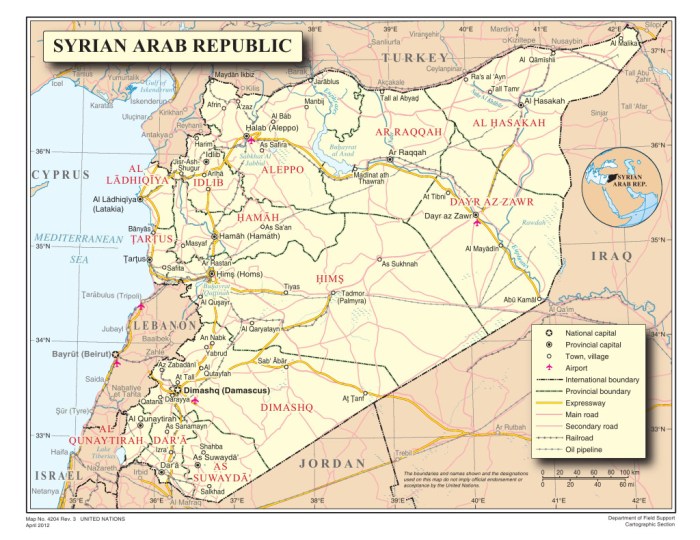
Turkey’s plan as offered to the U.S. and other Western allies was as follows: Establishment of a 90-kilometer wide and 50-kilometer deep ‘safe zone’ between Jarabulus and Azez, very close to the Afrin Canton, as secured by the warplanes of Turkey and allies; removal of IS from the zone by occupation of the Turkish Armed Forces either or not in cooperation with allied powers; and settlement of migrants that are currently located in the camps in Turkey or that would flee from Syria in the future. Therefore, Turkey would be liberated from the European pressure on the migration issue, prevent the physical connection between the Kurdish Cantons, and the demographics of the region would become Sunni-Arab dominated thanks to the migrants. There also was a more strategic goal: The Jaish al-Fatah coalition, which was promoted by Turkey, Qatar, and Saudi Arabia, proved to be successful in Aleppo and surroundings. Upon imposition of the safe zone, the Turkey-Aleppo line would be secured and the coalition, basically composed of al-Nusra Front, an associate of al-Qaeda, and Ahrar ash-Sham, would be allowed to further constrict the Assad government.
Russian military operations in Syria that started on September 30 substantially complicated the above plan. As a matter of fact, Russia was involved in the war to eliminate the threat on Latakia, the heart of the Assad government, and prevent the total loss of Aleppo. Idlib city, under control of the opponents, located in northern Syria has strategic importance for the control of Aleppo. Therefore, Russia shifted a part of its operations to Northern Syria and started to harass Turkish jets by occasionally entering the Turkish airspace. This was then described as establishment of the safe zone, yet it was now considered against Turkey.
It is safe to suggest that Obama’s clear rejection of Turkey’s ‘safe zone’ proposal during the G-20 summit was based among other things on refraining from any confrontation with Russia to the north of Aleppo.
The Paris massacre allowed a Russian-U.S. rapprochement as regards Syrian policies. Parties declared that their primary objective was to weaken IS, but not to overthrow the Assad government. These developments fostered hopes for the Geneva negotiations, which aimed to end the civil war in Syria.
Nevertheless, U.S. secretary of state Kerry announced immediately after the G-20 Summit that Turkey and the U.S. would take a joint operation to clean the Jarabulus-Azez line of IS.
What does this operation plan, which was announced after the ‘safe zone’ proposal was shelved, mean?
It means implementation of the ‘safe zone’ project at a more modest level. Ground forces will not be involved in the operation. Instead, Syrian opponents with the support of Turkish and U.S. jets would clean the said part of the Turkish border from IS. On the grounds that the Free Syrian Army ceases to exist in the field, the pro-al-Qaeda al-Nusra Front and its associate Ahrar ash-Sham would assume the ground operations, accompanied by the Syrian Turcoman forces.
In other words, IS would be replaced by other Salafist organizations. The involvement of YPG, the only secular force fighting against ISIS, and connection between the Kurdish Cantons would be prevented. Lastly, by leaving the Jarabulus-Azez line in the hands of such organizations as al-Nusra Front and Ahrar ash-Sham, which have a comparable record of civilian massacres, the pressure of the said Salafist organizations on the regime over northern Syria would be reinforced given that these organizations have Idlib and a large part of Aleppo under their control.
***
It seems very unlikely that IS is to be weakened and peace is to be restored in Syria, given that the U.S. continues to protect its allies, Turkey and Saudi Arabia, which deal with dirty business in Syria. Furthermore, the available data suggests that the West did not give up its goal to maintain continuous pressure on the Assad government and sustain controlled chaos in Syria, albeit the same has currently receded into background. The controlled chaos policy ultimately means protection of the power of IS and paving the way for likely massacres in the future.
December 1, 2015
Posted by aletho |
Ethnic Cleansing, Racism, Zionism, Militarism, Timeless or most popular, War Crimes | al-Nusra Front, al-Qaeda, Human rights, Qatar, Russia, Saudi Arabia, Syria, Turkey, United States, YPG |
Leave a comment
In the wake of Turkey’s shoot down of the Russian Su-24, the Russian Foreign Minister Sergei Lavrov called the attack a planned provocation. He went further on to suggest the U.S. had given Turkey permission to shoot down the Jet. He explained that countries using US manufactured weapons must ask the U.S. for permission before using them in operations. The aircraft used to shoot down the Su-24 was a U.S.-made F-16. Indeed, there is evidence to suggest that not only did the U.S. give Turkey permission, but that it was moving the strings behind the entire operation.
Two Russian aircraft were attacked that day, but the second was a far less publicized incident. A Russian helicopter was destroyed by the CIA backed FSA using U.S. provided Anti-Tank TOW missiles. The helicopter was on a rescue mission to find the missing Su-24 pilots and the attack resulted in the death of a Russian Marine. Since the U.S. backs the FSA and provided the TOW missiles which were used in the attack, they are at least indirectly responsible, if not outright complicit in it. But instead of apologizing to Russia, U.S. state department spokesman Mark Toner defended the actions of the FSA. He also defended the actions of the Turkmen insurgents who shot at the parachuting Russian pilots, a war crime under the first Geneva convention. Such an antagonistic position reveals that the U.S. was not displeased by the attacks on Russia.
In the months leading up to the attack, there were several indicators the U.S. knew it would take place. On September 3rd, the families of U.S. staff members were urged to evacuated out of Incirlik air base in Turkey and were given until October 1st to do so. On November 3rd, the US deployed F-15 fighter Jets to Turkey which are specifically designed for air-to-air combat. Since ISIS has no planes, the target could only have been Russian aircraft. Most significantly, on October 21st, the U.S. and Russia signed a deconfliction protocol, in order to ‘avoid clashes in Syria’s skies’. This entailed giving the US information about where and when Russia will conduct sorties. Russian president Putin suggested this information was passed on to Turkey by the U.S. and used to shoot down the Sukhoi-24.
During the months leading up to the attack, US War hawks were increasingly calling for a direct confrontation with Russia, an act that could lead to a third world War. Several US Presidential candidates, including Hillary Clinton, were effectively calling for a shoot down of a Russian Jet. Some of the more direct comments included,
Chris Christie: “My first phone call would be to Vladimir, and I’d say to him, listen, we’re enforcing this no-fly zone,” adding that he would shoot down Russian warplanes that violate the no-fly zone.
Jeb Bush: “We need to have no fly zones. The argument is, well we’ll get into the conflict with Russia, maybe Russia shouldn’t want to be in conflict with us. I mean, this is a place where American leadership is desperately needed.”
The spokesman for the Zionist Israeli lobbying group AIPAC, Senator John McCain, suggested arming Al Qaeda Linked Rebels with Anti-Aircraft weapons to shoot down a Russian Jet. An idea which he himself admits was “what we did in Afghanistan many years ago”. The policy which resulted in the birth of Al Qaeda and the rise of the Taliban. Indeed Qatar had been making an effort towards this end. Documents leaked by Russian hackers ‘Cyber Berkut”, revealed that Qatar was negotiating with Ukraine to purchase Anti-Air weapons to help ISIS shoot down a Russian Jet over Syria. It is likely Ukraine refused to sell these weapons, since arming assets which are difficult to control could backfire. After all, US Jets are also using those skies. Flooding the region with hand held Anti-Air weapons could pose a threat to them in future. Turkey is a far more reliable and controllable proxy which is capable of shooting down Russian Jets.
Perhaps one of the most significant War hawk statements comes from the Former national security adviser Zbigniew Brzezinski. In an Op-ed for the Financial Times Brzezinski suggested that Obama should retaliate if Russia continues to attack U.S. assets in Syria, i.e the Al Qaeda linked rebels. Brzezinski, has experience using Al Qaeda as an asset, having been one of the masterminds behind its creation in Afghanistan. He maintains a great deal of influence and respect in US politics.
It is likely Brzezinski’s dangerous advice to attack Russia was taken on board by US decision makers. But instead of risking a direct conflict with two nuclear powers, Turkey was used as a proxy. Turkey has its own agenda in attacking Russian jets outside of the U.S.’s interests. Turkish president Erdogan has already committed himself to an anti-Assad position far beyond the point of no return. This was over a gas pipeline deal with Qatar that is now looking more like a pipe dream. Russia has been actively fighting not only ISIS, but Al Qaeda and its affiliates who are crucial for Turkey’s plans to overthrow the Syrian government. The Su-24 was bombing the Al Qaeda-linked Turkmen insurgents, before it was shot down.
On October 8, NATO made a statement that it would defend Turkey against Russia, after a Russian jet briefly passed through Turkish airspace on its way to bomb targets in Syria. Such statements may have encouraged Erdogan to take the exceptional risk of shooting down a Russian jet under the assumption that Turkey would be protected by NATO. On November 12th, EU countries committed to pay Turkey 3 billion dollars. Interestingly this is the same amount Turkey is estimated to lose, as a result of Russian sanctions put in place in the wake of the attack. This could have been Part of NATO’s assurance to Erdogan that he would lose nothing by going ahead with the attack.
Erdogan has become increasingly frustrated, even after four years of war, the Syrian state shows no sign of collapse. It might not have been too difficult for the U.S. to convince the desperate Turkish leader that attacking a super power was in his best interest.
Maram Susli also known as “Syrian Girl,” is an activist-journalist and social commentator covering Syria and the wider topic of geopolitics.
December 1, 2015
Posted by aletho |
Militarism, War Crimes | AIPAC, al-Qaeda, NATO, Qatar, Russia, Syria, Turkey, United States, Zionism |
Leave a comment
The war drums are getting louder in the aftermath of ISIS attacks in Paris, as Western countries gear up to launch further airstrikes in Syria. But obscured in the fine print of countless resolutions and media headlines is this: the West has no legal basis for military intervention. Their strikes are illegal.
“It is always preferable in these circumstances to have the full backing of the United Nations Security Council (UNSC) but I have to say what matters most of all is that any actions we would take would… be legal,” explained UK Prime Minister David Cameron to the House of Commons last Wednesday.
Legal? No, there’s not a scrap of evidence that UK airstrikes would be lawful in their current incarnation.
Then just two days later, on Friday, the UN Security Council unanimously adopted Resolution 2249, aimed at rallying the world behind the fairly obvious notion that ISIS is an “unprecedented threat to international peace and security.”
“It’s a call to action to member states that have the capacity to do so to take all necessary measures against (ISIS) and other terrorist groups,” British UN Ambassador Matthew Rycroft told reporters.
The phrase “all necessary measures” was broadly interpreted – if not explicitly sanctioning the “use of force” in Syria, then as a wink to it.
Let’s examine the pertinent language of UNSCR 2249:
The resolution “calls upon Member States that have the capacity to do so to take all necessary measures, in compliance with international law, in particular with the United Nations Charter…on the territory under the control of ISIL also known as Da’esh, in Syria and Iraq.”
Note that the resolution demands “compliance with international law, in particular with the UN Charter.” This is probably the most significant explainer to the “all necessary measures” phrase. Use of force is one of the most difficult things for the UNSC to sanction – it is a last resort measure, and a rare one. The lack of Chapter 7 language in the resolution pretty much means that ‘use of force’ is not on the menu unless states have other means to wrangle “compliance with international law.”
What you need to know about international law
It is important to understand that the United Nations was set up in the aftermath of World War 2 expressly to prevent war and to regulate and inhibit the use of force in settling disputes among its member states. This is the UN’s big function – to “maintain international peace and security,” as enshrined in the UN Charter’s very first article.
There are a lot of laws that seek to govern and prevent wars, but the Western nations looking to launch airstrikes in Syria have made things easy for us – they have cited the law that they believe justifies their military intervention: specifically, Article 51 of the UN Charter. It reads, in part:
“Nothing in the present Charter shall impair the inherent right of individual or collective self-defense if an armed attack occurs against a Member of the United Nations, until the Security Council has taken measures necessary to maintain international peace and security.”
So doesn’t France, for instance, enjoy the inherent right to bomb ISIS targets in Syria as an act of self-defense – in order to prevent further attacks?
And don’t members of the US-led coalition, who cite the “collective self-defense” of Iraq (the Iraqi government has formally made this request), have the right to prevent further ISIS attacks from Syrian territory into Iraqi areas?
Well, no. Article 51, as conceived in the UN Charter, refers to attacks between territorial states, not with non-state actors like ISIS or Al-Qaeda. Syria, after all, did not attack France or Iraq – or Turkey, Australia, Jordan or Saudi Arabia.
And here’s where it gets interesting.
Western leaders are employing two distinct strategies to obfuscate the lack of legal justification for intervention in Syria. The first is the use of propaganda to build narratives about Syria that support their legal argumentation. The second is a shrewd effort to cite legal “theory” as a means to ‘stretch’ existing law into a shape that supports their objectives.
The “Unwilling and Unable” Theory – the “Unable” argument
The unwilling and unable theory – as related to the Syria/ISIS situation – essentially argues that the Syrian state is both unwilling and unable to target the non-state actor based within its territory (ISIS, in this case) that poses a threat to another state.
Let’s break this down further.
Ostensibly, Syria is ‘unable’ to sufficiently degrade or destroy ISIS because, as we can clearly see, ISIS controls a significant amount of territory within Syria’s borders that its national army has not been able to reclaim.
This made some sense – until September 30 when Russia entered the Syrian military theater and began to launch widespread airstrikes against terrorist targets inside Syria.
As a major global military power, Russia is clearly ‘able’ to thwart ISIS –certainly just as well as most of the Western NATO states participating in airstrikes already. Moreover, as Russia is operating there due to a direct Syrian government appeal for assistance, the Russian military role in Syria is perfectly legal.
This development struck a blow at the US-led coalition’s legal justification for strikes in Syria. Not that the coalition’s actions were ever legal – “unwilling and unable” is merely a theory and has no basis in customary international law.
About this new Russian role, Major Patrick Walsh, associate professor in the International and Operational Law Department at the US Army’s Judge Advocate General’s Legal Center and School in Virginia, says:
“The United States and others who are acting in collective defense of Iraq and Turkey are in a precarious position. The international community is calling on Russia to stop attacking rebel groups and start attacking ISIS. But if Russia does, and if the Assad government commits to preventing ISIS from attacking Syria’s neighbors and delivers on that commitment, then the unwilling or unable theory for intervention in Syria would no longer apply. Nations would be unable to legally intervene inside Syria against ISIS without the Assad government’s consent.”
In recent weeks, the Russians have made ISIS the target of many of its airstrikes, and are day by day improving coordination efficiency with the ground troops and air force of the Syrian Arab Army (SAA) and its allies -Iran, Hezbollah and other foreign groups who are also in Syria legally, at the invitation of the Syrian state.
Certainly, the balance of power on the ground in Syria has started to shift away from militants and terrorist groups since Russia launched its campaign seven weeks ago – much more than we have seen in a year of coalition strikes.
The “Unwilling and Unable” Theory – the “Unwilling” argument
Now for the ‘unwilling’ part of the theory. And this is where the role of Western governments in seeding ‘propaganda’ comes into play.
The US and its allies have been arguing for the past few years that the Syrian government is either in cahoots with ISIS, benefits from ISIS’ existence, or is a major recruiting magnet for the terror group.
Western media, in particular, has made a point of underplaying the SAA’s military confrontations with ISIS, often suggesting that the government actively avoids ISIS-controlled areas.
The net result of this narrative has been to convey the message that the Syrian government has been ‘unwilling’ to diminish the terror group’s base within the country.
But is this true?
ISIS was born from the Islamic State of Iraq (ISI) in April, 2013 when the group’s leader Abu Bakr al-Baghdadi declared a short-lived union of ISI and Syria’s Al-Qaeda branch, Jabhat al-Nusra. Armed militants in Syria have switched around their militia allegiances many times throughout this conflict, so it would be disingenuous to suggest the Syrian army has not fought each and every one of these groups at some point since early 2011.
If ISIS was viewed as a ‘neglected’ target at any juncture, it has been mainly because the terror group was focused on land grabs for its “Caliphate” in the largely barren north-east areas of the country – away from the congested urban centers and infrastructure hubs that have defined the SAA’s military priorities.
But ISIS has always remained a fixture in the SAA’s sights. The Syrian army has fought or targeted ISIS, specifically, in dozens of battlefields since the organization’s inception, and continues to do so. In Deir Hafer Plains, Mennagh, Kuweires, Tal Arn, al-Safira, Tal Hasel and the Aleppo Industrial District. In the suburbs and countryside of Damascus – most famously in Yarmouk this year – where the SAA and its allies thwarted ISIS’ advance into the capital city. In the Qalamun mountains, in Christian Qara and Faleeta. In Deir Ezzor, where ISIS would join forces with the US-backed Free Syrian Army (FSA): al-Husseiniyeh, Hatla, Sakr Island, al-Hamadiyah, al-Rashidiyah, al-Jubeileh, Sheikh Yasseen, Mohassan, al-Kanamat, al-Sina’a, al-Amal, al-Haweeqa, al-Ayyash, the Ghassan Aboud neighborhood, al-Tayyim Oil Fields and the Deir ez-Zor military airport. In Hasakah Province – Hasakah city itself, al-Qamishli, Regiment 121 and its environs, the Kawkab and Abdel-Aziz Mountains. In Raqqa, the Islamic State’s capital in Syria, the SAA combatted ISIS in Division 17, Brigade 93 and Tabaqa Airbase. In Hama Province, the entire al-Salamiyah District – Ithriyah, Sheikh Hajar, Khanasser. In the province of Homs, the eastern countryside: Palmyra, Sukaneh, Quraytayn, Mahin, Sadad, Jubb al-Ahmar, the T-4 Airbase and the Iraqi border crossing. In Suweida, the northern countryside.
If anything, the Russian intervention has assisted the Syrian state in going on the offensive against ISIS and other like-minded terror groups. Before Russia moved in, the SAA was hunkering down in and around key strategic areas to protect these hubs. Today, Syria and its allies are hitting targets by land and air in the kinds of coordinated offensives we have not seen before.
Seeding ‘propaganda’
The role of propaganda and carefully manipulated narratives should not be underestimated in laying the groundwork for foreign military intervention in Syria.
From “the dictator is killing his own people” to the “regime is using chemical weapons” to the need to establish “No Fly Zones” to safeguard “refugees fleeing Assad”… propaganda has been liberally used to build the justification for foreign military intervention.
Article 2 of the UN Charter states, in part:
“All Members shall refrain in their international relations from the threat or use of force against the territorial integrity or political independence of any state, or in any other manner inconsistent with the purposes of the United Nations.”
It’s hard to see how Syria’s sovereignty and territorial integrity has not been systematically violated throughout the nearly five years of this conflict, by the very states that make up the US-led coalition. The US, UK, France, Saudi Arabia, Turkey, Qatar, the UAE and other nations have poured weapons, funds, troops and assistance into undermining a UN member state at every turn.
“Legitimacy” is the essential foundation upon which governance rests. Vilify a sitting government, shut down multiple embassies, isolate a regime in international forums, and you can destroy the fragile veneer of legitimacy of a king, president or prime minister.
But efforts to delegitimize the government of Syrian President Bashar al-Assad have also served to lay the groundwork for coalition airstrikes in Syria.
If Assad is viewed to lack “legitimacy,” the coalition creates the impression that there is no real government from which it can gain the necessary authority to launch its airstrikes.
This mere ‘impression’ provided the pretext for Washington to announce it was sending 50 Special Forces troops into Syria, as though the US wasn’t violating every tenet of international law in doing so. “It’s okay – there’s no real government there,” we are convinced.
Media reports repeatedly highlight the ‘percentages’ of territory outside the grasp of Syrian government forces – this too serves a purpose. One of the essentials of a state is that it consists of territory over which it governs.
If only 50 percent of Syria is under government control, the argument goes, “then surely we can just walk into the other ‘ungoverned’ parts” – as when US Ambassador to Syria Robert Ford and US Senator John McCain just strolled illegally across the border of the sovereign Syrian state.
Sweep aside these ‘impressions’ and bury them well. The Syrian government of Bashar al-Assad is viewed by the United Nations as the only legitimate government in Syria. Every official UN interaction with the state is directed at this government. The Syrian seat at the UN is occupied by Ambassador Bashar al-Jaafari, a representative of Assad’s government. It doesn’t matter how many Syrian embassies in how many capitals are shut down – or how many governments-in-exile are established. The UN only recognizes one.
As one UN official told me in private: “Control of surface territory doesn’t count. The government of Kuwait when its entire territory was occupied by Iraq – and it was in exile – was still the legitimate government of Kuwait. The Syrian government could have 10 percent of its surface left – the decision of the UN Security Council is all that matters from the perspective of international law, even if other governments recognize a new Syrian government.”
Countdown to more illegal airstrikes?
If there was any lingering doubt about the illegality of coalition activities in Syria, the Syrian government put these to rest in September, in two letters to the UNSC that denounced foreign airstrikes as unlawful:
“If any State invokes the excuse of counter-terrorism in order to be present on Syrian territory without the consent of the Syrian Government whether on the country’s land or in its airspace or territorial waters, its action shall be considered a violation of Syrian sovereignty.”
Yet still, upon the adoption of UNSC Resolution 2249 last Friday, US Deputy Representative to the United Nations Michele Sison insisted that “in accordance with the UN Charter and its recognition of the inherent right of individual and collective self-defense,” the US would use “necessary and proportionate military action” in Syria.
The website for the European Journal of International Law (EJIL) promptly pointed out the obvious:
“The resolution is worded so as to suggest there is Security Council support for the use of force against IS. However, though the resolution, and the unanimity with which it was adopted, might confer a degree of legitimacy on actions against IS, the resolution does not actually authorize any actions against IS, nor does it provide a legal basis for the use of force against IS either in Syria or in Iraq.”
On Thursday, UK Prime Minister David Cameron plans to unveil his new “comprehensive strategy” to tackle ISIS, which we are told will include launching airstrikes in Syria.
We already know the legal pretext he will spin – “unwilling and unable,” Article 51, UN Charter, individual and collective self-defense, and so forth.
But if Cameron’s September 7 comments at the House of Commons are any indication, he will use the following logic to argue that the UK has no other choice than to resort to ‘use of force’ in Syria. In response to questions about two illegal drone attacks targeting British nationals in Syria, the prime minister emphasized:
“These people were in a part of Syria where there was no government, no one to work with, and no other way of addressing this threat… When we are dealing with people in ISIL-dominated Syria—there is no government, there are no troops on the ground—there is no other way of dealing with them than the route that we took.”
But Cameron does have another route available to him – and it is the only ‘legal’ option for military involvement in Syria.
If the UK’s intention is solely to degrade and destroy ISIS, then it must request authorization from the Syrian government to participate in a coordinated military campaign that could help speed up the task.
If Western (and allied Arab) leaders can’t stomach dealing with the Assad government on this issue, then by all means work through an intermediary – like the Russians – who can coordinate and authorize military operations on behalf of their Syrian ally.
The Syrian government has said on multiple occasions that it welcomes sincere international efforts to fight terrorism inside its territory. But these efforts must come under the direction of a central legal authority that can lead a broad campaign on the ground and in the air.
The West argues that, unlike in Iraq, it seeks to maintain the institutions of the Syrian state if Assad were to step down. The SAA is one of these ‘institutions’ – why not coordinate with it now?
But after seven weeks of Russian airstrikes coordinated with extensive ground troops (which the coalition lacks), none of these scenarios may even be warranted. ISIS and other extremist groups have lost ground in recent weeks, and if this trend continues, coalition states should fall back and focus on other key ISIS-busting activities referenced in UNSCR 2249 – squeezing terror financing, locking down key borders, sharing intelligence…”all necessary measures” to destroy this group.
If the ‘international community’ wants to return ‘peace and stability’ to the Syrian state, it seems prudent to point out that its very first course of action should be to stop breaking international law in Syria.
Sharmine Narwani is a commentator and analyst of Middle East geopolitics. She is a former senior associate at St. Antony’s College, Oxford University and has a master’s degree in International Relations from Columbia University. Sharmine has written commentary for a wide array of publications, including Al Akhbar English, the New York Times, the Guardian, Asia Times Online, Salon.com, USA Today, the Huffington Post, Al Jazeera English, BRICS Post and others. You can follow her on Twitter at @snarwani
November 25, 2015
Posted by aletho |
Illegal Occupation, Militarism, War Crimes | Cameron, Da’esh, France, Qatar, Russia, Saudi Arabia, Syria, Turkey, UAE, UK |
Leave a comment
In response to the tragic Paris events of November 13, Central Intelligence Agency director John Brennan warned that “ISIL is planning additional attacks… It is clear to me that ISIL has an external agenda, that they are determined to carry out these types of attacks.” (Quoted in Daily Telegraph, November 16, 2015)
Five days later following the CIA Chief’s premonition, the Bamako Radisson Hotel Blu in Mali’s capital was the object of a terrorist attack, resulting in 21 people dead. Following the attack and the taking of hostages by the terrorists, French and Malian special forces raided the hotel. US. Africa Command (AFRICOM) also confirmed that US special forces were involved.
 The Bamako terror operation was allegedly coordinated by Mokhtar Belmokhtar (aka Khaled Abu al-Abbas), leader of an affiliate of Al Qaeda in the Islamic Maghreb (AQIM), the Islamist al-Mulathameen (Masked) Brigade, or “Those who Sign with Blood.”
Belmokhtar’s group was created in 2012 in the wake of the war on Libya. His organization has also allegedly been involved in the drug trade, smuggling as well kidnapping operations of foreigners in North Africa. While his whereabouts are said to be known, French intelligence has dubbed Belmokhtar “the uncatchable”.
In June he was reported dead as a result in a U.S. air strike in Libya. His death was subsequently denied.
Based on shaky evidence, The New York Times report below (November 20) concludes that Belmokhtar’s group (together with AQIM) is unequivocally behind the Bamako attacks:
A member of Al Qaeda in Africa confirmed Saturday that the attack Friday on a hotel in Bamako, Mali, had been carried out by a jihadist group loyal to Mokhtar Belmokhtar, an Algerian operative for Al Qaeda. The Qaeda member, who spoke via an online chat, said that an audio message and a similar written statement in which the group claimed responsibility for the attack were authentic. The SITE Intelligence Group, which monitors jihadist groups, also confirmed the authenticity of the statement.
The Qaeda member, who refused to be named for his protection, said that Mr. Belmokhtar’s men had collaborated with the Saharan Emirate of Al Qaeda in the Islamic Maghreb, … In the audio recording, the group, known as Al Mourabitoun, says it carried out the operation in conjunction with Al Qaeda’s branch in the Islamic Maghreb.
The recording was released to the Al Jazeera network and simultaneously to Al Akhbar, … The recording states: “We, in the group of the Mourabitoun [Arabic Rebel Group], in cooperation with our brothers in Al Qaeda in Islamic Maghreb, the great desert area, claim responsibility for the hostage-taking operation in the Radisson hotel in Bamako.” (emphasis added)
The SITE Intelligence Group is presented as an “independent” Washington think tank with a mandate of analyzing data pertaining to Al Qaeda affiliated terror organizations. SITE is also on contract with a number of US government agencies and has close links to US intelligence.
SITE has provided no substantive evidence which supports the authenticity of the online audio chat recording, which is considered as a reliable source. The story could have been planted.
Following the audio release, the Western media in chorus immediately pointed to an act of revenge directed against the French Republic in response to France’s 2013 military intervention in Mali, which had been ordered by President Francois Hollande.
“France saved Mali from al-Qaeda but it never broke terror threat”. “France saved northern Mali from al-Qaeda’s brutal rule … But the country is still beholden to outsiders and, as events at the Radisson hotel have demonstrated, acutely vulnerable to the worst of terrorism” (The Independent, November 20, 2015)

Screenshot The Independent, November 20, 2015
In turn, the French Minister of Defense acknowledged –prior to the conduct of a police investigation– that the authors of the attack were “most likely” led by Mokhtar Belmokhtar’s group in association with Al Qaeda in the Islamic Maghreb (AQIM).
What Defense Minister Jean-Yves Le Drain failed to mention was that both Belmokhtar and AQIM have longstanding links to the CIA, which in turn has a working relationship with France’s General Directorate for External Security, Direction générale de la sécurité extérieure (DGSE).
Casually ignored by the Western media, the leaders of Al Qaeda in the Islamic Maghreb (AQIM) including Belmokhtar were trained and recruited by the CIA in Afghanistan. Acknowledged by the Washington based Council on Foreign Relations (CFR):
Most of AQIM’s major leaders are believed to have trained in Afghanistan during the 1979-1989 war against the Soviets as part of a group of North African volunteers known as “Afghan Arabs” that returned to the region and radicalized Islamist movements in the years that followed. The group is divided into “katibas” or brigades, which are clustered into different and often independent cells.
The group’s top leader, or emir, since 2004 has been Abdelmalek Droukdel, also known as Abou Mossab Abdelwadoud, a trained engineer and explosives expert who has fought in Afghanistan and has roots with the GIA in Algeria. (Council on Foreign Relations, Al Qaeda in the Islamic Maghreb, cfr.org, undated)
 Saudi born terror mastermind Osama bin Laden was recruited in 1979 ironically under the auspices of the CIA. The training, recruitment and indoctrination of Mujahideen launched in 1979 was considered to be “the largest covert operation in the history of the CIA” in response the Soviet Union’s military support of the pro-Communist secular Afghan government of Babrak Kamal.
Al Qaeda in Arabic means “the Base”. What it referred to was the CIA’s “Database” of Mujahideen recruits who were referred to by President Ronald Reagan as “freedom fighters”:
Shortly before his untimely death, former British Foreign Secretary Robin Cook told the House of Commons that “Al Qaeda” is not really a terrorist group but a database of international mujaheddin and arms smugglers used by the CIA and Saudis to funnel guerrillas, arms, and money into Soviet-occupied Afghanistan. (See Pierre-Henri Bunel, Al Qaeda: The Database, Global Research, November 20, 2005, emphasis added)
Mokhtar Belmokhtar: Post Cold War CIA intelligence asset?
The Council on Foreign Relations erroneously describes “Mokhtar Belmokhtar as the one-eyed veteran of the anti-Soviet Afghan insurgency.” (CFR, op cit, emphasis added). Belmokhtar (born in 1972) did not fight in the Soviet-Afghan war (1979-1989). He was recruited in 1991 at the age of 19 in the immediate wake of the Cold War.
CIA recruitment continued in the wake of the Cold War. It was in large part directed against the Russian Federation and the former Soviet Republics as well as the Middle East.
The purpose of this later CIA recruitment was to establish a network of “intelligence assets” to be used in the CIA’s post-cold war insurgencies. Leaders of the Chechen Islamist insurgencies were also trained in CIA camps in Afghanistan and Pakistan, including the notorious leader of the Chechen insurrection Ibn al-Khattab (a citizen of Saudi Arabia).
 Following his training and recruitment and a two year stint in Afghanistan (1991-1993), Mokhtar Belmokhtar was sent back to Algeria in 1993 at age 21 where he joined the Salafist Group for Preaching and Combat (GSPC) (emblem left). The latter was initially part of the so-called Armed Islamic Group (Groupe islamique armé (GIA)) in Algeria which sought to overthrow the secular Algerian Government with a view to installing a theocratic Islamic State.
Supported covertly by the CIA, Belmokhtar fought in Southern Algeria in the civil war opposing Islamist forces and the secular government. He was also instrumental in the integration and merging of “jihadist” forces.
In January 2007, the Armed islamic Group (GIA) which had been prominent in the 1990s, officially changed its name to the Al-Qaeda Organization in the Islamic Maghreb (AQIM).
In turn, as of 2007, the newly formed AQIM established a close relationship with the Libya Islamic Fighting Group (LIFG), which was directly supported by NATO during the 2011 war on Libya, “providing weapons, training, special forces and even aircraft to support them in the overthrow of Libya’s government.” (Tony Cartalucci, The Geopolitical Reordering of Africa: US Covert Support to Al Qaeda in Northern Mali, France “Comes to the Rescue”, Global Research, January 2013).
British SAS Special Forces had also been brought into Libya prior to the onset of the insurrection, acting as military advisers to the LIFG.
In fact, what has unfolded since the war on Libya is the merging of LIFG and AQIM forces. In turn, many of the LIFG operatives have been dispatched to Syria to fight within the ranks of Al Nusrah and the ISIS.
Robert Stephen Ford, US Ambassador to Algeria (2006-2008)
It is worth noting that the 2007 restructuring of jihadist forces in Algeria and the Maghreb coincided with the appointment of Robert Stephen Ford as US ambassador to Algeria in August 2006. Ford had been reassigned by the State Department from Baghdad to Algiers. From 2004 to 2006, he worked closely with Ambassador John Negroponte at the US embassy in Baghdad in supporting the creation of both Shia and Sunni death squads in Iraq.
This project consisted in recruiting and training terrorists modelled on the so-called “Salvador Option” which had been applied by the CIA in Central America. Negroponte as we recall played a central role in supporting the Contras terrorists in Nicaragua as ambassador to Honduras from 1981-1985. For further details see Michel Chossudovsky, “The Salvador Option For Syria”: US-NATO Sponsored Death Squads Integrate “Opposition Forces”, Global Research, May 28, 2012)
The 2006 appointment of Robert Stephen Ford to head the US Embassy in Algeria was timely. It coincided with the consolidation of jihadist groups within Algeria and the Maghreb. It preceded the 2011 US-NATO sponsored insurrections in Libya and Syria.
In 2010, Ford was approved by the US Congress as US Ambassador to Syria. He presented his credentials to president Bashar al Assad in January 2011, barely two months prior to the onslaught of the terrorist insurrection in the border city of Daraa in mid-March 2011. Ford played a central role in assisting the channelling of US and allied support to Syrian “opposition” groups including Al Nusrah and the ISIS.
Concluding Remarks
Belmokhtar’s history and involvement in Afghanistan confirms that from the very outset he was an instrument of US intelligence. While, he operates with a certain degree of independence and autonomy in relation to his intelligence sponsors, he and his organization are bona fide CIA “intelligence assets”, which can be used by the CIA as part of a covert agenda.
There are various definitions of an “intelligence asset”. From the standpoint of US intelligence, “assets” linked up to terrorist organizations must not be aware that they are supported and monitored by Western intelligence.
With regard to Al Qaeda, from the outset in 1979, the CIA chose to operate through various front organizations as well as indirectly through its Saudi, Qatari and Pakistani intelligence partners. CIA’s Milton Beardman who played a central role in the Soviet Afghan war confirms that members of Al Qaeda including Osama bin Laden were not aware of the role they were playing on behalf of Washington. In the words of bin Laden (quoted by Beardman): “neither I, nor my brothers saw evidence of American help”(Michel Chossudovsky, Who is Osama bin Laden, Global Research, September 12, 2001):
Motivated by nationalism and religious fervor, the Islamic warriors were unaware that they were fighting the Soviet Army on behalf of Uncle Sam. While there were contacts at the upper levels of the intelligence hierarchy, Islamic rebel leaders in theatre had no contacts with Washington or the CIA. (Ibid)
Amply documented, Al Qaeda in the Islamic Maghreb (AQIM)and its affiliated groups including the Libya Islamic Fighting Group (LIFG) was serving the interests of the Western military alliance. Confirmed by the Washington Post, June 29, 2011 (See below), France was supplying weapons to the LIFG at the height of NATO’s bombing raids.

AQIM in turn was receiving weapons from the LIFG, which was supported by NATO. Moreover, LIFG mercenaries had integrated AQIM brigades.
According to alleged Terror Mastermind Mokhtar Belmokhtar, who also coordinated the 2013 In Amenas Mali kidnapping operation:
“We have been one of the main beneficiaries of the revolutions in the Arab world. As for our benefiting from the (Libyan) weapons, this is a natural thing in these kinds of circumstances.” http://www.hanford.gov/c.cfm/oci/ci_terrorist.cfm?dossier=174
Al Qaeda in the Islamic Maghreb (AQIM) is indelibly tied into a Western intelligence agenda. While it is described as ”one of the region’s wealthiest, best-armed militant groups”, financed covertly by Saudi Arabia and Qatar. France’s Canard enchaîné revealed (June 2012) that Qatar (a staunch ally of the United States) has been funding various terrorist entities in Mali:
The original report cites a French military intelligence report as indicating that Qatar has provided financial support to all three of the main armed groups in northern Mali: Iyad Ag Ghali’s Ansar Ed-Dine, al-Qa’ida in the Islamic Maghreb (AQIM) and the Movement for Unity and Jihad in West Africa (MUJWA).
The amount of funding given to each of the groups is not mentioned but it mentions that repeated reports from the French DGSE to the Defense Ministry have mentioned Qatar’s support for ‘terrorism’ in northern Mali. (quoted by Jeune Afrique June 2012)
Qatar is a proxy state, a de facto Persian Gulf territory largely controlled by Washington. It hosts a number of Western military and intelligence facilities.
The Emir of Qatar does not finance terrorism without the consent of the CIA.
And with regard to Mali, the CIA coordinates its activities in liaison with its French intelligence partners and counterparts, including la Direction du renseignement militaire (DRM) and the Direction générale de la sécurité extérieure (DGSE).
The implications are obvious and should be carefully understood by Western public opinion. Inasmuch as Belmokhtar and AQIM are “intelligence assets”, both US and French intelligence are (indirectly) behind the Bamako attacks.
Both US and French intelligence are complicit in the State sponsorship of terrorism.
November 24, 2015
Posted by aletho |
Deception, False Flag Terrorism, Timeless or most popular | Afghanistan, Africa, Al Qaeda in the Islamic Maghreb, AQIM, Central Intelligence Agency, CIA, DGSE, France, Mali, Mokhtar Belmokhtar, Qatar, United States |
Leave a comment
Prime Minister David Cameron must examine financial links between UK-allied Gulf regimes and terror groups, or risk facing awkward questions about Conservative Party links to “rich Arab Gulf individuals,” says former Liberal Democrat leader Paddy Ashdown.
Speaking on ITV’s Lorraine program on Tuesday, Ashdown – who is also a former soldier and has served as an ambassador to Afghanistan and Bosnia – said he is deeply concerned about how terrorism and Islamic State (IS, formerly ISIS/ISIL) are being funded, and the UK government’s response to this.
“Who is arming ISIS, who is providing safe havens for ISIS? To get there you have to ask questions about the arms everyone’s sold in the region, the role of Saudi Arabia in this. I think there are some very big questions and we have to be careful,” Ashdown said.
He said there had been a “failure to put pressure on the Gulf states, especially Saudi Arabia and Qatar, to stop funding the Salafists and Wahhabists,” and said he is worried “about the closeness of the Conservative Party and rich Arab Gulf individuals.”
He hinted the strategic priorities of the UK in Syria are the wrong way around. “I think we should be impatient about the removal of ISIL and I think we should be more patient about the removal of Assad.”
Ashdown’s calls for a proper investigation into terror funding by the West’s Arab allies echo, to some extent, those of Labour Party leader Jeremy Corbyn.
Speaking to the House of Commons last Wednesday, the Labour leader urged Parliament to take more action to clamp down on institutions which provide “vital infrastructure” to the terror group in Syria and Iraq.
Corbyn said one of the main ways to stop IS from functioning is to cut off its resources, suggesting the EU would also need to play a part in suffocating the organization.
“Surely a crucial way to help defeat ISIL is to cut off its funding, its supply of arms, and its trade,” Corbyn said during prime minister’s questions (PMQs).
“Can I press the prime minister to ensure that our allies in the region, indeed all countries in the region, are doing all they can to clamp down on individuals and institutions in their countries who are providing ISIL with vital infrastructure?”
November 24, 2015
Posted by aletho |
War Crimes | ISIL, ISIS, Jeremy Corbyn, Qatar, Saudi Arabia, Syria, Turkey, UK |
Leave a comment
A Russian Mi-8 helicopter came under attack while conducting a search and rescue operation, searching for the crew of the downed Su-24 in Syria. One naval infantry soldier was reported killed, the helicopter destroyed by mortar fire.
The Russian General Staff said that two Mi-8s were involved in the operation to save the crew of the downed Su-24.
One helicopter has been shot down, its crew evacuated to the Russian base at Hmeymim.
“A search and rescue operation involving two Mi-8 helicopters was carried out, charged with evacuating the pilots from the landing site. During the operation, as a result of small-arms fire, one of the helicopters was damaged, and forced to make a landing on neutral territory. One naval infantry soldier was killed,” Lieutenant-General Sergei Rudskoi, the head of the Main Operations Directorate of the General Staff of the Russian Armed Forces, told reporters on Tuesday.
The officer noted that the “personnel from the search and rescue team and the helicopter’s crew have been evacuated and are now located at the Hmeymim air base. The downed helicopter was destroyed by mortar fire from territory controlled by armed gangs.”
“The search and rescue operation tasked with finding the crew of the downed Russian bomber continues,” Rudskoi added, emphasizing that the territories in which the operation was conducted is believed to be controlled by radical rebel groups.
A Russian Su-24 Fencer jet crashed in Syria earlier in the day with two people aboard. Ankara claims that its F-16s shot down the plane because it violated the country’s airspace. Russia has countered Turkey’s accusations, President Vladimir Putin saying that the aircraft was 0.6 miles away from the Turkish border when it was shot down.
According to the Russian leader, the crashed aircraft was not posing any threat to Turkey when it was struck by an air-to-air missile from the Turkish jet.
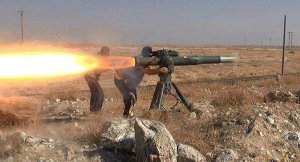 The Al-Nusra Front, Al-Qaeda’s affiliate in Syria, has released a grateful video, where they openly thank the Free Syrian Army (FSA), which the US has touted as a “moderate opposition group”, for supplying them with US-made anti-tank TOW missiles (“Tube-launched, Optically tracked, Wire-guided”).
A recently released video shows an Al-Nusra Front field commander thanking the FSA commanders for giving his forces TOW missiles, according to a report released by the Iranian news agency FARS.
The agency reminds readers that the two groups, the Al-Nusra and the FSA, formed an alliance in March, the Army of Conquest, or Jaish al-Fatah in Arabic, to fight against the forces of President Assad.
Since then, they have fought together “at almost every single battle in Aleppo, Lattakia, Hama, and Idlib Governorates of Syria.”
Through this alliance several militant groups like the Al-Nusra Front and the Ahrar al-Sham movement have been given access to FSA’s US-made heavy weaponry, which has been supplied to the militant group by the US, Saudi Arabia and Qatar.
According to the agency’s estimates, Saudi Arabia sent 500 TOW missiles to Al-Nusra directly last month.
The US, however, claims that it is just supplying aid and weapons to FSA or the so-called moderate militant groups in Syria.
The BGM-71 TOW is one of the most widely-used guided anti-tank missiles. The weapon is used in anti-armor, anti-bunker, anti-fortification and anti-amphibious landing roles.
TOW missiles are used by the armed forces of more than 40 countries and are integrated in over 15,000 ground, vehicle and helicopter platforms worldwide.
November 24, 2015
Posted by aletho |
War Crimes | Al-Nusra, Qatar, Russia, Saudi Arabia, Syria, Turkey, United States |
Leave a comment

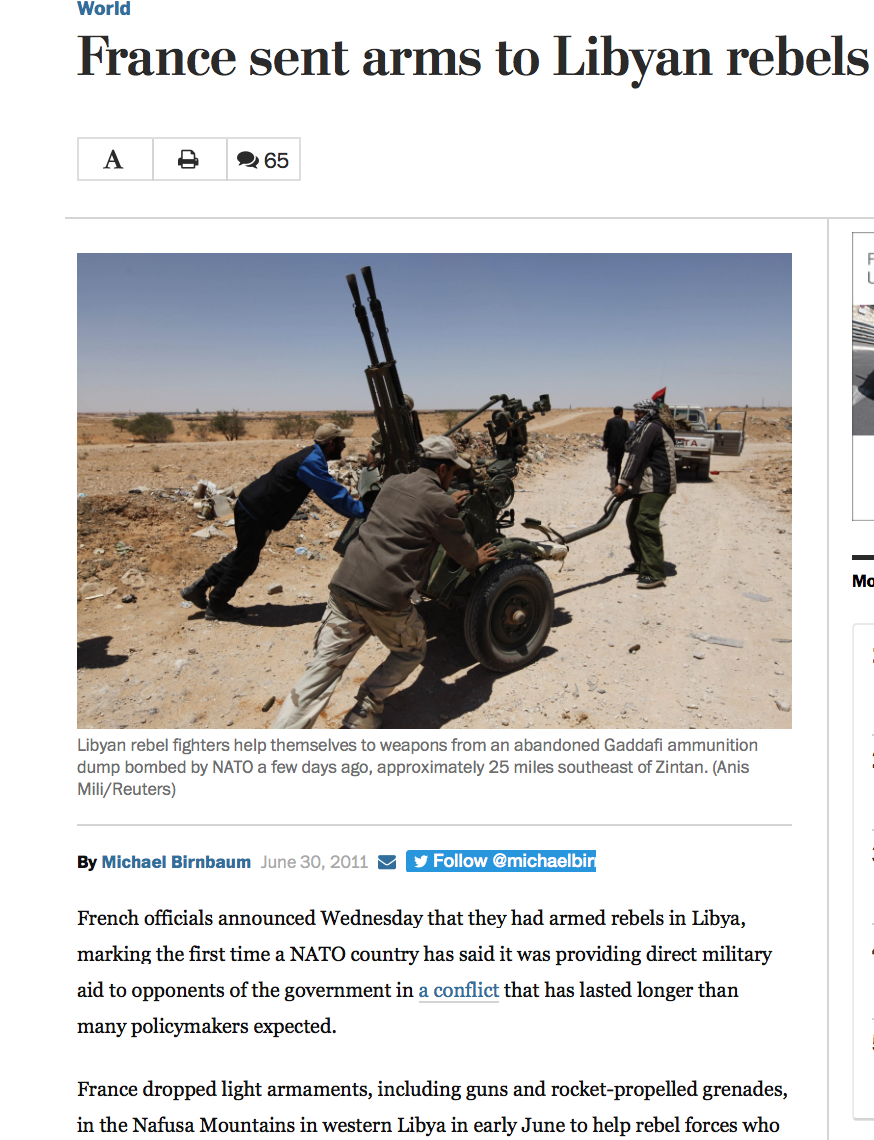


 Aletho News