Region ‘let down’ by West’s reaction to Israeli crimes in Gaza: Qatar
Press TV – November 27, 2023
Qatar’s Prime Minister and Foreign Minister Mohammed bin Abdulrahman al-Thani has slammed the West’s support for Israel’s war on the besieged Gaza Strip, warning against the risk of a regional spillover.
“There’s a big disappointment in the region from the West’s reaction… We were expecting from the West the killing of Palestinian people is something to be condemned,” the Financial Times quoted al-Thani as saying on Sunday.
“And what we expect at least is [the West] to step up to the same standards, the same principles that they stood up to with other wars,” al-Thani added.
Noting that the war on Gaza was not treated like other conflicts, Sheikh Mohammed said “calling for a ceasefire after this destruction and killing [in Gaza] and displacement is a duty on everyone.”
Destruction of Hamas ‘not realistic’
Al-Thani emphasized that Israel’s declared aim of eliminating Hamas resistance movement was not realistic.
“At the end of the day, Hamas’s destruction by the continuation of this war will never happen,” he said, calling for a political solution to the conflict.
He stressed that Palestinians in Gaza and the occupied West Bank needed to have a “political horizon” for a viable state of their own and to be able to choose their own leadership, adding “Other than that . . . there won’t be a solution.”
The minister noted that Qatar now focuses on stopping the war. “Our only plan is to stop the war.”
“Talking about the day after as the killing and the massacres is ongoing is just like endorsing this war,” he said.
“The amount of anger and agitation in the Arab population in the region is unprecedented when they see these images, and nobody is stepping up to stop it.”
Al-Thani also warned that the failure to secure an extended ceasefire would risk the war spilling over and destabilizing “the entire region.”
He slammed Western powers for not exerting more pressure on Israel to end the war.
Referring to the underway temporary ceasefire in Gaza, al-Thani said it could be extended if Hamas managed to locate women and children captives who are held in Gaza and secure their release.
“If they get additional women and children, there will be an extension,” he said, adding “We don’t yet have any clear information how many they can find because . . . one of the purposes [of the pause] is they [Hamas] will have time to search for the rest of the missing people.”
Israel launched the war on Gaza on October 7 after the Palestinian resistance movement Hamas waged the surprise Operation Al-Aqsa Storm against the occupying entity in response to the Israeli regime’s decades-long campaign of bloodletting and devastation against Palestinians.
Nearly 15,000 Palestinians, most of them women and children, have been killed in the Israeli strikes.
Russia-Turkiye-Qatar Grain Deal: ‘Humanitarian Program’ to Shore Up Poorest Nations
By Oleg Burunov – Sputnik – 08.09.2023
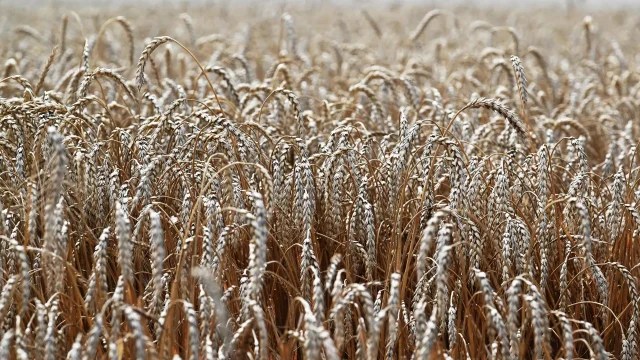
A new grain agreement initiated by Moscow may partly add to resolving the problem of hunger across the globe, Russian analysts have told Sputnik.
The Russian Foreign Ministry has heaped praise on a joint project between Moscow, Ankara and Doha on Russian grain supplies to Turkiye.
The ministry said in a statement that “the project to deliver one million tons of grain from Russia for processing in Turkiye with subsequent free transportation to the poorest countries is of utmost importance.”
The statement came after Russian Deputy Foreign Minister Alexander Grushko told reporters that Moscow and Ankara had reached an agreement.
“This is a good initiative, and the right process,” Moscow-based political analyst Alexander Asafov said, describing the deal as an example of international cooperation that “takes into account promoting Turkiye’s interests with the help of Qatar,” which “will act as the agreement’s financial contributor.”
Asafov noted that although the deal would unlikely become a “game-changer” in terms of tackling the problem of hunger globally, it “will, of course, improve the situation in those countries where grain will be delivered to.”
When asked about the prospect of the initiative, the analyst said that the agreement “confirms the logic of a multipolar world, where the parties, without fear of sanctions or other pressure, can conclude two, three or more deals, contrary to the opinion of the side that until recently considered itself global cop,” an apparent nod to the US.
Asafov was echoed by Victor Nadein-Raevskiy, a senior researcher at the Russian Academy of Sciences, who underscored that Russia initiated the Moscow-Ankara-Doha initiative after the suspension of the Black Sea Grain Deal. According to him, Moscow offered the accord proceeding from the fact that developing countries, who are “going through really great food problems, should not suffer.”
Actually, “this agreement is no longer a deal, but a humanitarian program to deliver grain – to be more exact, flour – to those countries that are in need of it,” Nadein-Raevskiy stressed. He added that transportation-related expenses would be on Qatar, who “enthusiastically joined the agreement.”
Touching upon the prospects of the initiative, the expert pointed out that first and foremost, it’s necessary to assess the effectiveness of the project as such.
“If we and our partners in Turkiye and Qatar manage to implement our plans, namely, if the deal is successful, then, of course, Russia will use its great opportunities on grain exports market,” he said.
Scheme’s Details to Follow
The issue was on the agenda of talks between Russian President Vladimir Putin and Turkish counterpart Recep Tayyip Erdogan in Russia’s Black Sea resort of Sochi on September 4.
“We expect that in the near future we will begin discussions with all parties to work out all the technical aspects of the scheme of such supplies,” Grushko said, adding that the technical details include, among other issues, logistics and finances.
Erdogan, for his part, signaled Ankara’s readiness to prepare its own proposals on the matter and to “find a solution in the near future” that will meet the expectations of all parties to the talks.
Nadein-Raevskiy noted in this vein that Turkiye is “ready” for flour supplies to developing countries “at very low prices or on the free-of-charge basis.”
“One should not think that Turkiye is a country that does everything only for its own benefit. While strengthening Turkish positions in Africa and beyond ahead of the COVID-19 pandemic, Turkiye – as far as I remember – spent up to $3 billion a year on humanitarian programs,” the expert emphasized.
The deal comes after Moscow suspended its participation in the Black Sea grain deal, also known as the Black Sea Grain Initiative, on July 18. The Kremlin has repeatedly emphasized that the Turkiye and UN-mediated grain deal’s component on facilitating Russian grain and fertilizer exports was not fulfilled, specifically with regard to reconnecting Russian banks to SWIFT and unblocking the Tolyatti-Odessa ammonia pipeline.
Moscow also pointed out that just three percent of the grain shipped out of Ukraine under the agreement actually went to countries in need in Africa and Asia, with the vast majority instead ending up in Europe and Turkiye.
Russian Foreign Minister Sergey Lavrov later stressed that the proposals made by the United Nations regarding the resumption of the Black Sea Grain Initiative lack guarantees when it comes to Russia’s concerns.
Qatar to provide Ukraine $100mln as war profits soar
The Cradle | July 29, 2023
Qatar will provide Ukraine with $100 million in humanitarian aid, Ukrainian Prime Minister Denys Shmyhal announced on 28 July following the visit of Qatari Prime Minister Sheikh Mohammed Bin Abdulrahman Al-Thani to Kiev.
“This money will be channeled for reconstruction in the health and education sectors, humanitarian de-mining, and other important social and humanitarian projects,” Shmyhal told a briefing.
Sheikh Mohammad also met with Ukrainian President Volodymyr Zelensky to discuss global food security and the expired Black Sea grain deal in his first visit to Ukraine since the start of the war with Russia last year.
“We appreciate this visit and consider it an important manifestation of Qatar’s support and solidarity with our country. We are sincerely grateful for all the assistance received from Qatar,” Zelensky said.
The grain deal, brokered by Turkiye and the UN in July 2022, ensured that Ukrainian grain could still be exported from its southern Black Sea ports, despite the fighting and that Russian grain and fertilizers could still be exported despite western-imposed sanctions.
The deal came amid fears that a disruption in Russian and Ukrainian grain exports would cause price increases in world food markets, leading to humanitarian disasters in poor countries.
Russia withdrew from the agreement on July 17, claiming Ukraine and the UN had not lived up to their end of the deal.
Sheikh Mohammad and Zelensky’s talks also focused on the Ukrainian Peace Formula and the Ukraine Recovery Plan. Zelensky emphasized the opportunities for Qatari investment funds and business circles to participate in Ukrainian reconstruction, according to the Office of the Presidency of Ukraine.
Qatar has benefited significantly from the war in Ukraine. US and EU sanctions cut off Russian natural gas supplies to Europe, causing prices to skyrocket and allowing Qatar to emerge as an important alternative natural gas supplier.
In late November, QatarEnergy and ConocoPhillips signed agreements to export 2 million tons of liquified natural gas yearly to Germany for at least 15 years, starting in 2026.
Europe’s newfound need for Qatari liquefied natural gas comes after Qatar started a $30 billion project to boost its exports by 60 percent by 2027.
Before the start of the Ukraine war, some analysts doubted there would be enough natural gas demand to justify the expansion plan, Bloomberg noted.
Iran, Regional States to Form Naval Coalition Soon: Navy Commander
Al-Manar – June 3, 2023
Iranian Navy Commander Rear Admiral Shahram Irani announced that Iran’s navy and the countries of the region including Saudi Arabia, UAE, Qatar, Bahrain and Iraq will form a new naval coalition soon.
Irani in a televised program on Friday night announced the formation of new regional and extra-regional coalitions, saying that today, the countries of the region have realized that the security of the region can be established through synergy and cooperation of the regional states.
Referring to the holding of annual exercises of the naval coalition of Iran, Russia and China, he said that the regional coalition is also forming.
Almost all the countries of the North Indian Ocean region have come to the understanding that they should stand by the Islamic Republic of Iran and jointly establish security with significant synergy, he said, adding that Oman, Saudi Arabia, UAE, Qatar, Bahrain, Iraq, Pakistan and India are among these countries.
Earlier, a Qatari website reported that Iran, Saudi Arabia, the United Arab Emirates, and Oman are to form a joint naval force under China’s auspices towards enhancing maritime security in the Persian Gulf.
Al-Jadid carried the report on Friday, saying China had already begun mediating negotiations among Tehran, Riyadh, and Abu Dhabi aimed at reinforcing maritime navigation’s safety in the strategic body of water.
Since the 1979 victory of Iran’s Islamic Revolution, the Islamic Republic has invariably opposed foreign meddling and presence in the region, asserting that the regional issues have to be addressed by the regional players themselves.
Qatar warns EU of consequences amid graft probe
RT | December 19, 2022
The European Parliament’s decision to suspend Qatar-linked legislation and deny the country’s officials access to the legislature could negatively affect gas supplies to EU member states, Doha has announced. The bloc’s move comes amid a Belgian probe into alleged graft by MEPs that may have involved Qatar.
The parliament’s decision is “discriminatory,” according to a statement by a diplomat with the Qatari mission to the EU on Sunday, as quoted by news agencies. It will “negatively affect regional and global security cooperation, as well as ongoing discussions around global energy poverty and security,” the diplomat added.
He stressed Qatar’s cooperation with the EU, particularly Belgium, on issues related to Covid-19 and its role as a key supplier of liquified natural gas to the country, expressing disappointment that Brussels is making “no effort to engage with our government to establish the facts once they became aware of the allegations.”
Qatari liquified natural gas plays a key role in the EU’s strategy to compensate for the loss of Russian fossils fuels, which it decided to stop purchasing over the conflict in Ukraine.
In November, Germany secured a 15-year deal for around 2 million tons annually. Berlin is leading a pan-EU effort to secure better terms from Doha, which is pressuring the bloc into signing long-term contracts that prohibit resale to other parts of the world, which would undermine the EU’s goal of phasing out fossil fuels, according to Bloomberg.
Last week, MEPs voted to suspend all work linked to Qatar and cut off “representatives of Qatari interests” from access to the legislature. The decision affects an EU-Qatar aviation agreement and an EU visa waiver for Qatari and Kuwaiti nationals. MEPs denounced “Qatar’s alleged attempts” to buy influence in the EU.
Belgian law enforcement announced earlier this month that it had charged four individuals linked to the European Parliament in an alleged corruption case. They are suspected of being influenced by lavish presents and cash originating from a foreign government.
The local press identified the unnamed Gulf nation as Qatar, which denied any involvement. The European Parliament’s now-former vice president, Eva Kaili, who was among those charged, was stripped of her senior EU office over the probe last week.
Qatari and US gas won’t save Europe
By Vladimir Danilov – New Eastern Outlook – 11.10.2022
Experts estimate that in order to avoid a catastrophic fall in GDP and the risk of a prolonged economic depression, the total public spending by European countries to mitigate the energy collapse unleashed by Washington will have to exceed €1 trillion! A crisis of this magnitude would result in more bankruptcies and a domino effect in the finance sector, the scaling back of investment programs by businesses and a drop in consumer demand. The main negative effect will be that a number of the most energy-intensive industries will become uncompetitive due to gas shortages and rising energy costs. Depending on what scenario will unfold, such industries would be forced to reduce production by up to 60% compared to 2021. In turn, the shutdown would result in job cuts that could affect upwards of 1.5 million people.
Under these circumstances, objective No. 1 for Europe is to make its way out of the energy crisis as quickly as possible along with finding gas suppliers to the EU market that are not affected by the anti-Russian sanctions imposed by the Europeans themselves.
Under pressure from Washington, Europe has ditched cheap and guaranteed pipeline gas supplied via Nord Streams 1 and 2. It even acquiesced to the terrorist attack by the US and its accomplices to undermine the two pipelines in the Baltic Sea. Under these circumstances, the EU has been forced to turn its attention to global LNG suppliers in the hope of improving its disastrous energy supply situation by increasing cooperation with them.
Qatar is famously the world’s leading LNG market now, accounting for 26.5% of all shipments. Australia is in second place with 26%, while the US (14.7%) and Russia (10%) are in third and fourth place, respectively.
However, the US, despite its pompous declaration when initiating the gas war with Russia that it would provide Europe with gas, after the Europeans did expel Russia from their market, has already declared that it in fact cannot provide the EU with gas. US shale investors have admitted that the amount of production they have so far is all they can hope for. Therefore, as The Financial Times reported, US shale oil and gas producers have already warned that they will not be able to increase production to help Europe deal with the energy crisis this winter.
As for Qatar, this small state in the Middle East prefers to trade gas with Asia rather than with Europe for a number of reasons. First, because there is a smaller shipment distance. And second, the Qatari leadership is highly sensitive to political demands from the EU regarding energy exporters. In addition, it is also important that China, the main consumer of Qatari gas, pays a premium for every 1,000 cubic meters of LNG.
Against this background, as well as the imposition of sanctions against Russia and a significant reduction in Russian fuel supplies, the cost of gas in Europe continues to rise at a galloping rate. To do something about the rise, the EU has made the utopian decision of reducing gas consumption by 15% from August 1, 2022 to the end of March 2023, even though many Europeans refuse to do so. In addition, the European Commission head Ursula von der Leyen, who is far removed, among other things, from the economic laws in force in the world, has announced that the EU will consider introducing a ceiling price for imported Russian gas amid the energy crisis. However, as might be expected, so far the EU member states have not been able to agree on this measure, which runs counter to any supplier of goods, and indeed to WTO rules.
Under these circumstances, European leaders doubled down on their attempts to, at least on the individual country level, reach an agreement with Qatar on additional gas supplies. For this reason, a number of European politicians of various ranks have already paid repeated visits to Qatar over the past six months.
The US has become involved in persuading Qatar to supply more gas to Europe, including at the expense of its commitments to provide gas to Asia. According to “Washington’s strategists,” it is not difficult for the US to put pressure on Qatar, considering that the largest US military base in the entire Middle East is stationed in that country. This means there is no need to smuggle in, similar to the terrorist attacks against North Streams 1 and 2, appropriate “saboteurs,” explosives, organize the operation, etc. Furthermore, it was with the aim of fully tying Qatar to the US that, during the visit of the Emir of Qatar Tamim bin Hamad Al Thani to the White House in early February this year, US President Joe Biden called Qatar a “major non-NATO ally” and the Emir a “good friend and a reliable and capable partner.” In addition, the US leader promised that Qatar would soon be assigned a “major non-NATO ally” status.
Right now Qatar sells about 5-10 million tons of LNG to Europe. Over the next 5 to 10 years, as Saad al-Kaabi, Qatari Minister of Energy, promised at the Energy intelligence forum conference in London, 12-15 million tons of Qatari natural gas will flow steadily into Europe if the situation remains as it is and if European countries continue to struggle with other sources of energy. For its part, however, Qatar is demanding that the EU sign a long-term contract for LNG supplies, which Doha was encouraged to do by a recent 15-year agreement Germany signed on LNG supplies from the US. Doha is also being persuaded by Europe’s plans to find an alternative to gas from Russia, in which Qatar, with its plans to invest tens of billions of dollars in boosting production over the next five years, could be a key part of the solution. At the same time, Qatar imposes rather stringent conditions, giving buyers little scope to divert supplies, unlike contracts with the US. However, EU leaders have been demanding shorter contracts, demagogically explaining their position by the desire to reduce pollution, which has already brought negotiations on import deadlines to a standstill since March. And as for the EU’s “drive to reduce pollution,” this demagogy by European leaders is nothing short of hilarious, given that more and more EU countries are actively switching to coal.
In a bid to reach a gas deal with Europe, the Emir of Qatar, Sheikh Tamim bin Hamad Al Thani, came to the Czech Republic on October 5 at an official invitation from President Miloš Zeman. This meeting with the Emir of Qatar was important for the Czech and European authorities at large, as the EU hoped that, if the negotiations turned out to be successful, they could establish alternative routes for gas supplies amid the energy crisis. Alternative to Russia, that is. In this regard, the Qatari leader was also scheduled to speak at an informal meeting with EU member state leaders on October 7, and the visit itself was to last several days. However, the meeting turned into a major scandal: on October 5 the sheikh only had time to meet with Miloš Zeman immediately after his arrival in the country and Prime Minister Petr Fialla, before his plane left Prague. As Czech diplomatic sources explained, “the Qatari side has put forward demands that the Czech side cannot meet.”
To further clarify the situation, it should be recalled that Qatar’s geographical location gives it leeway in terms of gas supply channels. Today, up to 68% of Qatar’s LNG production is destined for Asia and 27% for Europe. Europe consumes about 450 billion cubic meters of gas a year, and Russia used to supply about half that volume. Therefore, the US proposal of 15 billion cubic meters of LNG (at higher prices than pipeline Russian gas) as an alternative to Russian gas, made back when starting the gas war in the European market, can only be regarded as a mockery and as a clear non-competitive struggle for the European gas market. Thus, it was already back then clear to everyone, except for some EU leaders like Ursula von der Leyen, Charles Michel and Josep Borrell who are explicitly subsidized by the US, that the US was firmly putting the EU on the line by forcing it to give up Russian gas altogether.
It is also no secret that Russia has been supplying LNG by tankers to the very Klaipeda, Lithuania, which claims it is receiving Qatari gas. In reality, however, Russia and Qatar have a very simple agreement – Russia supplies LNG from Yamal to Lithuania and it is considered Qatari, while Qatar supplies its LNG to China and it is considered Russian. The scheme benefits Qatar because it saves on transport costs and, in these circumstances, Doha will not abandon it for the “noble idea” of saving Europe.
Furthermore, it should not be forgotten that the average volume of standard gas carriers used to transport liquefied gas over long distances is 145,000 cubic meters. From this volume of LNG, 90 million cubic meters of gas are produced after regasification. Each shipping voyage lasts up to 14 days. However, one gas carrier can only make one voyage per month, and the transport itself costs several hundred thousand dollars, which includes fuel, crew salaries and the ship’s rent.
The US does not have that many specialized tankers in principle to at least compensate the EU for Nord Stream 2. Therefore, the people of Europe need to seriously investigate this shady deal by the US to initiate an energy crisis in Europe, namely who was the executor of these blatantly anti-European plans of Washington and how much personal profit have they made from the poverty and misery of ordinary Europeans.
Germany secures just one tanker of LNG from UAE
Samizdat | September 27, 2022
German utility RWE has inked a deal with Abu Dhabi National Oil Company (ADNOC) for delivery of liquefied natural gas (LNG), the company announced on Sunday.
The deal so far covers only one tanker: a shipment amounting to 137,000 cubic meters of LNG to be delivered by Abu Dhabi National Oil company to RWE in late December or by early 2023, Bloomberg reported, citing the company’s announcement. Separately, RWE also announced it will partner with UAE-based company Masdar to explore offshore wind energy projects and supply 250,000 tons of diesel per month in 2023 to Germany’s fuel distributor Wilhelm Hoyer.
The deal also includes a memorandum of understanding for more LNG deliveries next year, but the document is non-binding and it is unclear how many more LNG deliveries Germany may expect.
The agreement was signed during German Chancellor Olaf Scholz’s trip to Abu Dhabi during a tour of the Gulf countries.
“We need to make sure that the production of LNG in the world is advanced to the point where the high demand that exists can be met without having to resort to the production capacity that exists in Russia,” Scholz told reporters prior to the deal’s announcement.
After the UAE, Scholz visited Qatar. However, according to Scholz’s statement issued after the meeting with the Qatari emir, no agreements on LNG supplies have been made there. The two countries have been in talks over LNG supplies for several months now, so far to no avail, as Berlin is reluctant to enter into long-term contracts with Doha.
Qatar, Pakistan rule out possibility of normalization with Israel
Press TV – September 15, 2020
A high-ranking Qatari official says Doha will not follow in the footsteps of neighboring Bahrain and the United Arab Emirates (UAE) to normalize relations with Israel, emphasizing that Doha will not take such a measure as long as the Palestinian issue is unresolved.
“We don’t think that normalization was the core of this conflict and hence it can’t be the answer,” Qatari Spokesperson for the Ministry of Foreign Affairs Lolwah Rashid al-Khater, said in an exclusive interview with Bloomberg television news network on Monday.
She added, “The core of this conflict is about the drastic conditions that the Palestinians are living under” as “people without a country, living under occupation.”
Last week, Bahrain joined the UAE in striking an agreement to normalize relations with Israel.
In a joint statement, the United States, Bahrain and Israel said the agreement to establish ties was reached after US President Donald Trump spoke with Israeli Prime Minister Benjamin Netanyahu and Bahraini King Hamad bin Isa Al Khalifah.
The deal came one month after the UAE and the Tel Aviv regime agreed to normalize ties under a US-brokered accord.
Bahrain will join Israel and the UAE for a signing ceremony at the White House hosted by Trump later on Tuesday. The ceremony will be attended by Netanyahu, Bahrain’s Foreign Minister Abdullatif Al Zayani and Emirati Foreign Minister Sheikh Abdullah bin Zayed Al Nahyan.
Elsewhere in her remarks, Khater pointed to the attempts, backed by Kuwait, to end the economic and diplomatic blockade Saudi Arabia and a number of its allies imposed on gas-rich Qatar in June 2017, noting that the efforts have not yet reached a tipping point.
“In the past couple of months, there have been messages and messengers going back and forth,” she said.
“It’s very early to talk about a real breakthrough,” but “the coming few weeks might reveal something new,” the top Qatari official pointed out.
“We’re beyond this point. The point we are at is engaging constructively in unconditional negotiations and discussions” that “do not necessarily need to include all parties at once,” Khater said.
Saudi Arabia, the UAE, Bahrain and Egypt severed diplomatic and trade ties with Qatar on June 5, 2017, after the quartet officially accused Doha of meddling in regional affairs and supporting terrorism.
The quartet later issued a 13-point list of demands in return for the reconciliation, which was rejected as an attack on Qatar’s sovereignty.
‘Pakistan won’t compromise on Palestine cause’
Meanwhile, Pakistani Prime Minister Imran Khan reacted to Bahrain’s normalization of ties with the Israeli regime following the UAE, saying, “Any recognition of Israel will face strong opposition from Palestinian people. We cannot make a decision which runs counter to the aspirations of the oppressed Palestinian nation. We will continue to support the fair resolution of the Palestinian issue.”
“If the whole world wants to recognize Israel, Islamabad would not do so and would never make a decision contrary to the wishes of the Palestinian people” Khan told Urdu-language 92 News television news network on Tuesday.
He underlined that the Pakistani government will never compromise on its fundamental principles of supporting Palestine and its liberation, as stated by the founder of Pakistan Muhammad Ali Jinnah.
“Until a just solution to the Palestinian issue is produced, any recognition of the Zionist regime is ruled out. How can we accept to normalize with the Zionists when the main Palestinian parties do not accept it?” the Pakistani premier said.
Saudi king suggested ground invasion of Qatar to Trump in June 2017: Report
Press TV – August 9, 2020
A new report has revealed that Saudi King Salman bin Abdulaziz Al Saud proposed a plan to US President Donald Trump to invade Qatar in the summer of 2017, as a bitter feud between Saudi Arabia and the Doha government escalated.
According to American news magazine Foreign Policy, the Saudi monarch put forward the proposal during a telephone conversation with Trump back on June 6, 2017, suggesting a ground invasion of Qatar.
Trump, however, roundly dismissed the idea, and requested Kuwait to mediate between Saudi Arabia and Qatar to resolve the conflict.
Saudi Arabia, the United Arab Emirates, Bahrain and Egypt severed diplomatic and trade ties with Qatar on June 5, 2017, after the quartet officially accused Doha of meddling in regional affairs and supporting terrorism.
Qatar’s Foreign Ministry condemned the decision to cut diplomatic ties as unjustified and based on false claims and assumptions.
That year, Saudi Arabia and its allies issued a 13-point list of demands, including the closure of al-Jazeera television news network and downgrade of relations with Iran, in return for the reconciliation.
The document also asked Qatar to cut all ties with the Muslim Brotherhood and the Lebanese resistance movement Hezbollah. Qatar rebuffed the demands as “unreasonable.”
Director of the Information Office at the Qatari Foreign Ministry, Ahmed bin Saeed bin Jabor al-Rumaihi, reacted to the report, stating that charges that Saudi Arabia and its allies have been trying to level against his country since June 2017 are meant “only to create justifications to achieve other targets that gamble with the future of the region and its people.”
“The military option, which was considered by the blockading countries, violates international law and all international conventions, which we have approved as a member country of the UN, to resolve disputes peacefully. It also clearly indicates a ‘gambling irresponsible policy’, similar to that which led the region to a state of instability in the beginning of the 1970s,” Rumaihi said in a series of Arabic posts published on his Twitter page.
He underlined that Saudi Arabia’s decision up until now not to deny the report of the US magazine “indicates the reality of what had happened.”
“The military option proposal, as revealed by the magazine, corroborates remarks made by Emir of Kuwait Sheikh Sabah al-Ahmad al-Jaber al-Sabah at a joint press conference with US President Donald Trump on September 7, 2017 at the White House, where he said the Kuwaiti mediation successfully stopped military invasion of Qatar,” he pointed out.
Back in May 2019, US daily The Wall Street Journal revealed that the Saudi army prepared in 2017 to invade Qatar.
The newspaper quoted American, Saudi and Qatari officials as saying that the Saudi plan included the seizure of the North Field, which is the largest single, non-associated gas reservoir in the world.
What Will Iran’s ‘Total War’ on the US Look Like?
By Salman Rafi Sheikh – New Eastern Outlook – 11.01.2020
There is a growing threat of Iran launching ‘total war’ on the US in the case of the US resorting to attacking Iran and targeting its cultural locations. While such an act will in itself amount to war crimes, this will most certainly produce the necessary conditions for Iran to start a war on the US in the region. Soleimani’s funeral and the emotions that have engulfed Iran show that the Iranians are looking to implement Khamenei’s vow of “severe revenge.” The questions, in this context, are: what will Iran’s execution of ‘severe revenge’ look like, what options does Iran have in the region and how this will happen? What appears most likely—and given the nature of asymmetry between the US and Iran—Iran’s preferred option would most likely be a calculated activation of the “Axis of resistance” against the US in Syria, Iraq and even Lebanon. This might also include targeting US military establishments in the region—Kuwait, Bahrain, Qatar etc.
America’s scattered military options, whilst it gives the US a military advantage, also give Iran plenty of options for sidestepping US military advantage by striking at the weak points of its various infrastructures in the region. While such an act may also pit these regional states against Iran, these states, as of now, are more interested in preventing hostilities for obvious reason: an Iranian total war will consume the tiny Arab states.
In other words, by following this strategy, Iran will make sure that the war that Trump sees as a quick punitive strike spreads in the region, reaching well within the borders of US allies. What this means is that Iran’s position in the region is qualitatively different from that of Iraq. Iran’s political and military landscape is also altogether different from Iraq and even Syria, making it too complex a country for a punitive strike to cut to size.
On the other hand, by spreading the war in the region and by attacking US infrastructure, even though this will invite strong US reaction, Iran will be able to inflict enough damage on the US to turn the public opinion against Trump who is already facing impeachment in the final year of his first term as US president.
At the same time, however, the threat of Iran resorting to a ‘war in the region’ scenario has already led many Arab officials to coordinate with the US to prevent such a scenario. Whereas the Saudis have hurried to Washington, meeting US foreign and defence secretaries, Qatari Deputy Prime Minister and Foreign Minister Mohammed bin Abdulrahman bin Jassim Al Thani (who belongs to the royal family) were in Tehran and were received by President Hassan Rouhani. The Gulf states are obviously seeking their own assurances from both Iran and the US to avoid a war that engulfs them in its wake. Imagining a straight Iran-US war is, however, difficult, given that the US military establishments are in these very states, and these states have no capacity on their own to defend against an Iranian onslaught.
Targeting US bases in the region also shows that Iran’s objective, at the most, will be to drive the US out of the region. As Hezbollah leader, Hassan Nasrallah, said in his recent speech, a fair response to Soleimani’s assassination will be “ending the American military presence in our region.” The message, in other words, is that all US military personnel in the region….in tiny Arab states…. will be on their toes, watching their backs, full time.
As of now, the US has 5,000 troops in the UAE; 7,000 in Bahrain; above 13,000 in Kuwait; 3,00o in Jordan; 3,000 in Saudi Arabia; 10,000 in Qatar; 5,000 in Iraq; around 1,000 in Syria—all of course well within the range of Iranian missiles, making them an extremely attractive targets for the Iranian forces.
Only in Iraq, about 5,000 US troops could very well be sitting ducks if the Popular Mobilisation Forces were to launch a war of attrition. If history is any guide to the future, it might be unrealistic to completely rule out a replay of the 1983 Beirut barracks bombings — the attack on a Marine compound in Beirut on the night of October 23 in which 241 US personnel were killed, forcing Reagan to order the withdrawal of troops from Lebanon.
This strategy would work to Iran’s advantage. Notwithstanding the scale of damage that the US can inflict on Iran by targeting its naval and other military installations, Iran would make sure to spread chaos in the Middle East in ways that make the regional states, apart from the war-weary US public, impress upon the US to deescalate. What might add to this chaos will be a simple blockade of the Strait of Hormuz.
Salman Rafi Sheikh is a research-analyst of International Relations and Pakistan’s foreign and domestic affairs.
Saudi Arabia reads the riot act to Imran Khan
By M. K. BHADRAKUMAR | Indian Punchline | December 17, 2019
The Kuala Lumpur Summit 2019 hosted by Prime Minister Mahathir Mohamad in the Malaysian capital Kuala Lumpur on December 18-21 was originally conceived as a landmark event in the politics of the Muslim world. It still is, albeit on a wet wicket struggling to tackle a nasty googly that Pakistan Prime Minister Imran Khan threw at the event at the last minute.
To recap, the idea of the KL Summit was born out of a trilateral pow-vow between Turkish President Recep Erdogan, Malaysian Prime Minister Mahathir Mohammed and Pakistan’s Imran Khan in September on the sidelines of the UN GA session in New York.
The common perception of the three countries was that the Muslim World failed to react forcefully enough to the emergent situation affecting the Kashmiri Muslims. Pakistan actively promoted the perception that the leadership of the ummah was not reacting forcefully enough over Muslim issues such as Kashmir.
On November 23, while announcing his decision to host the KL Summit, Mahathir said that the new platform hoped to bring together Islamic leaders, scholars and clerics who would propose solutions to the many problems facing the world’s 1.7 billion Muslims. He disclosed that dignitaries attending the KL Summit would include Erdogan, the Qatari Emir Sheikh Tamim bin Hamad al-Thani, and Imran Khan.
The role of politics in development, food security, preserving national identity, and redistributing wealth were listed as other topics to be discussed, alongside the expulsion of Muslims from their homelands and the categorisation of Islam as the “religion of terrorism”.
In poignant remarks, Mahathir bemoaned that no Muslim country was fully developed, and that some Islamic nations were “failed states”. He said,
“Why is there this problem? There must be a reason behind this. We can only know the reason if we get the thinkers, the scholars, and the leaders to give their observations and viewpoints.
“Perhaps we can take that first step … to help Muslims recover their past glories, or at least to help them avoid the kind of humiliation and oppression that we see around the world today.”
Importantly, Mahathir described the summit as a meeting of minds that had the “same perception of Islam and the problems faced by the Muslims”.
From among the list of invitees, it now turns out that Iranian President Hassan Rouhani will be attending tomorrow’s summit, but King Salman of Saudi Arabia has regretted that the Organisation of Islamic Conference (OIC) is being bypassed.
Mahathir disclosed that King Salman conveyed to him in a phone conversation that it was better that the Muslim issues were discussed in a full-fledged OIC meeting. Mahathir said laconically,
“He (King Salman) wanted to tell me the reasons why he couldn’t make it. He’s afraid that something not good will happen to the Muslims. He has a different opinion from us. He feels that matters like these (Muslim issues) shouldn’t just be discussed by two or three countries, and there should be an OIC meeting and I agreed with him.”
The testy exchange signalled that the Saudi regime sees the KL Summit as a calculated challenge to its leadership of the ummah and as an initiative about laying the foundations for an Islamic alliance.
Mahathir is outspoken but what is less noticed is that his positions actually align closely with those of Turkey and Pakistan. These include the Palestinian question, the situation in Jammu & Kashmir and the persecution of the Rohingya community in Myanmar.
According to the Malaysian news agency Bernama, the KL Summit “aims to revive Islamic civilization, deliberate (over) and find new and workable solutions for problems afflicting the Muslim world, contribute (to) the improvement of the state of affairs among Muslims and Muslim nations, and form a global network between Islamic leaders, intellectuals, scholars, and thinkers.”
In sheer brain power, Saudi Arabia cannot match such an agenda. A sense of frustration has been building up over the past decade or so among the Muslim countries that the OIC is reduced to an appendage of the Saudi foreign policies. Saudi Arabia’s rift with Qatar, its rivalries with Iran, the brutal war in Yemen, the killing of Jamal Khashoggi, etc. also seriously dented Riyadh’s image in the most recent years.
Of course, Saudis hold a big purse and that still translates as influence but the new Islamic forum is poised to move in a direction that is progressive and far more inspiring, with plans to pursue joint projects, including, eventually, the introduction of a common currency.
Mahathir is on record that this mini-Islamic conference could turn into a much grander initiative down the road. Such optimism cannot be disregarded since a growing number of Muslim-majority countries harbour great unease over the near-term prospect of the ascendancy of Crown Prince Mohammed bin Salman as the Saudi king and the next Custodian of the Two Holy Mosques.
Saudi Arabia, anticipating the gambit being thrown down by Mahathir has reacted viciously to undercut the KL Summit. It tore into the summit’s ‘soft underbelly’ by reading the riot act to Imran Khan, which put the fear of god into Imran Khan and how it happened we do not know, but the great cricketer panicked and has since called Mahathir to regret that he cannot attend the KL Summit.
No doubt, it is a big insult to Mahathir’s personal prestige but as the old adage says, beggars cannot be choosers and Imran Khan is left with no choice but to obey the Saudi diktat like a vassal.
With Imran Khan staying away, Mahathir is left to host his counterparts from Turkey, Iran, Qatar and Indonesia. The fizz has gone out of the KL Summit. Nonetheless, Mahathir is not the type of person to forget and forgive. His initial reaction to Imran Khan’s cowardly behaviour shows studied indifference, betraying his sense of hurt.
Pakistan is ultimately the loser here, as its credibility has been seriously dented. Imran Khan was the original promoter of the idea of the three-way axis of Turkey-Pakistan-Malaysia. But to be fair, his modest agenda was to create an exclusive India-baiting regional forum that he can use at will, whereas Mahathir turned it into an unprecedented Islamic forum that is independent of Saudi influence. Perhaps, Mahathir can only blame himself for the overreach.
Egypt Rejects Hamas’ Request for Haniyeh to Travel
Palestine Chronicle | July 12, 2019
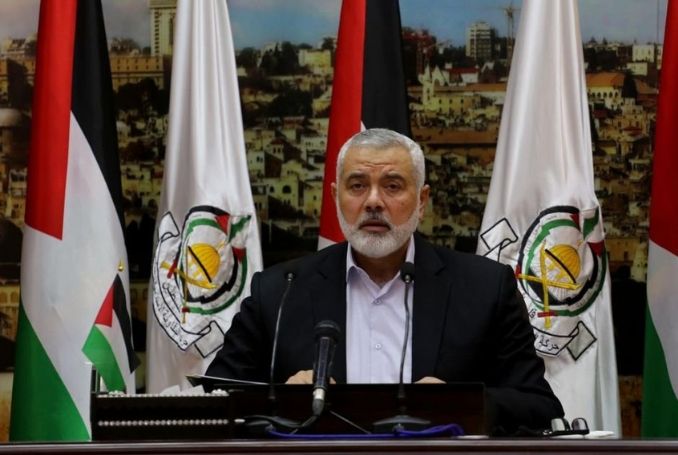
Egypt has rejected a request by Hamas to allow the head of its political bureau, Ismail Haniyeh, to travel to a number of countries including Iran, Turkey, Qatar, and Russia.
Al-Araby Al-Jadeed reported Egyptian sources as saying that after postponing its response, Cairo finally rejected it saying that regional and security conditions do not allow for Haniyeh to travel.
The news site quoted a Hamas source as saying:
“It is clear that Egypt completely objects to Haniyeh’s foreign tour, in protest against the countries which he will visit.”
The source pointed out that Hamas has decided that Mousa Abu Marzouk will head the movement’s delegation to Moscow next week to discuss the Palestinian reconciliation file among other issues.
The source added that the visit has been postponed more than once in the hope that Egypt would allow Haniyeh to travel.
Featured Video

Racist Seinfeld Dances for Joy as Bibi Unveils His New Map
or go to
Aletho News Archives – Video-Images
TV Drama Review
Japanese drama projects Japan’s wartime atrocities onto Chinese characters

Global Times | October 25, 2026
By portraying Chinese characters as perpetrators of ruthless violence while casting Japanese Self-Defense Forces (SDF) intelligence operatives as defenders, the season 2 of the Japanese drama Vivant has recently drawn criticism from Chinese netizens, who argue that its depiction turns historical reality on its head while ignoring Japan’s wartime atrocities.
The TBS drama series – a spy suspense story in which an alleged unofficial intelligence unit of the SDF operates across the globe — has attracted a passionate fanbase. Its currently airing season 2 opened with a household rating of 18.8 percent, the highest for a TV drama this year, according toa commentary article by Japanese media Toyo Keizai.
What draws attention is the portrayal of the enemies in the series, the article noted. Scenes in which the Chinese organization subjects kidnapped members of the SDF unit to brutal torture are repeated with unrelenting intensity.
It is rare for Japanese TV dramas to explicitly portray a real-life country as the enemy, the article noted.
Japanese Prime Minister Sanae Takaichi also made a reference to the drama, saying that she has been recording Vivant and hopes to binge-watch it over the year-end and New Year holidays, according to Japanese media outlets.
China’s CCTV News report on Sunday revealed that the drama features scenes in which Chinese personnel cut off the fingers of and stab Japanese intelligence operatives in the abdomen. Such acts bear striking similarities to the torture inflicted on Chinese nationals by invading Japanese troops during the World War II.
The drama distorts the truth by attributing these atrocities to modern Chinese characters. Beneath the surface, it subtly glorifies Japan’s cross-border overseas operations, blurs the functional boundaries of the SDF and implicitly promotes an expansionist narrative, per CCTV News. … continue
Blog Roll
 Aletho News
- EU facing trillion-euro debt hole while seeking more cash for Kiev
- How US, Europe, Persian Gulf states exhausted missile stockpiles, splurged billions to defend Israel
- Up in arms… Koreans reject U.S. empire’s plan to make South Korea the next Ukraine
- Iran, Turkey, Pakistan, Saudi Arabia could advance region-led security framework in Tehran: FM spox
- Netizens condemn Japanese drama for projecting Japan’s wartime atrocities onto Chinese characters
- Racist Seinfeld Dances for Joy as Bibi Unveils His New Map
- A West Bank War for Netanyahu’s Election Campaign, Could It Backfire?
- Yemen denounces European Parliament’s ‘hypocritical’ push to blacklist Ansarullah
- Qalibaf: UAE’s UN bid aims to ‘clear the runway’ for ‘Greater Israel’, whitewash genocide
- Pakistan reopens Iran border after boosting security: Report
- If Americans Knew
- An error has occurred; the feed is probably down. Try again later.
- No Tricks Zone
- Sudden Stratospheric Warming, Powerful El Niño Combination May Lead To Extreme Europe Cold, Energy Crisis!
- Two New Studies Find Thwaites Glacier Melt Cannot Be Driven By Human Activity Or A Warming Ocean
- E-Cars Reduce CO2 Emissions By Only 41% Compared To Internal Combustion Engine Vehicles
- Predictions Made By Renowned Climate Professor Over Past Decades Have Been Proven To Be Poor
- New Study Suggests Large Regions Of The Pacific Ocean Have Been Cooling For The Last 80 Years
- Germany’s Green Energy Debacle: High Energy Costs Force Kahla Porzellan to Close After 182 Years!
- New Study: 50 Years Of The Most Aggressive ‘Net Zero’ Policies Can Only Affect The Global Climate By 0.03°C
- US September “Heat” Was No Record…Many Records Set Decades Ago
- Latest European Green Energy Debacle; Portugal’s Largest Flagship Solar Park Insolvent!
- Green Energy Debacle: German Expert Professor Fritz Vahrenholt Warns Of Severe Economic And Social Consequences

