Russia warns of escalating NATO military activity in Baltic region
Al Mayadeen | May 4, 2026
Russia has accused NATO of significantly expanding its military operations in the Baltic Sea, particularly near the Kaliningrad region, warning that the alliance’s growing presence poses risks to regional stability and international navigation.
Artem Bulatov, special envoy at the Russian Foreign Ministry, stated that NATO is intensifying efforts to enhance its combat capabilities and infrastructure in areas adjacent to Kaliningrad, pointing to a sustained military buildup under various operational frameworks.
According to Bulatov, NATO launched its Baltic Sentry mission in January 2025 under the stated aim of protecting critical infrastructure in the Baltic Sea, while continuing extensive air patrols and expanding the scope of its exercises.
Member states engaging in ‘provocative’ actions
He added that the scale and frequency of NATO drills have increased, alongside provocative actions by member states targeting vessels involved in transporting goods to and from Russia.
Russian Deputy Foreign Minister Alexander Grushko warned that these activities are creating “serious threats” to international shipping routes and economic operations in the region, suggesting that NATO’s mission is effectively aimed at controlling key logistical corridors.
Grushko further argued that the alliance’s operations are designed to restrict the movement of goods linked to Russia, raising concerns in Moscow over the militarization of maritime routes in the Baltic.
Russia warns of Western shift on nuclear weapons role
Russia has expressed concern over a shifting Western approach to the role of nuclear weapons, senior diplomat Andrey Belousov said last week.
Speaking in an interview with RIA Novosti, Belousov said Moscow is increasingly alarmed by developments within what he called the “collective West,” particularly ahead of the upcoming review of the Treaty on the Non-Proliferation of Nuclear Weapons.
The Eleventh Review Conference of the NPT is scheduled to take place in New York City from April 27 to May 22.
“Currently, a number of issues in the context of the NPT are causing us serious concern. First and foremost, this concerns a trend that could soon take on an avalanche-like nature: the widespread declaration by a number of states — primarily from the ‘collective West’ camp — of a new view on the role and place of nuclear weapons,” Belousov said.
Geopolitics and Geoeconomics of the Strait of Hormuz
Sputnik – 02.05.2026
The reckless reliance on a blitzkrieg to eliminate Iran’s political and military leadership has left Israel and the United States in an extremely precarious situation, where Tehran’s key trump card in the conflict turned out to be control over the Strait of Hormuz.
Alexander Yakovenko, deputy director of Sputnik’s parent company Rossiya Segodnya and head of the Committee on Global Issues and International Security of the Russian Security Council’s Scientific-Expert Board, has addressed the standoff around the Strait of Hormuz.
Analysts in Israel are already writing of a complete failure, with the prospect of “returning to the issue” sometime in the future. Judging by published reports, everything was planned for June this year, but, as the saying goes, the devil intervened, and Benjamin Netanyahu succumbed to the temptation of a final solution through “regime change.” The scapegoats will be the Mossad division responsible for Iran and the military command responsible for Lebanon.
Donald Trump faces a far more difficult predicament: he has been drawn into a war that is neither his own nor in America’s interest. But the main issue is that the Strait of Hormuz problem now rests squarely on his shoulders. Aside from acceding to all of Iran’s demands, there appear to be no viable options for resolving the blockade – including the resumption of military action, which, according to observers, would have catastrophic consequences for the region, the global economy, and the Trump administration.
In terms of the Persian Gulf and the greater Middle East, a complete geopolitical reconfiguration has taken place, including a shift in Turkiye’s role (it was Ankara that effectively killed the plans to bring Iraqi Kurds into the “march on Tehran,” which was intended to bolster the confidence of those whom Israeli intelligence believed were ready to take to the streets of Iranian cities).
The destruction of the region’s extraction and logistics infrastructure prompted the UAE to withdraw from OPEC and OPEC+, which will only intensify Abu Dhabi’s contradictions with Riyadh and accelerate the political realignment of smaller players toward Ankara, Saudi Arabia, or Iran.
Iran’s agency has grown qualitatively: from a pariah state burdened by sanctions, Iran has genuinely become a regional power (in contrast to Netanyahu’s claim that Israel is a regional power and “in some ways even a global one”). Everything now depends on Iran – a fact understood by those at the helm in Tehran, namely, by general consensus, the Islamic Revolutionary Guard Corps (IRGC). And all this is aside from the most pressing issue on the regional agenda: the restoration of extraction and logistics infrastructure, especially given that the damage has a cumulative effect – in other words, “time is money.”
Russia, Pakistan, and China have become even more deeply involved in the affairs of the region, while the United States has demonstrated its inability to provide military protection for its allies. In other words, the role of external players has grown, whereas control over the region had been in American hands since the Baghdad Pact at the beginning of the Cold War. Now it can be said that the entire institutional structure in the region is collapsing – even in the OPEC format – and the region is opening up to an entirely new architecture.
In terms of geoeconomics, Tehran now holds a powerful lever of influence over the global economy and world trade through its control over the Strait of Hormuz. Moreover, this is not only direct control but also the ability to destabilize the situation around the Strait at any point in the future, regardless of any agreements that might be reached regarding its possible reopening as part of a ceasefire. In other words, everyone understands that things will never return to how they were before.
The only thing that matters for the global economy and the international financial system – including the dollar’s linkage to oil trade – is the stability of commercial traffic through the Strait. With no indication of it being reopened, the world is losing between 8 and 15 million barrels of oil and petroleum products per day, as well as up to 20% of global LNG supplies. This also includes a range of industrial goods in the petrochemical sector and derivatives for the agricultural sector. Experts expect a monthly shortfall of 300 million barrels, which amounts to three-quarters of the released strategic reserves of developed countries. Moreover, by early May, both strategic reserves and the advantages of unlocking Russian and Iranian oil, along with the balancing buffer of floating storage, will be nearly exhausted. In short, in every respect, a moment of truth is approaching in a conflict that is difficult to restart now that military action has been paused.
Not only have the United States and Israel handed Iran, on a silver platter, escalation dominance in the conflict – the ability to manage escalation if Washington and Tel Aviv launch another round – but Tehran will also gain additional revenue from selling its 1.5 million barrels of oil per day, which economists estimate at 2–3 billion per month, or 24–36 billion per year. Essentially, even without the unfreezing of Iranian assets in Western countries, Iran will have the resources to rebuild what has been destroyed. To this should be added the fees collected from commercial vessels transiting the Strait of Hormuz.
It is also worth noting a direct geopolitical consequence of the Iranian conflict: the discord within the Western alliance along the line of Trump’s America versus liberal-globalist Europe. The recent visit of the British monarch to the United States, during which he called in his address to Congress for the collective “defense of Ukraine” invoking Article 5 of the Washington Treaty (despite the fact that Kiev is not a NATO member), indicates that the lack of allied support for the Iranian adventure is a clear appeal to restore Western unity specifically on an anti-Russian basis – everything else is secondary. In Europe, they no longer hide the fact that they intend to “wait out” Trump, if that is what it takes, but under no circumstances will they agree to a settlement of the Ukrainian conflict.
As such, it is not denied that Ukraine is merely the opening move in yet another war of the West against Russia, and that Western elites are determined to make it a decisive, final confrontation of a civilizational nature. This presents an interesting situation for Russia, which could be resolved one way or another very soon. If Russia participated in two world wars, in which, albeit in different ways, relations between groups of Western countries were contested, and in the Cold War we faced a united West, then now we see a disunited West, weakened militarily and in terms of domestic political development. Its consolidation is only possible at our expense.
Charles III quite opportunely mentioned the burning of the White House by the British in 1814, as it reminds us – and perhaps Washington – of positive moments in our shared history, including Russia’s support for the American Revolution and the Union side in the Civil War. The decision rests with the Americans, but it is curious how the Middle East references an era before the ideologization of international relations in the 20th Century.
US blockade crumbles as Iran turns to overland routes
Press TV – April 30, 2026
As the US intensifies its inhuman sanctions and seeks to stifle Iran’s economy through an illegal naval blockade, Tehran has made strategic adjustments.
Pakistan formally activated a new transit corridor through Iran on Friday, announcing that the inaugural shipment including frozen meat bound for Tashkent, Uzbekistan had been dispatched via the China-Pakistan Economic Corridor (CPEC) and Iranian overland routes.
The country designated six transit routes, including multiple key corridors connecting ports and border points inside Pakistan, forming a wide network for overland trade into Iran in a bid to bypass the maritime trade routes in the Persian Gulf.
The order, which took effect on April 25, aims to ease the logjam at Karachi Port and Port Qasim, where more than 3,000 Iran-bound containers have been stuck due to the ongoing US naval blockade of Iranian ports.
By using the new corridor, officials estimate travel time to the Iranian border will drop from 18 hours to just three hours, which in turn will lower logistics costs for regional traders.
The designated routes create a land bridge between Pakistan’s deep-sea ports and the Iranian border, offering a lifeline for third-country goods that would otherwise be vulnerable to US naval piracy at sea.
For China, the world’s largest oil importer and the destination for an estimated 90 percent of Iran’s crude exports before the current war, the opening of overland alternatives carries acute strategic significance.
With the US Navy enforcing an illegal cordon at the mouth of the Gulf of Oman since April 13, the maritime route that once carried one-fifth of global petroleum has been hijacked by an armed naval raid and subjected to systematic plunder.
The blockade’s primary target has always been as much about Beijing as Tehran. China purchases roughly 13 to 15 percent of its crude oil imports from Iran, volumes that before the war exceeded 1.38 million barrels per day.
Iranian crude, often trans-shipped through Malaysia and other intermediaries, feeds China’s independent “teapot” refineries and helps underpin Beijing’s energy security.
The Trump administration has made no secret of its intent to sever this flow. On April 23, Washington imposed sanctions on Hengli Petrochemical’s Dalian refinery, one of China’s largest independent processors, with 400,000 barrels per day capacity, alongside roughly 40 shipping companies and tankers involved in Iranian oil transport.
In a draconian announcement, Treasury Secretary Scott Bessent warned that the US would constrict “the network of vessels, intermediaries and buyers Iran relies on to move its oil to global markets”.
Yet even as the American piracy tightens, the physical blockade is showing gaps. Satellite imagery and tracking data have revealed that several Iranian-flagged vessels under sanctions had sailed out of the Persian Gulf.
While tankers maneuver, Iran’s top diplomat has been building the political architecture for overland alternatives. Foreign Minister Abbas Araghchi embarked on a high-stakes tour on April 23, travelling twice to Pakistan for consultations and to coordinate the corridor activation before heading to Oman and finally to Russia.
In Islamabad, the discussions reportedly focused on key issues, the details of which are not specified. But the tangible outcome was the corridor itself.
Pakistan’s new transit routes, connecting Gwadar, Karachi and Port Qasim to the border crossings of Gabd and Taftan, provide Iran with immediate access to CPEC’s road and rail infrastructure.
Gwadar was built with Chinese loans and Chinese labor precisely as a hedge against maritime chokepoints. Now, with the Sea of Oman effectively closed, goods moving overland from Iran to Gwadar can connect to Chinese markets via the CPEC network, bypassing the US Navy entirely.
On April 27, Araghchi met with President Vladimir Putin in St Petersburg for talks lasting more than 90 minutes. The Iranian foreign minister described the discussions as covering “all issues, both in bilateral relations and regional issues, as well as the issue of war and aggression by the US and Zionist regimes”.
According to media reports, the Russian president said Moscow “will do what it can to support the interests of Iran and other regional countries and help bring peace to West Asia as soon as possible”.
He added that “not only Russia, but now the whole world is admiring the Iranian people for their resistance against America”.
While Russia and Iran signed framework agreements on the International North-South Transport Corridor years ago, the current crisis has given those plans new urgency.
Araghchi used the St Petersburg meeting to reaffirm that Tehran views its relationship with Moscow as a “strategic partnership” that will continue “with greater strength and breadth”.
For China, Russia’s role is complementary. The INSTC offers a route from Mumbai to Moscow via Iranian rail links, a path that, if fully operationalized, would give Chinese goods another overland alternative to maritime shipping.
More immediately, Russia’s diplomatic cover complicates any US effort to pressure Pakistan or other neighbors into closing their borders to Iranian trade.
The central question for Washington is whether maritime piracy can achieve what missiles and airstrikes failed to deliver. After the US-Israeli strikes on Iran on February 28, it became clear that bombing alone would not bring down the country to its knees.
The blockade represents a shift to economic suffocation aiming to squeeze Iran’s oil revenues. But the strategy carries costs. Global oil prices remain elevated near $120 per barrel, stoking inflationary pressures across the US, Europe and beyond.
More fundamentally, the blockade’s success depends on land routes remaining closed. Pakistan’s activation of the transit corridor, Russia’s support, and China’s quiet integration of Gwadar into its supply chain collectively suggest that Tehran is building an overland escape hatch that the US Navy cannot interdict under any circumstance.
“Whenever there are sanctions or blockades, there will also be workarounds, whether informal channels or other flexible arrangements,” Wang Yiwei, director of Renmin University’s Institute of International Affairs, told The Straits Times. “The key question we should be asking is: can this blockade actually be sustained?”
For now, the answer appears uncertain but with each new overland corridor, Iran is proving impossible to seal and China unlikely to be starved.
Ukraine Seeks to Provoke a Nuclear Conflict: Zakharova
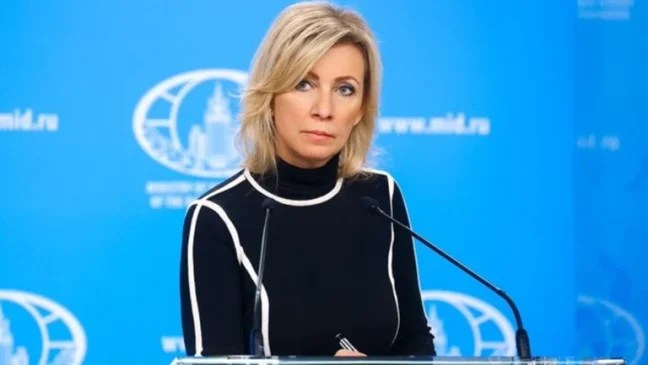
teleSUR | April 29, 2026
On Wednesday, Russian Foreign Ministry Spokeswoman Maria Zakharova denounced that Ukrainian President Volodymyr Zelensky is sabotaging any and all peace initiatives and is now creating conditions for a potential nuclear conflict.
“The diplomat drew attention to Zelensky’s earlier remarks that Ukraine should be given both NATO membership and nuclear weapons as security guarantees,” TASS reported.
“In fact, he continues to provoke a nuclear conflict with such statements. Moreover, Western Europe risks becoming the first victim of this very nuclear blackmail,” Zakharova stated.
“Zelensky clearly does not want peace. He seeks to prolong the fighting indefinitely and is ready to risk a dangerous escalation of the conflict,” she added.
Putin Accuses Ukraine of Resorting to Terrorist Tactics
On Tuesday, Russian President Vladimir Putin denounced that Ukraine is resorting to terrorist actions against the civilian population and infrastructure because it is unable to stop the advance of Russian forces. During a meeting on ensuring security in the upcoming elections, he stressed that the risks of terrorist attacks on Russia are growing.
“The Kiev regime, unable to stop Russia from advancing along the line of engagement, has resorted to overt terrorist methods with the help of its patrons. Ukraine is losing territories day after day and is staking on terror because of its inability to change the situation,” Putin stated, adding that Zelensky hopes that acts of terrorism against Russia will change the situation.
Putin also denounced that the Kiev regime will try to meddle in the 2026 Russian parliamentary elections. More specifically, Ukraine will try to prevent elections from being held in Donbass and Novorossiya.
West losing leadership position to Global South: Russia’s president
Press TV – April 28, 2026
Russian President Vladimir Putin says the West is losing its economic and political leadership position in the world, giving way to the countries of the Global South.
A more complex, multipolar architecture of global development is taking shape as Western countries lose their dominance and yield to new growth centers in the Global South, the Russian president said on Tuesday in a video message to participants of the Open Dialogue Forum.
“States that truly understand and appreciate the importance of national sovereignty in the political, economic, cultural and social spheres are playing an increasingly important role, and they can determine the vector of their own development based on their own values, resources and priorities, identity and sovereign worldview,” he stated.
Prior approaches and established norms of business and international relations are steadily losing their efficacy, partly due to the actions of Western countries, which are relinquishing their leadership positions, he noted.
“The events of recent years show that all elements of global growth, from economics and finance to technology and demography, are changing irreversibly,” Putin added.
The global development model, he argued, will only be sustainable if it is built on the principles of equality and takes into account the interests of all countries. No nation can develop alone, at the expense of others or to their detriment.
“It is important to focus the entire global development platform so everyone, anywhere on Earth can have the right to a successful future, choose their own path, and put their choice into practice step by step,” the Russian president concluded.
The Global South emerged in part to help countries in the southern hemisphere collaborate on political, economic, social, environmental, cultural, and technical issues. Since 1995, exports within the Global South have surged by 1,300 percent, double the growth rate of exports to the North.
Countries of the Global South are no longer merely suppliers for the West; they are increasingly fueling each other’s economic and financial development.
More than 40 percent of exports from developing countries now remain within the Global South, twice the share in 2000, indicating deepening interdependence.
Benefiting from expanded South-South trade relations, developing economies today account for about 45 percent of global GDP, up from 25 percent in 2000.
Moscow, Tehran to support each other amid US aggression: Russia’s defense minister
Press TV – April 28, 2026
Russia’s minister of defense has expressed confidence that Moscow and Tehran would stand in support of each other amid the situation arising from the United States’ unlawful aggression targeting the Islamic Republic.
Andrey Belousov made the remarks to Iranian Deputy Defense Minister Reza Talaei-Nik during a meeting in Kyrgyzstan’s capital Bishkek on Monday, Russia’s TASS news agency reported.
Belousov said the support would last “as before under any development of the situation,” the report read.
The meeting came amid an illegal blockade of Iranian vessels and ports by the United States, despite announcement and subsequent unilateral prolongation of a ceasefire by US President Donald Trump earlier this month.
The Islamic Republic has denounced the so-called blockade as a continuation of American aggression and violation of the conditions of the ceasefire that was announced on April 7 following 40 days of unprovoked American-Israeli attacks targeting the Iranian soil.
“We support Iran’s sovereignty and territorial integrity,” Belousov added, noting, “I wish the brotherly Iranian people and its Armed Forces resilience and courage in overcoming all threats facing the country.”
Additionally, he said Russia “advocates for resolving the conflict exclusively through diplomatic means,” and underlined, “We are ready to do everything possible to resolve this situation.”
The Iranian official, for his part, expressed appreciation for Moscow’s support of Tehran in international forums and for its commitment to strengthening bilateral and defense cooperation.
Iran responded to the aggression with a resolute retaliatory strike throughout its 40-day span and simultaneously closed down the strategic Strait of Hormuz to enemies and their allies.
The Islamic Republic began shutting down the chokepoint to all traffic in return for the preservation of the blockade. Tehran has negated rejoining negotiations with Washington as long as the blockade stays in place.
Ever since the launch of the aggression, Russia has expressed full support for Iran’s reprisal.
Most recently, Russia’s representative to the international organizations in Vienna said that Washington’s long-standing policy of negotiating from a position of strength through military threats and illegal sanctions has failed against the Islamic Republic and had to be abandoned.
Mikhail Ulyanov stated that the United States had no choice, but to drop the elements of blackmail, ultimatums and artificial deadlines if it truly wished to move forward in any engagement with Iran.
Ukrainian drone strike kills worker at Europe’s largest nuclear power plant
RT | April 27, 2026
A Ukrainian drone strike has killed an employee at Russia’s Zaporozhye Nuclear Power Plant (ZNPP), the facility’s press service said in a statement on Monday.
Ukrainian forces have repeatedly attacked Europe’s largest nuclear facility since it came under Russian control in 2022, soon after the escalation of the Ukraine conflict.
“Today, a driver was killed as a result of a strike by a Ukrainian Armed Forces drone on the transport shop floor of the ZNPP,” the facility said in a statement, adding that it was extending condolences to the family of the deceased.
“Nuclear industry employees should not be targets. Any attack on the ZNPP is a threat not only to people but also to security in general,” it added.
The International Atomic Energy Agency (IAEA) has condemned the incident.
“Director General Rafael Grossi reiterates that strikes on or near NPPs can endanger nuclear safety and must not take place,” the agency wrote in a post on X. “The IAEA’s team on the site will look into the incident and continue to monitor the situation.”
The attack came a day after Grossi visited Kiev for talks with Vladimir Zelensky, during which the Ukrainian leader urged the IAEA to pressure Russia to hand over control of the plant to Kiev.
Ukraine has repeatedly tried to interject proposals for changing the plant’s ownership into US-mediated peace talks with Russia. US President Donald Trump has also floated a number of ideas for joint control of the facility.
Moscow has firmly rejected the idea of handing over the power plant.
“Joint operation of the ZNPP with any other state is also unacceptable,” the Russian Foreign Ministry said in a statement last month. Even giving Ukrainian or NATO representatives temporary access to the facility is “impossible,” given the close cooperation between their intelligence services and “significant sabotage potential,” it said.
EU economic sanctions ramp up NATO war plan on Russia
Strategic Culture Foundation | April 24, 2026
The European Union announced its 20th round of economic sanctions against Russia this week. The bloc of 27 nations began imposing sanctions on Moscow when the conflict in Ukraine erupted in February 2022. Every six months, the EU has been extending these economic measures, which Brussels claims is support for Ukraine to “deter Russian aggression.”
The 20th round of sanctions unveiled this week attempts to go much further in inflicting damage on the Russian economy. It was flagged as the biggeset package yet and a “multi-layered targeting of key sectors” of the Russian economy, primarily its energy industry.
It is tempting to dismiss the EU sanctions policy as feeble and a form of insanity. The bloc keeps repeating an action expecting a different result each time, when the record shows that the action of sanctions is having little detrimental impact on Russia. If anything, it is the EU that has suffered an economic downturn as it unilaterally cut itself off from Russian oil and gas, the traditional source of affordable energy feedstock for European industries. Russia’s economy has not crashed as was anticipated when the sanctions were first imposed more than four years ago. In fact, the Russian Federation has maintained a robust economic performance as it finds alternative markets in Asia for its oil and gas products. The soaring price for a barrel of crude due to the reckless U.S.-Israeli aggression on Iran has given Russia a further boost.
However, it would be a mistake to simply brush off the EU sanctions as futile and self-defeating.
There is a more blatant and sinister aspect to the new round of sanctions. Brussels is nakedly showing its war agenda. The new measures aim to restrict all sectors of Russian energy production, including “exploration, extraction, refining and transportation.” The EU is endeavoring to tighten restrictions on “third countries” to prevent Russia from circumventing existing embargoes on shipping, port access and trade. Whether these new measures achieve their objective of “crippling the Russian economy” is debatable. But it is the belligerent intention – stated now with more determination – that is significant. The EU is brazenly laying out a plan to strangle Russia in conjunction with upping the military threat.
It is the accompanying developments that are ominous and which give full meaning to the economic measures.
This week the EU hailed that its €90 billion ($105 bn) loan to Ukraine had finally been approved. That financial aid was blocked by Hungary since December. But with the recent election loss for Viktor Orbán’s government, Budapest’s veto has been lifted under the new prime minister, Péter Magyar. EU leaders were ecstatic that the financial transfer to Ukraine can now go ahead.
Two-thirds of the EU loan – some €60 bn – is reportedly allocated for military aid. Ursula von der Leyen, the European Commission president, said that the first tranche worth €45 bn will be transferred to Ukraine within weeks and that it would be used to increase the production of aerial combat drones. “Drones from Ukraine for Ukraine,” she said by way of trying to give the impression that the EU is not a party to the war.
An EU leaders’ two-day summit held in Cyprus on April 24-25 was reported with a celebratory mood. Von der Leyen and European Council President Antonio Costa, along with the EU’s Foreign Affairs Commissioner, Kaja Kallas, were cock-a-hoop at the “breakthrough” of releasing the largest single financial package to Ukraine so far in combination with the new economic sanctions aimed at drilling down on Russia’s economic core. Attending the summit in Cyprus was Ukraine’s nominal president, Vladimir Zelensky, who reportedly joined the EU leaders for dinner to discuss new developments.
It gets even more sinister. The Kiev regime has been stepping up deep air strikes on Russian energy and other industrial infrastructure. There is no doubt the regime is being assisted with NATO expertise in finding such wide-ranging targets in Russia’s vast territory. This week, for example, a drone strike hit an industrial facility in Novokuybyshevsk in the central Samara region, nearly 900 kilometers southeast of Moscow and nearly 2,000 kms from the warzone in Donbass.
Clearly, the EU’s economic strikes are designed to reinforce the damage that NATO is trying to inflict with drones and missiles on Russia’s industrial base. These are not separate initiatives but an integral war strategy.
In announcing the latest round of sanctions Kaja Kallas could hardly contain her Russophobic glee. “Today we have broken the deadlock. On top of the €90-billion loan for Ukraine, we have adopted the 20th sanctions package,” she said.
Deceptively, the sanctions were billed as “increasing pressure on Russia to stop its brutal war of aggression and engage in meaningful negotiations towards a just and last peace.”
That’s a cynical con – a con that is betrayed by the EU’s own stated objective of “crippling” the Russian economy. How can one have a “just and lasting peace” by crippling a country?
The real purpose of the funds that EU citizens will have to pay through decades of indebtedness is to escalate NATO’s war in Ukraine against Russia. The economic sanctions are war measures aimed at maximising the impact of military attacks.
Other developments this week raise the stakes to even more sinister levels.
French President Emmanuel Macron and Poland’s Prime Minister Donald Tusk discussed joint nuclear weapons “scenarios” in a bilateral summit in Gdansk. The French leader wants to share his country’s nuclear weapons capabilities with other European countries. It is reported that French and Polish warplanes will begin joint exercises on flying nuclear weapons in the Baltic region. This is evidently meant as a threat to Russia. It amounts to Paris and Warsaw carrying out training exerises for nuclear strikes on Russia.
In yet another provocative development, it is reported that Britain is leading a NATO Joint Expeditionary Force to formulate a naval plan to blockade the Russian enclave of Kaliningrad located between Poland and Lithuania. Kaliningrad provides Russia with vital port access to the Baltic Sea.
The European NATO leaders are concerned that U.S. President Donald Trump has lost interest in the “Ukraine project” against Russia owing to his reckless war with Iran. That is why they are ramping up the war effort against Russia while telling barefaced lies about wanting to achieve “lasting peace.”
So far, the EU’s economic sanctions against Russia have been an abject failure. But the failure of economic measures is no longer the point. It is what they reveal about an intensifying NATO war plan against Russia.
Moscow has repeatedly called for a negotiated end to the conflict while the EU and NATO accuse Russian leader Vladimir Putin of “not wanting peace.”
People can make their own minds up about who the aggressors are. NATO is at war with Russia and is not interested in negotiations. Criminally, the NATO aggressors are creating a boiling frog situation for Russia. The European russophobic leaders seem to want war at any cost.
John Mearsheimer: U.S. Expands Iran War & Divorces Europe
Glenn Diesen | April 22, 2026
Prof. John Mearsheimer argues that the failure to make peace with Iran can dramatically widen the war in the Middle East, while the rift with Europe and other allies widen. John J. Mearsheimer is the R. Wendell Harrison Distinguished Service Professor of Political Science at the University of Chicago, where he has taught since 1982.
Follow Prof. Glenn Diesen:
- Substack: https://glenndiesen.substack.com/
- X/Twitter: https://x.com/Glenn_Diesen
- Patreon: https://www.patreon.com/glenndiesen
Support the research by Prof. Glenn Diesen:
- PayPal: https://www.paypal.com/paypalme/glenndiesen
- Buy me a Coffee: buymeacoffee.com/gdieseng
- Go Fund Me: https://gofund.me/09ea012f
Iran War fallout: Russia and China quietly take over natural gas markets in Asia, with Qatar gone
Inside China Business | April 20, 2026
The Iran War and the closure of the Strait of Hormuz have taken Qatari energy supplies completely off the market. Russian natural gas fields were shut out of Europe beginning in 2022, and energy giants there invested massively into new pipelines to Asia. China was a ready buyer for Russian oil and natural gas, and also invested heavily into huge strategic stockpiles of crude and natural gas storage. Now Russian energy production flowing East, and China is already well-supplied. Liquefied Natural Gas of Russian origin is offered at 40% discount to spot, to induce long-term supply relationships. As a result, Asian economies are shifting their supply chains from the Persian Gulf to Russia-China. Meanwhile, EU countries are unable to get LNG at all.
Resources and links:
Bloomberg, Russia Offers Sanctioned LNG to Energy-Hungry Asia at a Discount https://www.bloomberg.com/news/articl…
S&P Global, Russia crude oil pipeline capabilities to mainland China—The ESPO crude oil pipeline https://www.spglobal.com/energy/en/re…
Power of Siberia 2 reshapes China’s energy security calculus https://eastasiaforum.org/2025/10/31/…
Reuters, Russia’s Gazprom supplied 38 bcm of gas to China via Power of Siberia pipeline in 2025 https://www.reuters.com/business/ener…
Russia’s Oil Windfall From Middle East War Keeps Growing https://www.bloomberg.com/news/articl…
Reuters Exclusive: Iran attacks wipe out 17% of Qatar’s LNG capacity for up to five years, QatarEnergy CEO says https://www.reuters.com/business/ener…
Russian security chief issues warning to four NATO states
RT | April 16, 2026
Russia would have the right to retaliate if Finland and the Baltic states are deliberately allowing Ukrainian drones to pass through their airspace, Security Council Secretary Sergey Shoigu said on Thursday.
“Recently, there has been an increase in Ukrainian drone strikes against Russia via Finland, Lithuania, Latvia, and Estonia,” Shoigu told journalists. “As a result, civilians are suffering and significant damage is being caused to civilian infrastructure.”
Either Western air defenses are proving ineffective, or these four countries “deliberately provide their airspace, thereby becoming open accomplices in aggression against Russia,” he added. In the latter case, Moscow has the right to self-defense in response to an “armed attack” under Article 51 of the UN Charter, the security chief stressed.
In recent weeks, Kiev has intensified drone strikes on Russia in what Moscow has characterized as “terrorist attacks,” with the Russian military regularly reporting hundreds of UAVs downed in a single night.
Late last month, Kiev attacked Russia’s Baltic Sea ports of Ust-Luga and Primorsk with swarms of UAVs. The raids resulted in fires in both cities, which house extensive petrochemical infrastructure.
Kremlin aide Nikolay Patrushev said he believed that Finland and the Baltic states were “complicit in these crimes.” The provision of national airspace for Ukrainian drone strikes would “signify direct NATO participation” in attacks on Russia, he said Monday.
Multiple Ukrainian drones have also struck the territories of Finland and the three Baltic states since early March. Despite this, all four nations have avoided condemning Kiev outright for violating their airspace.
Moscow has formally warned Lithuania, Latvia and Estonia against allowing Ukraine to send drones via their territory, Russian Foreign Ministry spokeswoman Maria Zakharova said last week. “If the regimes in these countries are smart enough, they will listen. If not, then they will have to deal with the consequences,” she said.
Featured Video
“Historic Russia”: The Land Putin Will Not Give Back
or go to
Aletho News Archives – Video-Images
Book Review
Why the War on Conspiracy Theories Is Bad Public Policy
By Kevin Barrett • Unz Review • February 1, 2019
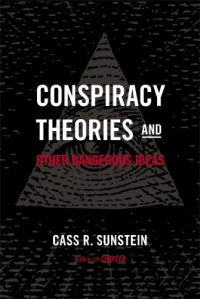 A Review of Conspiracy Theories and Other Dangerous Ideas by Cass Sunstein (based on an earlier paper co-authored with Adrian Vermeule); In Defense of Troublemakers: The Power of Dissent in Life and Business by Charlan Nemeth; and Conspiracy Theories and the People Who Believe Them, edited by Joseph E. Uscinski
On January 25 2018 YouTube unleashed the latest salvo in the war on conspiracy theories, saying “we’ll begin reducing recommendations of borderline content and content that could misinform users in harmful ways—such as videos promoting a phony miracle cure for a serious illness, claiming the earth is flat, or making blatantly false claims about historic events like 9/11.”
At first glance that sounds reasonable. Nobody wants YouTube or anyone else to recommend bad information. And almost everyone agrees that phony miracle cures, flat earthism, and blatantly false claims about 9/11 and other historical events are undesirable.
But if we stop and seriously consider those words, we notice a couple of problems. First, the word “recommend” is not just misleading but mendacious. YouTube obviously doesn’t really recommend anything. When it says it does, it is lying. … continue
Blog Roll
 Aletho News
- “Historic Russia”: The Land Putin Will Not Give Back
- How the Cambridge Analytica scandal still haunts Mark Zuckerberg
- The Ongoing Cancellation Campaign Against a Dissenting Academic in Norway
- Yemen and ‘the Houthis’: Challenging Sami Hamdi’s Narrative
- No, Christians did not invent Zionism
- AIPAC-led lobbying network opens branches in Cypriot, Greek parliaments
- Araghchi blasts ‘parasitic’ alliance as US taxpayers pay for Israel’s war on Iran
- Easy fix for Europe’s chaos? Stop fueling war against Russia
- Putin’s key remarks on peace talks and Europe’s ‘schizophrenia’
- Trita Parsi: Israel Set a Trap for Total War in the Region
- If Americans Knew
- An error has occurred; the feed is probably down. Try again later.
- No Tricks Zone
- Two New Studies Find Thwaites Glacier Melt Cannot Be Driven By Human Activity Or A Warming Ocean
- E-Cars Reduce CO2 Emissions By Only 41% Compared To Internal Combustion Engine Vehicles
- Predictions Made By Renowned Climate Professor Over Past Decades Have Been Proven To Be Poor
- New Study Suggests Large Regions Of The Pacific Ocean Have Been Cooling For The Last 80 Years
- Germany’s Green Energy Debacle: High Energy Costs Force Kahla Porzellan to Close After 182 Years!
- New Study: 50 Years Of The Most Aggressive ‘Net Zero’ Policies Can Only Affect The Global Climate By 0.03°C
- US September “Heat” Was No Record…Many Records Set Decades Ago
- Latest European Green Energy Debacle; Portugal’s Largest Flagship Solar Park Insolvent!
- Green Energy Debacle: German Expert Professor Fritz Vahrenholt Warns Of Severe Economic And Social Consequences
- Two More Paleo Reconstructions Affirm Meters-Higher Sea Levels Across Ireland, Brazil 7000-6000 Years Ago

