Idea of strategically defeating Russia an ‘illusion’ – Lavrov
RT | February 5, 2026
European leaders have “changed their tune” toward Russia, moving from calls to inflict a strategic defeat on Moscow to cautious reassessment, Russian Foreign Minister Sergey Lavrov has told RT.
Speaking with RT’s Rick Sanchez ahead of Diplomats’ Day on Wednesday, Lavrov noted how many European politicians had initially “spoken in unison, demanding firmness, insisting on unwavering support for Ukraine, continued arms shipments, sustained financing – all to ensure Russia’s defeat, a strategic defeat on the battlefield.”
Over time, European leaders “realized it was all an illusion,” he said in a wide-ranging interview. Western military strategists, who orchestrated the Ukraine conflict and “prepared Ukrainians to fight and die advancing European interests against Russia,” are finally recognizing that their plans had collapsed, the top diplomat stated.
Lavrov added that Western governments had learned nothing from history, citing Adolf Hitler and Napoleon’s failed attempts to defeat Russia. He said Europe had once again rallied nearly the entire continent under the same ideological banners, “only this time, unlike Napoleon and Hitler, not yet as soldiers on the battlefield, but as donors, sponsors, arms suppliers.” He said this attempt had produced outcomes similar to the failures of Napoleon and Hitler, adding that the West, particularly Germany, “learns history poorly.”
Lavrov noted that German Chancellor Friedrich Merz had “lifted constitutional restrictions on military spending, then declared this was necessary for Germany to once again – I emphasize that word, once again – become Europe’s dominant military power.” The minister said the stance “speaks volumes” about Merz’s mindset, arguing that in practice it amounts to preparation for war.
Lavrov also noted Russia’s status as the largest country in the world, but highlighted its place in Eurasia, saying “every attempt so far to establish security in this space has focused exclusively on the western part of Eurasia – so-called Europe.” He criticized NATO as a US-led structure, asserting that Americans never intended to leave Europeans to act independently while maintaining oversight of their allies.
European countries portray Russia as militarily and economically exhausted, he said, yet immediately assume they must prepare for an attack from the same Russia, calling this approach “pathetic diplomacy.”
According to Lavrov, Europe has “walked into their own trap by adopting this uncompromising stance” toward Russia, and “all they’re doing now is trying to sabotage” peace negotiations on Ukraine that “finally began taking shape between Russia and the United States, and now are joined by Ukrainian representatives.”
Russia doubts ‘bright future’ for US economic ties – Lavrov
RT | February 5, 2026
The actions of US President Donald Trump’s administration contradict its claims that it is willing to restore economic cooperation with Russia, Foreign Minister Sergey Lavrov has said.
Since returning to the White House more than a year ago, Trump has repeatedly said he wants to do business with Moscow. After a phone call with Russian President Vladimir Putin last March, the White House teased “enormous economic deals” between the two countries once the Ukraine conflict is settled.
Moscow doubts the sincerity of those claims by Washington, Lavrov said in an interview with RT’s Rick Sanchez on Thursday, ahead of Diplomatic Workers’ Day on February 10.
Not only the economic restrictions that had been slapped on Moscow under the previous administration of US President Joe Biden “all remain in place,” but “very harsh sanctions have been imposed against our largest oil companies, Lukoil and Rosneft, for the first time,” he said.
Washington’s move “surprised” Putin, the foreign minister recalled, coming just weeks after his face-to-face meeting with Trump in Anchorage, Alaska, in August, during which Moscow “supported the US proposal for a comprehensive settlement of the Ukrainian crisis.”
According to Lavrov, the Americans are now “openly trying to push Russian companies from Venezuela.” This follows a January raid by US commandos on the Venezuelan capital, Caracas, during which President Nicolas Maduro and his wife were abducted.
“India is being banned from buying Russian oil. At least, that is what was announced,” the Russian diplomat added.
Last month, Washington also said that “a state of emergency is being declared due to the threat Cuba poses to US interests in the Caribbean, including due to Russia’s hostile and malicious policies,” the minister noted.
The US is looking to introduce “a worldwide ban” on Russian oil and gas supplies, saying that they should be replaced by American oil and liquefied natural gas, Lavrov stressed.
“Well, the bright future of our economic and investment cooperation doesn’t really square with that,” he noted.
US’s Lack of Response to Russia’s New START Proposals Regrettable – Foreign Ministry
Sputnik – 04.02.2026
MOSCOW – Washington’s approach of ignoring Russia’s ideas on the New Strategic Arms Reduction Treaty (New START) is regrettable, the Russian Foreign Ministry said on Wednesday.
“However, no formal official response from the United States with regard to the Russian initiative has been received through bilateral channels. Public comments from the US side also give no reason to conclude that Washington is ready to follow the course of action in the field of strategic offensive arms proposed by the Russian Federation,” the ministry said in a statement.
“In fact, it means that our ideas have been deliberately left unanswered. This approach seems erroneous and regrettable,” it added Russia proceeds from the position that the parties to the New START Treaty are no longer bound by any obligations and symmetrical declarations amid the expiration of the treaty.
With the suspension of the New START Treaty in February 2023, Russia declared its intention to voluntarily stick to the central quantitative limits on weapons set by the Treaty until it expires in February 2026, the statement said.
“In the current circumstances, we assume that the parties to the New START are no longer bound by any obligations or symmetrical declarations in the context of the Treaty, including its core provisions, and are in principle free to choose their next steps,” the statement read.
Russia “intends to act responsibly and in a balanced manner,” developing its policy based on an analysis of the US military policy and the overall situation in the strategic sphere, the statement added.
Still, Moscow is open to finding ways to stabilize the situation through equal dialogue, the ministry added.
“The Russian Federation remains ready to take decisive military-technical measures to counter potential additional threats to the national security. At the same time, our country remains open to seeking politico-diplomatic ways to comprehensively stabilize the strategic situation on the basis of equal and mutually beneficial dialogue solutions, if the appropriate conditions for such cooperation are shaped,” the ministry said.
Douglas Macgregor: Russia, China & Iran Seek to Contain U.S. Military
Glenn Diesen | February 4, 2026
Douglas Macgregor is a retired Colonel, combat veteran and former senior advisor to the U.S. Secretary of Defense. Col. Macgregor explains how the military adventures of the U.S. are incentivising greater military cooperation between Russia, China and Iran.
Follow Prof. Glenn Diesen:
- Substack: https://glenndiesen.substack.com/
- X/Twitter: https://x.com/Glenn_Diesen
- Patreon: https://www.patreon.com/glenndiesen
Support the research by Prof. Glenn Diesen:
- PayPal: https://www.paypal.com/paypalme/glenndiesen
- Buy me a Coffee: buymeacoffee.com/gdieseng
- Go Fund Me: https://gofund.me/09ea012f
Germany eyes military space spending splurge to counter ‘threats’ from Russia, China: Report
By Deng Xiaoci | Global Times | February 4, 2026
The head of German Space Command Michael Traut reportedly claimed that Germany is considering a 35 billion euro ($41 billion) military space push, including spy satellites, space planes and offensive lasers, citing so-called “threats” from Russia and China in orbit. Chinese analysts on Wednesday slammed the move as classic double standards and Cold War mentality, as it cites baseless China “threat” claims, while ignoring the fact that the US is the top driver of space militarization.
Speaking with Reuters on the sideline of a space event ahead of the Singapore Airshow, Traut claimed that the spending plan is “aimed at countering growing threats from Russia and China in orbit,” Reuters reported on Tuesday local time.
It is reported that Traut revealed that Germany will build an encrypted military constellation of more than 100 satellites, known as SATCOM Stage 4, over the next few years. He also claimed network would mirror the model used by the US Space Development Agency, which is described by the Reuters as “a Pentagon unit that deploys low-Earth-orbit satellites for communications and missile tracking.”
Chinese analysts pointed out that while turning a blind eye to the US, the main driver behind the militarization of outer space, Germany choses to hype a groundless space threat theory against China and Russia. This is a typical manifestation of deep-seated double standards and camp confrontation with Cold War mentality, analysts said.
This kind of double standard is blatantly obvious, military affairs expert Zhang Junshe told the Global Times on Wednesday. “The US is currently the country that has deployed the most military offensive assets in space. Yet now, while Germany wants to imitate the US and do the same thing, it turns around and make baseless accusations against China and Russia. This is textbook double standards, Zhang criticized.
Notably, US Defense Secretary Pete Hegseth has just expressively harped on the importance of “American space dominance,” and claimed that the US needs to “dominate the ultimate highground,” at Blue Origin rocket factory in Cape Canaveral, Florida, on US local time Monday, News Nation reported Tuesday.
Germany will channel funding into intelligence gathering satellites, sensors and systems designed to disrupt adversary spacecraft, including lasers and equipment capable of targeting ground-based infrastructure, Traut claimed in his interview with Reuters. He also pointed to so-called inspector satellites – small spacecraft capable of maneuvering close to other satellites – which he claimed Russia and China had already deployed.
Hype about the “China-Russia space threat” has become a form of political correctness among European countries. Regardless of the facts, they feel compelled to point the finger at China and Russia. As an established old-school Western power, Germany is no exception to this cliché, Song Zhongping, a military affairs expert, told the Global Times on Wednesday.
It must be emphasized that should this plan come to fruition, it would markedly heighten the intensity of the space arms race, Song noted.
Germany’s indigenous launch capabilities are woefully inadequate. If it turns to SpaceX’s Falcon 9 for these deployments, it would confirm Germany’s status as an immature and dependent space actor. Should it instead rely on foreign rocket systems, that reliance would primarily fall on the US – leaving Germany unable to shake off its profound strategic dependence on the US, Song warned.
Power outages in Russian region after Ukrainian attack – governor
RT | February 4, 2026
Ukrainian strikes have severely damaged energy infrastructure in Russia’s Belgorod Region, causing widespread power outages and disrupting heating and water supplies, Governor Vyacheslav Gladkov reported on Wednesday morning.
Emergency crews worked through the night to repair the damage following what he described as a massive attack.
According to the governor, the city of Belgorod was struck by 12 munitions and three drones, with energy facilities among the damaged targets. Drone and artillery attacks were reported across nearly a dozen other districts. In the village of Dunayka, a drone attack on a truck wounded a man, requiring hospitalization. Another civilian was injured by an FPV drone in the village of Glotovo. A volunteer fighter was also wounded in Borisovsky District.
Due to the extensive damage to the power grid, Gladkov ordered schools and vocational colleges in ten districts to switch to remote learning, with kindergartens operating in a limited capacity.
He warned residents that emergency power outages would be unavoidable during the restoration work.
On Wednesday, the governor of neighboring Bryansk Region, Aleksandr Bogomaz, reported that Ukrainian forces had also used US-made HIMARS rockets to strike residential buildings, seriously injuring a woman.
The cross-border attacks come ahead of more US-backed talks between Russia and Ukraine in Abu Dhabi. Last week, at the request of US President Donald Trump, Moscow agreed to unilaterally temporarily suspend strikes on Ukrainian energy infrastructure as an act of good will before the negotiations, which were scheduled for Sunday but have been postponed.
Trump stated that Russian President Vladimir Putin had “kept his word” and that the pause had indeed lasted for a week from Sunday to Sunday. Ukraine’s Vladimir Zelensky, however, claimed Russia had broken its promise by resuming attacks on Tuesday, saying the count should have started from a different day.
Ukraine & Europe Can’t Out Wait Russia /Alexander Mercouris & Lt Col Daniel Davis
Daniel Davis / Deep Dive – February 3, 2026
US and European forces could deploy to Ukraine under Zelensky plan – FT
RT | February 3, 2026
Kiev and its Western backers have drawn up a plan that envisages military forces from the US and European countries moving into Ukraine to fight Russian troops in the event that Moscow violates the ceasefire being demanded by Vladimir Zelensky, the Financial Times has reported, citing sources.
Russian officials, including President Vladimir Putin, have repeatedly rejected the idea of a ceasefire as a precursor to a peace deal, saying it would only be used by Kiev and its sponsors to rearm and regroup forces. Instead, Moscow has insisted that the conflict needs a permanent peace solution which addresses its root causes. Russia has also categorically ruled out the deployment of Western forces to Ukraine during or after the crisis.
During meetings in December and January, Ukrainian, European, and US officials agreed a “multi-tiered response” to breaches of a possible ceasefire by Moscow, the FT said in an article on Tuesday.
Three people familiar with the matter told the outlet that the counter-measures would come within 24 hours, starting with a diplomatic warning and engagement by the Ukrainian military.
If this failed to stop the fighting, the second phase of the plan would see an intervention by the so-called ‘Coalition of the Willing’, which includes numerous EU nations as well as the UK, Norway, Iceland, and Türkiye, they said.
In case the violation turned out to be extensive and extended beyond 72 hours, it would be met with “a coordinated military response by a Western-backed force, involving the US military,” the sources claimed.
The FT report comes ahead of the second round of talks between Russian, Ukrainian, and US delegations scheduled to take place in Abu Dhabi, UAE on Wednesday and Thursday.
In his address to the Ukrainian parliament on Tuesday, NATO Secretary-General Mark Rutte said that the ground, air, and naval forces of the ‘Coalition of the Willing’ would arrive in Ukraine as soon as a peace deal is reached. NATO countries will also help Kiev “in other ways,” he added.
Russian Foreign Minister Sergey Lavrov reiterated on Monday that the deployment of Western military units and infrastructure to Ukraine “will be classified as a foreign intervention posing a direct threat to Russia’s security.”
Putin warned last September that if any foreign troops arrive in the country, Russia will “proceed from the fact that these will be legitimate targets for their destruction.”
Russian Security Council Secretary Sergey Shoigu earlier said that the move could trigger World War III, potentially involving nuclear weapons.
Russia Vows to Protect Its Oil Tankers
teleSUR | January 30, 2026
On Friday, Russian Foreign Affairs Ministry spokeswoman Maria Zakharova announced that her country will take all necessary measures to protect its oil tankers, several of which have been seized in international waters.
“If the norms of international law are violated in relation to vessels flying our flag, Russia will take all measures at its disposal to defend them. Attacks on freedom of navigation are inadmissible,” she said.
Referring to Western sanctions used to justify the seizure of tankers belonging to the so-called “shadow fleet,” Zakharova said they run counter to international law and, in any case, cannot serve as a basis for exercising jurisdiction on the high seas and seizing vessels.
“Allusions to European Union sanctions, which French leaders arbitrarily describe as international, as grounds for adopting coercive measures against any vessel are absolutely untenable,” she insisted.
Russia adopted a very restrained stance in the case of vessels seized by the U.S. Coast Guard, as occurred earlier this year with the tanker Marinera.
Moscow’s position became much firmer in the case of the vessel Grinch, seized more than a week ago by French authorities between Morocco and Spain.
Western authorities have decided in recent months to intensify their pursuit of the fleet Moscow uses to circumvent sanctions on its oil exports, which have declined significantly since the end of last year.
Iran, China and Russia sign trilateral strategic pact
By Ranjan Solomon | MEMO | January 29, 2026
In a dramatic geopolitical development this afternoon, Iran, China and Russia formally signed a comprehensive strategic pact, marking one of the most consequential shifts in 21st-century international relations. While the full text of the agreement is being released in stages by the three governments, state media in Tehran, Beijing and Moscow have acknowledged the ceremony and described it as a cornerstone for a new multipolar order.
The pact comes against the backdrop of decades of growing cooperation between these three states. Iran and Russia earlier concluded a 20-year Comprehensive Strategic Partnership Treaty designed to deepen economic, political, and defence ties, and to blunt the impact of Western sanctions — a treaty that was signed in January 2025 and entered into force last year. Meanwhile, Iran and China have been bound by a 25-year cooperation agreement first signed in 2021, aimed at expanding trade, infrastructure, and energy integration.
What makes today’s signing significantly different, and newsworthy, is that it explicitly combines the three powers in a coordinated framework, aligning them on issues ranging from nuclear sovereignty and economic cooperation to military coordination and diplomatic strategy.
Officials in Tehran described the pact as a joint commitment to “mutual respect, sovereign independence and a rules-based international system that rejects unilateral coercion,” echoing similar statements issued by Beijing and Moscow.
What the pact represents
This agreement does not – at least from the initial public texts – constitute a formal mutual defence treaty akin to NATO’s Article 5, obligating one to defend the others militarily. Past pacts between Iran and Russia always carefully stopped short of a binding defence guarantee. Instead, the pact appears to link three major powers in a broader geopolitical coalition defined by shared opposition to Western military dominance and economic coercion.
Central to the agreement is a unified stance against reimposition of sanctions on Iran tied to its nuclear programme under the 2015 Joint Comprehensive Plan of Action (JCPOA). Tehran, Beijing and Moscow have previously issued joint statements rejecting European attempts to trigger “snapback” sanctions, and have declared the UN Security Council’s considerations of the nuclear deal terminated.
This trilateral pact is therefore as much about diplomatic leverage and strategic narrative as it is about concrete defence or economic mechanisms.
Immediate regional and global consequences
The pact’s signing coincides with heightened tensions between the United States and Iran. President Donald Trump has reiterated threats of military action against Iran absent a negotiated settlement on its nuclear activities, even deploying a US carrier strike group to the Middle East theatre. Against that backdrop, this new strategic pact serves both Tehran and its partners as a buffer against unilateral US military pressure. By presenting a united front, the three governments aim to compel Washington to negotiate from a position of constraint rather than dominance.
For the Middle East, the balance of power is reshaping. Iran, long isolated by Western policies — now claims the protection of two permanent members of the UN Security Council. This will embolden Tehran’s regional posture in theatres such as Iraq, Syria and the Persian Gulf, and complicate conventional deterrence strategies exercised by the United States and its Gulf allies.
For Europe, the pact undercuts Brussels’ ambitions to retain independent influence in Middle Eastern diplomacy. European powers have repeatedly attempted to revive elements of the JCPOA and threaten punitive measures against Tehran, but coordination by Iran, China and Russia has thwarted those efforts, exposing Europe’s diplomatic limitations in a world less anchored to Western consensus.
Economic repercussions
Economically, the deal signals deeper integration among three of the world’s most significant non-Western economies. Russia and China have already worked on investment protection and bilateral trade agreements designed to sidestep Western financial systems, such as SWIFT, which have been used as vectors for sanctions. A trilateral pact potentially accelerates the creation of alternative financial mechanisms and trade routes that further bleed Western economic leverage.
Iran — sitting on vast energy resources — gains broader access to markets and investment, especially as China continues its Belt and Road initiatives and Russia seeks alternatives to sanctions-laden European markets. In combination, these developments portend increased trade flows and reduced vulnerability to the US dollar-centric financial system.
Military and strategic dynamics
Although not a formal alliance, the pact strengthens military cooperation among the trio. China and Russia have conducted regular joint naval drills in the Indian Ocean and Gulf waters — exercises that Iran has participated in as well, signalling interoperability and shared security interests.
Strategically, the pact will likely lead to more coordinated defence planning and intelligence sharing, even if it stops short of a binding treaty that compels military intervention. For the United States and NATO partners, this raises the stakes in multiple regions: any escalation with Iran now risks broader strategic responses involving Beijing and Moscow, increasing the threshold for conflict and reducing the effectiveness of unilateral threats.
Longer-term global impact
In the long term, the pact accelerates the multipolar restructuring of international relations. For decades, the United States and its allies have dominated the architecture of global governance — from trade regimes to security pacts. A structured alignment of Iran, China and Russia signifies an alternative axis that challenges Western hegemony not through ideological competition but through pragmatic power balances.
Whether this pact evolves into a deeper defence agreement, or stays as a diplomatic and strategic framework, remains to be seen. What is indisputable is that the world’s power centre is shifting — not towards a simple “East vs West” dichotomy, but towards a more contested, multipolar world order where diplomatic leverage, economic resilience and military signalling converge in new and unpredictable ways.
Security Guarantees Supported by Russia Agreed on in Istanbul in 2022 – Lavrov
Sputnik – 29.01.2026
MOSCOW – Security guarantees supported by Russia were agreed on during negotiations with Ukraine in Istanbul in 2022, Russian Foreign Ministry Sergey Lavrov said on Thursday.
“Security guarantees were agreed in April 2022 in Istanbul, and the main draft of these guarantees was proposed by the Ukrainian side itself. We supported this project. Then you know the story when Boris Johnson, the then Uk prime minister, forbade them to sign the relevant agreement, which had already been initialed,” Lavrov told reporters.
Security guarantees to Kiev, which serve to preserve this regime parts of territories of former Ukraine, are unlikely to provide reliable peace, the minister said, adding that security guarantees agreed on in Istanbul in 2022 ensured security of both Russia and the region where Ukraine is located.
Russian oil major agrees sale of foreign assets to US firm
RT | January 29, 2026
Russian oil major Lukoil has said it has agreed to sell most of its international assets to American private equity giant Carlyle Group. The US has targeted Russia’s second-biggest oil producer with sanctions, forcing it to divest its overseas holdings worth $22 billion.
Washington has imposed broad sanctions on the Russian oil sector since the Ukraine conflict escalated in February 2022. Along with oil majors, including Rosneft, Gazprom Neft, Surgutneftegas, and their subsidiaries, the US has banned American firms from deals with Russian oil companies, joined the G7 price cap on Russian energy, and imposed restrictions on more than 180 oil tankers and ships.
Moscow has argued that the sanctions show that the West is scrambling to maintain dominance and is resorting to anti-democratic and anti-market practices to eliminate competition.
Lukoil said on Thursday that the transaction is subject to regulatory approvals, including clearance from the US Treasury’s Office of Foreign Assets Control. The company did not disclose the financial terms, but stressed it is continuing talks with other potential buyers. It noted that the deal doesn’t include its assets in Kazakhstan.
Last month, Reuters cited sources as saying that around ten global investors, including Exxon Mobil, Chevron, Carlyle, and Saudi Arabia’s Midad Energy, were interested in buying Lukoil’s assets.
A previous offer from Swiss-based trader Gunvor Group reportedly collapsed in November after the US Treasury accused the firm of having ties with Moscow. Gunvor, headquartered in Geneva, was co-founded in 2000 by Swedish businessman Torbjorn Tornqvist and Russian entrepreneur Gennady Timchenko. Timchenko sold his stake in 2014, when Washington targeted him with personal sanctions.
Founded in Washington in 1987, Carlyle Group currently manages around $474 billion in assets. The company has long-standing business ties to US President Donald Trump. In 2005, the firm took part in a $1.8 billion deal to acquire land and three buildings from Trump in Manhattan. In December, The Atlantic reported that Trump and Carlyle co-founder and billionaire David Rubenstein “regarded each other as friends.”
Featured Video
“Historic Russia”: The Land Putin Will Not Give Back
or go to
Aletho News Archives – Video-Images
Book Review
Why the War on Conspiracy Theories Is Bad Public Policy
By Kevin Barrett • Unz Review • February 1, 2019
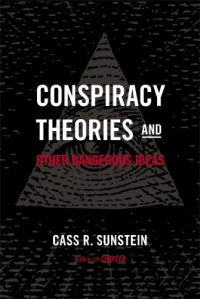 A Review of Conspiracy Theories and Other Dangerous Ideas by Cass Sunstein (based on an earlier paper co-authored with Adrian Vermeule); In Defense of Troublemakers: The Power of Dissent in Life and Business by Charlan Nemeth; and Conspiracy Theories and the People Who Believe Them, edited by Joseph E. Uscinski
On January 25 2018 YouTube unleashed the latest salvo in the war on conspiracy theories, saying “we’ll begin reducing recommendations of borderline content and content that could misinform users in harmful ways—such as videos promoting a phony miracle cure for a serious illness, claiming the earth is flat, or making blatantly false claims about historic events like 9/11.”
At first glance that sounds reasonable. Nobody wants YouTube or anyone else to recommend bad information. And almost everyone agrees that phony miracle cures, flat earthism, and blatantly false claims about 9/11 and other historical events are undesirable.
But if we stop and seriously consider those words, we notice a couple of problems. First, the word “recommend” is not just misleading but mendacious. YouTube obviously doesn’t really recommend anything. When it says it does, it is lying. … continue
Blog Roll
 Aletho News
- BRITAIN’S WARNING: PREPARE FOR WAR
- “Historic Russia”: The Land Putin Will Not Give Back
- How the Cambridge Analytica scandal still haunts Mark Zuckerberg
- The Ongoing Cancellation Campaign Against a Dissenting Academic in Norway
- Yemen and ‘the Houthis’: Challenging Sami Hamdi’s Narrative
- No, Christians did not invent Zionism
- AIPAC-led lobbying network opens branches in Cypriot, Greek parliaments
- Araghchi blasts ‘parasitic’ alliance as US taxpayers pay for Israel’s war on Iran
- Easy fix for Europe’s chaos? Stop fueling war against Russia
- Putin’s key remarks on peace talks and Europe’s ‘schizophrenia’
- If Americans Knew
- An error has occurred; the feed is probably down. Try again later.
- No Tricks Zone
- Two New Studies Find Thwaites Glacier Melt Cannot Be Driven By Human Activity Or A Warming Ocean
- E-Cars Reduce CO2 Emissions By Only 41% Compared To Internal Combustion Engine Vehicles
- Predictions Made By Renowned Climate Professor Over Past Decades Have Been Proven To Be Poor
- New Study Suggests Large Regions Of The Pacific Ocean Have Been Cooling For The Last 80 Years
- Germany’s Green Energy Debacle: High Energy Costs Force Kahla Porzellan to Close After 182 Years!
- New Study: 50 Years Of The Most Aggressive ‘Net Zero’ Policies Can Only Affect The Global Climate By 0.03°C
- US September “Heat” Was No Record…Many Records Set Decades Ago
- Latest European Green Energy Debacle; Portugal’s Largest Flagship Solar Park Insolvent!
- Green Energy Debacle: German Expert Professor Fritz Vahrenholt Warns Of Severe Economic And Social Consequences
- Two More Paleo Reconstructions Affirm Meters-Higher Sea Levels Across Ireland, Brazil 7000-6000 Years Ago

