Kremlin responds to Zelensky’s energy ceasefire proposal
RT | December 10, 2025
Russia is seeking a durable, legally binding peace agreement with Ukraine rather than a limited ceasefire, Kremlin spokesman Dmitry Peskov said on Wednesday. His remarks came after Ukraine’s Vladimir Zelensky proposed a moratorium on energy strikes as the country faces worsening power outages.
Speaking to reporters on Wednesday, Peskov weighed in on Zelensky’s signal that Kiev was prepared to discuss a halt to energy-related attacks, which he said “is important for the people.”
According to Peskov, Russia remains focused on reaching a legally binding settlement rather than a temporary pause. “I’ll leave out some nuances, but we are working on peace, not on a ceasefire. A stable, guaranteed, long-term peace, achieved through the signing of appropriate documents, is an absolute priority,” the spokesman stressed.
In March, Russia and Ukraine agreed to a 30-day energy infrastructure ceasefire, which was reached after a phone call between President Vladimir Putin and his US counterpart, Donald Trump. Russian officials, however, accused Ukraine of constantly violating the truce, including by targeting oil refineries and other energy facilities. Moscow said at the time that it had opted not to retaliate as a goodwill gesture toward the US and its mediation efforts.
Zelensky’s latest proposal comes as Russia has targeted Ukraine’s military and energy infrastructure in recent weeks, prompting officials in Kiev to impose rolling blackouts.
Moscow has said the strikes are in response to Ukrainian “terrorist acts” deep into Russia, targeting critical infrastructure and residential areas. Russia maintains that its forces never target civilians and strike only military-related facilities.
Washington’s ‘Waiver On, Waiver Off’ Game at Chabahar
By Salman Rafi Sheikh – New Eastern Outlook – December 9, 2025
In recent months, Washington has swung from revoking to restoring India’s sanctions waiver for operating Iran’s Chabahar port. The ‘waiver on, waiver off’ routine, however, comes with a clear strategic intent.
The move is not just leverage over New Delhi as trade talks loom; it’s also a signal to Central Asian states that their economic futures — including access to Chabahar — depend on aligning their foreign policies with US preferences.
In September 2025, the United States pulled the rug out from under one of India’s most carefully nurtured strategic ventures: the Chabahar Port in Iran. Long viewed by New Delhi as a critical gateway to Afghanistan and Central Asia, Chabahar suddenly became a high-stakes chess piece in Washington’s policy game. On September 16, the US Department of State announced it would revoke the special exemption granted in 2018 under the Iran Freedom and Counter-Proliferation Act (IFCA), with the revocation taking effect September 29. Overnight, Indian companies, shippers, insurers, and banks involved in the port’s operations were cast into uncertainty: their assets could be frozen, their access to the US financial system curtailed, and their commercial contracts imperilled.
This move did not occur in isolation. At the same time, New Delhi was itself involved in a high-stakes game with the US over bilateral trade. Specifically, it is resisting US pressure to halt oil imports from Russia. By targeting Chabahar, Washington signaled that it was willing to leverage unrelated strategic projects to enforce compliance elsewhere, effectively turning Indian economic and geopolitical interests into bargaining chips. Yet the situation shifted quickly: reports emerged on October 28 that Indian firms had halted Russian oil imports, and the very next day, the US issued a fresh six-month waiver, allowing Chabahar operations to continue without immediate penalty.
The rapid “waiver on, waiver off” cycle exposes the transactional and unpredictable logic of US sanction policy. A project that represents over $120 million in Indian investment, long-term regional connectivity, and painstaking diplomacy is reduced to a geopolitical pawn, its fate dictated less by commercial or developmental imperatives and more by Washington’s strategic calculus. This particular calculus, however, is not meant for India only. The politics of granting and restricting waivers is also tied very closely to Washington’s relationship with Central Asia.
The Central Asian gamble
Chabahar port is important not only for India but also for the landlocked states of Central Asia, offering a rare direct link to the Indian Ocean and a potential route to India that bypasses Pakistan. Several Central Asian states have expressed interest in using Chabahar Port for this purpose. Tajikistan has emerged as the most active player, signing a formal cooperation agreement with Iran in early 2025 and committing to developing a logistics hub with terminals and storage facilities. Uzbekistan has held discussions about utilising the port for trade and storage. While a lot of this is still far from being fully operational, there is little denying that a major roadblock has been the US sanctions.
In the same vein, the waiver also signals to Afghanistan, where India has recently become very active. The Taliban regime is currently involved in a border standoff with Pakistan. Kabul has suspended its trade with Pakistan, and the reopening of this route remains highly uncertain. At the same time, Washington has been pressuring the Taliban to come to terms with handing over the Bagram airbase to the US military for its potential operations against China. In this context, if Afghanistan wants to continue—and even expand—its trade with Central Asia and other countries beyond the region, i.e., with India itself, as an alternative to Pakistan, its best route goes through the Chabahar Port.
Beyond this, the US decision to grant the waiver—and unless it restricts it again in the future—also puts it in a position where it can influence several other regional trade and connectivity projects, including the Trans‑Caspian and broader International North-South Transport Corridor (INSTC) projects. By granting or revoking waivers, the US is signalling that it can create opportunities and or introduce uncertainty for companies and governments contemplating investment or trade through corridors that touch Iran.
For example, Central Asian states considering cargo flows via Chabahar—or via the Caspian Sea to Azerbaijan and beyond—must now weigh the risk that US sanctions could suddenly be applied, making insurance, financing, or banking services problematic and/or unavailable. Even if the Trans‑Caspian route itself does not pass through Iran, the interconnected nature of regional logistics networks means that a disruption at Chabahar could ripple across supply chains, raising costs or forcing alternative routing through Russia, Turkey, or China.
In essence, the waiver policy acts as a geopolitical lever. Its application is meant to put pressure on countries and companies so that they align their foreign and trade policies with US preferences, discouraging full exploitation of alternatives like the Trans‑Caspian corridor that could reduce American influence. The US has, for some time, been trying to expand its geopolitical footprint in Central Asia. Its ability to strangulate or allow Chabahar helps it signal its continued relevance. On the whole, the uncertainty imposed by such sanctions creates a risk premium, slows governmental and private investment, and subtly nudges regional actors toward pathways that the US finds strategically acceptable, even if they are less efficient or commercially less viable.
Salman Rafi Sheikh, research analyst of international relations and Pakistan’s foreign and domestic affairs
Europe needs to heed the invitation in the U.S. National Security Strategy and return power to its nation states
By Ian Proud | Strategic Culture Foundation | December 9, 2025
The publication of America’s new National Security Strategy has sent many European commentators into a collective rage. It is perhaps not surprising that those who are most enraged are the same people in favour of maintaining the war in Ukraine. The cold truth is that European citizens want their nations to focus on their national interests. The European Commission would sooner drag them into a war.
Despite the uproar on X and other social media, the U.S. National Security Strategy says relatively little about Europe, precisely because it focuses on U.S. core national interests. And, indeed, that is the core point made about Europe; that in trying to create a unified geopolitical role, it has neglected the core interests of its Member States.
The Strategy expresses a desire to see Europe regain its self-confidence and reestablish strategic stability with Russia. That aspiration appears driven by a desire to maintain Europe as an open market for U.S. goods and investment, and also to avoid it continuing to be a chaotic continent that diverts U.S. resources from its main peer competitor, which is China. There is also an underlying though unstated sense of Europe and Russia maintaining a healthier relationship in part to resist Chinese domination of both.
Europe’s supposed decline is framed in the context of its reduction in economic stature from 25% of global GDP to 14% now. European economic growth has never fully recovered from the shock of the Global Financial Crisis. With the economic centre of gravity shifting to Asia, the continent is being left behind.
Pundits have taken most offence to the notion that Europe faces civilisational erasure, driven by: ‘European Union and other transnational bodies that undermine political liberty and sovereignty.., censorship of free speech and suppression of political opposition, cratering birthrates, and loss of national identities and self-confidence.’
Right at the heart of this critique is the idea that the current ‘trajectory of Europe’ which the U.S. wants to ‘cultivate resistance to’, is eroding national sovereignty and the value of the nations within Europe. The Strategy is shot through with bemusement that culturally rich and diverse Europeans nations, which are the well spring of America’s citizenry, are abandoning their interests in favour of an inchoate supranational identity that is simultaneously unattainable self-harming.
In the aftermath of World War II and centuries of conflict, the European project emerged as a way to allow for the peaceful coexistence of very different nations, linguistically, politically and historically. The adrenalin running through the veins of unprecedented levels of peace and stability until 2014 was the dismantling of economic social and cultural barrier nations, that did not erode their unique sense of self of any nation.
It may well be true that a U.S. security shield avoided the domination of Europe by a hostile Soviet Union until 1991, and for that we should be thankful. But the reason why European states learned to live in peace with each other after that period was largely because politics and security were largely left out of the conversation.
The reason European nations spent less on defence after the Soviet Union collapsed was not because their security was underwritten by American troops in Europe, but because they faced no external threat of invasion either in military terms of through unchecked migration.
The irony, of course, is that the factors that precipitated Europe’s contemporary decline, the ever greater weight and importance given to undemocratic transnational groupings such as NATO – were U.S. led. Impetus from the U.S. to keep expanding NATO gradually reintroduced very real risk to Europe as Russia felt increasingly left out in the cold and threatened. Needing to justify a role for itself, the European Institutions have grabbed ever more competence from Member States to resist so-called Russian aggression.
Once and for all, at least it is hoped, the Strategy attempts to kill ‘the perception… of NATO as a perpetually expanding alliance’. That is being interpreted by the usual pro-war commentators as a sop to Russia. In fact, it is an invitation to European nations to refocus on their national interests, for the benefit of the European continent as a whole.
Without digging over again the history of NATO expansion, the key point is that neither NATO nor the institutions of Europe are states. They have no core interests beyond the bureaucratic need to exist, grow and accrete ever greater powers. You will never see the European Commission or NATO advancing recommendations on how they might reduce in size or hand power back to their members.
At this time of unprecedented threat of a reemergence of continent-wide conflict in Europe, the Americans are simply suggesting that nation states start to wrest back control. Both NATO and the European Commission, in my opinion, have both undermined the national and inflamed the international, while contributing to the stagnation of Europe as an idea of community, rather than a confederation.
A core principle of the U.S. Strategy is to ‘seek good relations and peaceful commercial relations with the nations of the world without imposing on them democratic or other social change that differs widely from their traditions and histories’.
How Trump seeks to coexist with other nations of the world is exactly how European states sought to coexist peacefully with each other after World War II. The European Economic Community, as it was called for a while, didn‘t seek to erode the primacy of the nation state, focussing instead on the economic, social and cultural features to create the idea of common purpose, without the shackles of common identity.
Yet, the European Commission’s concept of expansion – which in any case Europe cannot afford – is rooted in a desire to homogenise states under a fictious notion of common European values, and to prioritise conformity over identity.
Any existing European Member that seeks to raise a hand is called out by the collective as a back-slider, a quisling and a Putin stooge, taking Hungary, as a prime example.
Yet, European nations that focussed first and foremost on their economic wellbeing and the maintenance and protection of their industrial bases would buy Russian gas because it made good economic sense to do so.
A Europe that focussed on the protection of its citizens would seek a negotiated end to the war in Ukraine as soon as possible, instead of rejecting every possibility of dialogue, and raising the spectre of a future war that would kill and displace millions of their citizens.
A Europe that focussed on good neighbourly relations would seek a way to live on good terms with Russia and for Russia and Ukraine to live on good terms with each other, however long it may take to recreate that balance.
And in my experience of engaging with the Russians, they reciprocate with friendship as vigorously as they do with hostility, so the possibility of peace is far less of a mirage than people would have you believe.
Of course, war with Ukraine is used as a reason for why this is neither possible nor desirable. But then, unfortunately, the arguments in favour of perpetual conflict with Russia become self-reinforcing, with both Europe and Russia arguing to their quite separate allies about who is to blame, and no one seeking reconciliation, through the cutting off of contact.
So the European Commission has increasingly sought to dominate continent-wide diplomacy and marshalled the tools of its willing legions of media talking heads who insist that nothing must change, that talking to Russia is tantamount to treason. The bellicose response to the U.S. National Security Strategy is proof of that. Moscow’s signalling of their alignment with its principles offered as further evidence that Trump is selling us out.
Yet, restoring strategic balance between Europe and Russia, which the U.S. strategy claims to want, requires restoring the primacy of the individual Member States of Europe over its institutions, and handing back control to capitals in how to govern their relations with Russia and other countries.
The European institutions have succeeded in defining Europe as something distinct from Russia, when in fact, Russia is a part of Europe. Calls by Defence Commissioner Kubilius to develop a common European geopolitical strategy, is merely another effort to grasp more competence from the nation states of Europe. These should be roundly rejected. The common foreign and security policy has been an abject failure and should be dismantled.
It is the institutions of Europe who are blocking the door of efforts to restore some normality in relations with Russia, most notably in the form of rabid Russophobes such as Kaja Kallas. She would happily take Europe to war from the comfort of a safe distance. I’d invite more European citizens to heed the invitation of the Americans to seek a way out with the implication that she, and other unelected war-mongers, are stripped of their powers.
Russia’s Return to Syria Changes Everything
TMJ News Network | December 8, 2025
A year after the fall of Bashar al-Assad and Abu Mohammad al-Jolani’s rise to power, Syria remains a politically volatile state. West Asian geopolitical analyst and Cradle columnist Sharmine Narwani joins TMJ News to reveal the power plays unfolding behind the scenes: Russia’s sudden return near the Golan, Israel expanding its reach in the south, Gulf and Turkish maneuvering, U.S. calculations, and the IMF positioning itself for influence. What does the future of Syria look like as foreign powers get involved?
Hundreds of Porsche cars immobilized in Russia
By Deng Xiaoci | Global Times | December 7, 2025
Hundreds of Porsche owners in Russia have reported that their cars had failed to start due to a widespread malfunction since November 28 with Russia’s largest Porsche dealer suggesting the possibility that the situation could be caused deliberately, while some German media outlets claimed that the issue emerged after the factory-installed alarm system was accidentally blocked via its satellite module.
Citing a statement by Porsche, Berliner Zeitung reported on December 6 that the malfunction was not caused by a design defect in the vehicles. Rather, the problems appear to be caused by the cars’ factory-installed security system. “In recent days, we have recorded an increase in customer inquiries. We assume that the cause does not lie in the design of the vehicles,” the company stated, the Berlin-based media reported.
Russia’s TASS News Agency reported on December 1 that the widespread starting failures were caused by a false activation of the factory-installed alarm system via the satellite module, Yulia Trushkova, Service Director at Russia’s largest automotive dealer group Rolf, told TASS.
The report said that the satellite connection as down across all models and engine types, meaning any vehicle can be immobilized.
“Similar situations also occur with Mercedes-Benz owners, but these are isolated cases — the cars do not turn into ‘bricks.’ Is the reason for such blockages known? Specialists are currently investigating this issue, and there is a possibility that it was done deliberately,” she concluded.
According to Daily Mail, the nationwide malfunction in Russia hit Porsche models, including prized Cayennes and Panameras, built since 2013, which are all equipped with the brand’s factory VTS satellite-security unit. The issue appeared to stem from the Vehicle Tracking System, or VTS, which is an onboard security module, it said.
Porsche VTS, a factory-installed option available on Porsche models, relies on satellites to track its location. It can send the owner alerts if there is any unauthorized movement. However, a system failure related to it may be shutting down the cars equipped with this technology, according to British Road & Track website.
Poland-based news site TVP World reported that some experts said the failures appear to be tied to the “blocking of the standard satellite alarm system”, which prevents engines from starting. It remains unclear whether the disruption stems from electronic-warfare interference or an issue with signals sent to the system, it added.
Porsche halted deliveries to Russia since 2022, but thousands of vehicles remain on the roads, per the report.
Ongoing geopolitical tensions between Germany and Russia have further fueled speculation surrounding the incident, Berlin-based WorkVision Media pointed out.
Cybersecurity Insiders, an online community for information security professionals, stated that the situation has raised serious concerns among the automotive community and cybersecurity experts, as hackers increasingly target critical infrastructure in new ways. By compromising vehicle immobilizers – systems linked to both tracking and security alarms – attackers can cause severe disruptions.
While the immediate impact appears limited to immobilizing or disabling of cars, the broader implications could involve the potential for safety hazards, including accidents caused by unauthorized control or remote manipulation of vehicles, the website warned.
Xiang Ligang, a veteran Chinese technology analyst, told the Global Times on Sunday that the situation clearly shows that a security loophole in Porsche’s design allowed this to happen, and it raised alarm for the whole automobile industry.
According to Xiang, intelligent-vehicle systems inevitably rely on data management and remote-control functions — technical challenges that all carmakers must confront. The situation unfolding in Russia, however, is a stark reminder of how vulnerable these systems can be.
He added that escalating geopolitical tensions and in fact de-coupling between the Russia and Germany make it increasingly difficult to meet security requirements in areas such as operating-system authentication, data verification, and cross-border data management. Under such conditions, even partners that are meant to cooperate on security matters must prioritize localized and compliant management of data and servers, he said.
Amendments in US’s New Security Doctrine Largely Align With Russia’s Vision – Kremlin
Sputnik – 07.12.2025
The adjustments made to the new US National Security Strategy are largely consistent with Moscow’s vision, Kremlin spokesman Dmitry Peskov said on Sunday.
“The adjustments that we are seeing, I would say, are largely consistent with our vision,” Peskov told Russian journalist Pavel Zarubin.
On Friday, the White House published a new US national security doctrine that calls on Europe to take responsibility for its own defense. The document also suggests that the White House disagrees with European officials on their stance regarding the conflict in Ukraine.
Responsibility for the possible seizure of Russian assets will be shared by individuals and entire countries, Kremlin spokesman Dmitry Peskov also said.
“Listen, we will have both national responsibility and personal responsibility, personal and legal responsibility for these actions,” Peskov told Russian journalist Pavel Zarubin.
Peskov also recalled that the International Monetary Fund (IMF) opposed the seizure of Russian assets and urges caution to avoid negative repercussions on the international financial system.
“We hear that the International Monetary Fund has issued a statement addressing this issue with great caution and calling for such measures to avoid any negative impact on the international financial system. That is, even the IMF [opposes], and what is the IMF? It is what they created, it is the foundation of monetary policy in the monetary world. So it turns out that this foundation is now turning against its progenitors, saying ‘Come to your senses,’” he said.
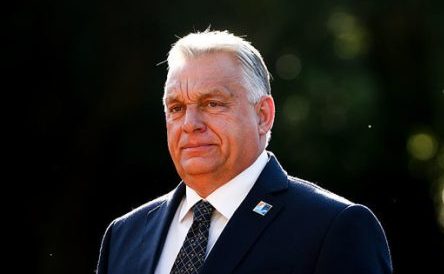
EU planning for war with Russia by 2030 – Orban
RT | December 7, 2025
Hungarian Prime Minister Viktor Orban has claimed that the European Union is preparing for war with Russia and plans to be fully ready by 2030. Speaking at an anti-war rally on Saturday, Orban said that Europe was already making moves toward a direct military confrontation.
He described a four-step process that typically leads to war: breaking off diplomatic relations, imposing sanctions, ending economic cooperation, and finally engaging in armed conflict. He said that most of these steps have already been taken.
“There is the official European Union position that by 2030 it must be ready for war,” he stated.
He also said that European countries are moving toward a “war economy.” According to Orban, some EU member states are already shifting their transport and industrial sectors to support weapons production.
The prime minister emphasized Budapest’s opposition to war. “Hungary’s task at the same time is to keep Europe from going to war,” he said.
Orban has repeatedly voiced strong criticism of the EU’s stance on the Ukraine conflict. Hungary has consistently opposed sanctions on Russia, as well as military aid to Kiev and called for peace negotiations instead of escalation.
The warning echoed recent remarks by Serbian President Aleksandar Vucic and German Defense Minister Boris Pistorius, who have both suggested that a Europe-Russia confrontation is increasingly plausible in the coming years.
Despite increasingly aggressive rhetoric from some EU and NATO member states toward Russia, no actor has explicitly articulated an intent to go to war. Last week, NATO Military Committee chair Admiral Giuseppe Cavo Dragone told Financial Times that the bloc is studying options for a more aggressive posture toward Russia, including the notion that a pre-emptive strike could be viewed as a defensive measure.
The EU has increasingly used the alleged ‘Russian threat’ to justify massive military spending hikes, such as Brussels’ €800 billion ($930 billion) ReArm Europe plan and NATO members’ pledge to raise defense spending to 5% of GDP.
Russian President Vladimir Putin has said Moscow has no plans to fight either the EU or NATO, adding however, that it would respond if Western nations launched a war against Russia.
Putin’s India Visit Signals Folly of Western Pressure – Academic
Sputnik – 06.12.2025
Russian President Vladimir Putin’s visit to India may have sealed dozens of strategic partnerships, but its core purpose transcends trade: Moscow is using its Soviet-era ally to send a defiant message to the West that it will not be isolated over the conflict in Ukraine, US academic Ramesh Mohan says.
Putin left New Delhi on Friday after witnessing with Indian Prime Minister Narendra Modi the signing of over a dozen bilateral agreements on technology, agriculture, tourism and defense cooperation. The subject of Ukraine or the increasingly bellicose US and EU sanctions against Russian oil weren’t in any of the signed documents.
Yet, those in the room — or thousands of miles away in any of the Western capitals that had been plotting their next move against the Kremlin — could not have missed the true significance of Putin’s two-day visit, said Mohan.
“The core message here is that Russia still maintains strong global alliances despite the multitude of Western sanctions and attempts to isolate Moscow over the war in Ukraine,” Mohan, an economics professor at Bryant University in Smithfield, Rhode Island, told Sputnik.
Mohan, who also teaches about economics in international politics and regularly leads Bryant University study missions to Asia, said Modi was also sending a message to the world that US pressure will not dictate India’s policy.
“Modi is showing the West that India will not be cowed into abandoning its own national and strategic interests,” said Mohan. “The Russia-India alliance, particularly, is a long-standing, privileged partnership rooted in the Soviet era. I don’t ever see India forsaking that.”
The last time Putin met Modi was in the presence of Chinese President Xi Jinping when they attended the Shanghai Cooperation Organization (SCO) Summit in the Chinese port city of Tianjin in September.
The visual display of camaraderie between the three leaders had sent a message to the world even then that the so-called Global South solidarity could not be broken in the face of Western pressure, said Mohan.
Trump files for divorce from NATO over Ukraine
By Larry Johnson | RT | December 6, 2025
It is one thing to produce a written national security strategy, but the real test is whether or not US President Donald Trump is serious about implementing it. The key takeaways are the rhetorical deescalation with China and putting the onus on Europe to keep Ukraine alive.
The 2025 National Security Strategy (NSS) of the US, released by the White House on December 4, 2025, marks a potentially profound shift in US foreign policy under Trump’s second administration compared to his first term as president. This 33-page document explicitly embraces an ‘America First’ doctrine, rejecting global hegemony and ideological crusades in favor of pragmatic, transactional realism focused on protecting core national interests: Homeland security, economic prosperity, and regional dominance in the Western Hemisphere.
It critiques past US overreach as a failure that weakened America, positioning Trump’s approach as a “necessary correction” to usher in a “new golden age.” The strategy prioritizes reindustrialization (aiming to grow the US economy from $30 trillion to $40 trillion by the 2030s), border security, and dealmaking over multilateralism or democracy promotion. It accepts a multipolar world, downgrading China from a “pacing threat” to an “economic competitor,” and calling for selective engagement with adversaries. However, Trump’s actions during the first 11 months of his presidency have been inconsistent with, even contradictory of, the written strategy.
The document is unapologetically partisan, crediting Trump personally for brokering peace in eight conflicts (including the India-Pakistan ceasefire, the Gaza hostage return, the Rwanda-DRC agreement) and securing a verbal commitment at the 2025 Hague Summit for NATO members to boost their defense spending to 5% of GDP. It elevates immigration as a top security threat, advocating lethal force against cartels if needed, and dismisses climate change and ‘net zero’ policies as harmful to US interests.
The document organizes US strategy around three pillars: Homeland defense, the Western Hemisphere, and economic renewal. Secondary focuses include selective partnerships in Asia, Europe, the Middle East, and Africa.
Here are the major rhetorical shifts in strategy compared to the previous strategies released during the respective presidencies of Trump (2017) and Biden (2022):
- From global cop to regional hegemon: Unlike Biden’s 2022 NSS (which emphasized alliances and great-power competition) or Trump’s 2017 version (which named China and Russia as revisionists), this document ends America’s “forever burdens” abroad. It prioritizes the Americas over Eurasia, framing Europe and the Middle East as deprioritized theaters.
- Ideological retreat: Democracy promotion is explicitly abandoned – “we seek peaceful commercial relations without imposing democratic change” (tell that to the Venezuelans). Authoritarians are not judged, and the EU is called “anti-democratic.”
- Confrontational ally relations: Europe faces scathing criticism for migration, free speech curbs, and risks of “civilizational erasure” (e.g., demographic shifts making nations “unrecognizable in 20 years”). The US vows to support the “patriotic” European parties resisting this, drawing Kremlin-like rhetoric accusations from EU leaders.
- China policy: Acknowledges failed engagement; seeks “mutually advantageous” ties but with deterrence (e.g., Taiwan as a priority). No full decoupling, but restrictions on tech/dependencies.
- Multipolar acceptance: Invites regional powers to manage their spheres (e.g., Japan in East Asia, Arab-Israeli bloc in the Gulf), signaling US restraint to avoid direct confrontations.
The NSS represents a seismic shift in America’s approach to NATO, emphasizing “burden-shifting” over unconditional alliance leadership. It frames NATO not as a values-based community but as a transactional partnership in which US commitments – troops, funding, and nuclear guarantees – are tied to European allies meeting steep new demands. This America First recalibration prioritizes US resources for the Indo-Pacific and Western Hemisphere, de-escalating in Europe to avoid “forever burdens.” Key changes include halting NATO expansion, demanding 5% GDP defense spending by 2035, and restoring “strategic stability” with Russia via a Ukraine ceasefire. While the US reaffirms Article 5 and its nuclear umbrella, it signals potential partial withdrawals by 2027 if Europe fails to step up, risking alliance cohesion amid demographic and ideological critiques of Europe. When Russia completes the defeat of Ukraine, the continued existence of NATO will be a genuine concern.
The strategy credits Trump’s diplomacy for NATO’s 5% pledge at the 2025 Hague Summit but warns of “civilizational erasure” in Europe due to migration and low birth rates, speculating that some members could become “majority non-European” within decades, potentially eroding their alignment with US interests.
Trump’s NSS signals a dramatic change in US policy toward the Ukraine conflict by essentially dumping the responsibility for keeping Ukraine afloat on the Europeans. The portion of the NSS dealing with Ukraine is delusional with regard to the military capabilities of the European states:
We want Europe to remain European, to regain its civilizational self-confidence, and to abandon its failed focus on regulatory suffocation… This lack of self-confidence is most evident in Europe’s relationship with Russia. European allies enjoy a significant hard power advantage over Russia by almost every measure, save nuclear weapons.
As a result of Russia’s war in Ukraine, European relations with Russia are now deeply attenuated, and many Europeans regard Russia as an existential threat. Managing European relations with Russia will require significant US diplomatic engagement, both to reestablish conditions of strategic stability across the Eurasian landmass, and to mitigate the risk of conflict between Russia and European states.
It is a core interest of the United States to negotiate an expeditious cessation of hostilities in Ukraine, in order to stabilize European economies, prevent unintended escalation or expansion of the war, and reestablish strategic stability with Russia, as well as to enable the post-hostilities reconstruction of Ukraine to enable its survival as a viable state.
The Ukraine War has had the perverse effect of increasing Europe’s, especially Germany’s, external dependencies. Today, German chemical companies are building some of the world’s largest processing plants in China, using Russian gas that they cannot obtain at home. The Trump Administration finds itself at odds with European officials who hold unrealistic expectations for the war perched in unstable minority governments, many of which trample on basic principles of democracy to suppress opposition. A large European majority wants peace, yet that desire is not translated into policy, in large measure because of those governments’ subversion of democratic processes. This is strategically important to the United States precisely because European states cannot reform themselves if they are trapped in political crisis.
Not surprisingly, this section of Trump’s NSS has sparked a panicked outcry in Europe. European leaders, including former Swedish PM Carl Bildt, called it “to the right of the extreme right,” warning of alliance erosion. Analysts at the Center for Strategic and International Studies (CSIS) praise its pragmatism, but flag short-sightedness, predicting a “lonelier, weaker” US. China views reassurances on sovereignty positively, but remains wary of economic pressures. In the US, Democrats, such as Rep. Jason Crow, deem it “catastrophic” for alliances, i.e. NATO.
Overall, the strategy signals a US pivot inward, forcing NATO allies to self-fund security while risking fractured partnerships with Europe. It positions America as a wealthy hemispheric power in a multipolar order, betting on dealmaking and industrial revival to sustain global influence without overextension.
Larry Johnson is a political analyst and commentator, former CIA analyst and member of the US State Department’s Office for Counterterrorism.
Russian Scientists Develop New Polymer Material to Trap Lead Ions in Water
Sputnik – 03.12.2025
A new material that traps lead ions in wastewater and natural waterways has been created and tested by researchers at Russia’s Tyumen State University.
Developed as part of an international team, the material makes it faster and easier to remove the ecotoxicant from aquatic environments.
The results were published in Polymer Bulletin. The main sources of heavy-metal pollution in the environment include the mining, metallurgical, electroplating and steel industries.
When filtration systems at industrial facilities fail, large quantities of lead and other metal ions — toxic to bacteria, plants and mammals — can enter wastewater or natural waters, the university specialists explained.
Researchers from the State University of Tyumen, together with colleagues from Kazakhstan, Azerbaijan, India, China and Saudi Arabia, have developed and tested a material capable of “capturing” lead from water in reservoirs.
The material is based on humic acids extracted from coal.
“We obtained lead traps with specially designed pores that can hold exactly a lead ion,” said Gulnara Shigabaeva, head of the Department of Organic and Environmental Chemistry at the university.
“Tests of the absorption process showed that the new material works more efficiently than existing analogue,” she added, and “the lead can be easily removed from our sorbent.”
She explained that the sorbent selectively captures lead ions because it is engineered with a “memory” of their size and charge — a polymer-design technique known as molecular imprinting.
“In the humic-acid and acrylic-acid–based material, there are cavities — imprints of lead ions,” Shigabaeva said “Smaller particles, such as iron ions, simply pass through them, while larger particles cannot fit into the sorbent.”
The granulated sorbent can be placed directly into water and later filtered out after swelling and absorbing the lead ions.
Laboratory experiments showed that one gram of the sorbent can extract 50 milligrams of lead ions from water in one hour. In the future, the researchers plan to develop molecularly imprinted polymer sorbents for other ecotoxicants such as nickel, copper and zinc.
They also intend to assess the effectiveness of the new materials under real environmental conditions.
POLITICO’s Delusion Cracks: Belgium Isn’t Helping Russia — It’s Trying to Save Europe From Itself
By Gerry Nolan | The Islander | December 5, 2025
The great farce of late-imperial Europe is that every time Brussels stumbles into another historic blunder of its own making, it immediately searches for a foreign hand to blame. And so the EU’s court chronicler, Politico, delivers its latest fever dream: that Belgium, the most indecisive, over-medicated country in the bloc, has somehow transformed into “Russia’s most valuable asset.” In reality, the only asset Russia needed was the EU’s own arrogance.
Belgium merely did the unthinkable, it told the truth.
What Politico dresses up as geopolitical intrigue is actually a confession of EU derangement. The EU are trying to engineer the largest state-sanctioned theft of sovereign wealth in modern history, a direct raid on the Russian Central Bank’s reserves and expected applause, unity, and moral ecstasy. Instead, Belgium asked the only sane question left in Europe: “Are you all completely out of your minds?” For this, Politico paints De Wever as eccentric, impulsive, unstable, the same labels always deployed when someone refuses to bow to the imperial autopilot. But the deeper scandal is that Brussels expected him to sign off on detonating the post-war financial order for the sake of one more photo-op with Zelensky.
Politico can hide behind metaphors of summit dinners and langoustines, but the legal reality is brutal: raiding another nation’s central bank is not a policy disagreement. It is a declaration of financial war on the entire world. It would obliterate sovereign immunity, destroy the neutrality of reserve holdings, and instantly signal to the global South that their assets in EU banks are hostage to EU’s emotional spasms. One act, one reckless stroke of a pen, and the euro collapses as a safe currency, capital flees to Asia, and the West loses its last functional pillar of power. Belgium saw the cliff’s edge, Brussels mistook it for a (perverse) moral leap of faith.
Politico’s narrative stumbles further when it pretends the only danger lies in Moscow’s retaliation. It does not. Russia’s symmetric countermeasures are well-known, lawful, and devastating: nationalization of Western corporate assets, seizure of industrial infrastructure, liquidation of bond holdings, and the dismantling of Western financial footprints inside Russia. The value of Western assets exposed inside the Russian Federation rivals what sits in Euroclear. Brussels knows this. Euroclear knows this. Investors know this. Only the EU pretends the ledger is irrelevant. But the real threat is not Russia’s response , it is the irreversible collapse of trust in Western custodianship. Once the EU steals central bank reserves, no nation with self-respect will ever again store wealth in Europe. The theft of Russian reserves would be remembered not as an isolated act, but as the day the West proved it cannot be trusted with global money, let alone soverign assets.
This is the part Politico is terrified to articulate. Belgium wasn’t protecting Russia. Belgium is trying to protect the very system the EU purports to defend. Yet instead of portraying De Wever as the only adult in the room, Politico stages a melodrama about a Flemish nationalist gone rogue, supposedly spoiling the EU’s grandiose plan to hurl another €140 billion onto the Ukrainian funeral pyre. The reality is simpler, Belgium refused to mortgage its own future so Europe could continue its cosplay as a geopolitical superpower utterly detached from material reality. The EU elite wanted to play empire with someone else’s risk. Belgium refused to be the guarantor of their delusion.
What makes Politico’s narrative even more absurd is that it accidentally reveals the deeper rot, Europe’s elite caste are incapable of unity, incapable of strategic thought, incapable of honesty. Merz shoots from the hip. Von der Leyen improvises legal fantasies. Orbán holds a veto the size of a continental fault line. Trump instinctively knows he needs an offramp via peace talks and is happy to download project Ukraine’s corpse along with the humiliation onto Western Europe. Zelensky arrives in Brussels begging for cash while European governments fight over whether the money should be spent on their own weapons factories. This is not a union. This is a collective suicide pact.
And through all this chaos, Politico clings to the illusion that Russia must somehow be “laughing.” But Russia isn’t laughing. Russia is watching. Watching as Europe destroys its own energy security, its own industrial base, its own strategic autonomy, its own diplomatic credibility, its own financial reputation, and finally — with this proposed asset raid — the very legal foundations of the Western economic system. If Moscow appears calm, it is because it doesn’t need to act. Europe is demolishing itself at a pace Russia could never have engineered.
Belgium’s “no” was not an act of betrayal. It was the last flicker of European rationality. The EU’s hysteria and psychosis, not Russia, created the crisis. Europe is trying to violate international law, sabotage its own financial institutions, and torch what remains of the bygone postwar order to salvage the illusion of a war it has already lost. Belgium simply refused to join the ritual suicide.
So let us rewrite Politico’s headline as history will record it: “How the EU Became Russia’s Greatest Strategic Gift.” Not because Russia manipulated Europe, but because Europe manipulated itself, into hysteria, into decay, into legal nihilism, into economic ruin. Belgium didn’t hand Russia an asset. It denied the EU the final act of self-destruction… for now.
The tragic irony of the entire Politico piece is that its authors still cling to the fantasy that Europe can recover simply by shaming Belgium into compliance. But history will not be kind to this moment. When future scholars study the collapse of the Western financial empire, this attempted seizure of Russian assets and Belgium’s lonely refusal, will stand as the point where the veil fell, revealing a Europe that could no longer distinguish faux moral posturing from strategic insanity.
Belgium didn’t break with Europe, it broke with Europe’s delusions. The EU convinced itself that tearing down the last pillars of the post-war order was an act of courage. Belgium saw it for what it was, a death rite dressed as morality. And when this era ends, when capitals move eastward, when trust evaporates, when the euro cracks under the weight of its own blind arrogance, historians will look back on this moment. They will not ask why Belgium said no. They will ask why Europe said yes.
Scott Ritter: New US National Security Strategy Marks Death Blow to NATO Expansion
Sputnik – December 5, 2025
The Trump administration’s new National Security Strategy has sent shockwaves across the globe, dropping ‘Russian threat’ language completely and crossing out the vision of NATO “as a perpetually expanding alliance.” Sputnik asked prolific geopolitical analyst Scott Ritter to break down the document and its implications.
The new US National Security Strategy is based on “the reality that Russia is not a threat to Europe or the United States, recognition that Russia has been artificially cast as such a threat now for decades, and [that] the consequences of this miscasting” have been an unmitigated “disaster for Europe and a threat to the national security of the United States,” the former Marine Corps intelligence officer told Sputnik.
The document signals that the White House has been “able to free itself… from the legacy of post-Cold War-era Russophobia” seeking to weaken and “strategically defeat” Russia, Ritter said.
“The Trump administration recognizes that this is an inherently destabilizing policy,” not to mention “extraordinarily dangerous,” since confrontation with Russia “ultimately means nuclear war,” the observer stressed.
In this new geopolitical calculus, Europe in its current trajectory is far more of a threat to itself, the US, and international peace and security than Russia, Ritter argues, reiterating that European Russia hawks’ policy is “incompatible” with US national security objectives.
No More NATO Expansion
The new NSS also “puts an end and drives a stake through the heart of the beast of Ukraine’s unrealistic expectations regarding NATO membership, and Europe’s equally unrealistic expectations that at some point in time, Ukraine could become a member of NATO,” Ritter says, commenting on the NSS’s prioritization of “ending” NATO’s status “as a perpetually expanding alliance.”
The document effectively signals “the end of the European enterprise” and the idea that Europe is a geopolitical equal of the US, and one able to “dictate” policy outcomes to Washington, Ritter says. “That’s over. The United States says no, you’re done. Moreover, we say the trajectory that you’re on is incompatible with the national security of the United States.”
Behind the scenes, things get even more interesting, Ritter believes, pointing to “whispers from people who are knowledgeable” about the intent behind the document to the effect that the US will not bail out Europe if it starts a war with Russia.
“This is an extraordinarily important document because it literally represents a divorce of decades of legacy policy that postured the United States and Russia as opponents who should be preparing to fight each other,” Ritter emphasized.
Beyond that, the NSS’s point on ‘no NATO expansion’ and lack of positioning Russia as a threat effectively means “there’s no legitimate reason for NATO to exist,” unless it can transform into a genuinely defensive alliance.
“NATO, as it currently exists, will no longer exist. If [it] is to continue to survive, it must re-identify itself as a defensive alliance focused on securing a reasonable and rational Europe, and not this alliance capable of standing toe-to-toe with Russia, expanding… ever eastward towards confrontation with Russia, and a NATO that embraces a strategy of the strategic defeat of Russia. That NATO is dead. That NATO will never be resurrected,” Ritter summed up.
Featured Video
“Historic Russia”: The Land Putin Will Not Give Back
or go to
Aletho News Archives – Video-Images
From the Archive
How Ukraine Tortured and Slaughtered Donbass
By Kit Klarenberg | Al Mayadeen | July 11, 2024
Almost immediately after the proxy war erupted, ISIS-tier footage of the torture and murder of Russians in Ukrainian custody emerged.
On July 6th, the New York Times published an astonishing investigation: In Ukraine, Killings of Surrendering Russians Divide an American-Led Unit. The article documents in grim detail how Chosen Company, an international volunteer battalion for Kiev, routinely executes Russian prisoners of war. It is the very first mainstream admission that this practice – a brazen breach of the Geneva Conventions, and a grave war crime – is widespread among Ukraine’s fighters, both foreign and homegrown. … continue
Blog Roll
 Aletho News
- Peace in Ukraine: the easy way – or the hard way
- Trump & the Rrrrussians
- US taxpayer money laundered back through Ukraine – Musk
- Before COVID, an NIH lab chief proposed making a SARS-like bat virus more infectious
- Gates, Bourla on Trial in Netherlands Accused of ‘Great Reset’ Scheme at Vaccine Injury Hearing
- BRITAIN’S WARNING: PREPARE FOR WAR
- “Historic Russia”: The Land Putin Will Not Give Back
- How the Cambridge Analytica scandal still haunts Mark Zuckerberg
- The Ongoing Cancellation Campaign Against a Dissenting Academic in Norway
- Yemen and ‘the Houthis’: Challenging Sami Hamdi’s Narrative
- If Americans Knew
- DAILY UPDATE: Latest essential news on Palestine, Israel, & region
- Damning report shows the media must confront its failures on Gaza
- BBC senior broadcaster speaks out on Gaza coverage
- Netanyahu vows vast West Bank invasion in response to 20-minute skirmish that left 2 Israeli soldiers and 2 Palestinian fighters dead
- Tied up and tortured: Israel using US-made electroshock weapons on Palestinian detainees
- The outsourced risk: how newsrooms rely on Gaza’s freelancers without protecting them
- Gaza bakeries forced to shut as Israel blocks flour shipments
- Gaza’s breast cancer patients face a deadly wait for treatment amid Israel’s genocide
- DAILY UPDATE: Latest essential news on Palestine, Israel, & region
- The Israel Lobby’s Changing Fortunes
- No Tricks Zone
- Two New Studies Find Thwaites Glacier Melt Cannot Be Driven By Human Activity Or A Warming Ocean
- E-Cars Reduce CO2 Emissions By Only 41% Compared To Internal Combustion Engine Vehicles
- Predictions Made By Renowned Climate Professor Over Past Decades Have Been Proven To Be Poor
- New Study Suggests Large Regions Of The Pacific Ocean Have Been Cooling For The Last 80 Years
- Germany’s Green Energy Debacle: High Energy Costs Force Kahla Porzellan to Close After 182 Years!
- New Study: 50 Years Of The Most Aggressive ‘Net Zero’ Policies Can Only Affect The Global Climate By 0.03°C
- US September “Heat” Was No Record…Many Records Set Decades Ago
- Latest European Green Energy Debacle; Portugal’s Largest Flagship Solar Park Insolvent!
- Green Energy Debacle: German Expert Professor Fritz Vahrenholt Warns Of Severe Economic And Social Consequences
- Two More Paleo Reconstructions Affirm Meters-Higher Sea Levels Across Ireland, Brazil 7000-6000 Years Ago

