The missing ‘If’ that could get us killed: How Western media distorted Putin’s words about war with Europe
The message was rather simple: Russia is ready to respond to aggression. But you wouldn’t know it if you read the headlines
By Timur Tarkhanov | RT | December 4, 2025
A depressing pattern has taken hold in the way parts of the Western press cover Russia: take a volatile subject, strip it of the conditional language that contains it, and then act surprised when the public grows more fearful, more hardline, and less able to distinguish deterrent rhetoric from an intent to attack.
The latest example is the frenzy around Vladimir Putin’s remark about Europe and war. In Russian, his meaning is not subtle: “We are not going to fight Europe, I’ve said it a hundred times already. But if Europe suddenly wants to fight and starts, we are ready right now.” A refusal paired with a threat of readiness if attacked. Many headlines flattened that into “Russia is ready for war with Europe.”
In news reporting, headlines aren’t neutral labels. They are the main event. They set the emotional temperature for millions who will never read beyond the first line, especially on mobile feeds where nuance is a luxury and outrage is a business model. So when a headline drops the words “we are not going to” and discards “if Europe starts,” it’s not just a shortening – it reverses the reader’s perception. The public walks away believing Putin signaled readiness to launch a war against Europe, not readiness in response to one. In a moment when misperception can harden policy and policy can harden into escalation, that is reckless.
Worse, this kind of framing does real political work. It amplifies the narrative long championed by certain European officials – that Russia is poised to attack the EU next, regardless of evidence. If you swallow the headline alone, those officials sound validated. If you read the quote, at minimum you have to admit the claim is not what was said. Maybe you’ll even start asking questions. That difference is the hinge between journalism and propaganda.
This pattern didn’t start this week. Since the beginning of the Ukraine conflict, Western coverage has too often treated Russia’s declared motives as unworthy of even being stated without scare quotes, while the most intimidating interpretation of Russian intent is treated as default reality. “Imperial ambition.” “War of conquest.” “Russia wants to reconstitute an empire.” The public is denied the basic reporting function of hearing why Russia is doing what it’s doing. Instead we get a morality play with prewritten roles: one side’s motives are analyzed in paragraphs; the other’s are assumed in headlines.
The same sloppiness shows up in claims that Putin “stalled” peace talks. Negotiations are not a TikTok trend; they are an exhausting grind of sequencing, verification, backchannels, domestic politics, and face-saving. Many major conflicts have required long, ugly diplomatic marathons before anything moved. The Vietnam peace talks, for example, dragged on for years. To declare “stalling” because a meeting ended without a breakthrough is to confuse diplomacy with customer service: “Where is my peace deal? I ordered it an hour ago.”
And if we’re going to talk about “stalling,” we should at least look honestly at which actors have been most allergic to acknowledging battlefield realities. The Russia-US channel – whatever one thinks of it – is the only vector that has shown any capacity to force trade-offs into the open, because it involves the parties with the leverage to make and enforce them. By contrast, the EU and the UK’s public posture has often resembled a maximalist wish list: demands unmoored from the war’s trajectory, presented as prerequisites rather than negotiating positions. It has hardened expectations so thoroughly that any compromise looks like betrayal, and any diplomacy looks like surrender. That is the worst kind of stalling – not merely delaying talks, but by making talks politically impossible.
It didn’t have to be like this, and it isn’t universal. Some outlets have demonstrated that integrity is still possible: they lead with the full quote and include the conditional. They are at least honest with the readers about what was said and what was implied, allowing them to distinguish threat from intent. Far from being “soft on Putin”, this is basic journalistic competence. In a climate where fear sells and escalation eats, and the Doomsday Clock is at 89 seconds to midnight, faithful quotation is a mandatory public safety measure.
Timur Tarkhanov is a journalist and media executive.
European leaders welcome in Moscow for talks – Kremlin
RT | December 3, 2025
Russia is open to resuming dialogue with European nations, presidential aide Yury Ushakov told journalists on Wednesday. Western European leaders are the ones who have shunned contact, not Moscow, he added.
“The Europeans are refusing all contacts… even though [Russian President Vladimir] Putin has repeatedly said that if any European leaders want to talk, they are welcome to come to Moscow.”
“For our part, we have nothing against resuming contacts,” Ushakov told a news briefing.
The EU and the UK have taken a hardline stance on the Ukraine conflict and have virtually severed all contacts with Moscow since the escalation of hostilities in February 2022.
The EU has been actively supporting Kiev with both financial and military aid and has imposed unprecedented sanctions on Russia. The bloc has also been seeking to seize Russian sovereign assets frozen at the Euroclear clearing house in Belgium to fund Ukraine. Moscow has warned that it would regard any such move as outright “theft.”
The bloc has de facto rejected a Ukraine peace plan presented by the administration of US President Donald Trump last month, and has put forward its own set of conditions, which Moscow dismissed as “unconstructive.”
On Tuesday, Putin said the EU is still living under the illusion that it can inflict a “strategic defeat” upon Russia through the Ukraine conflict. He stated that the concept was unrealistic from the very beginning, but Brussels cannot bring itself to admit that it has been wrong all along.
The bloc “does not have a peaceful agenda. They are on the side of war,” Putin told journalists on the sidelines of the ‘Russia Calling!” business forum.
No security guarantees for Ukraine – Finnish PM
RT | December 3, 2025
Finland will not offer Ukraine NATO-style security guarantees, Prime Minister Petteri Orpo has declared.
Kiev has been seeking formal security assurances from Western backers and insists they should come before any peace agreement with Moscow. Some media reports claimed that last month’s US peace roadmap included a NATO-style guarantee for Kiev modeled on Article 5, committing guarantor states to defend Ukraine in case of a potential attack, and listed Finland as one of the potential guarantors.
Asked about this at a joint press conference with Swedish Prime Minister Ulf Kristersson on Tuesday, Orpo said he had neither seen the plan nor been consulted on it.
“I don’t know why Finland was mentioned in the paper,” he told the media. “We have to understand that a security guarantee is something very, very serious. We’re not ready to give security guarantees, but we can help with security arrangements. The difference between them is huge.”
Orpo stressed that helping Kiev with security differs fundamentally from mutual defense obligations referenced in the leaked US plan. He suggested major powers such as the US or larger European states should commit to guarantees, while Finland’s role would be limited to logistical and organizational support.
Sweden, while not mentioned as a potential guarantor in the leaked draft, believes European support should focus on helping Ukraine maintain a capable military as Kiev’s “most important security guarantee”, according to Kristersson.
The Wall Street Journal reported this week that security guarantees remain unresolved after the latest talks between Kiev and Washington in Florida. Moscow has said it does not oppose security guarantees for Ukraine in principle but insists they must not be one-sided or aimed at containing Russia, and should follow a peace deal rather than precede one. Russia confirmed receiving the “main parameters” of the US roadmap last week but has not commented on details or whether guarantees are included.
Trump’s envoy, Steve Witkoff, visited Moscow on Tuesday for further talks on the peace plan. According to President Vladimir Putin’s aide Yury Ushakov, the discussions were constructive and Moscow agreed with some American proposals, but deemed others unacceptable, and “no compromises have been found as of yet.”
Europe is driving the continent toward war: Putin
Al Mayadeen | December 2, 2025
Russian President Vladimir Putin accused European leaders of steering the continent toward confrontation, saying Moscow has repeatedly tried to avoid escalation while European governments continue to inflame the situation.
Speaking to journalists on Tuesday, Putin said that Russia is not the party seeking a clash. “We don’t intend to go to war with Europe, I’ve said this a hundred times, but if Europe suddenly wants to fight us and does, we are ready right now. There can be no doubt about that,” he said, placing responsibility for rising tensions squarely on the West.
Russia reports encirclement of Ukrainian forces as European states expand military involvement
Putin said Russian troops have locked a sizeable Ukrainian contingent in a difficult position near Kupyansk, describing the frontline situation as the result of relentless Western pressure on Kiev to continue a war it cannot win. “Let me remind you that, on the left bank of the river [in the town of Kupyansk], an enemy group numbering 15 battalions is trapped. And Russian troops have begun eliminating it,” he noted.
He said ongoing battles in Kupyansk-Uzlovoy are moving in Russia’s favor and predicted that the settlement will soon be fully brought under Moscow’s control. According to Putin, Russian units control both banks of the broader Kupyansk area and hold hundreds of buildings in the settlement.
These battlefield developments come as European governments accelerate weapons deliveries and publicly reject discussions of compromise. Russian officials argue that the political leadership in the EU, rather than Kiev, is pushing this phase of the war, ignoring humanitarian costs and attempting to prolong hostilities for geopolitical purposes.
Black Sea tensions rise as Moscow calls Ukrainian strikes ‘piracy’
Putin sharply criticized recent Ukrainian attacks on tankers in the Black Sea, attacks that Russian officials say are carried out with Western backing. The president said these operations took place in another country’s exclusive economic zone, calling the strikes a criminal act. “I know that this happened. Attacks on tankers in neutral or even non-neutral waters. But in a special economic zone of another state, a third state, this is piracy. Nothing else,” he said.
He also signaled that Russia would respond not just to Ukraine, but potentially to vessels belonging to countries that enable Kiev’s maritime operations. “The most radical way is to cut off Ukraine from the sea. Then it will be genuinely impossible for it to engage in piracy,” he said, suggesting that Russia may take stronger measures to secure the region if European powers continue encouraging naval escalation.
Moscow to widen its target set as Ukraine intensifies attacks on ports
Putin said Russian forces will now strike a broader list of port infrastructure and shipping linked to Ukrainian operations. “We will expand the range of our strikes against port facilities and ships that enter Ukrainian ports,” he said, arguing that Kiev, supported by European governments, has repeatedly attempted attacks on Russian seaports and supply routes.
Russian officials say many of Ukraine’s naval strikes are coordinated with European advisers and intelligence services, and that Europe’s growing involvement has directly contributed to instability in the Black Sea.
Putin hopes that Russia’s response to piracy by the Ukrainian forces in the Black Sea will force Kiev to consider whether it is worth continuing such actions.
European leaders accused of sabotaging peace efforts while the US seeks dialogue
The president also pointed to Europe’s obstruction of diplomatic efforts, saying EU governments walked away from negotiations long before Moscow or Washington did. “They [the Europeans] are offended that they were allegedly excluded from the negotiations. But I want to point out that no one excluded them. They excluded themselves… They withdrew themselves from this process,” he said.
Putin argued that European governments cling to the idea of a “strategic defeat” for Russia, even as the facts on the ground shift. He said their behavior now threatens US attempts to revive dialogue under President Donald Trump. “Even when they try to make some changes to Trump’s proposals, these changes are aimed at only one thing: to block the entire peace process,” he warned.
According to Putin, Europe’s goal is to present Moscow as the obstacle to peace despite Europe being the one rejecting realistic terms. “Their goal is to then blame Russia for the curtailing of this peace process. We see this clearly,” he said.
Putin concluded that Europe could return to negotiations only when it abandons ideological hostility and starts recognizing the actual balance of forces on the battlefield.
Scott Ritter: War Has Been Won & Russia Faces a Dilemma
Glenn Diesen | December 2, 2025
Scott Ritter is a former Major, Intelligence Officer, US Marine, and UN Weapons Inspector. Ritter argues Russia has defeated NATO and Ukraine, and now faces a dilemma about what kind of peace it wants.
Follow Prof. Glenn Diesen:
Substack: https://glenndiesen.substack.com/
X/Twitter: https://x.com/Glenn_Diesen
Patreon: https://www.patreon.com/glenndiesen
Support the research by Prof. Glenn Diesen:
PayPal: https://www.paypal.com/paypalme/glenndiesen
Buy me a Coffee: buymeacoffee.com/gdieseng
Go Fund Me: https://gofund.me/09ea012f
Books by Prof. Glenn Diesen
Putin reveals new plans with China and India
RT | December 2, 2025
Moscow wants to further develop its economic ties with its key trade partners, China and India, President Vladimir Putin said at the ‘Russia Calling!’ investment forum on Tuesday.
Beijing and New Delhi have refused to join Western sanctions against Moscow over the Ukraine conflict and have instead boosted trade with Russia. The Russian leader hailed what he called a “rational and pragmatic” approach to cooperation taken by the two countries.
Putin paid tribute to “many years of friendship and strategic partnership” with both China and India, adding that the volume of trade with each has “significantly grown” over the past three years.
“We are aiming at taking cooperation with the People’s Republic of China and the Republic of India to a whole new level, including through enhancing its technological aspect,” Putin stated.
Russia and China nearly doubled their bilateral trade from 2020 to 2024, surpassing $240 billion last year. Last month, Russian Finance Minister Anton Siluanov said that the two nations had abandoned Western currencies in mutual settlements, with most payments now conducted in rubles and yuan.
Last month, Moscow and Beijing published a joint roadmap for further developing bilateral ties. They vowed to provide mutual assistance on issues ranging from agriculture, trade, ecology, and investment to AI and space exploration.
India’s exports to Russia are currently worth $5 billion, while imports from Russia amount to $64 billion. The countries are aiming to increase bilateral trade to $100 billion by 2030. Russia is also expanding joint production with India in many areas, both military and civilian.
Earlier on Tuesday, Kremlin spokesman Dmitry Peskov said that Moscow is also ready to share its technological knowledge with New Delhi. “Whatever can be shared with India, will be shared,” he said.
Putin is expected to discuss the joint production of Russia’s fifth generation Sukhoi Su-57 fighter jets with Indian Prime Minister Narendra Modi during his trip to India later this week.
Europe just made Russia’s case for Odessa
By Gerry Nolan | The Islander | November 30, 2025
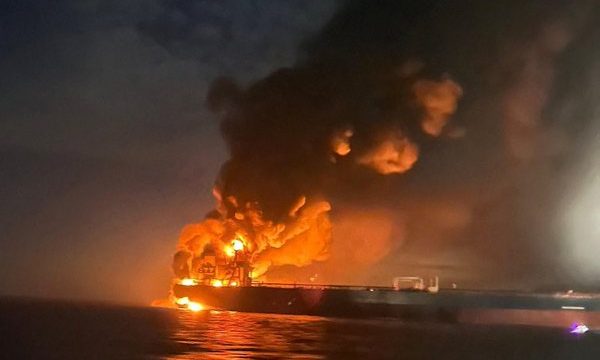
When you authorize naval-drone terrorism against Russian civilian oil tankers in the Black Sea, don’t whine when Moscow redraws the coastline. You wanted escalation? Fine. Now watch your proxy lose Odessa, and with it access to the Black Sea.
Washington is hunting for a face-saving imperfect peace after admitting Russia can’t be beaten. But London, and the EU — delusional, hysterical, and terrified of the coming reckoning from their own populations – keeps pushing the kind of escalation that guarantees one outcome: Russia removing Ukraine’s coastline so the Black Sea can’t be used as NATO’s private terrorism platform. Every naval-drone attack, every strike on a tanker, every British engineered terror op doesn’t weaken Russia, it strengthens Russia’s moral, legal and military argument for needing Odessa.
On Nov 21, Ukraine launched a MAGURA V5 naval drone packed with ~200 kg of explosives at the Russian tanker SIG, a civilian vessel transporting fuel. Earlier, on September 13, a coordinated drone-and-missile strike hit Sevastopol’s shipyard, damaging a patrol ship and igniting a fire visible for kilometres. In October, multiple MAGURA V5 drones attempted to strike the Sergey Kotov, a patrol corvette, the footage released by Ukraine’s GUR bears the hallmark of British-assisted targeting and mission-planning systems. The pattern is undeniable, Ukraine’s entire maritime warfare capability is thanks to the West.
These naval drones didn’t glide across the Black Sea on luck and instinct. With operational ranges approaching 800 kilometers, Ukraine’s MAGURA V5 drones strike far beyond coastal waters, but only with the eyes and brains of NATO. They rely on Western ISR: real-time satellite feeds from the UK and France, RQ-4 Global Hawk patrols off Romania, Starlink uplinks beaming mission data, and British-assisted target coordination. Europe wasn’t just observing. It was triangulating and commanding. And now, after cheering on attacks launched with AI-assisted maritime drones and foreign-fed targeting, Europe feigns shock that Moscow may erase access to the very coastline launching them.
Europe is not supporting Ukraine. Europe is sacrificing it, with full knowledge of what these strikes provoke. Every official in Brussels, London, and Paris understands Russia’s red lines, they’ve memorized them for years. They know that attacking civilian tankers, port infrastructure, and Black Sea Fleet assets from a Nato-commanded coastline forces Moscow to harden the entire southern theater. Yet they push Zelensky, their puppet, into terror operations that guarantee Odessa becomes a battlefield and cease forever to be a bargaining chip.
When a coastline becomes a NATO forward-operating platform masquerading as a proxy state, removing that coastline becomes self-defense. Europe knows this. Washington knows this. That is precisely why Europe, cornered and terrified of the political reckoning on its own soil, keeps escalating. Starmer fears British rage at the coming humiliation. Macron fears the streets of France. They all know what’s coming.
And here lies the supreme irony: the same political caste that spent decades sneering that Russia was “a glorified gas station” is now petrified at the thought of facing Russia without American cover.
Moscow now has zero incentive to leave a hostile coastline intact. Landlock Kiev. Neutralize NATO’s Black Sea fantasies.
When Odessa falls, Europe will shriek “aggression,” pretending not to remember who designed the drones, who funded and commanded the operations, daring Russia to respond. But the world will remember. And history will not record this as conquest. It will record it as the foreclosure of a coastline weaponized by Europe’s own madness.
Russia will will by turn the map into a verdict, one future generations of Europeans will demand their leaders answer for, and there will be hell to pay for the betrayal of Europe.
EU central bank rejects von der Leyen’s asset-theft plan
RT | December 2, 2025
The European Central Bank has refused to support a proposed €140 billion payout to Ukraine backed by frozen Russian assets held at Belgium’s Euroclear, the Financial Times reported on Tuesday, citing officials familiar with the discussions.
The ECB determined that the European Commission’s scheme falls outside its mandate, the newspaper reported.
The EU has spent months trying to tap frozen Russian central bank reserves to back a €140 billion ($160 billion) “reparations loan” for Kiev. Belgium, where around $200 billion of the assets is held at the privately owned Euroclear clearing house, has repeatedly warned of potential litigation as well as financial risks if the EU goes through with the scheme.
Under the European Commission’s plan, EU nations’ governments would provide state guarantees to share the repayment risk on the loan for Ukraine.
Commission officials, however, have warned that member states might be unable to mobilize cash quickly in an emergency, risking market strains.
EU officials reportedly asked the ECB whether it could act as a lender of last resort to Euroclear Bank, the Belgian depository’s lending arm, to prevent a liquidity crunch. ECB officials told the commission this was not possible, the FT reported, citing sources familiar with the talks.
“Such a proposal is not under consideration as it would likely violate EU treaty law prohibiting monetary financing,” the ECB said.
Brussels is now reportedly working on alternative ways to provide temporary liquidity to backstop the €140 billion loan.
“Ensuring the necessary liquidity for possible obligations to return the assets to the Russian central bank is an important part of a possible reparations loan,” the FT quoted an EC spokesperson as saying.
Euroclear CEO Valerie Urbain warned last week the move would be seen globally as “confiscation of central bank reserves, undermining the rule of law.” Moscow has repeatedly warned it would view any use of its sovereign assets as “theft” and respond with countermeasures.
The push comes as the cash-strapped EU faces pressure to finance Ukraine for the next two years amid Kiev’s cash crunch, with efforts to tap Russia’s assets intensifying as the US promotes a new initiative to settle the conflict. Economists estimate Ukraine is facing a budget gap of about $53 billion a year in 2025-2028, excluding additional military funding.
The country’s public and government-guaranteed debt ballooned to unseen levels of over $191 billion as of September, the Finance Ministry said. The IMF last month raised its debt forecasts for Ukraine, now predicting public debt at 108.6% of GDP.
Kiev’s Black Sea attack infringed on NATO state’s sovereignty – Kremlin
RT | December 1, 2025
Ukraine’s attacks on commercial tankers in the Black Sea last week constituted an “outrageous” infringement of Turkish sovereignty, Kremlin spokesman Dmitry Peskov has said.
His comments follow several strikes by explosives-laden sea drones on two Gambian-flagged tankers, Kairos and Virat, which were sailing off the Turkish coast en route to the Russian port of Novorossiysk. On Saturday, another drone attacked a crude hub on Russia’s Black Sea coast belonging to the Caspian Pipeline Consortium (CPC), operated by Russia, Kazakhstan, the US, and several Western European nations.
Speaking to journalists on Monday, Peskov stated that the attacks on the tankers represent a direct violation of the rights of the vessels’ owners and an encroachment on the sovereignty of the Turkish republic.
He told reporters that the Kremlin views the incidents as serious and noted that such attacks could have implications for ongoing diplomatic efforts.
Peskov added that the strikes showed “the essence of the Kiev regime,” adding that attacks on international energy-related assets damage commercial property and maritime security.
Previously, Russian Foreign Ministry spokeswoman Maria Zakharova also condemned Kiev for the “terrorist attacks” on international civilian energy infrastructure. She suggested that they may have been an effort by Kiev to undermine international peace efforts and divert attention away from a major corruption scandal involving the country’s senior officials, as well as Ukraine’s continued battlefield setbacks.
Türkiye has also voiced concern about the attacks, saying they occurred within its exclusive economic zone and posed “serious risks” to navigation and the environment.
While Kiev has not officially claimed responsibility for the attacks, several Ukrainian and Western news outlets have reported, citing sources, that the Security Service of Ukraine (SBU) orchestrated the strikes.
NATO needs to be ‘more aggressive’ towards Russia – top commander
RT | December 1, 2025
NATO members should find ways to be more aggressive towards Russia, the US-led alliance’s top military chief has said.
Admiral Giuseppe Cavo Dragone, chair of the NATO Military Committee, told the Financial Times (FT) in an interview published on Sunday that member states have been weighing options to respond to what he described as Russia’s “hybrid war.”
“We are studying everything … being more aggressive or being proactive instead of reactive is something that we are thinking about,” Dragone said.
The commander added that a “pre-emptive strike” could be considered a “defensive action,” though it would be “further away from our normal way of thinking and behavior.”
According to FT, diplomats from Eastern Europe have been especially vocal in demanding tougher actions against Russia, including retaliatory cyberattacks. Dragone noted, however, that NATO’s decision-making has been constrained by legal and ethical concerns, as well as jurisdiction.
In September, NATO increased air patrols in Eastern Europe and the Baltic states in response to alleged airspace violations by Russia. Moscow has denied claims that its aircraft and drones encroached on NATO airspace and accused the allies of warmongering.
Politico Europe reported last week that NATO was also considering joint offensive cyber operations against Moscow. Russia has denied hacking Western institutions, insisting that it has instead been the target of numerous cyberattacks, including some claimed by pro-Ukrainian groups.
Russian Ambassador to Belgium Denis Gonchar said last week that NATO members were pursuing a “rampant militarization” of Europe under the guise of deterring Russia’s “non-existent” plans to attack them.
Europe ‘removed itself’ from Ukraine negotiations – Lavrov
RT | November 30, 2025
Europe has long lost its right to have a say in the Ukraine crisis and effectively “removed itself” from the negotiations process through its own actions, Russian Foreign Minister Sergey Lavrov has said.
The top diplomat made the remarks on Sunday to Russian journalist Pavel Zerubin, who asked the minister whether Europe was in its right to “outrageously” push for some role in the negotiations to settle the Ukraine conflict.
“We proceed from the premise… – which I believe is obvious to everybody – that Europe has already removed itself from the talks,” Lavrov said.
Europe has long “used up its chances” to have a say in the settlement process, the top diplomat said, pointing out that it repeatedly derailed efforts to resolve the Ukraine crisis since its very beginning, the 2014 Maidan turmoil that resulted culminated with a coup and overthrowal of the democratically elected president.
“Europe spoiled the initial deal of February 2014, when it acted as guarantor for the formal agreement between Viktor Yanukovych and the opposition. It did nothing when the opposition seized all government agencies the morning after the agreement was signed,” Lavrov said.
The top diplomat also pointed at the admissions made by former German Chancellor Angela Merkel and ex-French President Francois Hollande, who said “that nobody had intended to fulfill” the Minsk agreements aimed at bringing the civil conflict in then-Ukrainian Donbass to its end.
“The most recent case occurred in April 2022 when, at the demand of the then Prime Minister of the UK Boris Johnson and with Europe’s full acquiescence, if not connivance, the Istanbul agreements were derailed,” the foreign minister said.
Multiple European leaders and institutions have been insisting that any potential peace deal on Ukraine must include the EU as well, ramping up such rhetoric after the US floated its latest plan to resolve the crisis. The proposals reportedly include Kiev abandoning its NATO aspirations and capping the size of its army.
Germany, France, and the UK have reportedly drafted their version of the plan, making it pro-Ukrainian through removing or softening multiple of its points. Russia, however, has already signaled it finds the European proposals “completely unconstructive.”
Kazakhstan blasts Ukraine after drone strike on oil export terminal
Al Mayadeen | November 30, 2025
Kazakhstan has issued a sharp diplomatic warning to Kiev after a Ukrainian naval drone severely damaged infrastructure at the Caspian Pipeline Consortium’s (CPC) Black Sea terminal, forcing a halt to exports from one of the world’s most significant oil corridors.
The strike hit a Single-Point Mooring used to load tankers at the Novorossiysk facility, prompting CPC to suspend operations and remove vessels from the surrounding waters. The consortium, whose shareholders include Russian, Kazakh and US firms such as Chevron, Lukoil and ExxonMobil, said the November 29 attack left SPM-2 so badly damaged that “further operation of Single Point Mooring 2 is not possible.”
CPC transports roughly 1% of global crude supply and is responsible for almost 80% of Kazakhstan’s total oil exports, carrying millions of tonnes each year from the Tengiz, Karachaganak and Kashagan fields to the Black Sea. Any extended disruption threatens the economic backbone of the OPEC+ producer, whose oil overwhelmingly moves through this 1,500-kilometre pipeline to the Yuzhnaya Ozereevka terminal.
Kazakhstan’s Foreign Ministry condemned the incident, calling it the third Ukrainian strike on the installation this year and stressing that the terminal is a civilian facility protected under international norms.
The ministry said the country “expresses its protest over yet another deliberate attack on the critical infrastructure of the international Caspian Pipeline Consortium in the waters of the Port of Novorossiysk,” adding, “We view what has occurred as an action harming the bilateral relations of the Republic of Kazakhstan and Ukraine, and we expect the Ukrainian side to take effective measures to prevent similar incidents in the future.”
Ukraine has not commented on the latest strike. Kiev has repeatedly targeted Russia’s energy network, including refineries and export terminals, arguing that such facilities sustain the Kremlin’s war effort. Russian officials, meanwhile, accuse Ukraine of terrorism, executed with the support of Western intelligence services that help Ukraine identify targets deep inside Russian territory.
CPC warned that the consequences extend beyond Russia alone. “We believe that the attack on the CPC is an attack on the interests of the CPC member countries,” the consortium said.
The halt comes amid escalating maritime drone warfare in the Black Sea, where Ukraine has expanded operations in an effort to erode Moscow’s revenue sources.
Featured Video
“Historic Russia”: The Land Putin Will Not Give Back
or go to
Aletho News Archives – Video-Images
From the Archive
How Ukraine Tortured and Slaughtered Donbass
By Kit Klarenberg | Al Mayadeen | July 11, 2024
Almost immediately after the proxy war erupted, ISIS-tier footage of the torture and murder of Russians in Ukrainian custody emerged.
On July 6th, the New York Times published an astonishing investigation: In Ukraine, Killings of Surrendering Russians Divide an American-Led Unit. The article documents in grim detail how Chosen Company, an international volunteer battalion for Kiev, routinely executes Russian prisoners of war. It is the very first mainstream admission that this practice – a brazen breach of the Geneva Conventions, and a grave war crime – is widespread among Ukraine’s fighters, both foreign and homegrown. … continue
Blog Roll
 Aletho News
- Peace in Ukraine: the easy way – or the hard way
- Trump & the Rrrrussians
- US taxpayer money laundered back through Ukraine – Musk
- Before COVID, an NIH lab chief proposed making a SARS-like bat virus more infectious
- Gates, Bourla on Trial in Netherlands Accused of ‘Great Reset’ Scheme at Vaccine Injury Hearing
- BRITAIN’S WARNING: PREPARE FOR WAR
- “Historic Russia”: The Land Putin Will Not Give Back
- How the Cambridge Analytica scandal still haunts Mark Zuckerberg
- The Ongoing Cancellation Campaign Against a Dissenting Academic in Norway
- Yemen and ‘the Houthis’: Challenging Sami Hamdi’s Narrative
- If Americans Knew
- DAILY UPDATE: Latest essential news on Palestine, Israel, & region
- Damning report shows the media must confront its failures on Gaza
- BBC senior broadcaster speaks out on Gaza coverage
- Netanyahu vows vast West Bank invasion in response to 20-minute skirmish that left 2 Israeli soldiers and 2 Palestinian fighters dead
- Tied up and tortured: Israel using US-made electroshock weapons on Palestinian detainees
- The outsourced risk: how newsrooms rely on Gaza’s freelancers without protecting them
- Gaza bakeries forced to shut as Israel blocks flour shipments
- Gaza’s breast cancer patients face a deadly wait for treatment amid Israel’s genocide
- DAILY UPDATE: Latest essential news on Palestine, Israel, & region
- The Israel Lobby’s Changing Fortunes
- No Tricks Zone
- Two New Studies Find Thwaites Glacier Melt Cannot Be Driven By Human Activity Or A Warming Ocean
- E-Cars Reduce CO2 Emissions By Only 41% Compared To Internal Combustion Engine Vehicles
- Predictions Made By Renowned Climate Professor Over Past Decades Have Been Proven To Be Poor
- New Study Suggests Large Regions Of The Pacific Ocean Have Been Cooling For The Last 80 Years
- Germany’s Green Energy Debacle: High Energy Costs Force Kahla Porzellan to Close After 182 Years!
- New Study: 50 Years Of The Most Aggressive ‘Net Zero’ Policies Can Only Affect The Global Climate By 0.03°C
- US September “Heat” Was No Record…Many Records Set Decades Ago
- Latest European Green Energy Debacle; Portugal’s Largest Flagship Solar Park Insolvent!
- Green Energy Debacle: German Expert Professor Fritz Vahrenholt Warns Of Severe Economic And Social Consequences
- Two More Paleo Reconstructions Affirm Meters-Higher Sea Levels Across Ireland, Brazil 7000-6000 Years Ago

