Fake News: ‘Hundreds Killed In Clashes Between Pro-Iranian, Pro-Russian Forces’
Syrian War Report – January 29, 2019
A fake-news story about large-scale clashes between pro-Russian and pro-Iranian factions in Syria is making jitters in English- and Russian-language mainstream media outlets. According to these reports citing anonymous sources and each other, “the pro-Russian Tiger Forces and 5th Assault Corps” clashed with “the pro-Iranian 4th Division” near the villages of “Shahta, Bredidg, Innab and Haydariye” in northern Hama.
Most of the reports claimed that there were casualties among the sides providing “precise” numbers varying from a dozen to 200 fighters from the both sides. No source was able to provide details into how clashes had started but the versions are varying from “some differences” to “a campaign to limit Iranian influence”.
Most of the media outlets presented these reports as some kind of breaking news. However, in fact, this is a week-old story. First such reports appeared in several pro-militant social media accounts and a local media outlet, al Modon Online. Later this rumor was reposted by anti-Assad, anti-Iranian and anti-Russian bloggers also citing anonymous sources to show the story look more reliable. By January 29, this rumor has reached large mainstream media outlets, but no evidence has appeared to confirm this kind of developments. However, the lack of factual data was ignored because this story is contributing to the US-Israeli-backed media efforts designed to undermine cooperation between Iran and Russia or at least to show that there are significant tensions between the sides.
The similar situation was observed in 2018 when various mainstream media outlets and even top US leadership like President Trump and Secretary of State Pompeo were claiming that “hundreds” of “Russian fighters” were killed by the US-led coalition in the province of Deir Ezzor. Both of these stories demonstrate how media forgery could reach the wide international audience and start being repeated as facts despite zero evidence supporting them.
On January 27, Russian forces launched at least three surface-to-air missiles at unidentified aerial objects near the Hmeimim airbase. According to local sources, at least 3 UAVs apparently launched from the Idlib de-escalation zone were intercepted.
The Syrian Arab Army deployed reinforcements at frontlines near the Idlib de-escalation zone and carried out a series of artillery strikes on militant positions in northwestern Hama and southern Idlib on January 28 and 29.
The US-backed Syrian Democratic Forces continue to claim dozens of casualties among ISIS members in the Euphrates Valley. However, a few remaining ISIS positions remaining there are still not captured.
Putin’s firewall around Russia-Turkey partnership
By M. K. BHADRAKUMAR | Indian Punchline | January 27, 2019
The much-awaited meeting between Russian President Vladimir Putin and his visiting Turkish counterpart Recep Erdogan in Moscow last Wednesday focused on the the withdrawal of US troops from Syria. The timeframe of the US drawdown or its scope and directions remain far from clear. Meanwhile, attention is riveted on creating a buffer zone in northern Syria, 32 kilometre wide on the Turkish border, which is under discussion between Washington and Ankara.
The US special representative on Syria James Jeffrey is expected in Ankara in coming days to carry forward the discussions. From present indications, US may control the airspace over the proposed zone and maintain some sort of presence on the ground as well while Ankara has been maintaining that it has the capability to enforce the zone.
Russia, on the other hand, has consistently voiced its opinion favoring Syrian government control over the regions vacated by the US. Indeed, Syrian leadership also has reiterated its determination to regain control over the entire country.
Thus, the meeting in Moscow on Wednesday took place in a supercharged atmosphere amidst speculation that the Russia-Turkey partnership might get rocky. The US never liked the Astana process on Syria between Russia, Turkey and Iran and the American intentions in baiting Turkey with the buffer zone proposal are highly suspect. (Significantly, Erdogan has hit out hard against the coup attempt by Washington to overthrow the Venezuelan government.)
If good diplomacy is about showing tact in handling awkward situations while brilliant diplomacy lies in creating a pathway through a minefield, Putin was probably at his best in navigating the Russian-Turkish partnership out of the reach of US tentacles. Putin’s remarks after the talks with Erdogan once again underscored that in the Russian estimation, any foreign presence on Syrian soil will lack “international legal grounds” if it is not on the basis of an invitation from Damascus or emanating out of a decision of the UN Security Council. But having said that, Putin qualified that “constructive cooperation” nonetheless becomes necessary even with such partners whose presence in Syria may lack legitimacy. Importantly, Putin added that Russia respects Turkey’s security interests. Then he went on to spring a big surprise:
“And the third. The 1998 treaty between the Syrian Arab Republic and the Republic of Turkey is still valid, and it deals specifically with the fight against terrorism. I think this is the legal framework that covers many issues relating to ensuring Turkey’s security on its southern borders. Today we have been discussing this issue thoroughly and intensively enough.”
This needs some explaining. Putin was referring to the Adana Accord of October 1998 between Turkey and Syria regarding cooperation in combating terrorism, which became moribund through the 7-year Syrian conflict. Putin said the agreement “is still valid”, which of course was tantamount to saying that Damascus thought so, too.
In effect, Putin has suggested that the Adana Accord can still serve as the legal and political framework for securing the Turkish-Syrian border to combat terrorism. The Russian Foreign Minister Sergey Lavrov amplified Putin’s remark further in media comments on Saturday. While on a visit to Rabat, Lavrov said, “The Adana agreement of 1998 was concluded between Turkey and Syria, its essence is to eliminate Turkey’s concerns about its security. [Syria] entered into this agreement, assuming certain obligations, and we proceed from the assumption that this agreement remains in force. As I understand, so do the state parties to the agreement.”
That is to say, Putin’s proposal offers an alternative to a Turkish occupation of Syrian territory – or involving a joint operation with the US to create a safe zone inside Syria and to enforce it militarily. The Adana Accord states that Syria is committed to eliminate any activity on its territory that would jeopardize Turkey’s security, including “the supply of weapons, logistic material, financial support to and propaganda activities” of Kurdish groups affiliated to the PKK. (The Syrian and Turkish foreign ministers signed an updated treaty in 2010.)
However, there is a caveat here. In order for the Adana Accord to come alive and fully satisfy Turkey’s security needs on the border region with Syria (which used to be the case till 2011 when Turkey became the staging ground for the US-led project to overthrow the Syrian government), Ankara must resuscitate its contacts with Damascus. Simply put, Putin is nudging Erdogan to restore ties with Syrian President Bashar al-Assad. After all, under the Adana Accord, Syria is committed to protect Turkey’s security, but that obligation is also “on the basis of the principle of reciprocity.”
Interestingly, on Saturday, Syrian state news agency SANA quoted a foreign ministry official as saying, “Syria confirms that it is in compliance with the Adana Interstate Agreement on Combating Terrorism in all its forms and all agreements related to it, but the Turkish regime has been violating the agreement since 2011 up to now by sponsoring and supporting terrorism, training militants and making it easier for them to go to SAR, or through the occupation of Syrian territories with terrorist groups it controls or directly with the help of the Turkish Armed Forces.” Furthermore, SANA reported the Syrian Foreign Ministry as calling on Turkey to “activate” the Adana Accord, leaving the boundary as it used to be before the beginning of the war in 2011.
Clearly, an inflection point has come. Erdogan has a big decision to make. Putin’s goal is to encourage Erdogan to work with Assad, while also taking care to preserve the verve of the Russian-Turkish cooperation and accelerate the Syrian peace process in Geneva.
On the ground, this translates as the Astana partners – Russia, Turkey and Iran (which also, incidentally, had endorsed the Adana Accord in 2003) – coordinating on establishing another de-escalation zone in northern Syria following the US withdrawal. It appears Putin has made an offer Erdogan cannot easily refuse and which may even be his own preferred option.
Of Suspected Spies & Cathedrals… and Western Media Hypocrisy

By Finian CUNNINGHAM | Strategic Culture Foundation | 27.01.2019
It’s hilarious to see the double standards of Western media applied in the case of alleged American spy Paul Whelan who is being detained in Russia and facing trial.
Whelan, a former US marine, was denied bail this week in a Moscow court after it emerged that he had been found in possession of state secrets while supposedly holidaying in Russia.
Western media widely aired the theory that the American man has been “set up” by Russian state security after he had received a USB computer stick from someone while staying in a Moscow hotel last month. The person whom he received the disk from has not been identified, but presumably he or she was known to the American, otherwise why would he have accepted the item?
Whelan claims he was in Russia as a tourist and that he didn’t check the contents of the computer mini-disk at the time because he assumed it contained “images of a cathedral he had visited”. He was reportedly arrested soon after receipt of the disk, on December 28, by Federal Security Service (FSB) officers.
This sounds eerily familiar. Remember the two Russian men who visited Salisbury in March last year at around the time of the alleged poisoning of former Kremlin spy Sergei Skripal? Months later, those two men were identified as “suspects” on British CCTV cameras whose images were broadcast by media. Both then promptly came forward to give an interview to Russian media in order to clear their names, which they confirmed as Alexander Petrov and Ruslan Boshirov.
Petrov and Boshirov claimed they were in Salisbury around March 4 as tourists, not as Kremlin assassins as the British media were sensationally alleging. Asked why they were in Salisbury, the pair said it was to visit the medieval English town’s “famous cathedral” and its 123-meter spire.
The immediate reaction by British media in particular was to pour scorn and ridicule on the men’s story. The British government rubbished their claim as “obfuscation and lies”. Journalists and pundits lambasted the pair with guffaws and mockery.
Petrov and Boshirov denied they had any involvement in the alleged poisoning of Skripal – supposedly with a deadly Soviet nerve agent – and they said they were not Kremlin agents but rather worked in the sports nutrition business.
There is no indication thus far that the men’s story is false. Also, what really happened to Skripal and his daughter Yulia remains a mystery since the British authorities won’t reveal where they are – 10 months after the alleged poisoning incident.
The only follow-up media report on the Russian men’s alleged security service affiliation was by the dubious UK-based Bellingcat website, which has a history of fabricating anti-Russian propaganda, such as alleged chemical weapons attacks in Syria and the alleged shooting down by Russian-backed separatists of a Malaysian civilian airliner in eastern Ukraine in 2014.
In the case of Paul Whelan, a former US elite soldier who possesses four passports and who apparently visited Russia several times and had become familiar with the country, he is permitted by Western media to plead his innocence invoking an interest in cathedrals and churches. Not a wink of skepticism here.
However, in the case Petrov and Boshirov, who have no known background in military, they are immediately scoffed at for their declared interest in Salisbury’s medieval cathedral, which by the way is world famous and attracts thousands of visitors every year, including many Russian tourists.
What’s more, in the case of Whelan, the Western media has gone further to report that he is being set up by Russian agents, who planted the state secrets in the USB disk. It is speculated in the Western media that the Kremlin is using the American as a bargaining chip in a potential prisoner-exchange deal for Russian citizen Maria Butina. Butina was jailed at the end of last year in the US after she pleaded guilty to espionage charges, following months of isolated detention. The Kremlin said she had no association with its agencies.
Moscow categorically denies that there is an ulterior agenda for doing a prisoner swap. Russian authorities have said that Whelan was simply “caught red-handed” with state secrets and is being prosecuted accordingly. The classified information is believed to contain the names of individuals who work for Russian secret services.
Whelan’s family back in the US maintain he is innocent and that he was in Russia to attend the wedding of a friend. If found guilty, he could be facing up to 10-20 years in jail.
Who knows, maybe the American was set up in a dirty game of state intrigue.
The case of Maria Butina appears to be a disturbing one of the American state framing up a Russian citizen to bolster a political agenda of alleged Russian interference in US elections. Her pre-trial detention in solitary confinement certainly amounts to a form of psychological torture to pressure a confession. Butina is facing several years in prison, despite many observers considering her to be innocent.
But one thing seems glaringly obvious: the double standard being used by Western media which is borne out of its relentless Russophobia.
A former US marine is seen as a plausible tourist interested in viewing cathedrals whom, the Western media claim, is now being persecuted by despotic Russian authorities; while two Russian civilians are pilloried for plying a “ridiculous cover story” about Salisbury’s 123-meter spire.
Russia Aims To Attract $28B Investment In Power Plant Upgrades
By Tsvetana Paraskova | Oilprice.com | January 24, 2019
Russia’s government approved on Thursday a ten-year modernization program for Russian power plants, expected to attract US$28.8 billion (1.9 trillion Russian rubles) in private investments in the sector, Energy Minister Alexander Novak said.
The government approved today a plan by the Russian Energy Ministry to upgrade nearly 40 gigawatts (GW) of installed capacity, which accounts for around 16 percent of Russia’s total installed generation capacity, Prime Minister Dmitry Medvedev said. The project will run through 2031, Medvedev added, noting that Moscow plans to have long-term predictability in electricity prices to provide businesses with long-term predictability of energy costs.
Novak, for his part, said that the program will run between 2022 and 2031. The first competitive selection will be held for 11 GW in April or May, with power supply expected to start in 2022-2024.
Russia’s key selection criteria for equipment will be the low cost per kWh, Novak noted. The modernization program will also aim to have as much domestic equipment and engineering as possible, the energy minister added.
According to the BP Energy Outlook 2018, natural gas will stay the leading fuel in Russia’s power generation through 2040. The share of natural gas, however, will drop slightly from 54 percent in 2016 to 53 percent in 2040. The share of nuclear power in Russia’s power mix is expected to grow to 19 percent by 2040 from 15 percent now, and the share of hydropower generation is seen flat at 15 percent. The share of coal in Russia’s power generation will drop from 14 percent to 8 percent in 2040, according to BP. Despite the fact that renewables will soar by more than 7,500 percent by 2040, renewable energy will contribute just 2 percent to Russia’s primary energy demand in 2040, compared with 17 percent on average among the other BRIC nations (Brazil, India, China).
Russia will also remain one of the leading fossil fuels producers in the world through 2040, with a share of 14 percent of both global oil and gas production, BP says.
Russian Ambassador Says Reports on Alleged Russian Mercenaries in Venezuela Hoax
Sputnik – 26.01.2019
Russian Ambassador in Caracas Vladimir Zaemsky slammed on Friday in a conversation with Sputnik media reports about alleged presence of “private military contractors” from Russia in Venezuela as “another hoax.
“I don’t know about the presence of any Russian private military companies in Venezuela. This is another hoax,” Zaemskiy said.
Earlier in the day, Reuters news agency reported, citing anonymous sources, that “private military contractors who do secret missions for Russia” had recently arrived in Venezuela, which is currently going through a political crisis, to boost safety of the country’s incumbent president, Nicolas Maduro.
Kremlin spokesman Dmitry Peskov told Reuters that Kremlin had “no such information.”
On Tuesday, the opposition-run Venezuelan National Assembly adopted a statement declaring President Nicolas Maduro a “dictator.” On Wednesday, opposition leader Juan Guaido proclaimed himself the country’s interim president at a mass rally in Caracas. The United States, Argentina, Brazil, Canada, Chile and Colombia, among others, have recognized Guaido as Venezuela’s interim president, while some other countries, including Russia and Mexico, expressed support for incumbent President Maduro.
US plans for space wars are real – Russian Foreign Ministry
RT | January 25, 2019
US plans to pursue development of space-based interceptors signals that Washington would use space for military operations, the Russian Foreign Ministry has warned.
Washington’s concept of a space-based interceptor capable of destroying missiles in the boost phase was presented in the US Missile Defense Review (MDR) last week.
In the speech announcing the publication of the MDR, US President Donald Trump warned that the new strategy will “ensure that enemy missiles find no sanctuary on Earth or in the skies above.”
He also declared that “space is a new war-fighting domain with the Space Force leading the way.”
The US “implementation of its military space plans will hit the current system of space activities’ safety,” stated Moscow, referring to Washington’s previous attempts to achieve dominance in the military sphere resulted in “growing tensions and a spiralling arms race.”
The Foreign Ministry has also expressed regret that the US abandoned “constructive dialogue” and returned to the 1980s ‘Star Wars’ missile defense program of President Ronald Reagan, when the spaced-based interceptors were first envisioned.
Though the MDR only recommends studying the issue at this point, Moscow is convinced that the Trump administration puts a “strong emphasis” on it and will be inclined to go ahead with the development of the spaced-based weapons.
Besides development of space-based capabilities, the MDR describes plans to deploy 20 additional interceptor missiles in Alaska as soon as 2023. Other plans include arming missile facilities in Romania and Poland – part of the European Phased Adaptive Approach (EPAA) – with new Aegis SM-3 missiles.
Moscow slams EU’s ‘arbitrary’ chemical-weapons sanctions, threatens to retaliate
RT | January 22, 2019
Russia has threatened to respond to “freshly invented” punitive measures imposed by the EU over the Skripal poisoning. Moscow says it’s an arbitrary punishment that disrespects established non-proliferation norms.
The accusations that gave rise to the sanctions “don’t stand up to criticism,” the Russian Foreign Ministry said in a statement. “We reserve the right to retaliatory measures in response to this unfriendly act.”
On Monday, Brussels used its new powers against four Russian nationals over the March 2018 poisoning of double agent Sergei Skripal and his daughter Yulia in the UK.
Alexander Petrov and Ruslan Boshirov (named in the sanctions ruling as Russian intelligence agents Alexander Mishkin and Anatoliy Chepiga) were subjected to a European asset freeze and a travel ban, along with Igor Kostyukov, the head of Russia’s main intelligence directorate (the GRU), and his deputy, Vladimir Alekseyev.
The EU also sanctioned five Syrians who it claims were involved in the Damascus government’s chemical-weapons program.
“It’s notable that among the first subjects to be added to the EU’s ‘chemical’ restrictions list are citizens of Russia and Syria – two countries that (unlike, for example, the US) have ensured the complete destruction of their chemical weapons arsenals under OPCW control,” said the Foreign Ministry.
Moscow has repeatedly denied any involvement in the Skripal poisoning and offered to help with the investigation. London has not provided any conclusive proof of Russian involvement.
The EU Council adopted a new regime of restrictive measures on October 15, 2018. Under the new regulations, the EU reserves the right to sanction persons and entities it deems to be involved in the development and use of chemical weapons, without seeking the opinion of the UN Security Council.
Russia rejects US demand to destroy new missile system
Press TV – January 21, 2019
Russia has rejected a US demand for Moscow to destroy a new cruise missile system, a weapon Washington alleges is in violation of the landmark Intermediate-range Nuclear Forces (INF) Treaty.
Russian Deputy Foreign Minister Sergei Ryabkov said Monday it was unacceptable for Washington to demand Moscow destroy its SSC-8/9M729 cruise missile, denying the missile system is in breach of INF.
INF was a Cold-War era treaty signed in 1987 that eliminated all nuclear and conventional missiles with ranges of 1,000–5,500 km (620–3,420 mi).
Ryabkov also said Russia has proposed putting on a demonstration of the missile for the United States, the Interfax news agency quoted him as saying.
“We are ready to show unprecedented transparency on the 9M729 missile, which alarms the Americans so much. We offered them a presentation and a briefing on the missile, which absolutely does not follow from the content of the treaty itself,” he said.
“But at the same time, we insist that the Americans take practical steps to alleviate our concerns on the Aegis Ashore systems, deployed in Romania, whose deployment is also scheduled in Poland soon.”
The statement comes after earlier in the day US disarmament ambassador Robert Wood called on Russia to “verifiably destroy” the missiles in order to save the INF treaty and accused Moscow of destabilizing global security.
Wood said the system was capable of carrying both conventional and nuclear warheads and represented a “potent and direct threat to Europe and Asia” as it had a range of 500 to 1,500 kilometers (310-620 miles).
“Unfortunately, the United States increasingly finds that Russia cannot be trusted to comply with its arms control obligations and that its coercive and malign actions around the globe have increased tensions,” Wood told the UN-sponsored Conference on Disarmament.
US President Donald Trump’s administration last week rejected an offer by Moscow to save the INF treaty, claiming it could not be properly verified, setting the stage for Washington to withdraw from the pact next month.
Moscow has refuted the US allegations, pointing out that Washington has provided no proof that Russia has, in fact, violated the treaty by deploying the missiles.
Russian Foreign Minister Sergei Lavrov said Friday that Washington’s stance on the INF jeopardizes further nuclear disarmament and the sustainability of the non-proliferation treaty.
Ties between Moscow and Washington have plummeted to levels not seen since the Cold War due to the two countries’ disputes over the crises in Ukraine and Syria and after US officials accused Russia of meddling in the 2016 US presidential election.
Western countries have levied broad economic sanctions against Moscow over its support for pro-Russia forces in eastern Ukraine and Crimea’s reunification with Russia.
US intelligence agencies allege that Russia had influenced the US presidential election in November that year to help Trump get elected, an allegation that the US president and Russia have strongly denied.
Dismantling the Doomsday Machines
By John V. Walsh • Unz Review • January 19, 2019
“From a technical point of view, he (Stanley Kubrick) anticipated many things. … Since that time, little has changed, honestly. The only difference is that modern weapons systems have become more sophisticated, more complex. But this idea of a retaliatory strike and the inability to manage these systems, yes, all of these things are relevant today. It (controlling the systems) will become even more difficult and more dangerous.” (Emphasis, jw)
Vladimir Putin commenting on the film, Dr. Strangelove: or How I Learned to Stop Worrying and Love the Bomb, in an interview with Oliver Stone, May 11, 2016. Putin had not seen the movie and did not know of it before Stone showed it to him.
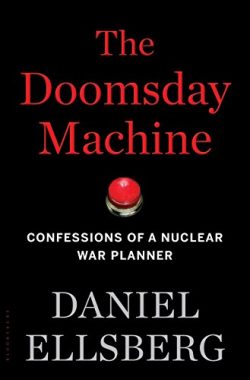
The Doomsday Machine, the title of Daniel Ellsberg’s superb book is not simply an imaginary contraption from a movie masterpiece. A Doomsday Machine uncannily like the one described in Dr. Strangelove exists right now. In fact, there are two such machines, one in US hands and one in Russia’s. The US seeks to hide its version, but Ellsberg has revealed that it has existed since the 1950s. Russia has quietly admitted that it has one, named it formally, “Perimetr,” and also tagged it with a frighteningly apt nickname “Dead Hand.” Because the US and Russia are the only nations with Doomsday Machines to date we shall restrict this discussion to them.
The Doomsday Machine was published just a little more than a year ago, but its terrifying message has failed to provoke action. And Daniel Ellsberg is a man who knows whereof he speaks; the subtitle of the book is “Confessions of a Nuclear War Planner,” which is how Ellsberg spent the early part of his career. What follows on this first anniversary of the book’s publication is a brief restatement of the main argument of the book and then a summary of Ellsberg’s plan of action. (Not included are memoirs and personal experiences of this remarkable, very intelligent and moral man, which are found in the book and which I recommend to flesh out the line of thought presented herein.) Ellsberg’s plan is to be considered a stop gap measure to remove the nuclear sword of Damocles hanging over our heads and allow time to move to total abolition of nuclear weapons, a much more arduous task. Hopefully this essay will serve as a reminder of Ellsberg’s warnings and as a call to act on them.
How Do the Doomsday Machines Work? – Two components:
What is the essence of a “Doomsday Machine”? The first component is a mechanism of launching nuclear weapons that is on hair trigger alert and not always in the hands of the Presidents of Russia or the US. The fact well concealed from the US public is that the US President or those in the line of Constitutional succession are not the only ones with a finger on the nuclear button, and the same is true in Russia. The second component of a Doomsday Machine is a weapon of such destructive force that it can kill billions in the immediate aftermath of an attack and then the entire human race and perhaps all animal life on earth.
The Launch Mechanism – Command and Control
Russia and the US each have a First Strike capability, that is the ability to strike the other with great force, destroy the other’s cities and industrial and military base – and knock out the other’s nuclear deterrent. The essence of a First Strike capacity is this ability to wipe out the deterrent of the other side or weaken it sufficiently that the remaining force could be intercepted for the most part. How can a targeted nation prevent the use of a First Strike? It must convince the adversary that such a strike is futile and will not destroy the deterrent of the targeted nation. The attacker must understand that he will not escape retribution, because the nuclear force of the targeted nation, its nuclear deterrent, will survive.
Launch on Warning – Hair Trigger Alert. The first measure to prevent the loss of deterrence in the event of a First Strike is to put the nuclear force on Launch on Warning or Hair Trigger Alert status. Most of us have heard about this, but we ought to quake in our boots every time the thought of it crosses our minds. Since the time to respond to a First Strike is only tens of minutes for an ICBM (Intercontinental Ballistic Missile) attack, which takes about 30 minutes to travel between the US and Russia, and even less time for a short or intermediate range missile, a targeted country must have its nuclear force loaded onto delivery vehicles and capable of being launched on warning of a nuclear attack. The weapons must be ready to go and launched before the country is struck. This is called “Launch on Warning” and the weapons are sometimes said to be on “Hair Trigger Alert.” (There is some imprecision to the terminology surrounding nuclear weapons, partly due the obfuscation used by the US in negotiations. Steven Starr gives an account of this imprecision and a brief glossary here. I will use terms that are easily understood and common sensical. And I will define them when necessary.)
Nuclear warheads that are loaded onto delivery vehicles are said to be “deployed,” and there were roughly 1600 such warheads loaded onto long range delivery vehicles, each, in Russian and U.S. hands in 2018. They are ready to be launched in minutes. (There are several thousand more warheads in reserve on each side but not “deployed.”) It is easy to see the danger inherent in this situation. The decision to launch must be made in minutes to prevent destruction of the nuclear deterrent and it would be hard to decide with certainty whether the warning of an attack was genuine or due to a technical malfunction. In fact, the signal that an attack is coming is always likely to be ambiguous. Even if the attack is real, the attacker will seek to hide it and so even then the signal will be ambiguous. Thus, even an ambiguous warning caused due to a technical malfunction must always be treated with seriousness and a decision to respond made within minutes.
That a decision of such moment must be made so quickly, under the gun if you will, is a disaster waiting to happen. A mistake is bound to occur with the passage of sufficient time. And it nearly did during the Cuban Missile crisis and again in 1983 when the Soviets detected an attack coming from the United States. According to established protocol the warning was sufficient for the Soviet officer in charge to inform the leadership that a nuclear attack on the U.S. should be ordered. But that officer, Lieutenant Colonel Stefan Petrov, refused to follow protocol and instead interpreted the warning of an attack as a false alarm, which it was. So, a launch of Soviet weapons did not occur. In Russia, Stefan Petrov who died recently is hailed as “the man who saved the world.” This is the nuclear powder keg on which we all sit.
Decapitation and Delegation – Unknowns have their finger on “the button.” The second measure to prevent loss of deterrence is Delegation. This is not widely known or understood. One aspect of a First Strike would be an attempt to knock out known command centers so that a retaliatory strike could not be ordered. This is known as Decapitation. The antidote to Decapitation is Delegation, that is others besides the Presidents and their immediate successors are authorized to press “the button.” It works this way. These “others” are located in secret command centers far from Washington or the Strategic Air Command Base in Colorado, both of which will be targeted in a Decapitation strike. If these secret centers find themselves cut off from communication with Washington or Moscow, then the assumption is made that a decapitating nuclear strike has occurred. In that event these “others” removed from the centers of power are authorized to the press the nuclear button!! (One can see why the Russians call their system of delegation, Perimetr.) These others are not elected officials and in fact we do not know who they are! What Ellsberg discovered is that some of these “others,” military men, were concerned that they too could be hit in a decapitating strike. So they had delegated authority to still others!! In fact, no one, perhaps not even the President and his circle of advisors, knows who can send off the nuclear weapons. Is it possible that one of them might be like the fictional General Jack D. Ripper, the psychotic and delusional man who gives the launch order in Dr. Strangelove – or a similar individual lusting after the Rapture?
It does not take much imagination to see the multiple ways in which things could go wrong; a launch due to a false alarm of attack and a lack of time to make a thoughtful check and decision; a failure of communication that puts the perimeter out of touch with the center although no decapitation has in fact occurred; or a mad man or woman or a crazed ideologue who becomes one of the Delegated. A terrorist attack with a nuclear weapon on Moscow or Washington could also mimic a Decapitating attack and set in motion the fast Delegation to the delegatee. The appropriateness of the term “Dead Hand” for this arrangement is striking.
It is true that so far as we know the probability of a mistake or a rogue element gaining control of nuclear weapons is small. (But the fact is we do not know what the situation is – it is hidden from us and perhaps even from elected officials.) The weapons are protected from rogue use by safety locks called Permissive Action Links (PALs) but these are not perfect, and they must be capable of activation by someone in the “perimeter” in the event of Delegation. And they are no protection against a false alarm of an attack. Despite how low the probability of an error might be, the dice are thrown every moment of every day, and with the passage of time, inevitably something will go wrong.
In summary, First Strike Capability is the source of the problem. It leads to Launch on Warning and Delegation by a targeted nation. The U.S. pioneered and maintains a First Strike Capability and refuses to adopt a “No First Strike” policy. Another response to a first strike capability is that the targeted nation will build up the numbers in its nuclear force so that some will always survive an attack. That is precisely what happened in the first Cold War until it reached insane levels as shown graphically here.
The Nuclear Weapon. The First Strike Arsenal.
Obliteration of Russia and the U.S. The second component of a Doomsday Machine is the weapon itself. What is the destructive power of the ensemble of nuclear weapons as used in a First Strike? I know of no such quantitative estimates released by the Pentagon for the present day. They are badly needed. But in 1961 when Ellsberg was among those working on nuclear war fighting strategy for the Kennedy administration, he asked for an estimate from the Pentagon of the deaths due to a First Strike as the generals and their civilian war planners had mapped it out at the time. To his surprise the estimate came back at once – the Pentagon had made it and kept it hidden. Launching of the nuclear weapons planned for use in a First Strike by the U.S. would result in the deaths of 1.2 billion from explosions, radiation and fire. That number was the number of deaths and did not include injuries. And it was only the result of US weapons; it did not include deaths from a response from the Soviet side if they managed one. 1.2 billion people was the toll at a time when the population of the earth was about 3 billion! (Note that this toll does NOT include the effects of nuclear winter which was unknown at that time. More on that below.) And of course, such deaths would be concentrated in the targeted countries which in these times would be the US and Russia. Ellsberg was stunned to learn that the Pentagon would coolly make plans for such a gargantuan and immediate genocide. And so should we all be. What kind of mindset, what kind of ethics, what kind of morality has allowed for such a thing!
Nuclear Winter and the Destruction of Humanity. But the damage does not stop there. This is the surprise that the Pentagon did not understand at the time. The ash from the fires of burning cities would be cast up into the stratosphere so high that it would not be rained out. There it would remain for at least a decade, blocking enough sunlight that no crops would grow for ten years. That is sufficient to cause total starvation and wipe out the entire human race with only a handful at most able to survive. This is Nuclear Winter. It is eerily reminiscent of Kubrick’s Doomsday Machine which resulted in a cloud of radioactivity circling the earth and wiping out all life. Nuclear Winter was first understood in the 1980s, but at that time careful assessment of the existing computer models seemed to indicate that it was not likely and so many “stopped worrying.” Now with the interest in Global Warming, new and better computer models have been developed. When the results of a nuclear first strike are put into these models, Nuclear Winter again makes its appearance as Brian Toon, Alan Robock and others have shown. The TED talks of Toon and of Robock describing their findings are worth watching; they are brief and well-illustrated. We are confronted with a genocide of all or nearly all humanity, an “Omnicide.”
The launch of the 1600 “deployed” warheads of either the US or Russia is sufficient to give us nuclear winter. So we in the US have put in place a weapon system on hair trigger alert commanded by we know not whom which can kill virtually all Americans – along with most everyone else on the planet. We have on hair trigger alert a weapon which is in fact suicidal. Use the weapon and we lose our very existence. We should also be clear that even if we prescind from the effects of nuclear winter, the nuclear attacks would be concentrated on Russia and the US. So most of us would be consumed. Thus MAD (Mutual Assured Destruction) is replaced with SAD (Self-Assured Destruction).
Disarming the Doomsday Machine
What is Ellsberg’s plan to disarm the Doomsday Machines? He does not suggest total abolition of nuclear weapons, a worthy and ultimate goal, as a first step. He suggests intermediate steps, which can be accomplished much more quickly and remove the present danger.
From what was said above, it is clear that the Doomsday Machine with its massive nuclear force, Launch On Warning and system of Delegation all grows out of a need to protect from a First Strike. The solution to the problem does not demand giving up all nukes or even a deterrent which many are loathe to do. And that is not hard to understand when we compare the fate of Kim Jong-un to that of Muammar Gaddafi or Saddam Hussein. Nor is it difficult to understand in the U.S. given the current intense Russophobia, or in Russia given the alarm caused by NATO’s drive to the East. This is one reason that total abolition of nuclear weapons or even abolition of a nuclear deterrent will be quite difficult. However, dismantling the Doomsday Machines, the immediate danger to humanity, does not demand giving up nuclear deterrence.
Abandoning First Strike Policy and Capacity. Dismantling the Doomsday Machine with its Hair Trigger Alert and Delegation does mean abandoning a First Strike policy and capacity. And right now, only two countries have such First Strike capacity and only one, the U.S., refuses to take the right to use it “off the table” even when not under attack. What does the elimination of First Strike Capacity mean in practice; how can it be achieved? This turns out to involve two basic steps for the US.
Dismantling the Minuteman III. First, the land-based ICBMs, the Minuteman III, must be entirely dismantled, not refurbished as is currently being undertaken at enormous cost. These missiles, the land-based part of the Strategic Triad, are highly accurate but fixed in place, “sitting ducks”; they are only good for a First Strike, for they will be destroyed in a successful First Strike by an adversary. Former Secretary of Defense William Perry and James E. Cartwright, formerly head of the Strategic Air Command and Vice Chair of the Joint Chiefs of Staff, have both called for dismantling the Minuteman III. We would thereby also save a lot of money.
Reducing the SLBM Force. The second step in dismantling the First Strike capacity is to reduce the Trident Submarine-Launched Ballistic Missile (SLBM) force to the level where it cannot destroy the entire Russian land-based missile force. With these two measures in place the US would no longer have a First Strike Capability, and so Launch on Warning and Delegation upon apparent Decapitation would both be unnecessary. It is that simple.
Of course, the Russians would also need to take similar measures that take into account the specifics of its arsenal. And that is where negotiations, treaties and verification come in. That in turn cannot take place in the current atmosphere of Russiagate and Russophobia, which is why both are existential threats and must be surmounted. We must talk despite our differences, real or perceived.
However, were the US and Russia to abandon their First Strike capacity, a reasonable deterrent could be preserved. Such a deterrent should be far below the threshold for a nuclear winter. When Herbert York, one of the original nuclear war planners and strategists, was asked how many nuclear weapons it would take to guarantee deterrence, he suggested somewhere between one and one hundred, closer to one, perhaps ten. Of course, such a small number demands giving up on a missile defense system which has been a will-o’-the-wisp since the 1950s. But would a leader of any nation, even one equipped with an Anti-Ballistic Missile system, when confronted with 100 nuclear warheads facing him or her, be willing to risk ten getting through and demolishing 10 cities?
But there is a deep problem here. The US at least has not built its nuclear forces with the simple object of deterrence. It has had the policy of being able to strike first and destroy or sufficiently degrade the Russian force so that there would be no retaliation. Ellsberg establishes that definitively based on his own experience in his days as a nuclear war planner. But this is also a will-o’-the-wisp. With Launch on Warning and Delegation both sides would be destroyed. So, this path must be abandoned. However, it is a path that has been trod for a long time. It has acquired many adherents and become embedded in the thinking of our “strategic war planners.” It will be hard to abandon this way of thinking which is what will make the simple steps outlined above politically difficult although technically and logistically quite simple. Moreover, in the mind of the public there is no clear distinction between First Strike and simple deterrence. And many favor a nuclear deterrent. So the movement for total abolition of nuclear weapons has a long way to go to reach its destination.
An additional measure – Eliminating launch on warning, aka “hair trigger alert,” that is, “De-alerting.” An additional measure has also been proposed. All nuclear warheads should be removed from deployed status by Russia and the US. (The oft-used term for this is “De-alerting.”). That is, the warheads should be removed from their delivery vehicles and stored in a way that would take days or even weeks to deploy – that is to remount. This has been proposed by the Global Zero Commission on Nuclear Risk Reduction which says of itself:
As world leaders descended on the United Nations in New York for the 2015 Non-Proliferation Treaty (NPT) Review Conference, the Global Zero Commission on Nuclear Risk Reduction — led by former U.S. Vice Chairman of the Joint Chiefs of Staff General James E. Cartwright and comprised of international military experts — issued a bold call for ending the Cold War-era practice of keeping nuclear weapons on hair-trigger alert.
The Commission’s extensive report calls for (1) an urgent agreement between the United States and Russia to immediately eliminate “launch-on-warning” from their operational strategy, and to initiate a phased stand down of their high-alert strategic forces….; and (2) a longer-term global agreement requiring all nuclear weapons countries to refrain from putting their nuclear weapons on high alert.
Urgent action is needed, according to the Commission, because of heightened tensions between the United States and Russia, ongoing geopolitical and territorial disputes involving other nuclear countries that could escalate, and an emerging global trend toward placing nuclear weapons on high alert.
The proposal, backed by more than 75 former senior political officials, national security experts and top military commanders, makes the case that a multinational de-alerting agreement could greatly mitigate the many risks of nuclear weapons use, including from computer error, cyber launch, accidental detonations, unauthorized “insider” launch, false warning of enemy attack, and rushed nuclear decision-making.
The full report is here.
Such an arrangement must be solidly negotiated and verifiable. It would seem that the US President could do this by executive order and at little cost. For submarines the nuclear warheads would be stored on shore in a way that makes it impossible to reload for the period of delay that is negotiated. This arrangement means that no decisions about nuclear warfare need be taken at a moment’s notice, no launch on warning is possible or even relevant any longer and the possibility of Decapitation and the consequent necessity of Delegation disappear. And when either nuclear state feels existentially threatened by conventional forces, its first response need not be to fire a nuclear weapon. Its first response could be to deploy its warheads (that is, reload the launch vehicles) while it negotiates over the threat. That along with Ellsberg’s suggestions would greatly stabilize the world and lessen to almost zero the probability of nuclear war based on misjudgment or accident. From there the work on ever greater levels of reduction leading eventually to total abolition of nuclear weapons could go forward.
The Work Ahead to Win Support for Dismantling the Doomsday Machines
To be able to get Congress or the Executive to move toward these changes, a number of things will be necessary. First is information. As a very basic example, Ellsberg learned in 1961 that a US First Strike at that time would produce 1.2 billion deaths as an immediate result of Nuclear War, excluding any effects of nuclear winter and excluding a Soviet response. We deserve to know what those numbers are now. Here, Ellsberg argues, both public pressure and the work of whistle blowers will be needed. As another example, we need to know from the Pentagon and the National Academy of Sciences whether the result of a US First Strike of the magnitude now on hair trigger alert would lead to nuclear winter – as it seems almost certain it would.
But far more than that would be needed. There must be some form of pressure to wake up the politicians and force them to dismantle the Doomsday Machines. But this is missing. In part with the end of the First Cold War, many thought that the danger had disappeared. Clearly it has not. A movement to abolish the Doomsday Machine is a threat to the Military Industrial Complex and so the MIC and its media acolytes would prefer silence or opposition to such efforts. It may be that the generations which lived through the first Cold War and went through its terrors, from “duck and cover” drills to mushroom cloud nightmares, to the Cuban Missile Crisis may have a special role to play. Their psyches have been most affected by nuclear horrors and they may be the best ones to convince succeeding generations of the dangers. But the strategy and tactics for such an effort have yet to be outlined. It is a task that lies before us.
The first step to sanity is to eliminate launch on warning and the second step would be to rid ourselves and the Russians of a First Strike policy and capacity and negotiate a stable deterrent, small enough that it does not threaten nuclear winter. That is something that the nuclear powers and the broad public can easily accept despite the opposition of a small number of nuclear war fighters. Here the idea of negotiations is not to make the other side more vulnerable but to give the “adversary” and oneself a small, stable nuclear deterrent. Such a win-win approach to negotiations is in fact necessary for survival while we take the more difficult road to total nuclear abolition.
Total abolition should be the ultimate goal because no human hand should be allowed to wield species-destroying power. But it seems that an intermediate goal is not only needed to give us the breathing space to get to zero nuclear weapons. An intermediate and readily achievable goal can call attention to the problem and motivate large numbers of people. The Nuclear Freeze movement of the 1980s is a very successful example of this sort of effort; it played a big role in making the Reagan-Gorbachev accords possible. The effort to kill the Doomsday Machines might well be called something like Step Away From Doomsday or simply Step Away. The time may be ripe for such an effort. Getting to zero will require a breakthrough in the way countries deal with one another, especially nuclear armed countries! Let us give ourselves the breathing space to accomplish that.
John V. Walsh can be reached at john.endwar@gmail.com He writes about issues of war, peace and empire, and about health care, for Consortium News, DissidentVoice.org, Unz Review and other outlets. Now living in the East Bay, he was until recently Professor of Physiology and Cellular Neuroscience at a Massachusetts Medical School.
Debris of INF treaty will fall far and wide
By M. K. BHADRAKUMAR | Indian Punchline | January 17, 2019
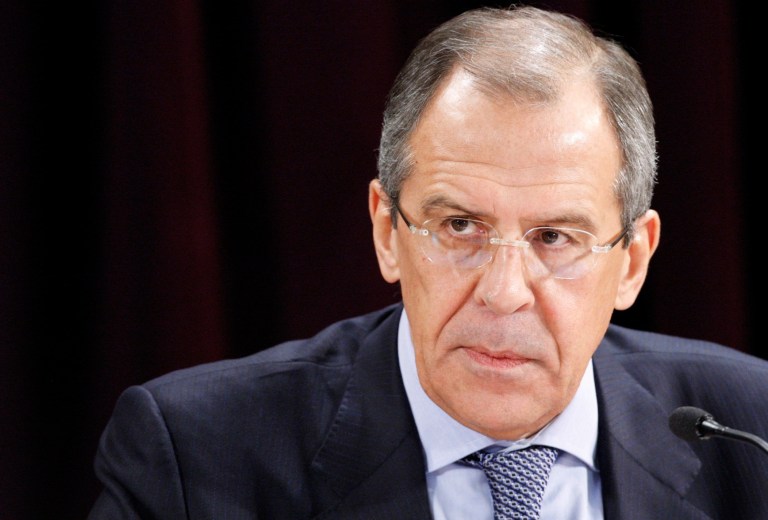
The US-Russia talks in Geneva regarding the 1987 Intermediate-range Nuclear Forces (INF) treaty have ended in failure. In a final call to salvage the treaty, Moscow offered that American experts could inspect a new suspect Russian missile, which Washington has been citing as the alibi for its decision to quit the treaty, but the US point-blank rejected the offer and instead went on to reconfirm that it intends to suspend observance of the cold-war era pact with effect from February 2.
We are entering uncharted waters in regional and international security. Russia anticipates increased US deployments near its borders. In an interview with government-daily Rossiyskaya Gazeta, Russia’s Security Council Secretary Nikolai Patrushev said on Tuesday, “In general, our analysis shows that the American presence near our borders will grow… As for Russia’s western borders, we note the course for the growth of military presence of the US and other NATO members in their vicinity. In 2019, placement of multinational battalion tactical groups in Latvia, Lithuania, Estonia and Poland will continue. At the same time, Brussels does not hide the fact that its main goal is to contain our country. The strengthening of the European segment of the US global missile defense system continues. The inauguration of the missile defense complex in Poland in addition to the already functioning one in Romania is expected in 2020.”
Equally, new faultlines are appearing. Moscow anticipates further US missile deployments to Northeast Asia – specifically, Japan. Moscow estimates that it is unrealistic to expect Japan to adopt an independent foreign policy. This geopolitical reality in Northeast Asia is in turn casting shadows on the recent improved climate in Russo-Japanese relations. (See my blog Russia tamps down the Kuril hype.)
Following the foreign-minister level talks in Moscow on Monday between Russian Foreign Minister Sergey Lavrov and his Japanese counterpart Taro Kono, the latter showed reluctance to hold a joint press conference, underscoring the rapidly changing climate of ties between the two countries. Lavrov’s remarks to the media later signaled a marked toughening of the Russian stance on the territorial dispute over Kuril Islands.
Lavrov demanded an outright Japanese recognition of Russian sovereignty over all the islands in the Kuril chain as part of the outcome of World War 2, as accepted under international treaties and by the UN – “Japan’s indisputable recognition of the entirety of results of World War 2, including Russia’s sovereignty over all of the islands of the southern Kuril chain,” as Lavrov put it.
Lavrov said Japanese domestic legislation must accordingly be changed in consultation with Russia. He added, “This is our base position and without steps in this direction it is very difficult to expect movement forward on other issues (such as peace treaty).”
Evidently, in the developing post-INF treaty scenario, Japan’s security alliance with the US now becomes a major hurdle in Russo-Japanese relations. Lavrov specifically pointed a finger at this: “The 1956 Declaration was signed when Japan did not have a military alliance treaty with the US. The treaty was signed in 1960, after which our Japanese colleagues departed from the 1956 Declaration. Now that we are resuming talks on the basis of this declaration, we must consider the drastic change that has taken place in Japan’s military alliances since then. At today’s talks we devoted attention to the US efforts to develop a global missile defence system in Japan with a view to militarising that part of the world and also to the actions that the US formally justifies by citing the need to neutralise the North Korean nuclear threat. In reality, these actions are creating security risks for Russia and China.”
Interestingly, Lavrov brought in the common concern of Russia and China with regard to the US-Japan security alliance and the American missile deployments to Japan. This is a snub to Tokyo inasmuch as recently, Abe’s aide in the ruling Liberal Democratic Party (which Abe heads) had made a provocative statement that the US should be interested in concluding a treaty between Russia and Japan, as this would “strengthen the bloc” to contain China. Lavrov called it an “outrageous statement” and put across as bluntly as he could the Russian indignation over any Japanese ploy to create misperceptions regarding Russia-China relations:
“The problem is that the president of the Liberal Democratic Party is Prime Minister Shinzo Abe. We have issued a serious warning about how inappropriate such statements are. We have also inquired more broadly about how independent Japan can be in addressing any issues at all with such heavy dependence on the United States. We were assured that Japan would make decisions based on its national interests. We would like it to be that way.” (See a detailed report by China Daily titled Russia tells Japan retaking Pacific islands not on horizon.)
As much as in regard of Russia’s western borders with Europe, the Asia-Pacific also becomes a region where Moscow’s policies will be significantly influenced by the new climate in international security. This holds good for other regions, too.
Most certainly, Russia will be even more wary of any open-ended US-NATO occupation of Afghanistan. The Russian-American contestation over Turkey will become more complex. (The US missile deployment in Turkey was a core issue during the Cuban missile crisis of 1962.) Again, there are reports that a massive expansion of the US bases in Qatar is unfolding (where the US Central Command is headquartered.) Qatar is a potential site for the deployment of US missile systems. Indeed, in the circumstances, Russia’s relations with Iran assume a highly strategic character. Iran’s strategic autonomy is of vital interest to Russia.
The Balkans is another region that Russian strategies will prioritize. Putin is embarking today on a visit to Serbia, which is a key ally, but where conditions may arise for a potential standoff between the West and Russia as had happened in 2014 in Ukraine. In an interview with the Serbian media, Putin came down heavily on the NATO expansion policy, which he condemned as “a misguided, destructive military and political strategy.” He accused the Alliance of “trying to strengthen its presence in the Balkans.” No doubt, a period of heightened tensions in international security lies ahead with the US decision to abandon the INF treaty.
Don’t meddle in Venezuela, Moscow tells coup-cheering Washington
RT | January 16, 2019
Russia has criticized the US government for bullying Venezuela and encouraging its opposition to stage a coup against President Nicolas Maduro, who was sworn in for his second term last week.
“Nations should avoid meddling in other nations’ internal affairs,” Russian Foreign Minister Sergey Lavrov said on Wednesday. He said that Washington’s encouragement of opposition forces in Venezuela “has made them unwilling to seek reconciliation [with the president], which is regretful.”
Venezuela is currently in a political crisis, with the opposition-controlled National Assembly declaring President Maduro a “usurper” and its speaker, Juan Guaido, an “interim president” of the country. The move came after strong public support from Washington, which has been advocating toppling Maduro for quite some time.
Washington has targeted Maduro’s government with a series of crippling economic and personal sanctions, and reportedly considered a military intervention in the country.
The National Assembly’s mandate to represent Venezuelans remains in question. In 2017, the country reformed its parliament system by introducing a new body called the Constitutional Assembly, which is controlled by pro-government politicians. The opposition and its backers in Washington rejected the reform as a power grab and declared the new legislature illegal.
Explaining Russia’s position on the conflict, Lavrov said US involvement in Venezuela was “very alarming and indicated that the US policy of destabilizing governments it does not like remains a priority.”
Venezuela suffered years of economic and social hardships, which the opposition blames on Maduro’s poor governance. He blames the hardship on sabotage of big business and foreign interests, which want to see his socialist government ousted from power.
There’s More to Russia than Meets the Eye
By James V. DeLong | American Thinker | January 15, 2019
While I have only a concerned citizen’s knowledge of foreign affairs, I am baffled by the hysterical Russophobia of the MSM and the Democratic Party since the 2016 election.
As far as I can tell, there should be no real issues between Russia and the U.S. Ukraine or Crimea is freighted with questions of local ethnicity and brutal history and should be sorted out by the parties, or at most by Europe. We have no stake. As for the defense of Europe, it is not credible that Russia has designs on an entity that so outweighs it in population and wealth. Trump was right to point out that the Europeans themselves do not believe in the threat, since they are happy to shortchange defense while relying on Russia for natural gas. Why would the Russians send tanks when shutting a valve would cripple Germany?
I do not really understand why either nation is in Syria, and any Russian intervention in the 2016 election was trivial. In any case, of course the Russians want to influence our elections. We are the world’s 800-pound gorilla (or bull in the china shop), so everyone wants to influence our elections, and who can blame these people? People all over the world live and die depending on the self-centered whims of whoever holds power in the U.S. – just ask Moammar Gaddafi (“we came, we saw, he died“). Saudis, Israelis, Europeans, Brits, and many others have been meddling for decades and will continue to do so. So grow up, MSM.
Irritated by the repetitive triviality of the press, I began searching for sources that would broaden and deepen my perspective. Indeed, I found an avalanche of web material that rarely makes it through the gatekeepers in the U.S. The quality and honesty of these varies greatly, but, to help out readers who share my unease about the information they are getting from the MSM, or even from many U.S. conservative sites, I will list a few that are worth your attention because, in my estimation, they are intelligent observers who know what they are talking about and who are trying to tell their readers the truth as they see it.
Russia Observer is the site of Patrick Armstrong, a former analyst in the Canadian Department of National Defense. He writes a column on some current issue every week or so, plus a useful biweekly “SitRep” covering many issues in terse style. His orientation as follows:
[T]he predominant theme of my career was that we had a great opportunity when the USSR disappeared to make a more cooperative world. Instead, we have steadily turned Russia into an enemy – and a much more capable one than we casually assumed in the 1990s.
So here we are today. Paying for our arrogance, incompetence and maybe worse.
But I haven’t given up hope.
Everything Armstrong does is first-rate. His work also appears at Strategic Culture, a Russophile site that publishes dozens of authors of multifarious perspectives, but with a commonality that none is a fan of the U.S.
Irrussianality is the work of Paul Robinson, another Canadian, who teaches at the University of Ottawa. He writes every few days on “the relationship between Russia and the West; and the apparently irrational decision making processes which dominate much of international relations.” Again, everything he does is worthwhile. He also has an interesting blog roll, which I have only begun to explore.
Stephen F. Cohen is professor emeritus of Russian Studies at NYU and Princeton. He has been working the Russian beat at The Nation for several years, warning that something has gone seriously askew, and his new book of columns, War with Russia: From Putin & Ukraine to Trump & Russiagate, demands attention. To recommend the lefty Nation seems a bit droll, but virtue is where you find it.
What will you learn from these? Not long ago, Patrick Armstrong said, in Back to the USSR: How to Read Western News:
[H]as any Western news outlet reported, say, these ten true statements?
- People in Crimea are pretty happy to be in Russia.
- The US and its minions have given an enormous amount of weapons to jihadists.
- Elections in Russia reflect popular opinion polling.
- There really are a frightening number of well-armed nazis in Ukraine.
- Assad is pretty popular in Syria.
- The US and its minions smashed Raqqa to bits.
- The official Skripal story makes very little sense.
- Ukraine is much worse off, by any measurement, now than before Maidan.
- Russia actually had several thousand troops in Crimea before Maidan.
- There’s a documentary that exposes Browder that he keeps people from seeing.
I typed these out as they occurred to me. I could come up with another ten pretty easily. There’s some tiny coverage, far in the back pages, so that objectivity can be pretended, but most Western media consumers would answer they aren’t; didn’t; don’t; aren’t; isn’t; where?; does; not; what?; never heard of it.
Recently, at “The Blob Strikes Back,” Paul Robinson discussed Trump’s plan to withdraw from Syria:
The most recent [defense policy story] … could be well titled ‘The Blob Strikes Back’ – the ‘Blob’ being a derogatory term for the American security establishment, an amorphous being which defies easy definition and is decidedly hard to pin down, but which exerts enormous power and which seems to be impervious to outside realities, continuing along its chosen path regardless of all the disasters it confronts, and causes, along the way. … Starting wars is something the American security establishment can cope with; ending them is something which causes it real difficulties.
Stephen Cohen’s most recent column asks, “Do Russiagate Promotors Prefer Impeaching Trump to Avoiding War with Russia?“:
In large part due to … media malpractice, and despite the escalating dangers in US-Russian relations, in 2018 there continued to be no significant anti-Cold War opposition anywhere in mainstream American political life – not in Congress, the major political parties, think tanks, or on college campuses, only a very few individual dissenters. Accordingly, the policy of détente with Russia, or what Trump has repeatedly called “cooperation with Russia,” still found no significant supporters in mainstream politics, even though it was the policy of other Republican presidents, notably Eisenhower, Nixon, and Reagan. Trump has tried, but he has been thwarted, repeatedly again in 2018.
Agree or disagree, the points made by these authors are serious, and they deserve attention and discussion, not oblivion. They are not made in the MSM.
For those who wish to delve, here is one more recommendation.
Vladimir Putin has a website that prints English transcripts of his torrent of speeches, communiqués, and meetings. Putin is quite available; he meets frequently with groups of all stripes and holds news conferences that last for three or four hours. As with all politicians, total candor is improbable, but, on the other hand, he must use these events to communicate with Russia’s many constituencies, so one learns at least what he wants people to think he thinks, whether or not it is what he really thinks.
The Putin of these materials is not at all the thug of the MSM. One can read his remarks at the 2017 dedication of the Wall of Sorrow, a memorial to the victims of political repression, which, with other statements, expresses a clear understanding of need to keep green the memory of the Bolshevik tragedy.
Here one can read his 2018 Presidential Address to the Federal Assembly. Like a U.S. State of the Union address, it genuflects to multifarious interest groups, but it also places great emphasis on the importance of civil society. Putin is on the same page as the American conservatives who keep saying politics is downstream from culture. The speech also contains Putin’s view of the military balance, explaining why he thinks Russia can forestall any aggression by the U.S. while spending a tenth as much.
As stated above, agree or disagree, but it is better to read Putin’s own words than to have his thoughts filtered through the MSM. His speeches are far more substantive than what one gets from our own politicians. (In any case, whom are you going to believe – Chuck Schumer and Nancy Pelosi or Vladimir Putin? It’s not even close.)
Like Patrick Armstrong, I am appalled at the direction taken by Russian-American relations, but neither have I given up hope. Reading Armstrong and his confreres may help lead to a path out of this potentially deadly slough of misinformation.
James V DeLong is a retired lawyer, government official, and think-tank analyst.
Featured Video
Dan Dicks with James Corbett on Solutions Watch
or go to
Aletho News Archives – Video-Images
From the Archives
MMR (Measles, Mumps and Rubella) – Vaccine Risk Statement
MMR Vaccine (Measles, Mumps, and Rubella) Is It Safer Than Measles, Mumps and Rubella?
Physicians for Informed Consent | December 2024
… It has not been proven that the MMR vaccine is safer than measles, mumps, and rubella. The vaccine package insert raises questions about safety testing for cancer, genetic mutations, and impaired fertility. Although VAERS tracks some adverse events, it is too inaccurate to measure against the risk of measles, mumps, and rubella. Clinical trials do not have the ability to detect less common adverse reactions, and epidemiological studies are limited by the effects of chance and possible confounders. Safety studies of the MMR vaccine are particularly lacking in statistical power. A review of more than 60 MMR vaccine studies conducted for the Cochrane Library states, “The design and reporting of safety outcomes in MMR vaccine studies, both pre- and post-marketing, are largely inadequate.”19 Because permanent sequelae (aftereffects) from measles, mumps, and rubella are so rare (especially in children with normal levels of vitamin A and infected after birth),6,15-17 the level of accuracy of the research studies available is insufficient to rule out the possibility that the MMR vaccine causes greater death or permanent disability than measles, mumps, and rubella. – Read full article
Blog Roll
 Aletho News
- Moscow issues warning to NATO over Russian exclave
- Yes, the Iran war has destroyed Trump’s presidency
- The fallacy of US delusions about Iran’s economic collapse
- Hezbollah denies Syria cell link, warns of Israeli plan to sow discord
- The legacy of US sanctions, war, and occupation in Iraq
- Iraqi resistance group rejects disarmament, vows to maintain support for Lebanon
- Sheikh al-Asadi warns of Iraqi government compliance with US demands
- How to MAKE THE CONSPIRATORS PAY for their crimes! Dan Dicks with James Corbett on Solutions Watch
- There’s a drought in academia: A drought in honest research on the subject of drought and other weather extremes
- Department of War Awards $20.7 Billion Contract to Raytheon for Air-to-Air Missiles
- If Americans Knew
- As settlers ravage West Bank, Israeli forces kill 10 in Gaza – Daily Update
- New Report: “Scholasticide and Genocide in Gaza: Assessment, Testimonies and Legal Analysis”
- Ex-Biden officials are desperate for a Gaza scapegoat
- Israeli “settlers” Invade Al-Aqsa; Pour Boiling Water on 75-Year-Old
- Israel Has Kidnapped Another American Teenager
- US arms sales to Israel worth $21.6 billion in 20 months
- Three Palestinians Killed in Israeli Attacks on Gaza
- Revealed: German “Anti-Semitism Expert” Driving Crackdown on Palestine Solidarity is Former Israeli Spy
- Egypt’s Warning to Israel Before Oct 7
- Israel’s siege signals another cruel winter for 1.8 million Gazans – Daily Update
- No Tricks Zone
- Green Energy Debacle: German Expert Professor Fritz Vahrenholt Warns Of Severe Economic And Social Consequences
- Two More Paleo Reconstructions Affirm Meters-Higher Sea Levels Across Ireland, Brazil 7000-6000 Years Ago
- New Study: Earth And Venus Surface Warmth Largely Explained By Convection And Lapse Rate, Not CO2 Or Radiation
- 2025 Nature Paper Claiming Worsening Global Drought Gets RETRACTED …Heavily Flawed
- New Study: ‘Global Drought Shows No Detectable Recent Acceleration Under Climate Warming’
- Economic Masterminds: German Socialists Suggest Taxing Productivity Gains Stemming From Using AI
- The South China Sea Has Not Been Cooperating With The Climate Change Narrative
- Energy Crisis: Germany Enters Heating Season With Historically Low Gas Reserve Fill Levels
- New Study: The Antarctic Ice Sheet Gained Mass From 2020-2024 Due To Staggering Snow And Ice Accumulation
- Study: Ocean Heating Rates From Thousands Of Years Ago ‘Dwarf’ Modern Ocean Heating Rates

