UK appears to be ‘destroying’ evidence in Skripal case – Russian envoy
RT | April 13, 2018
The UK appears to be pursuing a policy of “destroying evidence” in the case of the poisoning of former double agent Sergei Skripal, the Russian envoy to the UK said during a press conference on Friday.
The accusation came from Alexander Yakovenko, as he was updating the media on the developments in the Salisbury poisoning case. He reiterated Russia’s dismay over the British government’s refusal to allow Russian diplomats access to Skripal and his daughter Yulia, who was also poisoned, saying that from Moscow’s point of view, the two Russian nationals appear to have been abducted by the British authorities.
The ambassador said London’s approach to the high-profile case followed a pattern of crimes, in which the UK chose to classify details from the public and ignore Russia’s request to disclose them.
The latest such case is the death of Russian businessman Nikolay Glushkov on March 12, after the apparent attack on the Skripals, Yakovenko said.
He confirmed Russia’s receipt on Thursday of a classified report from the Organization for the Prohibition of Chemical Weapons, which the organization sent after confirming Britain’s identification of a toxic agent used in the poisoning. Yakovenko said Moscow is studying it carefully and will make its opinion public when ready. He stressed that Russia’s criticism of the way the UK chose to engage the OPCW in the case did not amount to doubting the merits of the report.
The Russian diplomat also commented on the situation in Syria and Britain’s possible military action there. He advised the UK against taking rash steps in Syria based on a fabricated chemical weapons attack last Saturday, saying it would be similar to the misguided intervention in Iraq in 2003.
He briefed journalists on the latest development in Douma, a town in the suburbs of Damascus, where the alleged attack took place and where Russian military police have been deployed on Thursday. He suggested that the media compared the situation in Douma, which is relatively undamaged after its capture by the Syrian government forces, to that in the city of Raqqa, which was practically obliterated by the US-led coalition and its allies on the ground last year, when they took the city from the jihadist group Islamic State.
Trump’s exit door is open on Syrian attack
By M K Bhadrakumar | Indian Punchline | April 11, 2018
US President Donald Trump’s fateful decision on a military strike against Syria is imminent and it will impact not only Syria’s future and Middle Eastern politics but also the US’ capacity to impose its global hegemony in the emergent world order.
As expected, the day began with Trump’s tweet. He said,
- Russia vows to shoot down any and all missiles fired at Syria. Get ready Russia, because they will be coming, nice and new and “smart!” You shouldn’t be partners with a Gas Killing Animal who kills his people and enjoys it!
- Our relationship with Russia is worse now than it has ever been, and that includes the Cold War. There is no reason for this. Russia needs us to help with their economy, something that would be very easy to do, and we need all nations to work together. Stop the arms race?
Trump claims he’s about to order the attack. But it is also a Trumpean message. The second part is addressed to the Kremlin and speaks about potential US-Russia cooperation to mutual benefit. Trump offers the bait of negotiations on curbing arms race, which is a priority issue for Russia.
Trump apparently thinks he’s ‘negotiating’ a ‘win-win’ solution by dangling a carrot and expecting Moscow to stand aside and letting the US attack on Syria go ahead. It’s tragi-comic, to say the least, that US diplomacy has come to such a pass – POTUS negotiating Syria as if it’s a property deal in Manhattan.
A flood of Russian statements, on the other hand, underscore that Moscow will defend Syria no matter what it takes. Which means not only that the US missiles will be shot down but also that American launch pads will be targeted. This latter message has been conveyed through the Hezbollah TV channel, which is of course a devastating snub to Israel.
Following the Israeli attack on the T4 air base in Syria on Monday, Putin deputed his special envoy on Syria Alexander Lavrentiev to go to Tehran on an ‘unscheduled and unexpected’ visit to meet Iran’s powerful national security czar and point person on Syria, Rear Admiral Ali Shamkhani, who is the executive head of the national security council and reports directly to Supreme Leader Ali Khamenei. Evidently, Russian-Iranian coordination is at a very high level.
As for Iran, it is playing its cards close to the chest, which is as it should be. Tehran understands perfectly well that the false flag operation alleging chemical attack may be used as alibi by the US to create new facts on the ground in Syria aimed at eroding the commanding position that Russia and Iran enjoy.
Putin availed of a Kremlin ceremony for the new foreign envoys’ presentation of credentials today to make an oblique reference to Trump’s war cry. Putin said,
- The state of world affairs invokes nothing but concerns, the situation in the world is becoming more chaotic. Nevertheless, we still hope that common sense will eventually prevail and international relations will enter a constructive course, the entire world system will become more stable and predictable.
The remark can be construed as an appeal to Trump’s ‘common sense’. But then, Putin also stressed that Moscow will continue to advocate strengthening of “global and regional” security, and will fully adhere to its “international responsibilities and develop cooperation with our partners on a constructive and respectful basis.”
Earlier in the day, at a media briefing, the Kremlin presidential spokesman Dmitry Peskov was explicit. He said, “We are not participating in ‘Twitter-diplomacy’. We are supporting serious approaches. We still firmly believe that it is important to abstain from taking steps, which may be detrimental to the already fragile situation (in Syria).”
In reality, Trump finds himself in an unenviable situation. Russia has made it abundantly clear that it will counter any US attack on Syria and, God forbid, if there is any loss of Russian lives in the American attack, all hell will break loose. On the other hand, if Trump backtracks, it will dent his credibility. This is not like calling Kim Jong Un a “Little Rocket Man” and getting away with it.
Is there an exit door available for Trump? Yes, there is. The US Defence Secretary James Mattis said today that the work to assess the intelligence on the alleged use of chemical weapons in Syria’s Douma is still in progress. To quote him, “We’re still assessing the intelligence – ourselves and our allies. We’re still working on this.” Mattis said this when asked pointedly whether there is sufficient evidence to accuse the Syrian government of using chemical agents in Douma.
To my mind, the chances of the western intelligence giving a ‘Nil’ report are fairly good. (The First Deputy Chief of the Russian General Staff’s Main Operations Department Lieutenant General Viktor Poznikhir told reporters in Moscow today that the notorious White Helmets, which is an ‘NGO’ outfit of intelligence agencies collaborating with terrorist groups in Syria, had staged and filmed a chemical weapons attack on civilians in the town of Douma.)
Indeed, if the Russian general’s assessment of a false flag operation is upheld, Trump might heave a sigh of relief. After all, if there was no chemical attack, why should there be retribution?
US Сongress Unveils a List of New Sanctions Against Russia
Sputnik – 11.04.2018
Russia reserves the right to respond to the new US anti-Russia sanctions and may review trade deals signed earlier with Washington.
The United Striates is considering a new batch of sanctions against Russia over Moscow’s alleged “malign activity around the globe.”
The draft cites Russia’s alleged role in the “Skripal case” as the main reason for ramping up economic pressure on Moscow.
The pertinent bill, posted in the Congressional Records, envisages a complete ban on all kinds of financial operations pertaining to Russia’s sovereign debt and a potential ban on deals with securities issued by Russia’s Central Bank, the National Wealth Fund and the Federal Treasury.
The sanctions may also impact Russia’s Sberbank, VTB Bank, Gazprombank, Bank of Mosdcow, Rosselkhozbank, Promsvyazbank and Vnesheconombank.
The sanctions are to take effect no later than 90 days after the date of their imposition.
“For advancing Kremlin’s malign agenda”
Last week the US Treasury Department put 38 Russian businessmen, state officials and companies on its sanctions list.
In total, the sanctions list includes seven Russian businessmen and 17 officials.
Twelve of the 14 Russian companies, which have been added to the list, are privately owned.
These are Agroholding Kuban, B-Finance Limited, EN+ Group, Renova, Gazprom Drilling, NPV Engineering, Ladoga Management, GAZ, Rusal, Base Element, Eurosibenergo and Russian Machines.
The rest – Rosoboronexport and Russian Financial Corporation – are state-owned.
Washington has said that the Russian businessmen have been sanctioned because of the help they have given to the Russian government.
“They have reaped great benefits under the Putin regime and who play a key role in advancing the Kremlin’s malign agenda,” a senior Trump Administration official said.
He added that they “will no longer be insulated from the consequences of their government’s destabilizing activities.”.
The official went on to add that the sanctions were not aimed against the Russian people.
“The door of dialogue is open,” he noted.
Tough Response
In Moscow, the Foreign Ministry has warned that Russia will not let the new US sanctions go unanswered.
“Of course, we will not leave the current and any future anti-Russian attack without a harsh response,” the ministry’s press service said in a statement. “However, we would like, first of all, to advise Washington to get rid of the illusions that we can be spoken to in the language of sanctions.”
“Having not waited for the desired effect of previous sanctions, Washington politicians have reached such absurdity that they are trying to hit our companies which have long maintained business ties with the United States, on which thousands of jobs depend there,” the statement said.
Ministry spokeswoman Maria Zakharova has warned that Russia in turn was working on a list of possible retaliatory measures against the United States.
“There will be a response. We traditionally do respond, we have a list of possible retaliatory measures which are being explored. There are people responsible for that,” Zakharova said, without elaborating.
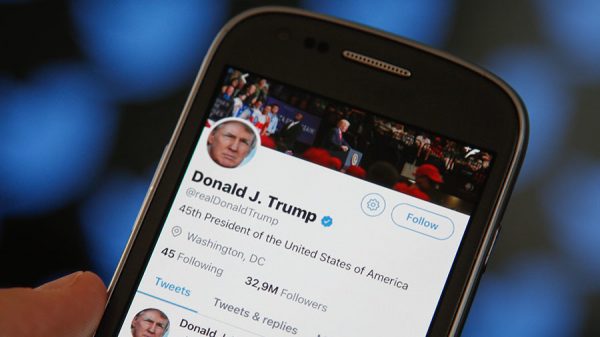
‘We don’t do Twitter diplomacy, need serious approach’ – Putin’s spokesman to Trump over Syria rant
© Jaap Arriens / Global Look Press
RT | April 11, 2018
Vladimir Putin’s spokesman Dmitry Peskov dismissed Donald Trump’s attempts to talk to Russia through a barrage of tweets on Wednesday, and warned that the US president risked worsening “an already fragile situation.”
“We don’t do Twitter diplomacy. We are proponents of a serious approach,” Peskov told the media in Moscow. “We still think it is important to avoid steps that could harm what is already a fragile situation.”
In his earlier missives, Trump veered between intimidation and encouragement towards Moscow. He warned Russia to “get ready” for “nice, new and ‘smart’” missiles as a result of supporting Bashar Assad, who he described as “a Gas Killing Animal who kills his people and enjoys it.” This suggested that a US military response to the alleged use of chemical weapons in Syria on April 7 is imminent.
However, Trump later wrote that there is “no reason” for the relationship between the Kremlin and the White House to be “worse now than it has ever been,” and asked “all nations to work together.” He also enjoyed a sideswipe at the “Fake & Corrupt Russia Investigation” for causing “much of the bad blood with Russia.”
We’re Not Going to War, Not Yet – Last Night’s Russian TV Analysis
By Gilbert Doctorow | Russia Insider | April 9, 2018
In an article posted on this morning’s Russia Insider entitled “Russia is Ready for War. Mood on Prime-time TV is Grim,” the Saker sets out a list of conclusions he found watching Russian television, presumably last night.
The program he watched seems not to be cited, though it is a safe guess it was Sunday Evening with Vladimir Solovyov.
I salute The Saker for being one of the mighty few colleagues in alternative news, not to mention mainstream news, who actually follows what the Russians are saying at the source: on their television programs directed at the domestic audience.
At the same time, while acknowledging the airing of the views he sets out in his essay, he has intentionally skewed his article to promote the negativism he brought with him to the write-up. My own take-away from that program was diametrically opposite: to find great encouragement that the US generals, especially Chairman of the Joint Chiefs of Staff Dunford, are not the OK Corral shoot-out boys some of us would like to paint them, even if one, Secretary of Defense Mattis, may be clueless.
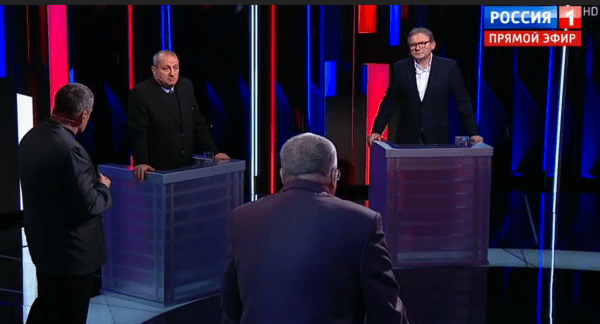
What I heard on the Solovyov program is that the US military know precisely the positions of Russian cruisers, submarines, aircraft and missiles in the Middle East region, that is to say, they understand that the Russians are on a war footing and fully prepared to execute the deadly counter strike promised by General Gerasimov several weeks ago if the US dares to cross the Russian red lines and launch a strike against Damascus or other locations where Russia has its armed forces embedded with the Syrians.
The US generals, unlike the US politicians and media and US administration, are risk-averse if the outcome may be catastrophic. Accordingly, the strike Trump has promised to “avenge” the utterly phony chemical attack in Douma, Eastern Ghouta, will have another vector, most likely to strike against Iran, which Trump held up as the co-supporters of “Animal” Assad.
Why Iran? Well, that falls entirely in line with Trump’s anti-Iranian stance in general and it will test the alliance between Russia, Turkey and Iran whose presidents last week reconfirmed their commitment to a jointly managed final political and military settlement in Syria. Indeed, there is no alliance between Russia and Iran, and the US can proceed as it sees fit in attacking Iran, subject of course, to Teheran’s ability and readiness attack US bases and armed detachments in its region in response.
I do not say that this alternative reading of the likely evolution of the Great Power confrontation in the Middle East is a happy one.
But it remains at the level of proxies and does not take us over the precipice to WWIII, as Saker’s and most other Western commentators in alternative media would have us believe.
Russia Stood Alone. China Didn’t Help Vote Down Trump’s Syria UN Resolution
By Marko Marjanović | Checkpoint Asia | April 11, 2018
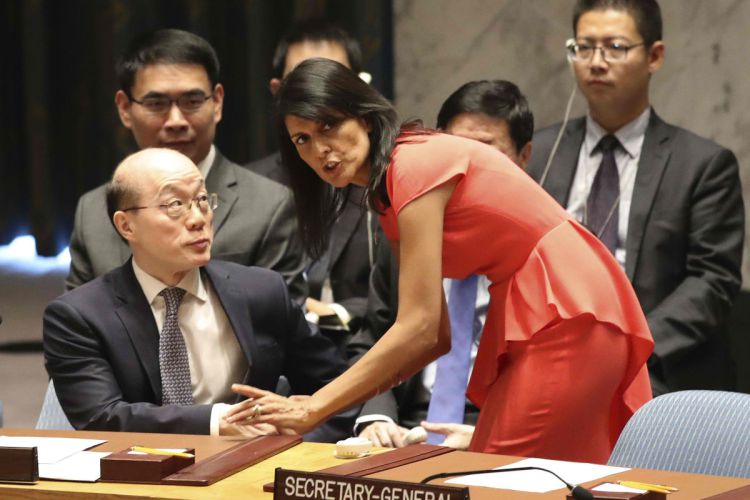
Russia’s proposed UN Security Council resolution envisaging a speedy and realistic investigation into Douma incident was voted down by a triple veto. US, UK and France all voted against it.
However an earlier US-proposed resolution, which proposed an investigation mechanism that couldn’t possibly work and would have opened an avenue for the American use of force had to be vetoed by Russia alone. Bolivia was the only other nation to vote against it as China merely abstained.
China did so albeit it had previously called for restraint and for no side to resort to force which should have naturally made it predisposed to oppose the American resolution. Likewise the Chinese did so albeit the newly-appointed Chinese defense minister was in Moscow talking up ties between the two armed forces and countries.
It has long been Chinese philosophy not to stick its neck out at the UN. Beijing rarely vetoes anything that does not concern its immediate interests and never alone. Additionally China has its own, more immediate American problems right now with Trump threatening a trade war and is presumably reluctant to provoke the US president into further enmity. Finally it is clear that in Beijing’s strategic calculation China benefits with the US and Russia at each other’s throats.
With US distracted by hostility towards Moscow it can not afford to at the same time act too aggressively against China, while the US pressure on Russia means Moscow has little choice but at least ensure the friendship of China.
Nonetheless, things are looking pretty grim for Russia right now (let’s not kid ourselves, in the Middle East the Empire holds escalation dominance) and a little support, no matter how symbolic, could have gone a long way towards securing long-term Russian appreciation. An opportunity missed for Beijing.
US attack on Syria is futile but serves a purpose
By M K Bhadrakumar | Indian Punchline | April 11, 2018
The United Nations Security Council turned down a compromise resolution on Syria, proposed by Sweden and seconded by Russia seeking investigation on the alleged chemical attack in Douma. Five countries supported the resolution with two permanent members – United States and Britain – opposing it. Earlier, a resolution on the same lines which was supported by Russia and China was also opposed by the US and Britain.
This is a significant political and diplomatic victory for Russia insofar as only two other countries joined the US and Britain to oppose the Swedish resolution. Six countries abstained.
The big question is whether this development portends an impending US attack on Syria, bypassing the UN. The UN has refused to confirm there has been any attack at all. Russia and Syrian government insist there has been no attack and have approached the Organization for the Organization for the Prohibition of Chemical Weapons for an international investigation. The good thing is that the OPCW is deputing two teams of experts to go to Douma later this week. Russia has offered to give them full security protection.
So Trump has a major decision to make. Logically, punishment follows a crime that has been committed and it seems no crime has been committed. This appears to be a false flag operation – that is, a fabrication with a view to trigger a sequence of events. That was how the US invaded Iraq in 2003 and it is an established fact today that Saddam Hussein did not have any program to develop weapons of mass destruction, as then US Secretary of State Colin Power had misled the UN Security Council. (Powell later admitted that he was misled by his own administration.)
One difference in the present case is that Trump has been on record that he wants the American military presence in Syria to end. That stance and the present threat to launch an attack on Syria are contradictory. Because, a US attack on Syria will have serious repercussions, including possibly a showdown with Russia, which would mean a US drawdown in Syria may not be possible in a conceivable future.
Perhaps, Trump is indulging in doublespeak and the backdrop could be the criticality that has arisen over Robert Mueller’s investigation into his collusion with Russia, which has now dramatically expanded in scope. The FBI raid on the office of Trump’s attorney in the White House is a very serious development. Trump is just inches away from being implicated in the charges against him levelled by porn star Stormy Daniels. CNN says, “There could be dark and unprecedented times ahead.”
A US attack on Syria can distract attention from the stormy controversy that may arise if at this point Trump axes Mueller and derails the investigation against him. There are precedents when beleaguered American presidents resorted to diversionary tactic. Bill Clinton fired cruise missiles at Kandahar when the scandal over Monica Lewinsky peaked and he was facing the prospect of impeachment.
That brings us back to the alleged chemical attack in Douma last weekend. Who would have staged a false flag operation? The finger of suspicion points toward Israel’s role. Israel is desperately keen that the US should have a permanent military presence in Syria. To that end, Israel is fuelling tensions that will take matters to a point that a US withdrawal from Syria somehow gets stalled. This is also the impression conveyed by DebkaFile, the Israeli website with links to the intelligence services, which specializes in disinformation tactics.
The coincidental Israeli attack on a Syrian air base on Sunday had all the hallmarks of a deliberate act of provocation. Four Iranian military advisors were killed in the Israeli raid. Israel must be hoping against hope that the Iranians will retaliate, leading to a flare-up where the US would get pitted against Iran at some point. Such subterfuges are typical of Israel’s strategy. The point is, Israel lacks the capacity on its own to tackle the challenge of the expanding Iranian influence in next-door Syria.
Trump has reportedly cancelled a planned trip to Latin America. The New York Times has reported that Trump is weighing “more robust” military strikes against Syria. No doubt, tensions are rising. To my mind, however, Trump may not order an attack on Syria. Maybe it’s wishful thinking — frankly, I am a man of peace and am terrified of war — but I’ll explain why there is reason to believe still that sanity will ultimately prevail in Washington.
First, a US attack on the Syrian regime at this stage of the 7-year old war doesn’t make sense insofar as it cannot stop President Bashar Al-Assad on his tracks from attaining total victory. Bashar’s victory is a fait accompli. Period.
On the other hand, in order for the Syrian regime to be degraded to a point — like in Libya for example — and deposed from power, there has to be a massive western military intervention, including deployment of ground forces in tens of thousands. That seems improbable, given the level of disenchantment in Europe regarding Trump. So, the US has to go alone — at best with the (British) poodle. In such an enterprise, what does US hope to gain? Again, the chaos that follows will be beyond imagination.
Indeed, the risk of escalation is exceedingly high and that is not in the interests of Trump’s ‘America First’. By the way, hey, what about the “trade war” with China? What about the meet with Kim Jong Un? What about Afghanistan? What about Yemen? Above all, will another Middle Eastern war go down well in the US opinion? Will the US Congress support an attack on Syria when American interests are not directly facing threat?
Finally, the US cannot afford to overlook the explicit – and repeated – Russian warnings at various levels that an American attack on Syria will have grave consequences. Trump would know Vladimir Putin is “smart” and means business when he says something to the effect that Russia will ensure that what happened in Libya does not repeat. (TASS )
However, the Syrian conflict is approaching yet another new flashpoint. Make no mistake, Israel will have to pay a price for the killing of the Iranian 4 military advisors. The powerful Iranian statesman, Ali Akbar Velayati has has explicitly stated as much. Indeed, Israel is going to be in real fix if Trump now decides not to attack Syria.
Russian lawmakers plan to meet Syria’s President Assad
Press TV – April 11, 2018
A group of Russian lawmakers have announced a plan to meet Syrian President Bashar al-Assad while denying claims that the Syrian leader has left the Arab country.
Dmitry Sablin, a deputy in the Russian lower house of parliament, known as the State Duma, told Russia’s Interfax news agency that the lawmakers would meet Assad to discuss latest developments in Syria.
“We plan to meet him to discuss the situation and support the people of Syria in its fight against terrorism,” said Sablin without elaborating on the specific date of the planned meeting.
Sablin, who serves as the coordinator of a Russian parliamentary group for ties with Syria’s parliament, arrived in Damascus on Wednesday at the head of a delegation which seeks talks with the Syrian leadership and businessmen while on a mission to carry out a number of humanitarian efforts.
The announcement for meeting with Assad came hours after some reports suggested that the Syrian president had left Syria out of fears that the United States might launch a massive military attack on the country.
US President Donald Trump took to his Twitter page and called on Russia, which maintains a military presence in Syria to help Assad fight terror, to be ready for a potential US missile attack.
However, Sablin rejected claims that Assad had left the country with his family.
“Syrian President Bashar Assad is in Damascus,” said Sablin, reiterating that Assad has repeatedly resisted calls for leaving the country in the past.
The Russian lawmaker added that he “has met with Assad several times, including in 2014, when the situation in Syria was much worse.”
“Then, Assad said he would never leave Syria and would share his people’s fate,” said the lawmaker, adding, “His (Assad’s) family is also now in Damascus with their people.”
Any US missiles fired at Syria will be shot down, launch sites targeted – Russian envoy to Lebanon
RT | April 11, 2018
The Russian military reserves the right to shoot down missiles and destroy launch sites in the event of US aggression against Syria, Moscow’s envoy to Lebanon Alexander Zasypkin has warned.
Zasypkin stressed that “the Russian forces will confront any US aggression on Syria, by intercepting the missiles and striking their launch pads,” al-Manar TV website reported, citing the envoy.
Speaking to the channel, the ambassador also said that the allegations of a chemical attack were being used to justify “offensive acts” in Syria, while “the US and Western escalation against Syria will lead to a major crisis.”
The statement comes after Washington threatened a “forceful response” against Syria after an alleged chemical attack in the Damascus suburb of Douma on Saturday. The US was quick to pin the blame on the Syrian government, basing its accusations on unverified data and images, including reports from the infamous, rebel-linked White Helmets ‘civil defense’ group.
On Tuesday, the UN Security Council failed to pass three consecutive resolutions calling for an investigation into the alleged use of chemical weapons in Syria. A Russian-sponsored draft backing a fact-finding mission at the site by the Organization for the Prohibition of Chemical Weapons (OPCW) is the latest to have been rejected by the body.
As the initiative was voted down by the US, the UK, France and Poland; Russia’s UN envoy Vassily Nebenzia once again called for the West to “refrain from the plans which you might be harboring with regards to Syria.”
Earlier on Tuesday, the OPCW announced that is preparing deploy its team to Douma “shortly” to investigate the reports of an attack there. Earlier, Russian specialists at the site had found no traces of chemical weapons or any victims treated for chemical poisoning.
While US President Donald Trump is weighing up options, reports emerged signaling that Washington is beefing up its forces in the Middle East. On Monday, the guided-missile destroyer ‘Donald Cook’ departed the port of Larnaca in Cyprus, reportedly heading towards Syria. Meanwhile on Wednesday, the USS ‘Harry S. Truman’ aircraft carrier, accompanied by strike groups, is scheduled to set sail for a “regular” mission to the Middle East and Europe.
Meanwhile, Eurocontrol – an EU body tasked with handling air traffic over the continent – issued a Rapid Alert Notification, warning flight operators in the Eastern Mediterranean about “the possible launch of airstrikes into Syria with air-to-ground and/or cruise missiles within the next 72 hours.”
While the West is poised for a military response to the alleged chemical incident in Syria, Moscow is warning against further destabilization of the region. Russia hopes that all the sides will “avoid any steps which are not provoked by anything in reality and can substantially destabilize the already fragile situation in the region,” Kremlin spokesman Dmitry Peskov stated on Wednesday.
Duma defense chief says Russia may respond with military force to US strike on Syria
RT | April 10, 2018
The head of the Duma defense committee and former commander of Russian airborne troops has said Moscow would take all measures, including military ones, in response to a possible US strike on government forces in Syria.
“The double standard policy has overstepped all possible boundaries. At this point, the [pro-Putin parliamentary majority] United Russia party must responsibly state that we are going to take all political and diplomatic measures, and also military measures if such need arises,” Vladimir Shamanov said on Tuesday before the State Duma plenary session. “Not a single unlawful action will be left without response,” he added.
The Russian general noted that Americans “should not pin hope on their Navy groups and on their fakes.” “We are a sovereign country, we have allies and guarantors of the events that are taking place in Syria,” he said.
Shamanov was reacting to a statement by Donald Trump when he met with senior military and security officials on Monday. The US president said that that a “major decision” on Syria would be made within 24 to 48 hours. “If it’s the Russians, if it’s Syria, if it’s Iran, if it’s all of them together, we’ll figure it out,” Trump said. “We have a lot of options militarily, and we’ll be letting you know pretty soon.”
The Syrian and Russian governments have denied any involvement in the alleged chemical attack on the rebel-held town of Douma. Syrian leader Bashar Assad said on Tuesday that his government had invited a mission from an international chemical weapons watchdog to Douma to investigate the alleged attack.
Russia proposed the creation of an independent investigative mechanism in relation to the incident, promising, along with the Syrian Army, to guarantee prompt access for experts to the area. Russia’s envoy to the UN Vassily Nebenzia emphasized in his speech that Moscow is ready to serve as a guarantor of security for experts from the Organization for the Prohibition of Chemical Weapons (OPCW), who would inspect the site of the alleged attack.
Featured Video
No Vote, No Representation, No State: Democracy, Israeli Style
or go to
Aletho News Archives – Video-Images
From the Archives
Sanctions, War and the Policy of Dual Containment
By SASAN FAYAZMANESH | March 17, 2008
It is now nearly three decades since the Unites States adopted the policy of dual containment of Iran and Iraq. While much has been written about the containment of Iraq, there has been very little in-depth analysis of this policy when it comes to Iran. In a book that is going to be released on March 31, 2008, entitled The United States and Iran: Sanctions, Wars and the Policy of Dual Containment (Routledge), I attempt to address this shortcoming by investigating when and why the US policy of containment of Iran came about, how it evolved, and where it stands today.[1] To the extent that Israel has been involved in US policy making, the study will also include the role that Israel has played in the containment of Iran. Also, since the fate of Iran has been inextricably linked to that of Iraq, occasionally the investigation will overlap with the containment of Iraq.
The policy of dual containment of Iran and Iraq originated during the Carter Administration, but it was not until the Clinton Administration that the expression “dual containment” became popular. … continue
Blog Roll
 Aletho News
- No Vote, No Representation, No State: Democracy, Israeli Style
- Zionist Bought Senate Blocks Information About American Citizens Killed By Israel
- While Gaza dominates the UN, these are the people keeping it alive
- New Report: “Scholasticide and Genocide in Gaza: Assessment, Testimonies and Legal Analysis”
- ‘THAAD Delusion’: Iran war exposes US missile shield limits – The Atlantic
- Moscow issues warning to NATO over Russian exclave
- Yes, the Iran war has destroyed Trump’s presidency
- The fallacy of US delusions about Iran’s economic collapse
- Hezbollah denies Syria cell link, warns of Israeli plan to sow discord
- The legacy of US sanctions, war, and occupation in Iraq
- If Americans Knew
- Mamdani releases plan to combat antisemitism and hate crimes in New York City
- Iran’s Revolutionary Guards Publish Letter to the American People
- DMFI launches $1 million ad campaign supporting Virginia’s Elaine Luria
- US Senate blocks resolution seeking report on Americans killed by Israel
- Israeli Attacks Kill Ten Palestinians in Gaza
- Massacre at Minab: The School That Became a Grave
- Israeli media: The IDF Shows It Doesn’t Turn a Blind Eye; It Actively Emboldens Settler Havoc
- As settlers ravage West Bank, Israeli forces kill 10 in Gaza – Daily Update
- New Report: “Scholasticide and Genocide in Gaza: Assessment, Testimonies and Legal Analysis”
- Ex-Biden officials are desperate for a Gaza scapegoat
- No Tricks Zone
- Green Energy Debacle: German Expert Professor Fritz Vahrenholt Warns Of Severe Economic And Social Consequences
- Two More Paleo Reconstructions Affirm Meters-Higher Sea Levels Across Ireland, Brazil 7000-6000 Years Ago
- New Study: Earth And Venus Surface Warmth Largely Explained By Convection And Lapse Rate, Not CO2 Or Radiation
- 2025 Nature Paper Claiming Worsening Global Drought Gets RETRACTED …Heavily Flawed
- New Study: ‘Global Drought Shows No Detectable Recent Acceleration Under Climate Warming’
- Economic Masterminds: German Socialists Suggest Taxing Productivity Gains Stemming From Using AI
- The South China Sea Has Not Been Cooperating With The Climate Change Narrative
- Energy Crisis: Germany Enters Heating Season With Historically Low Gas Reserve Fill Levels
- New Study: The Antarctic Ice Sheet Gained Mass From 2020-2024 Due To Staggering Snow And Ice Accumulation
- Study: Ocean Heating Rates From Thousands Of Years Ago ‘Dwarf’ Modern Ocean Heating Rates

