Vladimir Putin interviewed by NBC anchor Megyn Kelly. The interview was recorded in the Kremlin on March 1, 2018, and in Kaliningrad on March 2, 2018. NBC showed an edited version only. The following transcript is courtesy of the Kremlin office of the President of Russia.
Transcript:
Part 1. The Kremlin, Moscow, March 1, 2018
Megyn Kelly:So, thank you very much for doing this, Mr President. I thought that we’d start with some of the news you made today at your State of the Nation Address, then we will move into some facts about you in preparation for our long piece that we are putting together, and then tomorrow when we will have a longer time together, we will talk about more substantive issues together, if that is ok with you.
Vladimir Putin: Fine.
Megyn Kelly:You announced today that Russia has developed new nuclear-capable weapons systems, including an intercontinental ballistic missile that you say renders defence systems useless. Several analysts in the West have said this is a declaration of a new Cold War. Are we in a new arms race right now?
Vladimir Putin: In my opinion, the people you have mentioned are not analysts. What they do is propaganda. Why? Because everything I spoke about today was done not on our initiative, it is a response to the US ballistic missile defence programme and Washington’s unilateral withdrawal from the Anti-Ballistic Missile Treaty in 2002.
If we speak of the arms race, it began at that very moment, when the United States pulled out of the ABM Treaty. We wanted to prevent this. We called on our American partners to work together on these programmes.
Firstly, we asked them not to withdraw from the treaty, not to destroy it. But the US pulled out. It was not us who did this but the US.
Yet we again suggested we work together even after this. I told my colleague then, “Imagine what would happen if Russia and the US joined forces in the crucial area of strategic security. The world would change for a long period to come, and the level of global security would rise to an all-time high.” The reply was, “This is very interesting.” But they ultimately rejected all our proposals.
Then I said, “You understand that we will have to improve our offensive arms systems to maintain a balance and to have the ability to overcome your BMD systems.” They replied that they were not developing the BMD systems to counter us, that we were free to do as we pleased, and that they would not view our actions as spearheaded against the US.
Megyn Kelly:That happened right after 9/11, three months after 9/11.
Vladimir Putin: No, it was after the US withdrew from the ABM Treaty in 2002, and the conversations I mentioned were in 2003–2004.
Megyn Kelly:At the time that happened, I believe you were quoted as saying that you thought it was a mistake on the part of the United States, but not a threat. Do you perceive the United States as a threat today?
Vladimir Putin: We have always said that developing the missile defence system creates a threat to us. We have always said that. Our American partners would not publicly admit it, claiming that the system was spearheaded mainly against Iran. But eventually, in conversations and during talks they admitted that, of course, the system will destroy our nuclear deterrence potential.
Imagine the situation. What was the point of signing the treaty back in 1972? The United States and the Soviet Union had only two regions that they defended from missile attacks: one in the United States and one in the Soviet Union. That created a threat for a potential aggressor who would be struck in response. In 2002, the United States said, “We do not need this anymore. We will create anything we want, globally, all over the world.”
Megyn Kelly: Again, it was in the wake of 9/11, just to make it clear. 9/11 happened on September 11, 2001, and the United States was reassessing its security posture in the world for good reason, wouldn’t you admit?
Vladimir Putin: No, not for good reason.This is complete nonsense. Because the missile defence system protects from the kind of ballistic missiles that no terrorists have in their arsenal. This is an explanation for the housewives watching your programme. But if these housewives can hear what I am saying, if you show it to them and they hear me, they will understand that 9/11 and the missile defence system are completely unrelated. To defend themselves from terrorist attacks, the major powers must join their efforts against the terrorists rather than create threats for each other.
Megyn Kelly:About the weapon that you announced today, the ICBM, have you actually tested it and it works? Because some analysts are suggesting that you have tested it, and it failed. And that is why you only showed animations of it today, and have not yet produced any actual videos.
Vladimir Putin: I spoke about several systems today. Which one are you referring to, the heavy-duty intercontinental ballistic missile?
Megyn Kelly:Yes, the one that you claimed renders defence systems useless.
Vladimir Putin: All the systems I mentioned today easily overcome missile defence. Each one of them. This is the point of all these developments.
Megyn Kelly:But you have tested it?
Vladimir Putin: Yes, of course.
Megyn Kelly:And it worked?
Vladimir Putin: It did, very well.
Some of these systems require additional work. Some of them are already deployed. Some are in serial production.
Getting back to the beginning of our conversation, there is a missile defence system deployed in Alaska. The distance between Russia’s Chukotka and Alaska is only 60 kilometres.
Two systems are being deployed in Eastern Europe. One is already in place in Romania. Construction of another one is almost finished in Poland. There is also the navy. US ships are based very close to Russian shores both in the south and the north.
Imagine if we placed our missile systems along the US-Mexico or the US-Canada border in their territories on both sides and brought our ships in from both sides. What would you say? Would you take action? Meanwhile we would respond that you are escalating the arms race? Ridiculous, isn’t it? This is exactly what is happening.
Megyn Kelly:Just to come back. Are you saying that we are in a new arms race?
Vladimir Putin: I want to say that the United States, when it withdrew from the ABM Treaty in 2002, forced us to begin developing new weapon systems. We told our partners about it, and they said, “Do whatever you like.” Fine, that is what we did – so enjoy.
Megyn Kelly:You disclosed that Russia was developing an intercontinental ballistic missile that was powered by nukes that could render defence systems useless?
Vladimir Putin: Of course not. I did not know at the time how we could respond, to be honest. So it seems that our partners believed we would have nothing to respond with. Our economy was is dire straits, as well as the defence sector and the army. Therefore, I do not think anobody could have thought that in such a short period of time we would be able to make such a gigantic leap in the development of strategic weapons. I think the CIA must have told the US President that we would not do anything in response. While the Pentagon said something like, “And we will develop a powerful cutting-edge global anti-missile system.” So they did.
But I will answer your question directly. I can tell you what we told our American partners, what I said personally at the time.
Megyn Kelly:Just to clarify, do you mean George W. Bush?
Vladimir Putin: Who was President in 2002, 2003 and 2004?
Megyn Kelly:But did this happen continuously or just during that timeframe?
Vladimir Putin: Actually, we kept going on about it for 15 years. I said, almost literally, that we would not develop a system of anti-missile defence the way you are doing. Firstly, because it is too expensive, and we do not have the resources. And secondly, we do not know yet how it would work: you do not know, and we certainly do not either.
But, to preserve the strategic balance so that you would not be able to zero out our nuclear deterrence forces, we will develop strike systems that will be able to break your anti-missile systems.
We said this plainly and openly, without any aggression, I just told stated we would do. Nothing personal.
And the response was, “We are not doing this against you, but you do whatever you want and we will presume that it is not directed against us, not against the United States.”
Megyn Kelly:Let us talk about present day and going forward, because what you said today was that you would use these weapons if Russia or her allies come under attack. And the question is whether you meant any attack or only a nuclear attack on Russia or its allies?
Vladimir Putin: I heard you.
I would also like to say that in 2004 – I mentioned this today –I said at a news conference that we will be developing weapons and even mentioned a concrete missile system, Avangard as we call it.
It is called Avangard now, but then I simply spoke of how it would work. I openly said how it would work. We hoped that this would be heard and the US would discuss it with us and discuss cooperation. But no, it was as if they had not heard us. Strategic offensive arms reduction and an antimissile defence system are different things.
Megyn Kelly:So, you didn’t feel like you needed to disclose.
Vladimir Putin: We will be reducing the number of delivery vehicles and warheads under the New START Treaty. This means that the numbers will be reduced on both sides, but at the same time, one party, the United States, will be developing antimissile systems.
This will ultimately lead to a situation where all our nuclear missiles, Russia’s entire missile potential will be reduced to zero. This is why we have always linked this. This is how it was in the Soviet-American times; these are natural things, everyone understands this.
Megyn Kelly:But is it your contention that the 4,000 nukes that Russia now has cannot penetrate the existing military defence system?
Vladimir Putin: They can. Today they can. But you are developing your antimissile systems. Antimissiles’ range is increasing, and so is their accuracy. These weapons are being upgraded. This is why we need to respond to this appropriately, so that we are able to penetrate the system not only today but also tomorrow, when you acquire new weapons.
Megyn Kelly:That is why it would be a big deal if you really did have a nuclear-powered ICBM, which people are questioning, whether you have a usable one right now. When you said earlier that you have some that had tested positively and were excellent, you said others had not. So, for the record, right now, do you have a workable ICBM that is powered by nukes that you have tested successfully?
Vladimir Putin: Look, I did not say that the testing of some of these systems had been unsuccessful. All the tests were successful. It is just that each of these weapon systems is at a different stage of readiness. One is already on alert duty in line units. Another is in the same status. The work is proceeding on schedule with regard to some systems. We have no doubt that they will be in service, just as we had no doubt in 2004 that we would make a missile with the so-called cruise glide re-entry vehicle.
You have been referring all the time to intercontinental ballistic missiles, new missiles…
Megyn Kelly: You keep mentioning ICBMs.
Vladimir Putin: No. I am saying that we are developing just one brand of new heavy missile, which will replace a missile that we call Voyevoda, and you have dubbed it Satan. We will replace it with a new and more powerful missile. Here it is: a ballistic missile. All the other missiles are not ballistic.
Therein lies the entire meaning of this, because any antimissile defence system operates against ballistic missiles. But we have created a set of new strategic weapons that do not follow ballistic trajectories and the antimissile defence systems are powerless against them. This means that the US taxpayers’ money has been wasted.
Megyn Kelly:But again, you say that you are going to use these weapons, these nuclear-powered weapons if Russia or its allies come under attack. Any attack or only a nuclear one?
Vladimir Putin: There are two reasons why we would respond with our nuclear deterrence forces: a nuclear attack on the Russian Federation or a conventional attack on the Russian Federation, given that it jeopardises the state’s existence.
Megyn Kelly:That is consistent with the existing Russian doctrine on the use of nuclear weapons.
Vladimir Putin: Exactly, there are two possible reasons for a nuclear retaliation.
Megyn Kelly:Are you interested in new talks to extend the new strategic arms control treaty?
Vladimir Putin: The START-3 Treaty will expire soon. We are ready to continue this dialogue. What do we consider important? We agree to a reduction or to retaining current terms, to a reduction in delivery vehicles and warheads. However, today, when we are acquiring weapons that can easily breach all anti-ballistic missile systems, we no longer consider the reduction of ballistic missiles and warheads to be highly critical.
Megyn Kelly:So will these weapons be part of those discussions?
Vladimir Putin: In the context that the number of delivery vehicles and the number of warheads they can or will carry should, of course, be included in the grand total. And we will show you from a distance what this will look like.
Our military experts know how to conduct these inspections. In this sense, there are fine-tuned mechanisms and a sufficiently high level of trust. Generally, military experts are working together professionally. Politicians talk a lot, but military experts know what they are doing.
Megyn Kelly:You are a politician
Vladimir Putin: I am also an officer, and I am the Commander-in-Chief. I also served as a military intelligence officer for 17 years.
Megyn Kelly: Are you proud of that fact? Do you like the fact that you were in the KGB? Do you like people to know that?
Vladimir Putin: I do not see it from an emotional perspective. This gave me a lot of experience in the most diverse fields. I found it useful when I moved on to the civilian sector. Of course, this positive experience helped me in this sense.
Megyn Kelly:How so? How did it help?
Vladimir Putin: You know, after I left the intelligence service, I worked as Assistant Rector at St Petersburg University. I worked with people, established contacts, motivated people to act and brought them together. This is very important in the academic environment. Later, I was Deputy Mayor of St Petersburg. I assumed even greater and broader responsibility. I dealt with St Petersburg’s international ties, and that is a metropolis with a population of five million people. While working in this capacity in St Petersburg, I first met Henry Kissinger. Of course, all this helped me in my work at that time, and my additional experience later helped me in my work in Moscow.
Megyn Kelly:Do you think it gives you an advantage over your adversaries and your allies?
Vladimir Putin: It is hard for me to say. I have no other experience. The only thing I know is that my partners, including heads of state and government, are exceptional and outstanding people. They have gone through stringent selection and elimination procedures. There are no chance people at this level. And each of them has his or her own advantages.
Megyn Kelly:What about that? You have been in power for a long time here in Russia, poised to go into another term as president. You have had four American presidents come and go during that time. I am wondering if you had a favourite, if there was one you liked more than the others?
Vladimir Putin: I am sorry, but this is not a very tactful question. Each of my partners is good in their own right. In all, we had good relations with practically all of them. With Bill Clinton, though he was leaving office, we were able to work together for several months. Then with presidents Bush, Obama, and with the current President too, but to a lesser extent, of course. All of them have something to respect them for. At the same time, we can argue and disagree with each other, and it happens often, we have diverging views on many issues, even on key ones, but we nevertheless managed to maintain normal, human relations. If it were not for that, it would have been not only harder, but much worse for everyone.
Megyn Kelly:How important do you think it is to project strength as a President?
Vladimir Putin: It is important not to project strength, but to show it. It is also important how we understand power. It does not mean banging the table with a fist or yelling. I think power has several dimensions.
Firstly, one should be confident that he is doing the right thing. Secondly, he must be ready to go all the way to achieve the goals.
Megyn Kelly:I wonder this because one of the images that we see of you in the United States is without the shirt on a horse. What is that about?
Vladimir Putin: Well, I have breaks. There are your Russian colleagues, there is the internet. But we do not do this on purpose. They take the photos they like. I have lots of photos of me in the office, working with documents, but nobody is interested in them.
Megyn Kelly: (Laughs.) You are saying they like the shirtless photos?
Vladimir Putin: You know, I have seen “photos” of me riding a bear. I have not ridden a bear yet, but there are such photos already.
Megyn Kelly:Now what about you personally? Your elections are coming up in two weeks. You are 65 years old now. Most people would be slowing down a little in their lives. Do you see that for yourself at all in the future?
Vladimir Putin: First, there are many politicians around the world who are older than I am and who are still working active.
Megyn Kelly:Including in my country.
Vladimir Putin: Not only in the United States, in other countries, too. There are many such people, in Europe and everywhere in the world. But if a person assumes the highest offices, he must work as if he is doing it for the first and last day of his life.
There is the Constitution. I have never violated it and have never changed it. Of course, if voters give me the opportunity to serve another term, I will do it to the best of my ability
Megyn Kelly:Last question for tonight, it is late. Forgive me; this may be a long one. What do you see as your greatest accomplishment as president and what do you see as your biggest mistake? And what did you learn from it?
Vladimir Putin: You know, these would be very close.
Our biggest achievement is that our economy has changed radically. It has almost doubled in scale. The number of people living below the poverty line has decreased by half.
At the same time, the number of people living below the poverty line remains large, and we must work on that. We must remove the gap between people with very high and very low incomes. In this context, we have many achievements and many unresolved issues.
Back in the early 2000s, our population shrank by nearly a million people a year. Can you imagine the scale of the disaster? Almost 900,000 people. We have reversed this trend. We have even achieved a natural population increase. We have very low infant mortality, and we have reduced maternal mortality to almost zero. We have prepared and are implementing a large-scale programme of supporting mothers and children. Our life expectancy is growing at a high rate.
Much has changed in our economy. But we have not achieved our main economic goal: we have not yet changed the economic structure as we need to. We have not yet reached the required growth of labour efficiency. But we know how to do it, and I am confident that we will do it. The thing is that we had no opportunity to do this before, because until recently we did not have the macroeconomic conditions for taking specific measures in these areas.
At the beginning of our path, inflation was about 30 percent, but now it is 2.2 percent. Our gold and currency reserves are growing, and we have achieved macroeconomic stability. This offers us an opportunity to take the next step towards enhancing labour efficiency, attracting investment, including private funds, and changing the structure of our economy.
I am talking in large blocks. There are also more specific areas, such as modern technology and artificial intelligence, digitalisation, biology, medicine, genome research, and so on.
Megyn Kelly:Much more on the economy and how Russia is doing – tomorrow, and on your re-election. Thank you so much for your time. You have had a long day. I look forward to meeting up with you in Kaliningrad.
Vladimir Putin: Thank you.
Part 2, Kaliningrad, March 2, 2018
Megyn Kelly:Mr President, good to see you again.
Vladimir Putin: Good afternoon.
Megyn Kelly: So, we are here in Kaliningrad. Why is that? This is a port that, I am told, could not be more threatening to NATO, to Europe. It is a Russian military base. It is a Russian military port. It is home to some of your nukes. Are you trying to send a message?
Vladimir Putin: Why Kaliningrad? Because I regularly visit Russian regions. This is one of these regions. This time, I came here to attend a conference of the regional media, which they decided to hold here. It was not my decision but theirs, your colleagues from the Russian regional media. I have an agreement with them that I attend such meetings once a year and meet with them, and that is why I am here today. It does not have anything to do with any external signals; it is our domestic affair.
Megyn Kelly:Understood. So, the last time we met in June, I asked you about the conclusion of our American intelligence agencies that Russia interfered in our presidential election. You told me that there was nothing specific in these reports, that if there is anything specific, you said, then there will be something to discuss. You told me, as they used to say in the KGB: addresses, houses, names. Since then, 13 Russians and three Russian-owned companies have been indicted by a special prosecutor named Robert Mueller in the United States for interfering in our election. The IRA agency, Yevgeny Prigozhin and others running a cyber warfare operation out of an office at 55 Savushkina Street, St Petersburg, Russia. Addresses, houses, names. So, can we have that discussion now?
Vladimir Putin: Of course. We not only can but I think we must discuss this issue if it keeps bothering you. But if you think that the question has been asked, I am ready to answer it.
Megyn Kelly:Why would you allow an attack like this on the United States?
Vladimir Putin: What makes you think that the Russian authorities and I gave our permission to anyone to do anything? You just named some people; I have heard about some of them, some of them I do not know, but they are just individuals, they do not represent the Russian government. Even if we suppose, though I am not 100 percent certain, that they did something during the US presidential election campaign (I simply do not know anything about it), it has nothing to do with the position of the Russian government. Nothing has changed since we spoke last time in St Petersburg. There are some names, so what? It could just as well be some Americans who while living here, interfered in your own political processes. It has not changed anything.
Megyn Kelly:But it was not Americans. It was Russians. And it was hundreds of people, a monthly budget of 2.5 billion dollars, all designed to attack the United States in a cyber warfare campaign. You are up for re-election right now. Should the Russians be concerned that you had no idea this was going on in your own home country, in your own hometown?
Vladimir Putin: You know, the world is very large and diverse. We have rather complicated relations between the United States and the Russian Federation. And some of our people have their own opinion on these relations and react accordingly at the level of the Russian Government and at the level of the Russian President. There has never been any interference in the internal political processes in the United States.
You have named some individuals and said that they are Russian. So what? Maybe, although they are Russian, they work for some American company. Maybe one of them worked for one of the candidates. I have no idea about this, these are not my problems. Do you know that, for example, after the presidential election in the US, some Ukrainian officials sent messages congratulating Hillary Clinton, even though Trump had won? Listen, what do we have to do with this?
Now, in my opinion, Mr Manafort, that is his name, he was initially accused of having something to do with Russia’s interference in the presidential election in the United States. It turned out that just the opposite was true: in fact, he had connections to Ukraine. And he had some issues with Ukraine. What do we have to do with this?
You know, we have no desire to interfere in the internal affairs of other countries. But if you are interested in talking about this, I would like to widen the scope of our discussion.
Megyn Kelly:I want to go through it. I do want to go through it. If we can do it step by step that would be more clear for the viewers who are following us. Let me ask you this: you say the Russian Federation did not order it. Do you condone these activities?
Vladimir Putin: We do not condone or order. But I say that there are internal political processes in the United States itself and there are people who wanted to achieve some result. They could have used some tools in other countries: such technologies exist. They could have sent relevant information from France, from Germany, from Asia, from Russia. What do we have to do with this?
Megyn Kelly:But it was not the Russians.
Vladimir Putin: Well, all right, Russians, but they were not state officials. Well, Russians, and so what? The are 146 million Russian people, so what?
Megyn Kelly:What have you done to satisfy yourself with that fact?
Vladimir Putin: What fact?
Megyn Kelly:What have you done to satisfy yourself that it was not Russians? You suggest maybe it was Americans, maybe it was the French. What have you done to satisfy yourself that the 13 Russian nationals who have just been indicted, those three Russian companies, including, as you pointed out, some of your close friends, were not behind this? This has caused an international incident.
Vladimir Putin: I know that they do not represent the Russian state or the Russian government. And I have no idea what they did and what they were guided by. Even if they did something, then our American colleagues should not just say something in interviews with the media but give us specific data, with proof. We are ready to consider it and talk about it. But you know what I would like to say…
Megyn Kelly:That would be great. Will you extradite them to the United States?
Vladimir Putin: Never. Just like the United States, Russia does not extradite its citizens anywhere. Have you ever extradited any of your citizens? This is my first point.
Second, I do not believe anything illegal was committed.
And, third, we have repeatedly suggested that the United States and Russia establish relations in this area and sign a corresponding interstate treaty on extraditing criminals. The United States has evaded this proposal and does not want to sign it with Russia. What are you hoping for? That we will extradite people to you whereas you will not? This is not a proper way to go about international affairs.
There is more to it. Please listen to me and take to your viewers and listeners what I am about to say. We are holding discussions with our American friends and partners, people who represent the government by the way, and when they claim that some Russians interfered in the US elections, we tell them (we did so fairly recently at a very high level): ”But you are constantly interfering in our political life.“ Would you believe it, they are not even denying it.
Do you know what they told us last time? They said, ”Yes, we do interfere, but we are entitled to do so, because we are spreading democracy, and you are not, and so you cannot do it.“ Do you think this is a civilised and modern approach to international affairs?
Yesterday, you and I talked about nuclear weapons, and that once the United States and the Soviet Union realised that they were moving towards possible mutual destruction, they agreed on rules of conduct in the security sphere given the availability of weapons of mass destruction. Let us now agree on how to behave in cyberspace, which never used to have such a big role and scope.
Megyn Kelly:Okay, so let me ask you: you have stated explicitly you believe that America interfered in Russian elections, right?
Vladimir Putin: We made a proposal to the United States, our partners back during President Obama’s watch: let us agree on how we build our relations, develop common rules acceptable for all, and adhere to them in cyberspace.
The first reaction of the Obama Administration was negative, but then, at the very end of his presidential term, they told us: ”Yes, it is interesting, let us talk about it.“ But again, everything disappeared and vanished in some swamp. Well, let us agree on this, we are all for it.
Megyn Kelly:Okay, so let me ask you: you have stated explicitly you believe that America interfered in Russian elections, right?
Vladimir Putin: The US does this all the time.
Megyn Kelly:But Russia did not interfere in America’s election?
Vladimir Putin: No, and there are no plans in Russia to do so. It is impossible. It is impossible for us.
Megyn Kelly:Why not? Why wouldn’t you?
Vladimir Putin: First, we have principles whereby we do not allow others to interfere in our domestic affairs and do not poke our noses into other people’s business. This is a principle we have. This is the first point I wanted to make.
My second point is that we do not have a comparable number of tools.
Megyn Kelly:Come on. Come on.
Vladimir Putin: No, we simply cannot do that.
Megyn Kelly:You told me just yesterday, because we were amping our missile defence systems, we have to respond in kind with increased nuclear technology. Now you want me to believe that we attacked your Russian elections and you say, we are going to take that road.
Vladimir Putin: This is not a matter of missiles. This is a completely different area.
In addition, we lack the necessary instruments.
Megyn Kelly:Cyber warfare.
Vladimir Putin: This is a completely different area of activity. It has nothing to do with cyber warfare. Russia does not have the kind of tools the US has. We do not have global media outlets comparable to CNN. You think we do? We have Russia Today, and nothing else. This is the only Russian media outlet, and even then, it was designated…
Megyn Kelly:Is that cyber tools?
Vladimir Putin: You keep interrupting me, this is impolite.
Megyn Kelly:Forgive me, sir.
Vladimir Putin: We have one media outlet, Russia Today, and even it was designated as a foreign agent so that it is unable to do its work properly. It is the only media outlet of this kind, while the US has a whole range of outlets, and immense possibilities online. The internet is yours. The United States control all the internet governance tools, all located on US territory. Do you think that a comparison can be made in any way? This is simply impossible. Let us come together and agree on the rules of conduct in cyber space. But it is the US who refuses to do so.
Megyn Kelly:David and Goliath. The Mueller indictment is very specific about what the Russians were doing. There is a specific email, a damning email that is cited therein by a female Russian who appears to have been caught red-handed. She says as follows, “We had a slight crisis here at work. The FBI busted our activity. Not a joke. So I got preoccupied with covering tracks together with the colleagues. I created all these pictures and posts and the Americans believe that it was written by their people.” And now you want to sit here and say you do not have the tools to do it? That we have the market cyber interference? This is just not true.
Vladimir Putin: I do not even understand what you are talking about. You see, this is just nonsense. The US Congress analysed the information from Russian sources that appeared online. The information coming from media outlets like Russia Today was also analysed and turned out to be one hundredth of a percent of the overall information flow in the United States, just one hundredth of a percent. Do you think that this fraction had any impact on the election? This is just nonsense, don’t you see? This is the same old business when the people who lost refuse to admit it. You see, I have commented on this on a number of occasions. It has yet to be seen what the US policy toward Russia will be like under the current administration. Many things remain unclear, since we have not yet been able to start working or to establish normal contacts.
However, it is absolutely clear that the current US President adopted a specific stance in terms of domestic policy, and decided to reach out to the people who were ready to support his campaign promises. This is what led to his victory, not any kind of outside interference. To claim otherwise makes no sense. Will anyone believe that Russia, a country located thousands of kilometres away, could use two or three Russians, as you have said, and whom I do not know, to meddle in the elections and influence their outcome? Don’t you think that it sounds ridiculous?
Megyn Kelly:Now you are talking about causation. But I am still on whether you did it. And it is not true that you do not know the individuals who were accused of conducting this. One of your good friends is actually accused of helping conduct this. His name is Yevgeny Prigozhin. Do you know him?
Vladimir Putin: I know this man, but he is not a friend of mine. This is just twisting the facts. There is such a businessman; he works in the restaurant business or something. But he is not a state official; we have nothing to do with him.
Megyn Kelly:After you heard about him being indicted, did you pick up the phone and call him?
Vladimir Putin: Certainly not. I have plenty of other things to worry about.
Megyn Kelly:He is your friend. He has been indicted.
Vladimir Putin: Did you hear what I just said? He is not my friend. I know him, but he is not a friend of mine. Was I not clear? There are many people like that. There are 146 million people in Russia. That is less than in the US, but it is still a lot.
Megyn Kelly:He is a prominent businessman.
Vladimir Putin: A prominent businessman? So what? There are many prominent people in Russia. He is not a state official, he does not work for the government; he is an individual, a businessman.
Megyn Kelly:Some people say his real job is to do your dirty work.
Vladimir Putin: Who are those people? And what dirty work? I do not do any dirty work. Everything I do is in plain view. This is your prerogative; some people in your country enjoy doing dirty work. You think we do the same. That is not true.
Megyn Kelly:It is a) the fact that you know him, you admit that. He is a prominent Russian businessman. And he is specifically accused of running this operation; b) this is the same man who has been accused of sending Russian mercenaries into Syria and they attacked a compound held by American back militia. This guy gets around.
Vladimir Putin: You know, this man could have a wide range of interests, including, for example, an interest in the Syrian fuel and energy complex. But we do not support him in any way. We do not get in his way but we do not support him either. It is his own personal initiative.
Megyn Kelly:You did not know about it?
Vladimir Putin: Well, I know that there are several companies, several Russian companies there, maybe his among others, but this has nothing to do with our policy in Syria. If he does anything there, he does not coordinate it with us; he probably coordinates it with the Syrian authorities or the Syrian businesses he works with. We do not interfere in this. Does your government interfere in every step your businesses take, especially small businesses? It is essentially a medium-sized business. So, does your president interfere in the affairs of every medium-sized US business? That is just nonsense, isn’t it?
Megyn Kelly:If the 13 Russian nationals plus three Russian companies did in fact interfere in our elections, is that okay with you?
Vladimir Putin: I do not care. I do not care at all because they do not represent the government.
Megyn Kelly:You do not care?
Vladimir Putin: Not at all. They do not represent state interests. If you are worried about anything, state it officially, send us documents proving it and explain what exactly those people are accused of. We will see if they have violated Russian laws…
Megyn Kelly:I did that.
Vladimir Putin: No, this is not true. If they violated Russian law, we will prosecute them. If they did not, there is nothing to prosecute them for in Russia. But after all, you must understand that people in Russia do not live under US law but under Russian law. This is how it is. If you want to reach an agreement with us, let us negotiate, choose the subject, make an agreement and sign it. But you refuse to do this. I am telling you for the third time: we have proposed working together on cyberspace issues. But the US refuses to work like this and instead throws 13 Russians to the media. Maybe they are not even Russians, but Ukrainians, Tatars or Jews, but with Russian citizenship, which should also be checked: maybe they have dual citizenship or a Green Card; maybe, the US paid them for this. How can you know that? I do not know either.
Megyn Kelly:I will give you one piece of evidence. Andrei Krutskikh is an advisor to the Kremlin when it comes to cyber issues. In his speech to an information security forum in February 2016, he reportedly said, quote, “I am warning you. We are on the verge of having something in the information arena which will allow us to talk to the Americans as equals.” What do you think he meant? Because it certainly sounds like a threat right before an election hack.
Vladimir Putin: Sometimes I think you are joking.
Megyn Kelly:No, I am deadly serious.
Vladimir Putin: A man says something about how he sees our contacts and our work with our foreign partners, the US in this case, in a certain area. I have no idea what he said. Ask him what he meant. Do you think I control everything?
Megyn Kelly:He is an advisor to the Kremlin on cyber.
Vladimir Putin: So what? There are 2,000 people working in the administration; do you think I control everyone? Peskov is sitting in front of me, he is my press secretary and he sometimes says things that I see on television and think, what is he talking about? Who told him to say this?
I have no idea what he said. Ask him. Do you really think I can comment on everything administration or government personnel say? I have my own work to do.
Megyn Kelly: I think when it comes to our two countries you know exactly what is going on. And this is Russia’s problem now. It is. The heads of the US intelligence agencies just testified to Congress that Russia, Russia poses the greatest threat in the world to the American security, greater than ISIS. You cannot get the sanctions lifted. The relationship between our two countries is nearly non-existent right now. Did not this interference, whether you knew or you did not know about it, backfire against Russia?
Vladimir Putin: Listen, you are exaggerating. I do not know about someone saying something and I am not going to comment on it, and neither do I follow what is going on at your Congress.
I am more interested in what is going on at the State Duma, if they have approved a bill on a healthcare or utilities issue; if they delay certain discussions or not. Is a special interest lobbying against a nature conservation, or forestry, or environmental law? This is what I am interested in. You should follow what they are discussing in Congress; I have enough on my plate without that.
Megyn Kelly: You know that the sanctions have not been lifted. You know that the relationship between our two countries is at not an all-time low but is getting there. And this is in part the reason. And so, Russian interference in the American elections is important.
Vladimir Putin: Listen, sanctions have nothing to do with the myth of some Russian interference in the US election. Sanctions are about something else entirely: the desire to halt Russia’s progress, to contain Russia. This policy of containing Russia has been pursued for decades, on and off. Now it is back. It is a misguided policy, which not only affects Russian-US relations but also US businesses because it frees up space for their competitors on our market.
You and I were at the St Petersburg Economic Forum. The largest business delegation was from the US. People want to work with us, but they are not allowed to; they are contained in order to contain Russia. They have been contained and contained so that our defence industry cannot develop, among other things. We discussed this yesterday. Did they manage to achieve anything? No, they did not: they have never managed to contain Russia and never will. It is simply, you know, an attempt with tools that…
Megyn Kelly:Can we contain Russia in cyber warfare?
Vladimir Putin: I think it is impossible to contain Russia anywhere. You need to understand this. Listen, you cannot even contain North Korea. What are you talking about? Why would you do that? Why do we have to contain, attack or cast suspicion on each other? We are offering cooperation.
Megyn Kelly:That is my question to you. That is my question to you. Why, why would you interfere in our election time and time again? And why would not you, for that matter? Let me put it to you that way. You have spent a day, every time I have seen you, in St Petersburg, in Moscow and now here in Kaliningrad, telling me that America has interfered in Russia’s electoral process and that Russia has a robust cyber warfare arsenal. And yet you want us to believe that you did not deploy it. Do you understand how implausible that seems, sir?
Vladimir Putin: That does not seem implausible to me at all, because we do not have such a goal, to interfere. We do not see what we have to gain by interfering. There is no such goal. Let us suppose this was our goal. Why, just for the sake of it? What is the goal?
Megyn Kelly:Creating chaos. That is the goal.
Vladimir Putin: Listen to me. Not long ago President Trump said something absolutely correct. He said that if Russia’s goal was to sow chaos, it has succeeded. But it is not the result of Russian interference, but your political system, the internal struggle, the disorder and division. Russia has nothing to do with it whatsoever. Get your own affairs in order first. And the way the question is framed, as I mentioned – that you can interfere anywhere because you bring democracy, but we cannot – is what causes conflicts. You have to show your partners respect, and they will respect you.
Megyn Kelly:You once said, Mr President, that you believed the interference in our election was done by some patriotic Russians. An answer like that, you understand, will lead people to ask, are you the patriotic Russian?
Vladimir Putin: I am the President of the Russian Federation. It is my constitutional duty to address a host of issues concerning the protection of Russia’s interests. When I spoke of patriotic people, I meant that you can imagine that, in the face of a deteriorating Russian-US relationship, people – and people use cyberspace – will express their points of view, their opinions, including on this global network. Of course, they are free to do so. How can we really prohibit it? But we cannot control it and, most importantly, we are not directing it. Please note that this is not the position of the Russian state.
Megyn Kelly:You cannot? The Russian intelligence services cannot find out who is doing this, bring it to your attention? You are unable to stop it?
Vladimir Putin: Perhaps if we looked into it carefully we would find those people, if they exist. But we have no such goal. We propose holding official talks and you refuse. So what do you want? For us to open investigations just because Congress said so? Let us sit down, sign an agreement on working in cyberspace and comply with it. How do you want to do it? There is no other way of conducting international affairs.
Megyn Kelly:So you have no goal to stop it. So what does that mean for our elections in 2018 and 2020? We can expect more of the same?
Vladimir Putin: I did not say that stopping it is not a goal. I said we had…
Megyn Kelly:You just said that.
Vladimir Putin: No, I did not. I said we do not interfere in our people’ private lives and cannot stop them from expressing their opinion, including on the internet. But I also said that Russia’s official position is that we do not interfere in the political processes of other countries as a state. That is the most important part. I want it to be recorded in our conversation today, for people in the US to understand this.
Megyn Kelly:And forgive me, but I am trying to get to one level below that, whether you have the goal of stopping your own citizens from behaving in this manner, which has undermined relationships between our two countries?
Vladimir Putin: I want to say that we will stand in the way of everything that violates Russian law or our international agreements. For the third or fourth time, I will say that we are ready to sign a corresponding agreement with the United States. You still refuse. Let us sit down at the negotiating table, identify what we consider important, sign the document and comply with it with proper verification.
Megyn Kelly:You are the President, sir. Respectfully, I still did not hear an answer about whether you want to crack down on the Russians who committed those crimes. It sounds like the answer is no. If I am wrong, please correct me. I understand you want a negotiation with the United States directly. But internally, you could put a stop to this if you had the desire.
Vladimir Putin: I want you to listen to me. We will counter anything that violates current Russian law. If the actions of our citizens – no matter what they are and whom they target – violate current Russian laws, we will respond. If they do not violate Russian law, we cannot respond.
Megyn Kelly:With this?
Vladimir Putin: With anything. If no Russian law has been broken, no one can be held accountable.
Megyn Kelly:Will this violate Russian law?
Vladimir Putin: I must look at what they have done. Give us the materials. Nobody has given us anything.
Megyn Kelly:You know this. Hacking into the Democratic National Committee, hacking into John Podesta’s email, creating interference in our election by creating bots that spread false information on Twitter, on Facebook. Spreading this information when it comes to Black Lives Matter, when it comes to the shooting we just had in Parkland, Florida, when it comes to our presidential election. Spreading fake news in order to alter the course of the presidential race. That is what I am talking about.
Vladimir Putin: With all due respect for you personally and for the body of the people’s representatives, the US Congress – and we treat all these people with respect – I want you to really understand this. Do you have people with training in law? Of course, you do. One hundred percent. Highly educated people. We cannot even launch an investigation without cause. Our conversation today or an inquiry in the US Congress is not sufficient cause. Give us at least an official inquiry with a statement of facts, send us an official paper. After all, a conversation on air cannot be grounds for an investigation.
Megyn Kelly:The intelligence agencies in the United States, now a special prosecutor with a criminal indictment – that is not enough for you to look into it?
Vladimir Putin: Absolutely not. If you do not have legal training, I can assure you that an inquiry is required for this.
Megyn Kelly:I do.
Vladimir Putin: Then you should understand that a corresponding official inquiry should be sent to the Prosecutor-General’s Office of the Russian Federation. That said, we do not even have a treaty on how to proceed. But send us something in writing at least.
Megyn Kelly:Vladimir Putin could not order an investigation into whether this was done in a way that undermines its relations with a major partner, the United States of America?
Vladimir Putin: Give us something in writing, an official inquiry. We will look at it.
Megyn Kelly: You said that the last time and now I am back with an indictment.
Vladimir Putin: There is nothing in writing. Send an inquiry to the Prosecutor-General’s Office. It is necessary to go through official channels rather than with the help of the media and harsh words in the US Congress, levelling accusations against us that are totally unsubstantiated. Give us something in writing.
Megyn Kelly:Let me ask you this: you were President back in 2001 when the FBI arrested one of its own, Robert Hanssen, for spying for the Russian Federation. In retaliation, President George W. Bush kicked 50 illegit Russian spies out of the United States, and the Kremlin did the same, throwing 50 Americans out of the US Embassy in Moscow immediately. This is a tradition that goes back for decades. December 2016: after our intelligence agencies agreed that Russians interfered in our election President Obama expelled dozens of Russians and seized two Russian-owned properties. And yet, you did nothing, you did nothing in response. Why not?
Vladimir Putin: We believed and I still believe that there were no grounds for this whatsoever. This is the first point.
Secondly, this was done in clear violation of international law and the Vienna Convention on Diplomatic Relations. The totally groundless seizure of our property constitutes a flagrant violation of international law. We were strongly hoping for a response from the new Administration. But since none is forthcoming – and I have already said this and the Foreign Minister repeated this – we will turn to the appropriate courts of the United States to protect our interests.
Megyn Kelly:Let me ask you about President Trump. Any time he says anything about you it is supremely deferential. Never a harsh word for you. Although if you look at the ways he speaks about members of his own party, even members of his own staff, never mind of the other political leaders, he frequently personally insults them. Why do you think he is so nice to you?
Vladimir Putin: This is not about being nice to me personally, in my view. I think he is an experienced person, a businessman with very extensive experience and he understands that if you need to partner with someone, you must treat your future or current partner with respect, otherwise nothing will come of it. I think this is a purely pragmatic approach. This is my first point.
Second, even though this is his first term as President, he is a quick study, and he understands perfectly well that trading accusations or insults at our level is a road to nowhere. It would just mean depriving our countries of their last chance for dialogue, simply the last chance. This would be extremely unfortunate.
You may have noticed that I, for my part, show respect to him and all my other colleagues, not only in the United States, but also Europe and Asia.
Megyn Kelly:You may, but the truth is our President has referred to the leader of North Korea as “little rocket man.” So he is not quite as diplomatic depending on who he is talking about. I am sure you saw that, yes?
Vladimir Putin: Yes, I did. You are aware of our position on that account. We urge everyone to show restraint.
Megyn Kelly:So what do you think of President Trump?
Vladimir Putin: The question is not entirely appropriate, because President Trump’s work should be assessed by his constituents, the American people. There is one thing I would like to say: like it or not – we may dislike certain things as well – he does his best to keep the election promises that he made to the American people. So, he is consistent in this sense. I think that, in fact, this is the only proper way to show respect for the people who voted for him.
Megyn Kelly:He has praised your leadership. Is he an effective leader?
Vladimir Putin: Well, again, this is up to the American people to decide. He has strong leadership qualities, of course, because he takes responsibility when he makes decisions. To reiterate, whether some people like his decisions or not, he still goes ahead and does it. This, of course, is a sign of leadership qualities.
Megyn Kelly:Do you ever read his tweets?
Vladimir Putin: No, I do not.
Megyn Kelly:Do you ever tweet?
Vladimir Putin: No.
Megyn Kelly:Why not?
Vladimir Putin: I have other means of expressing my point of view or making decisions. Well, Donald is a more modern person.
Megyn Kelly:Would you say he is more colourful than you are?
Vladimir Putin: Maybe.
Megyn Kelly:Let me ask you one question going back to the election interference issue. There are two theories on you at least. One is that when Hillary Clinton was Secretary of State you felt that she interfered with the elections here in 2011 and 2012, inciting protests here, including against you and it made you angry. Two is when the Panama Papers were leaked showing a massive money trail that led to you and some of your associates that that was the last drop for you. Do either of those things make you angry?
Vladimir Putin: This is complete nonsense. Speaking about Hillary, I know her personally, and we generally always maintained a good dialogue every time we met. I cannot understand why at some stage… Her advisers probably suggested that she focus part of her election campaign on criticising developments in Russia. Well, it was their choice. I never took it personally. It was just their policy.
As for all those files, this is complete nonsense. They mention some of my friends. So what? As you know, this has had no effect whatsoever. This is nothing but nonsense and media chatter. I have forgotten all about it. I do not remember what it was all about. Actually, nothing of this kind can make me angry. I am guided by pragmatic considerations, not emotions.
Megyn Kelly:Since you mention it, a friend of yours was mentioned in those Panama Papers. Let me ask you about him. Sergei Roldugin. Legend has it that this guy introduced you to your ex-wife, that he is the godfather to one of your daughters. He is a cellist by trade, right?
Vladimir Putin: Yes, I know him very well. He is a friend and a wonderful musician. He has devoted his life to art and music. By the way, many artists here are also involved in business one way or another. Apart from me, Sergey also has other ties in the country, including business people who have involved him in this work. He has made his money legally. He has not made hundreds of billions [of dollars]. Everything he earned he has spent on the purchase of musical instruments abroad, which he has brought to Russia. He uses some of these instruments personally, for example the cello. He plays the cello.
Megyn Kelly:A $12 million Stradivarius.
Vladimir Putin: Yes, something like that. But it is a unique instrument.
Megyn Kelly:That is a lot of money.
Vladimir Putin: Yes, it is. He must be eccentric, but then, all artists are eccentric. To spend all this money on musical instruments. I think he bought two cellos and two violins. He plays one himself and has given the others to other musicians, who are playing them. He has brought all these instruments to Russia.
Megyn Kelly:According to the Panama Papers, this mass of series of leaked documents about offshore bank accounts, he has got assets, this cellist, of at least a $100 million, including a one-eighth stake in Russia’s biggest TV ad agency, a $6 million yacht, a stake in a truck manufacturer, a 3-percent interest in a Russian bank. He must be one heck of a musician.
Vladimir Putin: Well, I know nothing about his business, but I do know that he has only enough money to buy these musical instruments. All the rest is on paper. He does not have anything else apart from what he has bought. Maybe he does have something else, but you should ask him about it. I do not control his life.
Megyn Kelly:But the question is how a cellist makes that much money? People ask it because many people believe that is really your money.
Vladimir Putin: Listen, just look at many Russian art figures, and probably there are people like this in your country as well. After all, there are art personalities in the US, including Hollywood celebrities who either run restaurants or own some stock. Aren’t there many people like this in the US entertainment industry and art world? I am sure that there are many people of this kind, and more than in Russia. In Russia, there are also quite a few art figures who do business apart from their creative work. In fact, there are many such people, and he is just one of them. So what? The question is not whether he runs a business or not or whether he made a profit or not. The question is whether there were any violations. As far as I know, he did not commit any violations.
Megyn Kelly:That is right. There is no issue with making money. I am an American, we are capitalists. The question is whether that is really your money.
Vladimir Putin: This is not my money, that is for sure. I do not even know how much Mr Roldugin has, as I have already said. As far as I know, he has not committed any violations in his business and creative undertakings, he did not violate any Russian law or norm.
Megyn Kelly:Speaking of money, back in the 1980s and 1990s, in the wake of multiple bankruptcies, the Trump Organisation found it hard to secure loans in the United States and looked elsewhere. Mr Trump’s son, Donald Trump Jr., said that ten years ago and I quote, “Russians make up a pretty disproportionate cross-section of a lot of our assets. We see a lot of money pouring in from Russia.” Were you aware of the degree of Russian money flowing into properties?
Vladimir Putin: This is all nonsense. There were no investments in Trump properties in Russia, as far as I know. I do not even know if there were any serious plans for making these investments.
Megyn Kelly:Come on.
Vladimir Putin: Look, you keep thinking that the whole world revolves around you. That is not the way it is.
Megyn Kelly:It is not about me. It is about what Donald Trump Jr. says.
Vladimir Putin: Do you think we know everything what Donald Trump’s son has said? You see, this is not the way things are. Donald came here to Russia when he was not even nominated. I did not even know that he had been to Russia. I learned about it only afterwards, when I was told that as it turned out he had been to Russia. By the same token, I ignore what his son said on this occasion. Did Donald Trump’s son infringe on any rules or laws? If so, charge him. If he did not, why do you keep picking on every word?
Megyn Kelly:Years ago, before Donald Trump ran for president, he said he knew you and he spoke with you a lot. Is that true?
Vladimir Putin: No, I had never met him. You mean before he became President and before he decided to run for President, right?
Megyn Kelly:Before he ran.
Vladimir Putin: No, we had not met. We never talked to each other, neither by phone or otherwise.
Megyn Kelly:You are poised to be re-elected for your fourth term as president here in Russia, right?
Vladimir Putin: We will see what the Russian voters decide.
Megyn Kelly:How does somebody like Vladimir Putin, who is as popular as you are here in Russia, feel any threat from Navalny? I realise he has got in legal trouble, but could you pardon this guy and let him mount a meaningful challenge to you?
Vladimir Putin: As for the question about whom I could work together with and whom I would not want to work together with, I can tell you in all honesty that I would like to and am ready to work with people who want Russia to become a stronger, more effective, competitive and self-reliant country. But to achieve that, the people we are talking about should have a clear plan of action designed to promote national development in today’s environment. There are people like that, including …
Megyn Kelly:But Navalny is such as man and has a fair amount of popularity here in Russia.
Vladimir Putin: Any person can be pardoned if he deserves it.
Megyn Kelly:Why don’t you?
Vladimir Putin: If he deserves it. There are no exceptions for anyone. No exceptions. But we are not talking about pardon now; we are talking about certain political forces. They do not have a development programme for the country. What do they have that is positive and what I like? That they expose problems, and this is actually good, this is the right thing to do, and it needs to be done. But this is not enough for the country’s progressive development, simply not enough. Because focusing on problems is not enough; moreover, it is even dangerous, because it can lead to destruction, while we need creation.
Megyn Kelly:Our political analysts tell me you are exactly right about your chances in the upcoming election, that you have no meaningful opponents so you will likely win. What is next after that? The Chinese President just abolished term limits. Is that something you would ever do?
Vladimir Putin: I do not think that I should talk about my political plans with you now at this meeting, in this conversation, in this interview for American television. But I think I told you yesterday, I never changed the Constitution or adjusted it to my needs, and I do not have any such plans today.
As for China, before criticising decisions in a country like China, you need to think and recall that there are 1.5 billion people living there and, after thinking about it, you need to come to the conclusion that we all are interested in China being a stable and prosperous state. How it should be done best, it is probably up to the Chinese people and the Chinese leadership.
Megyn Kelly:Can you leave power? Because some of the experts that we have spoken to have said it would be near impossible for you because someone in your position would likely either be thrown in jail by your adversaries or worse. They say it is actually sad that you will have to stay in power in order to stay well.
Vladimir Putin: What your so-called experts say is their wishful thinking. I have heard a lot of nonsense like this. Why do you think that I will necessarily be succeeded by people ready to destroy everything I have done in recent years? Maybe, on the contrary, a government will come to power determined to strengthen Russia, to create a future for it, to build a platform for development for the new generations. Why have you suddenly decided that some destroyers would arrive and wipe out whatever they can? Maybe there are people who would like this, including in the United States. But I do not think they are right, because the United States, I think, should be more interested in the other option – in Russia being a stable, prosperous and developing country, I mean if you really can look at least 25–50 years ahead.
Megyn Kelly:Have you groomed a successor? Is there anyone in mind?
Vladimir Putin: I have been thinking about this since 2000. Thinking is not a crime, but in the end, the choice will still be up to the Russian people. Whether I like or hate someone, other candidates will run for president and eventually the citizens of the Russian Federation will make the final decision.
Megyn Kelly:Let me ask you a bit about Syria. Do you believe the chemical weapon attacks in Syria are fake news?
Vladimir Putin: Of course.
Firstly, the Syrian Government destroyed its chemical weapons long ago.
Secondly, we know about the militants’ plans to simulate chemical attacks by the Syrian army.
And thirdly, all the attempts that have been made repeatedly in the recent past, and all the accusations were used to consolidate the efforts against Assad. We are aware of these goings-on, and they are not interesting. One wants to say, “Boring.”
Megyn Kelly:The bodies of dead children thanks to sarin gas attacks? That is boring?
Vladimir Putin: Are you sure that these deaths are the result of chemical attacks by the Syrian Government? I, on the contrary, blame this on the criminals and radicals, on the terrorists who are staging these crimes in order to lay the blame on President Assad.
Megyn Kelly:That is not what the United Nations has concluded. They autopsied the bodies of the dead children. Your Foreign Minister suggested it was all made up. Do you believe that?
Vladimir Putin: Of course. I am absolutely sure that it was. Because there was no serious investigation.
Megyn Kelly:There were no dead bodies?
Vladimir Putin: Maybe there were dead bodies, which is to be expected in a war. Look how they liberated Mosul: it was razed to the ground. Look how they liberated Raqqa: the dead have not yet been removed from the ruins or buried. Do you want to talk about this?
Megyn Kelly:That is what we call whataboutism. That is you pointing to somebody else’s bad behaviour to justify your wrong or that of your ally. We are talking about Assad and dead children thanks to sarin gas. Sarin gas. And you are telling an international audience it never happened?
Vladimir Putin: Look here, to be sure that this was indeed how it happened, a thorough investigation must be conducted and evidence must be gathered at the site. Nothing of this has been done. Let us do this.
Megyn Kelly:Let us do it. They wanted to investigate the helicopters and the UN wanted to go and check the helicopters that were on site. And Russia said no. Russia said no. Why?
Vladimir Putin: There was nothing of the kind. Russia did not say “No.” Russia is for a full-scale investigation. If you do not know this, I am telling you this now. It is not true that we are against an objective investigation. That is a lie. It is a lie just as the vial with the white substance that allegedly proved that Iraq had weapons of mass destruction, which the CIA gave to the US Secretary of State. He later apologised, but the damage had been done, the country had been ruined. This is yet another piece of fake news, which has no substance behind it. An investigation should be conducted to gather the substance. We are in favour of such an investigation.
Megyn Kelly:Since the beginning of the year, there have been at least four chlorine-based chemical weapons attacks in Syria. Our Secretary of State Tillerson just said that Russia bears the responsibility for this given your earlier promises to reign in chemical weapons attacks in Syria. Your response?
Vladimir Putin: I will tell you that a) we have nothing to do with this, and that we demand a full-scale investigation.
As for crimes, go back to Raqqa and at least bury the dead bodies, which are still lying amid the ruins after the air strikes at residential neighbourhoods there. And investigate these attacks. This will give you something to do.
Megyn Kelly:One of the questions that our audiences have is how do we walk this back? How do we get to the place where these two great nations are less adversaries and something closer to allies, which we clearly are not right now. Do you agree we are not?
Vladimir Putin: Unfortunately, we are not. But we were not the ones who made the US our adversary. It was the US, the US Congress, who called Russia its adversary. Why did you do that? Did Russia impose sanctions on the United States? No, it was the US that imposed sanctions on us.
Megyn Kelly:You know why.
Vladimir Putin: No, I do not. Can I ask you a different question? Why did you encourage the government coup in Ukraine? Why did you do that? The US directly acknowledged spending billions of dollars to this end. This was openly acknowledged by US officials. Why do they support government coups and armed fighting in other countries? Why has the US deployed missile systems along our borders?
Listen, Russia and the US should sit down and talk it over in order to get things straight. I have the impression that this is what the current President wants, but he is prevented from doing it by some forces. But we are ready to discuss any matter, be it missile-related issues, cyberspace or counterterrorism efforts. We are ready to do it any moment. But the US should also be ready. The time will come when the political elite in the US will be pushed by public opinion to move in this direction. We will be ready the instant our partners are ready.
Megyn Kelly:Before I leave you, what do you hope your legacy will be?
Vladimir Putin:I strongly believe that my legacy would be to create a powerful development momentum for Russia, and make the country a resilient and balanced democracy that is able to benefit from the latest advances of the technology revolution. We will keep up our efforts to improve our political system and the judiciary. And I am certain that all this, taken together, would strengthen the unity of the Russian Federation and the unity of our people, and enable us to move forward with confidence for years to come.
Megyn Kelly:Mr President, thank you very much for having us here.
Russian President Vladimir Putin has said there should be an investigation into the massive airstrikes on residential areas in Syria’s Raqqa. Putin pointed out that the dead are still unburied and corpses are lying in the ruins.
“As for crimes, go back to Raqqa and at least bury the dead bodies, which are still lying amid the ruins after the air strikes on residential neighborhoods – and investigate these attacks,” the Russian leader said as he sat down for an “at times combative” interview with NBC’s Megyn Kelly. Putin also raised the point that the battle for Iraq’s Mosul involving the US-led forces left the city “razed to the ground.”
The interview heated up when the two were speaking about Syria, when the anchor asked about alleged chemical attacks, for which the West blames the Syrian government. Those claims were rebuffed as “fake news” by the Russian leader. Putin stressed that Damascus destroyed its stockpile of chemical weapons long ago, and the militants aimed “to simulate chemical attacks” which were then blamed on the Syrian army.
“All the attempts that have been made repeatedly in the recent past, and all the accusations were used to consolidate the efforts against Assad,” Putin told the journalist. As Kelly continued to ask about alleged chemical attacks that led to civilian deaths, Putin noted that there had been no thorough investigation into what had happened in Syria.
“Russia is for a full-scale investigation. If you do not know this, I am telling you this now. It is not true that we are against an objective investigation. That is a lie.”
Russian President Vladimir Putin told NBC in an interview that those Russians accused by the United States in meddling in the 2016 presidential vote might as well have been Russians working for US companies or any presidential candidates.
“The world is very large and very diverse, and there is a fairly complicated relationship between the United States and the Russian Federation. And some of our people have their own opinion about this relationship. You mentioned a number of names, some individuals. And you are telling me that they are Russians. So what? Maybe being Russian, they are actually working for some kind of American company. Perhaps one of them used to work for one of the candidates? I have no idea. These are not my problems,” Putin said.
He noted that those people blamed for interfering in the election might as well have been US citizens.
“Why have you decided the Russian authorities, myself included, gave anybody permission to do this? Nothing has changed since you and I talked last time in St. Petersburg [June 2017]. Some names have popped up, so what? They could just as easily have been the names of some Americans who are sitting here and interfering in your own political process,” Putin added.
In February, the US Justice Department revealed in court documents that the United States accused 13 Russian nationals and three entities of trying to interfere in the 2016 presidential vote. The 27-page indictment, a product of Special Counsel Robert Mueller’s probe, alleged that those accused used fake personas to try to influence the outcome of the elections in US President Donald Trump’s favor.
Russia’s Foreign Minister Sergei Lavrov said Friday that Moscow was ready to provide any help in the investigation into the poisoning of former Russian officer Sergei Skripal.
At the same time, the minister noted that Russia hadn’t been provided with any specific facts, proving Moscow’s involvement in Skripal’s poisoning, adding that the Russian authorities regarded such allegations as propaganda.
“We have not seen any concrete facts. We have only seen some coverage where your colleagues with a serious face claim that if it was Russia there will be a response that Russia will never forget,” Lavrov said during a press conference in Ethiopia, where he is currently on an official visit.
“If there is need for help from the Russian side, we will be ready to consider it, if we really have the corresponding information,” Lavrov added.
Lavrov stressed that the United Kingdom drew parallels between Skripal’s case and the death of Russia’s former intelligence officer Alexander Litvinenko.
“I would like to stress that Litvinenko’s death, the blame for which was also put on Russia, was not investigated until the end, because the trial, which was called public, is actually closed, and it was conducted in a very strange manner. Numerous facts in the course of the probe were not made public” Lavrov added.
On Monday, UK police said that a man and a woman were found unconscious on a bench at a shopping center in Salisbury. Both of them were “in a critical condition” and being treated for suspected exposure to an unknown substance. It was later confirmed that the man was Skripal, who was granted asylum in the United Kingdom after a US-Russia spy exchange, while the woman was his daughter, Yulia.
In 2006, Skripal was sentenced in Russia to 13 years in prison for cooperating with the UK Secret Intelligence Service MI6 and transferring names of Russian intelligence agents working undercover in Europe. In 2010, then Russian President Dmitry Medvedev signed a decree pardoning Skripal, with the former agent then moving to the United Kingdom.Russian presidential spokesman Dmitry Peskov said that the Kremlin had no information on what could have been the reason behind the incident and noted that Moscow was open to cooperation. He refused to comment on media speculations about Russia’s alleged involvement.
The Independent newspaper reported that UK security services were searching for a network of professional killers who were suspected of attacking Skripal. According to them, a sophisticated method of attack might mean that the perpetrators could have had access to government resources and planned the attack in detail.
Russian President Vladimir Putin said Wednesday that Russia would use its nuclear weapon only as a response measure.
“As far as this issue is concerned, I should note that it’s extremely important and sensitive. I want to tell you so that the international community knew this. Our plan on the nuclear weapon is to use them as a response measure,” Putin said.
“The decision on the use of the nuclear weapon can be taken only if our air defense systems record not only the launch of missiles but their trajectory and the time they hit Russia’s territory,” Putin added.
“Yes, this will be a global catastrophe for the world, but as a Russian citizen, as the Russian president, I want to ask a question: who needs the world without Russia?” Putin said.
Speaking further, the Russian president said that Russia, unlike the US, has never used nuclear weapons against other countries.
“As far as the nuclear push-button is concerned, the issue is not quite correct. Foremost, we haven’t begun this ourselves. The first nuclear missile was built by the US. Secondly, we have never used a nuclear weapon, the US used it against Japan,” Putin noted.
The issue has also been commented on by Russian Foreign Ministry spokeswoman Maria Zakharova, who said that the US was paving the way for future nuclear war.
“It is not clear why Berlin and other capitals have not yet been alarmed by Washington’s disproportionate approach to the use of nuclear weapons, which makes it possible to use them in case of extraordinary circumstances, as is written there, not limited to military scenarios. Such an understanding of its role as the guarantor of global security is fraught with delivering a nuclear strike on all whom the United States deems to be an aggressor,” Zakharova said.
“By reserving the right to a preventive nuclear strike, including with by means of low-power nuclear warheads, the United States creates dangerous prerequisites for the emergence of a missile and nuclear war even during a low-intensity conflict,” she told reporters.
Last week, Putin made his annual address to the country’s bicameral parliament, the Federal Assembly, which comprises the Federation Council and State Duma. The Russian leader announced his country’s development of new types of armaments, including intercontinental underwater drones, nuclear-powered cruise missiles, and a prospective hypersonic missile, and showed footage featuring tests of these weapons.
The Russian president stressed that Russia’s efforts toward enhancing its defense capabilities were being carried out within the framework of existing international accords. According to Putin, Russia is creating advanced weapon systems in response to the deployment of US missile defense systems, and these arms present no threat to other states.
The Principal Assistant Secretary of State in the US state department’s Bureau of South & Central Asian Affairs, Alice Wells gave an extraordinary briefing in Washington on March 5 on the Trump administration’s outlook on the Afghan peace talks and reconciliation. The fact that the briefing was on record is itself of significance, underscoring the cautious optimism that the 4-way contacts and below-the-radar discussions between Washington, Islamabad, Kabul and the Afghan Taliban have gained traction.
Wells has touched on all aspects of the situation and they are almost entirely in consonance with my own assessments contained in the opinion piece, which appeared in The Tribune newspaper on March 5. (Joint gains from Afghan Peace, The Tribune, March 5, 2018 )
The most significant thing will be that Wells has forcefully, unequivocally – even euphorically – backed Afghan President Ashraf Ghani’s peace offer on February 27 to the Taliban, and has pledged that Washington intends to promote the process, no matter what it takes. Equally, Washington estimates that the Taliban has not yet “officially responded”, various media reports attributed to Taliban spokesmen notwithstanding. Wells pointedly urged the Taliban to accept the peace offer.
The Trump administration expects Pakistan too to put its weight behind the Taliban leadership to bring them to the negotiating table. The Pakistani Foreign Secretary Tehmina Janjua arrived in Washington on March 5 for talks. Pakistan is confident of taking the process forward. Wells said,
We’re certainly not walking away from Pakistan. There will be very intensive dialogue through both our military and our civilian channels to discuss how we can work together. I mean, Pakistan has an important role to play in helping to stabilize Afghanistan.
Second, the Afghan peace process is not taking place in isolation but forms part of the broad framework of Pakistan-US strategic relationship.
From the Indian perspective, the salience of Well’s briefing lies in the US’ acknowledgement of Pakistan’s centrality in the Afghan peace process and, notably, Pakistan’s “legitimate concerns”, which Washington intends to address. This is how Wells framed the US policy:
Pakistan has a very important role to play in a peace process. We believe that Pakistan can certainly help to facilitate talks and to take actions that will put pressure on and encourage the Taliban to move forward towards a politically negotiated settlement. And our engagement with Pakistan is on how we can work together, on how we can address Pakistan’s legitimate concerns and Afghanistan’s stability through a negotiated process as well. Obviously, as Pakistani officials have underscored, they see a variety of issues, whether it’s border management or refugees or terrorism that emanates from ungoverned space in Afghanistan, as important issues, and we would agree that all of these need to be resolved during the course of a reconciliation process.
Two vectors that are going to shape the agenda of the forthcoming peace talks are: a) Washington accepts that Taliban has “legitimate grievances… (that) will have to be addressed at the negotiating table”, and, b) the US does not “preordain” any factions or elements within the Afghan Taliban movement to be “irreconcilable.” The latter means, plainly put, that it is entirely up to the Haqqani network to bid farewell to arms and join the peace talks and reconciliation. Wells chose her words carefully:
I think there are always going to be elements and factions that do not participate – the irreconcilable, so to speak. I think a political process defines who is reconcilable, who is prepared to come to the negotiating table, who is prepared to adhere to an agreement that is negotiated through a political process. And so rather than preordain who is irreconcilable, let the process determine that. But certainly, we would anticipate that there will continue to be elements, not just Taliban elements, that will pose a terrorism threat and will need to be taken care of by the Government of Afghanistan with the support of its partners.
Of course, it is unthinkable that the Haqqanis will defy the Pakistani diktat and continue to pose a terrorism threat. It is hugely significant that at one point, Wells went out of the way to openly acknowledge without caveats as to what is it that distinguishes the Taliban from the ISIS – simply put, Taliban is a legitimate Afghan entity:
I think all of us recognize that while the Taliban may be – represent an insurgency, they stand for and are Afghan nationalists of one type. ISIS is a nihilistic force that is bent on the very destruction of Afghanistan. And so there is a seriousness, an extreme seriousness of effort, in defeating ISIS.
Then, there is the tantalizing question of the fate of the US military bases in Afghanistan. Here, Wells parried, pleading evasively that it is entirely up to the future government in Kabul to decide whether continued US military presence is needed or not. But then, en passé, she added meaningfully, “No one is precluding any formula…” To my mind, there is going to be some sort of trade off.
Indeed, it may suit Pakistan too that there is continued US military presence in Afghanistan. For one thing, there is the searing experience of the Mujahideen takeover in Kabul in 1992 and the ensuing anarchy. Fundamentally, Pakistan has always sought that Taliban enjoyed US recognition, and, in the given situation, it is in Pakistan’s interests too that the US remains a stakeholder in the post-settlement era in Afghanistan. For, that would inevitably translate as US/NATO dependence on Pakistani cooperation, resuscitation of Pakistan’s role as a “non-NATO ally”, US interest in strengthening the strategic partnership with Pakistan, a US mediatory role in India-Pakistan issues, and, most importantly, the US as a guarantor that what has been shored up by way of an Afghan settlement doesn’t get undermined by other regional states that might harbor revisionist tendencies. The bottom line is that the Pakistani elite cannot think of a future for their country without an enduring strategic partnership with the US.
Unsurprisingly, Wells singled out Russia in almost adversarial terms. What emerges is that the US approach is to try to forge a regional consensus at the forthcoming Tashkent conference this month, which would pile pressure on Russia to fall in line. Evidently, Washington proposes to bypass Moscow and deal directly with the Central Asian capitals to create a regional consensus and support system for the peace process leading to a settlement.
Finally, Washington is still keeping its fingers crossed that Pakistan rises to its expectations, which is not surprising, given the backlog of distrust. Wells said,
We’ve not seen decisive and sustained changes yet in Pakistan’s behavior, but certainly we are continuing to engage with Pakistan over areas where we think they can play a helpful role in changing the calculus of the Taliban.
Once bitten, twice shy? At any rate, the Trump administration has no alternative but to take Pakistan at its word. Despite the bravado about the US military strategy making headway, Pentagon would know that the Taliban cannot be defeated through air strikes and this is a hopeless stalemate what needs to be addressed on the political and diplomatic track. Wells said,
We’re certainly not walking away from Pakistan. There will be very intensive dialogue through both our military and our civilian channels to discuss how we can work together. I mean, Pakistan has an important role to play in helping to stabilize Afghanistan.
All in all, Wells’ briefing augurs the opening of a new page in the chronicle of the Afghan war. It signifies that that the war is most likely drawing to a close and the ending is going to be like how all insurgencies in history rooted in native soil finally ended – via reconciliation with the insurgents. The full transcript of Wells’ briefing is here.
Russia has rejected allegations that the Syrian government is using chemical weapons, stressing that only an international body can rule on the issue based on an “impartial” probe.
“The provocations are continuing that spawn such insinuations and unfounded accusations against the Syrian leadership,” Kremlin spokesman Dmitry Peskov told reporters on Tuesday.
Last week, the so-called Syrian Observatory for Human Rights, which is sympathetic to the militants operating against the Damascus government, claimed a suspected chlorine attack had taken place in the militant-held al-Shifuniyah village of the Eastern Ghouta region on February 25.
Russian Foreign Minister Sergei Lavrov described the alleged chemical attack as “bogus stories in the media.”
Prior to the Observatory’s report, the Russian Defense Ministry had warned that militant groups in Eastern Ghouta were preparing a false flag attack in a bid to blame the Damascus government for using chemical weapons against civilians.
On Monday, The Washington Post quoted US officials as saying that the government was considering new military action against the Syrian government in response to reports of suspected chemical weapons use.
The United Nations Human Rights Council also ordered investigators to examine what it called “the alleged use of chemical weapons in Eastern Ghouta.”
Peskov said, “In Syria the chemical weapons were destroyed. That was verified not only by the Russian side but by the OPCW (Organization for the Prohibition of Chemical Weapons).”
He further noted that for Russia, such accusations against the Syrian government need to be based on “the findings of an international commission, an international working group, only the result of an impartial investigation.”
“In the absence of such an investigation, all accusations are nothing but insinuations,” the Kremlin spokesman added.
Syria turned over its entire chemical stockpile under a deal negotiated by Russia and the United States back in 2013.
On April 7, the US launched a missile attack against Shayrat Airbase in Syria’s Homs Province. Washington claimed that the air field targeted in the missile raid was the origin of the April 4, 2017, purported chemical attack on the town of Khan Shaykhun in Syria’s Idlib Province.
Damascus denied the accusation of being behind the alleged gas attack and described it as a “fabrication” to justify the subsequent US missile strike.
The United Kingdom and the United States de facto confirmed their support of terrorists in Syria by rejecting Russian amendments for the UN Human Rights Council resolution on the situation in Eastern Ghouta, Russian permanent representative to the UN Office in Geneva Gennady Gatilov told Sputnik.
“The amendments which we introduced should have been supported by all states which do not want the conflict to escalate, and those who sincerely want to achieve the resolution of the Syrian crisis and elimination of the terrorist threat. But the conclusion may be drawn that those who initiated this resolution are not interested in the resolution of the Eastern Ghouta crisis, and de facto continue supporting militants turning a blind eye to their crimes,” he said.
In a separate comment, Aleksei Goltiaev, a Senior Counselor at the Russian mission to the UN Office Geneva, said Monday that Moscow considers the UN HRC statement on the situation in Syria’s Eastern Ghouta “disconnected from the situation on the ground.”
The council voted in favor of adopting the UK-proposed draft resolution, rejecting amendments proposed by Russia. As many as 29 members of the council voted in favor of adopting the document, four officials voted against and 14 abstained.
Moscow proposed adding clauses to the resolution that states condemn all terrorist acts in Syria, including those in East Ghouta, and refuse to provide any support for terrorists on the territory of the country. Therefore, the refusal of the HRC members to accept Russia’s amendments shall be regarded by Moscow as an outright demonstration of support for terrorists.
In addition, Moscow had appealed to the states participating in the vote to add to the text of the resolution a paragraph on the crimes of militants against civilians in East Ghouta and to include a clause on humanitarian corridors to ensure the safe evacuation of civilians.
The draft resolution set forth by the UK condemns the massive violation of human rights in Syria. In particular, London proposed condemning attacks on medical facilities and civilian infrastructure, “airstrikes against civilians,” and the “alleged use of chemical weapons in East Ghouta.”
The vote in the HRC on the UK-proposed draft comes after, on February 24, the UN Security Council unanimously adopted resolution 2401 introducing a 30-day truce on the entire territory of Syria to ensure the safety of humanitarian aid and the medical evacuation of those injured. However, the ceasefire regime does not cover military operations against the Daesh, al-Qaeda, and Jabhat Fatah al-Sham (formerly known as al-Nusra Front) terrorist groups.
The humanitarian situation in the suburb east of the Syrian capital has drastically deteriorated since February 18, when Syrian government forces launched an operation codenamed “Damascus Steel,” in a bid to clear the region of militants. According to the Russian military, the terrorist groups in the region are purposely struggling to escalate the situation in East Ghouta, preventing civilians from leaving the area and provoking retaliatory fights against the Syrian government.
The Russian Federation (Russian Federation) joined the Council of Europe (CE) in 1996 and ratified the ECHR in 1998. The ECHR established the European Court of Human Rights in 1959. These mechanisms to protect human rights are binding on all 47 CE member states.
After Crimea became part of Russia in 2014, Russia’s voting rights in the Parliamentary Assembly of the Council of Europe (PACE) were suspended. Moscow responded in 2017 by reducing its payments to that organization by one-third, a decision that will not be reversed until its delegation has its voting rights back. Russia is one of the largest donors to the CE with an annual membership fee amounting to €33 million ($37.5 million), or about 7% of the Council’s overall budget.
In 2016, the PACE was not invited to monitor Russia’s parliamentary elections. Obviously this was a sign of a deteriorating relationship. In late 2017, the RF warned it could withdraw from the PACE altogether if its right to vote was not restored. More than 20 ECHR judges have been elected without Russia’s input. Why should the RF respect their rulings? Top CE officials are also elected without Moscow’s vote. Why should it trust them? Is it legitimate to hold such elections without Russia? Certainly not. Then why should the RF comply with rules that were established without its input or with court verdicts that are obviously politicized? And why should it pay? Would anyone buy a movie ticket knowing in advance that he would never see the film? So many questions! And the answers are all “no.”
In 2015 the RF adopted a law asserting its right to ignore rulings from the ECHR if those conflict with Russian law. It’s an open secret that the RF is deeply disappointed with the institutions of the CE: the PACE and the ECHR. The PACE’s anti-Russian tilt is obvious. Anyone who observes the organization’s activities will remember how Pedro Agramunt, the president of the Parliamentary Assembly, was stripped of his powers andforced to resign last year. This happened after he joined Russian lawmakers on a trip to Syria, which included a meeting with Syrian President Bashar al-Assad. The CE has openly interfered in the RF’s internal affairs by insisting on the right of Aleksei Navalny, an opposition politician, to take part in the 2018 presidential election. Navalny is not allowed to run because anyone with a criminal conviction is barred from seeking elected office in Russia.
In 2017, the Court ruled that the ban on “gay propaganda” is illegal, because it breaches Article 10 of the ECHR, which protects the right to freedom of expression and information. Ridiculous, isn’t it? Does this mean that Russia has no right to protect its children from pride marches, promiscuous propaganda, and indecent behavior? If that’s not flagrant meddling into internal affairs, then what is?
The institutions of the CE could and should be reformed to guarantee that everyone is equal and the organization is not biased. No PACE member should be denied voting rights and no resolutions should be adopted with only a minority of votes. Finger pointing should be abandoned. That is not what the PACE was created for. Its mission is to serve as a platform for exchanging views and ideas.
And the Court should stop being used as a tool of the CE for propaganda and political purposes. The Court should provide its independent opinion, but without any further binding rulings. National law should prevail.
Russia refuses to contribute to this organization in which it has no voice and rightly so. Remember “No taxation without representation”? No doubt Americans are sympathetic toward Russia’s stance.
If the RF pulls out from the ECHR and the ECHR, it will also terminate its membership in the CE. The Council represents approximately 820 million people. The population of the RF, a country rich in resources, with a huge military and economy, exceeds 144 million. Without Russia the CE would no longer qualify as a truly pan-European institution. The RF is large enough that the idea of European discourse without Moscow is meaningless.
As a member of the Organization for Security and Co-operation in Europe (OSCE), Moscow does not need the podium of the PACE to make its views known. But will the CE enjoy the same clout without Russia? The RF can easily do without the Council, but the organization’s clout will diminish. It’s time for CE leaders to reconsider their organization’s mission.
Russia has slammed US sanctions against the country as illegal and harmful to the world after Washington extended embargoes against Moscow over the Ukrainian crisis.
“We have never been the initiator of these sanctions, we consider them illegal and harmful not just to the people of our two countries but the whole world,” Interfax news agency quoted Russian presidential press spokesman Dmitry Peskov as saying on Saturday.
The remarks came a day after US President Donald Trump signed an executive order to extend sanctions against Moscow, which have been in place since the Black Sea peninsula of Crimea rejoined Russia in 2014.
Ties between the US and Russia have plummeted to levels not seen since the Cold War due to the two powers’ disputes over the crises in Ukraine and Syria and after US officials accused Russia of meddling in the 2016 US presidential election.
On Friday, Russian Deputy Defense Minister Alexander Fomin said the US was planning to deploy some 400 anti-ballistic missiles on Russia’s doorstep as part of its military buildup in Eastern Europe.
Last year, the US for the first time deployed Patriot long-range anti-aircraft missiles to the Baltics to be used in large-scale NATO military drills in Lithuania near Russia’s border.
The armed conflict in Ukraine broke out following the ouster of pro-Russia President Viktor Yanukovych in February 2014 and intensified after people in Crimea voted for reunification with the Russian Federation in a referendum held in March 2014.
The US and its allies in Europe brand the reunification as annexation of the territory by Russia, accusing Moscow of having a major hand in the crisis in eastern Ukraine, an allegation strongly rejected by the Kremlin.
Western countries have levied broad economic sanctions against Moscow over its alleged support for pro-Russia separatist forces in eastern Ukraine and Crimea’s reunification with Russia.
In late 2016, Washington alleged that Russia had influenced the US presidential election in November that year to help Donald Trump get elected, an allegation that Russia strongly denied.
Russia and the US are also at odds over the Syrian crisis, as they are backing opposite sides in the conflict.
Russia has been offering military advisory support to the Syrian government in its battle against extremist militants, while the US and its allies back the Takfiri militants fighting to topple Syrian President Bashar al-Assad.
Russian President Vladimir Putin’s State-of-the-Nation speech Thursday represents a liminal event in the East-West strategic balance — and an ominous one.
Russian President Vladimir Putin
That the strategic equation is precarious today comes through clearly in Putin’s words. The U.S. and Russia have walked backwards over the threshold of sanity first crossed in the right direction by their predecessors in 1972 with the signing of the Anti-Ballistic Missile Treaty.
Amid the “balance of terror” that reigned pre-1972, sensible statesmen on both sides concluded and implemented the ABM treaty which, in effect, guaranteed “mutual assured destruction” — the (altogether fitting) acronym was MAD — if either side attempted a nuclear attack on the other. MAD might not sound much better than “balance of terror,” but the ABM treaty introduced a significant degree of stability for 30 years.
The treaty itself was the result of painstaking negotiation with considerable understanding and good faith shown by both sides. The formidable task challenging us intelligence specialists was to be able to assure President Nixon that, if he decided to trust, we could monitor Soviet adherence and promptly report any violations. (Incidentally, the Soviets did cheat. In mid-1983 we detected a huge early warning radar installation at Krasnoyarsk in Siberia — a clear violation of the ABM treaty. President Reagan called them on it, and the Soviets eventually tore it down.)
During the U.S.-Soviet negotiations on the ABM treaty, a third of the CIA Soviet Foreign Policy Branch, which I led at the time, was involved in various supporting roles. I was in Moscow on May 26, 1972 for the treaty signing by President Richard Nixon and Soviet Communist Party General Secretary Leonid Brezhnev. I recall not being able to suppress an audible sigh of relief. MAD, I believed, would surely be preferable to the highly precarious strategic situation that preceded it. It was.
Cornerstone of Stability
In his speech on March 1, President Putin included an accurate tutorial on what happened after three decades, noting that Moscow was “categorically against” the U.S. decision in 2002 to withdraw from the ABM treaty. He described the treaty as “the cornerstone of the international security system.”
Putin explained that under the treaty, “the parties had the right to deploy ballistic missile defense systems in only one of its regions. Russia deployed these systems around Moscow, and the U.S. around its Grand Forks land-based ICBM base [in North Dakota].” (He did not mention the aborted attempt to deploy a second installation at Krasnoyarsk.)
The Russian President explained: “The ABM treaty not only created an atmosphere of trust, but also prevented either party from recklessly using nuclear weapons … because the limited number of ballistic missile defense systems made the potential aggressor vulnerable to a response strike.”
Putin was saying, in effect, that no matter how bad — even mad — the MAD concept may seem, it played a huge stabilizing role. He added that the U.S. rejected all Russian proposals toward constructive dialogue on the post-ABM treaty situation, and grossly underestimated Russia’s ability to respond. The Russian President then gave chapter and verse, cum video clips, on an array of new Russian weaponry which, he claimed, rendered missile defense systems “useless.” The show-and-tell segment of Putin’s speech has been widely reported.
New York Times Skeptical
David Sanger, the New York Times’ go-to guy on key issues, who is among the best in the trade on reporting as “flat facts” things like WMD in Iraq and “Russian meddling,” wrote the lede on Putin’s speech in Friday’s NY Times together with Neil MacFarquhar. The meme this time is not flat fact, but skepticism: “Do these weapons really exist? Or is Putin bluffing?”
In support of their skepticism, Sanger and MacFarquhar blithely report that “analysts writing on Facebook and elsewhere leaned toward the bluff theory.” So, QED!
And echoing former National Intelligence Director James Clapper’s insight that Russians are “typically, almost genetically driven to co-opt, penetrate, gain favor, whatever,” Sanger and MacFarquhar remind NYT readers that “deception lies at the heart of current Russian military doctrine.”
The two NYT journalists did get one thing right at the very end of their article; namely, “For years, Mr. Putin has chafed at the perceived disrespect showed to him and Russia by the United States. ‘Nobody listened to Russia,’ he said near the end of his speech, to huge applause. ‘Well, listen now.’”
Russians, like all proud and gifted people, resent attempts to demean or marginalize them. Putin may have seen his speech, in part, as a blistering response to former President Barack Obama’s dismissive comments that “Russia doesn’t make anything” and is no more than “a regional power.”
Door Still Open to Talks
It is to be hoped that the Marine generals running U.S. defense policy, rather than calling Putin’s bluff, will now encourage President Donald Trump to take up Putin’s latest offer to “sit down at the negotiating table” and “work together … to ensure global security” — taking into account that “strategic parity” is now a reality.
Referring to what he called “our duty to inform our partners” about Russia’s claimed ability to render ABM systems “useless,” Putin added: “When the time comes, foreign and defense ministry experts will have many opportunities to discuss all these matters with them, if of course our partners so desire.”
Putin also said, “We are greatly concerned by certain provisions of the revised Nuclear Posture Review,” which envisages a nuclear response to “conventional arms attacks and even to a cyber threat.”
He described Russia’s military doctrine, as “very clear and specific”: “Russia reserves the right to use nuclear weapons solely in response to a nuclear attack, or an attack with other weapons of mass destruction against the country or its allies, or an act of aggression against us with the use of conventional weapons that threatens the very existence of the state.”
With burgeoning threats against Iran and Syria, it is to be hoped that someone in Washington thinks to ask Putin which countries he includes among Russia’s allies.
White Lies Nobody Believes
Dana White, Pentagon spokeswoman, told reporters Thursday, “Our missile defense has never been about” Russia. Now, as Harry Truman would have put it, the Russians “weren’t born yesterday.” Putin has been extremely derisive toward those promoting the bromide that ABM installations in and around Europe are designed to defend against missiles from Iran — or North Korea.
In an unusually candid remark on missile defense on April 17, 2014, the day before Crimea was annexed, Putin told a national TV audience: “Missile defense … is no less, and probably even more important, than NATO’s eastward expansion. Incidentally, our decision on Crimea was partially prompted by this.”
To take some liberties with Shakespeare, “The fault is not in our stars, but in our Star Wars.” Ever since President Ronald Reagan was sold on the notion that a “Star Wars” ABM system could provide the U.S. with complete protection from missile attack, exceptional opportunities to restrain — or even put an end to — the nuclear arms race have been squandered. Victory has gone to the arms profiteers — those whom Pope Francis described to Congress as the “blood drenched arms merchants.”
The ABM project has been called, with justification, the world’s largest corporate welfare program. Jonathan Marshall today explains quite well what should scare us — still more billions likely to be thrown at the makers of systems that, most serious scientists and engineers agree, can always be defeated, and comparatively cheaply, one way or another.
Three Decade-Old Conundrum
During the mid-80s, I had a front-row seat watching President Ronald Reagan blow what appeared to be a golden chance for a comprehensive peace. I had spent most of my CIA career focusing on Soviet foreign policy and was able to tell the senior U.S. officials I was briefing that Mikhail Gorbachev, in my view, was the real deal. Even so, I was hardly prepared for how far Gorbachev was willing to go toward disarmament. At the 1986 summit with President Ronald Reagan in Reykjavik, Iceland, Gorbachev proposed that all nuclear weapons be eliminated within ten years.
Reagan reportedly almost rose to the occasion, but was counseled to reject Gorbachev’s condition that any research on anti-ballistic missiles be confined to laboratories for that decade. “Star Wars,” the largest and most wasteful defense-industry program in recent memory, won the day.
I know the characters who, for whatever reason, danced to the tune of “Star Wars,” Reagan’s benighted, wistful wish for an airtight defense against strategic missiles.
The naysayers to peace included ideologues like CIA Director William Casey and Defense Secretary Caspar Weinberger, windsocks like CIA Deputy Director Robert Gates and one of his proteges, Fritz Ermarth, a viscerally anti-Russian functionary and former Northrop Corporation employee, who was a Special Assistant to the President and Senior Director of Soviet and European Affairs at the National Security Council (NSC) during Reykjavik.
According to author Jim Mann, several years after Reykjavik, Ermarth reflected on how he had been wrong in being overly suspicious of Gorbachev and how the intuition of Ronald Reagan and Secretary of State George Shultz had been more perceptive.
What Now?
By all appearances, President Putin is as interested in stemming the strategic arms race as was Gorbachev. On Thursday, Putin talked about this particular moment being liminal — he called it “a turning point for the entire world.” Will there be anyone in Washington at the other end of the phone, if Moscow calls? If, in effect, the military-industrial-congressional-intelligence-media complex answers, ABM developers will continue to fatten their purses and squander our children’s future.
It may be time to recall the admonition of President Dwight D. Eisenhower in a speech he gave 65 years ago:
Every gun that is made, every warship launched, every rocket fired signifies, in the final sense, a theft from those who hunger and are not fed, those who are cold and are not clothed. This world in arms is not spending money alone. It is spending the sweat of its laborers, the genius of its scientists, the hopes of its children. …
We pay for a single destroyer with new homes that could have housed more than 8,000 people. … This is not a way of life at all, in any true sense. Under the cloud of threatening war, it is humanity hanging from a cross of iron. […] Is there no other way the world may live?
‘Nuff said.
Ray McGovern works with Tell the Word, a publishing arm of the ecumenical Church of the Savior in inner-city Washington. He served 30 years as an U.S. Army Intelligence and CIA analyst, and in retirement co-founded Veteran Intelligence Professionals for Sanity (VIPS).
Moscow has postponed planned talks with Washington on strategic stability originally set for later this month, after a US delegation refused to attend a Geneva meeting on cybersecurity earlier in the week, Russian envoy to Washington has announced.
Ambassador Anatoly Antonov told Russian TASS news agency on Thursday that the last-minute pullout from talks in Geneva by the US delegation on February 27 reflected an “unfriendly step… that gave the impression of having been pre-planned and leading to the further degradation of bilateral relations.”
“We have expressed indignation to the Department of State that the American side has wrecked Russian-American expert consultations on global information security,” Antonov said, noting that Moscow and Washington had agreed to hold the talks in Geneva on February 27-28.
However, he insisted, “The Americans refused to participate in the event just on its first day under the pretext of absolutely ungrounded accusations against Russia.”
“As a result of those US actions, the Russian side has found it impossible to hold Russian-American consultations on bilateral issues and strategic stability topics planned for March 6-7 in Vienna, which is why we have postponed them,” Antonov said.
The development came after the US accused long-time rival Russia of openly breaching Cold War-era treaties by developing what President Vladimir Putin referred to on Thursday as a new generation of “invincible” hypersonic weapons and submarines.
Reacting to Putin’s speech on Thursday, US State Department spokeswoman Heather Nauert said, “It was certainly unfortunate to have watched the video animation that depicted a nuclear attack on the United States. We don’t regard that as the behavior of a responsible international player.”
Antonov, however, rejected the remarks by Nauert in a separate statement he posted on Facebook.
“I will underline once again that Russia has not violated a single arms control and non-proliferation agreement while developing its nuclear potential,” said the Russian envoy.
He further said, “It appears that the State Department does not know the substance of the matter very well.”
Antonov went on to also emphasized that none of the weapons mentioned in Putin’s state of the nation address were covered by the treaties signed by the US and the former Soviet Union.
It is now nearly three decades since the Unites States adopted the policy of dual containment of Iran and Iraq. While much has been written about the containment of Iraq, there has been very little in-depth analysis of this policy when it comes to Iran. In a book that is going to be released on March 31, 2008, entitled The United States and Iran: Sanctions, Wars and the Policy of Dual Containment (Routledge), I attempt to address this shortcoming by investigating when and why the US policy of containment of Iran came about, how it evolved, and where it stands today.[1] To the extent that Israel has been involved in US policy making, the study will also include the role that Israel has played in the containment of Iran. Also, since the fate of Iran has been inextricably linked to that of Iraq, occasionally the investigation will overlap with the containment of Iraq.
The policy of dual containment of Iran and Iraq originated during the Carter Administration, but it was not until the Clinton Administration that the expression “dual containment” became popular. … continue
This site is provided as a research and reference tool. Although we make every reasonable effort to ensure that the information and data provided at this site are useful, accurate, and current, we cannot guarantee that the information and data provided here will be error-free. By using this site, you assume all responsibility for and risk arising from your use of and reliance upon the contents of this site.
This site and the information available through it do not, and are not intended to constitute legal advice. Should you require legal advice, you should consult your own attorney.
Nothing within this site or linked to by this site constitutes investment advice or medical advice.
Materials accessible from or added to this site by third parties, such as comments posted, are strictly the responsibility of the third party who added such materials or made them accessible and we neither endorse nor undertake to control, monitor, edit or assume responsibility for any such third-party material.
The posting of stories, commentaries, reports, documents and links (embedded or otherwise) on this site does not in any way, shape or form, implied or otherwise, necessarily express or suggest endorsement or support of any of such posted material or parts therein.
The word “alleged” is deemed to occur before the word “fraud.” Since the rule of law still applies. To peasants, at least.
Fair Use
This site contains copyrighted material the use of which has not always been specifically authorized by the copyright owner. We are making such material available in our efforts to advance understanding of environmental, political, human rights, economic, democracy, scientific, and social justice issues, etc. We believe this constitutes a ‘fair use’ of any such copyrighted material as provided for in section 107 of the US Copyright Law. In accordance with Title 17 U.S.C. Section 107, the material on this site is distributed without profit to those who have expressed a prior interest in receiving the included information for research and educational purposes. For more info go to: http://www.law.cornell.edu/uscode/17/107.shtml. If you wish to use copyrighted material from this site for purposes of your own that go beyond ‘fair use’, you must obtain permission from the copyright owner.
DMCA Contact
This is information for anyone that wishes to challenge our “fair use” of copyrighted material.
If you are a legal copyright holder or a designated agent for such and you believe that content residing on or accessible through our website infringes a copyright and falls outside the boundaries of “Fair Use”, please send a notice of infringement by contacting atheonews@gmail.com.
We will respond and take necessary action immediately.
If notice is given of an alleged copyright violation we will act expeditiously to remove or disable access to the material(s) in question.
All 3rd party material posted on this website is copyright the respective owners / authors. Aletho News makes no claim of copyright on such material.
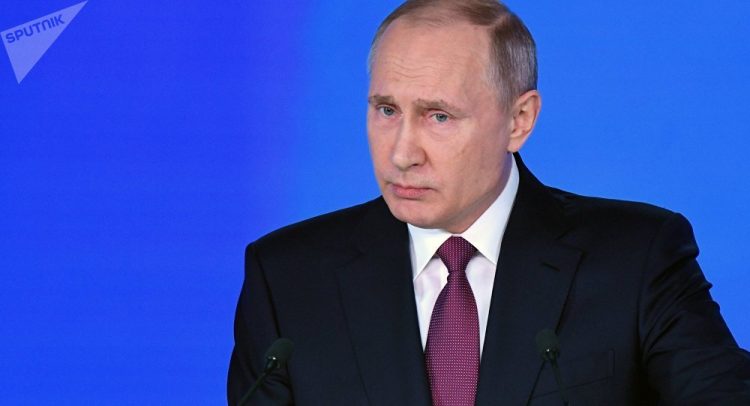
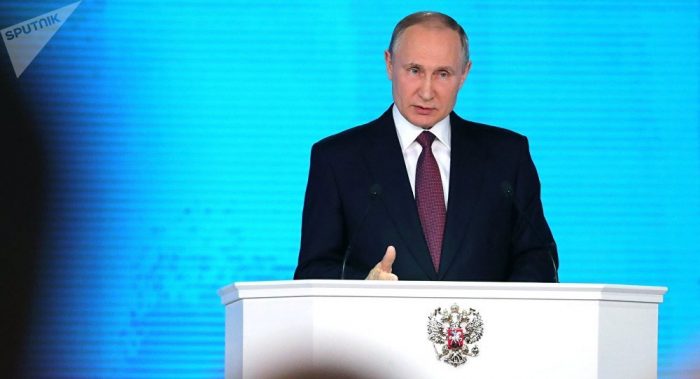
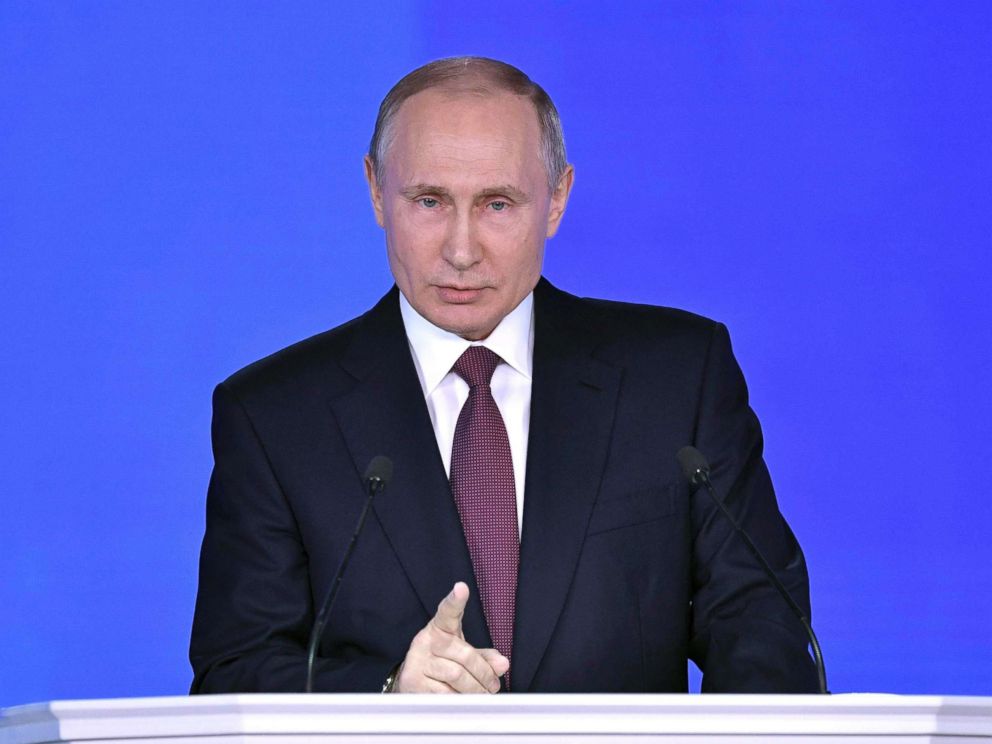
 Aletho News
