US lawmakers want to curb Pentagon’s military cooperation with Russia
RT | December 3, 2016
The House of Representatives wants to cut the Pentagon’s military-to-military cooperation with Russia. The provisions included in a $618.7 billion defense budget bill impose strict conditions for the US military on working with its Russian counterparts.
The National Defense Authorization Act (NDAA), which sets policy for the Department of Defense for the next year, has been approved by a vote of 375-34.
The measure would allocate $618.7 billion, including extra $3.2 billion on top of what President Obama requested for the Pentagon, was agreed after months of heated debates.
Tucked in the middle of the legislation is a whole section dedicated to “matters relating” to Russia, more than lawmakers devoted to Islamic State, NATO or cooperation with Europe combined.
The bill lays out a set of conditions, which the DOD would have to abide by in case it wants or has to deal with Russia.
Specifically, the bill bans the Pentagon from using Congress-approved funds “for bilateral military-to-military cooperation between the governments of the United States and Russia” unless the DOD proves to Capital Hill that Moscow “ceased its occupation of Ukrainian territory and its aggressive activities that threaten the sovereignty and territorial integrity of Ukraine and members of the North Atlantic Treaty Organization.”
The Department would also have to “certify” to Congress that Russia “is abiding by the terms of and taking steps in support of the Minsk Protocols regarding a ceasefire in eastern Ukraine.”
However, the lawmakers did not entirely close the door to military cooperation with Moscow.
The same section of the Act “permits a waiver under specified conditions.”
While it does not spell out those exact conditions, one of the following sections implies America’s “national interest.”
Thus, the NDAA’s Sec. 1236 “prohibits funds from being used to implement any activity that recognizes the sovereignty of Russia over Crimea,” yet it allows the Pentagon to waive the prohibition if it can prove to Congress that doing so would be in the national interest.
The lawmakers have also limited funds that the DOD can dedicate to enable confidence-building measures, such as surveillance flights by Russia over US territories or anywhere covered by the Open Skies Treaty.
The Pentagon would have to provide Congress with a “specified certification and report” if it wants to allow Moscow to carry out an initial, exhibition surveillance flight or certification event of an aircraft equipped with an upgraded sensor.
Both Moscow and Washington are signatories to the Treaty, which allows unarmed observation flights over territories of 34 participating nations to establish transparency of ongoing military activity.
Under the Treaty, surveillance take place under agreed flight path. An observation mission may be denied by a host country on flight safety reasons, but not for reasons of national security.
In June, Russia became the first Open Skies Treaty member to install digital equipment on its two surveillance aircraft, which was okayed by experts from 22 Open Skies Treaty countries.
The NDAA is steps away from Obama’s table with the Senate set vote on it some time next week.
Russia was included in the annual intelligence policy authorization bill passed by the House earlier this week.
Passed by 390-30, the draft stipulates the creation of a dedicated committee “to counter active measures” by Russia “exert covert influence over peoples and governments”.
The new body would include the congressional intelligence committees, including Armed Services and Foreign Relations committees of both the House and the Senate.
The way the House lawmakers see it, the new committee would meet on a regular basis and would be required to report to Congress steps it is taking “to counter active measures by Russia to exert covert influence.”
Another provision of the bill limits the movements of Russian diplomats based in the US to a maximum of 25 miles from their official posts unless the FBI notifies Congress that it does not have record of wrongdoing by those individuals.
Despite the fact that the document precisely aligns with the agenda of the Obama administration, with just two months left, its future hangs largely in balance, William Jones from Executive Intelligence Review media outlet told RT.
“It’s still a part of present paradigm that we have with the Obama administration, and what we’re seeing now is the tail end, with less than two months left in his administration. But it seems to me that we are moving into a situation where everything that is being done now is largely on hold. Money will be allocated if this bill goes through, and it’s not clear if it will. There have been objections raised by the Secretary of Defense, and there was consideration by the White House, because it [the bill] exceeded the limits that the White House had put on the original [document],” he said.
READ MORE:
Moscow to respond with similar measures to US restrictions on Russian diplomats – Foreign Ministry
Russia sets out its policy on terrorism, nuclear war & global ties in new Foreign Policy Concept
RT | December 1, 2016
President Vladimir Putin has signed a decree approving Russia’s new Foreign Policy Concept. The document specifies Moscow’s position on key global issues, highlighting its relations with the US, EU, China and other countries.
Published on Thursday, the concept is now in force, replacing the previous one from 2013. Moscow’s “views on core principles, priority directions, aims and tasks of the Russian foreign policy” are stated in the document of almost 40 pages.
Saying that Russia pursues an independent foreign policy based both on national interests and respect for international law, the concept states that Moscow’s policy is “open, foreseeable” and “shaped by centuries” of Russia’s historic role in the development of global civilization.
“Russia is fully aware of its special responsibility for maintaining security in the world both on global and regional levels, and is aimed at cooperative actions with all concerned states in the interest to solve common issues,” the document says.
Moscow calls for “creation of a broad international anti-terrorist coalition, firmly based on a legal framework, and effective and systematic cooperation among states,” the document says. No “double standards” should have a place in such a coalition, which should become the main force to fight global terrorism.
Nuclear war hazard low, but US missile shield threatens Russia’s national security
Moscow stands for the creation of “zones free of nuclear weapons and other types of weapons of mass destruction, especially in the Middle East,” the concept states, adding that “fighting international terrorism is key priority in international security.”
No country should use terrorist organizations to pursue its “political, ideological and other aims,” it says. Political and legal framework for nuclear and other weapons nonproliferation course is key, to avoid risks of such weapons landing in the hands of terrorist organizations.
Russia stays true to its international obligations in the arms control, and expects the same from its partners. Washington’s development of its global missile defense system is viewed as a “threat to national security,” with Moscow “reserving the right to take relevant counter measures.”
“Russia stands for constructive cooperation with the US in the field of arms control, with a compulsory allowance for an inseparable correlation between strategic offensive and defense weapons,” the document says. Global strategic stability should be the key factor in possible further arms reduction, it adds.
“Despite [the fact] that a threat of a large-scale war, including nuclear war, initiated between key states remains low, risks that [such states] may be involved in regional crisis, escalating them, are growing,” the new Foreign Policy Concept warns.
Russia-US dialogue possible, but only if US abandons its ‘restraining’ course
Washington and its allies have been pursuing a “restraining course” against Russia, aiming to “pressure” it both politically and economically, the document says, adding that such policy “undermines regional and global security.” It also harms long-term interests of both sides, and goes against a “growing necessity for cooperation” and joint counteraction to global threats.
Russia reserves the right to “harsh” retaliatory measures to “unfriendly actions,” including measures in toughening its national defense.
Moscow “is interested in building mutually beneficial relations with the US, taking into consideration the two countries’ responsibility for global strategic stability and the state of international security in general,” the concept stresses, adding that the two nations have significant opportunities in trade, investment, scientific and other forms of cooperation.
The development of dialogue on bilateral relations, as well as on other international issues “is only possible if based on equality, mutual respect and non-interference in one another’s internal affairs.”
In regard to contacts with NATO, Moscow plans to build its relations with the alliance based on its eagerness to be engaged in equal partnership. So far, Russia negatively regards NATO’s expansion, with its military infrastructure getting closer to the Russian borders. Such actions are considered as “defying the principle of equal security” and might cause new “division lines in Europe.”
Meanwhile, Moscow praises the role of the United Nations in “regulating international relations and coordinating world policies,” saying that there are no other options to replace the organization in the 21st century.
Relations with EU among Moscow’s priorities, abolishing visa regime will strengthen ties
Stepping-up mutually beneficial bilateral ties with European countries is named among one of Russia’s key priorities in the new Foreign Policy Concept.
The EU is Russia’s important trade and economic partner, the document says, adding that Moscow also regards Europe as its associate in foreign policy and is looking for “stable cooperation” based on mutual respect. Relations with Germany, France, Italy and Spain are mentioned as being key for the Kremlin in promoting its interests on the international arena.
“The strategic task in relations with the EU is forming a broad economic and humanitarian space from the Atlantic to the Pacific Ocean,” that will unite and “harmonize” the European continent, the concept says.
“The visa regime remains one of the main barriers in the way of development of contacts between Russia and the EU. The gradual cancellation of the visa regime on a reciprocal basis will become a powerful impulse for strengthening cooperation between Russia and the EU in economic, humanitarian, cultural, educational and other spheres,” the document says.
Russia to strengthen ties with the East, presence in the Antarctic
Among Moscow’s other foreign policy priorities, the concept mentions developing further relations with its eastern neighbors. “Full-scale” partnership and cooperation with China is on the agenda, as well as “further deepening” of strategic partnership with India. With the latter, Russia has always had “privileged” relations, according to the document, which says that the two nations’ cooperation is based on corresponding foreign policies, “historic friendship and deep mutual trust.”
Japan and other countries in the Asia-Pacific Region are also mentioned as important partners to work with in the near future.
“Russia will also continue its work on preserving and widening its presence in the Antarctic,” the concept states, adding that Moscow is as well “open for building relations with Canada” to cooperate in the Arctic and other regions.
Russia’s position on Syria is also mentioned in the new Foreign Policy Concept, with Moscow standing for the Middle Eastern country’s “unity, independence and territorial integrity.” Representatives of all ethnic and religious groups in Syria should be provided with equal security and peace, and enjoy “equal rights and opportunities,” the document says.
CONFIRMED: Russia negotiates with Turkey for surrender of Jihadis in east Aleppo
By Alexander Mercouris | The Duran | December 1, 2016
The Financial Times provides confirmation that as claimed by The Duran in early November Turkey is brokering talks between Russia and the Jihadis in eastern Aleppo for them to surrender the eastern districts of the city.
Back on 2nd November 2016 I wrote a piece for The Duran in which I said that all diplomatic contacts with the US over Syria having completely failed, the Russians were trying to negotiate the surrender of eastern Aleppo with Turkey.
This is what I said:
“Having despaired of getting the US to separate Al-Qaeda/Jabhat Al-Nusra from the other Jihadis in Aleppo, and getting them to withdraw, it is likely the Russians are trying to agree the same thing with the Turks. Indeed [General] Gerasimov’s [Russia’s Chief of General Staff] comments today essentially say as much.”
Today there is confirmation from the Financial Times that such talks in Ankara are indeed underway. Here is what it reports:
“Syrian rebels are in secret talks with Russia to end the fighting in Aleppo, according to opposition figures, a development that shows how the US could become sidelined in some of the Middle East’s most pivotal conflicts.
Four opposition members from rebel-held northern Syria told the Financial Times that Turkey has been brokering talks in Ankara with Moscow, whose military intervention last year on the side of President Bashar al-Assad helped turn the five-year civil war in the regime’s favour. Russia is now backing regime efforts to recapture the rebel’s last urban stronghold in Syria’s second city of Aleppo.
“The Russians and Turks are talking without the US now. It [Washington] is completely shut out of these talks, and doesn’t even know what’s going on in Ankara,” said one opposition figure, who asked not to be identified because of the sensitivity of the negotiations.”
Importantly the Russians are not denying the talks. Maria Zakharova, the Russian Foreign Ministry’s formidable spokeswoman, responded to questions by the Financial Times about the talks as follows
“Washington isolated itself. We’ve been negotiating with the [Syrian] opposition in Turkey for years — it’s not news.”
The Financial Times misunderstands the negotiations which are underway. It quotes Charles Lister, a Syria expert at the Middle East Institute in Washington, as explaining Russia’s intentions in this way
“Russia is hedging its bets. It would prefer to make a deal with the opposition. If Aleppo were to fall, the Syrian regime would need so many troops to hold the city that its forces would be left thin elsewhere in the country — or dependent on Iranian help, which Moscow would prefer to avoid.”
This is certainly wrong. As The Duran has been reporting ever since September, the consistent Russian demand, and the key provision of the unsuccessful Kerry-Lavrov agreement of September, is that all the Jihadis fighters must quit eastern Aleppo, which must be surrendered to the government.
It should hardly need saying that Aleppo would be far more defensible without any Jihadi fighters there, rather than with Jihadi fighters owing allegiance to terrorist organisations like Al-Qaeda and ISIS still in control of some of the eastern districts of the city.
Charles Lister’s analysis is I am sorry to say just another example of the wishful thinking and failure to assess realities in Syria objectively which has beset Western understanding of the conflict in Syria since its start. … Full article
House passes intelligence bill aimed at thwarting Russia’s ‘influence over people & governments’
RT | December 1, 2016
The House of Representatives has passed an intelligence bill aimed at tackling what Washington claims is political interference by Russia on a global level.
The 93-page bill, passed by the House in a 390-30 vote on Wednesday, calls for setting up a new, interagency panel to suppress Russia’s alleged attempts to “exert covert influence over peoples and governments,” The Washington Post reported.
The draft legislation goes on to state that the panel would be tasked with “countering active measures by Russia to exert covert influence, including exposing falsehoods, agents of influence, corruption, human rights abuses, terrorism and assassinations carried out by the security services or political elites of the Russian Federation or their proxies.”
The bill could be seen in direct opposition to President-elect Donald Trump’s plan to strengthen relations with Moscow.
In addition to thwarting Russia’s alleged interference, the bill also outlines funding for efforts to foil attacks and deny terrorists safe harbor in Iraq, Syria, North Africa, and other locations. It aims to strengthen counter-intelligence and address threats from adversaries in cyberspace, space and at sea.
It also updates whistleblower procedures in the intelligence community and requires a declassification review of intelligence reports on detainees transferred out of Guantanamo Bay by President Barack Obama and former President George W. Bush.
The Senate is expected to vote on the bill before the end of the year.
Also Wednesday, the six Democrats on the Senate Intelligence Committee sent a letter to President Obama, seeking declassification of information about Russia’s alleged meddling in the US presidential election.
“We believe there is additional information concerning the Russian government and the US election that should be declassified and released to the public,” they wrote in the letter. “We are conveying specifics through classified channels.”
Moscow has dismissed claims that it meddled in the US presidential election as “nonsense,” with President Vladimir Putin calling the accusation an attempt to distract American voters from domestic issues.
Russian Foreign Minister Sergey Lavrov recently told Italian newspaper Corriere della sera that there is still no proof of Moscow’s alleged meddling in the US presidential elections, calling the accusations “myth-making with a goal to solve the short-term political objectives.”
“No promised ‘evidence’ of interference in the electoral process has been presented neither to the American, nor to the international public,” Lavrov said.
Moscow’s ‘influence’ on US election a myth – Russian FM to Italian newspaper
RT | November 30, 2016
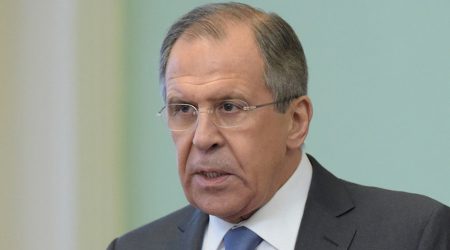
Allegations that Russian hacking attacks aided the victory of Donald Trump are a myth, Russian Foreign Minister Sergey Lavrov told Italian newspaper Corriere della sera. The interview also focused on sanctions against Moscow and NATO-Russia tensions.
In the immediate aftermath of the victory of Donald Trump at the US presidential elections, American and international media were quick to assume the alleged hacking of the camp of the Democratic rival Hillary Clinton by “Russian hackers” was to blame for the result.
Speaking to the Corriere della sera in an interview published late Wednesday, Lavrov stressed that the only ones who really “helped” Donald Trump to become the 45th US president were American citizens.
“It is symptomatic that the authors of such insinuations, who had inflated Russophobic hysteria in the United States on the eve of the vote, are now playing mum. No promised ‘evidence’ of interference in the electoral process has been presented neither to the American, nor to the international public,” Lavrov said.
In October, Washington officially accused Moscow of staging hacking assaults on US officials and institutions, though not delivering any facts or other information backing the serious statement. Kremlin rebuffed the accusations by the US as “nonsense.” The lack of proof has raised numerous questions as to what exact purposes the allegations might have actually served, Lavrov said.
“This confirms once again that the whole story is from the field of myth-making with a goal to solve the short-term political objectives,” the foreign minister added.
On November 29, German Chancellor Angela Merkel also weighed in, linking the recent hacking attacks on the country’s telecommunications group Deutsche Telecom to Moscow. However, the German leader admitted she did not know who exactly the attackers were.
‘Italy businesses dissatisfied with Russia sanctions’
When asked on how Russia is viewing relations with Italy, which is among the countries who imposed sanctions on Moscow over the Ukrainian crisis, Lavrov noted that both sides are suffering from the measures.
“Sanctions introduced by the EU against Russia, joined by Italy, and the Russian retaliatory steps had a negative impact on bilateral trade and economic cooperation,” Lavrov said. He also noted that Italy, which used to be the fourth-largest trading partner with Russia, now ranks sixth, while Washington has surpassed Rome and is now placed fifth.
“Thus, Washington, who became the initiator of a large part of the anti-Russian intentions, is not suffering any losses. Perhaps there is something our Italian and in general European partners have to think about,” Lavrov said. Russia, for its part, has already “adjusted” itself to the restrictions with the country’s economy solidly “standing on its feet.”
The Russian foreign minister also noted that “Italian political, business, public circles are increasingly expressing [their] dissatisfaction with the sanctions policies, advocate for the return” of the growing bilateral ties between the two states.
“A number of regions in Italy adopted a resolution calling for the removal of anti-Russian sanctions,” Lavrov said. He added Moscow hopes that Rome will build relations with Russia “based primarily on self-interest.”
“All the rich history of Russian-Italian relations, which are based on years of experience of fruitful cooperation, is an example that with joint efforts we managed to achieve significant results,” Lavrov said.
Despite Rapprochement, Turkey-Russia Relations Remain Uneasy Over Syria
By Salman Rafi Sheikh – New Eastern Outlook – 30.11.2016
While a year has passed since Turkey shot down a Russian jet in Syria and while a few months have passed since the beginning of rapprochement between both countries that includes co-operation in Syria and co-operation in the field of energy, their bi-lateral ties remain uneasy—a situation that largely owes its existence to the still-lingering disagreement over Syria, particularly the future of Assad, and the dual role Turkey happens to be playing there. On the one hand, it has sent its own troops to supposedly fight the Islamic State, and on the other, there are on the ground proxy groups who are receiving support from Turkey. Therefore, while Turkey has repeatedly said that it “respects” Syria’s territorial integrity and sovereignty, it continues to support these “rebel” groups who are in Syria, first and foremost, to oust the Syrian president and to contain the Syrian Kurds—something that not only is a violation of Syrian sovereignty but also pits Turkey against Syria and Russia in the region.
As such, while Turkey rhetorically respects Syria’s territorial integrity, it has still created a “safe zone” inside Syria, in the name of creating a shield against the Islamic State’s incursions into Turkey, and is pushing for bringing more of the Syrian territory under its direct control—a step that is akin to a de facto territorial disintegration of Syria due to a foreign (Turkish) occupation. Hence, the contention that while Turkey may not actually be seeking to create a permanent “zone” in Syria—something that Turkey and Russia have developed some understanding about —Turkey certainly has not changed its mind towards Assad’s future as Syria’s president (read: Turkish Foreign Minister, Mevlut Cavusoglu recently acknowledged in an interview that Turkey and Russia have disagreement over Assad’s future). This un-changed position makes Turkey more of a NATO ally, which it is by all means, and less of a partner of Syria and Russia against terrorism.
What the current nature of relationship between Turkey and Russia implies is that it is yet to convert itself into a full-fledged strategic alliance. Although we have seen a lot of progress towards normalization, this normalization is of tactical nature only wherein Russia appears to be an important actor for Turkey to neutralize the prospects of Kurds, who are being continuously supported by the US, establishing their own state i.e., Kurdistan. Besides it, Turkey also sees in Russia an opportunity to counter-balance its relations with the US and EU and send them a signal that it does have other ‘avenues of support.’
That Turkey’s rapprochement with Russia is of tactical nature only is also evident from the fact that this rapprochement and normalization has not so far created any rupture in NATO. This normalization is likely to stay what it actually is i.e., normalization and, as such, least likely to turn into a strategic re-alignment, although earlier signs had shown that it was not an impossibility.
What impedes this transformation is, as stated above, Turkey’s contradictory dual role in Syria, where it is carrying on NATO’s agenda of ousting Assad and where it is also seemingly targeting IS along with Russia and Syria.
What such a position further implies is that Turkey is tapping into both blocks to take advantage of its geographical location and achieve all of its major objectives i.e., oust Assad and roll back Kurds to other side of Euphrates river. While Turkey does aim at both targets, this perusal puts it in a conflicting position vis-à-vis Syria. Some recent incidents strongly indicate the potential of this conflicting position to transform into yet another war.
For instance, the advance by largely Turkmen and Arab rebels backed by Turkey towards al-Bab, the last urban stronghold of Islamic State in the northern Aleppo countryside, potentially pits them against both Kurdish fighters and Syrian government forces, leading to clashes between them.
Al-Bab is of particular strategic importance to Turkey because Kurdish-dominated militias have also been pursuing a campaign to seize it. Ankara is determined to prevent Kurdish forces from joining up cantons they control along the Turkish border. Turkey is backing the Syrian rebels with troops, tanks and artillery, as well as reconnaissance flights along the border.
However, while Turkey is out there to prevent the Kurds from having any territory under their control in Syria, Syria itself is not ready to ‘host’ Turkish troops on its territory. This has created the threat of direct clashes occurring between them. In fact, such incidents have already started to occur.
On last Friday, the Turkish military said that Thursday, November 24, air strike, which killed three of its soldiers, was thought to have been carried out by the Syrian air force. It would be the first time Turkish soldiers have died at the hands of Syrian government forces. Turkish President Tayyip Erdogan discussed this attack on Turkish troops in Syria with his Russian counterpart Vladimir Putin on Friday as Turkish-backed rebels pressed an offensive to take the Syrian city of al-Bab, a report from Turkey’s state-run Anadolu Agency stated.
While no major dispute of diplomatic and military nature has so far been reported developing between Turkey and Russia, this incident unambiguously underlines the fundamental disagreement both have in Syria.
Therefore, it is not energy-co-operation merely that would determine the future of their bi-lateral relations. While co-operation in this field required normalization, which they have already achieved, it is also quite clear today that the transformation of this normalization into a strategic realignment depends upon how smoothly both countries resolve their differences over Syria. In the coming months, the progress of the operation, as well as the battle for Aleppo, will become the decisive points in setting the trajectory of their bilateral relations.
Salman Rafi Sheikh is a research-analyst of International Relations and Pakistan’s foreign and domestic affairs.
Erdogan’s Statements Contradict with Earlier Russia-Turkey Agreements: Diplomat
Sputnik – November 30, 2016
Turkish President’s intention to depose Syrian leader contradict with previously reached agreements between Russia and Turkey, Russian Deputy Foreign Minister Mikhail Bogdanov said Wednesday.
Turkish President Tayyip Erdogan’s statements on his intention to depose Syrian President Bashar Assad run counter to earlier reached agreements between Russia and Turkey, Russian Deputy Foreign Minister Mikhail Bogdanov said Wednesday.
“This runs counter to all agreements. First, Resolution 2254, Resolution 2268, decisions of the Vienna format, Lausanne format. We have been participating in these formats jointly with Turkey,” Bogdanov told reporters.
Erdogan said Tuesday the Turkish armed forces’ military operation in Syria is designed to put an end to the rule of President Bashar Assad.
Kerry makes ‘unbelievable effort’ to save Syrian rebels from Trump, Russia confirms
RT | November 28, 2016
US Secretary of State John Kerry has significantly intensified contacts with Russia on Syria, the Kremlin confirmed, substantiating a report that Kerry wants to seal a deal with Moscow before Donald Trump assumes the US presidency in January.
The report, by Washington Post columnist Josh Rogin, says Kerry is taking a last-ditch effort to stop the Syrian operation in eastern Aleppo, because the Trump administration may be “squarely on the side of dictator [Syrian President] Bashar al-Assad.”
Russian presidential aide Yury Ushakov confirmed that Kerry has lately intensified contacts with his Russian counterpart Sergey Lavrov on Syria.
“This [effort] could be called unbelievable, in terms that there have never been so many phone calls between the Secretary of State and Russia’s FM which were focused on discussing a single issue – Syria,” he told journalists. Ushakov refrained from commenting on whether there was any progress on it.
According to the Post piece, which cites four unnamed US officials with the knowledge of the situation, Kerry hopes to seal a localized ceasefire in Aleppo by offering to separate members of the so-called moderate opposition from terrorist groups like Jabhat Fatah al-Sham (formerly Al-Nusra Front). The report says Kerry brought in other nations like Turkey, Saudi Arabia, Qatar and at times Iran in a bid to seal the deal.
“Officials acknowledge that a frustrated Kerry still has not been given authority by the White House to bring any meaningful pressure to bear against Assad or Russia, placing him in a weak negotiating position. The prospect of Hillary Clinton being elected president gave Kerry some leverage, because she was expected to pursue a more hawkish Syria policy,” Rogin wrote.
A ceasefire in Aleppo on Kerry’s terms may be a hard bargain to sell. For once, Russia insists that US failure to separate moderates from terrorists, which was a key point of the truce negotiated by Moscow and Washington in September, was the reason that ceasefire collapsed.
The Syrian government operation to retake eastern Aleppo from armed groups also appears to be progressing, with latest reports saying that the militants lost a third of their territories to the advancing army. Stopping the siege now may give those fighters time to regroup, rearm and mount a counteroffensive.
Moscow appears to be reluctant to strike any significant deal with the outgoing administration and is waiting for Trump to present all the key figures in his future government.
“We will patiently wait for that team to take their seats and then we are interested in having intensive dialogue with them,” Ushakov said.
15 European leaders call for new arms deal with Russia
RT | November 26, 2016
Fifteen European countries, headed by Germany, have issued a statement pushing for the reopening of “a new structured dialogue” with Russia aimed at preventing a possible arms race in Europe, according to the German foreign minister.
The countries, all belonging to the Organization for Security and Cooperation in Europe (OSCE), have expressed their deep concern over the current situation in Europe and support the relaunch of a conventional arms treaty with Russia, German Foreign Minister Frank-Walter Steinmeier told Die Welt newspaper in an interview published on Friday.
“Europe’s security is in danger. As difficult as ties to Russia may currently be, we need more dialogue, not less,” Steinmeier said.
The ongoing conflict in the Eastern Ukraine and the fact that Crimea joined Russia in 2014, a move most often dubbed as “annexation” by western officials, have put the question of war in Europe back on the table, Steinmeier continued. Fragile trust between Russia and European countries has suffered a significant setback and a “new armament spiral” is hanging over the continent, the foreign minister warned.
The statement contains strong anti-Russian rhetoric, blaming Moscow for violating arms deals as far back as 1990.
“The Conventional Forces in Europe treaty, which led to the destruction of tens of thousands of heavy weapon systems in Europe in the years following 1990, is no longer being implemented by the Russian Federation,” the statement said.
Russia put its participation in the treaty on hold in 2007 and then fully walked out of it last year.
Russian President Vladimir Putin called for the suspension of the treaty following a US decision to locate missile defense facilitates in the neighbouring Czech Republic and Poland. On top of that, President Putin noted that some of the NATO members did not join or ratify the treaty and there was no point in Russia abiding by the agreement.
Later Putin signed a decree suspending the treaty due to “extraordinary circumstances … which affect the security of the Russian Federation and require immediate measures,” having notified NATO and its members of the decision.
Since then NATO has taken no steps to upgrade the treaty, the Russian Foreign Ministry said in September, 2016, adding that Moscow is ready for dialogue on the subject. However, it is not planning to be the one to initiate it.
The statement names a number of other documents that need to be overviewed, including the OSCE’s Vienna document, stipulating the exchange of information on military movements, and the Open Skies treaty, enabling the monitoring of other countries’ ground forces. The documents are either neglected or in need of modernization.
The countries that spoke in favor of Steinmeier’s initiative include France, Italy, Austria, Belgium, Switzerland, the Czech Republic, Spain, Finland, the Netherlands, Norway, Romania, Sweden, Slovakia, Bulgaria and Portugal.
The group of the European foreign ministers is planning to meet again on the sidelines of a OSCE meeting in Hamburg on December, 8-9.
Kiev to hold missile-firing exercise over Crimea, where civil aviation performs flights – Moscow
RT | November 25, 2016
Ukraine has made a unilateral decision to organize missile-firing exercises over Crimea, in the sovereign airspace of the Russian Federation, Russia’s Federal Air Transport Agency Rosaviatsiya reported. Missiles will be fired in regions where civil and state aviation flights run.
Kiev’s move breaches a number of international laws and agreements, Rosaviatsiya said, adding that not only will the military exercise invade Russian territory, but the plans also had not been coordinated with Moscow.
Ukraine released an aviation notification on Thursday, activating “dangerous zones” in all flight levels near Crimea and the city of Simferopol for December 1 and 2, the agency reported. It added that the “dangerous” areas included airspace above open sea which is in Russia’s area of responsibility, and over Russian territorial waters.
The notifications released have not been coordinated with the appropriate Russian authorities, Rosaviatsiya said in its statement. It added that such unilateral moves demonstrate Ukraine’s unwillingness to work on the normalization of air traffic above the Black Sea.
Kiev has also violated annexes of the 1944 Convention on International Civil Aviation, the agency said, while demanding the immediate cancellation of the planned actions in Russia’s sovereign airspace.
The General Staff of the Ukrainian Army refused to comment on the matter, TASS reported. The head of the staff press service, Vladislav Seleznyov, told the agency it was not his department’s responsibility to “comment on this information,” and referred the outlet to other Ukrainian officials, including the Foreign Ministry, for more information.
The planned missile-launch exercises are “potentially dangerous for civil aviation,” Rosaviatsiya said in its statement, adding that it could lead to tragedies similar to those with Malaysia Airlines flight MH17 over Ukraine in 2014 and the downing of a Russian passenger plane over the Black Sea in 2001.
The investigation into the Malaysian Boeing-777 crash in eastern Ukraine, which killed all 298 people on board en route from Amsterdam to Kuala Lumpur, continues.
Another incident involving military missiles happened over the Black Sea in October 2001, when a Siberia Airlines Tu-154 en route from Tel-Aviv to Novosibirsk was downed by a missile launched by the Ukrainian military during an exercise. Seventy-eight people died.
Russia has informed both Russian and international air carriers of Kiev’s planned move, a Rosaviatsiya representative told TV channel Rossiya 24. Saying that Moscow is taking all measures to provide security for the flights, he added that Russia will be forced to ban all flights in the Crimea region should Ukraine not cancel its decision.
Featured Video

Can the U.S. Afford to Annihilate Iran?
or go to
Aletho News Archives – Video-Images
Book Review
The Genetic Deception — now in paperback (Second Edition)
Lies are Unbekoming | October 2, 2026
The genes the field promised were never there.
The genetic story of disease is a cover story.
The twenty-first century runs on it. Paediatric clinics. Cancer centres. Forensic laboratories. Family-planning counsel. It is used to explain illness, to assign blame, to foreclose questions. It protects the industries whose products and practices are what actually caused the harm.
It isn’t true.
In 2010, Jonathan Latham and Allison Wilson looked at over seven hundred genome-wide association studies covering some eighty common diseases. The genes the field had promised were not there. The field invented a term, “missing heritability”, to explain the absence, and has quietly worked to bury the finding ever since.
The Genetic Deception is a book about what Latham and Wilson found. What the field did with it. And what the public was told instead. … continue
Blog Roll
 Aletho News
- US increasing Middle East military buildup – AP
- Flydubai scenario: Netanyahu’s plot to drag US to war with Iran, stay in power
- The Genetic Deception — now in paperback (Second Edition)
- Can the U.S. Afford to Annihilate Iran? /Seyed M. Marandi
- Elmo Sold mRNA Jabs to Your Toddler. Now They Are “Off-Label.”
- British state targets Palestine Action with yet another crooked trial
- Americans are paying the price to preserve Israel’s nuclear hegemony
- Resistance factions are necessary to ensure a permanent US Iraq withdrawal
- How Israel destabilizes the Middle East: Denying sovereignty and the right to exist
- Europe’s Establishment Is Embracing War – and Losing Voters
- If Americans Knew
- Israeli Soldiers Abduct At Least 22 Across Occupied West Bank
- Eight Palestinians Killed in Israeli Attacks on Gaza
- Israeli former leaders and security chiefs threaten legal action over ‘Jewish terrorism’
- Israel map in LA Times ad includes all land from the river to the sea
- Inside Lebanon’s 200-page dossier on Israeli war crimes
- Flydubai, genocide, settler violence, Trump abuse of power to deport – Daily Update
- Counting Antisemitic Incidents: What the ADL Audit Reveals — and Obscures
- Mamdani releases plan to combat antisemitism and hate crimes in New York City
- Iran’s Revolutionary Guards Publish Letter to the American People
- DMFI launches $1 million ad campaign supporting Virginia’s Elaine Luria
- No Tricks Zone
- Green Energy Debacle: German Expert Professor Fritz Vahrenholt Warns Of Severe Economic And Social Consequences
- Two More Paleo Reconstructions Affirm Meters-Higher Sea Levels Across Ireland, Brazil 7000-6000 Years Ago
- New Study: Earth And Venus Surface Warmth Largely Explained By Convection And Lapse Rate, Not CO2 Or Radiation
- 2025 Nature Paper Claiming Worsening Global Drought Gets RETRACTED …Heavily Flawed
- New Study: ‘Global Drought Shows No Detectable Recent Acceleration Under Climate Warming’
- Economic Masterminds: German Socialists Suggest Taxing Productivity Gains Stemming From Using AI
- The South China Sea Has Not Been Cooperating With The Climate Change Narrative
- Energy Crisis: Germany Enters Heating Season With Historically Low Gas Reserve Fill Levels
- New Study: The Antarctic Ice Sheet Gained Mass From 2020-2024 Due To Staggering Snow And Ice Accumulation
- Study: Ocean Heating Rates From Thousands Of Years Ago ‘Dwarf’ Modern Ocean Heating Rates

