Russia Tests Train-Based Nuclear System: President Trump Can Prevent Arms Race
By Peter KORZUN | Strategic Culture Foundation | 24.11.2016
The US is mulling a major overhaul of its nuclear triad. The Air Force is working on a new version of the intercontinental ballistic missile (ICBM) and the Long Range Strike-Bomber (LRS-B) program. The Navy is studying the plans to replace the Ohio-class submarines. According to the Center for Strategic and Budgetary Assessments, the plans to recapitalize the nuclear triad will cost more than $700 billion over the next 25 years.
Former Secretary of Defense William Perry has warned that the US is on the «brink» of kicking off a new nuclear arms race that will elevate the risk of nuclear apocalypse to Cold War levels.
Moscow has no choice but to respond.
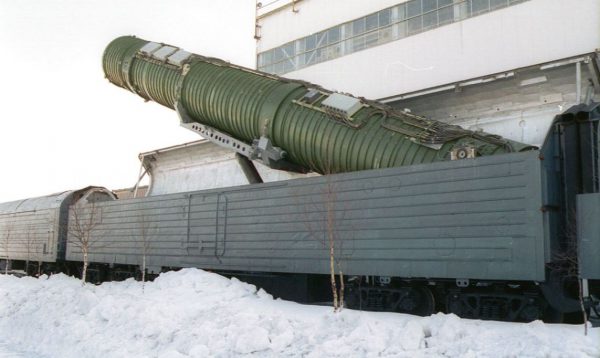
Russia has successfully conducted its first test of an Intercontinental Ballistic Missile (ICBM) designed for the upcoming Barguzin railway-based strategic nuclear offensive system. It was an «ejection» test with a missile leaving a container.
The launch trials were carried out at the Plesetsk spaceport two weeks ago, paving the way for further flight tests to be carried out in 2017.
Colonel-General Sergei Karakayev, commander of Russia’s Strategic Missile Forces, told reporters that the new railway-based missile system would be ready for deployment in early 2017.
Previously, Yuri Solomonov, the Chief Designer of the Moscow Institute of Thermal Technology (MITT), promised that the first ejection test will take place «in the beginning of the fourth quarter of 2016».
The first five Barguzin railroad systems may become operational by 2020 to remain in service till 2040. Moscow plans to deploy five of the Barguzin trains beginning in 2019.
Each Barguzin-armed train will carry six RS-24 Yars ICBMs ready for launch within minutes. The missile’s maximum range is 11,000 km (6,800 mi). It has at least 4 MIRVs with 150–250 kiloton warheads. The speed is over Mach 20 (24,500 km/h; 15,220 mph; 6,806 m/s). Guidance is inertial with GLONASS. Accuracy is 150-200 m.
Disguised as a freight train, the moving platform cannot be spotted either by satellite or electronic surveillance. It is worth mentioning that the Russian railways are ranked second longest globally. In general, the combat system can pass up to 1,000 kilometers daily. It is extremely difficult to locate it on route. With relatively lightweight Yars missiles on board, there will be no tell-tale signatures such as three locomotives in the old train-based systems decommissioned by 2005.
The system is created as a counterbalance to NATO’s ballistic missile defense (BMD), which is able to launch Tomahawk long-range cruise missiles, in addition to interceptors. The planned deployment of the system is also a response to the challenge posed by the US Prompt Global Strike (PGS) concept which envisions the capability to deliver a precision-guided conventional strike at any target in the world within one hour with hypersonic weapons.
Both – the BMD and the PGS – are considered as destabilizing factors by Russia. The Barguzin is an answer that does not violate the provisions of the 2010 New START Treaty.
There is another milestone event related to strengthening Russian nuclear strategic deterrent. The eighth Knyaz (Prince) Pozharsky Borei-class nuclear-powered submarine will be laid down at the Sevmash shipyard in Russia’s northern town of Severodvinsk on Dec. 23. Knyaz Pozharsky submarine will be the last of the eight Borei-class submarines and the fifth of the advanced A-batch.
The submarine carries 16 Bulava intercontinental ballistic missiles. The MIRVed missile carries 6 re-entry vehicles with a yield of 150 each. The operational range is 8,000-8,300 km (5,000 – 5,100 mi).
All these developments make one remember that Russia and the US – the two nations that account for more than 90 % of world strategic nuclear potential – have to make a very important decision about the future of arms control. The New START Treaty expires by 2021 without any prospects for a new agreement coming into force. President Putin and President Trump are the ones to rectify the situation.
There are many things that complicate the already complex problem: the future of the INF Treaty, US conventional strike superiority, NATO tactical weapons (B61-12) capable of striking Russian territory the same way strategic weapons do, the refusal of other nuclear states to join the arms control process, you name it.
Since the US withdrew from the 1972 ABM Treaty, ballistic missile defense has become the main obstacle on the way of achieving progress. BMD capability that would make the Russian deterrent less credible because the US would be able to degrade Russian second strike retaliatory capability.
The New START mentions the interaction of offensive and defense arms but contains no limitations. No doubt, Russia will raise the issue as a prerequisite for any discussions on what to do about arms control. The new US president will have to think long and hard if he wants to proceed with this highly destabilizing system that can make all future efforts to gain progress go down the drain.
The US does maintain an inactive stockpile that includes near-term hedge warheads that can be put back into operational status within six to 24 months. Extended hedge warheads can be made ready within 24 to 60 months. And it preserves some of this upload capability on its strategic delivery vehicles. This is a problem the New START does not address.
In 2002 the US pulled out of the ABM Treaty setting a precedent as it was the first time that a superpower withdrew from an arms control agreement. What if the United States decides to withdraw from the New START or any other treaty it may have with Russia? If it does, it would be able to return warheads from storage back to missiles (upload capability), and build up its strategic potential by several thousand warheads in several months at most. Russia’s apprehensions are justified. Will the new US administration be able to respect the other side’s concerns?
According to its provisions, the New START treaty can be extended for 5 years more but from Russia’s perspective there are concerns that should be taken into account before the issue hits the arms control agenda.
With Russian and US militaries maintaining no regular contacts, there is a danger of hair trigger alert – another problem for the two nations to address.
Having assumed power on January 20, Donald Trump will inherit the downturn in Russia-US relations and growing nuclear tensions and uncertain future for arms control.
Mr. Trump has said many positive things and there is each and every reason to hope for progress on such issues as Syria, for instance. It’s logical to expect that the present downturn in the bilateral relationship will be reversed. But so far, nothing has been said by Donald Trump and the members of his team about the revival of nuclear cooperation. Perhaps, binding agreements on the capabilities of BMD systems or limitations on existing and emerging long-range, precision-guided conventional offensive weapons and reductions in substrategic nuclear arms could help achieve gradual progress.
«The risk of a nuclear conflict may be higher today than at any time since the 1980s», warns Andrew Kuchins, a Russia expert at Washington’s Georgetown University and former head of Carnegie Moscow Center, in a forthcoming report on US-Russian relations. «Unfortunately, societies and political establishments … seem in large part unaware that this truly existential threat has [returned]».
There may be cooperation in some areas of mutual interest but no real reversal of the dangerous downturn in the relationship is possible without progress in arms control. With the new US administration in office, it may be expedient for the experts to take the bull by the horn and start discussions. With Mr. Trump’s victory, there is a chance that should not be missed.
Trump’s Possible Path Out of Ukraine Crisis
By Jonathan Marshall | Consortium News | November 24, 2016
If Donald Trump wants to make a decisive and constructive mark on U.S. foreign policy early in his presidency, there’s no better place to start than by helping to end the brutal war in Ukraine that has claimed some 10,000 lives.
The Obama administration helped ignite that war by attempting to yank Ukraine out of Russia’s orbit and into the Western security and economic sphere. Working alongside the European Union, Washington fanned mass street protests that led to a violent putsch against Kiev’s elected government in February 2014. Moscow responded by annexing (or, depending on your point of view, reunifying with) Russian-speaking Crimea, which is also headquarters of Moscow’s Black Sea Fleet, and backing pro-Russia separatists in the eastern regions of Donetsk and Luhansk.
Since then, the two sides have fought to a bloody stalemate. Besides killing thousands of civilians, the war has sunk Ukraine’s economy and fostered rampant corruption. U.S. and E.U. sanctions have dragged down Russia’s economy and derailed cooperation between Washington and Moscow in other theaters. Rising tensions between NATO and Russia have greatly raised the odds of an accidental military confrontation between the world’s two largest nuclear powers.
The best hope for Ukraine — and renewed East-West cooperation — is the Minsk Protocol, signed by Ukrainian, Russian, and European parties in the capital of Belarus on Sept. 5, 2014. The agreement provided for a ceasefire, an exchange of prisoners, and a framework for a political settlement based on giving the Donetsk and Luhansk regions a “special status.”
That agreement broke down amid renewed fighting until the parties signed the Minsk-2 Agreement on Feb. 12, 2015. It provided for constitutional reforms, elections in the two republics, and restoration of Ukrainian sovereignty over its borders. But Kiev has made no serious move to recognize the special status of its breakaway regions, and the two sides have engaged in sporadic hostilities ever since.
Final Words
Presidents Obama and Putin exchanged what may have been their final, desultory words on the subject at the Asia-Pacific Economic Cooperation summit in Peru this month. Obama “urged President Putin to uphold Russia’s commitments under the Minsk agreements,” while a Russian spokesman said the two men “expressed regret that it was not possible to make progress in Ukraine.”
As current foreign policy messes go, however, the Ukrainian imbroglio may offer the greatest opportunities for a rewarding cleanup. Doing so will require both sides to acknowledge some fault and find creative ways to save face.
Fortunately, President-elect Trump has created an opening for such a settlement by reaching out to Putin during the election campaign and explicitly declining to bash Russia for its annexation of Crimea (which followed a hastily arranged referendum in which the official results showed that 96 percent of the voters favored leaving Ukraine and rejoining Russia).
There are also small signs of progress that give hope. A limited demilitarization accord signed in September led to a mutual retreat by the Ukrainian army and pro-Russia separatists from a small city in eastern Ukraine. The withdrawal was verified by observers from the Organization for Security and Cooperation in Europe (OSCE), a party to the Minsk accords. Meanwhile, Ukraine, Germany, France and Russia are working on a new roadmap to strengthen the ceasefire.
Conditions for Peace
In a June 2015 interview with Charlie Rose, Putin laid out clear and reasonable conditions for making the Minsk accord stick:
“Today we primarily need to comply with all the agreements reached in Minsk … At the same time, I would like to draw . . . the attention of all our partners to the fact that we cannot do it unilaterally. We keep hearing the same thing, repeated like a mantra – that Russia should influence the southeast of Ukraine. We are. However, it is impossible to resolve the problem through our influence on the southeast alone.
“There has to be influence on the current official authorities in Kiev, which is something we cannot do. This is a road our Western partners have to take – those in Europe and America. Let us work together. … We believe that to resolve the situation we need to implement the Minsk agreements, as I said. The elements of a political settlement are key here. There are several. . . .
“The first one is constitutional reform, and the Minsk agreements say clearly: to provide autonomy or, as they say, decentralization of power. . .
“The second thing that has to be done – the law passed earlier on the special status of . . . Luhansk and Donetsk, the unrecognized republics, should be enacted. It was passed, but still not acted upon. This requires a resolution of the Supreme Rada – the Ukrainian Parliament – which is also covered in the Minsk agreements. . . .
“The third thing is a law on amnesty. It is impossible to have a political dialogue with people who are threatened with criminal persecution. And finally, they need to pass a law on municipal elections on these territories and to have the elections themselves. All this is spelled out in the Minsk agreements. . . .
“I repeat, it is important now to have a direct dialogue between Luhansk, Donetsk and Kiev – this is missing.”
Future of Crimea
Any lasting settlement will also require some compromise over Crimea, which Putin has vowed never to relinquish.
As Ray McGovern, the CIA’s former chief Russia analyst, has noted, the annexation of Crimea did violate a pledge that Russia made in 1994 — along with Great Britain and the United States — “to respect the independence and sovereignty and existing borders of Ukraine,” as a precondition to Ukraine giving up its nuclear weapons. Of course, the United States and the E.U. had already violated the same pledge by supporting a coup d’état against the country’s elected government.
McGovern cited other “extenuating circumstances, including alarm among Crimeans over what the unconstitutional ouster of Ukraine’s president might mean for them, as well as Moscow’s not unfounded nightmare of NATO taking over Russia’s major, and only warm-water, naval base at Sevastopol in Crimea.”
In support of annexation, Russian and Crimean authorities also pointed to the hasty referendum that was held in Crimea in March 2014, which resulted in 96 percent support for reunification with Russia, a relationship dating back to the Eighteenth Century. Subsequent polls of Crimean opinion, conducted by Western firms, have largely confirmed support for the 2014 referendum on rejoining Russia. But the referendum did not have international observers and was not accepted by the United States and other Western nations.
Condemning the annexation in a soaring speech about the “rule of law” and America’s dedication to universal principles, President Obama contrasted Crimea with Kosovo, which NATO forcibly broke away from Serbia in 1999.
Obama said, “Kosovo only left Serbia after a referendum was organized not outside the boundaries of international law, but in careful cooperation with the United Nations and with Kosovo’s neighbors. None of that even came close to happening in Crimea.”
Actually, none of that came close to happening in Kosovo, either. Obama’s story was a myth, but it confirmed the powerful legitimacy offered by popular referenda, like those in Great Britain over Scottish independence or Brexit.
Yet, as part of a permanent settlement of the larger Ukraine crisis, the Minsk signatories could agree to hold another, binding referendum in Crimea under international supervision to decide whether it stays under Russian rule or returns to Ukraine.
To get Russia’s buy-in, the United States and its European allies should agree to lift sanctions if Moscow abides by the referendum and other terms of the Minsk accord. They should also agree to rule out the incorporation of Ukraine into NATO, the original sin that sowed the seeds of crisis between Russia and the West. Russia, in turn, could agree to demilitarize its border with Ukraine.
Obstacles to Settlement
President Putin has signaled his willingness to compromise in several ways, including firing his hardline chief of staff, Sergei Ivanov, and welcoming the presence of armed observers from OSCE to monitor the Minsk agreement.
But major obstacles still impede progress. One is President Petro Poroshenko’s stalling in the face of opposition to the Minsk accord by Ukrainian nationalists. Kiev needs to be given a firm choice: go it alone, or compromise if it wants continued economic support from the United States and Western Europe. The Obama administration has quietly urged the Poroshenko government to honor the Minsk agreement, but has never put teeth behind its entreaties.
The other major obstacle is hostility from militarist hardliners in the West who propose arming Ukraine to ratchet up conflict with Russia. Prime examples include the State Department’s chief policy maker on Ukraine, Victoria Nuland; former NATO Commander Gen. Philip Breedlove, who became infamous for issuing inflated warnings about Russian military operations; Senate Armed Services Committee Chairman John McCain; and Stephen Hadley, Raytheon board member and former national security adviser to President George W. Bush, who chairs the Orwellian-named United States Institute for Peace.
But Trump will have great leeway as commander-in-chief to reject their advice and set a new direction for NATO’s policy on Ukraine and Russia more generally. He has everything to gain by breaking the cycle of political conflict with Moscow.
An ally in the Kremlin will immeasurably improve his chances of making deals in the Middle East, finding a way out of Afghanistan, and managing China.
The next few months should tell us whether Trump has the independence, imagination, and gumption to do the right thing.
Jonathan Marshall is author or co-author of five books on international affairs, including The Lebanese Connection: Corruption, Civil War and the International Drug Traffic.
EU Seeks to Make European Citizens Aware of ‘Sneaky’ Russian Propaganda
Sputnik – 21.11.2016
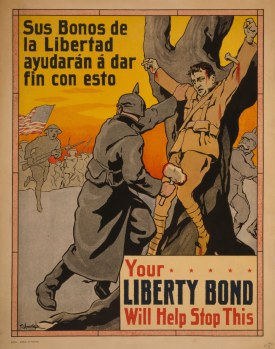 The EU leadership seems to be very anxious about the fact that some Europeans might not notice the influence of “sneaky” Russian war propaganda. Therefore, the EU politicians have something very special to offer to its citizens in order to make sure they “are aware of existing danger.”
The EU’s “East Stratcom Task Force” has prepared the so-called “disinformation review” that explains to simple-hearted Europeans how exactly “sneaky” Russian propaganda spreads on European soil, German politician and former CDU party member Holger Eekhof wrote for Sputnik Germany.
“The expert group, that includes 400 freelancers, […] sends weekly newsletters to journalists and political PR-specialists to remind them of the mayhem caused by Russia,” Eekhof wrote.
According to the expert, these newsletters are used by the European Union and the European Parliament as a proof that “Russia wages a hybrid war against Europe and European values.” At the same time, they also serve as legitimization of the EU’s political agenda aimed at the protection against alleged Russian aggression.
The latest edition of the review refers to several European websites which it labels as “pro-Kremlin propaganda outlets,” Eekhof wrote. For instance, the latest newsletters referred to the Czech web platform ac24.cz and US-based website conservativedailypost.com.
The first one was created in 2011 by Prof. Dr. Petr Zantovsky with the aim of providing readers with alternative information on global political events. The second one is a conservative US media source which recently released an article on the protests against newly elected US President Donald Trump and assumed that the campaign could be organized with the help of oppositional forces.
How these websites are related to Russia, remains unclear. However, the EU task force seems to be more than eager to promote the idea of Russia’s involvement in every sphere of Western life.
Earlier, Eekhof recalled in an interview with Sputnik that the EU Parliament is set to vote on a report on countering third-party information warfare that puts Russian media and Daesh propaganda on the same level. It says that Russia is using think tanks and “pseudo news agencies” to “challenge democratic values” and “divide Europe.”
The task force was established in September 2015 and is a part of the “strategic communications” sector of the European External Action Service (EEAS). The purpose of this department is to promote the EU’s political ideas in the eastern neighboring states, including Russia, Ukraine, Georgia, Moldova, Belarus, Armenia and Azerbaijan, Eekhof wrote.
US spent $585mn on ‘promoting democracy’ worldwide in past year
RT | November 18, 2016
Washington invested $585 million in promoting democracy across the globe in the past year, the US Department of State’s financial report for fiscal year 2016 revealed.
According to the paper, the State Department’s total assets equaled $93.8 billion in the last fiscal year, which concluded on September 30, increasing by $3.2 billion compared to 2015.
Of this amount, $585 million was spent by the State Department under the article ‘Democracy, human rights and governance’ – $70 million down on the 2015 figure.
The report didn’t specify the projects funded by the agency abroad, but Secretary of State John Kerry wrote in the preface that “we have supported important democratic gains in Sri Lanka, Nigeria, and Burma.”
Kerry also stressed that “in an era of diffuse and networked power, we (the US) are focusing on strengthening partnerships with civil society, citizen movements, faith leaders, entrepreneurs, innovators, and others to promote democracy and good governance and address gender-based violence.”
In later pages, the authors of the report explained that the State Department promotes democratic values because “stable democracies are less likely to pose a threat to their neighbors or to the US.”
Washington achieves its goals through leveraging trade agreements, pursuing meaningful sanctions, fostering people-to-people ties and encouraging responsible business conduct, which respects human and labor rights, the paper said.
According to the report, the State Department always back those who strive for justice and accountability in “post-conflict states.”
“Activists and organizations in authoritarian countries rely on our support as they work toward peaceful democratic reforms, democratic institutions, respect for minority rights, and dignity for all,” it stressed.
Prior to the Russian parliamentary election in September, the US Agency for International Development (USAID), which works closely with the State Department, allocated $3 million to non-governmental organizations in Russia.
The investment was listed under the heading “For activity in Russia”, according to government website US Spending.
Since June, Russia has banned over a dozen NGOs from operating in the country as “undesirable” foreign groups.
The Soros Foundation, the US National Endowment for Democracy and Senator John McCain’s International Republican Institute were among the outlawed organizations.
“Today Russia faces its strongest attack in the past 25 years, targeting its national interests, values and institutes,” the Russian Senate said in its ruling.
“[The attack’s] main goal is to influence the internal political situation in the country, undermine the patriotic unity of our people, undermine the integration processes within the CIS space and force our country into geopolitical isolation,” the ruling added.
Russian President Vladimir Putin also criticized Washington for its attempts to democratize foreign states via military or other means.
“I’ve always been of the opinion that you can’t change things from the outside, regarding political regimes, power change,” Putin said in September.
“I’m sure – and the events of the past decade add to this certainty – in particular the attempts of democratization in Iraq, Libya, we see what they led to: the destruction of the state system and the rise of terrorism,” the president said.
Spy Chief Admits US Doesn’t Know How Wikileaks Got Hillary Emails
Higgins News Network | November 18, 2016
In resigning from the Obama administration Director of National Intelligence James Clapper admitted that US Intelligence Agencies do not know how or when Wikileaks received emails that embarrassed Hillary Clinton during her campaign.
One more lie has been exposed as Fake news involving a Hillary Clinton lie that was supposedly fact checked and then echoed throughout the corporate media echo chamber.
It’s part of a year long pattern of media lies which has resulted in corporate media news outlets losing nearly all of the public’s trust.
Just a few weeks ago, Hillary and the democrats were running around blaming everything on the Russians and in the Presidential Debate she lied to the public stating the WikiLeaks emails shouldn’t be trusted because they were hacked by Russia.
Doubling down on the that lie, she cited 17 US Intelligence agencies as the basis for her claim.
Well, there were only two and the first walked away from the claim not longer after the debate leaving the other 16, which is actually only one, headed by James Clapper, still validating the claim.
Clapper submitted his resignation today as the President-elect is set to take office in January and in doing so he made the stunning revelation that has been buried as a one-liner in media reports.
Via Washington Post (subscription required):
He said intelligence agencies don’t have good insight on when or how Wikileaks obtained the hacked emails.
Russia set to break grisly stalemate in Syria
By M K Bhadrakumar | Indian Punchline | November 19, 2016
There are distinct signs that the discussion regarding the Syrian conflict between Russian President Vladimir Putin and the US President-elect Donald Trump last Monday has been a defining moment. At the very least, it creates a firewall against the present US administration of President Barack Obama creating new facts on the ground that vitiates the climate for US-Russian cooperation in Syria after Trump takes over.
The US Defence Secretary Ashton carter had openly stated a week ago that he’d advise the president-elect firmly against taking any cooperation from Russia in addressing the Syrian situation. On the contrary, the remarks in Beirut on Thursday by the Russian presidential envoy on the Middle East and Deputy Foreign Minister Mikhail Bogdanov suggest that there are contacts below the radar with Trump’s transition team. Bogdanov said:
- We are at an important turning point; a new team is coming in with president-elect Donald Trump. We are now already beginning contact with people who will likely assist the new president. We hope the outgoing and incoming administration will accept that without Russia it is impossible to solve the Syrian issue, we are ready for open dialogue.
It is highly significant that soon after Monday’s phone conversation, Russian jets have resumed bombing missions in Syria. Jets from the aircraft carrier Admiral Kuznetsov and ship-launched cruise missiles joined attacks on Idlib and Homs. On Thursday, long-range strategic bombers flew an 11,000 kilometre mission from bases in Russia to fire missiles at targets in Syria. Syrian jets have also operations against rebel targets in Aleppo.
Even as the Obama administration is reduced to a mute witness, a dramatic change in the US policy in Syria seems to be unfolding. To quote Prof Malcolm Chalmers, deputy director-general of Britain’s respected think tank, Royal United Services Institute, Trump’s “evident sympathy” for Vladimir Putin and his scepticism for America’s military alliances “cannot be assumed to be passing fancies”. (See a sensational report in Telegraph newspaper titled Downing Street warned to prepare for Donald Trump reversal on Syria and military support for the UK.)
Something of all this is most certainly emboldening Turkey to make a grab for the strategic northern Syrian city of Al-Bab, which aims at pre-empting any Kurdish enclave forming along Syria’s border with Turkey. The Syrian Kurds will be furious at the Turkish move, and they have been the US’ best allies so far in Syria. (Reuters )
Turkey’s intention is to break the backbone of the US-Kurdish alliance in northern Syria and pick up the pieces to put together a new Turkish-American paradigm by the time Trump takes office. By the way, retired Lt. Gen. Michael Flynn, a contender to be Trump’s national security advisor, has been a staunch backer of Turkish President Recep Erdogan’s government.
The Turkish offensive on Al-Bab cannot happen without a tacit Russian nod. Obviously, Turkey has reached out to [Russia] and Moscow is not standing in Erdogan’s way. Turkish Prime Minister Binali Yildirim is due to travel to Moscow for talks about Syria and deepening bilateral relations. A Voice of America commentary said on a sombre note, “Deepening ties with Moscow is leading to some of Turkey’s NATO allies starting to question where Ankara’s loyalties lie… Ankara’s diversifying of its relations coincides with severe, if not unprecedented, strains with its Western allies.”
“Ankara remains at loggerheads with Washington over the latter’s support of Syrian Kurdish forces and Turkey’s demand for the extradition of U.S.-based Turkish cleric Fethullah Gulen… Those ties could be further strained over rising speculation that Gulen could be allowed to leave the United States for a third country.”
“Another key anchor with the West, Turkey’s decades-long bid to join the European Union, is on the verge of being severed, with its effort facing collapse, amid mutual recriminations.”
Similarly, the Iraqi Shi’ite militia supported by Iran is making a bid to capture Tal Afar, some 60 kilometres to the west of Syria. Control of Tal Afar will facilitate a direct land route for Iran to Syria and to Lebanon. The capture of Tal Afar by the pro-Iranian militia will be a serious blow to Israel.
Where does Trump stand on Syria? Actually, there is remarkable consistency in Trump’s pronouncements on the Syrian conflict over a considerable period of time. Deutsche Welle put together ‘fragments of a blueprint’ for Trump’s ‘vision’ of the conflict. Read the revealing ‘fragments’ here.
Stability Battles Chaos: From London to Aleppo
By Caleb Maupin – New Eastern Outlook – 17.11.2016
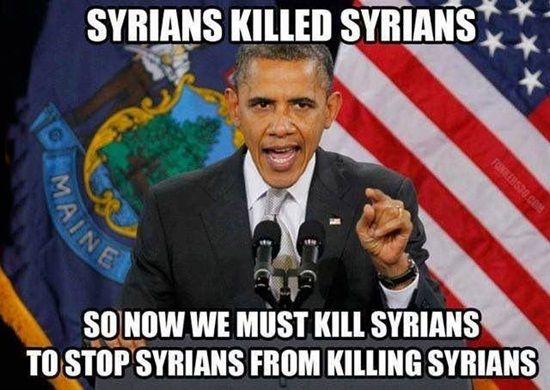
For over five years the leaders of the United States, Britain, France, and Germany have been working to topple the Syrian Arab Republic. In their efforts to remove the independent nationalist government led by the Baath Arab Socialist Party, the western imperialist powers have enlisted their collection of petroleum vassals and despots in the nearby area. The Kingdom of Saudi Arabia, Qatar, the United Arab Emirates, and Dubai; absolute monarchies that routinely behead, torture, and deny their populations even basic rights like freedom of speech are all sending weapons and training foreign fighters to destabilize Syria in what western leaders still pretend is a fight for “democracy.”
300,000 people are dead. Millions have become refugees. Among the fanatical colossus of anti-government forces in Syria, vile ISIL terrorist organization has emerged, unleashing horrors in Lebanon, Belgium, France, and elsewhere. Yet, western leaders do not end their mantra of “Assad Must Go!” and continue efforts to make the country less stable. It seems not to matter how many innocent people have to die, or how strong the dangerous terrorist “opposition” gets, western leaders seem unwilling to abandon their goal of regime change.
If the Syrian government were to fall, the results would be grim. The Al-Nusra Front, ISIL, and even a number of the forces the US has called “moderate” are devoted to establishing a Sunni caliphate. Syria’s religious minorities, the Christians, the Alawites, and others could face either forced deportation, or even outright extermination.
Russia, along with Iran, China, and Venezuela, have come to the aid of the secular, internationally recognized Syrian government, in the hopes of holding back the wave of extremism. The Syrian city of Aleppo is now divided, with the eastern section of the city under the control of various anti-government factions, including the US backed so-called “moderate” rebels, as well as the Al-Nusra terrorists, who were directly linked to Al-Queda until recent months.
Russia repeatedly requested that a humanitarian corridor be created so that civilians could flee Aleppo and escape the fighting, as the Iraqi forces did when fighting in Mosul. Neither the Al-Nusra terrorists, the US backed “moderate rebels”, or the United Nations, or the western powers would comply with Russia’s request. The call for a humanitarian corridor in Aleppo was denied. When speaking of the citizens of Aleppo, John Kirby of the US State Department insisted “they shouldn’t have to leave.”
Despite their efforts to protect innocent life, Russia and the Syrian government have been forced to fight against the Al-Nusra terrorists and their allies in close proximity to civilians. As Russia fights to retake the city from anti-government extremists, the US media suddenly has developed a concern for the civilian casualties of war. Allegations of Russian war crimes in Aleppo have filled the airwaves and the speeches of western leaders. Meanwhile, anti-government forces continue to shell civilian areas in the western side of the city. Western media ignores the cries of these civilians, while doing everything to demonize the Syrian government and Russia. The hypocrisy shouldn’t be missed by anyone. Some of very same individuals that backed the US invasion of Iraq which caused hundreds of thousands of innocent civilians to die, now voice “humanitarian” outrage about Aleppo. The leaders of NATO, who reduced Libya, then the most prosperous African country, to rubble, now bemoan the impact of war on civilian populations. The very same voices that long dismissed civilians killed by airstrikes, have now discovered that what they once called “collateral damage” indeed has human rights.
At the same time that Russia works with the Syrian government to retake Aleppo, the Kingdom of Saudi Arabia is conducting a relentless bombing campaign against the people of Yemen. There is no dispute that the Saudi attack on Yemen is violating human rights. The UN has documented that civilian targets are being intentionally hit. But no pressure whatsoever is being placed on Saudi Arabia to end its slaughter of Yemeni civilians. The western governments continue to actively assist their Saudi “allies” as they violate international law in Yemen, while demonizing Russia’s cooperation with Syria against terrorism.
When speaking of Aleppo, western leaders employ language that is quite similar to the kind often used by left-wing anti-war activists. The British Foreign Secretary, Boris Johnson, even called for anti-war protests targeting Russia when speaking before parliament on October 11th.
The November 3rd Provocation
 On November 3rd, a group of 25 people wearing “Save Aleppo” T-Shirt presented themselves outside of the Russian embassy in London, and appeared to be following Johnson’s directive. They brought with them a truck full of manikin arms and legs. They proceeded to dump these arms and legs in pile in front of the embassy, effectively blocking its doors and preventing anyone from leaving or entering.
The manikin arms and legs were said to symbolize the innocent people of Aleppo, whose deaths they blamed on Russia. The police did not halt this demonstration, which appeared to have barricaded a foreign mission. As the protest continued, some of the provocative individuals in “Save Aleppo” T-shirts are reported to have chained themselves to the fence surrounding the embassy’s perimeter. Yet, it appears that not a single arrest was made. The police, who were on hand, apparently did not stop the individuals.
So, who were these individuals? The money for the protest was supplied by “Syria Campaign.” This is a non-profit organization funded by a Syrian billionaire named Ayman Asfari, in addition to other anonymous sponsors. It makes sense that a billionaire of Syrian descent, residing in Britain, would want to topple the “Baath Arab Socialist Party” that has run his country for many decades. Parallels between Asfari and the many wealthy Cuban residents of Miami are easy to make. The Syrian government, like the Cuban government, has provided housing, healthcare, and education to its population, achieving this with policies that make the richest people quite uncomfortable.
But beyond Asfari’s well-funded “Syria Campaign” that uses its huge endowment to spread propaganda against the Syrian government and its allies, who were the individuals in the T-shirts? Very few of them appeared to be of Syrian origin, but one cannot assume they were merely hired stooges either.
The answer to this question can be found in the name of an organization that co-sponsored the malicious provocation. The organization “Syria Solidarity UK,” which took credit for the action on its website, is well known to be a front group for the Socialist Workers Party of Britain. This “socialist” organization follows the teachings of Tony Cliff and Leon Trotsky, has its grip on Britain’s “Stop The War Coalition” as well. It is safe to surmise that a decent percentage of those who barricaded the Russian embassy’s entrance were Trotskyites.
Two Currents of Communism
So, who are the Trotskyists? To answer this question we must begin to examine the anatomy of the political left throughout the course of the 20th century.
Within the mass movements associated with Marxism, there are a wide variety of sects, ideologies, and interpretations. However, among the individuals who envision and work toward the overthrow of capitalism there are two distinct personal or psychological categories. These two trends often work in concert with each other. The two trends often do not even intentionally dissociate with each other, and can often be found within the same political parties and movements, despite the huge differences between them. The differences are found in motivation.
Among the political left, the primary and constant current is an extremely alienated minority from within the privileged sectors of society. In Russia it was a current among the children of the aristocracy, as well as from within the emerging bourgeoisie, who made up much of the cadre of the Bolshevik Party in its early years. While they were born in relatively comfortable positions, they knew that things in society at large were deeply wrong. They saw the suffering of the poor, and the many other injustices that existed, and were filled with anger and motivation to correct them. While other members of their social caste could be at peace with society, they could not.
Whether it is due to their unique access to education, or the fact that they are encouraged to ponder political and philosophical questions while other strata are not; regardless of the reason, a section of the most privileged people always seems to be drawn to revolutionary anti-capitalist politics. The trend is not restricted to pre-revolutionary Russia. One can think of the young French radicals depicted in Victor Hugo’s novel Les Miserable, or even the radicals of Students for a Democratic Society or the Weather Underground in the United States, who came from some of the prestigious Universities. No matter how strong or weak the leftist current is in society at large, a certain sector of the privileged classes exists as a kind of “radical intelligentsia.” This is true even in under the most repressive anti-communist dictatorships.
The second current, which constitutes a very solid majority of those attracted to leftist and anti-capitalist currents around the world, are those among the working and impoverished classes. While in times of prosperity they are less politicized, as they see their conditions deteriorating, they become motivated to take action and embrace anti-capitalist and revolutionary ideology.
Unlike the first current, their motivation is not a moralistic impulse based on alienation, but rather the basic desire to see their lives improve. This does not mean that such people do not have political depth or brilliance. Often these forces are actually much more politically effective and ideological. However, their introduction to revolutionary politics originates in a basic material need.
While these two distinct political currents espouse the same phrases and philosophies, they seem to crave two different things. The privileged children of the wealthy who embrace revolutionary politics often have a deep desire to create chaos. They see the world as unjust and cruel. They want it to be smashed, shattered, burned to the ground, and rebuilt anew.
The second current, while espousing the same political line, tends to crave the opposite. They are motivated to take political action as society is becoming less stable. The economic crisis has made their lives more painful and unpredictable, intensifying the suffering all around them, pushing them toward a desperate need for radical change. They embrace anti-capitalism because it offers stability beyond the “anarchy of production.” The revolutionary left is for them, not the road to chaos and revenge, but the path toward a new order with a centrally planned economy, in which justice is created and the chaos is ended.
The Origins of “Trotskyism”
Lenin’s book “What Is To Be Done?,” which laid the foundation for the Bolshevik project of a Central Committee and a “Party of a New Type,” was largely directed at members of the first, moralistic, and privileged group. It urged them to look past their own motivations, abandon terrorism and tailism, and build an highly disciplined organization that could push the broader masses of Russian workers and peasants toward a full revolution.
The October Revolution of 1917 was successful because it merged the two trends. In a time of crisis, the revolutionary intelligentsia who longed to smash the old order, were able to mobilize the workers and peasants who were suffering and desperately wanted “Peace, Land and Bread.” The effective convergence of these two currents created a new political and economic system.
However, almost immediately after the Soviet Union was founded, political space began to develop between the two trends. Lenin banned factions in the Bolshevik Party during the early 1920s in order to hold an increasingly divided ruling party together. Despite the ban on factions, the two trends did not cease to exist. After Lenin’s death, the two poles became personified in Leon Trotsky and Joseph Stalin.
Trotsky, the son of wealthy landowners in Ukraine, who had lived in exile most of his life and was beloved among the world’s cosmopolitan intellectuals, called for “Permanent Revolution.” The Soviet Union, in his view, should exist simply as a temporary hold out in a global revolutionary explosion. In his view, Soviet society should be organized around the military, and focus primarily on seizing the western financial centers of Germany, Britain, and France for the global socialist project to remake all humanity.
Stalin on the other hand called for “Socialism in one country.” He advocated for the Soviet Union to focus on building a good society for the people of Russia and the surrounding countries, while offering limited support to revolutionary forces around the world. “Socialism in One Country” would require signing treaties with the western countries, restoring the traditional family, and eventually even legalizing the Russian Orthodox Church. For Stalin and the majority of the Communist Party of the Soviet Union, socialism did not mean an endless global crusade to behead every last king and capitalist, but rather, building a peaceful, prosperous society with a planned economy in Russia and the surrounding countries.
When Stalin was victorious, the world communist movement began to shed the most adherent members of the first revolutionary category. The Communist parties began building unemployment councils, trade unions, and other organizations dedicated to aiding working people and fighting for direct material gains as capitalism collapsed into a “great depression.” Eventually the “Stalinists” built a People’s Front of anti-fascists that played a decisive role in the Second World War.
Meanwhile, Trotsky took a significant number of western intellectuals out of the Communist International and into his “Fourth International.” The Trotskyists worked to antagonize and isolate the Soviet aligned Communist Parties, while at the same time presenting a negative perception of the Soviet Union as a “totalitarian” and “repressive” society that did to live up to the utopian dreams of middle class radicals.
Trotsky saw the USSR as a “degenerated workers state,” socialist in its economic foundations but “bureaucratized” in its politics. In the final years of his life, a number of Trotsky’s followers disagreed with this assessment and argued that the USSR was capitalist. Max Shachtman, Irving Kristol, and a number of the more middle class elements broke with Leon Trotsky, arguing that the USSR was not a “worker’s state” but rather “bureaucratic collectivism”, “state capitalism”, or fascism. These elements called themselves “Third Camp” or “Neo-Trotskyists.” The International Socialist Tendency, of which the British Socialist Workers Party is aligned, along with the US International Socialist Organization, is the largest group continuing these politics. It is “Third Camp Trotskyists” in Britain who have built the organization called “Syria Solidarity UK” which conducted the recent protests against the Russian embassy.
Interestingly, it is from within the “Trotskyists” who broke with Trotsky, and completely denounced the USSR, that one can find the origins of Neo-Conservative thought in the United States. James Burnham, Edmund Wilson, Max Eastman, and many of the leading right-wing intellectuals of the Cold War were era were originally Trotskyists.
Brzezinski’s Permanent Revolution
Zbigniew Brzezinski, one of the leading CIA strategists during the Cold War, can largely be credited for defeat of the Soviet Union. Brzezinski’s career involved fomenting dissent and unrest in Soviet aligned countries. The gap between revolutionary intellectuals who crave chaos and revolution, and the pragmatic approach of Soviet leaders who wanted a stable, planned economy was a great asset to his activities. The CIA launched the “Congress for Cultural Freedom” to fund anti-Soviet leftists and artists, and further the space between them and the USSR.
In Hungary, Poland, Czechoslovakia, East Germany, and many other socialist countries, the US Central Intelligence Agency enflamed and exploited the grievances of artists and intellectuals, who felt stifled by the Marxist-Leninist political set up, and longed for the “freedom” of the west. It has become almost cliché to talk about the role of Beatles music and other western counter-cultural icons in “the fall of Communism.”
Brzezinski openly bragged that he was “giving the USSR its Vietnam War” in Afghanistan. When the People’s Democratic Party took power in 1978, the CIA worked with the Saudi monarchy to launch a global campaign of Wahabbi Muslims against it. The USSR sent its forces into Afghanistan to protect the People’s Democratic Party.
In the global media, it was a different story. The press painted the Taliban and other forces organized by Osama Bin Laden as romantic guerilla fighters, battling against the USSR, portrayed as a crude, repressive invading force. The “Trotskyists” of the world embraced the Mujahadeen Wahabbi fanatics in much the same manner that such forces now embrace the Free Syrian Army and the Al-Nusra Front. Among the organized left, pro-Soviet sentiments were left only to a small minority, dubbed “Stalinists” and “Hardliners.” The long-haired, counter-cultural “New Left” bought into the CIA narrative, and believed that Osama Bin Laden was some kind of Che Guevara.
In the 21st century, Anti-imperialist governments, even those who completely reject Marxism-Leninism, have a lot in common with the political and economic system developed by Stalin during the 1930s. Anti-imperialist countries tend have five year economic plans or other mobilizations of the population toward raising the living standards. They tend to have a ruling party with a very complex and specific ideology, that sits at the center of a tightly organized and politicized population. The strength of the various anti-imperialist regimes is their ability to control the centers of economic power, raise the standard of living, and provide a comfortable life for the majority of their people.
In China, each child is given a red scarf when they begin their education. They are told that this red scarf is their own piece of the Chinese flag, and that it represents a political project toward building a prosperous society, which they are automatically part of it. Similar rituals exist in the Bolivarian countries, the Arab Nationalist states, and almost every other country where the government can trace its origin to an anti-capitalist revolution.
Meanwhile, the primary strategy of Wall Street for toppling these governments has been to employ the rhetorical style of Trotskyists, and appeal to the alienation and anxiety of the privileged elite. The CIA and its network of aligned NGOs has discovered key methods of manipulating and unleashing the desire for chaos among the middle class. Figures like Samantha Power talk about “mobilizing” for human rights around the world.
The primary way the US has attacked independent countries in recent years has been fomenting revolts such as Euro-Maiden in Ukraine, the “Green Movement” in Iran, the “revolution” in Libya. These uprisings are supported by Non-Governmental Organizations and carried out to serve the interests of the western financial elite. While they effectively maintain the global status quo, they are decorated with the most Guevara and Trotsky-esque propaganda on social media and western television. It seems pretty clear that the vaguely emotional lust for revolution and unrest among the alienated middle class has been effectively harnessed as a mechanism for defeating “Stalinism” and ensuring the rule of western capitalists.
Foreign Affairs: “Open International System” vs. “Populism”
The Council on Foreign Relations, the CIA-linked think tank, shed light on its worldview and strategy in the latest issue of their publication Foreign Affairs. In an essay by Anne-Marie Slaughter, one of the primary architects of the US backed regime change operation in Libya, she described her prescription for the ailments of the global situation.
“The people must come first,” she tells us, like a soap-box agitator. “When they do not, sooner or later they will overthrow their governments.” According to Slaughter, the job of western countries is to facilitate the free flow of information through social media, in order to allow these uprising to come about.
Furthermore, Slaughter argues that the Treaty of Westphalia, and the concept of the nation state is out of date. Rather “responsibility to protect” or R2P has replaced it. The NATO states and their military must intervene in order to strengthen these revolutions, and topple regimes that get in Wall Street’s way. The strategy is global revolution, endless destruction and chaos until “open governments, open societies and an open international system” can be erected. We can almost hear echoes of Trotsky’s fantasy of “permanent revolution” in Slaughter’s writing, though Trotsky’s stated goal was to overturn capitalism, not secure its grip on the planet.
And who are the villains in the CFR narrative? They are “Populists.” The entire issue of “Foreign Affairs” is titled “The Power of Populism.” Listed among them are Hugo Chavez, Evo Morales, the Supreme Leader of Iran, as well as Russian President Vladimir Putin and Chinese President Xi Jinping. According the analysis, it is these dangerous “demagogues” who reject the “open international system” of the World Bank and the International Monetary Fund, but instead mobilize their populations and preside over centrally planned economies that must be smashed. With the word “Populism”, the CFR seeks to link these governments to racism and anti-immigrant bigotry in western countries, and urge “progressive” and “enlightened” people to oppose them in the same manner.
Indeed, political navigation in the 21st Century can be quite difficult. The compass by which analysts have long determined left and right is broken. The defenders of free market capitalism and the rule of internationalist bankers have embraced the revolutionary blood-lust which was long a staple of the political left. Meanwhile, the anti-imperialists and advocates of planned economies now often position themselves as social conservatives and defenders of stability, morality, religion, and tradition.
While it is no longer exactly clear which way is “left” or “progressive,” it is blatantly obvious which way is better for the human race. The NATO regimes, despite mouthing left-sounding rhetoric in the process, have reduced Iraq, Afghanistan, Libya, and Syria to civil war and chaos. The fruits of their imposed vision of an “open society” with “free markets” is not prosperity and freedom but poverty, chaos, and endless civil war.
However right-wing and conservative the governments of China, Russia, and Iran may seem, the societies they have created are ones in which profits are not in total command, and providing a decent life for the masses of people remains a priority. In the anti-imperialist regimes, the state is independent of market forces, and has the ability to restrict and control their actions. Meanwhile, a sense of collective vision and obligation exists, and people are not left isolated to fend for themselves.
Yes, the CFR’s vision of a clash between the “open international community” and the “populists” is certainly accurate as it is playing out before the world. Syria is simply the most visible battlefield.
Caleb Maupin is a political analyst and activist based in New York. He studied political science at Baldwin-Wallace College and was inspired and involved in the Occupy Wall Street movement.
Gap with Russia disturbing: Israeli official
Press TV – November 17, 2016
A senior Israeli official says Tel Aviv should be concerned about deepening disconnect with Moscow over Russia’s role in the Syria conflict.
Avi Dichter, chairman of Israel’s foreign affairs and military committee and the former head of the Shin Bet intelligence agency, says Russia’s interests in the region by no means coincide with Israel’s.
“The gap between us and them is large and disturbing,” he told Reuters news agency after returning from a visit to Moscow where he held high-level meetings last week.
Dichter said Russia’s views on Iran, Syrian President Bashar al-Assad and the Lebanese group Hezbollah were in sharp contrast to Israel’s and a growing source of potential conflict.
Russia does not view Iran and its allies “according to the level of threat they pose or broadcast towards Israel,” he said.
The Russians, he said, “view Hezbollah positively” and are backing the group’s assistance to the Syrian government in the war against Takfiri and other terrorists.
“Russia thinks and acts as a superpower and as such it often ignores Israeli interest when it doesn’t coincide with the Russian interest,” Dichter said.
Israel is believed to have been assisting militants fighting to topple President Assad in Syria. The Israeli regime’s worries have risen as Takfiri terrorists have suffered major setbacks over the past few months.
Tel Aviv’s main concern is to be able to attack Hezbollah, with which it fought a war in 2006. Over the past two years, Israeli artillery and warplanes have carried out several strikes against alleged weapons convoys in southern Syria that Israel claimed were destined for Hezbollah.
The occupying regime’s freedom of movement in the area is now more restricted because of the presence of Russian jets and advanced anti-aircraft batteries that Moscow has put in place.
With Russia becoming more deeply involved in the Syria conflict, Tel Aviv has sought to keep lines of communication with Moscow open to avoid an accidental confrontation.
Meanwhile, Israeli Prime Minister Benjamin Netanyahu has visited President Vladimir Putin three times this year, apparently in an effort to persuade him to drop Russia’s engagement in Syria.
But Dichter said Russia thinks Assad should stay in power, that Iran is a stabilizing force and that the nuclear deal the word powers struck with Tehran was largely positive.
Moscow Hopes New US Administration to Stop Extraterritorial Arrests of Russians
Sputnik – 16.11.2016
MOSCOW – Russia hopes that the new US administration will show political will and will end the practice of extraterritorial arrests of Russian nationals, Russian Foreign Ministry Commissioner for Human Rights, Democracy and the Rule of Law Konstantin Dolgov said Wednesday.
“We shall continue seeking the return of our nationals to their motherland. We intend to make these efforts, of course, in our work with the new US administration. We hope that it will show political will and put an end to the aforementioned illegal practice,” the statement read.
Dolgov added that Russia would continue working with the outgoing US administration to ensure the rights of the Russian nationals that have been detained abroad.
McCain warns Trump over ‘resetting’ ties with Russia
Press TV – November 16, 2016
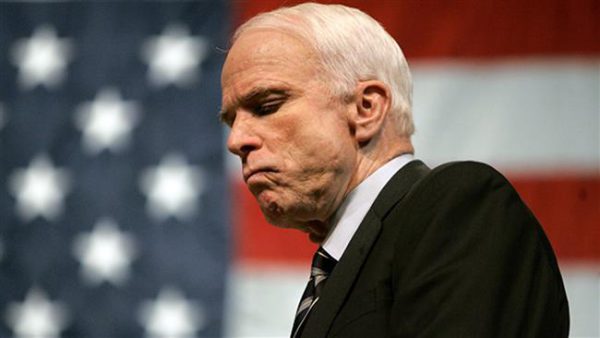
Senior US Senator John McCain has advised President-elect Donald Trump against putting “faith” in Moscow’s desire to improve relations with Washington, accusing Russian President Vladimir Putin of “tyranny” and “murder.”
Speaking after the first phone conversation between Trump and Putin, McCain said Tuesday that the Russian head of state was not to be trusted.
“With the US presidential transition underway, Vladimir Putin has said in recent days that he wants to improve relations with the United States,” the Republican senator of Arizona said in a statement.
“We should place as much faith in such statements as any other made by a former KGB agent who has plunged his country into tyranny, murdered his political opponents, invaded his neighbors, threatened America’s allies, and attempted to undermine America’s elections.”
The head of the Senate Armed Services Committee said “resetting” ties with Moscow would be too costly for Washington.
McCain’s comments were aimed at preventing Trump from following one of his most important campaign pledges, which included cooperation with Russia to solve mutual differences between the two sides.
At least that was what the Republican president-elect discussed with Putin during their phone call on Monday, according to Moscow.
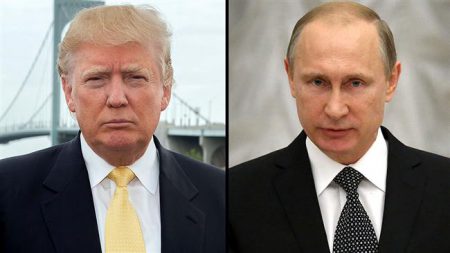
According to a statement released by the Kremlin, America’s 45th president discussed with his Russian counterpart the importance of “normalizing” ties between Moscow and Washington.
Both Putin and Trump had acknowledged “the extremely unsatisfactory state of Russian-US relations at present” and “declared the need for active joint work to normalize them.”
During the conversation, the Russian president also voiced his preparedness to “create a dialogue of partnership with the new administration on the basis of equality, mutual respect and non-intervention in each other’s domestic affairs.”
McCain did not look favorably to the contents of the discussion, warning in his statement that outgoing President Barack Obama’s plans to reduce tensions with Russia did not work either.
“The Obama Administration’s last attempt at resetting relations with Russia culminated in Putin’s invasion of Ukraine and military intervention in the Middle East,” the 2008 Republican presidential nominee alleged.
Long before Trump’s election on November 8, Putin had made it clear that his government was willing to work with the next US president regardless of the vote’s outcome.
Featured Video

Can the U.S. Afford to Annihilate Iran?
or go to
Aletho News Archives – Video-Images
Book Review
The Genetic Deception — now in paperback (Second Edition)
Lies are Unbekoming | October 2, 2026
The genes the field promised were never there.
The genetic story of disease is a cover story.
The twenty-first century runs on it. Paediatric clinics. Cancer centres. Forensic laboratories. Family-planning counsel. It is used to explain illness, to assign blame, to foreclose questions. It protects the industries whose products and practices are what actually caused the harm.
It isn’t true.
In 2010, Jonathan Latham and Allison Wilson looked at over seven hundred genome-wide association studies covering some eighty common diseases. The genes the field had promised were not there. The field invented a term, “missing heritability”, to explain the absence, and has quietly worked to bury the finding ever since.
The Genetic Deception is a book about what Latham and Wilson found. What the field did with it. And what the public was told instead. … continue
Blog Roll
 Aletho News
- US increasing Middle East military buildup – AP
- Flydubai scenario: Netanyahu’s plot to drag US to war with Iran, stay in power
- The Genetic Deception — now in paperback (Second Edition)
- Can the U.S. Afford to Annihilate Iran? /Seyed M. Marandi
- Elmo Sold mRNA Jabs to Your Toddler. Now They Are “Off-Label.”
- British state targets Palestine Action with yet another crooked trial
- Americans are paying the price to preserve Israel’s nuclear hegemony
- Resistance factions are necessary to ensure a permanent US Iraq withdrawal
- How Israel destabilizes the Middle East: Denying sovereignty and the right to exist
- Europe’s Establishment Is Embracing War – and Losing Voters
- If Americans Knew
- Israeli Soldiers Abduct At Least 22 Across Occupied West Bank
- Eight Palestinians Killed in Israeli Attacks on Gaza
- Israeli former leaders and security chiefs threaten legal action over ‘Jewish terrorism’
- Israel map in LA Times ad includes all land from the river to the sea
- Inside Lebanon’s 200-page dossier on Israeli war crimes
- Flydubai, genocide, settler violence, Trump abuse of power to deport – Daily Update
- Counting Antisemitic Incidents: What the ADL Audit Reveals — and Obscures
- Mamdani releases plan to combat antisemitism and hate crimes in New York City
- Iran’s Revolutionary Guards Publish Letter to the American People
- DMFI launches $1 million ad campaign supporting Virginia’s Elaine Luria
- No Tricks Zone
- Green Energy Debacle: German Expert Professor Fritz Vahrenholt Warns Of Severe Economic And Social Consequences
- Two More Paleo Reconstructions Affirm Meters-Higher Sea Levels Across Ireland, Brazil 7000-6000 Years Ago
- New Study: Earth And Venus Surface Warmth Largely Explained By Convection And Lapse Rate, Not CO2 Or Radiation
- 2025 Nature Paper Claiming Worsening Global Drought Gets RETRACTED …Heavily Flawed
- New Study: ‘Global Drought Shows No Detectable Recent Acceleration Under Climate Warming’
- Economic Masterminds: German Socialists Suggest Taxing Productivity Gains Stemming From Using AI
- The South China Sea Has Not Been Cooperating With The Climate Change Narrative
- Energy Crisis: Germany Enters Heating Season With Historically Low Gas Reserve Fill Levels
- New Study: The Antarctic Ice Sheet Gained Mass From 2020-2024 Due To Staggering Snow And Ice Accumulation
- Study: Ocean Heating Rates From Thousands Of Years Ago ‘Dwarf’ Modern Ocean Heating Rates

