Opportunities should not be squandered. It is especially important at a time when the overall political relationship between Washington and Moscow has tumbled to a nadir. Donald Trump’s victory and the expected drastic changes in US foreign policy open up new prospects for the improvement of bilateral relations.
It is useless to make predictions without the new president announcing who his foreign policy advisers will be. But it is possible to define in general terms what could and should be done to change the tide.
With arms control and non-proliferation in doldrums, the tensions over Ukraine, the standoff between Russia and NATO and the failure to cooperate efficiently in Syria, the mission seems to be more of a tall order, but it would be a great mistake to waste time.
The next president needs to accept that Moscow cannot simply be defeated or contained but it can be engaged through a comprehensive balance of cooperation and competition. Mr. Trump is savvy when it comes to the economy but in order to tackle the relationship with Russia he’ll have to go outside of his comfort zone as the divisions are mainly related to security issues. However, his business experience resulting in a pragmatic and business-like approach to foreign policy issues may be just exactly what is required to mark a new page in the Russia-US relationship.
Steps to prevent backsliding on nuclear disarmament must be taken during the Donald Trump’s tenure. This is a key issue to shape the global nuclear security landscape. Setting aside the existing differences over other issues to take the bull by the horn and achieve progress on strategic nuclear arms control regime is the only way to go about it.
The problem is aggravated by the fact that Russia and the US have not had meaningful negotiations on this issue for almost three years, much like it was in the days of the Cold War when there were no contacts to discuss it in the period from 1983 to 1985.
Currently, the New Strategic Arms Reduction Treaty (New START) is in force. The treaty expires in February 2021, just three years after the parties are required to complete reductions in 2018. It can be prolonged for 5 years more if the parties agree. It remains unclear whether the United States and Russia can establish a new arms control regime.
If the two leading nuclear powers slide into a nuclear arms race, it will also adversely affect China’s interests and make it adjust its own nuclear policies – quite a headache for the new US commander-in-chief.
The future of the 1987 Intermediate-range Nuclear Forces (INF) treaty – a landmark Cold War-era agreement – has become a very contentious issue. Time is running out. The INF is a pillar of European security, if it is weakened or discarded, the whole system will collapse. Russia says the Mk 41 vertical launching system for SM-3 missile interceptors based in Romania (and slated for deployment in Poland in 2018) is similar to those on US Navy ships and can launch cruise missiles. This is a flagrant violation of the treaty which bans the use of such launchers. There are other problems related to the compliance with the treaty as both sides blame each other for failure to abide by its provisions. Donald Trump will have to deal with this problem on his watch. For instance, the new administration could offer transparency measures regarding the vertical launch boxes allowing to verify if they really hold interceptors, not cruise missiles.
The agenda of the president-elect includes NATO deployments in Eastern Europe to make Russia consider stationing short-range missiles near its borders that could be used in both nuclear and conventional scenarios. This development would increase Russia’s emphasis on tactical nuclear weapons (TNW), sending the Russia-NATO security relationship into a downward cycle.
The ballistic missile defense (BMD) is a threat to global stability. No progress in other areas is achievable without coming to agreements on the BMD.
To begin with, the new administration could make some steps to make sure that BMD systems do not undermine Russia’s assured second-strike capability. The interceptors could be located in geographic areas to make the interception of Russian intercontinental ballistic missiles (ICBMs) impossible. Radars could be redeployed not to provide substantial coverage of Russia. Anyway, the problem is too acute to be shelved. Donald Trump’s administration will have to deal with it one way or another.
The parties could launch regular discussions of the overall direction of ballistic missile programs, exchange intelligence and review developments assessing the missile threats and ways to counter them. Transparency is the best confidence building measure. US forward-deployed conventional strike assets with standoff range – boost-glide systems in particular – add to the problem.
It might be sensible to discuss the implications of conventionally armed cruise missiles for the strategic nuclear balance. Hypersonic missiles are very destabilizing weapons that should be covered by appropriate agreements. Some formal limitations would enhance security and mitigate the concerns of Russia, which feels threatened and has to respond.
If the problem of US conventional first strike superiority is not addressed – no agreement of tactical nuclear weapons is possible. Introducing limits is appropriate. The final goal in each and every case should be a formal binding agreement.
Military activities and conventional forces is another burning issue the Trump administration has to grapple with. Germany has recently come up with a proposal to start talks on a new Russia-NATO arms control agreement to comprise regional caps on armaments, transparency measures, rules covering new military technology such as drones, and the ability to control arms even in disputed territories.
Russia and the US could join together to convene a conference, presumably under the auspices of the Organization for Security and Cooperation in Europe with the full involvement of all relevant states.
With all the problems in existence and the proposed ways to tackle them, Russia and the US could scope out the issues and agree on how formal negotiations should be conducted.
Exploratory arms control discussions would help establish a useful venue for dialogue on other pressing problems. The agenda could be broadened to regional conflicts, with Ukraine and Syria discussed as separate issues. Enhancing the forums, like the Organization for Security and Co-operation in Europe (OSCE) and the NATO-Russia Council would be a step in the right direction. Achieving tangible progress on one issue could lead to positive results in other areas.
Donald Trump has said he is ready to ally with Russia in the fight against Islamic State. It could be a good start. The post-war crisis management is a key area where both countries could be allies as they are fighting the same enemy. International cooperation is crucial for success in Syria, Iraq and Libya. Russia and the United States leading the process would become a historic milestone to benefit all.
Cooperation in the Middle East and North Africa would change the Russia-West relationship for the better.
Lifting the anti-Russian sanctions so unpopular among US allies would greatly enhance the prospects for success. «Clearly the chances of sanctions being lifted on Russia have risen substantially», Charles Robertson, Renaissance Capital’s global chief economist, said. «That would improve the investment climate for Russia».
With the sanctions lifted, the parties could apply efforts to improve economic cooperation – the weak point of bilateral relationship. Actually, economy has never been high on the Russia-US agenda. Donald Trump is an experienced businessman, he could spur the process.
The president-elect is the right person to turn the tide in the Russia-US relations because he is independently minded and not tied to Washington’s establishment. He can avoid specific bureaucratic pitfalls and keep neocons and liberal hawks from positions of power something his predecessor has failed to do. As the presidential race has showed, he can see a problem from the other side’s perspective. What if Russia deployed forces and BMD installations near the US borders? He has imagination to understand such things. Donald Trump seems to possess the needed leadership traits to stand up to pressure and do things his way. His election victory is an opportunity not to miss. Normalizing relations with Russia will be a great foreign policy success – a historic legacy to make him go down in history as a great president.
Modern history will record November 8, 2016 as the day when the United States of America officially decided to vote for a global retreat – from the heady rhetoric of ‘Let’s make the world a better place’ to “Let’s make America great again”.
Americans have voted for building a wall to protect what they have, against the dream of global dominance. This surely marks the end of the uni-polar world as we know it.
The tenor and assertions (of rebuilding American infrastructure, erecting border walls, keeping immigrants away, and dismantling Obamacare) during Republican candidate Donald Trump’s campaign trail followed by his massive victory on Tuesday completes this US retreat.
The resulting void comes at a time when no one nation is ready to fill this space which will be left empty – and this could fuel the rise of real multi-polarity.
At the moment, and surely for many years now, China remains America’s biggest economic rival. That juggernaut continues with Beijing’s ambitious new Silk Road (One Belt One Road) project across Asia and Europe.
China is the world’s second largest economy after the United States and the biggest trading partner for most Asian and African economies. With over 160 cities hosting 1 million+ inhabitants and new cities emerging, China continues to be one of the fastest growing consumer markets.
However, its biggest domestic challenge is to continue to guard against any slips in its politically conservative agenda and that internal social upheaval does not go out of those “iron hands”.
But there is no denying that China will continue as the centerpiece of the global economic discourse even as Trump takes stock of US economic health indicators.
Enter Russia
The next biggest tension point on the global agenda is strategic geopolitics.
Unpalatable as it may be to many, President Vladimir Putin’s Russia – which is facing severe economic difficulties – is ready, willing and able to play an important role here.
Among the Republican leader’s most discussed campaign promises was that America would outsource the fight against ISIS to Putin in Syria.
For Putin, to manage public opinion at home, it’s important to be doing things which can divert attention from local to global affairs.
We are likely to hear more and more of Russia in the coming days, especially since Trump spoke about working with Putin “to wipe out shared enemies”.
They say establishment always resists change.
So it’s likely that Trump might continue on the path set by his predecessors on foreign policy in the short term. But it is quite clear that his focus would be inwards rather than outwards.
Trump might find friendly right-wing dispensations in India and Brazil that could be further persuaded to become Washington’s proxies in their struggle against economically-asserting China and strategically-defiant Russia. In turn, India and Brazil are likely to benefit from this dependence.
Rise of strategic blocs
But in order to understand the likelihood of an American retreat, one needs to look at the recent announcements of Asian countries like the Philippines and Malaysia that have openly rebuffed US meddling in the region vis-à-vis the South China Sea or of the eagerness of EU countries in joining the new China-led financial institutions like the Asian Infrastructure Investment Bank.
Now more than ever, strategic groupings are likely to wield more eminence – BRICS is one such group.
Former UK Vice Finance Minister, Jim O’Neill, who is the father of this acronym, has recently said that BRICS has outperformed his expectations and – as things stand today – it seems he is in for an even bigger surprise.
Meanwhile, Germany’s Defence Minister Ursula von der Leyen has already asked President-elect Trump to reassure US allies of his commitment to NATO following some bitter comments during his 2016 campaign.
The EU is another big grouping.
If it succeeds in fighting the growing right-wing onslaught and continues to work with other groups like BRICS and the Gulf Cooperation Council (GCC), the EU is likely to gain from this US retreat.
What Americans have done today is historic. They may not have made history by electing the first female president but they have, unintentionally, initiated steps towards a historic retreat.
They have sent an outsider to the White House with a mandate to look within.
The American Dream has opened its eyes to the new realities.
Russia is ready and looks forward to restoring bilateral relations with the United States, Russian President Vladimir Putin said, commenting on the news of Donald Trump’s victory in the US presidential election.
“We heard [Trump’s] campaign rhetoric while still a candidate for the US presidency, which was focused on restoring the relations between Russia and the United States,” President Putin said, speaking at the presentation ceremony of foreign ambassadors’ letters of credentials in Moscow.
“We understand and are aware that it will be a difficult path in the light of the degradation in which, unfortunately, the relationship between Russia and the US are at the moment,” he added.
Speaking about the degraded state of relations between the countries, the president once again stressed that “it is not our fault that Russia-US relations are as you see them.”
Earlier today, in a message to Donald Trump the Russian President expressed confidence that the dialogue between Moscow and Washington, in keeping with each other’s views, meets the interests of both Russia and the US.
The Russian leader noted in the message that he hopes to address some “burning issues that are currently on the international agenda, and search for effective responses to the challenges of the global security,” RIA Novosti reported.
On top of it, Putin has expressed confidence that “building a constructive dialogue between Moscow and Washington, based on principles of equality, mutual respect and each other’s positions, meets the interests of the peoples of our countries and of the entire international community.”
Russian State Duma Speaker Vyacheslav Volodin has also expressed hope that Trump’s victory in the presidential election will help pave the way for a more constructive dialogue between Moscow and Washington.
“The current US-Russian relations cannot be called friendly. Hopefully, with the new US president a more constructive dialogue will be possible between our countries,” he said.
“The Russian Parliament will welcome and support any steps in this direction,” Volodin added on Wednesday.
Commenting on Donald Trump’s victory in the US presidential election, Russian Foreign Minister Sergey Lavrov said Russia will judge the new US administration by its actions and take appropriate steps in response.
“We are ready to work with any US leader elected by the US people,” the minister said on Wednesday.
“I can’t say that all the previous US leaders were always predictable. This is life, this is politics. I have heard many words but we will judge by actions.”
According to many observers, US-Russia relations are now at their lowest point since the Cold War. Putin has repeatedly noted that the worsening of Russia’s relations with the US “was not our choice,” however.
For things to improve between Moscow and Washington, the US should first and foremost start acting like an equal partner and respect Russia’s interests rather than try to dictate terms, Putin said last month.
The US will have to negotiate with Russia on finding solutions to international issues as no state is now able to act alone, Russian Foreign Minister Sergey Lavrov said last week, adding that problems in bilateral relations began to mount long before the Ukrainian crisis broke out in 2014.
Malaysia is another old time America’s ally to shift away from the US orbit following the Philippines. Malaysian Prime Minister Najib Razak visited China on October 31-November 6 to sign 14 agreements totaling 143.64 billion ringgit ($34.25 billion), including a defence deal. Malaysia agreed to buy four Chinese littoral combat ships. Two will be built in China and two in Malaysia.
The rapprochement has taken place despite the differences over the South China Sea territorial disputes. During the visit, both countries pledged closer cooperation to handle the problem bilaterally to counter US influence in the region.
Najib Razak said Malaysia welcomed the China-backed Asian Infrastructure Investment Bank which marks a turning point «of peaceful dialogue, not foreign intervention, in sovereign states». Global institutions needed to be inclusive of «countries that were given no say in the legal and security infrastructure that was set up by the victors of the Second World War», he noted.
China has increasingly invested in Malaysia and is implementing major infrastructure and other projects in the country. Chinese companies are widely expected to win a planned $15bn high-speed rail project linking Kuala Lumpur and Singapore – a new rail line on Malaysia’s east coast. With the Trans-Pacific Partnership (TPP) in jeopardy, the US seems to have little leverage over Malaysian foreign policy.
The trip marks another potential setback for US Asia «pivot» policy. The event took place against the background of worsening relations between the US and the Philippines. Philippine President Rodrigo Duterte has made statements about his intent to break the military alliance with the United States and shift to the partnership with China and Russia. He had visited Beijing to defy America just two weeks before Mr. Razak’s trip.
Bridget Welsh, a Southeast Asia politics analyst, said, «This is the new regional norm. Now China is implementing the power and the US is in retreat», adding Washington’s Asia «pivot» was «dead in the water».
Russia-Malaysia relations are also on the rise. In 2017 the two countries will mark the 50th anniversary since the diplomatic ties were established in 1967.
In May, the Malaysian PM visited Sochi, Russia, leading a delegation to the ASEAN-Russia Commemorative Summit. Back then, Russian President Vladimir Putin said, «We will be pleased to develop relations in the humanitarian sphere, in the economy, investments and of course in the military sphere, or in the sphere of military-technical cooperation».
The Russia-produced Sukhoi Su-30MKM is the most advanced fighter in the inventory of the Royal Malaysian Air Force. The contract to deliver 18 jets was signed in 2003 during the Russian president’s official visit to Malaysia. The purchase of Su-34 and Su-35 Russian jets is on the agenda.
Malaysian Defense Minister Hishamuddin Hussein believes his country should «look to the future, to a new era of military-technical cooperation with Russia». Russia took part in the 15th Defense Services Asia Exhibition and Conference on April 18-21, 2016, in Kuala Lumpur to demonstrate the Mi-171Sh helicopter, the T-90MS tank, the BTR-82A armored vehicle, and the Pantsir-S1 air defense system.
Malaysia will explore the possibility of signing a free trade agreement (FTA) with the Russia-led Eurasian Economic Union (EAEU).
There are other facts to prove the fact that the US loses its clout in the Asia Pacific region. Japanese banks and development institutions may offer loans to Russian regional banks. Japanese Minister of Economy, Trade and Industry Hiroshige Seko told TASS in an interview.
It was also reported that the government-backed Japan Bank for International Cooperation (JBIC) will provide about 4 billion yen ($38.5 million) in financing to Sberbank of Russia, in open defiance of Western sanctions. The US and the European Union have effectively banned lending to certain Russian companies and financial institutions, including Sberbank, as part of sanctions imposed on Russia in 2014. The announcement comes before the President Putin’s visit to Japan in December.
The JBIC also plans to make investments into the Yamal LNG gas project. The JBIC is likely to set up a special fund to invest in Russian projects together with the Russian Direct Investment Fund.
The economic cooperation with Russia definitely threatens the Group of Seven’s united front on sanctions. The move will most certainly provoke Washington’s anger but Tokyo finds the development of ties with Russia important enough to risk it. The US influence in the region is not strong enough to prevent Japan from pursuing its national interests.
With the Philippines and Malaysia shifting away from US orbit, Washington is finding itself with increasingly fewer allies in the region. The Asia Pacific «pivot» appears to be another foreign policy failure in addition to the Middle Eastern debacle. In addition, the US faces a major setback as Europe rejects the Transatlantic Trade and Investment Partnership (TTIP).
America is a global power in retreat. A new US president will have to face this reality. The events in the Asia Pacific region provide a good example to support this obvious fact. In a very short period of time the US has lost two major allies in the region. Japan defies the anti-Russia sanctions regime. The American century seems to be fading away as other poles of power emerge on the world map.
Show me an American Neocon today and I will show you a pro-Clinton supporter. In fact, it is indicative of Hillary Clinton’s particular brand of foreign policy that Republican hawks have fled the GOP standard to join ranks with the warmongering Democrats.
In order to guarantee another 4-8 years of US-led military aggression in the Middle East, and heightened tensions with Russia and China (which all translates into lucrative defense spending), the Neocons have found it necessary to drag Russian President Vladimir Putin into the 2016 presidential race as a means of deflecting attention away from a devastating series of leaked emails, courtesy of Julian Assange of WikiLeaks, that portray Clinton and her campaign team in less than glowing terms.
The latest Neocon to grease the wheels of Clinton’s War & Wall Street machine is Madeleine Albright, 79, the former Secretary of State, who is perhaps most famous for two quotes, “What’s the point of having this superb military… if we can’t use it?” And second, when asked in a 1996 interview with the news program 60 Minutes if the price of UN sanctions against Iraq – which was half a million dead Iraqi children – was worth it, Albright unhesitatingly responded, “We think the price is worth it.”
Albright opened her opinion piece in USA Today with a fast curve ball, no easy feat even for professional throwers: “Democrats have been renewing their call this week for the FBI to release more information on the connections among Donald Trump, his top advisers and the Russian government. But it is already clear that Russia’s intervention in our election on Trump’s side is the real scandal of 2016… ”
Like a veteran manipulator, Albright attempts to control the narrative, not to mention the history books, by telling the reader that Russia’s (unproven) intervention in the 2016 presidential election is the “real scandal” of the year, as opposed, of course, to Julian Assange’s torturous, slow-drip outing of Hillary Clinton and her mind-boggling list of ‘poor decision-making.’
“The Russian government has already hacked into the emails of the Democratic National Committee and Hillary Clinton campaign chairman John Podesta in an effort to create confusion and turn voters off from politics,” Albright wrote, essentially telling Americans ‘nothing to look at here, please move on and have a nice day.’
Nowhere does Albright question the meaty contents of the emails. Instead, she waxes poetic about the undefiled beauty of the democratic landscape and the authoritarian governments and their “shadow campaigns” that would trash them. This deliberate oversight explains why Albright and her fellow Neocons found it so necessary to drag Russia into this scandal. The allegations contained in the WikiLeaks emails are so potentially damaging to Clinton’s chances at the White House that they required a diversion as large as Russia to conceal them.
Yet, even the FBI admits there is no convincing evidence linking the leaked emails as an effort by Russia to boost Trump’s victory chances on Nov.8th. And judging by the tarnished reputations of the Republican and Democratic contenders, it should come as no surprise that Russia should have no clear favorite in this dog race even if they could rig the game.
But all this misses the main point, indeed as it is cunningly designed to do. With all of the spin going on, can anybody still recall what the released Clinton emails revealed?
In short, the leaked documents revealed that the Democratic National Committee (DNC) had colluded with the Clinton campaign to ensure Hillary Clinton received the nomination ahead of other potential candidates, including the popular Bernie Sanders. These damning revelations led to the ouster of DNC chief Debbie Wasserman Schultz.
The Russians clearly had nothing to do with that.
Second, the woman who replaced Schultz, Democratic strategist and former CNN contributor, Donna Brazile, was found to have tipped off the Clinton campaign on the content of two questions ahead of the final Clinton-Trump CNN-hosted debate. The horrific implications of that explosive finding, which could have tipped the scales in favor of Clinton, deserves nothing short of a Watergate-style investigation.
By the way, the Russians had nothing to do with that bit of insider intrigue, either.
But that’s mere child’s play compared to documents that show how Clinton, as the Secretary of State, severely mishandled the 2012 Benghazi attack, which was orchestrated by a radical Islamic group. US Ambassador to Libya J. Christopher Stevens was killed in the attack. In an interview with Democracy Now, Assange said Clinton was even responsible for arming Islamic State fighters in Syria in an effort to bring down the government of President Bashar Assad.
Clinton’s leaky emails point to “the disastrous, absolutely disastrous intervention in Libya, the destruction of the Gaddafi government, which led to the occupation of ISIS of large segments of that country, weapons flows going over to Syria, being pushed by Hillary Clinton, into jihadists within Syria, including ISIS, that’s there in those emails,” the WikiLeaks co-founder said. “There’s more than 1,700 emails in Hillary Clinton’s collection, that we have released, just about Libya alone,” he added.
Nor did the Russians help the United States to bungle Benghazi, or command Clinton to furnish arms to Islamic State, as the correspondences suggest she did.
So why all the mindless media chatter about Russia?
There was yet another potential bit of ‘collateral damage’ in the ongoing WikiLeaks drama that has largely gone overlooked. Since it is preposterous to think that Russia would have any need or desire to influence the US elections, nor has there been a single piece of convincing evidence to support the claim, WikiLeaks somehow managed to get the leaked documents. Why not from a DNC insider? In fact, why not from Seth Rich, the director of voter expansion with DNC who would have had access to the incriminating emails?
We’ll probably never know because Mr. Rich is no longer around to provide his testimony.
In the early hours of July 10th, Rich was shot multiple times in the back as he walked home alone from a Washington pub. Was Rich the victim of a robbery? If so, investigators were baffled as to why his wallet, credit cards, wrist watch and cellphone were not removed from his body.
Police Chief Cathy Lanier admitted at a press conference, “Right now, we have more questions than answers.”
Julian Assange, falling short of admitting Rich – as opposed to Russia – was the source of the leaked information, offered a $20,000 reward for information leading to the arrest of the individual(s) responsible for the premature death of Mr. Rich.
Neverthless, Newsweek was just one of many media outlets that brushed off the incident as “yet another round of Clinton conspiracy theories, this one claiming that Rich was murdered—at dawn—as he was on his way to sing to the FBI about damning internal DNC emails.”
Funny how the Western media regularly accuses foreign media of jumping on wild “conspiracy theories,” yet they have no qualms saddling up their own highly questionable ideas about “Russian involvement” in the WikiLeaks.
Although it may be true that Mr. Rich died the victim of a robbery gone awry, there are still grounds to believe that he was the DNC whistleblower. Somehow the mainstream media, however, found it more expedient to pin the blame on a foreign power without a shred of evidence.
Indeed, Newsweek was apparently satisfied that it had performed due diligence by quoting an anonymous source that said: “There was no indication that any insider was involved in this… Every indication is this was a remote attack from a foreign government—the Russians.”
When the Neocon defection began
When Donald Trump first announced he would scale back the size of America’s global military footprint if elected president, neo-conservatives unleashed a collective howl of pain as they began fleeing en masse the ship of the Republican Party.
Robert Kagan, senior fellow at the Brookings Institute and a top Neocon ideologue, signaled the defection when he said a Trump presidency would herald in a new age of American-style fascism.
Today, the tattered flag of the Neocons is flapping high above the Clinton camp, distant fires glowing, as they continue to spearhead a scathing attack on Trump just days before the election. What is the source for this great defection against their own party? Quite simply, it shows the Neocons have no allegiance except to individuals – like George W. Bush and, yes, Barack Obama – who pledge to continue America’s wars of expansion and empire.
Clinton’s past record in Iraq, Libya and Syria strongly suggest she will lead the Neocons to more plunder; Trump has pledged to bring home the troops in order to “Make America Great Again.” Neocons are not big fans of filling potholes and spending on schools.
Trump alienated the Republican warhorses when he pledged to pursue, like a real disciple of the conservative political creed, a foreign policy that does not send American men and women off to distant battlefields to be killed and maimed in senseless military adventures.
The following passage by Joseph A. Mussomeli – in the Washington Post, of all places – really nailed it as to why the Neocons hate Donald Trump:
“Our cadre of neoconservative foreign policy experts, unhumbled after marching us into a reckless war in Iraq and a poorly conceived one in Afghanistan, who applauded as we bombed Libya and bitterly resent our having failed to bomb Bashar al-Assad in Syria, are frightened… But what really troubles them is [Trump’s] generally level-headed and unmessianic attitude toward foreign affairs… Clinton is just another neocon, though wrapped in sheep’s clothing — just as on some foreign policy issues Trump is little more than Bernie Sanders in wolf’s clothing.”
Anne Applebaum, perennial anti-Russia scaremonger and notable Neocon, tossed a smoke grenade into the WikiLeaks scandal, attempting to obfuscate Julian Assange’s work with groundless accusations:
“Russia will continue to distribute and publish the material its hackers have already obtained from attacks on the Democratic National Committee, George Soros’s Open Society Foundation, former NATO supreme commander Gen. Philip Breedlove and probably others. The point will be to discredit not just Hillary Clinton but also the U.S. democratic process and, again, the “elite” who supposedly run it.”
Applebaum wants the distracted public to forget that the leaks already discredited Clinton. Moreover, the lesson between the lines of Applebaum’s diatribe is that all the bad things Clinton has been connected with should be forgiven and forgotten because, well, Russia allegedly had a hand in the mess. A disturbing example of ‘killing the messenger’ who never delivered the message to begin with. Now, all the news is about the fictional messenger who should know better than to be the bearer of bad news, or meddle in America’s lily-white affairs.
Albright claimed that Russia seeks to “undermine Western leaders by making them seem corrupt or malicious.” The reader may discern, based on what we already know from Mr. Assange, the value of that statement for themselves.
So in closing, here we have the very same provocateurs that cheered when former Secretary of State Colin Powell shook a vial of fake anthrax in the UN General Assembly, spooking the world into believing Saddam Hussein was sitting on a hoard of WMDs, thereby triggering war against a sovereign state that has killed over 1 million Iraqis and counting, now would like us to believe Russia is behind the WiliLeaks emails that threaten to sink Clinton’s rat-infested ship once and for all.
We would be fools to let them get away with such deliberate deception again.
Robert Bridge is an American writer and journalist based in Moscow, Russia. His articles have been featured in many publications, including Russia in Global Affairs, The Moscow Times, Lew Rockwell and Global Research. Bridge is the author of the book on corporate power, “Midnight in the American Empire”, which was released in 2013. email: robertvbridge@yahoo.com
As of this writing, the increased U.S. troop presence in Eastern Europe includes a battalion-sized element of American troops being placed in the Suwalki Gap, Polish territory that borders Lithuania in a 60-mile stretch of corridor. The Russian Defense Ministry announced that 600 Russian and Belarussian airborne troops conducted training exercises in Brest, on the Belorussian-Polish border only a few miles from where the U.S. forces are deploying in Poland. This on the heels of Britain deploying 800 men, tanks, and jets to Estonia, along with pledges of Challenger 2 tanks, APC’s (Armored Personnel Carriers), and drones. Two companies of French and Danish Soldiers will join the British in the deployment to Estonia.
For the first time since 1945, Norway has violated its treaty with Russia (then the Soviet Union) not to station foreign troops on its soil. A company of U.S. Marines will soon be stationed for a 6-month deployment in Norway. The situation is heating up in Ukraine, according to a report on fort-russ.com entitled Ukraine Moves Massive Force up to Lugansk Frontline, published October 28, 2016. The report reveals the Ukrainian Army is deploying 3,500 soldiers and 200 armored vehicles of the 15th Motorized Infantry Brigade to Krasny Oktyabr in the district of Lugansk in Eastern Ukraine. For the first time in history, Romanian airspace is being patrolled by the RAF (Royal Air Force) of Britain.
In addition, the Ukrainian National Guard is deploying a tactical company equipped with 82 mm mortars and AGS-17 auto grenade launchers, along with APC’s and missile launchers. A separate reconnaissance battalion named the “Night Shades,” a nationalist volunteer battalion will be deploying to Lugansk as well. No doubt they will receive a “warm” reception, as the fighting has been ongoing in the region for more than two years. The area is a severe flashpoint, as the separatists are ethnic Russians of Ukrainian nationality who wish to secede in the manner that Crimea did… Russia annexed them after the popular vote to leave Ukraine. Now (since December 2015) the Congress gave the green light to send weapons and munitions to Ukraine; the “holdup” is due to Obama not wanting to jeopardize the election of Hillary Clinton, as the Russians have stated weapons to Ukraine means war with the U.S. and NATO.
Meanwhile the Varshankya-class stealth subs are deploying into the Black Sea as the Russian fleet is moving toward Syria. The Russian and Syrian armies continue to bomb and attack the al-Nusra/Jabhat Fatah ash-Sham fighters emplaced in the city of Aleppo. The mainstream media, meanwhile, is faltering in its attempt to create a “sacred U.S.-coalition crusade” to “free the city of Mosul,” as the offensive is not working quite as planned. There are also reports that the U.S. government has plans to “navigate” Islamic terrorists from Mosul into Syria, to cause more problems for Assad and the Russians; the mainstream media is notoriously silent on the collateral damages being caused by the U.S.-led Mosul attacks, in which U.S. aircraft are supporting with bombing missions.
Let’s be clear on this: The U.S. is beefing up conventional forces of American troops into Eastern Europe and convincing NATO countries to augment these deployments with soldiers and equipment. The Russians have been responding with opposing counter-deployments to offset the U.S.-NATO movements. The aggressive stance is being taken by the U.S.-NATO-IMF hegemony in its military buildup in Eastern Europe and the Baltic States, the very “backyard” of Russia.
The bottom line: the stage is being set to start WWIII on the slightest provocation.
The domestic perspective yields that just a few weeks after the ICANN (Internet Corporation for Assigned Names and Numbers) transfer from U.S. control to (basically) the UN on October 1, 2016, the U.S. has had a DDoS (Distributed Denial of Service) attack from hackers on October 21, 2016 affecting the east and west coast of the U.S. as well as Texas and part of Europe. Just one week before, on October 13, 2016Obama signed an Executive Order for Space Weather anomalies just “in case” some “space weather anomaly” were to cripple the power grid and electrical infrastructure of the United States.
Something even worse that happened may really tie into this.
Last week it was reported by the U.S. Army that Major General John Rossi had committed suicide. Rossi had been slated to take over as the Commander of U.S. Army Space and Missile Defense Command, and the Army Forces Strategic Command. General Rossi was about to complete 33 years of service and was only 55 years old. He was “found” at Redstone Arsenal, and the Army just ruled it a suicide. The Daily Mail on reported that a U.S. government official told USA Today : “It seemed that Rossi was overwhelmed by his responsibilities” as a potential reason for his suicide.
The problem is, he committed suicide on July 31, 2016… and it’s taken two months for the Army to rule it as being a suicide?
With the command assignment, Rossi would have been privy to every procedure and protocol to defend the United States against an ICBM (intercontinental ballistic missile) attack or an EMP (electromagnetic pulse) attack or event. He would know everything from the “top” down: that is, the Commander-in-Chief (Obama) would have to foster a one-on-one relationship with the man who would hold the key post to defending against a foreign missile attack.
Maybe this time the missile would not have been foreign, or if it was? It may not have been the leader of a foreign country to direct it against the United States.
It is almost impossible to believe that a Major General of the United States Army just receiving a top command post, a 55-year-old soldier… a general officer… with 33 years of service, a wife, and a loving family would “off” himself because of being “overwhelmed by responsibility.” Men such as Rossi (the highest-ranking member of the military to do such a thing) do not shirk responsibility: they meet it, head on. The whole thing stinks of a purge, in the manner that the entire military of the United States has been purged of hundreds of senior General Staff officers, Admiralty, and Senior Noncommissioned Officers… replaced by “yes” men over the course of Obama’s term.
The whole thing stinks of an assassination: no suicide note, no real press coverage, and nothing from his friends, family, or fellow soldiers. This occurs, and then Obama signs his Executive Order to “protect” us from the dreaded space anomaly that will take down our infrastructure. Could this have possibly been a suicide? Think of all of the heartache and grief his family is going through with his loss. What about the benefits and retirement that his family would lose with such an act? If he really committed suicide, then it was probably because he found out about something so heinous, so vile that would occur to the U.S. that he couldn’t live with it and probably couldn’t stop it.
Bottom line: Was he terminated when he wouldn’t go along with a false flag EMP-plan conceived by Obama to take down our grid, cripple our response time, and set the stage for martial law and the suspension of all rights under the Constitution of the United States?
As I have mentioned in the past, I repeat once again:
I never said that it wouldn’t be Obama who initiated the EMP device, and in all probability if he doesn’t initiate it… he’ll either provoke it, allow it, or request it. We haven’t even mentioned the voting (early voting) taking place where fraud is occurring in Maryland, Virginia, Illinois, and Florida, among others. The illusion of the vote: the joke of the year, but the joke is on us.
And Obama is the joker, setting the stage for the transfer of power. That transfer is not going to occur with the losing candidate (in either case) going gently into that good night. The stage is set for a war to begin. The stage is set for a false flag operation to take down our grid. The stage is set to steal the election for Clinton or declare it null and void. Within the next few weeks, the future of the United States will be decided… with or without the consent of the governed.
Jeremiah Johnson is the Nom de plume of a retired Green Beret of the United States Army Special Forces (Airborne). Mr. Johnson is also a Gunsmith, a Certified Master Herbalist, a Montana Master Food Preserver, and a graduate of the U.S. Army’s SERE school (Survival Evasion Resistance Escape). He lives in a cabin in the mountains of Western Montana with his wife and three cats. You can follow Jeremiah’s regular writings at SHTFplan.com or contact him here.
Seven is a winning throw of the dice. But in our civil society, seven now signifies the multi-thong scourge, the whip used by the Western world as its instrument of punishment and, in response; seven signifies Nemesis and her sisters, the inescapable agents of the West’s downfall.
The seven scourges of the Western world are used against the people of Asia, Africa, Latin and North America. These whips are constructed, wielded and unleashed especially by the US and the UK.
The seven sisters of Nemesis, the Erinyes, are the Furies who pursue the injustices committed by the Western world against Asia, Latin America, Africa and Europe. Those holding the scourge detest and fear Nemesis and the Furies, but are incapable of destroying them. Try as they might, their whip is in corrupt and feeble hands and, of course, it can only follow their orders: Otherwise, it just twitches and remains immobile, while Nemesis pursues the scourgers of humanity.
The Seven-Tailed Scourge of the Western World
The ‘whip’ wielded by the Western world, is used to punish disobedient, ‘rebellious’ people, movements and states. Their multiple lashes have bloodied countless generations and buried millions.
The seven scourges against humanity are unrepentant in their promotion of ‘Western values’ – visible to the terrified world on the red raw backs of oppressed people, their wounds flayed open by the faceless drones proclaiming their gifts of freedom and democracy.
Let us go forward now and describe the pillars holding up the Western empire, the seven-tailed scourge of humanity.
1. Mexico: The Cartel, the Narco-State, US Bankers and Death Squads
Over the last two decades, over a quarter million Mexicans have been murdered by the joint forces of the drug cartels, the Mexican State and its death squads, presided over by the US state and backed by its rapacious financial sector. Cartels and complicit Mexican officials prosper because US banks launder their narco-dollars by the billions. On their part, US corporations grow even richer by relocating their plants to Mexico where terrorized workers can be exploited for 1/5 the cost. Amidst the terror and exploitation, over 11 million Mexican workers and family members have fled to the US running from their local scourges, only to confront the US scourge of deportation. Over 2 million have been imprisoned and expelled under Obama.
2. Honduras and Guatemala: Imperial Wars, Drug Gangs and Narco-Oligarchs
Destitution and state terror are direct products of US–installed regimes in Honduras and Guatemala. Guatemala’s indigenous majority was ravaged by US and Israeli-trained military battalions and death squads. In their wake, scores of narco-gangs, sponsored by local oligarchs and their own private death squads, have emerged. The Honduran people attempted to elect an enlightened liberal President, and were ‘rewarded’ for their peaceful democratic election with a military coup orchestrated by the US Secretary of State, Hillary Clinton. They further underscore the lesson of ‘Western values’: Scores of human rights activists and peasant leaders have been murdered and the scourges continue unabated.
3. Colombia: Nobel Prize for Death Squad President
For the past fifteen years, (2001-2016), the Clinton-Bush-Obama regimes launched the seven-billion-dollar ‘Plan Colombia’ terror campaign against the Colombian people. This scourge was so powerful that over two and a half million peasants, Indigenous peoples, and Afro-Colombians have been driven from their homes and villages while, tens of thousands of peasants, trade unionists, human rights activists and civic leaders have been killed. The notorious narco-President Alvaro Uribe and his Vice President Santos worked with the death squads and the Colombian military under the instruction of over one thousand US military advisers and contract mercenaries as they imposed a scorched earth policy – to consolidate a ‘reign of Western values’.
In Colombia, the three-tailed scourge of narco-presidents, death squads and the military decimated rural communities throughout that large and populous nation. They finally induced the FARC guerrillas to submit to a ‘peace’ agreement, which perpetuated the oligarchy. The US remains free to exploit Colombia for its military bases against the rest of Latin America, while foreign corporations exploit its mineral riches. For his part in promoting the ‘peace of the dead’, Colombian President Santos received the Nobel ‘Peace’ Prize.
4. Saudi Arabia: A Household Name Among the Middle East Scourges
No country in the Middle East has financed, organized and directed terrorism in the Middle East, South Asia, North and East Africa, the former Soviet Union and even North America, more than the Kingdom of Saudi Arabia. It currently scourges the tiny nation of Yemen. Using its ISIS mercenaries, backed by jets, missiles, and logistical support from the UK and the USA, the Saudi despots have invaded maimed and murdered tens of thousands of Yemenis, while hundreds of thousands face starvation in a Saudi-imposed blockade.
The Saudi billionaire regime bankrolled thousands of terrorists in Syria and Iraq, giving billions of dollars of business to US and UK arms manufacturers. Saudi monarchs and their extended clans form a parasitic rentier regime unique in the world. They rely on the skills and labor of imported professionals, workers, household servants, mercenary solders, financial managers and even their praetorian guards. They confine their women behind the veil and closed doors, under the absolute rule of male relatives. They chop off the hands, feet and heads of foreign workers and their own citizens for minor offenses, including ‘blasphemy’, criticism of the king or resisting an employer’s abuse. Saudi Arabia, which is totally dependent on Washington’s protection, has become a scourge especially against Muslim people throughout the Middle East and beyond.
5. Israel: The Scourge of Palestine and Free People Near and Far
The Israeli State is the head commanding the tentacles of a far-reaching Zionist Power Configuration operating in the US, Canada, England, France and, to a less degree, in satellite states and institutions. Israel was established on the dispossession and ethnic cleansing of millions of Palestinians from their homes and villages since 1948. For almost 50 years, 600,000 ‘Israeli’ Jews (immigrants given automatic ‘citizenship’ and stolen property based solely on their ‘ethno-religious’ identity) have illegally moved into what remained of historical Palestine, building exclusive ‘Jews-only’ colonial towns on land ripped from its original inhabitants. The Palestinians are herded into apartheid militarized enclaves and squalid camps. Israel invaded and devastated large parts of Lebanon, Egypt and Syria. They have bombed other nations, like Jordan and Iraq, with impunity. The Israeli state uses a virtual fifth column of loyalist organizations and billionaire financiers in the US and EU who ultimately dictate Middle East policy to the ‘elected’ Western politicians. Presidents and Prime Ministers, Cabinet members and legislators must publicly bow to the increasing demands of the overseas Zionist power structure. This has undermined the will and interests of national electorates and democratic procedures. All public discourse on this vital issue has been censored because critics of Israel’s influence are subjected to unremitting campaigns of overt coercion, threats, jailing on trumped up charges, vilification and job loss – within their own countries in the ‘democratic’ West. Meanwhile, Israel has sold its much-vaunted expertise in surveillance, torture and counter-insurgency to its fellow scourgers in Guatemala, Colombia, Mexico and even Afghanistan.
6. Egypt: Modern Scourges of an Ancient People
For decades, Egyptian military dictators have served the Anglo-American Empire and Israel’s ruling colonists in the Middle East, North and East Africa. Generals-turned-‘Presidents’ Hosni Mubarak and Abdel Fattah al-Sisi specialized in murdering, torturing and jailing thousands of Egyptian trade unionists, dissident activists, peasant leaders and the restless urban poor. These violently installed Egyptian rulers are expected to collaborate with Israel and trap millions of desperate Palestinians in the world’s largest open air prison: Gaza. Cairo actively collaborates with the US and Israel in subverting the people and institutions of Gaza, Libya, Somalia and Sudan – guaranteeing that none will be functioning, independent modern states. Egypt’s first and only elected president Mohamed Morsi was overthrown by General Sisi and sentenced to twenty years in a military torture dungeon (a virtual death sentence for a 65 year old) by a kangaroo court under the direction of Washington and Tel Aviv. Egypt, once the epicenter for civil democratic expression — ‘the Arab Spring’ — has become the a major staging area for US-backed jihadi terrorists entering Syria.
7. ISIS, NUSRA Front, Ukraine and Syria: Puppets, Kleptocrats, Fascists and Terrorists
In this very modern Western world, where democratic values are sold to the cheapest buyer, the US, the UK and the EU shop for mercenaries and puppet regimes in order to scourge their critics and adversaries.
The West, led by the Grand Scourger Hillary Clinton, bombed Libya and destroyed its entire modern state apparatus. They opened the floodgates to thousands of mercenaries and terrorist-thugs of all colors and stripes to feed off the carcass of what Mouammar Gaddafi and the modern Libyan state had built over the past 40 years. These criminals, draped in the banners of ‘humanitarian intervention’ or ‘mission civilisatice’, ran amok, killing and ravaging tens of thousands of Libyan citizens and contract workers of sub-Saharan African origin. The tens of thousands of Africans desperately fleeing each year into the Mediterranean are the result of this Western rampage against the Libyan state. The jihadis have moved on… by those who forgot to distinguish between terrorists who support our ‘democratic values’ and those who would attack the West. The West can’t be blamed: Mercenaries change sides so often.
The ethnic cleansing scourges of the past returned to the Ukraine: as (neo) fascists took power in Kiev, storming the Parliament and forcing the President to flee. Nazi-era banners decorated the streets of Kiev under the approving gaze of the US State Department. Neo-Nazi thugs massacred scores of unarmed ethnic Russian citizens in the port city of Odessa when they set fire to the main trade union hall where the trapped men, women and youths were burned alive or bludgeoned while fleeing the flames. The US State Department had spent $5 billion dollars to replace an elected government with a pliant regime in Kiev while large parts of the country fell into civil war. The ethnic Russian populations of the industrialized Donbas region resisted and were invaded by an ethnically cleansed and neo-fascist putschist Ukrainian army – under US-EU supervision. The war has cost tens of thousands of lives, a million refugees fled to Russia and a divided failing state now festers in the heart of Europe. Kleptocrats and Fascists in Kiev oversee an utterly bankrupt economy. The destitute citizens abandon the towns and cities; some fleeing to Poland to pick potatoes as their serf ancestors did a century ago.
Syria has been ravaged by an immense army of mercenary scourges, financed and supplied by the US, EU, Turkey and, of course, Saudi Arabia. Al Qaeda had merely to change its battle flags to NUSRA and receive the US benediction as ‘moderate pro-Western democrats’ resisting a Baathist dictatorship in Damascus. In the course of their ‘democratic’ mission they destroyed the ancient, critical cultural and economic center of Aleppo – scourging the Christians and non-jihadi Muslims and other ancient minorities. Over two million Syrians have died or fled the fiery scourge of Anglo-American and Saudi-Turkish terror.
The Seven Sisters: Nemesis and the Furies Confront the Western World
The scourges are falling on hard times: East and West, North and South they face their inescapable Nemesis. Their exposed injustices, crimes and grotesque failures herald their inevitable downfall. The seven furies are even emerging in unusual places:
1. The economic and trade power of China challenges the West throughout world, expanding even into the heartland of the empire. The West’s fear over China’s peaceful economic expansion has led Western political leaders to revive protectionist policies, claiming that barriers against Chinese investors must be raised to prevent takeovers by Beijing. From July 2015 to September 2016, the West blocked nearly $40 billion in productive Chinese investment. This comes after decades of preaching the virtues of foreign investment and the universal benefits of ‘globalization’. Suddenly Western leaders claim that Chinese investment is a ‘threat to national security’ and ‘profits Chinese businesses over Western-owned enterprises.’
Meanwhile, far from this Sino-phobic hysteria, the countries of Asia, Africa and Latin America actively seek greater economic ties with China to the detriment of US-EU multinationals. Once servile Asian countries, like the Philippines, have declared unfettered US access to frontline imperial military bases in doubt, as they sign favorable multi-billion trade and investment agreements with China. Western imperial ideology about investment and globalization has boomeranged and met its Nemesis.
2. The Russian Furies: Vladimir Putin
During the 1990s, the US plundered Russia at will. Washington imposed a uni-polar world, celebrated as the New World Order. They bombed and devastated former Russian allies like Yugoslavia and Iraq, setting up ethnically cleansed rump states like Kosovo for their huge military bases. Meanwhile, Washington reduced Russia, under the inebriate Yeltsin regime, to a backwater vassal stripped of its resources, its institutions, scientists, and research centers. In the absence of war, the Russian economy declined by 50% and life expectancy fell below that of Bangladesh. The US celebrated this ‘victory of democracy’ over a helpless, deteriorating state by welcoming the most obscene new gangster oligarchs and pillagers and laundering their bloodstained loot.
The door slammed shut on the pillage with the election of Vladimir Putin and the demise of the Yeltsin gangster-government. Russia was transformed. Putin reversed Russia’s demise: the economy recovered, living standards rose abruptly, employment in all sectors increased, and cultural, educational and scientific centers were restored. Vladimir Putin was elected and re-elected by overwhelming majorities of the Russian electorate despite huge sums of Western money going to his opponents. Russia systematically recovered many strategic sectors of the economy illegally seized by Western-backed Israeli-Russian oligarchs Even more important, Putin restored Russian statecraft and diplomacy – formulating a strategy for an independent, democratic foreign policy and restoring Russia’s defense capability. The loss of this critical vassal state under its dipsomaniacal Boris Yeltsin shook the US EU-NATO alliance to its very core.
In the beginning President Putin did not oppose the US-NATO military invasion of Afghanistan, Iraq, and Libya. It went along with the economic sanctions imposed on Iran. It even maintained its cooperation despite a US-sponsored attack by the government of Georgia against South Ossetia killing scores of Russian peacekeepers. In the wake of those destabilizing disasters, what finally led the Russian government to reverse its complicity with the West was the horrific US-financed invasion of Syria where Russian jihadis from the Caucasus were playing an important role as mercenaries, threatening to return and undermine the stability of Russia. This was quickly followed by the US-sponsored putsch in Ukraine, fomenting a civil war on Russia’s frontiers, threatening is vital naval base in Crimea and repressing millions of ethnic Russian-Ukrainian citizens in the industrialized Donbas region. This blatant aggression finally pushed Putin to challenge the expansionist policies of Washington and the EU.
Putin backed a plebiscite in Crimea and won when its citizens voted overwhelmingly to re-join and preserve the Russian bases. Putin has backed the rebel defense of the Donbas against a NATO-neo-fascist Kiev invasion.
Putin accepted a request for aid from the Syrian government as it battled mercenaries and jihadis to preserve its national integrity. The Russians sent arms, troops and air support for the Syrian Arab Army, rolling back the Western and Saudi armed terrorists.
In response to the Washington-EU economic sanctions against Russia over the Crimean plebiscite, Putin signed multi-billion-dollar trade and investment agreements and joint defense pacts with China – mitigating the impact of the sanctions.
Wherever Washington seeks to seize and control territory and regimes in Eurasia, it now faces the Putin nemesis. In Russia and overseas, in the Middle East and the Caucuses, in the Persian Gulf and Asia, the US meets stalemates at best, and roll-back at worst.
The CIA-stooge Yeltsin and his cronies were evicted from the Kremlin to the indignation of Washington and the EU. Many of the kleptocrats, politicos, thugs and swindlers fled to their new homes in Langley, on Wall Street, in Washington or set up talk-shops at Harvard. Even the gruesome Chechens had their ‘color-coded’ support center (the CIA-American Committee for Peace in Chechnya) based in Boston. Never in modern history has a country so rapidly transformed from degraded vassalage to a dynamic global power as Russia. Never has the US seen its grand imperial design so successfully challenged in so many places at the same time.
The Putin Nemesis has become the inescapable agent of the downfall of the US Empire.
3. The Islamic Republic of Iran became a Muslim-nationalist alternative to the US-Israeli dominated Muslim dictatorships and monarchies in the Middle East. The Iranian Revolutions inspired citizens throughout Saudi Arabia, Jordan, Egypt, Tunisia, Morocco, Iraq and Yemen. As a result of its growing influence, Iran was punished by the US and EU with crippling economic sanctions pushed especially by Tel Aviv and its Western agents. Fearful that Iran’s example would destabilize its control, the US invaded Lebanon, promoted the Israeli invasion and occupation of Lebanon and has backed the terrorist campaign to dismember Syria. The results have been dismal for Washington: Iran continues to support the powerful Hezbollah, a major political and military power in Lebanon. The Saudi’s war against Yemen is largely an ethno-religious campaign to destroy Yeminis who favor independence over Saudi-US control and have Iran’s support. Iraq’s Shia resistance forces are leading the attack against the Saudi-funded ISIS terrorists, with Iranian commanders playing a significant role.
Hezbollah, Iran’s ally in Lebanon, drove out the Israeli occupation forces and raised the cost of another invasion by Tel Aviv.
Against all the impotent, corrupt Arab puppets in the Middle East, only Iran has supported the Palestinians. It is the only force capable of retaliating against an Israeli sneak attack – which is why it is demonized.
Iran is the Nemesis against US plans to conquer and dismember Syria. It has provided arms and volunteers on the battlefield against terrorist mercenaries.
Iran effectively negotiated a partial lifting of Western sanctions, overcoming Israeli intransigence and securing billion-dollar trade agreements with Germany, Russia and China. It holds the prospects for productive trade and diplomatic deals in the near future – to the howling consternation of its enemies in Washington, Riyadh, London and Tel Aviv.
For all the efforts by the tentacles of Israel’s fifth column, Iran has survived and emerged as the Nemesis of Anglo-American and Israeli ambitions in the Middle East.
4. Venezuela became the leading proponent for an independent foreign policy in Latin America. For almost twenty years, the US tried repeatedly to overthrow the government in Caracas. They failed. By ballot or by bullet, despite slapping economic sanctions on Venezuela, the US suffered humiliating defeats and failed coups and aborted uprisings. Venezuela remains Washington’s principal Nemesis, thwarting its efforts to make ‘free trade’ pacts and deepen military alliances in Latin America.
5. Upon taking office in June 2016, the Philippines new president Rodrigo Duterte assumed the lead role of Washington’s most colorful ‘Nemesis’ in Southeast Asia. Under his widely popular presidency, he pivoted to China, promising to sharply reduce joint Philippine-US military exercises in the South China Sea directed against Beijing and, in return, he secured the co-operation of several hundred leading Philippine entrepreneurs in winning an initial $13 billion dollar public-private Chinese investment package for critical infrastructure and trade development..
President Duterte has frequently denounced Washington’s interference in his domestic war on drug traffickers – citing the US hypocrisy in its criticism of his human rights record. He has personally held President Obama responsible for meddling in Philippine affairs. Drawing on the history of the bloody US colonial war against the Philippine people in 1898, he holds the US responsible for inciting ethno-religious conflicts in the southern island of Mindanao – Duterte’s home region.
President Duterte’s declaration of independence from Washington (“I am no one’s ‘tuta’ [puppy dog]”)and his foreign policy priority of ‘pivoting’ from US military domination to regional economic co-operation with Beijing has turned the Philippines into Washington’s prime Nemesis in Southeast Asia.
6. The resistance of the Yemeni people, mainly ethnic Houthi freedom fighters, against the onslaught of bombing and missile strikes by the Saudi-US-UK air force, has aroused widespread solidarity throughout the Middle East.
Despite the ongoing massacre of over 10,000 Yeminis, mostly civilians, the Saudi ‘alliance’ has failed to impose a puppet regime. US links with the Saudi dictatorship have undermined its claims of humanitarian concerns for the people of Yemen. The embattled Houthi rebels have secured the support of Iran, Iraq and the majority of people in the Persian Gulf countries. As the war continues, the Saudi’s increasingly rely on military trainers, fighter bombers and logistical experts from the US, UK and NATO to pick the targets and maintain the starvation blockade. Sooner or later the courageous and tenacious resistance of the free people of Yemen against the Saudi overlords will inspire a domestic Saudi uprising against its grotesque and decrepit theocratic-monarchist state. The fall of the Royal House of Saud will bury a major scourge in the Middle East. In a word, the battle for Yemen has become the Nemesis of US-Saudi domination.
7. Everywhere in the Western world the ruling classes and their media outlets fear and loath ‘populists’ – leaders, movements, electorates – who reject their austerity programs designed to deepen inequalities and further enrich the elite. Throughout the European Union and in North and South America, workers and middle class majorities are on the march to oust the ‘free market’ regimes and restore the ‘populist’ welfare state, with its emphasis on social services, living wages and humane working conditions.
From the UK to France, Poland to Portugal, China to North America, Mexico to Argentina, the Nemesis and Furies of populist rollbacks threaten to dislodge the scourge held by the bankers, conglomerates and billionaires. Scattered populists may hold diverse ideologies; some may be nationalists, leftists, workers, farmers, petit bourgeois and public employees, indebted students, ecologists or protectionists. All are both united and divided by disparate interests and beliefs. And all are preparing for the inevitable downfall of the empire of the free market and wars.
Conclusion
Today the world’s greatest global conflicts have lined up the Imperial West and its frontline scourging allies against the Furies and Nemesis emerging on all continents. These are the inescapable agents of the Empire’s downfall.
The scourges of the West have been free to plunder the wealth of subject peoples and launch wars, which ravage both ancient and modern states and cultures while slaughtering and dispossessing scores of millions. The West derives its lifeblood through its seven-tailed scourge. Western elites rule through a chain of scourging puppet states with their bloody accomplices, from narco-murderers, Islamists terrorists, death squads to ordinary ‘piecework’ torturers.
Without resorting too much to the wisdom of the ancient Greek myths, we have come to believe that states, regimes, movements and people finally will emerge to act as the inescapable agents of the justice leading to the downfall of the Western empire. Modern Nemesis and Furies have a dual existence: While bringing down the old order they seek to create alternatives.
The ‘scourgers’ are by their nature specialists in wanton crimes against humanity. Nemesis and her sisters challenge and oust the latter as they construct their own new centers of wealth and power. China, Russia and Iran have gone beyond the role of Nemesis to the West – they are poised to build a new civilization on its ruins.
It remains an open question whether they can avoid becoming the new scourge against the people and nations who have risen in revolt.
Chances are, if a story about Russia appears on the cover of a major Western magazine, it’s not good news. Most likely, there’s been an international scandal, a breakout of geopolitical tensions, the resumption of Cold War hostilities, or some nefarious Russian plot to bring the entire free world to its knees.
Russophobia — or the unnatural fear of Russia — generally leads magazine editors to choose the most over-the-top images to convey Russia as a backwards, clumsy, non-Western and aggressively malevolent power. Unfortunately, that’s led to a few rules of thumb for anyone trying to create a magazine cover featuring Russia. You can think of these rules as the dark art of making an anti-Russian magazine cover:
Given the latest round of U.S.-Russian tensions over the Ukraine crisis, the key is to make the Russian bear look as scary as possible. Take the May/June 2016 cover from Foreign Affairs, for example:
The cover title seems relatively harmless — “Putin’s Russia: Down But Not Out.” But check out the image of the bear — it’s bloodied and still relatively menacing, despite being bruised and battered — check out the red, bloodshot eyes and the sharp claws. Definitely not someone you’d want to mess with, even after a few shots of vodka.
And Foreign Affairs is not the only magazine to go the full bear with the cover. Ahead of the Sochi Winter Olympics in 2014, Bloomberg BusinessWeek went with what has to be the scariest, most menacing Russia bear that’s ever appeared on the cover of a magazine. The magazine shows a malevolent bear on a pair of skis wearing a Russian hockey jersey, armed to the teeth (literally), with the headline: “Is Russia Ready?”
This Olympic cover immediately calls to mind a cover story TIME ran on Russia (then the Soviet Union) ahead of the 1984 Los Angeles Summer Olympics — “Olympic Turmoil: Why the Soviets Said Nyet.” Here you have a menacing (and slightly psychotic-looking) Russian bear chewing on the Olympic rings:
There are other options, of course, if you don’t want to go with the anthropomorphic bear. In late 2014, The Economist pulled off a story about “Russia’s Wounded Economy” after Western sanctions and falling oil prices — it showed a bear stalking through the wintry, Siberian snow with bloody footprints:
But you probably want to emphasize either the claws or teeth of the Russian bear, right? So here’s a terrifying image of a Russian bear “welcoming” U.S. President Barack Obama to Moscow:
OPTION 2: Go with Vladimir Putin
The next best choice after using the Russian bear is the image of Vladimir Putin. After all, in the minds of most Western readers, Putin is Russia and Russia is Putin.
If you’re ready to head down this road, then an image of an evil James Bond villain, hatching a diabolical plot to take over the world, might work. This 2014 Newsweek cover of Putin, showing him and the menacing sunglasses, is a classic:
To play up the Soviet spy background of Putin, you could try using an image of him wearing sunglasses in a grim-looking Red Square (Gray Square!):
A variant of the James Bond villain look is the classic “moody Putin” look that’s been around for almost a decade. This image somehow captures the Western perception of Russia as a vast, unsmiling wasteland full of snow, ice and a vast moral void. Who better to run that country than an unsmiling dictator? What started it all was this TIME magazine cover naming Putin as “Person of the Year”:
From there, the moody, unsmiling Putin image took off. Pull your camera angle back from the close-up of Putin’s face and you get this — “the unsmiling tsar”:
Which, of course, led to the cover of this 2015 book by Steven Lee Myers of the New York Times:
Of course, the moody, unsmiling, sour-looking Putin can be updated to make him look like a gangster:
Or a Mario Puzo-style mafia don:
If you really want to grab the reader’s attention, though, go for the shirtless Putin. The shirtless Vladimir Putin is a classic Internet meme, of course. (Google: Shirtless Putin hummingbird hamster) The meme of a shirtless Putin doing manly things is so popular that “The Simpsons” even used the image of a completely naked Putin on horseback (bareback?) around the time of the Crimea crisis:
Look long enough, and you start to see images of shirtless Vladimir Putins Photoshopped on top of everything. So it’s perhaps no big surprise that the shirtless Vladimir Putin has ended up on the cover of a few major magazines, including this classic Economist cover where he’s shirtless on top of a Russian tank:
And shirtless while playing poker:
But, if you want an image of Putin, and you also want to keep things classy, how about a mashup of Putin and a classic symbol of Russian culture, like ballet or ice skating? In 2014, The New Yorker pulled off a cover of Putin, pirouetting through the air during the Sochi Winter Olympics, while a bunch of Putin yes-man clones give him top marks for his performance:
And, here’s another cover featuring Putin as an ice skater, this time from The Economist:
But here’s the twist — note the fallen Russian figure skater on the ice and the suggestion that the Sochi Olympics were basically a giant personal ego project for Putin. (Also note the subtext of the imagery — whereas Putin usually opts for “macho” sports like hunting, swimming and hockey, this cover shows him as a slightly effeminate ice skater. Look at the hands!!!)
OPTION 3: Go with a classic image of Russia, slightly twisted
If you’re tired of using the Russian bear image and you’re concerned that putting Vladimir Putin on the cover of your magazine might create a few unsavory possibilities for your editorial team (Russian spies! Russian mafia! Russian hooligans!), there’s the old standby — the matryoshka image. This, of course, conveys the enigmatic nature of Russia — the old “riddle inside an enigma wrapped in a mystery” of Winston Churchill:
But why stop there? To convey the threatening nature of all things Russia, maybe it’s just easier just to come out and show the Russian missiles, tanks, weapons and troops directly:
What all these magazine covers have in common, of course, is their Russophobia. These magazine covers are not so much different from the images that appeared a hundred years ago, when Russia really was an enigma unknown to the West. In fact, the image of Russia as a big, clumsy and aggressive state dates all the way back to the 16th century, and not much seems to have changed since then.
There’s always been a sense in Western media circles that a giant power in the middle of the Eurasian landmass posed a threat to someone — and maybe to everyone:
Although, in all fairness, the image of the Russian bear is probably preferable to the image of the Russian octopus:
Which leads to the obvious question — Are these images of Russia from 100 years ago really so much different from the images appearing today in Western mass media?
At a time when the Kremlin has called on the Culture Ministry to investigate anti-Russian propaganda and Russophobia in the West, this question isn’t very hard to answer.
Dominic Basulto is the author of the new book Russophobia.
The annual festive Halloween holiday is commonly a time for spooky pranks and scare stories. And the British news media delivered – albeit unintentionally it seems. This week several top national newspapers conveyed a stark message from the chief spook at Britain’s secret service, MI5. Andrew Parker, chief of Military Intelligence (Section) 5, warned that Russia was presenting a clear and present danger to the security of the state.
It was The Guardian that first broke the story, with an «exclusive» article on its front page headlined: «MI5 chief warns of growing Russian threat in UK».
With virtually the same headline, the story was replicated in the pages of The Independent, Sun, Daily Mail and Daily Telegraph, among others.
Russia swiftly scorned the British media coverage as fatuous.
However, this was no Halloween prank being played on the British public for kicks. The issue was presented as serious journalism, reporting on a grave matter of national security. The coincidence of the netherworld festival only lends a certain unintended ironical mirth.
More importantly, though, it is one more example of how Western publics are being conditioned by a relentless mental diet of Russophobia. That a host of British newspapers in unison published without question «talking points» from the head of MI5 alleging a threat to national security from Russia is in itself indicative of a «psychological operation». It reflects the abject standard of supposedly independent media in Britain.
The Guardian billed its «exclusive» by saying it was the «first interview given by a serving spy chief». Andrew Parker has been head of Britain’s state security service for the past nine years. Neither he nor his predecessors have ever given such a full-court press briefing.
MI5 was first established in 1909 and serves as Britain’s premier internal state security agency, dealing with counterinsurgency and counter-terrorism. The organization’s MI6 counterpart deals with foreign military intelligence.
The unprecedented public intervention by MI5 this week is again suggestive of a psychological operation.
Moreover, for anyone with a critical faculty, what is bizarre about the latest claims of a Russian «threat» is that despite the gravity and the factual-sounding wording of the headlines, there is a dearth of substance reported to support said claims.
MI5’s Andrew Parker merely makes vague assertions about Russia «pushing foreign policy in increasingly aggressive ways involving propaganda, espionage, subversion and cyber-attacks».
These are the same zero-evidence, breathless assertions that are echoed by American security services and media. The Obama administration citing its own intelligence agencies last month accused Russia of state-sponsored cyber-attacks and interference in the US presidential elections.
Moscow has categorically rejected these insinuations as baseless. Russian foreign minister Sergei Lavrov notes that repeated requests for evidence have been ignored by US authorities. While Russia’s President Vladimir Putin has dismissed allegations of political interference as a cynical «distraction» from real internal American problems.
Another indicator of psychological operation is the way that the alleged Russian threats are packaged as «talking points» which are easily disseminated and regurgitated. After a while, the claims become hackneyed and stale from lack of supporting substance.
The alleged threats which MI5’s Andrew Parker treated the British media and public to have less the ring of truth and more the dull thud of tedium. And yet the British media – like a circus dog – jumped on cue this week to the instruction as if it was something novel and exciting.
How many times have we heard from sundry atlanticist, pro-NATO think tanks warning us about Russian «subversion» or «cyber-attacks» or trying to undermine Western democracies? The level of repetition and coordination of talking-points that we hear from the likes of the Atlantic Council, Center for Strategic and International Studies, the National Endowment for Democracy, NATO, and so on, are reflective of central authorship in state intelligence emanating from the CIA and MI5 / MI6, which in turn feeds into the foreign policy establishments of nominally democratic governments. In short, the Deep State network that transcends Western electoral politics.
Last month at an EU leaders’ summit in Brussels, European Council President Donald Tusk urged the bloc to adopt harsher economic sanctions on Russia, as did the leaders of Germany, Britain and France. Tusk listed a litany of purported Russian malfeasance, including «cyber-attacks, disinformation campaigns, interference in the EU’s political processes» and «trying to weaken the European Union».
Fortunately, Italy, Austria, Spain, Hungary and a number of other European leaders rejected Tusk’s appeal for tougher sanctions on Russia, saying they were counterproductive.
But the point here is that Tusk, supposedly a guiding political light for the EU, sounds more like a hired-hack for the CIA or M15, as ascertained by the trite talking points that he so readily recites about Russian «threats».
The comparison with the briefing given this week to British media by the head of MI5 tends to prove that there is a sinister group-think shared by certain American and European political leaders with unelected Deep State agencies. This relationship as expressed in formulaic Russophobia raises disturbing questions about the true nature of democracy and democratic accountability in Western states. Are the elected leaders following the people’s will or are they following instructions from shadowy agencies whose whole purpose is driven by geopolitical conflict, in particular conflict with Russia?
This perhaps explains why in the US, the Washington establishment and the military-intelligence apparatus appear to be so hostile to Republican presidential candidate Donald Trump. For all his flaws, one thing that can be said to Trump’s credit is that he doesn’t trot out the usual canned talking points manufactured by the Deep State towards demonizing Russia. On that score, he is not a hack, whereas Hillary Clinton has repeatedly toed the Russophobia line.
The Western corporate news media are integral to the political establishment. It is therefore not surprising that senior journalists and editors belonging to media outlets are susceptible to manipulation by state intelligence agencies, either wittingly or unwittingly. Former German newspaper editor Udo Ulfkotte revealed how the CIA infiltrates European journalists to relay the agency’s talking-points to the wider public.
The way that the British media so pliantly provided a platform to the head of M15 this week to disseminate Russophobia is a strong indicator of state-orchestrated propaganda. It speaks of the deplorable lack of independence and genuine public service that the British media conceitedly claim to provide. They are evidently serving as a propaganda device, peddling disinformation whose ultimate logic is to condition the public into accepting hostile policy, and even war with Russia.
That is not journalism. It is flagrant manipulation of public perception on the same level as telling children scary stories about ghouls and ghosts.
But the funny thing is that it is MI5 and all the other spooky agencies of the Western Deep State who are really afraid. What they mean by Russian «propaganda» and «subversion» is that Russian news media are increasingly exposing the systematic deception on numerous world issues that Western media and their intelligence handlers have for too long gotten away with in the pursuit of imperialist interests.
Unable to bear the exposure, Western Deep State creatures are lashing out desperately with scare story upon scare story in order to distract the «children». That’s why Britain’s MI5 came out of its murky swamp of secrecy this week to give a first-ever «exclusive» to the British media. Boo! Boo! Boo! But that power of deception is no longer working.
Moscow’s decision to send a fleet of warships, led by the Admiral Kuznetsov aircraft carrier, to the eastern Mediterranean may have saved the Syrian military from getting bombed by the US, according to military expert Vladimir Evseev.
Speaking at a press conference at the Rossiya Segodnya news agency press center in Moscow, Evseev, the deputy director of Russia’s CIS Institute, pointed out that Washington had only recently considered the possibility of attacking Syrian government forces, using the pretext of a UN report which alleged that Damascus had used chemical weapons.
“We recently lived through a very important milestone which many people did not even notice,” the analyst suggested. “Why was the question raised of the Syrian Army’s alleged use of chemical weapons? The stage was being set for [US] ship-based cruise missile strikes. According to some reports, such a decision was in play… [Western] public opinion was actively being prepared for it.”
But the entry of a major Russian flotilla, led by the Admiral Kuznetsov aircraft carrier, into the Mediterranean may been the essential element needed to cool the Pentagon’s appetites, Evseev added.
“The presence of our ships [between Algeria and Italy] excludes the possible deployment of a similar NATO naval group in the area. Factually, our ships have closed Syria off. The Russian ships did not appear where they are by accident, and eliminated the possibility of launching cruise missiles from that direction.”
The analyst also recalled that earlier, S-300 systems “were deployed in Tartus” with similar goals in mind, given that they are “capable of addressing not only air-based threats, but ballistic targets as well.”
Last week, the contents of a leaked report submitted to the UN Security Council blamed the Syrian government for a chemical attack in Idlib in 2015. Damascus vehemently denied the charges, citing the terrorists’ own regular use of poison gas. Moscow, meanwhile, stressed that more serious evidence would need to be presented before such serious accusations could be leveled.
The US and NATO allies, already engaged in a campaign to demonize Syria and Russia over the fight for Aleppo, used the report to pile on to other charges that Damascus and Moscow were responsible for ‘war crimes’ in their operation to liberate Syria from armed militants and jihadists.
Commenting on the military situation in Syria, Evseev suggested that together with the liberation of Aleppo, the Syrian military and their Russian allies must make it a priority to surround Nusra Front terrorists in Idlib. “The terrorists must be destroyed, but most likely a process of squeezing them out will take place,” he admitted.
If forced to leave Idlib, “the only place for them to go will be Turkey. And here, I would recommend that our Western partners, who currently advise us how to fight in Aleppo, take a moment to think about what will happen to the Idlib militants who end up in Turkey,” the expert noted. “From here, it’s likely that they can then be expected to pay a visit to Europe. This is what Western nations should be thinking about, instead of putting a spoke in the wheel and doing everything possible to interfere in the operation to liberate Aleppo and other Syrian territories.”
As far as the situation in the city of Aleppo is concerned, Evseev stressed that “if we continue to wait and prolong humanitarian pauses, there will be no people left in Aleppo. Without air support, losses are too high. It’s necessary to free the city quickly, and to think less about the West thinks about it.”
At the branch office of the Pentagon’s US-NATO military alliance in Brussels there is a never-ending whirl of activity and apart from provoking Russia by announcing an aggressive military surge around its borders, its latest achievement was to have Belgium issue “a commemorative stamp depicting the new NATO Headquarters and its distinctive architecture.”
On October 22 a ceremony was held to mark the new stamp, but no details were given about the price of the vast palace which will “enable all Allies to have the space they require and [in which] there is also space for expansion should the need arise.” There is never any mention by US-NATO of the staggering cost overrun that took place, but two years ago Germany’s Der Spiegelrevealed that it was more than double the original construction budget, at over a billion euros.
Ten days before the stamp ceremony, Secretary General Jens Stoltenberg left the Brussels Palace to visit a more modest one in Italy where he met Pope Francis. After his call, some observers were unkind enough to express surprise that Mr Stoltenberg could spare the time for such an appointment, but all was made clear when it was announced that the meeting took place in the sidelines of his visit to Rome to celebrate the establishment anniversary of the NATO Defense College, an institution that has contributed generously to the Italian economy.
His Holiness the Pope did not of course make a public statement about the meeting, but the NATO publicity machine (the large and remarkably expensive organization that also arranges stamp issue ceremonies) made up for the omission by announcing that he and his illustrious visitor:
discussed global issues of common concern, including the conflicts in Syria and the wider Middle East, the importance of protecting civilian populations from suffering, and the importance of dialogue in international affairs to reduce tensions. The Secretary General also stressed that climate change could pose a significant security risk.
It is remarkable that His Holiness engaged in such deliberations with the titular head of an enormous nuclear-armed military alliance, and it would be interesting to know if the Pope mentioned that he did not always agree with the policies espoused by Mr Stoltenberg and his directors in Washington, as he averred earlier this year.
It will be recollected that in February 2016 Patriarch Kirill of the Russian Orthodox Church met with Pope Francis in Havana and that Western media headlines included “Pope Francis Handed Putin a Diplomatic Victory” which was as absurd as it was trivial. But even The Economist headline was similarly slanted and amusingly asked “Did the Pope Just Kiss Putin’s Ring?” This set the tone for other comment, but one thrust of its reporting was especially revealing, as it pointed out in shocked — shocked — tones that the Pope had “made clear in his interview before the meeting that on certain issues he agrees with Mr Putin and disagrees with America and its allies.”
How truly dreadful that the Pope dares to be impartial and ventures to disagree with America and its allies about international affairs.
The Economist further noted that “On Libya, where Western powers helped to bring down former dictator Muammar Qaddafi, the pope was explicit: ‘The West ought to be self-critical.’ And he continued that ‘In part, there has been a convergence of analysis between the Holy See and Russia’.” The Economist did not mention the unpalatable fact that the ‘western powers’ — the US-NATO military alliance — bombed and rocketed Libya to a catastrophic shambles, resulting in anarchy and a base for Islamic terrorists. Perhaps the Pope had taken note of that merciless Blitz, and of the fact that under the dictator Gaddafi the Catholic community in Libya had lived peacefully while now it is suffering gravely.
As recorded by Christian Freedom International, “The upsurge in attacks on Christians in Libya since the Obama/Clinton supported ouster of Gaddafi is of grave concern. CFI condemns these abductions, killings and attacks on Christian property in what is becoming an increasingly inhospitable region for Christians.” Perhaps Pope Francis raised this with the devout Mr Stoltenberg, a graduate of Oslo Cathedral School who was prime minister of Norway when its air force “carried out about 10 percent of the NATO airstrikes in Libya” from March to July 2011.
The news that the Pope has had the temerity and moral realism to “disagree with America and its allies” is not altogether surprising, but the report that “on certain issues he agrees with Mr Putin” must have shaken Mr Stoltenberg, whose fundamental stance is that “Russia is trying to kind of re-establish spheres of influence along its borders and for me this just underlines the importance of strong NATO, of strong partnership with other countries in Europe that are not members of NATO.”
Mr Stoltenberg believes that because Russia wants to establish — or, more accurately, maintain — spheres of influence along its borders then it must be discouraged or even stopped from doing so. This is confrontational, and it is unsurprising that His Holiness has made it clear that the Vatican is not an unconditional supporter of Washington’s Pentagon and its palatial sub-office in Brussels.
Mr Stoltenberg may not have read the address to the US Congress by His Holiness in 2015, when he said ‘We need to avoid a common temptation nowadays: to discard whatever proves troublesome. Let us remember the golden rule: ‘Do unto others as you would have them do unto you’.’ As reported, ‘The line drew instant, thunderous applause from Democrats, followed with some hesitation by Republicans, a pattern repeated throughout the address.’
In his talk to Congress Pope Francis eschewed the Stoltenberg line that Russia’s desire to maintain peaceful ‘spheres of influence’ around its borders must by definition be wrong and unacceptable and pointed out that ‘there is another temptation which we must especially guard against : the simplistic reductionism which sees only good or evil; or, if you will, the righteous and sinners.’
As President Putin observed in an interview with Italy’s Corriere della Sera “we are not expanding anywhere; it is NATO infrastructure, including military infrastructure, that is moving towards our borders. Is this a manifestation of our aggression?” No, it is not — except in the eyes of such as the Pentagon and Mr Stoltenberg.
Stoltenberg makes many visits round the world, including head-of-state-style attendance at the UN General Assembly in New York, where he had discussions with, among others, Ukraine’s President Poroshenko (“Dear Petro, it’s great to see you again”) and Secretary General Ban Ki-moon; and another recent stopover was in the United Arab Emirates on October 19. There, while committing NATO to an Individual Partnership and Cooperation Program he “praised the UAE for its role as a valuable NATO partner in projecting international security and stability: from Kosovo, to Afghanistan to Libya.”
Perhaps Mr Stoltenberg’s meeting with the Pope affected his short-term memory. He ignores the unpalatable facts that in Kosovo, as Freedom House reports, there has been “little progress in strengthening its statehood,” while Afghanistan verges on total anarchy and, as noted above, US-NATO’s war on Libya destroyed the country. These are far from being examples of “security and stability” as Mr Stoltenberg would have us believe them to be, but self-delusion knows no borders.
When Stoltenberg was made head of NATO, President Putin considered him to be a “serious, responsible person” but warned with prescience that “we’ll see how our relations develop with him in his new position.” Unfortunately that apprehension concerning future developments has been more than justified. During a trip to Washington in April, Stoltenberg told the Washington Post correspondent Karen de Young, that “NATO has to remain an expeditionary alliance, able to deploy forces outside our territory,” which is a plain unvarnished statement of expansionism. The Pope summed it up when he quoted the Bible’s advice to ‘do unto others as you would have them do unto you,’ but it is unlikely that Mr Stoltenberg could ever bring himself to abide by such wise advice. More confrontation lies ahead.
Brian Cloughley writes about foreign policy and military affairs. He lives in Voutenay sur Cure, France.
As Donald Trump gains more bad press, Hilary Clinton rides the political wave with quick responses, deflections and denials. Without question, and largely due to Trump’s obnoxious candor and grandiose proclamations, she is working her way back into the favor of disgruntled democrats and even right wing firebrands like the notorious Glenn Beck. She is, without question, a wolf in sheep’s clothing. While Trump is unbelievably hard to take, constantly, we need to focus on one simple question, which of these candidates will lead to world devastation first?
I suspect it would be Hillary Clinton who would be most inclined toward involving Americans in another military conflict, and she doesn’t go small, as she constantly demonizes Russia with threats of military action. In Clinton’s own words, “You’ve seen reports, Russia has hacked into a lot of things, China has hacked into a lot of things, Russia even hacked into the Democratic National Committee, maybe even some state election systems. So we’ve got to step up our game, make sure we are well defended and can take the fight to those who go after us. As President, I will make it clear that the United States will treat cyber attacks just like any other attack. We will be ready with serious political, economic and military responses.”
Military responses to a nation the US stood on the verge of war with for more than four decades? Military response against Russia? Over suspected hacking? Hillary Clinton betrayed her real mindset once and for all during the recent debate with Donald Trump when she spoke those words of war that would surely lead to only disastrous consequences.
It all stems from the Wikileaks release that included 19,252 emails and 8,034 attachments from leaders at the Democratic National Committee. Clinton says the Russians did it, the national mainstream media parroted those words. It’s the American media’s political conditioning system at its finest, convincingly reaching tens of millions of Americans, and yet nobody knows if the blame is properly attributed to the Russians. In a USA Today article from July 2016, Elizabith Weise wrote, “Computer security researchers say it’s difficult to definitively say the cyber theft of files from the Democratic National Committee subsequently posted online by Wikileaks was the work of Russian hackers, as some media outlets have reported.”
Russia’s leader, Vladmir Putin, says the US long ago tipped the scales in the wrong direction, well before the Cold War even ended. Peace with Russia should be a top priority for any US Presidential candidate. The truth is that American politicians, perpetually convinced they are making the right political moves, created a road block on the highway to peace during the Vietnam War. Putin said during the St. Petersburg International Economic Forum 2016, “It is not in my nature to scold someone — but when the United States unilaterally withdrew from the ABM Treaty (in) 1972 they delivered a colossal blow to the entire system of international security. That was the first blow when it comes to assessing the strategic balance of power in the world”.
Now we have Clinton warmongering over unfounded allegations.
World Rivals in the Air
There is a decades-old history of rivalry between eastern and western jet fighter design and technology. While American designs are more expensive and generally considered to be better, the fastest jet fighter ever made is the Russian MiG-25; it can break Mach III, more than three times the speed of sound. Such demands lessen the life of an aircraft. The MiG-25 is typically not flown at anything close to that speed. As an interceptor however, it was supreme, no allied fighter in the sky could outrun it.
The Korean War was the first test. Soviet MiG-15’s initially dominated the skies. With Russian and Chinese pilots often at the controls, the MiG’s were deadly.
On 1 November 1950, at least sixteen American F-51 fighters (P-51 Mustangs) were shot at by six Soviet MiG-15 interceptors led by Soviet WWII ace Mayor Nikolay V. Stroykov. The WWII “prop” planes like the Mustang, along with the U.S. F-80 Shooting Star and F-84 Thunderjet jet fighters, had a job on their hands fighting the robust and highly maneuverable MiG fighters.
Everything changed when the U.S. Air Force launched the F-86 Sabre. Wikipedia explains that the F-86 Sabre pilots enjoyed advantages they learned to exploit to the fullest. Foremost among those was a radar ranging gun sight on their six .50 caliber machine guns, which ensured that even short bursts of fire generally found their target. F-86 pilots were also equipped with G-suits, which prevented pilot blackout in high-speed turning maneuvers.
It is unlikely that anybody will ever fully agree on the casualties and “kill” ratios over “MiG Alley” during the Korean War.
The Soviets claimed 1,106 United Nations planes of all types shot down, including about 650 Sabres. (The USAF only admits to losing less than 200 aircraft in air combat.)
The F-86 pilots claimed 792 MiG-15s shot down, while B-29 gunners claimed a further 16. These numbers were later reduced to 379 MiGs. The Chinese air force claimed only 85 kills.
In Vietnam, the competitors varied. The MiG-17 and MiG-21 fighters were widely used by the North Vietnamese Air Force. They fought planes like the F-100 Super Sabre, F-5 Tiger and the F-4 Phantom. Once again, if you believe western sources which are fairly reliable for the most part, the U.S. planes dominated in most air to air combat, though the other side had plenty of talented pilots and more aces overall than the Americans.
During the end of the Cold War in the 1980’s, the Soviet MiG-29 was the terror of the skies. There was more speculation about it than real knowledge at first. While MiG aircraft were only built in odd numbers, the movie Top Gun references the aircraft by calling them MiG-28’s – “MiG-28’s, no one’s been this close before!” The planes used in the movie were actually American F-5 Tigers painted black with red stars applied to the tails.
Today the United States spends obscene amounts on planes like the F-22 Raptor and these aircraft do not have any clear advantages over modern Russian planes like the SU-30. Both in this case, are capable of “thrust vectoring” which means the pilot can change the direction of the jet blast and create an entirely separate way to control the jet in flight. The ultimate western jet in the world of thrust vectoring is the AV8/b Harrier which can actually take off and land like a helicopter.
Hopefully the world will not have to put these machines against each other in a future war, but with Clinton at the helm it is entirely possible and the advantages the US used to hold over the Russian military have evaporated into thin air.
Russia’s Modern Approach to Warfare
During the decades-long Cold War, the Soviet Union operated under archaic rules that essentially prevented a commander, or a pilot, from knowing their mission until they were dispatched to carry out the order. Kemp Freund, a US Army sergeant major that I met while I was covering the war in Afghanistan, was quoted in my 2007 video report “Camp Joyce: Remote Fire Base Near Afghanistan-Pakistan Border” saying, “We’re trying to break the old Soviet methods that they use and the Soviet method had that Lt. Col. completely in the dark until he needed to move.” He added, “We’re still working with the higher echelons to get that to move downhill.” The Soviet ways were detrimental and offered little freedom to a trained soldier or pilot but all that is over now.
Today’s Russian pilots not only fly superior aircraft that cost far less than US taxpayer funded military planes, they also utilize tactics of Western pilots. Hillary Clinton surely knows these facts but she wants to play with fire and be another “war president” which was so important to former President George W. Bush, and Obama too for that matter.
Other Looming Conflicts
Lest we forget, Hillary Clinton’s unwavering support of Israel, the apartheid religious nuclear state that has long been protected by US taxpayer money and military hardware. The government of right wing Israeli Prime Minister Benjamin Netanyahu continues to violate the human rights of Palestinians constantly, while building settlements which are completely illegal under international law. Then there are the attacks in Gaza that target schools and hospitals, leaving hundreds and hundreds dead and thousands severely injured. Never does Clinton speak out against the barbaric treatment Israel reserves for non-Jews, never does she refer to the fact that the country we now call Iran hasn’t attacked a nation outside of its borders for more than three hundred years. Yet Iran has been savagely attacked by the United States both directly and indirectly.
Maintaining her warmongering spirit, Clinton said, “I want the Iranians to know that if I’m president we will attack Iran.” She added that, “We would be able to totally obliterate them.”
The twenty-first century runs on it. Paediatric clinics. Cancer centres. Forensic laboratories. Family-planning counsel. It is used to explain illness, to assign blame, to foreclose questions. It protects the industries whose products and practices are what actually caused the harm.
It isn’t true.
In 2010, Jonathan Latham and Allison Wilson looked at over seven hundred genome-wide association studies covering some eighty common diseases. The genes the field had promised were not there. The field invented a term, “missing heritability”, to explain the absence, and has quietly worked to bury the finding ever since.
The Genetic Deception is a book about what Latham and Wilson found. What the field did with it. And what the public was told instead. … continue
This site is provided as a research and reference tool. Although we make every reasonable effort to ensure that the information and data provided at this site are useful, accurate, and current, we cannot guarantee that the information and data provided here will be error-free. By using this site, you assume all responsibility for and risk arising from your use of and reliance upon the contents of this site.
This site and the information available through it do not, and are not intended to constitute legal advice. Should you require legal advice, you should consult your own attorney.
Nothing within this site or linked to by this site constitutes investment advice or medical advice.
Materials accessible from or added to this site by third parties, such as comments posted, are strictly the responsibility of the third party who added such materials or made them accessible and we neither endorse nor undertake to control, monitor, edit or assume responsibility for any such third-party material.
The posting of stories, commentaries, reports, documents and links (embedded or otherwise) on this site does not in any way, shape or form, implied or otherwise, necessarily express or suggest endorsement or support of any of such posted material or parts therein.
The word “alleged” is deemed to occur before the word “fraud.” Since the rule of law still applies. To peasants, at least.
Fair Use
This site contains copyrighted material the use of which has not always been specifically authorized by the copyright owner. We are making such material available in our efforts to advance understanding of environmental, political, human rights, economic, democracy, scientific, and social justice issues, etc. We believe this constitutes a ‘fair use’ of any such copyrighted material as provided for in section 107 of the US Copyright Law. In accordance with Title 17 U.S.C. Section 107, the material on this site is distributed without profit to those who have expressed a prior interest in receiving the included information for research and educational purposes. For more info go to: http://www.law.cornell.edu/uscode/17/107.shtml. If you wish to use copyrighted material from this site for purposes of your own that go beyond ‘fair use’, you must obtain permission from the copyright owner.
DMCA Contact
This is information for anyone that wishes to challenge our “fair use” of copyrighted material.
If you are a legal copyright holder or a designated agent for such and you believe that content residing on or accessible through our website infringes a copyright and falls outside the boundaries of “Fair Use”, please send a notice of infringement by contacting atheonews@gmail.com.
We will respond and take necessary action immediately.
If notice is given of an alleged copyright violation we will act expeditiously to remove or disable access to the material(s) in question.
All 3rd party material posted on this website is copyright the respective owners / authors. Aletho News makes no claim of copyright on such material.

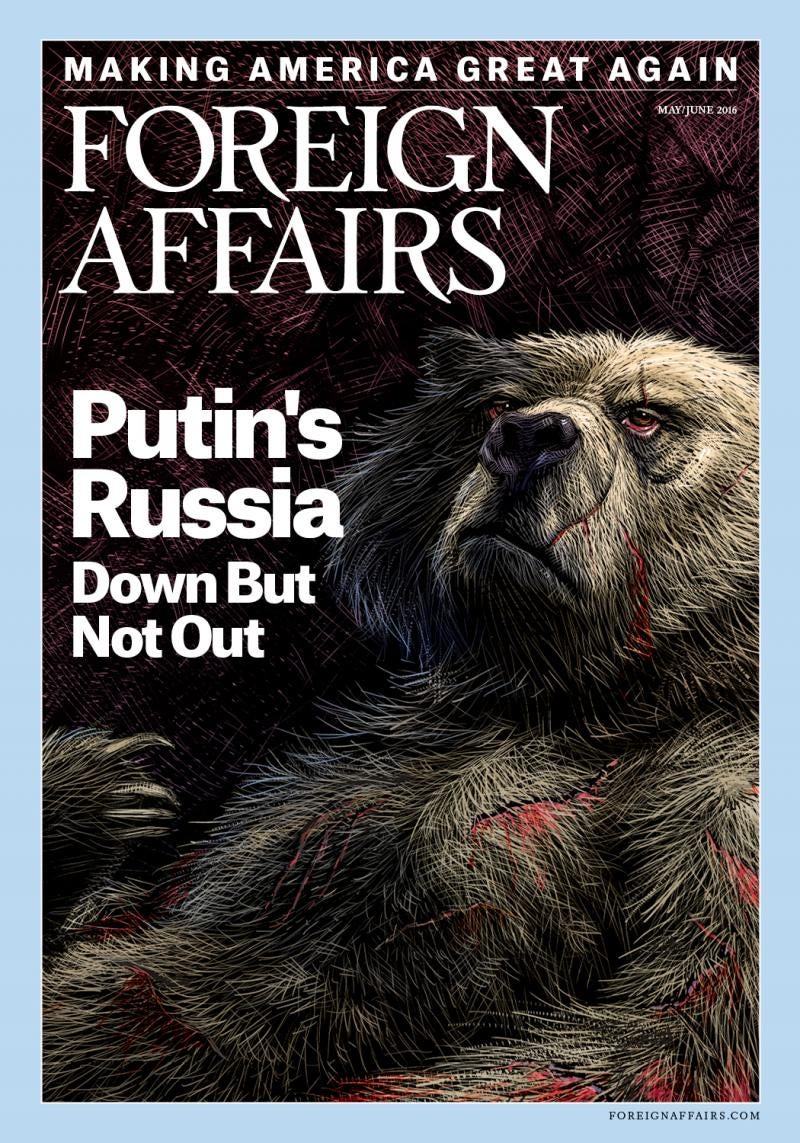
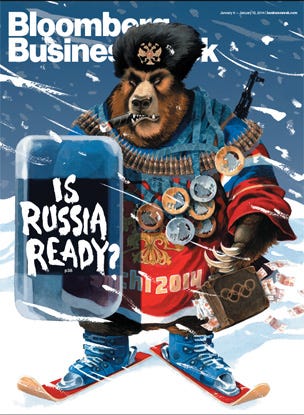
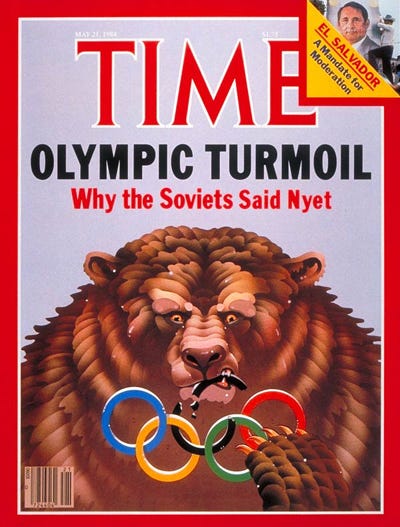
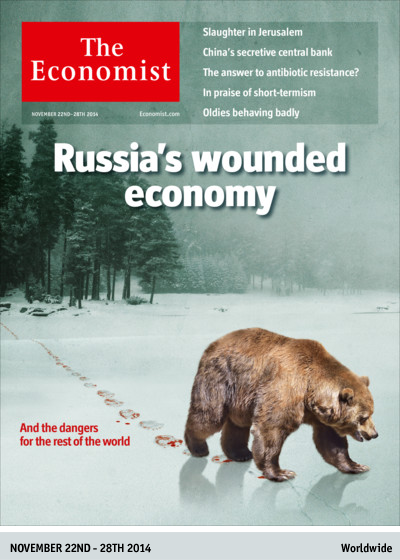
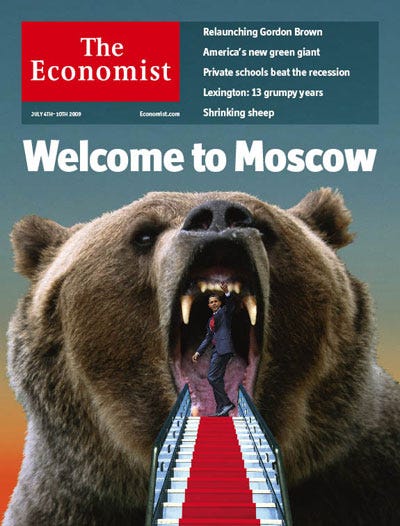
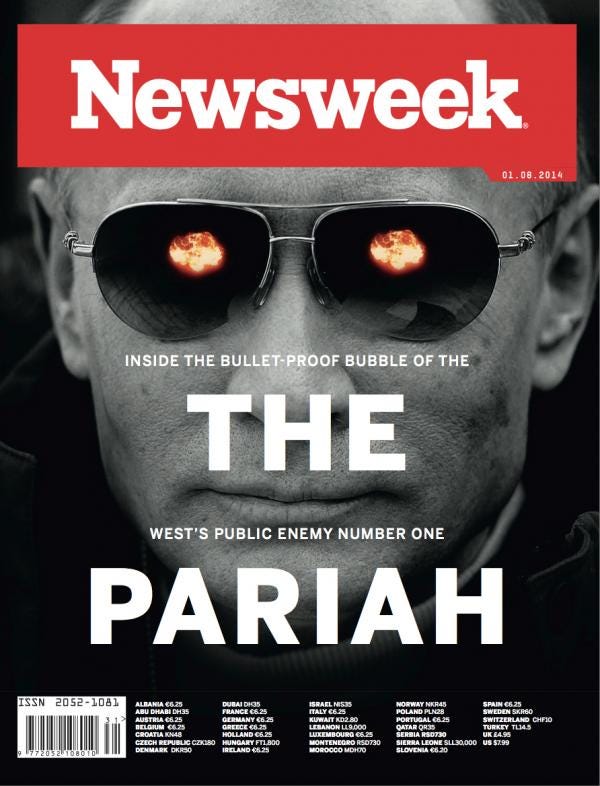
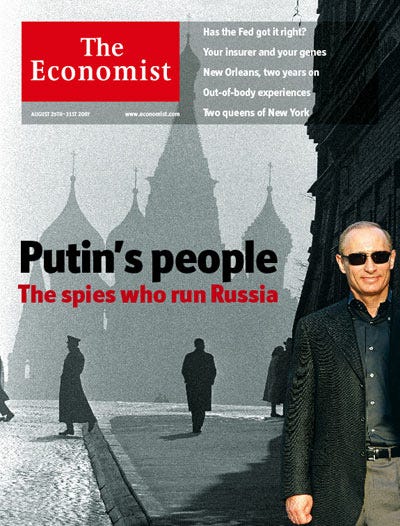
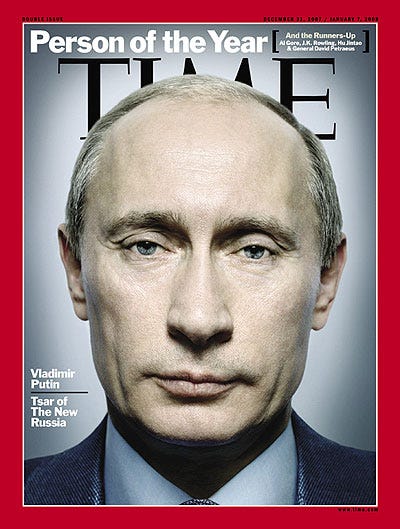
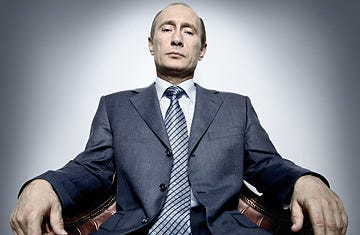
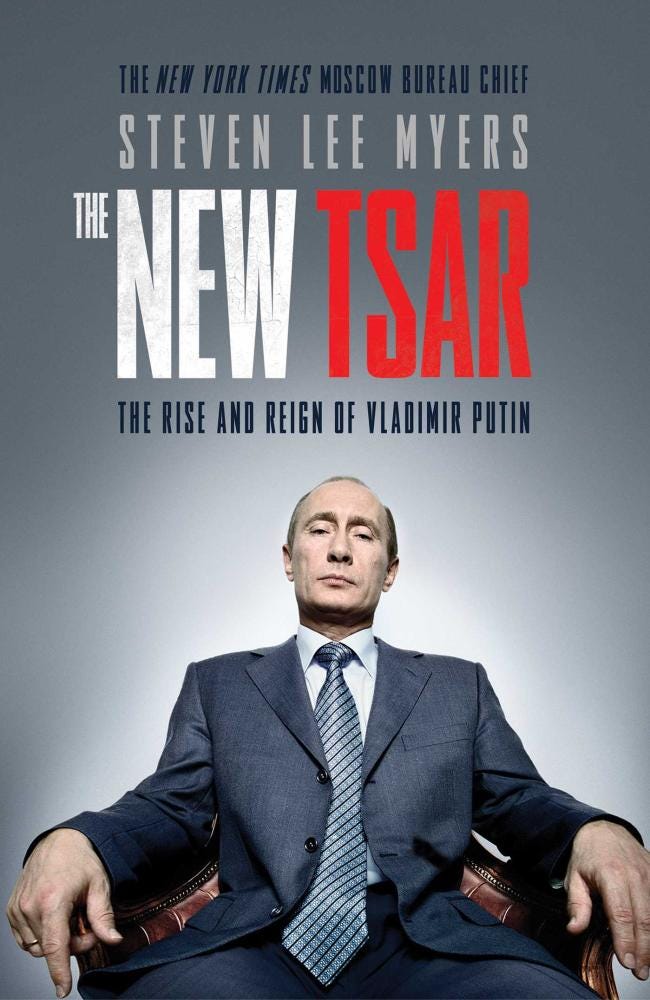
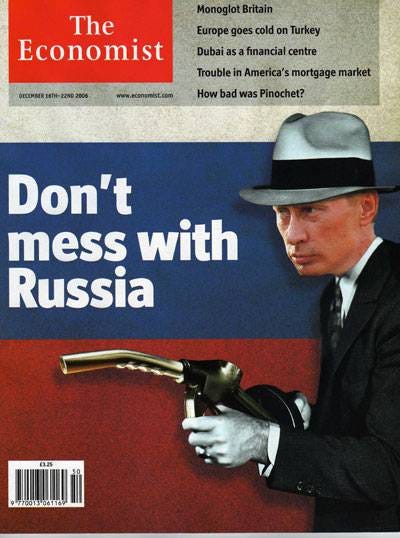
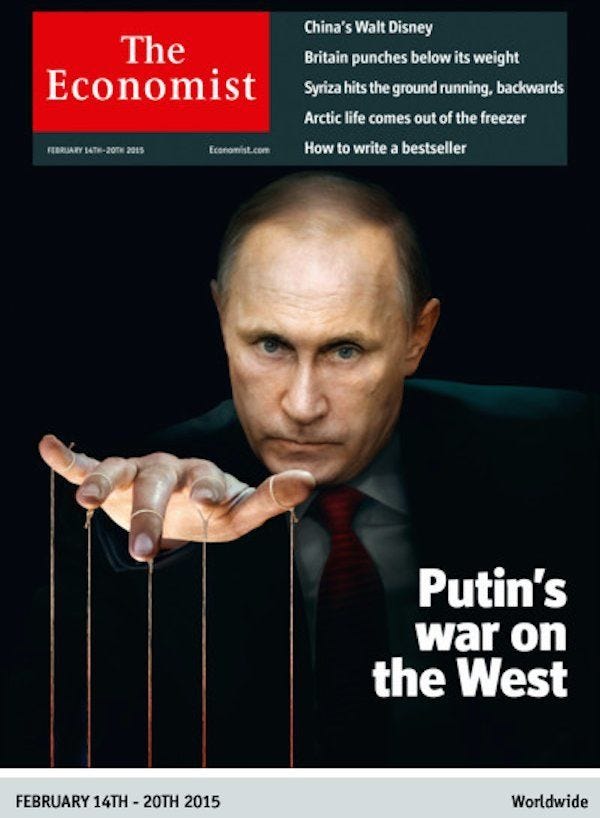
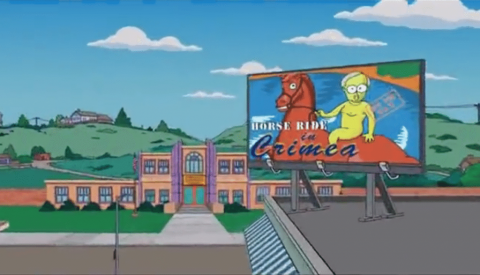
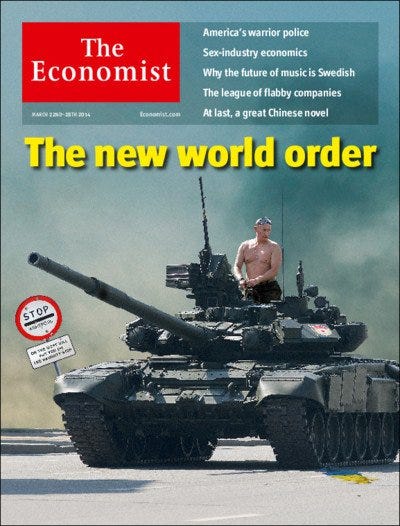
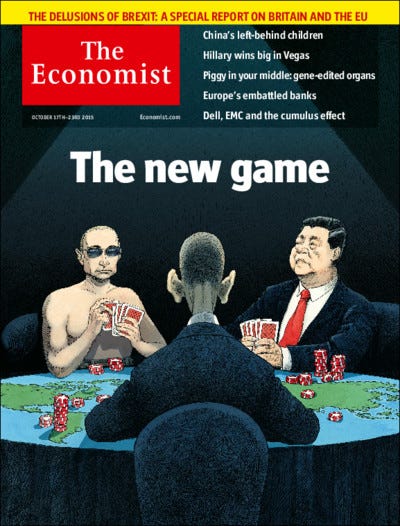
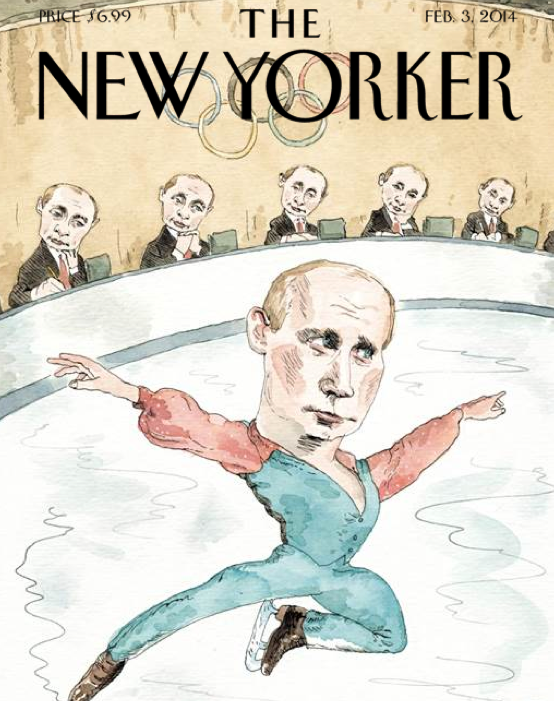
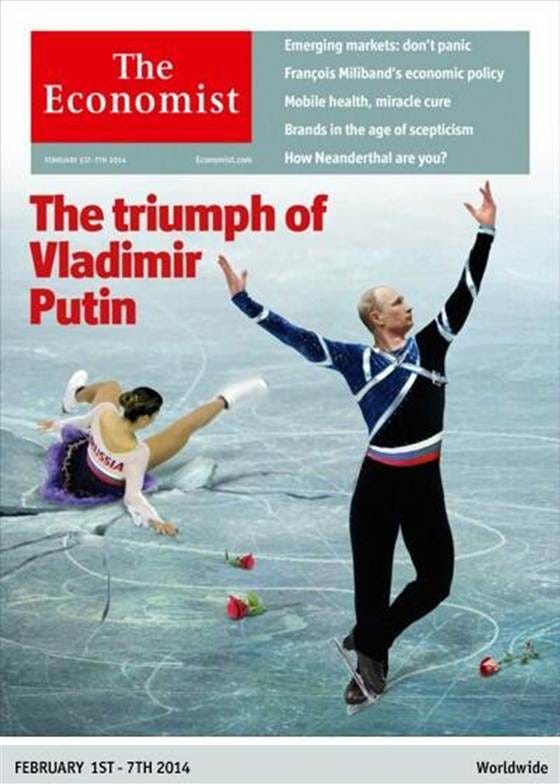
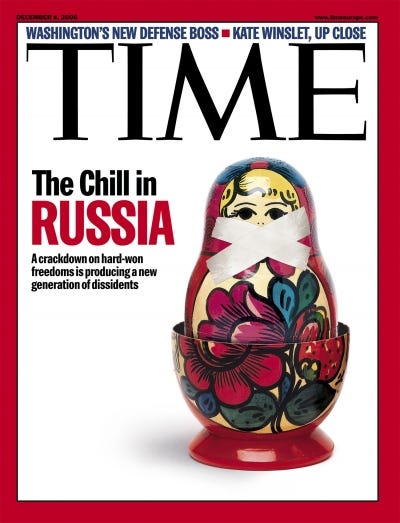
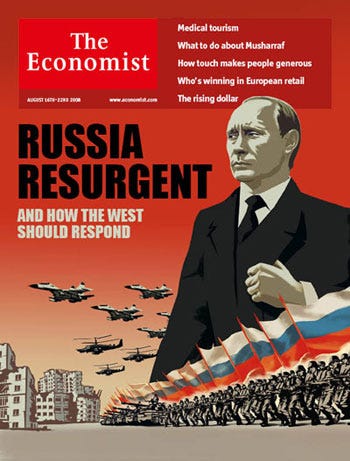
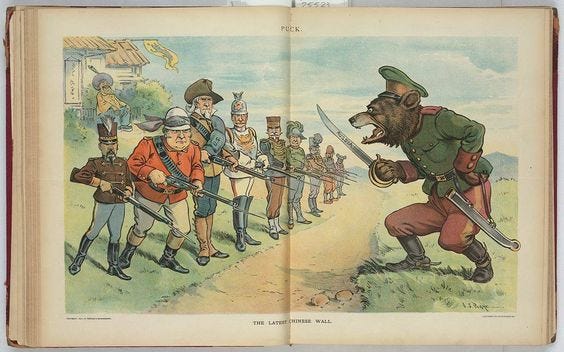
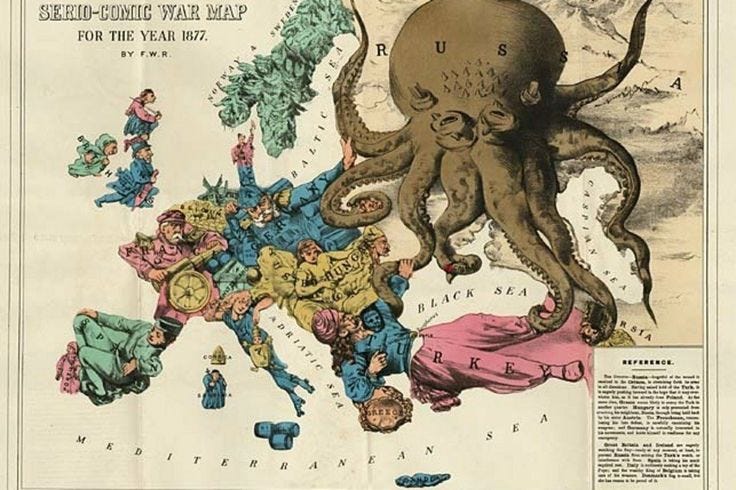
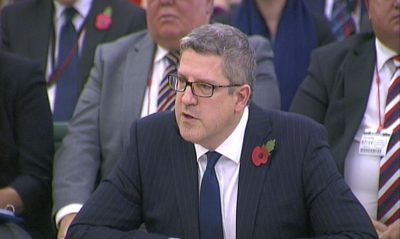
 Aletho News
