A significant crack has been unexpectedly opened in the wall of Europe’s disciplined obedience to the United States. I’m not only referring to the possible long-term consequences for U.S.-European relations in the wake of Britain’s decision to leave the European Union, but the unlikely blow against Washington’s information war on Moscow delivered by Germany’s foreign minister, Frank-Walter Steinmeier, who a week ago shockingly accused the North Atlantic Treaty Organization of “war-mongering” against Russia.
German FM Frank-Walter Steinmeier
Since the Bush administration’s twisting of events in the 2008 Russia-Georgia war, which the E.U. blamed on Georgia, Western populations have been subjected to the steady message that Russia is a “threat” to the West and is guilty of “aggression.” This reached a peak with the false narrative of events in Ukraine, in which blatant evidence of the West’s complicity in a violent coups d’état was omitted from corporate media accounts, while Russia’s assistance to eastern Ukrainians resisting the coup has been framed as a Russian “invasion.”
The disinformation campaign has reached the depths of popular culture, including the EuroVision song contest and sports doping scandals, to ensure widespread popular support for U.S. hostile intentions against Russia.
The Russian “aggression” narrative, based largely on lies of omission, has prepared the way for the U.S. to install a missile-shield in Romania with offensive capabilities and to stage significant NATO war games with 31,000 troops on Russia’s borders. For the first time in 75 years, German troops retraced the steps of the Nazi invasion of the Soviet Union.
U.S. Designs on Russia
The U.S. is eyeing a post-Putin Russia in which a Wall Street-friendly leader like Boris Yeltsin can be restored to reopen the country to Western exploitation. But Vladimir Putin is no Yeltsin and has proven a tough nut for the U.S. to crack. Washington’s modus operandiis to continually provoke and blame an opponent until it stands up for itself, as Putin’s Russia has done, then accuse it of “aggression” and attack in “self-defense.”
In this way, Washington builds popular support for its own version of events and resistance to the other side of the story. Unfortunately it is not a new trick in the U.S. playbook.
“The statesmen will invent cheap lies, putting the blame upon the nation that is attacked, and every man will be glad of those conscience-soothing falsities, and will diligently study them, and refuse to examine any refutations of them; and thus he will by and by convince himself the war is just, and will thank God for the better sleep he enjoys after this process of grotesque self-deception,” wrote Mark Twain.
So suddenly, after many years of an air-tight, anti-Russia campaign believed unquestioningly by hundreds of millions of Westerners, comes Steinmeier last week blurting out the most significant truth about Russia uttered by a Western official perhaps in decades.
“What we shouldn’t do now is inflame the situation further through saber-rattling and warmongering,” Steinmeier stunningly told Bild am Sontag newspaper. “Whoever believes that a symbolic tank parade on the alliance’s eastern border will bring security is mistaken.”
Instead Steinmeier called for dialogue with Moscow. “We are well-advised to not create pretexts to renew an old confrontation,” he said, saying it would be “fatal to search only for military solutions and a policy of deterrence.”
In keeping with the U.S. propaganda strategy, the U.S. corporate media virtually ignored the remarks, which should have been front-page news. The New York Times did not report Steinmeier’s statement, but two days later ran a Reuter’s story only online leading with the U.S. military’s rejection of his remarks.
NATO General: Russia is No Threat
Just a day after Steinmeier was quoted in Bild, General Petr Pavel, chairman of NATO’s military committee, dropped another bombshell. Pavel told a Brussels press conference flat out that Russia was not at a threat to the West.
“It is not the aim of NATO to create a military barrier against broad-scale Russian aggression, because such aggression is not on the agenda and no intelligence assessment suggests such a thing,” he said.
What? What happened to Russian “aggression” and the Russian “threat?” What is the meaning then of the fear of Russia pounded every day into the heads of Western citizens? Is it all a lie? Two extraordinary on-the-record admissions by two men, Steinmeier, the foreign minister of Europe’s most powerful nation, and an active NATO general in charge of the military committee, both revealing that what Western officials repeat every day is indeed a lie, a lie that may be acknowledged in private but would never before be mentioned in public.
Two years ago I was in a background briefing with a senior European ambassador at his country’s U.N. mission in New York and could hardly believe my ears when he said talk about Russia’s threat to Eastern Europe was “all hype” designed to give NATO “a reason to exist.” Yet this same ambassador in public Security Council meetings would viciously attack Russia.
But the hype is about more than just saving NATO. The fear campaign feeds the American and European military industries and most importantly puts pressure on the Russian government, which the U.S. wants overthrown.
Were these remarks made out of the exasperation of knowing all along that the Russian threat is hype? Were they made out of genuine concern that things could get out of hand under reckless and delusional leaders in Washington leading to a hot war with Russia?
Neither man has been disciplined for speaking out. Does this signal a change in official German thinking? Will German businessmen who deal with Russia and have opposed sanctions against Moscow over Ukraine, which were forced on Germany by the U.S., be listened to?
Were Steinmeier’s remarks a one-off act of rebellion, or is Germany indeed considering defying Washington on sanctions and regime change in Moscow? Is the German government finally going to act in Germany’s own interests? Such a move would spark a European defiance of the United States not seen since the days when Charles de Gaulle pulled France out of NATO in 1966 to preserve French independence.
The last time European governments broke with Washington on a major issue was the 2003 U.S.-led invasion of Iraq. Then France and Germany joined Russia on the U.N. Security Council in blocking the war’s authorization (although Britain supported it). But France and Germany then voted for a resolution several months later that essentially condoned the invasion.
It’s Up to the European Public
One has to ask whether a conditioned German public is ready to see through the lies about Russia. Last November, I flew from St. Petersburg to Berlin and discussed this very question with a number of well-educated Germans.
I had visited Russia for the first time since 1995, 20 years before to the month. Those were the days of the Yeltsin-Jeffery Sachs Russia, of the unbridled neoliberal capitalism of the Wall Street-oligarch alliance that plundered the country leaving millions of Russians destitute. Outside train stations I saw homeless encampments replete with campfires. Policemen were stopping motorists for bribes. I ran from two men intent on robbing me until I lost them in a Metro station. That’s the Russia the neocons in Washington and the knaves and buccaneers on Wall Street want to see again.
The Russia I saw in St. Petersburg and Moscow, 20 years later, was orderly and prosperous, as modern as any European city. It is a testament to Russia’s resistance to American attempts to restore its political and financial control. Russia is a capitalist country. But on its own terms. It is fully aware of American machinations to undermine it.
In Berlin I met several Germans, educated, liberal and completely aware, unlike most Americans, of how the United Sates has abused its post-World War II power. And yet when I asked them all why there are still U.S. military bases in Germany 70 years after the war and 25 years after the Cold War ended, and who the Americans were protecting them from, the universal answer was: Russia.
History shows European fears of Russia to be completely overblown. Germany and other Western powers have invaded Russia three times in the last two centuries: France in 1812, U.S., Britain and France in the 1918 Russian Civil War, and Germany again in 1941. Except for Imperial Russia’s incursion into East Prussia after war was declared on it in 1914, the reverse has never been true.
In his memoirs Harry Truman admitted that false fear of Russia was the “tragedy and shame of our time” during the Cold War that he had much to do with in part to revive the U.S. post-war economy with military spending. George Kennan, the State Department official who advised a non-military containment of the Soviet Union, conceded as early as 1947 that Soviet moves in Eastern Europe were defensive and constituted no threat. In the 1990s, Kennan also decried NATO’s expansion towards Russia’s borders.
With its vast natural resources, Russia has been the big prize for the West for centuries, and is still today in neocon-driven Washington. But Germany, especially, has benefited from trade with Russia and has no need to join the U.S. imperial project.
The British voters’ decision, days after Steinmeier’s extraordinary remark, could herald significant change in Europe, which may be approaching an historical junction in its relationship with the United States. Growing anti-E.U. sentiment has spread across the continent, including calls for similar referenda in several countries.
British voters evidently saw through the hype about the Russian “threat,” as a majority did not buy British Prime Minister David Cameron’s scare tactic ahead of the vote that Brexit would make it harder to “combat Russian aggression.”
Britain has been called Washington’s Trojan horse in the E.U. The thinking is that without Britain, the E.U. would be freer to chart its own course. But as Alexander Mercouris explained here, Obama bypasses London to call Merkel directly with his demands. Still, removing Britain’s voice from the E.U., though more crucially not from NATO, opens space for more independent voices in Europe to emerge.
“I worry that we will have less clout on our own,” former British Ambassador to the United States Peter Westmacott told The New York Times. “In the future, we won’t have as much influence on Europe’s response to Putin’s transgressions, Iran’s nuclear ambitions, or the E.U.’s foreign and security policy. … And we will be less able to ensure it is U.S.-friendly.”
But that could be a good thing. If German leaders conclude the United States is pushing Europe into a disastrous war with Russia, could we see a Charles de Gaulle moment in Berlin? Merkel doesn’t seem to have it in her. Three days after Steinmeier’s remarks, she told a news conference she favored increased German spending for NATO to counter Russian “threats.”
Instead it will require a revolt by an awakened citizenry against the E.U. and elected European governments that refuse to stand up to Washington, mostly because it benefits their own class interests, to the detriment of the majority.
The Future of the EU
European social democracy had been probably the best social and political system ever devised on earth, maybe the best that is humanly possible. Europe could have been a model for the world as a neutral power committed to social justice. As late as 1988, Jacques Delors, then president of the European Commission, promised the British Trades Union Congress that the E.U. would be a “social market.”
Instead the E.U. allowed itself to be sold out to unelected and unaccountable neoliberal technocrats now in charge in Brussels. European voters, perhaps not fully understanding the consequences, elected neoliberal national governments slavishly taking Washington’s foreign policy orders. But Brexit shows those voters are getting educated. Unity is a great ideal but E.U. leaders have refused to accept that it has to benefit all Europeans.
The E.U.’s Lisbon Treaty is the only constitution in the world that has neoliberal policies written into it. If it won’t reform — and the arrogance of the E.U.’s leaders tells us it won’t — it will be up to the people of Europe to diminish or dismantle the E.U. through additional referenda. That would give liberated European nations the chance to elect anti-neoliberal national governments, accountable to the voters, which can also chart foreign policies independent of Washington.
The danger is that the right-wing sentiment that has driven a large part of the anti-Establishment movements in Europe (and the U.S.) may elect governments that grow even closer to Washington and impose even harsher neoliberal policies.
That is a risk that may need to be taken in the hope that the anti-Establishment left and right can coalesce around shared interests to put an end to the elitist European project.
Joe Lauria is a veteran foreign-affairs journalist based at the U.N. since 1990. He has written for the Boston Globe, the London Daily Telegraph, the Johannesburg Star, the Montreal Gazette, the Wall Street Journal and other newspapers. He can be reached atjoelauria@gmail.com and followed on Twitter at @unjoe.
The US guided-missile destroyer Gravely breached international navigation safety rules by coming within dangerous proximity of the Yaroslav Mudry, a Russian frigate, in the eastern Mediterranean, the Russian Defense Ministry has said.
The USS Gravely approached the Yaroslav Mudry, a Russian frigate, on June 17, passing across her course at a “dangerous” distance of 180 meters (550ft), the Defense Ministry said in a statement on Tuesday.
The encounter occurred in international waters. The Yaroslav Mudry did not deviate from her course and refrained from engaging in dangerous maneuvering with the US warship, the ministry added.
According to the statement, the warship’s captain and crew violated the International Regulations for Preventing Collisions at Sea (COLREGS), which govern the conduct of two or more vessels when they meet at sea in order to prevent dangerous situations.
“The US sailors, in particular, neglected Rule 13, which stipulates that an overtaking vessel must keep out of the way of the vessel being overtaken,” the Defense Ministry said. It added that the USS Gravely had also violated Rule 15, which says that a vessel that has another vessel on the starboard side must yield and avoid crossing ahead of her.
The ministry also said the Pentagon should take note of such incidents rather than accuse the Russian Air Force and Navy of unprofessional conduct. “US sailors allow themselves to neglect key foundations of navigation safety without thinking of the consequences that dangerous maneuvering in a heavily trafficked maritime area might involve.”
The USS Gravely is an Arleigh Burke-class guided missile destroyer capable of carrying an Aegis missile defense system. She was commissioned in 2010 and sent to her first overseas deployment in the eastern Mediterranean three years later.
Yaroslav Mudry, a Russian-made Neustrashimy-class frigate, has seen service with the Russian Navy’s Baltic Fleet. She was spotted near Malta Earlier in June, reportedly heading to the eastern part of the Mediterranean to join Russia’s maritime task force off Syrian shores.
Sergei Magnitsky was a Russian lawyer hired by an Anglo-American investment fund operating in Moscow to investigate the apparent diversion of as much as $230 million in taxes due to the government. He became a whistleblower after discovering that the money had been stolen by the police, organized crime figures and other government officials. After he went to the authorities to complain he was unjustly imprisoned for eleven months. When he refused to recant he was both beaten and denied medical treatment to coerce him into cooperating, resulting in his death in jail at age 37 in November 2009. He has become something of a hero for those who have decried official corruption in Russia.
The Magnitsky case is of particular importance because both the European Union and the United States have initiated sanctions against the Russian officials who were allegedly involved. In the Magnitsky Act, sponsored by Russia-phobic Senator Ben Cardin and signed by President Barack Obama in 2012, the U.S. asserted its willingness to punish foreign governments for violations of human rights. Russia reacted angrily, noting that the actions taken by its government internally, notably the operation of its judiciary, were being subjected to outside interference. It reciprocated with sanctions against U.S. officials as well as by increasing pressure on foreign non-governmental pro-democracy groups operating in Russia. Tension between Moscow and Washington increased considerably as a result and Congress will likely soon approve a so-called Global Magnitsky Act as part of the current defense appropriation bill. It expands the use of sanctions and other punitive measures against regimes guilty of egregious human rights abuses though it is unlikely to be applied to U.S. friends like Saudi Arabia and Israel. It is also sponsored by Senator Ben Cardin and is clearly intended to intimidate Russia.
The tit-for-tat that has severely damaged relations with Russia is based on the standard narrative embraced by many regarding who Magnitsky was and what he did, but is it true? I had the privilege of attending the first by invitation only screening of a documentary“The Magnitsky Act: Behind the Scenes,” produced by Russian filmmaker Andrei Nekrasov. The documentary had been blocked in Europe through lawsuits filed by some of the parties linked to the prevailing narrative but the Newseum in Washington eventually proved willing to permit rental of a viewing room in spite of threats coming from the same individuals to sue to stop the showing.
Nekrasov by his own account had intended to do a documentary honoring Magnitsky and his employers as champions for human rights within an increasing fragile Russian democracy. He had previously produced documentaries highly critical of Russian actions in Chechnya, Georgia and Ukraine, and also regarding the assassinations of Russian dissident Alexander Litvinenko in London as well as of journalist Anna Politkovskaya in Moscow. He has been critical of Vladimir Putin personally and was not regarded as someone who was friendly to the regime, quite the contrary. Some of his work has been banned in Russia.
After his documentary was completed using actors to play the various real-life personalities involved and was being edited Nekrasov returned to some issues that had come up during the interviews made during the filming. The documentary records how he sought clarification of what he was reading and hearing but one question inevitably led to another.
The documentary began with the full participation of American born UK citizen William Browder, who virtually served as narrator for the first section that portrayed the widely accepted story on Magnitsky. Browder portrays himself as a human rights campaigner dedicated to promoting the legacy of Sergei Magnitsky, but he is inevitably much more complicated than that. The grandson of Earl Browder the former General Secretary of the American Communist Party, William Browder studied economics at the University of Chicago, and obtained an MBA from Stanford.
From the beginning, Browder concentrated on Eastern Europe, which was beginning to open up to the west. In 1989 he took a position at highly respected Boston Consulting Group dealing with reviving failing Polish socialist enterprises. He then worked as an Eastern Europe analyst for Robert Maxwell, the unsavory British press magnate and Mossad spy, before joining the Russia team at Wall Street’s Salomon Brothers in 1992.
He left Salomons in 1996 and partnered with the controversial Edmond Safra, the Lebanese-Brazilian-Jewish banker who died in a mysterious fire in 1999, to set up Hermitage Capital Management Fund. Hermitage is registered in tax havens Guernsey and the Cayman Islands. It is a hedge fund that was focused on “investing” in Russia, taking advantage initially of the loans-for-shares scheme under Boris Yeltsin, and then continuing to profit greatly during the early years of Vladimir Putin’s ascendancy. By 2005 Hermitage was the largest foreign investor in Russia.
Browder had renounced his U.S. citizenship in 1997 and became a British citizen apparently to avoid American taxes, which are levied on worldwide income. In his bookRed Notice: A True Story of High Finance, Murder and One Man’s Fight for Justice he depicts himself as an honest and honorable Western businessman attempting to function in a corrupt Russian business world. That may or may not be true, but the loans-for-shares scheme that made him his initial fortune has been correctly characterized as the epitome of corruption, an arrangement whereby foreign investors worked with local oligarchs to strip the former Soviet economy of its assets paying pennies on each dollar of value. Along the way, Browder was reportedly involved in making false representations on official documents and bribery.
As a consequence of what came to be known as the Magnitsky scandal, Browder was eventually charged by the Russian authorities for fraud and tax evasion. He was banned from re-entering Russia in 2005, even before Magnitsky died, and began to withdraw his assets from the country. Three companies controlled by Hermitage were eventually seized by the authorities, though it is not clear if any assets remained in Russia. Browder himself was convicted of tax evasion in absentia in 2013 and sentenced to nine years in prison.
Browder has assiduously, and mostly successfully, made his case that he and Magnitsky have been the victims of Russian corruption both during and since that time, though there have been skeptics regarding many details of his personal narrative. He has been able to sell his tale to leading American politicians like Senators John McCain, Ben Cardin and ex-Senator Joe Lieberman, always receptive when criticizing Russia, as well as to a number of European parliamentarians and media outlets. But there is, inevitably, another side to the story, something quite different, which Andrei Nekrasov presents to the viewer.
Nekrasov has discovered what he believes to be holes in the narrative that has been carefully constructed and nurtured by Browder. He provides documents and also an interview with Magnitsky’s mother maintaining that there is no clear evidence that he was beaten or tortured and that he died instead due to the failure to provide him with medicine while in prison or treatment shortly after he had a heart attack. A subsequent investigation ordered by then Russian President Dimitri Medvedev in 2011 confirmed that Magnitsky had not received medical treatment, contributing to this death, but could not confirm that he had been beaten even though there was suspicion that that might have been the case.
Nekrasov also claims that much of the case against the Russian authorities is derived from English language translations of relevant documents provided by Browder himself. The actual documents sometimes say something quite different. Magnitsky is referred to as an accountant, not a lawyer, which would make sense as a document of his deposition is apparently part of a criminal investigation of possible tax fraud, meaning that he was no whistleblower and was instead a suspected criminal.
Other discrepancies cited by Nekrasov include documents demonstrating that Magnitsky did not file any complaint about police and other government officials who were subsequently cited by Browder as participants in the plot, that the documents allegedly stolen from Magnitsky to enable the plotters to transfer possession of three Hermitage controlled companies were irrelevant to how the companies eventually were transferred and that someone else employed by Hermitage other than Magnitsky actually initiated investigation of the fraud.
In conclusion, Nekrasov believes there was indeed a huge fraud related to Russian taxes but that it was not carried out by corrupt officials. Instead, it was deliberately ordered and engineered by Browder with Magnitsky, the accountant, personally developing and implementing the scheme used to carry out the deception.
To be sure, Browder and his international legal team have presented documents in the case that contradict much of what Nekrasov has presented in his film. But in my experience as an intelligence officer I have learned that documents are easily forged, altered, or destroyed so considerable care must be exercised in discovering the provenance and authenticity of the evidence being provided. It is not clear that that has been the case. It might be that Browder and Magnitsky have been the victims of a corrupt and venal state, but it just might be the other way around. In my experience perceived wisdom on any given subject usually turns out to be incorrect.
Given the adversarial positions staked out, either Browder or Nekrasov is essentially right, though one should not rule out a combination of greater or lesser malfeasance coming from both sides. But certainly Browder should be confronted more intensively on the nature of his business activities while in Russia and not given a free pass because he is saying things about Russia and Putin that fit neatly into a Washington establishment profile. As soon as folks named McCain, Cardin and Lieberman jump on a cause it should be time to step back a bit and reflect on what the consequences of proposed action might be.
One should ask why anyone who has a great deal to gain by having a certain narrative accepted should be completely and unquestionably trusted, the venerable Cui bono? standard. And then there is a certain evasiveness on the part of Browder. The film shows him huffing and puffing to explain himself at times and he has avoided being served with subpoenas on allegations connected to the Magnitsky fraud that are making their way through American courts. In one case he can be seen on YouTube running away from a server, somewhat unusual behavior if he has nothing to hide.
A number of Congressmen and staffers were invited to the showing of the Nekrasov documentary at the Newseum but it is not clear if any of them actually bothered to attend, demonstrating once again how America’s legislature operates inside a bubble of willful ignorance of its own making. Nor was the event reported in the local “newspaper of record” the Washington Post, which has been consistently hostile to Russia on its editorial and news pages.
A serious effort that a friend of mine described as “hell breaking loose” was also made to disrupt the question and answer session that followed the viewing of the film, with a handful of clearly coordinated hecklers interrupting and making it impossible for others to speak. The organized intruders, who may have gained entry using invitations that were sent to congressmen, suggested that someone at least considers this game being played out to have very high stakes.
The point is that neither Nekrasov nor Browder should be taken at their word. Either or both might be lying and the motivation to make mischief is very high if even a portion of the stolen $230 million is still floating around and available. And by the same measure, no Congressman or even the President should trust the established narrative, particularly if they persist in their hypocritical conceit that global human rights are best judged from Washington. They should in particular hesitate if they are considering tying policy towards Russia based on a presumption of guilt on the part of Moscow without really knowing what actually did occur. That could well be a decision that will bring with it tragic consequences.
The US military has tested an Israeli short-range missile for possible use in its European network of missile systems to deter Russia, says a US Army general.
Major General Glenn Bramhall of the US Army’s Air and Missile Defense Command made the comments on Monday, as he visited the occupied Palestinian territories.
Bramhall said his units needed a reliable system to counter less powerful missile threats as a third tier beside the Army’s array of midrange Patriot and THAAD missile systems.
“Patriot and THAAD are great systems that do what they were designed to do. But I don’t think we would want to waste a Patriot or a THAAD missile on something that can be affected by something that’s lower cost and is actually designed for that job itself,” the general told Reuters.
For that purpose, he said the US military has test-launched a variant of the Israeli “Tamir” rocket which is incorporated to the Tel Aviv regime’s so-called Iron Dome missile system.
Jointly manufactured by American and Israeli firms, each Tamir battery, consisting of a radar unit, missile control unit, and several launchers, is worth $50 million, with each missile costing about $100,000.
“I think we are looking at something that is similar to Iron Dome. We have looked at the Tamir as a possible missile,” Bramhall said. He was due to inspect an Iron Dome unit on Tuesday.
Russian deterrence
Elsewhere in his remarks, the American general noted that the Israeli missile system is being considered mainly as a deterrent against what he called Russia’s military buildup in Europe.
“With all that is happening in Europe, especially the fact that Russia has really awakened itself and has really decided to rebuild its military and is really posing a threat, we are looking at how we can do the multi-tiered defense,” Bramhall said.
Military tensions between Russia and the US further heightened in May, when American and NATO officials activated a land-based missile system in Romania, despite Russia’s warning against US-led arms deployments near its borders.
The missiles’ activation marked the penultimate step in the completion of a missile shield, which Washington proposed nearly a decade ago.
Russian President Vladimir Putin strongly criticized the system’s deployment, vowing to neutralize any threats against his country’s security.
Peter Handberg, a writer and translator, has in the years since the end of the Cold War traveled many times in the Baltic states, Estonia, Latvia and Lithuania. He has visited many sites where nuclear weapons were kept, ready to destroy the world. Handberg has also spoken to military officers who once watched over these instruments of Armageddon. He has written an important book on the subject, Undergångens skuggor (Shadows of Doom). The book is not translated but a documentary film is planned.
Recently he led a group from Sweden to some of these bases, abandoned since 1987. We were about ten physicians from the Swedish section of IPPNW and ten others, including historians and people with an interest in the Baltic states.
I learned three important facts from the book and on the sites:
The size of the Soviet nuclear complex in these small Baltic states was enormous, with at least 35 bases.
The officers who watched over the missiles were—especially in 1983—convinced that an American attack was coming and they expected to launch their missiles.
There were short distance missiles at some of these bases in the 1960s, but also much later, with a range of not more than 600 km—enough to reach southern Finland and eastern Sweden with a large number of 100-kiloton warheads, each equivalent to about six Hiroshima bombs. The reason “neutral” Sweden was targeted was that a US attack with bombers carrying nuclear weapons was expected to come over Swedish airspace, possibly using Swedish airfields.
Maybe the idea that Sweden would have been used as a platform for an American nuclear attack was correct. Thomas Reed, once the head of the US Air Force, describes such a scenario in his book, At the Abyss. Reed was a US defense analyst who, in the 1980s participated in the selection of enemy targets in the strategic plane called SIOP.
I cannot avoid comparisons with the situation today. My country moves ever closer to NATO and has, through the Host Country Agreement, prepared for NATO bases and for an attack to be carried out by NATO from our territory.
Earlier this month, a group of State Department officials leaked a memo of dissent calling for the use of US military power to help end the bloody conflict in Syria. Offering a commentary, the French online investigative and opinion journal Mediapart suggested that the memo’s authors don’t actually care about the fate of ordinary Syrians.
The memo, signed by 51 diplomats, slammed Russian and ostensible Iranian military support for the Syrian government, and called for a “more muscular military posture under US leadership” willing and able to impose “consequences” on the Assad government for alleged ceasefire violations. Last week, Secretary of State John Kerry met with 10 of the memo’s authors for a “collegial discussion,” according to State Department press secretary John Kirby.
Clearly aware that this ‘more muscular military posture’ could lead to disastrous consequences, considering the Russian forces operating on Syrian territory on the side of the Syrian government, the memo’s authors craftily suggested that “we are not advocating for a slippery slope that ends in a military confrontation with Russia. Rather, we are calling for a credible threat of targeted US military responses,” all supposedly in the interest of ‘enforcing the truce’.
Earlier this month, Secretary of State John Kerry warned Damascus and Moscow that Washington’s “patience was not infinite” with alleged ceasefire violations in Syria, supposedly over Syrian government forces’ attacks on Islamist groups like Ahrar al-Sham, believed to be allied with the al-Nusra Front, the Syrian affiliate of the al-Qaeda terrorist network.
Also this month, Russian Foreign Minister Sergei Lavrov told Russian media that Washington had explicitly asked the Kremlin not to target even al-Nusra Front, because there were also ‘moderate’ opposition groups in the territories held by the terrorists. It is noteworthy that Nusra, along with Daesh (ISIL) is not a member to the truce signed in February.
Commenting on the story, France’s Mediapart news and opinion journal suggested that while the stated goal of the memo and its call for US air strikes against the Syrian government is “to end a five-year war that has killed over a quarter million people and forced more than half the country’s population to flee,” the real motive is different, and infinitely more ominous.
At his meeting with the memo’s authors last week, Mr. Kerry indicated that the White House already had a policy, and that until further notice, President Obama’s course remains to refuse a direct US military intervention in Syria.
But the reason for the internal dissent, according to Mediapart, stems from the fact that the Kerry State Department’s own policy on Syria has resulted in a blow to US prestige.
“In 2013,” the journal recalled, Kerry “was one of the most bellicose supporters of direct intervention by the US military to overthrow the government of Bashar al-Assad, after the Obama administration announced its ‘red line’ over the use of chemical weapons. At that time he claimed (and this was later disproven) that Syrian government forces had been responsible for a chemical attack in the suburbs of Damascus.”
Since then, Mediapart added, the Obama administration went from balking “at direct military intervention in the face of popular opposition to a new war in the Middle East and due to divisions among the leaders” in the army, the State Department and the CIA, to airstrikes (beginning in 2014) and the sending of several hundred special forces into Syria “under the pretext of fighting the Islamic State.”
Unfortunately for Washington, “these operations did not yield any results, allowing ISIL to invade Iraq and Syria.”
Ultimately, the journal noted, “only the Russian military intervention in Syria, with the support of [Syrian] government forces, would end up dealing a serious blow to ISIL and the Nusra Front, the Syrian branch of al-Qaeda which Washington continues to protect. In doing so, Vladimir Putin showed that he alone could seriously counter the Islamist militias. [Russia’s] prestige in much of the Middle East was increased at the expense of that of the United States.”
And this, Mediapart suggested, was the real reason behind the memo and its calls for a ‘more assertive military role’ for the US in Syria. “Damascus,” it added, “would be the first target” of Washington’s “judicious use” of air and missile strikes.
Calling out the memo’s ‘humanitarian’ call to “take steps to end death and suffering in Syria,” Mediapart recalled that this hypocritical suggestion was made “as if the bulk of the war in Syria was not caused by Washington” in the first place.
“In fact,” the journal noted, “the authors of the memo are not at all concerned about the fate of the Syrians. They implicitly seek to arrange an intervention that will lead to a military confrontation with Russia. This will become inevitable if US intervention leads to the series of ‘secondary effects’ hypocritically outlined by the memo.”
“Among them would be the inevitable deaths of Russian and Iranian soldiers deployed with Syrian government forces, the probability of the destruction of Russian military aircraft and an escalation of mutual hostilities. After that, as Putin recently warned, a Russian response may follow, which could cause an uncontrollable escalation.”
Ultimately, Mediapart warned, the Syrian crisis is unfolding in the context of escalating tensions between Washington and Moscow, already “at their highest since the Cold War. The ongoing NATO military exercises on Russia’s western border, and the deployment of anti-missile systems in Eastern Europe, designed to prepare for a ‘winnable’ nuclear war against Moscow, signal the growing danger of confrontation between the two major nuclear powers of the world.”
So far, President Obama has rejected the proposals in the dissenting State Department memo. “He does not feel able to arrange a new intervention so close to the November elections.”
However, the journal warned that in the upcoming election, supporters of war will bank on “ultra-militarist” Hillary Clinton to win the White House. As for Donald Trump, “there is no guarantee that he [too] could resist anti-Russian pressure, even if he has so far advocated a resumption of cooperation with Moscow. A false flag ‘incident’ provoked by the CIA which results in the death of US special services agents could force Trump to engage militarily on a large scale against Russia. A nuclear war could result,” Mediapart grimly concludes.
Australia has now completed more than six weeks of an eight-week election campaign. There have been the usual claims and counterclaims from the major parties, dubious statistics, hyperbole, and a relentless focus on peripheral issues at the expense of clarity and insight.
Expenditure promises totaling billions of dollars have been made, with the principal beneficiaries being electorates with very small majorities, and therefore most susceptible to changing allegiance with the vagaries of shifting sentiment for or against the governing party or the main opposition party.
What is completely missing from the election campaign rhetoric or promises however, is any discussion of foreign affairs, defence or refugee policy.
This coyness is not unique to this election. The past several decades have seen major decisions taken without discussion as to their strategic context, the objectives of the policy, any exit strategy when the decision involves foreign wars (invariably at the behest of the Americans). This is currently the case with the wars in Afghanistan, Iraq and Syria.
Neither is there any discussion by the major parties as to whether the decisions taken about going to war, or taking steps that may lead to war, are advantageous or prejudicial to the national interest.
Also completely absent from debate is any attempt to understand and respond to a rapidly changing geopolitical context. The Asia-Pacific region is in a major state of realignment, but one would not know that from listening to the political leaders or reading the mainstream media.
The dilemma Australia’s foreign policy faces and which urgently needs addressing was set out by the former Prime Minister Malcolm Fraser when he said that Australia’s relationship with the United States had “become a paradox. Our leaders argue we need to keep our alliance with the US strong in order to ensure our defence in the event of an aggressive foe. Yet the most likely reason Australia would need to confront an aggressive foe is our strong alliance with the US It is not a sustainable policy.”
It has become impossible in the Australian context to even contemplate, let alone discuss, a possible foreign policy stance independent of that alliance with the US. This is notwithstanding a series of foreign policy disasters and quagmires that are a direct result of that alliance, including but not limited to Vietnam, Afghanistan, Iraq and now Syria.
That another potential disaster was only narrowly avoided has come to light in a lengthy essay by James Brown (Quarterly Essay #62, 2016).
Brown, a former Army Captain who happens to be the son-in-law of the current Prime Minister Malcolm Turnbull, recounts how former Prime Minister Tony Abbott sought planning contingencies from the Australian military about the possible deployment of a brigade (about 3000 troops) to Eastern Ukraine in the aftermath of the shooting down of MH17 on 17 July 2014.
The initiative by Abbott was apparently taken without reference to the Cabinet, without debate in Parliament, and certainly without reference to the Australian public.
Abbott was dissuaded from this hare-brained scheme on the advice of the Dutch Prime Minister Rutte and his own military advisers alarmed at the prospect that it could potentially lead to a direct conflict with Russia.
Although rightly critical of the lack of strategic planning in Australian foreign and defence policy, Brown is himself equally a victim of the Anglo-American mindset that bedevils Australian strategic thinking.
He refers for example, to what he says are the “brutal geopolitics” of Russian actions in Ukraine, and a “war for conquest remains a threat.” (at pp39-40).
That such a proposition could be seriously advanced is of deep concern. Brown completely ignores for example, the February 2014 American financed and organized coup d’état that violently overthrew the legitimate Yanukovich government of Ukraine.
Further, he ignores the fascist nature of the present regime in Kiev, its systematic discrimination against the Russian-speaking citizens of Eastern Ukraine, and the Kiev regime’s persistent violation of the Minsk accords. He also fails to note what is an extraordinary lack of judgment by Abbott in joining Ukrainian President Poroshenko’s Council of Advisers.
Brown is on stronger ground when he criticizes the procurement of 12 submarines and 72 F35 fighter aircraft. The submarines, which will not be delivered before 2030, are said to cost $50 billion, not including the additional $5-6 billion for their armaments.
The cost of the F35 fighters has been variously quoted at between $17 and $25 billion dollars.
The wisdom of these purchases, their strategic value if any, and the implications of their potential use in an actual war, is not open for discussion in the present election campaign. Nor are they likely to be properly analysed by whoever wins the 2 July election. Perhaps needless to add, public discussion and media coverage are conspicuous by their absence.
The 2016 Defence White Paper identified China as the most likely potential threat to Australia. Quite how this threat would manifest itself is unclear. China has no history of imperialism or military aggression in the Pacific region. Nothing in its present policy stances or conduct would suggest that is likely to change.
Australia actually fighting a war with China on its own is unthinkable. Any such conflict could only be as part of an American war, which takes one straight back to Fraser’s paradox quoted above.
When one looks at actual US behaviour in relation to China, then there is significant cause for concern that Australia could become embroiled in an American provoked war. The basis for such concern would include, for example, the American’s provocative behaviour in the South China Sea that Australia has publicly supported. Australian navy vessels take part in an annual exercise, Operation Talisman Sabre that practices blocking the vital Malacca Straits essential to Chinese trade.
Other developments, such as the Trans Pacific Partnership, specifically exclude China, and are designed to assert American commercial interests at the expense of the national sovereignty of the non-American participants to the TPP.
America’s strategic policy, as set out in the 2002 Defence Department document Vision 2020 is based upon the assumption that America should exercise “full spectrum dominance” over the entire world, including for present purposes the Asia-Pacific region.
To this should be added the progressive increase in American military bases in the Asia-Pacific region, with nuclear weapon capability, and an American provoked war with China is far from unthinkable. There is of course historical precedent for current US policy, and that was the encirclement and economic warfare waged on Japan in the late 1930s early 1940s specifically designed to provoke a Japanese attack upon the US. That is exactly what happened.
American policy in the Asia-Pacific region is replicated in Europe, where it is pursuing equally provocative and dangerous policies on the Russian borders.
If Australia did become involved in a shooting war with China, as its current military and strategic posture would almost certainly guarantee, it is very difficult to see what role the hugely expensive submarines and F35 fighters would play.
That they would play any role at all would seem to depend on a number of assumptions. The war would have to start after 2030, as that is the earliest possible date for the delivery of the submarines.
It further assumes that the F35 fighter might actually fly in a combat effective manner. Neither assumption seems to have an evidential foundation.
Any Australian involvement in a war with China also appears to seriously underestimate the effectiveness of modern Chinese weaponry. Their supersonic cruise missile for example, would quickly eliminate the aircraft carrier based system the US Navy is built around.
Similarly, a single Dong Feng 41 supersonic ICBM missile would destroy the two crucial American military installations at Pine Gap and North West Cape that are a vital component of military communications and targeting. The Dong Feng 41 has 8-10 independently targetable nuclear warheads that would eliminate Australia’s major cities in addition to the specifically military targets noted.
Australia’s involvement in such a war would therefore last at most about 30 minutes, with huge casualties and its major cities smoking ruins. That is the very real risk Australia runs with its present alliance with the US. It is something that deserves proper debate, and this election, with both major parties complicit, is not providing such a debate.
The refusal to contemplate and discuss these military and geopolitical realities has a number of possible bases. An unspoken but potent spectre over Australian politics is the fate of the 1975 Whitlam Labor government. Whitlam had made clear his intention to close the Pine Gap spy installation, which while located in Australian territory was and is completely American controlled.
The evidence is now overwhelming that Whitlam was removed in a CIA orchestrated coup (Rundle 2015). After Whitlam was re-elected in 1974, the White House sent Marshall Green to Canberra as the US ambassador. Green was known in American circles as the “coupmaster.” He had been instrumental in the coup against the Sukarno government in Indonesia in 1965 and Allende in Chile in 1973. His presence in Canberra in 1975 was not a coincidence.
It is doubtful if such an extreme step would be necessary in the foreseeable future. Both main political parties go to extraordinary lengths to remain on side with whoever occupies the White House.
This goes well beyond participating in the aforementioned wars of choice. It includes Australia’s voting record in the United Nations where it is a regular supporter of the Israeli regime, contrary to the overwhelming weight of opinion expressed in that body. Israel’s constant breaches of international law are never criticized by either the Australian government or the Opposition.
None of this is the subject of informed discussion and debate. It is not an overstatement to suggest a conspiracy of silence by the major parties to avoid asking what should be the obvious questions.
It is difficult, if not impossible, to point to any actual material benefit to Australia that flows from this ritual obeisance to American wishes. The illusion of security that it fosters, is as Fraser pointed out, a paradox and unsustainable as a policy.
The likelihood of a disastrous outcome for Australia from the American alliance is many times greater than any assumed benefit. The inconsistency of present foreign and defence policy with Australia’s national interests should be a matter of debate. It is not.
The geopolitical centre of the world is re-establishing itself in Eurasia, just as Halford Mackinder predicted more than a century ago. Russia and China, and other members of the Eurasian Economic Union and the Shanghai Cooperation Organisation are forging a new military, economic, financial and political framework. These changes are undermining the unipolar American centred world that has dominated for the past 70 years.
The question for Australia is whether it recognises the geopolitical realities dictated by its geography, its trade, and the wishes of its people for peace and stability ahead of the destruction being wrought by its traditional ally.
These are questions that need to be addressed. The major political parties and the media are failing in their obligations by refusing to discuss these issues. Their resolution is vital to the peace and prosperity of this nation.
Wilful blindness, strategic incoherence, and a misalignment of national interests are not a sound policy basis.
Norwegian Prime Minister Stoltenberg and Russian President Medvedev at the 2010 meeting cementing the new delimitation of the Barents Sea maritime border in Norway’s favor.
Earlier this month, Norway’s government announced a new defense plan, amounting to the largest military modernization since the Cold War, directed against Russia. Commenting on the initiative, journalist Sviatoslav Knyazev suggested that the country’s government has chosen to forget decades of good-neighborly relations between Oslo and Moscow.
Last weekend, Norwegian media reported on the country’s most ambitious plans to modernize the country’s armed forces since the end of the Cold War.
The government plans include the purchase of at least 52 Lockheed Martin F-35 fifth-generation multirole fighter jets, four submarines (presumably Swedish-built diesel subs), and six coastal patrol aircraft. Plans also include the construction of five new frigates and six corvettes.Overall, the defense budget of the country of five million is expected to increase by 165 billion kroner (about $19.4 billion US) over the next 20 years.
Norwegian Prime Minister Erna Solberg did not mince words as to who exactly the buildup is directed against, stating that “we have an increasingly unpredictable neighbor to the east which is strengthening its military capacity, and showing willingness to use military force as a political tool.”
Solberg’s comments followed on promises by Defense Minister Ine Eriksen Soreide in February 2015 that her country would be reorganizing its armed forces to counter the so-called ‘Russian threat’. At that time, the official candidly admitted that Russian forces had “not breached our territory,” but added that Oslo was worried over the increase in the range and number of Russian military aircrafts’ flights near the country.
On the border between Norway and Russia, Oslo is deploying a new army unit, consisting of 200 rangers, to be deployed in the Sor-Varanger municipality in Finnmark county, strengthening a several-hundred strong contingent of border guards. These units, equipped with anti-tank and anti-aircraft weapons, will be based in the direct vicinity of the Russian town of Pechenga.Commenting on the buildup in a piece for the online news and analysis portal PolitRussia, independent journalist Sviatoslav Knyazev recalled that “even before the modernization, the Norwegian Armed Forces were relatively powerful.”
“The per capita defense costs of the Kingdom are the highest in Europe. The armed forces are small enough (about 30,000 on active duty and some 45,000 in the reserve) but well prepared and equipped. Taking account of mandatory military service and its high prestige, a large portion of the population has military training. In the event of a hypothetical conflict, Norway can put several hundred thousand people under arms.”
Listing off the inventory of the country’s armed forces, Knyazev recalled that its ground forces have 52 Leopard 2A4 tanks, along with 20 older Leopard 1A5s, along with 315 M113 armored personnel carriers, 104 Swedish-made CV90 infantry fighting vehicles, and 80 SISU XA-185 and XA-203 armored personnel carriers. The army also has about 200 multi-purpose armored vehicles, and a number of self-propelled guns and multiple launch rocket systems.
The Air Force, for its part, has 57 F-16 multirole fighters, while the Navy has five frigates, six corvettes and six submarines.With these figures and the government’s latest plans in mind, the journalist pointed out that Norway is “effectively planning to double the strength of its Navy and Air Force (or completely modernize it). We are talking about billions of dollars of spending, a lot even for a wealthy country like Norway.”
Unfortunately, Knyazev emphasized, “all of this is directed solely against us [Russia].” At the same time, “Norway’s desire to ‘play with toy soldiers’ and to create conditions which could destabilize our northern border seems doubly strange in the context of Moscow’s long record of friendly relations toward Oslo.”
For a start, the journalist pointed out, the Russian Empire was one of the first to recognize Norway’s independence, soon after the country broke off from Sweden in 1905. Later, after the collapse of the Russian Empire and the emergence of the Soviet Union, diplomatic relations were established in short order, with relations established in 1924.
“In 1944,” Knyazev recalled, “its was the Red Army which fought to liberate [northern] Norway from the Nazi invaders. Thousands of Soviet soldiers and officers paid with their lives for the country’s freedom. After that, the Soviet Union, itself ravaged by war, helped to restore its northern neighbor. The USSR provided food rations, and Red Army engineering units helped rebuild ruined buildings. Moreover, the Soviet Union did not even try to create a zone of influence in Norway or to reshape its borders. In September 1945, having assisted its neighbors with aid, Soviet troops voluntarily left the country.”
Later, in the 1970s, a territorial dispute broke out between Moscow and Oslo over the maritime border in the Barents Sea, rich in offshore hydrocarbon reserves and fishing resources. “However, in 2010, Russia voluntarily ceded half of the disputed territory and signed a treaty ‘On Maritime Delimitation and Cooperation in the Barents Sea and the Arctic Ocean.'”
In 1949, the journalist bitterly recalled, the Norwegian government “thanked” the USSR for its contribution to the country’s liberation by joining the NATO alliance. “Now, it seems, we are being ‘thanked’ for the [2010] territorial gift, the shelf and the hydrocarbons worth tens of billions of dollars…”
“First, Norway introduced sanctions against us over a war unleashed by Washington in Ukraine [in 2014], then caused a scandal because of our Deputy Prime Minister’s visit to Svalbard [in 2015], and now they are up in arms and creating new military units directed against us.”Meanwhile, Knyazev lamented, “Jens Stoltenberg, the same former Norwegian Prime Minister who earned political capital through the 2010 demarcation agreement, is now directing the NATO bloc’s aggressive anti-Russian activities. Today, he is calling for strengthening NATO’s presence in the Baltic and Black seas, suggesting that the anti-Russian missile defense system in Eastern Europe is nothing out of the ordinary, and calling for ‘deterrence’ against Russia, which in actuality is not planning to attack anyone.”
Ultimately, the journalist suggested, “Norway, unfortunately, is a new example of the fact that befriending Western countries and doing them good is quite a thankless occupation…”
The tactics of employing non-governmental organizations (NGOs) for the preparation of so-called “color revolutions” in North Africa, the Middle East and a number of former Soviet states has been the modus operandi of the US and its satellites, which have been thoroughly discussed in various NEO articles.
It’s curious that these NGOs who are heavily sponsored by Washington choose to act precisely in those moments when a specific state begins resisting pressure applied on it by the so-called Western World. This resistance often is manifested as a reluctance to support certain projects that were put forward by Washington.
If we are to talk about post-Soviet regions, all Western NGOs, and American ones in particular, have been particularly active in Central Asian and Caucasus states over recent years in a bid to launch “color revolutions” across the majority of them.
Western NGOs have been particularly active in Armenia recently, which remains Russia’s most faithful ally in the Caucasus region. In an effort to repeat a Ukrainian-style scenario in Armenia and to force this country away from Russia, these Western-backed organizations have been trying to use any minor concern among the civilian population to provoke demonstrations and unrest, taking advantage of the huge funds they have been receiving.
For example, over the past 5 years, a research center of the US-Armenian University has been carrying a wide variety of different programs. The absolute majority of its employees are foreigners (immigrants from the United States and Europe), or Armenian citizens who graduated from this very university or received part of their education in the United States. The better part of the above mentioned programs are aimed at reducing the usage of the Russian language in Armenia and the deconstruction of Soviet history and heritage. Washington is convinced that those measures that have already been tested in Ukraine could allow it to strike a note of discord between Russia and Armenia as well.
According to various reports, including a report prepared by the UN, the number of NGOs that are constantly operating in Armenia in such fields as “social equality,” “freedom of speech,” and “human rights protection” exceeds two hundred. At the same time, the US Embassy is actively supporting local media sources, including the well-known “Voice of Armenia.” It’s estimated that the US Embassy is providing financial support to over 60% of all media outlets in Armenia, in hopes that this would allow it to keep a firm grip on public perception within the country, and limiting Russia’s and Iran’s involvement in Transcaucasia.
But US think tanks seek to take all of this one step further by systematically undermining the traditional values of Armenians, such as morality and family traditions. This goal is being pursued through the creation of an unprecedented number of religious sects that are appearing in Armenia each week. For some “strange reason” the headquarters of those sects are always based in the United States, no matter whether the sect is following Baha’i, Hare Krishnas, Jehovah’s Witnesses, the Mormons, Scientologists, or other beliefs.
It’s curious that, conversely, in a truly democratic France, the Jehovah’s Witnesses sect is officially prohibited by law as a “cult.”
The Mormon sect which was the first to appear in Armenia in the early 90s was founded by the representatives of US secret services and military contractors. It’s hardly a secret that CIA creates such sects in states where the US is planning a coup d’etat to prepare a faithful proxy government beforehand.
The so-called “Church of Scientology” has also been pursuing similar goals, since it’s run by professional American agents. It is only logical that in most states the activities of Scientology sects are prohibited by law and regarded as a breach of national security. But in the US this sect enjoys complete freedom and even the tacit support of Washington. There’s a very good reason for this paradox, since back in 1959 the then CIA Director Allen Dulles struck a deal with the founder of the sect, Ron Hubbard, according to which the CIA would allow the “Church of Scientology” to operate freely in the US, it would get in return assistance in overseas operations and unconditional access to the the information this church accumulates in foreign states.
The above stated facts may explain why Armenia hosts one of the largest US embassies in the whole world, in spite of the fact that this country is relatively small in comparison to other nations. Nevertheless, the US still needs over five thousand NGOs under its control in Armenia, while spending up to 250 million dollars annually to keep them running.
The ten worst acts of the Nuclear Age described below have set the tone for our time. They have caused immense death and suffering; been tremendously expensive; have encouraged nuclear proliferation; have opened the door to nuclear terrorism, nuclear accidents and nuclear war; and are leading the world back into a second Cold War. These “ten worst acts” are important information for anyone attempting to understand the time in which we live, and how the nuclear dangers that confront us have been intensified by the leadership and policy choices made by the United States and the other eight nuclear-armed countries.
1. Bombing Hiroshima (August 6, 1945). The first atomic bomb was dropped by the United States on the largely civilian population of Hiroshima, killing some 70,000 people instantly and 140,000 people by the end of 1945. The bombing demonstrated the willingness of the US to use its new weapon of mass destruction on cities.
2. Bombing Nagasaki (August 9, 1945). The second atomic bomb was dropped on the largely civilian population of Nagasaki before Japanese leaders had time to assess the death and injury caused by the atomic bomb dropped on Hiroshima three days earlier. The atomic bombing of Nagasaki took another 70,000 lives by the end of 1945.
3. Pursuing a unilateral nuclear arms race (1945 – 1949). The first nuclear weapon test was conducted by the US on July 16, 1945, just three weeks before the first use of an atomic weapon on Hiroshima. As the only nuclear-armed country in the world in the immediate aftermath of World War II, the US continued to expand its nuclear arsenal and began testing nuclear weapons in 1946 in the Marshall Islands, a trust territory the US was asked to administer on behalf of the United Nations. Altogether the US tested 67 nuclear weapons in the Marshall Islands between 1946 and 1958, with the equivalent explosive power of 1.6 Hiroshima bombs daily for that 12 year period.
4. Initiating Atoms for Peace (1953). President Dwight Eisenhower put forward an Atoms for Peace proposal in a speech delivered on December 8, 1953. This proposal opened the door to the spread of nuclear reactors and nuclear materials for purposes of research and power generation. This resulted in the later proliferation of nuclear weapons to additional countries, including Israel, South Africa, India, Pakistan and North Korea.
5. Engaging in a Cold War bilateral nuclear arms race (1949 – 1991). The nuclear arms race became bilateral when the Soviet Union tested its first atomic weapon on August 29, 1949. This bilateral nuclear arms race between the US and USSR reached its apogee in 1986 with some 70,000 nuclear weapons in the world, enough to destroy civilization many times over and possibly result in the extinction of the human species.
6. Atmospheric Nuclear Testing (1945 – 1980). Altogether there have been 528 atmospheric nuclear tests. The US, UK and USSR ceased atmospheric nuclear testing in 1963, when they signed the Partial Test Ban Treaty. France continued atmospheric nuclear testing until 1974 and China continued until 1980. Atmospheric nuclear testing has placed large amounts of radioactive material into the atmosphere, causing cancers and leukemia in human populations.
7. Breaching the disarmament provisions of the NPT (1968 – present). Article VI of the Nuclear Non-Proliferation Treaty (NPT) states, “Each of the Parties to the Treaty undertakes to pursue negotiations in good faith on effective measures relating to cessation of the nuclear arms race at an early date and to nuclear disarmament….” The five nuclear weapons-states parties to the NPT (US, Russia, UK, France and China) remain in breach of these obligations. The other four nuclear-armed states (Israel, India, Pakistan and North Korea) are in breach of these same obligations under customary international law.
8. Treating nuclear power as an “inalienable right” in the NPT (1968 – present). This language of “inalienable right” contained in Article IV of the NPT encourages the development and spread of nuclear power plants and thereby makes the proliferation of nuclear weapons more likely. Nuclear power plants are also attractive targets for terrorists. As yet, there are no good plans for long-term storage of radioactive wastes created by these plants. Government subsidies for nuclear power plants also take needed funding away from the development of renewable energy sources.
9. Failing to cut a deal with North Korea (1992 to present). During the Clinton administration, the US was close to a deal with North Korea to prevent it from developing nuclear weapons. This deal was never fully implemented and negotiations for it were abandoned under the George W. Bush administration. Consequently, North Korea withdrew from the NPT in 2003 and conducted its first nuclear weapon test in 2006.
10. Abrogating the ABM Treaty (2002). Under the George W. Bush administration, the US unilaterally abrogated the Anti-Ballistic Missile (ABM) Treaty. This allowed the US, in combination with expanding NATO to the east, to place missile defense installations near the Russian border. It has also led to emplacement of US missile defenses in East Asia. Missile defenses in Europe and East Asia have spurred new nuclear arms races in these regions.
David Krieger is a founder and president of the Nuclear Age Peace Foundation.
The decision by the International Association of Athletics Federations (IAAF) to ban the Russian track and field team from competing in the Olympics in Rio de Janeiro is as much about politics as it is about doping and fair play. Indeed, while the International Olympic Committee (IOC) upheld the ruling with caveats that might allow some of the athletes to compete, the public relations damage has already been done. Russia has been cast as a serial violator of doping rules, and must be a country that is dishonest and cheats routinely; those sneaky Russians just can’t be trusted. Or so the propaganda subtext implies.
But a closer look at the manner in which the Olympics has been politicized reveals that it is, in fact, the US and its allies, not Russia, who have done the most to use this quadrennial competition of the world’s best athletes for political gain. And in so doing, it is Washington that bears responsibility for tainting the Olympics.
While the allegations of Russian doping may or may not be true, and the country’s attempts at addressing the issue may or may not be ineffectual, the fact remains that it is politics and geopolitics, not banned substances, that now befouls the games. A quick survey of recent history shows just how serious this politicization has become.
The Olympics as a Weapon
This is not the first time (nor is it likely the last time) that the Olympics have been politicized. And, considering the recent deep freeze in US-Russia relations thanks to Ukraine, Syria, Edward Snowden, and other key issues, one cannot help but reach the conclusion that the US has used its considerable influence behind the scenes to jab a thumb in the eye of Mr. Putin and the Russian Government. Moreover, even if this were entirely the actions of the relevant international athletic bodies with no interference from Washington, could anyone seriously blame Moscow for concluding that the ban is politically motivated?
Consider for a moment the recent history of the Olympics, Russia, and the US. In 2014, the western media was replete with columns and television news stories calling for a boycott of the Winter Olympics in Sochi. Literally dozens of op-eds were written with titles like Send Athletes to the Sochi Olympics, but Boycott the Games, ostensibly in an attempt to put pressure on the Kremlin in the wake of the passage of controversial legislation regarding LGBT rights in Russia. In fact, the generally aggressive position of the West came through clearly in decisions by leaders such as Barack Obama and David Cameron not to attend the games, despite the invitations.
It should be remembered that the Sochi Olympics, which took place in February 2014, proceeded against the backdrop of intense upheaval in Ukraine, right on Russia’s border, not far from Sochi. In fact, the coup that forced former President Yanukovich, widely seen as a key ally of the Kremlin, took place roughly 48 hours prior to the closing ceremonies in Sochi. The general feeling in Moscow, and among many political observers internationally, was that the US-backed coup in Kiev was timed to coincide with the Olympics in the hopes that the Russian Government would fear responding too harshly given the precarious question of public opinion globally.
At the time, many had likened the series of events around Sochi 2014 to the start of the Beijing Olympics in 2008 which coincided with the launching of attacks by Georgia’s government under then President Mikhail Saakashvili against the breakaway republics of South Ossetia and Abkhazia. Indeed, almost at the very moment that the Russian President Putin was sitting in a stadium in Beijing along with other world leaders, a key US-NATO ally and partner initiated a war of aggression. However, as one might recall, the western corporate media, with its dutiful adherence to the war party line, endlessly droned about Russian aggression against Georgia.
But within a few months, independent investigations showed that in fact Moscow’s assertion that Saakashvili launched an unprovoked attack on Russian peacekeepers and unarmed civilians had been accurate. Could it be mere coincidence that at the very moment that the Russian leader was in Beijing a war on Russia’s border and against Russians was launched? Whether coincidence or not, it was not interpreted that way by Putin and his advisers. And, of course, they had good reason to be suspect of the timing and motives behind the attack.
Undoubtedly, Russian leaders had in their minds the not too distant memory of the US boycott of the 1980 Moscow Olympics. Ostensibly a move designed to punish the Soviet Union for its intervention in Afghanistan, the US Government under then President Carter made the decision to boycott the Moscow Olympics, and attempted to get other countries to do the same. In hindsight however, the move is remembered as a disastrous blunder by an administration seen as inept in terms of foreign policy while being dominated by Cold War ideologues such as Zbigniew Brzezinski.
In an article aptly titled Jimmy Carter’s Disastrous Olympic Boycott, which purposefully was published on February 9, 2014 (two days after the start of the Sochi Olympics), Nicholas Evan Sarantakes, associate professor in the strategy and policy department at the U.S. Naval War College, wrote that:
[Jimmy Carter’s national security adviser Zbigniew] Brzezinski also saw an opportunity for Carter to assert himself on matters of foreign policy. But what could the United States hope to do?… the West German ambassador to NATO suggested an Olympic boycott. The White House was intrigued. In a meeting of the National Security Council, Lloyd Cutler, the White House counsel, argued that the United States should boycott the Olympics only if it were combined with other strong action. Vice President Walter Mondale was enthusiastic… As for the president, according to White House notes of the meeting, Carter said the idea sent “cold chills” down his spine… Almost instantly, the press supported a boycott.
Two points brought out by the above excerpt bear closer scrutiny. First is the fact that Brzezinski – a calculating strategic planner at the uppermost echelons of the political establishment, whose hatred of all things Russia is internationally renowned – saw the Olympics as a means of further undermining Russian/Soviet standing internationally at precisely the moment that the US proxy mujahideen were battling Soviet military in Afghanistan. In effect, Brzezinski saw an Olympic boycott as war by other means. The fact that the national security team, led by Brzezinski, was the driving force behind the decision to boycott the Moscow Olympics reinforces the perception that the boycott was less about defending Afghanistan than it was about scoring political points against the Soviet Union.
Secondly, one should pay close attention to the final sentence of the excerpt which really bears repeating: “Almost instantly, the press supported a boycott.” In other words, the corporate media – significantly freer and more diverse in opinion in 1980 than it is in 2016 – was critical in selling the American public on the idea of a boycott. Perhaps another way of saying it would be that the media acted as the public relations mouthpiece of the US Government, in much the same way it does now. And without that compliant media making the case for such action, it is unlikely that Americans would feel anything other than anger at being cheated out of an opportunity to watch their country’s best athletes compete against the top competition in the world.
But the politicization of sports vis-à-vis US-Russia relations is not restricted solely to the Olympics. In fact, as recently as last year the US, UK, and other allies led an effort to discredit Russia’s hosting of the World Cup, the most watched sporting event in the world, with claims of corruption and bribery. Never mind the fact that it was MI6 operatives engaged in spying against Russia who created the dossier used to implicate Putin & Co. in the illegal “buying” of the World Cup. Indeed, this scandal was the death knell for former FIFA boss Sepp Blatter who, because of seemingly friendly ties with Russia, was quickly shown the door after 17 years.
But what’s the point of all this? Who cares if some Russian athletes can’t compete in Rio? A valid question, to be sure. To think of these moves by the US and its allies as purely designed to embarrass Russia is to completely misread the intent behind them. Certainly, bad publicity for Putin is part of the rationale, but it is not the real goal. Instead, the targets are the citizens of western countries whose ideas, opinions, and attitudes towards Russia will be shaped as much by sports and popular culture as by anything else.
And so, the real objective is to portray Russians as crooked cheaters whose dishonesty and insidious intentions are overshadowed only by their mindless loyalty to their country. It is to make Americans and Brits and Europeans – already Russophobic in their outlook thanks to decades of Cold War propaganda and the current onslaught of “Putin did it!” politics – view Russian athletes as little more than a bunch of steroid-injecting Ivan Dragos whose deceit is merely a reflection of the treacherous double-dealing of their political leadership.
In short, the move to ban the Russian track and field team is part of a broader project to discredit Russia in the eyes of the public at large. The issue is not so much about whether there is doping in Russia’s track and field program – doping is widespread in many countries, including the US – but rather about how to undermine and weaken Russia in the court of public opinion on the eve of the Olympics. Furthermore, the negative attitudes promoted by the media will justify further aggressive policies in Ukraine, Syria, and beyond. And that is precisely the point.
Walter Lipmann, the renowned writer, commentator, and theoretician of public opinion and propaganda defined the term “stereotype” in the modern psychological sense as a “distorted picture or image in a person’s mind, not based on personal experience, but derived culturally.” And it is just such a distorted picture which the US and its partners are cultivating against Russia, using the Olympics as the pretext.
Moreover, that the distortion is “derived culturally” rather than from personal experience demonstrates that it is the propagandists of the corporate media whose job it is to manufacture and perpetuate such distortions for political reasons who are the arbiters of truth. George Orwell would be proud.
Why is it that many people who consider themselves left-wing have such difficulty grasping that the EU is a deeply reactionary institution? The mere fact that those running the EU present it as an internationalist venture dedicated to the creation of a world free of nationalist enmities does not make it so. If we want to examine the EU in its proper light, then we should ignore the high-flown rhetoric in which its supporters indulge, and consider its actual record. And what is the record of the EU, once we penetrate the obfuscatory rhetoric about ‘internationalism’ that surrounds EU policy? Without a doubt, that record is one that should cause those on the left now defending it acute embarrassment, as it starkly contradicts the ideals that the left has always claimed to uphold.
Across the Continent, the unelected officials who have usurped the power of national governments and asserted their right to determine the fates of countless millions, through their adherence to the damaging creed of neoliberalism, have wrought suffering on an unimaginable scale, casting millions into poverty and removing the last vestige of dignity people cling to in an economy that has fallen prey to the voracious claims of big business. They have foisted austerity on unwilling populations, creating a cycle of endless unemployment and ever increasing woe, compelling ordinary workers struggling to eke out an existence in the wake of the most painful recession in living memory to shoulder the burden of repaying a debt which was originally incurred as a result of the criminal behaviour of Europe’s financiers. With brazen contempt for the views of the peoples of Europe they claim to serve, they have connived to topple left-wing governments and deny the citizens of the countries most affected by austerity their one remaining means – their inalienable right to elect a government subservient to their will – of resisting the vicious policies that have reduced them to their present abject state.
It is worth detailing the ways in which the actual practice of the EU diverges sharply from the propagandistic image endorsed by elements of the left.
The Crushing of Greece
One word should be engraved on the minds of those who, despite all the evidence to the contrary, persist in believing that the EU is an inherently progressive body: ‘GREECE.’ What the EU did to Greece should have dispelled forever the fanciful idea that such an institution has as its fundamental aim the material welfare of ordinary Europeans. But such is the power of the delusional thinking which holds sway amongst the ‘liberal’ apologists for ‘internationalism’ that nothing it seems, not even the destruction of an entire country, the decimation of its industries, and the despoliation of its people, can shake their belief in the manifest virtues of the EU.
After five years in which Greece was forced to undergo the most far-reaching programme of austerity ever implemented by any European government, selling off its public infrastructure and slashing spending on social services to please its creditors, even the economists at whose insistence this policy had been carried out were grudgingly admitting that it had been an unmitigated disaster. By 2015 Greece had seen its economy contract by 27% as a result of the government’s futile efforts to meet the continually mounting debt repayments demanded of it by the troika. As GDP fell and Greece’s ability to repay the debt was further reduced, rather than provide relief the ECB chose to extend fresh loans to the Greek government to enable it to service the interest on its existing liabilities, thereby adding to its overall level of debt and enmeshing the country in an interminable process of austerity from which it could never hope to extricate itself. The needless suffering caused by the single-minded pursuit of austerity had resulted in scenes of poverty and despair more appropriate to the 1930s than 21st century Europe. Entire families were starving on the streets, deprived of even the bare minimum they required to survive; thousands of people, reduced to absolute despair by the unrelenting attacks on their living standards, had committed suicide. The IMF, in an extraordinary departure from its long-standing commitment to free market dogma, published a report bluntly stating what had become apparent to all well-informed experts on the matter, which was that Greece would never be able to rid itself of the debt, not unless it was significantly reduced and a 30-year moratorium on repayments was imposed.
What was the response of the managers of the eurozone to the tragedy unfolding before their very eyes, to the unbearable spectacles of suffering for which they, as the economic masters of Greece, bore responsibility? The response was callous indifference. When in desperation the Greek people elected the far-left party Syriza to power, on a platform of ending austerity and negotiating a debt restructuring, the EU steadfastly refused to treat with such a government on terms of equality and outright rejected the democratic mandate with which it had been recently invested at the polls, insisting that, regardless of the outcome of elections, Greece had no right to seek a change in rules which had been autocratically decided upon by the bureaucratic elites in Brussels. There would be no substantive negotiations leading to an end to austerity; there would be no concessions to the democratically expressed will of the population. When Syriza attempted to resist the diktats of Brussels, calling a referendum on its negotiating stance, which it won resoundingly, the EU bullied and cajoled little Greece, threatening to punish the refractory population of this wayward country, which had dared to question the entire basis on which the eurozone was run, by cutting off the money supply and rendering even more people destitute if Syriza should refuse to acquiesce in the harsh financial terms of the proposed deal, which mandated yet more spending cuts to service a debt that everyone knew to be unsustainable. Under extreme duress Syriza surrendered to these demands and the worsening cycle of unemployment and declining wages, in which Greece has been trapped for at least the last 6 years, was resumed, inflicting a historic defeat on the people of Greece who had misguidedly believed that, by exercising their democratic rights, they could decide the future of their own country.
Greece illustrates the failings of an economic policy that is being implemented over the objections of the great majority of Europe’s citizens. Indeed, in its unwavering support for neoliberalism the EU represents nothing less than an attempt to perpetuate an economic model which advantages European businesses, whilst eroding the living standards of most Europeans. Particularly in the countries of the eurozone, democracy has been eviscerated by the adamant insistence of the EU on more cuts to government spending. The Growth and Stability Pact effectively prevents large-scale public spending on vital social services to alleviate the effects of a recession, limiting deficits to 3% of GDP. As part of this neoliberal model, national governments are also required each year to submit their budgets to the Commission for its approval, which has increasingly demanded that the rights of workers take second place to paying off the debts accumulated by the financial sector. Whilst the desperate scenes in Greece are an extreme case, high unemployment and chronic poverty have become fixed features of the eurozone, with the number of jobless in Spain, for example, amounting to over 20% of the workforce. Moreover, employers have been given the freedom to disregard the rights of their employees in a bid to raise productivity, sparking a series of labour revolts by workers driven to the edge of despair. In France, to cite the most recent instance, the much hated El-Khomri law, which seeks to increase the working week to 46 hours and is currently being contested by striking unions, was originally based on the recommendations of the Commission.
Thus, it is transparent that the hardships experienced by workers across Europe are an inescapable product of the economic policies enforced by the EU.
The myth of a pacifist EU
It is difficult to fathom how anyone save the wilfully blind could continue to view the EU as a progressive force in light of the destruction it visited upon Greece. But to understand the mindset that leads otherwise enlightened people to extol the benefits of an institution which is the cause of so much distress throughout Europe it is necessary for the moment to ignore facts. Faith in the EU is not grounded in any rational analysis of reality, but rests on a series of founding myths the truth of which its defenders have never paused to consider. They are regarded as unquestionably true and are never scrutinised, much as devout Christians in centuries past would never have thought to examine the articles of faith on which their belief in God was based.
The myth from which the EU derives much of its strength is that of an organisation which has overcome the bitter divisions of the past to fashion a new identity for the once warlike people of Europe. The narrative goes something like this: for millennia Europe was plagued by nationalist rivalries which produced wars of unparalleled violence. In the twentieth century, as a result of these rivalries the entire world was plunged into two conflicts which witnessed bloodletting on a scale never seen before, and following the second and most devastating of these wars, a band of far-seeing European statesmen resolved that never again would the nations of Europe battle against one another and be a cause of such misery to the rest of the planet. In a spirit of high-minded idealism they took the first steps toward the establishment of a supranational body which would bring countries together in harmony and peace, consigning to history the internecine feuding and jingoistic war-mongering that had rent the political fabric of Europe apart. Henceforth, the people of this war-torn continent, divided though they might be by borders, were to consider themselves Europeans in the truest sense, part of an organic union that would only grow in strength with the passage of the years.
To any serious student of history this account of the EU’s origins must appear as a gross distortion of the facts. But such is the comforting myth that underpins the faith many people, who should know better, exhibit in relation to an organisation they credit with having maintained the peace in Europe and prevented another plunge into barbarism for more than half a century. This romanticised view of history explains why in 2012 the Nobel Committee was able to award the Peace Prize to the EU, and also why in a poll conducted on the same occasion it was found that 75% of Europeans agreed with the Nobel Committee that ‘peace and democracy were the most important achievements of the EU’. The people who believe this are prepared to forgive the EU anything, because its failings in their eyes are as nothing when set against its tremendous success in averting another world war.
The reason this myth should cause offence to campaigners for peace everywhere is that it is based on a version of events which is utterly contradicted by the known facts about how the EU came into being. That there has not been another conflict to compare with WW2 in the seventy years following its end owes not to the moral vision of the politicians who presided over the birth of the EEC, the precursor to the EU, but is purely a result of shifting power dynamics. By 1945 the great powers of Europe had been so reduced in strength by the most savage war in human history that they soon realised they would never be able to recover their former status as global hegemons in a world the US had come to dominate. Indeed, such was the overwhelming preponderance of power enjoyed by the US, the only state to emerge from the war with its standing massively enhanced, that the idea of opposing its designs for Europe was swiftly set aside, and to retain what small measure of influence they could hope to wield in this unipolar world the formerly great powers agreed to be integrated into a military and economic alliance headed by the US. The creation of pan-European institutions that would foster the growth of a single European market, which would trade freely with US corporations, was made a condition of Marshall Aid by the American architects of the new economic order, who greeted every significant move in the direction of greater European unity with satisfaction. In the military sphere, membership of NATO, the armed alliance of states that the US established to further its imperialist interests, required Western European countries to devote a significant part of their budgets to military expenditure and maintain an armed truce with the Soviet Union and its Eastern European satellites, effectively dividing the Continent into two hostile camps, constantly teetering on the edge of nuclear war, for much of the latter half of the twentieth century.
The roots of the EU are therefore to be sought not in the sentimental desire for peace felt by leading statesmen in the wake of war, though this was undoubtedly a desire expressed by masses of ordinary people, but in the essential fact of the post-1945 world that the US displaced Europe as the centre of global power and influence. Power politics not pacifism explains why there has not been another war between the major European states. Anyone who doubts the truth of this need only consider the foreign policy of Europe during the period when the basis for the EU was being laid. For most of the inhabitants of the third world these years were not ones distinguished by peace but by a series of brutal wars to free themselves from the yoke of imperialism. The founding members of the EEC, at the same time they were joining together in a spirit of ‘harmony’ and ‘peace’, unleashed a torrent of blood in their colonial possessions, obstinately clinging to the remnants of empire and crushing demands for liberty with shocking violence. In Algeria the French prosecuted a terrorist campaign against the population that resulted in 1.5 million deaths, the effects of which are still felt acutely by France’s Muslims, treated as second class citizens by the Republic, and are a source of deeply-felt divisions even now. In Vietnam, with funding from the US, the French also sought to retain control over their colony and defeat the Vietminh, eventually handing over to the Americans when they could no longer sustain the cost of such a military campaign. In the Congo, Belgium initially met demands for independence with violence and continued to interfere in the politics of the region following independence, playing a role in the assassination of the elected Prime Minister Patrice Lumumba. In Kenya, the British, who were to join the EEC in 1973, waged a brutal war against the native Kikuyu throughout the 1950s in order to uphold the rule of the white settler elite, interning many Africans in concentration camps where they were subjected to torture.
The danger of peddling a false narrative of the growth of European unity in which base geopolitical considerations do not figure is the immunity granted the EU against criticism for its actions in the present. Far from waning, the attachment of European states to militarism remains as strong as ever, and has continued to find an outlet during the 21st century in a number of wars of aggression across the Middle-East and Africa, which differ little from the hey-day of 19th century imperialism, when great powers bestrode the world looting defenceless countries with utter abandon. There is, however, one significant difference between these past exploits and European imperialism in its modern guise. In recent years the EU has arrogated to itself an increasing array of powers in the field of foreign policy, establishing the office of High Representative for Foreign Affairs with a view to eventually dictating the relations of European nations with the outside world. Given fully 22 of the 28 member states that comprise the EU are members of NATO, it is unsurprising that the policy followed by this fledgling branch of the Commission is little more than an extension of the goals that Europe’s political leaders have long held in common with the US.
Through vesting power, however, in an unaccountable body of bureaucrats who cannot be voted from office, unlike elected politicians in member states, the EU seeks to make it all but impossible for the citizens of Europe to alter the foreign policy trajectories of their respective governments, and draw back from the reckless path of unabashed war-mongering upon which we are embarked. A case in point, and one that the former MP George Galloway cited in a recent speech, is Syria. Although most of the people who argued for Britain to intervene against ISIS towards the end of last year have effaced it from their memory, barely three years ago Cameron’s government, supported by much of the media class, favoured military intervention on the opposite side of the Syrian civil war, calling for air strikes against the Syrian army and support for those jihadist elements which subsequently morphed into ISIS. Thankfully, to the dismay of Cameron, this move was narrowly voted down in the Commons, but had this question fallen within the purview of the EU’s High Representative, it is unlikely that Britain’s Parliament would have even been permitted a vote on the matter.
The crowning achievement of the EU in the arena of foreign affairs has undoubtedly been its contribution to resurrecting the Cold War, fomenting a civil war in the Ukraine that still rages along the historically fraught border region that stretches between the EU and Russia. Few people in the West know of the EU’s role in igniting this conflict, or of the policy, drafted by the Commission, and relentlessly pursued during the last twenty years, of expanding the influence of the EU into Eastern Europe so as to isolate Russia behind a ring of hostile states. The degree of ignorance that the media has fostered regarding the crisis in Ukraine has reached the point that the supporters of remain even cite, with positive pride, the aggressive posturing of the EU during the recent crisis as a reason to vote against Brexit, contending that only as part of a larger entity can we stand up to the Russian bear, which is engaged in an attempt to subjugate its neighbours and reconstitute the Soviet Empire. If anything, the reverse is true, and the perilous brinksmanship of the EU with respect to Russia, its unceasing efforts to provoke an escalation in tensions between the two, should be considered grounds enough to vote leave.
For in reality Ukraine is merely the latest in a long line of countries which the EU has sought to annex to a Western alliance controlled by the US, with EU membership proceeding hand in hand with membership of NATO. This military organisation, formed in 1949 with the supposed aim of defending Western Europe against the USSR, has since the collapse of the Soviet Union more than doubled in size, with many of the new additions former Communist countries situated on Russia’s periphery, revealing its true character as an alliance that exists to extend the global reach of the US. The EU, by incorporating these countries into a political union closely linked to NATO, and in some cases laying the ground-work for their eventual accession to NATO through the Eastern Partnerships, a proto-form of EU membership, has in many ways acted to reinforce the bonds linking the various members of this alliance.
In the case of Ukraine, the action that set in motion the chain of events leading to civil war was the offer by the EU of an Association Agreement. This has frequently been depicted as a generous arrangement under which Ukraine would have benefited from most of the advantages enjoyed by EU member states, without, however, formally becoming a member. In actual fact the agreement would have required Ukraine to sever economic relations with Russia, a country to which it was intimately bound by a shared history, and was linked to a package of swingeing austerity measures that would have resulted in the ruination of Ukraine’s economy. Moreover, despite the outraged denials of its framers, the deal also mandated military cooperation between the EU and Ukraine and was clearly intended as a prelude to NATO membership. Given the fact that approximately half of Ukrainians, mainly living in the East of the country, were opposed to NATO and favoured better relations with Russia, it was hardly likely that the Ukrainian President, Victor Yanukovych, who by all accounts had pro-EU leanings, would ever have been able to implement the terms of such a deal without splitting the country in two. When at the end of 2013 he therefore rejected the Agreement, prompting protests in Kiev’s Maidan Square, in which Ukraine’s fascist parties, which are driven by a racist hatred of the country’s ethnic Russian population, played a prominent part, both the EU and the US chose to back the protesters agitating for his removal. After Yanukovch was overthrown in a putsch in February 2014, spearheaded by those same fascist elements within the opposition, instead of spurning the interim government that was installed following his ouster the EU immediately proceeded to signal their approval by securing its assent to the Association Agreement that Yanukovych had originally refused to sign. When Eastern Ukrainians rose in revolt against the putschist government, which had removed the democratically elected President from office and concluded an Association Agreement in spite of their objections, the EU disingenuously attributed Ukraine’s descent into civil war to Russian interference.
The defenders of the EU refuse to acknowledge its contribution to the turmoil that has engulfed Ukraine, or its part in bringing about a new cold war, even arguing that Russia’s opposition to the European project stems from a distaste for democracy and human rights, rather than simple geopolitics. Some, indulgently, recognise that Russia is genuinely fearful about the threat to its position from the extension of NATO eastwards, but claim that these fears derive from a 19th century habit of mind whereby the world is divided up into spheres of interest between competing powers, which vie with each other for global domination. Unfortunately, they argue, the EU is hampered in its relations with Russia by the failure of Europe’s leaders to grasp that they are a 21st century power dealing with a country that has still not freed itself from old modes of thinking about international affairs. But the chronology of the crisis is clear, as is the role the EU played in prompting it, and few who have studied the matter would deny that the actions of the EU with respect to Ukraine appear in the grand tradition of imperialist politics.
The question confronting Britain
The question of whether to remain or leave will likely not be decided on the basis of what is being done on the Continent in the name of ‘internationalism’. But a broader perspective is needed to refute the contorted arguments of many liberals who all too often give too much credence to the rhetoric of the European project, whilst paying little heed to its record. The current debate in Britain suffers from the entrenched tendency of the mainstream left to identify support for remain with opposition to petty-minded nationalism, and to chide Brexiters for being too insular and self-interested to appreciate the sense of high moral purpose that drives the EU. The briefest look, however, at the destructive polices that have been imposed on the countries of the eurozone, and the chaos that has ensued from imperialist meddling in foreign affairs, is enough to counter the baseless assertion, constantly repeated by those in the remain camp, that in opposing Brexit people will be voting for a worthy attempt to replace nationalist discords with a shared identity based on a commitment to democracy and human rights. The EU is not internationalist in any sense that a genuine member of the left would support. It exists to advance the interests of the business class as against workers, and in its zeal to enrich corporations at the expense of ordinary people it has succeeded in creating such disaffection with the political establishment that fascism, the very phenomenon the EU was in theory designed to prevent, has once more become a formidable force in countries languishing in the grip of high unemployment and low wages.
There are both altruistic and more self-interested considerations that should be factored into any decision on how to vote in the upcoming referendum. Both kinds of analysis, however, dictate a vote for Brexit. The supporters of remain commonly react to the argument that Britain has much to gain from leaving by speaking vaguely of showing solidarity with the many millions of people in the eurozone to whom that option is not available. They seem not to understand that by voting to remain, far from showing solidarity with the rest of Europe, Britain would be electing to prolong the life of an institution which is conducting a bizarre neoliberal experiment in how far it can push Europeans before they lose all hope. There is a moral case for leaving, based on the fact that Brexit would probably result in the dissolution of the EU and ease the suffering of nations currently held captive by neoliberal economics. The evidence for this is compelling. It is doubtful, for example, that the EU could long survive the withdrawal of one of its principal sources of funding. Far more worrisome from the point of view of those running Europe than the financial repercussions of Brexit, however, would be the example that it would set for the stricken populations of the Continent, especially in the southern countries, who have been led to believe that escape from the economic straitjacket of the eurozone is impossible. Presented with the spectacle of a people freely choosing to exit the EU, it is conceivable that workers suffering the consequences of EU-enforced austerity in countries like Spain and Italy would place pressure on their representatives to grant a referendum.
There is also an argument for leaving based on the benefits that Britain is currently well-placed to reap from such a move. The landslide election of Jeremy Corbyn as leader of the Labour Party last year has indicated the widespread support that exists for a socialist alternative to the centre-ground politics which has held sway in Britain for the last thirty years, showing that the Blairites, who were roundly defeated in the election, were wrong to dismiss socialism as a spent force and place their faith in the free market. Consequently, a reforming Labour government may well assume the reins of government in the very near future. If it takes power in the context of a vote to remain, however, such a government would face real obstacles to implementing its programme in the form of the capitalist safeguards against reform that the EU has established. It would not be able to nationalise the railways, despite the overwhelming support of the public, because the EU has made public ownership of the railways illegal. A Labour government would find it difficult to increase expenditure on the NHS and other much needed public services because of the strict economies that the EU pressures member states to adopt by limiting the budget deficit to 3% of GDP. Furthermore, a social-democratic government of the kind that Corbyn could potentially head, with its commitment to decoupling the economy from its damaging dependence on financial services, would soon discover that competition rules forbid us from subsidising our manufacturing sector or even protecting our steel industry from Chinese dumping through raising tariffs on imports. In short, any government that seeks to overturn the neoliberal consensus will find that, within the confines of the EU, even limited reforms toward that end are a practical impossibility, liable to be struck down by the European Court of Justice as incompatible with EU law at any time.
It is regrettable that, instead of focussing on the impediments Labour would face in the event of a vote to remain, the mainstream left has chosen to fix its attention on the perceived boost that Brexit would give the current Conservative government. A myth has gained ground amongst large sections of the left that the rights which British workers have come to take for granted, such as maternity leave and paid holidays, were gifted to Britain by the EU, and that Brexit would free the Conservatives to intensify their assault on the working class, uninhibited by a social Europe which at present exercises a restraining influence over neoliberal governments. Even supposing that the remain camp is right in assuming that the Conservatives will hold onto power until the next general election in four years time, a questionable assumption in light of the fact the Conservatives are deeply split over the referendum, it is simply false to claim that we owe whatever rights we enjoy to the EU, As others have documented, most of the rights that are invoked by the mainstream left as a reason to vote remain were already in place when we joined the EEC in 1973, and they owe not to a beneficent bureaucracy of Eurocrats but to Britain’s working classes, who won these rights over the course of many years and after a series of hard-fought struggles with the capitalist class. Likewise, the retention of these rights will depend not on the good-will of a remote bureaucracy, which is actively undermining those same rights elsewhere, but on the determination of workers to band together in defence of their standard of living.
Unfortunately, many of the left apologists for the EU have been aided in their efforts to paint their opponents as backward nationalists by the fact that the Brexit campaign is largely dominated by the right. Almost all of the political figures who favour Brexit that the British public are regularly exposed to on TV are drawn from the far right of the Conservative Party, such as the former Mayor of London Boris Johnson and the current justice minister Michael Gove. (The noteworthy exception is Nigel Farage, the leader of UKIP – a right-wing party formed for the sole purpose of taking Britain out of the EU.) At times the debate has resembled, and has often been reported as, an internal squabble between factions of the Conservative Party over the direction Britain should take as well as, on a more personal level, a battle between Prime Minister David Cameron, the leader of the remain group, and Boris Johnson, who is widely believed to be the most likely successor of Cameron in the event of Brexit. The left-wing case for leaving, which has been eloquently articulated by a number of prominent intellectuals and activists, has been given relatively little attention by the media, with the result that many voters have been kept in ignorance of the existence of such arguments, and various Blairite MPs on the right of the Labour Party have been able to assert that they alone represent what the left’s position should be in the debate over Britain’s attitude to the EU.
Paradoxically, however, the near monopoly of the right over the Brexit campaign is not proof that opposition to the EU is intrinsically right-wing, but testifies instead to the weakness of a left which has been steadily stripped of its commitment to economic justice. Thirty years ago the most forceful advocates of Brexit were to be found among the members of the Labour Party, not on the right, and calls for Britain to withdraw from the EU, or the EEC as it was then called, were considered a standard feature of Labour’s policy platforms. The great left-wing MP Tony Benn campaigned in the 1975 referendum for Labour to leave the EEC on the grounds that such an arrangement was contrary to the basic democratic principle that people should be allowed to vote on the policies affecting them. Events since 1975 have only proved the truth of Benn’s original argument, made all those years ago, that these undemocratic tendencies were destined to grow with time, posing a grave risk to our ability to decide the most basic of policy issues. Moreover, unlike the MPs campaigning for remain today, politicians like Benn understood that the lack of democracy at the heart of the EU was not an oversight on the part of its founders, but an essential component of a project which sought to supplant national governments with a supranational authority divorced from the concerns of ordinary people. So long as power was vested in national assemblies, these institutions, however imperfect, were at least answerable to their voters, but once power over economic policy was ceded to bureaucrats then the business elites which effectively governed Europe were easily able to overcome popular resistance to their policies by dispensing with the need for elections.
Unfortunately, this basic point has been forgotten by the members of the Labour Party now campaigning to remain. Thus, the left-wing opponents of Brexit frequently give the impression that they regard the EU’s democratic deficit as a minor flaw, something that could easily be rectified if only Britain stays within the EU and works with other countries to reform it. Not a few even deny that the EU is undemocratic, reasoning that because the Council of Ministers, which concludes the treaties which form the basis for the EU, is composed of elected government figures from the member states this amounts to an indirect form of democratic accountability. These supporters of remain seem oblivious to the fact that the whole purpose of enshrining in various treaties the neoliberal principles on which the EU rests, treaties which once concluded cannot be repealed except through the agreement of all 28 member states, is to ensure that such weighty questions are forever removed from the sphere of democratic debate. The electorate of a particular country can vote their government out, but they cannot revoke the set of laws that this government agreed to, nor exercise any control over the unappointed Commission which is granted broad discretion to implement these laws.
The referendum is perhaps the one chance that this generation will ever have to vote on our membership of an institution which now wields an inordinate amount of power. It is the only opportunity we will be given to affirm our democratic right to rule on the fundamental questions with which we are confronted, and at the same time administer a blow to the undemocratic vision of a corporate Europe, rooted in neoliberal economics and a disdain for workers, that has crushed underfoot the aspirations of so many Europeans who were never even offered the choice of agreeing to such a project. A vote to leave will not usher in an age of socialist egalitarianism, but it is nonetheless, as socialists agitating for Brexit have observed, a necessary steppingstone without which the fairer society we are striving to achieve will be rendered a more distant prospect.
Members of the mainstream left who are campaigning to remain have only been able to maintain their enthusiasm for the EU by averting their eyes from its shameful record, adhering instead to an exalted image of a progressive body which has never existed outside of their imaginations. Ordinary voters must spurn such consoling myths, and recognise the EU for what it is: a deeply reactionary institution that is holding back progress throughout Europe.
By Jon Rappoport | No More Fake News | July 8, 2021
Gene research companies tend to come and go. They start out banging and popping like fireworks in the sky, and then they fade out—selling themselves to larger outfits who’ve hired better liars…
Once upon a time, it sounded easy. Start with a disease, find the gene responsible for the disease, and correct the problem.
Then, researchers wondered, was disease the result of one gene or a group of genes acting together?
Either way, the proof would be in devising cures for diseases using gene therapy. “Not yet, but soon…”
And regardless, the major need was: money. Lots and lots of money.
This need required good PR people. “We have to pump up the idea that we’re on the edge of tremendous breakthroughs. We’re always on that edge…”
This hype also needed to obscure the fact that there wasn’t (and isn’t) ANY gene cure for ANY disease. … continue
This site is provided as a research and reference tool. Although we make every reasonable effort to ensure that the information and data provided at this site are useful, accurate, and current, we cannot guarantee that the information and data provided here will be error-free. By using this site, you assume all responsibility for and risk arising from your use of and reliance upon the contents of this site.
This site and the information available through it do not, and are not intended to constitute legal advice. Should you require legal advice, you should consult your own attorney.
Nothing within this site or linked to by this site constitutes investment advice or medical advice.
Materials accessible from or added to this site by third parties, such as comments posted, are strictly the responsibility of the third party who added such materials or made them accessible and we neither endorse nor undertake to control, monitor, edit or assume responsibility for any such third-party material.
The posting of stories, commentaries, reports, documents and links (embedded or otherwise) on this site does not in any way, shape or form, implied or otherwise, necessarily express or suggest endorsement or support of any of such posted material or parts therein.
The word “alleged” is deemed to occur before the word “fraud.” Since the rule of law still applies. To peasants, at least.
Fair Use
This site contains copyrighted material the use of which has not always been specifically authorized by the copyright owner. We are making such material available in our efforts to advance understanding of environmental, political, human rights, economic, democracy, scientific, and social justice issues, etc. We believe this constitutes a ‘fair use’ of any such copyrighted material as provided for in section 107 of the US Copyright Law. In accordance with Title 17 U.S.C. Section 107, the material on this site is distributed without profit to those who have expressed a prior interest in receiving the included information for research and educational purposes. For more info go to: http://www.law.cornell.edu/uscode/17/107.shtml. If you wish to use copyrighted material from this site for purposes of your own that go beyond ‘fair use’, you must obtain permission from the copyright owner.
DMCA Contact
This is information for anyone that wishes to challenge our “fair use” of copyrighted material.
If you are a legal copyright holder or a designated agent for such and you believe that content residing on or accessible through our website infringes a copyright and falls outside the boundaries of “Fair Use”, please send a notice of infringement by contacting atheonews@gmail.com.
We will respond and take necessary action immediately.
If notice is given of an alleged copyright violation we will act expeditiously to remove or disable access to the material(s) in question.
All 3rd party material posted on this website is copyright the respective owners / authors. Aletho News makes no claim of copyright on such material.
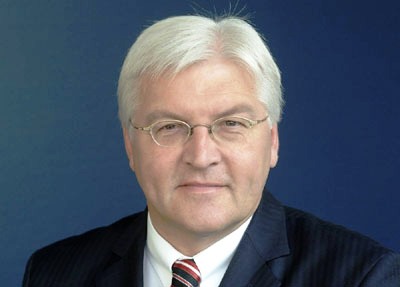
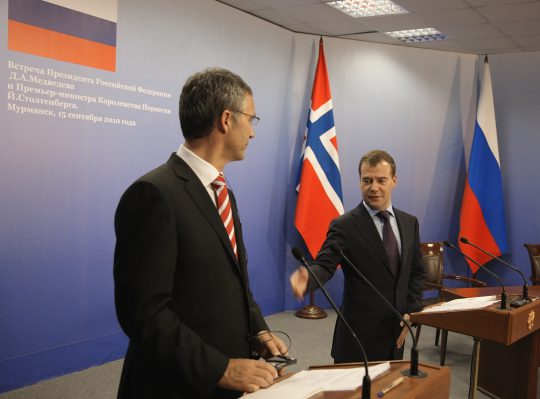
 Aletho News
