NASA looking for alternatives to Russia’s Soyuz
Press TV – November 24, 2015
The US National Aeronautics and Space Administration (NASA) is determined to end its reliance on Russian technology for space travel, paying billions of dollars to Boeing and SpaceX to come up with an alternative to Russia’s Soyuz spacecraft.
The organization, which risks losing its reputation for reliability over a series of failed launches, is hiring Boeing and the private aerospace manufacturer and commercial space transport company, SpaceX, to carry out manned missions to the International Space Station (ISS), the ABC News reported Monday.
Boeing received a $4.2 billion order for sending a crewed flight to space in May, and SpaceX was assigned a $2.4 billion order this Friday.
“It is important to have at least two healthy and robust capabilities from US companies to deliver crew and critical scientific experiments from American soil to the space station throughout its lifespan,” NASA’s Commercial Crew Program Manager Kathy Lueders said in a statement.
NASA expects to blast off its first commercial crew mission in late 2017.
If successful, the new plan will put an end to NASA’s long-standing reliance on Russian technology for such purposes.
This will also allow NASA to save money as it has been paying more than $70 million per astronaut to the Russian Federal Space Agency to reserve seats on board the three-seated Soyuz spacecraft.
However, it is not yet clear if the new alternatives boast the same reliability as Russians’ space technology, since this will be the first time that a private company will take on the task.
SpaceX is developing a capsule design for the mission known as the Crew Dragon, or Dragon V2, which is based on the company’s Dragon cargo capsules.
The commercial company has been already working with NASA on cargo resupply missions to the ISS.
SpaceX uses its own Falcon 9 launch vehicles to deliver the capsule. Despite having an impressive streak of 18 successful launches, the Falcon 9 received much criticism after disintegrating mid-air in July, destroying a 5200 lbs (2359kg) cargo which included a cutting-edge docking port for the space station, a new spacesuit and hours of research.
The incident marked NASA’s third launch failure in 8 months.
Boeing’s spacecraft is under development in collaboration with Bigelow Aerospace. It is also a capsule design, known as the Starliner.
Interestingly enough, the Starliner is designed to be launched by multiple vehicles, with SpaceX’s Falcon 9 among them.
NASA’s own manned vehicle, the Space Shuttle Program, met its end in 2011, after several unfortunate missions that killed all of the astronauts on-board.
Russian Su-24 fighter jet shot down over Syria – Russian MoD
RT | November 24, 2015
A Russian Su-24 fighter has been shot down in Syria, the Russian Defense Ministry said, adding the plane hadn’t violated Turkish airspace and was flying at an altitude of 6,000 meters.
“During the flight, the aircraft was flying within the borders of Syria, which was registered by objective monitoring data,” the ministry said, adding that the aircraft was “supposedly shot down from the ground.”
The pilots managed to eject, the ministry said, adding their fate is as yet unknown.
The downing of the Russian plane is “a very serious incident,” said Vladimir Putin’s spokesman Dmitry Peskov. He added, however, that it is too early to draw conclusions until the whole situation is clear.
Reports of a downed plane emerged earlier in Turkish media. A Habertürk TV reporter on the scene said the aircraft “turned into a fireball.” Numerous witnesses wrote on social media, saying thick plumes of smoke have been rising from the jet crash site.
Turkish military added the plane had been warned at least 10 times over a period of five minutes before being shot down by two Turkish F-16 fighter jets. He said the plane had violated Turkish airspace.
The plane reportedly crashed in a village mostly populated by Syrian Turkmen. The place has been a hotspot between the opposition and the Syrian Army.
Turkish Prime Minister Ahmet Davutoglu has met with officials from the Foreign Ministry. He instructed them to consult with NATO and the UN on the latest developments on the Syrian border, Davutoglu’s office said in a statement.
UPDATE:
Turkish F16 fighter shot down Russian Su24 jet over Syria, MoD confirms
RT | November 24, 2015
The Russian Su24 military jet was shot down by a Turkish F-16 over Syrian territory while returning to Khmeimim airbase, the Russian Defense Ministry has confirmed.
The Ministry’s Twitter says that “analysis of the objective monitoring data” showed the downed SU-24 jet did not violate Turkish air space.
Earlier in the day, Russian President Vladimir Putin said he regards the downing of the SU-24 as “a stab in the back” by “terrorist accomplices,” adding that Turkey gets the flow of oil from Islamic State-controlled territories.
President Putin said the SU-24 pilots “were conducting an operation to fight ISIS in northern Latakia which is a mountainous area where the rebels – mostly from the Russian Federation – are stationed. In this sense they were carrying out their duty to make preventive strikes on terrorists who could return to Russia at any time.”
The president said Russia had always treated Turkey as a friendly state, but concluded: “This tragic event will cause serious consequences for Russian-Turkish relations. […] I don’t know who was in need of what was done today, at any rate, it wasn’t us.”
The SU-24 tactical bomber jet was downed on Tuesday morning after being hit by an air-to-air missile fired from a Turkish F-16 fighter jet.
Both pilots managed to eject, but were reportedly shot while parachuting by rebels from the ground. Video footage released by the rebels shortly afterwards shows the dead body of a Russian pilot being inspected by armed men. A Russian air rescue team from Latakia airbase is still airborne searching for the other pilot.
Delivery of S-300 air defence systems to Tehran begins – ambassador
RT | November 23, 2015
The delivery of Russian S-300 anti-missile rocket systems to Iran has started, Iran’s ambassador to Moscow said in an interview. Iran is getting one of the latest versions of the air defence complex.
The delivery is underway, ambassador Mehdi Sanaei told Persian-language daily, Etemaad, as cited by Tasnim news agency.
The news was not welcome in Washington, with US State Department spokesman Mark Toner reiterating the US stance on the issue in a briefing on Monday.
“We made clear time and again our objections to any sale of the S-300 missile system to Iran,” Toner told reporters.
Earlier this month Iranian Defense Minister Hossein Dehghan announced Tehran is going to get Russian air defence systems by the end of the year, which in Iran ends on March 20, 2016.
Brigadier General Dehghan stressed that a major batch of the hardware is going to be delivered in less than two months’ time.
“Iran has bought as many S-300 air defense systems as it needs,” Dehghan said, adding that Iranian operators of S-300 system are being trained in Russia.
The initial S-300 contract between Moscow and Tehran was signed in 2007 and implied the delivery of five S-300 squadrons worth $US 800 million.
In 2010 the contract was put on hold by then-President Dmitry Medvedev due to the UN imposing sanctions on Iran. In return, Iran lodged a $4 billion lawsuit at an international court in Geneva against Russia’s arms export agency Rosoboronexport.
In April 2015, Russian President Vladimir Putin repealed the ban. Russia’s Foreign Minister Sergey Lavrov commented on the decision, saying Moscow’s voluntary embargo on S-300 deliveries was no longer necessary due to the progress in talks on Iran’s nuclear program.
In October, Iran’s Defense Ministry confirmed Moscow’s readiness to deliver the S-300 system under an agreement signed between the two countries.
Sergey Chemezov, the head of the Russian state-owned high-tech giant Rostec, said that the new contract came into force on November 9.
Iran has bought Russia’s most well-known air defense systems in one of its latest versions S-300PMU-2 Favorite, TASS reported earlier this month during the Dubai Airshow 2015.
The last time Russia supplied S-300 systems abroad was in 2010, when 15 squadrons were delivered to China.
Global gas demand to grow 32% by 2040 – Putin
RT | November 23, 2015
World demand for gas is growing faster than any other energy source, and will grow by a third in the next 25 years, according to Russian President Vladimir Putin.
“The growing demand opens up great opportunities for increasing production and exports of gas. At the same time, it’s a major challenge, because there’s a need to dramatically accelerate the development of new deposits, modernize the refining capacities, expand gas transportation infrastructure, bring into operation additional pipelines and make new LNG routes”, said Putin at a Gas Exporting Countries Forum in Tehran on Monday.
According to Putin, Russia seeks to increase its gas output by 40 percent by 2035, reaching 885 billion cubic meters. One of the biggest tasks ahead of Russia is to boost the supplies of gas to China, India and other Asian countries from the current 6 percent to 30 percent, said Putin. Kremlin also intends to triple the LNG supplies. He added that Russia would be able to deal with all these tasks.
During his visit, Putin is meeting with Iranian leaders. He’s talked to Supreme Leader Ali Khamenei about energy cooperation, Syria and other key issues. Putin’s also meeting Iran’s President Hassan Rouhani.
Argentina’s New President Poised to Roll Back Gains for Multipolar World
Sputnik – November 23, 2015
On Sunday, Argentina held a runoff vote to pick its next president, resulting in a narrow victory for conservative Let’s Change coalition candidate Mauricio Macri over his center-left Front for Victory coalition opponent, Daniel Scioli. The question on everybody’s mind now is: what should Argentinians, and the world, expect from the new government?
An estimated 80% of Argentina’s 32 million eligible voters went to the polls on Sunday to elect their next president, in a runoff vote between the two leading candidates from the first round of voting, held in late October. With 51.5% of the votes cast in favor of conservative candidate Mauricio Macri, the favorite of the country’s big business and private media, the country is set for a hard right turn.In the run up to the election, analysts in both Latin America and across the loose global coalition of countries opposed to a unipolar world order had worryingly suggested that a Macri victory would result in a rollback to the policies pursued by Buenos Aires over the past decade aimed at challenging US hegemony, both in the region and around the world.
Daniel Scioli, the candidate of the Peronist, center-left Front for Victory electoral alliance, had promised to continue outgoing President Cristina Fernandez’ center-left-oriented politics domestically, and to pursue an independent foreign policy course abroad.
Throughout Fernandez’ tenure (she was elected in 2007) and that of her late husband, Nestor Kirchner (elected in 2003), Argentina had aligned itself with the string of left-wing Latin American governments emerging in the region in the early 2000s, while pushing for new economic and political ties with the BRICS countries, including Russia and China. Now, with Macri’s victory, the country’s multipolar outlook is under threat.
At the moment, Russian-Argentinian political and economic ties are believed to be at historic highs, characterized by the Russian ambassador to Buenos Aires as “excellent” and “extremely constructive and trusting.” Earlier this year, ahead of Fernandez’ official state visit to Moscow in April, Argentina’s Ambassador to Russia, Pablo Anselmo Tettamanti, went so far as to describe relations to be at the highest levels they have ever been in the countries’ 130-year-long history of bilateral relations.
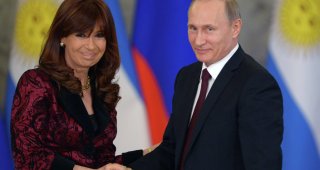 During her visit to Russia, President Fernandez met with President Vladimir Putin, signing over 20 memorandums on economic cooperation, said to amount to an “all-encompassing strategic partnership.”
The agreements included joint projects on the development of hydroelectric, nuclear and fossil-based energy in Argentina, including the construction of the sixth bloc at the Atucha nuclear power plant, along with a $2 billion memorandum on the construction of a new hydroelectric dam. Meanwhile, Russian energy giant Gazprom signed a memorandum on the exploration and development of gas fields with Argentine state gas company YPF, a deal amounting to $1 billion in investments. Russian company Uralmash was also tapped to build a plant manufacturing oil extraction equipment, amounting to an additional $1.9 billion in investments.
In the course of the visit, the two sides promised to conduct consultations on the use of each other’s national currencies for trade, pledging to increase cooperation in the military-technical sphere, accelerating construction of the GLONASS satellite navigation systems, and negotiating on the prospects of increasing bilateral food trade (presently amounting to about $1.3 billion).In the sphere of political cooperation, President Fernandez voiced her support for Moscow’s position that the situation in Ukraine could only be resolved by peaceful means, with the Russian president, for his part, pledging support for “Argentina’s striving for direct talks with Britain to achieve prompt resolution to the Mavinas [Falklands] Islands dispute.”
Visiting Moscow in July, Argentinian Vice President Amado Boudou emphasized that Argentina’s diplomatic moves toward improving relations with Russia were based on the fact that the two countries “share a very strong position with a common vision of the need for a multipolar world to ensure the existence of an inclusive and autonomous policy.”
Now, following Macri’s election victory, Argentina’s strategy of promoting regional integration in Latin America, and a multipolar world order, may be coming to an end. With Mexican economist Ariel Noyola Rodriguez suggesting only months ago that the Russian-Argentinian partnership signaled “Washington’s incapacity to sabotage the construction of a multipolar world,” it seems that the analyst may have spoken too soon.
With Fernandez (and her husband before her) becoming a major thorn in Washington’s side, the latter unhappy over the Peronists’ efforts to extract the country and the region from its subservient position in the US’s so-called ‘backyard’, the election of Macri, who promised to immediately improve relations with Washington, must come as a welcome change.
The conservative politican has already hinted that he would give less weight to Mercosur –the South American trade bloc aimed at ensuring regional economic integration and development, and shift the country’s diplomacy away from close cooperation with the leftist governments of Venezuela, Bolivia, Ecuador and Brazil.
And while his victory may not nullify the economic and other cooperation agreements reached with Russia, China, and other BRICS countries over the past decade, it does threaten Buenos Aires’ general trajectory of development –the country’s moves toward regional integration and a multipolar world independent of Washington’s influence.
For the Argentinian People: A Return to Neoliberalism?
As far as the Argentinian people are concerned, Macri’s victory is feared by his critics to mark a throwback to neoliberal dogmas which plagued the country prior to Kirchner’s 2003 election victory.
For their part, the British and American business press couldn’t help but gloat in the moment, with Financial Times suggesting it was “the beginning of a new political era for South America’s second-largest economy,” and The Wall Street Journal trash-talking Fernandez and her party, and suggesting that her economic policies, “uncivil rants against her political opponents, and a substantial loss of judicial independence and press freedom during kirchnerismo” contributed to Scioli’s defeat. Bloomberg Business, naturally, focused on the election’s effects on the markets, finding it crucial to point out that “in anticipation of a Macri victory, bond yields fell to an eight-year low and the local stock market rallied to a record high.”
But not everyone is convinced that this ‘new political era’ will bring positive changes, at least for ordinary Argentinians. In the run up to the voite, Scioli and his supporters warned that Macri’s proposals, which promised a return to neoliberal economic policies, would amount to “savage capitalism,” eroding social welfare and creating an economy which catered to a wealthy minority.
It’s worth recalling that before the Kirchners, Argentina was viewed as a textbook example of a developing country enveloped by the so-called Washington Consensus, a set of neoliberal economic dogmas which resulted in extremely high unemployment (over 25% in 2003), high poverty rates (nearly 55%), and a high Gini index.Under Kirchner and Fernandez, the country pursued social and economic policies that amounted to the creation of a mixed Keynesian economy, promoting government intervention where necessary, support for medium and small businesses, and a push for export growth via regional economic integration.
According to pan-Latin American news channel Telesur, these efforts resulted in the reduction of unemployment to 6.6% in 2015 (with 5 million jobs created over the past ten years), the reduction of poverty from over 50% to 6.5%, the creation of 50,000 small and medium-sized businesses, a major industrialization drive via the Industrial Parks National Program, increases in the share of GDP spent on education and pensions (from 3.6% and 4.1% in 2003 to 6.5% and 7.7% of GDP in 2013, respectively), and the near doubling of public investment, all the while reducing the national debt from 166% of GDP in 2003 to 41%.
In the areas of social policies, Kirchner and Fernandez began a comprehensive reform of the country’s justice system (making the Supreme Court independent), while annulling the ‘laws of pardon’ which gave immunity to the leaders of the country’s military dictatorship of 1976-1983 accused of crimes against humanity. The country also became the first in Latin America, and the tenth in the world, to pass equal marriage laws, in 2010.
Now, these gains, which came at a cost of high inflation (offset to an extent by annual negotiations between unions, employers and employees on adjusting wages) are under threat, with Macri’s critics saying his policies (including tax cuts, social spending cuts, and privatization schemes) will favor big business and the country’s oligarchs, sidelining the problems of social inequality, and reverting the country to its 90s’ era social and economic malaise.
Critics have also pointed to Macri’s promises of beginning negotiations with the predatory ‘vulture fund‘ creditors that rejected the debt restructuring which took place following the country’s default in 2002, giving an indication not only of his upcoming domestic economic policy, but also his possible subservience to the Western-dominated economic institutions which Argentina rejected under the Kirchners.Ultimately, only time will tell whether Argentina’s new government will continue to pursue policies based on economic and political pragmatism which have brought Buenos Aires closer to those countries looking to challenge global unipolarity (with some analysts already suggesting that they will).
As far as Argentina itself is concerned, it remains unclear how a return to the neoliberalism which devastated the country’s economy in the early 2000s will do it any good. As Russian social media users commenting on the election results lamented, it seems that too many Argentinians have forgotten the neoliberal catastrophe and ‘de-sovereignization’ of the 90s, processes which Russians themselves know all too well.
Moscow Warns Cameron Against Seeking to ‘Destroy Syria’s Sovereignty’
Sputnik – 21.11.2015
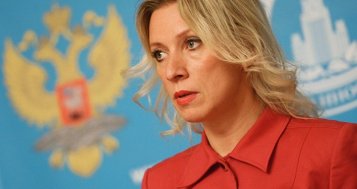 British Prime Minister David Cameron said earlier this week he would prefer to have UN backing for UK military operations in Syria, but added he feared Russia would use its veto power to block a UN resolution.
Britain should start a dialogue with the UN Security Council on its plan to extend UK airstrikes against ISIL in Iraq to Syria, the Russian Foreign Ministry said Saturday.
“If it [UK] wants to push its ideas through the Security Council it should… give an order to its ambassador at the United Nations to start consultations, including with Russia,” ministry spokeswoman Maria Zakharova said.
She stressed that Russia had never vetoed “sensible” initiatives as long as they conformed with international laws, but warned that the UK’s operation in Syria should not seek to “destroy Syria’s sovereignty.”
UK media cited Cameron as saying in the parliament on Wednesday that the UN Security Council’s endorsement was not vital for the UK’s operation that would still be legal and would help the government protect its citizens.
Ill-informed first words on Ukraine by Canada’s new prime minister
New Cold War – November 17, 2015
Canada’s new prime minister is sounding not-so-new when it comes to the civil war that has devastated the lives of millions of people in eastern Ukraine. CBC News reports that Justin Trudeau directed critical and ill-informed words to Russian President Vladimir Putin two days ago during the G20 summit meeting in Antalya, Turkey. Trudeau’s words portend badly for the people of Ukraine if continued.
CBC cites Trudeau speaking of his exchange with Putin: “I pointed out that although Canada has shifted its approach on a broad range of multilateral and international issues, we remain committed to the fact that Russia’s interference in Ukraine must cease; that we stand with the Ukrainian people and expect the president to engage fully in the Minsk peace process.”
The reference to the Minsk ceasefire agreement of Feb 12, 2015 (‘Minsk-2’) is ill-informed or malevolent. Russia was a key international sponsor and negotiator of the agreement, along with Germany and France. Canada and the United States were nowhere to be seen or heard from. The agreement was effectively a refutation of the aggressive egging-on of Kyiv’s civil war in which the U.S., Canada and Britain have engaged ever since Kyiv launched its civil war–‘Anti-Terrorist Operation’–in eastern Ukraine in April 2014.
Minsk-2 sets out 13 very specific clauses which must be met by the governing regime in Kyiv and the rebel, pro-autonomy forces in Donetsk and Lugansk. Kyiv has violated every single one of those clauses. Today, only the first two of the clauses are close to being met by Kyiv–a ceasefire, and a withdrawal of heavy weaponry from the front line of the conflict which runs through the heart of the Donbas region (Donetsk and Lugansk oblasts).
Clause four requires the holding of local elections in Donetsk and Lugansk which would recognize principles of local autonomy. Clauses 11 and 12 require constitutional changes that recognize autonomy for Donbas. None of this has happened. On the contrary, Kyiv has crafted new political measures which block and deny said autonomy.
Clauses five and six require Kyiv to provide amnesty to combatants who resisted its civil war and to conduct a full prisoner exchange with the rebel side. It has failed on the first count, and Kyiv continues to hold many combatants and political prisoners it refuses to exchange.
Clause eight requires Kyiv to end its economic sanctions (cutting of social payments) against the population of the east which it implemented in the summer of 2014 and to end its obstruction and blocking of economic transactions. This has not occurred. Indeed, in the the latest in a string of human rights reports critically examining the situation in Ukraine, Commissioner for Human Rights of the Council of Europe Nils Muižnieks admonishes Kyiv for failing to end its economic blockade of eastern Ukraine. His report was issued on November 3.
Clause ten of Minsk-2 reads, “Pullout of all foreign armed formations, military equipment, and also mercenaries from the territory of Ukraine under OSCE supervision. Disarmament of all illegal groups.” Yet Canada, the U.S. and Britain dispatched soldiers to Ukraine in the months following February 12, under the guise of launching “training missions” of the Ukrainian army. And as for the disarming of “illegal groups” (referring to the extremist paramilitary battalions fighting alongside the Ukrainian army), Kyiv has solved that little problem by incorporating the battalions into its National Guard. This effectively worsens the situation by legitimizing the battalions and giving them more formal access to training and weaponry, including from the aforementioned NATO countries.
So if Ukraine has violated the clauses of Minsk-2 so widely, and if the human rights commissioner of the European Union(!) effectively acknowledges much of this, what is Justin Trudeau talking about when he blames a foreign country, Russia, for violations of the agreement?
Trudeau is either being played by the governing regime in Kyiv, or he and his government have decided to play along.
Last summer, Kyiv began to face up to the fact that it could not longer openly flout Minsk-2 and continue its shelling of Donbas. The military setbacks it suffered during 18 months of civil war cannot be easily fixed. Polls of Ukrainians show very high numbers of people wanting an end to the fighting. Kyiv’s economic and social disaster at home is looming ever larger, including an impending default on its foreign debt. And Berlin and Paris decided last summer that a continued war in Ukraine was not in their interest; they had bigger problems requiring their undivided attention. So as of September 1, Kyiv largely ceased its shelling and it began to match the withdrawals of heavy weaponry already begun by rebel forces. This was and remains a significant political setback to Kyiv’s efforts to crush resistance to its pro-Europe, anti-Russia and pro-austerity program.
The one card that remains for Kyiv to play in order to avoid its obligations under Minsk-2 and obfuscate the real situation is the enduring myth of a Russian invasion and occupation of eastern Ukraine. This is what Trudeau is talking about when he speaks of Russian violations of the agreement. He is parroting the wording to this effect that was begun by Kyiv as it faced its forced climbdown on September 1.
Trudeau can get away with uttering nonsense about Russia violating Minsk-2 because the Canadian population has been deeply misled and misinformed about the situation in Ukraine. Parliamentarians of all parties in Ottawa and the country’s corporate media are 100 per cent united behind a hostile, anti-Russia policy that blames all the ills in Ukraine on its large neighbour to the east. Much of the Canadian population knows of no other story of Ukraine than the one it has been aggressively fed for two years now. But the unfolding disaster of U.S., Canadian and European policy taking place in Syria and the Middle East, and the contrast to that of the apparent, early achievements of Russian diplomacy, have growing numbers of Canadians on full alert against more foreign policy deceptions and misadventures.
Justin Trudeau and his government, not to speak of the people of Ukraine, have nothing to gain and much to lose by a continuation of Stephen Harper’s aggressive and hostile policy towards Ukraine and Russia.
The Toronto Star report on Justin Trudeau’s encounter with Vladimir Putin explained, “Trudeau’s brief chat [with Putin] is in contrast with the lengthy discussion that unfolded here between Putin and U.S. President Barack Obama on the crisis in Syria.”
Some Questions for Obama and His Gang
By Christopher Black – New Eastern Outlook – 16.11.2015
 Mr. Obama, Mr. Cameron. Mr. Hollande, Madame Merkel, Mr. Erdogan and all the other members of the criminal conspiracy to dominate the world, I ask you, do you intend to test our patience to its limit? How much longer will your killing frenzy madden us? At what point do you stop your reckless push to the very brink of world war. Have the Nuremberg trials, the UN Charter, international law, have the fears and protests of the people, have your continual defeats in one war after another, your crimes against mankind revealed to the light time and time again, had no effect on you at all? Do you not know that your plans have been exposed, that the conspiracy and the conspirators have been identified? Which of us does not know what you were up to yesterday evening, what you were up to last night and this morning, who you talked with, what plan of action you decided on? For the plan is always the same, and never changes, to dominate, to control or to destroy.
Many think they are lucky if they can just stay out of your way but we know better. We know that no one is safe from your criminality and depravity. Not even children returning from Sharm El Sheihk, from their holiday, are safe from the blade of death you hold in your hands, nor the citizens of Paris enjoying a night out on the town. You proved that when Metrojet Flight 9268 was destroyed in mid-air. No official cause has yet been determined but circumstances indicate the possibility of a bomb on board is a strong one. You proved it again when attackers murdered scores of people in Paris on Friday November 13th. ISIS is reported to have claimed responsibility but the claim that a Syrian passport was found on the body of one attacker, an Egyptian passport on another and a French one on another forces the question as to why anyone conducting such an attack would walk around with identification especially passports and more why would a French national carry his passport in France? The Paris attack and the Russian airliner attack both smell of false flag operations and when we ask the first question in any criminal investigation, who benefits from these attacks on civilians, then it is you who fall in line, one after the other, as the prime and usual suspects.
There has been a lot of speculation that the attack on the Russian plane was made by you or your allies in ISIS to “punish” Russia for its assistance to Syria and to try to affect public opinion in Russia against that assistance. But that never made sense since Russians know the high stakes for Russia in this struggle. The real reason for the attack is made clear by you every day in your mass controlled media. Your thinking, your plans, your crimes are exposed in the very propaganda you use to manipulate the minds of your own peoples and what you have told us is that the Russian plane was destroyed, all those innocent people trying to enjoy a small holiday were murdered, in order to justify your calls for an invasion of Syria. It is as clear as the deaths heads etched into your souls that those Russian men, those Russian women and those Russian children were sacrificed, used, as means of justifying a great war in the middle east. And now the citizens of France are sacrificed as well.
On CNN the other day your prime time king of war propaganda, Wolf Blitzer, showed an interview between the CNN queen of war propaganda, Christiane Anampour, and the Turkish Prime Minister. I use it because he says what you, Obama, Merkel, Hollande, and Cameron have all said in complete synchronicity, that the “plane attack is a call to action.” Prime Minister Davutoglu said,
“This is not an attack against a Russian airplane, but it is an attack against all of us. So therefore it shows that if the crisis is not solved in any particular country or region, then it is going to affect us all.” The same is now claimed by western leaders about the Paris attack.
On the same programme Blitzer hosted Senator Lindsay Graham, one of the most rabid of the American dogs of war who stated, “I believe you have to have boots on the ground to destroy ISIL, ….you need Turkey and the Arabs coming together with us, and you need 90 per cent them and 10 per cent us. 5,000 to 10,000 of Americans to be part of a regional force to go on the ground to destroy ISIL in Syria, or they will never be destroyed and they will hit us here at home.” And now Paris has been struck.
We have seen the same calls made from all the NATO capitals in recent days and all made just after the NATO leaders, with one notable exception, expressed their insincere condolences to the families of the victims of the airliner disaster but not to Russia or its government. The exception was President Obama who kept a sinister silence.
CNN stated on November 5th that the possibility that ISIS is behind the plane crash raises the spectre of a new potential for devastating attacks on Americans. “If another Islamist group has acquired the motivation and the capacity to attack civilian airliners, a future target could be U.S. jets.’ said a man named Aaron David Miller a “former middle east peace negotiator” with the Wilson Center in Washington who also said ‘It’s a long war and you, we have just seen maybe a very significant turn and escalation in that war…. and this will increase pressure … to forestall similar strikes against a US target.” But Paris was hit first.
I could cite many other similar statements in which your propagandists claim ISIS to be the new Al Qaeda. You and your fellow conspirators plan to amplify this propaganda to hysterical levels to generate overwhelming fear in your domestic populations in order to justify a large scale war against Syria where your proxy forces are being defeated by the combined arms of Russian air power and the fighting spirit and skills of the Syrian Arab Army. This has been achieved with the attack in Paris. The sudden flow of refugees into Europe is being used for the same purpose.
No doubt we can expect similar attacks in other NATO capitals. It does not matter to you if you use the misery of millions fleeing war and poverty to justify your plans for war or Russian children returning from happy days on the beach, or people enjoying a concert or football match in Paris. All deaths are the same to you. And so, when we ask who murdered those children, who murdered those Parisians, are you surprised if we turn our heads your way?
We owe a great debt of gratitude to those who defeated fascism in the Second Word War, and we cannot permit those forces of reaction and tyranny to torment us again for now you are not threatening this country or that, this leader or that, you are threatening the existence of civilization itself. Is this not madness? Is there anything that gives you pleasure except death and more death? Is there a single person on the planet that does not fear you, not a single person who does not hate you? Is there any mark of disgrace with which you have not been branded, any dishonour that does not stain your reputation? From what crime have you ever abstained?
There is no need to answer. We all know the answers to these questions.
Christopher Black is an international criminal lawyer based in Toronto, he is a member of the Law Society of Upper Canada and he is known for a number of high-profile cases involving human rights and war crimes.
Russia Confirms A321 Brought Down by Terrorist Explosive Device
Sputnik – 17.11.2015
An explosion of the homemade bomb of up to 1kg of TNT equivalent was the cause of the A321 crash in Sinai, Russian Security Service (FSB) head Alexander Bortnikov said.
“According to our specialists’ assessment, a homemade explosive device with an equivalent of 1 kilogram of TNT on board the aircraft exploded, which lead to the plane ‘breaking up’ in midair, which would explain the scattering of the plane’s fuselage across a wide area,” Bortnikov said during a meeting.
Russian Special Forces have determined the A321 passenger jet that crashed over Egypt’s Sinai Peninsula on October 31 killing all 224 on board was a terrorist act.
“We can definitely say this was a terrorist act,” Russian Federal Security Service head Alexander Bortnikov said during a meeting with Russian President Vladimir Putin.
An investigation into A321 crash shows traces of an explosive material in personal items and parts of the plane, Bortnikov added.
“Investigations have been completed on the personal belongings, baggage, and parts of the plane that crashed in Egypt on October 31. As a result of expertise conducted on all of the items, of which I mentioned, traces of foreign explosive material were exposed,” Bortnikov told the Russian president during a meeting on the official conclusion that the aircraft was exploded in mid-air by a homemade explosive device.
He also said that Russia offers $50mln for the information on those who might have been involved in the terrorist attack on the A321.
A Russian Airbus A321 with 224 people on board crashed on October 31 while en route from Egypt’s resort city of Sharm el-Sheikh to St. Petersburg, leaving no survivors. Various possible causes of the tragedy have been set out by aviation experts, ranging from a terrorist act to a technical glitch.
Someone Wants War with Russia
Victoria Nuland is not alone
By Philip Giraldi • Unz Review • November 17, 2015
Something very odd is going on in Washington. I recently attended and spoke at a conference in Washington on “realism and restraint” as a broad formula to reform U.S. foreign policy. Most presentations reflected that agenda more-or-less but oddly one of the speakers said that it was necessary for the United States to mark its place in the world while “carrying a big stick” while another panelist asserted that it was a core mission of the American people to “help other countries striving to be free.” Both were referring to how the U.S. should comport itself vis-à-vis Russia and one had to suspect that they had wandered into the auditorium by mistake, intending instead to visit the nearby American Enterprise Institute.
That such views should be forthcoming at a conference featuring “restraint” might not in fact be regarded as particularly surprising if one bothers to listen to either the Republican or Democratic so-called debates. Nationalism and American “exceptionalism” are easy products to sell at any time, but recently there has been a strain of bellicosity that is quite astonishing to behold, particularly as only one candidate has ever served in the military, and he was a lawyer. One might call it “Chickenhawks on Parade.”
It is useful to consider in their own words what the GOP candidates said last Tuesday night. Carly Fiorina led the baying pack with “One of the reasons I’ve said I wouldn’t be talking to Vladimir Putin right now is because we are speaking to him from a position of weakness brought on by this administration, so, I wouldn’t talk to him for a while, but, I would do this. I would start rebuilding the Sixth Fleet right under his nose, rebuilding the military — the missile defense program in Poland right under his nose. I would conduct very aggressive military exercises in the Baltic States so that he understood we would protect our NATO allies… and I might also put in a few more thousand troops into Germany, not to start a war, but to make sure that Putin understand that the United States of America will stand with our allies… We must have a no fly zone in Syria because Russia cannot tell the United States of America where and when to fly our planes. We also have a set of allies in the Arab Middle East that know that ISIS is their fight… but they must see leadership support and resolve from the United States of America… we have the strongest military on the face of the planet, and everyone has to know it.”
Ben Carson added his two cents, “And what we have to recognize is that Putin is trying to really spread his influence throughout the Middle East. This is going to be his base. And we have to oppose him there in an effective way… What we’ve been doing so far is very ineffective, but we can’t give up ground right there. But we have to look at this on a much more global scale. We’re talking about global jihadists. And their desire is to destroy us and to destroy our way of life. So we have to be saying, how do we make them look like losers? Because that’s the way that they’re able to gather a lot of influence… And I think in order to make them look like losers, we have to destroy their caliphate. And you look for the easiest place to do that? It would be in Iraq. And if — outside of Anbar in Iraq, there’s a big energy field. Take that from them. Take all of that land from them. We could do that, I believe, fairly easily, I’ve learned from talking to several generals, and then you move on from there.”
And Senator Marco Rubio added his own insights, saying that “I believe the world is a stronger and a better place, when the United States is the strongest military power in the world… I’ve never met Vladimir Putin, but I know enough about him to know he is a gangster. He is basically an organized crime figure that runs a country, controls a $2 trillion economy. And is using to build up his military in a rapid way despite the fact his economy is a disaster. He understands only geopolitical strength. And every time he has acted anywhere in the world, whether it’s in Ukraine or Georgia before that, or now in the Middle East, it’s because he is trusting in weakness… our allies in the region do not trust us. For goodness sake, there is only one pro-American free enterprise democracy in the Middle East, it is the state of Israel. And we have a president that treats the prime minister of Israel with less respect than what he gives the ayatollah in Iran… And we do have a vested interest. And here’s why. Because all those radical terrorist groups… they are coming to us. They recruit Americans using social media. And they don’t hate us simply because we support Israel. They hate us because of our values. They hate us because our girls go to school. They hate us because women drive in the United States.”
Governor John Kasich demonstrated why it would have been best if he had stayed in Ohio, saying “In the Ukraine, arm the people there so they can fight for themselves. In the eastern part of Europe, make sure that Finland and the Baltics know that if the Russians move, we move. In Syria, yes, a no-fly zone in the north on the Turkish border, a no-fly zone on the south on the Jordanian border. Anybody flies in the first time, maybe they can fly out. They fly in there a second time, they will not fly out… in the countries of the Gulf States of Bahrain, the Cleveland Clinic is opening an operation. Clearly we see the same with them. And in Israel, we have no better ally in the world, and no more criticizing them in public, we should support them.”
Governor Jeb Bush, running fast to make up for his lackluster campaign, added “I’d say it [the number one threat facing the U.S.] is Islamic terrorism, and, back to the question of what we are dealing with in Iraq, when we pull back voids are filled. That’s the lesson of history, and, sadly, this president does not believe in American leadership. He does not believe it, and the net result is that we have a caliphate the size of Indiana that gains energy each and every day to recruit Americans in our own country, and the threat to the homeland relates to the fact that we have not dealt with this threat of terror in the Middle East. We should have a no fly zone in Syria. We should have a support for the remnants of the Syrian Free Army, and create safe zones… Without American leadership every other country in the neighborhood begins to change their priorities. It is tragic that you see Iraq, and other countries now talking to Russia. It wasn’t that long ago that Russia had no influence in the region at all. And, so, the United States needs to lead across the board.”
I can almost picture the lads and lassies from the various neocon entities including the John Hay Initiative, the Foundation for Defense of Democracies and the American Enterprise Institute grinning as they brief the GOP candidates on foreign policy. What a treat to have a gaggle of perfect tabulae rasae possessing the combined intellectual curiosity of an aardvark dutifully waiting in line to have their empty heads filled with nonsense. Carly wins the prize for sheer venom and willingness to start a war. She would be firing at Russians on the ground and in the air. Why? So we can fly wherever we want.
But I think that Ben Carson wins the dummy prize for his brilliant plan to destroy the “Caliphate” by taking away their “big energy field.” And Rubio comes close with his claim that Putin is nothing but a gangster plus his George W. Bush-like assertion that terrorists hate us because of our “values,” allowing women to go to school in our country and also drive cars. Kasich meanwhile sees the Cleveland Clinic as a barometer of civilization while I challenge anyone to make sense out of what Jeb Bush said. He has apparently inherited the gift of tongues from his brother.
And then, of course, it never hurts to give the nod of approval to Israel, which is the only “pro-American free enterprise democracy” in the Middle East as well as “no better ally in the world.” Amen.
The outlier Donald Trump actually made some sense, saying “… If Putin wants to go and knocked the hell out of ISIS, I am all for it, 100%, and I can’t understand how anybody would be against it… Assad is a bad guy, but we have no idea who the so-called rebels — I read about the rebels, nobody even knows who they are. So, I don’t like Assad. Who’s going to like Assad? But, we have no idea who these people, and what they’re going to be, and what they’re going to represent. They may be far worse than Assad. Look at Libya. Look at Iraq. Look at the mess we have after spending $2 trillion dollars, thousands of lives, wounded warriors all over the place…”
There was also some pushback from Senator Rand Paul who counseled a defense policy linked to national interest as well as affordability, but many of the other candidates sought to outdo each other in terms of vilifying Russia and Putin while talking tough about how they would deal with him.
Indeed, the willingness to fight Russkies and Persians simultaneously has surfaced more than once in the current series of debates. But consider for a moment how a war with second rate power Iran would be something less than a cakewalk even if everything went perfectly, and one knows that in war little goes to plan. Iran has sophisticated air defenses and naval resources that could wreak havoc in the narrow waters of the Straits of Hormuz. An American carrier could easily be destroyed. It would be a replay of the worst experiences in Iraq combined with the worst of Afghanistan, given Iran’s terrain, size, resources and willingness to fight.
But Iran aside, the focus is invariably on Moscow. Backing Russia’s Putin into a corner where he felt that he had to strike first with his available military resources, to include tactical nuclear weapons, would be something on quite a different level and the word catastrophic comes immediately to mind. Even if Russia were only limiting itself to military targets, it could, in short order, sink all of America’s vaunted and highly vulnerable air craft carriers and destroy the satellite communications systems that the modern U.S. armed forces depend on. One leading military analyst even believes that the Russian Army is better designed to fight an actual ground war than is the vastly more expensive version fielded by the United States, which should surprise no one. Colonel Douglas Macgregor postulates that U.S. forces would likely be annihilated.
Many of those inside the beltway doing the pushing for confrontation argue that Washington and Moscow have long been restrained, in theory, by what is known as “mutually assured destruction,” meaning that a nuclear war is unthinkable because it would destroy both countries and possibly the world. But there might be some high up in both governments who think that a limited exchange could actually be somehow controlled, even while understanding that if a nuclear tit-for-tat were to escalate the targeting could easily shift to cities. Certainly the GOP candidates are flirting with entertaining that possibility, even if they are not completely aware of what they are implying.
In truth, the dangerous Washington consensus that Russia must for some reason be confronted and even destabilized truly boggles the mind, particularly as it has become dogma for both political parties and even for many critics of the global war on terror and all its tainted fruit. And the brinkmanship game with a nuclear weapon armed adversary that is being played is, as veteran diplomat William Polk has observed, “… moving closer to the danger point of provoking their use.” It is difficult to understand why it is so. Russia is, if anything, helping in Syria and could even broker some kind of negotiated settlement, while the situation with Ukraine and Crimea is far less Manichean that the U.S. media has depicted it to be. Russia does not threaten the United States and it does not threaten Western Europe, but push hard enough and long enough and a nightmare scenario could easily arise, driven by carelessly stoked fear and the thoughtless language employed by an array of presidential wannabes as well as their punditry enablers.
Putin: ISIS financed from 40 countries, including G20 members
RT | November 16, 2015
President Vladimir Putin says he’s shared Russian intelligence data on Islamic State financing with his G20 colleagues: the terrorists appear to be financed from 40 countries, including some G20 member states.
During the summit, “I provided examples based on our data on the financing of different Islamic State (IS, formerly ISIS/ISIL) units by private individuals. This money, as we have established, comes from 40 countries and, there are some of the G20 members among them,” Putin told the journalists.
Putin also spoke of the urgent need to curb the illegal oil trade by IS.
“I’ve shown our colleagues photos taken from space and from aircraft which clearly demonstrate the scale of the illegal trade in oil and petroleum products,” he said.
“The motorcade of refueling vehicles stretched for dozens of kilometers, so that from a height of 4,000 to 5,000 meters they stretch beyond the horizon,” Putin added, comparing the convoy to gas and oil pipeline systems.
It’s not the right time to try and figure out which country is more and which is less effective in the battle with Islamic State, as now a united international effort is needed against the terrorist group, Putin said.
Putin reiterated Russia’s readiness to support armed opposition in Syria in its efforts to fight Islamic State.
“Some armed opposition groups consider it possible to begin active operations against IS with Russia’s support. And we are ready to provide such support from the air. If it happens it could become a good basis for the subsequent work on a political settlement,” he said.
“We really need support from the US, European nations, Saudi Arabia, Turkey, Iran,” the president added.
Putin pointed out the change in Washington’s stance on cooperation with Moscow in the fight against the terrorists.
“We need to organize work specifically concentrated on the prevention of terrorist attacks and tackling terrorism on a global scale. We offered to cooperate [with the US] in anti-IS efforts. Unfortunately, our American partners refused. They just sent a written note and it says: ‘we reject your offer’,” Putin said.
“But life is always evolving and at a very fast pace, often teaching us lessons. And I think that now the realization that an effective fight [against terror] can only be staged together is coming to everybody,” the Russian leader said.
According to Putin, first of all it should be decided which groups in Syria can be considered terrorist organizations and which can be attributed to an armed, but still legitimate part of the Syrian opposition.
“Our efforts must be concentrated on the battle with terrorist organizations.”
Putin also disagreed with Western criticism of Russia’s actions in Syria, where the country has been carrying out a large-scale air campaign against Islamic State and other terror groups since September 30.
“It’s really difficult to criticize us,” he said, adding that Russia has repeatedly asked its foreign partners to provide data on terrorist targets in Syria.
“They’re afraid to inform us on the territories which we shouldn’t strike, fearing that it is precisely where we’ll strike; that we are going to cheat everybody,” the president said.
“Apparently, their opinion of us is based on their own concept of human decency,” he added.
Putin told the media that Russia has already established contact with the Syrian opposition, which has asked Moscow not carry out airstrikes in the territories it controls.
Featured Video

Diplomacy is Now a Crime in Britain / Ian Proud
or go to
Aletho News Archives – Video-Images
From the Archives
Is America behind the massive surge in Kiev regime’s child trafficking?
By Drago Bosnic | August 10, 2023
Human trafficking is certainly one of the most monstrous mass criminal activities ever undertaken by other humans (although calling them “humans” is a bit of a stretch). And yet, there’s a special kind of this deeply repulsive crime that pushes it to diabolical proportions – child trafficking. Underage kids, particularly those who were abandoned, sold or have very poor/abusive family backgrounds, are by far the most vulnerable group. The depraved criminals who engage in such illicit activities specifically target unfortunate children and given there are millions of them all around the globe, particularly in war-torn areas, the “recruitment pool” is effectively endless. Unfortunately, the demand on the black market also seems to be constant and growing, making it a very lucrative and appealing prospect for criminals. … continue
Blog Roll
 Aletho News
- Diplomacy is Now a Crime in Britain / Ian Proud
- UK Government Body Kept Files on People Criticizing Prevent Program
- US military withdrawal from Iraq and the collapse of US-Israeli hegemonic project in West Asia
- What does Europe want – a war with Russia?
- She Followed the Actual Data on COVID Vaccines and Masks — Her Career Took a Huge Hit
- Florida AG Sues Pfizer, Bourla Over Deceptive Marketing of COVID Vaccines
- Von der Leyen gifts her spin doctor a job for life
- 10K More U.S. Troops Deploy as Trump Weighs New Iran Strikes /Suliaman Ahmed
- Iranian crew declared Dena training vessel ‘unarmed’ to US warship before deadly torpedo strike: Report
- Iran’s NPT debate moves beyond parliament
- If Americans Knew
- Israel is squeezing the life out of Palestinians – Daily Update
- The Israeli Right Portrays Islam as Murderous. It Serves a Political Purpose
- Jordan Has Had Enough: King Abdullah’s Scathing Warning to Israel
- Israeli Colonizers (i.e. Settlers) Kill Palestinian Man Near Salfit
- New Google Maps images reveal massive scale of devastation in Gaza
- Jewish supremacy, anti-Palestinian bigotry on display in Israel – Daily Update
- Israeli Soldiers Abduct At Least 22 Across Occupied West Bank
- Eight Palestinians Killed in Israeli Attacks on Gaza
- Israeli former leaders and security chiefs threaten legal action over ‘Jewish terrorism’
- Israel map in LA Times ad includes all land from the river to the sea
- No Tricks Zone
- Green Energy Debacle: German Expert Professor Fritz Vahrenholt Warns Of Severe Economic And Social Consequences
- Two More Paleo Reconstructions Affirm Meters-Higher Sea Levels Across Ireland, Brazil 7000-6000 Years Ago
- New Study: Earth And Venus Surface Warmth Largely Explained By Convection And Lapse Rate, Not CO2 Or Radiation
- 2025 Nature Paper Claiming Worsening Global Drought Gets RETRACTED …Heavily Flawed
- New Study: ‘Global Drought Shows No Detectable Recent Acceleration Under Climate Warming’
- Economic Masterminds: German Socialists Suggest Taxing Productivity Gains Stemming From Using AI
- The South China Sea Has Not Been Cooperating With The Climate Change Narrative
- Energy Crisis: Germany Enters Heating Season With Historically Low Gas Reserve Fill Levels
- New Study: The Antarctic Ice Sheet Gained Mass From 2020-2024 Due To Staggering Snow And Ice Accumulation
- Study: Ocean Heating Rates From Thousands Of Years Ago ‘Dwarf’ Modern Ocean Heating Rates

