‘Utter contempt for human life’: Iranian FM Zarif slams US for hitting Tehran with new sanctions amid Covid-19 crisis
RT | March 20, 2020
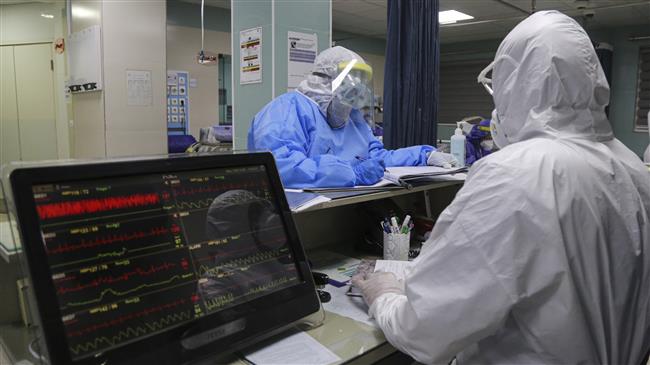
Iranian foreign minister Javad Zarif accused the US of taking its policy of “maximum pressure” on Tehran to a “new level of inhumanity” by imposing new sanctions on Iran as it struggles to cope with a huge surge of Covid-19 cases.
Zarif tweeted on Friday that The Trump administration was “gleefully” taking pride in “killing Iranian citizens” on Nowruz, the Persian New Year, celebrated on March 20 this year. He said US policy betrayed an “utter contempt for human life.”
His rebuke comes shortly after the US blacklisted five companies based in the United Arab Emirates for trading in Iranian petrochemicals. Three companies in China, three in Hong Kong and one in South Africa were also added to the list this week, as Washington attempts to choke off Tehran’s oil revenues.
“Washington’s increased pressure against Iran is a crime against humanity… all the world should help each other to overcome this disease,” Reuters quoted an Iranian official as saying on Friday.
“Our policy of maximum pressure on the regime continues,” US special representative for Iran Brian Hook told reporters, even though Iran is the worst-hit country in the Middle East by the Covid-19 coronavirus outbreak and may face economic catastrophe as a result.
Secretary of State Mike Pompeo said on Friday that the US has imposed “no sanctions” on medication or humanitarian assistance going into Iran. However, US financial sanctions have in effect prevented Tehran from buying the necessary supplies, while shipping sanctions have interfered with humanitarian deliveries.
China has called on the US to offer sanctions relief to Iran, with the Ministry for Foreign Affairs in Beijing tweeting on Wednesday that the policy was “against humanitarianism and hampers Iran’s epidemic response,” as well as deliveries of aid by the UN and other organizations.
Iran has seen at least 1,400 deaths from Covid-19 so far, with more than 19,000 confirmed cases. A health ministry spokesperson said on Wednesday that one person in Iran was now dying “every 10 minutes” from the virus, with 50 new infections every hour.
China Wants Iran Sanctions Lifted to Avoid Damage to ‘Economy and People’s Lives’ Amid Pandemic
Sputnik – March 16, 2020
Beijing calls for lifting Iran sanctions as the Islamic republic fiercely struggles to combat the coronavirus disease (COVID-19) outbreak, the Chinese Foreign Ministry said on Monday.
“China urges countries involved to immediately lift the relevant sanctions against Iran to avoid further damage to the Iranian economy and people’s lives,” the ministry’s spokesman Geng Shuang said.
Keeping sanctions in force at a time when the fight against the virus in Iran “has entered a crucial stage” would be antihuman, he added.
The diplomat warned that the restrictions would get in the way of the United Nations and other organisations providing assistance to virus-hit Iran.
“Beijing will continue providing assistance to Tehran based on the needs of the Iranian side and its own capabilities, and we also call on the international community to cooperate with Iran to ensure public health security at a regional and global level,” he stressed, noting that China had already sent humanitarian medical supplies and experts to help Iran.
According to the Iranian health ministry, 1,053 new cases of Covid-19 infection have been reported in the country in the past 24 hours.
In a letter to world leaders on Saturday, Iranian President Hassan Rouhani said that crippling US sanctions had cost the national economy some $200 billion in less than two years and curbed the effective fight against the pandemic. He urged the global community to show unity in the face of the deadly viral disease and abandon any policy that hinders global efforts to combat it.
Iran is suffering from the biggest coronavirus outbreak after China and Italy, with nearly 14,000 confirmed cases and over 720 deaths.
US, Israel pressuring IAEA to act outside its purview, warns Iran
Press TV – March 4, 2020
Iran says the US and Israel are seeking to undermine the “constructive cooperation” between the country and the UN nuclear agency by forcing the latter to act outside its purview.
“Unfortunately once again, the US and the Israeli regime are trying to sabotage the dynamic and constructive relations and cooperation between the International Atomic Energy Agency and Iran by exerting pressure on the agency to act beyond its functions enshrined in the [IAEA] Statute,” Kazem Gharib-Abadi, Iran’s permanent representative to Vienna-based international organizations, told reporters on Wednesday in reaction to a recent report on Tehran’s nuclear program.
He said that Iran is trying to prevent bids by certain sides to set “an illegal and dangerous precedent” in the IAEA that would recognize fabricated claims by some intelligence services.
He added that such fabricated information will create no obligation for Iran to grant the IAEA access to certain sites inside the country.
“Making any request for further clarification or complementary access to [certain sites] by the IAEA based on fabricated information provided by espionage services, including that of the Zionist regime, is not only against the IAEA founding documents and its verification regime, but it does not also create any obligation for Iran to meet such demands,” the diplomat noted.
The envoy warned that countries will see their national sovereignty violated if they fail to take fundamental measures to foil such plots.
The remarks came a day after the IAEA issued two reports — one regular report on Iran’s current nuclear program and the other detailing what it claims to be Tehran’s denial of access to locations the agency says could be connected to the country’s nuclear program.
In one of its reports, the IAEA claimed that Iran had not answered questions about possible undeclared nuclear material and nuclear-related activities at three locations.
The IAEA has not specified the origin of the allegation, but since April 2018, the US and Israel have been busy making a fuss about unsubstantiated Israeli-sourced allegations about undeclared nuclear activity by Tehran.
The IAEA is tasked with monitoring the technical implementation of a 2015 nuclear deal signed between Iran and six major world powers — the United States, Britain, France, China, Russia and Germany.
The future of the historic deal has been in limbo since the US’ unilateral withdrawal from the accord in 2018 and Washington’s re-imposition of sanctions against Tehran.
Iran gradually reduced its commitments to the accord in retaliation for the US move, but stressed that the measures were reversible upon effective implementation of reciprocal obligations by the other parties.
European sanctions-busting payment channel for Iran registers ZERO transactions – Iranian ambassador
RT | March 3, 2020
Over a year since its launch, the EU’s INSTEX financial mechanism – designed to facilitate trade with sanctions-hit Iran – has not carried out any operations, Iran’s ambassador to Russia Kazem Jalali has revealed.
“The Europeans have developed the INSTEX mechanism, but to date, as I’m talking to you, no transactions have been made,” Jalali said during a meeting with Konstantin Kosachev, chair of the Foreign Affairs Committee in the Russian senate.
The special purpose vehicle INSTEX was established by France, Germany and the United Kingdom in January 2019 in an attempt to rescue the 2015 nuclear agreement with Iran. The move came after the US, which used to be one of the parties of the landmark deal, unilaterally abandoned the accord and restored tough sanctions on the Islamic Republic. After the trade channel became operational, six more EU states – Belgium, Denmark, Finland, the Netherlands, Norway and Sweden – decided to join it.
While the mechanism is still far from being implemented, having such a financial instrument could be more vital than ever for Iran, as it has been hit hardest among Middle Eastern countries by the coronavirus outbreak. The pneumonia-causing disease that originated from China has already killed 66 people in the country and infected more than 1,500.
Although the European initiatives to save the nuclear deal, also known as the Joint Comprehensive Plan of Action (JCPOA), look good on paper, Iran has repeatedly slammed the partners for their lack of action. Since the US’ withdrawal from the deal, Tehran has been gradually scaling back its nuclear commitments. One of the latest steps was made in January, when it announced that it would determine the enrichment level and the amount of enriched material it produced only in accordance with its own needs.
Supreme leader’s advisory council member dies of coronavirus – Iranian media

RT | March 2, 2020
Seyyed Mohammad Mirmohammadi, a long-standing member of the Islamic Republic of Iran’s Expediency Discernment Council, has reportedly died from a novel coronavirus infection.
He was being treated at the Masih Daneshvari Hospital in Tehran when he succumbed to the Covid-19 infection at the age of 71. Mirmohammadi’s mother, sister of senior cleric Ayatollah Shobeiri Zanjani, also died from a coronavirus infection on Monday.
Mirmohammadi was a member of the sixth and seventh Iranian parliaments and was appointed by Iran’s Supreme Leader Ayatollah Khamenei as a member of the Expediency Discernment Council in August 2017.
Iran’s former ambassador to the Vatican, Hadi Khosroshahi, died of Covid-19 last week, while the country’s Deputy Health Minister Iraj Harirchi placed himself in isolation after appearing to sweat profusely and seeming ill while giving a press conference to assuage fears over the outbreak. He later confirmed that he had been infected with the virus.
Iran is battling shortages of medical supplies – exacerbated by US sanctions – but authorities have allocated a number of military hospitals to treat the general public and help stem the tide of infection. Meanwhile, schools, universities and sports centers have been closed and the parliament has been shut down.
Iran has the world’s second highest death toll outside of China. The country has officially announced 978 cases and 54 deaths. At 5.5 percent, the country’s death rate is more than twice the global average of two percent.
Several of Iran’s neighbours have closed their borders as the virus spreads across the region. These countries include Kuwait and Bahrain, each with 50 confirmed cases, the UAE with 21, and Iraq with at least 19 cases.
Deconstructing the election to Iran’s Majlis
By M. K. BHADRAKUMAR | Indian Punchline | February 24, 2020
Iran’s parliamentary election on Friday took place in extraordinary circumstances. The pandemic fear over coronavirus significantly impacted the voter turnout, which is estimated to be around 42% (as compared to 62% in the 2016 election to the Majlis). A dozen people have died so far in Iran and a few dozen diagnosed with the virus outbreak. There are conflicting reports. Turkey, Pakistan, Afghanistan, Iraq and Armenia have closed their border with Iran.
The election presages a robust comeback by the conservative faction known as the Principalists. In the 2016 election, the reformists, conservatives and independents won 41%, 29% and 28% of the vote respectively. But this time around, the reformists have been marginalised and the Principalists will dominate the 290-member Majlis with a commanding majority. The Principalists won all 30 seats from Tehran, which is traditionally a key battleground.
There are many underlying factors behind the popular discontent that the election results reflect — in particular, the anger at the 2015 nuclear deal’s failure to bring jobs and social improvements (as promised by President Hassan Rouhani), corruption, mounting social inequality, inflation and poverty rates, water shortages, spiralling cost of living and high unemployment. Strikes and protests among teachers and the working class became frequent in the recent years.
The US sanctions have devastated social conditions, driving up inflation and poverty rates. A report last year by the Iranian parliament’s research office acknowledged that some 57 million of Iran’s 80 million population would live in poverty.
Having established control over the Majlis, the Principalists will most certainly make a determined bid to capture the presidency in the August 2021 election when Rouhani completes the second term in office and must step down as stipulated by the constitution. A politically surcharged climate will prevail in the coming 18-month period.
Rouhani’s capacity to manoeuvre will be severely restricted and as a weakened president, he will have to depend on cooperation of the Principalists, which may not be forthcoming.
One peculiarity of the struggle is that it is also a reflection of differences over foreign policies, especially the standoff with the US. Broadly, the Principalists are hardliners in regard of Iran’s relations with the West, while the reformists have keenly (but vainly) sought Iran’s integration into the world economy by improving the country’s relations with the West.
Thus, the “big picture” is that the Trump administration’s maximum pressure approach has pushed Iran to the right. The assassination of the iconic IRGC general Qasem Soleimani in a US drone attack in January set in motion long-term shifts in Iran’s domestic politics.
Soleimani’s killing prompted the regime to resort to extreme measures to disqualify a broad swathe of moderate and centrist candidates from running in the parliamentary elections.
If Trump’s unilateral withdrawal from the 2015 nuclear deal dealt a mortal blow to Rouhani’s prestige and created a mass perception that the US is an undependable interlocutor with whom constructive engagement is simply not feasible, the killing of Soleimani has totally discredited Rouhani’s approach towards the US, which eschewed confrontation and placed the accent on diplomacy.
Put differently, the regime is circling the wagons, as it were, sensing an existential threat to the Velayat-e faqih — or guardianship of the Islamic jurist — which is the Shia Islamist system of governance since the country’s 1979 Islamic Revolution, built on the rule of the clergy over the state.
Several western analysts had warned that the Trump administration’s policies would inevitably discredit the reformists and shift Iran’s political calculus toward the right, with negative consequences for regional security. But such warnings fell on deaf ears.
It almost seems now as if the hardliners in the Trump administration preferred to have the Principalists at the helm of affairs in Tehran. Indeed, no sooner than the conservative surge in the Majlis election appeared, the US Secretary of State Mike Pompeo has floated an inflammatory idea, during a visit to Saudi Arabia this week, that in the coming months, he and Trump will make a major decision about whether to petition the UN to invoke what is known as “snapback” on a set of international sanctions on Iran that were lifted as part of the 2015 nuclear accord.
Such a move has been rumoured for some time but this is the first acknowledgement by the Trump administration. The idea is to “to deal a deathblow to the nuclear deal” and to provoke Tehran to react.
Tehran has already warned that any move to reimpose blanket UN sanctions on Iran will compel it to expel the IAEA inspectors and resume its pre-2015 nuclear programme. Iran may even quit the NPT (as North Korea did.)
In sum, as two well-known American experts Julia Masterson and Samuel M. Hickey wrote recently in an essay in the Bulletin of the Atomic Scientists titled The US has a backup plan to kill the Iran nuclear deal. It could spark a crisis at the UN :
“A snapping back of UN sanctions on Iran could also lead Iran to kick out international nuclear inspectors, resume additional nuclear activities, and threaten a regional war involving great powers, historic adversaries, and non-state actors across the Middle East. In short, it would manufacture a crisis that the world can ill afford.”
A reconciliation with the West seems all but out of the question for the foreseeable future. The ascendance of the conservatives will likely see Iran’s withdrawal from previous commitment to the 2015 nuclear deal. Free of international control, Tehran can redefine its stance as it wishes.
A concerted effort by Tehran to broaden and deepen relations with China and Russia can be expected. Iran will rely on China and Russia for investment and technology transfers in line with the pivot to “resistance economy”, dispensing with imported goods.
US oil sanctions on Iran force India to look to Russia
By Shishir Upadhyaya | RT | February 9, 2020
Escalating US pressure on Iran, including sanctions targeting Iranian oil exports, may have had an unexpected consequence – pushing India to diversify its energy supplies by shifting from Tehran to Moscow as a major oil supplier.
State-owned oil refiner Indian Oil Corporation (IOC) has just signed a contract with Russia’s Rosneft for the supply of up to 2 million tons of oil by the end of 2020. The meeting took place on the sidelines of India’s largest weapons fair, DefExpo, currently going on in Lucknow.
“This is just the beginning,” Indian Oil Minister Dharmendra Pradhan told reporters after meeting with Rosneft chairman Igor Sechin in New Delhi on Wednesday.
The contract could be a precursor to an emerging energy security partnership between India and Russia, with more deals to come. India is the world’s third-biggest oil consumer and importer, shipping in more than 80 percent of its crude needs.
Security turmoil in the Middle East impacts energy trade
Iran was the third largest exporter of oil to India in 2018, right behind Iraq and Saudi Arabia. Between sanctions and spillover violence, the escalating tensions between Washington and Tehran have endangered all three of those sources.
US sanctions against Iran are intended to cripple Tehran’s economy and force it to give up any nuclear ambitions, ballistic missile development, and support for militants in Syria, Yemen, Lebanon, and elsewhere.
The conflict has spilled over to neighboring countries, however. The largest Saudi oil complex was hit by a drone strike in September. Yemen’s Houthis claimed responsibility, while the US blamed Iran. Meanwhile, Iraq has been dealing with shipping interruptions due to ongoing protests over economic conditions, which only got worse following the January 3 US drone strike in Baghdad that killed Iranian General Qassem Soleimani. Iranian retaliation by launching missiles against two US bases in Iraq appears to have driven India to take its oil business elsewhere.
Seeking diversification
India has already been seeking other sources for its energy needs away from the Middle East, in a bid to hedge geopolitical risks. Oil imports from the region shrank from 65 percent of India’s total in 2018 to 60 percent in 2019.
Another driver of this policy is the Indian government’s commitment to increase the use of cleaner fuels such as liquefied natural gas (LNG) from six percent to 15 percent by 2030. As a result of security developments in the Gulf since January, India’s energy cooperation with Russia has now acquired a sense of urgency never seen before.
IOC’s historical reliance on Middle Eastern sources has been partly due to their proximity and the resulting difference in shipping costs. Most ports in the Persian Gulf lie within 2,500 kilometers of India, while Russian ports are located over 7,500 kilometers away. For that reason, Indian state refiners have previously preferred to buy Russian oil via the spot market rather than under contract.
Pivot to Russia
The IOC-Rosneft contract is just the latest development in what appears to be India’s energy pivot to Russia. Following Prime Minister Narendra Modi’s visit to Vladivostok in September 2019, Indian companies signed several long-term energy deals with Russian partners. India’s GAIL gas company inked a 20-year LNG contract with Gazprom, while Coal India made arrangements to buy coal from Russia’s FEMC mining company.
“We have had a major breakthrough in the energy sector,” Foreign Secretary Vijay Gokhale said at the time. “This is a sector where we are looking to diversify our sources of supplies and we are increasingly finding it attractive to buy oil and gas from the Russian Federation.”
India’s strategic relationship with Russia can be traced back to the Soviet era, but the relationship between Moscow and New Delhi has evolved in recent years to encompass energy, defense, nuclear cooperation, and space. Russia and India are also committed to expanding bilateral trade, hoping to reach the mark of $30 billion in annual exchange by 2025, up from the current $11 billion.
On the whole, the actions of the Trump government in Iran and their wider impact on the Persian Gulf have elevated the Indo-Russia relationship, something that Washington may not have had in mind.
Shishir Upadhyaya is an internationally acknowledged defence and strategic affairs expert, former Indian naval intelligence officer and author of “India’s Maritime Strategy: Balancing Regional Ambitions and China.” Follow him on Twitter @Shishir6
Russia rejects Turkish narrative on Syria
By M. K. BHADRAKUMAR | Indian Punchline | February 7, 2020
The Russian reaction to Turkey’s latest military moves in the northwestern Syrian province of Idlib has appeared in the form of a lengthy interview with the government daily Rossiyskaya Gazeta by Foreign Minister Sergey Lavrov on February 4, which has since been followed by a formal statement by the foreign ministry on Thursday.
Moscow has underscored that the current Syrian operation in Idlib is about vanquishing the al-Qaeda affiliates supported by Turkey and the western countries.
Lavrov dwelt on the backdrop to the so-called Astana format, which resulted from the collapse of the regime change project of “our Western and other foreign partners” in Syria following the Russian intervention in 2015.
He outlined how the Astana process led to the “de-escalation zone” in Idlib where “terrorist groups herded together”. Russia and Turkey reached specific written agreements spelling out their commitments to oversee Idlib. However, to quote Lavrov,
“Regrettably, so far, Turkey has failed to fulfil a couple of its key commitments that were designed to resolve the core of the Idlib problem. It was necessary to separate the armed opposition that cooperates with Turkey and is ready for a dialogue with the government in the political process, from the terrorists of Jabhat al-Nusra, which became Hayat Tahrir al-Sham. Both are blacklisted as terrorist groups by the UN Security Council, so neither Jabhat al-Nusra nor the latest version, Hayat Tahrir al-Sham, has anything to do in Idlib.”
Even after repeated reminders from Russia, Turkey didn’t act. Equally, Lavrov repeated that the recent Turkish military deployments to Idlib were undertaken without any advance intimation to the Russian side. He said, “We urge them (Turkey) to strictly comply with the 2018 and 2019 Sochi accords on Idlib.”
The Russian Foreign Ministry statement of February 6, as reported by Tass news agency, disclosed that there have been Russian casualties due to the “increasing terrorist activities.” It justified the operations of the Syrian government forces as reaction to “the unacceptable rise in terrorist activities.”
Through the month of December, “over 1,400 militant attacks involving tanks, machine guns, infantry fighting vehicles, mortars and artillery took place.” During the past fortnight alone, “more than 1,000 attacks have been recorded” and hundreds of Syrian troops and civilians have been killed and wounded and the Russian base at Hmeymim came under attack repeatedly.
The foreign ministry statement says, “all this points to an unacceptable increase in terrorist strength in Idlib, where militants have complete impunity and free hands” which left the Syrian government with no alternative but to “react to these developments.”
In a rebuff to Turkish President Recep Erdogan’s demand that the Syrian government should terminate the military operations in Idlib and withdraw, the Russian statement said, “A thing to note is that the Syrian army is fighting on its own soil against those designated as terrorists by the UN Security Council. There can be no interpretations. It is the Syrian government’s right and responsibility to combat terrorists in the country.”
Curiously, both Lavrov’s interview as well as the Foreign Ministry statement drew attention to the transfer of terror groups from Idlib to northeastern Syria and from there to Libya in the recent weeks. The implication is clear — Ankara continues to deploy terrorist groups as tools of regional strategies in Syria (and Libya).
Russia has contacts with all parties in Libya, including Khalifa Haftar. The implicit warning here is that Erdogan will have a high price to pay in Libya where he cannot count on Russian empathy. Turkey is already under withering criticism from EU, France, Italy, Greece, Cyprus, Israel, UAE and Saudi Arabia for its military intervention in Libya, especially by deploying its proxy groups from Syria. Turkey’s regional isolation over Libya is now complete.
The Russian Foreign Ministry statement concluded saying, “We reaffirm our commitment to the agreements reached at the Astana talks, which envisage fighting terrorist groups in Syria on the condition of respect for the sovereignty and territorial integrity of the country. We will maintain close coordination with our Turkish and Iranian partners for the sake of achieving lasting stability and security on the ground.”
It is highly significant that the Foreign Ministry statement singled out the “Iranian partners” for reference. On February 5, while receiving the new Iranian ambassador to Moscow, President Putin also said Russia and Iran were “key powerful players” in the fight against global terrorism and will continue their cooperation. Putin added, “(Russia’s) cooperation with Iran within the Astana framework has played an effective role in the settlement of the Syria conflict.”
What emerges is that Moscow senses that behind Turkish president Erdogan’s mercurial behaviour, there is the old pattern of Turkey using terror groups as proxies, with covert support from western powers. Moscow cannot but be aware that the US is making overtures to Erdogan with a view to shift the military balance against Russia and Iran on the Syrian-Iraqi chessboard in the downstream of the killing of General Qassem Soleimani.
Curiously, on Monday, a US appeals court agreed to “pause” a case alleging that Turkey’s state-owned HalkBank evaded US sanctions on Iran. The US Senate Finance Committee member Ron Wyden, a Democrat, has since addressed a letter to the US Attorney General William Barr asking if President Trump had tried to intervene on behalf of Halkbank!
A Reuters report said Senator Wyden asked Barr to detail his interactions with Trump, President Tayyip Erdogan and Turkish Finance Minister Berat Albayrak (who is also Erdogan’s son-in-law).
The HalkBank scandal implicates Erdogan and family members and an adverse court verdict can be highly damaging politically to the president and his son-in-law who is groomed as a potential successor. (A commentary on the scandal featured in the Foundation for Defense of Democracies authored by a former Turkish member of parliament is here.) The HalkBank case hangs like the sword of Damocles over Erdogan. Washington is adept at using such pressure tactics against recalcitrant interlocutors abroad.
On the other hand, if Trump has done a favour to Erdogan (or anyone for that matter), he’d expect a quid pro quo. And it is to be expected that the Trump administration would visualise that Erdogan’s cooperation can be a game changer in the geopolitics of Syria and Iraq. However, Moscow has kept the line open to Ankara.
To be sure, it is with deliberation that Moscow has highlighted the salience of the Russian-Iranian alliance in Syria where Washington is escalating tensions lately as part of its “maximum pressure” approach threatening Tehran with a region-wide war.
Iran: Swiss-US channel for medicine too little, too late
Press TV – February 3, 2020
Iran has dismissed as insufficient a Swiss-US “humanitarian” channel set up to enable medicine transfers to the country, arguing that the United States is originally banned by the International Court of Justice from subjecting Iran’s much-needed medical supplies to sanctions.
“We do not recognize any such so-called humanitarian channel,” Foreign Ministry Spokesman Abbas Mousavi told a press conference on Monday. “We do not recognize sanctions [for that matter]. Medicine and foodstuffs were never subject to sanctions in the first place so they can now create a channel [for their transfer] with much publicity,” he added.
The US returned its sanctions against Iran after leaving a historic nuclear accord with the country and others in 2018. The measures defied the agreement’s multilateral nature and the fact that it had been ratified by the United Nations Security Council.
Washington then began forcing others to toe its sanctions line. Britain, France, and Germany have stopped their transactions with the Islamic Republic, bowing under the pressure.
On Thursday, Switzerland launched the so-called Swiss Humanitarian Trade Arrangement (SHTA), claiming it was aimed at facilitating the medicine trade, reportedly using the Central Bank of Iran’s credits. Swiss officials have, however, refused to clairfy how such transactions would continue if the CBI ran out of credit with Swiss banks.
On October 3, 2018, the Hague-based International Court of Justice, the UN’s principal judicial organ, issued a ruling ordering the US to halt its unilateral sanctions on “humanitarian” supplies to Iran. The verdict came following a lawsuit lodged by Iran in July of the same year.
Mousavi said Washington is well aware that as per the ruling, it bears an obligation not to block such transactions, adding that these “conditional waivers” from the sanctions will not result in the US war crimes passing into oblivion.
The medicine supplies, he added, were bound to enter the country a year and a half ago, but their imports were blocked by US obstructionism.
The Swiss company tasked with facilitating the transactions “has been paid to do so,” he said, noting, “Our expectations far exceed such measures. And their obligations are hundreds of times more than what they are offering.”
He noted that the Islamic Republic welcomes all efforts that are aimed at reducing the pressure faced by the country, but still Switzerland’s initiation of the SHTA, falls short of the expectations.
Also on Monday, Foreign Minister Mohammad Javad Zarif dismissed the efficiency of the Swiss channel and drew attention to the ICJ ruling in this regard.
The top diplomat noted that the US keeps pursuing the policy of “maximum pressure” and denying Iran the financial channels that enable it to import medicine.
“This is a small step and we thank the Swiss government for its efforts … but this channel is not a sign of America’s goodwill at all,” he said.
Last October, New York-based Human Rights Watch (HRW) warned that the US’s harsh sanctions against Iran posed a serious threat to the Iranian people’s right to health, urging Washington to adopt swift measures aimed at facilitating trade of humanitarian goods with the Islamic Republic.
The sanctions are compromising Iranians “access to essential medicines—and has almost certainly contributed to documented shortages— ranging from a lack of critical drugs for epilepsy patients to limited chemotherapy medications for Iranians with cancer,” it said.
Though the US government has supposedly built exemptions for humanitarian imports into its sanctions regime, “broad US sanctions against Iranian banks, coupled with aggressive rhetoric from US officials, have drastically constrained Iran’s ability to finance such humanitarian imports,” the rights organization added.
A month later, an NGO said Iranian children suffering from a rare skin condition known as EB were losing their lives as US economic sanctions hampered the flow of vital medical products.
Hamid Reza Hashemi-Golayegani, the head of the NGO that helps such patients, said that at least 15 Iranian children with epidermolysis bullosa (EB) had died since the US restored the sanctions.
Why Turkey won’t hitch Syrian wagon with US
By M. K. BHADRAKUMAR | Indian Punchline | February 1, 2020
The remark by President Recep Erdogan on Friday that Turkey might militarily intervene in Syria’s northwestern Idlib province fuelled speculation that tensions between Ankara and Moscow have reached a point of no return.
However, this is nothing but wishful thinking. The calm rebuttal by the Kremlin spokesman Dmitry Peskov signalled a measure of confidence that Moscow’s ties with Turkey are in no such danger. Peskov said in measured tone, “We don’t agree with this view [of Erdogan]. Russia is in full compliance with the Sochi agreements on the Idlib zone. At the same time, we regret to say that the situation is far from perfect.”
He added that “a large number of terrorists remain in the area and continue aggressive attacks on the Syrian army and Russia’s Hmeymim air base. It causes us huge concern.”
Moscow is on strong ground. Turkey failed to honour its commitment under Sochi agreements to separate the ‘moderate’ groups supported by it from the al-Qaeda affiliates ensconced in Idlib (also with covert support from outside.) Besides, the Sochi agreements on Idlib do allow operations against extremist / terrorist groups.
Peskov’s ‘reasonableness’ suggests that Moscow is seeking Erdogan’s understanding and wouldn’t want the US to exploit the Turkish disquiet over any refugee influx from Idlib. The US is already fishing in troubled waters, as evident from the sudden visit to Ankara on Friday by Gen. Tod Wolters, commander of the US European Command and NATO Supreme Allied Commander-Europe.
The US doesn’t want the Russian-Syrian operation in Idlib (with the participation of the Iran-trained militia groups) to make headway and wrest control of the sole remaining preserve of the al-Qaeda affiliates armed and equipped by western powers.
Wolters’ mission to Ankara also aimed at persuading Turkey to help eject the Russian military presence in northeast Syria, which the US regards as its exclusive zone. The Pentagon wants to revive its deal with Turkey establishing a ‘safe zone’ 145 kilometers in length and 30 km in depth in northern Syria, with the US undertaking that its Kurdish allies would be withdrawn from that area. (The US didn’t keep its word and Turkey eventually struck a deal with Russia on similar lines.)
Interestingly, on the eve of Wolters’ arrival in Ankara, Russian and Turkish forces conducted yet another joint patrol in the countryside of Al-Darbasiyah and Ras Al-Ain in the northeast extreme of the Turkish-Syrian border. Despite the US provocations to make life difficult for the Russian military presence in that remote Kurdish region near Iraq, Russian forces have dug in, which of course is also in Turkish interests.
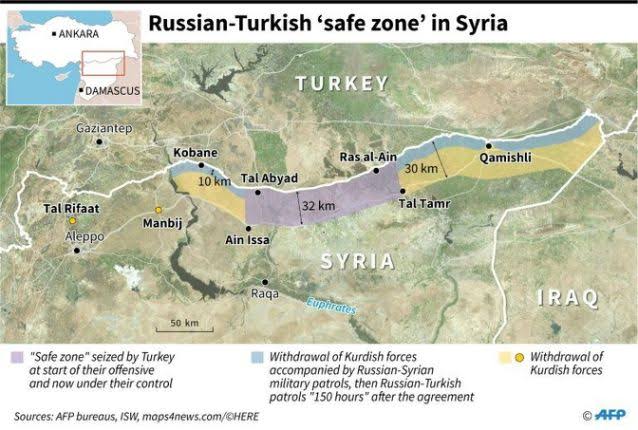
The Russian objective is to steadily expand the Syrian government control of the border regions with Turkey, which would incrementally lead to direct dealings between Ankara and Damascus on issues of border security. In sum, Moscow doesn’t seem to be unduly perturbed that the US is about to get back into bed with Turkey.
Turkey harbours serious misgivings about the US intentions regarding Kurds. Ankara has failed to break the nexus between the US and the Kurdish militant groups and if anything, the Pentagon commanders are lately rather blasé about the axis. Therefore, Turkey cannot afford to put its eggs in the American basket when it comes to northeast Syria.
Importantly, the suspicion is deep-rooted in the Turkish mind that the 2016 coup attempt against Erdogan by the movement led by Islamist preacher Fethullah Gülen (who lives in exile in the US since 1998) was supported by the US military and intelligence circles.
Meanwhile, US-Turkey relations may become toxic what with the US prosecutors in New York asking a federal judge on January 21 to impose escalating fines on Turkey’s state-owned Halkbank for failing to respond in court to criminal charges that it helped Iran evade US sanctions. The proposed fine on the bank is a $1 million-per-day fine – a penalty that would double for each week of further non-compliance. It could total $1.8 billion after eight weeks.
The case against Halkbank has been a longstanding point of tension in the increasingly fraught relationship between Ankara and Washington. Some analysts estimate that it is the single most explosive issue that could blow up the Turkish-American relationship.
If Halkbank decides to acquiesce and appear in court, the case will tarnish the reputation of the Erdogan government. The case implicates senior Turkish ministers, top Halkbank executives and even Erdogan and his family members as beneficiaries of the sanctions-busting efforts.
On the other hand, if the Halkbank insists on its civil contempt of court, that might ultimately severe its ties with the US financial system, hurting not only the bank but also Turkey’s financial sector, and send Turkish-American relations into a free fall.
Can the Trump administration intervene in the Halkbank case and rescue Erdogan? That likelihood can also be ruled out in the downstream of the reported allegation by former NSA in the White House John Bolton in his upcoming memoirs that Trump who has a property in Turkey was inclined to grant favours to Erdogan.
In such a sombre backdrop, it is highly improbable that Erdogan can afford to hitch Turkish wagons with the US. Having said that, Erdogan is under pressure from Turkish public opinion on the refugee problem. He may have to be seen doing ‘something’ to stall the Syrian offensive in Idlib.
No doubt, Ankara has sharpened its messaging but there is no clear Turkish strategy in view. The only viable option will be to accept the new facts on the ground. Possibly, as happened so often before, President Vladimir Putin will step in at some point to hold Erdogan’s hand.
The Unbearable Hypocrisy of US Sanctions on Iran
By Daniel McAdams | Ron Paul Institute | January 26, 2020
On November 22nd of last year, the US government announced it would impose sanctions on Iran’s information minister for his alleged role in limiting domestic Internet access while protests raged in that country over increases in gas prices.
At the time, US Treasury Secretary Steven Mnuchin condemned the Iranian government for censoring information that Iranian citizens could view online, stating that, “Iran’s leaders know that a free and open internet exposes their illegitimacy, so they seek to censor internet access to quell anti-regime protests.”
The Iranians were evil, said the US government official in charge of economic sanctions, because it restricted what its citizens could read in the international press.
Our government would never do that… right?
Wrong. Yesterday, the US government knocked Iran’s state news agency, FARS, off of the Internet entirely, citing US sanctions against the country.
What that means is the Iranian news service is being censored by the United States government and that Americans will therefore no longer be able to see anything from this foreign media outlet.
Exactly what Mnuchin accused Iran of doing back in November.
Zero Hedge writes, “as Iran’s Press TV describes further“:
The news agency said that it had received an email from the server company, which explicitly said that the blockage is due to an order by the Treasury’s Office of Foreign Assets Control (OFAC) and its inclusion in the list of Specially Designated Nationals (SDN).
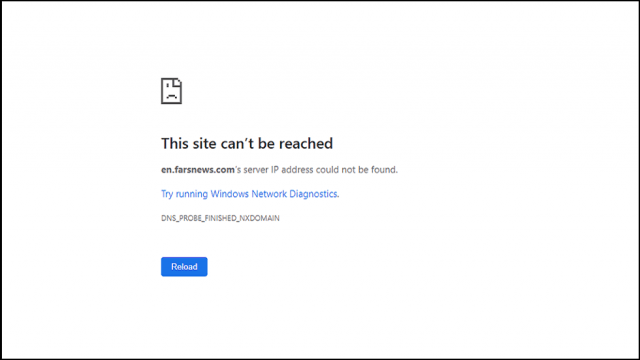
The agency attached to its post a screenshot of its website with the message “www.farsnews.com’s server IP address could not be found.”
This latest US censorship of Iranian media is nothing new. Iran’s Press TV has been removed from YouTube and other US social media with “US sanctions on Iran” being given as the reason.
Americans are not allowed to see the Iranian perspective on the Middle East because the Beltway bombardiers and their bosses in the military-industrial complex depend on successfully demonizing all Persians so that Americans will accept their annihilation in another neocon war. If Americans are allowed to see the Iranian perspective they might not be so supportive of the slaughter the neocons are cooking up.
The bottom line is this: the US Administration cites Iran’s restricting of outside media as evidence of the evil nature of the Iranian government, all the while scrambling to restrict American citizens’ access to Iranian media outlets.
Pot. Kettle. Black. Hypocrisy.
Copyright © 2020 by RonPaul Institute.
Iranian news agency says its website has GONE DOWN ‘due to US sanctions’
RT | January 24, 2020
The website of Iran’s Fars News Agency, often described as semi-state operator, has gone offline worldwide, with the agency claiming its server company blocked the site on orders from Washington.
Internet users trying to access farsnews.com on Friday found only a blank screen, along with a message stating “farsnews.com’s server IP address could not be found.” Fars News announced on Twitter that its server company had blocked the site because of US sanctions.
It is unclear where the server company is based, but several multinational tech firms have withdrawn service to Iranian users in the past, for fear of violating Washington’s ban on doing business with the Islamic republic. GitHub limited access to Iranian users last year, while Apple removed Iranian apps from its App Store two years earlier, as did Google.
Google, YouTube, Facebook, Instagram and Twitter have all removed accounts they claim were linked to the Iranian government.
As Fars News remained inaccessible through Friday evening, state outlets Mehr News Agency, Press TV, and Islamic Republic News Agency were seemingly unaffected, and were, at the time of writing, accessible.
Iran is not the only country whose state media have been affected by US sanctions. Economic penalties on Venezuela led the Latin American country’s TeleSUR network to cut back on its programming in 2018. TeleSUR’s Facebook page was also repeatedly taken offline that year, with the network accusing the Silicon Valley company of targeted censorship.
Featured Video

Iran FM Araghchi: “Hormuz Will No Longer Be the Same”
or go to
Aletho News Archives – Video-Images
From the Archives
Sam Husseini: The entire US establishment helped lie their way into the Iraq war
By Slava Zilber | American Herald Tribune | October 14, 2019
Sam Husseini is a senior analyst with the Institute for Public Accuracy, independent journalist and contributor to The Nation and FAIR.
Slava Zilber: Sam, three years ago, you appeared on Talk Nation Radio with David Swanson and spoke about the case of the GCHQ whistleblower Katharine Gun. You pointed out that the people involved in the spying on the UN and the people authorizing the Iraq War were not held accountable:
“Virtually everybody who went along with the war, whether it is Kerry or Clinton, of course, the Bush administration themselves has falsified their own records in terms of why, what they did, when they did, why they did it, to the extent that they’ve been scrutinised at all.”
You also address it in a recent article. And recently, Joe Biden has been lying about his position on the Iraq War. How can such an important issue escape meaningful scrutiny? … continue
Blog Roll
 Aletho News
- Oman FM: Persian Gulf states, Iran, Iraq should form security pact excluding US
- Trump peddles fresh falsehoods, claims Iran ‘started the war’ as US aggression drags on
- Ukraine quagmire? Yes, but it’s for NATO, not Russia
- US intelligence hypes Chinese, Russian space threats while accelerating its own military buildup in orbit
- Iran FM Araghchi: “Hormuz Will No Longer Be the Same”
- EU facing trillion-euro debt hole while seeking more cash for Kiev
- How US, Europe, Persian Gulf states exhausted missile stockpiles, splurged billions to defend Israel
- Up in arms… Koreans reject U.S. empire’s plan to make South Korea the next Ukraine
- Iran, Turkey, Pakistan, Saudi Arabia could advance region-led security framework in Tehran: FM spox
- Netizens condemn Japanese drama for projecting Japan’s wartime atrocities onto Chinese characters
- If Americans Knew
- An error has occurred; the feed is probably down. Try again later.
- No Tricks Zone
- Sudden Stratospheric Warming, Powerful El Niño Combination May Lead To Extreme Europe Cold, Energy Crisis!
- Two New Studies Find Thwaites Glacier Melt Cannot Be Driven By Human Activity Or A Warming Ocean
- E-Cars Reduce CO2 Emissions By Only 41% Compared To Internal Combustion Engine Vehicles
- Predictions Made By Renowned Climate Professor Over Past Decades Have Been Proven To Be Poor
- New Study Suggests Large Regions Of The Pacific Ocean Have Been Cooling For The Last 80 Years
- Germany’s Green Energy Debacle: High Energy Costs Force Kahla Porzellan to Close After 182 Years!
- New Study: 50 Years Of The Most Aggressive ‘Net Zero’ Policies Can Only Affect The Global Climate By 0.03°C
- US September “Heat” Was No Record…Many Records Set Decades Ago
- Latest European Green Energy Debacle; Portugal’s Largest Flagship Solar Park Insolvent!
- Green Energy Debacle: German Expert Professor Fritz Vahrenholt Warns Of Severe Economic And Social Consequences

