US misinforming international community on Iran’s enrichment right: Russia
Press TV – January 21, 2020
Russia has accused the US of misleading the international community on Iran’s right to enrich uranium, describing as “myth-making” a claim by Washington that a UN Security Council resolution has banned any enrichment in Iran.
“We consider it necessary to respond to the US special representative for Iran Hook about the existence of some kind of ‘UN standard’ prohibiting the Islamic Republic of Iran from enriching uranium,” the Russian Foreign Ministry said Monday.
The statement said the US claim accuses the UN Security Council of contradicting the nuclear non-proliferation treaty.
“Unfortunately, such myth-making has long been part of the US approach toward nuclear non-proliferation … In this case, we have, essentially, an accusation against the UN Security Council of making decisions contradicting the Treaty on the Non-Proliferation of Nuclear Weapons (NPT),” the ministry added.
The statement also recalled that the aforementioned treaty allows the signatories to develop nuclear energy for non-military purposes.
It also noted that the NPT does not impose any restrictions on non-nuclear states in terms of uranium enrichment as long as they are under the IAEA control and pursue peaceful purposes.
“The NPT puts no limitations on the non-nuclear countries regarding uranium enrichment or developing other stages of the nuclear fuel cycle. There is only one condition: that all work must be directed toward peaceful ends and be under IAEA [International Atomic Energy Agency ] supervision,” the ministry noted.
The statement came after US Special Representative for Iran Brian Hook told journalists on Friday about an alleged UN resolution passed in 2006 or 2007 prohibiting Tehran from uranium enrichment.
In 2015, Iran signed the Joint Comprehensive Plan of Action (JCPOA) with China, France, Germany, Russia, the United Kingdom, the United States, Germany, and the European Union. The JCPOA required Iran to put certain limits on its nuclear program in exchange for sanctions relief.
In 2018, the United States abandoned the deal with Iran, and hit the Iranian economy with the “toughest sanctions ever”.
On 8 May 2019, the first anniversary of the United States’ unilateral withdrawal from the agreement, Iran announced a gradual reduction of its JCPOA obligations.
On 5 January, following the killing of Iran’s top military commander Qasem Soleimani in a US attack near the Baghdad International Airport, Tehran said it was rolling back all its commitments under the JCPOA.
In reaction to Iran’s move, European parties to the deal, which have failed to fulfill their commitments under the JCPOA, have threatened to take Iran’s nuclear issue to the UN Security Council.
The E3 (Germany, UK, and France) formally triggered the dispute mechanism within the agreement, accusing Iran of having violated the accord. Iran would now be asked to resolve the so-called dispute with the European trio, and the process could ultimately lead to the re-imposition of the Security Council’s sanctions that were lifted by the accord.
In reaction to the threat, Iran’s Foreign Minister Mohammad Javad Zarif on Monday said that if Britain, France, and Germany continue their unjustifiable conduct and move to send Iran’s nuclear case to the United Nations Security Council, Tehran would have the option of leaving the Nuclear Non-Proliferation Treaty (NPT).
Zarif explained that Iran was the party to initially trigger the dispute mechanism in 2018 by sending three letters to the European Union to notify them of Tehran’s dissatisfaction with Europe’s non-commitment to the agreement. The Islamic Republic, he added, was then forced to resort to the nuclear countermeasures as the Europeans remained in violation of the accord.
He, however, said Tehran’s measures were reversible provided Europe would begin minding its JCPOA obligations.
A New Definition of Warfare
Sanctions can be more deadly than bullets
By Philip Giraldi • Unz Review • January 21, 2020
Supporters of Donald Trump often make the point that he has not started any new wars. One might observe that it has not been for lack of trying, as his cruise missile attacks on Syria based on fabricated evidence and his recent assassination of Iranian general Qassem Soleimani have been indisputably acts of war. Trump also has enhanced troop levels both in the Middle East and in Afghanistan while also increasing the frequency and lethality of armed drone attacks worldwide.
Congress has been somewhat unseriously toying around with a tightening of the war powers act of 1973 to make it more difficult for a president to carry out acts of war without any deliberation by or authorization from the legislature. But perhaps the definition of war itself should be expanded. The one area where Trump and his team of narcissistic sociopaths have been most active has been in the imposition of sanctions with lethal intent. Secretary of State Mike Pompeo has been explicit in his explanations that the assertion of “extreme pressure” on countries like Iran and Venezuela is intended to make the people suffer to such an extent that they rise up against their governments and bring about “regime change.” In Pompeo’s twisted reckoning that is how places that Washington disapproves of will again become “normal countries.”
The sanctions can kill. Those imposed by the United States are backed up by the U.S. Treasury which is able to block cash transfers going through the dollar denominated international banking system. Banks that do not comply with America’s imposed rules can themselves be sanctioned, meaning that U.S. sanctions are de facto globally applicable, even if foreign banks and governments do not agree with the policies that drive them. It is well documented how sanctions that have an impact on the importation of medicines have killed thousands of Iranians. In Venezuela, the effect of sanctions has been starvation as food imports have been blocked, forcing a large part of the population to flee the country just to survive.
The latest exercise of United States economic warfare has been directed against Iraq. In the space of one week from December 29th to January 3rd, the American military, which operates out of two major bases in Iraq, killed 25 Iraqi militiamen who were part of the Popular Mobilization Units of the Iraqi Army. The militiamen had most recently been engaged in the successful fight against ISIS. It followed up on that attack by killing Soleimani, Iraqi militia general Abu Mahdi al-Muhandis, and eight other Iraqis in a drone strike near Baghdad International Airport. As the attacks were not approved in any way by the Iraqi government, it was no surprise that rioting followed and the Iraqi Parliament voted to remove all foreign troops from its soil. The decree was signed off on by Prime Minister Adel Abdul Mahdi, based on the fact that the U.S. military was in Iraq at the invitation of the country’s government and that invitation had just been revoked by parliament.
That Iraq is to say the least unstable is attributable to the ill-advised U.S. invasion of 2003. The persistence of U.S. forces in the country is ostensibly to aid in the fight against ISIS, but the real reason is to serve as a check on Iranian influence in Iraq, which is a strategic demand made by Israel and not responsive to any actual American interest. Indeed, the Iraqi government is probably closer politically to Tehran than to Washington, though the neocon line that the country is dominated by the Iranians is far from true.
Washington’s response to the legitimate Iraqi demand that its troops should be removed consisted of threats. When Prime Minister Mahdi spoke with Pompeo on the phone and asked for discussions and a time table to create a “withdrawal mechanism” the Secretary of State made it clear that there would be no negotiations. A State Department written response entitled “The U.S. Continued Partnership with Iraq” asserted that American troops are in Iraq to serve as a “force for good” in the Middle East and that it is “our right” to maintain “appropriate force posture” in the region.
The Iraqi position also immediately produced presidential threats and tweets about “sanctions like they have never seen,” with the implication that the U.S. was more than willing to wreck the Iraqi economy if it did not get its way. The latest threat to emerge involves blocking Iraq access to its New York federal reserve bank account, where international oil sale revenue is kept, creating a devastating cash crunch in Iraq’s financial system that might indeed destroy the Iraqi economy. If taking steps to ruin a country economically is not considered warfare by other means it is difficult to discern what might fit that description.
After dealing with Iraq, the Trump Administration turned its guns on one of its oldest and closest allies. Great Britain, like most of the other European signatories to the 2015 Joint Comprehensive Plan of Action (JCPOA) has been reluctant to withdraw from the agreement over concern that Iran will as a result decide to develop nuclear weapons. According to the Guardian, a United States representative from the National Security Council named Richard Goldberg, had visited London recently to make clear to the British government that if it does not follow the American lead and withdraw from the JCPOA and reapply sanctions it just might be difficult to work out a trade agreement with Washington post-Brexit. It is a significant threat as part of the pro-Brexit vote clearly was derived from a Trump pledge to make up for some of the anticipated decline in European trade by increasing U.K. access to the U.S. market. Now the quid pro quo is clear: Britain, which normally does in fact follow the Washington lead in foreign policy, will now be expected to be completely on board all of the time and everywhere, particularly in the Middle East.
During his visit, Goldberg told the BBC: “The question for prime minister Johnson is: ‘As you are moving towards Brexit … what are you going to do post-31 January as you come to Washington to negotiate a free-trade agreement with the United States?’ It’s absolutely in [your] interests and the people of Great Britain’s interests to join with President Trump, with the United States, to realign your foreign policy away from Brussels, and to join the maximum pressure campaign to keep all of us safe.”
And there is an interesting back story on Richard Goldberg, a John Bolton protégé anti-Iran hardliner, who threatened the British on behalf of Trump. James Carden, writing at The Nation, posits “Consider the following scenario: A Washington, DC–based, tax-exempt organization that bills itself as a think tank dedicated to the enhancement of a foreign country’s reputation within the United States, funded by billionaires closely aligned with said foreign country, has one of its high-ranking operatives (often referred to as ‘fellows’) embedded within the White House national security staff in order to further the oft-stated agenda of his home organization, which, as it happens, is also paying his salary during his year-long stint there. As it happens, this is exactly what the pro-Israel think tank the Foundation for the Defense of Democracies (FDD) reportedly achieved in an arrangement brokered by former Trump national security adviser John Bolton.”
The FDD senior adviser in question, who was placed on the National Security Council, was Richard Goldberg. FDD is largely funded by Jewish American billionaires including vulture fund capitalist Paul Singer and Home Depot partner Bernard Marcus. Its officers meet regularly with Israeli government officials and the organization is best known for its unrelenting effort to bring about war with Iran. It has relentlessly pushed for a recklessly militaristic U.S. policy directed against Iran and also more generally in the Middle East. It is a reliable mouthpiece for Israel and, inevitably, it has never been required to register under the Foreign Agents Registration Act of 1938.
To be sure, Trump also has other neocons advising him on Iran, including David Wurmser, another Bolton associate, who has the president’s ear and is a consultant to the National Security Council. Wurmser has recently submitted a series of memos to the White House advocating a policy of “regime disruption” with the Islamic Republic that will destabilize it and eventually lead to a change of government. He may have played a key role in giving the green light to the assassination of Soleimani.
The good news, if there is any, is that Goldberg resigned on January 3rd, allegedly because the war against Iran was not developing fast enough to suit him and FDD, but he is symptomatic of the many neoconservative hawks who have infiltrated the Trump Administration at secondary and tertiary levels, where much of the development and implementation of policy actually takes place. It also explains that when it comes to Iran and the irrational continuation of a significant U.S. military presence in the Middle East, it is Israel and its Lobby that are steering the ship of state.
Philip M. Giraldi, Ph.D., is Executive Director of the Council for the National Interest, a 501(c)3 tax deductible educational foundation (Federal ID Number #52-1739023) that seeks a more interests-based U.S. foreign policy in the Middle East. Website is councilforthenationalinterest.org, address is P.O. Box 2157, Purcellville VA 20134 and its email is inform@cnionline.org.
E3 cannot logically activate JCPOA dispute settlement mechanism: Iran Deputy FM
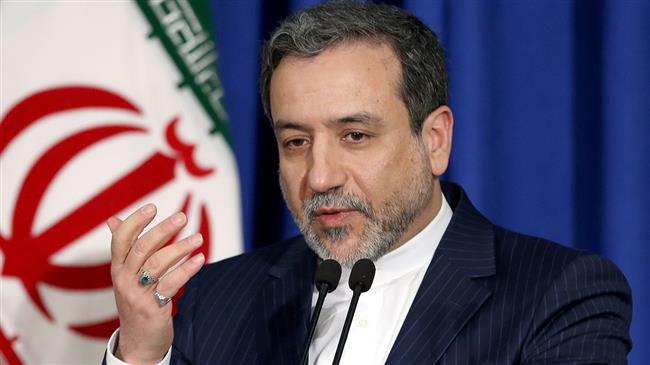
Iran’s Deputy Foreign Minister for Political Affairs Abbas Araqchi
Press TV – January 19, 2020
Iran’s Deputy Foreign Minister for Political Affairs Abbas says the three European signatories to Iran nuclear deal, formally known as the Joint Comprehensive Plan of Action (JCPOA), cannot logically activate the deal’s dispute settlement mechanism, because Iran has already done that.
“We are now engaged in complicated legal discussions and Russia and China are of the same opinion. It was Iran that first resorted to Article 36 [of the JCPOA] and completed its application. Therefore, logically, legally and even politically speaking, the European countries cannot take advantage of this article, because we have already done that and applied its mechanism in full,” Araqchi said while addressing a meeting at the Iranian Foreign Ministry’s School of International Relation on Sunday.
On January 14, the three European signatories to the Iran deal — France, Britain and Germany — formally triggered the dispute mechanism, which accuses Iran of violating the agreement and could lead to the restoration of the anti-Iran UN sanctions that had been lifted by the JCPOA.
Under the mechanism outlined in the deal, the EU would also inform the other parties — Russia and China as well as Iran itself. There would then be 15 days to resolve the differences through the JCPOA Joint Commission. If no settlement is reached through the commission, the foreign ministers of involved countries will then discuss them for another 15 days. In case of need, an advisory board will be formed to help foreign ministers.
Elsewhere in his remarks, Iran’s deputy foreign minister said, the recent measure taken by three European countries is only aimed at dispute settlement and has nothing to do with restoration of UN sanctions against Tehran.
“The trigger mechanism, which may lead to restoration of the United Nations Security Council’s sanctions against Iran has not been started by the three countries,” Araqchi noted.
“They have only resorted to the dispute settlement mechanism as per Article 36 of the deal, while the trigger mechanism is enshrined in Article 37. Article 36 does not automatically lead to Article 37, though it can pave the way for its application,” the top Iranian diplomat added.
The US withdrew from the accord in 2018 and re-imposed its unilateral sanctions on Iran last May. Britain, France, and Germany, under Washington’s pressure, failed to protect Tehran’s business interests under the deal against the American bans.
This May, Iran began to gradually reduce its commitments under the JCPOA to both retaliate for Washington’s departure, and trigger the European trio to respect their obligations towards Tehran.
On January 5, Iran took a final step in reducing its commitments, and said it would no longer observe any operational limitations on its nuclear industry, whether concerning the capacity and level of uranium enrichment, the volume of stockpiled uranium or research and development.
Iranian Foreign Minister Mohammad Javad Zarif has denounced as a “strategic mistake” the European Union’s decision to activate the dispute mechanism, taking them to task for failing to abide by their commitments under the JCPOA, and saying that activating the dispute resolution mechanism is legally baseless and politically a strategic blunder.
Britain, France reiterate commitment to JCPOA
In another development on Sunday, British Prime Minister Boris Johnson and French President Emmanuel Macron reiterated their commitment to the Iran nuclear deal and agreed that “a long-term framework” was needed, a Downing Street spokeswoman said.
In a statement after a meeting between Johnson and Macron on the sidelines of a Libya summit in Berlin, the spokeswoman said, “On Iran, the leaders reiterated their commitment to the JCPOA.”
“They agreed on the importance of de-escalation and of working with international partners to find a diplomatic way through the current tensions,” he added.
Iran to Review Cooperation with Int’l Nuclear Watchdog In Case of ‘Unjust’ Steps by EU – Reports
Sputnik – 19.01.2020
The European parties to the Iranian nuclear deal earlier launched a dispute resolution mechanism under the agreement, a process that could entail the re-imposition of sanctions on Iran.
Iran’s cooperation with the International Atomic Energy Agency will be reviewed if the EU nations take “unjust” measures after triggering the nuclear deal’s dispute mechanism, Iran’s parliamentary speaker was quoted by the local TV as saying.
“We state openly that if the European powers, for any reason, adopt an unfair approach in using the dispute mechanism, we will seriously reconsider our cooperation with the International Atomic Energy Agency”, a local broadcaster quoted Iranian Parliamentary Speaker Ali Larijani as saying.
On Tuesday, three of the signatories to the JCPOA, namely France, the UK, and Germany, confirmed that they had initiated a dispute mechanism that could see the sanctions against Iran reinstated. The move comes amid Iran’s gradual scale-back on its commitments under the deal, prompted by the US unilateral withdrawal from it in 2018.
Iran’s foreign minister previously condemned the three nations for dancing to the tune of the US. President Trump reportedly threatened the European nations with imposing tariffs on them for their lack of action against Tehran.
Iran recently scrapped its remaining limitations under the JCPOA following the assassination of its top military commander Qasem Soleimani in a US drone strike on 3 January. Tehran has been gradually reducing its commitments under the JCPOA since May 2019 following Washington’s unilateral pullout of the treaty one year earlier and imposition of energy and banking sanctions on the state.
How Europe betrayed Iran: By triggering JCPOA dispute mechanism, EU helps Trump finish job of killing the Iran nuclear deal
By Scott Ritter | RT | January 15, 2020
Europe could have saved the Iran nuclear agreement. Instead, it abused the rule of law by inappropriately triggering its dispute mechanism, all but ensuring the agreement’s demise.
Disingenuous diplomacy
On January 5, 2020, Tehran announced that it would no longer comply with its obligations under the Iran nuclear agreement, officially known as the Joint Comprehensive Program of Action (JCPOA). Iran’s actions are in response to the withdrawal of the US from the JCPOA, and the re-imposition of economic sanctions by the US which had been lifted when the deal came into force.
In response to the Iranian actions, the governments of France, Germany, and the UK – all parties to the deal, along with the European Union (EU) – invoked provisions within the JCPOA, known as the Dispute Resolution Mechanism (DRM), in an effort to bring Iran back into compliance.
The triggering of the DRM by the European countries, however, is a disingenuous move designed to provide diplomatic cover for the EU’s own failures when it comes to JCPOA implementation.
Moreover, given the likely outcome of this process, a convening of the UN Security Council where economic sanctions will be re-imposed on Iran by default, the Europeans have all but assured the demise of the JCPOA, with their so-called diplomacy serving as little more than a facilitator of a larger crisis between Iran and the US that, given the heightened tensions between these two nations in the aftermath of the assassination of Qassem Soleimani, precipitously increases the prospects for war.
Big powers always had an easy way out of deal
When the JCPOA was finalized in July 2015, the world was given hope that the crisis over Iran’s nuclear enrichment capability, which had been threatening to boil over into war, had been resolved, and diplomacy had prevailed over armed conflict.
The JCPOA codified a number of restrictions on Iran’s ability to enrich uranium, including the numbers and types of centrifuges that could be used, where enrichment could take place, what level of enrichment could occur, and how large of a stockpile of enriched nuclear material Iran was allowed to maintain, and an intrusive comprehensive inspection regime designed to verify Iran’s compliance.
These restrictions were designed to ease over time through a series of so-called “sunset clauses,” until all that remained was an enhanced inspection process. In short, the JCPOA legitimized Iran’s right to enrich uranium for peaceful purposes while simultaneously recognizing the concerns of some within the international community regarding the potential for Iran to abuse this enrichment capability for military purposes.
The JCPOA was, in effect, a comprehensive confidence building mechanism intended to build trust between Iran and the international community over time, consistent with the agreement’s preamble, which declared “Iran reaffirms that under no circumstances will Iran ever seek, develop or acquire any nuclear weapons.”
Prior to the implementation of the JCPOA, Iran had been subjected to stringent economic sanctions levied under the authority of the UN Security Council. In exchange for entering into the agreement, these sanctions were lifted.
However, the deal recognized that disputes could emerge regarding the implementation of the agreement, and put in place a dispute resolution mechanism which, if no satisfactory solution was found to an identified problem, would result in these sanctions being automatically re-imposed.
A key aspect of this mechanism was that if any party to the agreement used its veto in the UN Security Council to block a vote related to nonperformance on the part of any party to the agreement, then the economic sanctions would automatically be reinstated.
Washington sabotages JCPOA
For the first two-plus years of the deal’s existence, from July 2015 through to May 2018, Iran was found to be in full compliance with its commitments.
In May 2018, however, the US precipitously withdrew from the agreement, claiming that the eventual expiration of the “sunset clauses” paved the way for Iran to produce a nuclear weapon, and as such the JCPOA was little more than a facilitator of Iranian nuclear malign intent.
The US began re-imposing economic sanctions on Iran, all of which included so-called secondary sanctions which applied to any nation that violated the US sanctions. Iran rightfully viewed the re-imposition of sanctions by the US as a violation of the deal.
Furthermore, when EU companies began balking on their willingness to do business with Iran out of fear of US secondary sanctions, Iran rightfully found the EU to be in violation of the JCPOA as well.
Iran gave the remaining parties to the JCPOA six months following the US withdrawal to develop the necessary mechanisms needed to sidestep the impact of the US economic sanctions.
By November 2018, however, no such mechanisms had been implemented, and when the US targeted Iran’s economic lifeblood by sanctioning oil sales, Iran responded by invoking its rights under Article 26 and Article 36 of the JCPOA, which allows Iran to “cease performing its commitments under the JCPOA, in whole or in part”, for either the re-imposition of new nuclear-related sanctions, or “significant nonperformance” of obligations under the JCPOA, or in this case, both.
Since that time, Iran has been gradually stepping away from the restrictions imposed on it, noting each time that its measures were immediately reversible should the underlying issues be resolved in a manner that complied with the letter and intent of the JCPOA.
Europe’s cowardice
In short, Iran demanded that the EU live up to its obligations to stand up to the US economic sanctions. The EU has consistently failed to do so, resulting in Iran’s gradual backing away from its obligations, leading to the current state of affairs where all of the restrictions imposed by the JCPOA, not including international inspections, which continue unabated, have ceased to be in operation.
When it comes to levying fault for the current state of affairs, there is no “chicken or egg” causality up for debate. Blame lies squarely on both the US for withdrawing from the deal, and the EU for failing to live up to its obligations under the JCPOA regarding economic engagement with Iran.
Iran has long warned the governments of France, Germany, and the UK not to invoke the DRM, noting that the JCPOA does not permit such a move if, as is the case today, Iran is exercising its legal right in response to the illegal and unilateral actions of the US.
There is no realistic expectation that Iran will change its position in this regard. Russia and China have already indicated that Iran is fully within its rights within the JCPOA to back off its obligations regarding restrictions imposed on its nuclear program, citing US and EU non-performance.
By invoking the DRM, the Europeans have, knowingly and wittingly, initiated a process that can only have one outcome, the termination of the JCPOA. In doing so, the EU has breathed life into unfounded US allegations of Iranian nuclear weapons intent, setting up an inevitable clash between the Washington and Tehran that has the real potential of dragging the whole world down with it.
Scott Ritter is a former US Marine Corps intelligence officer. He served in the Soviet Union as an inspector implementing the INF Treaty, in General Schwarzkopf’s staff during the Gulf War, and from 1991-1998 as a UN weapons inspector.
Non-commitment probe into Iran by France, Germany & UK ‘groundless,’ only increases tensions around nuclear deal – Russia
RT | January 14, 2020
The European trio’s accusation that Iran violates the key restrictions of the nuclear deal are unjustified, the Russian Foreign Ministry said urging the countries not to increase tensions that could endanger the pact.
Paris, Berlin and London officially reported Iran’s non-compliance with the 2015 agreement to the Joint Commission under the Dispute Resolution Mechanism. This step could potentially lead to the UN Security Council being forced to decide on whether or not to bring back sanctions against Tehran.
“We can’t rule out that the ill-considered actions of the European trio will lead to a new escalation around the JCPOA (Joint Comprehensive Plan of Action) and make the return to the implementation of the ‘nuclear deal’ in its initially agreed format unachievable,” Russia’s Foreign Ministry said in a statement.
Iran rolled back on its uranium enrichment constraints detailed in the international agreement earlier this month after one of its top military commanders, Qassem Soleimani, was assassinated in an American drone strike in Iraq.
Tehran’s decision to put its commitments on hold was a response to the actions of the US, which unilaterally withdrew from the deal in May 2018 and reintroduced restrictions against Iran, the ministry reminded. However, the country keeps allowing the International Atomic Energy Agency (IAEA) monitors to its nuclear sites – and “the transparency of the Iranian nuclear program has been one of the key clauses of the nuclear deal.”
Despite vocally rejecting the US campaign of “maximum pressure” on Iran, France, Germany and the UK are “either not ready or can’t afford to” work on finding effective ways of bypassing the hurdles to the deal created by Washington.
There are also “serious problems” with implementing the side of the deal on the part of the European trio, the ministry said. When all those issues are settled, “Iran would have no reason to retract from the initially agreed framework of the JCPOA.”
Code-Panic: A Controlled Opposition Spectacle
By Gilad Atzmon | January 12, 2020
Ariel Gold is the national co-director of CODEPINK, an American female “grassroots peace and social justice movement” that claims to work “to end U.S.-funded wars and occupations.” Ariel claims to support the Palestinians and oppose Israel. She has published articles in Jewish progressive outlets such as the Forward, Tikkun Magazine and Mondoweiss.
On January 3rd, just a few hours after the world became aware of the assassination of Iranian General Qasem Soleimani by an American drone attack, Ariel, the so called ‘Jewish dissenter’ rushed to post the following tweet:
“Loving reminder to folks rightfully horrified the US attack on Iran: please don’t frame this as being as being done to please Israel. This is Donald Trump and his band of US war hawks, period. To suggest Jews are pulling the strings is nothing short of antisemitism.”
The Jewish progressive activist basically insisted that any such criticism of Israel was ‘antisemitism.’ She was also naive to prematurely vindicate the Jewish State of involvement in the unlawful assassination: a crime that may lead to unpredictable and lethal consequences in the near future.
Today’s news reports that Israel was deeply involved in the targeted assassination of the Iranian general. The Times of Israel’s headline this morning reads:
“Israeli intel helped US carry out strike that killed Iran’s Soleimani.” The article states that “Information provided by Jewish state confirmed that Quds Force leader was at Baghdad airport before missile strike, NBC News reports.”
Amongst my sins is the argument I have made for almost two decades: for the solidarity and peace movements to be genuine, functional and effective they must be emancipated from the grip of the so called Jewish progressives. As things stand at the moment, solidarity with the oppressed is restricted by the sensitivities of the oppressor.
Facebook ‘thought police’ censors pro-Iran posts ‘to comply with US sanctions’… as Trump warns Tehran against censorship
RT | January 12, 2020
Facebook has admitted to selectively censoring pro-Iranian government Instagram posts about the murdered General Soleimani, as US President Donald Trump hypocritically championed free speech and warned Tehran against censorship.
Instagram has confirmed that they have been removing posts that voice support for Qassem Soleimani, with a Facebook spokesperson claiming that censorship is fully justified in order to comply with US sanctions. Instagram is one of the few social media platforms that is not blocked in Iran, and it is where many within the country went to fuel outrage over the US assassination strike in Iraq last week.
The International Federation of Journalists condemned the censorship effort as “unprecedented in the history of social networks and in conflict with the very innate actuality of media.” In its letter to Instagram, the AoIJ Teheran noted that numerous Iranian state media accounts had been removed and 15 journalists had been censored recently, which goes against freedom of speech principles.
“These massive Big Tech corporations are Thought Police for the US government: Facebook and Instagram are removing posts expressing support for Iran’s top general Soleimani,” tweeted journalist Ben Norton. “They say it’s to comply with US sanctions, but how do posts violate sanctions?”
The US government designated the Islamic Revolutionary Guard Corps (IRGC) a foreign terrorist organization last year, in an unprecedented move against a sovereign nation’s military. The IRGC’s elite Quds Force, led by Soleimani, was among those forces that turned the tide against the Islamic State terrorist ‘caliphate’ in Syria. But technically, since Washington considers him a terrorist, Facebook has a convenient excuse to sensor any posts critical of the US extrajudicial assassination strike.
While Facebook was acting as ‘thought police’ on behalf of the US government, Washington has been championing free speech and warning the Tehran government against restricting the Iranian people’s internet access. US President Donald Trump personally addressed anti-government protesters in the streets of Iran – in Farsi mind you – reassuring them of unwavering support.
Iran’s fifth step in suspending nuclear commitments will not mean end to JCPOA: Araqchi

Iranian Deputy Foreign Minister for Political Affairs Abbas Araqchi
Press TV – January 7, 2020
A senior Iranian official says the country’s decision to take the fifth and final step in reducing its commitments under a landmark nuclear deal it clinched with major world powers in 2015 does not mean an end to the accord or Tehran’s withdrawal from it.
Speaking to reporters in Tehran on Tuesday, Iranian Deputy Foreign Minister for Political Affairs Abbas Araqchi said the last step means that “we have reached a reasonable balance” in the nuclear deal, officially known as the Joint Comprehensive Plan of Action (JCPOA).
“The US withdrawal from the JCPOA disrupted the balance of this international accord and now we think that we have reached a reasonable balance in the JCPOA after scaling back the nuclear commitments,” he added.
The Iranian government announced in a statement on Sunday that from now on, the country will observe no operational limitations on its nuclear industry, including with regard to the capacity and level of uranium enrichment, the amount of enriched materials as well as research and development.
“By taking the fifth step in reducing its commitment, the Islamic Republic of Iran eliminates the last key operational restriction it faced under the JCPOA, which is the limitation imposed on the number of centrifuges,” it said.
Araqchi, who is also a senior nuclear negotiator, further said the amount of enrichment would depend on the agenda of the Atomic Energy Organization of Iran (AEOI) and the country’s requirements.
He reiterated that the Islamic Republic would continue to cooperate with the International Atomic Energy Agency (IAEA) and said, “We are ready to come back to the previous process whenever the opposite sides [of the nuclear deal] will be able to meet our demands and fulfill their commitments under the JCPOA.”
“It is possible to save the JCPOA if the opposite sides want,” the Iranian diplomat added.
In response to a question about the possibility of Europe triggering the JCPOA’s “dispute resolution mechanism,” also known as the trigger mechanism, whose activation can lead to the return of the UN sanctions on Iran, Araqchi said it only would accelerate the termination of the deal.
“As Iran acted wisely after the US withdrawal from the JCPOA, the other sides are also expected to behave prudently and refrain from escalating tensions,” he added.
US President Donald Trump, a stern critic of the historic deal, unilaterally pulled Washington out of the JCPOA in May 2018, and unleashed the “toughest ever” sanctions against the Islamic Republic in defiance of global criticism in an attempt to strangle the Iranian oil trade.
In response to the US unilateral move, Tehran has so far rowed back on its nuclear commitments four times in compliance with Articles 26 and 36 of the JCPOA, but stressed that its retaliatory measures will be reversible as soon as Europe finds practical ways to shield the mutual trade from the US sanctions.
Iran’s latest nuclear announcement coincided with a major escalation of tensions with Washington after the US assassination of Lieutenant General Qassem Soleimani, the commander of the Quds Force of the Islamic Revolution Guards Corps (IRGC), in a drone strike in the Iraqi capital of Baghdad early on Friday.
Iran has criticized the three European signatories to the JCPOA — Britain, France and Germany — for failing to salvage the pact by shielding Tehran’s economy from US sanctions.
Enrichment based on technical needs: Iran rolls back on 2015 nuclear deal
RT | January 5, 2020
Tehran has removed the last constraints it agreed to impose on its nuclear program under the 2015 deal but said it is ready to return to fulfilling its obligations under the agreement if the US lifts sanctions.
Iran’s nuclear program “no longer faces any operating restrictions,” a government statement cited by Iranian media said, adding that parameters of enrichment capacity, enrichment level and the amount of enriched material would from now on be determined only by the program’s “technical needs.”
Tehran still vowed to continue its cooperation with the International Atomic Energy Agency (IAEA) and said that it could potentially return to fulfilling its obligations under the nuclear deal if sanctions imposed by Washington are lifted and Tehran’s interests are respected.
Featured Video
Iran FM Araghchi: “Hormuz Will No Longer Be the Same”
or go to
Aletho News Archives – Video-Images
From the Archives
Sam Husseini: The entire US establishment helped lie their way into the Iraq war
By Slava Zilber | American Herald Tribune | October 14, 2019
Sam Husseini is a senior analyst with the Institute for Public Accuracy, independent journalist and contributor to The Nation and FAIR.
Slava Zilber: Sam, three years ago, you appeared on Talk Nation Radio with David Swanson and spoke about the case of the GCHQ whistleblower Katharine Gun. You pointed out that the people involved in the spying on the UN and the people authorizing the Iraq War were not held accountable:
“Virtually everybody who went along with the war, whether it is Kerry or Clinton, of course, the Bush administration themselves has falsified their own records in terms of why, what they did, when they did, why they did it, to the extent that they’ve been scrutinised at all.”
You also address it in a recent article. And recently, Joe Biden has been lying about his position on the Iraq War. How can such an important issue escape meaningful scrutiny? … continue
Blog Roll
 Aletho News
- Oman FM: Persian Gulf states, Iran, Iraq should form security pact excluding US
- Trump peddles fresh falsehoods, claims Iran ‘started the war’ as US aggression drags on
- Ukraine quagmire? Yes, but it’s for NATO, not Russia
- US intelligence hypes Chinese, Russian space threats while accelerating its own military buildup in orbit
- Iran FM Araghchi: “Hormuz Will No Longer Be the Same”
- EU facing trillion-euro debt hole while seeking more cash for Kiev
- How US, Europe, Persian Gulf states exhausted missile stockpiles, splurged billions to defend Israel
- Up in arms… Koreans reject U.S. empire’s plan to make South Korea the next Ukraine
- Iran, Turkey, Pakistan, Saudi Arabia could advance region-led security framework in Tehran: FM spox
- Netizens condemn Japanese drama for projecting Japan’s wartime atrocities onto Chinese characters
- If Americans Knew
- An error has occurred; the feed is probably down. Try again later.
- No Tricks Zone
- Sudden Stratospheric Warming, Powerful El Niño Combination May Lead To Extreme Europe Cold, Energy Crisis!
- Two New Studies Find Thwaites Glacier Melt Cannot Be Driven By Human Activity Or A Warming Ocean
- E-Cars Reduce CO2 Emissions By Only 41% Compared To Internal Combustion Engine Vehicles
- Predictions Made By Renowned Climate Professor Over Past Decades Have Been Proven To Be Poor
- New Study Suggests Large Regions Of The Pacific Ocean Have Been Cooling For The Last 80 Years
- Germany’s Green Energy Debacle: High Energy Costs Force Kahla Porzellan to Close After 182 Years!
- New Study: 50 Years Of The Most Aggressive ‘Net Zero’ Policies Can Only Affect The Global Climate By 0.03°C
- US September “Heat” Was No Record…Many Records Set Decades Ago
- Latest European Green Energy Debacle; Portugal’s Largest Flagship Solar Park Insolvent!
- Green Energy Debacle: German Expert Professor Fritz Vahrenholt Warns Of Severe Economic And Social Consequences

