Iran Views US Sanctions Against Mahan Air as Illegal – Foreign Ministry
Sputnik – December 16, 2019
Tehran considers the US sanctions imposed against the Mahan Air carrier for allegedly transporting weapons to conflict areas in the Middle East illegal and hopes that other countries do not follow Washington’s steps, the Iranian Foreign Ministry’s spokesman, Abbas Mousavi, said on Monday.
“We expect that our friendly countries will not follow the illegal, unilateral and unreasonable US sanctions”, Mousavi told reporters.Last week, the US Department of the Treasury imposed sanctions on two Iranian shipping companies and three Mahan Air carrier general sales agents for their alleged role in transporting weapons to Yemen and Syria.
The Treasury also said that the new sanctions target three Mahan Air general sales agents based in the United Arab Emirates and Hong Kong, along with Iranian businessman Abdolhossein Khedri and his companies, Khedri Jahan Darya Co. and Maritime Silk Road LLC, as well as his ships.
The Treasury’s action requires that all property and interests in property of the sanctioned individuals and entities that are in the United States be blocked and reported. It generally also prohibits all dealings by Americans or within the United States.
Washington has repeatedly accused Iran of supporting Yemeni Houthi militants fighting against the government led by President Abdrabbuh Mansur Hadi. The US claimed that the Islamic Republic has been smuggling weapons to the Shia fighters despite a 2015 UN ban, which Tehran has denied.
New sanctions to ban humanitarian trade with Iran: US Treasury
Press TV | December 13, 2019
The US Treasury Department has stressed that Washington’s newly announced sanctions targeting Iran’s air and maritime transport industries will lead to the restriction of trade related to humanitarian goods.
“US persons will be prohibited from engaging in transactions involving Islamic Republic of Iran Shipping Lines (IRISL) or E-Sail, including transactions for the sale of agricultural commodities, food, medicine, or medical devices,” the Treasury’s guidelines on Iran sanctions read.
“In addition, non-US persons that knowingly engage in certain transactions with IRISL or E-Sail, even for the sale to Iran of agricultural commodities, food, medicine, or medical devices, risk exposure to sanctions under additional authorities,” it added.

Screenshot showing a segment of the US Treasury Department’s guidelines on Washington’s new sanctions against Iran announced on December 11, 2019.
The announcement comes after the Trump administration announced Wednesday that it was targeting IRISL and Iran’s major airline, Mahan Air, over baseless allegations of Tehran supporting “terrorists” in the region.
The Wednesday order put IRISL and Mahan under US presidential Executive Order (EO) 13382, which allegedly targets “weapons of mass destruction proliferators”.
The Treasury’s guidelines on the new sanctions stressed that entities put under EQ 13382 would not be eligible for any humanitarian sanction exceptions.
The statement comes despite Washington’s claim that its sanctions do not affect Iran’s access to humanitarian goods.
US officials have, nonetheless, signaled on numerous occasions that Washington’s sanctions seek to harm Iran’s general population in a bid to force Tehran to accept Washington’s dictates.
Earlier this year, US Secretary of State Mike Pompeo said that Tehran had to listen to Washington “if they want their people to eat”.
The new bans mark the latest round of Washington’s wide sweeping sanctions against the country after the US government unilaterally pulled out of the 2015 Iran nuclear deal and re-imposed sanctions lifted under the deal last year.
Speaking on Thursday, US Special Representative for Iran Brian Hook boasted that US sanctions targeting Iran’s oil sector have led to more than $50 billion in revenue losses, have hindered Iran’s refined-oil products and have undermined foreign investment.
“Both upstream and downstream investments in Iran’s oil and gas sector have stopped,” Hook said.
“Foreign investors have almost entirely pulled out of Iran due to the risks and billions in investment has been lost,” he added.
Hook said that the wide sweeping oil sanctions seek to force Iran to negotiate with the US, a demand which Iranian officials have firmly rejected as long as Washington fails to uphold the previously negotiated nuclear deal agreement.
US-backed figure claims Iranians ‘understand’ Trump
Following Washington’s withdrawal from the 2015 nuclear deal, the US has since adopted a policy of “maximum pressure” against Tehran, coupling sanctions with stepped up regional provocations and military deployments aimed at Iran.
The US has also sought to provoke internal unrest in the country by supporting various destabilizing elements targeting the country, such as the terrorist Mujahedin Khalq Organization (MKO) and violent separatist groups.
According to observers, Reza Pahlavi, son of deposed Iranian king Mohammad Reza Pahlavi, is one of the main figureheads being “groomed” by Washington as part of its campaign to destabilize Iran amid recent foreign-backed riots in Iran.
In recent remarks to the US-based magazine Newsweek, Pahlavi expressed his support for Trump’s aggressive policies targeting the Iranian economy and called for stepped-up western intervention in Iran.
He also claimed that the Iranian people “understand and appreciate” the US-imposed sanctions and believe that the Iranian government is to blame for the “maximum pressure” targeting Iran.
Pahlavi’s remarks come despite numerous studies indicating that Iranian resentment against Washington has largely increased amid the US’ wide sweeping sanctions.
A recent study published by the University of Maryland’s Center for International and Security Studies at Maryland (CISSM) and the Toronto-based IranPolls shows that an overwhelming 86 percent of Iranians despise US policies.
The study’s results come despite stepped-up efforts by foreign media outlets to stir unrest in Iran and promote anti-government sentiment amid tightening US sanctions crippling the country’s economy.
Page from Iraq playbook: US invokes WMDs to pile ‘maximum pressure’ sanctions on Iran
By Nebojsa Malic | RT | December 11, 2019
With over a year of sanctions failing to force Tehran to bend the knee, Washington is now resorting to creatively invoking “weapons of mass destruction” – the very same pretext the US used for the 2003 invasion of Iraq.
On Wednesday, the US Treasury Department expanded sanctions against Mahan Air, Iran’s largest privately-owned airline, citing a 2005 executive order by then-President George W. Bush targeting “weapons of mass destruction proliferators and their supporters.”
Mind you, nowhere in the sanctions announcement does Treasury say that Mahan actually transported WMDs. Instead, the airline is accused of flying personnel and weapons for Iran’s “terrorist and militant groups” and thereby “directly contributing” to conflicts in Syria and Yemen.
Meanwhile, the US is sending weapons to “moderate” jihadist terrorists in Syria, and arming and refueling Saudi Arabian and allied forces that have been bombing Yemen to the stone age since 2015. This is never mentioned, of course. Nor is anyone allowed to sanction Washington for any of this, as sanctions only go in one direction.
The point of the sanctions is to scare anyone away from doing any business with the blacklisted companies or individuals. Imagine being sued by the US for violating sanctions against “WMD proliferators” over fulfilling a catering contract, selling airplane parts, or providing ticketing services. It may sound nonsensical, but there you have it.
The State Department has basically admitted to deliberately using the WMD classification to make Iranian companies radioactive to potential business partners.
“Our ability to work with partners overseas to deny Iranian shippers access to ports, or prevent transactions, much more diplomatically persuasive when able to identify WMD or missile proliferation as the gravamen of the complaint,” is how Christopher Ford, assistant secretary of state for international security and non-proliferation, explained it to Financial Times.
That the Trump administration is using the WMD gambit against Iran is particularly ironic, given that demonstrably false accusations about WMDs were used by Bush to invade the neighboring Iraq in 2003, setting off a chain of events that claimed tens of thousands of lives and gave birth to Islamic State (IS, formerly ISIS). Donald Trump has long been critical of the Iraq War, and specifically the false WMD charges, only to apparently not mind when the same playbook is used against Iran.
What evidence does the US have for Mahan actually proliferating any WMDs? Funny you should ask. US sanctions designations require no pesky evidence, or due process; they are basically imposed and lifted on the sole discretion of Treasury, without any possibility of appeal or redress. That’s a mighty convenient way to bypass the burden of proof.
Officially, the sanctions are all about US solidarity with the “Iranian people,” as Secretary of State Mike Pompeo puts it, and punishing the government in Tehran for funding “terrorism” instead of spending money on social programs. It’s a tempting narrative, to be sure – yet no different from the claims of neoconservative hawks in 2003 that US troops will be greeted in Iraq with flowers, like liberators. Except they were met with improvised explosive devices (IEDs) instead.
Again, it is particularly ironic that all of this is happening on Trump’s watch and with his apparent blessing, even as the neoconservatives and Democrats have joined forces in trying to get him impeached. In Washington, it seems, the Swamp always wins.
China Quietly Ramps Up Oil Production In Iran
By Simon Watkins – Oilprice.com – December 10, 2019
The supergiant Azadegan oil field, comprising major north and south sites, is as important to Iran’s overall strategic plan to survive the current sanctions environment and to prosper when they are lifted as the flagship South Pars supergiant gas field and the added-value products of its petrochemicals sector. Last week Iran’s Petroleum Engineering and Development Company (PEDEC) announced that five new development wells and an appraisal well are to be spudded in North Azadegan to maintain current production levels. OilPrice.com understands from various senior energy sources in Iran that this is only part of the picture, with much bigger plans having been agreed for rollout in the coming six months with the help of China and Russia.
Located around 80 kilometres west of Ahvaz, close to the Iraqi border, the entire 900 square kilometre Azadegan field is the third-largest hydrocarbon reserve in the world after the Ghawar oil field in Saudi Arabia and the Burgan oil field in Kuwait. Its total reserves are estimated at about 42 billion barrels of oil, with around 7 billion barrels currently deemed recoverable. The first exploration well was drilled in 1976 but, despite its potential, a long lead time across the four main layers – Sarvak, Kazhdomi, Godvan, and Fahilan – of the site has meant that the pace of production has been slower than at many neighbouring fields, especially those over the border in Iraq.
A key reason for this was the attitude of Chinese firms active in Iran around that time, which can be broadly characterised as doing the minimum necessary to generate some oil flows from the fields back into China whilst not spending too much money. This attitude, though – particularly when Iran was already in the process of negotiating the Joint Comprehensive Plan of Action (JCPOA) in the run-up to its being agreed in 2015 – resulted in the National Iranian Oil Co. (NIOC) cancelling China National Petroleum Corp’s (CNPC) contract to develop Phase 11 of the South Pars natural gas field in 2013. A year later – with CNPC having drilled only 7 of the 185 wells it had planned at the South Azadegan field – the NIOC also cancelled this development contract with the Chinese company as well. CNPC was further warned at that time that its contract for North Azadegan would go the same way if it did not up the development tempo, which it did, increasing production from around 15,000 barrels per day (bpd) at that stage to around 35,000 bpd within a year or so.
As it stands, with CNPC still the key foreign developer at North Azadegan, the relationship dynamic between Iran and China has shifted again. With re-imposed U.S. sanctions still in place, Iran cannot afford to alienate China and over the past few months has offered it extremely advantageous deals to return to previous developments or to take on an even greater role in existing ones. The most notable of these have been South Azadegan and Phase 11 of the supergiant South Pars non-associated gas field, although others are in the offing.
“The understanding agreed between Iran and China when the French [Total] started to wobble on continuing with Phase 11 [of South Pars] after the U.S. pulled out of the JCPOA was that China would assume Total’s entire stake [to 80.1 per cent] and really push production,” a senior oil industry source who works closely with Iran’s Petroleum Ministry told OilPrice.com last week. “At the same time, China would also be allowed to go into South Azadegan to create a unified field development programme with its North Azadegan activities,” he said. “When the details of the deals began to leak out, though, South Pars [Phase] 11 and South Azadegan had to be put on the back burner but the plans will go ahead within the next six months,” he added. In this hiatus, though, China has been advancing its reach into neighbouring Iraq, as highlighted recently here.
From China’s perspective, its ‘One Belt, One Road’ vision – which will absolutely change the global geopolitical power balance forever – is totally dependent on Iran’s participation for three key reasons. First, Iran is closely involved in the affairs of those countries that constitute the Shia crescent of power – Jordan, Lebanon, Syria, Iraq, and Yemen – which allows China to hold the U.S in check in those areas. Second, it is a direct land route into Europe, via both Turkey and the Former Soviet Union states and Russia. And third, it has huge oil and gas reserves currently going cheap. These broad factors underpin the game-changing 25-year comprehensive strategic partnership signed earlier this year in Beijing by Iran’s Foreign Minister, Mohammad Zarif, and his China counterpart, Wang Li.
All of this means in the short-term that China needs to make continued solid progress on North Azadegan until such time as the Islamic Revolutionary Guard Corps (IRGC) tells President Hassan Rouhani that the Iranian public and moderate MPs will be able to tolerate China’s further multi-layered expansion in Iran. Currently, North Azadegan is producing just shy of 80,000 bpd but the Phase 2 plan – including the spudding of the new wells – is aimed at boosting this output to at least 100,000 bpd. More specifically, China is expected by Iran to ensure that the output from North Azadegan when combined with the output from South Azadegan (currently being developed by Iranian firms) is at least 250,000 bpd. South Azadegan is now producing a steady 105,000 bpd with spikes to 115,000 bpd plus, according to the Iran source.
Longer-term, Iran’s plan is to increase the recovery rate from all of its oil fields, beginning with those in the massive West Karoun area (in which North and South Azadegan are located, along with North and South Yaran, and Yadavaran, among others) to at least 25 per cent from the current 4.5 per cent (it was 5.5 per cent before U.S. sanctions were re-imposed). By comparison, the average recovery rate from Saudi Arabia’s oil fields is around 50 per cent, with plans to raise that to 70 per cent.
As the West Karoun fields together are estimated to contain at least 67 billion barrels of oil in place, for every one per cent increase in the rate of recovery that can be achieved the recoverable reserves figure would increase by 670 million barrels, or around US$34 billion in revenues with oil even at US$50 a barrel. Once China has also taken over at South Azadegan, according to the Iran source, it will be expected to increase the output from the three fields – North and South Azadegan and Yadavaran – by at least 500,000 bpd within three years from the signing of the South Azadegan deal (expected within the next six months).
Simon Watkins is a former senior FX trader and salesman, financial journalist, and best-selling author. He was Head of Forex Institutional Sales and Trading for Credit Lyonnais, and later Director of Forex at Bank of Montreal. He was then Head of Weekly Publications and Chief Writer for Business Monitor International, Head of Fuel Oil Products for Platts, and Global Managing Editor of Research for Renaissance Capital in Moscow. He has written extensively on oil and gas, Forex, equities, bonds, economics and geopolitics for many leading publications, and has worked as a geopolitical risk consultant for a number of major hedge funds in London, Moscow, and Dubai. In addition, he has authored five books on finance, oil, and financial markets trading published by ADVFN and available on Amazon, Apple, and Kobo.
U.S. Efforts to Force Iran Out of European Energy Markets Have Failed
By Paul Antonopoulos | December 10, 2019
Despite the European Union attempts to save the Joint Comprehensive Plan of Action, which saw Iran reduce its low-enriched uranium by 98% and eliminate its stockpile of medium-enriched uranium in return for economic relief, JCPOA is hanging by a thread because of Washington’s withdrawal from the deal in October 2017.
The European Statistical Office revealed that from January to September trade between the EU and Iran was at €3.86 billion, a massive 74.92% drop compared to the same period in 2018. The report revealed that Germany (€1.23 billion), Italy (€734.78 million) and the Netherlands (€376.73 million) were Iran’s top three trading partners in EU while trade with Greece (€32.08 million), Luxembourg (€506,316), Spain (€207.36 million), France (€296.5 million) and Austria (€102.11 million) had plunged by 97.13%, 91.38%, 91.17%, 86.79% and 82.38% respectively.
Although Iran’s trade with Cyprus at €6.25 million and Bulgaria at €64.97 million increased by 85.12% and 29.24% respectively year-on-year— the highest among EU states — it still does not offset the massive decline in trade with Greece, Luxembourg, Spain, France and Austria. The major decline in trade is attributed due to European companies’ unwillingness to risk losing business with the U.S. for the sake of the much smaller Iranian market. Effectively, U.S. President Donald Trump’s economic war with Iran is to diminish Iranian-EU trade so that the U.S. may reap benefits from boosting its own oil and other commodities. However, this is set to change.
With this dramatic downturn in trade with the EU, Iran is now pushing to diversify its economy even further to overcome a reliance on oil and take a number of measures in an attempt to counter U.S. economic aggression, including increasing taxes, cutting energy subsidies and borrowing money from friendly states. Iranian President Hassan Rouhani explained on Sunday in parliament that oil revenues are expected to drop by at least 70% and that Iran’s budget next year “is designed to resist against sanctions and to announce to the world that we run this country despite sanctions.”
The Iranian president explained that the new budget will reach $115.3 billion because of the reduction of oil exportation from 2.8 million barrels of oil a day before Trump’s May sanctions to 500,000 barrels a day. In addition, Iran will sell more bonds in the domestic market and plans to increase revenues from taxes by 13%, but these changes come as the International Monetary Fund has already forecast that the Islamic Republic will have a reduction of its economy of about 9.5% this year.
This “budget of resistance,” as described by Rouhani, is “contrary to what the Americans thought. With the pressure of sanctions, our country’s economy would encounter problems, thank God we have chosen the correct path… and we are moving forward.”
Iran’s Deputy Foreign Minister Abbas Araqchi announced on Monday that the European signatories to the JCPOA will not activate the “trigger mechanism” for the time being that could see the return of sanctions against the Islamic Republic. It is unlikely that the EU or Iran will withdraw from what remains of JCPOA as they attempt to bypass U.S. sanctions which can see the besieged country improve its economy through increased trade with Europe.
Not only has the EU pledged to maintain its nuclear deal commitments, in a joint statement late last month, Belgium, Denmark, Finland, the Netherlands, Norway and Sweden said they will attain shares in Instrument in Support of Trade Exchanges (INSTEX), that was launched by Britain, France and Germany in January to allow European companies to trade with Iran without using U.S. dollars so they could be protected from U.S. sanctions.
In their joint statement, they said: “In light of the continuous European support for the agreement and the ongoing efforts to implement the economic part of it and to facilitate legitimate trade between Europe and Iran, we are now in the process of becoming shareholders of INSTEX, subject to the completion of national procedures.”
This is also a part of a wider move to counter strong U.S. efforts to muscle in on the European oil market as U.S. sanctions have scared buyers from acquiring Iranian and Venezuelan crude. The so-called hydro-fracking and shale revolution that began a few years ago has seen the U.S. aggressively seek to export its oil to new markets. It is now unsurprising that earlier this year U.S. crude shipments to Europe reached new records, behind Russia but still more than Nigeria and Libya who are important OPEC members.
Therefore, a major reason for the false allegations by Trump that Iran was violating the JCPOA was to force Iran out of the European market to push the U.S. entrance. It appears that Trump’s plan has failed. Not only has Iran formulated its “budget of resistance,” but with Belgium, Denmark, Finland, the Netherlands, Norway and Sweden becoming shareholders INSTEX, they are prepared to continue their economic relations with Iran while being protected from U.S. repercussions. Effectively, although the U.S. has achieved a short-term reduction in European-Iranian trade, it will not only recover, but also be strengthened as new mechanisms are being made to bypass U.S. banks and dollars.
Paul Antonopoulos is a Research Fellow at the Center for Syncretic Studies.
Iran scientist Soleimani arrives home after over one year behind bars in US

Press TV – December 7, 2019
Freed Iranian stem cell scientist Dr. Masoud Soleimani has arrived in Tehran after over one year of imprisonment in the United States.
Soleimani arrived at Tehran Mehrabad airport on Saturday evening after he was released by the US in a prisoner swap. He was welcomed by his family members and Iranian officials upon his arrival.
Iranian Foreign Minister Mohammad Javad Zarif accompanied the released scientist from Zurich where the swap took place.
The Iranian foreign minister said in a tweet earlier in the day that the top scholar, along with Xiyue Wang — a Chinese-born US citizen who had been sentenced to 10 years in prison for espionage in Iran in 2017 — had been delivered to the Swiss officials and would “be joining their families shortly.”
Back in October last year, Soleimani, 49, left Iran on sabbatical last year but was arrested upon arrival in Chicago and transferred to prison in Atlanta, Georgia for unspecified reasons.
When he left Tehran last fall, Soleimani, a professor and biomedical researcher at Tarbiat Modares University (TMU) in Tehran, planned to complete his research on treating stroke patients as a visiting scholar at the prestigious Mayo Clinic in Minnesota.
Prosecutors in Atlanta had accused him and two of his former students of conspiring and attempting to export vials of human growth hormone from the US to Iran without authorization, in violation of US sanctions.
The human growth hormone is not banned in the US or Iran and was being used “exclusively for medical research,” which is still considered largely exempt from US sanctions, according to his Atlanta attorney Leonard Franco.
The two students were charged in a court and released after posting bail because they held US citizenship.
Russia: US trying to demonize Iran missile program
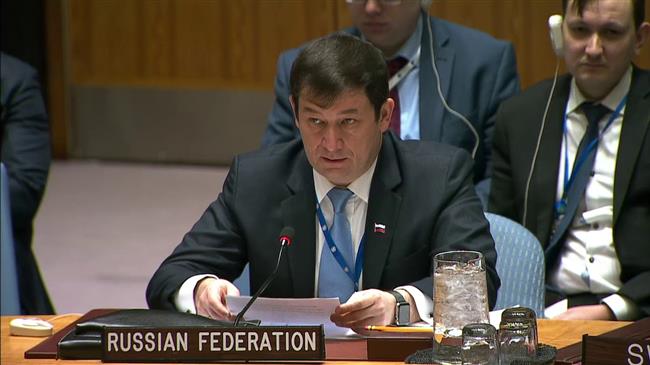
Dmitry Polyanskiy, Russia’s chargé d’affaires to the United Nations
Press TV – December 6, 2019
Russia’s mission to the United Nations says the US continually tries to demonize Iran’s missile activities despite lack of any damning evidence against the Islamic Republic’s defensive activities, and while Washington itself is in default of several international non-proliferation agreements.
Dmitry Polyanskiy, Moscow’s chargé d’affaires to the world body, addressed the remarks to the UN Secretary-General António Guterres in a letter dated November 26 that was made available on Friday.
He reminded that Iran was a signatory to many multilateral non-proliferation mechanisms, including the nuclear Non-Proliferation Treaty (NPT) and the Joint Comprehensive Plan of Action (JCPOA). The latter agreement came about in 2015 between the Islamic Republic and the P5+1 group of states — the United States, the UK, France, Russia, and China plus Germany, lifting nuclear-related sanctions against Tehran, which, in turn, voluntarily changed some aspects of its nuclear energy program.
Washington has, on numerous occasions, accused Tehran of developing nuclear-capable missiles, despite Tehran’s outright rejection of nuclear weapons of all type, and its observance of the JCPOA, which prohibits it from pursuing such armaments.
The Russian official highlighted “the complete lack of evidence that Iran is developing or producing a nuclear weapon or means of its delivery or is deploying any infrastructure for the storage or servicing of nuclear weapons.” He further endorsed the Islamic Republic’s continued commitment to the nuclear deal as verified by Tehran’s “refraining from activities related to ballistic missiles that are designed to be capable of carrying nuclear weapons.”
Nor has the UN Security Council, which has endorsed the JCPOA in the form of Resolution 2231, received any “viable information to the contrary,” Polyanskiy asserted.
However, he stated, the US would keep trying to implicate Iran in nuclear arms-related activities by, among other means, citing the Missile Technology Control Regime (MTCR). This is while the MTCR is an informal political understanding between 35 states on export control issues, and could not be deployed as a universal legally binding instrument or used in the context of Resolution 2231 to try and incriminate Iran’s missile activities, the envoy added.
Washington was on the offensive against Iran, while itself left the JCPOA last year “in violation of Article 25 of the United Nations Charter,” and is preventing other states from implementing it, Polyanskiy added. After leaving the deal, the White House returned its sanctions against Tehran, and also started pushing other JCPOA members into abiding by the American bans.
The Russian envoy also reminded how America left the Intermediate-Range Nuclear Forces (INF) Treaty with Moscow earlier this year, and was undermining efforts aimed at creating a Middle East region free of nuclear arms. He was referring to the US’s using its veto power at the UN in favor of Israel, which is the sole nuclear armed power in the region and has refused to join the NPT.
Iran’s FM Javad Zarif Claims Israel Tested Nuke-Missile ‘Aimed at Iran’
Sputnik – December 6, 2019
The Defence Ministry of Israel announced in the early hours of Friday morning that it had tested a new rocket propulsion system at a an airbase in the central part of the country, as part of a missile defence modernization plan.
Minister of Foreign Affairs of Iran, Mohammad Javad Zarif, commented on Friday on the recent test by the Israeli defense establishment of what has been described as a rocket propulsion system.
Zarif noted that the United States, along with the three European members of the Iran nuclear deal – officially known as the Joint Comprehensive Plan of Action (JCPOA), have never complained of the Israeli nuclear arsenal, the only nuclear arsenal in the region, although Tel Aviv has missiles that are “DESIGNED to be capable of carrying nukes”.
Earlier on Friday, Israel’s Ministry of Defence tweeted that its defence establishment had carried out a test of a rocket propulsion system from the Palmochim military base, located south of the nation’s capital city of Tel Aviv.
The tested missile propulsion system is reportedly capable of launching defence or attack payloads with a range of up to 2,000 kilometers. It is also said to be capable of carrying nuclear warheads, according to Tel Aviv’s news channel i24 News.
After the US unilaterally left the JCPOA in May 2018, Washington has since been waging a “maximum pressure” campaign against Tehran, claiming that the Islamic republic’s rocket program, alongside Iran’s alleged nuclear ambitions, represent a “threat” to the region. Under this pretext, the Trump administration has introduced multiple sanctions against the government in Tehran and against several senior officials, including Zarif.
Iran has repeatedly denied accusations regarding its intentions to obtain nuclear weapons, continuing to abide by the nuclear deal and urging European signatories to ensure its interests amid reimposed US sanctions, particularly through a partial withdrawal from some of the original commitments under the JCPOA.
Bilateral trade relations between Iran and EU suffer under harsh US sanctions
By Sarah Abed – December 2, 2019
Trade between the European Union (EU) and the Islamic Republic of Iran has dropped roughly 74.92% percent this year from January to September compared to last year during the same timeframe, due to US-imposed sanctions, according to the European statistical office. The top three trading partners in the European bloc were Germany, Italy, and the Netherlands. Analysts at the European Council on Foreign Relations have described the US’s secondary sanctions as abuse of its global financial dominance.
Iran’s commodities exports have fallen 94% and imports have declined 51.15%. Before the sanctions, the EU was Iran’s main trading partner, but now China and the United Arab Emirates have risen to the first and second slots respectively.
While most discussions regarding Iran and EU trade relations center on oil, a crucial indicator of Europe-Iran trade relations lies in European technology and the billions of dollars’ worth of European parts, machinery, and transport equipment exports, which play an important role in Iran’s industrial sector and economy.
In May 2018, the United States unilaterally withdrew from the 2015 Joint Comprehensive Plan of Action (JCPOA) complaining that the deal didn’t curb Iran’s nuclear capabilities but Europeans and the International Atomic Energy Agency (IAEA) have repeatedly confirmed that the nuclear deal was working and that Iran was in compliance. Since then the remaining five world powers who signed the nuclear deal with Iran, namely the UK, France, Russia, China, and Germany have tried to keep the nuclear deal alive by urging the United States to return to the deal and lift the harsh sanctions.
Immediately after leaving the nuclear deal, the United States reinstated crippling sanctions under its “maximum pressure campaign” with the goal of bringing about “regime change” while reducing Iran’s oil exports to zero.
Iran patiently waited for over a year for the United States to either return to the deal or for European nations to ease their suffering. France advocated for a $15 billion dollar line of credit and an EU Instrument for Supporting Trade Exchanges commonly referred to as INSTEX, became “operational” in June of this year, but hasn’t offered Iran any relief yet.
INSTEX was created to circumvent Washington’s sanctions as a payment channel with the UK, France, and Germany to help Iran continue to trade. The exchange of goods is allowed without requiring direct transfers of money, serving as a diplomatic shield. Good intentions aside, it’s been useless.
Sweden, Norway, the Netherlands, Finland, Denmark and Belgium announced on November 29th that they are in the process of becoming shareholders in INSTEX, in order to support the JCPOA and the economic parts of it and facilitate legitimate trade between Europe and Iran. A joint statement of support for the preservation and full implementation of the JCPOA was made. They reiterated that the nuclear agreement was unanimously endorsed by the UN Security Council and is an instrumental tool for global non-proliferation and stability in the region.
Unfortunately, neither the line of credit nor INSTEX have been properly implemented yet. With no relief in sight and economic conditions worsening, Iran started to scale back on its commitments under the JCPOA, thus far it has taken four such steps and has vowed to continue to scale back its obligations every sixty days, until there’s a solution.
For almost three decades the United States was Iran’s main military and economic partner and played an important role in its infrastructure and industry modernization, from 1950 until 1978. All of that ended when the US-backed Shah of Iran Mohammed Reza Pahlevi was forced to step down during the Iranian Revolution in 1979. And that’s when the United States cut economic and diplomatic ties, froze billions of dollars of assets, and banned Iranian imports.
Iran is the world’s third largest consumerer of natural gas after the United States and Russia, and a major oil exporter since 1913.
Iran’s economy is dominated by oil and gas production, ownership of 10% of the world’s proven oil reserves and 15% of its gas reserves have earned Iran recognition as an energy superpower. This of course puts a huge target on its back for US imperialism and intervention.
Since mid-2018 US sanctions have been placed on Iran’s oil sales, banking transactions, metals trading, petrochemicals, shipping etc. and as a result, Tehran was forced to raise oil prices on November 15th by fifty percent and impose a strict rationing system. Soon after, protests erupted and at least eight people linked to the U.S. Central Intelligence Agency (CIA) were arrested by Iranian security agents.
Although trade has significantly decreased Washington’s attempts to destroy Iran’s economy, bilateral attempts to improve and normalize Iran-EU trade relations have fallen short. If successful, Washington would benefit from increasing its own oil and commodities trade, while hurting economic ties between Iran and EU.
Who stands to gain from unrest in Iran?
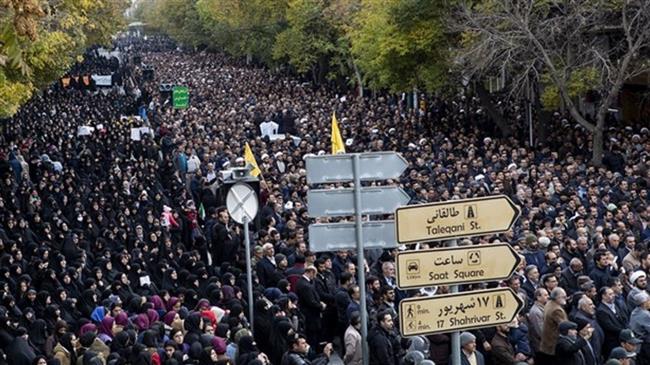
People rallied in the northwestern Iranian city of Tabriz to denounce the violent unrest in the country, Nov 19, 2019
By M. K. BHADRAKUMAR | Indian Punchline | November 21, 2019
I once had an animated conversation with the Middle East correspondent of a leading Indian newspaper regarding the resilience of the Iranian political system. The year was 2001. The conversation took place in the backdrop of mass protests and clashes between hard-liners and reformists on the the 22nd anniversary of the Islamic revolution in Iran. My friend forecast that the Iranian regime was in meltdown under the combined weight of US sanctions and a dysfunctional repressive regime. He point blank rejected my dissent that the stability of the Iranian system was not in doubt.
When it comes to Iran, everything depends on what prism you are holding. If you live in Dubai or visit Israel too often, you get one vision; if you live in Turkey, you get a vastly different view.
The recent days’ happenings fell into that familiar pattern. The protests were played up by the western media and American think tanks in apocalyptic terms, but when counter-demonstrations began appearing, supportive of the government, they have fallen silent. Life is returning to normal in Iran.
Two striking features must be noted. One, anti-government protests are possible to be staged in Iran; two, the regime enjoys a substantial social base. Unsurprisingly, when protests appear in Iran, democratic Turkey takes a balanced view while the repressive Saudi regime gleefully joins the western camp of ‘liberal democracies’ to pelt stones at the Iranian regime.
Isn’t there social and political discontent in Iran and Turkey? Indeed, there is. But representative rule provides safety valves and the political leaderships in Tehran or Ankara are receptive to popular opinion. Who would dispute that Hassan Rouhani and Recep Erdogan secured their mandates in hotly contested elections?
Can it be a coincidence that when the Iranian protests were raging in the past week, the US and Israel tested the waters, so to speak? The US aircraft carrier strike group Abraham Lincoln sailed through the strategic Strait of Hormuz on Tuesday. And Israel hit “dozens of targets” in Syria — in and around Damascus in Kiswa, Saasaa, Mezzeh military airport, Jdaidat Artouz, Qudsaya and Sahnaya — which it claimed were aimed at thwarting what Tel Aviv called Iran’s “military entrenchment” there and to block shipments of Iranian weapons to Lebanon’s Hezbollah movement.
Conceivably, these military operations would have needed some advance planning, especially the freedom of navigation exercised by the US aircraft carrier strike group through the narrow straits where Iran controls many of the shipping lanes. Yet, it happened just when the Iranian regime was preoccupied with the domestic unrest!
Again, President Trump notified the US Congress of his intention to step up military deployments in Saudi Arabia in the middle of the unrest in Iran. In the normal course, Tehran’s reaction would have been robust but, again, the US got away with it — for the time being, at least — as the Iranian regime and leadership has its hands full with internal developments. (Russia has warned that Washington’s plan for additional deployments of thousands of US troops to Saudi Arabia will only add to already simmering tensions in the Middle East region.)
The western narrative is that the unrest in Iran stemmed from economic factors at work triggered by the US sanctions. But, interestingly, the leading Israeli newspaper Haaretz has commented that “In the case of Iran, the headline figures about economic distress are misleading in critical ways. Iran is not quite the oil economy that, say, Saudi Arabia and the Gulf emirates are. Petroleum hasn’t accounted for more than a fifth of GDP and half of exports in the past, and it doesn’t employ a lot of people. So, while oil sanctions can inflict a lot of pain when they are first imposed, they don’t bring economic activity to a standstill.”
Haaretz points out, “Ironically, the non-oil sanctions may be giving the Iranian economy a small boost. Apart from oil, pistachios and carpets, Iran is not a globally competitive economy, but it does have a manufacturing and agricultural base… Iranian industry has the local market and is expanding output. As a result, manufacturing has been growing as has employment while the rial has stabilised… Media reports say there are plenty of ‘Made in Iran’ consumer goods on store shelves. The “resistance economy” may not be quite the miracle Tehran leaders tout, but it could be enough to stabilise the situation after the initial shock over oil sanctions have passed.
“Forecasts for the Iran going forward point in that direction. The World Bank, for instance, agrees with the IMF that Iranian GDP will contract sharply in 2019-2020 but afterwards start growing again.”
This analysis contradicts the western narrative that the Iranian people are up in revolt. Suffice to say, there is merit in the allegation by Iran’s top security officials that the protests have been actively orchestrated from abroad.
While addressing a cabinet meeting in Tehran on Wednesday, President Rouhani was explicit. The Iranian foreign ministry made a demarche with the Swiss embassy in Tehran, which represents Washington’s Interest Section, regarding US interference in the country’s internal affairs.
Featured Video
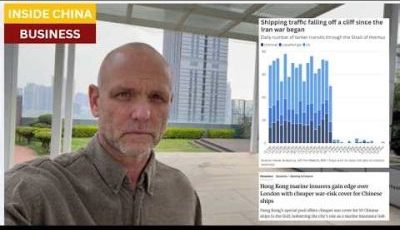
More Iran War fallout: Maritime insurance industry shifts from London to China
or go to
Aletho News Archives – Video-Images
From the Archives
The Biggest Threat to Peace in Middle East
By Dr. Elias Akleh* | Sabbah Report | May 24, 2010
A build up of heightened tension in the Middle East is escalating in the last few weeks. American and Israeli postures towards Lebanon, Syria, and Iran have become more threatening. Listening to speeches of political leaders one hears talks only about war not peace. Iranians and Israelis are continuously training hard for a possible showdown. Both sides are conducting extensive war games every month. This led Syrians to claim that Israel is preparing for a soon-to-come another war. The Jordanians also are warning that current stalemate of the peace process is an indication of a war breaking out this summer. The Russian President and his army chief hinted, a few months ago, that the US and Israel were planning for an attack on Iran.
Indeed Iran is, as it has been for last few years, the target of most of the threats and accusations of supporting terrorism. Escalating incitement against Iran the American Defense Department sent last month (April) to Congress a report on Iran’s military claiming Iran could develop intercontinental ballistic missiles capable of reaching the US by 2015.
Ignoring the fact that N. Korea, India, Pakistan, and Israel are proven to have nuclear weapons while Iran does not, the US Secretary of State Hillary Clinton chose in her speech, to the nuclear Non-Proliferation Treaty review conference at the UN, to focus on Iran’s alleged nuclear ambitions putting the whole world at risk as she put it. According to Clinton Iran’s acquisition of nuclear weapons, rather than Israel’s more than 200 nuclear bombs, is destabilizing the Middle East. She called on the world’s nations to rally around US efforts to hold Iran, not other nuclear countries, to account.
The accusation that Usama Bin Laden is living comfortably in Iran had received a boost after the broadcast of a documentary called “Feathered Cocaine”. This echoed the June 2003 claims of the Italian newspaper Corre de la Sierra that Bin Laden was in Iran according to some intelligence report, and according to Richard Miniter’s book “Shadow War”. … continue
Blog Roll
 Aletho News
- US Tells Allies That Ukraine-Bound Arms Could be Sent to Middle East
- Organized terrorism: Iran condemns killing of its diplomats in Lebanon
- Why could Gaza enter the regional war?
- Hamas official rejects Mladenov Plan linking disarmament to Gaza reconstruction
- Two Primary Elections for the Soul of ‘America First’
- Japan Clings to US Vassalage Despite Energy Crunch Caused By Iran War
- US Seeks Control Over Global Energy Infrastructure – Kremlin
- US senators target Orban government for standing up to Zelensky
- The deep-rooted culture of corruption in Ukraine
- Iran mobilizing one million soldiers to ‘create hell’ for any US ground assault: Report
- If Americans Knew
- Researchers at Human Rights Watch Resign Over Blocked Report on Palestinian Refugee Return
- Jewish Groups Are Backing a War Americans Don’t Want
- Eric Fingerhut Thinks He’s the President of the Jews
- Top Jewish Philanthropists, Rabbis Urge Israeli President to Take Action Against ‘Jewish Extremists’
- Don’t Be Fooled. Zionist Leaders Have Always Wanted to Control Southern Lebanon
- Israel’s widespread use of torture is a core element of its genocide against the Palestinian people
- In Israel’s War on Iran, Many Middle East US Bases Rendered “All But Uninhabitable”
- ‘Burn the lawn’: Israel pursues ‘Rafah model’ in southern Lebanon
- A genocide here, an amputation there
- Reports: Iran mobilizing 1M fighters, Israel-US run low on ammo, Israeli army faces shortage – Not a ceasefire Day 168
- No Tricks Zone
- Devastating Assessment Of Comirnaty Vaccine By Former Senior Pfizer Europe Toxicologist
- New Study: CO2 Is ‘Effectively Negligible’ As An Explanatory Climate Change Factor Since 2000
- Former Pfizer Toxicologist Dr. Helmut Sterz Tells Bundestag Hearing Pfizer Vaccine Should Have Never Been Approved
- Energy Expert: Germany’s Nuclear Phaseout Was A “500 Billion Euro Mistake”
- New Research: South Australia’s Mid-Holocene Sea Surface Temperatures Were 4°C Warmer Than Today
- Storing Green Energy To Last Germany 10 Days Would Require A 60-Million Tonne Battery
- New Studies: UK Sea Levels Were 4 Meters Higher Than Today During The Mid-Holocene
- Destructive Green New Deal: German Energy And Metal Group Warns Of Drastic Crisis
- New Study Documents A 20-Year Pause In Arctic Sea Ice Decline – Driven By Internal Variability
- Wake-up Call: Survey Shows Majority Of Germans Now Favor Postponing Climate Targets!
 Aletho News