The situation that is developing around both this year’s Israeli election and next year’s ballot in the United States smacks of something like a developing conspiracy to renew the mandates of both Benjamin Netanyahu and Donald Trump somewhat reminiscent of the October Surprise that helped bring Ronald Reagan to the White House. Back then, the Reagan campaign team led by William Casey secretly negotiated with Iranian representatives to prolong the U.S. Embassy hostage crisis past the 1980 election, enabling Reagan to use the continuing stand-off as a wedge issue to attack the “weakness” of Carter foreign policy. If Carter had been able to bring the hostages home, he might have won reelection. In exchange for a Reagan offer of considerable military hardware, the Iranians agreed to release the U.S. hostages after the new president took office, which they did. And Reagan provided the hardware in an exchange that eventually morphed into Iran-Contra.
What is less known is that the initial secret meetings between Casey and the Iranians were set up by a group of CIA Chiefs of Station who had served in the Middle East but were at that time in Europe. The first meetings were in Paris. The Chiefs, all active-duty, serving CIA officers, were working for the Carter administration but were conspiring to defeat him and contributed materially to that outcome. Several of them were rewarded when Casey was subsequently named Director of Central Intelligence.
Curiously, both then and now Iran was and is at the center of what might or might not develop and there are clear signs that the United States is escalating its crisis with Tehran artificially to produce a conflict that would benefit no one in the short term but Bibi Netanyahu, Israel’s Prime Minister, who is struggling to get re-elected. A critical question becomes “Since Trump has pledged disengagement in the Middle East, is it he who is pulling the strings or is it National Security Advisor John Bolton and Secretary of State Mike Pompeo, somewhat reminiscent of the cabal of CIA Chiefs conspiring behind the back of the elected president in 1980?” But the more important question is, perhaps, whether Bolton and Pompeo actually want Trump reelected or might they be engaged in something even more devious? Is a Mitt or a Marco lurking, either of whom would be seen very favorably by Israel and the neocons versus an extremely narcissistic and ultimately unreliable Trump?
That Washington has been slowly tightening the screws on Iran is undeniable, starting with the withdrawal from the Joint Comprehensive Plan of Action (JCPOA) nuclear agreement last year, which has led to a level of economic warfare initiated by Washington that is unprecedented between two countries that are not actually at war. Ironically and inevitably, though the suffering of the Iranian people is real, the elites who run the country are largely immune to the hardships being experienced.
As there has been no sign that the Iranian people will overthrow their government, which is the White House’s stated objective, more pressure is being contemplated. New sanctions were initiated last Friday and a move that mighty actually bring about an armed confrontation is being considered by Secretary of State Mike Pompeo, who is clearly favoring declaring the Iranian Revolutionary Guards (IRGC) to be a foreign terrorist group.
Qassim Suleimani, commander of the IRGC’s elite Quds Force component, has already been designated a terrorist by the U.S., but no armed forces entity from any country has ever before been awarded that distinction and it would likely produce a serious response from Iran, possibly including an attack on some U.S. military installation in the Middle East or against a U.S. Navy warship patrolling the Straits of Hormuz. That would in turn justify a response and the crisis could easily escalate.
According to the New York Times, the Pompeo “… plans also would designate some Iraqi Shiite militias as foreign terrorist organizations. As a result, the Iranian-trained militias — and Iraqi officials who support them — would be subject to new economic sanctions and travel restrictions.” This scenario would also compound problems with Baghdad, which is already reluctant to accept the stationing of U.S. troops in the country without placing severe restrictions on when, how and where they might be able to operate, and it would also be seen by the rulers in Tehran as a major threat to Iran’s national security.
So, there would be complications and also considerable downside if Washington were to take the lead on designating Iranian or Iranian connected militias terrorists, but bear in mind the considerable upside, which is that war is, generally speaking, good for incumbency unless it quickly and undeniably goes disastrously wrong. A quick strike to punish Iran before the Israeli election would help Netanyahu, just as a successful and not too prolonged “cakewalk” engagement with the Mullahs would elevate Trump next year. The president and his close advisors have surely noted that the only time he was regarded as “presidential” by the media and inside the Beltway talking heads was when he ordered the launch of cruise missiles to punish Syria for an alleged chemical attack back in April 2017. The fact that the attack was based on false intelligence was irrelevant and it did not produce any damage to key voter constituencies, apart from that segment of the population that voted for Trump because he was perceived to be the anti-war choice for president.
The Israelis are, of course, deep into the planning for a conflict, and have recently again been promoting their repeatedly discredited casus belli claim that Iran has a secret nuclear program. It would be reasonable to suggest that war with Iran is coming and it is only a matter of timing concerning when and exactly how it starts. There may not be enough time left to do Netanyahu a favor that he would surely reciprocate in American elections next year, but you can also bet that the Israeli Mossad intelligence service is hard at work coming up with “false flag” contingency plans to jump start a war sooner rather than later. There have long been concerns that intelligence agencies might go rogue but we are now living in an age where the existence of a “deep state” in many countries suggests that they have already been rogue for some time, most particularly in the United States.
Suggesting the possibility of some covert intrigues behind the scenes in the Administration does not necessarily mean that there is an actual conspiracy apart from that which is being run by the White House and Congress against the American people. But because we live in a world where we can no longer expect the government to behave honorably, it is wise to expect just about anything. Politicians care only about retaining power by being re-elected in both Israel and in the United States and, since the two governments are currently joined at the hip and likely perceiving war as part of an electoral strategy, why not expect the worst?
Philip M. Giraldi, Ph.D., is Executive Director of the Council for the National Interest, a 501(c)3 tax deductible educational foundation that seeks a more interests-based U.S. foreign policy in the Middle East. Website is councilforthenationalinterest.org, address is P.O. Box 2157, Purcellville VA 20134 and its email is inform@cnionline.org.
As the US tries to consolidate its strategy for weakening and confronting Iran, the contours of an important geo-political strategy, launched by Syria and Iran, are surfacing. On the one hand, it consists of a multi-layered sewing together of a wide ‘deterrence’ that ultimately could result in Israel being pulled into a regional war – were certain military trip wires (such as air attacks on Syria’s strategic defences) – to be triggered. Or, if the US economic war on Iran crosses certain boundaries (such as blockading Iranian tankers from sailing, or putting a full stranglehold on the Iranian economy).
To be clear, the aim of this geo-political strategy is not to provoke a war with the US or Israel – it is to deter one. It sends a message to Washington that any carelessly thought-through aggression (of whatever hybrid nature) against the ‘northern states’ (from Lebanon to Iraq) might end by putting their ally – Israel – in full jeopardy. And that Washington should reflect carefully on its threats.
The deterrence consists at the top-level of Syrian S300 air defences over which Russia and Syria have joint-key control. The aim here, seems to be to maintain strategic ambiguity over the exact rules of S300 engagement. Russia wants to stand ‘above’ any conflict that involves Israel or the US – as best it can – and thus be positioned to act as a potential mediator and peace-maker, should armed conflict occur. In a sense, the S300s represent deterrence of ‘last resort’ – the final option, were graduated escalation somehow to be surpassed, via some major military event.
At the next level down, deterrence (already well signalled in advance) is focussed on halting Israeli air attacks on either Iranian or Syrian infrastructure (in either state). Initially, air attacks would be countered by the effective (80%) Syrian, Panzir and BUK air defence systems. More ‘substantive’ attacks will be met with a proportionate response (most probably by Syrian missiles fired into the occupied Golan). Were this to prove insufficient, and were escalation to occur, missiles are likely to be fired into the depth of Israel. Were escalation to mount yet further, the risk would be then of Iranian and Hizbullah missiles entering into the frame of conflict. Here, we would be on the cusp of region-wide war.
Of course Hizbullah has its own separate rules of engagement with Israel, but it is a partner too, to the wider ‘resistance movement’ of which the Supreme Leader spoke after his meeting in Tehran with President Assad. As Israel knows, Hizballah possesses ‘smart’ cruise missiles that can cover the length and breadth of Israel. And, it has well experienced ground-forces that can be directed into the Galilee, as well.
But were we to leave matters there – as some responsive deterrence plan – this would be to miss the point entirely. What has been happening at these various meetings amongst military and political leaders in the north is the unfolding of a much wider, forward looking, strategy to frustrate US objectives in the Middle East.
What has emerged from the key visit of President Rouhani to Iraq is something much larger than the military alliance, alluded to above: These states are unfolding a regional ‘Belt-and-Road’ trading area, stretching from Lattakia’s port on the Mediterranean (likely contracted out to Iranian management) across to the border with Pakistan (and perhaps ultimately to India, too).
What is so significant arising from Rouhani’s recent visit to Iraq is that Iraq, whilst wanting to keep amicable relations with Washington, rejects to implement the US siege on Iran. It intends to trade – and to trade more – with Iran, Syria and Lebanon. One major strand to the agreement is to have a road and railway ‘belt’ linking all these states together, for trade.
But here is the bigger point: This regional ‘Belt and Road’ is to be unfolded right into the heart of the Chinese BRI project. Iran always has been envisaged as a – if not ‘the’ – key pivot to China’s BRI in the region. As China’s Minister of Commerce, Zhong Shan, underlined this week: “Iran is China’s strategic partner in the Middle-East and China is the biggest trade partner and importer of oil from Iran”. A senior Chinese expert on West Asia plainly has taken note: Rouhani’s visit has “long-term geopolitical implications” in terms of expansion of Iran’s regional influence.
And here is a second point: The unfolding of this ‘Belt and Road’ initiative, effectively marks the end of the Belt & Road members’ looking to Europe as a principal trading partner. EU equivocation with the US over the JCPOA by trying to tie conditions to their SPV, and by holding reconstruction aid for Syria hostage to their ‘transition’ demands, has back-fired. Together with the US, the EU has become tainted through its efforts to mollify Washington – in the hope of avoiding being tariffed by Trump.
How will the US respond? Well, Secretary Pompeo is about to arrive in the region to threaten Lebanon (as it has already threatened Iraq) with tough sanctions. Russia, Iran and Syria, of course, are already under harsh sanction.
Will it work? Mr Bolton presently is trying to weaken Iran – surrounding it with US special forces hubs, placed in proximity to Iran’s ethnic minority populations, in order to de-stabilise the central authority. And Pompeo is about to land in the Middle East threatening all around with sanctions, and still ‘talking the talk’ of reducing Iranian oil sales to zero, as US oil waivers expire on 1 May.
Of course, zero waivers were never likely, but now with the new trade ‘Belt and Road’ alliance unfolding, the stakes for US foreign policy are doubled: Syria will find investors in its reconstruction precisely because it – like Iran – is a pivotal ‘corridor’ state for trade (and ultimately for energy). And Iran will not be brought to capitulation through economic siege. What Pompeo risks, through his belligerency, or clumsiness, rather, is to lose both Iraq and Lebanon.
In the former, ‘losing Iraq’ could entail the Iraqi government demanding US troops leave Iraq. In the latter case, ‘loosing’ Lebanon, translates into something more sinister: To sanction Lebanon (in order to ‘hurt’ Hizbullah) actually means putting Lebanon’s entire economic stability into play (as Hizbullah is an integral part to Lebanon’s economy – and the Shi’a compose some 30-40% of the population. They cannot be somehow ‘filtered out’, as if some stand-alone sanctions target). Instability in Lebanon is never far away, but to induce it, is crazy.
Wherever Pompeo travels on his journeys through the region, he cannot fail but to notice that US policies – and the constancy of such policies – are not trusted (even this week, ‘old US ally’ Egypt has turned to Russia for the purchase of military aircraft).
It is against this background, that the earlier intelligence service quotes in the NY Times, and its Editorial (i.e. not an op-ed article): Shedding Any Last Illusions about Saudi Arabia, might be understood. US policy across the entire Middle East, and by extension, much of its leverage over Russia and China, stands on extremely weak foundations. The débacle of the US-sponsored Warsaw conference, which was supposed to consolidate support for America’s anti-Iranian ‘war’ – and the silence with which VP Mike Pence’s address at Munich was received – provide clear evidence for this.
Well, the pivot for countering this unfavourable US conjuncture rests on one man: MbS. America’s entire foreign policy, and that of its ally, Israel, has pivoted around this erratic, highly-flawed, psychologically-impaired figure. The NYT leak from CIA officials, with its unqualified endorsement through a NYT board editorial, suggest that the CIA and MI6 have concluded that US global interests cannot be left in such unreliable, unsafe hands.
What this ultimately might mean is unclear, but such a leak would suggest that it stems from a concerted CIA professional assessment (i.e. that it is not just a partisan party warfare). Trump may not concur, or like it much, but the CIA when it does form such a definitive view, is no force to be lightly trifled with.
The administration of the US President, Donald Trump, is currently using severe economic sanctions in an unsuccessful, and illegal, attempt to pressurize Tehran into dismantling its rocket program, and weaken its regional influence. The present US leadership is not trying to hide its implacable opposition to any form of political contacts, trade or cultural links between Iran and its neighbors. Washington reacted in an almost hysterical manner to the very successful recent visit to Iraq by Hassan Rouhani, the Iranian President, which was entirely devoted to talks on trade and investment. The volume of trade between the two countries currently amounts to $12 billion a year, and there is every reason to believe this will increase to $20 billion, which would be very welcome for Tehran, given the severity of the US sanctions.
And although the harsh sanctions are aimed at restricting Tehran’s relations with other countries in the region, and despite the fact that Washington is taking great pains to impose so-called secondary sanctions on countries which trade with Iran, the latest statistics show that things are actually moving in the opposite direction: Tehran, blocked off from international markets, is starting to focus on its close neighbors. The recent fall in the value of the riyal means that Iranian goods and services are now much more competitive. As a result, Iraq has been able to overtake China as Iran’s main export market for all goods except for oil.
According to IRNA, the Iranian news agency, as a result of Hassan Rouhani’s successful visit to Iraq the two countries signed 22 agreements on trade and cooperation in industrial projects. The agreements are aimed at increasing trade between Iran and Iraq. The new agreements cover such matters as the development of cooperation between border provinces of both countries, the reduction of trade tariffs, and the simplification of the visa regime for citizens of the two countries. The Iraqi Minister of trade, Mohammad Hashim al-Ani, has announced that under the new agreements a number of infrastructure construction projects are to be launched, and working groups and committees are to be set up to discuss further cooperation between the two countries in a range of different areas.
Arabic media outlets have reported that Iraq and Iran have agreed to set up a barter system, in which manufactured goods from Iraq will be exchanged for Iranian gas and electricity. In this way Baghdad hopes to continue importing energy and fuel from Iran, in exchange for Iraqi products. Economists consider that supplying energy to Baghdad, which does not have enough energy resources to meet its needs, will not only help the country to build new factories but also provide the population with cheap electricity, especially in the summer, when the temperature frequently exceeds 50 degrees and air conditioning is essential.
The Iranian premier’s visit to Iraq, in which the two countries limited themselves to discussing trade and investment-related matters, was greeted positively by the international community, with the notable exception of the USA and the Trump Administration. The facts show that the USA is dedicated to a policy of unleashing conflicts and sowing enmity between countries. This was clearly demonstrated by the recent hostilities between India and Pakistan in Kashmir. An example of this is the many inflammatory comments and groundless predictions by the US “free” media, which filled the country’s newspapers and TV with fake news reports from Kashmir.
But, notwithstanding the unfortunate events in Kashmir, the US administration, and US Secretary of State Mike Pompeo in particular, has not forgotten about Iran. Speaking in the CERAWeek conference, the US Secretary of State, who is far more comfortable with the language of threats than that of diplomacy, declared that if Iran did not behave “like a normal nation” the sanctions regime would last for a long time. It is completely natural that the USA, which has set itself up as an international policeman, should use its own conduct as a standard for other countries.
So it is worth looking at the way that the USA, a “normal country”, behaves. It bombed the helpless population of the German city of Dresden, dropped atomic bombs on the cities of Hiroshima and Nagasaki, where no Japanese troops were based, sprayed Vietnam intensively with chemical weapons (defoliants), carpet bombed North Korea (1950-1953) and destroyed the states of Syria, Libya, Iraq and Afghanistan. That is the conduct of the USA, a “normal” country. And it advises other countries to behave in the same way.
It is not surprising that the so-called “White Helmets”, an organization protected by the US, follows its example, by initiating chemical attacks in Syria. And what about the International Court of Justice, and other international organizations whose staff are paid high salaries in order to bring the perpetrators of such provocations to justice: where are they looking?
The Secretary of State has, once again, outdone himself: he has ordered a total ban on exports of Iranian oil: “We have every intention of driving Iranian oil exports to zero”. If we take into account the fact that oil is the country’s main export and that the basic needs of the whole population depend on the proceeds from this trade, then Mike Pompeo’s declarations sound rather like the joyful shrieks of a cannibal as he gloats over his helpless victim.
The choice of Mike Pompeo as US Secretary of State, in effect the country’s Foreign Minister, has been greeted with criticism, ridicule and contempt by countries around the world. Many have compared him, unfavorably, with Sergey Lavrov, the Russian diplomat and Foreign Minister, who deals very well with the wide range of global problems that Russia finds itself faced with. One might ask: how can a former unsuccessful spy who was tasked with overthrowing the international order possibly operate on the same level as him? That is why, lacking support from diplomats and himself feeling nothing but contempt for that profession, he decided to “transfer” many of his former henchmen to the diplomatic service.
These one-time spies are attempting, in everything they do, to justify the high level of trust that their guru has placed in them, but they lack the slightest experience of diplomacy, and, hopelessly out of their depth, are doing their country far more harm than good. It is hard to see how else we are to understand the recent incident in Moscow’s Sheremetyevo airport, in which a US diplomat – that, at least, was his job title – tried to bring a bomb through customs in his luggage. The Russian Foreign Ministry has stated directly that it saw the incident as a provocation. As the TASS news agency reported, citing Russian diplomatic staff, “given the heightened attention the USA itself has paid to security on aircraft since the 9/11 attacks, he simply could not be unaware that a bomb in a bag is very serious. That means he was aware of taking such a step.” Obviously a real diplomat would never carry out a provocation of that sort without clear “instructions” from above – that goes without saying. Many global media outlets speculated, rather boldly, that the diplomat was, in a very underhand way, trying to “test Sheremetyevo airport’s security system”.
Looking back over the energetic but fruitless, and in fact extremely dangerous actions of Secretary of State Mike Pompeo, we would wish to advise the US President to take more care with his choice of staff, especially at such a senior position. Because absolutely everything he does in his post – a post for which he is completely unqualified – harms his own country and he makes himself a laughing stock for people all over the world when he comes out with his latest “pearls of wisdom” concerning Iran, Russia or any other country. At this point it is worth remembering the words of the great Mark Twain (a writer who may well, we suspect, be unknown to the Secretary of State) in his superb book, Letters from the Earth. Specifically, Letter Eight, in which Twain has nothing good to say about people such as Mike Pompeo.
Speech by Hezbollah Secretary General, Sayed Hassan Nasrallah, on March 8, 2019, on the occasion of the 30th anniversary of the Foundation to Support the Islamic Resistance.
Transcript:
[…] The US sanctions and financial siege that we currently experience, along with being added to the list of terrorist organizations, and lately, the British decision to add Hezbollah’s political wing to their own list of terrorist groups, and the consequences of all these measures – because in the past, they have already added our military branch, as they say, on the list of terrorist organizations, and a few days ago, they added the political branch, according to their (purely artificial) distinctions… In this respect, when we speak of US sanctions, we should expect them to become even more severe, both against those who support us and against us, that is to say against the Islamic Republic of Iran, against Syria, and against all Resistance movements and the Resistance Axis, and against us (Hezbollah).
In Lebanon, they intervened on the issue of the banks (operating here), and they have imposed a siege and severe restrictions on them. They made a list of merchants, businesses, associations and groups considered as terrorists, and prohibiting any financial or bank transaction with them. They also included a number of Lebanese personalities and traders on the sanctions list. And this can continue. We’ll (probably) see the names of new people and organizations (on the sanctions list), new restrictions, etc. (Our enemies) will continue on this path.
This is in regard to US sanctions.
On the other hand, we will also be faced with a proliferation of lists of terrorist organizations. For example, since when the Gulf countries have a list of terrorist organizations? It is only in recent years that they have created such lists. Elsewhere too, there are countries that come to create their list of terrorist organizations, or who already had such a list, and add us on it, as did Britain, and we must also expect that other countries do the same, and place Hezbollah on its terrorist list and describe it as such. Therefore, it is a trend that will continue.
But how should we consider this trend and these measures? We can think of them as specific acts unrelated to the past or the future, or we can consider them as a global and continuous process, embracing the present, past and future. The second perspective is the right one.
Why? Because it allows us to understand precisely what these measures mean, in what context they fit and what are their goals, which allows us to face them and not allow these objectives to be achieved. And this is the responsibility of all members and supporters of the Resistance (Hezbollah). It is the responsibility of the Resistance, its members and their families, its masses, its popular base and its supporters, anyone who is part of this historic humanitarian movement in our region, not only in Lebanon.
In what context (do such sanctions fit)? We must understand that we are (indeed) oppressed (by these unjust sanctions), (but it is because) we are the strongest (that they were imposed on us). We are not weak and oppressed: (rather), if they attack us (that way), it’s because we are the strongest. We are oppressed and triumphant. How is that?
Since 1982 and to this day, the United States and Israel, which have their US-Zionist hegemony project on our region, our country, our choices and our sovereignty throughout the region, since 1982, they suffered defeat after defeat, successive defeats for their projects and greed. It is a clear reality, and we talked about it a lot in the past. As a brief reminder, without stopping on each point, let us recall for example:
1/ The 1982 invasion was within the framework of a US-Israeli plan for Lebanon, Palestine, (all of) the region and the (final) settlement of the (Arab-Israeli conflict). Who curbed, neutralized and frustrated this project by inflicting it a (stinging) defeat? The movements of Resistance in Lebanon, and I don’t mean only Hezbollah: Hezbollah, the Amal movement, patriotic parties, Islamic movements, the various factions of the Resistance, with support from Syria and Iran.
2/ From 1982 to 1985, and with all the events that occurred afterwards, this project collapsed.
3/ In 2000, the (historic) defeat of Israel in Lebanon.
4/ After that, the Israeli withdrawal from the Gaza Strip.
All this has destroyed the project and dream of Greater Israel. I have already spoken in detail of all this, and there is no need to say it all again.
5/ In 2006, and even before, with the arrival of the Neo-conservatives in power in the United States, there was a massive US plan to regain control of the entire region. They began with the invasion of Afghanistan, the occupation of Iraq, the attempt to besiege Iran and isolate Syria, to liquidate the Palestinian cause and deal a fatal blow to the Resistance in Lebanon and eradicate it in 2006. The successful steadfastness of Hezbollah in Lebanon in 2006, of the factions of the Resistance in Gaza in 2008, and of Syria and Iran, have thwarted this huge and dangerous project that threatened our region.
6/ In 2011, the project of destruction of what I call the backbone of the Resistance camp in our area, namely Syria and the Syrian state.
7/ A few years after that, they returned to Iraq via ISIS and have targeted the entire Resistance Axis.
8/ They continued their pressure on Lebanon, Palestine and the Palestinian people.
9/ They launched an atrocious war against our brothers in Yemen.
10/ Not to mention the occupation of Bahrain, etc.
All this is part of the American-Israeli hegemony project. I have already said in the past that many regional countries were instruments in this project (Saudi Arabia, Turkey, UAE, Qatar…).
Once again, the Resistance Axis, the countries of the Resistance and the parties of the Resistance stood up against this war and faced this project. We won the battle decisively in Iraq, we are about to do in Syria and we completely triumphed in Lebanon. In Yemen, (our brothers) still resist victoriously against the continued aggression. Gaza continues to resist against all forms of aggression and blockade. And it’s the same for the Islamic Republic (of Iran) and its endurance against the (US) sanctions. Thus, this project also failed.
I want to say, regarding the current situation and also the future, that what Trump and his son-in-law Kushner hope, that is to fulfill an historic achievement in the region through the ‘Deal of the century’ (to finally liquidate the Palestinian cause), who faces (this project and fights to defeat it)? It is the Resistance Axis, the Resistance movements, the countries of the Resistance and the Palestinian people in the first place.
Israel, in all its (strategic) annual assessments, considers Iran as an existential threat, Hezbollah as the essential and primary threat, and all the Resistance Axis, from Gaza to Syria, including Yemen, which they begin to fear (seriously), all this Axis is a subject of concern and an (existential) threat to this entity.
Therefore, we are in this context, my brothers and sisters. When they put us on their lists of terrorist organizations, when they take measures and sanctions against us, it is because we have defeated them, because we beat them, because we have foiled all their projects, because we are stronger (than them), because we are more worthy and glorious, because we are capable, because we successfully defend our choice, our sovereignty, our people, our country and our states. This is the framework. This is the framework (of these sanctions). This is by no means a framework of weakness (of the Resistance). It is not at all a framework of weakness (for us).
Today, after the failure of all these wars (against our region), it is because they are unable (to conduct other wars that they impose sanctions on us, it is their last resort)… What else could they do?
The United States came themselves (with all their strength) in our region (in Afghanistan and Iraq) and they were defeated. They came (massively) in our region in the early 2000s, they remained (many years), but they were defeated. They were defeated by the Resistance in Iraq, and today they are defeated in Afghanistan. They were defeated in Syria, and they are overcome every day in Yemen. Are they able to launch a new war?
Israel is afraid and is (even) terrified to launch any war. And we hear every day (in the Israeli media) that the Israeli army is not ready, that their ground forces are not ready (for war), etc., etc., etc. And lately, just a few days ago, what did they do? They installed the American THAAD anti-missile system. This is proof that they have no confidence in their own systems, despite their propaganda morning and evening with lots of drums and boasting, claiming for years that (the Iron Dome) was perfectly capable of protecting their home front.
Therefore, faced with their failure, and with their inability to launch a war or any other military choice, and also because their security operations and murders have not achieved their objectives – on the contrary, we became stronger, more experienced, more lucid and more determined, as indicated by this quote from Imam Khomeini repeated tirelessly by Sayed Abbas (Musawi, Nasrallah’s predecessor murdered by Israel): “Keep killing us, because it awakens the conscience of our people!” The Resistance has become stronger, more determined, the people embraced it increasingly and massively and sympathized with it, when he discovered that (even) its leaders were killed and fell martyrs (Sayed Abbas Musawi was assassinated by Israel with his wife and 5 year old son).
What is the (only option) left to our enemies? Their last resort (is sanctions). Sanctions and inclusion on the list of terrorist organizations are thus a (new kind of) war in this context (of successive defeats of our enemies). And we, my brothers and sisters, those present and those who listen to us, we have to face it as if we were in time of war. Because it is indeed a form of war. Just as there are military wars, security wars, wars of information, political wars and culture wars, (sanctions) are part of the economic, financial and psychological war (aiming to break our) morale. And therefore, we have to face this war.
Today, when we consider the (Hezbollah) situation here or there… I’ll be honest and clear, and I will tell you what I said during our internal meetings, in small committee or with thousands (of Hezbollah members by videoconference), I’ll say it today on TV (so that everyone knows it). When (Hezbollah) is having some financial difficulties because of these measures and sanctions, it must be clear to us that this is part of the war. This has nothing to do with mismanagement, negligence or (arbitrary) budget restriction here or there. This is a consequence of the (economic and financial) war that is launched against us and that continues.
And this war is not only waged against us (Hezbollah). Today, the sanctions against Iran are heavier, and the United States asked the UN Security Council to impose sanctions against Iran. The United States exert the greatest pressure in this respect, and follow this matter very closely. Similarly, sanctions against Syria are heavier, and what they were unable to get through military war, (the US and its allies) want to get it by economic pressures, by hurting living conditions and livelihoods (of the Syrian people), by imposing hardships to the Syrian people in all aspects of his personal, social and economic (daily) life. The siege imposed on the Palestinians in Gaza and even in the West Bank (is harsher than ever): the destruction of houses, obstruction of wages, blocking (humanitarian) aid, etc., all this continues (and is intensified). In Yemen, people have been subjected to famine, financial, economic and port blockades, and all this continues. Sanctions and inclusion on the list of terrorist organizations are ongoing against all of us (Resistance Axis).
Yesterday, Netanyahu considered the (Palestinian) channel Al-Aqsa as a terrorist organization. A TV channel! The United States also added the factions of the Iraqi Resistance on the terrorists list, one after the other. The last faction concerned is that of our brothers in Al-Nujaba movement in Iraq. These sanctions therefore extend to anyone involved in this historic Resistance movement in our region. Yes, historic! The countries, governments, movements and peoples of the Resistance Axis.
Because (our enemies) strive to weaken us, to break our will, to impoverish us, to starve us, hoping to see us collapse, disperse and submit to their will (they strive for our complete surrender). Those who are unable to crush us by war, fighting and assassinations imagine that by impoverishing us, starving us, besieging us financially and draining our funding sources, they’ll manage to break us and to destroy our (Resistance) movement.
We have to face this (economic and financial) war.
First, we must hold on, stay stronger (than them), and not allow these measures to affect our will, our determination and morale. That’s the first point.
Second, despite all that is happening and everything that is said, their hopes will be bitterly disappointed, because they’ll never manage to impoverish us, to starve us nor to besiege us. Those who support us will continue to support us, in all certainty, be it States, peoples or our own (Lebanese) people and the masses of the Resistance in Lebanon.
These sanctions will continue. Yes, we will perhaps face some difficulties and certain restrictions. But I can assert, from the position of the leader who manages this question every day and in all its details, that we will continue our actions, our infrastructure will remain strong, sustained and rooted, and they won’t succeed in preventing our blood from flowing in our veins, nor the determination (to stay rooted) in our will. Be absolutely sure.
Certainly, as I said, we may face some difficulties and restrictions, but by patience, endurance, by reorganizing and wise and careful management, organizing our priorities, we will face this (economic and financial) war and we will overcome it (triumphantly).
When we fought during the war of July (2006), some people and political forces (in Lebanon and the region) stood by the river, waiting to see our dead bodies (washed away by waters); but their hopes were shattered, and we came out victorious (of this war). When we went (to fight) in Syria as forces participating in this global war, similarly, some in the world, the region, and unfortunately also in Lebanon, stood by the river, waiting to see our dead bodies (washed away by waters) and our defeat, but we came out victorious (of this war), as part of the great victory in Syria.
I tell you, both to those who love us, who are sincere and fair, and to those who stand by the river, waiting to see our bodies (washed away by waters) and hope that (Hezbollah) will collapse because of lack of money, poverty and hunger: I assure you that your hopes will be shattered, and not only that this Resistance will not fade or lose its high spirits, but it will gain strength, in numbers and equipment, in existence, in presence, in determination, in influence, in action and in shaping more victories in this region.
[Greetings from the audience on the Prophet Muhammad and his family.]
The days, (months and years) to come will confirm it. For it is the time that settles matters (among opponents) and reveals (the identity of the winner).
Of course it is necessary to mention again the action of the Foundation to Support the Islamic Resistance, and to emphasize that we need active efforts from our brothers and sisters, as well as a renewed and growing solidarity.
Remember that from 1982 to 2000, then to the years before 2006, we had a constant need (of financial aid). After 2006, due to the tremendous support that has been given us, especially by the Islamic Republic of Iran, I stated during certain (internal) meetings that even if we did not need money, we should continue our (fundraising) efforts to allow those who want to contribute financially to the action of the Resistance to do so.
Today we are in between. We are in between. The Foundation to Support the Islamic Resistance should continue its work and its efforts to enable (those who wish) to fight (by financial donations), and also to help us in this ongoing battle.
And I know (the generosity) of our people and of our families, despite the very difficult living conditions in Lebanon. I will publicly reveal something which I mentioned during internal meetings, which must be known: just a few weeks ago, two months at most, I didn’t appear on television to call people to make donations (for our campaign) to help Yemeni children because I did not want to impose on people a greater burden than they could bear. For I know that our people reacts (massively to my calls), despite their hard living conditions, and social and financial (difficulties). That is why neither I nor Hezbollah leaders or any responsible (called to participate in this fundraising for Yemen).
Our brothers and sisters inside the Lebanese regions took care of that within the Foundation to Support the Islamic Resistance and other Islamic charities, voluntary brothers and sisters, on social networks, Radio Al-Nour, who propagated (this appeal for donations for the children of Yemen). Within a few weeks, two million dollars were collected. In Lebanon alone, this small (and poor) country which is in a very difficult (economic) situation. I was given this money, and I have dispatched it to our brothers in Yemen. Such is our people! Such is our people! Such is their level of commitment.
I have many testimonies about the generosity of the sons, daughters and wives of martyrs (who are themselves in need), young and old, how they put aside part of their salary, of their life (livelihood), of what they collect for the future of their children, and they give it to the Resistance (Hezbollah).
That is why today, (I appeal to) this support and this popular momentum, and I declare that the Resistance (Hezbollah) needs them. The Resistance needs them. And the Foundation to Support the Islamic Resistance must work earnestly, as it did before 2000. Because today, we are in the middle of such a battle (economic and financial).
Of course, everything that is said in Lebanon about Hezbollah, who, because of these financial pressures, would grab the money of the State, and money from the Ministry of Health (devolved to Hezbollah), I responded (to these calumnies) and I repeat that these false accusations are unfounded. Our theological, religious and moral position about money of the State is clear (it is illegal to use it for purposes other than its intended ones).
And today, we call on everyone to make sure that the Ministry that is the most scrutinized, controlled and inspected, be the Ministry of Health. Go for it! Control the use of every penny! And you will discover a total transparency on the part of the Ministry, and absolute clarity in the use of every penny spent and every pound in strict accordance with the law for the Lebanese people. […]
US President Donald Trump’s tweet on Thursday that the United States should back Israeli sovereignty over the Golan Heights, seized from Syria in 1967, didn’t quite come like a bolt from the blue. There has been talk about such a thing for sometime. Last December, the US Congress had begun pioneering a resolution expressing the sense of the Senate that the US should recognise Israel’s sovereignty over the Golan Heights.
Last month, new legislation was proposed in both houses of the Congress which called for recognising Israel’s sovereignty over the Golan Heights as part of the strategy to counter Iran and Syria. A copy of the Senate version of the bill stated, “It shall be the policy of the United States… to recognise Israel’s sovereignty over the Golan Heights.” The resolution stated that such a move is critical in the light of new realities on the ground including Iran’s presence in Syria. The resolution argued that Israel’s security from attacks from Syria and Lebanon cannot be assured without control over Golan Heights.
In addition, the bill said it is in US interest that Israel retains control over this territory to ensure that the Syrian government faces “diplomatic and geopolitical consequences” for killing civilians and allegedly using chemical weapons.
The sophistry aside, the fact of the matter is that the influential Jewish lobby began canvassing for such legislation once it became clear that Israel had lost the war in Syria. The primary purpose of the Israeli intervention in the Syrian Conflict by way of equipping and supporting extremist groups to overthrow the government led by President Bashar al-Assad was that a weakened and preferably dismembered Syria would never be in a position to demand the vacation of the Israeli occupation of Golan Heights.
Simply put, Tel Aviv is pulling strings in Washington to get US recognition of the Golan Heights as Israeli territory with the hope that the lone superpower’s opinion would somehow help legitimise the illegal occupation of Syrian territory since the 1967 war. Prime Minister Benjamin Netanyahu had pinned hopes that any Syrian political settlement would also include provisions legitimising the Israeli occupation of Golan.
A sub-plot here is about the timing of the tweet by Uncle Trump. Quite obviously, he is boosting the profile of nephew Netanyahu who is in dire straits at the moment fighting an election where he is trailing and staring at the prospect of a prison term for corruption. What are uncles for, after all, if they don’t help when nephew is in trouble — and big trouble at that?
But then, there is still more to it than meets the eye. The fact of the matter is that Golan Heights is believed to have vast oil reserves that could supply all of Israel’s needs. In fact, Israel began drilling for oil already by 2015 in anticipation of the ouster of President Assad.
US foreign policy is reaching an historic low point in this episode by helping to legitimise the illegal occupation of territories belonging to another sovereign country. Trump is plainly ignoring international law and the UN Charter. Yet, the US pontificates about a rules-based world order. In 2006, the United Nations General Assembly actually had passed a resolution affirming the “inalienable rights” of the Arab population in the Golan over its natural resources. The 1907 Hague Regulations, which is a cornerstone of international law, unambiguously states that an occupying power must “safeguard the capital of these properties.” Stealing resources from an occupied territory constitutes the crime of pillage.
Where such an act of pillage will ultimately lead to, time only can tell. Make no mistake, Syria will never accept the occupation of a part of the country. The US-Israeli conspiracy will meet with Syrian resistance. In fact, Trump is virtually pushing Syria into the resistance camp in the Muslim Middle East. A weakened Syria cannot challenge Israel militarily. But in the fullness of time, Israel is getting surrounded by a circle of hostile nations.
There are strong indications already that a resistance front against the US and Israel is forming in the northern tier of the Middle East stretching from Iran westward to the Mediterranean coast. Assad’s visit to Tehran, Iran’s Supreme Leader Al Khamenei conferring the highest military honour on the commander of Iran’s Quds Force Gen. Qassem Soleimani, Iranian president Hassan Rouhani’s high-profile visit to Iraq, the meeting of the commanders of the armed forces of Iran, Iraq and Syria in Damascus — all these developments in the most recent weeks underscore the emergence of a new strategic alliance that will work toward the purge of US influence in the region.
This trend is also reflected in a pronounced shift in the Iranian foreign policies, which no longer prioritise Iran’s integration into the Western world and would instead attribute centrality to resistance. Ironically, Trump’s cynical move on Golan — as per the wishes of his deep-pocketed Jewish donors such as casino magnate Sheldon Adelson and wife Miriam, influential lobby groups, and far-right Christian fringe — will end up providing strategic depth to Iran in its region to push back at the US’ containment policy.
A new phase is beginning in Iran’s approach to the situation since last May when the US withdrew from the 2015 nuclear deal. Tehran had thus far prioritised the consolidation of Western opinion against President Trump’s decision with a view to effectively counter the US sanctions. But with hindsight, it appears that Europeans might posture against the US sanctions, but business interests ultimately prevail and the hard reality is that European companies that have exposure to the American market will not risk US sanctions.
Certainly, the drop in oil income following the US sanctions has hurt the Iranian economy and Tehran admits it openly. The Trump administration now plans to unveil an even harsher sanctions regime in May. According to reports, Washington aims to bring down Iran’s oil exports further.
Meanwhile, the US-Israel-Saudi-UAE nexus against Iran is actively working to create instability within Iran, weaken the regime and incapacitate it from playing a regional role. Saudi money is challenging Iran’s towering multi-dimensional presence in Iraq.
Although the US is notionally withdrawing troops from Syria, the efforts continue to roll back Iran’s presence in Iraq and Syria. Iran mentors the battle-hardened Shi’ite militia forces numbering tens of thousands in Iraq and Syria, which fought against the ISIS. Iran’s continuing presence in Syria poses an insurmountable obstacle to Israel’s designs to weaken and dominate Syria and to legitimise its illegal occupation of the Golan Heights.
Suffice to say, Tehran finds itself besieged. Of course, Iran’s regime has lived through dangerous periods through the past 4 decades and there is no question of capitulation. But an inflection point has been reached and a new trajectory has become necessary in terms of Iran’s political economy as well as to overcome the geo-strategic challenges.
There have been incipient signs change in the most recent months — in various statements by the Supreme Leader Ali Khamenei, in particular — indicative of a new pathway that would jettison the earlier obsession with the Western countries and abandon the strategy to put eggs in the EU basket. Khamenei repeatedly stressed Iran’s inner strength and the resilience of ‘resistance’.
Without doubt, the unannounced visit by Syrian President Bashar al-Assad to Tehran on February 27 augured that a Syrian-Iranian alliance with far-reaching geopolitical significance is taking shape. Khamenei stated during his meeting with Assad: “The Islamic Republic of Iran regards helping the Syrian government and nation as assisting the Resistance movement, and genuinely takes pride in it… Syria, with its people’s persistence and unity, managed to stand strong against a big coalition of the US, Europe and their allies in the region and victoriously come out of it… Iran and Syria are strategic allies and the identity and power of Resistance depend on their continuous and strategic alliance, because of which, the enemies will not be able to put their plans into action.”
Khamenei repeatedly used the metaphor of the resistance to characterise the Iran-Syria alliance. The charismatic commander of the Quds Force Gen. Qassem Soleimani neatly summed up that Assad’s visit was a “celebration of victory” for the resistance front.
Indeed, Khamenei has since decorated Soleimani with Iran’s most prestigious medal of honor, the Order of Zulfiqar. There is much symbolism here, since Soleimani happens to be the first Iranian commander to receive the Order of Zulfiqar after the 1979 Islamic revolution. Iran is applauding Soleimani’s profound contribution to the resistance. To be sure, Iran is returning to its revolutionary moorings.
Thus, the meeting between the top commanders of the armed forces of Iran, Iraq and Syria which took place in Damascus on Sunday was geared to flesh out a coordinated plan to meet the challenges in regional security. Some reports mentioned that Soleimani too was in Damascus on Sunday.
While receiving the three army commanders in Damascus, Assad reportedly said that the blood of Syrians, Iranians, and Iraqis “have mixed in the battle against terrorism and its mercenaries, who are considered as a mere façade for the countries that support them.”
Equally, Iranian president Rouhani’s recent visit to Iraq can be put in perspective. As a senior Chinese expert on West Asia has noted, Rouhani’s visit has “long-term geopolitical implications” in terms of expansion of Iran’s regional influence, apart from giving traction to the “resistance” politics (against US and Israel.)
The Chinese expert wrote that Iraq is refusing to be part of US’ containment strategy against Iran and Rouhani’s visit consolidates Iran’s influence in Iraq, which in turn also enhances its capacity to offer a “stark counterbalance” to US influence over Iraq. Again, Iran sees Iraq as a gateway to bust the US sanctions. Geopolitically, the expert underscored,the new dynamic strengthens Tehran’s strategy to create a regional axis between Iran, Iraq, Syria and Lebanon, which would have an edge over Saudi Arabia. Incidentally, Rouhani is likely to visit Syria as well in the near future.
Clearly, resistance politics creates strategic depth for Iran to push back at the US. But there is also a bigger dimension to it. Tehran plans to step up its participation in Syrian infrastructure construction. Ultimately, Iran’s economic relations with Iraq and Syria will be further strengthened in addition to its political and strategic relations with the two countries.
Very few details of yesterday’s meeting of army commanders in Damascus have emerged but one concrete outcome is the reopening of the Syrian-Iraqi border in the “coming days”, which of course, will facilitate a road link connecting Iran with Syria and Lebanon via Iraq. This is a major development insofar as a direct road link becomes possible connecting Iran with Syria and Lebanon. One main objective of the US military presence in Syria was to thwart such a transportation route that would significantly boost Iran’s influence and presence in the Levant. There have been reports that Iran may use Latakia port in Syria to access the world market.
President Hassan Rouhani announced that Tehran will pursue legal action against US officials who imposed sanctions on Iran, adding that the dispute could be brought before an international court.
The Iranian president said that he had ordered the ministries of foreign affairs and justice to “file a legal case in Iranian courts against those in America who designed and imposed sanctions on Iran.”
Describing the unilaterally imposed sanctions as a “crime against humanity,” Rouhani said that if Iranian courts believe there is a strong case against Washington, Tehran would then pursue the legal challenge in international courts of justice. He said that the United States is seeking to “come back to Iran and rule the nation again.”
While dragging US Secretary of State Mike Pompeo before an Iranian court may be far-fetched, Tehran has had past success arguing against US sanctions on the international stage. In October, the International Court Of Justice (ICJ) ordered the United States to ensure that its sanctions do not target humanitarian aid or civil aviation safety.
Washington re-imposed sanctions on Tehran after US President Donald Trump decided in May to abandon the 2015 nuclear accord with Iran. Trump’s decision to back out of the deal – which was negotiated with five other world powers – has strained relations between Washington and its European allies, who are now looking to bypass the US-imposed sanctions.
In February, the International Atomic Energy Agency said that despite the US withdrawal from the 2015 accord, Iran was still in full compliance with its commitments towards non-proliferation.
Iran has scoffed at Washington’s stated aim of reducing the country’s oil exports to “zero,” and has repeatedly warned that it is prepared to take military action to protect its oil tankers from US interference.
Earlier, despite threats to bring Tehran’s crude oil exports down “to zero,” Washington granted ‘temporary waivers’ on Iranian oil to major importers including China, India, Italy, Japan, South Korea, Greece, and Turkey, as well as Taiwan. Unless they are renewed, these waivers may expire in May.
Israeli Prime Minister Benjamin Netanyahu has threatened to deploy the Israeli Navy to help tackle suspected Iranian efforts to smuggle out oil via maritime routes to skirt US sanctions.
“Iran is trying to circumvent the sanctions through covert oil smuggling over maritime routes, and to the extent that these attempts widen, the Navy will have a more important role in blocking these Iranian actions,” Netanyahu said, speaking to graduates of the Israeli Naval Academy in Haifa on Wednesday, according to the Jerusalem Post.
“I call on the entire international community to stop Iran’s attempts to circumvent the sanctions by sea, and of course, by [other] means,” Netanyahu added.
The prime minister did not clarify how the Israeli Navy, whose fleet consists mostly of coastal patrol ships, missile boats, corvettes and support ships, would tackle the suspected Iranian oil smuggling, or whether Israeli efforts would include preparedness for direct armed confrontation at sea. At present, the Israeli Navy operates primarily in the Mediterranean Sea, as well as the Gulf of Aqaba and the Red Sea.
Boarding merchant vessels in international waters without the flag state’s permission is illegal under the Convention on the High Seas, and may be interpreted as an act of aggression.
Tehran has repeatedly warned that it may resort to closing the Strait of Hormuz, a key strategic waterway through which roughly 20 percent of the world’s oil passes, if it is provoked into doing so and its oil exports interfered with. Oil exports are a vital lifeline for Iran’s economy, with the country exporting some $40.1 billion of crude oil in 2017, contributing to nearly 5 percent of total world supplies.
The humiliation of United States Secretary of State Mike Pompeo in Warsaw last week was a good thing. The ancient Greeks, exercising their demonstrated ability to synthesize defining characteristics, had a word for it: hubris. Hubris is when one develops an extreme and unreasonable feeling of confidence in a certain course of action that inevitably leads to one’s downfall when that conceit proves to be based on false principles.
Pompeo was in Warsaw for a “summit” arranged by the US State Department in partnership with the Polish government to discuss with representatives of sixty nations what to do about the fractious situation in the Middle East. In advance, he promised that the meeting would “deliver really good outcomes.” The gathering was initially conceived as a “war against Iran” precursor, intended to pull together a coalition against the Persians, but when it became clear that many of the potential participants would balk at such a designation, it assumed a broader agenda concerning “Peace and Security in the Middle East.”
Iran, Iraq, Lebanon, Palestine and Syria were not, not surprisingly, invited as some of them were the expected targets of whatever remedial action the conference might recommend. Israel’s Benjamin Netanyahu was, of course, present, tweeting in advance of the gathering that it would be all about “war against Iran.” He also characteristically delivered a warning that Iran was planning a “second holocaust” for his country.
Many countries, including regional power Turkey, and global powers Russia and China refused to participate at all. The European Union, the French and the Germans all sent career diplomats to the meeting rather than their Foreign Ministers while Britain’s Foreign Minister Jeremy Hunt only agreed to attend at the last minute after he was granted his wish to head a discussion session on Yemen.
The meeting was overshadowed by the context in which it took place, something that Pompeo was apparently too tone deaf to appreciate. The Europeans, to include close allies Britain, France and Germany have all been openly opposed to the White House’s completely irrational decision last year to exit from the 2015 Joint Comprehensive Plan of Action (JCPOA), which placed limits verified by intrusive inspections on Iran’s nuclear program. America’s closest allies made clear that they object to being told how and with whom they are permitted to do business, and they were finally doing something about it. Even US intelligence confirms that Iran has been fully compliant with the nuclear agreement, but the dunces in the White House are too blinded by hubris to change course.
The week before the conference opened the British, French and Germans also, perhaps deliberately, declared their intention to launch a “special purpose vehicle” barter system that would enable purchases of Iranian oil after the May 5th deadline which the United States had unilaterally declared for the initiation of sanctions prohibiting such activity. Washington has declared that any countries disregarding its sanctions against Iran would be themselves subject to secondary sanctions implemented through the US Treasury’s ability to both control and restrict access to the dollar denominated financial markets. Nevertheless, the action by the Europeans served as confirmation that much of the world wants to do business with Iran even if the White House says “no.”
Present with the US delegation in Warsaw were Pompeo, Vice President Mike Pence, National Security Adviser John Bolton, Special Adviser Jared Kushner, and President Trump’s personal attorney Rudy Giuliani. “America’s Rabbi” Shmuley Boteach also appeared in an unofficial capacity. All of the Administration officials took the stage at one point or another to denounce Iran as the “world’s greatest sponsor of terrorism,” which appeared to resonate with Netanyahu but hardly anyone else. There was also considerable spontaneous theater provided by the American cast of characters in the lead-up to the conference itself.
In an interview with CBS News before the meetings, Pompeo indicated his pleasure over the impact of the existing sanctions on Iran. When asked if there had been any sign “… that this pressure is pushing Iran to negotiate with the US?” he responded that “Things are much worse for the Iranian people, and we’re convinced that will lead the Iranian people to rise up and change the behavior of the regime.” The suggestion that Washington believes in starving the very people it is claiming to want to help to bring about a violent uprising clearly did not disturb Pompeo in the least. And he exhibited no appreciation of the fact that pressuring Iran’s government is actually the best way to strengthen it as the Iranian people have been rallying against the economic warfare being waged by the United States.
Not to be upstaged by Pompeo, John Bolton, in a video released on the Monday before the conference opened on Wednesday, celebrated in his own unique fashion the 40th anniversary of the Iranian revolution, which the people of Iran have recently been commemorating. Bolton called Iran “the central banker of international terrorism” and declared it guilty of “tyrannizing its own people and terrorizing the world.” The video concluded with a direct threat to Iranian Supreme Leader Ayatollah Ali Khamenei: “I don’t think you’ll have many more anniversaries to enjoy.”
Also during the lead-up to the conference, Rudy Giuliani was featured at a pep rally in downtown Warsaw for the “cult-like” terrorist group Mujahedin-e-Khalq (MEK), an organization for which he has served as a paid lobbyist. He told a crowd of MEK supporters that “If we don’t have a peaceful, democratic Iran then no matter what we do we’ll have turmoil, difficulties, problems in the Middle East. Everyone agrees that Iran is the No. 1 state sponsor of terrorism in the world. That has to tell you something: Iran is a country you can’t rely on, do business with, can’t trust.” He added that their government consists of “assassins, they are murderers and they should be out of power.” Afterwards, Rudy would not disclose how much he had been paid to make the speech.
But it was Vice President Pence who took the prize for unmitigated gall in his address to the conferees in which he accused the Europeans of something close to treason: “They call this scheme a ‘Special Purpose Vehicle.’ We call it an effort to break American sanctions against Iran’s murderous revolutionary regime.’’ He insisted that “The time has come for our European partners to withdraw from the Iran nuclear deal and join with us as we bring the economic and diplomatic pressure necessary to give the Iranian people, the region and the world the peace, security and freedom they deserve.” Pence might just as well have said “my way or the highway” or quoted George W. Bush’s line, “you’re either with us or against us.” The audience, including a large number of Washington-sycophants, responded with silence, unimpressed by Pence’s fulminations and his demands.
The Warsaw Summit did not produce the results envisioned by the White House, which were to pull together a group willing to escalate pressure on Iran before attacking it, while simultaneously generating support for Jared Kushner’s much discussed Israel/Palestine peace plan, due to be unveiled in April. The American plan will basically give Netanyahu everything he wants while relegating the Palestinians to the status of a non-people. As a result of the lukewarm reception in Warsaw, even from Arab states that truly hate Iran, Washington is now weaker in the Middle East than ever before. That is a good thing as the policies being embraced by Trump, Bolton, Pompeo, Giuliani and Kushner are not only an embarrassment, they are a potential disaster for everyone in the region as well as for the United States.
What a job Vice President Mike Pence and Secretary of State Mike Pompeo did in Europe last week. If the objective was to worsen an already critical trans–Atlantic rift and further isolate the U.S., they could not have returned to Washington with a better result.
We might have to mark down this foray as among the clumsiest and most abject foreign policy failures since President Donald Trump took office two years ago.
Pence and Pompeo both spoke last Thursday at a U.S.–sponsored gathering in Warsaw supposedly focused on “peace and security in the Middle East.” That turned out to be a euphemism for recruiting the 60–plus nations in attendance into an anti–Iran alliance.
“You can’t achieve peace and stability in the Middle East without confronting Iran,” Pompeo said flatly. The only delegates this idea pleased were Benjamin Netanyahu, the Israeli prime minister, and officials from Gulf Arab nations who share an obsession with subverting the Islamic Republic.
Pence went on to the annual security conference in Munich, where he elaborated further on a few of the Trump administration’s favored themes. Among them: The Europeans should ditch the nuclear accord with Iran, the Europeans should cut off trade with Russia, the Europeans should keep components made by Huawei and other Chinese companies out of their communications networks. The Europeans, in short, should recognize America’s global dominance and do as it does; as if it were still, say, 1954.
It is hard to imagine how an American administration can prove time and again so out of step with 21stcentury realities. How could a vice-president and a secretary of state expect to sell such messages to nations plainly opposed to them?
Pounding the Anti-Iran Theme
Pompeo, who started an “Iran Action Group” after the Trump administration withdrew last year from the 2015 nuclear accord, returned repeatedly to a single theme in his Warsaw presentations. The Iranians, he said, “are a malign influence in Lebanon, in Yemen, and Syria and Iraq. The three H’s—Houthis, Hamas, and Hezbollah—these are real threats.”
Pence ran a mile with this thought. “At the outset of this historic conference,” he said, “leaders from across the region agreed that the greatest threat to peace and security in the Middle East is the Islamic Republic of Iran.” To be noted: all the “leaders from across the region” in attendance were Sunnis, except for Netanyahu. The major European allies, still furious that Washington has withdrawn from the nuclear accord, sent low-level officials and made no speeches.
The European signatories to the Iran accord knew what was coming, surely. While Pence insisted that Britain, France and Germany withdraw from the nuclear pact—“the time has come,” he said—he also criticized the financing mechanism the three set up last month to circumvent the Trump administration’s trade sanctions against Iran. “They call this scheme a ‘special purpose vehicle,’ ” Pence said. “We call it an effort to break American sanctions against Iran’s murderous revolutionary regime.”
There were plenty of European leaders at the security conference last weekend in Munich, where Pence used the occasion to consolidate what is beginning to look like an irreparable escalation of trans–Atlantic alienation. After renewing his attack on the Iran agreement’s European signatories, he shifted criticism to the Nord Stream 2 gas pipeline. Now under construction, this will be the second undersea pipeline connecting Gazprom, the Russian energy company, to Germany and other European markets. Last month the U.S. renewed threats to sanction German companies working on the $11 billion project. “We cannot strengthen the West by becoming dependent on the East,” Pence said at the security conference Saturday.
These and other remarks in Munich were enough to get Angela Merkel out of her chair to deliver an unusually impassioned speech in defense of the nuclear accord, multilateral cooperation and Europe’s extensive economic relations with Russia. “Geo-strategically,” the German chancellor asserted, “Europe can’t have an interest in cutting off all relations with Russia.”
US Primacy V. Europe’s Future
Merkel’s speech goes to the core of what was most fundamentally at issue as Pompeo and Pence blundered through Europe last week. There are three questions to consider.
The most obvious of these is Washington’s continued insistence on U.S. primacy in the face of full-frontal resistance even from longstanding allies. “Since day one, President Trump has restored American leadership on the world stage,” Pence declared in Warsaw. And in Munich: “America is stronger than ever before and America is leading on the world stage once again.” His speeches in both cities are filled with hollow assertions such as these—each one underscoring precisely the opposite point: America is fated to continue isolating itself, a little at a time, so long as its leaders remain lost in such clouds of nostalgia.
The other two questions concern Europe and its future. Depending on how these are resolved, a more distant trans–Atlantic alliance will prove inevitable.
First, Europe must soon come to terms with its position on the western flank of the Euro–Asian landmass. Merkel was right: The European powers cannot realistically pretend that an ever-deepening interdependence with Russia is a choice. There is no choice. China’s Belt and Road Initiative, as it progresses westward, will make this clearer still.
Second, Europe must develop working accommodations with its periphery, meaning the Middle East and North Africa, for the sake of long-term stability in its neighborhood. The mass migrations from Syria, Libya and elsewhere have made this evident in the most tragic fashion possible. It is to Germany’s and France’s credit that they are now negotiating with Turkey and Russia to develop reconstruction plans for Syria that include a comprehensive political settlement.
As they do so, Washington shows no sign of lifting sanctions against Syria that have been in place for more than eight years. It may, indeed, impose new sanctions on companies participating in reconstruction projects. In effect, this could criminalize Syria’s reconstruction—making the nation another case wherein Europe and the U.S. find themselves at cross purposes.
Patrick Lawrence, a correspondent abroad for many years, chiefly for the International Herald Tribune, is a columnist, essayist, author, and lecturer. His most recent book is “Time No Longer: Americans After the American Century” (Yale). Follow him @thefloutist. His web site is http://www.patricklawrence.us.
Speaking in the Munich Security Conference, Iranian foreign minister Javad Zarif blames Israel of violating international law after bombing campaigns in Syria, criticizes European powers for not calling out Israel and the US for their behavior in the region.
Iran’s Foreign Minister Mohammad Javad Zarif accused Israel of looking for war and warned that its behavior and that of the United States was increasing the chances of a clash in the region.
“Certainly, some people are looking for war … Israel,” Zarif said at the Munich Security Conference.
Accusing Israel of violating international law after bombing campaigns in Syria, Zarif also criticized European powers for not calling out Israel and the United States for their behavior in the region.
“The risk (of war) is great. The risk will be even greater if you continue to turn a blind eye to severe violations of international law,” he said.
“Israeli behavior is putting international law on the shelf, US behavior is putting international law on the shelf.”
Zarif, who said Iran was committed to a 2015 nuclear deal with world powers for now, also accused France, Britain and Germany of not doing enough to ensure Tehran received the economic benefits of that accord.
A conference in Warsaw this week was billed as reinstating the US’ lead role in diplomacy for the Mideast. The absence of Russia and other European leaders only served to expose the ill-conceived summit and Washington’s isolation.
When the forum was initially planned last year by the Trump administration, the purpose was to bring Washington back in from the diplomatic cold which it had opted for by abandoning the international nuclear accord with Iran.
Trump’s tearing up of the Iran deal in May 2018 had isolated the US from other signatories: Russia, China and the Europeans. By holding a high-level conference on Iran, the idea was to burnish Washington’s diplomatic standing in the Middle East.
The trouble was that from the outset most would-be participants saw the real agenda of the meeting as an attempt by Washington to drum up international support for further antagonizing Iran with economic sanctions.
Despite recent official US denials of seeking regime change in Tehran, the long-term pattern of flagrant hostility from President Trump and others in his administration betrayed Washington’s real intentions.
Iranian Foreign Minister Mohammad Javad Zarif has been labeling the Warsaw event “a desperate anti-Iran circus.” Last month, it was evident that European states were going to give the conference a miss on the grounds that the thinly veiled agenda would further undermine EU efforts at preserving the Iran deal.
This week’s conference – although slated as a “ministerial summit” – was conspicuous by the absence of senior delegates. Russia, Turkey, Qatar and Lebanon did not attend. Neither did many European leaders, including EU foreign policy chief Federica Mogherini.
The American side sent a high-profile delegation headed by Vice-President Mike Pence and Secretary of State Mike Pompeo. Also present were Jared Kushner, President Trump’s son-in-law and “special advisor” on Middle East policy.
The void in senior foreign participants – especially Russia which has become the main external player in Middle Eastern affairs following its successful military intervention in Syria – only goes to show how diminished Washington’s role has become.
Realizing its anti-Iran agenda was not going to gain much traction, Washington rebranded the Warsaw conference in an attempt to give it an apparently more general regional remit. The event’s updated title proclaiming the “Future of Peace and Security in the Middle East” was intended to not alienate others over the initial hostile focus on Iran.
Hence the agenda was broadened out to include discussions on Syria, Yemen and the Israeli-Palestinian peace process.
Still, however, Iran was not invited. How can a supposed Middle East peace and security conference be held without the inclusion of Iran, an undoubted regional powerhouse?
How could discussions on Syria be expected to be productive when the Syrian government is not present, nor its main ally Russia?
There were no delegations from the Houthi rebels in Yemen, nor the Palestinian Authority. The Palestinians have boycotted Trump’s much-vaunted peace plan, headed up by Jared Kushner, ever since Washington’s recognition last year of Jerusalem as the capital of Israel, as well as ongoing suspicions of additional transgressions against Palestinian rights, such as return of refugees.
On the eve of the Warsaw conference, Israeli Prime Minister Benjamin Netanyahu pulled back the curtains when he revealed the gathering was intended to solidify the “common interest of war with Iran.” Netanyahu’s tweet was quickly deleted but not before it was widely disseminated by critics.
Iran noted it was “no coincidence” that on the first day of the conference in Warsaw, the country saw the worst terrorist attack in years on its soil when 27 of its Islamic Revolutionary Guard Corps were killed in a suicide bombing claimed by a jihadist group. Tehran asserted that the terrorist group had links to “foreign intelligence services.”
While attending the summit, Trump’s personal lawyer Rudy Giuliani openly called for regime change in Iran. Giuliani also spoke at a rally in Warsaw organized by the Iranian exile group Mujahideen-e Khalq (MEK). The group has been linked to past terrorist attacks in Iran aimed at overthrowing the government in Tehran. It is not clear if the MEK had any involvement in this week’s deadly bombing, but its delegates in Warsaw who had been hosting Giuliani cheered the killing of the Iranian guards, according to Iran’s Foreign Ministry.
Earlier this week, Iran celebrated the 40th anniversary of its Islamic revolution. The anniversary was vilified by Trump as “40 years of terror.” His National Security Advisor John Bolton also directed a message to Iran’s leadership saying its time was up. Israel’s Netanyahu also gloated in a chilling warning that the anniversary could be the last.
Yet, preposterously, American officials tried to pretend that the Warsaw conference was not a “trash Iran” event. Gordon Sondland, the US ambassador to the EU, griped that the non-attendance of European leaders was “an unhelpful act.”
Andrew Miller, a former diplomat in the Obama administration, was quoted as saying it was unprecedented for such a de facto boycott by American allies of a supposedly landmark summit.
But of course, what does Washington expect? The Trump administration has shown such a high-handed contempt for diplomatic norms, even towards its purported European allies.
It has also revealed itself as riven with contradictions and shambles over its Middle East policy. Is the US withdrawing from Syria or not? The mixed signals out of Washington on this one issue alone is symbolic of the general incoherence and faltering leadership in the White House.
President Trump seems to want to have his cake and eat it. He wants “America First” unilateralism and is all too quick to ride roughshod over allies and their interests – the Iran nuclear deal being a classic case.
Then when the Trump administration tries to mitigate the damage of its bruising behavior and to hold a supposed multilateral conference on the Middle East, the upshot is very few give the event any credence or respect.
It’s abundantly clear that Washington has no intention for “peace and security” in the Middle East. Its charade of posing as a diplomatic arbiter is coming apart at the seams. But the farce that is American diplomacy is revealing how irrelevant Washington’s role has become.
Most nations know that Washington’s obsession with confronting Iran is not a viable policy. Indeed, it is a reprehensible pathology which only seems to resonate with the unhinged regimes of Israeli and Saudi warmongering despots, both of whom were prominent in Warsaw this week.
Even the mere choice of venue was telling of America’s declining status. Poland has been sucking up to Washington with its purchase of US missile systems and its request for the Americans to build a new military base in the country, which Warsaw proposes to call ‘Fort Trump.’ A former Polish diplomat even complained that the Warsaw government had no input into the summit agenda, which he said was dominated by Washington, Israel and Saudi Arabia.
The Trump administration knew it had to hold its Mideast summit in Poland this week because it would not be welcome in Western European states. It’s a sign of the times when US diplomacy seems to be only hosted by marginal European states who are too obsequious to snigger at the farce.
Slava Zilber: Sam, three years ago, you appeared on Talk Nation Radio with David Swanson and spoke about the case of the GCHQ whistleblower Katharine Gun. You pointed out that the people involved in the spying on the UN and the people authorizing the Iraq War were not held accountable:
“Virtually everybody who went along with the war, whether it is Kerry or Clinton, of course, the Bush administration themselves has falsified their own records in terms of why, what they did, when they did, why they did it, to the extent that they’ve been scrutinised at all.”
You also address it in a recent article. And recently, Joe Biden has been lying about his position on the Iraq War. How can such an important issue escape meaningful scrutiny? … continue
This site is provided as a research and reference tool. Although we make every reasonable effort to ensure that the information and data provided at this site are useful, accurate, and current, we cannot guarantee that the information and data provided here will be error-free. By using this site, you assume all responsibility for and risk arising from your use of and reliance upon the contents of this site.
This site and the information available through it do not, and are not intended to constitute legal advice. Should you require legal advice, you should consult your own attorney.
Nothing within this site or linked to by this site constitutes investment advice or medical advice.
Materials accessible from or added to this site by third parties, such as comments posted, are strictly the responsibility of the third party who added such materials or made them accessible and we neither endorse nor undertake to control, monitor, edit or assume responsibility for any such third-party material.
The posting of stories, commentaries, reports, documents and links (embedded or otherwise) on this site does not in any way, shape or form, implied or otherwise, necessarily express or suggest endorsement or support of any of such posted material or parts therein.
The word “alleged” is deemed to occur before the word “fraud.” Since the rule of law still applies. To peasants, at least.
Fair Use
This site contains copyrighted material the use of which has not always been specifically authorized by the copyright owner. We are making such material available in our efforts to advance understanding of environmental, political, human rights, economic, democracy, scientific, and social justice issues, etc. We believe this constitutes a ‘fair use’ of any such copyrighted material as provided for in section 107 of the US Copyright Law. In accordance with Title 17 U.S.C. Section 107, the material on this site is distributed without profit to those who have expressed a prior interest in receiving the included information for research and educational purposes. For more info go to: http://www.law.cornell.edu/uscode/17/107.shtml. If you wish to use copyrighted material from this site for purposes of your own that go beyond ‘fair use’, you must obtain permission from the copyright owner.
DMCA Contact
This is information for anyone that wishes to challenge our “fair use” of copyrighted material.
If you are a legal copyright holder or a designated agent for such and you believe that content residing on or accessible through our website infringes a copyright and falls outside the boundaries of “Fair Use”, please send a notice of infringement by contacting atheonews@gmail.com.
We will respond and take necessary action immediately.
If notice is given of an alleged copyright violation we will act expeditiously to remove or disable access to the material(s) in question.
All 3rd party material posted on this website is copyright the respective owners / authors. Aletho News makes no claim of copyright on such material.
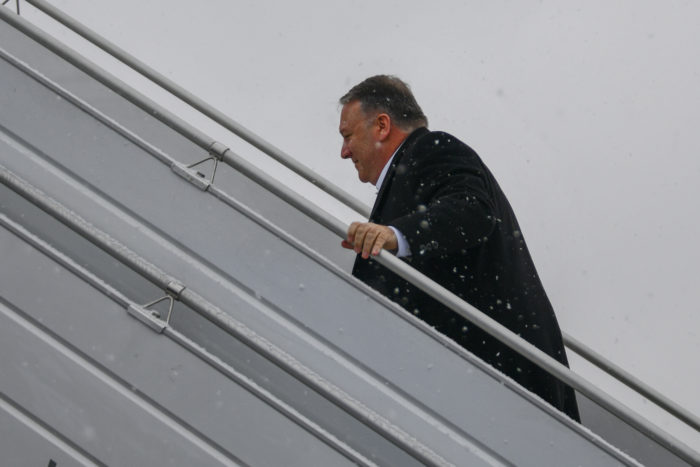
 Aletho News
